Museo de Arte Moderno de Bogota
Museum · Museo de Arte Moderno de Bogota (MAMBO) · Founded 1955
Open, admission and hours confirmed 15 September 2026 · 15 sources
On this page 14 sections
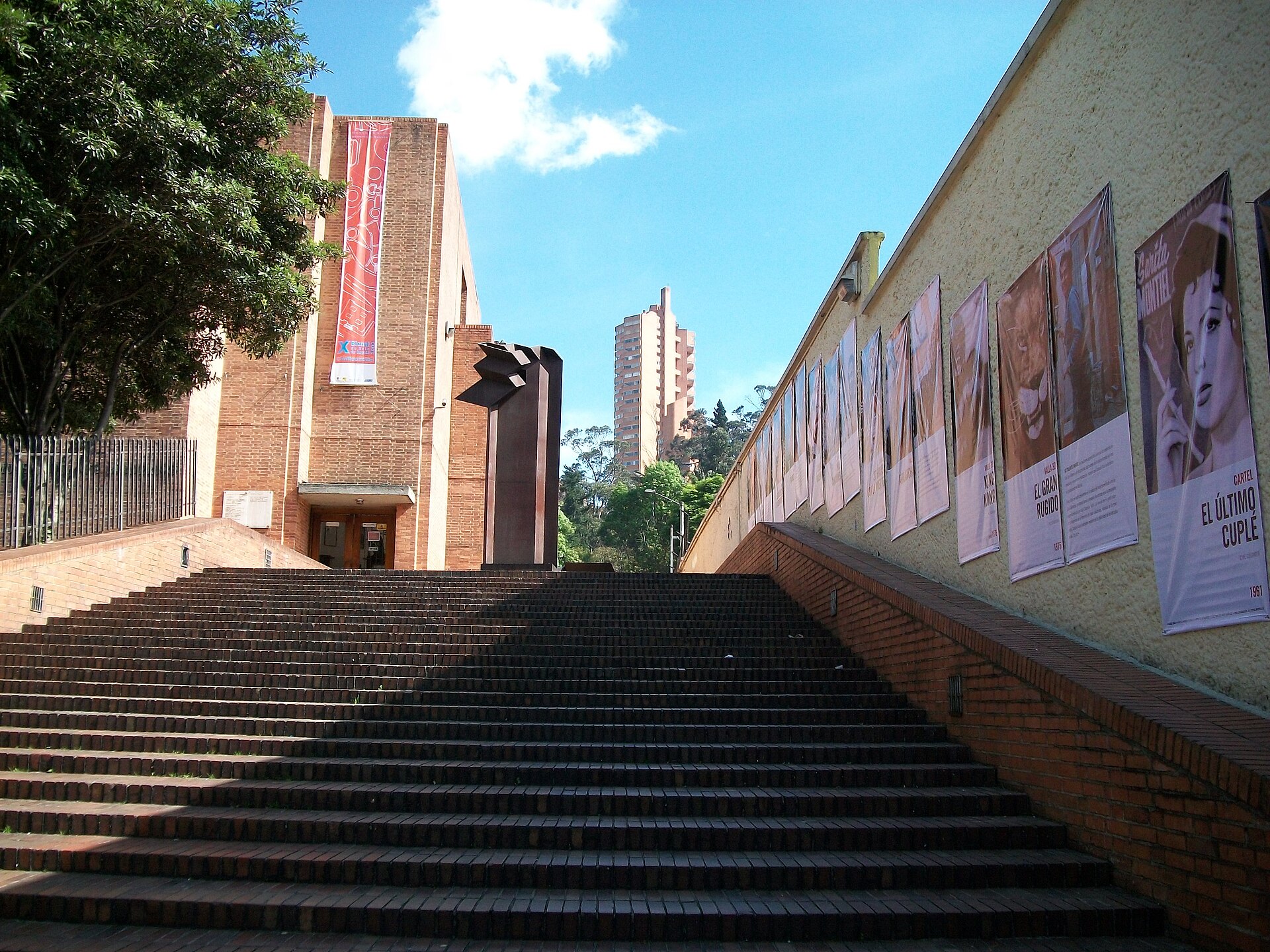
MAMBO's real strength is depth in Colombian modern and contemporary art, Obregon, Botero, Negret and Caro across the generational shift from modernist painting to conceptual and text-based work, backed by an unusually large photograph archive that most visitors never see. Its Latin American holdings, Cruz-Diez, Matta, Lam and Meireles, extend that strength regionally rather than globally; the international names cited in reference sources are present but are not what the museum is known for. The collection's core weakness, on the evidence of both the sources and visitor reviews, is less about quality than access: a large catalogued collection is not the same as a large amount of it being on view at once, and the museum's rotating programming model means a single visit samples a small slice of what MAMBO actually holds.
| Local name | Museo de Arte Moderno de Bogota (MAMBO) |
|---|---|
| Kind | Museum |
| Founded | 1955 |
| City and country |  Bogota, Colombia Bogota, Colombia |
| Address | Calle 24 No. 6-00, Bogota, Colombia |
| Website | mambogota.com |
| Status | Open, confirmed 15 September 2026 |
| Record last verified | 15 September 2026 |
Visiting
- Hours
- Tue-Sat10:00 to 18:00last entry 17:15
- Sun and public holidays12:00 to 17:00last entry 16:15
- Closed
- Monday.
- Admission
- Colombian citizensCOP 21,000
- Students and teachers (valid ID)COP 15,000
- Age 60 and overCOP 15,000
- International visitorsCOP 30,000
Free entry: MAMBO Friends members with a valid card. Children under 5. People with disabilities- Tickets
- tienda.mambogota.com/products/entradas-mambo-1 The museum's own ticket page.
- Do I need to book?
- No advance booking required as of this check; tickets can be bought online through the museum's own store or at the door
- Address
- Calle 24 No. 6-00, Bogota, Colombia MapTransmilenio (bus rapid transit) Calle 22 station is the nearest trunk stop per published visitor guides; confirm the current stop before travel since Bogota's Transmilenio network has been extended since this guide was written
- Website
- mambogota.com
- Telephone
- +57 313 432 5471
- [email protected]
Before you go how long, access, photography, bags, eating, shop
- How long to allow
- Visitors who leave reviews on the museum's holdings and rotating shows typically recommend at least an hour, more if a full-floor rotating exhibition is on
- Access
- Free admission is granted to people with disabilities; the museum's visit page does not itemise ramps, lifts or other physical access features beyond that
- Photography
- Personal photography appears to be tolerated based on visitor photo uploads, but the museum's own rules page explicitly bans professional cameras
- Bags
- Not specified on the museum's current visit page
- Eating
- Not listed on the current visit page. Earlier encyclopedic accounts of the Salmona building describe an on-site restaurant; whether food service still operates was not confirmed on this pass
- Shop
- MAMBO runs its own shop, with an online store separate from the exhibition ticket store
Prices and hours change. We take them from the institution's own pages and print the day we read them, and you can check the current position at the source we used. Confirm before you travel.
What is inside
Colombian modern and contemporary galleries
The core of the permanent collection: paintings and works on paper by Alejandro Obregon, Fernando Botero and Edgar Negret, plus text-based conceptual work by Antonio Caro, spread across the four floors of Rogelio Salmona's building
Latin American and international collection
Holdings that reach beyond Colombia, including Carlos Cruz-Diez and the Brazilian conceptual artist Cildo Meireles, alongside internationally known names cited in reference sources such as Picasso, Dali, Giacometti and Warhol
Fototeca (photograph archive)
A photographic collection reported at roughly 500,000 photographs and negatives, including nineteenth-century Sabana-school landscapes and early photographs of everyday life in Bogota
Library
A research library reported at more than 4,500 volumes, supporting the museum's curatorial and documentary work
Sculpture courtyard (patio de esculturas)
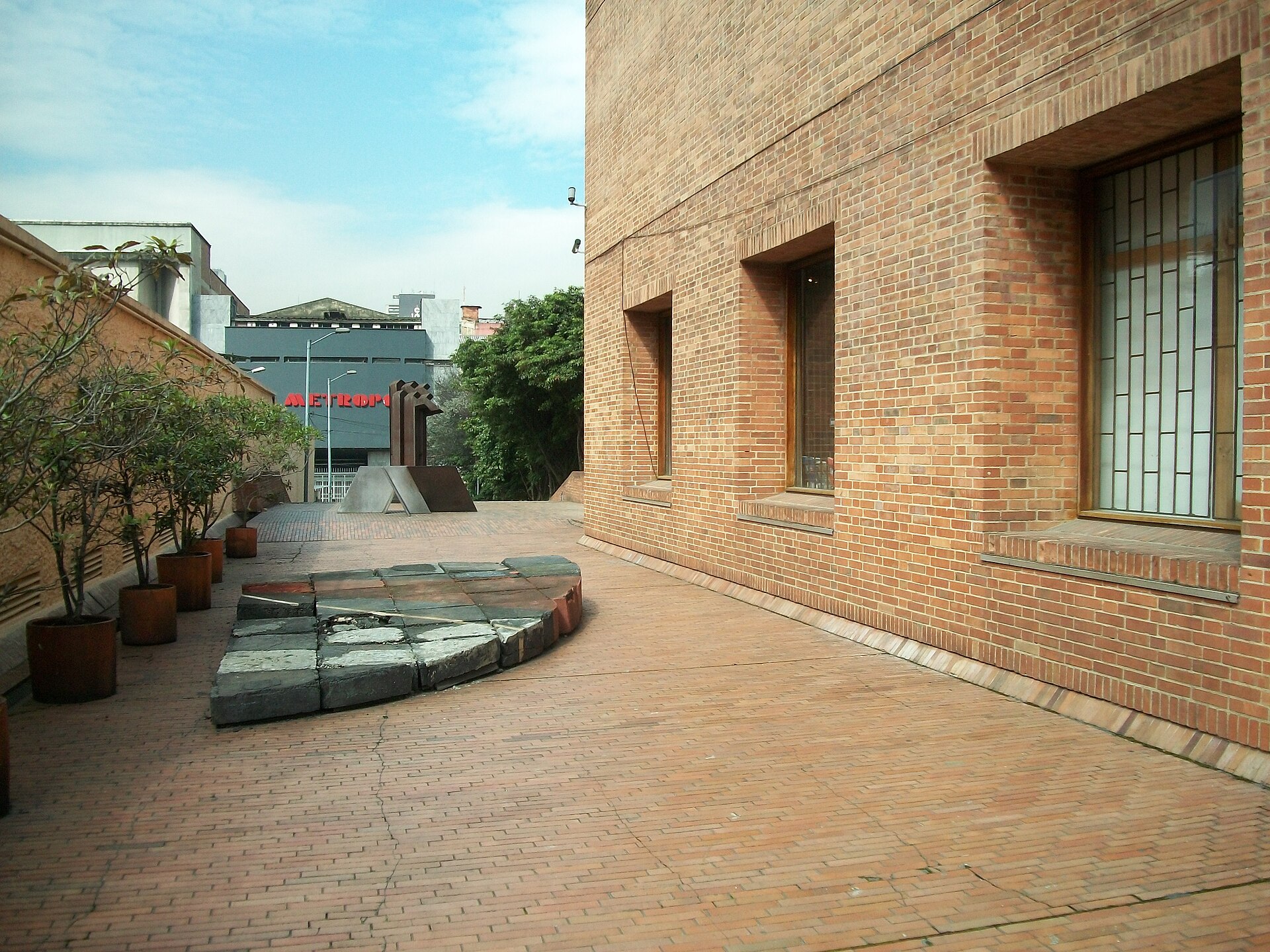
An open-air display space built into Salmona's design, used for three-dimensional work that the indoor galleries do not accommodate
Auditorium and cinema room (Los Acevedo)
A dedicated screening and lecture space used for the museum's public programme alongside its exhibition calendar
What to see first
Private sketches and drawings
Alejandro ObregonMAMBO holds and in 2022 exhibited more than eighty previously unshown sketches by Obregon, one of Colombia's most important modernists, marking the thirtieth anniversary of his death and the first time these working drawings were shown as autonomous pieces rather than studies9
Text and logo-based conceptual works, including 'Colombia'
Antonio CaroCaro is one of the pioneers of Colombian conceptual and text-based art, and MAMBO's own online collection catalogue lists several of his works among the pieces most represented in the permanent holdings10
Zero Cruceiro
Cildo MeirelesA work by the Brazilian conceptual artist held in the collection, evidence that MAMBO's holdings extend past Colombian art into the wider Latin American conceptual movement10
Paintings held in the permanent collection
Fernando BoteroNamed alongside Obregon and Negret as one of the Colombian masters anchoring the museum's 2013 fiftieth-anniversary retrospective of its own holdings8
Geometric sculpture
Edgar NegretColombia's leading exponent of geometric abstraction in sculpture, held in the permanent collection and named repeatedly in the museum's own historical accounts of its core artists8
Kinetic and colour works
Carlos Cruz-DiezThe Venezuelan pioneer of kinetic and op art is named in reference sources as part of MAMBO's Latin American holdings, alongside Roberto Matta and Wifredo Lam7
Figurative paintings
Enrique Grau AraujoOne of the more heavily represented artists in the museum's own online collection database, with ten catalogued works10
Still life and the Palenque paintings
Ana Mercedes HoyosThirteen works catalogued in the museum's online collection, and the subject of a dedicated digital exhibit the museum built around her architectural and still-life compositions10
A founding act, then a decade before anyone could open the doors
MAMBO's institutional history begins with paperwork rather than a building. The museum's own account dates its founding act to 27 July 1955, signed by the minister of the day, years before it had a home, a director or a public programme. The gap between that signature and an actual museum closed only after the Argentine art critic and historian Marta Traba took the directorship in November 1962. Traba pushed to turn a paper institution into a working one, and the Museum of Modern Art opened its first exhibition, Juan Antonio Roda's Tumbas, in a downtown location in February 1963.
Traba's tenure did not end quietly. In 1967, under President Carlos Lleras Restrepo, the military occupied the campus of the National University of Colombia, where the museum was then housed. Traba criticised the occupation publicly, and the government responded by ordering her deportation. That order was later withdrawn on condition that she resign every official post she held and stop commenting on politics. She left the country in 1969 anyway, moving on with her husband, the literary critic Angel Rama, to Montevideo, Caracas and San Juan. Gloria Zea, once married to Fernando Botero, took over the museum's direction that same year and held it for forty-seven years, until 2016, when the artist Claudia Hakim succeeded her. Zea's decades in charge cover the period in which MAMBO acquired its permanent building and the bulk of the collection it now shows.
Rogelio Salmona's building on Calle 24
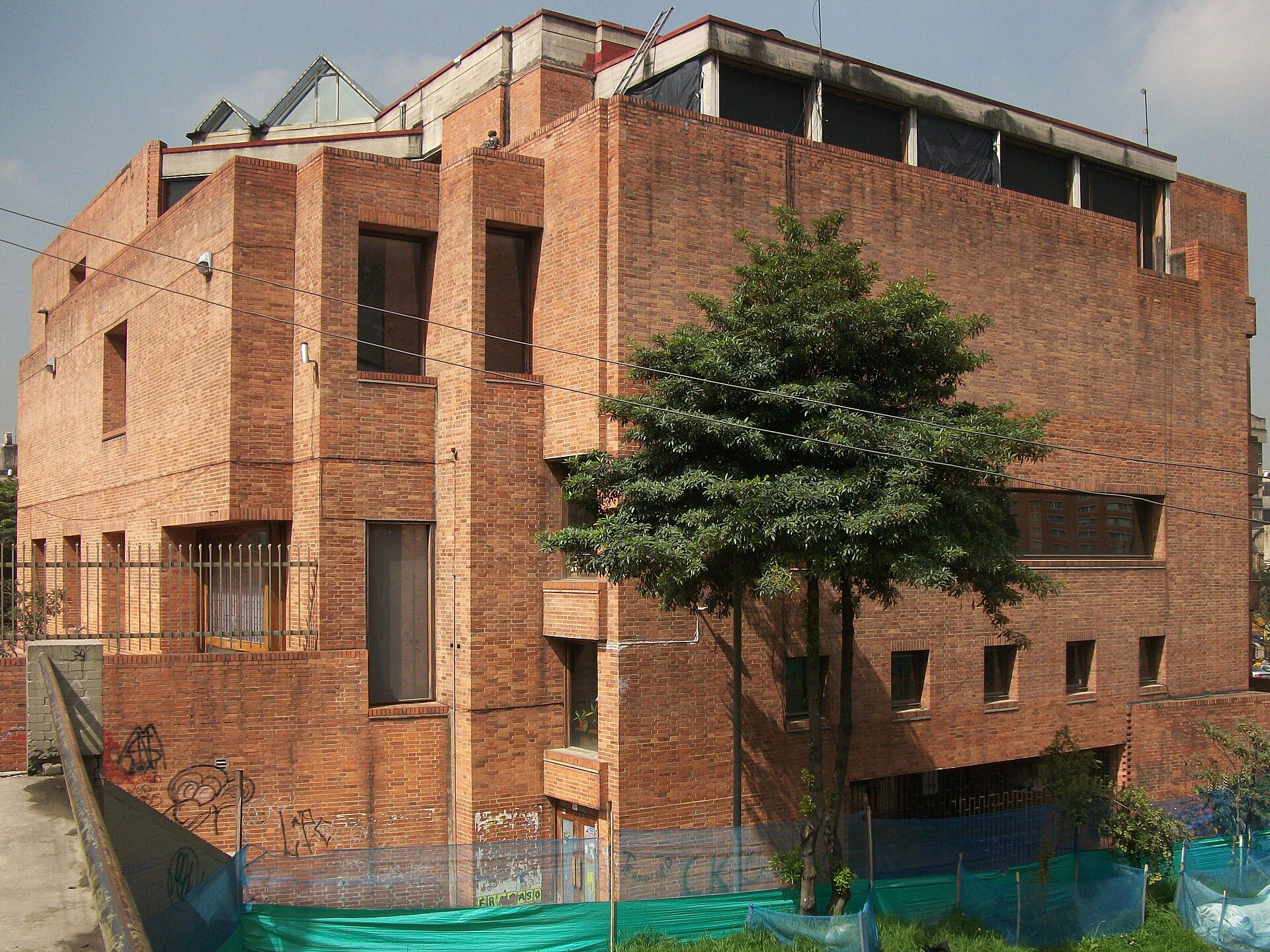
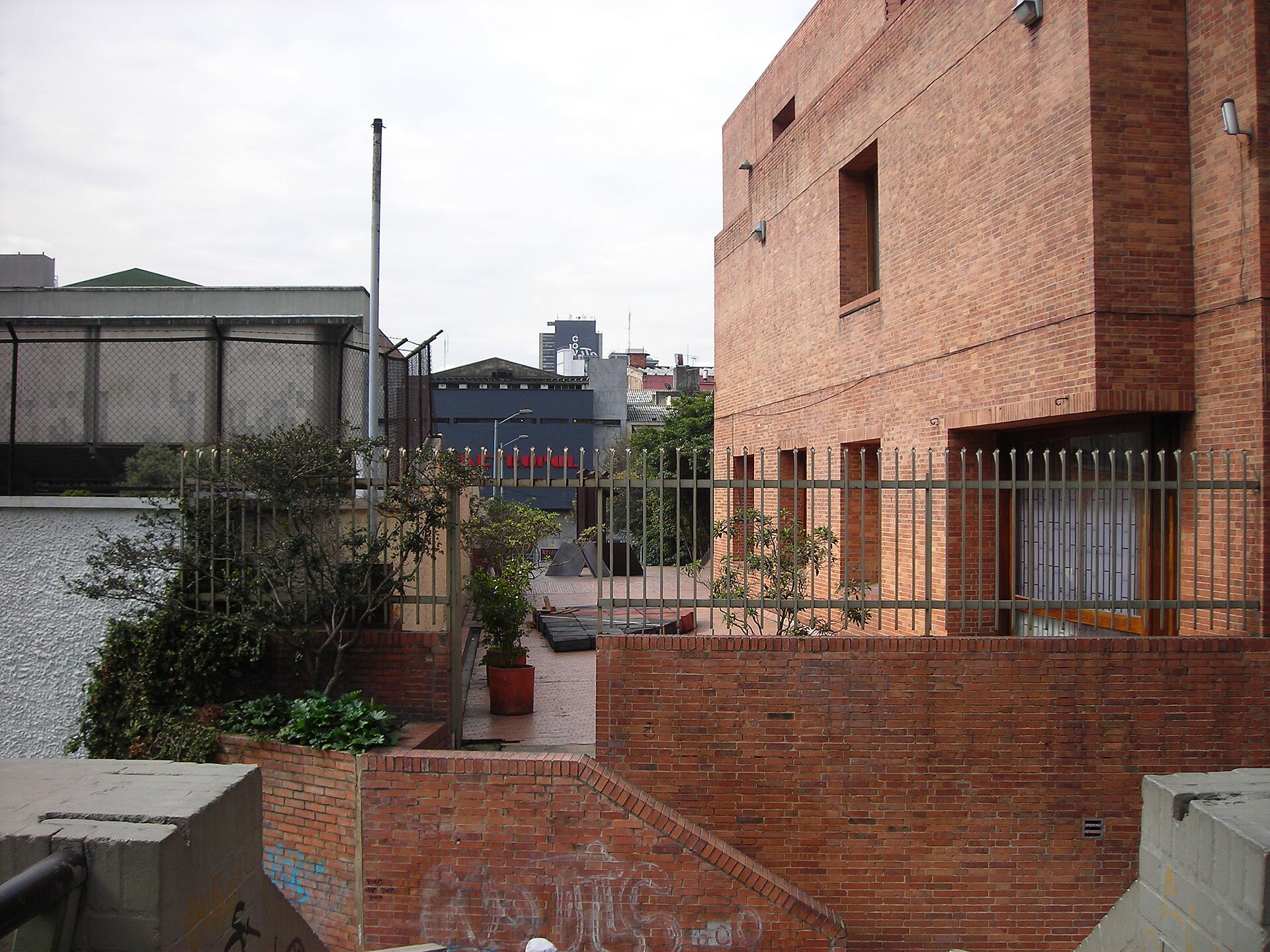
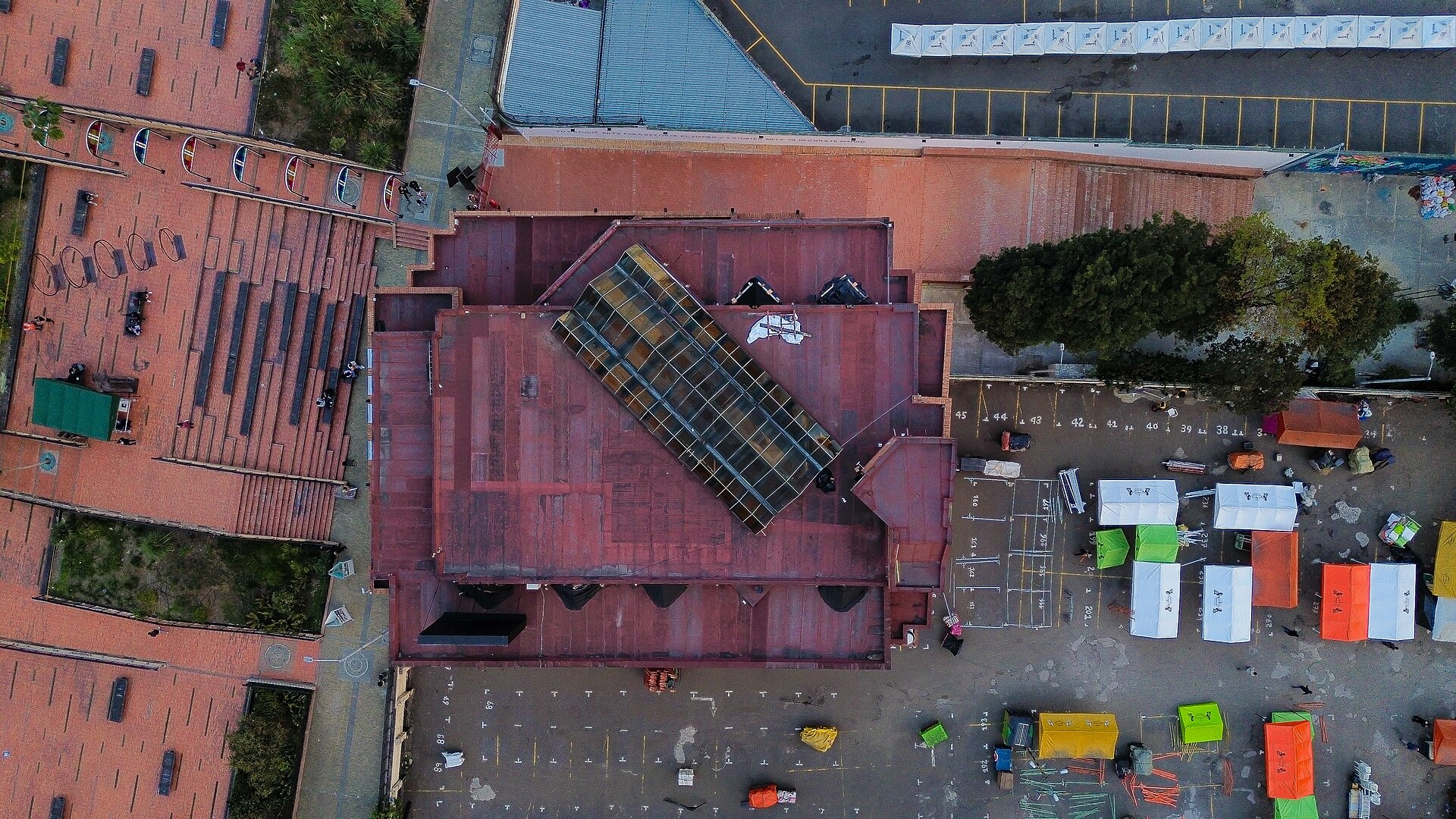
The museum did not get a purpose-built home until Zea prioritised one. Construction on the current headquarters, designed by the Franco-Colombian architect Rogelio Salmona, began in 1979 and opened in phases through 1985. The building sits on Calle 24 No. 6-00, close to the historic centre, and covers roughly five thousand square metres across four floors organised around a central staircase that more than one account describes as a labyrinth of stone and stairs. Salmona's signature moves are all present: exposed brick, ramps instead of straightforward corridors, unconventional entrances into rooms, and a deliberate contrast between natural light let in through skylights and large windows and the artificial lighting used to protect the art.
The building has not stayed frozen since 1985. Later interior work partially covered some of the exposed brick with plaster, converting sections of the galleries into more conventional white-cube display space, an intervention that reference sources note as sitting in tension with Salmona's original design intent rather than simply extending it. The building also carries a sculpture courtyard, an auditorium, a library, a photograph archive and, in most historical accounts of the space, a restaurant, all built into Salmona's original programme rather than added afterward.
Three collections under one roof
MAMBO organises its holdings into three broad groupings rather than a single undifferentiated permanent collection. A Colombian collection anchors the museum and carries the bulk of its best-known names: Alejandro Obregon, Fernando Botero and Edgar Negret from the modern generation, and the conceptual artist Antonio Caro from the generation that followed them into text and language-based work. A Latin American collection reaches past Colombia's own borders to include the Venezuelan kinetic-art pioneer Carlos Cruz-Diez, the Chilean surrealist Roberto Matta, the Cuban painter Wifredo Lam and the Brazilian conceptual artist Cildo Meireles. An international collection, smaller and less central to the museum's identity, is cited in reference sources as including Picasso, Dali, Giacometti and Warhol.
How many objects sit across these three collections is not something the sources agree on. A 2013 anniversary account put the total at 4,300 pieces spanning centuries; one institutional summary gives roughly 3,633 works; the museum's own searchable online collection database, when checked directly, returns 1,568 catalogued works. This record does not attempt to reconcile the three figures, since none of the sources explains why they differ, and states all three rather than picking one to quote as definitive.
The photograph archive and what does not fit in a gallery
Away from the painting and sculpture galleries, MAMBO's fototeca is one of the collection's least visible but largest holdings: reference sources put it at roughly 500,000 photographs and negatives, including nineteenth-century landscape work from the Sabana school of painters reworked into photographic form and early photographs documenting everyday life in Bogota. A library of more than 4,500 volumes supports this material and the museum's curatorial research more broadly. Neither the photograph archive nor the library functions as a conventional gallery a visitor walks through; both exist mainly as research resources tied to the museum's exhibition and publishing programme rather than as permanent public display space.
The building's sculpture courtyard and its Los Acevedo auditorium serve the opposite function, giving the museum space for work and programming that does not fit inside a conventional gallery: three-dimensional pieces that need open air or scale the interior floors cannot accommodate, and lectures, screenings and public events that run alongside the exhibition calendar rather than inside it.
What is actually on view changes often
MAMBO runs a genuinely rotating programme rather than a fixed permanent-collection hang, and what greets a visitor on any given week depends heavily on that rotation. On this research pass in September 2026, the museum's own site listed four exhibitions running at once: Arquitecturas del poder, a solo show by the Chilean artist Patrick Hamilton; Tension Ambiental, the eighth instalment of the museum's own Coleccion en Escena series that periodically restages its permanent holdings around a curatorial theme; La presencia como promesa, a solo show by Ernesto Bautista; and a retrospective marking one hundred years since the birth of the Colombian painter Armando Villegas. Two years earlier, in 2022, the museum devoted its third floor to Eugenio Viola's exhibition of more than eighty previously unshown Alejandro Obregon sketches, suspended between sheets of acetate rather than framed, organised into six thematic sections instead of a chronology.
That programming pattern, a modest number of galleries turned over repeatedly to different curatorial projects rather than a large fixed permanent-collection circuit, is also the throughline in most of the criticism the museum draws. A visitor who arrives expecting to see a broad survey of MAMBO's several thousand catalogued Colombian and Latin American works may instead find one or two current shows occupying most of the accessible floor space.
What visitors say, and what it costs to find out
Aggregate opinion of MAMBO splits along platform lines in a way that is itself informative. Google reviewers rate the museum 4.6 out of 5 across 4,410 ratings, a figure that likely mixes casual visitors rating the building and the neighbourhood alongside the art. TripAdvisor, where reviewers write longer and more specific comments, rates it lower, 3.8 out of 5 across 147 reviews, and its written reviews are where the split between praise and complaint becomes legible. Visitors who praise MAMBO consistently point to the same two things: the Salmona building itself, and one or two specific pieces or artists they happened to encounter, Botero and Cruz-Diez both named directly in reviews read for this record. Visitors who criticise it point to value for the entry fee relative to what is actually on the walls during a given visit, to the museum's distance from Bogota's more concentrated museum district around the Gold Museum and the Botero Museum, and, in at least one detailed 2025 review, to a sense that the programming leans toward contemporary work while still calling itself a museum of modern art, leaving little that reads as a stable, collectible permanent display.
Frommer's guide, written by Nicholas Gill, is more even-handed in its published characterisation, describing MAMBO simply as Bogota's modern art museum, noting the Salmona building and citing a collection of more than four thousand pieces of Colombian and international modern art spread over four floors. The guide's own listed price and hours are visibly older than the figures the museum currently publishes on its own site, a reminder that a guidebook entry is a snapshot rather than a live feed for a museum that revises its own hours and prices on its own schedule.
What visitors say
Visitors consistently single out the building itself, Rogelio Salmona's exposed-brick, stone-and-stair design, as much a draw as the art inside it, and praise specific pieces they encounter on a given visit. The recurring complaint is not about the collection's quality so much as its presentation on any given day: the museum runs a rotating programme through a modest number of galleries, so a visitor whose visit coincides with a thin rotation, or with a room closed for an installation change, can leave feeling the entry fee bought less than expected.
What is praised, what is criticised
- Praised: The Salmona building itself, its exposed brick, ramps and use of natural light, described by more than one visitor as the real highlight of a visit
- Praised: Individual pieces from the Colombian collection, with named mentions of an early Botero painting and a Carlos Cruz-Diez work in visitor commentary
- Praised: The central, walkable location near other Bogota museums and La Candelaria
- Criticised: Several visitors, including a March 2026 review, called the museum small and expensive relative to what is on view, and said it is a detour that is hard to justify against other Bogota museums
- Criticised: A April 2025 review argued that space is wasted, that some exhibitions read as improvised rather than curated, and that the institution's own past-exhibition information was not made available before ticket purchase
Ratings on other platforms
Google: 4.6 from 4,410 ratings, read 15 September 2026
TripAdvisor: 3.8 from 147 ratings, read 15 September 2026
A platform average is a tertiary source: it moves, it is not audited, and we quote no visitor's words.
Questions about Museo de Arte Moderno de Bogota
Where is Museo de Arte Moderno de Bogota?
Calle 24 No. 6-00, Bogota, Colombia.
How much does it cost to visit Museo de Arte Moderno de Bogota?
Colombian citizens: COP 21000; Students and teachers (valid ID): COP 15000; Age 60 and over: COP 15000; International visitors: COP 30000. As confirmed 15 September 2026.
When is Museo de Arte Moderno de Bogota open?
Tue-Sat 10:00-18:00; Sun and public holidays 12:00-17:00. Closed: Monday. As confirmed 15 September 2026.
How do you get to Museo de Arte Moderno de Bogota?
Transmilenio (bus rapid transit): Calle 22 station is the nearest trunk stop per published visitor guides; confirm the current stop before travel since Bogota's Transmilenio network has been extended since this guide was written.
What should you see at Museo de Arte Moderno de Bogota?
Private sketches and drawings (Alejandro Obregon); Text and logo-based conceptual works, including 'Colombia' (Antonio Caro); Zero Cruceiro (Cildo Meireles); Paintings held in the permanent collection (Fernando Botero); Geometric sculpture (Edgar Negret); Kinetic and colour works (Carlos Cruz-Diez).
What we could not confirm
- Sources disagree on the founding date. The museum's own institutional history names 27 July 1955 as the founding act, while a summary drawn from the Spanish Wikipedia article gives 1953 with a refounding in 1957, a claim this record could not reconcile with Marta Traba only joining the museum in November 1962. This record follows the museum's own dated account.
- The total size of the collection is reported inconsistently: 4,300 pieces in a 2013 fiftieth-anniversary account, roughly 3,633 works in one institutional summary, and 1,568 catalogued works returned directly by the museum's own online collection search tool when checked in September 2026. No source explains the gap.
- Older encyclopedic and guidebook sources describe an on-site restaurant inside the Salmona building. The museum's current visit page, checked for this record, advertises a shop but does not mention a cafe or restaurant, so whether food service still operates on site is unresolved.
- Secondary aggregation found while researching this record associated the artist Doris Salcedo with MAMBO's holdings, but no source fetched directly for this record named a specific Salcedo work in the collection, so she is not included among the highlights above.
Images
Sources
- 1MAMBO, museum website, home page and navigation mambogota.com/
- 2MAMBO, Visitanos (hours, admission, address, contact and visit policies) mambogota.com/visitanos/
- 3MAMBO, The Museum (institutional history and mission, English page) mambogota.com/en/the-museum-2/
- 4MAMBO, Exposiciones Actuales (current exhibitions, checked September 2026) mambogota.com/exposicionesactuales/
- 5MAMBO, online collection database coleccion.mambogota.com/
- 6Wikipedia (English), Bogota Museum of Modern Art en.wikipedia.org/wiki/Bogot%C3%A1_Museum_of_Modern_Art
- 7Wikipedia (Spanish), Museo de Arte Moderno de Bogota es.wikipedia.org/wiki/Museo_de_Arte_Moderno_de_Bogot%C3%A1
- 8The City Paper Bogota, "MAMBO's 50th anniversary" (10 March 2013) thecitypaperbogota.com/culture/mambo-celebrating-50-years/
- 9The City Paper Bogota, Paulina Diazgranados, "Bogota's MAMBO reveals a hidden legacy of Obregon" (14 March 2022) thecitypaperbogota.com/culture/bogotas-mambo-reveals-a-hidden-legacy-to-obregon/
- 10Google Arts and Culture, MAMBO partner page (artists and works represented) artsandculture.google.com/partner/bogota-museum-of-modern-art-mambo
- 11TripAdvisor, Museo de Arte Moderno de Bogota reviews and rating tripadvisor.com/Attraction_Review-g294074-d532208-Reviews-Museo_de_Arte_Moderno_de_Bogota-Bogota.html
- 12Wanderlog, Bogota Museum of Modern Art MAMBO (aggregated Google rating) wanderlog.com/place/details/141467/bogot%C3%A1-museum-of-modern-art-mambo
- 13Frommer's, Nicholas Gill, "Museo de Arte Moderno" frommers.com/destinations/bogota/attractions/museo-de-arte-moderno/
- 14Wikipedia (English), Marta Traba (deportation and departure from Colombia) en.wikipedia.org/wiki/Marta_Traba
- 15Wikimedia Commons, Category:Museo de Arte Moderno de Bogota (image licensing) commons.wikimedia.org/wiki/Category:Museo_de_Arte_Moderno_de_Bogot%C3%A1