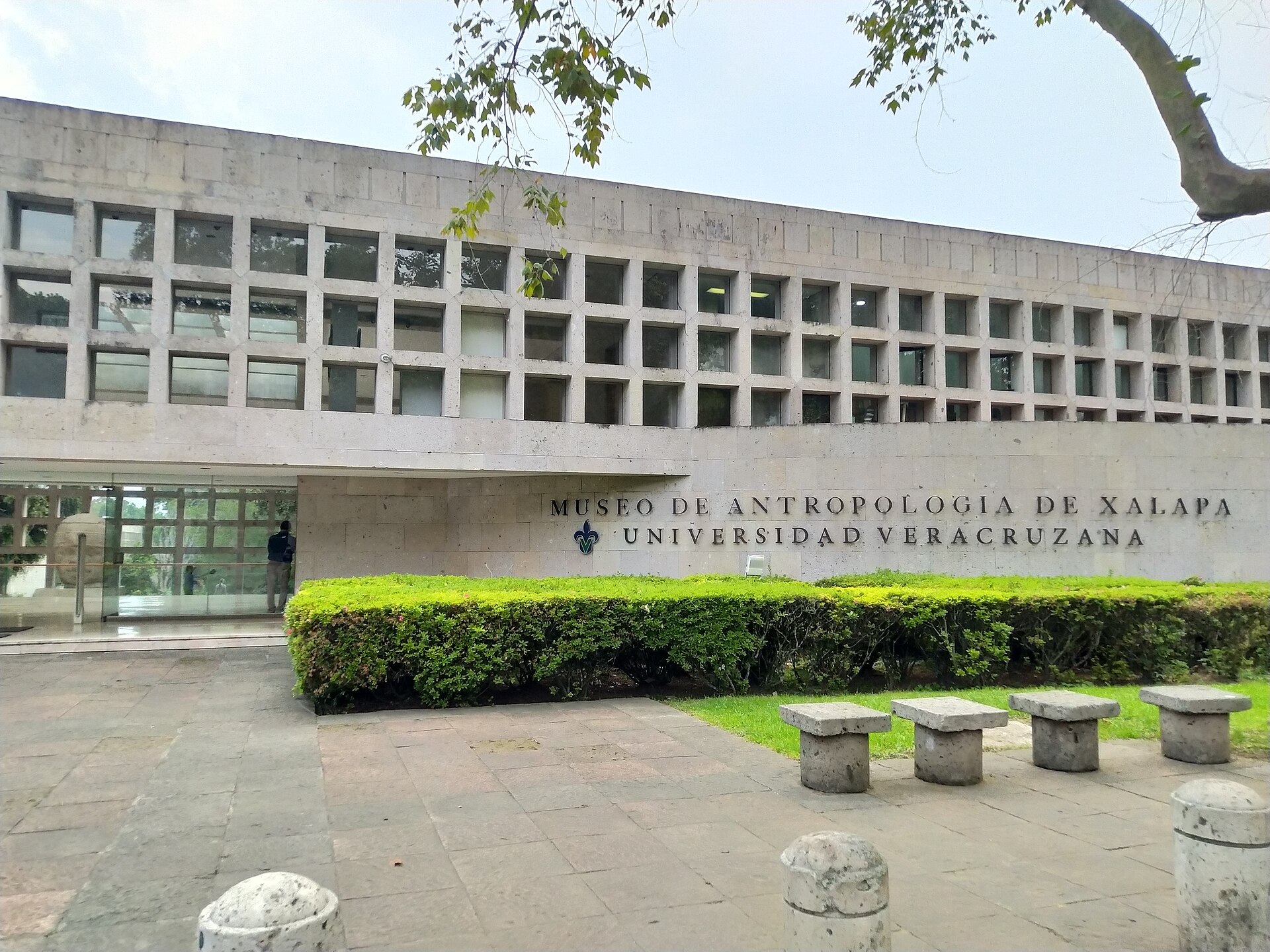
The entrance facade of the Museo de Antropologia de Xalapa, with its perforated travertine screen and ground-floor sign
Pequeno mar / CC BY-SA 4.0 · Photograph by Pequeño marMuseo de Antropologia de Xalapa
Museum · Founded 1957
Open, admission and hours confirmed 28 September 2026 · 16 sources
On this page 14 sections
ContentsClose
The museum's strength is depth in a single, coherent region rather than breadth across Mesoamerica: it is the principal public repository for the archaeology of the Mexican Gulf Coast, holding the Olmec material (including seven of the seventeen known colossal heads) that every survey of Mesoamerican art treats as foundational, alongside the classic-period central Veracruz cultures - Remojadas, El Zapotal, Las Higueras - and Totonac and Huastec material from the state's north. Very little of what it shows can be seen in comparable depth anywhere else, including in Mexico City.
| Kind | Museum |
|---|---|
| Founded | 1957 |
| City and country |  Xalapa, Mexico Xalapa, Mexico |
| Address | Av. Xalapa s/n, Col. Magisterial, 91010 Xalapa-Enriquez, Veracruz, Mexico |
| Website | uv.mx/max |
| Status | Open, confirmed |
| Record last verified |
Visiting
- Hours
- Tue-Sun09:00 to 17:00
- Closed
- Monday.
- Admission
- GeneralMXN 70
- Students, teachers, INAPAM cardholdersMXN 30
- Guided tour in Spanish, outside the free 11:30 tour, per group of up to 20MXN 350Tuesday-Sunday, 10:00-15:30
- Guided tour in English, per group of up to 20MXN 700Wednesday-Saturday, 10:00-15:30
- Audio guide (Spanish or English)MXN 60
- Do I need to book?
- No advance booking for general admission. A free guided tour in Spanish runs daily at 11:30. A paid guided tour outside that slot (Spanish or English, up to 20 people) should be arranged with the museum in advance.
- Address
- Av. Xalapa s/n, Col. Magisterial, 91010 Xalapa-Enriquez, Veracruz, Mexico Mapbus About 3 km north of Parque Juarez in downtown Xalapa; city bus routes stop in front of the museum, and buses marked Camacho-Tesoreria run from Enriquez near the park
taxi A short taxi ride from downtown Xalapa or the Central de Autobuses (CAXA) bus terminal - Website
- uv.mx/max
- Telephone
- +52 228 815 0920 / +52 228 815 4952
- [email protected]
Before you go how long, access, photography, bags, eating, shop
- How long to allow
- Two to three hours for the permanent collection; several visitor accounts describe treating it as a half-day destination and returning after a break
- Access
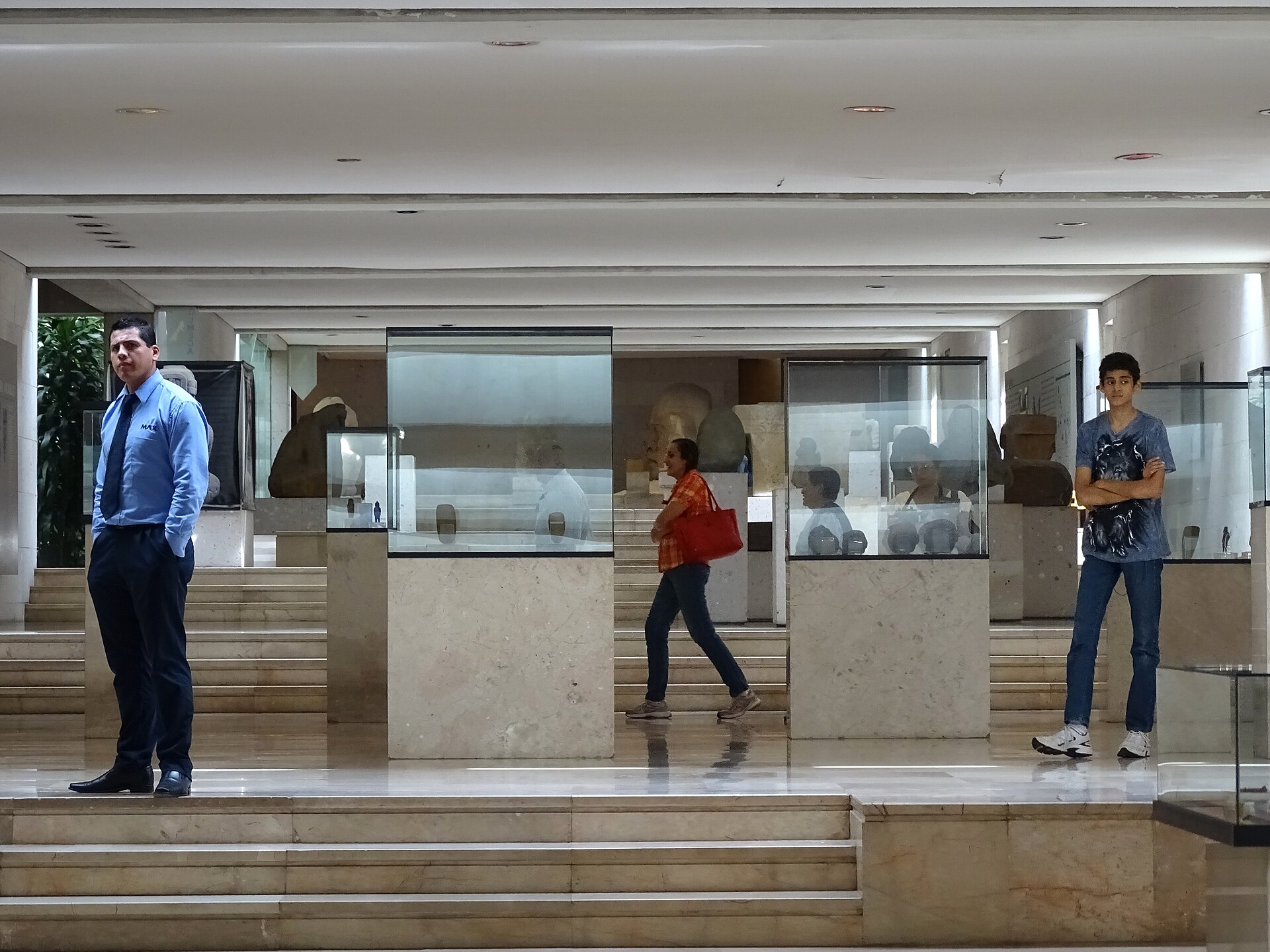
- Not published on the museum's own site as of this check; the building is laid out on a single main level connecting its galleries and patios, with a few short stepped transitions visible in visitor photographs of the entrance hall
- Photography
- Not published on the museum's own site as of this check; visitor accounts describe photographing the galleries freely
- Bags
- Not published on the museum's own site as of this check
- Eating
- A cafeteria serving Mexican snacks, Tuesday-Sunday 09:00-17:00, with a view toward the Cofre de Perote volcano
- Shop
- A museum shop selling books, childrens educational material, and archaeological reproductions, plus CDs and DVDs
Prices and hours change. We take them from the institution's own pages and print the day we read them, and you can check the current position at the source we used. Confirm before you travel.
What is inside
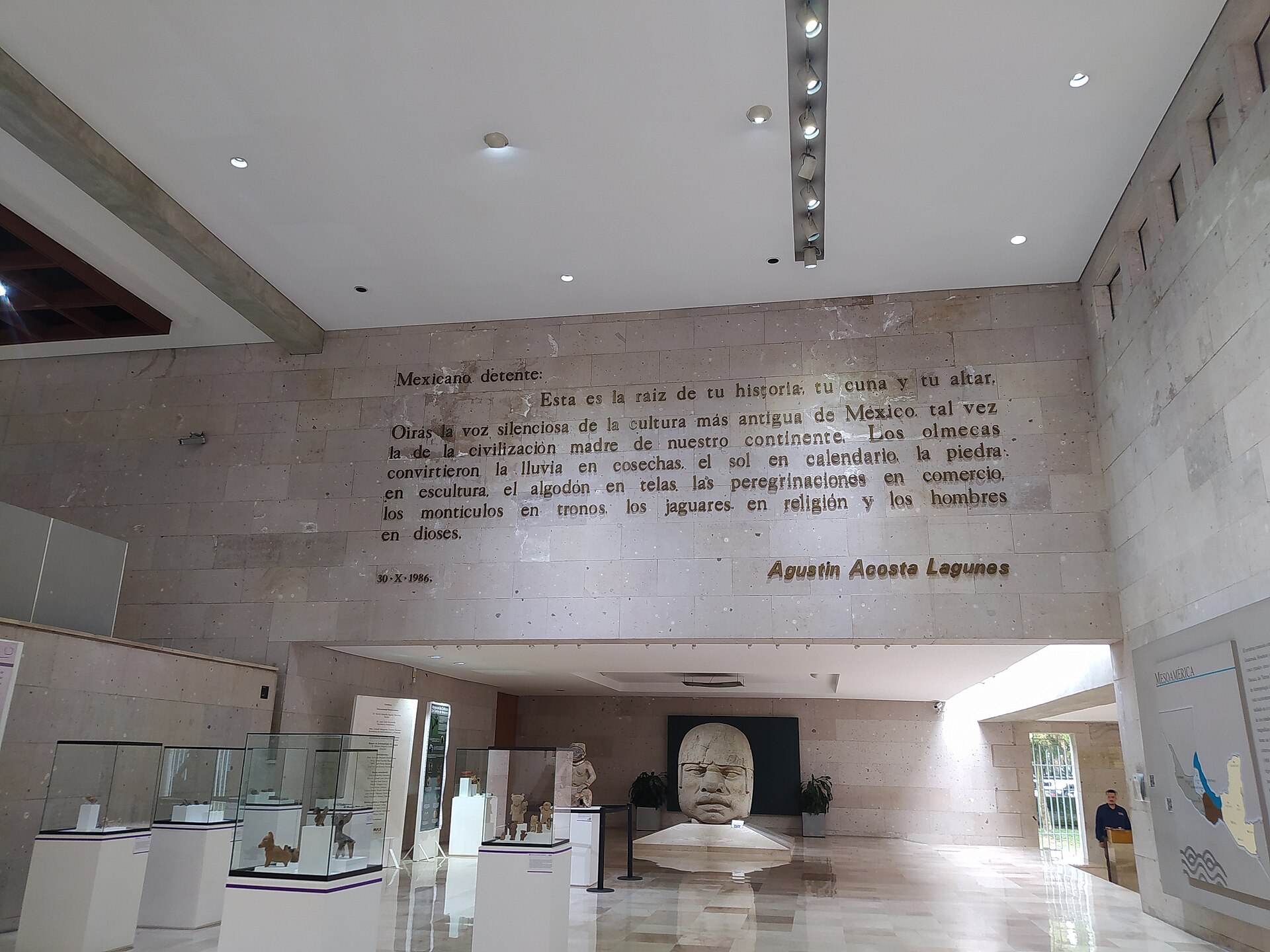
Photograph by Pequeño mar · CC BY-SA 4.0 Entrance hall and Olmec vestibule
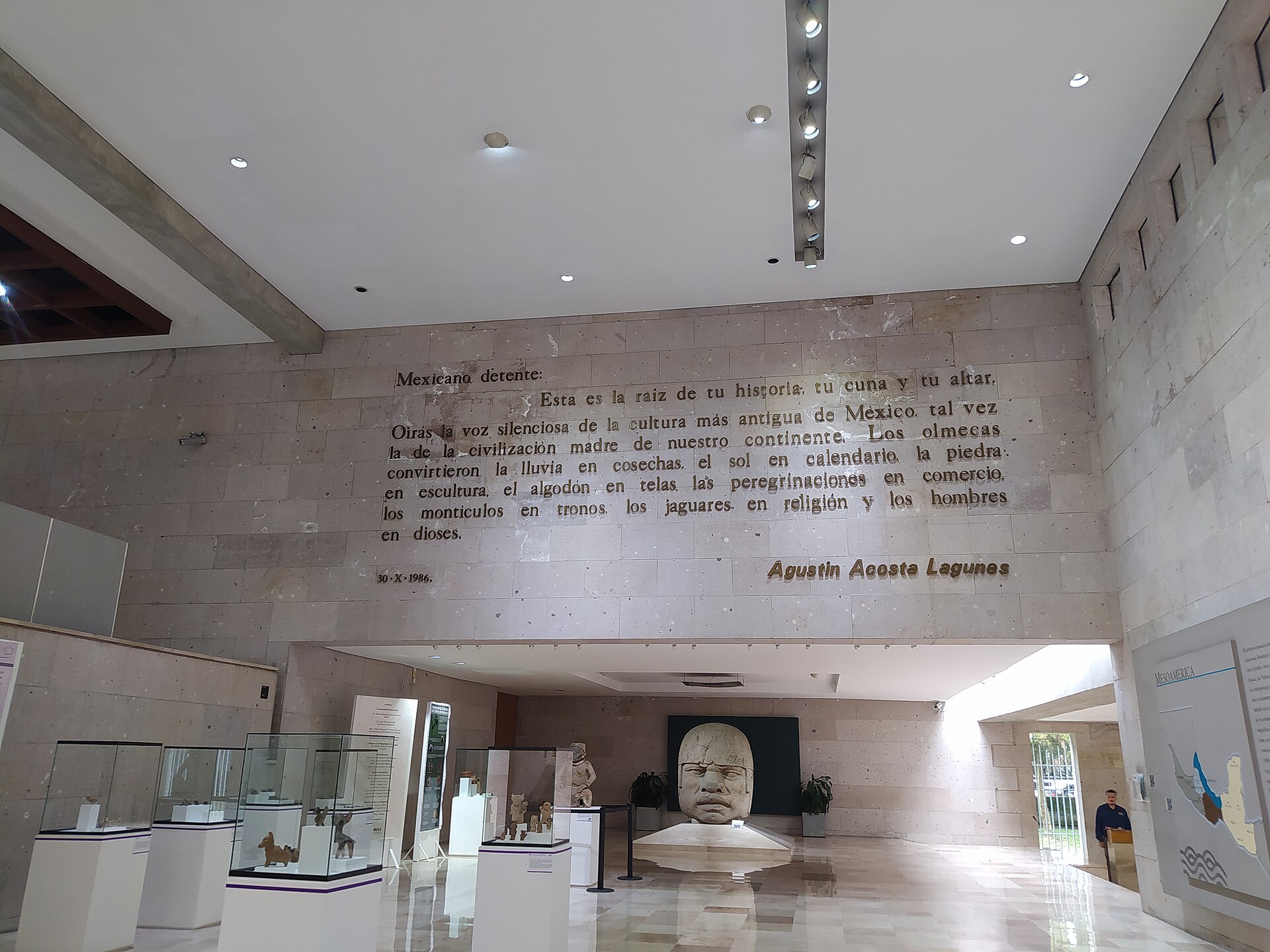
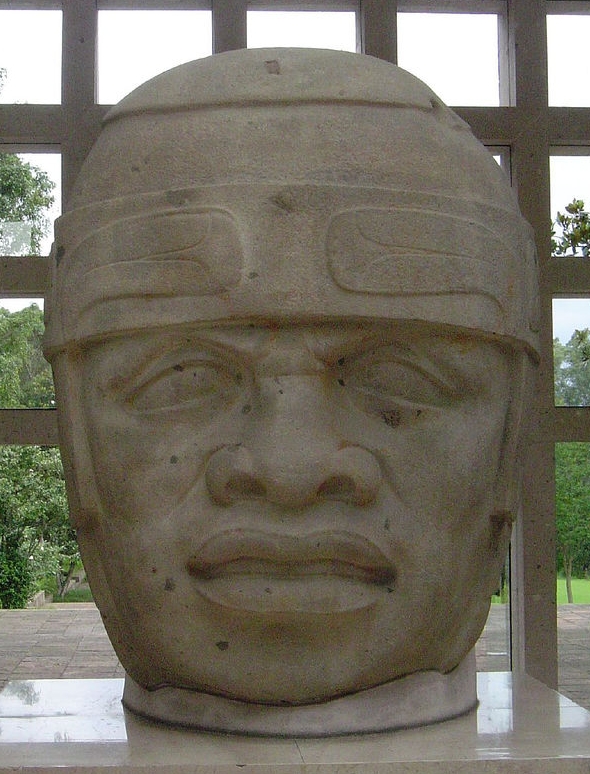
The first thing a visitor meets past the ticket desk: San Lorenzo Colossal Head 8 set against a wall carved with a 1986 dedication text by then-governor Agustin Acosta Lagunes, flanked by display cases of early Olmec stone and ceramic pieces that introduce the collection before the main gallery opens out
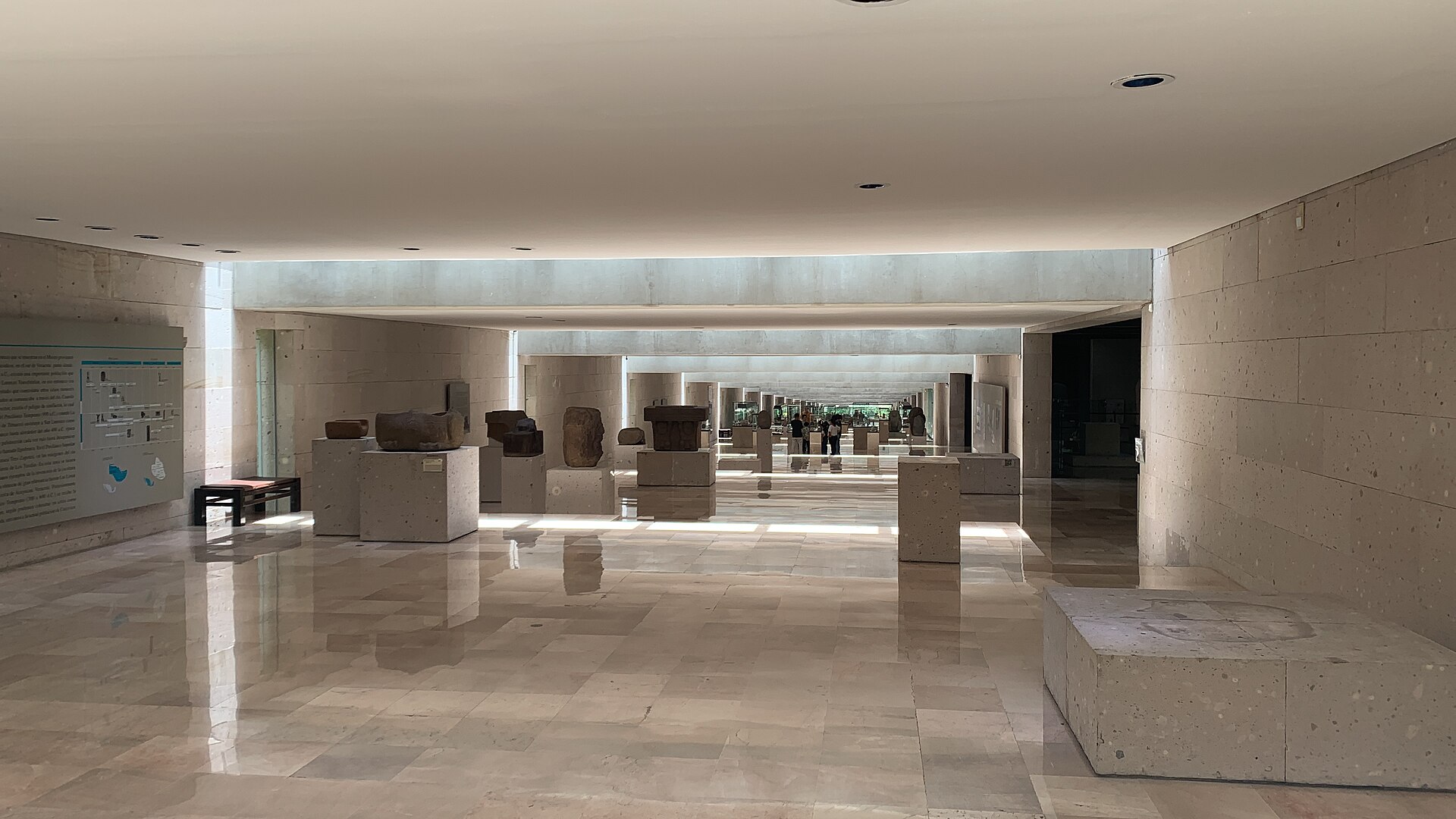
Photograph by Koffermejia · CC BY-SA 4.0 The long gallery (Olmec hall)
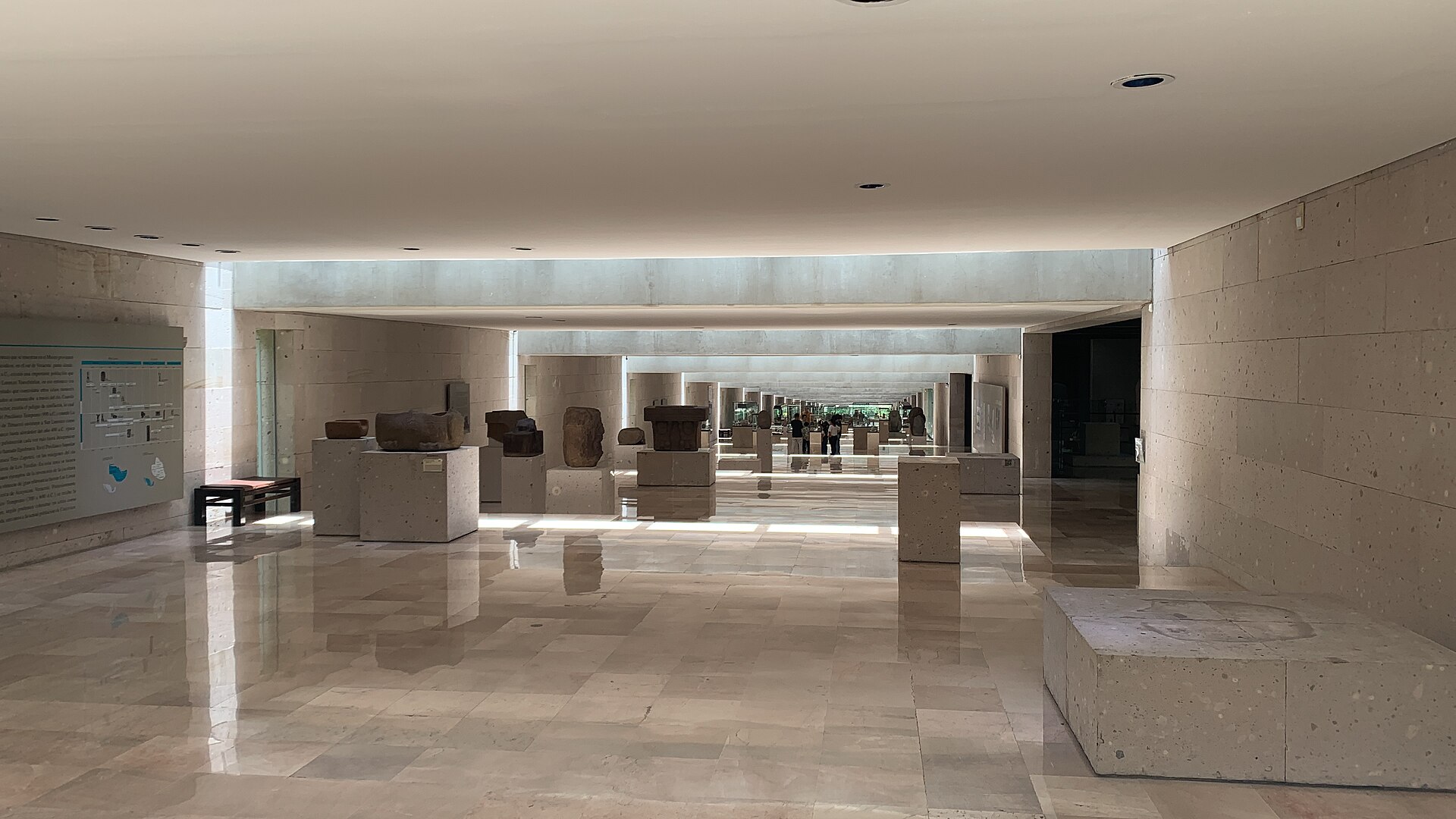
A single elongated corridor, lit from clerestory windows above, lined with San Lorenzo monuments, stelae, altars and jade pieces set on travertine pedestals, including the Senor de las Limas and the San Martin Pajapan kneeling figure; the gallery's straight run is the building's organising spine, echoed by the coastal-plain geometry the architects intended
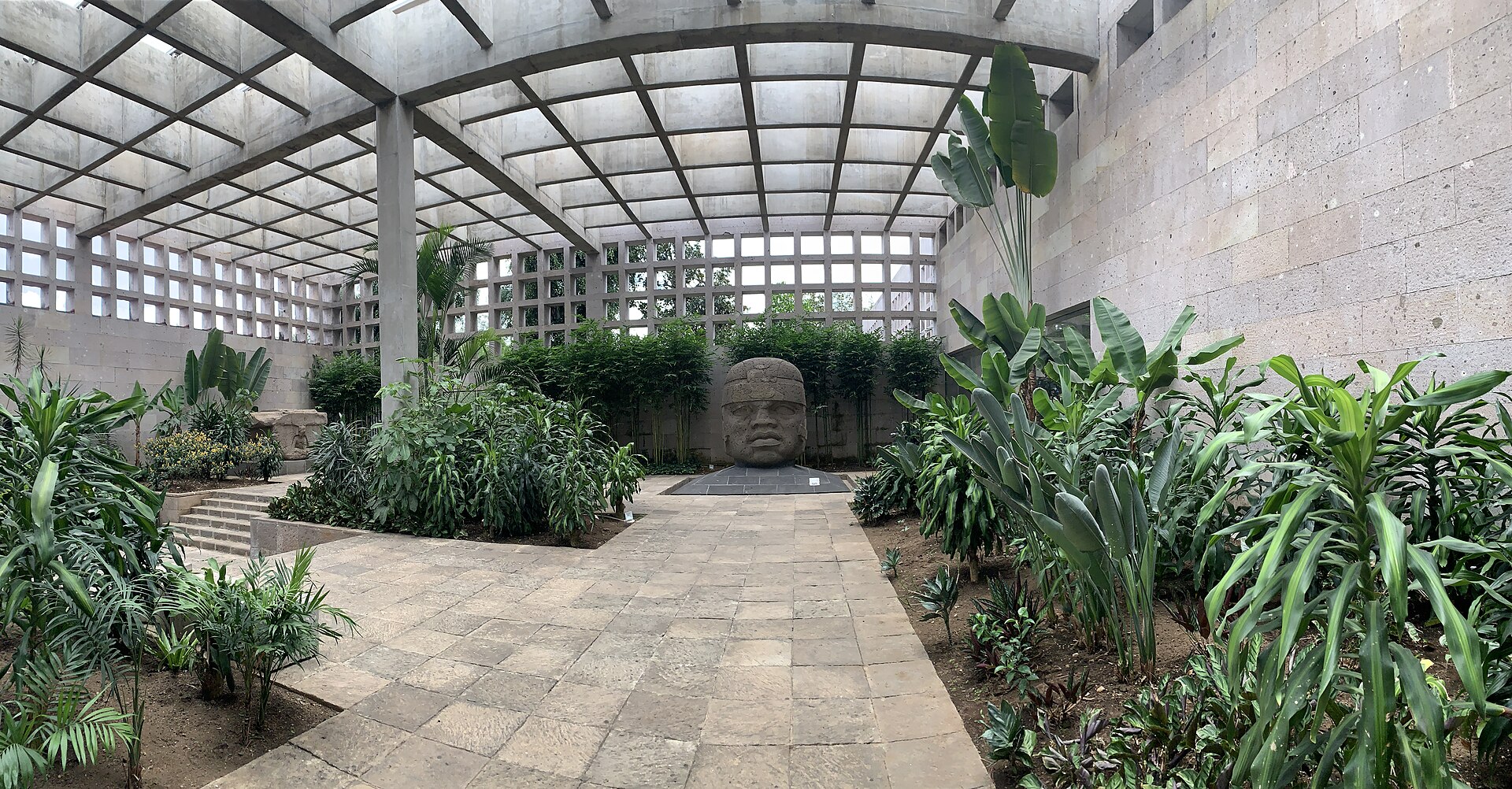
Photograph by Koffermejia · CC BY-SA 4.0 The covered patios
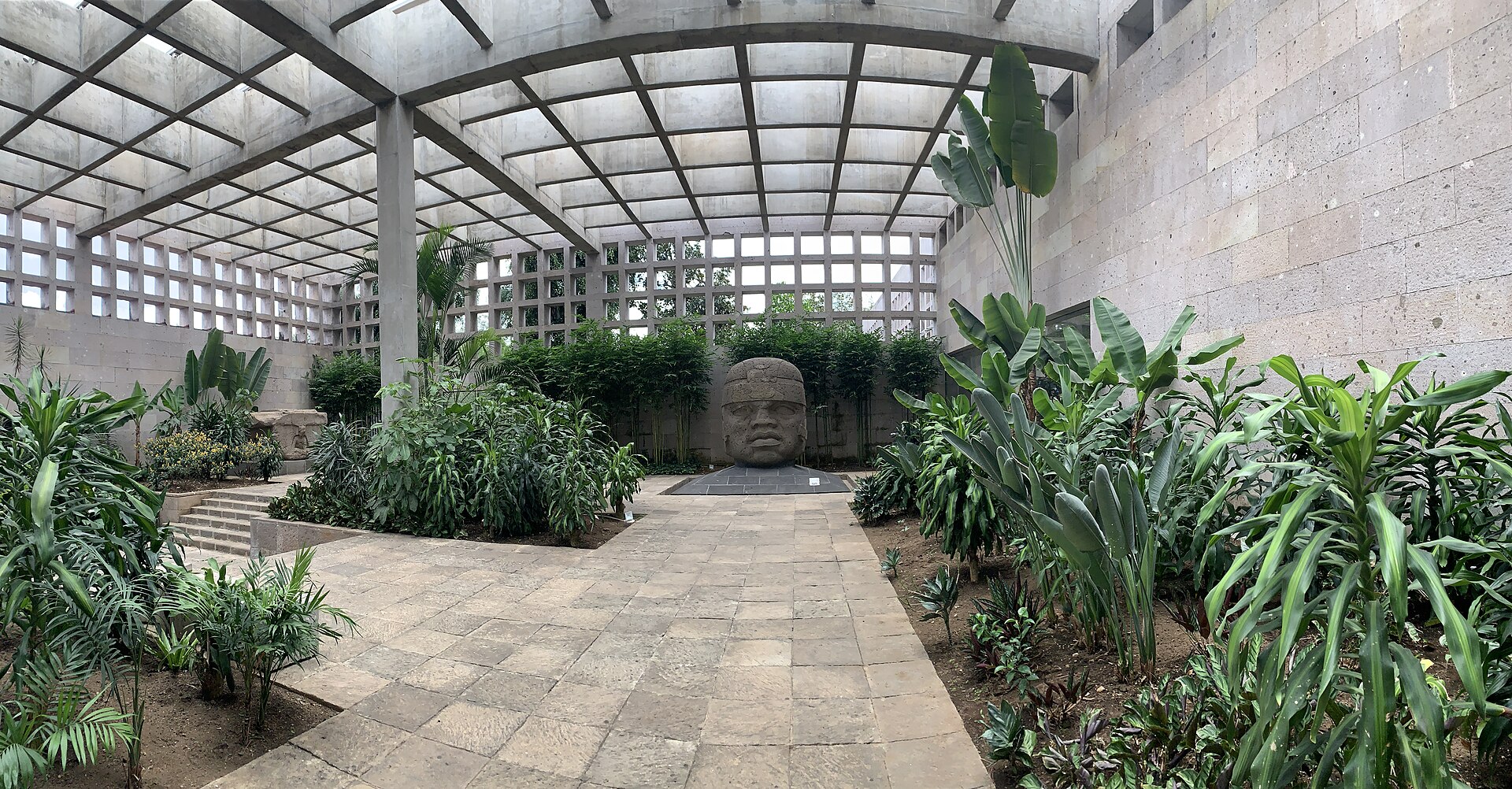
Three roofed, open-sided courtyards planted with palms, banana trees and bamboo, each holding one or more of the museum's Olmec colossal heads among the vegetation; the landscaping, by the same 1986 design team, won Mexico's Society of Landscape Architects prize in 2000 and is as much a part of the visit as the galleries themselves
Central Veracruz gallery (Remojadas, El Zapotal, Las Higueras)
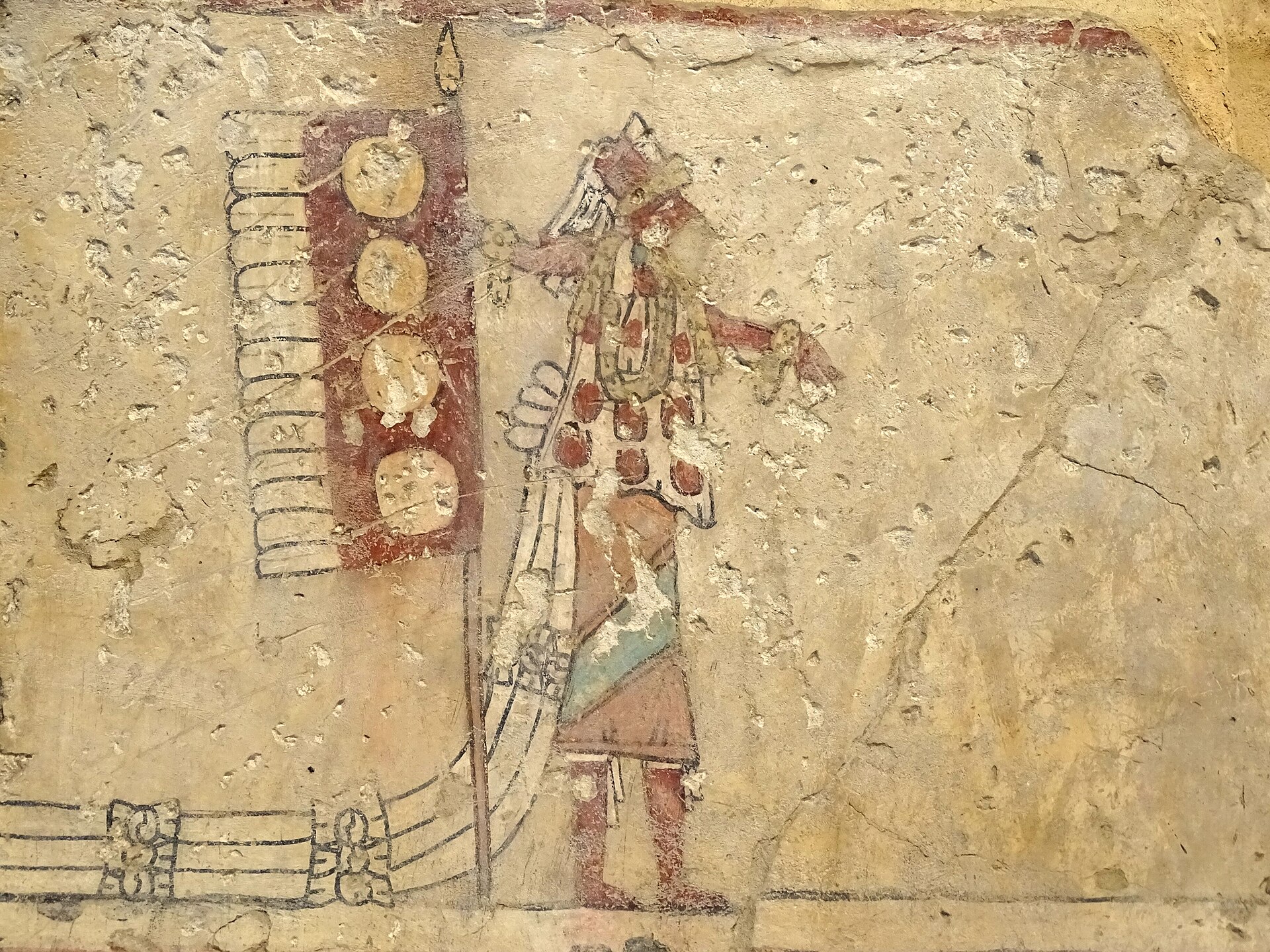
Ceramic 'smiling face' (caritas sonrientes) figurines from the Remojadas tradition, the Cihuateteo funerary sculptures excavated at El Zapotal (deified women who died in their first childbirth), and a fragment of the painted ritual murals recovered at the Las Higueras temple site, dated to roughly 600-900 CE
Northern Veracruz gallery (Totonac and Huastec)
Material from El Tajin and other Totonac sites - carved stone yokes, hachas and palmas connected to the Mesoamerican ballgame, architectural fragments echoing El Tajin's niched pyramid - alongside Huastec sculpture from the state's northern reaches
What to see first
San Lorenzo Colossal Head 8
Olmec sculptors, San Lorenzo TenochtitlanThe first object a visitor sees, set at the entrance against the 1986 dedication wall; one of seven San Lorenzo colossal heads (Monuments 1, 3, 4, 5, 7, 8 and 9) held by the museum, each carved from a single basalt boulder moved many kilometres from the Tuxtla mountains with no draft animals or wheeled transport6
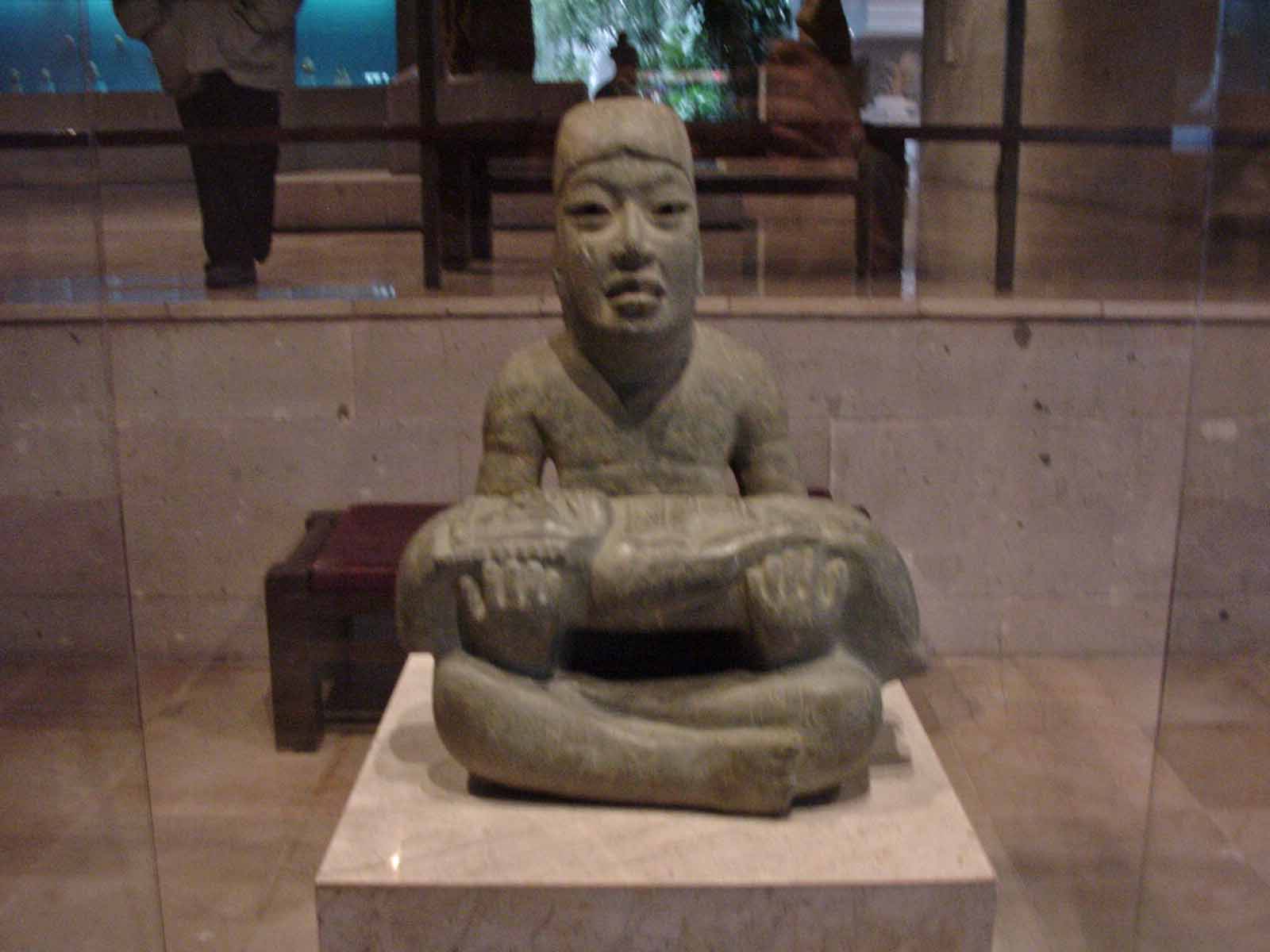
El Senor de las Limas
Olmec sculptor, unrecordedA seated greenstone figure of a man holding a were-jaguar infant, read by archaeologists as one of the clearest statements of Olmec ruler-and-supernatural iconography and one of the most reproduced Olmec sculptures in the literature6
San Martin Pajapan Monument 1
Olmec sculptor, unrecordedA kneeling basalt figure holding a ceremonial bar, found on the summit of the San Martin Pajapan volcano in the Tuxtlas and known locally as 'Chane'; the archaeologist Alfonso Medellin Zenil had it brought down to the museum in 1966, eleven years before excavation methods would have documented its find context to modern standards15
Stela 1 of La Mojarra
Epi-Olmec carver, southern VeracruzA basalt slab carved with a long hieroglyphic text in the epi-Olmec (Isthmian) script and a long-count date, among the longest surviving pre-Columbian texts from Mesoamerica outside the Maya area; additional glyphs were found on the stone during preparation for exhibition after it had already been on display for years, a reminder of how much a single object can still change on rereading5
The repatriated Olmec malachite mask
Olmec carver, unrecordedA malachite mask dated to roughly 1200-900 BCE, recovered from a private collector in New York through Mexico's 'Mi Patrimonio No Se Vende' repatriation campaign and put on public display at the museum from 18 January 2023 under a two-year loan agreement with the collector; what happened to the piece once that loan period ended is not resolved in the sources checked for this record (see open_questions)14
Cihuateteo funerary sculptures from El Zapotal
Central Veracruz culture (Remojadas tradition)Clay figures of the cihuateteo, women deified after dying in their first childbirth in Mesoamerican belief, excavated at the El Zapotal site and among the museum's principal holdings from the classic-period cultures of central Veracruz6
Mural fragment from Las Higueras
Central Veracruz culture, Las Higueras temple siteA painted lime-plaster fragment from the polychrome ritual murals of the Las Higueras temple complex, roughly 600-900 CE, showing a standing figure in ceremonial dress beside a banner of feathers or shields; the site's murals are among the best-preserved painted programmes to survive from the classic Gulf Coast6
Caritas sonrientes (Remojadas smiling-face figurines)
Remojadas culture, central VeracruzHollow ceramic figures with a distinctive open, smiling expression, among the most widely reproduced and imitated images from the Gulf Coast tradition, and a staple of the museum's central Veracruz rooms11
A building conceived as landscape
The museum's current building was inaugurated on 30 October 1986, replacing a smaller circular hall the university had occupied since about 1960. Its design is credited to the firm of the American architect Edward Durell Stone working with the Mexican architect Sergio Mejia Ontiveros, with the museography developed by Iker Larrauri and Fernando Gamboa; construction took about fifteen months. The result is not a conventional museum block but an elongated, terraced structure of more than 9,000 square metres across multiple levels, its long axis chosen to echo the geography of the Veracruz coastal plain the collection itself comes from. Square perforated windows puncture the travertine-clad walls in a grid that deliberately recalls the niched pyramid at El Tajin, one of the sites whose material the museum holds.
What ties the building together is not a corridor in the ordinary sense but three roofed, open-sided courtyards planted with palms, banana trees and bamboo, through which the exhibition halls open onto daylight and greenery rather than blank walls. Colossal heads and other monuments stand among the planting rather than being walled off from it. The landscaping was recognised in its own right: Mexico's Society of Landscape Architects gave the grounds its design prize in 2000, and the gardens remain a stated part of a visit rather than an afterthought around the parking area.
From a university teaching collection to Mexico's second anthropology museum
The collection's origins go back further than the current building. The Universidad Veracruzana's anthropology teaching collection began forming in the 1940s from a few dozen pieces, and the museum was formally established in 1957 in partnership with Mexico's national anthropology and history institute. It first expanded onto the grounds of the old Molino de San Roque, and a dedicated circular building of about 1,500 square metres opened there around 1960 to house the growing collection of ethnographic and archaeological material. By the early 1980s that building could no longer hold what the university had assembled, and governor Agustin Acosta Lagunes backed the larger, purpose-built museum that opened in 1986 and stands today.
Sources disagree on exactly how large the resulting collection is (see open_questions), but the consistent claim across the museum's own materials, Mexican government listings and independent press is that this is the second-ranked anthropology museum in the country after the National Museum of Anthropology in Mexico City, and the principal repository anywhere for archaeological material from the Gulf Coast cultures of Veracruz: Olmec, Totonac, Huastec and the classic-period cultures of central Veracruz such as Remojadas and El Zapotal.
The Olmec halls: seven heads and what moving them meant
The museum's most photographed holdings are its Olmec colossal heads. Of the seventeen colossal heads known from Mexico's Gulf Coast, seven are here: San Lorenzo Monuments 1, 3, 4, 5, 7, 8 and 9, each carved from a single basalt boulder and each, in its original context at the Olmec centre of San Lorenzo Tenochtitlan, moved many kilometres from the Tuxtla mountain quarries without draft animals, the wheel, or metal tools. Colossal Head 8 stands at the museum's own entrance, greeting visitors before the ticket line reaches the first gallery proper; the others are distributed through the long gallery and the covered patios rather than gathered in one room.
The same halls hold two further Olmec sculptures that matter as much to specialists as the heads do to visitors. El Senor de las Limas, a seated greenstone figure cradling a were-jaguar infant, is one of the most reproduced single images in Olmec studies, read as an early and unusually explicit statement of the ruler-supernatural relationship that recurs across the period's iconography. San Martin Pajapan Monument 1, a kneeling figure holding a ceremonial bar, was found not at a lowland site but on the summit of the San Martin Pajapan volcano in the Tuxtlas, where local Popoluca and Nahua communities knew it as 'Chane'; the archaeologist Alfonso Medellin Zenil had it brought down to the museum in 1966.
Central and northern Veracruz: smiling faces, a temple mural, and the ballgame
Beyond the Olmec material, the museum's central Veracruz rooms hold the classic-period cultures that followed: the Remojadas tradition's hollow ceramic 'smiling face' figurines (caritas sonrientes), among the most widely copied images from the Gulf Coast; the Cihuateteo funerary sculptures excavated at El Zapotal, representing women deified in Mesoamerican belief after dying in their first childbirth; and a surviving fragment of the painted ritual murals recovered from the Las Higueras temple complex, dated to roughly 600-900 CE and depicting figures in ceremonial dress, among the best-preserved painted programmes from the classic Gulf Coast.
A further room turns north to the Totonac and Huastec material: carved stone yokes, hachas and palmas connected to the Mesoamerican ballgame, and architectural fragments that echo the niched pyramid style of El Tajin, the major Totonac ceremonial centre whose geometry the museum's own facade quotes. Together the rooms are organised, according to the Mexican government's own museum registry, into roughly six permanent halls and nine galleries across the building's several levels - a layout meant to move a visitor in rough chronological and geographic order from the Olmec Gulf Coast north and forward through time.
A text almost as old as writing in the Americas
One object in the long gallery rewards more time than its case suggests. Stela 1 of La Mojarra is a basalt slab carved with a long hieroglyphic inscription in the epi-Olmec (sometimes called Isthmian) script, accompanied by a long-count calendar date, and it is among the longest continuous pre-Columbian texts known from Mesoamerica outside the Maya lowlands. It had already been on public display in Xalapa for years when, during preparation for a later exhibition, conservators found additional glyphs on the stone that earlier study had missed - a small but telling case of how much room for revision remains even in an object that has been studied and displayed for decades. The script itself remains only partially and contestedly deciphered, which the museum's own labelling and the specialist literature both treat as an open scholarly question rather than a settled reading.
A mask that came back, and the question of what happens next
Not everything in the museum arrived through excavation or donation. In January 2023 the museum put on display an Olmec mask carved from malachite, dated to roughly 1200-900 BCE, that had surfaced in the hands of a private collector in New York. Mexico's consul general in New York, Jorge Islas Lopez, pursued its return from January 2022 as part of the foreign ministry's 'Mi Patrimonio No Se Vende' ('My Heritage Is Not For Sale') repatriation programme, which by the reporting available has recovered more than 9,000 objects. The mask reached Mexico in November 2022 and went on view in Xalapa in January 2023, but the agreement that brought it to the museum was not a straightforward government seizure or donation: Mexican press reporting at the time describes a two-year loan (comodato) signed between the New York collector and the museum, meaning the piece remained privately owned even as it went on public display.
What became of the mask once that two-year term ran out, sometime around early 2025, is not stated in any source checked for this record. It may have been renewed, converted into a permanent gift, or returned to the lender; the sources available simply stop at the terms of the original agreement. It is recorded here as an open question rather than resolved either way, because a museum's willingness to show a piece is not the same claim as a museum's title to keep it.
What visitors say
Visitors consistently describe the museum as one of the best anthropology museums in Mexico after the national museum in Mexico City, and often better for a quiet, unhurried visit because it draws far fewer crowds. What they praise most is standing in front of the colossal heads in person, the calm, well-lit galleries and covered gardens that separate this museum from a dense city-centre hall, and the scale of the collection relative to how manageable it feels to walk through. The most repeated complaint is that object labels and interpretive text are almost entirely in Spanish, so a visitor without Spanish who skips the paid audio guide misses a great deal of context; a secondary complaint is that the collection is large enough that a visit under two hours feels rushed.
What is praised, what is criticised
- Praised: seeing the Olmec colossal heads in person, described repeatedly as having a physical presence photographs do not convey
- Praised: the covered courtyards and gardens threaded through the galleries, landscaped with palms, bamboo and banana trees
- Praised: clean, well-lit, uncrowded galleries with clear chronological organisation
- Praised: the cafeteria, gift shop and grounds as part of a complete visit
- Praised: knowledgeable guides when a tour is booked
- Criticised: signage and object labels are almost entirely in Spanish, which limits what a non-Spanish-speaking visitor gets from the museum without paying for the audio guide
- Criticised: the collection is large enough that visitors who budget under two hours report feeling rushed and missing rooms
Ratings on other platforms
Tripadvisor: 4.8 from 584 ratings, read 28 September 2026
A platform average is a tertiary source: it moves, it is not audited, and we quote no visitor's words.
Questions about Museo de Antropologia de Xalapa
Where is Museo de Antropologia de Xalapa?
Av. Xalapa s/n, Col. Magisterial, 91010 Xalapa-Enriquez, Veracruz, Mexico.
How much does it cost to visit?
General: MXN 70; Students, teachers, INAPAM cardholders: MXN 30; Guided tour in Spanish, outside the free 11:30 tour, per group of up to 20: MXN 350; Guided tour in English, per group of up to 20: MXN 700; Audio guide (Spanish or English): MXN 60. As confirmed 28 September 2026.
When is it open?
Tue-Sun 09:00-17:00. Closed: Monday. As confirmed 28 September 2026.
How do you get there?
bus: About 3 km north of Parque Juarez in downtown Xalapa; city bus routes stop in front of the museum, and buses marked Camacho-Tesoreria run from Enriquez near the park; taxi: A short taxi ride from downtown Xalapa or the Central de Autobuses (CAXA) bus terminal.
What should you see first?
San Lorenzo Colossal Head 8 (Olmec sculptors, San Lorenzo Tenochtitlan); El Senor de las Limas (Olmec sculptor, unrecorded); San Martin Pajapan Monument 1 (Olmec sculptor, unrecorded); Stela 1 of La Mojarra (Epi-Olmec carver, southern Veracruz); The repatriated Olmec malachite mask (Olmec carver, unrecorded); Cihuateteo funerary sculptures from El Zapotal (Central Veracruz culture (Remojadas tradition)).
What we could not confirm
- Sources disagree on the size of the collection. The museum's own catalog history page states about 25,000 archaeological pieces in total with roughly 1,500 on permanent display, matching the figure given by English-language Wikipedia; the museum's own visitor-facing pages and several press accounts instead describe the exhibited collection simply as 'more than 2,500 pieces'. This record does not resolve which figure describes which count (total holdings versus objects on view at a given time) and states both rather than picking one.
- The repatriated Olmec malachite mask went on display in January 2023 under a two-year loan (comodato) from the New York collector who had held it. No source checked for this record states what happened when that loan period lapsed around early 2025: whether it was renewed, converted to a gift, or the object returned to the lender.
- Several secondary sources (travel and news sites, not the museum's own pages) state that admission is free on Sundays for Mexican nationals presenting identification. The museum's own admission and weekend-programming pages, both checked for this record, list only the standard general and reduced fares and free Saturday/Sunday auditorium programming, without themselves stating a free general-admission day. admission_free_days is left empty here pending confirmation on the museum's own page rather than an aggregator.
Images
Sources
- 1Museo de Antropologia de Xalapa, official homepage, Universidad Veracruzana uv.mx/max/
- 2Museo de Antropologia de Xalapa, 'Informacion' (hours, admission, contact) uv.mx/max/como-llegar/
- 3Museo de Antropologia de Xalapa, 'Servicios' (guided tours, cafe, shop, audio guides) uv.mx/max/seccion/servicios/
- 4Museo de Antropologia de Xalapa, 'Fin de semana' (weekend programming) uv.mx/max/seccion/fin-de-semana/
- 5'Museo de Antropologia de Xalapa', Wikipedia in Spanish es.wikipedia.org/wiki/Museo_de_Antropolog%C3%ADa_de_Xalapa
- 6'Xalapa Museum of Anthropology', Wikipedia en.wikipedia.org/wiki/Xalapa_Museum_of_Anthropology
- 7Wikidata, Q1841655 (Museo de Antropologia de Xalapa) wikidata.org/wiki/Q1841655
- 8Sistema de Informacion Cultural, Secretaria de Cultura (Mexican federal government), museum registry entry sic.cultura.gob.mx/ficha.php?table=museo&table_id=767
- 9Persis Karim, 'Destination Xalapa: Where the Anthropology Museum Is a Must', World Literature Today, May 2025 worldliteraturetoday.org/2025/may/destination-xalapa-where-anthropology-museum-must-persis-karim
- 10Joseph Sorrentino, 'Xalapa's anthropology museum is a must-see in Veracruz', Mexico News Daily, 28 June 2023 mexiconewsdaily.com/culture/xalapas-anthropology-museum-is-a-must-see-in-veracruz/
- 11'A Tour of The Xalapa Museum of Anthropology', Sailingstone Travel sailingstonetravel.com/xalapa-museum-of-anthropology/
- 12Universidad Veracruzana, Catalogo MAX, 'Historia de la coleccion' sapp.uv.mx/catalogomax/en-US/Home/HistoriaColeccion
- 13Tripadvisor, 'Museo de Antropologia de Xalapa' listing, read 28 September 2026 tripadvisor.com/Attraction_Review-g154235-d156065-Reviews-Museo_de_Antropologia_de_Xalapa-Xalapa_Central_Mexico_and_Gulf_Coast.html
- 14'Veracruz ya exhibe mascara olmeca de malaquita repatriada desde NY: asi es', La Jornada Maya lajornadamaya.mx/nacional/209578/veracruz-ya-exhibe-mascara-olmeca-de-malaquita-repatriada-desde-ny-asi-es
- 15'San Martin Pajapan Monument 1', Wikipedia en.wikipedia.org/wiki/San_Mart%C3%ADn_Pajapan_Monument_1
- 16'Xalapa: un museo maravilloso', Nomad-As travel blog nomad-as.com/2017/07/xalapa-un-museo-maravilloso.html