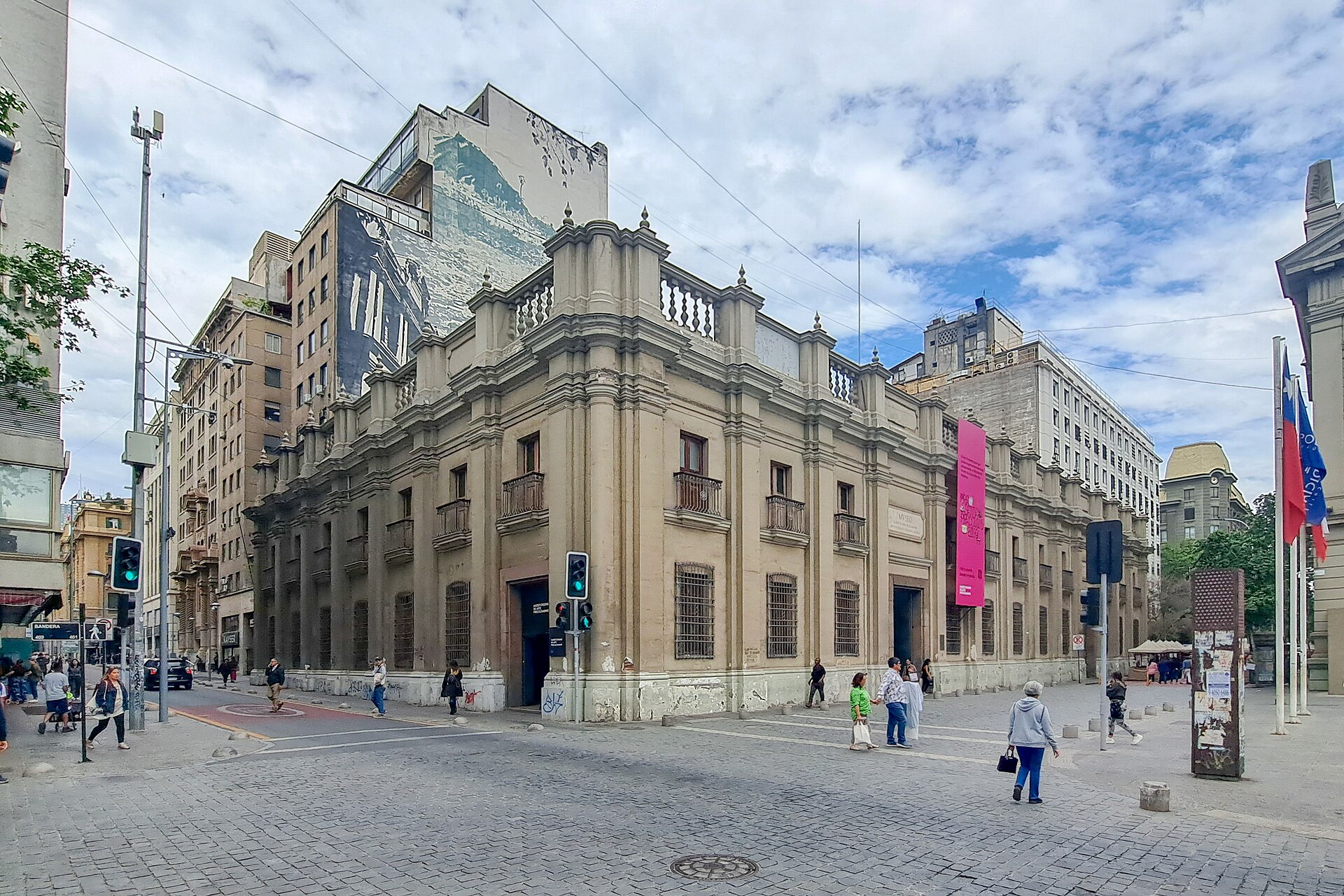
The neoclassical former Royal Customs House on Calle Bandera, built 1805-1807, has housed the Museo Chileno de Arte Precolombino since 1981.
Carlos yo, CC BY-SA 4.0Museo Chileno de Arte Precolombino
Museum · Founded 1981
Open, admission and hours confirmed 26 August 2026 · 12 sources
On this page 15 sections
ContentsClose
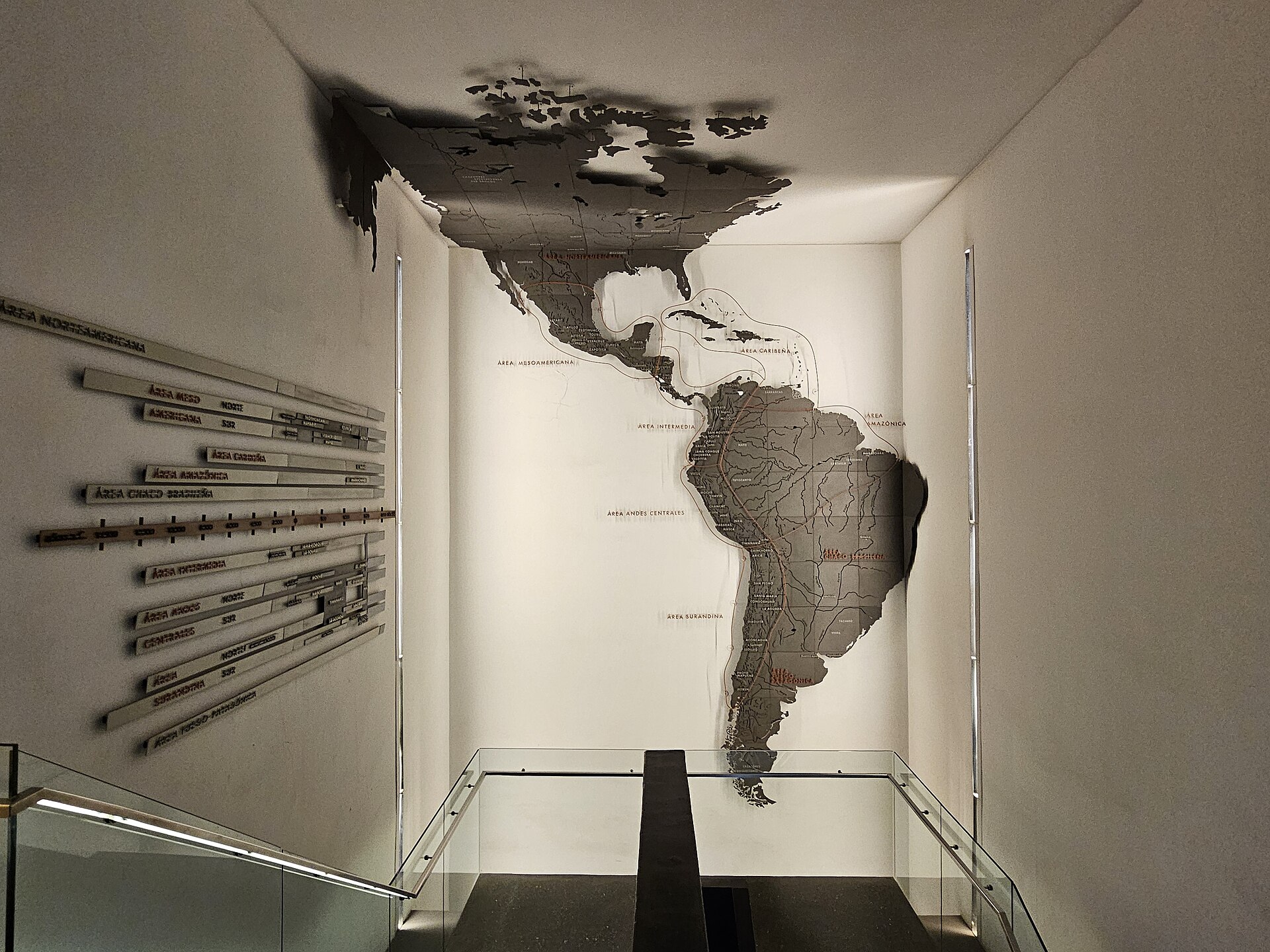
The museum's real strength is breadth read as a single argument: roughly 11,000 objects moving from Mexico to the southern Andes, organised by culture area so that Mesoamerican, Central American, Andean and Chilean material sit in dialogue rather than in separate national silos. Its Mesoamerican and Central Andean ceramics and metalwork are strong by the standard of any comparable museum outside those countries, but the material found nowhere else at this depth is the museum's own underground hall, Chile antes de Chile, built specifically to carry the country's indigenous deep history, Chinchorro mummification included, in a way that a museum built solely around Larrain's imported collecting could not.
| Kind | Museum |
|---|---|
| Founded | 1981 |
| City and country |  Santiago, Chile Santiago, Chile |
| Address | Bandera 361, Santiago, Chile |
| Website | precolombino.cl |
| Status | Open, confirmed |
| Record last verified |
Visiting
- Hours
- Tue-Sun10:00 to 18:00Last entry 17:15
- Closed
- Monday. Mandatory public holidays (feriados irrenunciables).
- Admission
- General / Chilean nationals and residentsCLP 3,000
- University studentsCLP 1,000Chilean student ID required
- Foreign touristsCLP 12,000
- Foreign student touristsCLP 5,000
- Children under 10Freefree
Free entry: First Sunday of every month, for Chilean nationals and residents- Tickets
- museo.precolombino.cl/planifica-tu-visita The museum's own ticket page.
- Do I need to book?
- No for general admission. Educational group visits require booking at least one month ahead; private group tours are arranged through the museum's events email
- Address
- Bandera 361, Santiago, Chile MapMetro Plaza de Armas station, Line 5, about one block from the museum
- Website
- precolombino.cl
- Telephone
- +56 2 2928 1500
- [email protected]
Before you go how long, access, photography, bags, eating, shop
- How long to allow
- Two to three hours to see all five permanent halls, including the underground Chile antes de Chile room
- Access
- Ramps, a lift, a wheelchair and an adapted bathroom for visitors with mobility disabilities
- Photography
- Not stated on the museum's own visit page; policy not confirmed this run
- Bags
- Lockers are provided; the museum states it is not responsible for items left in them
- Eating
- Monday-Friday 8:00-18:00, weekends 9:30-18:00
- Shop
- Daily 10:00-14:00 and 15:00-18:00
Prices and hours change. We take them from the institution's own pages and print the day we read them, and you can check the current position at the source we used. Confirm before you travel.
What is inside
Mesoamerica
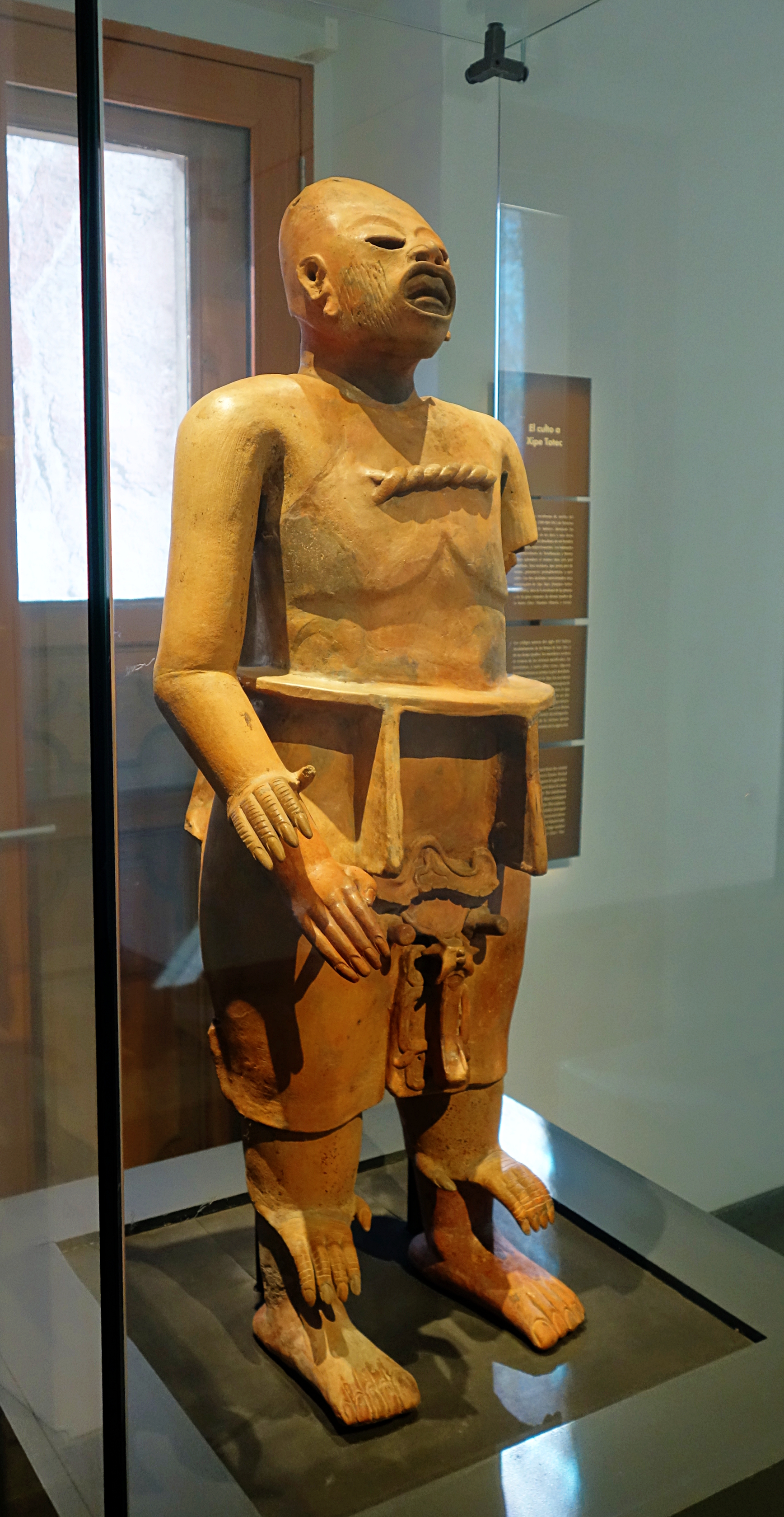
Objects from Aztec, Teotihuacan and Maya cultures, including a Xipe Totec figure associated with the deity of spring renewal, a Teotihuacan incense burner and a carved Maya relief.
Intermediate Area (Central America and northern South America)
Valdivia pottery from coastal Ecuador, Capuli coca-chewing figures, and gold objects of the Veraguas and Diquis traditions from Panama and Costa Rica.
Central Andes
Moche ceramic masks and copper figures from the north coast of Peru, and a painted textile fragment attributed to the Chavin tradition, close to 3,000 years old.
Southern Andes
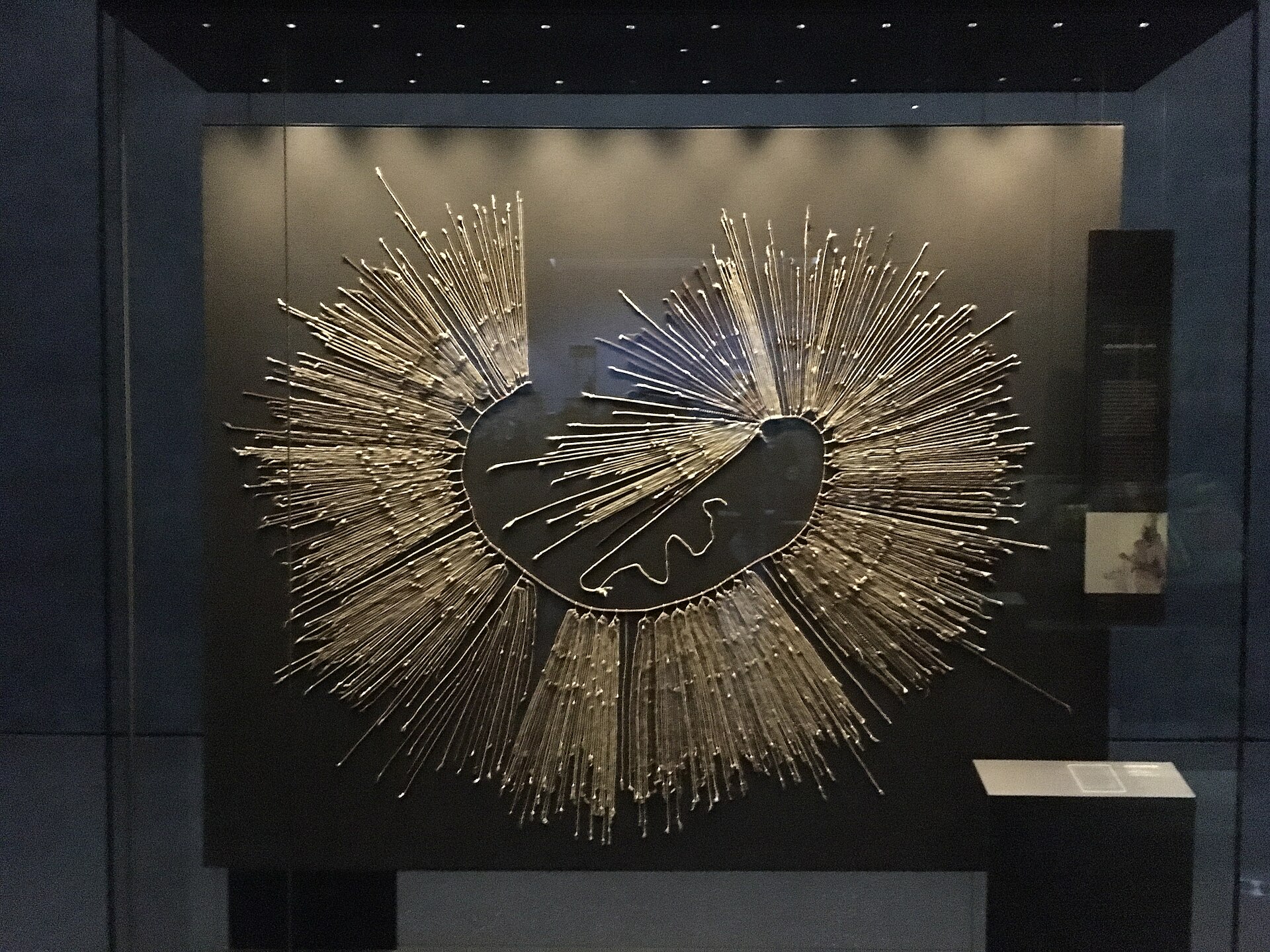
Aguada ceramic funerary urns from northwest Argentina, San Pedro de Atacama snuff trays used in ritual hallucinogen-taking, and an Inca quipu, the knotted-cord recording device.
Chile antes de Chile (underground hall, opened 2014)
The deep history of Chile's own indigenous peoples, from the earliest fisherfolk of the northern coast through the Chinchorro, Diaguita, Mapuche, Aymara and Rapa Nui, including Chinchorro mummies moved into this climate-controlled space when it opened.
What to see first
Xipe Totec figure
Aztec / Mesoamerican cultureA figure of the deity associated with spring renewal and the flaying of skin worn as a symbolic second skin, one of the signature pieces of the Mesoamerica hall.5
Teotihuacan incense burner
Teotihuacan culture, central MexicoA ceremonial incensario representing the museum's holdings from the great highland city, displayed alongside the Mesoamerican material.5
Carved Maya relief
Maya cultureA bas-relief carving forming part of the museum's Mesoamerican collection.5
Inca quipu
Inca administration, AndesA surviving knotted-cord recording device, the Inca empire's system for keeping numerical and administrative records without a written script.5
Painted Chavin textile
Chavin culture, PeruA painted cloth fragment close to 3,000 years old, among the oldest textiles in the museum's Central Andes hall.5
Chinchorro mummies
Chinchorro culture, northern Chilean coastAmong the world's oldest artificially mummified human remains, predating Egyptian mummification; moved into the climate-controlled Chile antes de Chile hall when it opened in January 2014.7
San Pedro de Atacama snuff trays
San Pedro de Atacama culture, northern ChileWooden trays used to prepare and inhale hallucinogenic snuff in ritual contexts, part of the Southern Andes display.5
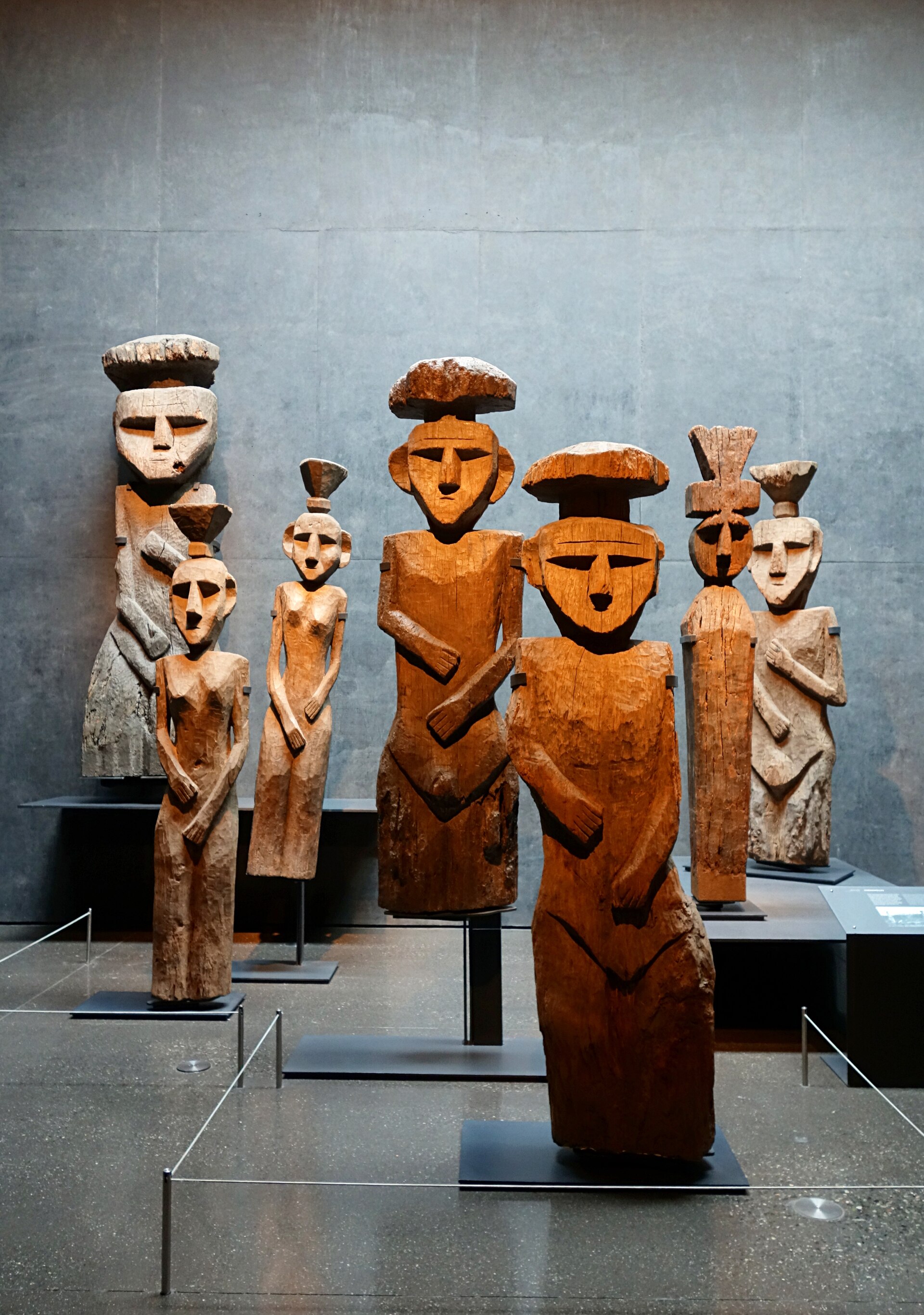
Mapuche chemamull
Mapuche culture, southern ChileA carved wooden funerary figure representing an ancestor, part of the museum's holdings from Chile's far south.12
Exhibitions on now
- On now24 Sep to 22 Nov 2026Confirmed , 3 weeks ago
A customs house rebuilt as a museum of the Americas
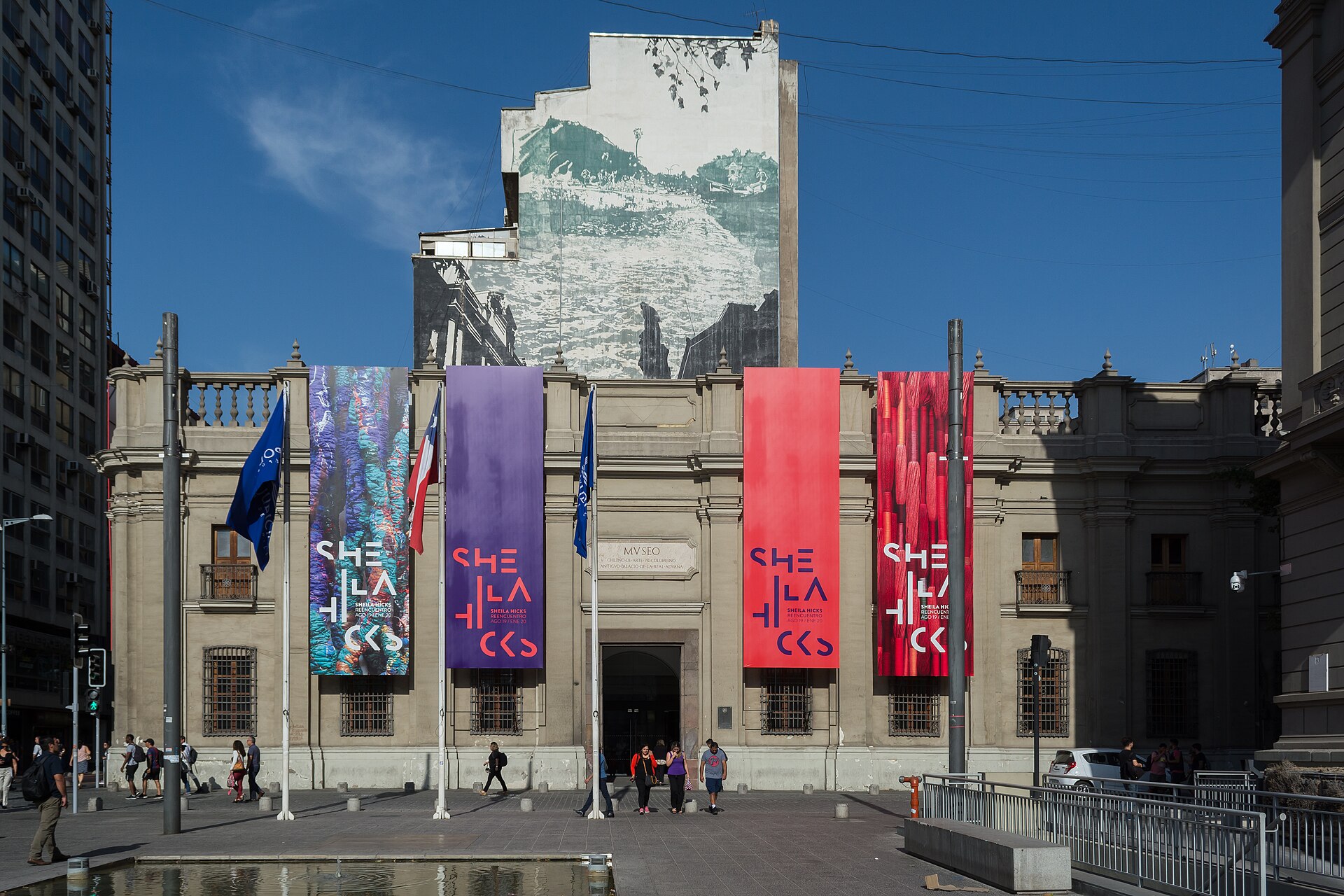
The museum occupies the Palacio de la Real Aduana, the former Royal Customs House built between 1805 and 1807 one block west of Santiago's Plaza de Armas. The neoclassical building went on to serve as Chile's National Library and later as law courts, the Palacio de los Tribunales de Justicia, before it eventually fell out of use. It stood empty through much of the 1970s until restoration work in the early 1980s brought it back into use, this time as a museum. It is now a designated national historic monument.
The architect and collector Sergio Larrain Garcia-Moreno had spent close to fifty years travelling the Americas and assembling a private collection of pre-Columbian objects. Rather than donate the collection directly to the state, he placed it in a foundation, the Fundacion Familia Larrain Echenique, and negotiated a partnership with the Municipality of Santiago, which provided the restored customs house as a home for it. The museum opened to the public in 1981. The arrangement continues today: the foundation runs the museum and owns the collection, while the municipality provides the building and covers part of the running costs.
A collector's eye across fifty years
Larrain's criterion for the founding collection was, in his own account, aesthetic and emotional rather than archaeological: objects chosen for the force of their craftsmanship rather than assembled through his own excavation or through a single region's material culture. On the museum's own account the holdings today run to roughly 11,000 objects drawn from about 50 pre-Columbian cultures, spanning close to 10,000 years and reaching from Mexico to the southern tip of South America.
The permanent galleries are organised by culture area rather than by present-day national border, so a visitor moves in turn through Mesoamerica, the Intermediate Area of Central America and northern South America, the Central Andes and the Southern Andes. The approach favours comparison across cultures over a country-by-country survey, and it is the same logic Larrain applied to his own collecting: pieces chosen for what they share as American art rather than for the modern state that now sits on the ground where they were made.
Underground, for the deep history of Chile
The museum closed for renovation in December 2011 and reopened in January 2014 after a two-year, US$17 million expansion designed by the Chilean architect Smiljan Radic, financed through a long-running partnership with the mining companies BHP Billiton and Minera Escondida. Radic's team excavated beneath the building's two colonial patios to build a single subterranean hall roughly 40 metres long, 11 metres wide and 8 metres high, adding about 1,300 square metres of space and increasing the museum's total exhibition, storage and conservation-laboratory capacity by more than half.
The new hall was named Chile antes de Chile, Chile before Chile, and it is dedicated entirely to the deep history of the country's own indigenous peoples: the earliest fisherfolk of the northern coast, the Chinchorro who mummified their dead millennia before the Egyptians began the practice, and on through the Diaguita, Mapuche, Aymara and Rapa Nui. Conservation staff at the time described moving the museum's most fragile objects, the Chinchorro mummies among them, into a climate-controlled space built for them.
What is inside
The Mesoamerica hall holds Aztec, Teotihuacan and Maya material, including a Xipe Totec figure tied to the deity of spring renewal, a Teotihuacan incense burner and a carved Maya relief. The Intermediate Area gallery covers Central America and the northern edge of South America, with Valdivia pottery from coastal Ecuador, Capuli coca-chewing figures and gold objects in the Veraguas and Diquis traditions of Panama and Costa Rica. The Central Andes hall centres on the north coast of Peru, with Moche ceramic masks and copper figures and a painted Chavin textile fragment close to 3,000 years old.
The Southern Andes material, much of it now shown within or alongside Chile antes de Chile, includes Aguada funerary urns from northwest Argentina, wooden snuff trays used by the San Pedro de Atacama culture in ritual hallucinogen-taking, an Inca quipu, and Mapuche wood carving including a chemamull, a funerary figure representing an ancestor. The Chinchorro mummies, among the oldest artificially preserved human remains anywhere, sit at the centre of the underground hall built for them in 2014.
Visiting: hours, admission and a two-tier ticket
The museum is open Tuesday to Sunday, 10:00 to 18:00, with last entry at 17:15, and closed Mondays and mandatory public holidays. General admission for Chilean nationals and residents is CLP 3,000, with a CLP 1,000 rate for university students; foreign tourists pay CLP 12,000, or CLP 5,000 with a foreign student card. Admission is free for children under 10, for school groups, for Chilean residents over 60, for members of Chile's indigenous peoples, for residents of the Santiago commune who can show proof of address, and for everyone on the first Sunday of each month, national visitors and residents only. Ramps, a lift, a wheelchair and an adapted bathroom are provided, and a free audio guide is available by QR code in Spanish, English and Portuguese. A cafe and a museum shop operate on site.
The gap between the CLP 3,000 resident rate and the CLP 12,000 foreign-tourist rate, a factor of four, is standard practice at a number of Latin American civic and state museums that rely on ticket income from foreign visitors to keep the price low for local residents and students, but it has drawn periodic comment from foreign visitors in online reviews who see it as steep for what is, physically, a modest-sized museum.
Reception: a top-ranked stop with real friction points
The museum carries a 4.6 out of 5 rating from close to 5,000 Tripadvisor reviews, read 26 August 2026, and is consistently listed among Santiago's most-visited attractions. Visitors most often single out the density and quality of the collection relative to the museum's modest footprint, and the clarity of the bilingual Spanish and English labelling paired with the free audio guide. The most consistent complaint is gallery lighting kept low for conservation, which a number of visitors say makes object labels hard to read in the ceramics halls; the two-tier admission pricing, foreign tourists paying four times the local rate, is the other recurring friction point in reviews.
On the museum's opening of its underground hall in January 2014, the Chilean daily La Tercera reported on the transfer of the collection's most fragile objects, the Chinchorro mummies among them, into the new climate-controlled space, and quoted the exhibition's designer on the curatorial aim of engaging visitors without overwhelming them with the sheer number of objects available to show.
What visitors say
Visitors consistently rank this among Santiago's best museums for the depth and presentation of its collection relative to its size, praising the clarity of the bilingual Spanish and English labeling and the free multilingual audio guide. The most common friction points are gallery lighting kept low for conservation, which some visitors find makes labels hard to read, and a foreign-visitor ticket price four times the Chilean resident rate, which some reviewers single out as steep.
What is praised, what is criticised
- Praised: the density and quality of the collection for the size of the museum
- Praised: clear bilingual Spanish/English labeling and the free multilingual audio guide
- Criticised: gallery lighting kept low for conservation makes some labels hard to read in the ceramics halls
- Criticised: the CLP 12,000 foreign-tourist admission price, four times the CLP 3,000 Chilean-resident rate, draws periodic complaint in visitor reviews
Ratings on other platforms
Tripadvisor: 4.6 from 4,985 ratings, read 26 August 2026
A platform average is a tertiary source: it moves, it is not audited, and we quote no visitor's words.
Questions about Museo Chileno de Arte Precolombino
Where is Museo Chileno de Arte Precolombino?
Bandera 361, Santiago, Chile.
How much does it cost to visit?
General / Chilean nationals and residents: CLP 3000; University students: CLP 1000; Foreign tourists: CLP 12000; Foreign student tourists: CLP 5000; Children under 10: free. As confirmed 26 August 2026.
When is it open?
Tue-Sun 10:00-18:00. Closed: Monday. Mandatory public holidays (feriados irrenunciables). As confirmed 26 August 2026.
How do you get there?
Metro: Plaza de Armas station, Line 5, about one block from the museum.
What should you see first?
Xipe Totec figure (Aztec / Mesoamerican culture); Teotihuacan incense burner (Teotihuacan culture, central Mexico); Carved Maya relief (Maya culture); Inca quipu (Inca administration, Andes); Painted Chavin textile (Chavin culture, Peru); Chinchorro mummies (Chinchorro culture, northern Chilean coast).
What we could not confirm
- The exact acquisition history of individual objects in the founding Larrain collection, assembled on the international market over roughly five decades from the 1930s onward, is not published object by object. The museum's own account describes the founder's criterion as aesthetic rather than archaeological, but does not itemise provenance or find-spot for each piece, which is standard for a collection of this kind and era but leaves individual items without a documented chain of custody.
- Whether any human remains or objects in the museum's holdings have been the subject of a repatriation request from Chilean indigenous communities is not addressed on the museum's own site. Published academic discussion of pre-Columbian repatriation and ancestral-remains disputes in Chile located during this research concentrated on the Museo Arqueologico de San Pedro de Atacama rather than on this museum specifically.
Images
Sources
- 1Museo Chileno de Arte Precolombino, Planifica tu Visita (hours, prices, accessibility, contact) museo.precolombino.cl/planifica-tu-visita/
- 2Museo Chileno de Arte Precolombino, La Institucion (founding history, ownership, mission) museo.precolombino.cl/la-institucion/
- 3Museo Chileno de Arte Precolombino, home page (confirms current open operation, no closure notice) museo.precolombino.cl/
- 4Registro de Museos de Chile, official registry entry registromuseoschile.cl/663/w3-article-50716.html
- 5Wikipedia, Museo Chileno de Arte Precolombino (; gallery organisation, building history, metro access) en.wikipedia.org/wiki/Museo_Chileno_de_Arte_Precolombino
- 6ArchDaily, Renovation of the Chilean Museum of Pre-Colombian Art / Smiljan Radic archdaily.com/471285/renovation-of-the-chilean-museum-of-pre-colombian-art-smiljan-radic
- 7La Tercera, Momias chinchorro y vasijas incas destacan en la nueva sala del Museo Precolombino latercera.com/noticia/momias-chinchorro-y-vasijas-incas-destacan-en-la-nueva-sala-del-museo-precolombino/
- 8Tripadvisor, Museo Chileno de Arte Precolombino reviews and rating () tripadvisor.com/Attraction_Review-g294305-d1007866-Reviews-Museo_Chileno_de_Arte_Precolombino-Santiago_Santiago_Metropolitan_Region.html
- 9Wikimedia Commons, File:Palacio de la Real Aduana, Santiago 20231109.jpg (licence verification for lead image) commons.wikimedia.org/wiki/File:Palacio_de_la_Real_Aduana,_Santiago_20231109.jpg
- 10Museo Chileno de Arte Precolombino, own collection database, Chinchorro entry (confirms mummy holdings) precolombino.cl/wp/archivo/coleccion/area/andes-sur/chinchorro/
- 11GPSmyCity, Pre-Columbian Art Museum guide (; corroborates Chinchorro mummy on display) gpsmycity.com/attractions/pre-columbian-art-museum-19140.html
- 12Wikimedia Commons, File:Santiago museo de arte precolombino chemamull mapuche.jpg (confirms chemamull on display, licence verification) commons.wikimedia.org/wiki/File:Santiago_museo_de_arte_precolombino_chemamull_mapuche.jpg

