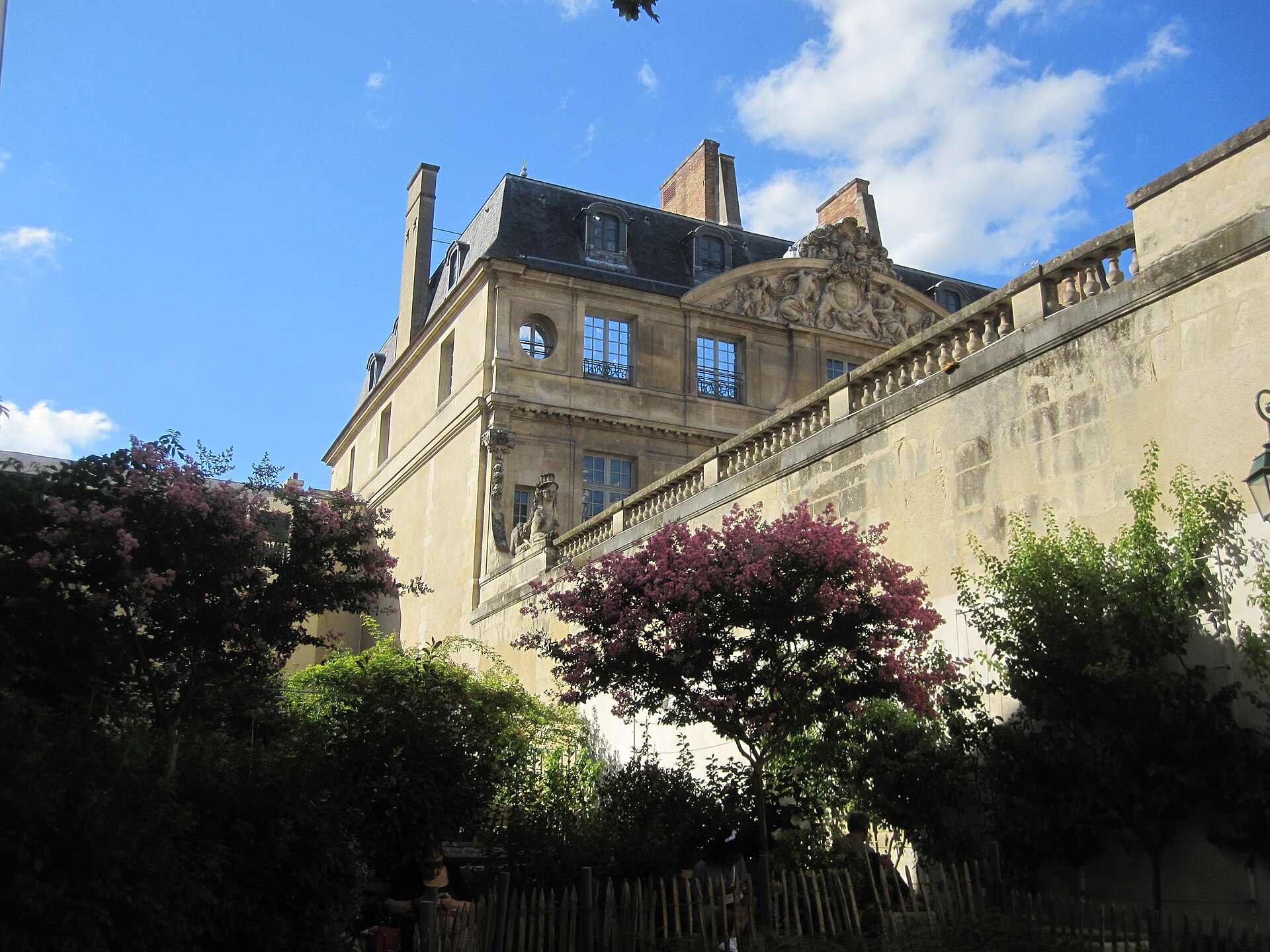
A side view of the Hotel Sale, the 17th-century mansion built for the salt-tax financier Pierre Aubert de Fontenay that has housed the museum since 1985.
DiscoA340 · CC BY-SA 4.0Musee Picasso Paris
Museum · Musée national Picasso-Paris · Founded 1985
Open, admission and hours confirmed 19 August 2026 · 9 sources
On this page 15 sections
ContentsClose
The collection's strength is completeness rather than selection: because it was formed by a tax settlement rather than acquisition, it includes work Picasso never intended to sell alongside masterpieces, sketches, notebooks, and the non-Western and old-master objects he collected for himself, giving the museum a claim no other Picasso collection can make, that of showing the artist's own working and private taste rather than a curated best-of assembled from the market after his death.
| Local name | Musée national Picasso-Paris |
|---|---|
| Kind | Museum |
| Founded | 1985 |
| City and country |  Paris, France Paris, France |
| Address | 5 rue de Thorigny, 75003 Paris, France |
| Website | museepicassoparis.fr/en |
| Status | Open, confirmed |
| Record last verified |
Visiting
- Hours
- Tuesday-Sunday09:30 to 18:00Last admission 17:15; galleries cleared 20 minutes before closing
- MondayClosed
- Closed
- Monday. 1 January. 1 May. 25 December.
- Admission
- Museum ticket, regular priceEUR 16One ticket covers the permanent collection and any current temporary exhibition
- Family rate, per accompanying adultEUR 12For 1 to 2 adults accompanying a child
- First Sunday of the monthFreeFree entry, no reservation, for everyone
Free entry: First Sunday of the month- Tickets
- billetterie.museepicassoparis.fr The museum's own ticket page.
- Do I need to book?
- Not mandatory but a timeslot booking gives priority access, guaranteed for the half hour following the stated entry time; mandatory for groups of 7 or more
- Address
- 5 rue de Thorigny, 75003 Paris, France MapMetro Line 1, Saint-Paul; Line 8, Saint-Sebastien Froissart or Chemin Vert
Bus Lines 96, 75, 69, 76, 67, 72 - Website
- museepicassoparis.fr/en
- Telephone
- +33 1 85 56 00 36
Before you go how long, access, photography, bags, eating, shop
- How long to allow
- Under an hour for the permanent collection alone if moving quickly, longer with the temporary exhibition and the Hotel Sale's own period rooms
- Access
- Accessible to visitors with reduced mobility throughout the building except one historic room that is protected and cannot be altered
- Photography
- Not stated on the pages fetched for this record
- Bags
- Suitcases, travel bags and backpacks are not allowed inside and cannot be left in the cloakroom, as part of security checks the museum states are required by French authorities
- Eating
- A rooftop cafe operates at the same hours as the museum
- Shop
- The museum boutique is across the street from the Hotel Sale rather than inside it
Prices and hours change. We take them from the institution's own pages and print the day we read them, and you can check the current position at the source we used. Confirm before you travel.
What is inside
The Hotel Sale's historic rooms
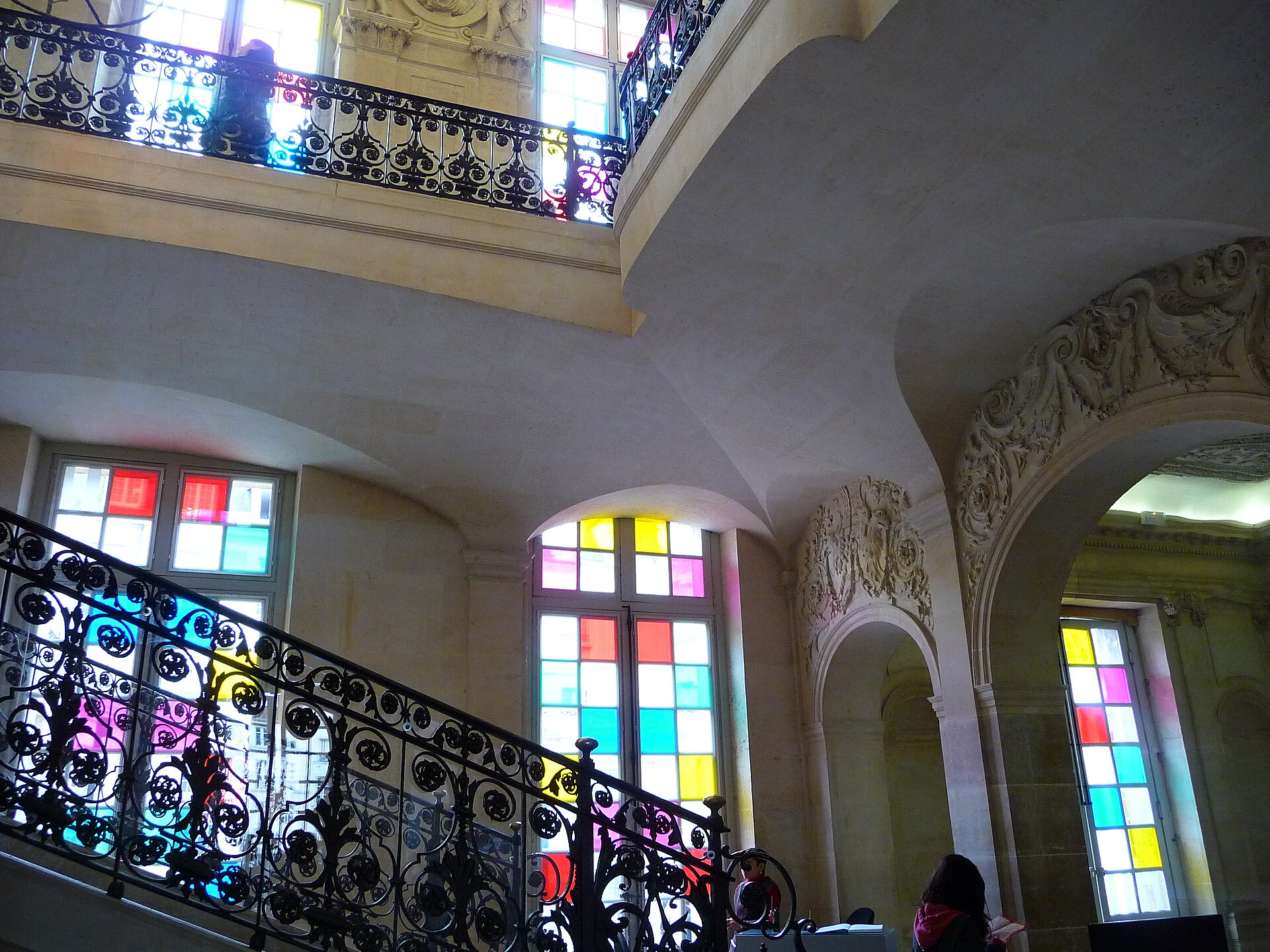
The 17th-century mansion's protected interiors, including the central Baroque staircase sculpted by the Marsy brothers and Martin Desjardins and the Salon de Jupiter, which the museum's 1979-1985 renovation was built to fit inside rather than extend or replace.
The dation galleries
The chronological hang of Picasso's own painted, sculpted, engraved and illustrated work, drawn from the collection formed by the 1979 and 1990 acceptance-in-lieu dations: 297 paintings, 368 sculptures and three-dimensional works, and around 1,719 drawings and notebooks.
Imaginary Journeys: Picasso's own collection
The old-master paintings and non-Western objects Picasso collected himself and kept until his death, including Iberian statues and African and Oceanic masks alongside paintings by Le Nain and Corot; these pieces came to the state under a proviso that bars them from ever being lent to an exhibition anywhere, including within France.
Archives and the Centre d'Etudes Picasso
Roughly 200,000 pieces of archive material, more than 17,000 photographs, over 6,760 books from Picasso's personal library, and the research centre built around them, entered the national collection through a separate acceptance-in-lieu process completed in 1992.
The Diego Giacometti rooms
Fifty pieces of furniture and lighting designed for the museum by the sculptor Diego Giacometti as part of the original 1985 installation, still in use as functional gallery furniture rather than displayed as sculpture in their own right.
Temporary exhibition spaces
A rotating programme, most recently the 2023 rehang for Picasso's death's 50th anniversary that put contemporary artists including Faith Ringgold, Mickalene Thomas and Cheri Samba alongside Picasso's own work against sets designed by the fashion designer Paul Smith.
What to see first
La Flute de Pan
Pablo Picasso, 1923A 205 by 174 cm oil on canvas from the classical, Mediterranean-influenced period of Picasso's work in the early 1920s, and one of the museum's own most-reproduced images of the collection.3
Picasso's own African and Oceanic masks
Various West and Central African and Pacific makers, collected by PicassoNot works by Picasso at all but the non-Western objects he owned and used as visual source material; the museum now displays them alongside contemporary African and diaspora artists specifically to open up the debate about that appropriation rather than present it uncommented.5
Portrait de Dora Maar
Pablo PicassoOne of many depictions of the photographer and painter Dora Maar, Picasso's partner through the late 1930s and war years, shown by the museum's own 2023 rehang alongside Maar's work as a major Surrealist photographer in her own right rather than only as a muse.3
L'Homme au mouton
Pablo PicassoA bronze from the sculpture holdings that make up 368 of the collection's roughly 5,000 works, the largest concentration of Picasso sculpture in any single public collection.3
La Celestine (la femme a la taie)
Pablo PicassoA portrait built around a clouded, blinded eye, part of the museum's holdings from the Blue Period years the dation brought into public ownership as a complete run rather than scattered highlights.3
Autoportrait
Pablo PicassoOne of the self-portraits the museum's own must-see list singles out, spanning a career the collection is unusual in being able to show start to finish in one building.3
Fifty pieces of Diego Giacometti furniture
Diego GiacomettiFurniture rather than fine art, made specifically for this museum's 1985 opening and still functioning as gallery furniture rather than roped off as sculpture, a detail most single-artist museums have no equivalent of.4
Picasso's personal library
Assembled by Pablo PicassoMore than 6,760 books that belonged to Picasso, entered the national collection through the same acceptance-in-lieu process as the art and read today as evidence of what he actually studied rather than what he is assumed to have known.4
Exhibitions on now
Past exhibitions here
A museum that exists because of a tax law, not a donation
The Musee Picasso Paris is, before anything else, the physical result of a change to French inheritance law. Late in the 1960s, with Pablo Picasso ageing and no plan in place for what would happen to the enormous personal holdings he had never sold, the French government introduced dation en paiement, a mechanism allowing heirs to settle inheritance tax by handing over artworks instead of cash. Picasso died in 1973 without a will that addressed the question directly, and his heirs used the new law to pay the tax on his estate with his own work: 1979 was the first dation from Picasso's own estate, and a second dation followed in 1990 from the heirs of his widow, Jacqueline Picasso. The museum's collection, more than 5,000 works and roughly 200,000 additional archive pieces, exists because a tax bill was paid in paintings rather than because anyone set out to build a monographic museum from scratch. The government minister who pushed the mechanism through, Andre Malraux, had been building toward it since celebrating Picasso's 85th birthday across three Paris institutions in 1966; the change in the law is dated to 1968, five years before it was actually needed.
The right of first refusal, and why this is called Picasso's Picasso
The dation gave the French state first choice among everything Picasso's estate held, which is why the museum can describe its collection as Picasso's Picasso: works the artist kept in his own possession throughout his life rather than a survey assembled after the fact from dealers and private owners. That distinction matters for a second, separate reason. Picasso was himself a collector, and his own holdings, kept apart from what he made, included Iberian stone statues, African and Oceanic masks and paintings by Le Nain and Corot, entered the state collection through the same dation mechanism in two tranches, roughly 50 works in 1973 and a further 100 in 1978, under a condition attached at the time: none of it may be lent to an exhibition anywhere in the world, including within France itself. A visitor sees these pieces only here, in the room the museum calls Imaginary Journeys, which is also where the 2023 rehang chose to confront how directly Picasso's own avant-garde generation appropriated African and Oceanic form without engaging the cultures that made it.
A 17th-century mansion built on a salt fortune
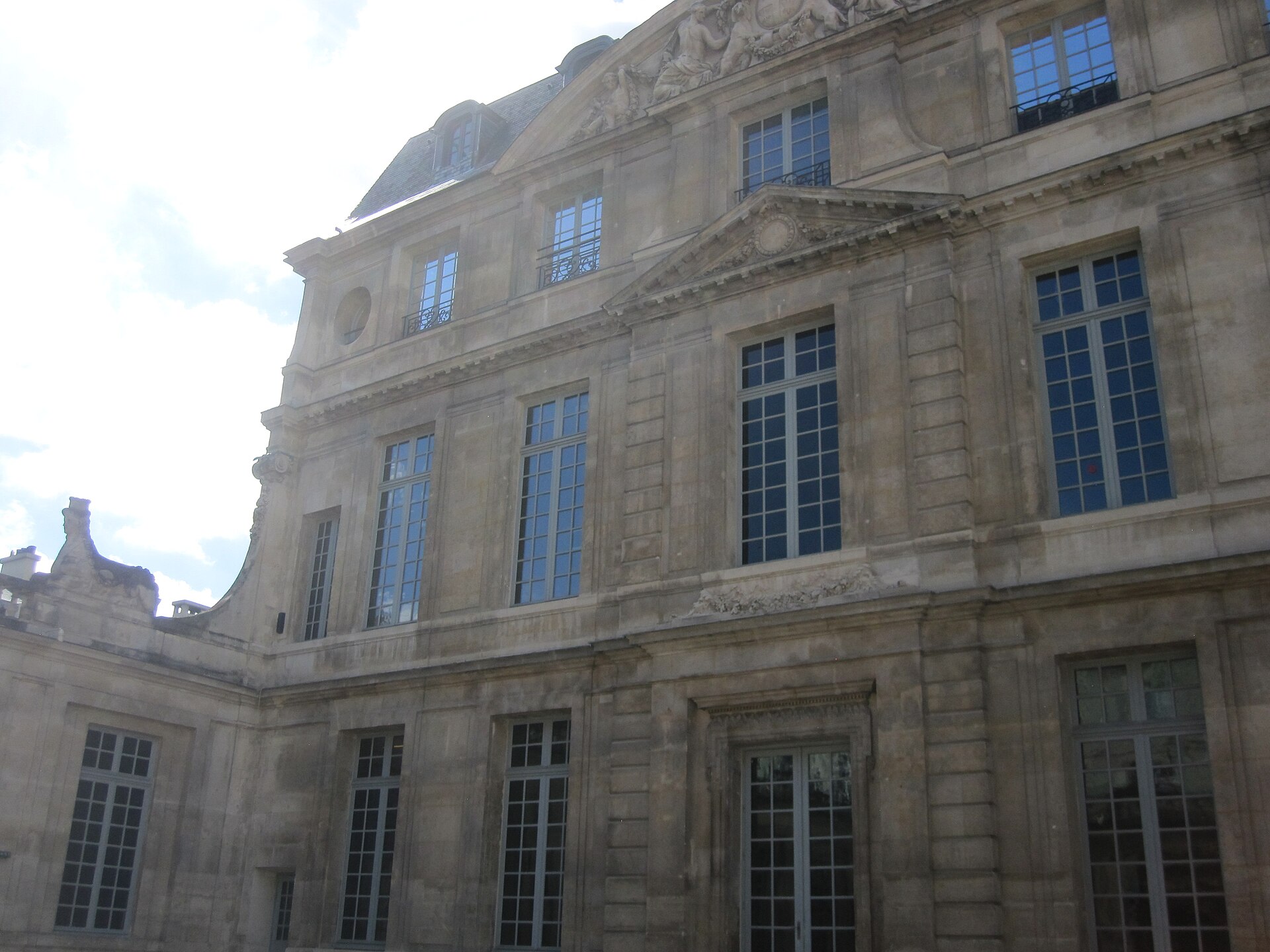
The building itself has a history with nothing to do with Picasso. It was built between 1656 and 1659 for Pierre Aubert de Fontenay, a middle-class financier who had made his fortune farming the royal salt tax, the gabelle, and whose new wealth bought him both a noble title and a mansion designed by a then-unknown young architect, Jean Boullier de Bourges. The house's popular name, the Hotel Sale, literally the salted mansion, records exactly how Aubert paid for it. Gaspard and Balthazar Marsy and Martin Desjardins carved the sculpted decor, including the staircase that reviewers still single out today. The City of Paris later took ownership, and in 1974, a year after Picasso's death, the newly appointed Secretary of State for Culture, Michel Guy, chose the Hotel Sale to house the dation specifically because Picasso had spent his working life inside grand private houses and country houses, at Boisgeloup, Antibes and the Villa La Californie, rather than in purpose-built studios.
Fitting a modern museum inside a listed building without extending it
A 1974 design competition among four architects was won by Roland Simounet, an architect who had worked in Algeria on shanty-town studies and social housing before returning to France, on the strength of the only submitted proposal that fit the museum entirely within the Hotel Sale's existing walls rather than extending the building. Simounet's design ran the exhibition route as a sinusoid through the historic rooms, added a ramp alongside the original staircase, and commissioned Diego Giacometti to design the furniture, fifty pieces of which are still in use. Budget cuts during construction eliminated some of the plan, including dedicated temporary exhibition space and a basement multimedia room, which the museum's own account says made it impossible to display the collection's full extent from the start. The museum opened in October 1985, twelve years after Picasso's death and eleven after the site was chosen. It was substantially renovated again between roughly 2009 and 2014 to open more of the building to the public, and rehung again in 2023, with the fashion designer Paul Smith redesigning the display backdrops for the 50th anniversary of Picasso's death.
Confronting the collection's own subject
What is said about the museum today, in coverage read directly for this record rather than taken from an aggregator, centres on how openly it has chosen to handle criticism of its own subject. The Guardian's Angelique Chrisafis reported in March 2023 that the museum's president, Cecile Debray, had acknowledged younger visitors turning away from Picasso specifically over his alleged treatment of the women in his life and renewed debate about his use of African artefacts, and described the resulting rehang, contemporary Black and feminist artists including Faith Ringgold, Mickalene Thomas and Cheri Samba shown alongside Picasso's own work, as an attempt to put those questions on the table rather than resolve them. That is a materially different position from most single-artist museums, which tend to let a subject's reputation stand unaddressed. Conde Nast Traveler's review, read separately, stays closer to the practical experience: the Baroque staircase as a reason to visit independent of the art, the permanent collection walkable in under an hour if a visitor does not linger, and the boutique kept deliberately across the street rather than inside the historic building.
What visitors say
The pattern across a major newspaper's critical coverage and an independent travel review, both read directly for this record: reviewers treat the Hotel Sale's architecture as a reason to visit independent of Picasso's own work, and increasingly frame the museum's programming choices, specifically how directly it addresses Picasso's treatment of women and his use of African and Oceanic art, as the more interesting story than the permanent collection hang itself.
What is praised, what is criticised
- Praised: the Hotel Sale building itself, particularly the Baroque central staircase, repeatedly described as worth the visit independent of the art inside it
- Praised: the museum's own decision, covered as news rather than assumed, to confront Picasso's treatment of women and his use of African and Oceanic artefacts directly in its 2023 rehang rather than leave the questions unaddressed
- Praised: the central Marais location, which reviewers note makes the museum easy to combine with a day of shopping and dining in the neighbourhood
- Criticised: the museum's own president has acknowledged that younger audiences have been turning away from Picasso specifically over his alleged cruelty to wives, lovers and muses, a criticism the museum's 2023 programming was built to answer rather than deny
- Criticised: the permanent collection alone can be walked in under an hour according to at least one review, which some visitors may find thin set against the ticket price and the building's reputation
Questions about Musee Picasso Paris
Where is Musee Picasso Paris?
5 rue de Thorigny, 75003 Paris, France.
How much does it cost to visit?
Museum ticket, regular price: EUR 16; Family rate, per accompanying adult: EUR 12; First Sunday of the month: free. As confirmed 19 August 2026.
When is it open?
Tuesday-Sunday 09:30-18:00; Monday closed. Closed: Monday. 1 January. As confirmed 19 August 2026.
How do you get there?
Metro: Line 1, Saint-Paul; Line 8, Saint-Sebastien Froissart or Chemin Vert; Bus: Lines 96, 75, 69, 76, 67, 72.
What should you see first?
La Flute de Pan (Pablo Picasso, 1923); Picasso's own African and Oceanic masks (Various West and Central African and Pacific makers, collected by Picasso); Portrait de Dora Maar (Pablo Picasso); L'Homme au mouton (Pablo Picasso); La Celestine (la femme a la taie) (Pablo Picasso); Autoportrait (Pablo Picasso).
What we could not confirm
- Sources read for this record do not fully reconcile the museum's 2009-2014 renovation timeline with its own account of construction difficulties during the original 1979-1985 build; this record states both without asserting a single continuous narrative.
- The exact number of works transferred in the 1990 Jacqueline Picasso dation is not given on the museum's own collection page as fetched for this record, only that it followed the 1979 dation and expanded the same collection.
Images
Sources
- 1Musee Picasso Paris, Practical Information (hours, prices, ticketing), read 2026-08-07 (browser). museepicassoparis.fr/en/visit/
- 2Musee Picasso Paris, Practical Information, Getting to the museum section (metro, bus, parking, accessibility), read 2026-08-07 (direct fetch). museepicassoparis.fr/en/visit/
- 3Musee Picasso Paris, Masterpieces / Oeuvres archive, named-work listing, read 2026-08-07 (browser). museepicassoparis.fr/en/masterpieces/
- 4Musee Picasso Paris, The collection (dation history, object counts, Diego Giacometti furniture, library), read 2026-08-07 (browser). museepicassoparis.fr/en/collection/
- 5Musee Picasso Paris, Museum history (Hotel Sale renovation, dation, Roland Simounet, 1985 opening), read 2026-08-07 (browser). museepicassoparis.fr/en/hotel-sale/picasso-museum-history/
- 6Angelique Chrisafis, 'Paris Picasso museum reinvents itself to tackle artist's troubled legacy', The Guardian, 5 March 2023. theguardian.com/artanddesign/2023/mar/05/paris-picasso-museum-reinvents-itself-to-tackle-artists-troubled-legacy
- 7Melissa Liebling-Goldberg, 'Musee Picasso Paris', Conde Nast Traveler, museum review, read 2026-08-07. cntraveler.com/activities/paris/musee-picasso-paris
- 8Musee Picasso Paris, The Hotel Sale (building history, Pierre Aubert de Fontenay, architect Jean Boullier de Bourges), read 2026-08-07 (browser). museepicassoparis.fr/en/hotel-sale/
- 9Wikidata, Musee Picasso Paris (Q743206), read 2026-08-07. wikidata.org/wiki/Q743206