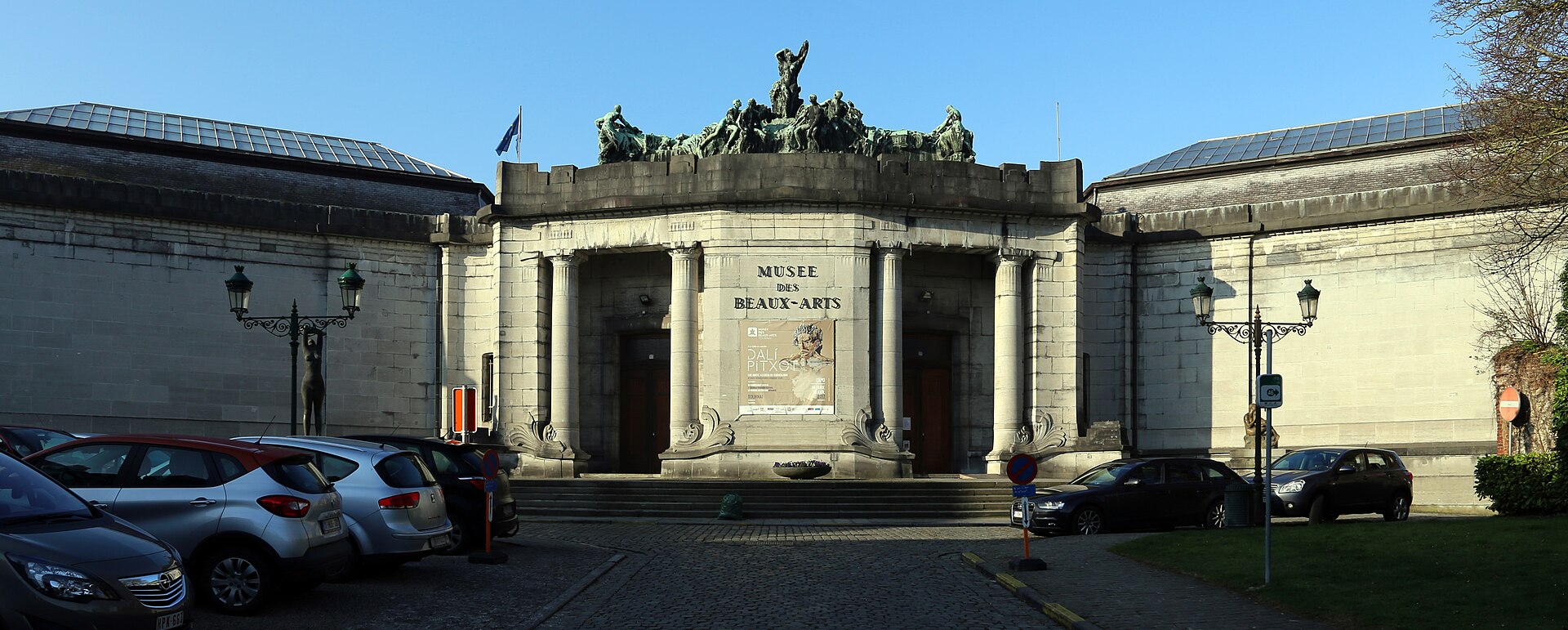
The Horta entrance front of the Musee des Beaux-Arts de Tournai, with the museum name inscribed on the facade.
Sailko, CC BY 3.0Musee des Beaux-Arts de Tournai
Museum · Musee des Beaux-Arts de Tournai (MuBAT) · Founded 1928
Closure confirmed 16 November 2026 · 9 sources
Closed to visitors - not permanently
Musee des Beaux-Arts de Tournai is currently closed, on the evidence sourced below.
Expected to reopen: Closed 16/11/26 to 11/12/26 for exhibition installation; no reopening date is stated beyond the end of that window · a target, not yet confirmed
Closure confirmed from the institution's own page. We re-check this page on a schedule and will update it, from the institution's own announcement, the moment it reopens.
On this page 16 sections
ContentsClose
The collection is strongest where Tournai's own history and one Brussels patron's taste meet: Netherlandish painting of the fifteenth and sixteenth centuries, and French and Belgian painting of the late nineteenth century. CODART counts more than 5,000 objects.
| Local name | Musee des Beaux-Arts de Tournai (MuBAT) |
|---|---|
| Kind | Museum |
| Founded | 1928 |
| City and country |  Tournai, Belgium |
| Address | Rue de l'Enclos Saint-Martin 3, 7500 Tournai, Belgium |
| Website | mba.tournai.be |
| Status | Closed temporarily, confirmed |
| Record last verified |
Visiting
- Hours (pre-closure)
- Tue-Sat09:30 to 17:00Ticket office closes 30 minutes before closing
- Sun11:00 to 17:00Public holidays use the Sunday hours per the museum's home page
- Closed
- Monday. 16 Nov to 11 Dec 2026 (exhibition installation). 4 Dec 2026 from 12:00 (local festivities). 25 and 26 Dec 2026.
- Admission (pre-closure)
- Individual (over 18)EUR 5
- Seniors (65+)EUR 3
- Youth (6 to 18)EUR 3
- Groups (minimum 10 people)EUR 3
- Students from outside TournaiEUR 3
- Article 27 (with status card)EUR 1.25
- Passage visit (entry 15 minutes before closing)EUR 1
- Children under 6Freefree
Free entry: First Sunday of the month, all visitors- Do I need to book?
- The museum's practical page does not say how to book; it points visitors to its contact details
- Address
- Rue de l'Enclos Saint-Martin 3, 7500 Tournai, Belgium Map
- Website
- mba.tournai.be
- Telephone
- +32 69 33 24 31
- [email protected]
Before you go how long, access, photography, bags, eating, shop
- How long to allow
- About one hour, according to the museum
- Access
- The museum states it is accessible to people with reduced mobility; strollers are allowed
- Photography
- Not stated on the museum's practical page
- Bags
- Not stated on the museum's practical page
- Eating
- Not stated on the museum's practical page
- Shop
- Souvenir shop, per the museum
The museum is closed (see above). These are the figures published before the closure, kept here for a visitor planning ahead rather than presented as bookable today, and you can check the current position at the source we used. We will re-confirm them once it reopens.
What is inside
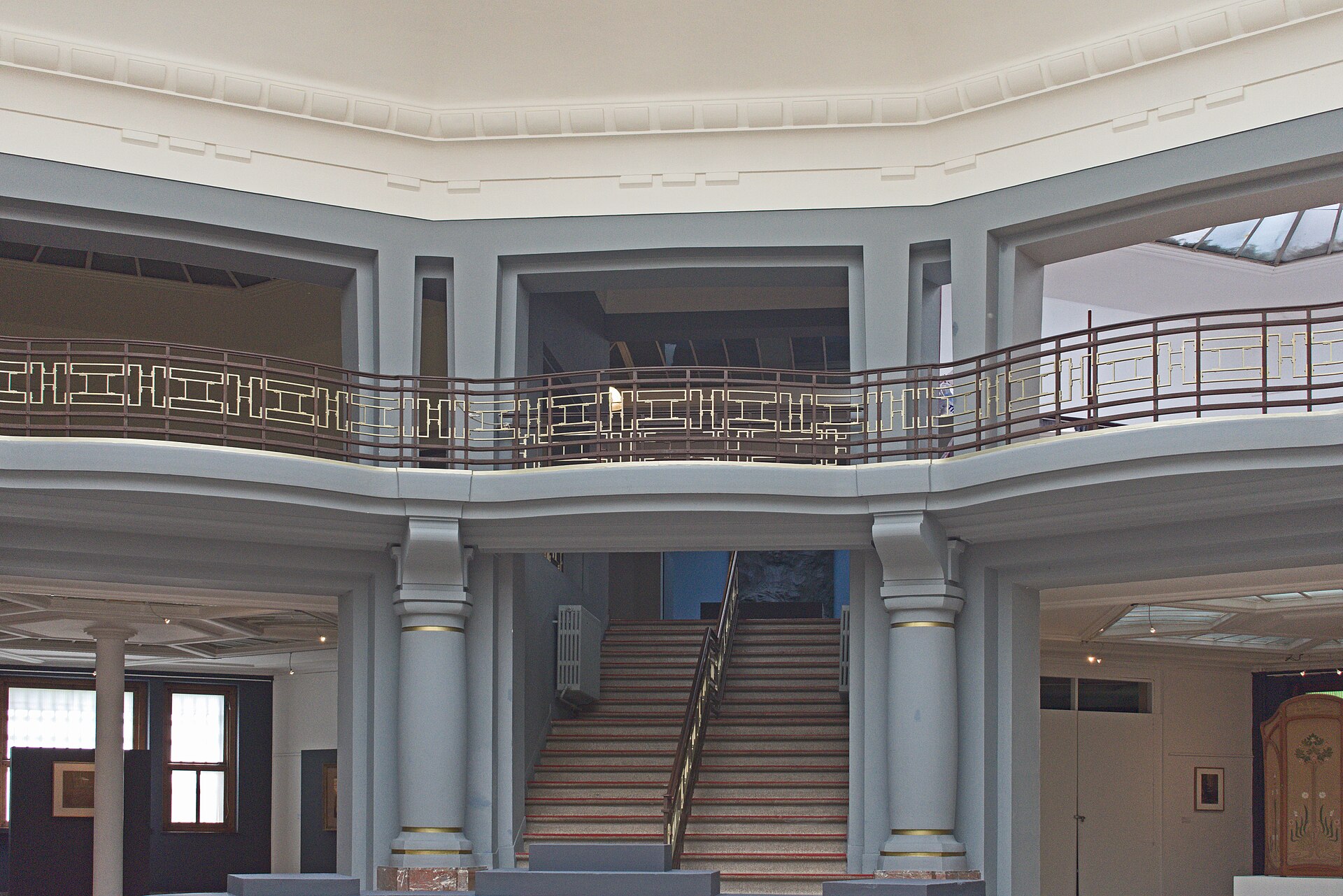
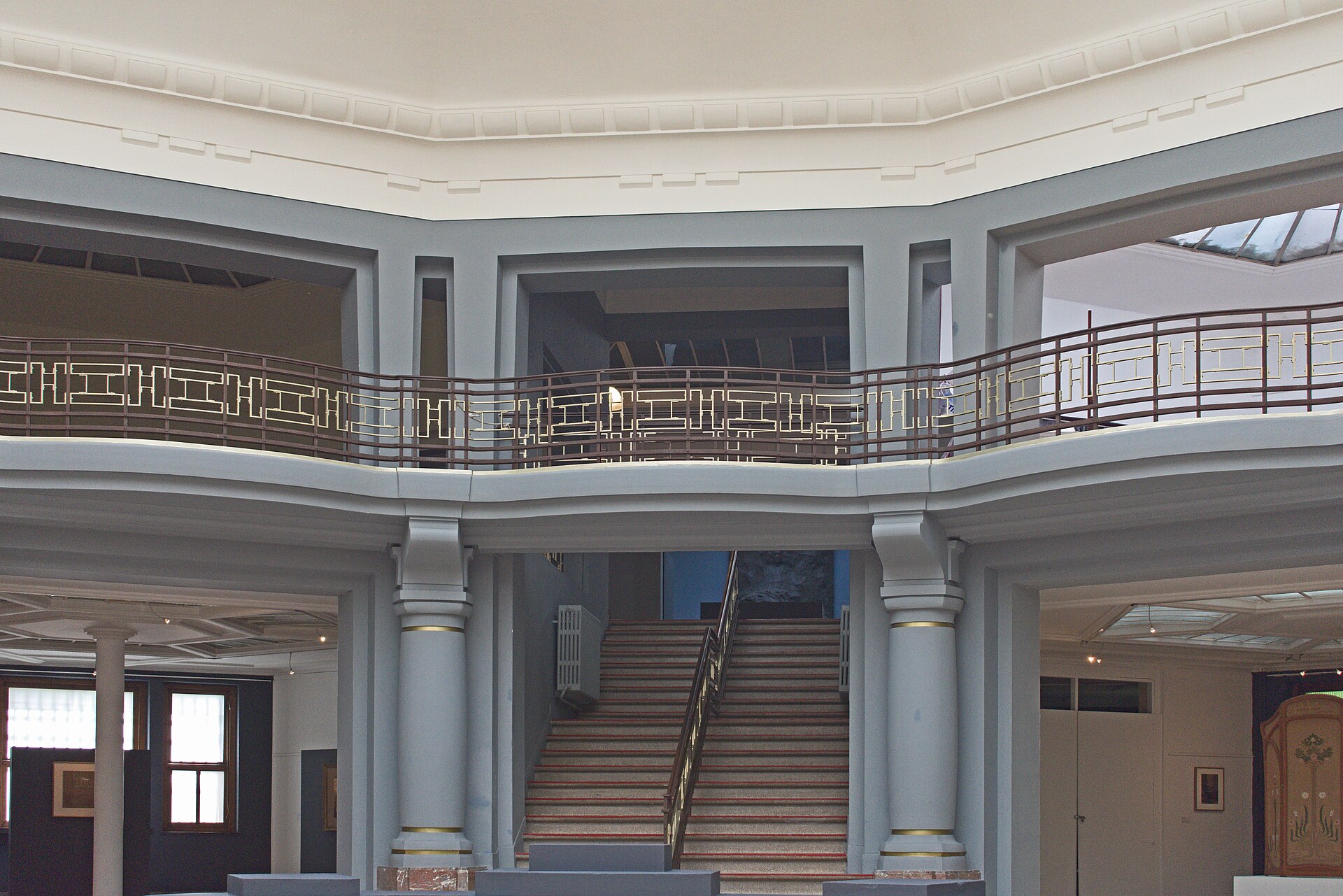
Photograph by Ymblanter · CC BY-SA 4.0 The central atrium
The sculpture hall at the heart of Horta's plan, lit from above through glass roofs. Lonely Planet notes a flying purple hippo hanging in the atrium above more classical sculpture, and the museum's own site announced a Corteges exhibition of about a hundred sculptures there (announced December 2025).
Early Netherlandish painting
CODART lists Rogier van der Weyden's Virgin and Child (ca. 1460-1464), a Portrait of Barthelomeus Alatruye after Robert Campin and Jan Gossaert's Saint Donation. Van der Weyden, Rogier de la Pasture, was born in Tournai.
Seventeenth-century painting
CODART lists works by Rubens, Frans Snyders and Jacob Jordaens; Lonely Planet also names Rubens and Jordaens.
Nineteenth and early twentieth century painting
The Van Cutsem core: Manet (the museum states it holds the only two Manet works preserved in Belgium), Monet and Seurat, with Ensor, Fantin-Latour, Van Gogh and Toulouse-Lautrec named by the Art Nouveau Network. Lonely Planet mentions a Seurat seascape and sketches by Van Gogh and Toulouse-Lautrec.
Belgian and Tournai artists
Visit Tournai lists Belgian artists and Tournai-born artists, including Rogier de la Pasture, among the holdings, alongside 17th- and 18th-century painters such as Rubens, Jordaens and Watteau.
What to see first
Virgin and Child
Rogier van der WeydenA work by the painter born in Tournai, dated by CODART to about 1460-1464 and named as a highlight of the museum.4
Argenteuil
Edouard ManetOne of the only two Manet works preserved in Belgium, per the museum; its conservation was announced in February 2026.2
Winter Landscape
Pieter Brueghel the YoungerListed by CODART among the museum's later holdings.4
Saint Donation
Jan GossaertAn early sixteenth-century Netherlandish panel listed by CODART.4
Seurat seascape
Georges SeuratSingled out by Lonely Planet as a beautiful Seurat seascape in the Van Cutsem collection.8
The Horta building itself
Victor HortaThe only museum Horta designed, recognised as Exceptional Heritage of Wallonia.5
Exhibitions on now
The building and what it was built to hold
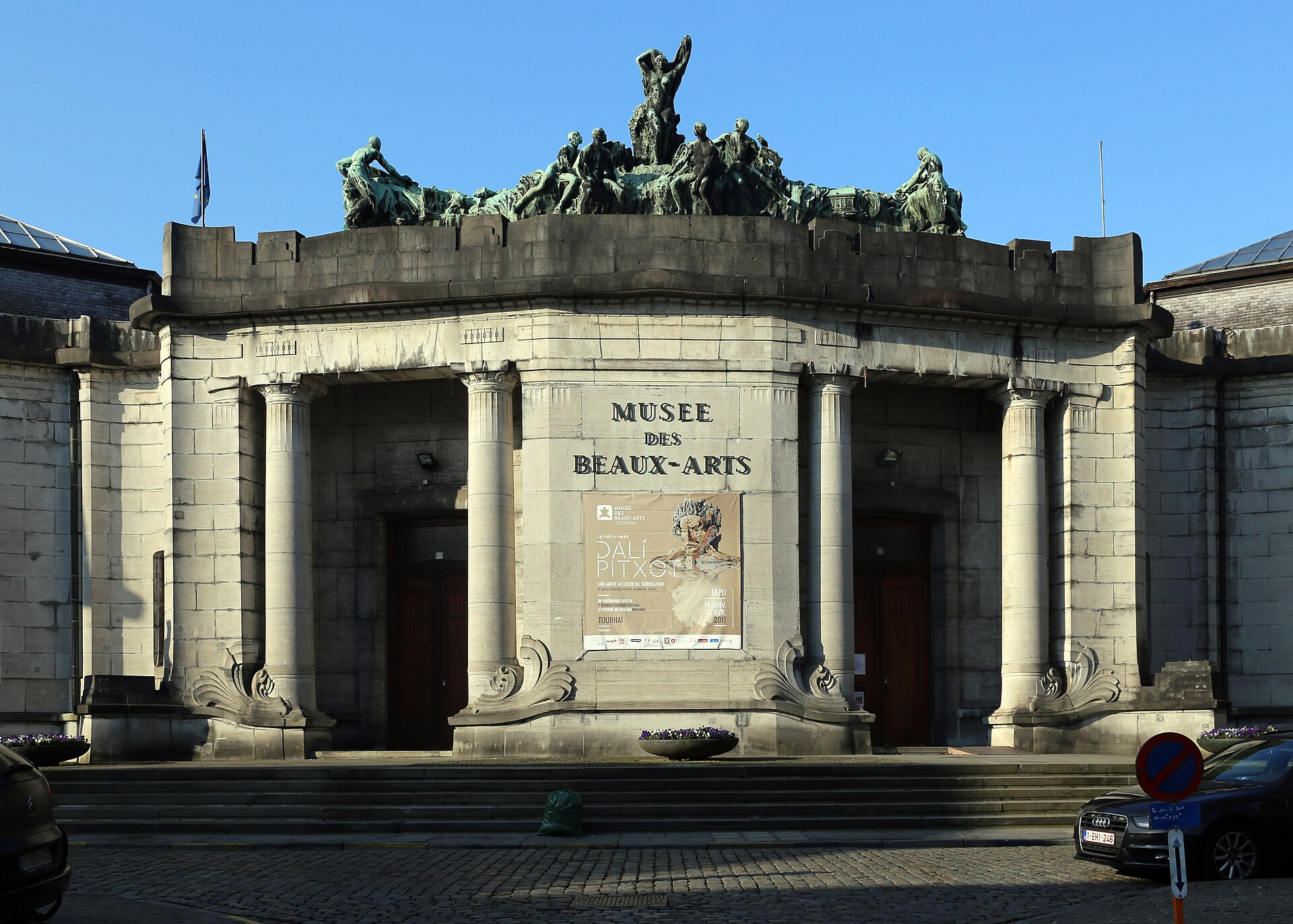
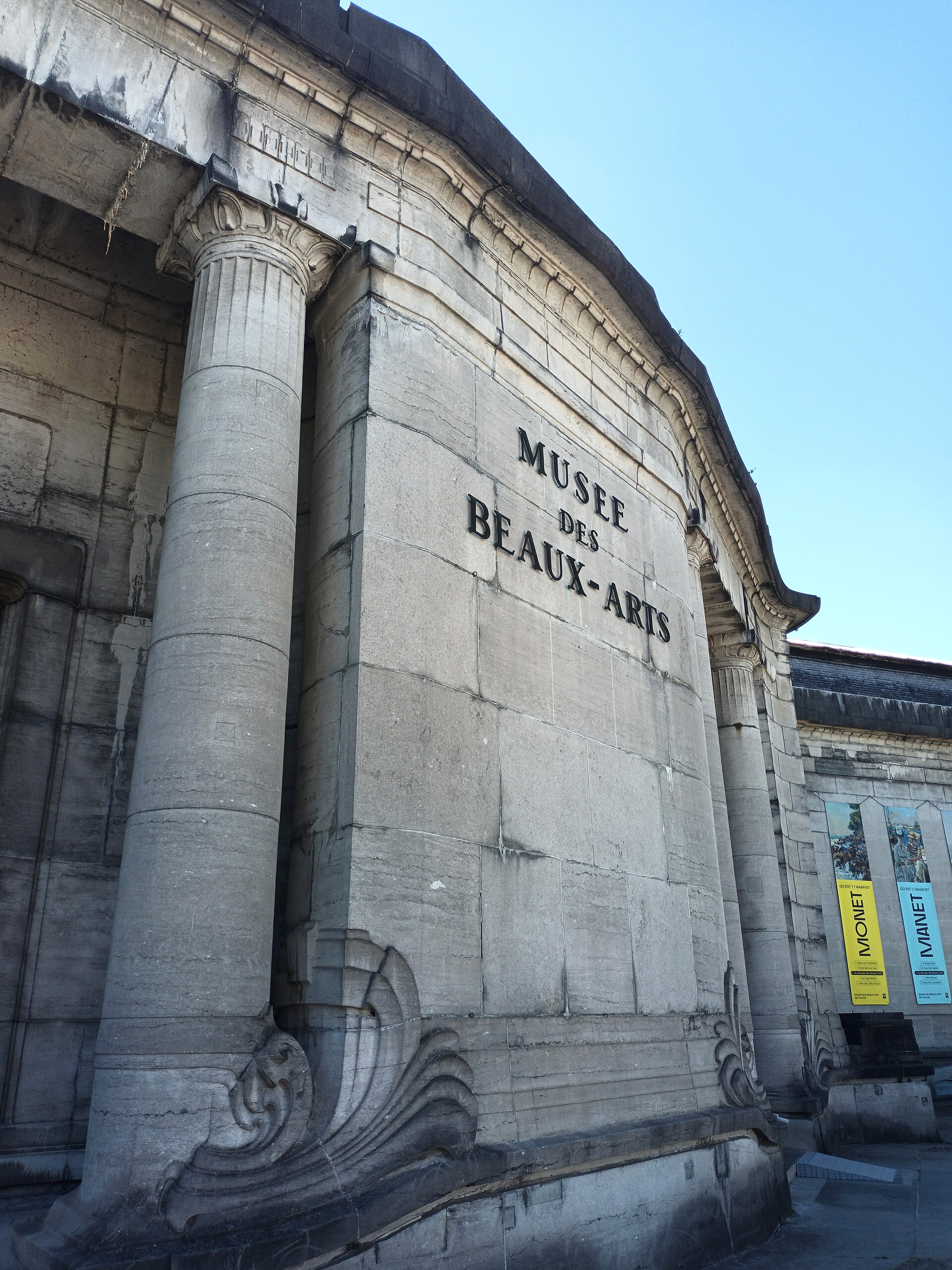
The Musee des Beaux-Arts de Tournai stands in the Enclos Saint-Martin, and it is the only museum the Belgian architect Victor Horta designed. The Art Nouveau Network, which documents his work, describes a floor plan shaped like a turtle, a limestone facade with vegetal scroll motifs and a design that marks the passage from Art Nouveau towards an early, Art Deco-influenced modernism. The region of Wallonia recognises the building as Exceptional Heritage. Photographs on this page show the entrance front with the museum name cut into the stone and a bronze sculptural group set above the cornice.
Inside, the plan is a lesson in how to light paintings. Glass roofs and a translucent vault with skylights give even, diffuse light, and a central atrium for sculpture leads to galleries that radiate from it. Visit Tournai calls the museum one of the earliest prototypes of a modern museum on an international scale. The same overhead light is also the building's difficulty. The Art Nouveau Network records that it now brings excessive brightness and heat, which is a hard problem for the conservation of the pictures beneath it.
How a collector's gift became a museum
The core of the museum is the collection of the Belgian painter, patron and collector Henri Van Cutsem, who lived from 1839 to 1904. CODART records that the museum opened in 1928 after Van Cutsem's collection was given to the city of Tournai. The Wikipedia article, a stub that asks for more citations and is therefore treated here as tertiary, adds that he offered it in 1905, that Horta began the design to house the gift together with the city's existing holdings, that the First World War delayed construction, and that Horta moved from Art Nouveau towards Art Deco along the way. Those dates and that sequence should be confirmed against a primary source before anyone relies on them.
What the sources agree on is the character of the gift. Van Cutsem's taste ran to the French and Belgian painting of his own day, which is why a town of Tournai's size holds the pictures that it does. The museum itself says its collection includes the only two works by Edouard Manet preserved in Belgium.
Early Netherlandish painting and the Tournai connection
Tournai was prosperous in the fifteenth and sixteenth centuries, and CODART notes that the museum holds several works by the Flemish Primitives from that period. The best-known name is Rogier van der Weyden, born in Tournai as Rogier de la Pasture. CODART lists his Virgin and Child, dated to about 1460-1464, as a highlight. It also lists a Portrait of Barthelomeus Alatruye after Robert Campin and Jan Gossaert's Saint Donation, and Visit Tournai names Campin and Bruegel among the Flemish Primitives represented.
For a reader who knows Van der Weyden from Madrid, Berlin or Brussels, the point of Tournai is that this is his home town. The museum is a place to see the painter's own city collect and display the work of its local school, alongside pictures by the masters who shared or followed it.
Seventeenth century to the Impressionists
CODART lists work by Rubens, Frans Snyders and Jacob Jordaens for the seventeenth century, and a Winter Landscape by Pieter Brueghel the Younger. Visit Tournai adds Watteau among the painters of the seventeenth and eighteenth centuries. The strength then moves to the late nineteenth century. The Art Nouveau Network names Ensor, Fantin-Latour, Manet, Monet, Seurat, Van Gogh and Toulouse-Lautrec, and calls it one of Belgium's most significant collections.
Lonely Planet singles out a beautiful Seurat seascape and sketches by Van Gogh and Toulouse-Lautrec, and the museum's own news pages note that the Manet painting Argenteuil received conservation work, announced in February 2026 with support from the Wallonia-Brussels Federation and the City of Tournai. The museum counts more than 5,000 objects in all according to CODART, so what hangs at any one time is a selection.
What visitors and critics say
The published criticism is consistent in both directions. Lonely Planet calls the gallery airy and the collection rich, praising the Van der Weyden, Rubens, Jordaens, Manet, Monet and Seurat, while saying the interior and display halls are in need of a pep-up. It also records a flying purple hippo hanging in the central atrium above the classical sculpture, a detail that suggests the museum is willing to put contemporary work into Horta's space. No review-platform score could be read for this page, so none is given.
The museum's own estimate of an average visit is about one hour, which fits a collection that is concentrated rather than vast. A reader who wants a longer day will pair it with the old town of Tournai rather than expect the museum alone to fill it.
Renovation, extension and the closure you need to check
The Art Nouveau Network records that the architects XDGA and Barbara Van der Wee were appointed in 2016 to extend and restore the museum, with works scheduled to begin in 2025. The museum's own site now carries a section titled Carnets de chantier, which refers to renovation and extension works and a collections project, but the page gives no dates, no scope and no statement of which galleries are affected. The museum's opening hours at the time of reading were unchanged: Tuesday to Saturday from 9:30 to 17:00, Sunday from 11:00 to 17:00, closed Monday.
The date that matters for a trip is shorter. The museum's practical page lists a closure from 16 November to 11 December 2026 for the installation of an exhibition, a closure at noon on 4 December for local festivities, and closures on 25 and 26 December. The page does not say on what date the doors reopen after the exhibition closure, so it is recorded here as a stated window and not as a confirmed reopening date. Telephone the museum on +32 69 33 24 31 before travelling.
Prices and getting in
On the museum's own price list an individual over 18 pays 5 EUR, while seniors from 65, young people from 6 to 18, groups of ten or more and students from outside Tournai pay 3 EUR. Holders of an Article 27 card pay 1.25 EUR, a passage visit begun 15 minutes before closing costs 1 EUR, and a passport for ten entries to museums of the visitor's choice is 30 EUR. Children under 6 enter free, and so does everyone on the first Sunday of the month. The ticket office closes 30 minutes before the museum does. The museum states that it is accessible to people with reduced mobility and has a souvenir shop, and that audio guides are not available.
What visitors say
The published verdict is warm on the architecture and the range of the collection and cooler on presentation. Writers praise the Horta building and its toplit atrium, the Van der Weyden and the Manet, and a collection of unusual breadth for a town of this size. The recurring criticism is that the display halls and interiors look dated and that the overhead light is a conservation problem. The museum itself says an extension and renovation project is under way. No platform rating was read for this page.
What is praised, what is criticised
- Praised: The Victor Horta building and its glass-roofed atrium
- Praised: A broad collection from the Flemish Primitives to Manet, Monet and Seurat
- Praised: The Tournai-born Van der Weyden and the only two Manets in Belgium
- Criticised: Interior and display halls described as in need of a refresh
- Criticised: Overhead light causes excess brightness and heat that challenges conservation
- Criticised: Short visit of about one hour by the museum's own estimate, so closures matter
Questions about Musee des Beaux-Arts de Tournai
Where is Musee des Beaux-Arts de Tournai?
Rue de l'Enclos Saint-Martin 3, 7500 Tournai, Belgium.
How much does it cost to visit?
Individual (over 18): EUR 5; Seniors (65+): EUR 3; Youth (6 to 18): EUR 3; Groups (minimum 10 people): EUR 3; Students from outside Tournai: EUR 3. As confirmed 16 November 2026.
When is it open?
Tue-Sat 09:30-17:00; Sun 11:00-17:00. Closed: Monday. 16 Nov to 11 Dec 2026 (exhibition installation). As confirmed 16 November 2026.
What should you see first?
Virgin and Child (Rogier van der Weyden); Argenteuil (Edouard Manet); Winter Landscape (Pieter Brueghel the Younger); Saint Donation (Jan Gossaert); Seurat seascape (Georges Seurat); The Horta building itself (Victor Horta).
What we could not confirm
- Exact scope and dates of the renovation and extension works: the museum's works page gives none.
- Whether the museum reopens on 12 December 2026 or later: the practical page gives the closure window only.
- Titles and accession details of the two Manet paintings against the museum's own catalogue.
- Horta's design and construction dates from a primary source.
Images
Sources
- 1Musee des Beaux-Arts de Tournai, informations pratiques, read 2026-11-16 mba.tournai.be/mba/informations-pratiques
- 2Musee des Beaux-Arts de Tournai, English home page, read 2026-11-16 mba.tournai.be/en
- 3Musee des Beaux-Arts de Tournai, Carnets de chantier, read 2026-11-16 mba.tournai.be/le-musee-des-beaux-arts/carnets-de-chantier
- 4CODART guide entry, Musee des Beaux-Arts de Tournai codart.nl/guide/museums/mus-e-des-beaux-arts-de-tournai/
- 5Art Nouveau Network, Museum of Fine Arts of Tournai artnouveau-net.eu/museum-of-fine-arts-of-tournai/
- 6Visit Tournai, Fine Arts Museum () en.visittournai.be/agenda/fine-arts-museum-tournai/
- 7Wikipedia, Musee des Beaux-Arts, Tournai (, stub) en.wikipedia.org/wiki/Mus%C3%A9e_des_Beaux-Arts_de_Tournai
- 8Lonely Planet, Musee des Beaux-Arts, Tournai lonelyplanet.com/points-of-interest/musee-des-beaux-arts/1260904
- 9Wikimedia Commons category for the museum, with per-file licences commons.wikimedia.org/wiki/Category:Mus%C3%A9e_des_Beaux-Arts_de_Tournai