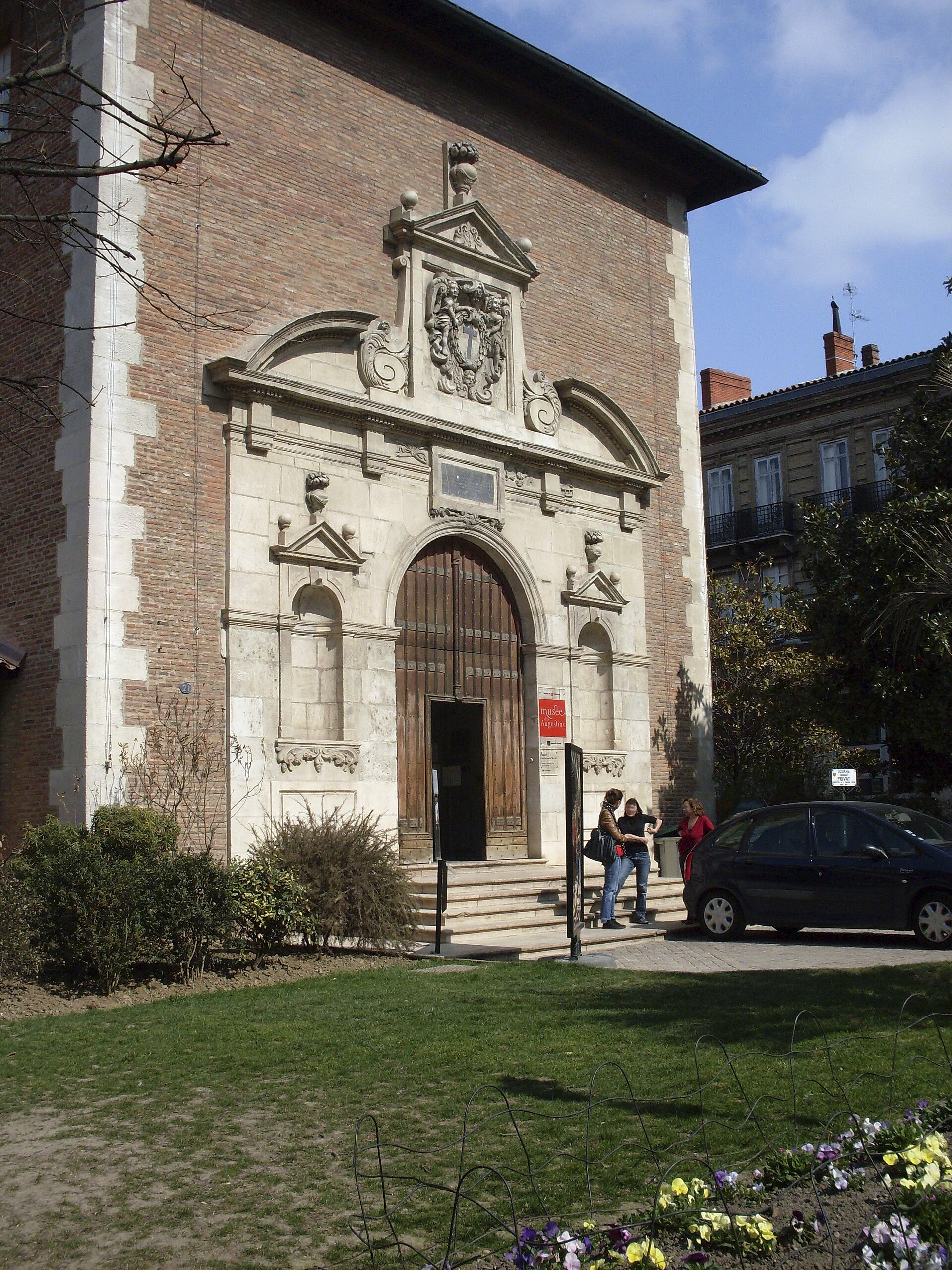
The museum's Renaissance-style portal, photographed in 2012, with a red 'musee des Augustins' sign visible beside the door.
Traumrune · CC BY-SA 3.0Musee des Augustins
Museum · Musée des Augustins de Toulouse · Founded 1795
Open, admission and hours confirmed 16 September 2026 · 13 sources
On this page 15 sections
ContentsClose
The museum's core strength, on the evidence gathered here, is depth in exactly the material a municipal museum rarely gets to keep: a world-class run of Romanesque capitals salvaged from Toulouse's own vanished and altered medieval monuments, rather than assembled by purchase, and a comparably strong body of fourteenth-century gothic sculpture centred on the Master of Rieux ensemble, both drawing on buildings the city itself pulled down. The painting galleries are smaller in scale than a national collection but carry real weight for a provincial museum, anchored by Napoleonic-era deposits (Rubens, Perugino, Guercino) and extending forward through Valentin de Boulogne's Caravaggesque work, Vigee Le Brun's court portraiture and Delacroix's Orientalist painting into a strong nineteenth-century academic sculpture collection by Toulouse-trained artists such as Falguiere and Mercie. What ties the two halves together, more than in most museums, is the building itself: a fourteenth-to-sixteenth-century convent whose own church, cloisters and chapter rooms are as much a part of what a visitor is looking at as anything hung or displayed inside them.
| Local name | Musée des Augustins de Toulouse |
|---|---|
| Kind | Museum |
| Founded | The convent's own church opened as an exhibition space on 27 August 1795, as the Museum provisoire du Midi de la Republique, a foundation decided by the departmental council in 1793 - among the oldest museums in France, opening only a few years after the Louvre. Wikidata records a formal inception date of 1801; this record follows the museum's own history page in treating that as a later administrative marker rather than the actual founding or opening date. |
| City and country |  Toulouse, France Toulouse, France |
| Address | 21 rue de Metz, 31000 Toulouse, France |
| Website | augustins.toulouse.fr |
| Status | Open, confirmed |
| Record last verified |
Visiting
- Hours
- Monday12:00 to 18:00
- TuesdayReserved for groups accompanied by the museum; not open to individual visitors.
- WednesdayClosed
- Thursday12:00 to 18:00In July only, open until 19:00, last entry 18:30, with a free musical interlude from 18:30 (admission still payable).
- Friday12:00 to 18:00
- Saturday10:00 to 18:00
- Sunday10:00 to 18:00First Sunday of the month is free admission and the busiest day of the month.
- Closed
- Wednesday. 25 December. 1 January. 1 May.
- Admission
- Full priceEUR 5Still labelled 'tarifs minores' (reduced price) on the museum's own site while the building is only partially open. Unchanged from 2026-08-13.
- Reduced - ages 6-17, students, Pass Toulouse+ holders, reserved groups of 11+EUR 3
- Family (tribu) - 2 adults plus at least 2 children aged 6+, up to 6 childrenEUR 15
- Annual membership pass - Solo, 1 personEUR 15A membership, not a single admission; unlimited entry for its term.
- Annual membership pass - Duo, 2 peopleEUR 25
- Annual membership pass - Tribu, up to 7 peopleEUR 45
Free entry: First Sunday of every month, free for all visitors. Always free: children under 6; visitors with disabilities and one companion; recipients of French minimum social benefits; members of the Amis du musee des Augustins; Montoulouse Senior cardholders; teachers leading a reserved school group; guide-lecturers; museum curators; ICOM and ICOMOS members; journalists, each on production of proof- Tickets
- billetterie.musee-augustins.toulouse.fr/conte... The museum's own ticket page.
- Do I need to book?
- Not required for individual visitors; free online booking is offered and recommended. Compulsory for groups, which are received only on Tuesdays by prior arrangement with the museum.
- Address
- 21 rue de Metz, 31000 Toulouse, France MapMetro Line A, Esquirol station; Line B, Carmes or Francois Verdier station, both a short walk away.
Bus Line 44, Esquirol stop.
VeloToulouse bike share Nearest docking stations at Place Rouaix and Station Esquirol. - Website
- augustins.toulouse.fr
- Telephone
- +33 5 61 22 21 82
- [email protected]
Before you go how long, access, photography, bags, eating, shop
- How long to allow
- Even at partial reopening, the ground-floor Romanesque hall and cloister together with the upper-floor painting salons are enough to fill two to three hours; the museum's own site frames the current visit as a preview of a larger circuit still under restoration.
- Access
- Free entry for visitors with disabilities and one companion; a dedicated priority queue and till at the entrance; four wheelchairs and induction-loop neck units available free on request; a multisensory trail with immersive audio, tactile elements and easy-to-read (FALC) information in the Salon vert; a free audioguide; folding seats available throughout the route; step-free access from the new rue de Metz entrance straight into the cloister, with two lifts serving the upper-floor salons.
- Photography
- Not published in the sources read for this record.
- Bags
- Umbrellas must be sheathed or left at the entrance; suitcases and large bags are not admitted; scooters are not admitted; strollers are not allowed into the galleries and must be left in the cloister.
- Eating
- A small cafe and catering counter opened with the 2025 reopening beside the museum's new boutique, in the glazed corner unit where rue de Metz meets rue Alsace-Lorraine.
- Shop
- The museum's boutique reopened in the same glazed corner unit at rue de Metz and rue Alsace-Lorraine, chosen for its visibility on the Esquirol crossroads, onto two of the busiest shopping streets in central Toulouse.
Prices and hours change. We take them from the institution's own pages and print the day we read them, and you can check the current position at the source we used. Confirm before you travel.
What is inside
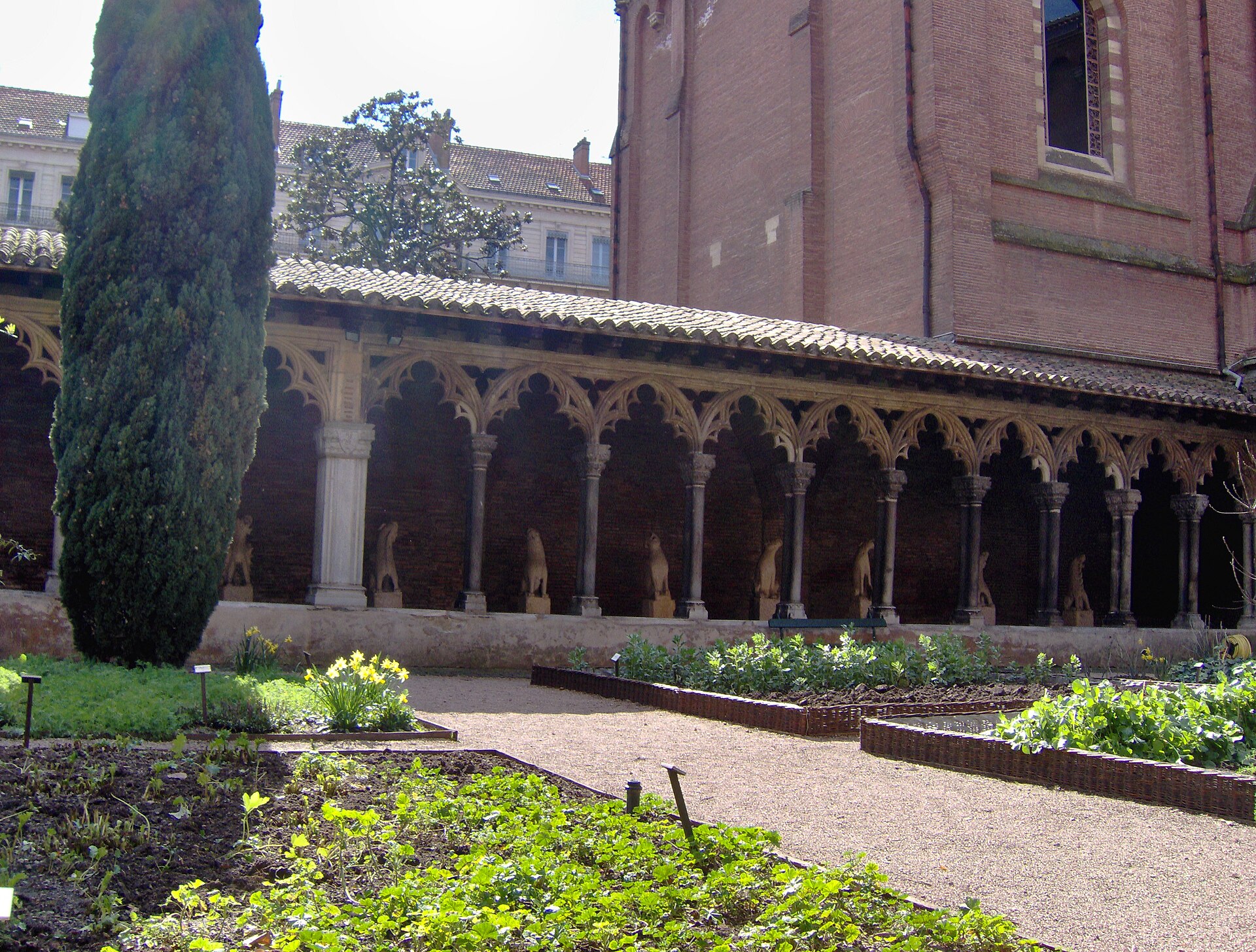
Photograph by Jjpetite · CC BY-SA 4.0 The Great Cloister
The only 14th-century cloister to survive intact in southwest France, its galleries finished by around 1400 around a garden reworked in a medieval style in 1995. It is the building's hinge, reached straight from the entrance and giving access to every other wing, but a structural restoration of its 176 marble columns and capitals - addressing damp erosion and cracked walls found in a 2021 survey - keeps part of the colonnade closed to visitors, on the museum's own account, until a targeted completion in spring 2027.
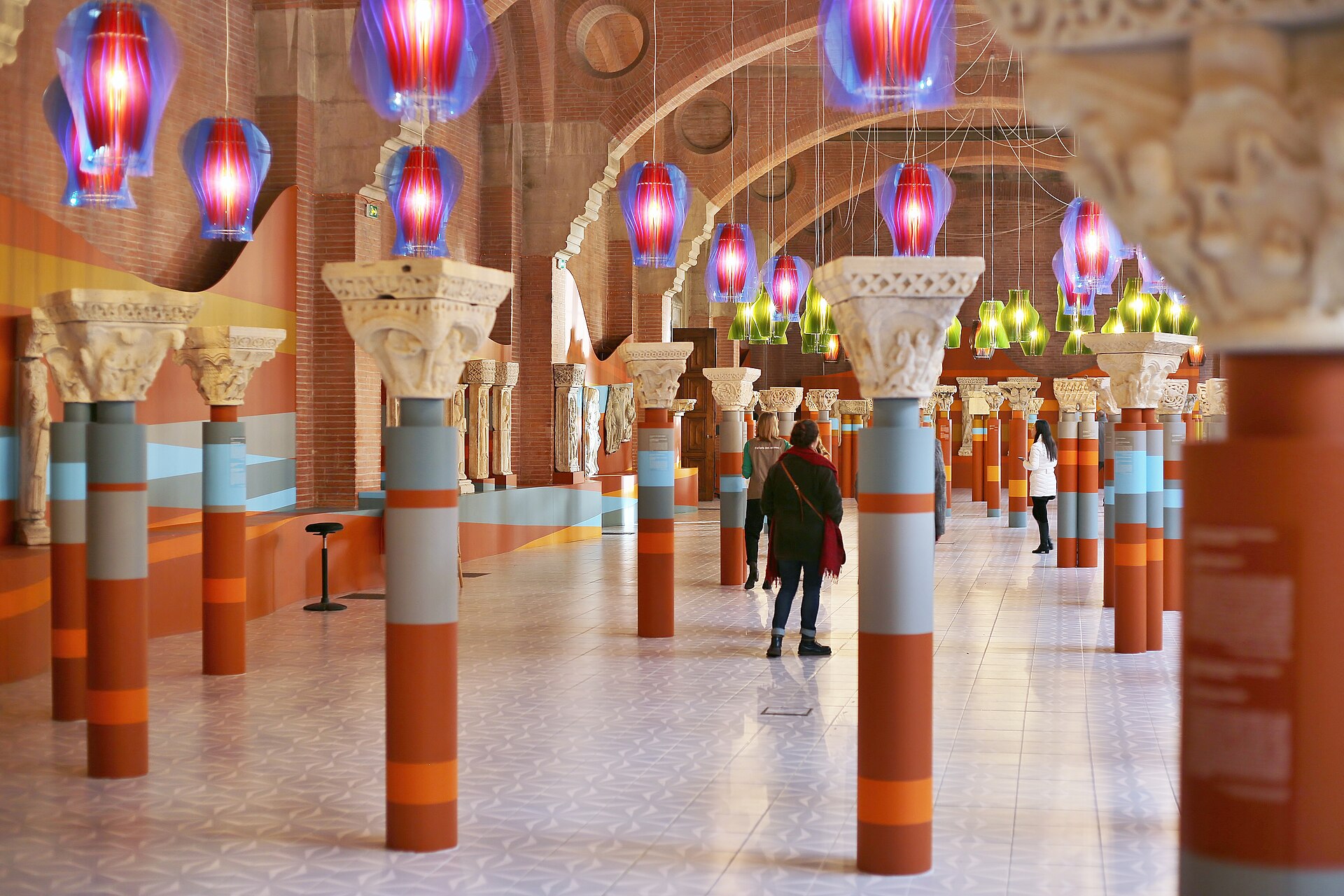
Photograph by Frédéric Neupont · CC BY-SA 4.0 The Romanesque Hall
One of the most important collections of Romanesque capitals in Europe, carved for Toulouse's three great medieval foundations - the monastery of la Daurade, the basilica of Saint-Sernin and the cathedral of Saint-Etienne - and rescued piecemeal as those buildings were altered or torn down from the 18th century onward. Since a 2014 scenography by the artist Jorge Pardo, the room's columns have been painted in bright colour and hung with blown-glass lamps around the capitals, making it, for supporters and critics alike, the single most photographed room in the museum.
The Gothic Rooms
The convent's own surviving 14th-to-16th-century chapter house, sacristy and Chapelle Notre-Dame de la Pitie hold the museum's Gothic sculpture, centred on a large ensemble attributed to the workshop known as the Master of Rieux, carved around 1333-1343 for the Cordeliers convent's Rieux chapel - apostles, donor figures and a bishop's tomb effigy among them. These rooms are currently being reinstalled and are closed to visitors; the museum's own pages give October 2026 and autumn 2026 as differing target reopening dates.
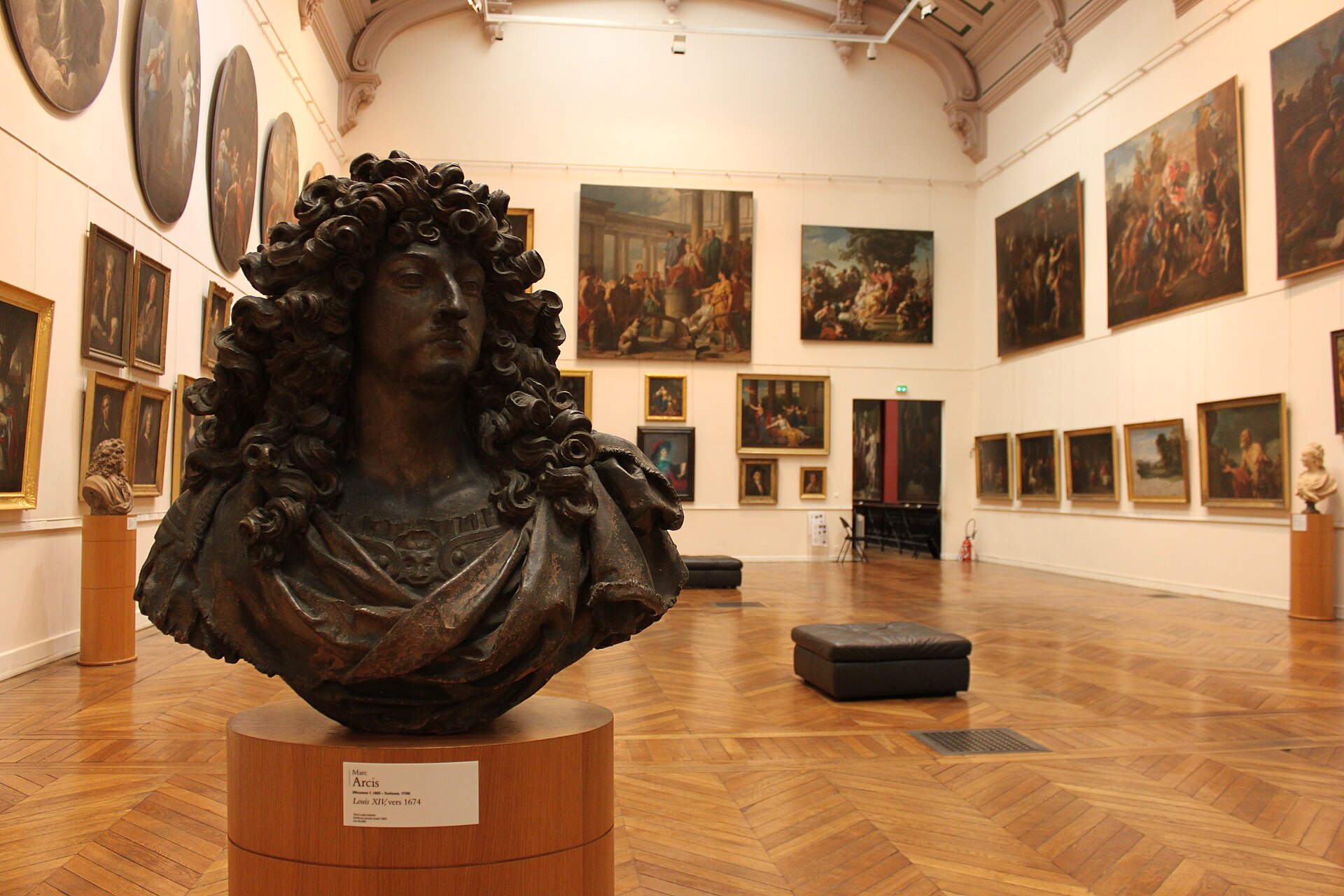
Photograph by Pistolero · CC BY 3.0 The Painting Salons
Two top-lit 19th-century galleries on the upper floor, built over the site of the convent's own refectory, hold the painting collection: old-master deposits from the Revolutionary seizures and Napoleon's Chaptal-decree redistribution of 1803-1812 (Rubens, Guercino, Valentin de Boulogne) through 18th-century court portraiture (Vigee Le Brun) to 19th-century history painting and Delacroix's Orientalist work. The salons' historic glazed roofs were restored between 2018 and 2022, and the paintings rehung for the 2025 reopening with a lighter, more thematic display in place of the old wall-to-wall salon hang.
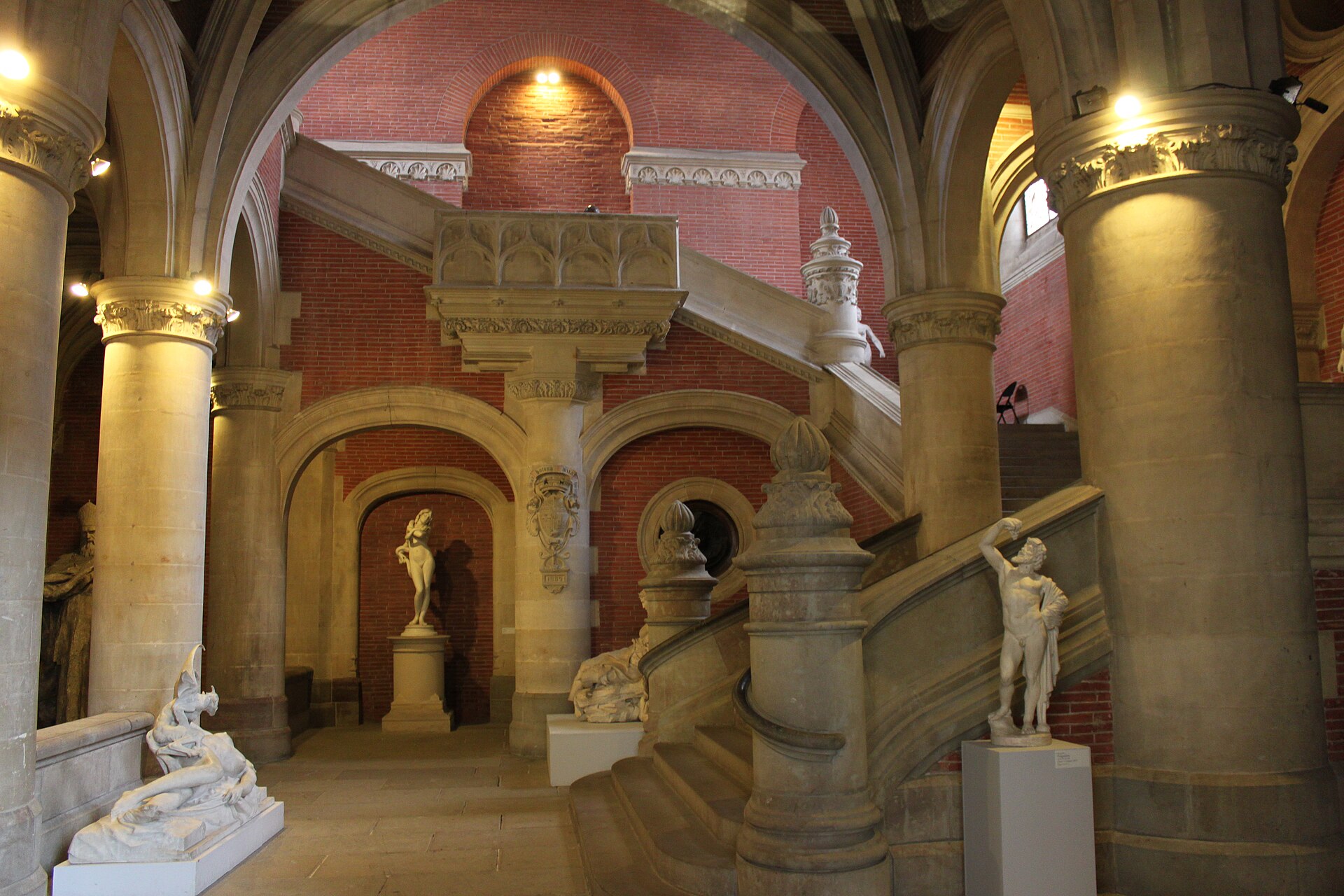
Photograph by Pistolero · CC BY 3.0 The Darcy Staircase
The monumental staircase first designed by Eugene Viollet-le-Duc and completed, after his death, by his pupil Denis Darcy to carry visitors up to the painting salons is itself one of the building's set pieces of brick and stone. It now displays the museum's holdings of academic 19th-century sculpture by Toulouse-trained artists such as Alexandre Falguiere and Antonin Mercie, whose bronzes and marbles stand on plinths beneath its arches.
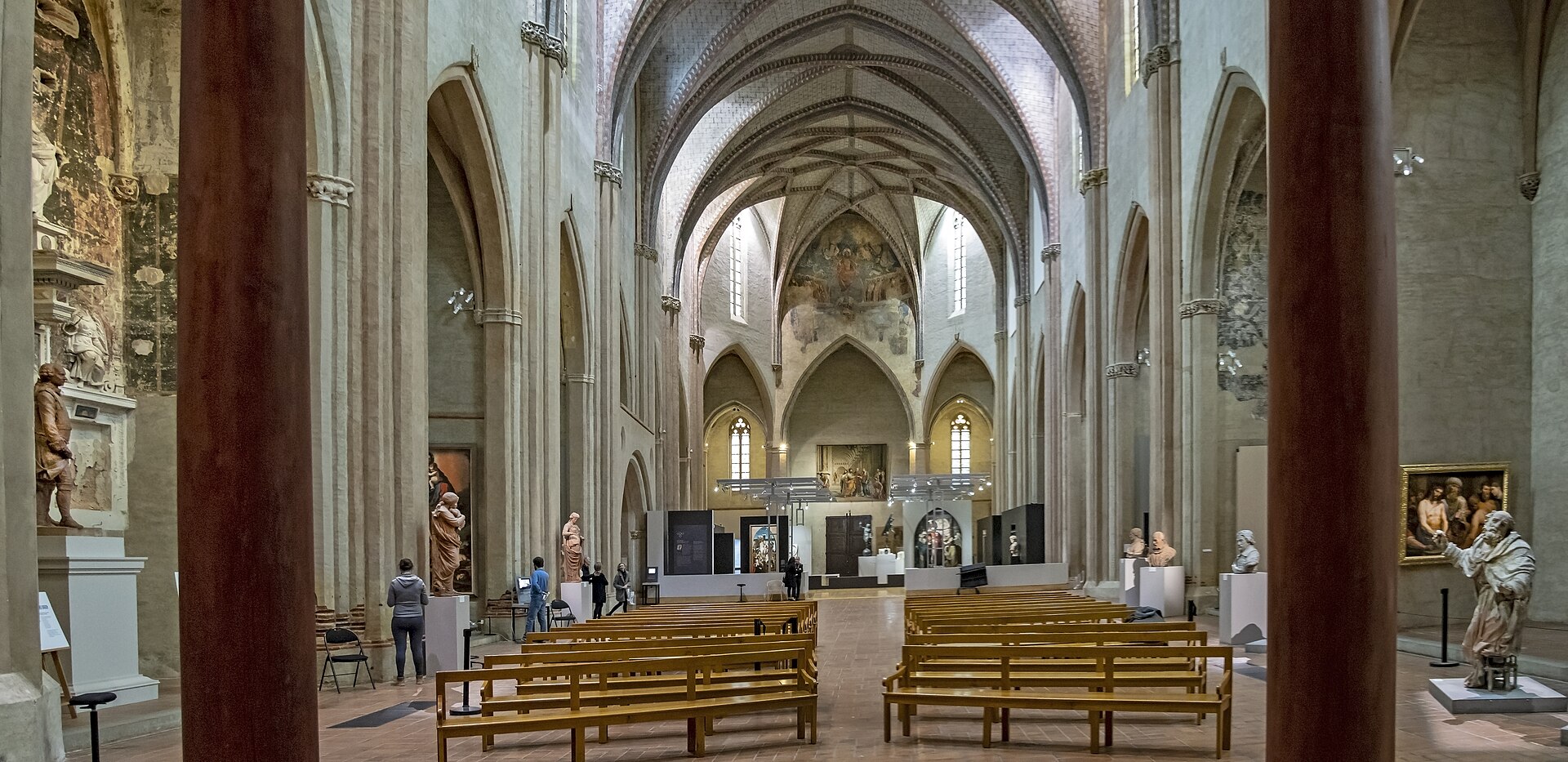
Photograph by Archaeodontosaurus · CC BY-SA 4.0 The Church (Eglise)
The convent's 14th-century church, consecrated in 1504, was the museum's founding and only exhibition space when it opened in 1795, later hidden for decades behind a neoclassical 'Temple des Arts' stucco scheme before being restored to its gothic form through the mid-20th century. It displayed large altarpieces and sculpture together along its single wide nave until the current renovation closed it in 2018; the photograph below was taken in December 2018, essentially at the start of that closure, and the space remains shut for a new permanent display at the time of writing.
What to see first
Le Roi David accordant sa harpe (King David Tuning His Harp)
Third workshop of la Daurade, marble, circa 1160-1180A signature piece of the museum's world-renowned Romanesque holdings, carved for the cloister of the vanished monastery of la Daurade and now shown at the centre of the Jorge Pardo-lit Romanesque hall.6
La Femme au serpent (Woman with a Serpent)
Anonymous, marble relief, possibly 11th century, from the church of Oo (Haute-Garonne)Among the earliest Romanesque sculptures in the collection, predating the great Toulouse cloister campaigns and showing the museum's reach beyond the city into the wider region.6
Saint Francois d'Assise and Jean Tissendier en donateur
Workshop of the Master of Rieux, polychrome limestone, circa 1333-1343The single most important Gothic sculpture ensemble in the collection, carved for a Toulouse bishop's own funerary chapel at the Cordeliers convent and now installed in the convent's own surviving gothic rooms.6
Le Christ entre les deux larrons (Christ Between the Two Thieves)
Peter Paul Rubens, oil on panel, circa 1635One of the large altarpiece-scale paintings that reached the museum through the Napoleonic Chaptal-decree deposits of 1803-1812, exactly the kind of grand religious painting the convent church was built to hold.6
Judith
Valentin de Boulogne, oil on canvas, circa 1625A major Caravaggesque canvas by one of the leading French followers of Caravaggio, part of the museum's strong holding of 17th-century religious and history painting.6
Portrait de la baronne de Crussol
Elisabeth Vigee Le Brun, oil on panel, 1785A rare named female Old Master in the collection, by one of the most sought-after portraitists of the pre-Revolutionary French court.6
Moulay Abd-er-Rahman, sultan du Maroc, sortant de son palais de Meknes
Eugene Delacroix, oil on canvas, 1845One of Delacroix's celebrated Orientalist paintings, developed from his 1832 diplomatic journey to Morocco, and one of the works that anchors the museum's 19th-century galleries.6
David vainqueur de Goliath (David Victorious over Goliath)
Antonin Mercie, bronze, 1872A Prix de Rome-winning bronze by a Toulouse-trained sculptor, one of the academic works now displayed on the restored Darcy staircase the museum's own 19th-century wing was built to show.6
Past exhibitions here
- Closed11 Jun to 20 Sep 2026Confirmed · check before you travel
A mendicant convent inside the city walls
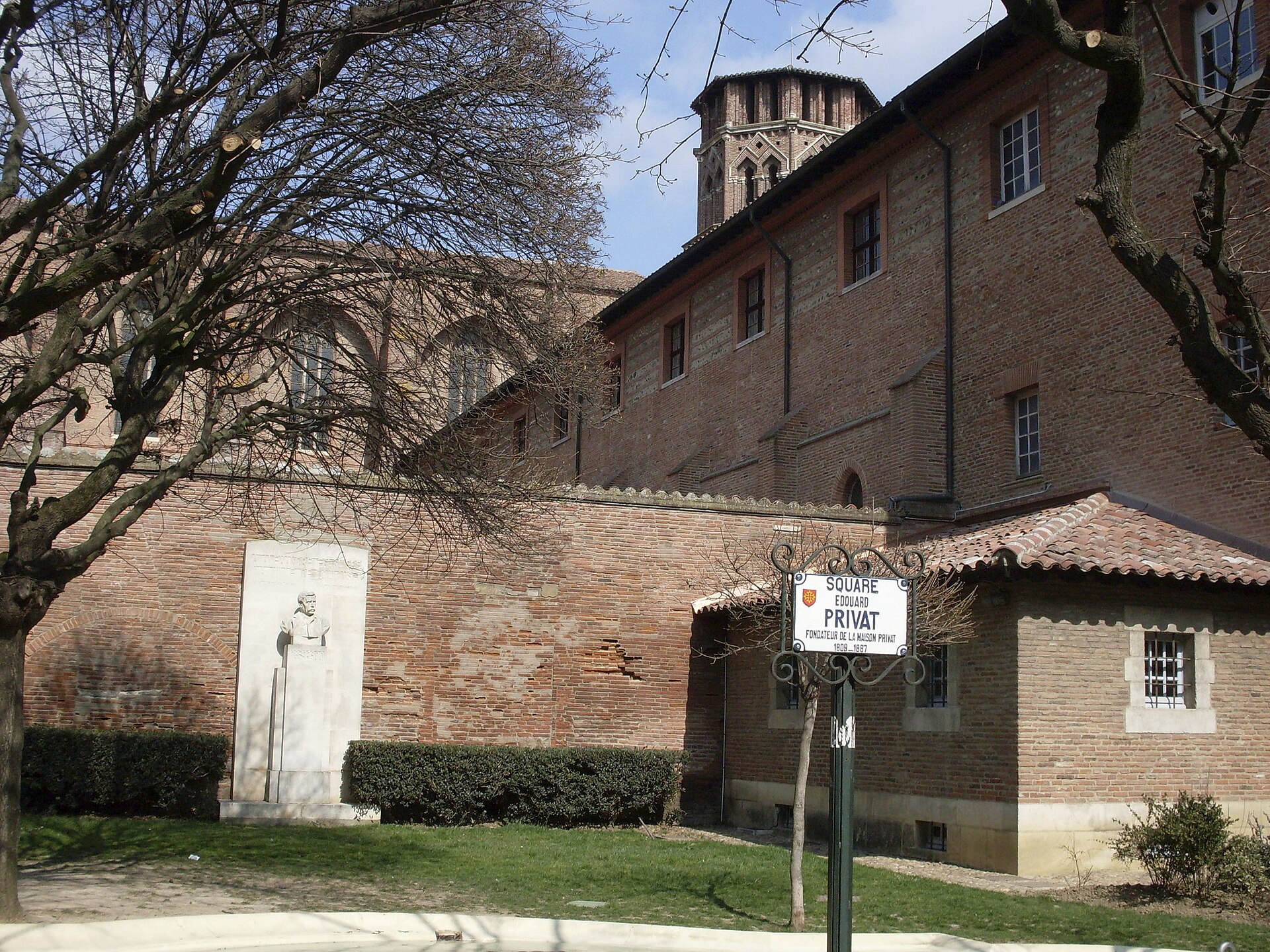
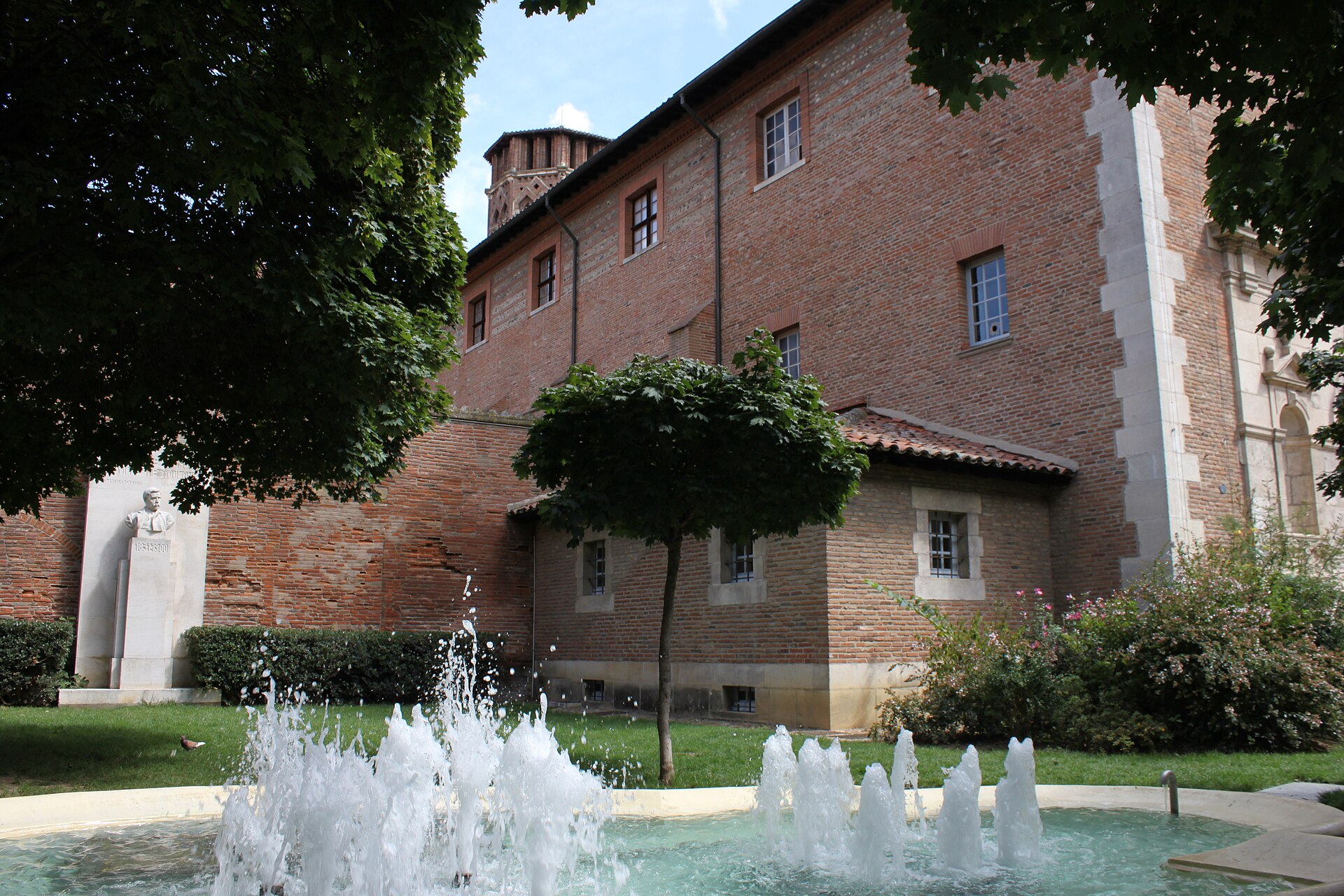
In January 1310, Pope Clement V allowed the Augustinian hermit friars, until then settled outside the walls in the Matabiau district, to move inside Toulouse itself, into the parish of Saint-Etienne. The move was contested: the provost and chapter of Saint-Etienne sued the newcomers, and the dispute was settled seventeen years later only after the Augustinians agreed to pay 3,500 livres tournois and an annual parish due of two gold florins. Construction went ahead regardless, under Jean de Lobres, the master builder of Toulouse's own cathedral of Saint-Etienne. By 1341 the friars had already moved in - four bays of the church, the bell tower and the chapter rooms were built, and a general chapter of the order met on site - and the great cloister's full run of galleries was finished by the end of the same century, when more than a hundred monks lived, worked and prayed within its walls. The building did not have an easy few centuries after that. A city-wide fire in May 1463, started in a bakery in the Carmes quarter and driven for twelve to fifteen days by a strong Autan wind, destroyed nearly two-thirds of Toulouse; nothing proves the convent itself burned, but the fire likely slowed construction of the church, which was not finally consecrated until 30 June 1504. In 1542, amid rising religious tension, the convent was sacked: rare books, archives, linen, furniture and precious objects were looted and never recovered. Eight years later, on 14 September 1550, lightning struck the bell tower, destroying its spire and upper stages, which were never rebuilt. The church that resulted, and that still stands today, is a single wide nave without transept or side aisles, opening onto a chevet of three chapels - a plan typical of what is called the southern French gothic style, and the building whose brick mass still frames the museum's entrance more than five centuries later.
From convent to Museum provisoire
The French Revolution ended the convent's religious life abruptly. On 2 November 1789 it was declared a bien national, national property; it was deconsecrated, then broken up in 1790 when the monastic orders were formally suppressed. The departmental council decided in 1793 to create a Museum provisoire du Midi de la Republique, a provisional museum for the south of the Republic, but it did not open its doors until 27 August 1795 - the tenth of Fructidor, Year Three, by the revolutionary calendar - inside the convent's own church, very shortly after the Louvre itself opened in Paris. That makes the Musee des Augustins one of the oldest museums in France, founded independently of, and several years before, the 1801 Chaptal decree that later gave fifteen other provincial cities their own museums of painting, Lyon among them. At its opening the new museum showed 69 paintings recovered as revolutionary seizures from the churches and convents of Toulouse, together with sculpture and objects ranging from antiquity to the artists' own contemporary moment. Wikidata's own record for the museum gives a formal inception date of 1801, a figure this record treats as a later administrative marker rather than the museum's actual founding or opening, on the strength of the museum's own published history.
A Temple des Arts, then a return to the gothic
The nineteenth century reshaped the building twice over, in opposite directions. Around 1830 the city had the end of the church's choir and several gothic chapels along the rue des Arts razed, and commissioned the architect Urbain Vitry to design a neoclassical stucco scheme inside the church itself, the so-called Temple des Arts, which completely hid the gothic monument beneath it. In the same years the curator Alexandre Dumege installed the museum's antique and medieval sculpture in the cloister galleries. By the century's end the convent's south wing and its great refectory had been demolished and the School of Fine Arts, which had shared the site, moved out; along the rue Alsace-Lorraine a new wing in an eclectic style was designed by Eugene Viollet-le-Duc and built by his pupil Denis Darcy, meant as one half of an envisaged two-wing 'new museum' that in the end was only ever built as the single wing standing today - the Romanesque hall at ground level, the painting salons above it, and Darcy's own monumental staircase connecting the two. A genuine programme of conservation only began in 1941, and work to remove the Temple des Arts started in 1950: the chief architect Stym-Popper restored the west facade's rose window and the choir vault with its side chapels, and after his accidental death Yves Boiret continued the work, excavating the gothic rooms' walls back out from later alterations, lowering the cloister garden closer to its old level, splitting the great nineteenth-century gallery into two salons with a mezzanine, and adding the one genuinely new element of the whole campaign - a new entrance on rue de Metz, built partly from salvaged decor taken from the former chapel of the Penitents noirs. The museum reopened in two stages, in 1980 and 1981.
Where the collection came from
Very little of what fills the museum today was made for it. The extraordinary run of Romanesque capitals that specialists rank among the most important in Europe came from the destruction, not the design, of Toulouse's own great medieval foundations: the monastery of la Daurade, the collegiate church later basilica of Saint-Sernin, and the cathedral of Saint-Etienne, all damaged piecemeal from the eighteenth century onward by simple indifference to medieval art and then by the Revolution's nationalisation of church property, and again in the nineteenth century by Haussmann-style urban clearances. Engineers assigned to demolish these buildings, teachers at the School of Fine Arts, and above all Alexandre Dumege, the museum's curator from 1832 to 1862, collected the fragments as they came down; later still the collection absorbed material from other condemned religious buildings across the city - the church of the Cordeliers, the convent of the Grands Carmes, the church of the Penitents noirs among them. The paintings arrived by an entirely different route. The Revolution's seizures supplied the founding 69 canvases in 1795; a 1797 seizure of the collections of the Academie royale des Sciences et des Arts de Toulouse added more, including the terracotta medallion of Louis XIV by Marc Arcis; and Napoleon's decentralising Chaptal decree sent the museum 71 paintings between 1803 and 1812, the deposits that brought Rubens, Guercino and Perugino to Toulouse. Purchases from the Paris Salon through the nineteenth century, and later from Toulouse's own regional salons, continued to build the collection, and some 400 gifts and bequests have reached the museum since its founding - most recently the purchase of Nicolas Tournier's Joueur de luth, made possible by the state's Fonds du patrimoine alongside the museum's own Amis association.
A six-year closure and a phased return
The building the museum shows today is itself the outcome of one of the longest closures any French municipal museum has undergone in recent years. Accessibility work inside the ground floor in 2019-2020 forced a first full closure, followed by the 2018-2022 replacement of the painting salons' historic glazed roofs, which after more than a century had stopped keeping out water and air and had gone opaque to light. A full structural diagnosis of the great cloister, carried out in 2021, then found twisted and cracked roof timbers, a covering too old to be watertight, a rainwater system that no longer worked, marble columns eroding under the resulting damp, and cracks that in places threatened the columns' own stability - a roughly five-million-euro restoration project, run in two phases: a first phase covering the roof, finished in February 2026, and a second, still under way, addressing the colonnade and the garden walls. The museum reopened to the public, partially, on 19 December 2025, after more than seven years shut, with a new entrance pavilion on rue de Metz designed by the Portuguese practice Aires Mateus - a contemporary white Dordogne-stone volume set against the convent's red brick - giving step-free access straight into the cloister for the first time, alongside two new lifts, a restored Darcy staircase, and painting salons rehung with a lighter, more thematic display in place of the old floor-to-ceiling salon hang. Even so, the museum's own site describes itself in the present tense as 'ouvert partiellement' - partially open. Restoration of the cloister's colonnades keeps part of it closed to visitors until its target completion in spring 2027, and the gothic rooms and the church - the single space that, at the museum's founding in 1795, was its only gallery - remain shut for reinstallation, with reopening dates the museum's own pages do not entirely agree on: one gives October 2026 for the gothic rooms and autumn 2027 for the church, another gives autumn 2026 for both. A visitor today sees a real, working museum with normal opening hours - just not yet the whole of it.
What the reopening changed, and what critics made of it
The reopening drew both a crowd and a debate. More than 100,000 visitors came in its first five months, against a typical full year of around 120,000 before the closure began - a strong return by any measure. Writing in L'Oeil in the summer of 2026, the critic Isabelle Manca-Kunert judged the rehung painting salons a clear success, their thinned-out, thematic display replacing the old wall-to-wall nineteenth-century hang with something easier to read; she was considerably less settled on the new entrance, noting that the Aires Mateus pavilion's white stone against Toulouse's red brick divided visitors and critics in close to equal numbers. The same piece revisited an older argument the reopening has not resolved: Jorge Pardo's 2014 scenography for the Romanesque hall, which paints the room's medieval columns in bright colour and hangs them with blown-glass lamps around the capitals, remains, for some, the museum's single most photographed space, and for others a piece of design that competes with, rather than serves, sculpture the museum itself calls a world-renowned collection. Visitor reviews left since the reopening echo both halves of that split: praise for the atmosphere of the Romanesque hall and the sheer scale of the medieval buildings sits alongside frustration, particularly from those who visited toward the end of the long closure or in its first weeks, at how much of the site - the church above all - was still not open to see. It is, on the evidence gathered here, an honest state for this page to record: a real reopening, not yet a complete one.
What visitors say
Visitors consistently single out the building itself - the great cloister, the colour-lit Romanesque hall, the sheer scale of a medieval convent turned into a gallery - as much as any individual painting or sculpture, and the museum's own claim to a world-renowned Romanesque sculpture collection holds up against that reaction. The December 2025 reopening after a closure of more than seven years drew strong attendance and real praise for the lightened rehang of the painting salons, but it has not settled two separate arguments: whether the new white-stone entrance by Aires Mateus sits well against the convent's red brick, and whether Jorge Pardo's 2014 colour installation in the Romanesque hall serves the sculpture or competes with it. A recurring practical complaint, especially from visitors in the last years of the closure and the first weeks after reopening, is how much of the site - the church above all - still is not open to see.
What is praised, what is criticised
- Praised: the Romanesque sculpture hall and Jorge Pardo's colour installation there, widely called the single most striking and photogenic room in the museum
- Praised: the scale and atmosphere of the medieval convent buildings themselves - the great cloister, the vaulted gothic rooms, the Darcy staircase - as much as any individual artwork
- Praised: the lightened, more thematic rehang of the painting salons introduced with the December 2025 reopening
- Criticised: how much of the building remains closed on any given visit - the church, part of the gothic rooms and part of the cloister colonnade - after a closure that ran from 2018 to December 2025 and is still not complete
- Criticised: the new Aires Mateus entrance pavilion's contemporary white stone, which divides visitors and at least one named critic against the surrounding red-brick monastery
- Criticised: continued disagreement over whether Jorge Pardo's 2014 scenography in the Romanesque hall enhances or overshadows the medieval sculpture it was designed around
Ratings on other platforms
TripAdvisor: 4.4 from 1,165 ratings, read 13 August 2026
A platform average is a tertiary source: it moves, it is not audited, and we quote no visitor's words.
Questions about Musee des Augustins
Where is Musee des Augustins?
21 rue de Metz, 31000 Toulouse, France.
How much does it cost to visit?
Full price: EUR 5; Reduced - ages 6-17, students, Pass Toulouse+ holders, reserved groups of 11+: EUR 3; Family (tribu) - 2 adults plus at least 2 children aged 6+, up to 6 children: EUR 15; Annual membership pass - Solo, 1 person: EUR 15; Annual membership pass - Duo, 2 people: EUR 25. As confirmed 16 September 2026.
When is it open?
Monday 12:00-18:00; Tuesday closed; Wednesday closed; Thursday 12:00-18:00; Friday 12:00-18:00; Saturday 10:00-18:00; Sunday 10:00-18:00. Closed: Wednesday. 25 December. As confirmed 16 September 2026.
How do you get there?
Metro: Line A, Esquirol station; Line B, Carmes or Francois Verdier station, both a short walk away; Bus: Line 44, Esquirol stop; VeloToulouse bike share: Nearest docking stations at Place Rouaix and Station Esquirol.
What should you see first?
Le Roi David accordant sa harpe (King David Tuning His Harp) (Third workshop of la Daurade, marble, circa 1160-1180); La Femme au serpent (Woman with a Serpent) (Anonymous, marble relief, possibly 11th century, from the church of Oo (Haute-Garonne)); Saint Francois d'Assise and Jean Tissendier en donateur (Workshop of the Master of Rieux, polychrome limestone, circa 1333-1343); Le Christ entre les deux larrons (Christ Between the Two Thieves) (Peter Paul Rubens, oil on panel, circa 1635); Judith (Valentin de Boulogne, oil on canvas, circa 1625); Portrait de la baronne de Crussol (Elisabeth Vigee Le Brun, oil on panel, 1785).
What we could not confirm
- The museum's own pages give two different reopening timelines for the church and gothic rooms - one states October 2026 for the gothic rooms and autumn 2027 for the church, another states autumn 2026 for both - and neither has been reconciled at the time this record was checked.
- Full restoration of the great cloister's colonnades is targeted for spring 2027 on the museum's own site; whether admission prices revert upward once the museum is no longer only partially open, as the current price list implies, was not stated in the sources read for this record.
- Provenance for individual Romanesque and gothic fragments collected from demolished Toulouse buildings across the 18th and 19th centuries is not itemised piece by piece on the pages read for this record.
Images
Sources
- 1Musee des Augustins, official site, Informations pratiques (hours, admission prices, partial-reopening notice, phone, address, access), read 13 August 2026. augustins.toulouse.fr/infos-pratiques/
- 2Musee des Augustins, official site, Le musee se transforme (renovation history and phasing, Aires Mateus entrance pavilion, grand cloitre structural diagnosis, wing-by-wing reopening dates), read 13 August 2026. augustins.toulouse.fr/le-musee-se-transforme-2/
- 3Musee des Augustins, official site, Presentation du lieu (church, cloisters, Romanesque hall, gothic rooms and painting salons - what each space is and holds), read 13 August 2026. augustins.toulouse.fr/decouvrir/le-lieu/presentation-du-lieu/
- 4Musee des Augustins, official site, Histoire du musee (convent to museum: 1795 opening, 19th-20th century building history, Viollet-le-Duc/Darcy wing, 1941-1981 restoration and removal of the Temple des Arts), read 13 August 2026. augustins.toulouse.fr/decouvrir/le-lieu/histoire-du-musee/
- 5Musee des Augustins, official site, Histoire du couvent (1310-1550 convent construction and history: papal permission, Jean de Lobres, 1463 fire, 1542 sack, 1550 lightning strike, church consecration 1504), read 13 August 2026. augustins.toulouse.fr/decouvrir/le-lieu/histoire-du-couvent/
- 6Musee des Augustins, official site, Oeuvres choisies (selected-works list with dates, media and provenance for each), read 13 August 2026. augustins.toulouse.fr/decouvrir/les-collections/oeuvres-choisies/
- 7Musee des Augustins, official site, Histoire des collections (acquisition history: revolutionary seizures, Napoleonic Chaptal-decree deposits, Salon purchases, gifts and bequests), read 13 August 2026. augustins.toulouse.fr/decouvrir/les-collections/histoire-des-collections/
- 8Musee des Augustins, official site, Accessibilite (accessibility provisions: priority entry, wheelchairs, induction loops, multisensory trail, audioguide), read 13 August 2026. augustins.toulouse.fr/visiter/accessibilite/
- 9Wikidata, item Q2711480, Musee des Augustins (identity, French label, coordinates, country, located in Toulouse), read 13 August 2026. wikidata.org/wiki/Q2711480
- 10Isabelle Manca-Kunert, Musee des Augustins, l'eclat retrouve, L'Oeil / Le Journal des Arts, published late May/June 2026 (critical assessment of the reopening: visitor numbers, rehung painting salons, mixed reception of the new Aires Mateus entrance and the 2014 Jorge Pardo Romanesque-hall scenography). lejournaldesarts.fr/patrimoine/musee-des-augustins-leclat-retrouve-183834
- 11Clothilde Jupon, Apres plus de six ans de travaux, le musee des Augustins rouvre ses portes a Toulouse, ICI (France Bleu Occitanie), published 17 December 2025 (closure since 2018, reopening 19 December 2025, new entrance, visitor reaction, cloitre restoration fundraising campaign). ici.fr/infos/culture-loisirs/apres-plus-de-six-ans-de-travaux-le-musee-des-augustins-rouvre-ses-portes-a-toulouse-3866527
- 12TripAdvisor, Musee Des Augustins Toulouse attraction page, aggregate rating and review count, read 13 August 2026. tripadvisor.com/Attraction_Review-g187175-d230605-Reviews-Musee_Des_Augustins_Toulouse-Toulouse_Haute_Garonne_Occitanie.html
- 13Wikimedia Commons, Category:Musee des Augustins de Toulouse and its subcategories Exterior of the Musee des Augustins de Toulouse and Rooms of the Musee des Augustins de Toulouse (image sourcing and licensing), read 13 August 2026. commons.wikimedia.org/wiki/Category:Mus%C3%A9e_des_Augustins_de_Toulouse