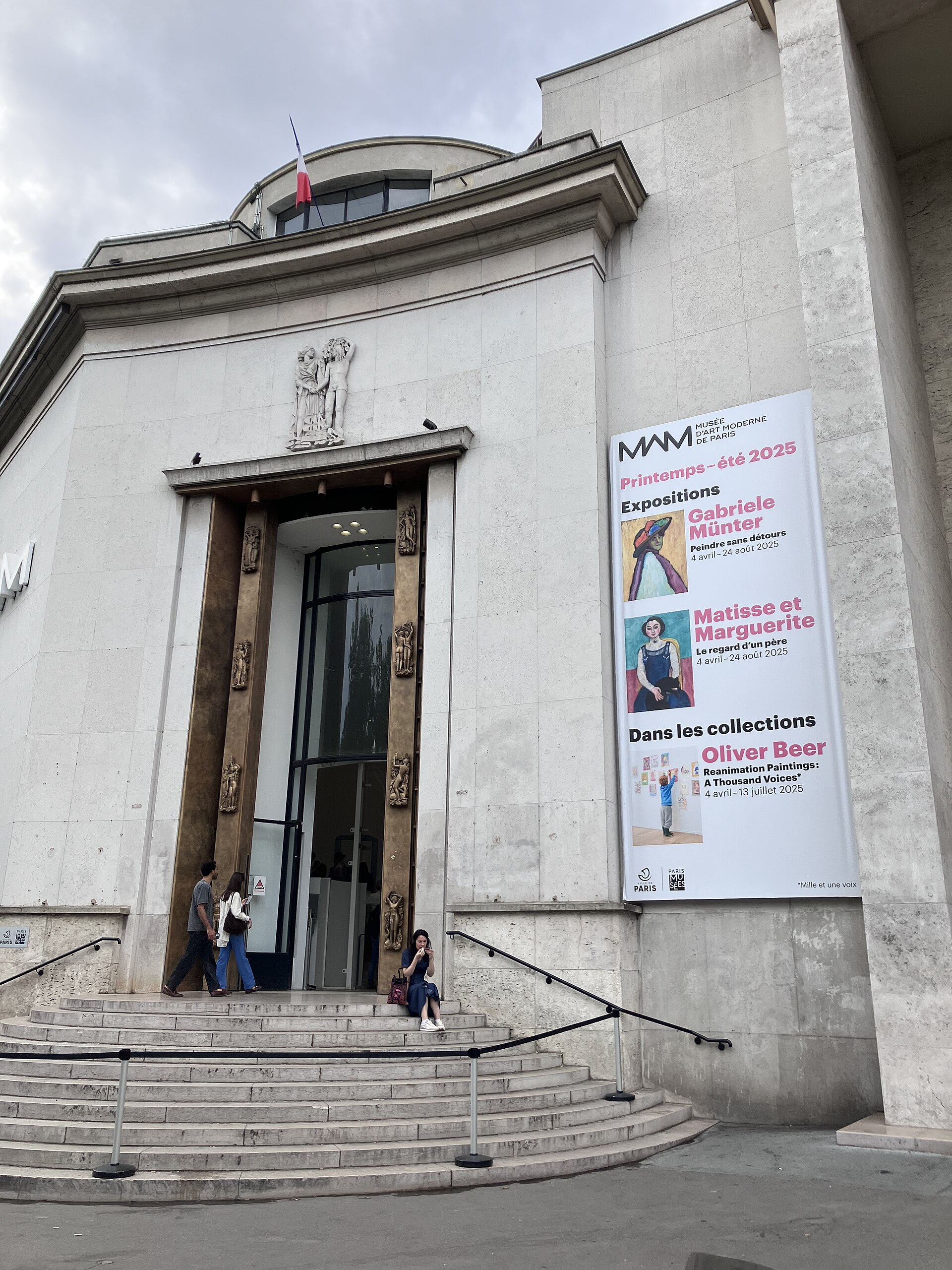
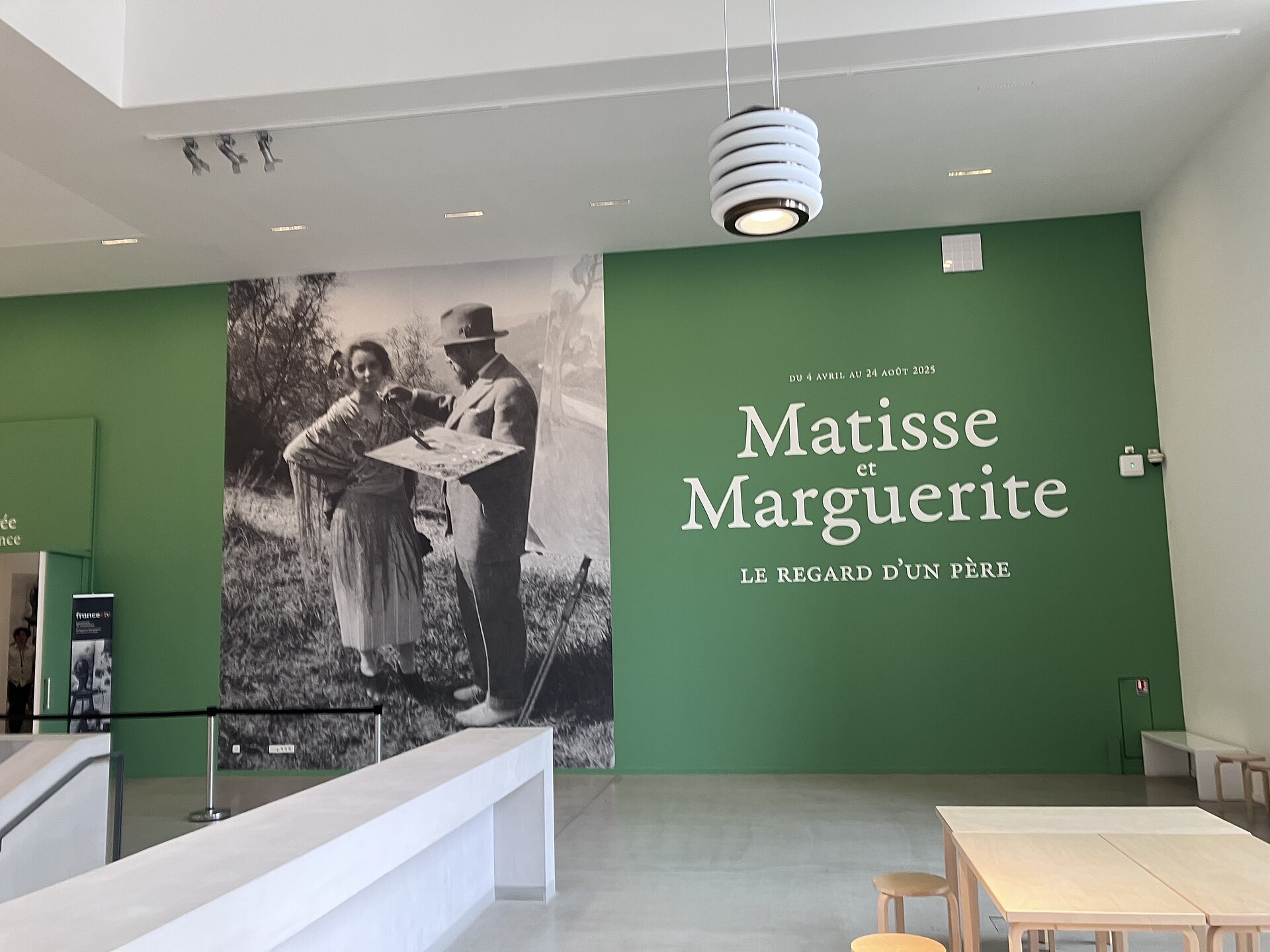
The east-wing entrance on Avenue du President Wilson, photographed in 2025 with the museum's own MAM exhibition banner visible, confirming this is the Musee d'Art Moderne de Paris and not the neighbouring Palais de Tokyo
Zen 38 · CC0Musee d'Art Moderne de Paris
Museum · Musee d'Art Moderne de la Ville de Paris · Founded 1961
Open, admission and hours confirmed 9 September 2026 · 10 sources
On this page 15 sections
ContentsClose
French modern art from Fauvism and Cubism through the School of Paris, anchored by two rooms without equivalents elsewhere in Paris: the Matisse Dance triptychs and Raoul Dufy's mural La Fee Electricite. A secondary, less publicised strength is the 1937 Art Deco furniture and decorative-arts collection, shown as room settings. Contemporary and experimental programming runs through the museum's separate ARC department.
| Local name | Musee d'Art Moderne de la Ville de Paris |
|---|---|
| Kind | Museum |
| Founded | 1961 |
| City and country |  Paris, France Paris, France |
| Address | 11 Avenue du President Wilson, 75116 Paris, France |
| Website | mam.paris.fr |
| Status | Open, confirmed |
| Record last verified |
Visiting
- Hours
- Tue-Sun10:00 to 18:00Ticket sales close at 17:15; galleries begin closing from 17:30
- Thu10:00 to 21:30Extended Thursday evening hours apply to temporary exhibitions only, not the permanent collection
- Closed
- Monday. 1 January. 1 May. 25 December. Closes early, at 17:00, on 24 and 31 December.
- Admission
- Permanent collection, all visitorsFreeFree every day the museum is open; no reservation required. An optional donation ticket of 5 EUR is offered at the desk. Temporary exhibitions are priced separately, per exhibition; the museum's own practical-information page does not publish one flat figure that applies to every show, so none is invented here (see open_questions). Reduced rate with valid ID on temporary exhibitions; free for under-18s, fine-art/fashion/art-history/archaeology students, jobseekers, welfare recipients, and Maison des Artistes members. Visitors holding a disability, priority or parking card enter free with one companion.
- Tickets
- billetterie-parismusees.paris.fr/content The museum's own ticket page.
- Do I need to book?
- No booking needed for the permanent collection, which is free; timed tickets are recommended for major temporary exhibitions
- Address
- 11 Avenue du President Wilson, 75116 Paris, France MapMetro Line 9, Alma-Marceau or Iena station
Bus Lines 32 and 63 (Iena), 42, 80 and 92 (Alma-Marceau), 72 (stop named Musee d'Art moderne), 82 (Iena)
RER RER C, Pont de l'Alma station, only partially accessible - Website
- mam.paris.fr
- Telephone
- +33 1 53 67 40 00
Before you go how long, access, photography, bags, eating, shop
- How long to allow
- About two hours for the permanent collection alone, longer with a temporary exhibition
- Access
- Free entry for disability, priority or parking card holders plus one companion; a wheelchair can be reserved in advance; tactile and audio-described visits and a French Sign Language tour on the museum's app; the nearest RER station (Pont de l'Alma) is only partially accessible
- Photography
- Allowed in the permanent collection subject to the museum's visitor rules; restricted in some temporary exhibitions
- Bags
- Bags larger than 40 x 40 x 40 cm are not admitted; a free cloakroom is provided for the visit
- Eating
- On-site cafe
- Shop
- On-site museum shop
Prices and hours change. We take them from the institution's own pages and print the day we read them, and you can check the current position at the source we used. Confirm before you travel.
What is inside
Salle Matisse
A room built around two related Matisse triptychs, La Danse inachevee (1931) and La Danse de Paris (1931-1933), made in the course of Matisse's commission from Dr Albert Barnes to decorate the main gallery of the Barnes Foundation in Merion, Pennsylvania. A permanent wall piece by Daniel Buren shares the space.
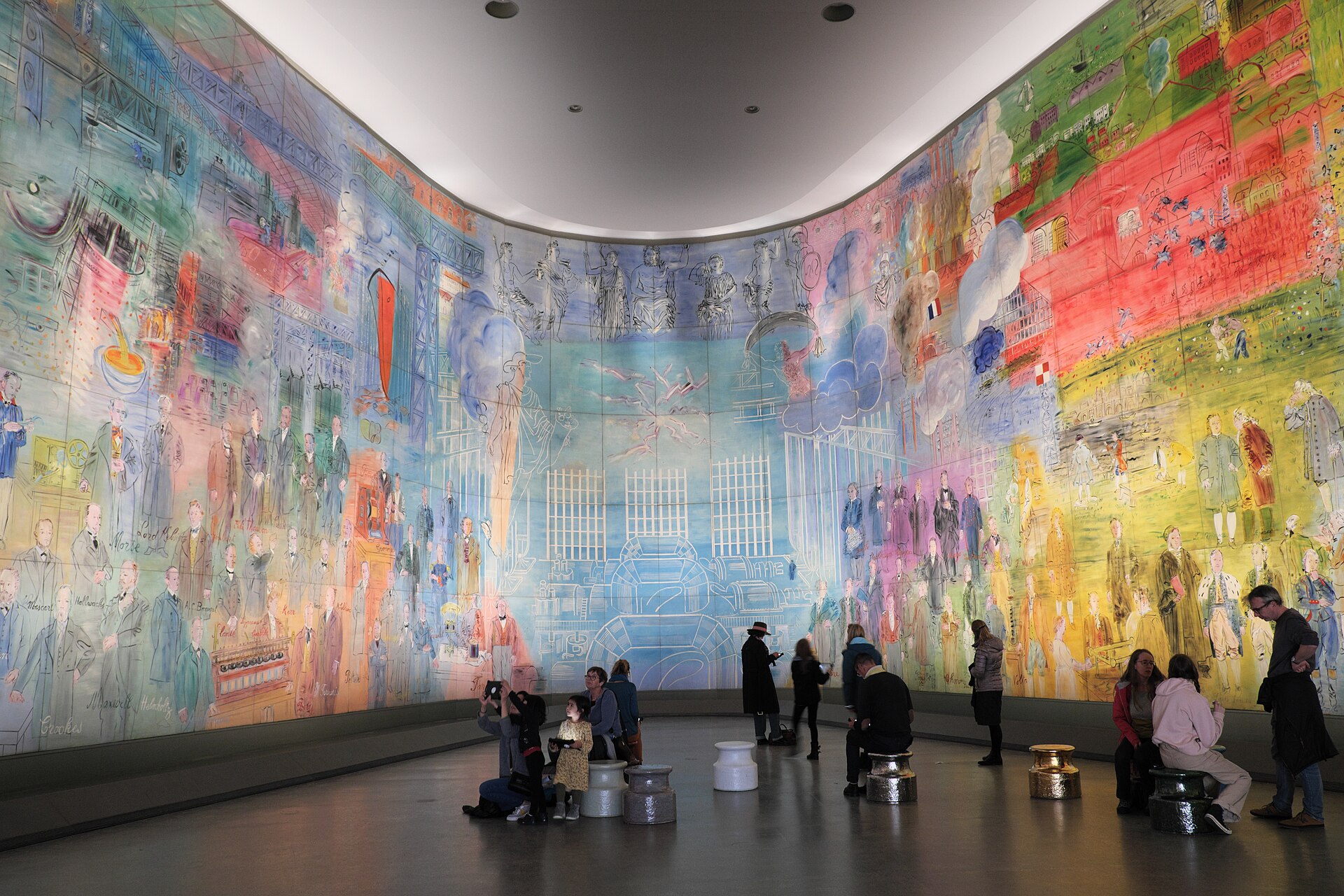
Photograph by GFreihalter · CC BY-SA 4.0 Salle Dufy (La Fee Electricite)
A single 600 square metre mural by Raoul Dufy, painted in 1937 on commission from the Compagnie parisienne de distribution d'electricite for the Palais de la Lumiere et de l'Electricite at that year's Exposition Internationale, tracing the history of electricity from classical myth to the modern power station across more than a hundred identifiable figures. Housed in the museum in its own hall since the 1960s.
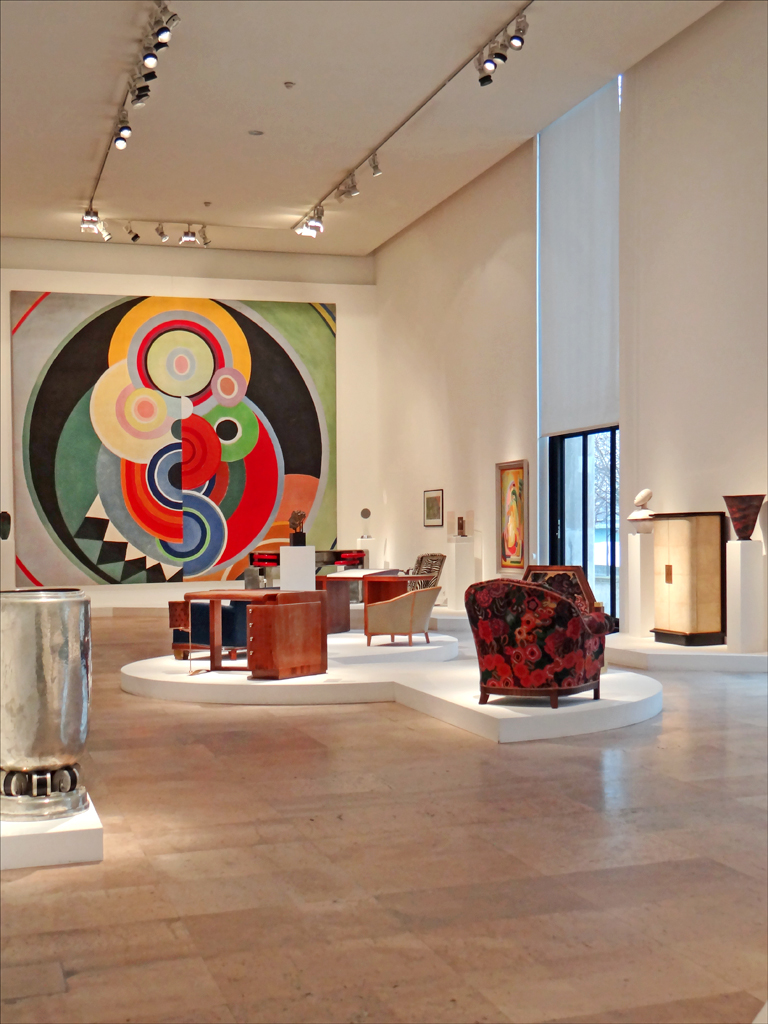
Photograph by Jean-Pierre Dalbéra from Paris, France · CC BY 2.0 Art Deco and decorative arts galleries
Furniture and decorative objects assembled largely from the 1937 Exposition Internationale, shown as complete room settings alongside contemporaneous paintings, including work by Robert Delaunay.
Fauvism and Cubism galleries
The core chronological hang of early 20th-century French and School of Paris painting: Matisse, Braque, Delaunay, Modigliani, Foujita, Soutine, Vuillard and Bonnard, largely built from the 1953 Girardin bequest and later gifts.
Photography collection
A holding of roughly 3,000 photographic works as of 2024, shown in rotation rather than as a fixed permanent display.
ARC department (contemporary art)
The museum's contemporary-art wing, ARC (Animation, Recherche, Confrontation), established in 1967 to run the temporary and experimental programme distinct from the historical collection.
What to see first
La Danse de Paris and La Danse inachevee
Henri MatisseTwo related triptychs from Matisse's 1930-33 commission for the Barnes Foundation's gallery in Merion, Pennsylvania, shown together in a room built around them; a monumental Matisse dance mural is normally associated with Philadelphia, not Paris3
La Fee Electricite
Raoul DufyA 600 square metre history of electricity painted for the 1937 Exposition, one of the largest paintings ever made, on public view in its own hall since the 1960s6
L'Equipe de Cardiff
Robert DelaunayA Simultaneist rugby scene from 1912-13, shown at the 1913 Salon des Independants, that merges a match in progress with the Eiffel Tower, a fairground wheel and a biplane poster7
La Femme a l'eventail (Woman with a Fan)
Amedeo ModiglianiOne of five paintings cut from their frames in the May 2010 theft; the convicted fence's claim to have destroyed it in household rubbish has never been confirmed or disproved, so its fate is still formally unresolved6
The Girardin bequest
Dr Maurice Girardin (donor)The single 1953 gift that accounts of the museum credit as decisive in building its core early 20th-century French collection6
The 2025 Duthuit gift
Henri Matisse (works given by Barbara Dauphin Duthuit)61 works including seven paintings, among them Marguerite endormie (1920), added to the collection in 2025, evidence the Matisse holdings are still being actively built rather than closed6
The 1937 Art Deco design collection
Various decorative artists of the 1930sFurniture and decorative art assembled from the 1937 Exposition Internationale and displayed as room settings rather than as isolated objects, a strength of the collection that sits outside the painting-led narrative6
Exhibitions on now
A municipal museum in the east wing of a 1937 palace
The Palais de Tokyo was built for the 1937 Exposition Internationale des Arts et Techniques dans la Vie Moderne, on Avenue du President Wilson in the 16th arrondissement of Paris. The building has two wings either side of a central colonnade, and the two halves have gone in different directions ever since: the west wing became the Palais de Tokyo, an independent contemporary-art centre with no permanent collection of its own, run separately since 2002. The east wing is this museum, the Musee d'Art Moderne de Paris, a museum of the City of Paris and part of the Paris Musees network of fourteen municipal museums. It is a distinct institution from the Musee National d'Art Moderne, the state collection housed inside the Centre Pompidou since 1977, on the other side of the river. All three neighbours are easy to conflate on a map of the same few streets; they hold different collections, answer to different owners, and a photograph or a fact that belongs to one does not belong to the others.
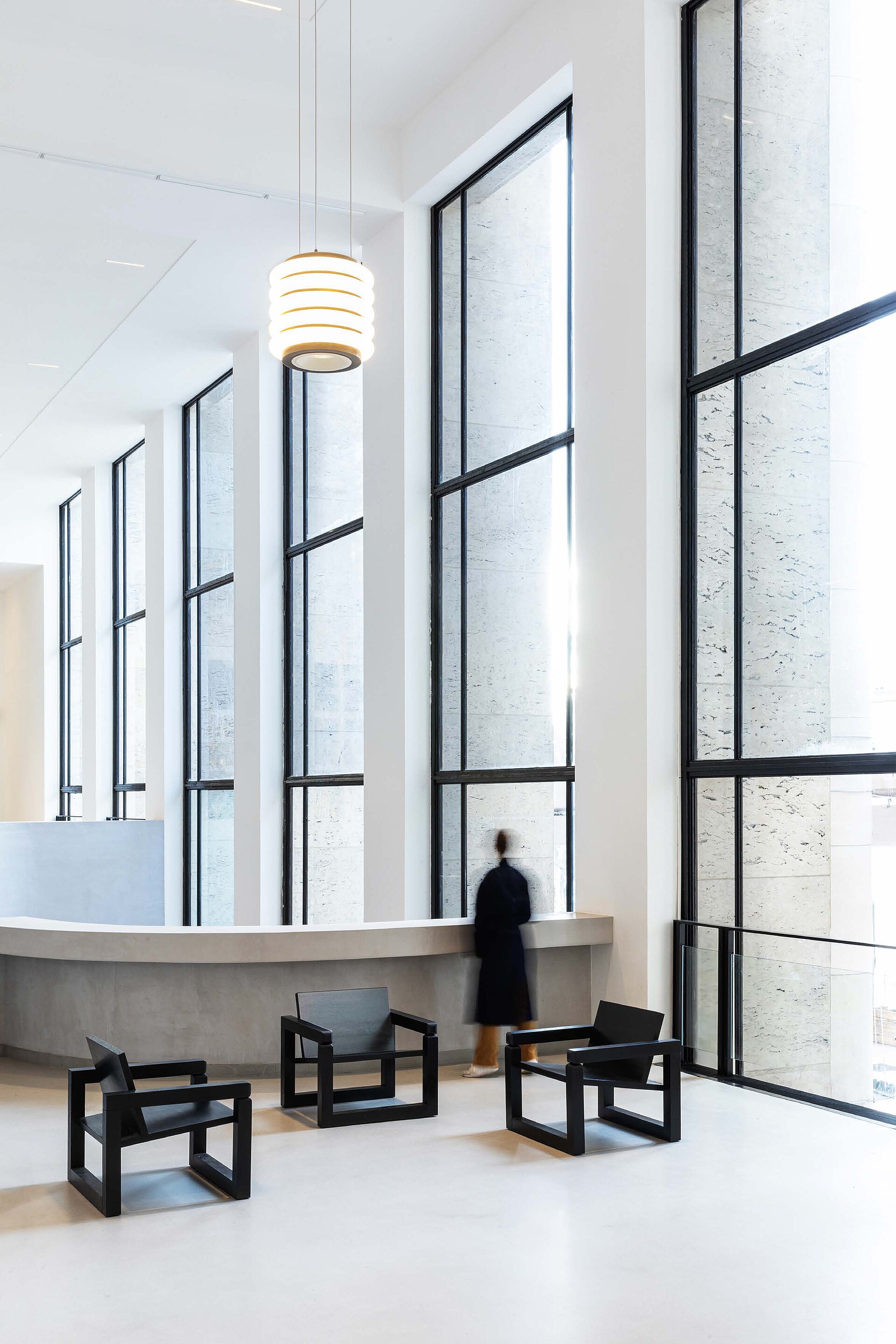
The museum's own collection began to form in the 1930s, through gifts gathered around the Salon d'Automne, but the building a visitor walks into today opened to the public in 1961. In October 2019, after an eight-month closure and a 10 million euro renovation of its public spaces by the Paris firm h2o architectes, the museum reopened with a new curved, glazed entrance sequence and lobby, replacing the previous approach.
How the collection was built
The single gift most often credited with shaping the museum's core holding of early 20th-century French painting is the 1953 bequest of the collector Dr Maurice Girardin. Without it, accounts of the collection's formation agree, the museum's depth in Fauvism, Cubism and the School of Paris would be considerably thinner. The collection has grown since to somewhere in the range of 15,000 to 16,000 works.
The museum is still being built by gift, not only by purchase. In 2025 Barbara Dauphin Duthuit, a descendant of Henri Matisse, gave the museum 61 works by the artist, including seven paintings such as Marguerite endormie (1920). A collection whose single most prized modern name is still receiving fresh donations in the year this record was written is not a closed inheritance.
From Fauvism to the contemporary: what is inside
The permanent hang runs broadly chronologically from Fauvism and Cubism through the School of Paris: Matisse, Braque, Delaunay, Modigliani, Foujita, Soutine, Vuillard and Bonnard are all represented, largely from the Girardin bequest and the gifts that followed it. Alongside the paintings, the museum holds a substantial body of Art Deco furniture and decorative art gathered from the 1937 Exposition Internationale and shown as complete room settings rather than as isolated objects behind glass, a strength of the collection that gets less attention than the paintings around it. A photography collection of roughly 3,000 works, as counted in 2024, is shown in rotation. Contemporary and experimental programming runs through a distinct department, ARC (Animation, Recherche, Confrontation), established in 1967, which is where the museum's temporary exhibitions and newer acquisitions are most often placed.
The two rooms every visitor is told not to miss
The Salle Matisse holds two related triptychs, La Danse inachevee (1931) and La Danse de Paris (1931-1933), from the commission Matisse received from Dr Albert Barnes to decorate the main gallery of the Barnes Foundation in Merion, Pennsylvania. A wall piece by Daniel Buren shares the room, set deliberately against the historical work. The Salle Dufy holds a single mural, La Fee Electricite, some 600 square metres of painted panels that Raoul Dufy completed in 1937 on commission from the Compagnie parisienne de distribution d'electricite for the Palais de la Lumiere et de l'Electricite at that year's Exposition. The mural traces the history of electricity from classical myth to the modern power station across more than a hundred identifiable figures, and the museum has kept it on view in its own dedicated hall since the 1960s. A 2020 published review of the museum, discussed below, singled out these two rooms by name as the reason to come.
The heist of the century, and what it still has not answered
On the night of 19-20 May 2010, a man named Vjeran Tomic broke into the museum through a grille and a broken window on a side facade, found that the building's alarm system was not functioning, and removed five paintings without being challenged despite roughly 30 security cameras on site. The paintings taken were Pablo Picasso's Le Pigeon aux petits pois, Henri Matisse's Pastorale, Georges Braque's L'Olivier pres de l'Estaque, Fernand Leger's Still Life with Candlestick, and Amedeo Modigliani's La Femme a l'eventail, together valued at around 100 million euros. Tomic, the antiques dealer Jean-Michel Corvez, and the metalworker Yonathan Birn were convicted in 2017 and sentenced to eight, seven and six years respectively. Birn testified that, panicking, he had destroyed the paintings by putting them out with household rubbish; investigators have never been able to confirm or disprove that account, so the five works remain formally unrecovered. The theft prompted lasting public scrutiny of the museum's security arrangements, which by multiple published accounts had left an alarm disabled on the night in question.
Visiting today, and what visitors actually say
The permanent collection is free to everyone, every day the museum is open, with no reservation required; an optional 5 euro donation ticket is offered at the desk. Temporary exhibitions are priced per show. Visitor comment converges on the same two points as the published review discussed above: the Salle Matisse and Salle Dufy are the reason to come, and the rest of the permanent collection, while solid, is not where most visitors report finding a single unmissable masterpiece. The most consistent published criticism concerns the representation of women artists in the permanent hang, described as thin. A minority of visitor accounts also describe the front-of-house staff as unhelpful. None of this is a reason to skip the museum; a reader planning a visit should simply know that the two named rooms, not the general collection, are what other visitors say made the trip worthwhile, and should be careful, walking up Avenue du President Wilson, to look for the east-wing entrance rather than the Palais de Tokyo's separate one next door.
What visitors say
Visitors consistently single out the free entry to the permanent collection and the two dedicated Matisse and Dufy rooms as the reasons to come; the most repeated reservation is that, outside those two rooms and a temporary exhibition, the collection is described as solid rather than a must-see, with weak representation of women artists and, in a minority of accounts, brusque front-of-house staff.
What is praised, what is criticised
- Praised: Free entry to the permanent collection and the on-site cafe
- Praised: The Salle Matisse and Salle Dufy rooms, singled out by name in a 2020 published review as the real delights of the museum
- Praised: Special and temporary exhibitions, cited repeatedly as the strongest reason to visit on a given day
- Criticised: Thin representation of women artists in the permanent hang, noted explicitly in a published 2020 review
- Criticised: Beyond the two signature rooms, several visitor accounts describe the rest of the permanent collection as lacking a standout masterpiece
Ratings on other platforms
TripAdvisor: 4.2 from 818 ratings, read 9 September 2026
A platform average is a tertiary source: it moves, it is not audited, and we quote no visitor's words.
Questions about Musee d'Art Moderne de Paris
Where is Musee d'Art Moderne de Paris?
11 Avenue du President Wilson, 75116 Paris, France.
How much does it cost to visit?
Permanent collection, all visitors: free. As confirmed 9 September 2026.
When is it open?
Tue-Sun 10:00-18:00; Thu 10:00-21:30. Closed: Monday. 1 January. As confirmed 9 September 2026.
How do you get there?
Metro: Line 9, Alma-Marceau or Iena station; Bus: Lines 32 and 63 (Iena), 42, 80 and 92 (Alma-Marceau), 72 (stop named Musee d'Art moderne), 82 (Iena); RER: RER C, Pont de l'Alma station, only partially accessible.
What should you see first?
La Danse de Paris and La Danse inachevee (Henri Matisse); La Fee Electricite (Raoul Dufy); L'Equipe de Cardiff (Robert Delaunay); La Femme a l'eventail (Woman with a Fan) (Amedeo Modigliani); The Girardin bequest (Dr Maurice Girardin (donor)); The 2025 Duthuit gift (Henri Matisse (works given by Barbara Dauphin Duthuit)).
What we could not confirm
- The fate of the five paintings stolen in May 2010, including the Modigliani in this record's highlights, remains formally unresolved: the convicted fence's account of having destroyed them has never been independently confirmed.
- The museum's own practical-information page does not publish a single admission figure for temporary exhibitions, since the price is set per show; no figure is invented here and a reader should check the current exhibition's own page before travelling.
- Sources consulted for this record did not describe any restitution claim or contested acquisition specific to this museum's collection; none is asserted here, and this should be revisited if one surfaces.
Images
Sources
- 1Musee d'Art Moderne de Paris, official website, home page (opening-hours summary) mam.paris.fr
- 2Musee d'Art Moderne de Paris, official website, practical information (hours, admission, transport, accessibility) mam.paris.fr/fr/informations-pratiques
- 3Musee d'Art Moderne de Paris, official website, Salle Matisse mam.paris.fr/fr/espace/salle-matisse
- 4Musee d'Art Moderne de Paris, official website, contact page mam.paris.fr/fr/contact
- 5Wikipedia (English), 'Musee d'Art Moderne de Paris', source used for building/renovation history and visitor figures en.wikipedia.org/wiki/Mus%C3%A9e_d%27Art_Moderne_de_Paris
- 6Wikipedia (French), 'Musee d'Art moderne de Paris', source used for the 2010 theft, the Girardin and Duthuit gifts, and department detail fr.wikipedia.org/wiki/Mus%C3%A9e_d%27Art_moderne_de_Paris
- 7Wikipedia (French), 'L'Equipe de Cardiff', source for the Delaunay painting fr.wikipedia.org/wiki/L%27%C3%89quipe_de_Cardiff
- 8Wikimedia Commons category page (embeds Wikidata Q857276), source for identity, coordinates and the official 1961 opening date commons.wikimedia.org/wiki/Category:Mus%C3%A9e_d%27Art_moderne_de_Paris
- 9Natasha Ntone, 'Museum Review: Musee d'Art Moderne de Paris', Contemporary Musings, 15 July 2020 natashantone.com/home/2020/7/14/museum-review-musee-dart-moderne-de-paris
- 10TripAdvisor listing for Musee d'Art Moderne de la Ville de Paris, rating (direct fetch returned ; the score and review count were confirmed instead from a fetched search-results listing and corroborate identically across the .com, .de, .at and .ch TripAdvisor domains) tripadvisor.com/Attraction_Review-g187147-d188130-Reviews-Musee_d_Art_Moderne_de_la_Ville_de_Paris-Paris_Ile_de_France.html