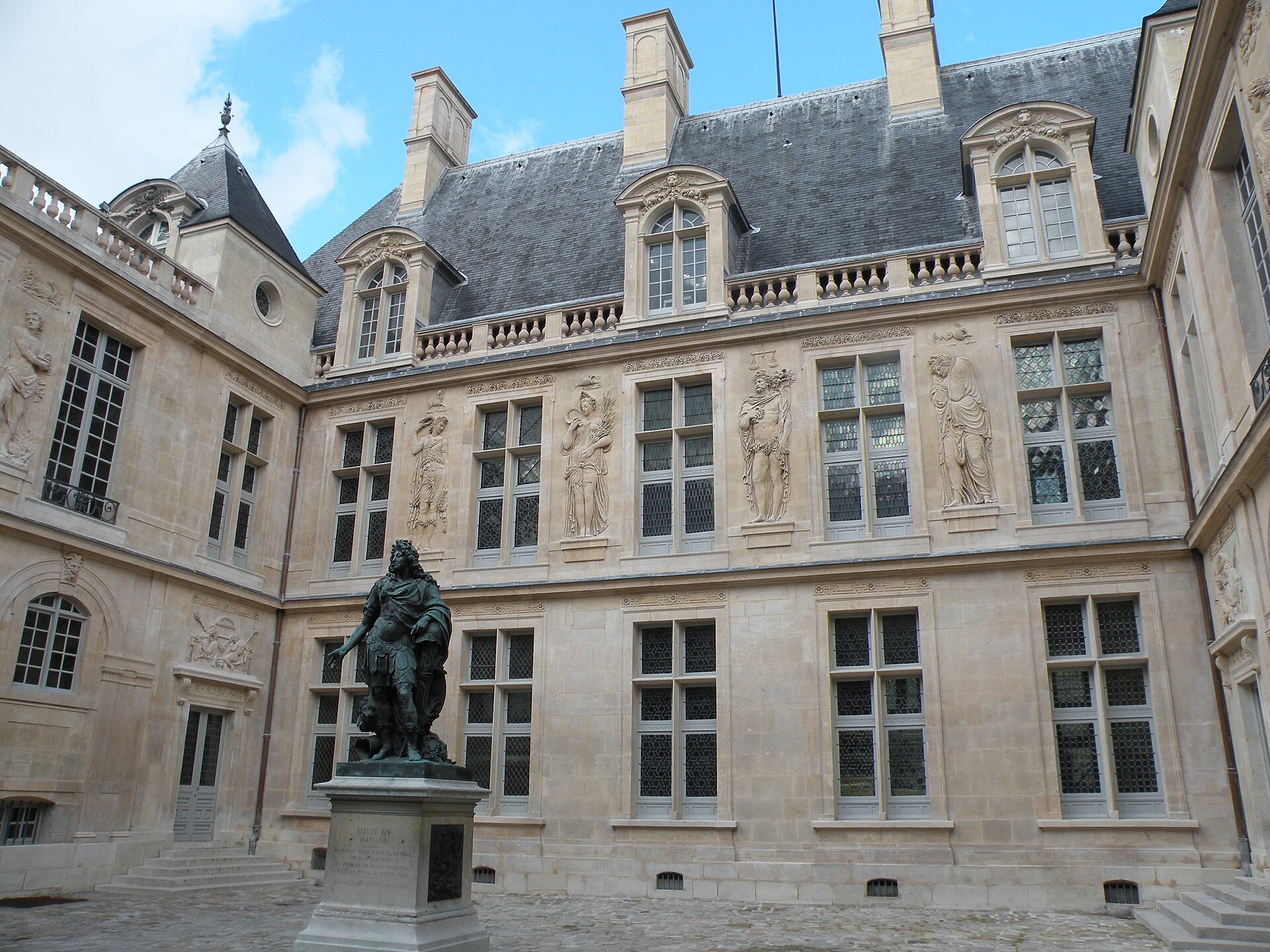
The Cour Louis XIV, the main courtyard of the Hotel Carnavalet, with Antoine Coysevox's bronze statue of Louis XIV at its centre.
Photograph by Chatsam · CC BY-SA 3.0Musee Carnavalet
Museum · Musée Carnavalet · Founded 1880
Open, admission and hours confirmed 18 August 2026 · 12 sources
On this page 16 sections
ContentsClose
The strength of the Carnavalet's holdings is depth on one city rather than breadth across periods or geographies: every one of its roughly 618,000 objects was chosen because it touched Paris specifically, from a Neolithic canoe pulled from the Seine to a philosopher's armchair to a complete Art Nouveau shopfront, which makes the collection unusually good at showing continuity and rupture in a single place across five and a half thousand years, and correspondingly weak as a place to see any period or maker in the wider European context that a national museum would supply.
| Local name | Musée Carnavalet |
|---|---|
| Kind | Museum |
| Founded | 1880 |
| City and country |  Paris, France Paris, France |
| Address | 23 rue Madame de Sevigne, 75003 Paris, France |
| Website | carnavalet.paris.fr/en |
| Status | Open, confirmed |
| Record last verified |
Visiting
- Hours
- Tuesday-Sunday10:00 to 18:00Ticket office and last entry to temporary exhibitions close at 17:15
- MondayClosed
- Closed
- Monday. 1 January. 1 May. 25 December.
- Admission
- Permanent collectionFreeFree for everyone, every day the museum is open. No ticket, no advance reservation.
- Temporary exhibition, full priceEUR 15Rate for the exhibition Madame de Sevigne, Lettres parisiennes, running 15 April to 23 August 2026. Temporary exhibition pricing is set per show and is not a fixed museum-wide figure.
- Temporary exhibition, reducedEUR 13
- Temporary exhibition, under 18 and job seekersFreeFree on production of proof
- Tickets
- carnavalet.paris.fr/en/exhibitions/madame-de-... The museum's own ticket page.
- Do I need to book?
- No for the permanent collection, walk in freely. Advance online booking is strongly recommended for the paid temporary exhibition, which sells out on weekends.
- Address
- 23 rue Madame de Sevigne, 75003 Paris, France MapMetro Line 1 Saint-Paul, Line 8 Chemin Vert, Line 5 Breguet Sabin, Line 7 Pont Marie
Bus Lines 29, 69, 76, 91, 96 - Website
- carnavalet.paris.fr/en
- Telephone
- +33 1 44 59 58 58
- [email protected]
Before you go how long, access, photography, bags, eating, shop
- How long to allow
- The museum spans 40 rooms across two joined mansions on three main levels; a full chronological walk from the prehistoric dugout canoe to the 21st century takes two to three hours, and the free permanent collection can be dipped into for less without paying anything.
- Access
- Step-free throughout via lifts and ramps added in the 2016-2021 renovation. Folding seats, buggies and manual wheelchairs are lent free of charge. Large-print and Braille materials and tactile models are available for parts of the route; some labels are in French and English.
- Photography
- Photographs for private, non-commercial use are allowed without flash, tripod or other equipment that could disturb other visitors or the works.
- Bags
- Only handbag-sized bags are allowed in the galleries. Suitcases and large bags are refused for security reasons and must go in the self-service lockers (40 x 36 x 36 cm) behind the ticket desk; contents must be collected the same day.
- Eating
- Restaurant Joli operates on site.
- Shop
- A museum bookshop sells titles on Paris history and the collection.
Prices and hours change. We take them from the institution's own pages and print the day we read them, and you can check the current position at the source we used. Confirm before you travel.
What is inside
Ground floor: enseignes and the two mansions
Two introductory rooms on the symbols of Paris and on the history of the Carnavalet and Le Peletier de Saint-Fargeau buildings themselves, followed by a run of historic shop signs, the painted and carved emblems that identified trades and addresses on Paris streets before house numbering.
Basement: prehistory to the Middle Ages
Mesolithic and Neolithic finds from the Seine basin, including a dugout canoe carved from a single oak trunk around 4,400 years old; Gallo-Roman Lutetia, with a Parisii coin and fragments from the Roman amphitheatre; and medieval Paris centred on the Ile de la Cite, with stained glass, seals and carved stonework recovered from demolished buildings.
First floor: 16th to 18th century salons
Panelled rooms lifted whole from demolished Paris mansions and reassembled here, running from Henri II through Louis XIV: the Le Brun ceiling salons, rooms devoted to Madame de Sevigne, who lived in this building from 1677 to her death in 1696, and the Bouvier, Breteuil and Conflans rooms covering 18th-century interior decoration up to the eve of the Revolution, including panelling by the architect Claude-Nicolas Ledoux.
Second floor: Revolution to 1848
A chronological sequence from the Estates-General and the fall of the Bastille through the Terror, the Directory, Napoleon I's empire and the Restoration, built around paintings, prints, models of the demolished Bastille carved from its own stone, and relics of the guillotine years.
First floor, second sequence: 1848 to the present
Haussmann's rebuilding of Paris, the 1870-71 siege and the Commune, the Belle Epoque, the two world wars and the museum's newest rooms, opened in the 2021 rehang, covering the second half of the 20th century and the 2015 Paris attacks.
The Wendel ballroom and the Fouquet shop
Two complete decorative schemes rescued rather than described: the ballroom Jose Maria Sert painted around 1925 for the Wendel steel dynasty, its walls given over to a gilded procession of the Queen of Sheba; and the shopfront and fittings Alfons Mucha designed in 1901 for the jeweller Georges Fouquet on rue Royale, transplanted into the museum as a complete Art Nouveau interior.
What to see first
The Neolithic dugout canoe
Unknown, Paris regionA single oak trunk hollowed into a boat around 4,400 years ago, recovered from the Seine and one of the oldest objects to have been used in Paris shown anywhere in the city.6
Statue of Louis XIV
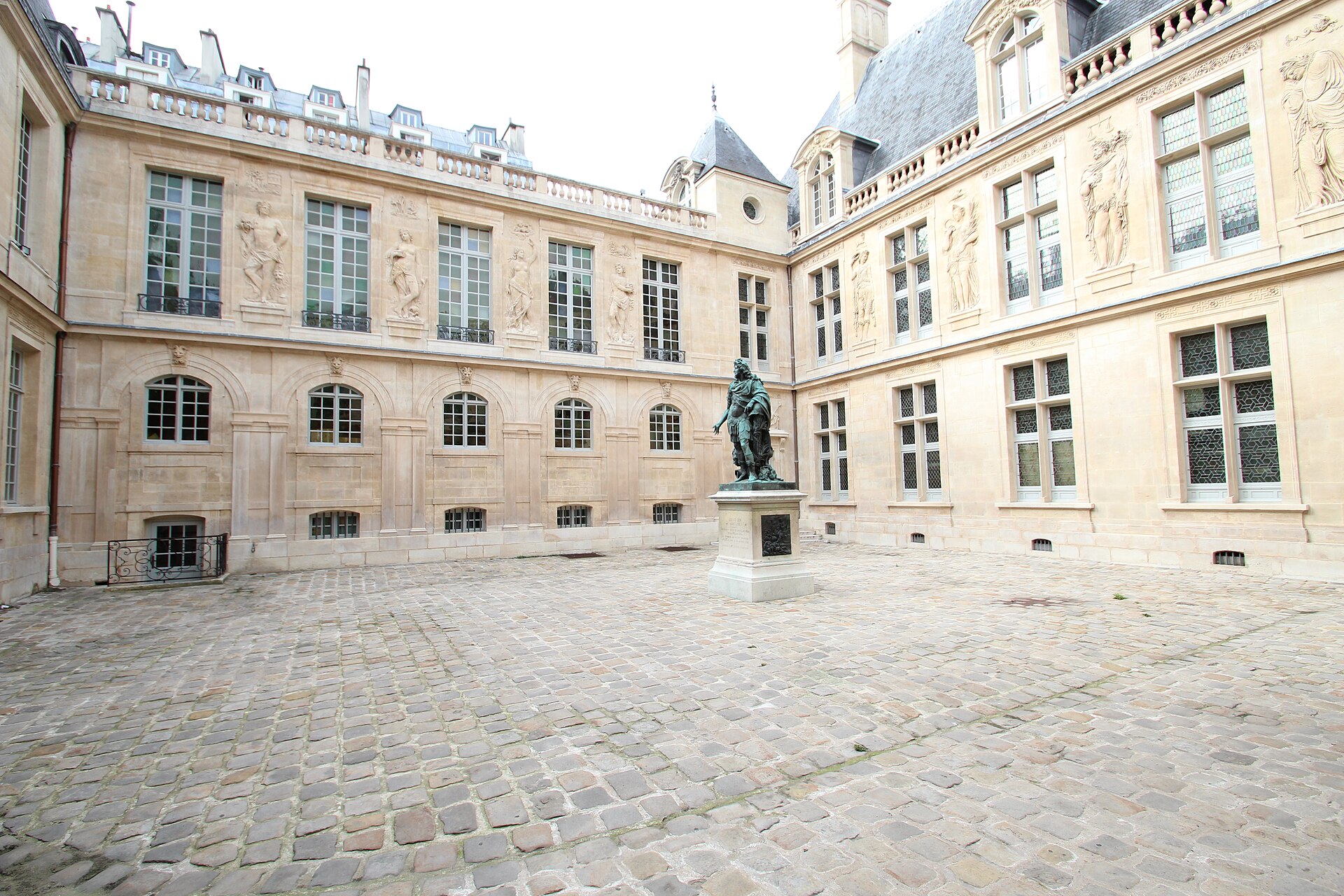
Antoine CoysevoxThe bronze that dominates the Cour Louis XIV, the courtyard this venue's own lead photograph shows; it stood in front of the Hotel de Ville until the Revolution and is one of the few royal statues from Ancien Regime Paris to survive being melted down.6
Serment du Jeu de paume
Jacques-Louis DavidDavid's own working image of the Tennis Court Oath of 20 June 1789, the founding scene of the Revolution shown in the room that opens the museum's Revolution sequence.6
Panels from the Salon Demarteau
Francois BoucherA complete decorative scheme Boucher painted for the printmaker Gilles Demarteau's own apartment, reassembled here rather than known only from photographs.6
Voltaire's armchair
Stamped Charles-Francois NormandA piece of furniture that puts the Enlightenment's most quoted critic of institutions inside a museum the City of Paris built to celebrate its own institutions.6
The Fouquet jewellery shop
Alfons MuchaMucha's complete 1901 shopfront and cabinetry for the jeweller Georges Fouquet, dismantled from rue Royale and rebuilt inside the museum as the single most complete Art Nouveau interior on public view in Paris.7
The Wendel ballroom
Jose Maria SertA gilded, floor-to-ceiling narrative cycle painted around 1925 for a steel dynasty's private house, moved into the museum complete and normally seen only from a raised walkway rather than the ballroom floor.7
Marcel Proust's bedroom furniture
Proust's own possessionsThe bed, screen, bedside table, armchair and chaise longue from the cork-lined room on rue de l'Amiral Hamelin where Proust wrote much of In Search of Lost Time, one of the very few writer's-room reconstructions in Paris built from the actual furniture rather than a recreation.7
Exhibitions on now
- On now14 Oct 2026 to 14 Feb 2027Confirmed , 2 months ago
Past exhibitions here
A museum built to replace what a fire had just destroyed
The Musee Carnavalet exists because Paris burned its own city archive twice over. Baron Haussmann, prefect of the Seine during the Second Empire's demolition and rebuilding of the city, persuaded the municipal council in 1866 to buy the Hotel Carnavalet as a repository for what the rebuilding was erasing: street signs, shopfronts, whole rooms of panelling, prints and plans of a Paris that his own boulevards were cutting through. The collection was still being assembled in 1871 when the Paris Commune's final days set fire to the Hotel de Ville, destroying the city's administrative archive alongside it. The museum that opened on the Carnavalet site on 25 February 1880 was, from the start, doing the job the burned archive no longer could: holding physical evidence of a city that kept remaking itself faster than anyone could record it.
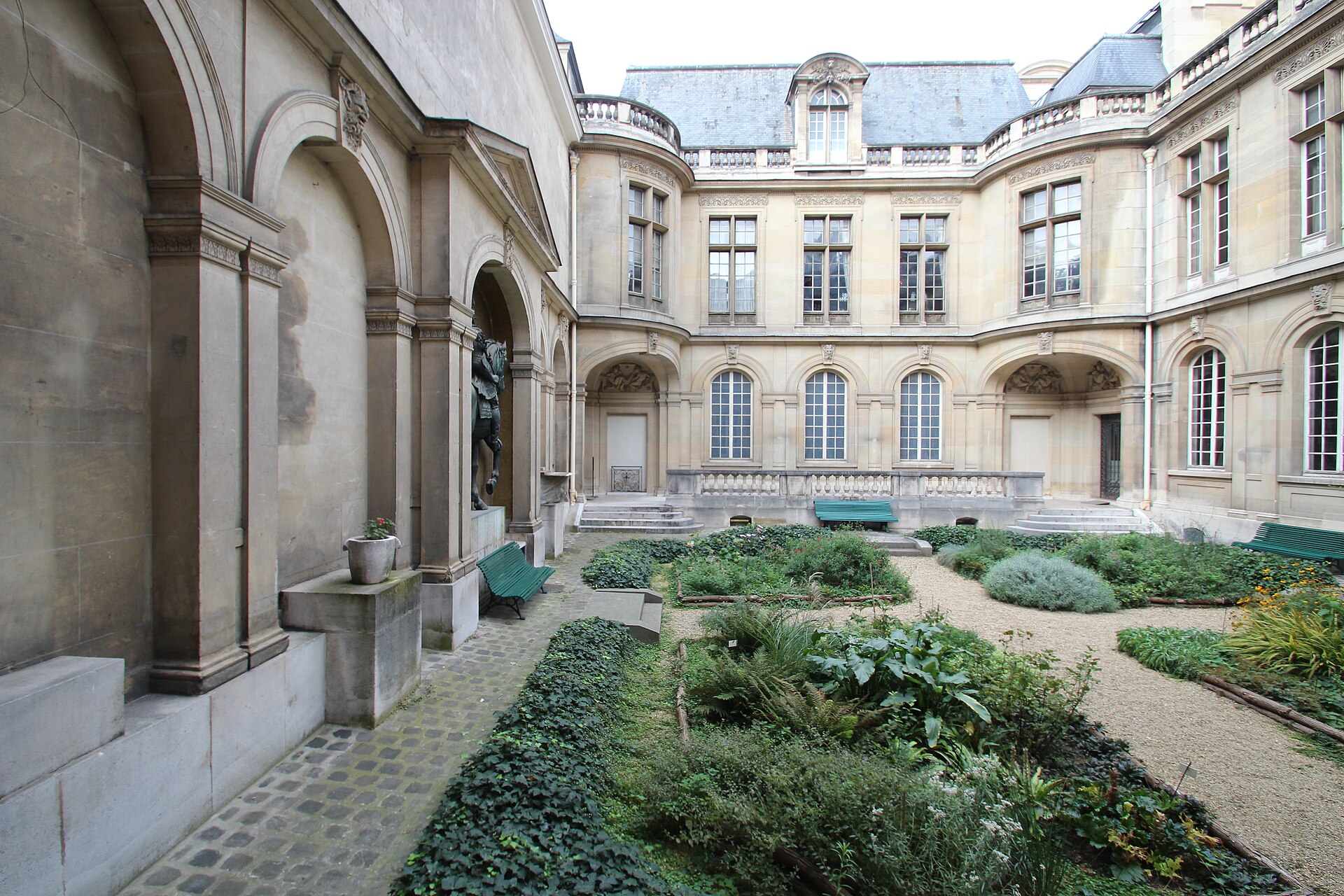
The building itself predates that mission by three centuries. The Hotel des Ligneris, the core of what is now called the Hotel Carnavalet, went up between 1548 and 1560 for Jacques de Ligneris, a president of the Parlement of Paris, and survives as one of the few Renaissance mansions left standing in the city; Pierre Lescot and Jean Goujon are credited with its initial design before both were pulled onto the Louvre project. Francois Mansart reworked it in the classical style around 1660. Between 1677 and her death in 1696 it was rented by Marie de Rabutin-Chantal, marquise de Sevigne, whose letters to her daughter are one of the primary sources historians use for the period; the museum devotes a run of first-floor rooms to her, and marked the 400th anniversary of her birth in 2026 with a dedicated exhibition. The neighbouring Hotel Le Peletier de Saint-Fargeau, built 1688-1690, was annexed to the museum and opened to the public in 1989, roughly doubling the exhibition space without changing the address.
What free actually means here
Access to the permanent collection costs nothing and needs no ticket or reservation, confirmed on the museum's own visitor-information page rather than assumed from its municipal ownership: Paris's other city-run history and fine-art museums operate the same way, but it is worth stating plainly rather than taking for granted, since several comparably sized institutions in the same neighbourhood charge for exactly this kind of permanent display. Only the temporary exhibition programme is ticketed, run through a separate booking system with its own price for each show; the exhibition on show through August 2026, devoted to Madame de Sevigne, charges a full rate of 15 euros against a free permanent collection next door, which is the split a visitor needs to understand before arriving rather than discover at the door.
Forty rooms, one continuous chronology
The museum closed to the public in October 2016 for a five-year renovation that reorganised roughly 40 rooms into a single chronological route rather than the older arrangement, which had grown room by room as donations arrived rather than as a planned sequence. The new route starts in the basement with Mesolithic and Neolithic finds from the Seine basin and Gallo-Roman Lutetia, climbs through the medieval city on the Ile de la Cite, and works forward through the first floor's 16th- to 18th-century salons, a second-floor sequence covering the Revolution through 1848, and a return to the first floor for Haussmann's rebuilding, the 1870-71 siege and Commune, the Belle Epoque and the 20th century, ending with rooms added in the 2021 rehang that reach into the 21st century. Lifts and ramps were added throughout, and large-print, audio and tactile material now covers parts of the route that were previously accessible only as printed text.
Two decorative schemes are shown apart from the chronological run because they are complete interiors rather than assembled displays. The ballroom Jose Maria Sert painted around 1925 for the Wendel steel dynasty, a gilded telling of the Queen of Sheba's procession that covers every wall and the ceiling, was moved into the museum whole; visitors see it from a raised gallery rather than standing on its floor. The shopfront and fittings Alfons Mucha designed in 1901 for the Fouquet jewellery house on rue Royale were dismantled and rebuilt inside the museum as a single Art Nouveau room, one of the most complete surviving examples of the style anywhere in Paris.
What the objects are, beyond the rooms
The collection passed 618,000 items by the museum's own count, built almost entirely from donation and bequest over more than a century and a half rather than from purchase, which is why its holdings run from a single dugout canoe to a marquise's writing desk to a philosopher's armchair without much acquisitions logic connecting them beyond the fact that each one touched Paris. Antoine Coysevox's bronze of Louis XIV, which now stands in the Cour Louis XIV courtyard, is one of the very few royal statues from before the Revolution to have survived the campaign to melt down royal bronzes for cannon; most others were destroyed. Jacques-Louis David's Serment du Jeu de paume, showing the deputies' oath of 20 June 1789 that opened the Revolution, is the artist's own working image rather than a copy. Voltaire's armchair, Francois Boucher's decorative panels for the printmaker Gilles Demarteau's own apartment, and the bed, screen and chaise longue from Marcel Proust's cork-lined bedroom on rue de l'Amiral Hamelin are each an object that belonged to, or was made for, one specific named Parisian rather than an anonymous period piece.
A renovation that critics called successful, with one specific complaint
Press coverage of the 2021 reopening, read directly rather than taken from an aggregator, is largely favourable and specific about why: Paris Update's review by Heidi Ellison called the renovation brilliant, praised the new chronological layout and the added accessibility, and singled out the free permanent collection as unusual for a museum of this scope. The same review named one failure that later coverage and visitor comment have kept repeating: object labels are printed directly onto the glass of the display cases in small type, and the review found them extremely difficult to read against reflections and cluttered backgrounds behind the glass, calling it a missed opportunity in an otherwise user-friendly rehang. Nothing in the museum's own published material addresses whether the vitrine labelling has since been changed.
A city museum with a city-sized argument to make
What the Carnavalet is arguing, across 40 rooms it does not present as an argument, is that Paris is best understood as a sequence of demolitions each followed by an attempt to keep something of what was destroyed. Haussmann's boulevards created the museum's founding collection by generating the wreckage it was built to hold; the 1871 Commune fire took the city's own administrative record at the same moment the museum's collection was being formed; and the shop signs, salvaged panelling and rescued shopfronts that fill its rooms are, room after room, evidence of buildings that no longer stand rather than illustrations of ones that do. A visitor who walks the full chronological route leaves having seen a city rebuild itself under Renaissance kings, absolutist monarchs, revolutionary committees, an emperor, a besieging army, a commune and a republic, with the museum itself founded in the middle of that sequence rather than after it.
What visitors say
The pattern across what visitors and critics say, in our own words: the free permanent collection and the 2016-2021 renovation are read as a success, especially the decision to run the 40 rooms in a single chronological sequence instead of the older, harder-to-follow arrangement. The one recurring complaint that survived the rehang is not about the objects but about how they are labelled.
What is praised, what is criticised
- Praised: the free, unticketed entry to the entire permanent collection, unusual among Paris's largest history museums
- Praised: the chronological rehang completed in 2021, which visitors and critics both describe as easier to follow than the pre-renovation layout
- Praised: the size of the museum relative to the Louvre or the Musee d'Orsay: substantial enough for a full afternoon but not so large that a visitor cannot see it in one visit
- Criticised: labels for many objects are printed directly onto the glass of the display cases in small type; reviewers report them hard to read because of glare and reflections against the backgrounds behind the glass
Questions about Musee Carnavalet
Where is Musee Carnavalet?
23 rue Madame de Sevigne, 75003 Paris, France.
How much does it cost to visit?
Permanent collection: free; Temporary exhibition, full price: EUR 15; Temporary exhibition, reduced: EUR 13; Temporary exhibition, under 18 and job seekers: free. As confirmed 18 August 2026.
When is it open?
Tuesday-Sunday 10:00-18:00; Monday closed. Closed: Monday. 1 January. As confirmed 18 August 2026.
How do you get there?
Metro: Line 1 Saint-Paul, Line 8 Chemin Vert, Line 5 Breguet Sabin, Line 7 Pont Marie; Bus: Lines 29, 69, 76, 91, 96.
What should you see first?
The Neolithic dugout canoe (Unknown, Paris region); Statue of Louis XIV (Antoine Coysevox); Serment du Jeu de paume (Jacques-Louis David); Panels from the Salon Demarteau (Francois Boucher); Voltaire's armchair (Stamped Charles-Francois Normand); The Fouquet jewellery shop (Alfons Mucha).
What we could not confirm
- Whether the vitrine-label readability problem identified by press at the 2021 reopening has since been changed is not addressed anywhere in the museum's own current visitor material.
- The museum's English-language pages give the building's Renaissance construction dates as 1548-1560 with Mansart's renovation around 1660, while its own French-language history page and English Wikipedia both cite a renovation date of 1654; this record follows the museum's own English page and flags the one-figure discrepancy rather than silently picking one.
- The museum's Contact and Practical-information pages no longer print a direct email address; both now route enquiries through a "contact the visitor department" web form. The previously recorded address, [email protected], was not found on any museum page checked on 2026-08-18 and could not be independently reconfirmed this pass, though nothing found contradicts it either, so it has been kept rather than removed.
- The temporary-exhibition admission figures on this record (15 EUR full / 13 EUR reduced) price the Madame de Sevigne, Lettres parisiennes show, which the museum's own exhibitions page confirms closes 23 August 2026. The next ticketed show, Fragments of Paris: Jacques Villegle and Urban Art, opens 14 October 2026; its admission price was not published on the museum's site as of 2026-08-18 and should be reconfirmed once it is announced.
Images
Sources
- 1Musee Carnavalet, Visit landing page, read 2026-08-18. carnavalet.paris.fr/en/visit
- 2Musee Carnavalet, Plan your visit, read 2026-08-18. carnavalet.paris.fr/en/visit/plan-your-visit
- 3Musee Carnavalet, Practical information (hours, admission, transport, bags, cloakroom), read 2026-08-18. carnavalet.paris.fr/en/visit/pratical-information
- 4Musee Carnavalet, exhibition page for Madame de Sevigne. Lettres parisiennes (admission pricing), read 2026-08-18. carnavalet.paris.fr/en/exhibitions/madame-de-sevigne
- 5Musee Carnavalet, current and upcoming exhibitions listing, read 2026-08-18. carnavalet.paris.fr/en/expositions
- 6Musee Carnavalet, The essential artworks (Les oeuvres incontournables), object list, read 2026-08-18. carnavalet.paris.fr/en/collections/les-oeuvres-incontournables
- 7Musee Carnavalet, The pathway (Le nouveau parcours), room-by-room route description, read 2026-08-18. carnavalet.paris.fr/en/le-nouveau-parcours
- 8Heidi Ellison, 'The revamped Musee Carnavalet - Histoire de Paris', Paris Update, 26 May 2021. parisupdate.com/musee-carnavalet/
- 9Musee Carnavalet, History page, building and founding account, read 2026-08-07. carnavalet.paris.fr/en/museum/history
- 10Wikidata, Musee Carnavalet (Q640447), read 2026-08-07. wikidata.org/wiki/Q640447
- 11Wikipedia, 'Musee Carnavalet', read 2026-08-07. en.wikipedia.org/wiki/Mus%C3%A9e_Carnavalet
- 12Musee Carnavalet, Contact page (email/phone check), read 2026-08-18. carnavalet.paris.fr/en/contact