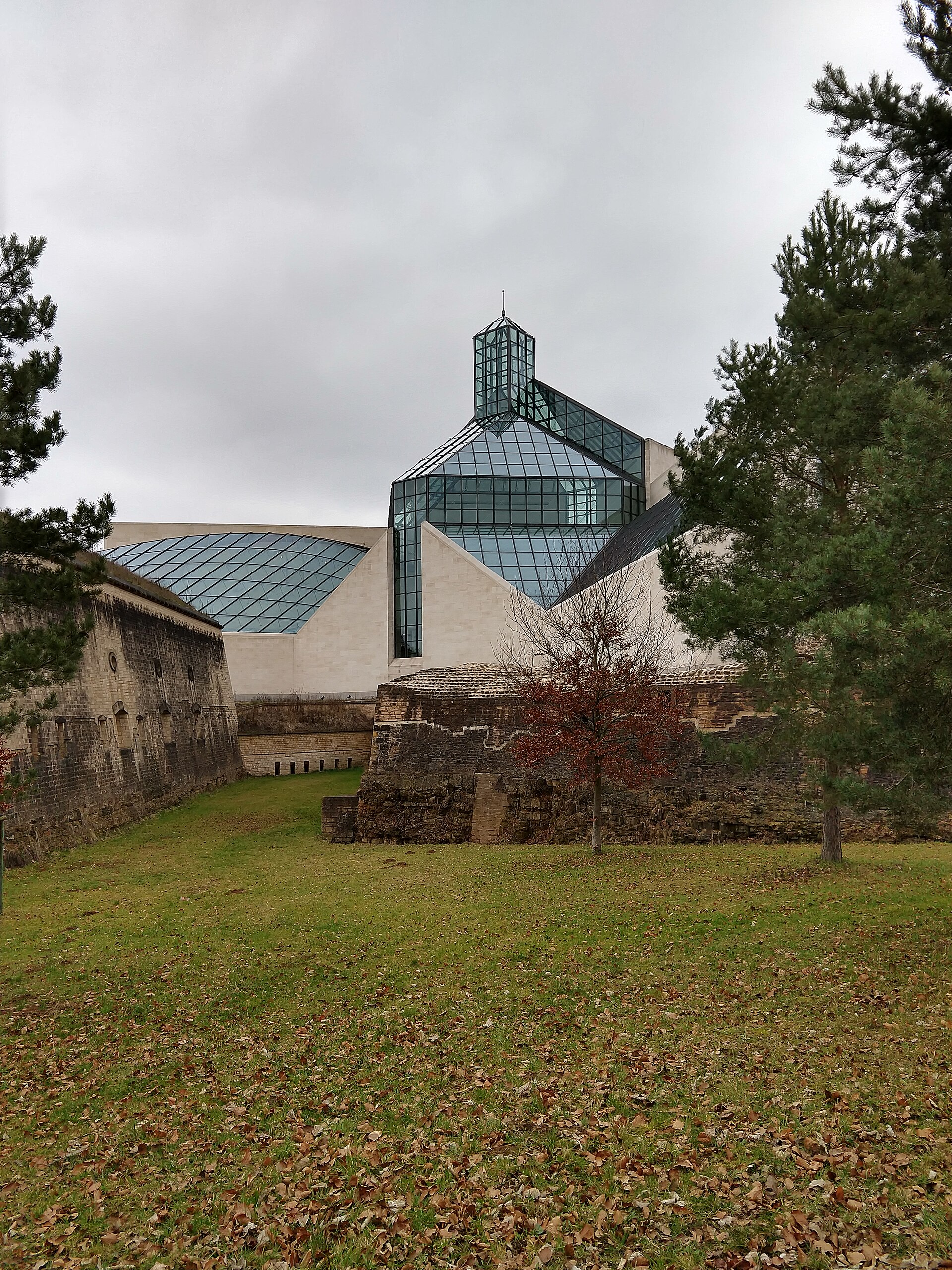
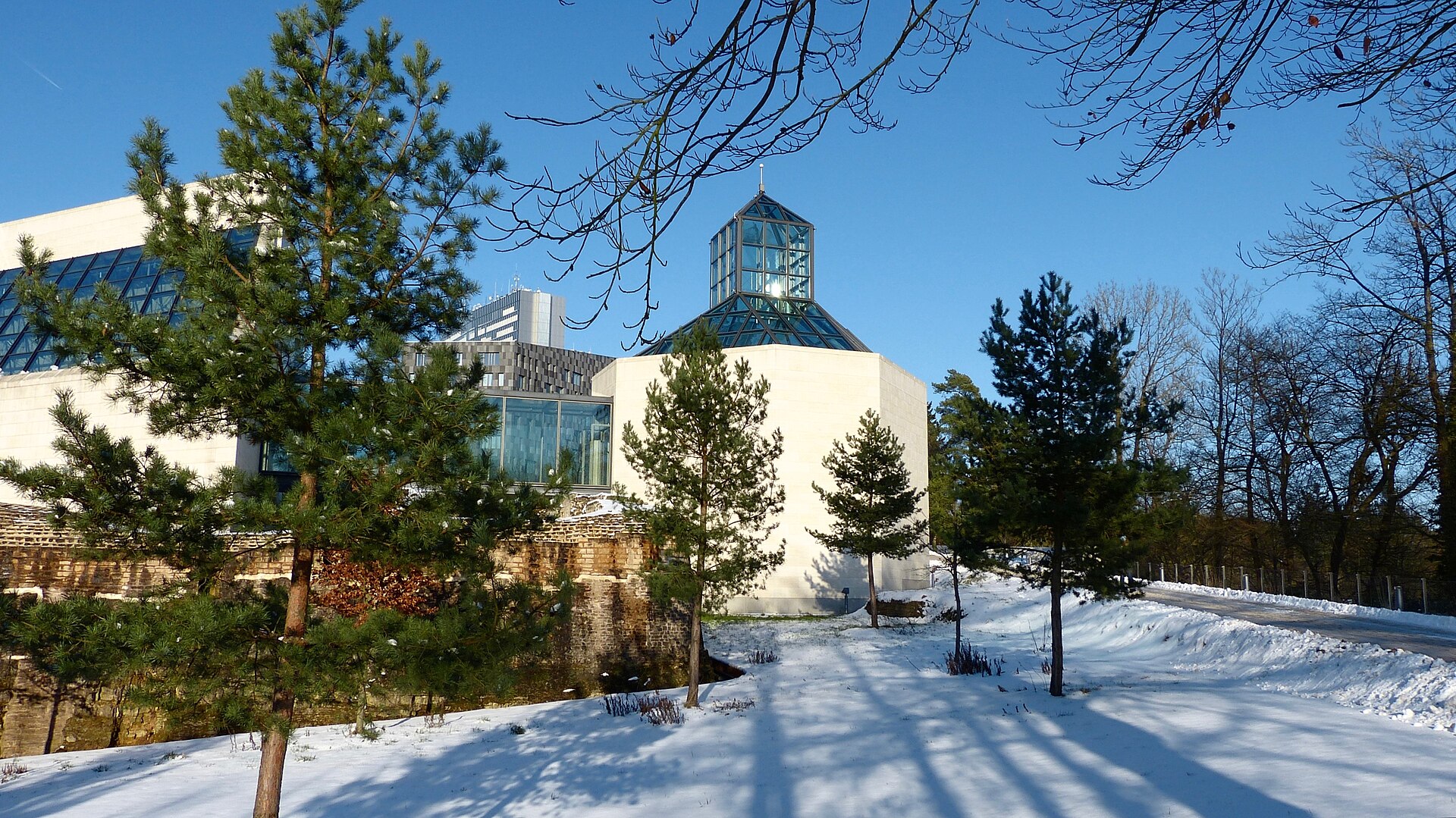
The Magny Dore limestone exterior of Mudam, designed by I.M. Pei with Georges Reuter and completed in 2006
amanderson2, CC BY 2.0Mudam Luxembourg
Museum · Musee d'Art Moderne Grand-Duc Jean · Founded 1998
Open, admission and hours confirmed 23 August 2026 · 12 sources
On this page 15 sections
ContentsClose
Mudam's collection is that of a museum built after its building rather than around an inherited one: more than 800 works, the great majority acquired since 1989, organised around international contemporary practice rather than a historical survey. Its clearest distinguishing feature is the 54 works commissioned specifically for I.M. Pei's architecture, which exist nowhere else and cannot be understood apart from the rooms they were made for. Its clearest departure from that focus is the Aalto Paimio Sanatorium furniture, an early-twentieth-century design holding acquired deliberately outside the collection's usual period.
| Local name | Musee d'Art Moderne Grand-Duc Jean |
|---|---|
| Kind | Museum |
| Founded | 1998 |
| City and country |  Luxembourg, Luxembourg Luxembourg, Luxembourg |
| Address | 3 Park Drai Eechelen, L-1499 Luxembourg-Kirchberg, Luxembourg |
| Website | mudam.com |
| Status | Open, confirmed |
| Record last verified |
Visiting
- Hours
- Tue, Thu-Sun10:00 to 18:00
- Wed10:00 to 21:00
- Closed
- Monday.
- Admission
- AdultEUR 10reduced to EUR 7.00 from 17 August to 24 September 2026 while the collection is being rehung
- Ages 21-25 and seniors 65 plusEUR 7
- Under 21, students, visitors with disabilities and their companion, and Mudam cardholdersFreefree
- Tickets
- mudam.com/plan-your-visit The museum's own ticket page.
- Do I need to book?
- Not stated as required on the museum's own visit page; tickets are sold online and admission includes participation in the museum's regular guided tours
- Address
- 3 Park Drai Eechelen, L-1499 Luxembourg-Kirchberg, Luxembourg MapTram Stop Philharmonie / Mudam
Bus Lines 1 and 16, and the Eurobus, stop Rout Breck / Pafendall
Car Via Avenue John F. Kennedy through Kirchberg and the tunnel; on-site parking at Trois Glands - Website
- mudam.com
- Telephone
- +352 453785-1
- [email protected]
Before you go how long, access, photography, bags, eating, shop
- How long to allow
- One to two hours by the duration TripAdvisor lists for the museum; visitor reviews describe the exhibition space as running over three levels, most of it given over to temporary shows rather than a fixed permanent hang
- Access
- Free admission for visitors with disabilities and one companion; no further accessibility statement is set out on the pages consulted for this record
- Photography
- Not stated in the sources consulted for this page
- Bags
- Not stated in the sources consulted for this page
- Eating
- Mudam Cafe, run on site by the Luxembourg social enterprise Chiche!, is described on the museum's own site as bringing together home-cooked food and social cohesion
- Shop
- An on-site museum shop sells books and material tied to current exhibitions
Prices and hours change. We take them from the institution's own pages and print the day we read them, and you can check the current position at the source we used. Confirm before you travel.
What is inside
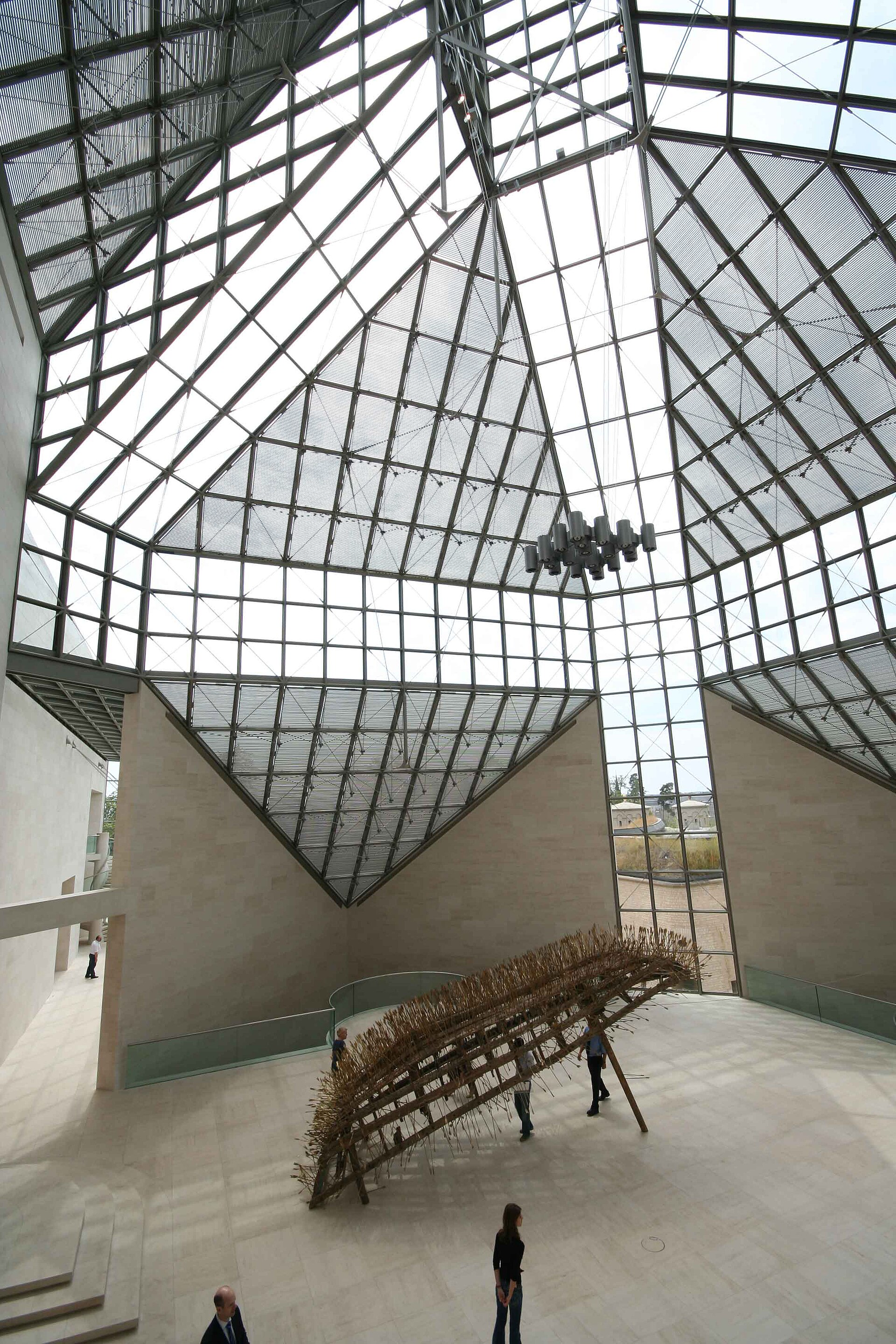
Photograph by Cornischong at Luxembourgish Wikipedia · CC BY-SA 3.0 The Grand Hall (Den Hall)
The building's central hall and entrance space, rising beneath I.M. Pei's glazed pyramidal skylight and used as the museum's reception area and, outside opening hours, as a function room for the museum and for state events.
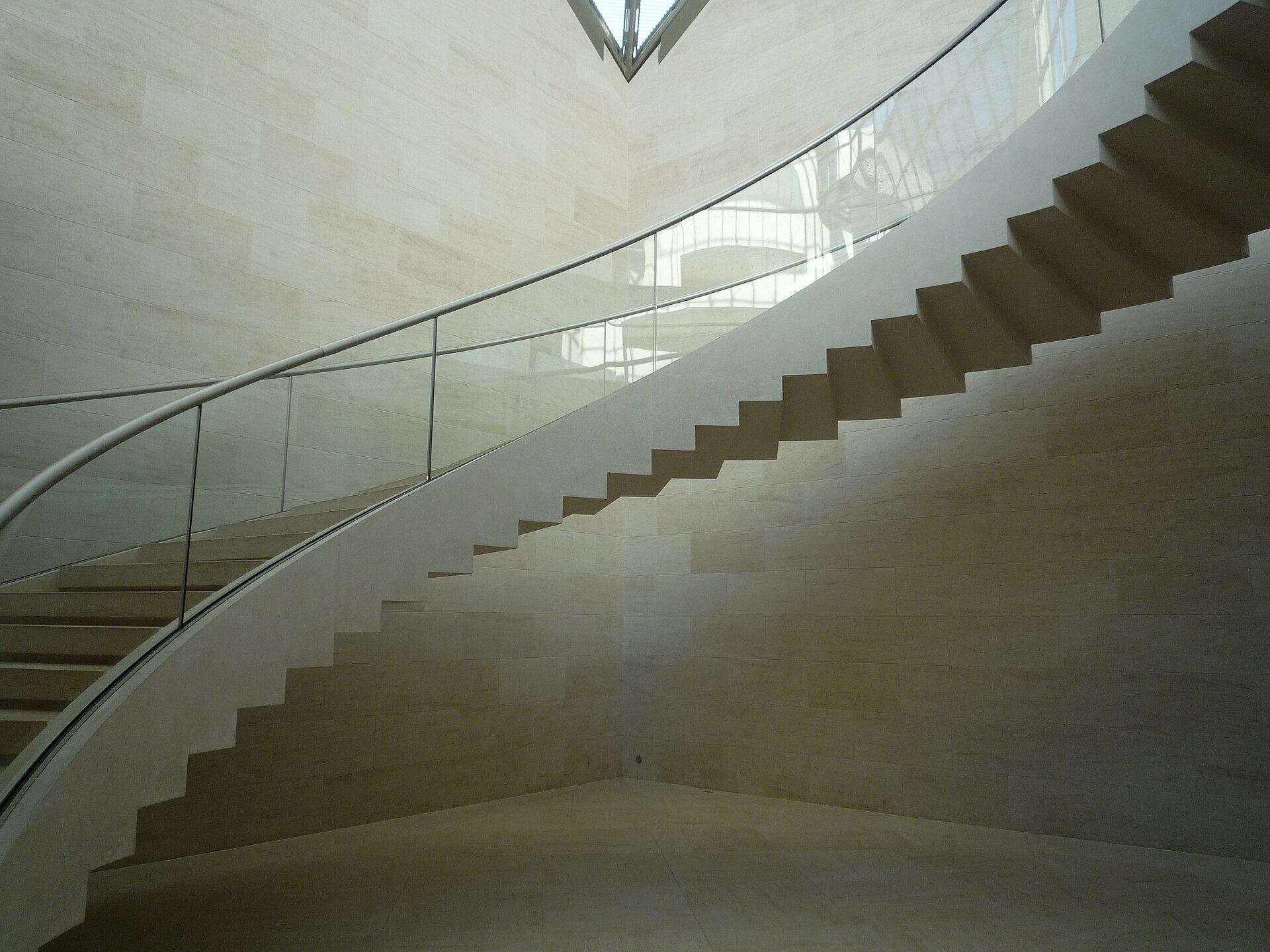
Photograph by Foeniz · CC BY-SA 4.0 The connecting staircase
The stair linking the museum's three exhibition levels, built in the same pale limestone as the exterior and set against the glass canopy that runs the length of the building.
Collection galleries
Upper-level rooms holding rotating selections from the permanent collection of more than 800 works, including the Alvar Aalto Paimio Sanatorium furniture, Daniel Buren's Croisements, travail situe and Architecture, Contre-Architecture: Transposition, Cindy Sherman's Untitled #120, #318 and #322, and Marina Abramovic's Video Portrait Gallery.
Temporary exhibition galleries
Ground and lower-level halls given over to the museum's programme of temporary international exhibitions; visitor reviews consistently describe these as occupying most of a visit, and as the space where a single artist or a small group of artists is shown at a time rather than a broad permanent survey.
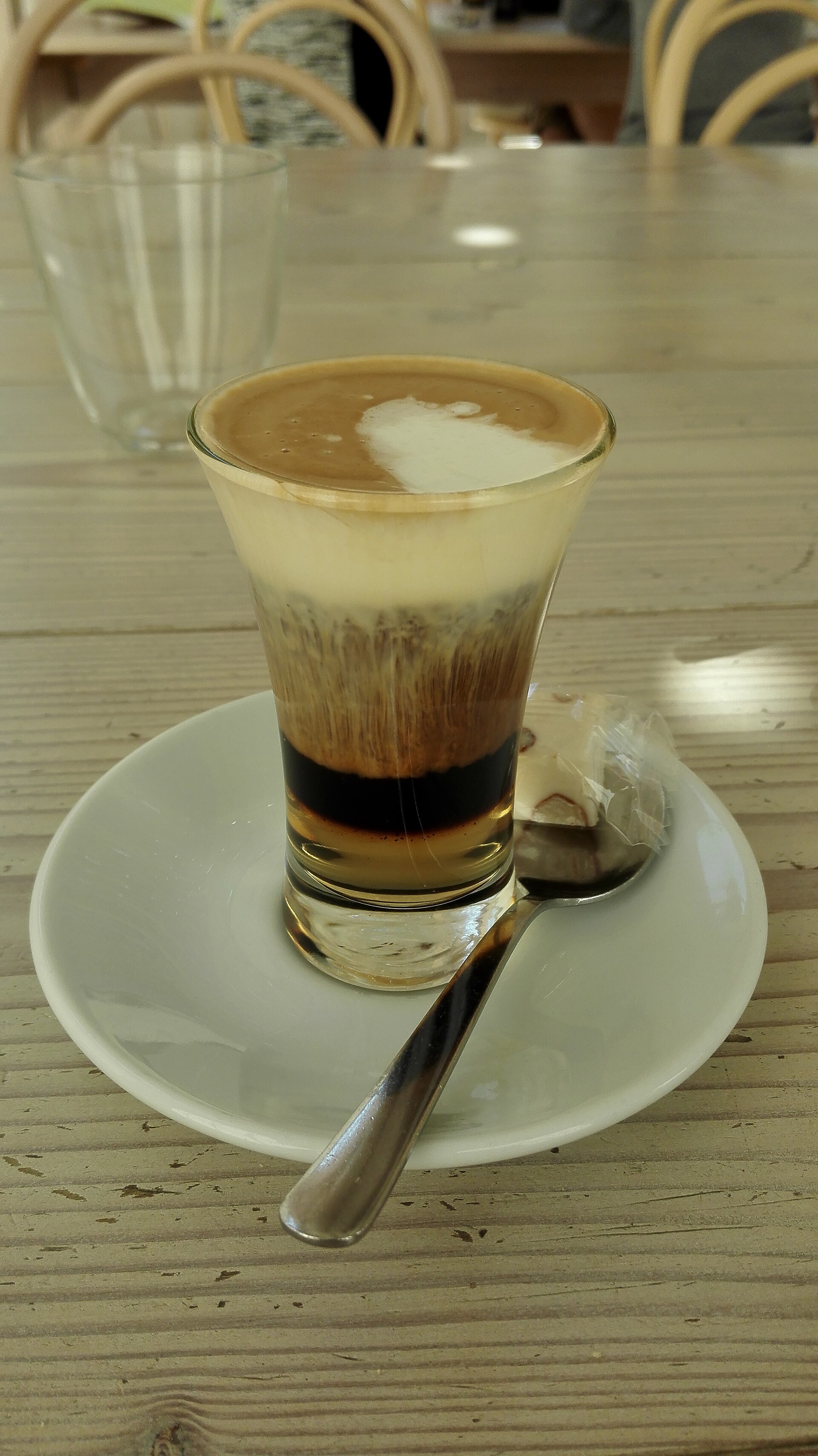
Photograph by RG72 · CC BY-SA 4.0 Mudam Cafe
A restaurant and cafe run on site by the social enterprise Chiche!, organised around a canteen-style seating area, serving during museum opening hours.
Photograph by Damacar1 · CC BY-SA 3.0 lu Park Drai Eechelen (grounds)
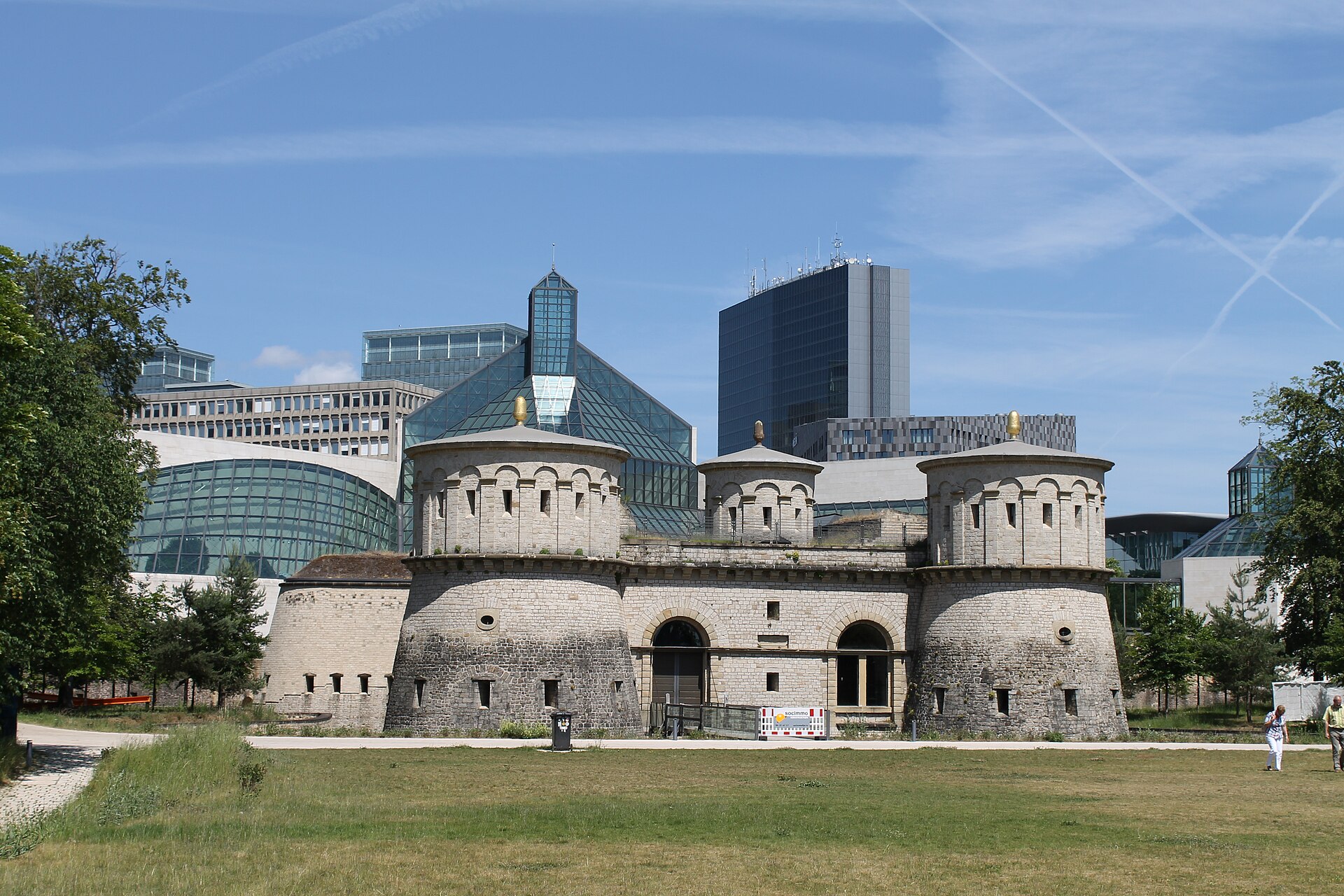
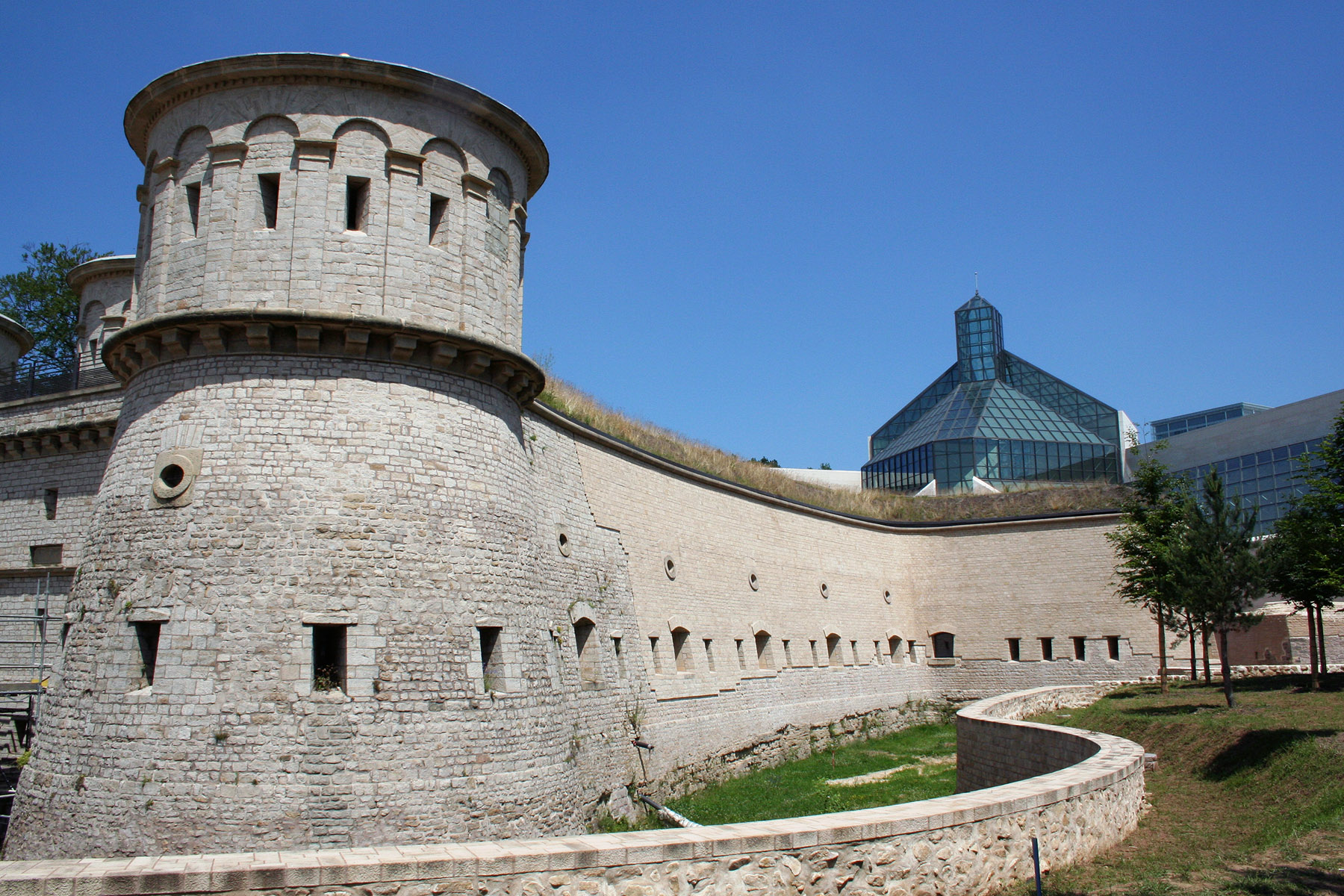
The landscaped park designed by Michel Desvigne that surrounds the museum building, used for outdoor sculpture and installations, and the site of the three surviving towers of Fort Thungen, which house the separate Musee Drai Eechelen history museum rather than Mudam itself.
What to see first
Video Portrait Gallery
Marina AbramovicAn installation of fourteen videos, made between 1975 and 1998, of close-up recordings of the artist's face during her performance works; acquired by Mudam in 2001 and one of the collection's best-known performance-art holdings5
Croisements, travail situe
Daniel BurenA 1987 installation of display cases, ceramics and fabric marked with Buren's signature 8.7cm stripes, addressing how museums stage and give value to the objects inside them; entered the collection by donation in 20184
Architecture, Contre-Architecture: Transposition
Daniel BurenA 2010 site-specific commission made for Mudam's own building and acquired into the collection in 2011, one of the 54 works Mudam has commissioned specifically to engage I.M. Pei's architecture4
Untitled #318
Cindy ShermanA 1996 Cibachrome print, one of three Sherman works (Untitled #120, #318 and #322) acquired by Mudam in 1996 through the FOCUNA fund, and part of the collection's core holding of 1990s American photography6
Furniture for the Paimio Sanatorium
Alvar AaltoDesigned between 1930 and 1933 for Aalto's tuberculosis sanatorium in Finland and acquired by Mudam in 2000, this ensemble is the collection's one deliberate exception to its otherwise post-1989 focus, and its earliest holding by date of design3
The 54 site-specific commissions
Various artists, commissioned by MudamWorks made to order for the particular geometry and light of Pei's building rather than acquired ready-made, which the museum itself presents as distinct from the rest of the collection and which include both Buren works listed here3
The Pei building and Park Drai Eechelen
I.M. Pei with Georges Reuter; park by Michel DesvigneThe building and its grounds are, on the evidence of visitor reviews and TripAdvisor ratings alike, the single most consistently praised part of a visit to Mudam, ahead of any object inside it11
Exhibitions on now
Past exhibitions here
- Closed12 Jun to 11 Oct 2026Confirmed · check before you travel
An arrow of stone built around a fortress
Mudam's building was designed by the Chinese-American architect Ieoh Ming Pei, working with the Luxembourg architect Georges Reuter, and was constructed between 1999 and 2006 under Pei's firm Pei Cobb Freed and Partners, with Tim Culbert as the architect responsible for the design's development on site. Pei set the museum on a spearhead-shaped plan that encircles the remains of Fort Thungen, the star-shaped inner fortress that once stood on the site. The building is faced in a honey-coloured Burgundy limestone known as Magny Dore, chosen, in the museum's own description, for the way it changes under shifting light and shadow through the day and the seasons.
The building is topped with skylights that Pei designed to recall the Trois Glands, the three towers of the old fort, and the Spanish-style watchtowers built during the period of Spanish rule that preceded French occupation of the fortress. The large central glazed pinnacle over the entrance hall is described by the Kirchberg development authority that oversaw the site as reminiscent of Pei's glass pyramid at the Louvre in Paris. Inside, the museum offers 4,000 square metres of exhibition space across three levels, out of a total project footprint of about 10,500 square metres.
The museum's setting was completed by Park Drai Eechelen, designed by the French landscape architect Michel Desvigne, which won the Luxembourg Prize for Architecture in 2011. The park slopes from the urban Place de l'Europe down toward the older, uneven ground of the fort, and is used for outdoor sculpture and installations as well as for public access around the building.
Fort Thungen, the ground under the museum
Fort Thungen was constructed in 1732 and 1733 and named for the military commander Adam Sigmund von Thungen. It was enlarged and reinforced in 1836 and again between 1859 and 1860, as Luxembourg's fortifications grew into one of the most extensive in Europe. The Treaty of London of 1867 mandated the demolition of Luxembourg City's fortifications; most of Fort Thungen was pulled down as a result, and only three towers, since known as the Trois Glands or Drei Eechelen, and the foundations of the rest of the fort survived.
The site was rebuilt through the 1990s and 2000s in parallel with the construction of Mudam next to it, and the reconstructed fort reopened to the public in 2012 as the Musee Drai Eechelen. That is a separate history museum, devoted to the fortress and to Luxembourg's history as a fortified city, run independently of Mudam even though the two sit in the same park and share the towers' name. A photograph of the towers, or a ticket to that museum, is not a photograph of or a ticket to Mudam, and this record treats them as the two distinct institutions that they are.
A museum proposed once, sited twice, and built over seven years
Mudam was first proposed in 1989 and championed by the then Prime Minister of Luxembourg, Jacques Santer. Disagreement over where to put it delayed the project for years; the question was resolved in 1997, when the decision was taken to build on Park Drai Eechelen and to integrate the museum with the remains of Fort Thungen rather than build on a cleared site elsewhere. The Musee d'Art Moderne Grand-Duc Jean Foundation, which runs the museum, was established the following year, in 1998, and acquisitions for the future collection began around the same time even though the building itself would not open for another eight years.
Construction ran from 1999 to 2006 at a cost of around 100 million US dollars. The museum was inaugurated on 1 July 2006 and opened to the public the next day, drawing more than 115,000 visitors in its first year under its founding director, Marie-Claude Beaud. Visitor numbers have fluctuated since; 2018, for instance, is recorded at around 134,000. The museum's board is currently chaired by Grand Duchess Stephanie of Luxembourg, and its collection and exhibition programme is directed by Bettina Steinbrugge, who also chairs the scientific committee that guides the museum's acquisitions alongside directors and curators from other international institutions.
A collection built for a young museum
Mudam's own description of its holdings puts the collection at more than 800 works in all media, by more than 600 artists working in Luxembourg and internationally. The great majority of the collection dates from 1989 onward, with the 1960s treated as a historical reference point for the contemporary work the museum actually collects rather than a period it collects in depth. The clearest exception is a set of furniture Alvar Aalto designed between 1930 and 1933 for his Paimio Sanatorium in Finland, acquired by the museum in 2000, which sits well outside the collection's usual date range and its usual medium.
A distinctive strand of the collection, 54 works in total, was made to order for Mudam's own building rather than acquired ready-made. Daniel Buren has contributed to that strand twice: Architecture, Contre-Architecture: Transposition, a 2010 commission acquired into the collection in 2011, and Croisements, travail situe, an earlier 1987 work using display cases, ceramics and fabric that entered the collection by donation in 2018 and that addresses, in Buren's own terms, how a museum stages and gives value to the things it shows. Elsewhere in the collection, three Cindy Sherman prints, Untitled #120, #318 and #322, were bought in 1996 through the FOCUNA acquisition fund, and Marina Abramovic's Video Portrait Gallery, a fourteen-video installation drawn from performances made between 1975 and 1998, entered the collection in 2001.
The building visitors remember, the exhibitions they argue about
Mudam holds a rating of 4.0 out of 5 on TripAdvisor from 596 reviews, and the platform lists a typical visit at one to two hours. Read closely, those reviews return again and again to the same split: praise for Pei's building and its park, set against disappointment in what is being shown inside it. One visitor, reviewing under the name Luigi, called the architecture the work of a master specialist in museum buildings and said in the same review that the exhibitions were not up to that standard, adding that conceptual art was not to his taste and that this had spoiled an otherwise beautiful visit. Another review noted that the exhibition space runs across three levels but that most of it is given to temporary shows rather than a fixed display, and a third described a visit built around very few artists, with rooms that felt close to empty of both art and other visitors. More than one review also singled out a heavy, visibly stationed security presence, following visitors from room to room, as something that made an already quiet museum feel less welcoming rather than more secure.
The same tension shows up outside the visitor-review platforms. Writing in ArtReview in April 2024, the critic J.J. Charlesworth reviewed Mudam's exhibition A Model and credited it with staging a genuinely self-aware critique of what a contemporary art museum is for, tracing a postcolonial thread through the show's pairing of historical and contemporary work inside Pei's glass-and-steel atrium. He stopped short of calling that critique resolved, concluding that what the museum's own questioning of itself would actually lead to next was something the museum could not yet show. Taken together, the ordinary visitor reviews and the specialist press notice reach a similar place: a building whose ambition is not seriously disputed, and a exhibition programme whose ability to match it is argued over every time it changes.
What visitors say
Visitor reviews consistently single out I.M. Pei's building and the surrounding Park Drai Eechelen as the reason to visit, praising the honey-toned stone, the glass canopy and the light inside the galleries. The recurring complaint runs the other way: more than one reviewer says the temporary exhibitions do not match the scale or ambition of the architecture, describing shows built around very few artists in largely empty rooms, and several single out a visibly heavy security presence and brusque desk or cafe staff as souring the visit.
What is praised, what is criticised
- Praised: I.M. Pei's building itself, named by reviewers as the best reason to visit ahead of any exhibition inside it
- Praised: the surrounding Park Drai Eechelen and its views over the historic fortifications
- Praised: practical touches inside the galleries, including seating, lockers and English-language signage, and the airiness and cleanliness of the spaces
- Criticised: temporary exhibitions that some reviewers found thin against the scale of the building, with entire floors carrying the work of very few artists at a time
- Criticised: a visibly stationed security presence in every room, which more than one reviewer described as intrusive rather than reassuring
- Criticised: service at the ticket desk and cafe that some visitors called brusque, including one 2025 visit on which the cafe had no food available
Ratings on other platforms
TripAdvisor: 4 from 596 ratings, read 23 August 2026
A platform average is a tertiary source: it moves, it is not audited, and we quote no visitor's words.
Questions about Mudam Luxembourg
Where is Mudam Luxembourg?
3 Park Drai Eechelen, L-1499 Luxembourg-Kirchberg, Luxembourg.
How much does it cost to visit?
Adult: EUR 10; Ages 21-25 and seniors 65 plus: EUR 7; Under 21, students, visitors with disabilities and their companion, and Mudam cardholders: free. As confirmed 23 August 2026.
When is it open?
Tue, Thu-Sun 10:00-18:00; Wed 10:00-21:00. Closed: Monday. As confirmed 23 August 2026.
How do you get there?
Tram: Stop Philharmonie / Mudam; Bus: Lines 1 and 16, and the Eurobus, stop Rout Breck / Pafendall; Car: Via Avenue John F. Kennedy through Kirchberg and the tunnel; on-site parking at Trois Glands.
What should you see first?
Video Portrait Gallery (Marina Abramovic); Croisements, travail situe (Daniel Buren); Architecture, Contre-Architecture: Transposition (Daniel Buren); Untitled #318 (Cindy Sherman); Furniture for the Paimio Sanatorium (Alvar Aalto); The 54 site-specific commissions (Various artists, commissioned by Mudam).
What we could not confirm
- The museum's own site confirms free admission for visitors with disabilities and a companion but does not otherwise publish an accessibility statement; step-free routes, adapted restrooms and lift access were not itemised in the sources consulted for this record.
- The museum's own site does not state on its visit page whether timed-entry booking is required during busy periods, despite selling tickets online; this record does not assert a booking requirement that was not stated.
Images
Sources
- 1Mudam Luxembourg, Plan your visit (hours, admission, contact, transport, cafe) mudam.com/plan-your-visit
- 2Mudam Luxembourg, Building and park mudam.com/building-park
- 3Mudam Luxembourg, Collection mudam.com/collection
- 4Mudam Luxembourg, Collection: Daniel Buren mudam.com/collection/daniel-buren
- 5Mudam Luxembourg, Collection: Marina Abramovic mudam.com/collection/marina-abramovic
- 6Mudam Luxembourg, Collection: Cindy Sherman mudam.com/collection/cindy-sherman
- 7Fonds Kirchberg, Mudam (Kirchberg development authority) fondskirchberg.public.lu/en/vivre-kirchberg/institutions-culturelles/mudam.html
- 8Wikipedia, Mudam (, identity and history only) en.wikipedia.org/wiki/Mudam
- 9Wikipedia, Fort Thungen (, fort history only) en.wikipedia.org/wiki/Fort_Th%C3%BCngen
- 10ArchEyes, The Mudam by I.M. Pei: Where Old Meets New archeyes.com/the-mudam-by-i-m-pei-where-old-meets-new/
- 11TripAdvisor, Mudam Luxembourg Modern Art Museum (rating and visitor reviews) tripadvisor.com/Attraction_Review-g190356-d3404380-Reviews-Mudam_Luxembourg_Modern_Art_Museum-Luxembourg_City.html
- 12J.J. Charlesworth, 'What's a Museum For? A Model, Mudam Luxembourg, reviewed', ArtReview, 10 April 2024 artreview.com/a-model-mudam-luxembourg-review/