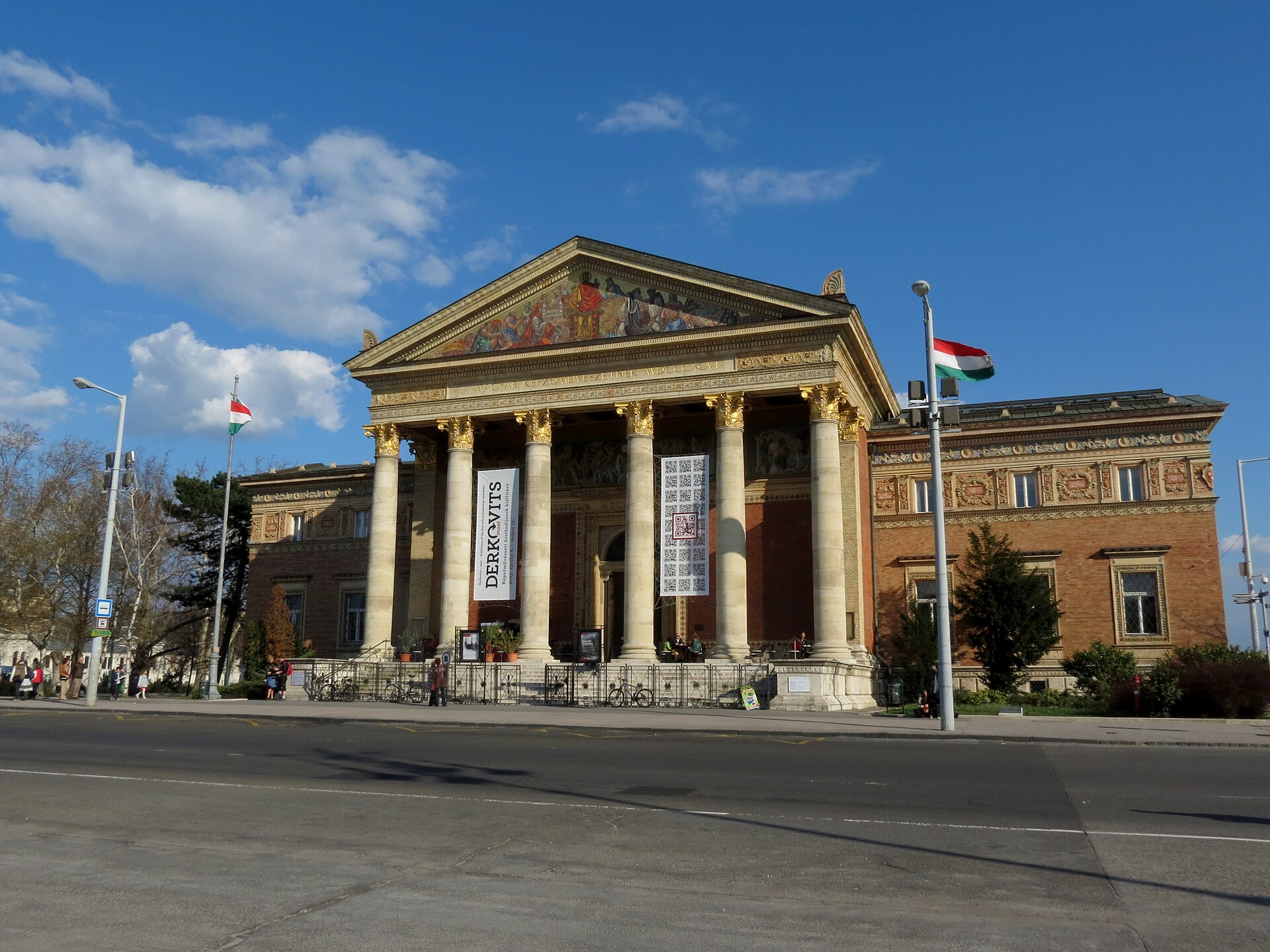
The Neoclassical facade of Mucsarnok (Hall of Art) on Heroes' Square, Budapest, built 1896 to designs by Albert Schickedanz and Fulop Herczog.
Photograph by xorge, Wikimedia Commons, CC BY-SA 2.0Mucsarnok
Museum · Mucsarnok (Kunsthalle Budapest) · Founded 1877
Open, admission and hours confirmed 5 September 2026 · 14 sources
On this page 16 sections
ContentsClose
Mucsarnok holds no permanent collection and none is claimed for it here. As a Kunsthalle on the German model, its institutional strength lies instead in its role as a producing and hosting venue: the largest exhibition space of its kind in Hungary, run by and for artists, with a documented history of staging exhibitions that shaped how abstract art, sculpture and photography were shown in Hungary across more than a century, from the 1896 opening exhibition through the 1969 Vasarely retrospective to the rotating programme of contemporary and historical survey shows it hosts today.
| Local name | Mucsarnok (Kunsthalle Budapest) |
|---|---|
| Kind | Museum |
| Founded | 1877 |
| City and country |  Budapest, Hungary Budapest, Hungary |
| Address | Dozsa Gyorgy ut 37, 1146 Budapest, Hungary (Heroes' Square) |
| Website | mucsarnok.hu |
| Status | Open, confirmed |
| Record last verified |
Visiting
- Hours
- Tue-Sun10:00 to 18:00Ticket office closes at 17:30; the exhibition rooms close at 17:45
- Thu10:00 to 20:00Extended Thursday hours; ticket office closes at 19:30, exhibition rooms at 19:45
- Closed
- Monday.
- Admission
- RegularHUF 1,800Runs 1,800-2,900 HUF depending on the exhibition; the institution prices each show separately rather than charging one flat rate
- Reduced (students under 26, teachers, seniors)HUF 900Runs 900-1,450 HUF depending on the exhibition
- FamilyHUF 2,700Runs 2,700-4,350 HUF depending on the exhibition
- Group (10+ people)HUF 1,400Per person, runs 1,400-2,300 HUF depending on the exhibition
- Annual passHUF 18,0009,000 HUF for the student/senior rate; unlimited entry to all exhibitions for 12 months
- FreeFreeChildren under 7, visitors 70 and over, disabled visitors plus one companion, and Budapest Card holders
- Tickets
- mucsarnok.hu/jegyek/index.php The museum's own ticket page.
- Do I need to book?
- No advance booking required for standard entry; tickets are also sold online through Jegymester
- Address
- Dozsa Gyorgy ut 37, 1146 Budapest, Hungary (Heroes' Square) MapMetro M1 (Millennium Underground) to Hosok tere
Tram Lines 75 and 79
Bus Routes 20, 30 and 105 - Website
- mucsarnok.hu
- Telephone
- +36 1 460 7000
- [email protected]
Before you go how long, access, photography, bags, eating, shop
- How long to allow
- One to two hours; the building itself is not large and a single visit usually covers whichever exhibitions are on at the time
- Access
- Not stated on the museum's own visit pages fetched for this record
- Photography
- Not stated on the museum's own visit pages fetched for this record
- Bags
- Not stated on the museum's own visit pages fetched for this record
- Eating
- The Mucsarnok Cafe occupies the building and overlooks Heroes' Square
- Shop
- An on-site bookshop (Art Box Shop) sells exhibition catalogues and contemporary art publications
Prices and hours change. We take them from the institution's own pages and print the day we read them, and you can check the current position at the source we used. Confirm before you travel.
What is inside
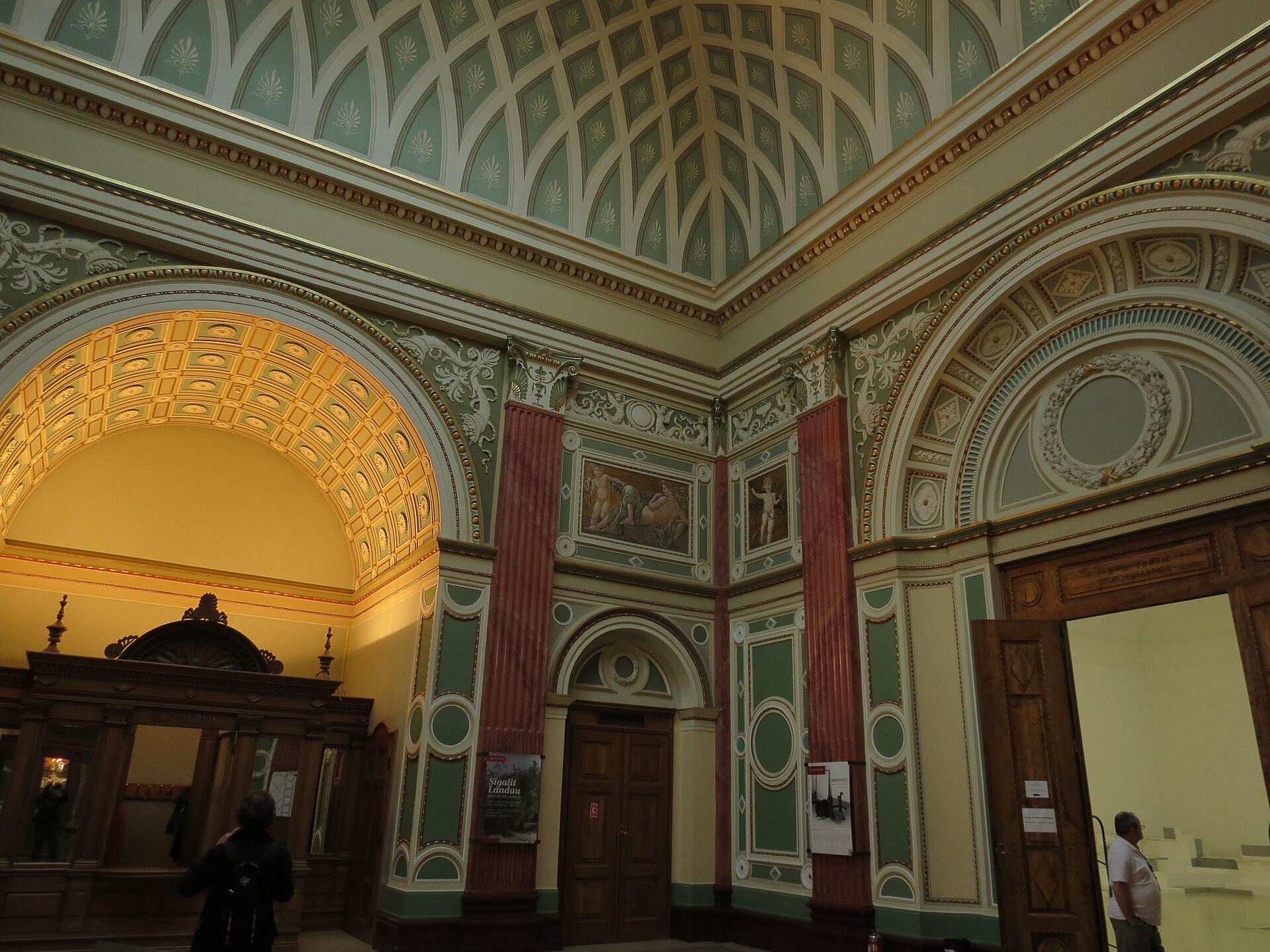
Photograph by xorge · CC BY-SA 2.0 Main exhibition hall
The building's largest space, a three-bayed semi-circular hall lit by roof skylights behind the entrance apse. It holds the season's principal temporary exhibitions and has done so since 1896 - this is the hall that took Victor Vasarely's 1969 retrospective, the 1975 International Small Sculpture Biennial, and the current run of shows on the building's own program.
Kamaraterem (Chamber Hall)
A smaller exhibition room used for solo shows and more contained surveys alongside the main hall's larger group exhibitions. As of this record it is listed as closed for renovation on the museum's own visit page.
Mucsarnok#Box
A project space for smaller-scale and experimental exhibitions, run alongside the main program. As of this record it is listed as closed for renovation on the museum's own visit page, together with the Kamaraterem.
Library
An on-site library serving visitors and researchers, alongside the exhibition halls, per the institution's own building description.
Art Box Shop (bookshop)
Sells exhibition catalogues and contemporary art publications tied to the current and recent programme.
Mucsarnok Cafe
A cafe within the building looking out over Heroes' Square, open independently of exhibition visits.
What to see first
The 1896 Millennium exhibition that opened the building
Architects Albert Schickedanz and Fulop HerczogLandmark historical exhibition and architectural event, not a permanent holding. The Neoclassical hall on Heroes' Square was built for Hungary's 1896 millennium celebrations and opened with the Millennium exhibition; a period poster for that opening survives on the building's own historical record.6
The Greek Revival portico and the mosaic of Saint Stephen
Architects Albert Schickedanz and Fulop HerczogArchitectural feature. The six-column portico and pediment, carrying a mosaic of Hungary's patron saint of fine art, is the building's signature exterior element facing Heroes' Square.11
The skylit main exhibition hall
Architects Albert Schickedanz and Fulop HerczogArchitectural feature. The building's three-bayed, semi-circular main hall is lit from above through roof skylights rather than side windows, a design choice that has shaped how every exhibition here has been hung since 1896.6
Innovation and Invention Exhibition, 1949
State-organised exhibitionLandmark past exhibition. In the first years of Communist rule the building hosted a state exhibition of Hungarian innovations and inventions, part of the postwar period when the Kunsthalle's artist-run programme gave way to state-organised shows; photographs of the exhibition and its entrance at Heroes' Square survive in the building's documented history.10
Victor Vasarely retrospective, 1969
Victor VasarelyLandmark past exhibition. The first and, at the time, largest retrospective of the Hungarian-born Op-art painter, and the first officially approved large-scale showing of abstract art under socialist-era cultural policy. It opened on 18 October 1969 and ran 23 days, drawing close to 100,000 visitors, a record at the time, with a reception the Hungarian National Gallery itself later described as controversial among both the public and the art scene.12
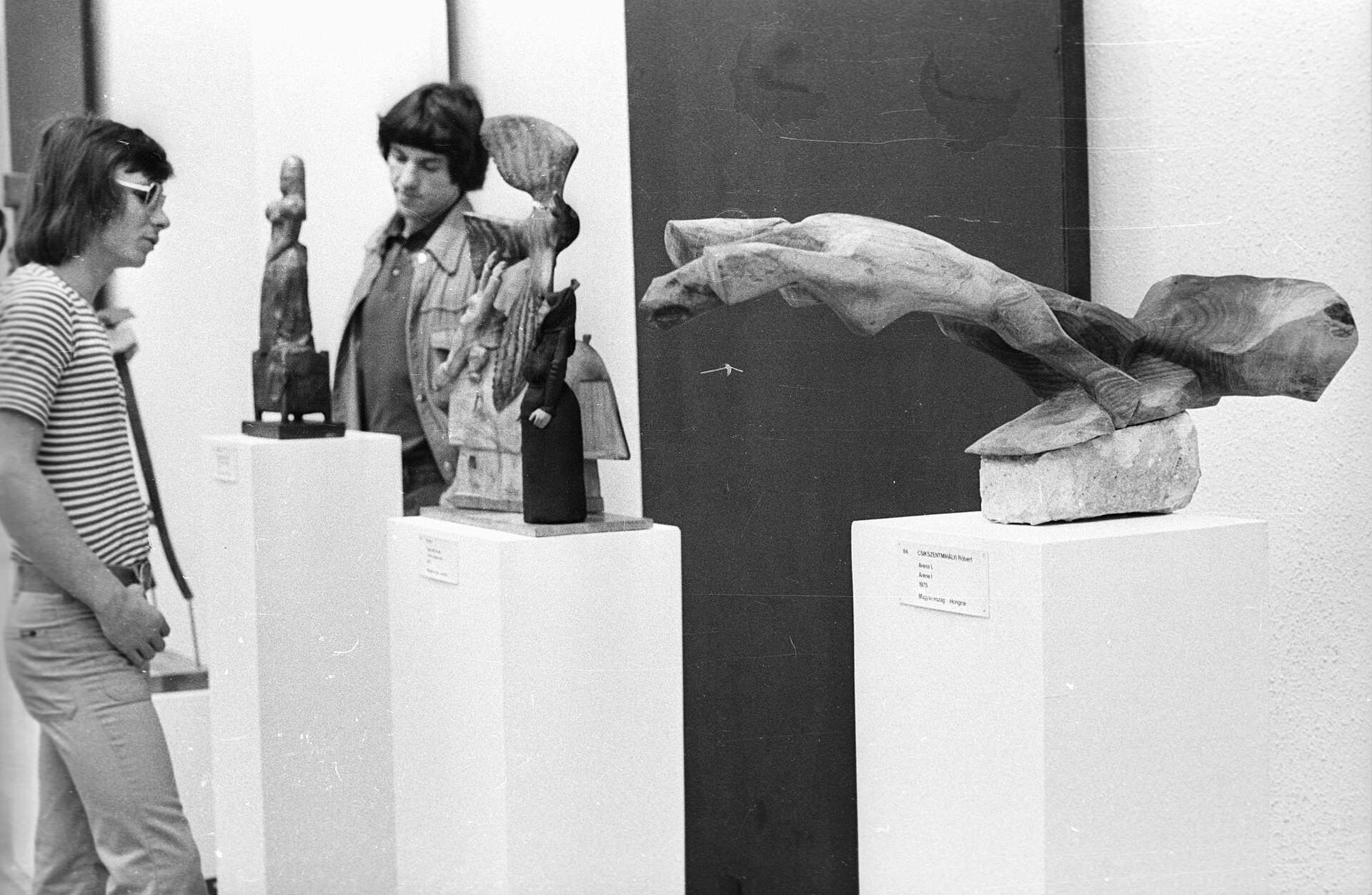
3rd International Small Sculpture Biennial, 1975
International participating sculptorsLandmark past exhibition. A recurring international survey of small-scale sculpture hosted at the Kunsthalle in the mid-1970s; period photographs of the installed biennial, including a piece by Robert Csikszentmihalyi, are the surviving record of the show.13
The First Golden Age of the Mucsarnok, 2016
Jubilee exhibition, curated for the museum's 120th anniversaryLandmark past exhibition. Marking 120 years since the 1896 building opened, this survey brought together 168 paintings from six countries and 22 collections tracing Austro-Hungarian painting up to 1900, including works by Jan Matejko, Hans Makart, Mihaly Munkacsy, Stanislaw Wyspianski and Karoly Ferenczy.8
Eva Keleti retrospective, 2019-2020
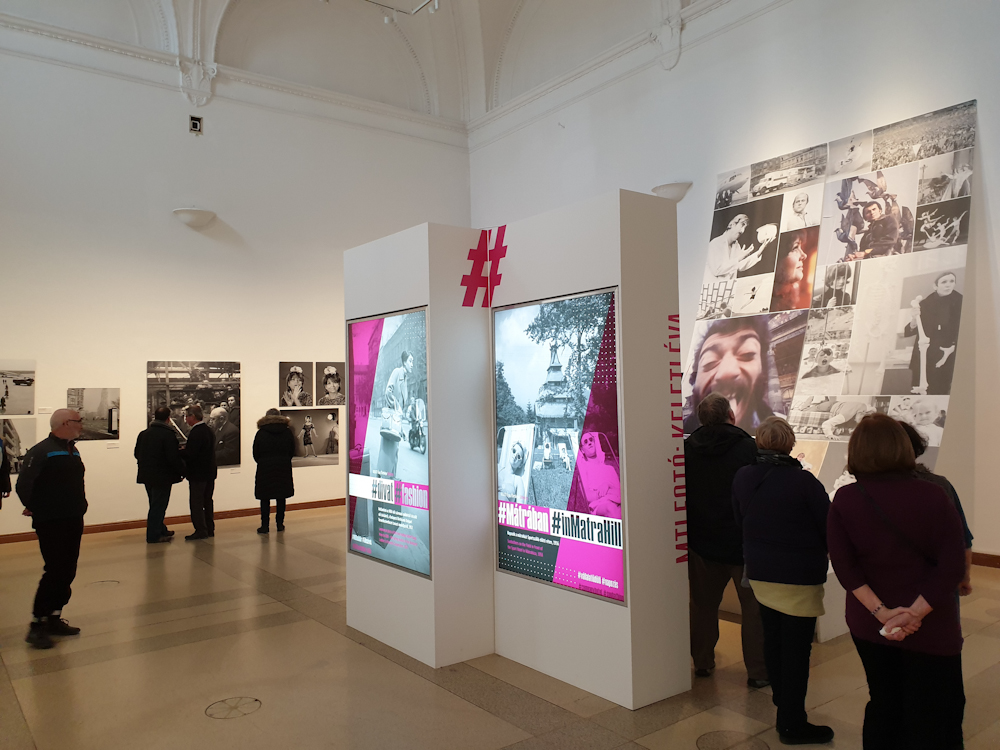
Eva KeletiLandmark past exhibition. A retrospective for the veteran Hungarian photojournalist, whose decades of reportage photography were surveyed in the building's exhibition halls.14
Exhibitions on now
- On now18 Sep to 15 Nov 2026Confirmed · check before you travel
- On now25 Sep to 22 Nov 2026Confirmed , 6 weeks ago
Past exhibitions here
- Closed17 Jul to 11 Oct 2026Confirmed · check before you travel
- Closed5 Jun to 27 Sep 2026Confirmed · check before you travel
- Closed19 Jun to 20 Sep 2026Confirmed · check before you travel
A palace built for a jubilee, not a collection
Mucsarnok - the Hall of Art, known internationally as Kunsthalle Budapest - was founded in 1877 on the initiative of the Hungarian National Fine Arts Association, in a building on what is now Andrassy Street. The institution moved to its present address in 1896, when a new exhibition hall was raised on Heroes' Square as part of Hungary's millennium celebrations. The architects were Albert Schickedanz and Fulop Herczog, who gave the building a Neoclassical, Greek Revival facade: a portico of six columns under a pediment carrying a mosaic of Saint Stephen, Hungary's patron saint of fine art. Behind the entrance, a three-bayed, semi-circular apse forms the main exhibition hall, lit not from the sides but from above, through skylights set into the roof. The building opened with the Millennium exhibition of 1896, and a period poster advertising that opening survives among the museum's own historical images.
From the start, Mucsarnok was built to a different brief than the museum standing opposite it on the same square. Where the Museum of Fine Arts across Heroes' Square was built to hold a permanent collection of old masters, Mucsarnok was built on the model of the German Kunsthalle: a hall run by and for artists, mounting temporary exhibitions, with no collection of its own to conserve or display. That distinction has held for the whole of the institution's history and still defines it. It is not that Mucsarnok has never acquired an object; it is that acquisition and permanent display were never its purpose. Everything on its walls at any given time belongs to a lender, an artist, or another institution, and everything will come down again when the exhibition closes.
A hall used by the state, and a hall that outgrew it
The building's role shifted with Hungary's postwar politics. In the early years of Communist rule, the Kunsthalle's artist-run exhibition programme gave way, in places, to state-organised shows: in 1949 the hall hosted an exhibition of Hungarian innovations and inventions, a project more aligned with the propaganda needs of the new government than with the institution's founding purpose. Photographs of the exhibition and of visitors at its Heroes' Square entrance are the surviving record of that show.
Two decades later, the same hall became the site of one of the most closely watched exhibitions in Hungarian art history. In October 1969, Victor Vasarely - the Hungarian-born painter who had built his career in France as a pioneer of Op-art - returned to Budapest to mount a retrospective of his own work. Abstract art had, until then, been only grudgingly tolerated by socialist cultural policy; Vasarely's show was the first retrospective of abstraction to be staged at this scale, and the first to receive full official approval. It opened at Mucsarnok on 18 October 1969 and ran for twenty-three days, drawing close to one hundred thousand visitors - a record at the time - while provoking, in the words of the Hungarian National Gallery's own later account of the exhibition, a controversial reception among both the visiting public and the art scene itself. In 1975 the building hosted the 3rd International Small Sculpture Biennial, one of a recurring series of international small-scale sculpture surveys staged there in the mid-1970s; period photographs of the installed biennial, including a piece by the sculptor Robert Csikszentmihalyi, are what remains of the show today.
After 1989: photography, design and the rotating survey show
The building underwent renovation in 1995, and in the decades since has settled into the role it holds today: Hungary's largest single venue for temporary exhibitions of contemporary and twentieth-century visual art, now operating in partnership with the Hungarian Academy of Arts and the Ministry of Education and Culture. Photography has been a recurring strand of the programme - the veteran Hungarian photojournalist Eva Keleti was given a retrospective there in 2019-2020, and the building has hosted the National Salon of Photography in successive editions, alongside touring shows built around individual photographers and designers.
In 2016 the institution marked its own 120th anniversary with a jubilee exhibition, The First Golden Age of the Mucsarnok, built from 168 paintings drawn from six countries and 22 collections. Rather than simply celebrating the building, the exhibition used its own history as a lens on Austro-Hungarian painting up to 1900, tracing the shift from history painting through realism to fin-de-siecle symbolism in the work of artists including Jan Matejko, Hans Makart, Mihaly Munkacsy, Stanislaw Wyspianski and Karoly Ferenczy - most of whom had themselves exhibited in this hall, or its predecessor, in their own lifetimes.
The current programme, as listed on the museum's own site at the time of this research, gives a sense of how the space is used today: a show pairing the architecture and photography of Laszlo Gyorgy Saros, a survey of posters and drawings by the graphic designer Jozsef Arendas, a solo exhibition of the photographer Tamas Revesz, an anniversary exhibition for the illustrator Karoly Hemzo and the winners of the prize named for him, and the third edition of a National Salon of Photography. None of these is a permanent installation; each will close and be replaced, as every exhibition here has been since 1896.
What is inside the building today
The building's exhibition space is organised around the large main hall behind the portico - the skylit, semi-circular room that has held everything from the 1969 Vasarely retrospective to the current photography and design shows - supplemented by the smaller Kamaraterem (Chamber Hall) for more contained solo exhibitions and a project space known as Mucsarnok#Box for smaller and more experimental work. Both of the smaller spaces are listed as closed for renovation on the museum's own current visit information, alongside the main programme, which continues to run. Beyond the exhibition rooms, the building holds a library for visitors and researchers, an on-site bookshop selling exhibition catalogues and contemporary art publications, and the Mucsarnok Cafe, which looks out over Heroes' Square and can be visited independently of the exhibitions.
Visiting: hours, admission and getting there
Mucsarnok is open Tuesday to Sunday, 10:00 to 18:00, with extended hours on Thursday until 20:00; it is closed on Mondays. The ticket office and exhibition rooms close somewhat earlier than the stated closing time on each of those days. Admission is priced per exhibition rather than at one flat rate: on the museum's own current price list, regular admission runs 1,800 to 2,900 forint depending on what is showing, with reduced rates for students under 26, teachers and seniors, family tickets, and discounted group rates for parties of ten or more. Children under seven, visitors 70 and over, disabled visitors and one companion, and Budapest Card holders are admitted free, and a twelve-month annual pass covering every exhibition is also sold. The building sits directly on Heroes' Square in Budapest's Zuglo district, reached by the M1 Millennium Underground to Hosok tere, by tram lines 75 and 79, or by bus routes 20, 30 and 105. Because the building is not large, a single visit of one to two hours is generally enough to see everything currently on show.
What visitors say: the building and the programme, judged separately
Public reviews of Mucsarnok, read on Tripadvisor at a rating of 3.8 out of 5 from 128 reviews, divide cleanly along the same line that runs through the institution's own history: the building is judged on its own merits, and the visit is judged on whatever happens to be on display. Reviewers repeatedly single out the Neoclassical facade and portico, the skylit main hall, and the setting on Heroes' Square as reasons to see the building even without going inside for an exhibition. Several note the on-site cafe, bookshop and library as worthwhile stops in their own right. Because the Kunsthalle holds no permanent collection, the substance of any given visit depends entirely on what exhibition is running: visitors who caught a strong touring show describe the visit enthusiastically, while others - finding the current exhibition slight, or not to their taste, or arriving on a day when the building was closed for a private event with no public notice - come away disappointed with a visit to the same rooms. One visitor also reported unhelpful staff during a single visit, though this does not recur across the wider set of reviews read for this record.
What visitors say
Visitors consistently single out the 1896 building itself - the portico, the skylit halls, the setting on Heroes' Square - as the reason to come, while judging the visit overall on whatever exhibition happens to be on. Because the Kunsthalle carries no permanent collection, opinions of a visit vary far more than they do for a museum with fixed galleries: the same building draws both enthusiastic notices for a strong touring photography or design show and disappointed ones when the current exhibition is thought slight.
What is praised, what is criticised
- Praised: The Neoclassical facade, portico and setting facing Heroes' Square, called out in review after review as worth seeing even without going inside
- Praised: The tall, skylit exhibition halls, which visitors describe as bright and well suited to viewing art
- Praised: The on-site cafe, bookshop and library as a pleasant stop in their own right
- Criticised: No permanent collection: what is on view changes completely between visits, and more than one visitor notes that a trip is only worthwhile if the current exhibition happens to interest them
- Criticised: Some visitors have found a given exhibition too small for the size of the building, or not to their taste
- Criticised: At least one visitor reports arriving to find the building closed for a private or institutional event with no public notice
- Criticised: An isolated report of unhelpful staff during one visit
Ratings on other platforms
Tripadvisor: 3.8 from 128 ratings, read 5 September 2026
A platform average is a tertiary source: it moves, it is not audited, and we quote no visitor's words.
Questions about Mucsarnok
Where is Mucsarnok?
Dozsa Gyorgy ut 37, 1146 Budapest, Hungary (Heroes' Square).
How much does it cost to visit?
Regular: HUF 1800; Reduced (students under 26, teachers, seniors): HUF 900; Family: HUF 2700; Group (10+ people): HUF 1400; Annual pass: HUF 18000. As confirmed 5 September 2026.
When is it open?
Tue-Sun 10:00-18:00; Thu 10:00-20:00. Closed: Monday. As confirmed 5 September 2026.
How do you get there?
Metro: M1 (Millennium Underground) to Hosok tere; Tram: Lines 75 and 79; Bus: Routes 20, 30 and 105.
What should you see first?
The 1896 Millennium exhibition that opened the building (Architects Albert Schickedanz and Fulop Herczog); The Greek Revival portico and the mosaic of Saint Stephen (Architects Albert Schickedanz and Fulop Herczog); The skylit main exhibition hall (Architects Albert Schickedanz and Fulop Herczog); Innovation and Invention Exhibition, 1949 (State-organised exhibition); Victor Vasarely retrospective, 1969 (Victor Vasarely); 3rd International Small Sculpture Biennial, 1975 (International participating sculptors).
What we could not confirm
- The museum's own history page references a fuller downloadable history document that was not retrieved for this record; it may contain further detail on the institution's activity during the Second World War and the early Communist period beyond the single 1949 state exhibition confirmed here.
- The precise dates and scope of the renovation currently closing the Kamaraterem and Mucsarnok#Box spaces were not stated on the pages fetched for this record.
Images
Sources
- 1Mucsarnok, official website, home page mucsarnok.hu/
- 2Mucsarnok, official website, ticket and opening-hours page mucsarnok.hu/jegyek/index.php
- 3Mucsarnok, official website, contact page mucsarnok.hu/mucsarnok/kapcsolat.php
- 4XpatLoop, "Insider's Guide: Mucsarnok - 'Hall of Art' in Budapest: A Tradition of Creative Surprises" xpatloop.com/channels/2025/04/insiders-guide-mucsarnok-the-hall-of-art-in-budapest.html
- 5Wikipedia, "Hall of Art, Budapest" (, machine facts only) en.wikipedia.org/wiki/Hall_of_Art,_Budapest
- 6Mucsarnok, official website, English-language history page mucsarnok.hu/english/kunsthalle/history.php
- 7Mucsarnok, official website, English-language exhibitions listing mucsarnok.hu/english/
- 8Hungarian Review, "The First Golden Age of the Mucsarnok", 19 July 2017 hungarianreview.com/article/20170719_the_first_golden_age_of_the_mucsarnok/
- 9Wikimedia Commons, Category:Palace of Art (Budapest) commons.wikimedia.org/wiki/Category:Palace_of_Art_(Budapest)
- 10Wikimedia Commons, Category:Innovation and invention exhibition 1949 in Budapest commons.wikimedia.org/wiki/Category:Innovation_and_invention_exhibition_1949_in_Budapest
- 11Tripadvisor, visitor reviews of Palace of Exhibitions (Mucsarnok), Budapest (, aggregate rating and consensus themes) tripadvisor.com/Attraction_Review-g274887-d276828-Reviews-Palace_of_Exhibitions_Mucsarnok-Budapest_Central_Hungary.html
- 12Hungarian National Gallery, "The Return of Victor Vasarely", chamber-exhibition page on the 1969 Mucsarnok retrospective en.mng.hu/the-return-of-victor-vasarely/
- 13Wikimedia Commons, File:III. Nemzetkozi Kisplasztikai Biennale (Budapest, 1975) Fortepan 60517.jpg commons.wikimedia.org/wiki/File:III._Nemzetk%C3%B6zi_Kisplasztikai_Bienn%C3%A1l%C3%A9_(Budapest,_1975)_Fortepan_60517.jpg
- 14Wikimedia Commons, File:Eva Keleti retrospective exhibition 2019-2020.jpg commons.wikimedia.org/wiki/File:%C3%89va_Keleti_retrospective_exhibition_2019-2020.jpg
_Fortepan_60517.jpg)
