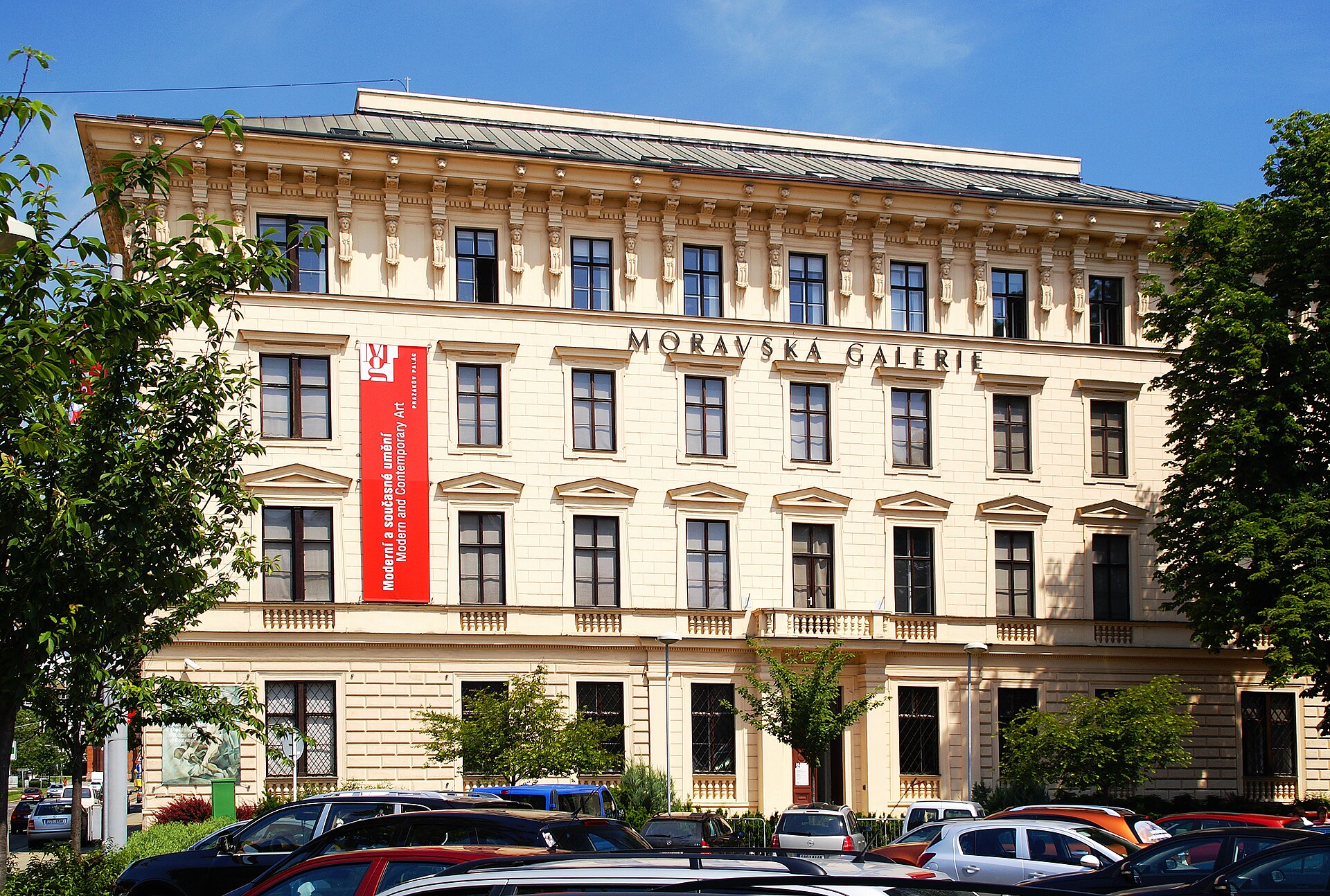
Prazak Palace on Husova street in Brno, the neo-Renaissance building that has served as the Moravian Gallery's headquarters since 1994, photographed from the street.
Stanislav Dusik, CC BY-SA 4.0 · Photograph by Stanislav DusíkMoravian Gallery in Brno
Museum · Moravska galerie v Brne · Founded 1961
Open, admission and hours confirmed 5 September 2026 · 12 sources
On this page 17 sections
ContentsClose
The gallery's roughly 207,000 catalogued items span two distinct traditions joined by the 1961 merger: a fine-art collection running from Gothic sculpture and Old Master paintings, including work attributed to Lucas Cranach the Elder, Peter Paul Rubens and Artemisia Gentileschi, through nineteenth-century genre painting such as Joza Uprka's scenes of Moravian folk custom, into Czech modernism; and an applied-arts and design collection built from the former Moravian Industrial Museum, covering glass, ceramics, furniture, fashion and graphic design from the nineteenth century to contemporary Czech designers. That combination, split across six buildings rather than concentrated in one, is the gallery's defining structural feature and its stated claim to being the second-largest art museum in the Czech Republic.
| Local name | Moravska galerie v Brne |
|---|---|
| Kind | Museum |
| Founded | 1961 |
| City and country |  Brno, Czech Republic Brno, Czech Republic |
| Address | Husova 18, 662 26 Brno, Czech Republic |
| Website | moravska-galerie.cz |
| Status | Open, confirmed |
| Record last verified |
Visiting
- Hours
- Wednesday, Friday, Saturday, Sunday10:00 to 18:00Prazak Palace, Governor's Palace and the Museum of Applied Arts
- Thursday10:00 to 19:00Prazak Palace, Governor's Palace and the Museum of Applied Arts
- Jurkovic Villa, Josef Hoffmann Museum, Open Depositoryvaries to varieseach keeps its own seasonal, guided-tour schedule published on its own page rather than the Wed-Sun hours above
- Closed
- Monday. Tuesday.
- Admission
- Permanent exhibitions - Prazak PalaceFreevoluntary admission (vstupne dobrovolne); no fixed price is set
- Permanent exhibitions - Governor's PalaceFreevoluntary admission (vstupne dobrovolne)
- Permanent exhibitions - Museum of Applied ArtsFreevoluntary admission (vstupne dobrovolne)
- Jurkovic Villa - guided tour, adultCZK 100includes guided commentary; tickets sold on GoOut or at the door
- Jurkovic Villa - guided tour, reducedCZK 50
- Jurkovic Villa - familyCZK 1901-2 adults with up to 3 children under 15
- Josef Hoffmann Museum - guided tour, adultCZK 150Brtnice, not in Brno itself
- Josef Hoffmann Museum - guided tour, reducedCZK 75
- Open Depository - guided tour, adultCZK 300guided tours only, currently Wednesdays 15:00 and 16:30
- Open Depository - guided tour, reducedCZK 150
Free entry: No single free calendar day: the permanent collection at Prazak Palace, Governor's Palace and the Museum of Applied Arts is voluntary-admission year-round. Free at any time regardless of day: children under 6, ZTP and ZTP/P card holders and one companion, war veterans, journalists, school-group leaders, and members of listed professional bodies (ICOM, AMG, the Council of Galleries, the Union of Visual Artists, IAA/AIAP and others named on the gallery's own price list)- Do I need to book?
- No for the three main buildings; the permanent collection is entered on a voluntary-donation basis. Jurkovic Villa, the Josef Hoffmann Museum and the Open Depository require a purchased guided-tour ticket, sold in advance on GoOut or at the building's own till.
- Address
- Husova 18, 662 26 Brno, Czech Republic Map
- Website
- moravska-galerie.cz
- Telephone
- +420 532 169 111
- [email protected]
Before you go how long, access, photography, bags, eating, shop
- How long to allow
- A single building (Prazak Palace or the Museum of Applied Arts) fills an unhurried hour or two; seeing all three main sites in one day is possible but does not leave much time for the outlying villa or the Brtnice house.
- Access
- Prazak Palace, the Governor's Palace, the Museum of Applied Arts, Jurkovic Villa and the Open Depository all advertise barrier-free entry (bezbarierovy vstup) on the gallery's own accessibility pages. The Josef Hoffmann Museum is the exception: its exhibition on the first floor of the house is not wheelchair accessible.
- Eating
- Cafe Morgal in Prazak Palace, Cafe Robot in the Museum of Applied Arts, and Cafe Typika in the Governor's Palace.
- Shop
- A gallery shop in each of the three main buildings (plus a bookshop in the Governor's Palace and a Designshop in the Museum of Applied Arts), and a general online e-shop.
Prices and hours change. We take them from the institution's own pages and print the day we read them, and you can check the current position at the source we used. Confirm before you travel.
What is inside
Prazak Palace (headquarters)
The gallery's seat since 1994, on Husova street. Its permanent exhibition, Art Is Here, is split into Modern Art of the first half of the twentieth century and New Art of the second half. The building also holds temporary shows, a gallery shop, the Morgal cafe, a children's play room, the gallery's specialist library, and the Artoteka, a lending collection of artworks the public can borrow.
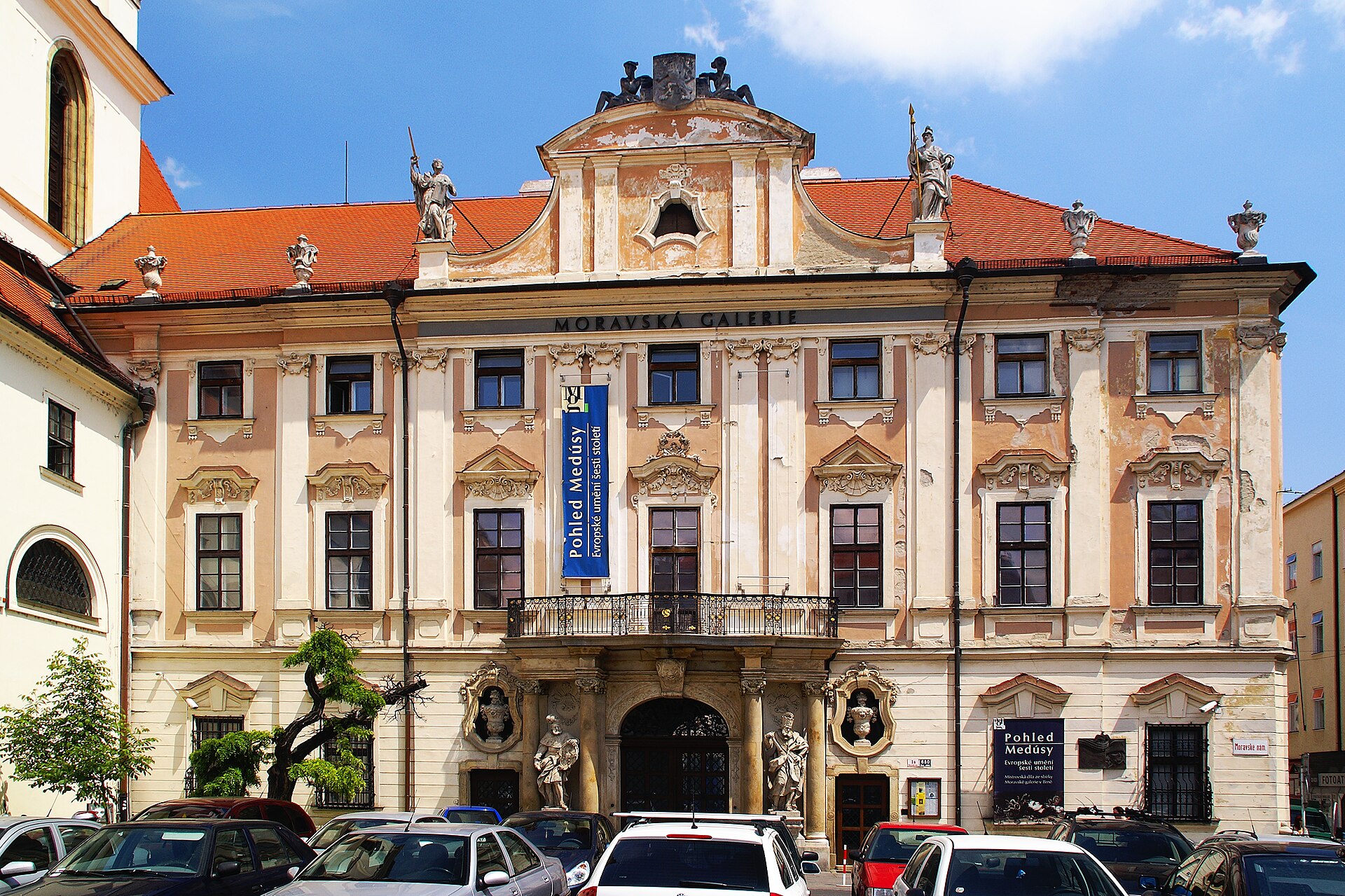
Photograph by Stanislav Dusík · CC BY-SA 4.0 Governor's Palace (Mistodrzitelsky palac)
A former Augustinian monastery, mid-14th century in origin and rebuilt in Baroque style under Moritz Grimm in the mid-18th century, on Moravske namesti. Closed for a staged reconstruction since 2023, it reopened its ground floor and courtyard on 1 June 2024 with a new barrier-free entrance, a chandelier by designer Maxim Velcovsky, and a new permanent exhibition, Umeni do kapsy (Art in a Nutshell), which includes Rubens's Head of Medusa and Uprka's King's Ride in Vlcnov among its objects. A second construction phase, covering the rest of the historic Gothic-to-19th-century galleries, is planned for the years ahead with no firm reopening date, so a visitor today sees a smaller, temporary hang rather than the full old-masters collection.
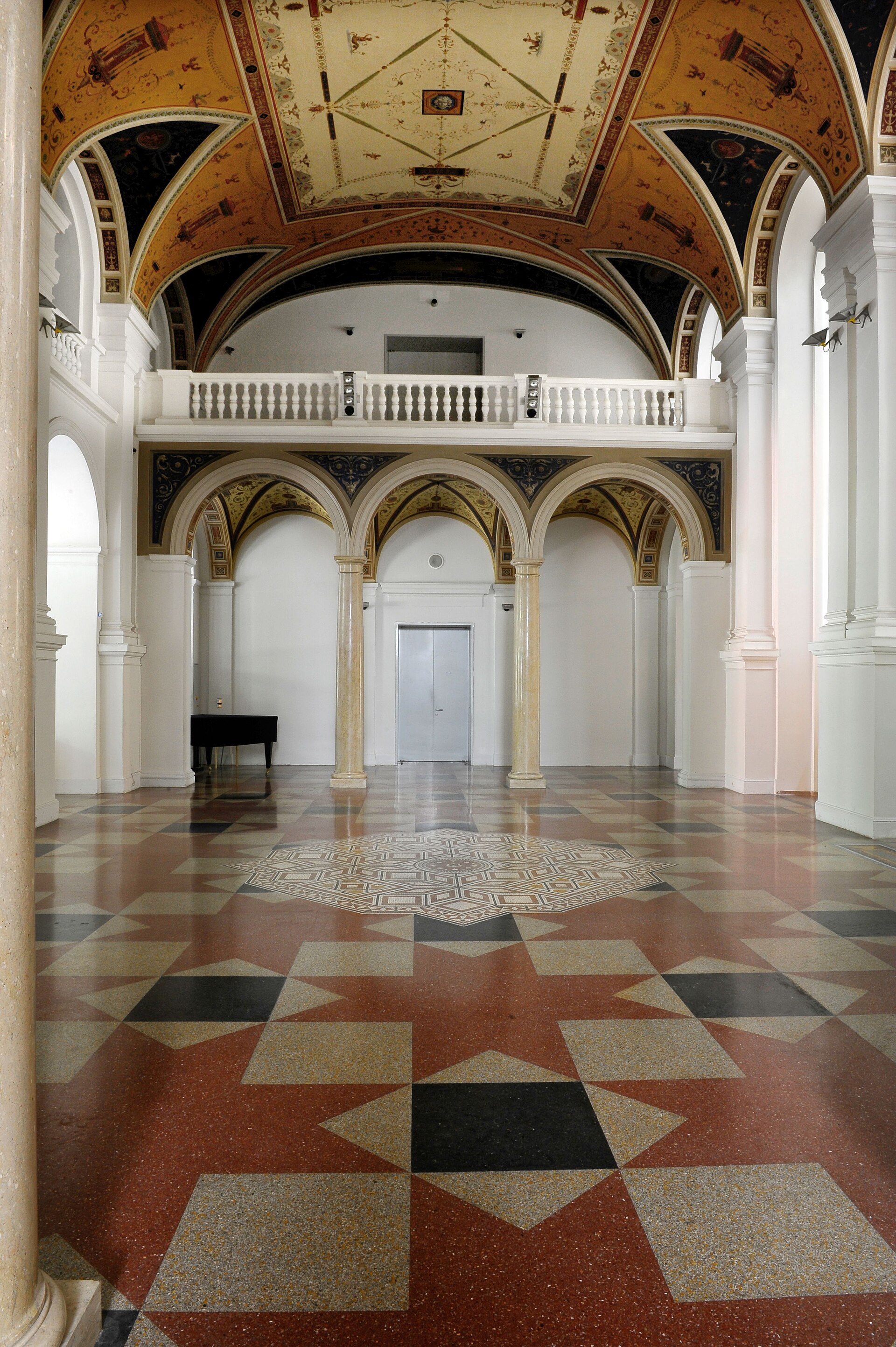
Photograph by Kamil Till · CC BY-SA 4.0 Museum of Applied Arts (Umeleckoprumyslove muzeum)
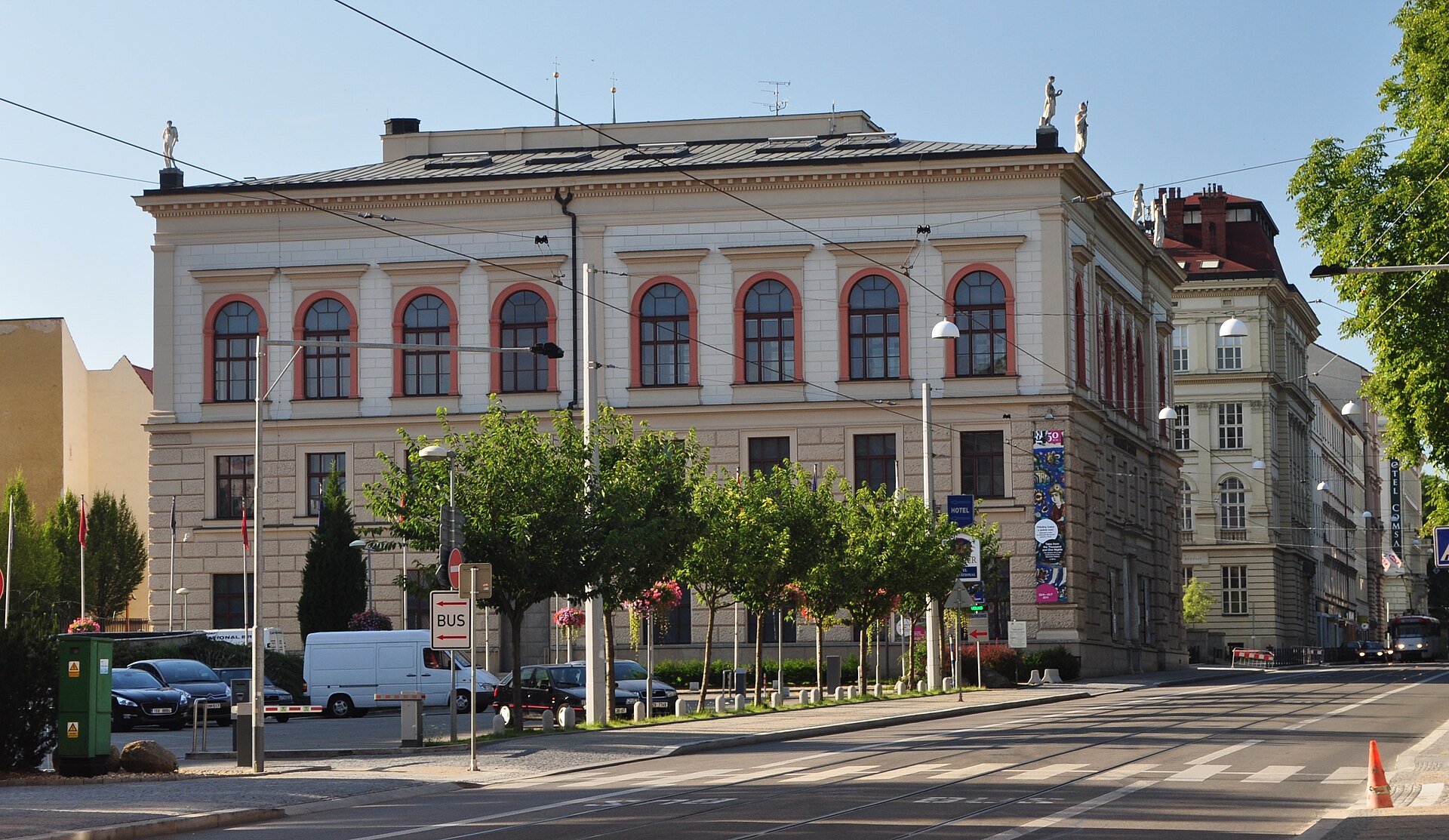
A neo-Renaissance building on Husova street, opened in 1883 and credited to architect Johann Georg Schon, explicitly modelled on Gottfried Semper's museum buildings in Vienna; the oldest museum of applied arts in the Bohemian and Moravian lands. Extended in 1888, rebuilt after wartime damage by architect Bohuslav Fuchs, and given a full renovation completed in 2021 that added catwalks by the Olgoj Chorchoj studio, the Respirium space by David Karasek, and Cafe Robot and an interactive floating installation called The Cloud, both by Marek Jan Stepan. Its permanent exhibition, Art Design Fashion, covers the last thirty years of Czech design and fashion alongside an open study-depot of glass, ceramics and porcelain, plus historic pieces such as an Adolf Loos drink set of 1935 and an armchair Otto Prutscher designed for the furniture maker Gebruder Thonet in 1914.
Photograph by palickap · CC BY 3.0 Jurkovic Villa
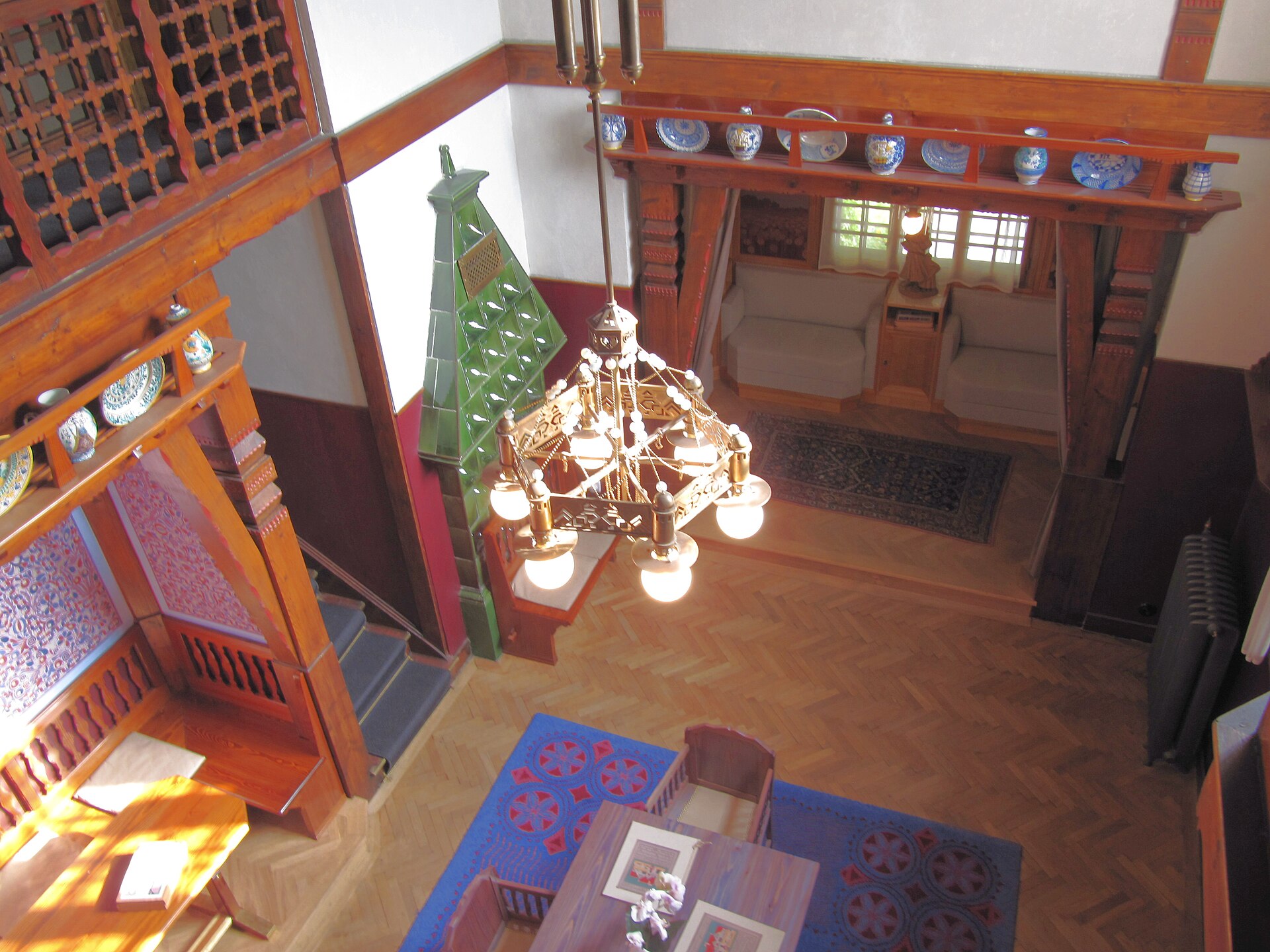
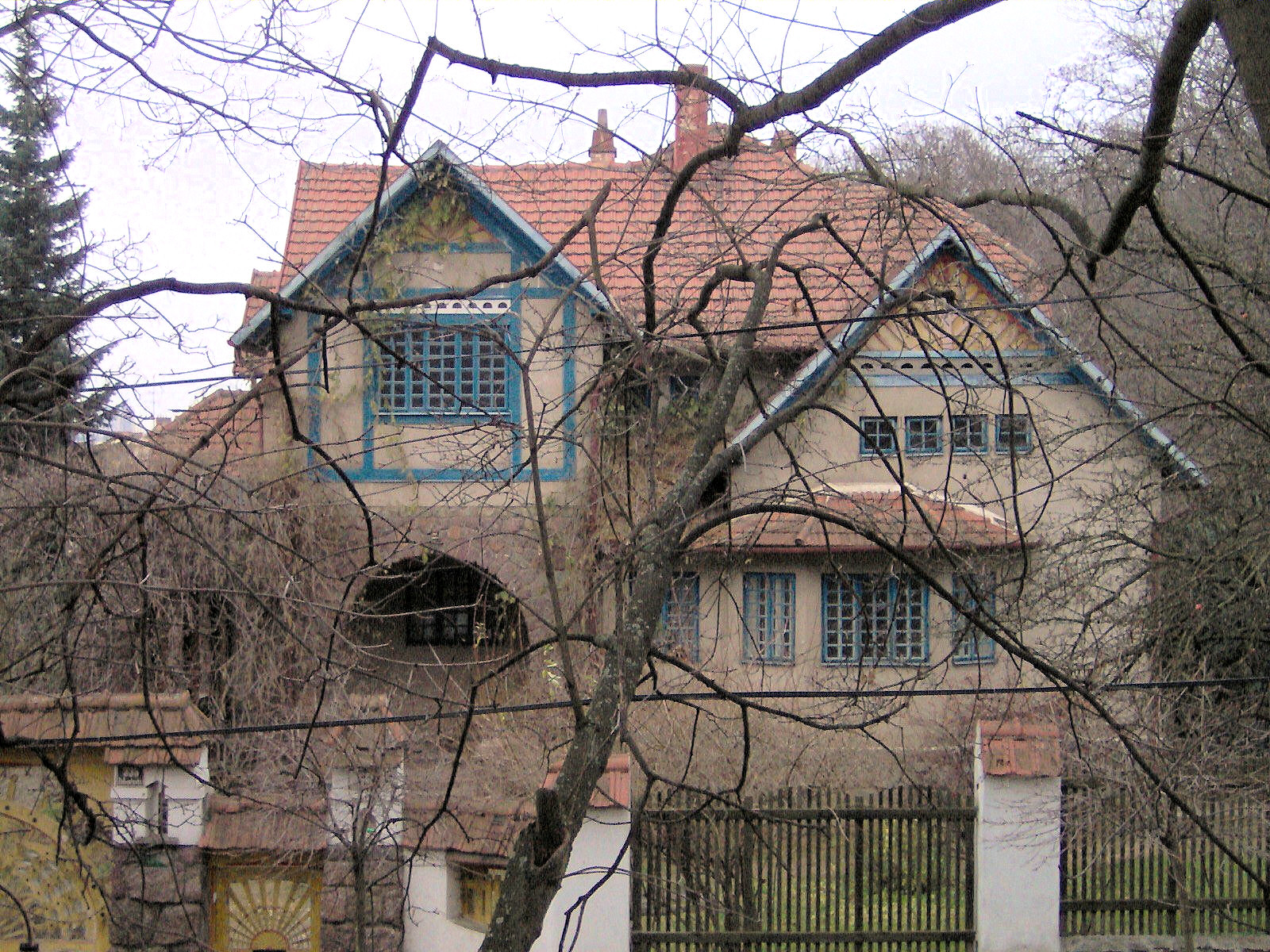
An Art Nouveau house in the Zabovresky district that the Slovak-Moravian architect Dusan Jurkovic built in 1906 as his own family home; the gallery describes it as the largest single object in its collection. Reconstructed and reopened to the public in 2011, its permanent exhibition, Dusan Jurkovic: Architect and His House, presents the rooms, including the entrance hall, largely as Jurkovic himself designed and furnished them.
Josef Hoffmann Museum, Brtnice
The childhood home of the architect and designer Josef Hoffmann, on the main square of Brtnice in the Vysocina region, roughly an hour from Brno. Run jointly with the Museum of Applied Arts (MAK) in Vienna since 2006, its permanent exhibition, Posel Krasy (Messenger of Beauty), surveys Hoffmann's work; the first-floor galleries are not wheelchair accessible.
Open Depository (Otevreny depozitar)
A working storage facility for the gallery's modern, contemporary and applied-art holdings, in a former military barracks in the Reckovice district of Brno. Open to the public only through booked guided tours, currently held on Wednesdays, where visitors see how the collection is stored, digitised, cleaned and conserved rather than a finished exhibition hang.
What to see first
Head of Medusa
Peter Paul RubensA 1617-1618 painting from the gallery's old-masters holdings, currently one of the objects shown in the Umeni do kapsy exhibition at the Governor's Palace during its reconstruction.7
Pieta
Lucas Cranach the ElderA 1510-1515 panel forming part of the gallery's Gothic-to-Renaissance holdings, among the oldest paintings in the collection.7
King's Ride in Vlcnov (Jizda kralu / Ride of the Kings)
Joza UprkaAn 1897 painting of the Moravian folk custom of the Ride of the Kings, one of the best-known Czech genre paintings in the collection and shown in the current Governor's Palace display.7
Madonna from Olomouc (Madonna Primavesi)
Moravian carver, unidentifiedA late-15th-century Gothic sculpture, 1480-1490, representative of the gallery's medieval Moravian holdings.7
Susanna and the Elders
Artemisia GentileschiA 1649 painting by one of the few women Old Masters whose work survives in quantity, a rare presence in a Central European regional collection.7
Drink set
Adolf LoosA 1935 design by the architect Adolf Loos, held in the Museum of Applied Arts and shown as part of the Art Design Fashion exhibition's historic design holdings.8
Armchair
Otto Prutscher, manufactured by Gebruder ThonetA 1914 bentwood armchair pairing a named Viennese designer with the Thonet firm, part of the applied-arts collection's furniture holdings.8
Exhibitions on now
Past exhibitions here
- Closed13 Feb to 13 Sep 2026Confirmed · check before you travel
- Closed19 Jun to 13 Sep 2026Confirmed · check before you travel
Two nineteenth-century museums, and a merger in 1961
The Moravian Gallery in Brno was formed on 1 April 1961 by merging two much older institutions. The first traces to 1816-1818, when Emperor Francis I founded the Frantisek Museum, renamed the Moravian Regional Museum in 1900, whose holdings included a picture gallery, the Obrazarna, from the start. The second, the Moravian Industrial Museum, was founded in 1873 at the initiative of Moravian industrialists and the Brno Chamber of Commerce and Crafts, took the name Museum of Art and Industry in 1907, and became the Moravian Arts and Crafts Museum in 1919. Joining a fine-art picture gallery to an applied-arts and design museum under a single roof was, and remains, an unusual structure among Czech museums, most of which keep the two apart. Today the merged institution holds more than 207,000 catalogued items, by Wikidata's 2021 figure, and describes itself as the second-largest art museum in the Czech Republic.
Six buildings, one collection, and a headquarters on Husova street
The gallery operates across six buildings in and around Brno, plus two closed research depots not open to visitors. Its headquarters and flagship exhibition space is Prazak Palace on Husova street, a private town palace built in 1873-1874 for the Moravian politician Alois Prazak and put to gallery use from 1994. The other public buildings are the Governor's Palace on Moravske namesti, the Museum of Applied Arts a few doors from Prazak Palace on Husova street, Jurkovic Villa in the Zabovresky district, the Josef Hoffmann Museum in the town of Brtnice, and the Open Depository in a former barracks in the Reckovice district. Each building keeps a distinct identity and its own permanent exhibition rather than functioning as a branch of a single unified display, so a visitor moving between them sees genuinely different collections rather than the same show restaged.
The Governor's Palace, reopening one wing at a time
The Governor's Palace began as an Augustinian monastery in the mid-14th century and was rebuilt in Baroque style under the architect Moritz Grimm in the mid-18th century; the gallery has used part of the building since 1990. Since 2023 it has been closed for a staged reconstruction. The ground floor and courtyard reopened to the public on 1 June 2024, with a new barrier-free entrance, a renovated ticket office fitted with a chandelier by the designer Maxim Velcovsky, and a shaded courtyard with water features and climbing plants trained up steel cables on the facade. Alongside the reopened spaces, the gallery installed a new permanent exhibition, Umeni do kapsy (Art in a Nutshell), an educational display that includes, among its objects, Rubens's Head of Medusa and Joza Uprka's King's Ride in Vlcnov. The first phase of the work cost close to 94 million Czech crowns. A second phase, intended to rebuild the rest of the historic galleries that once held the gallery's Gothic-to-19th-century collection, is described by the gallery only as planned for the years ahead, with no announced date. A visitor arriving today should expect the smaller Umeni do kapsy display rather than the full run of old masters the building held before the works began.
Design, glass and a floating cloud: the Museum of Applied Arts
The Museum of Applied Arts building on Husova street opened in 1883 to a neo-Renaissance design credited to the architect Johann Georg Schon, explicitly modelled on Gottfried Semper's museum buildings in Vienna, and is described by the gallery as the oldest museum of applied arts in the Bohemian and Moravian lands. It was extended in 1888, rebuilt after wartime damage under the architect Bohuslav Fuchs, restored again in 2001, and given a complete renovation completed in 2021. That renovation added catwalks designed by the Olgoj Chorchoj studio, a work and study space called the Respirium by David Karasek, and a cafe, Cafe Robot, together with an interactive floating installation, The Cloud, both by the designer Marek Jan Stepan. The building's permanent exhibition, Art Design Fashion, surveys the last thirty years of Czech design and fashion and sits alongside an open study-depot in which glass, ceramics and porcelain from the reserve collection are displayed behind glass in the same rooms as the finished exhibits, so a visitor sees the museum's working storage as well as its selected highlights. Historic pieces on show include a 1935 drink set designed by the architect Adolf Loos and a 1914 bentwood armchair the Viennese designer Otto Prutscher created for the furniture maker Gebruder Thonet.
Prazak Palace and the twentieth century
Prazak Palace carries the bulk of the gallery's twentieth-century holdings in a permanent exhibition called Art Is Here, divided into Modern Art, covering the first half of the twentieth century, and New Art, covering the second half. The building also hosts the gallery's temporary exhibitions, a gallery shop, the Morgal cafe, a children's play room, and two research resources open to the public: a specialist art-history library and the Artoteka, a lending collection from which visitors can borrow original artworks rather than only view them on the wall. Entry to the building is barrier-free, and, like the Governor's Palace and the Museum of Applied Arts, admission to its permanent collection is voluntary rather than fixed-price.
The villa, the museum in Brtnice, and the open depository
Jurkovic Villa, in the Zabovresky district, was built in 1906 as the family home of the Slovak-Moravian architect Dusan Jurkovic; the gallery describes it as the largest single object in its entire collection. Reconstructed and reopened to the public in 2011, its permanent exhibition, Dusan Jurkovic: Architect and His House, keeps the rooms, including the carved entrance hall, close to how Jurkovic himself designed and furnished them, and entry requires a paid guided tour rather than free browsing. An hour from Brno, in the town of Brtnice in the Vysocina region, the gallery jointly runs the Josef Hoffmann Museum with the Museum of Applied Arts (MAK) in Vienna, an arrangement in place since 2006; the museum occupies Hoffmann's childhood home and its permanent exhibition, Posel Krasy (Messenger of Beauty), surveys his career, though the first-floor galleries are not wheelchair accessible. The newest and least conventional site is the Open Depository, a working storage facility for modern, contemporary and applied art housed in a former military barracks in the Reckovice district, which the public can enter only on a booked guided tour, currently held on Wednesday afternoons, to see how the collection is stored, digitised, cleaned and conserved.
A voluntary-admission collection, and the graphic design biennial
Across its three main Brno buildings the gallery has settled on voluntary, donation-based admission to the permanent collection rather than a fixed ticket price, reserving paid tickets for its outlying sites, for temporary exhibitions, and for guided tours booked outside a building's own scheduled program. The gallery is also historically known for organising the International Biennial of Graphic Design Brno, founded in 1963, which Czech-language sources describe as having achieved worldwide significance within the discipline of graphic design and which is recorded as running through at least 2018; this history is not independently confirmed here beyond that tertiary account, and whether the biennial has resumed more recently was not established in the course of this research.
What visitors say
Visitors consistently single out the Prazak Palace building itself and the low, often voluntary cost of seeing the permanent collection as unusually good value, and describe the applied-arts and design side of the gallery (glass, ceramics, furniture, fashion) as its most distinctive strength next to a smaller old-masters holding. The long, still-unfinished reconstruction of the Governor's Palace is the recurring practical complaint, with recent visitors reporting confusion over which parts of that building are actually open.
What is praised, what is criticised
- Praised: The architecture and setting of Prazak Palace, and the voluntary or low-cost admission to the permanent collections
- Praised: The breadth and quality of the applied-arts and design collection, including its glass and ceramics displays
- Praised: Spacious, well-lit exhibition rooms and helpful staff
- Criticised: The multi-year reconstruction of the Governor's Palace, which has left part of the building closed with no firm date for the rest, and which one December 2025 visitor found had made staff themselves unsure when a full reopening would come
- Criticised: A minority view that some of the twentieth-century modernist paintings on show read as derivative of Cezanne or Picasso rather than showing an independent style
Ratings on other platforms
TripAdvisor: 4.3 from 61 ratings, read 5 September 2026
A platform average is a tertiary source: it moves, it is not audited, and we quote no visitor's words.
Questions about Moravian Gallery in Brno
Where is Moravian Gallery in Brno?
Husova 18, 662 26 Brno, Czech Republic.
How much does it cost to visit?
Permanent exhibitions - Prazak Palace: free; Permanent exhibitions - Governor's Palace: free; Permanent exhibitions - Museum of Applied Arts: free; Jurkovic Villa - guided tour, adult: CZK 100; Jurkovic Villa - guided tour, reduced: CZK 50. As confirmed 5 September 2026.
When is it open?
Wednesday, Friday, Saturday, Sunday 10:00-18:00; Thursday 10:00-19:00; Jurkovic Villa, Josef Hoffmann Museum, Open Depository varies-varies. Closed: Monday. Tuesday. As confirmed 5 September 2026.
What should you see first?
Head of Medusa (Peter Paul Rubens); Pieta (Lucas Cranach the Elder); King's Ride in Vlcnov (Jizda kralu / Ride of the Kings) (Joza Uprka); Madonna from Olomouc (Madonna Primavesi) (Moravian carver, unidentified); Susanna and the Elders (Artemisia Gentileschi); Drink set (Adolf Loos).
What we could not confirm
- The Governor's Palace's second reconstruction phase, which is meant to restore the historic Gothic-to-19th-century galleries, has no published date; it is unclear from sources checked here which of the gallery's Old Master paintings are in storage during the works and which remain on view in the interim Umeni do kapsy display.
- Czech Wikipedia records the International Biennial of Graphic Design Brno as running from 1963 through at least 2018; this research did not establish from the gallery's own site whether the biennial has held a more recent edition.
- A Google Maps aggregate rating could not be independently confirmed: the fetch was blocked by a Google consent redirect. Only TripAdvisor's own page (4.3 from 61 reviews) and Slevomat's separate verified-customer score (4.4 from 365 ratings, a discount-voucher platform rather than a general review site) were checked directly, and Slevomat's figure is not used here as the cited rating.
Images
Sources
- 1Moravska galerie v Brne, O galerii (buildings, hours, accessibility, cafes, shops) moravska-galerie.cz/o-galerii/
- 2Moravska galerie v Brne, Vstupne (admission prices and free-entry categories) moravska-galerie.cz/vstupne/
- 3Moravska galerie v Brne, Kontakt a oteviraci doba (contact details, address, phone numbers) moravska-galerie.cz/kontakt/
- 4Wikipedia, Moravian Gallery in Brno (English) en.wikipedia.org/wiki/Moravian_Gallery_in_Brno
- 5Wikipedia, Moravska galerie v Brne (Czech) - history, building architects, directors, graphic design biennial cs.wikipedia.org/wiki/Moravsk%C3%A1_galerie_v_Brn%C4%9B
- 6Wikimedia Commons file page, Brno, Husova ul., Prazakuv palac.jpg (licence and description verification for the lead image) commons.wikimedia.org/wiki/File:Brno,_Husova_ul.,_Pra%C5%BE%C3%A1k%C5%AFv_pal%C3%A1c.jpg
- 7Google Arts & Culture, Art from the Gothic to the 19th century (Moravian Gallery in Brno partner content, object list) artsandculture.google.com/story/art-from-the-gothic-to-the-19th-century-moravsk%C3%A1-galerie-v-brn%C4%9B-moravian-gallery-in-brno/owVhIdxX5ZZ-Lg?hl=en
- 8Metalocus, Renovation of the museum: Art Design Fashion at Moravian Gallery in Brno metalocus.es/en/news/renovation-museum-art-design-fashion-moravian-gallery-brno
- 9Czech Radio Brno, Moravska galerie v Brne po oprave otevira przizemi a nadvori Mistodrzitelskeho (Governor's Palace reopening, June 2024) brno.rozhlas.cz/moravska-galerie-v-brne-po-oprave-otevira-prizemi-a-nadvori-mistodrzitelskeho-9245531
- 10TripAdvisor, Moravian Gallery, Brno - rating and reviews tripadvisor.com/Attraction_Review-g274714-d277862-Reviews-Moravian_Gallery-Brno_South_Moravian_Region_Moravia.html
- 11Wikidata, Q3094617 (Moravian Gallery in Brno) - inception date, coordinates, collection size wikidata.org/wiki/Special:EntityData/Q3094617.json
- 12Slevomat.cz, Moravska galerie (verified-customer rating, checked and not used as the cited rating platform) slevomat.cz/podnik/107567-moravska-galerie
