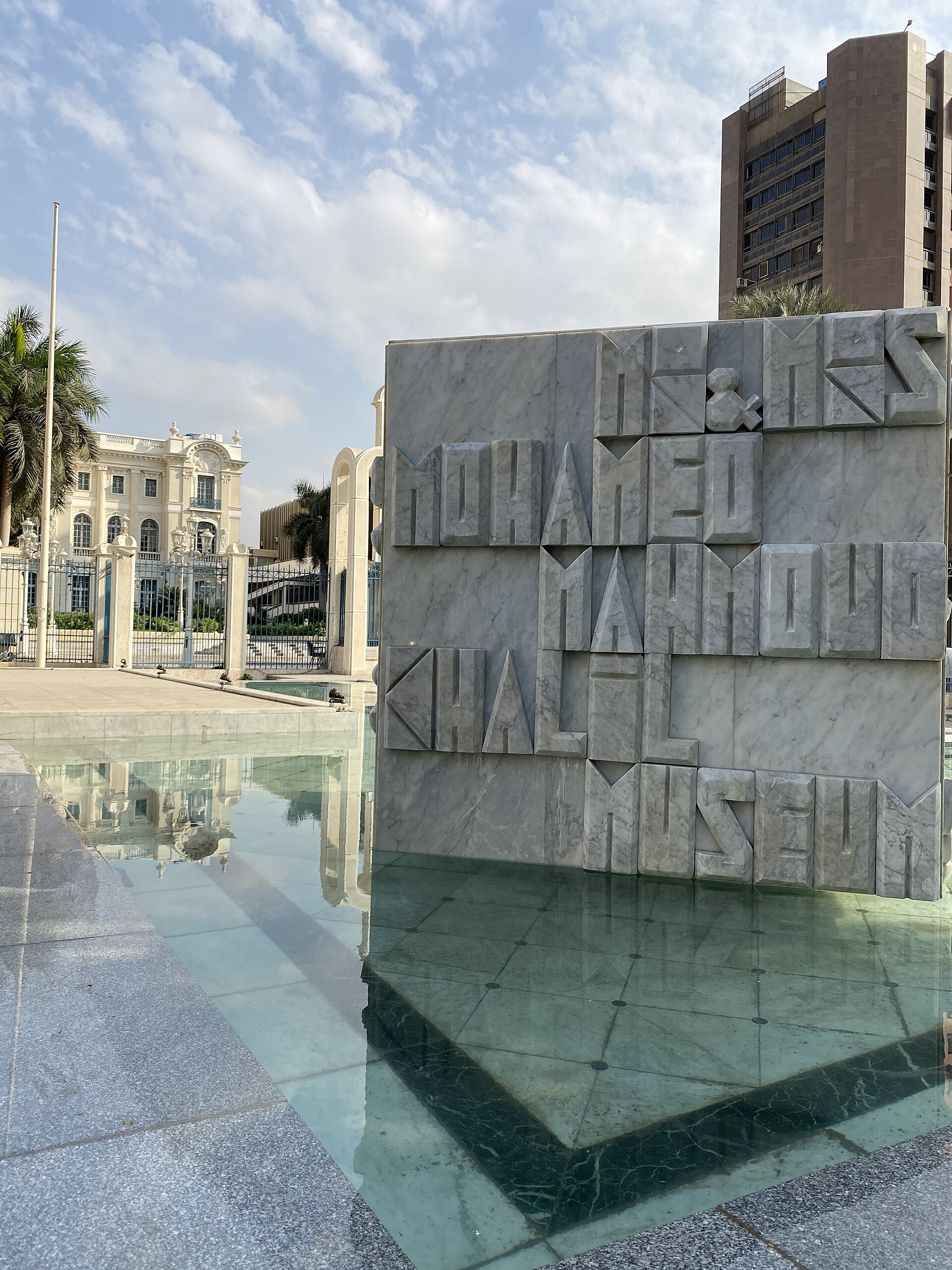
Mohamed Mahmoud Khalil Museum
Museum · متحف محمد محمود خليل وحرمه · Founded 1962
Open, admission and hours confirmed 15 September 2026 · 17 sources
On this page 14 sections
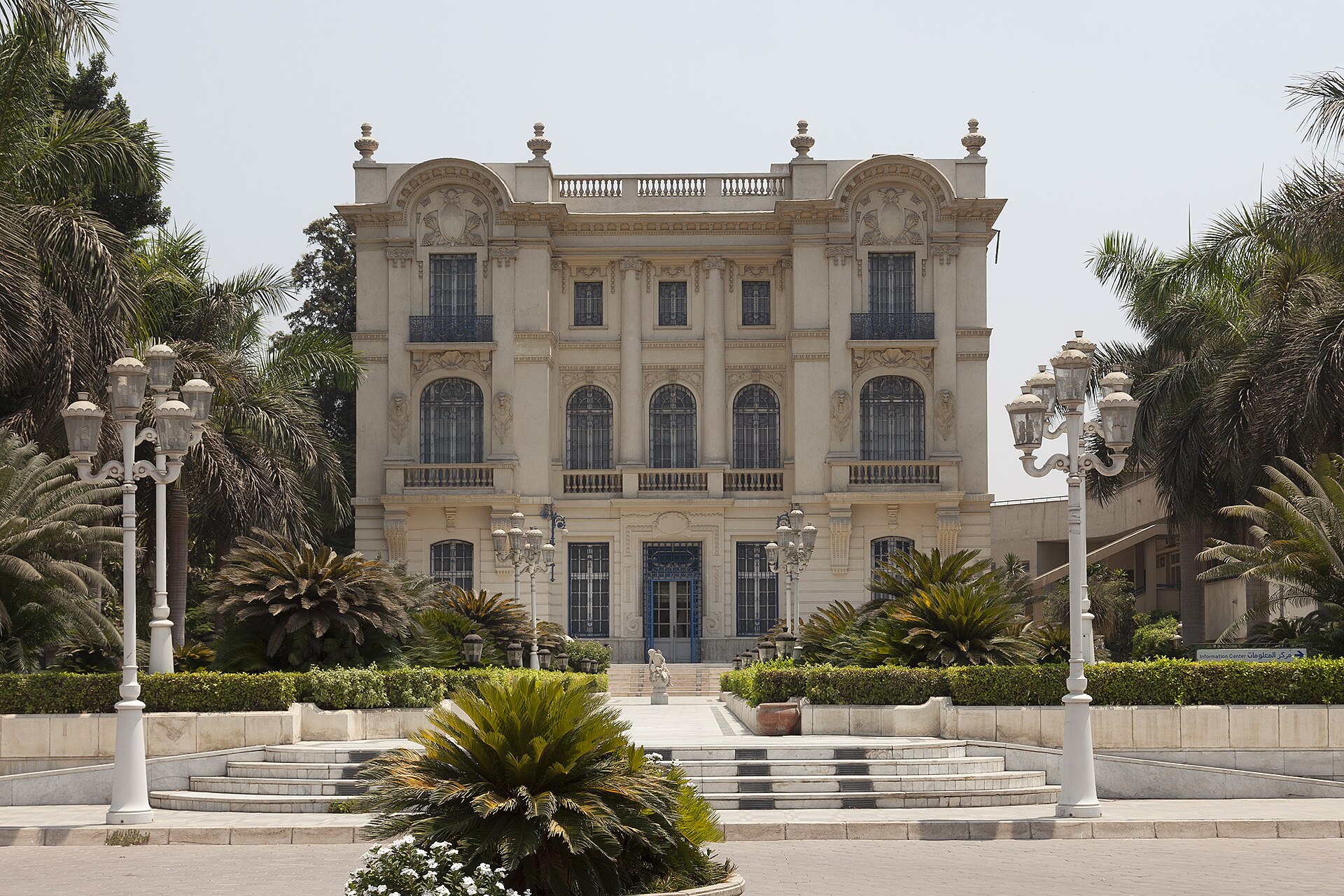
The Khalil Museum's claim on attention is narrow and specific rather than broad: it is not a general art museum but a single private collection of French nineteenth and early twentieth-century painting and sculpture, formed by one Cairo couple between roughly 1918 and 1953 and left almost entirely intact. Egypt's state information service counts more than three hundred paintings and over fifty sculptures, with named strengths in Monet, Gauguin, Renoir, Cezanne, Rodin, Pissarro and Courbet, alongside smaller holdings of Chinese, Japanese and Ottoman decorative art the couple collected on the side. For a reader used to encyclopaedic museums built from state or colonial-era acquisitions, the Khalil is closer in spirit to the Frick or the Wallace Collection: a single, French-facing eye applied to the Paris art market of its day, transplanted whole to a villa on the Nile and never broken up.
| Local name | متحف محمد محمود خليل وحرمه |
|---|---|
| Kind | Museum |
| Founded | 1962 |
| City and country |  Giza, Egypt Giza, Egypt |
| Address | 1 Kafour Street, Dokki, Giza, Egypt |
| Website | fineart.gov.eg/arb/musem/Musem.asp?IDS=28 |
| Status | Open, confirmed 15 September 2026 |
| Record last verified | 15 September 2026 |
Visiting
- Hours
- Sat-Thu10:00 to 16:00closed Friday
- Closed
- Friday. Monday (per some visitor accounts; the museum's own visitor page does not list a second closed day).
- Admission
- Egyptian studentEGP 10
- Foreign studentEGP 30
- Egyptian visitorEGP 50
- Arab visitorEGP 50
- Foreign visitorEGP 100cash only in Egyptian pounds, per visitor accounts; no foreign currency or cards accepted at the door
- Do I need to book?
- No advance booking system found; tickets are bought in cash at the door
- Address
- 1 Kafour Street, Dokki, Giza, Egypt MapMetro plus walk About a 10 minute walk from Dokki metro station on Cairo Metro Line 2
- Website
- fineart.gov.eg/arb/musem/Musem.asp?IDS=28
- Telephone
- +20 2 3336 2379
Before you go how long, access, photography, bags, eating, shop
- How long to allow
- Visitor accounts describe the museum as compact, generally under two hours for the full collection
- Access
- Not stated on any source consulted
- Photography
- Not permitted inside the galleries; permitted in the garden and on the grounds
- Bags
- Bags and water bottles must be left at reception in a locker, and visitors are asked to show a passport or a photo of one, which security keeps until departure
- Eating
- Not stated on any source consulted
- Shop
- Not stated on any source consulted
Prices and hours change. We take them from the institution's own pages and print the day we read them, and you can check the current position at the source we used. Confirm before you travel.
What is inside
Ground-floor picture galleries
The main run of Impressionist and Post-Impressionist paintings assembled by Khalil and Emilienne Luce, including works attributed to Monet, Renoir, Sisley, Pissarro, Degas, Delacroix and Courbet, hung through the villa's original reception rooms
Central sculpture hall
A grouping of bronzes by Auguste Rodin, including a cast of his Balzac monument, displayed under the villa's original chandelier at the heart of the ground floor
Decorative arts and Asian ceramics rooms
Chinese and Japanese porcelain and small lacquer boxes, Ottoman Turkish ceramic dishes and a 17th-century Flemish tapestry, alongside furniture and portraits of Khalil and Emilienne
Upper-floor library and study rooms
Administrative offices, a reference library and research rooms on the upper floors and basement, used for study of the collection rather than public display
What to see first
La Vie et la Mort (Life and Death), 1889
Paul GauguinNamed repeatedly across sources as one of the collection's signature paintings and one of Gauguin's own most important works4
Balzac and a group of bronzes
Auguste RodinEgypt's state information service singles out five Rodin sculptures in the museum, including a cast of the Balzac monument, as a core strength of the sculpture holding4
Five paintings
Claude MonetThe largest single-artist Impressionist holding named by Egypt's state information service, part of what it calls a collection that rivals most European national collections4
After the Bath
Edgar DegasA charcoal and pastel nude study cited as one of the museum's strongest works on paper9
Banks of the Oise at Pontoise, 1874, and other landscapes
Camille PissarroPissarro is named individually by both the museum's state overview and independent visitor guides as a strength of the landscape holding9
Seine at Sunrise, Moret in Autumn and Wood Storehouse
Alfred SisleyA trio of Sisley landscapes repeatedly picked out as highlights of the Impressionist rooms9
Flower Study with Wisteria and other works
Eugene DelacroixDelacroix is one of the earlier, pre-Impressionist painters the Khalils collected, and Wikimedia Commons carries a dedicated subcategory of Delacroix paintings from this museum17
Old Cairo and Cairo's Streets
Prosper Marilhat and Marie-Gabriel BiessyThe museum's Orientalist paintings of Egypt itself, a counterpoint to its French Impressionist core and a reminder the couple also collected European views of their own country9
A banker's villa on the Nile, before the Khalils ever saw it
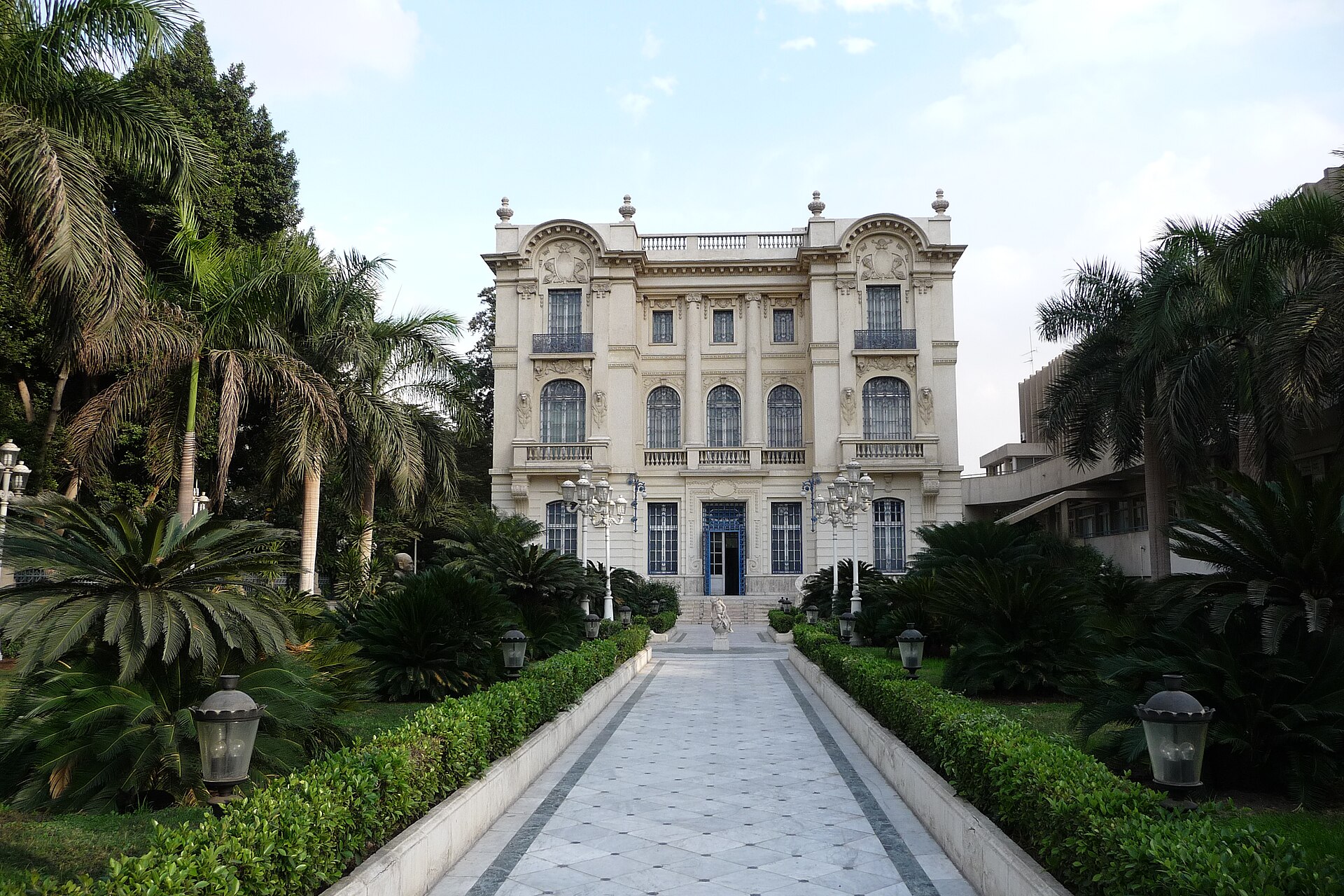
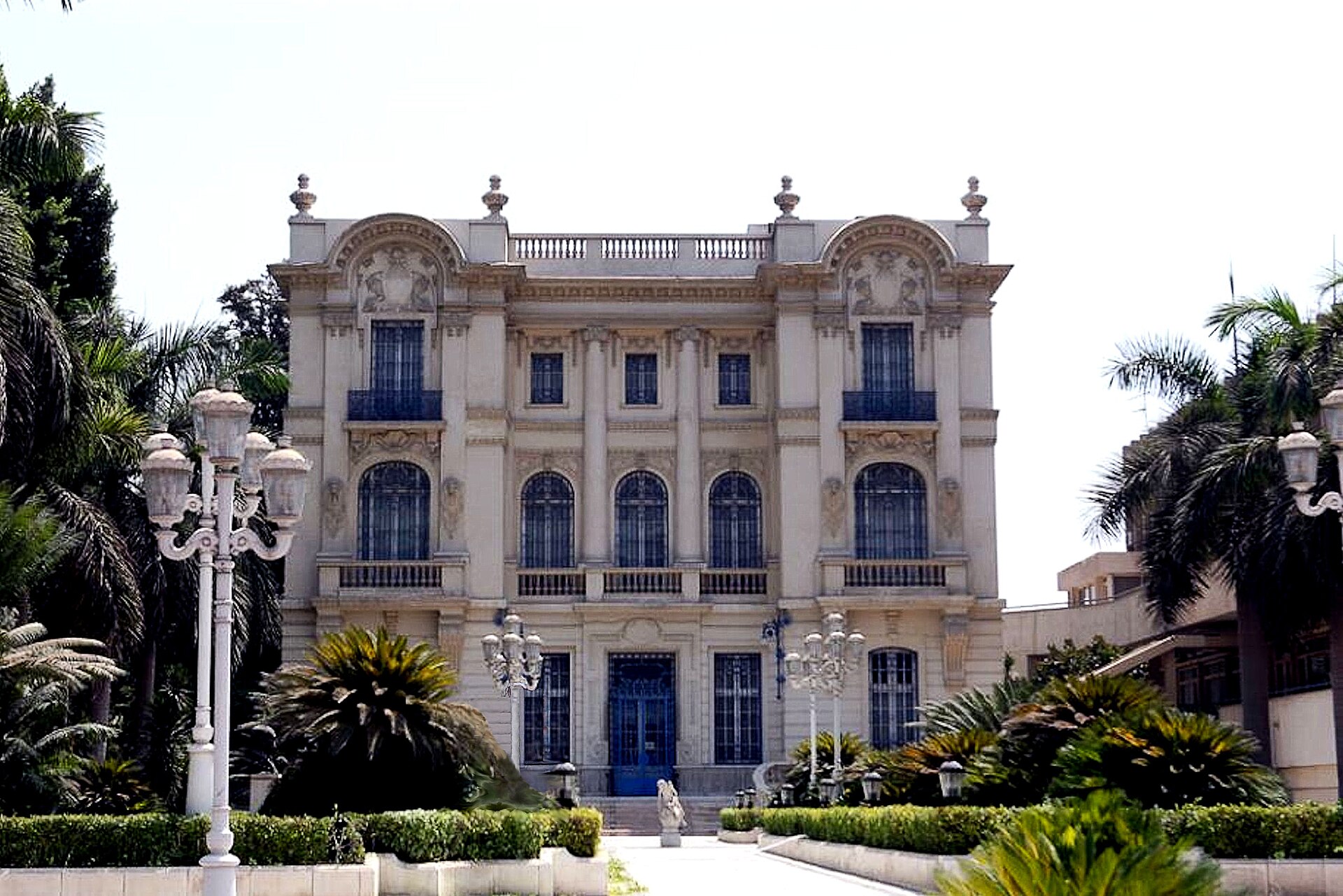
The building the Khalil Museum occupies is older than the collection inside it, and its first owner had nothing to do with art. Cairo heritage historian Samir Raafat, drawing on period notarial records and contemporary press, traces the French-style villa at No. 1 Kafour Street to a country house completed around 1905 to 1907 for Raphael Suares, chairman of the Suares Freres banking house and a founding shareholder of the National Bank of Egypt. A stained-glass window in the building carries the date 1907, which Raafat treats as the best physical evidence for when the house was finished. On Suares's death in 1909 the house passed to his heirs and was then sold to Prince Omar Halim, a descendant of the Egyptian royal line, who married in the house in 1922. Most present-day tourism and government sources give a simpler date of 1915 for the villa without naming an original owner; this record follows Raafat's more detailed, documented account while noting that the round figure of 1915 is the one repeated almost everywhere else, including on Egypt's own state information service.
Mohamed Mahmoud Khalil and his wife bought the house from Prince Omar Halim in 1928, according to Raafat's account (other sources, including the English-language Wikipedia entry, give 1918). Whichever date is correct, the villa's grand French detailing, an eastern facade built to face the river and a western front in a heavier European style, was already decades old and had already changed hands twice by the time it became a private art gallery.
The senator, the showgirl and the Societe des Amis de l'Art
Mohamed Mahmoud Khalil (1877 to 1953) was a lawyer by training who rose to serve twice as Prime Minister of Egypt, in 1928 to 1929 and again in 1937 to 1939, and who later became president of the Egyptian senate. He married Emilienne Hector Luce, a Frenchwoman of modest means with a background on the French stage, and by his own biographers' account it was largely her influence that turned him into a compulsive collector of French art. In 1924 Khalil joined a group of Cairo and Alexandria collectors, including Prince Youssef Kamal and several other prominent Egyptian and foreign residents, to found the Societe des Amis de l'Art (Society of Friends of Art), and he later chaired the society.
The Khalils bought on a large scale on their trips to Paris, and by the 1930s their house held one of the best private collections in Cairo, spoken of alongside the great Alexandria collections of the period. Raafat's account of the collection, cross-checked against Khalil's own 1933 inventory, lists paintings by Delacroix, Courbet, Renoir, Pissarro, Sisley, Millet and Monticelli, several works by Vincent van Gogh, sculpture by Rodin, and a separate collection of Chinese and Japanese decorative art including jade and small lacquer boxes. Wikimedia Commons still carries separate categories for the Delacroix, Courbet and Monticelli paintings that trace to this collection, a rare case of a private 1930s Cairo inventory remaining checkable against what actually survives in the galleries today. Khalil was honoured for his French sympathies with the Legion d'Honneur and a seat, by invitation, in the Institut de France; he was already a member of the Institut d'Egypte.
A widow's will, not a donor's generosity
The common short version of the museum's founding story is that Khalil and his wife generously left their house and collection to the Egyptian state. The documented version, again from Raafat's research into the couple's legal papers, is more particular. Khalil and Emilienne had no children together. When Khalil died in Paris on 27 December 1953, a rival claim over his estate arose almost immediately, and the resulting dispute became a significant scandal in Cairo society at the time. Khalil had already deeded the Kafour Street house itself to Emilienne outright in 1947, which put the mansion beyond reach of the dispute regardless of its outcome.
Emilienne outlived her husband by seven years. In a will notarised in Giza on 30 June 1954, she stipulated that on her death the house, its garden and everything inside it would pass to the Egyptian state to be preserved as a museum in both their names, specifically to keep it from any other claimant. She died on 19 March 1960. The state honoured her will, and the Mr and Mrs Mohamed Mahmoud Khalil Museum opened to the public on 23 July 1962, inaugurated by Sarwat Okasha, then Egypt's minister of culture.
Requisitioned by the presidency, restored by the state
The museum's independent existence did not last two decades unbroken. After Anwar Sadat became president he took over a house across the street from the Khalil mansion for his own use, and needed adjoining land for a helicopter landing area and expanded office space. In defiance of Emilienne's will, the Khalil Museum building was requisitioned for presidential offices; the paintings came down from the walls and the collection was moved to a separate confiscated palace in Zamalek, where it remained on display away from its original setting for roughly two decades. English-language sources on the museum describe this period more briefly, dating the presidential takeover to 1971 and the collection's return to museum use to 1993, which lines up with Raafat's account of a reopening roughly twelve years after Sadat's assassination in 1981.
Egypt's President Hosni Mubarak inaugurated the restored museum back in its original Kafour Street building, with the collection reunited in its historic setting, and the museum operated there through the 1990s and 2000s.
The Van Gogh theft that closed the museum for a decade
The museum's most serious modern crisis began on 21 August 2010, when a thief cut Vincent van Gogh's Vase with Poppies (also known as Poppy Flowers, and reported at the time as worth tens of millions of dollars) from its frame during opening hours and walked out with it rolled up. It was the second time the same painting had been stolen from this museum: it was taken once before in 1977 and recovered in Kuwait two years later. The 2010 theft was never solved and the painting has not been recovered. Egypt's own prosecutor general, quoted afterward, called the museum's security measures at the time "feeble and superficial", and reporting on the case found that most of the museum's alarms and cameras were not functioning when the theft happened; a visiting author who toured the museum a few years earlier had already noted only a handful of guards covering an entire upper floor of paintings with no supervision at all. A separate, smaller theft in 2009 saw nine 19th-century portraits associated with Ibrahim Pasha taken from the museum, though those were recovered within ten days.
The 2010 theft triggered political fallout and led directly to the museum's closure. Development and restoration work began in earnest in 2014 under Egypt's Armed Forces Engineering Authority and ran for roughly seven years, covering the building's electrical, air-conditioning, water and firefighting systems, a full overhaul of security and monitoring equipment, and a new display design throughout the galleries. The museum reopened to the public in late April 2021 in a ceremony attended by Egypt's Minister of Culture. In 2022 the American engineering publication ENR recognised the Renovation and Development of the Mohamed Mahmoud Khalil Museum project with its award for the best restoration project of the year, an unusual distinction for a museum whose closure began with a security failure.
The museum today
The Khalil Museum is administered by the Fine Arts Sector of Egypt's Ministry of Culture rather than by the Ministry of Tourism and Antiquities, which reflects its status as an art museum built around a private bequest rather than an archaeological or antiquities site; Egypt's state information service nonetheless lists it among the country's leading cultural-tourism museums, and last updated its own page on the museum in March 2024. The Fine Arts Sector's own visitor page quotes admission of 10 Egyptian pounds for Egyptian students up to 100 pounds for foreign visitors, and hours from 10 in the morning to 4 in the afternoon.
Visitor reviews through 2025 and into 2026 confirm the museum is open and receiving the public, though several note that the museum has no reliably updated public information point of its own: one visitor in March 2026 found the museum unexpectedly closed on a day it was expected to be open, with no posted explanation and staff who could not clarify the situation in English. Read together with the government sources, the pattern is of a fully operating museum whose paperwork and public communications have not kept pace with the building restoration that reopened it in 2021.
What visitors say
Visitors consistently describe a small, uncrowded museum whose Impressionist and Post-Impressionist paintings are far better than the modest, unmarked palace suggests from outside, calling it a hidden gem worth the trip to Dokki. The recurring complaint is not the art but the visit itself: opening-hours information is hard to confirm in advance, and more than one visitor has arrived to find the museum closed with no notice; security procedures that require surrendering a passport and locking away bags and water are also repeatedly mentioned, generally with mild irritation rather than real complaint.
What is praised, what is criticised
- Praised: The depth and quality of the Impressionist and Post-Impressionist holding, which multiple reviewers say would not embarrass a major European gallery
- Praised: The quiet, largely empty galleries inside a restored Nile-side palace, a contrast reviewers draw with Cairo's more crowded museums
- Criticised: Opening-hours information that is hard to confirm before a visit; one visitor arrived on a Thursday in March 2026 to find the museum closed with no explanation and no updated information posted
- Criticised: Strict, sometimes brusque entry procedures, including a passport hold at reception and mandatory bag and water-bottle storage
Ratings on other platforms
Tripadvisor: 4.1 from 10 ratings, read 15 September 2026
A platform average is a tertiary source: it moves, it is not audited, and we quote no visitor's words.
Questions about Mohamed Mahmoud Khalil Museum
Where is Mohamed Mahmoud Khalil Museum?
1 Kafour Street, Dokki, Giza, Egypt.
How much does it cost to visit Mohamed Mahmoud Khalil Museum?
Egyptian student: EGP 10; Foreign student: EGP 30; Egyptian visitor: EGP 50; Arab visitor: EGP 50; Foreign visitor: EGP 100. As confirmed 15 September 2026.
When is Mohamed Mahmoud Khalil Museum open?
Sat-Thu 10:00-16:00. Closed: Friday. Monday (per some visitor accounts; the museum's own visitor page does not list a second closed day). As confirmed 15 September 2026.
How do you get to Mohamed Mahmoud Khalil Museum?
Metro plus walk: About a 10 minute walk from Dokki metro station on Cairo Metro Line 2.
What should you see at Mohamed Mahmoud Khalil Museum?
La Vie et la Mort (Life and Death), 1889 (Paul Gauguin); Balzac and a group of bronzes (Auguste Rodin); Five paintings (Claude Monet); After the Bath (Edgar Degas); Banks of the Oise at Pontoise, 1874, and other landscapes (Camille Pissarro); Seine at Sunrise, Moret in Autumn and Wood Storehouse (Alfred Sisley).
What we could not confirm
- Van Gogh's Vase with Poppies (Poppy Flowers), cut from its frame in the 2010 theft, has never been recovered and its current whereabouts are unknown
- Sources disagree on when the villa was built and when the Khalils bought it: Samir Raafat's documented history (drawing on notarial and press records) gives a build date of about 1905 to 1907 for original owner Raphael Suares and a 1928 purchase by the Khalils, while most government and tourism sources give a simple 1915 construction date and, where a purchase date is given at all, 1918
- No source consulted states whether any painting in the collection has ever been the subject of a wartime, colonial-era or ownership dispute; none of the material found raises such a claim, but none rules it out either
Images
Sources
- 1Wikipedia, Mohamed Mahmoud Khalil Museum en.wikipedia.org/wiki/Mohamed_Mahmoud_Khalil_Museum
- 2Wikipedia (French), Musee Mohamed Mahmoud Khalil fr.wikipedia.org/wiki/Mus%C3%A9e_Mohamed_Mahmoud_Khalil
- 3Wikipedia (Arabic), Mathaf Mohamed Mahmoud Khalil wa-Haramh ar.wikipedia.org/wiki/%D9%85%D8%AA%D8%AD%D9%81_%D9%85%D8%AD%D9%85%D8%AF_%D9%85%D8%AD%D9%85%D9%88%D8%AF_%D8%AE%D9%84%D9%8A%D9%84_%D9%88%D8%AD%D8%B1%D9%85%D9%87
- 4State Information Service (Egypt), Mohmed Mahmoud Khalil Museum sis.gov.eg/en/egypt/tourism/cultural-tourism/museums/mohmed-mahmoud-khalil-museum/
- 5Fine Arts Sector, Ministry of Culture (Egypt), visitor information page for the Khalil Museum fineart.gov.eg/arb/musem/Vist.asp?IDs=28
- 6Fine Arts Sector, Ministry of Culture (Egypt), museum page for the Khalil Museum fineart.gov.eg/arb/musem/Musem.asp?IDS=28
- 7CairoScene, Cairo's Mahmoud Khalil Museum to Reopen After 10 Year Closure cairoscene.com/ArtsAndCulture/Cairo-s-Mahmoud-Khalil-Museum-to-Reopen-After-10-Year-Closure
- 8Scoop Empire, A Hidden Art Haven: The Mahmoud Khalil Museum Reopens for the Public scoopempire.com/mohamed-mahmoud-khalil-museum/
- 9Vanilla Travels, 12 Must-See Masterpieces At The Khalil Museum vanillatravels.net/khalil-museum-cairo/
- 10The Art Newspaper, How a Van Gogh painting was stolen from a Cairo museum, not once but twice theartnewspaper.com/2021/05/21/how-a-van-gogh-painting-was-stolen-from-a-cairo-museumnot-once-but-twice
- 11SceneHome, Khalil Museum: A Dazzling Array of Rare Art scenehome.com/Architecture/Khalil-Museum-A-Dazzling-Array-of-Rare-Art
- 12Arab MLS, Mohamed Mahmoud Khalil Museum: A Cultural Gem in Egypt arabmls.org/mohamed-mahmoud-khalil-museum/
- 13Tripadvisor, Mohamed Mahmoud Khalil Museum (Giza listing) tripadvisor.com/Attraction_Review-g294202-d32897657-Reviews-Mohamed_Mahmoud_Khalil_Museum-Giza_Giza_Governorate.html
- 14Tripadvisor, Khalil Museum (Cairo listing) tripadvisor.com/Attraction_Review-g294201-d553186-Reviews-Khalil_Museum-Cairo_Cairo_Governorate.html
- 15Samir Raafat (egy.com), House of a Woman Scorned: The House of Mohammed Mahmoud Khalil and How It Became a National Museum egy.com/giza/98-04-30.php
- 16Egypt Today, Overview - Mohamed Mahmoud Khalil Museum egypttoday.com/Article/4/20395/Overview-Mohamed-Mahmoud-Khalil-Museum
- 17Wikimedia Commons, Category:Mahmoud Khalil Museum and subcategories commons.wikimedia.org/wiki/Category:Mahmoud_Khalil_Museum