Marc Chagall Museum
Museum · Музей Марка Шагала · Founded 1991
Open, admission and hours confirmed 16 September 2026 · 12 sources
On this page 14 sections
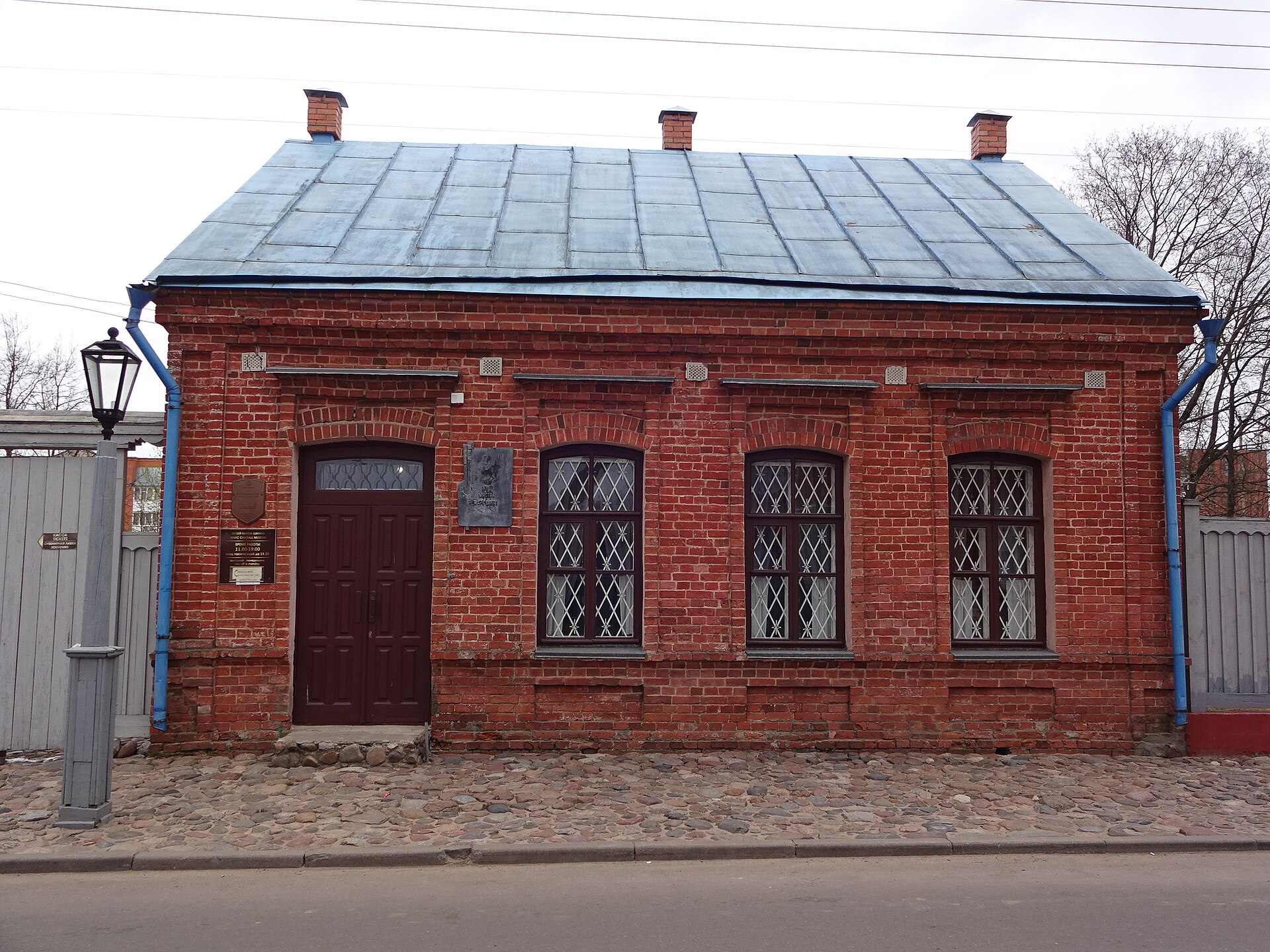
The museum's real strength is Chagall's graphic work on paper, especially the Gogol and biblical print cycles and the later gift of ninety-six calligraphic etchings from his granddaughters, together with a small comparative holding of prints by Picasso, Miro, Matisse and Leger. It holds no major painting by Chagall and the House-Museum's furnishings are recreations rather than family possessions, with the artist's own work table in the kitchen a rare exception. The collection is best understood as an archive and a print cabinet built around Chagall's Vitebsk biography, not a picture gallery of his best-known canvases.
| Local name | Музей Марка Шагала |
|---|---|
| Kind | Museum |
| Founded | 1991 |
| City and country |  Vitebsk, Belarus Vitebsk, Belarus |
| Address | Marc Chagall House-Museum: 11 Pokrovskaya Street; Marc Chagall Art Centre: 2 Putna Street; Vitebsk 210026, Belarus |
| Website | chagall-vitebsk.museum.by/en |
| Status | Open, confirmed 16 September 2026 |
| Record last verified | 16 September 2026 |
Visiting
- Hours
- Tue-Sun11:00 to 19:00ticket office closes at 18:30
- Closed
- Monday.
- Admission
- Adult, House-Museum exhibitionBYN 5single ticket
- Concession (schoolchildren, students), House-MuseumBYN 2.50
- Adult, Art Centre exhibitionsBYN 7one combined ticket covers all exhibitions currently on show at the Art Centre
- Concession (schoolchildren, students), Art CentreBYN 3.50
- Guided group tour, Russian or Belarusian, House-MuseumBYN 20per group of up to 25 visitors, not per person
- Guided group tour, Russian or Belarusian, Art CentreBYN 30per group of up to 40 visitors, not per person
- Guided group tour, English or French, House-MuseumBYN 50per group of up to 25 visitors; advance booking required
- Guided group tour, English or French, Art CentreBYN 70per group of up to 40 visitors; advance booking required
- Do I need to book?
- Not required for individual visitors. Guided tours, and specifically any tour in English or French, are only available by advance booking
- Address
- Marc Chagall House-Museum: 11 Pokrovskaya Street; Marc Chagall Art Centre: 2 Putna Street; Vitebsk 210026, Belarus MapRail Direct trains run several times a day from Minsk-Passazhirsky station, journey time roughly three and a half hours; Vitebsk also sits on the Minsk to Saint Petersburg and Minsk to Moscow lines
On foot The House-Museum is within walking distance of Vitebsk's railway station. The Art Centre is on the opposite side of the Vitba river, a separate walk across the town centre - Website
- chagall-vitebsk.museum.by/en
- Telephone
- +375 212 26 13 68
- [email protected]
Before you go how long, access, photography, bags, eating, shop
- How long to allow
- Both buildings are small. Visitor accounts describe the House-Museum as four or five rooms and the Art Centre as two floors of graphic works, so a visit to both branches typically runs about two hours including the walk between them
- Access
- Not published by the museum. The House-Museum occupies a period wooden house and visitor accounts do not describe step-free access
- Photography
- Not stated by the museum for ordinary visitor photography. The 2026 price list does set a separate fee, 50 BYN per image, for licensing digitised photographs of museum objects for commercial use
- Eating
- None at the House-Museum, per visitor accounts
- Shop
- The House-Museum's recreated 'grocery store' room, where Chagall's mother once sold goods, now doubles as the ticket desk and museum shop
Prices and hours change. We take them from the institution's own pages and print the day we read them, and you can check the current position at the source we used. Confirm before you travel.
What is inside
Grocery Store room, House-Museum
A recreation of the shop counter and scale where Chagall's mother, Feiga-Ita, sold goods to the neighbourhood; the room now serves as the House-Museum's ticket desk and shop
Boys' Room, House-Museum
The bedroom Marc Chagall shared with his younger brother David, furnished with period beds and washstand and hung with family photographs and copies of the artist's earliest sketches
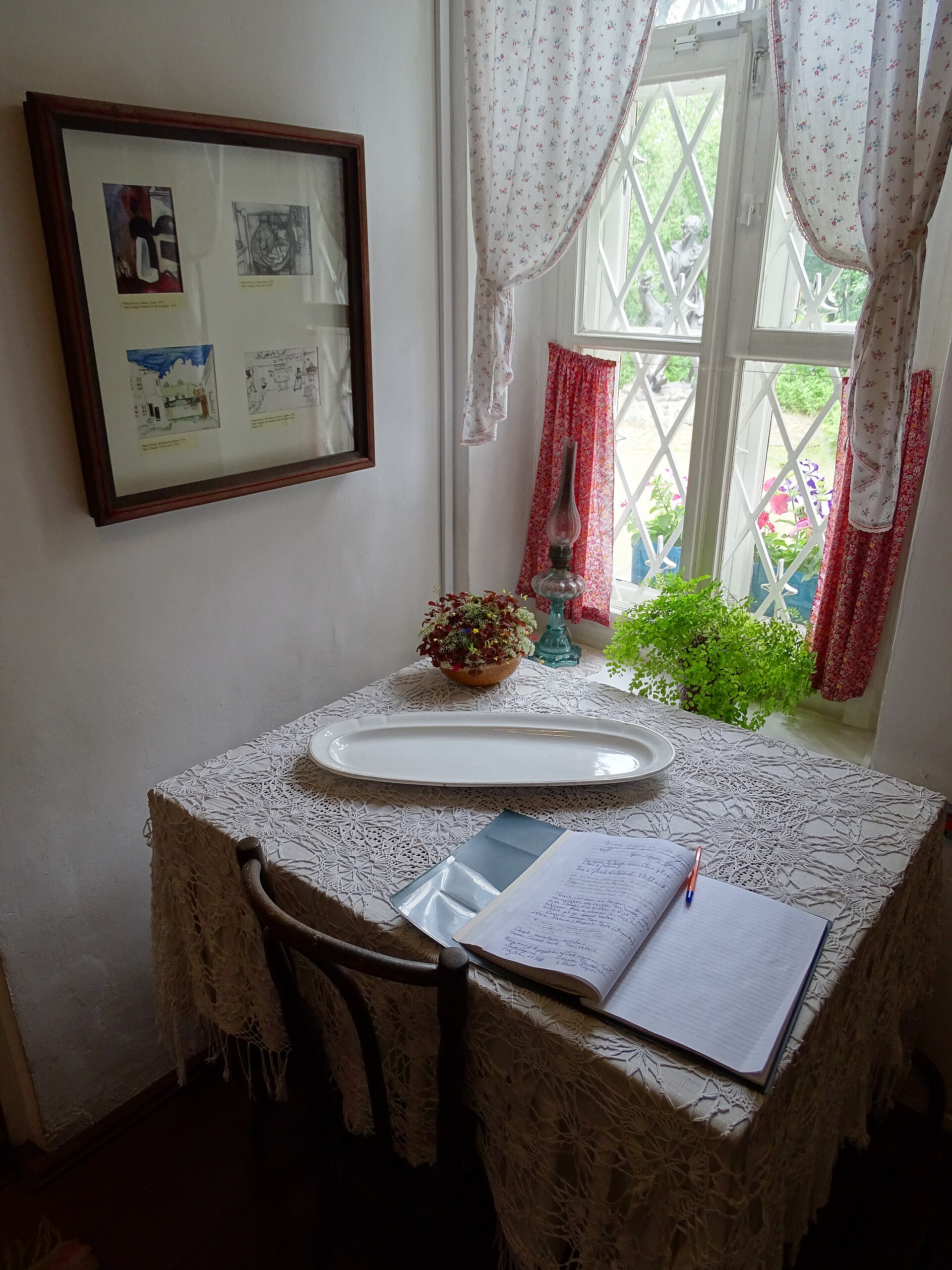
Photograph by Adam Jones from Kelowna, BC, Canada · CC BY-SA 2.0 Kitchen, House-Museum
The family's working kitchen, with a samovar, period stove and cooking equipment, and the work table Chagall used, displayed here as one of the few pieces with a direct claim to the family
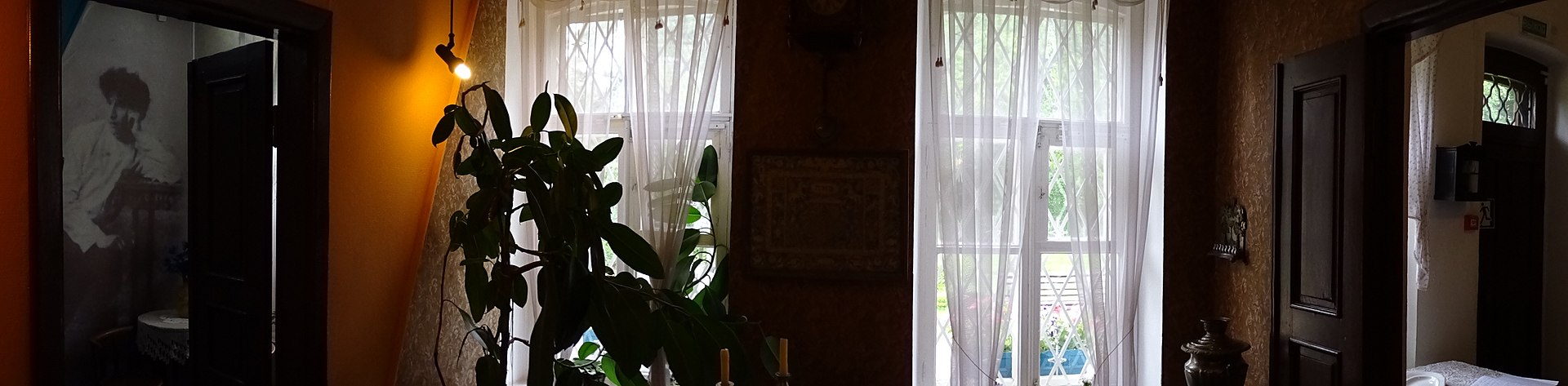
Photograph by Adam Jones from Kelowna, BC, Canada · CC BY-SA 2.0 Period living rooms, House-Museum
Further ground-floor rooms, referred to elsewhere as the Living Room and the Red Room, recreating a turn-of-the-century Vitebsk Jewish household with lamps, clocks, a sewing machine and furniture of the period; none of the furnishings are documented as the family's own possessions
Graphics galleries, Art Centre
The Art Centre's permanent display of Chagall's own graphic work: lithographs, xylographs, etchings and aquatints, including the Gogol and biblical print series
Guest print room, Art Centre
A room of prints by European contemporaries associated with Chagall, including Picasso, Miro, Matisse and Leger, placing Chagall's graphic work alongside his peers
Scientific library, Art Centre
A research library of more than 3,500 volumes on Chagall and the Vitebsk avant-garde, opened in 2002 and used by visiting scholars
What to see first
Illustrations to Nikolai Gogol's Dead Souls
Marc ChagallA cycle of etchings made in 1923-1925, among the largest single print series by Chagall held anywhere and the anchor of the Art Centre's permanent graphics display3
Bible series colour lithographs
Marc ChagallColour lithographs from 1956 and 1960 reworking subjects from Chagall's celebrated Bible etchings of the 1930s, tying the Vitebsk holdings to his best-known late religious imagery3
The 12 Tribes of Israel, colour lithograph cycle
Marc ChagallA 1960 cycle related to the stained-glass windows Chagall made for the synagogue of the Hadassah Medical Centre in Jerusalem, the same windows Soviet officials once denounced as Zionist propaganda when discussing their maker10
96 calligraphic etchings
Marc ChagallDonated to the Art Centre by the artist's granddaughters, forming the largest single gift the museum received directly from Chagall's family7
Three colour aquatints
Marc ChagallGiven by the artist's daughter Ida Chagall in 1994, among the earliest works the family placed in the newly founded Vitebsk institution3
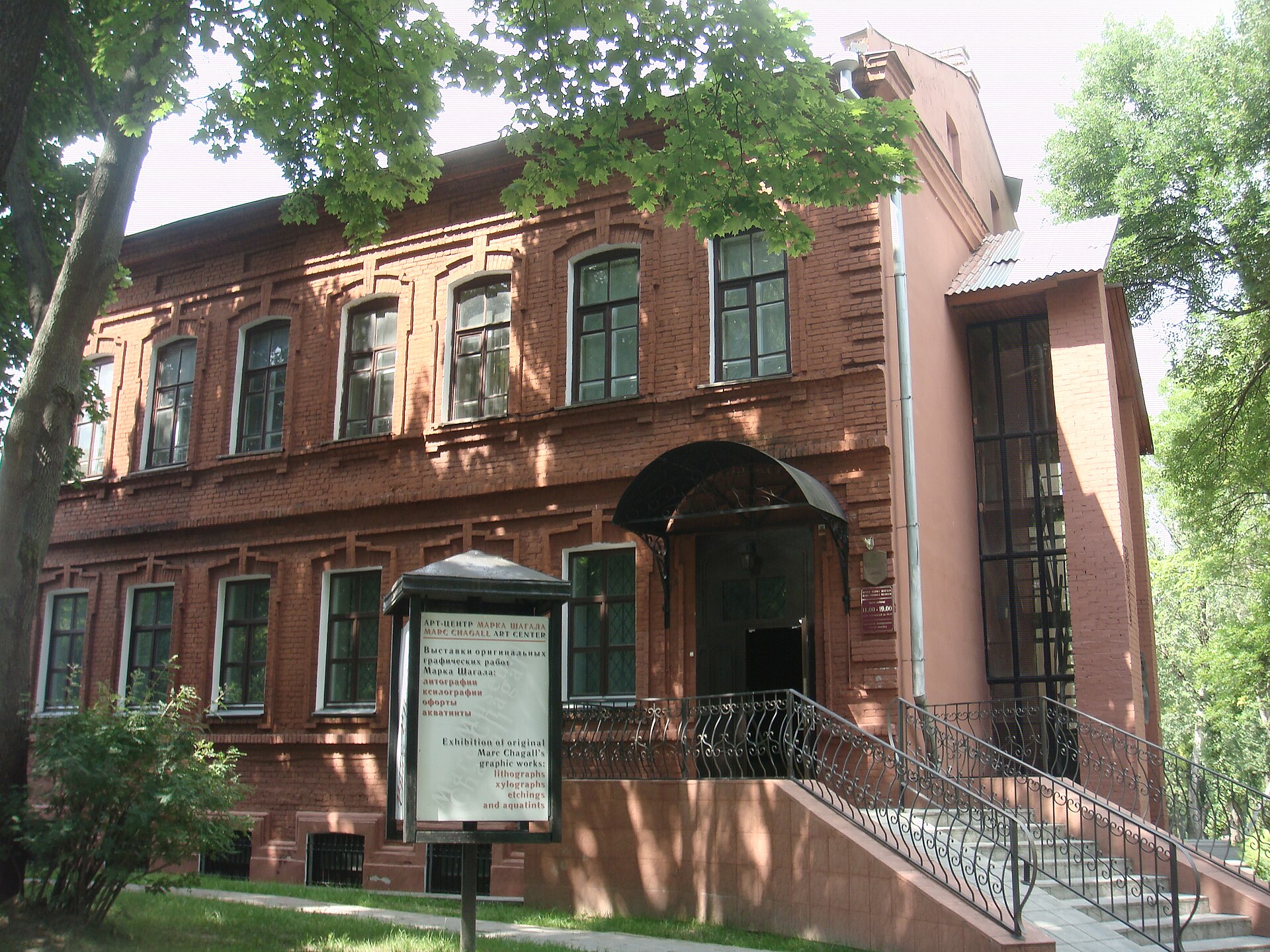
The Pechelis house, Art Centre building
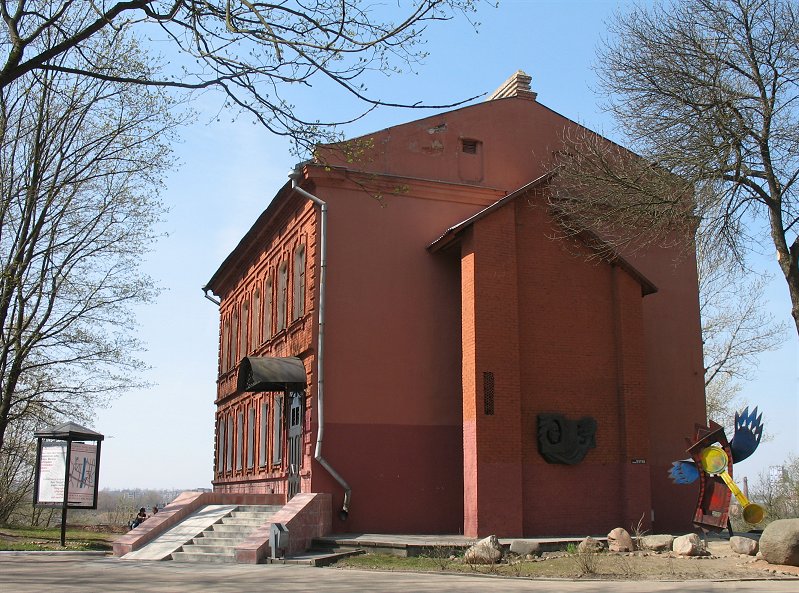
unknown architect, built for Fyodor PechelisThe 1894 brick merchant house on Putna Street that now holds the Art Centre appears, reworked, in Chagall's own painting Over the City, so the building is itself part of his visual record of Vitebsk7
Chagall's work table
attributed to the Chagall family householdDisplayed in the House-Museum kitchen, it is one of the few objects on either site presented as a direct family possession rather than a period recreation6
Prints by Picasso, Miro, Matisse and Leger
Pablo Picasso, Joan Miro, Henri Matisse, Fernand LegerA small holding of graphic work by Chagall's European contemporaries, used to place him within the wider School of Paris rather than isolating him as a purely local figure3
The boy from Pokrovskaya Street
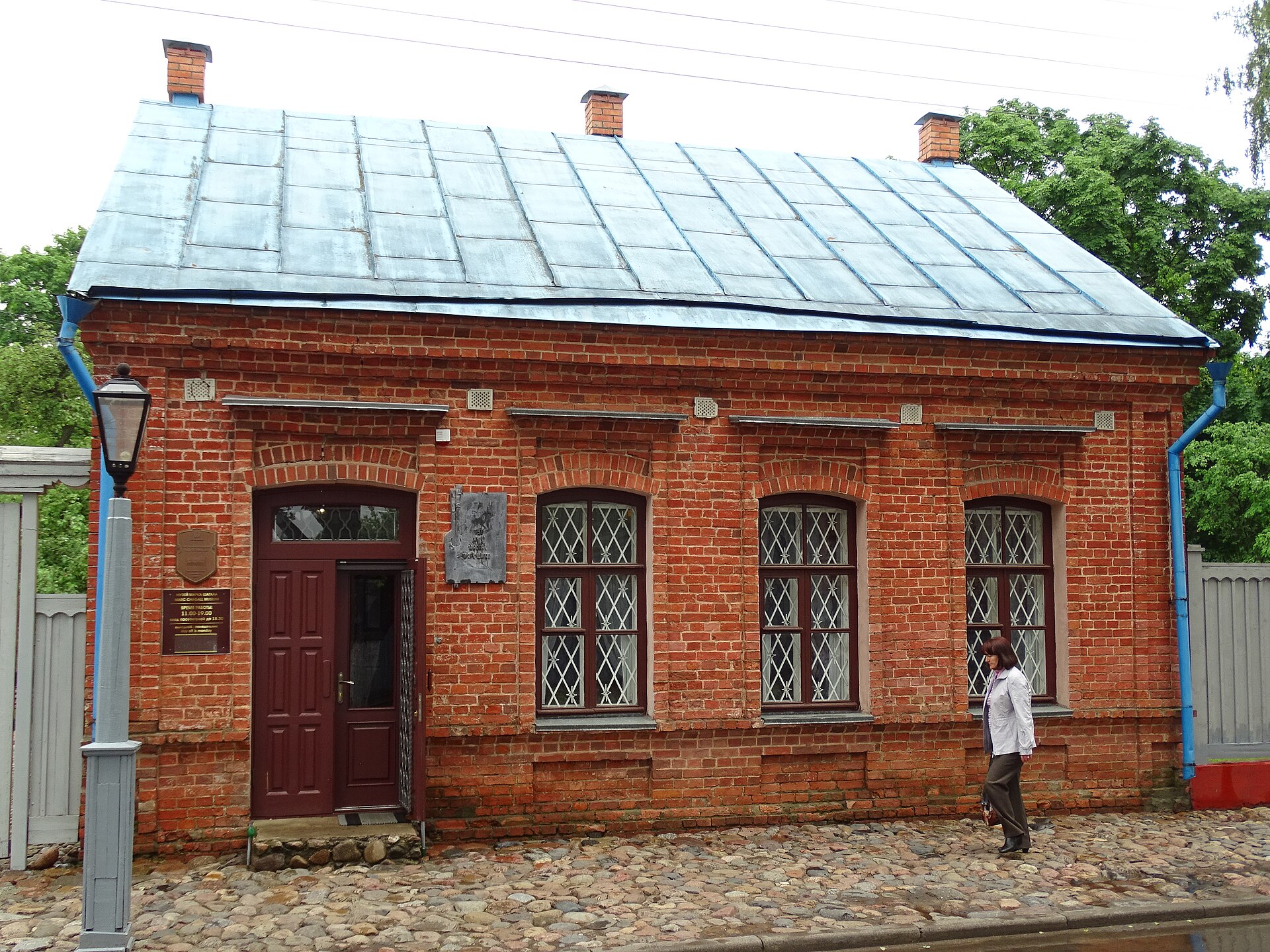
Moishe Shagal, later known as Marc Chagall, was born in 1887 in the small town of Liozna and moved with his family to Vitebsk while still an infant. His father Khatskl worked as an assistant to a herring merchant, and the family eventually lived in a wooden house on Pokrovskaya Street that Khatskl himself had built in the early 1900s. The household was Hasidic and Yiddish-speaking, part of a Jewish community that before the Second World War made up roughly half of the city's population. That house survived the First World War, the Russian Civil War and the German occupation and bombardment that flattened much of central Vitebsk, and it opened as the Marc Chagall House-Museum in 1997, timed to the 110th anniversary of the artist's birth. Its rooms are recreated from Chagall's own paintings and from his 1922 memoir My Life rather than from surviving family furniture, since none of the household's original possessions are known to have been kept.
Commissar of arts: the school that outgrew its founder
In 1918 the new Bolshevik government named Chagall Commissar of Arts for the Vitebsk region. In January 1919 he opened a free People's Art School open to any resident regardless of background, and he recruited teachers including El Lissitzky. In January 1920, at Chagall's own invitation, Kazimir Malevich joined the school to lead a studio. Malevich's Suprematism drew students away from Chagall's more figurative teaching, and the group that formed around Malevich, UNOVIS, effectively took over the direction of the school under Vera Ermolaeva. Chagall resigned in June 1920 and left for Moscow to work for the State Jewish Chamber Theatre. He never lived in Vitebsk again. One thread runs from that period straight back to the museum building: the nineteenth-century merchant house on Putna Street that today holds the Art Centre appears, transformed, in Chagall's own painting Over the City, so visitors to the Art Centre are standing in a building the artist had already painted.
Exile from memory
After Chagall settled permanently abroad, Soviet authorities treated him as an awkward case. Official Soviet writing referred to him only as a French artist, avoiding any credit to his Belarusian or Jewish origin, and this evasion sharpened after Chagall made stained-glass windows in the 1960s for the synagogue of the Hadassah Medical Centre in Jerusalem, which Soviet commentary condemned as Zionist activity. He was refused permission to visit Vitebsk in 1973 even while travelling to Moscow, and he died in France in 1985 without ever returning to the city. Recognition in Vitebsk itself began only after the Soviet collapse. The local writer David Simanovich campaigned for it, launching the first Chagall Days festival in 1991, the same year the Vitebsk City Executive Committee issued the decree that formally established the museum. The rehabilitation has not been friction-free: when Belarus's Jewish humanities university briefly adopted the name Chagall International Institute for the Humanities in 1999, the artist's relatives in France objected and the name was dropped, though students went on using it informally.
Two buildings, two centuries
The museum is not a single site but two branches on opposite sides of the Vitba river, run as one institution with a shared administrative office recorded at Sovietskaya Street 25. The House-Museum, at 11 Pokrovskaya Street, is the wooden family house described above, with four or five small rooms: a recreated grocery-shop room that now serves as ticket desk and gift shop, the boys' bedroom, the kitchen where Chagall's own work table is displayed, and further ground-floor rooms referred to elsewhere as the Living Room and the Red Room. The Art Centre, at 2 Putna Street, occupies a brick house built in 1894 for a Prussian subject named Fyodor Pechelis and opened as exhibition space in 1992, five years before the House-Museum. It holds two floors of graphic work in permanent and rotating display. Both branches are modest in scale: reviewers consistently describe each as a matter of minutes rather than hours to walk through.
What the collection actually is
No major oil painting by Chagall hangs in Vitebsk. His large paintings are held in Moscow, Paris, New York and elsewhere, and the city that shaped his early imagery owns none of them. What the Art Centre holds instead is a collection of graphic work on paper: lithographs, xylographs, etchings and aquatints, built around the 1923-1925 cycle of illustrations to Gogol's Dead Souls, colour lithographs from the Bible series made in 1956 and 1960, and the 1960 cycle The 12 Tribes of Israel, related to the Hadassah synagogue windows. Ninety-six calligraphic etchings were later given by Chagall's granddaughters, and three colour aquatints by his daughter Ida Chagall in 1994. Alongside these the Art Centre keeps a smaller holding of prints by Chagall's European contemporaries, Picasso, Miro, Matisse and Leger, and a scientific library of more than 3,500 volumes opened in 2002. The House-Museum, by contrast, holds no significant Chagall artwork at all: its rooms display period household objects, copies of archival documents and family photographs, illustrating the world that shaped him rather than exhibiting his own hand. Visitors who arrive expecting paintings at either branch are visiting the wrong kind of museum, and reviewer complaints about authenticity mostly trace back to that mismatch rather than to anything the museum has misrepresented.
The vanished Jewish Vitebsk
Before the Second World War, Jews made up roughly half of Vitebsk's population, about 34,000 people, and it was that world, its synagogues, its market streets, its Hasidic households, that filled Chagall's early paintings. Today the city's Jewish population is estimated at around 3,500. Nearby, the Great Lubavitch Synagogue, sometimes called the Cold Synagogue, where Chagall's family is said to have worshipped, has stood in need of restoration and was reported as recently as 2021 to be seeking investors to fund it. The museum's own telling of Chagall's story centres on the individual artist and his family home rather than on that wider community and its near-total disappearance, a framing worth noting for any reader arriving expecting the fuller social history behind the paintings.
What visitors say
Across the two branches, visitors rate the museum around 4 out of 5 on average. The House-Museum is consistently the better-liked of the two: reviewers respond to its modest, lived-in feel and the sense of standing in the actual rooms of Chagall's childhood, and repeatedly say the visit only makes sense with a guide, since the rooms carry almost no printed information on their own. The Art Centre draws a cooler but still positive response: visitors value seeing original prints in Chagall's own hand, while several note the building is small, worn and short on explanatory material, and a minority openly doubt how much of what they saw was an original sheet rather than a reproduction.
What is praised, what is criticised
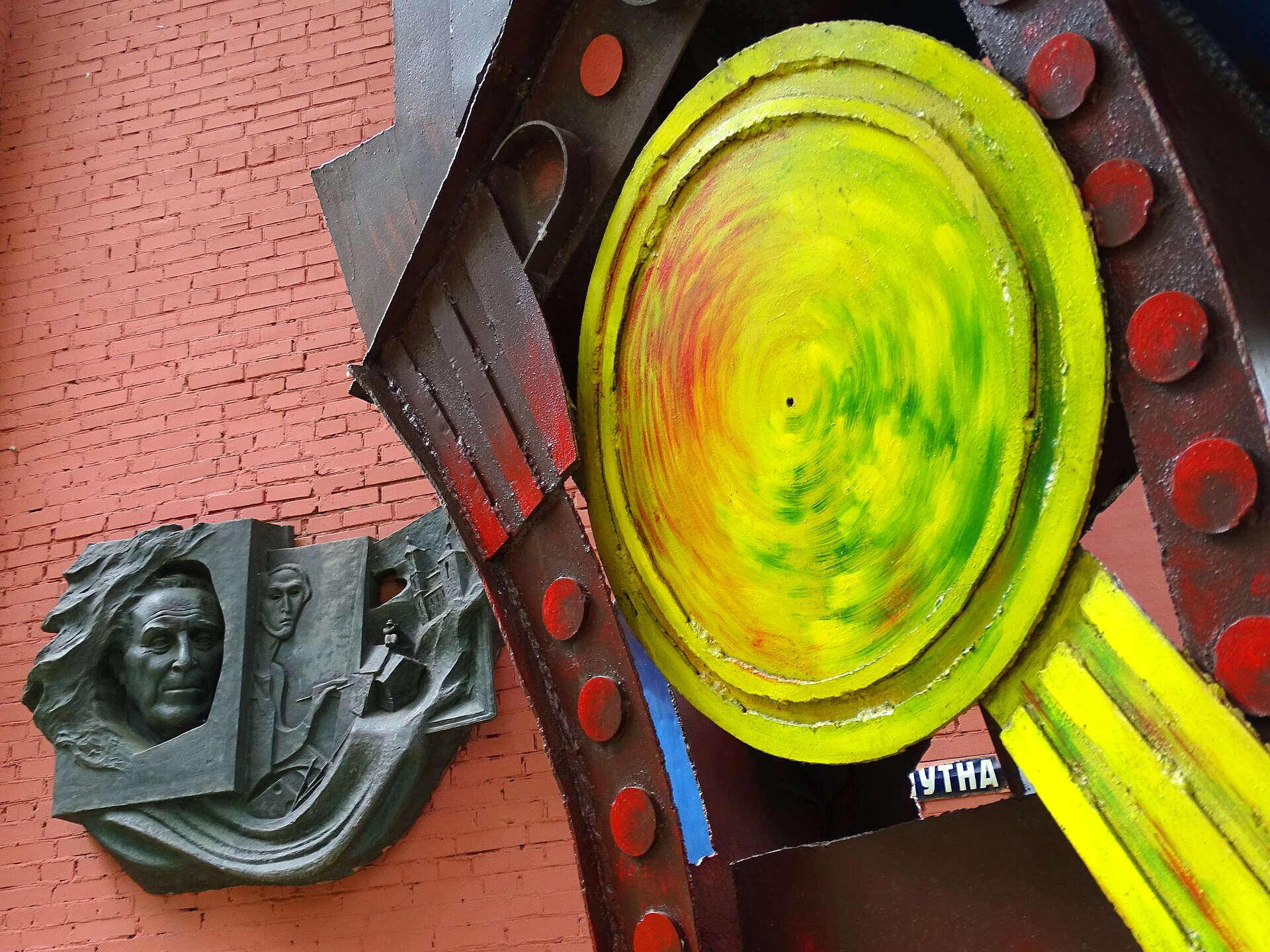
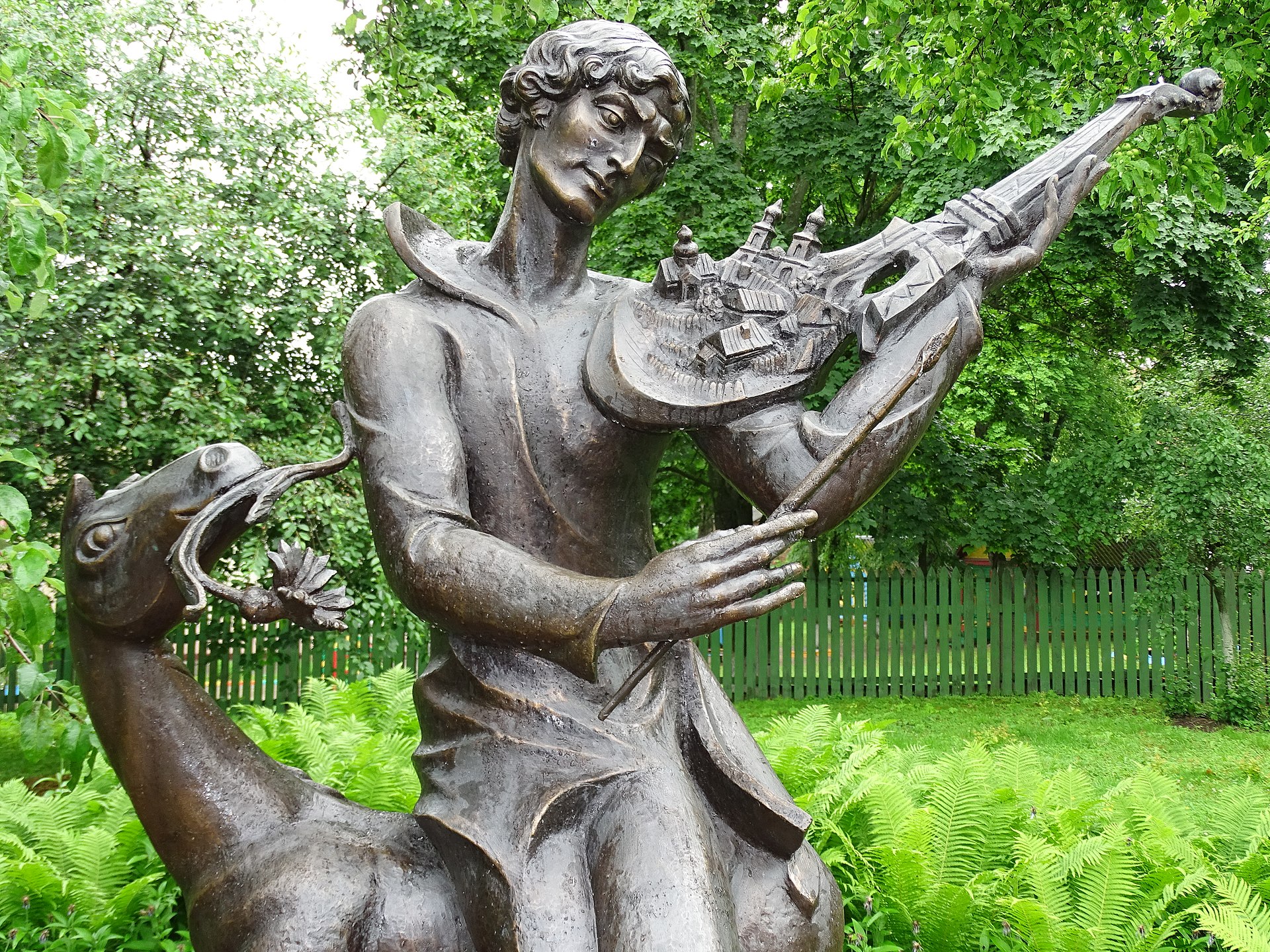
- Praised: the House-Museum's intimate, unpolished atmosphere and its garden and Chagall monument
- Praised: guided tours, especially English-language ones, which visitors say are the only way to get real context on-site
- Praised: the Art Centre's original lithographs and etchings, particularly the Gogol and biblical print series
- Praised: low admission prices and a central, walkable location
- Criticised: very little labelling or printed material, so an unguided visit leaves most questions unanswered
- Criticised: no toilet or cafe reported at the House-Museum
- Criticised: the Art Centre's small two-floor space, with dated lighting and no climate control mentioned by reviewers
- Criticised: scepticism among some visitors about how many displayed sheets are original prints rather than reproductions
Ratings on other platforms
TripAdvisor: 4.2 from 207 ratings, read 16 September 2026
TripAdvisor: 3.9 from 89 ratings, read 16 September 2026
A platform average is a tertiary source: it moves, it is not audited, and we quote no visitor's words.
Questions about Marc Chagall Museum
Where is Marc Chagall Museum?
Marc Chagall House-Museum: 11 Pokrovskaya Street; Marc Chagall Art Centre: 2 Putna Street; Vitebsk 210026, Belarus.
How much does it cost to visit Marc Chagall Museum?
Adult, House-Museum exhibition: BYN 5; Concession (schoolchildren, students), House-Museum: BYN 2.5; Adult, Art Centre exhibitions: BYN 7; Concession (schoolchildren, students), Art Centre: BYN 3.5; Guided group tour, Russian or Belarusian, House-Museum: BYN 20. As confirmed 16 September 2026.
When is Marc Chagall Museum open?
Tue-Sun 11:00-19:00. Closed: Monday. As confirmed 16 September 2026.
How do you get to Marc Chagall Museum?
Rail: Direct trains run several times a day from Minsk-Passazhirsky station, journey time roughly three and a half hours; Vitebsk also sits on the Minsk to Saint Petersburg and Minsk to Moscow lines; On foot: The House-Museum is within walking distance of Vitebsk's railway station. The Art Centre is on the opposite side of the Vitba river, a separate walk across the town centre.
What should you see at Marc Chagall Museum?
Illustrations to Nikolai Gogol's Dead Souls (Marc Chagall); Bible series colour lithographs (Marc Chagall); The 12 Tribes of Israel, colour lithograph cycle (Marc Chagall); 96 calligraphic etchings (Marc Chagall); Three colour aquatints (Marc Chagall); The Pechelis house, Art Centre building (unknown architect, built for Fyodor Pechelis).
What we could not confirm
- Which specific room the Commons photograph titled Panorama of Interior of Chagall House shows is not stated on Wikimedia Commons, and it could not be matched with confidence to the Living Room or Red Room named in secondary sources, so it is captioned here only as an unnamed period interior.
- The museum's own site returned largely empty About, Exposition and Collections pages in English during this research pass, so the institutional history in this record rests mainly on Wikipedia, Belarus's national tourism sites, and a 2004 Jewish Telegraphic Agency feature rather than the museum's own account of itself.
- No source found in this research states current annual visitor numbers for either branch, or gives a Google rating independent of TripAdvisor.
Images
Sources
- 1Marc Chagall Museum in Vitebsk, official site, Visit page chagall-vitebsk.museum.by/en/visitor
- 2Marc Chagall Museum in Vitebsk, official site, prices for paid museum services effective 1 January 2026 chagall-vitebsk.museum.by/en/node/72203
- 3Wikipedia, Marc Chagall Museum en.wikipedia.org/wiki/Marc_Chagall_Museum
- 4Wikipedia, Marc Chagall en.wikipedia.org/wiki/Marc_Chagall
- 5Wikipedia, UNOVIS en.wikipedia.org/wiki/UNOVIS
- 6Belarus Travel (national tourism site), The Marc Chagall Museum in Vitebsk: Exploring the Artist's Legacy en.belarus.travel/news/marc-chagall-museum-in-vitebsk
- 7Belarus.by (national information portal), Marc Chagall Museum belarus.by/en/travel/belarus-life/chagall-museum
- 8TripAdvisor, Marc Chagall Home, Vitebsk, reviews tripadvisor.com/Attraction_Review-g297310-d1219748-Reviews-Marc_Chagall_Home-Vitebsk_Vitebsk_Region.html
- 9TripAdvisor, Marc Chagall Art Center, Vitebsk, reviews tripadvisor.com/Attraction_Review-g297310-d1219746-Reviews-Marc_Chagall_Art_Center-Vitebsk_Vitebsk_Region.html
- 10Jewish Telegraphic Agency, Chagall becomes a tourist attraction, 2004-03-08 jta.org/2004/03/08/lifestyle/chagall-becomes-a-tourist-attraction
- 11Wikivoyage, Vitebsk en.wikivoyage.org/wiki/Vitebsk
- 12Wikimedia Commons, file description page for the lead image commons.wikimedia.org/wiki/File:Chagall%27s_House_in_Vitebsk.jpg
