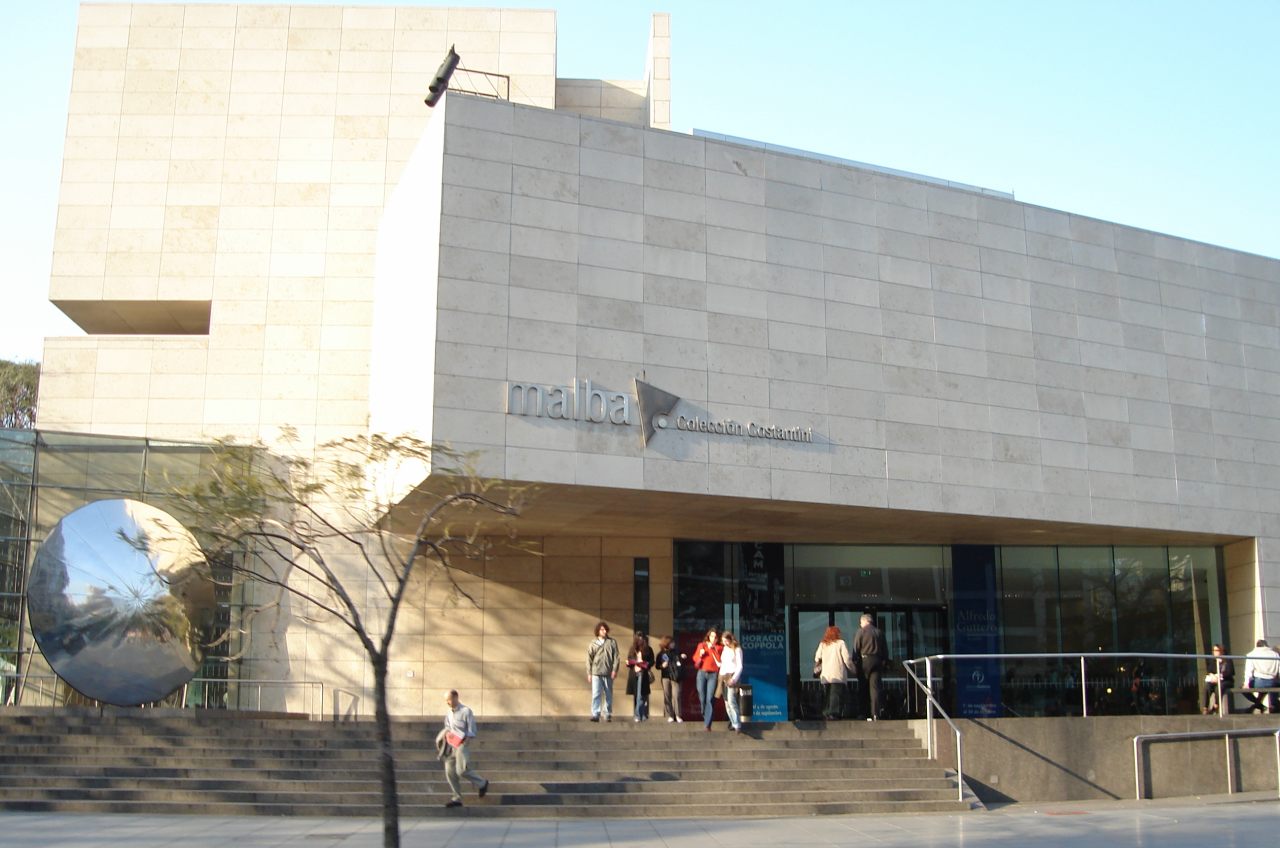
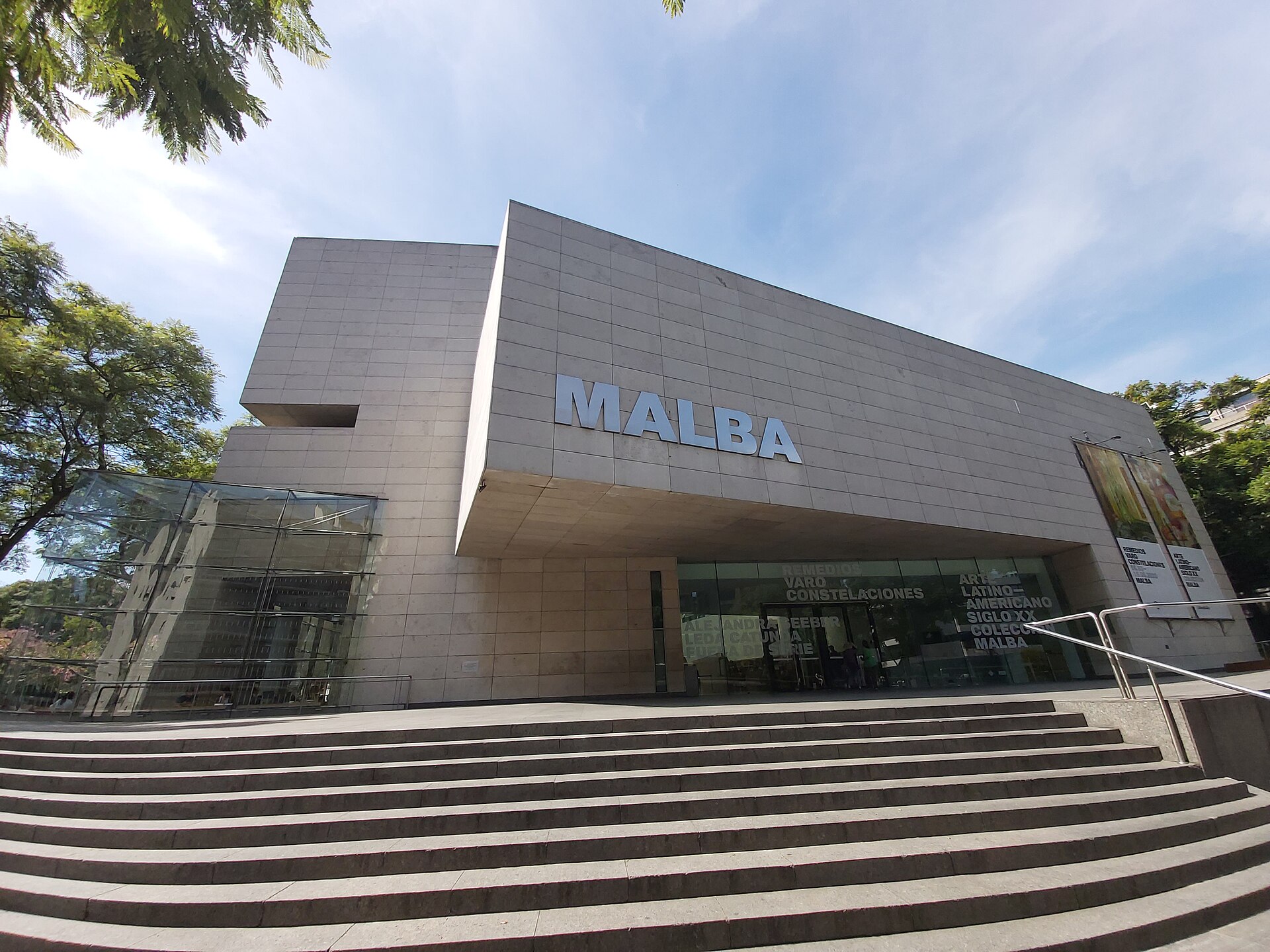
The Figueroa Alcorta facade of MALBA, the Museo de Arte Latinoamericano de Buenos Aires, in the Palermo district
Public domainMALBA
Museum · Museo de Arte Latinoamericano de Buenos Aires · Founded 2001
Open, admission and hours confirmed 5 September 2026 · 9 sources
On this page 15 sections
ContentsClose
Malba's collection is strongest exactly where its founding collector's own buying was strongest: canonical, internationally exhibited names from Argentina, Brazil, Mexico and Uruguay, with particular depth in the Mexican and Mexico-based surrealist circle around Kahlo, Varo and Carrington, and in Argentine modernism through Berni, Pettoruti and Xul Solar. It is comparatively thin, by the museum's own account, in the further reaches of the fifteen countries it claims to represent, and several hundred works acquired through its post-2004 contemporary-Argentine acquisitions program remain in storage rather than on permanent view.
| Local name | Museo de Arte Latinoamericano de Buenos Aires |
|---|---|
| Kind | Museum |
| Founded | 2001 |
| City and country |  Buenos Aires, Argentina Buenos Aires, Argentina |
| Address | Av. Figueroa Alcorta 3415, C1425CLA Buenos Aires, Argentina |
| Website | malba.org.ar |
| Status | Open, confirmed |
| Record last verified |
Visiting
- Hours
- Thu-Mon12:00 to 20:00
- Wed11:00 to 20:00
- Closed
- Tuesday. 25 December. 1 January.
- Admission
- General (Mon, Thu-Sun)ARS 12,000Drops to 6,000 ARS on Wednesdays
- Students, teachers and retirees with valid ID (Mon, Thu-Sun)ARS 6,000Free on Wednesdays with the same credential
- Under 5FreeFree every day
- People with disability (Certificado Unico de Discapacidad)FreeFree every day; still need to collect a ticket at the priority counter
- Malba Amigos (members)FreeFree every day
Free entry: Wednesdays: students, teachers and retirees with valid ID pay nothing (general public still pays a reduced 6,000 ARS)- Tickets
- malba.liit.com.ar/decidir The museum's own ticket page.
- Do I need to book?
- No for individual visitors; groups larger than 10 people, with or without a guide, must book a slot in advance
- Address
- Av. Figueroa Alcorta 3415, C1425CLA Buenos Aires, Argentina MapBus Colectivo lines 67 and 130 stop directly outside the museum; lines 10, 37, 59, 60, 93, 102, 110, 118 and 124 stop within a short walk
Subte Line H, Facultad de Derecho station, about 700 metres away; Line D, Plaza Italia station, about 1.2 kilometres away
Bicycle Ecobici public-bicycle station at the museum's main entrance - Website
- malba.org.ar
- Telephone
- +54 11 4808 6500
- [email protected]
Before you go how long, access, photography, bags, eating, shop
- How long to allow
- The museum's own account describes the permanent collection as occupying only part of the second floor, with roughly three major temporary exhibitions a season filling most of the rest of the building
- Access
- Elevator connecting all floors, ramps at level changes, adapted restrooms, wheelchairs and prams available on request at reception, free entry with Argentina's Certificado Unico de Discapacidad (a ticket must still be collected at the priority counter), guide dogs permitted, audioguides via the Bloomberg Connects app by QR code, and guided tours in Argentine Sign Language
- Photography
- Personal, non-flash photography is permitted in the galleries for non-commercial use; professional photography requires prior authorization from the museum's press office
- Bags
- Bags larger than 30 x 40 cm must go into the ground-floor cloakroom; items larger than 70 x 55 cm and wheeled luggage are not admitted; the nearby Alcorta shopping centre rents paid lockers for oversized bags
- Eating
- A cafe on the first floor operates during regular museum hours
- Shop
- Online shop at tienda.malba.org.ar selling catalogues, books, objects and merchandise
Prices and hours change. We take them from the institution's own pages and print the day we read them, and you can check the current position at the source we used. Confirm before you travel.
What is inside
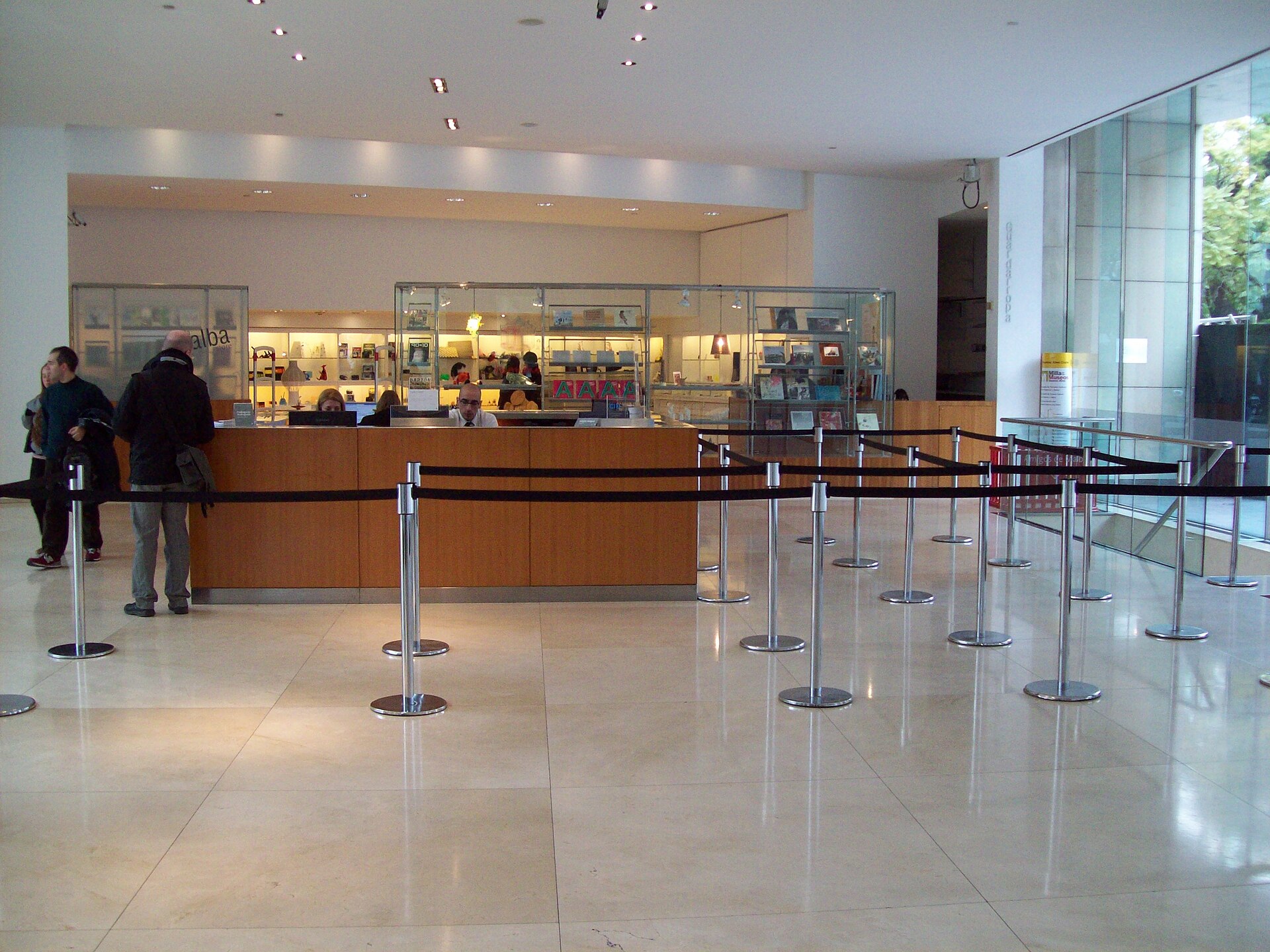
Photograph by Gelpgim22 · CC BY 3.0 Coleccion Malba (permanent collection galleries)
The permanent collection, chronologically arranged from early twentieth-century avant-gardes through mid-century surrealism and social realism to contemporary work, occupying part of the second floor
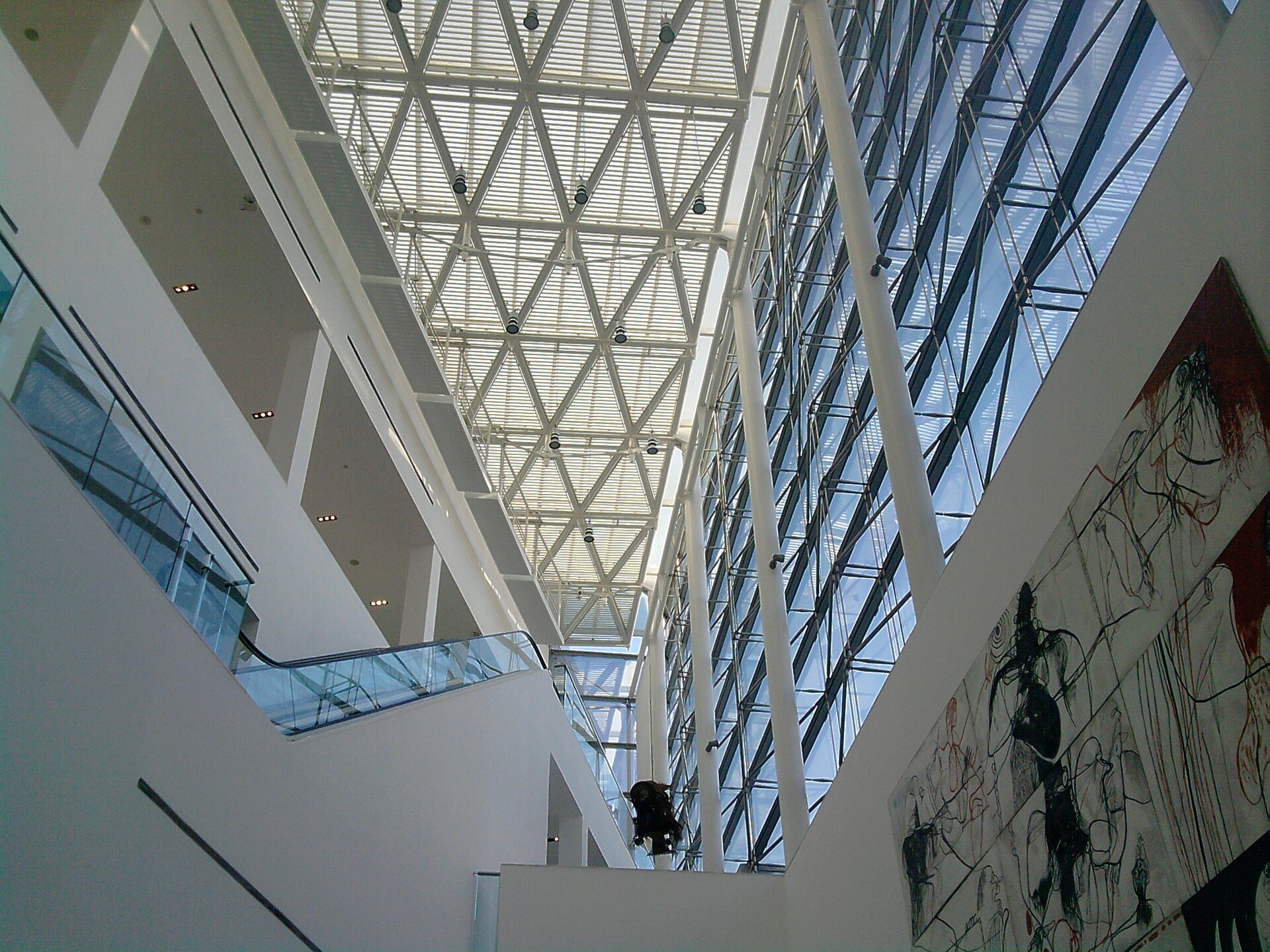
Photograph by OneEuropeanHeart · CC BY 3.0 Temporary exhibition galleries
Rotating loan and curated exhibitions of Argentine, Latin American and international art, roughly three major shows a season, each running about three months
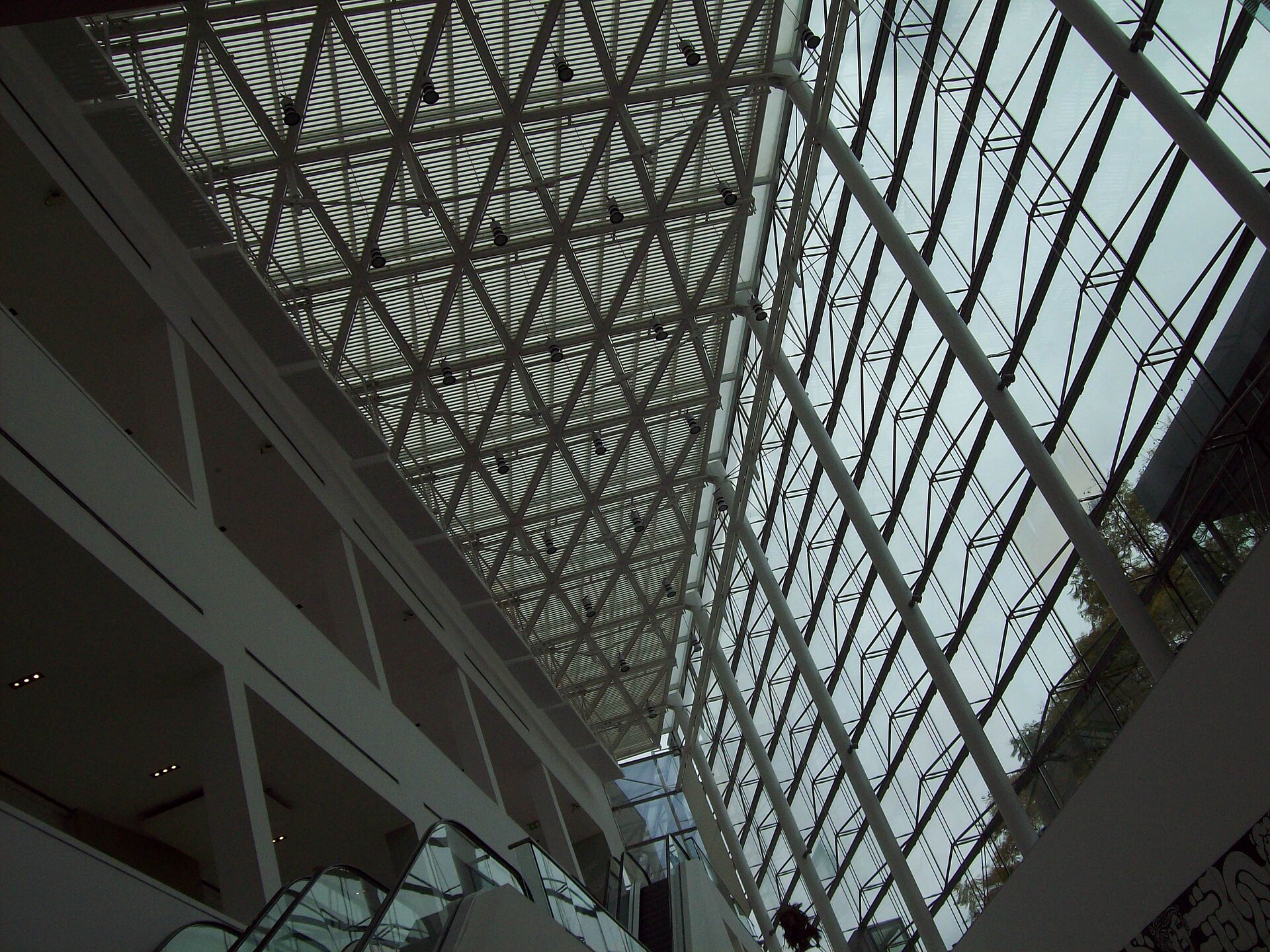
Photograph by Gelpgim22 · CC BY 3.0 Central hall and atrium
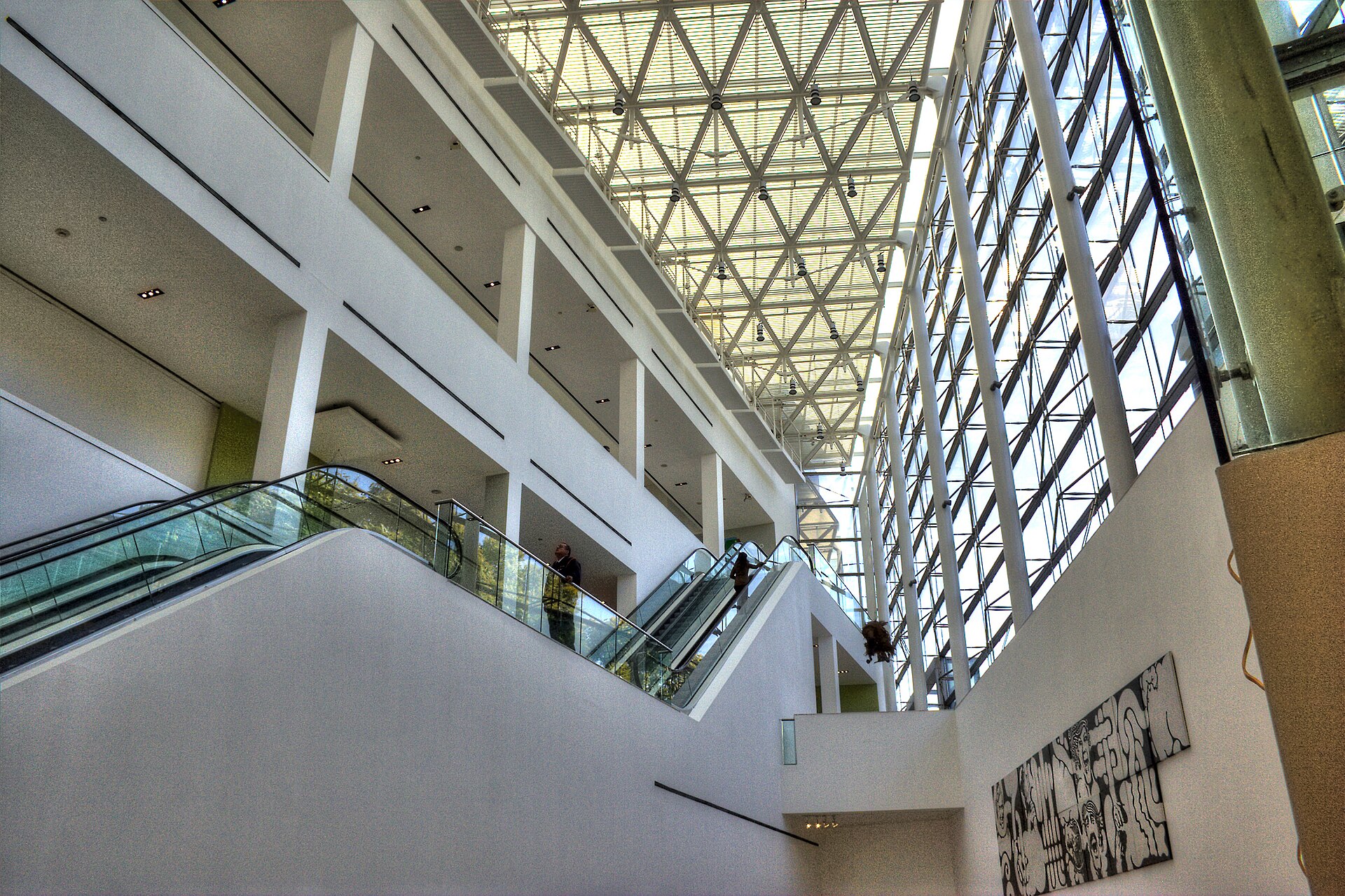
A triple-height entrance hall with a stairwell that carries natural light from a glazed roof structure down through the museum's main circulation spaces
Cine Malba
A first-floor auditorium running a regular repertory and premiere film program, one of the few venues in Buenos Aires still projecting on 35mm on a regular basis
Photograph by Gelpgim22 · CC BY 3.0 Restaurante Coronado and cafe
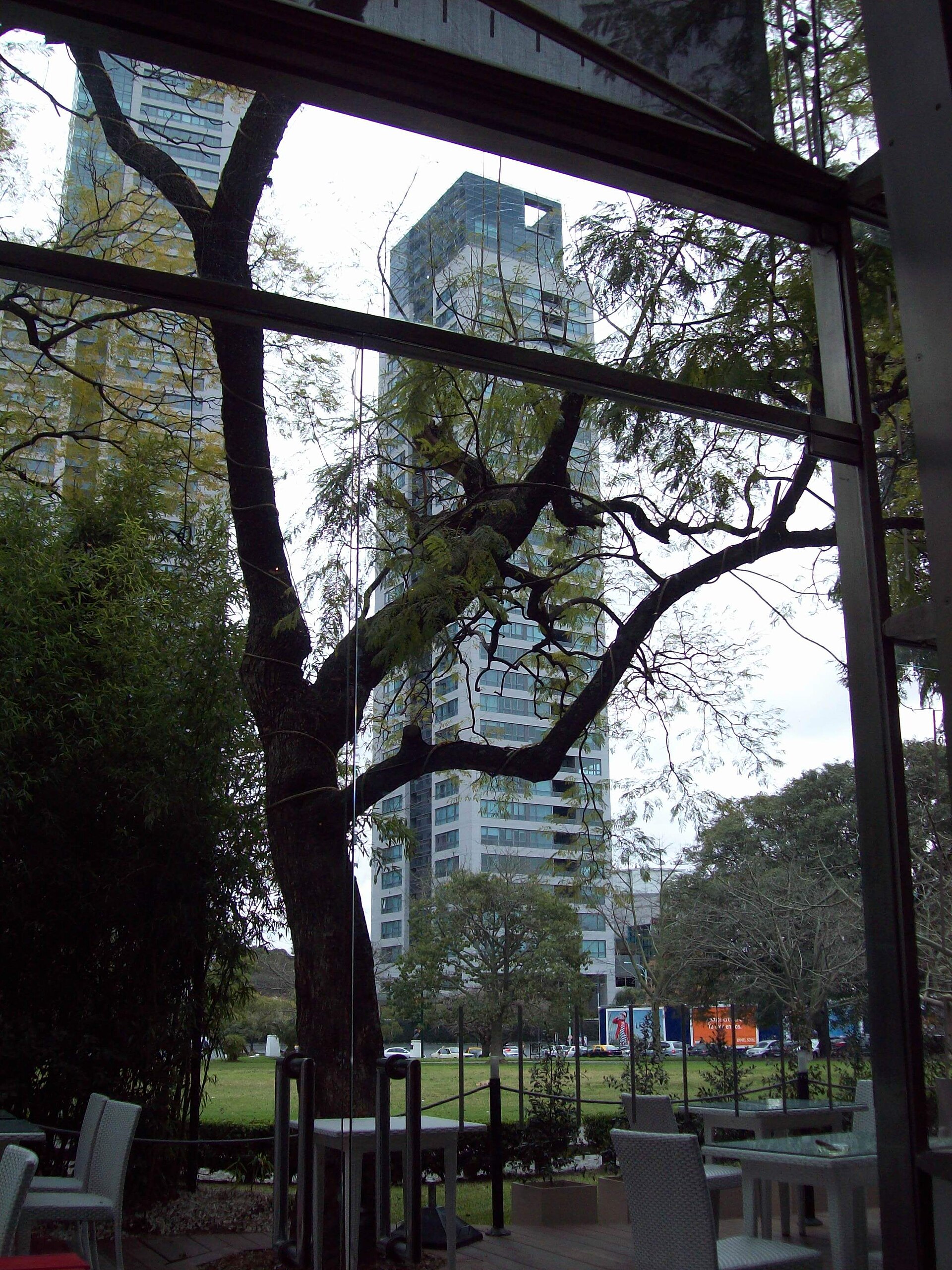
Ground-floor dining split between a first-floor cafe open during museum hours and Coronado, a 330 sq m restaurant with a 65-cover terrace run by chef Martin Lukesch, overlooking Plaza Republica del Peru and the Torres Le Parc apartment towers
Malba shop
A ground-floor and online shop selling exhibition catalogues, books, objects and museum merchandise
What to see first
Abaporu
Tarsila do Amaral, 1928The founding image of Brazilian modernism's Antropofagia movement; Costantini bought it in 1995 for roughly 1.5 million US dollars, a record at the time for a Latin American work3
Manifestacion
Antonio Berni, 1934A crowded, angular scene of a workers' protest, the clearest statement of Argentine social realism in the collection3
Autorretrato con changuito y loro (Self-portrait with monkey and parrot)
Frida Kahlo, 1942Bought by Costantini in 1995 for about 3.2 million US dollars; one of two Kahlo self-portraits in the collection3
Diego y yo (Diego and I)
Frida Kahlo, 1949Kahlo's last self-portrait bust before her 1954 death; Costantini bought it at Sotheby's New York in 2021 for 34.9 million US dollars, a record for a Latin American artist7
Baile en Tehuantepec (Dance in Tehuantepec)
Diego Rivera, 1928Bought by Costantini in 2016 for 15.7 million US dollars, decades after the museum's founding gift6
Retrato de Ramon Gomez de la Serna
Diego Rivera, 1915An early Rivera portrait of the Spanish writer, from before his return to Mexico and his mature muralist style3
Armonia (Autorretrato sugerente)
Remedios Varo, 1956A key work by one of the Spanish-born members of the Mexico City surrealist circle represented in the collection3
Los desastres del misticismo
Roberto Matta, 1942A major Chilean Surrealist canvas from Matta's wartime years in exile3
La manana verde
Wifredo Lam, 1943A Cuban modernist canvas painted the year after Lam's return to Cuba from Europe3
Composicion simetrica universal en blanco y negro
Joaquin Torres Garcia, 1931A key Constructive Universalism work by the Uruguayan founder of that movement3
Exhibitions on now
The building and what it was designed to hold
MALBA occupies a purpose-built structure on Avenida Figueroa Alcorta in the Palermo district of Buenos Aires, and the building itself grew out of an international design competition rather than a commission handed to an established firm. The competition ran as part of the VII Bienal Internacional de Arquitectura de Buenos Aires in 1997 and drew 450 proposals from 45 countries. The winning design came from three young Argentine architects working together as AFT Arquitectos: Gaston Atelman, Martin Fourcade and Alfredo Tapia. Construction followed, and the museum opened its doors on 21 September 2001.
The architects built the museum around large prisms clad in limestone set against glazed planes, an approach the museum itself describes as an architecture of efficient neutrality: forms plain enough to defer to the art inside while still reading as a landmark from the street. Inside, a central hall rises through triple height and draws natural light down through the main circulation spaces, so the amount of daylight in the entrance and stairwells shifts through the day even though the galleries themselves are lit to conservation standards that vary by exhibition. In 2017, sixteen years after the museum opened, Malba carried out a major renovation of its ground floor to widen the central hall and improve access and circulation, a response to visitor numbers that had grown well beyond what the building was designed to handle in 2001.
A single collector's gift became a public museum
Malba exists because one collector decided to give a large part of his personal collection away. Eduardo F. Costantini, an Argentine real estate developer, spent the 1990s assembling a collection built around canonical Latin American names with strong exhibition and auction histories, work that circulated internationally and carried the kind of documented ownership record that lets a private collection become a museum collection without a decade of cataloguing first. In 2001 Costantini donated the core of that collection to found Malba: the museum's own history page counts the founding gift at 223 pieces, while its collection page describes the same gift as 220 works from his private holdings; either figure describes the same donation, and the small discrepancy sits inside the museum's own published pages rather than in anything this record adds.
The museum opened on 21 September 2001 under conditions that had nothing to do with art. The opening came ten days after the 11 September attacks in the United States and as Argentina entered one of the periodic economic collapses that have marked its modern history, according to a 2023 profile of the museum in The Art Newspaper. Malba nonetheless became, within a short span of years, the reference point for modern and contemporary Latin American art that Costantini had set out to build, and it has operated since its founding as a non-profit organization, Fundacion Malba.
Inside the collection
The permanent collection today holds more than 750 works by roughly 200 artists from fifteen countries -- Argentina, Bolivia, Brazil, Chile, Colombia, Costa Rica, Cuba, Ecuador, Guatemala, Mexico, Paraguay, Peru, Puerto Rico, Uruguay and Venezuela -- according to the museum's own collection page. It spans the twentieth century, from the early avant-gardes through the social realism and surrealism of the 1930s to 1950s and on into the conceptual, pop and contemporary work of the decades since. Malba organizes acquisitions around explicit strategic priorities rather than opportunistic buying: filling gaps in the founding collection's geographic spread, adding historically important works that put existing holdings into dialogue with each other, adding pieces connected to the museum's own past temporary exhibitions, and specifically building the representation of women artists, Indigenous artists and other groups the founding collection under-represented.
The collection is not the whole building. A travel account of the museum published by Wander Argentina describes the permanent collection as occupying only part of the second floor, with the museum running an active temporary-exhibition program of roughly three major shows a season, each open for about three months, that fills most of the rest of the exhibition space; a separate acquisitions program aimed specifically at contemporary Argentine art has added more than 300 works since it began in 2004, most of which sit in storage rather than on permanent view. A visitor who times a trip around a major loan exhibition can end up in a building given mostly over to that show rather than to Malba's own holdings, a pattern several visitors flag in their own reviews of the museum.
The works worth planning a visit around
Malba's own "Imperdibles" list, drawn from its collection page, names sixteen works as its must-see holdings, spread across galleries covering vanguard modernism, surrealism and the postwar decades. Tarsila do Amaral's Abaporu (1928) anchors the collection: the Brazilian painter's single-figure image of oversized feet and a tiny head sits at the root of the Antropofagia movement in Brazilian modernism, and Costantini bought it in 1995 for roughly 1.5 million US dollars, a record at the time for a Latin American work, according to Wikipedia's account of the sale. Antonio Berni's Manifestacion (1934) is the collection's other founding-generation anchor, a crowded, angular scene of a workers' protest built from twisted faces and raised placards that reads as the clearest statement of Argentine social realism in the collection.
Frida Kahlo appears twice. Autorretrato con changuito y loro (Self-portrait with monkey and parrot, 1942), bought by Costantini in 1995 for about 3.2 million US dollars per the same tertiary account, is one of the collection's oldest holdings. Diego y yo (Diego and I, 1949), Kahlo's last self-portrait bust before her death in 1954, arrived far more recently and at a far higher price: Costantini bought it at Sotheby's in New York in 2021 for 34.9 million US dollars, a record for a work by a Latin American artist, according to John Kampfner's 2023 profile of the museum in The Art Newspaper. The same profile describes the painting, which shows Kahlo in tears with Rivera's face on her forehead as a third eye, as the draw of the museum's most recent major show at the time it was written. Both paintings are listed among the collection's must-see works on Malba's own site today.
The rest of the sixteen-work list runs from Remedios Varo's Armonia (Autorretrato sugerente, 1956) and Leonora Carrington's Las distracciones de Dagoberto (1945), two members of the Mexico City surrealist circle, through Wifredo Lam's La manana verde (1943) and Roberto Matta's Los desastres del misticismo (1942), to two paintings by Diego Rivera bought decades apart: an early 1915 portrait of the writer Ramon Gomez de la Serna, and Baile en Tehuantepec (Dance in Tehuantepec, 1928), which Costantini bought in 2016 for 15.7 million US dollars. Joaquin Torres Garcia's Composicion simetrica universal en blanco y negro (1931), Emilio Pettoruti's La cancion del pueblo (1927) and Candido Portinari's Fiesta de San Juan (1936-1939) round out a list that Malba itself uses to introduce first-time visitors to the collection.
Buying at this level has gotten harder rather than easier. Argentina's customs rules and import duties on goods entering the country, including art, apply equally to museums and private collectors, and push many owners toward registering works as long-term loans rather than outright imports, a constraint Kampfner's Art Newspaper profile lays out in some detail. Malba's own six-person acquisitions committee remains active regardless, working from a published set of priorities that now explicitly target women artists, Indigenous art and previously under-represented countries rather than simply adding more of the founding generation's names.
Beyond the galleries: cinema, literature and a second site in Escobar
Cine Malba, the museum's first-floor auditorium, runs a program of repertory and new Argentine and international film and is one of the few venues in Buenos Aires that still projects a regular program on 35mm rather than only digitally, according to the museum's own account of its history. A Literatura department runs readings, courses and talks with visiting writers, and an Educacion department together with a public-programs team runs the school visits, workshops and outreach that sit alongside the exhibition program as one of Malba's stated areas of activity.
Ground-floor dining is split between a first-floor cafe open during ordinary museum hours and Coronado, a restaurant run by chef Martin Lukesch that opened inside the museum building with its own street address, occupying 330 square metres plus a 65-cover terrace, open for breakfast, lunch and dinner with its own cocktail bar and specialty-coffee counter.
In 2024 Fundacion Malba opened a second site, Malba Puertos, in Escobar, roughly 50 kilometres from the Figueroa Alcorta building, designed by the Spanish firm Estudio Herreros as a set of five indoor and outdoor spaces with free admission. Malba Puertos is a distinct venue with its own building, its own free-entry policy and its own program built around Argentine art, film, theatre and dance for the communities around Escobar. It is not the museum described in this record, which is the original Figueroa Alcorta building in Palermo, and none of the admission, hours or collection figures in this record apply to the Escobar site.
Visiting today, and what visitors say once they get there
Malba is open Thursday to Monday from noon to 8pm and Wednesday from 11am to 8pm, and closed on Tuesdays; the museum shortens its hours to 6pm on 24 and 31 December and closes entirely on 25 December and 1 January, per its own visiting-information page. General admission is 12,000 Argentine pesos on Monday and Thursday through Sunday, dropping to 6,000 pesos on Wednesday; students, teachers and retirees with valid identification pay half the general rate on any day and get in free on Wednesday; children under five, people with disability certification and Malba's own members (Malba Amigos) are admitted free every day. The museum sits on Avenida Figueroa Alcorta 3415 in Palermo, reachable by several bus lines that stop directly outside, by Subte Line H to Facultad de Derecho about 700 metres away or Line D to Plaza Italia about 1.2 kilometres away, and by the Ecobici public-bicycle station at the main entrance; there is no dedicated museum car park.
The building is fully accessible: an elevator reaches every floor, ramps cover level changes, restrooms are adapted, and wheelchairs and prams are available at the reception desk on request. People holding Argentina's Certificado Unico de Discapacidad get in free but still need to collect a ticket at the priority counter. Guide dogs and other assistance animals are permitted throughout. Audioguides run through the Bloomberg Connects app via a QR code in each gallery, and the museum runs guided tours in Argentine Sign Language. Bags and backpacks larger than 30 by 40 centimetres go into the ground-floor cloakroom, and anything larger than 70 by 55 centimetres, along with wheeled luggage, is refused outright; a nearby shopping centre, Alcorta, rents paid lockers for oversized bags. Personal, non-flash photography is allowed throughout the galleries; anyone wanting to shoot professionally needs to clear it with the museum's press office first.
On Google's aggregated rating, current as of this record's research, Malba stands at 4.6 out of 5 across more than 40,500 ratings, among the highest scores of any Buenos Aires museum on the same platform. Visitors and critics converge on the same strengths: the individual power of specific paintings, above all the two Kahlos, Abaporu and Berni's protest scenes; the building's handling of natural light through its triple-height hall; and a temporary-exhibition calendar energetic enough that repeat visits keep finding something new. The complaint that recurs almost as often is size: several visitors note that the permanent collection itself is compact, confined to part of one floor, and that a visit timed around a major loan show can end up being a tour of that show rather than of Malba's own holdings. Argentina's customs and import-duty regime, which the museum's own acquisitions committee has to work around on every purchase, is the institutional version of the same constraint: it is one of the reasons the permanent collection grows slowly even as demand for it, on the ticket-sales and rating numbers alone, keeps climbing.
What visitors say
Visitors and critics agree Malba holds one of the strongest concentrations of twentieth-century Latin American art assembled under one roof, built largely from one collector's holdings and anchored by works that made international auction history, while noting that the permanent collection itself is more compact than the museum's reputation suggests.
What is praised, what is criticised
- Praised: The individual strength of specific paintings, above all the two Frida Kahlo self-portraits, Tarsila do Amaral's Abaporu and Antonio Berni's social-realist scenes
- Praised: The building's use of natural light through its triple-height central hall and stairwell
- Praised: The pace and variety of the temporary-exhibition program, which visitors say makes repeat visits worthwhile
- Praised: Straightforward online ticketing and a reduced Wednesday admission rate
- Criticised: The permanent collection is smaller than the museum's international reputation suggests: it occupies only part of one floor, and a visit timed around a major loan show can turn into a tour of that show rather than of Malba's own holdings
- Criticised: Argentina's customs rules and import duties on art make it slow and costly for the museum's acquisitions committee to bring new foreign-made works into the country
Ratings on other platforms
Google: 4.6 from 40,576 ratings, read 5 September 2026
A platform average is a tertiary source: it moves, it is not audited, and we quote no visitor's words.
Questions about MALBA
Where is MALBA?
Av. Figueroa Alcorta 3415, C1425CLA Buenos Aires, Argentina.
How much does it cost to visit?
General (Mon, Thu-Sun): ARS 12000; Students, teachers and retirees with valid ID (Mon, Thu-Sun): ARS 6000; Under 5: free; People with disability (Certificado Unico de Discapacidad): free; Malba Amigos (members): free. As confirmed 5 September 2026.
When is it open?
Thu-Mon 12:00-20:00; Wed 11:00-20:00. Closed: Tuesday. 25 December. As confirmed 5 September 2026.
How do you get there?
Bus: Colectivo lines 67 and 130 stop directly outside the museum; lines 10, 37, 59, 60, 93, 102, 110, 118 and 124 stop within a short walk; Subte: Line H, Facultad de Derecho station, about 700 metres away; Line D, Plaza Italia station, about 1.2 kilometres away; Bicycle: Ecobici public-bicycle station at the museum's main entrance.
What should you see first?
Abaporu (Tarsila do Amaral, 1928); Manifestacion (Antonio Berni, 1934); Autorretrato con changuito y loro (Self-portrait with monkey and parrot) (Frida Kahlo, 1942); Diego y yo (Diego and I) (Frida Kahlo, 1949); Baile en Tehuantepec (Dance in Tehuantepec) (Diego Rivera, 1928); Retrato de Ramon Gomez de la Serna (Diego Rivera, 1915).
What we could not confirm
- The museum's own history page (223 works) and collection page (220 works) give slightly different counts for the size of Eduardo Costantini's founding donation; neither page reconciles the difference
- Malba's public pages describe an active six-person acquisitions committee and named strategic priorities, including women artists and Indigenous art, but do not publish full acquisition provenance for individual works acquired after the 2001 founding gift
Images
Sources
- 1MALBA, "Visitar" (visiting information: hours, admission, contact, transport, bag and photography policy) malba.org.ar/visitar/
- 2MALBA, "Museo" (history, mission and architecture) malba.org.ar/museo/
- 3MALBA, "Coleccion" (collection scope, must-see works, acquisitions policy) malba.org.ar/coleccion/
- 4MALBA, "Accesibilidad" (accessibility details) malba.org.ar/accesibilidad/
- 5MALBA, "Restaurante Coronado" malba.org.ar/coronado/
- 6Wikipedia, "MALBA" (: architecture competition detail, visitor numbers, acquisition prices for Abaporu, Autorretrato con changuito y loro and Baile en Tehuantepec) en.wikipedia.org/wiki/MALBA
- 7John Kampfner, "Inside Malba: a tour of the largest museum dedicated to Latin American art in the world", The Art Newspaper, 5 May 2023 theartnewspaper.com/2023/05/05/inside-malba-a-tour-of-the-largest-museum-dedicated-to-latin-american-art-in-the-world
- 8Wander Argentina, "MALBA: The Latin American Art Museum of Buenos Aires" (permanent collection size, Berni detail, Diego y yo display) wander-argentina.com/malba/
- 9Google Maps listing for Museo de Arte Latinoamericano de Buenos Aires ( rating datum) google.com/maps/place/Museo+de+Arte+Latinoamericano+de+Buenos+Aires