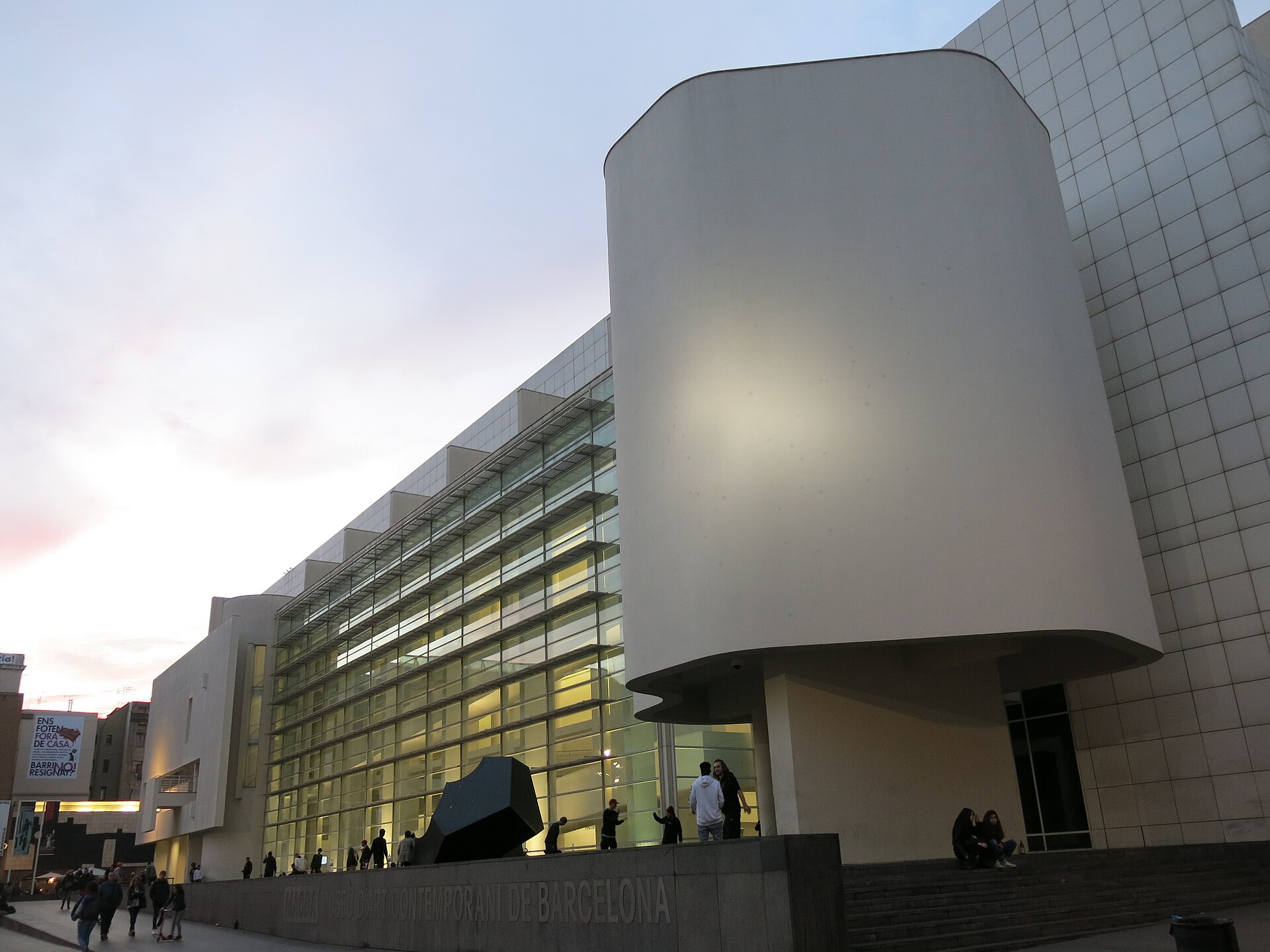
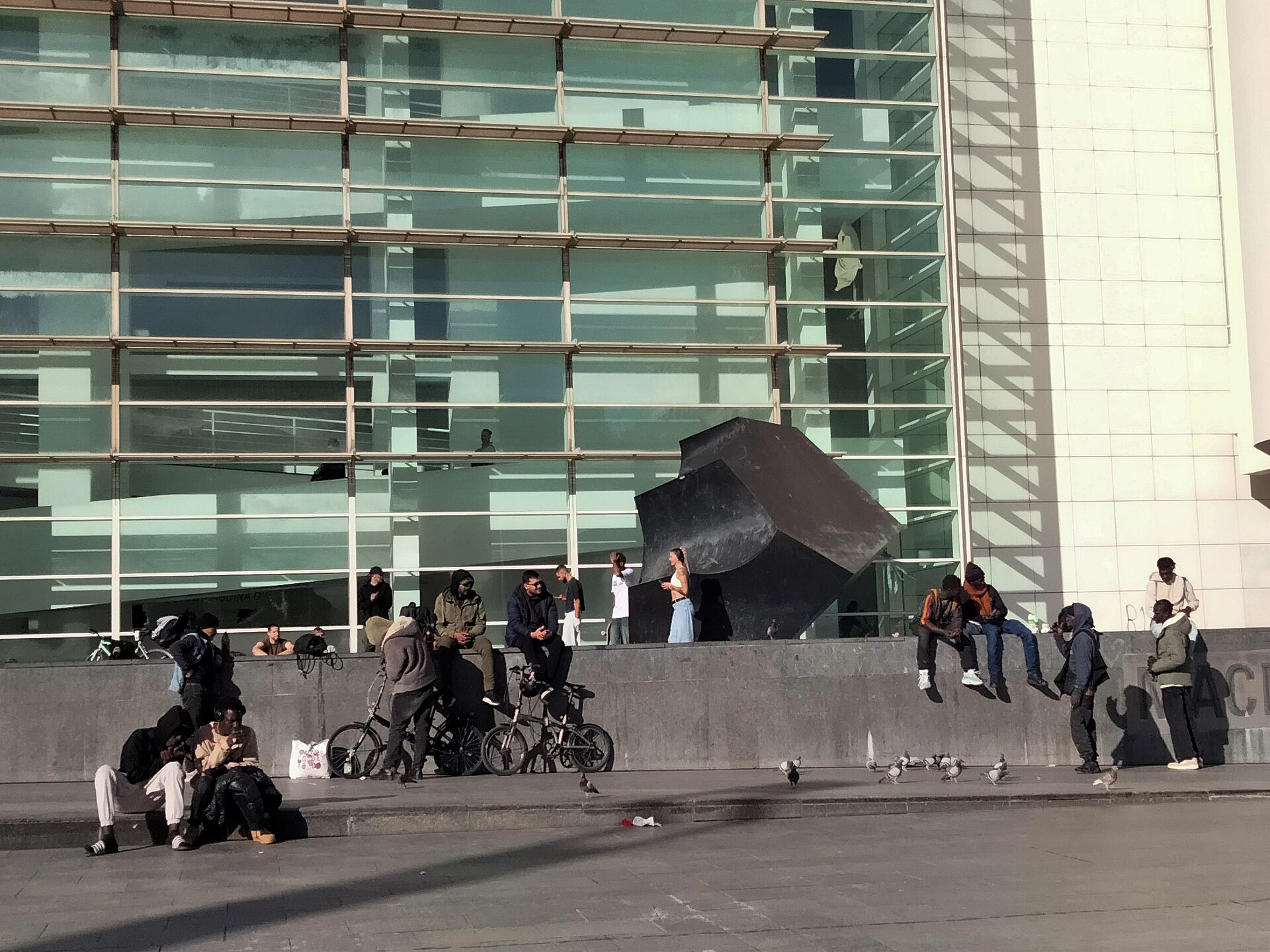
The main facade of MACBA on the Placa dels Angels, Richard Meier's white, glazed building against the older fabric of El Raval.
Enric · CC BY-SA 4.0MACBA, Museu d'Art Contemporani de Barcelona
Museum · Museu d'Art Contemporani de Barcelona · Founded 1995
Open, admission and hours confirmed 25 August 2026 · 13 sources
On this page 15 sections
ContentsClose
MACBA's real strength is depth in Spanish and Catalan conceptual and post-1945 practice specifically, built through named collector fonds such as Rafael Tous's rather than broad international coverage; a visitor looking for a general survey of twentieth-century art will find a narrower, more argued collection than at a larger encyclopaedic museum.
| Local name | Museu d'Art Contemporani de Barcelona |
|---|---|
| Kind | Museum |
| Founded | 1995 |
| City and country |  Barcelona, Spain Barcelona, Spain |
| Address | Placa dels Angels 1, 08001 Barcelona, Spain |
| Website | macba.cat/en |
| Status | Open, confirmed |
| Record last verified |
Visiting
- Hours
- Monday and Wednesday-Friday, 25 September-24 June11:00 to 19:30last entry 30 minutes before closing, exhibition rooms close 15 minutes before
- Monday and Wednesday-Friday, 25 June-24 September10:00 to 20:00last entry 30 minutes before closing
- TuesdayClosed
- Saturday10:00 to 20:00
- Sunday and public holidays10:00 to 15:00
- Closed
- Tuesday. 1 January. 25 December.
- Admission
- General, at the deskEUR 15
- General, onlineEUR 13.50
- Discount (students 16-30 in the Spanish education system, teachers without accreditation, 65 and over, Barcelona pink transport card reduction mode, unemployed, Municipal Libraries card)EUR 12
- Carnet Jove (youth card)EUR 7.50
- Under 16Freeunder-14s must be with an adult
- MACBA FriendsFreefree with membership
Free entry: First Sunday of every month, all opening hours. Every Thursday, Friday and Saturday, 18:00-20:00 (the museum calls these 'MACBA Evenings'). Six named single dates published on the museum's own page: 12 February (Santa Eulalia), the evening of 16 May (Night of the Museums, 19:00-01:00), 18 May (International Museums' Day), 30 and 31 May (Mon Llibre weekend) and 24 September (La Merce). Standing free categories regardless of date: under 16, the Barcelona pink transport card free mode, people with disabilities plus one companion, large and single-parent families, accredited teachers, and MACBA Friends members- Do I need to book?
- Not required for the permanent collection or standard visits; a tripod needs an advance request form
- Address
- Placa dels Angels 1, 08001 Barcelona, Spain MapMetro L1 to Catalunya or Universitat, L2 to Universitat, L3 to Catalunya or Liceu, all a five to ten minute walk
Bus Lines 7, 22, 24, 47, 52, 54, 55, 59, 62, 63, 67, 120, V13, V15, H12, H16, D50, L94, L95, plus the Aerobus and Bus Turistic
Train Placa de Catalunya station, FGC and RENFE
Car No dedicated museum car park; the museum offers a 25 percent discount voucher for the Placa dels Angels public car park on request at reception - Website
- macba.cat/en
- Telephone
- +34 93 481 33 68
- [email protected]
Before you go how long, access, photography, bags, eating, shop
- How long to allow
- Tripadvisor's own listing gives a suggested duration of 1-2 hours; several visitor reviews describe at least ten exhibition rooms across multiple floors, enough that more than one reviewer said they would have liked longer
- Access
- Accessible visits are available on request, with downloadable route directions for visually impaired visitors; mobility access is stated as guaranteed even during building works
- Photography
- Personal photographs without flash are permitted; using a tripod requires submitting a request in advance
- Bags
- Lockers are available, activated with a 1 euro coin; scooters and bicycles cannot be brought inside
- Eating
- MACBA Bar, with its own street-level entrance off the Placa dels Angels
- Shop
- MACBA Store, with free access that does not require a museum ticket
Prices and hours change. We take them from the institution's own pages and print the day we read them, and you can check the current position at the source we used. Confirm before you travel.
What is inside
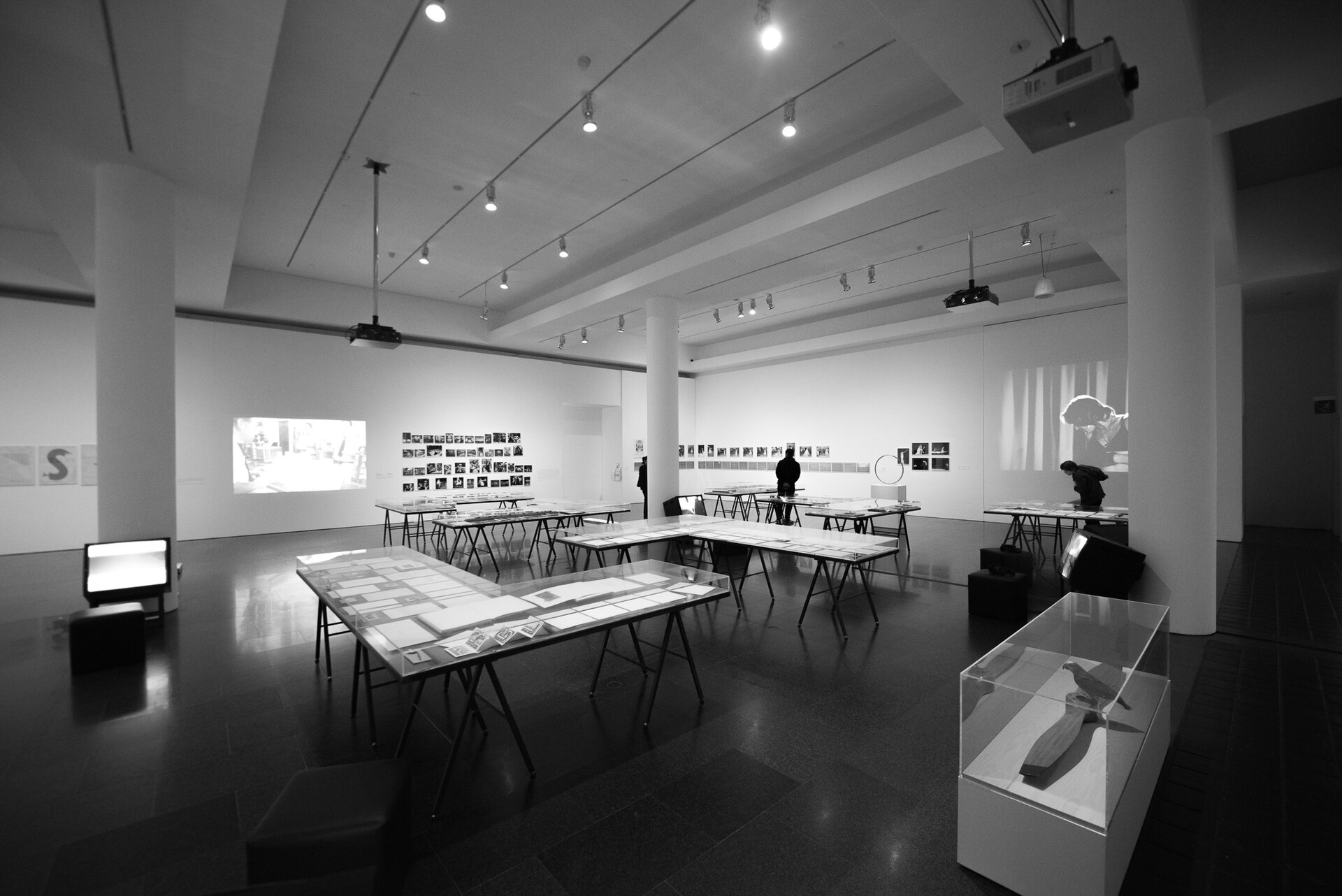
Permanent collection galleries
Richard Meier's original 1995 building holds three main galleries (each subdivided), five smaller galleries and one tower gallery, run through vertically since 1998 by Antoni Tapies's installation Rinzen, which the museum states now identifies the building by integrating its floors and unifying interior and exterior almost structurally.
Temporary exhibition galleries
The rotating programme of loan and co-produced shows that has carried most of MACBA's public controversy, including the March 2015 exhibition La Bestia y el Soberano, briefly cancelled and then reopened after a sculpture by Ines Doujak was pulled and put back by the outgoing director.
Capella MACBA, Convent dels Angels
A 16th-century Gothic church, built 1562-1566 to the design of Bartomeu Roig for a community of Dominican Tertiary Sisters established on the site in 1497, transferred to the museum in 2003 and used since for video art, installation and performance with free entry and no booking. The adjoining Capella del Peu de la Creu, built 1568-1569, is stated by the museum to be the only Renaissance-era chapel still standing in Barcelona.
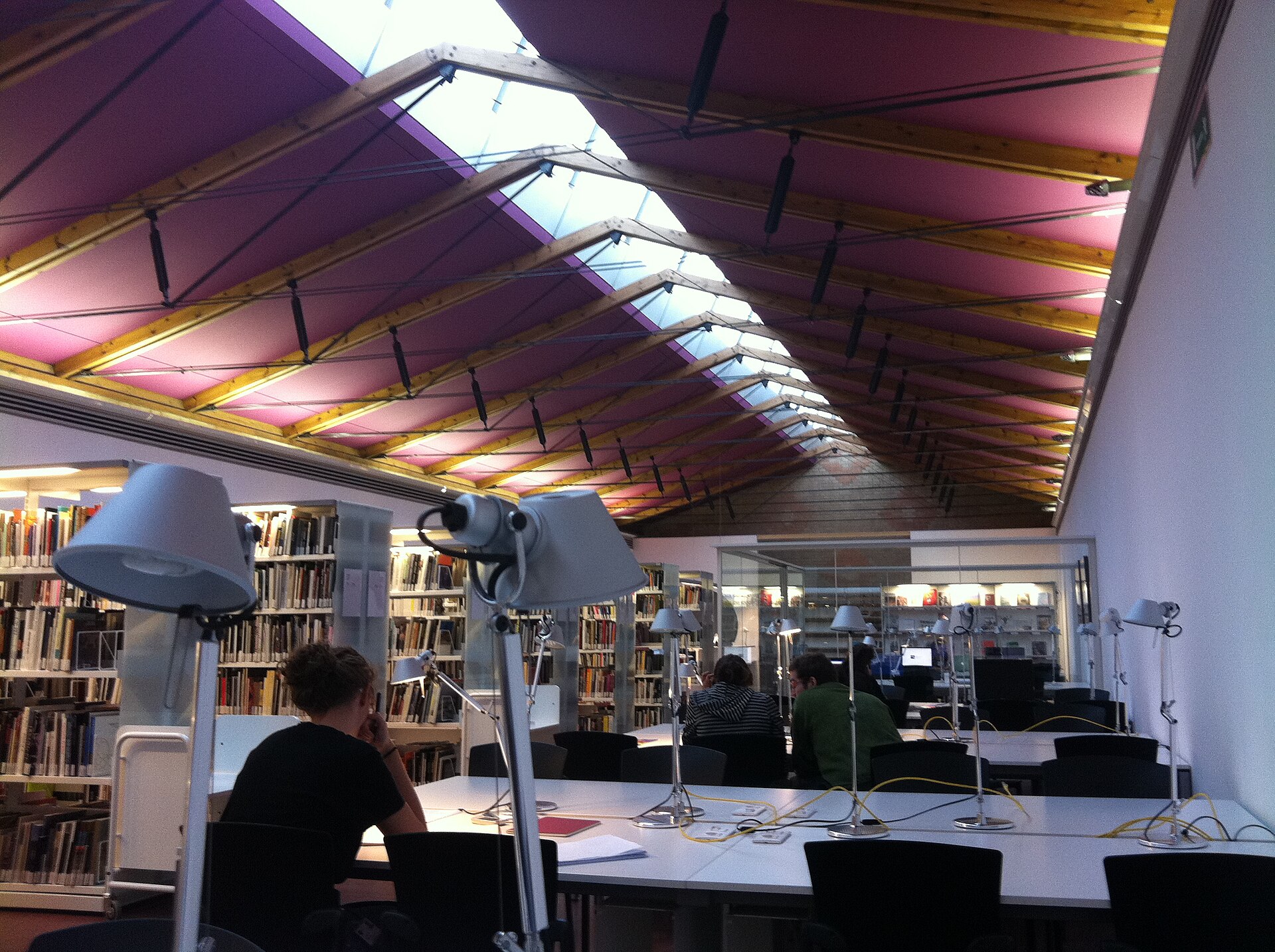
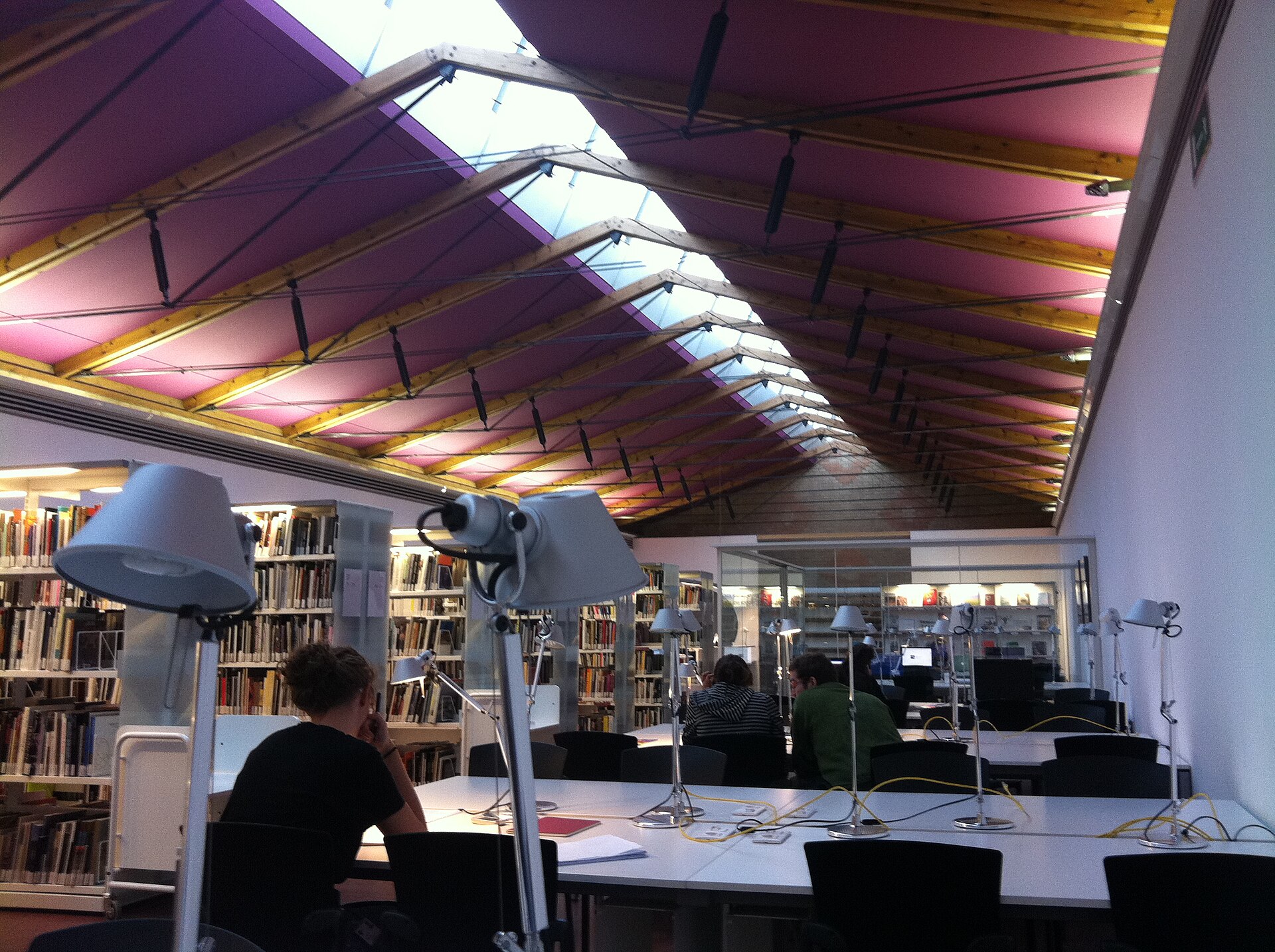
Photograph by Kippelboy · CC BY-SA 3.0 Centre d'Estudis i Documentacio (Study and Documentation Centre)
The museum's research library and archive, established in 2007 and expanded into the Convent dels Angels site, open to researchers and the public and holding material connected to the artists and movements in the collection rather than only the finished artworks themselves.
Rafael Tous Fonds
A dedicated body of roughly 1,000 works by about 30 artists, given to MACBA in 2020 by the Barcelona collector Rafael Tous, who ran the independent gallery Sala Metronom from 1980 to 2006 and collected conceptual practice on his own judgement rather than the market's, including work made in direct political opposition to the Franco regime.
What to see first
Rinzen
Antoni TapiesWon the Golden Lion for painting at the 1993 Venice Biennale before entering the building permanently in 1998, where it now runs through several floors and is treated by the museum as identifying the building itself; the title is a Japanese word for an awakening of conscience.9
Untitled (bronze mask, 1989)
Pepe EspaliuThe single work the museum built a full monographic exhibition around after Espaliu's death in 1993 at 38, using the mask as one of three recurring motifs, alongside the skull and the turtle, in his account of illness and the body.10
The building itself
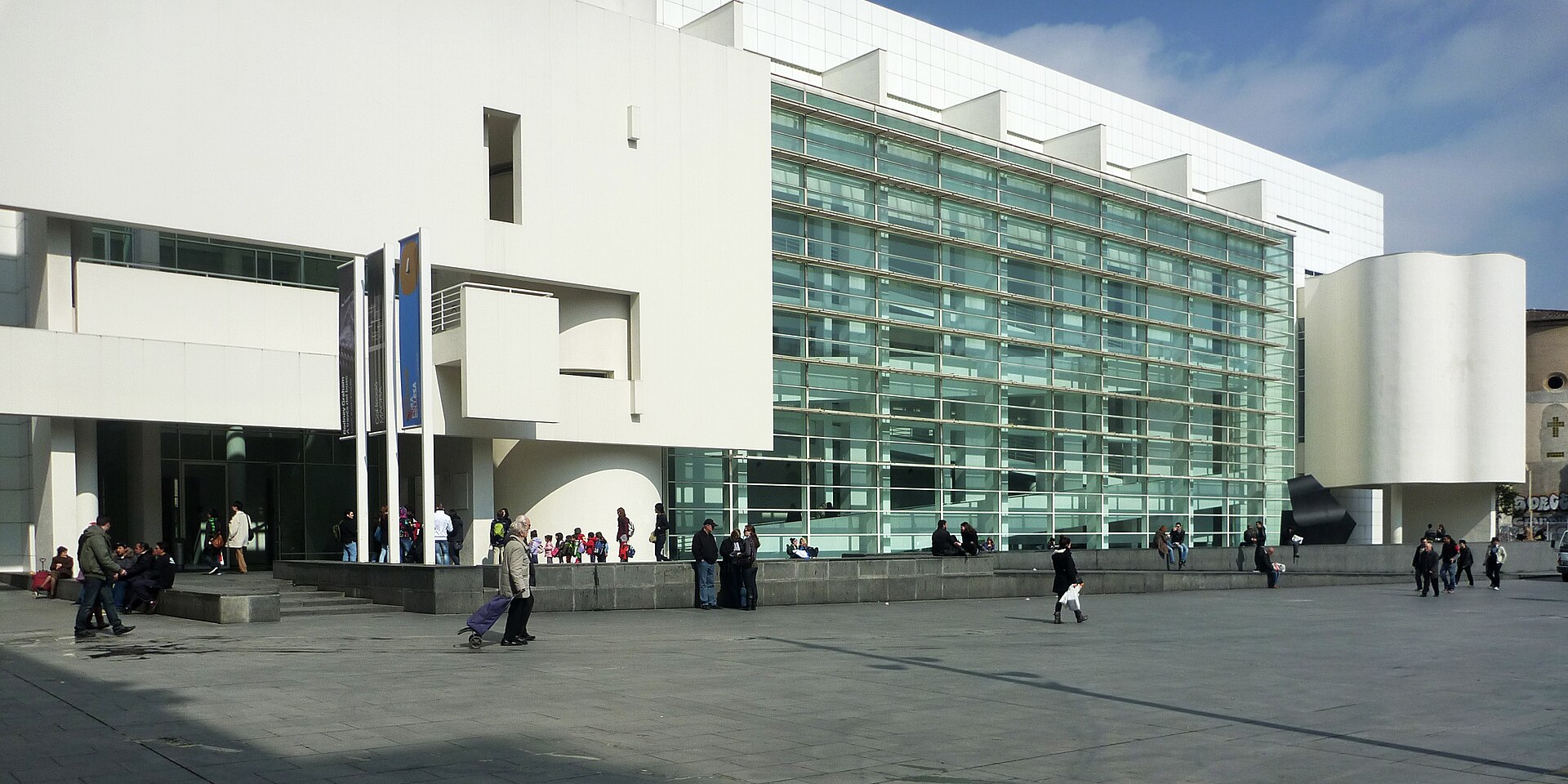
Richard MeierDesigned in 1986 for a collection that did not yet exist, the white, glass-fronted building cost some 35 million dollars and opened seven years behind its original target of the 1992 Olympics; visitor reviews name the architecture, not any single work inside it, as the thing most remembered from a visit.5
Rafael Tous Fonds
Various, collected by Rafael TousAround 1,000 works by roughly 30 artists assembled over fifty years by a collector who ran his own independent exhibition space rather than buying through galleries, making it the most complete holding of Spanish conceptual art of its period in the country by the museum's own description.8
Capella MACBA
Bartomeu Roig (architect, 1562-1566), repurposed by MACBAA working 16th-century Gothic church turned into a free video art and performance venue, kept deliberately unrenovated enough that the contrast between the medieval stone and the contemporary work showing inside it is the point of a visit rather than a compromise.11
Not Dressed for Conquering
Ines DoujakThe sculpture at the centre of MACBA's worst institutional crisis: pulled from a 2015 show, then reinstated four days later after public protest, a resignation and two curator dismissals, it remains the reference point for any discussion of what the museum will and will not show.6
Exhibitions on now
- On now9 Jul 2026 to 23 May 2027Confirmed , 8 weeks ago
Past exhibitions here
- Closed14 Feb to 28 Sep 2026Confirmed · check before you travel
- Closed28 Nov 2025 to 27 Sep 2026Confirmed · check before you travel
A building commissioned before there was a collection to put in it
MACBA's founding ran backward from how most museums start. Barcelona's city council chose Richard Meier and Partners to design the building in 1986, and the MACBA Foundation was set up in 1987 and the MACBA Consortium in 1988, joining the Catalan government and the city council as its governing bodies, all before there was a settled permanent collection for Meier to plan around. He built anyway, on the Placa dels Angels in the then-rundown Raval district, producing a white, extensively glazed structure of about 120 by 35 metres that local press nicknamed the pearl against the older buildings around it. The museum opened on 28 November 1995, seven years later than its original target of the 1992 Olympics, with a founding collection of only around 1,100 works.
That founding-collection number is worth holding onto against what the museum has become: by 2015 the collection had grown to roughly 5,000 pieces, and in 2025 alone the museum added 330 works by 50 artists through acquisition and donation. The growth has come almost entirely from gift and consortium purchase rather than from a single founding bequest, which is one reason the collection reads as a set of distinct holdings, the Tous conceptual art fonds, the Tapies works, the international loans, rather than one collector's taste extended over time.
Rinzen and what it means for a building to be identified by one work
Antoni Tapies's installation Rinzen won the Golden Lion for painting at the 1993 Venice Biennale, three years before it found its permanent place in the MACBA building. Tapies had already used a version of the work in a 1989 stage set at Barcelona's Mercat de les Flors; the piece entered the museum in 1998 and has run through the building's floors since, described by the museum's own curators as integrating the different levels and unifying interior and exterior almost structurally rather than sitting inside one gallery room. The Japanese title, meaning roughly an awakening of conscience, was Tapies's own choice; he said he wanted the piece to activate a mechanism that would provoke a desire for profound contemplation rather than to decorate the stairwells it runs through.
That a single installation, rather than the building's architecture or its rotating shows, is what the museum treats as identifying itself says something about how MACBA understands its own collection: fewer icons, more works asked to do structural work inside the visit.
A censorship crisis that lasted five days
In March 2015, director Bartomeu Mari cancelled the exhibition La Bestia y el Soberano the day before it was due to open, after objecting to a sculpture by the Austrian artist Ines Doujak, Not Dressed for Conquering, which depicted the former Spanish king Juan Carlos and the Bolivian labour leader Domitila Chungara in a sexual act on a bed of SS helmets. Mari said he had only just seen the piece; the artist and the show's curators disputed that, producing a loan form for the sculpture that Mari himself had signed weeks earlier. MACBA staff and outside professional associations protested the cancellation publicly outside the museum, and speculation followed, given that the board of trustees' honorary president was the former Queen Sofia, wife of the king depicted, that the decision had come under outside pressure. Mari denied this directly, saying the board had nothing to do with it and that he had decided alone.
Four days after cancelling the show, Mari reopened it with the sculpture included, citing the near-unanimous demand from professional bodies and individuals that it go ahead; visitor numbers reportedly rose by around 48 percent once it did. The board of trustees then accepted his resignation and, at his own request, dismissed the two curators involved, Valentin Roma and Paul B. Preciado, who had been in their posts less than three months. Roma later returned to MACBA as its director in 2026.
A collection that left over politics rather than money
In October 2017, the French collector Philippe Meaille announced he was withdrawing his loan to MACBA of the Art & Language collection, more than 500 conceptual works and the largest holding of that group's output anywhere, which had been on long-term deposit at the museum since 2010. The withdrawal followed the Catalan independence referendum of 1 October 2017, held despite Spanish police attempts to stop voting, and the constitutional crisis that followed it. Meaille told journalists the decision was not political but that he felt insecure about political issues regarding the collection and needed to ensure the works' security; MACBA's own public response was that his stated fears bore no relation to reality. The collection went instead to the Chateau de Montsoreau museum in France's Loire Valley, where it remains.
The episode sits alongside the Doujak affair as evidence that MACBA's exposure to Catalan and Spanish politics runs both ways: the museum has been accused of censoring art that was too political, and separately lost a major loan collection to a lender who judged Catalonia itself too politically unstable to leave art in.
The convent next door
Immediately behind Meier's building stands the Convent dels Angels, a working religious site since 1497, when a community of Dominican Tertiary Sisters settled next to the existing Verge dels Angels chapel. The Gothic church still standing today was built between 1562 and 1566 to a design by Bartomeu Roig, with a Renaissance portal added and, alongside it, the Capella del Peu de la Creu, built 1568-1569 and stated by the museum to be the only chapel from Barcelona's Renaissance period still standing in the city. The complex was restored through the 1980s as part of wider urban renewal in El Raval, transferred to MACBA in stages from 2003, and has been fully occupied by the museum since 2017.
The museum uses the church nave, now called Capella MACBA, for video art, installation and performance, with free entry and no booking required, deliberately leaving the medieval stone largely as found rather than converting it into a neutral white gallery. The upper floors of the convent complex hold the Centre d'Estudis i Documentacio, the museum's research library and archive, established in 2007, whose reading room sits under a vaulted, coloured skylight roof that has nothing in common with the glass and white render of Meier's building thirty metres away.
What visitors say
Reviewers are far more consistent about the building than about what is inside it. Richard Meier's white, glass-fronted design draws praise on its own terms even from visitors who found a given exhibition weak, and the plaza outside, a well-known meeting point for Barcelona's skateboarders, gets mentioned almost as often as anything in the galleries. Opinion on the temporary shows themselves splits hard between visitors who came specifically for contemporary and conceptual art and those who did not.
What is praised, what is criticised
- Praised: Meier's building and the Placa dels Angels it sits on, repeatedly named as the best part of a visit regardless of what show is on
- Praised: Staff described as friendly and helpful
- Praised: Good value against the number of exhibition rooms, with more than one reviewer surprised how much space the ticket covers
- Praised: Specific temporary shows, when a visitor's interests matched the programme, described as challenging in a way visitors were glad to have seen
- Criticised: Temporary exhibitions repeatedly called weaker than the building, with reviewers using words like below standard for a city that receives millions of tourists, or complaining of too much politics and too little art
- Criticised: Explicit and sexual imagery in some installations, arriving with no warning at the entrance, which more than one reviewer said they wished had been flagged before they brought children in
- Criticised: A recurring view that MACBA rewards visitors already interested in contemporary and conceptual art specifically, rather than working as a general must-see stop
Ratings on other platforms
Tripadvisor: 3.3 from 1,034 ratings, read 7 August 2026
A platform average is a tertiary source: it moves, it is not audited, and we quote no visitor's words.
Questions about MACBA, Museu d'Art Contemporani de Barcelona
Where is MACBA, Museu d'Art Contemporani de Barcelona?
Placa dels Angels 1, 08001 Barcelona, Spain.
How much does it cost to visit?
General, at the desk: EUR 15; General, online: EUR 13.5; Discount (students 16-30 in the Spanish education system, teachers without accreditation, 65 and over, Barcelona pink transport card reduction mode, unemployed, Municipal Libraries card): EUR 12; Carnet Jove (youth card): EUR 7.5; Under 16: free. As confirmed 25 August 2026.
When is it open?
Monday and Wednesday-Friday, 25 September-24 June 11:00-19:30; Monday and Wednesday-Friday, 25 June-24 September 10:00-20:00; Tuesday closed; Saturday 10:00-20:00; Sunday and public holidays 10:00-15:00. Closed: Tuesday. 1 January. As confirmed 25 August 2026.
How do you get there?
Metro: L1 to Catalunya or Universitat, L2 to Universitat, L3 to Catalunya or Liceu, all a five to ten minute walk; Bus: Lines 7, 22, 24, 47, 52, 54, 55, 59, 62, 63, 67, 120, V13, V15, H12, H16, D50, L94, L95, plus the Aerobus and Bus Turistic; Train: Placa de Catalunya station, FGC and RENFE; Car: No dedicated museum car park; the museum offers a 25 percent discount voucher for the Placa dels Angels public car park on request at reception.
What should you see first?
Rinzen (Antoni Tapies); Untitled (bronze mask, 1989) (Pepe Espaliu); The building itself (Richard Meier); Rafael Tous Fonds (Various, collected by Rafael Tous); Capella MACBA (Bartomeu Roig (architect, 1562-1566), repurposed by MACBA); Not Dressed for Conquering (Ines Doujak).
What we could not confirm
- MACBA's own pages give the total collection size loosely rather than as a single reconciled figure: roughly 5,000 works by 2015 per independent reporting, with 330 further works by 50 artists added in 2025 alone by the museum's own count. No single current total was found on the pages read for this record.
- Whether the honorary board presidency held by the former Queen Sofia had any bearing on the 2015 cancellation of La Bestia y el Soberano was raised publicly at the time and denied by Bartomeu Mari; nothing found in later reporting resolves the question either way.
- The Philippe Meaille Art & Language collection, on loan at MACBA from 2010 to 2017, is no longer in Barcelona and is not counted in current MACBA holdings; its removal is a real gap in the collection's recent history rather than a footnote.
Images
Sources
- 1MACBA, homepage (en) macba.cat/en
- 2MACBA, Plan Your Visit macba.cat/en/plan-your-visit/
- 3MACBA, Free Entrance and Discount Admission macba.cat/en/plan-your-visit/free-entrance-and-discount-admission/
- 4MACBA, FAQs (contact details) macba.cat/en/faqs/
- 5Wikipedia, Museu d'Art Contemporani de Barcelona en.wikipedia.org/wiki/Museu_d%27Art_Contemporani_de_Barcelona
- 6Artnet News, MACBA Director Bartomeu Mari Sacks Curators and Resigns Following Sodomy Sculpture Scandal, Lorena Munoz-Alonso, 23 March 2015 news.artnet.com/art-world/macba-director-bartomeu-mari-resigns-280692
- 7Artnet News, Fearing Political Instability After the Catalonia Referendum, a Collector Withdraws Loans From MACBA, Lorena Munoz-Alonso, 12 October 2017 news.artnet.com/art-world/french-collector-philippe-meaille-withdraws-works-on-long-term-loan-from-macba-due-to-political-instability-1113896
- 8MACBA, Rafael Tous Fonds macba.cat/en/art-artists/rafael-tous-fond
- 9MACBA, Tapies in the MACBA Collection macba.cat/en/collectables/tapies-in-the-macba-collection-1/
- 10MACBA, Pepe Espaliu exhibition page macba.cat/en/exhibitions/pepe-espaliu-2/
- 11MACBA, Convent dels Angels macba.cat/en/convent-dels-angels/
- 12Tripadvisor, MACBA Museu d'Art Contemporani de Barcelona attraction page and reviews, read 2026-08-07 tripadvisor.com/Attraction_Review-g187497-d190623-Reviews-MACBA_Museu_d_Art_Contemporani_de_Barcelona-Barcelona_Catalonia.html
- 13MACBA, About the MACBA Collection macba.cat/en/about-the-macba-collection/