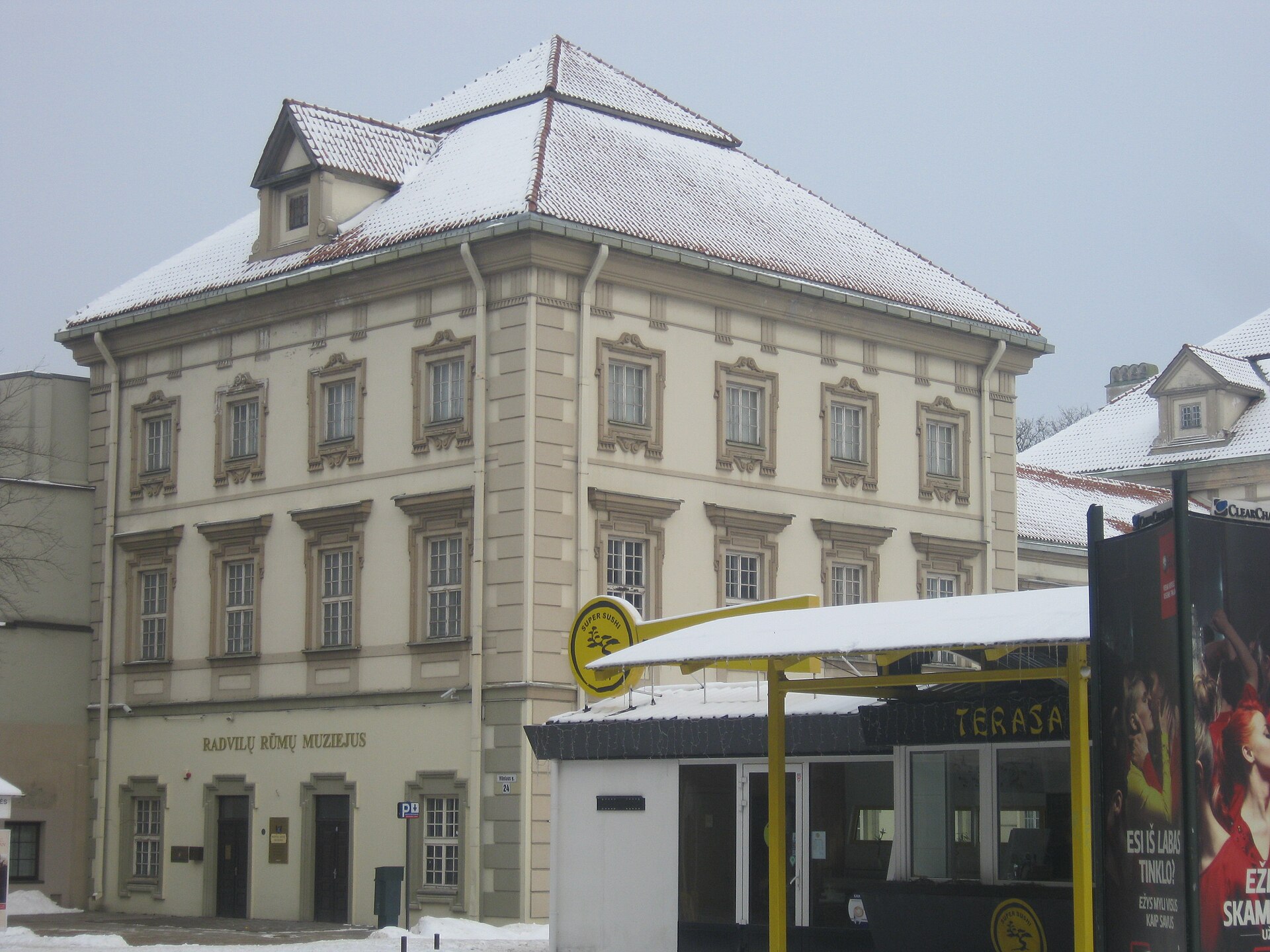
The street front of the palace on Vilniaus gatve with the museum sign over the ground-floor entrances, photographed 23 February 2013.
Bearas, CC BY-SA 3.0Radvilos Palace Art Museum (Lithuanian National Museum of Art)
Museum · Radvilų rūmų dailės muziejus
Open, admission and hours confirmed 18 November 2026 · 14 sources
On this page 15 sections
ContentsClose
The strength is in two things the museum states plainly: a thematic display of sixteenth to nineteenth century Western European painting and the Tarasov collection of Soviet-era nonconformist art, over 500 works given in 2020. The palace is not a comprehensive encyclopaedic museum. It is a focused set of displays inside a historic building.
| Local name | Radvilų rūmų dailės muziejus |
|---|---|
| Kind | Museum |
| City and country |  Vilnius, Lithuania |
| Address | Vilniaus g. 24, LT-01402 Vilnius, Lithuania |
| Website | lndm.lt/radvilu-rumu-dailes-muziejus |
| Status | Open, confirmed |
| Record last verified |
Visiting
- Hours
- Tue, Wed, Fri, Sat11:00 to 19:00
- Thu12:00 to 20:00
- Sun11:00 to 17:00
- Closed
- Monday. State holidays (2026: 1 Jan, 16 Feb, 11 Mar, 5-6 Apr, 1 May, 24 Jun, 6 Jul, 15 Aug, 1-2 Nov, 24-26 Dec).
- Admission
- StandardEUR 6Permanent and temporary exhibitions; one ticket valid in both wings
- DiscountedEUR 350 percent off for pupils, students, pensioners up to 80 and others with proof
- FreeFreeListed groups, Vilnius Pass holders, and everyone on the last Sunday of the month
- Guided tour, LithuanianEUR 25Booked with the museum
- Guided tour, other languageEUR 35Booked with the museum
Free entry: Last Sunday of each month, all visitors- Tickets
- bilietai-rrdm.lndm.lt The museum's own ticket page.
- Do I need to book?
- Not stated for general entry; tickets sold at the desk or online; tours booked by phone or email
- Address
- Vilniaus g. 24, LT-01402 Vilnius, Lithuania MapBus and trolleybus Islandijos stop, 4 to 6 minutes on foot. Trolleybuses 1, 2, 3, 6, 7, 12, 20; buses 1G, 10, 11, 21, 53, 88
- Website
- lndm.lt/radvilu-rumu-dailes-muziejus
- Telephone
- +370 5 250 5824
- [email protected]
Before you go how long, access, photography, bags, eating, shop
- How long to allow
- Not stated by the museum
- Access
- Lifts or platform lifts in both wings, accessible toilets, wheelchairs and walkers at the ticket desks, sensory backpacks; no audio guides or audio description; uneven pavements outside
- Photography
- Allowed without flash or tripod for non-commercial use; the museum may forbid it in some halls
- Bags
- Not stated by the museum
- Eating
- Not stated by the museum
- Shop
- Museum shop at the cash desks of each LNDM museum and an online shop
Prices and hours change. We take them from the institution's own pages and print the day we read them, and you can check the current position at the source we used. Confirm before you travel.
What is inside
Southern building: Living Profiles of the Old World
Sixteenth to nineteenth century Western European painting from the national museum's collections, arranged in ten thematic groups in rooms named for themes such as the elements of nature, work, feasts, travel and discovery, and sleep, vigil and death. Spranger, Cornelis van Haarlem, Salvator Rosa, Lodovico Carracci and Hobbema are among the named artists. Carries a video guide with Lithuanian Sign Language.
Protest Art: Soviet-Era Nonconformists
Works from the Vladimir Tarasov collection, donated in 2020: Moscow conceptualists and Lithuanian quiet modernists of the 1970s and 1980s, with Russian, Ukrainian, Latvian and Estonian artists, shown in five renovated halls.
Masterpiece Room
A room for two Frans Hals evangelist paintings from the Odesa Museum of Western and Eastern Art, listed for 22 September 2026 to 9 May 2027.
Temporary exhibition halls
On 18 November 2026: Sulphur, Salt and Mercury (alchemy and contemporary art, to 28 February 2027), Touching Is Allowed (sculpture by Leonas Strioga that visitors may touch, to 31 January 2027) and everything according to plan (work, care and illness, to 17 January 2027).
Northern building, Vilniaus gatve
The street entrance and ground-floor ticket desk, with its own accessible toilet and a narrow entrance that staff open wider on request. One ticket is valid in both wings.
What to see first
Protest Art: Soviet-Era Nonconformists
Collection of Vladimir Tarasov; curator Arunas GelunasA gift of more than 500 works to Lithuania in 2020, shown in five renovated halls. The one named critical review found calls it the most important art event of 2020 and praises its balance of information and period atmosphere.10
Living Profiles of the Old World
Curators Tojana Raciunaite and Joana VitkuteThe museum's thematic display of sixteenth to nineteenth century Western European painting, with Spranger, Cornelis van Haarlem, Salvator Rosa, Lodovico Carracci and Hobbema, built around ten themes and not around national schools.2
The Jonusas Radvila palace itself
Jonas Ullrich, for Janusz RadziwillBuilt 1635 to 1653 and described as the only surviving Renaissance palace in Vilnius, with Netherlandish and Mannerist features; only the northern wing survived the First World War.9
Saint Matthew and Saint Luke, Masterpiece Room
Frans Hals, about 1625The Odesa museum's evangelists, long taken for the work of unknown nineteenth century painters before recognition as Hals, given a room of their own with a listed run to May 2027.13
Touching Is Allowed: Leonas Strioga sculptures
Leonas StriogaA retrospective made with the Lithuanian Blind and Partially Sighted Union, in which visitors may touch the works, a rare reversal of museum rules.1
Sulphur, Salt and Mercury
Vaiva Grainyte, Urte Janus, Morta Jonynaite, Kamile Krasauskaite, Simona Rukuizaite, Beatrice MockeviciuteContemporary work organised around alchemical thinking about nature, transformation and materiality, shown to 28 February 2027.1
Spranger, Saint Ursula with the Martyrs
Bartholomeus SprangerListed among the outstanding exhibits on the national museum's homepage, as a late sixteenth to early seventeenth century work; the museum also names Spranger in the Old World display, though whether this exact picture is hung there was not confirmed.1
Which building this page is about
The Lithuanian National Museum of Art is an umbrella institution. Its own website lists eleven divisions across Vilnius, Klaipeda, Palanga and Juodkrante, among them the Applied Art and Design Museum, the Vilnius Picture Gallery, the Vytautas Kasiulis Art Museum, the National Gallery of Art and the Radvilos Palace Art Museum. Each has its own address, its own opening hours and its own ticket desk, so a single page of hours and prices for the whole institution would be wrong for every one of them.
This page is about one of them, the Radvilos Palace Art Museum, in the Old Town at Vilniaus gatve 24. It was chosen because it is a single visitable building with its own published hours, its own price list and its own contacts, and because a free photograph of the palace itself exists. The other divisions are not described here and the figures below do not apply to them.
The museum is easy to confuse with its neighbours in the same family. The Vilnius Picture Gallery and the National Gallery of Art are separate divisions, and the Lithuanian National Museum, a different institution entirely, is not part of this one. What follows concerns only the palace and the two wings that visitors enter on one ticket.
The palace and what it was built to be
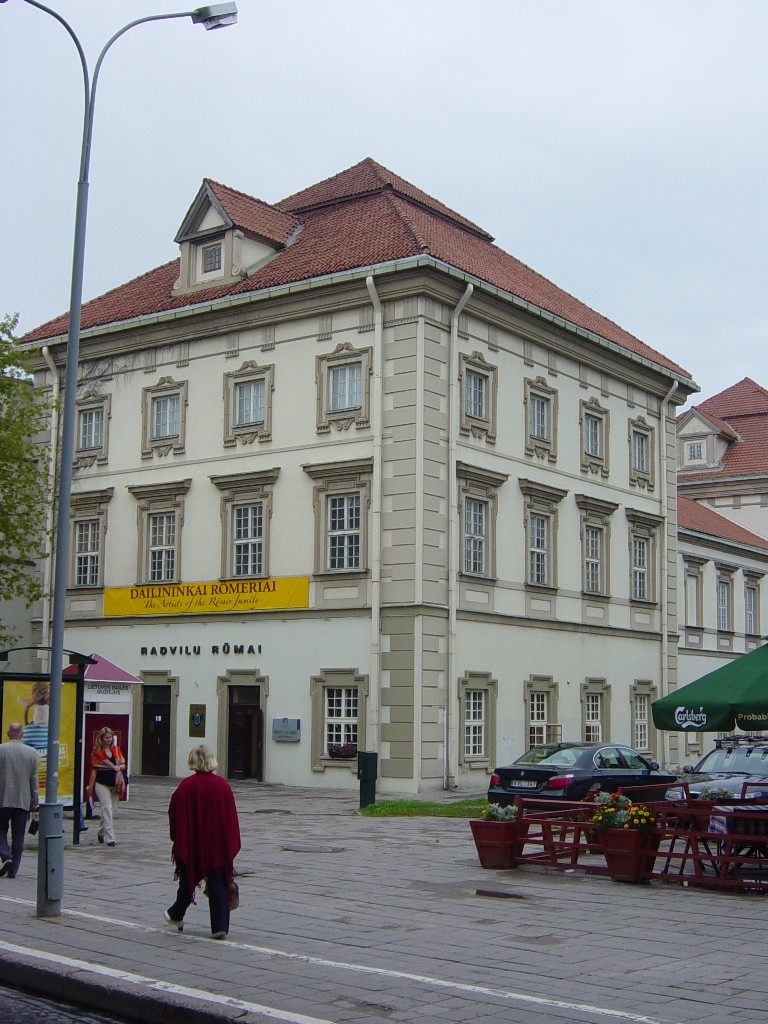
The building is the palace of Janusz Radziwill, known in Lithuanian as Jonusas Radvila. Wikipedia, which is a tertiary source here and is used only for the building's outline, says it was built between 1635 and 1653 to a design by Jonas Ullrich, probably on the site of an earlier wooden mansion of Mikolaj Radziwill the Black. The same article calls it the only surviving Renaissance palace in Vilnius and describes a Late Renaissance block that mixes Netherlandish features with Mannerist decoration, with a layout and symmetry compared to French palaces such as Fontainebleau and the Luxembourg Palace.
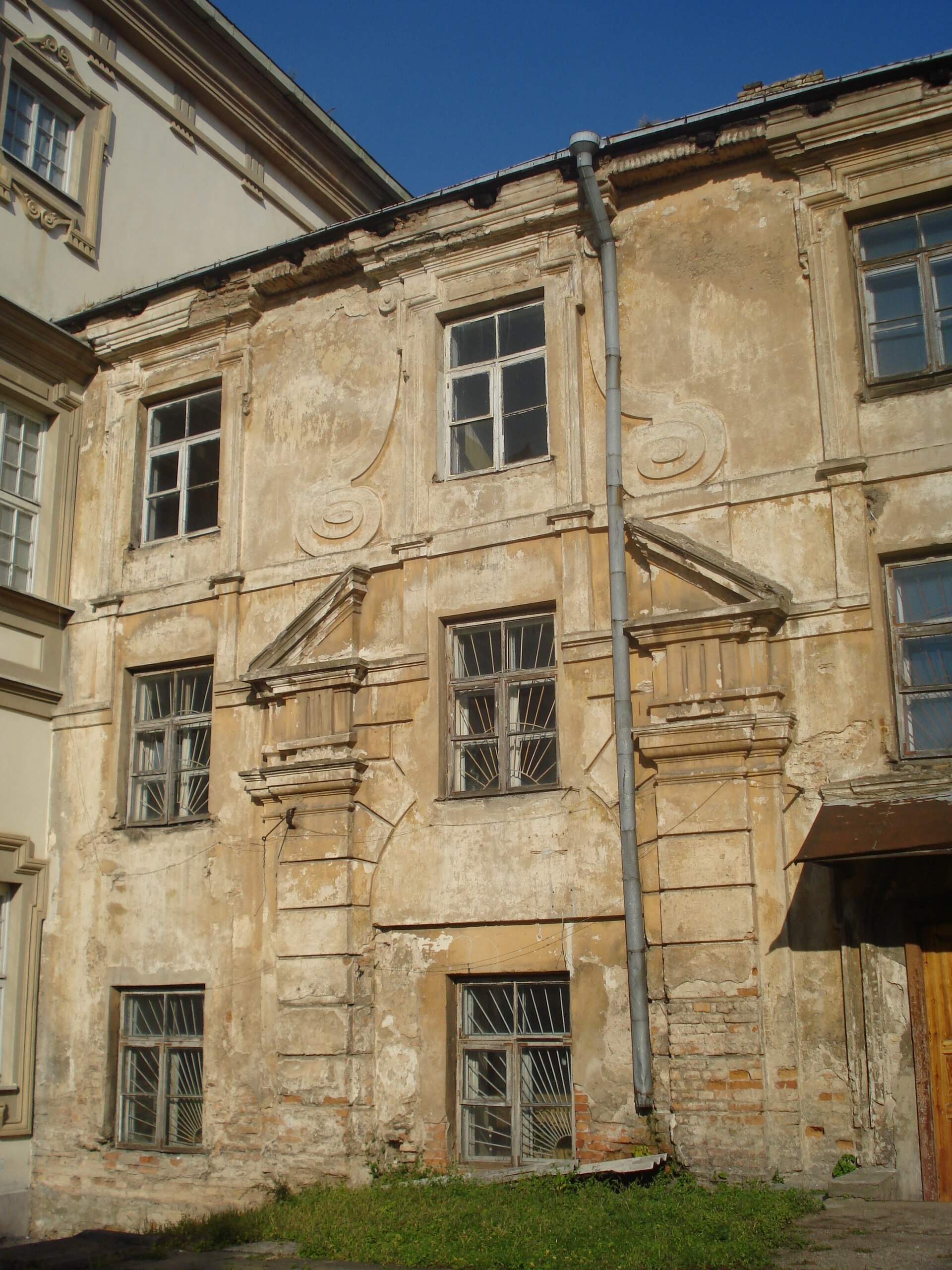
Its later history was hard. The article says the palace fell into ruin after the Muscovite invasion of 1655 to 1660 and was largely neglected for centuries, that the First World War caused further devastation and that only the northern wing survived. It was restored in the 1980s. A plate in this record, photographed in 2007 from the courtyard side, shows a wing with worn plaster beside the repaired block.
The museum itself says the palace holds historic architectural heritage and art from many periods, from old European masters to contemporary Lithuanian and foreign artists. The city tourism site describes the museum as awaiting a major renovation that would restore the complex to its original structure and create a multifunctional space for art and culture, and says only some of the buildings are open for now. A reader should treat the open buildings as the whole of the visit and not expect the full historic footprint.
Two wings, one ticket
Visitors meet the palace as two buildings. The museum's accessibility page describes a northern building on Vilniaus gatve and a southern building on Liejyklos gatve that is entered from the courtyard, and says one ticket is valid for both. The museum lists a separate telephone number for each wing, and the southern one sits beside the paid car park.
The northern entrance is described by the museum as narrow, and staff will open the doors wider for wheelchair users if asked by telephone. Both buildings have lifts or platform lifts reaching all floors. The southern building has accessible toilets on every floor and a family room, while the northern building has one accessible toilet on the ground floor. Thresholds between halls are 2 to 3.5 centimetres high according to the same page.
The permanent display of Western European painting is housed in the southern building, according to the accessibility page, which says its video guide carries Lithuanian Sign Language interpretation. The museum also gives the location of the nearest public transport stop and a car park, covered in the practical details below.
What is on show: the permanent displays
Two permanent displays run side by side. The first, titled Gyvastingieji senojo pasaulio profiliai (Living Profiles of the Old World), is a presentation of sixteenth to nineteenth century Western European painting from the museum's own collections. The museum names Bartholomeus Spranger, Cornelis van Haarlem, Salvator Rosa, Lodovico Carracci and Meindert Hobbema among the artists. Its curators are Tojana Raciunaite and Joana Vitkute, and the works are organised into ten thematic groups. Rooms are named for the themes, among them the elements of nature, work, feasts, travel and discovery, and sleep, vigil and death. That is a thematic hang and not a school-by-school one, which will suit a visitor who wants an idea to follow and may disappoint someone looking for a chronological survey of one national school.
The second, Protesto menas: sovietmecio nepaklusnieji (Protest Art: Soviet-Era Nonconformists), is built on the collection of Vladimir Tarasov, a drummer and conceptual artist who gave it to Lithuania in early 2020. LRT reported on the opening that the gift runs to more than 500 works, that about forty artists are shown and that the display fills five renovated halls. It named Ilya Kabakov, Eduard Gorokhovsky and Yuri Sobolev among the Moscow conceptualists, and Valentinas Antanavicius and Dalia Kasciunaite among the Lithuanian artists the curator calls quiet modernists. The curator, Arunas Gelunas, grouped the works into conceptualists, suprematists following Malevich, and ironic or emotional rebels, a group that the report says takes in all the Lithuanian artists.
The museum's own page adds that the display shows Russian, Ukrainian, Latvian and Estonian artists too, and that Daniel Muzyczuk of the Lodz Museum of Art is co-curator. LRT also reported that the display was meant to occupy four or five halls and change every one or two years, so what a visitor sees today may be a later iteration of the 2020 opening described in that report.
Temporary shows and the Masterpiece Room
Alongside the permanent displays the museum runs a changing programme. On 18 November 2026 its own page lists four current or imminent shows. Siera, druska ir gyvsidabris (Sulphur, Salt and Mercury) runs from 15 October 2026 to 28 February 2027 and applies alchemical thinking to contemporary art. Six artists are named on the museum's pages, and the curator is Vilte Visockaite. Liesti galima. Leono Striogos skulpturos (Touching Is Allowed) runs from 3 November 2026 to 31 January 2027, and as the title says, visitors may touch the sculptures. The museum says it was made with the Lithuanian Blind and Partially Sighted Union.
Viskas pagal plana (everything according to plan) runs from 5 November 2026 to 17 January 2027 and is described as an exhibition about work, productivity, care and illness with about 25 artists and collectives, part of a mental health arts festival. Sedevro kambarys (Masterpiece Room) shows the evangelists of Frans Hals from the collection of the Odesa Museum of Western and Eastern Art, with a listed run from 22 September 2026 to 9 May 2027.
The Hals pictures have their own story. Wikipedia's article on the Saint Matthew says the painting, about 70 by 55 centimetres in oil on canvas and dated 1625, was long taken for the work of unknown nineteenth century painters before being recognised as a Hals, one of four lost evangelist paintings of which the Odesa museum holds Matthew and Luke. The same article says Matthew was shown in 2025 in an exhibition at the Gemaldegalerie in Berlin. The museum's page for the Vilnius room was not readable in full when this page was prepared, so the room's format and how it relates to the earlier Berlin showing are listed as open questions below. Dates for exhibitions change, and the museum's current page is the authority.
Planning a visit
The museum is closed on Mondays. On Tuesday, Wednesday, Friday and Saturday it opens from 11:00 to 19:00, on Thursday from 12:00 to 20:00 and on Sunday from 11:00 to 17:00, according to the museum's hours page read on 18 November 2026. It is closed on state holidays, and the page lists the 2026 non-working days: 1 January, 16 February, 11 March, 5 and 6 April, 1 May, 24 June, 6 July, 15 August, 1 and 2 November, and 24 to 26 December. The tourism site adds that the museum closes an hour earlier the day before a national holiday, though that comes from the city's page and not the museum's own.
A standard ticket costs 6 euros and a discounted ticket 3 euros. The discount is 50 percent for pupils, full-time students, pensioners up to age 80, victims of the 1939 to 1990 occupations, Independence Defenders, resistance participants and holders of the POLA card. Admission is free for many groups, including preschool children, visitors aged 80 and over, disabled visitors with an assistant and one companion, Ukrainian citizens with proof of citizenship, journalists and holders of the Vilnius Pass. Everyone enters free on the last Sunday of each month. Guided tours cost 25 euros in Lithuanian and 35 euros in another language, and are booked directly with the museum.
Photography without flash or tripod is allowed for personal use, though the museum can forbid it in particular halls or temporary shows. Animals are not admitted except service animals. The nearest public transport stop is Islandijos, a 4 to 6 minute walk, served by trolleybuses 1, 2, 3, 6, 7, 12 and 20 and buses 1G, 10, 11, 21, 53 and 88. A paid car park with a barrier sits beside the southern building, and visitors with a disabled parking card are advised to try the free spaces on Vilniaus or Liejyklos streets. The museum warns that pavements near the building are uneven and worn.
What the record says about how it is received
No platform rating from a source this page could read was found, so no score is printed. A third-party aggregator showed a single rating and an automatically written summary, and neither is a basis for a statement about visitors. What can be cited is one named piece of criticism. Raminta Jurenaite, writing in the magazine Kultury barai on 6 March 2021 in a piece republished by LRT, called the Tarasov display the most important event in Lithuanian art life of 2020. She praised the donation and the way the show balances information with the ideological atmosphere of the period, and singled out the curator's open structure, in which one artist's works can appear in several sections. She named no explicit fault in the display.
The limits that can be documented come from the institution itself. The museum's accessibility page says there are currently no audio descriptions or audio guides for the permanent exhibitions and that exhibition texts are not available in easy-to-read language. The page also says the pavements are uneven. The city tourism page says a major renovation is still awaited and that only some buildings are open. Those are admissions by the museum and its city, and not a survey of visitors.
This record therefore does not claim a visitor consensus. A reader weighing the visit has one strongly positive critical judgement of one display, a museum that is open about its access gaps, and a building whose full restoration is still pending.
What visitors say
No visitor survey or readable platform rating was found, so no consensus is claimed. One named critic judged the Protest Art display outstanding, and the faults on record are the museum's own admissions: no audio guides or audio description, no easy-read texts, uneven pavements, and a palace complex still awaiting major renovation with only some buildings open.
What is praised, what is criticised
- Praised: Protest Art display: called the most important art event of 2020 by Raminta Jurenaite, who praised its balance of information and period atmosphere
- Praised: The curator's open structure, in which one artist's work can appear in several sections
- Praised: Touch-based and sensory access measures, including a touchable sculpture show, sensory backpacks and wheelchairs at the desks
- Criticised: No audio guides or audio descriptions for the permanent exhibitions, and no easy-read exhibition texts, by the museum's own statement
- Criticised: Uneven, worn pavements around the building, and a narrow northern entrance
- Criticised: A major renovation is still awaited and only some buildings are open, according to the city tourism page
Questions about Radvilos Palace Art Museum (Lithuanian National Museum of Art)
Where is Radvilos Palace Art Museum (Lithuanian National Museum of Art)?
Vilniaus g. 24, LT-01402 Vilnius, Lithuania.
How much does it cost to visit?
Standard: EUR 6; Discounted: EUR 3; Free: free; Guided tour, Lithuanian: EUR 25; Guided tour, other language: EUR 35. As confirmed 18 November 2026.
When is it open?
Tue, Wed, Fri, Sat 11:00-19:00; Thu 12:00-20:00; Sun 11:00-17:00. Closed: Monday. State holidays (2026: 1 Jan, 16 Feb, 11 Mar, 5-6 Apr, 1 May, 24 Jun, 6 Jul, 15 Aug, 1-2 Nov, 24-26 Dec). As confirmed 18 November 2026.
How do you get there?
Bus and trolleybus: Islandijos stop, 4 to 6 minutes on foot. Trolleybuses 1, 2, 3, 6, 7, 12, 20; buses 1G, 10, 11, 21, 53, 88.
What should you see first?
Protest Art: Soviet-Era Nonconformists (Collection of Vladimir Tarasov; curator Arunas Gelunas); Living Profiles of the Old World (Curators Tojana Raciunaite and Joana Vitkute); The Jonusas Radvila palace itself (Jonas Ullrich, for Janusz Radziwill); Saint Matthew and Saint Luke, Masterpiece Room (Frans Hals, about 1625); Touching Is Allowed: Leonas Strioga sculptures (Leonas Strioga); Sulphur, Salt and Mercury (Vaiva Grainyte, Urte Janus, Morta Jonynaite, Kamile Krasauskaite, Simona Rukuizaite, Beatrice Mockeviciute).
What we could not confirm
- Whether the Frans Hals Masterpiece Room of 2026 to 2027 is a new run or a continuation, and how it relates to the Berlin showing of the same pictures; the museum page was not readable in full
- Whether the planned renovation will open more of the palace and when
- Whether the Spranger Saint Ursula is on view in the Old World display
- The museum's bag policy, cafe and typical visit time were not stated on the pages read
- The palace's date of first opening as a museum was not found on any page read
Images
Sources
- 1Lithuanian National Museum of Art, home page (divisions, current exhibitions), read 2026-11-18 lndm.lt/
- 2Radvilos Palace Art Museum, own page: address, contacts, permanent displays, exhibitions lndm.lt/radvilu-rumu-dailes-muziejus/
- 3Radvilos Palace Art Museum, tickets page lndm.lt/radvilu-rumu-dailes-muziejus/bilietai/
- 4LNDM opening hours page lndm.lt/darbo-laikas/
- 5Radvilos Palace Art Museum, accessibility page lndm.lt/radvilu-rumu-dailes-muziejus/prieinamumas/
- 6Radvilos Palace Art Museum, questions and rules page lndm.lt/radvilu-rumu-dailes-muziejus/klausimai-ir-taisykles/
- 7Radvilos Palace Art Museum, how to get there lndm.lt/radvilu-rumu-dailes-muziejus/kaip-atvykti/
- 8LNDM contacts page lndm.lt/kontaktai/
- 9Wikipedia, Radziwill Palace, Vilnius (, building outline only) en.wikipedia.org/wiki/Radziwi%C5%82%C5%82_Palace,_Vilnius
- 10LRT, Mindaugas Klusas, report on the Tarasov collection exhibit, 8 October 2020 lrt.lt/naujienos/kultura/12/1247747/radvilu-rumuose-unikalus-rinkinys-vladimiras-tarasovas-ir-kiti-sovietmecio-nepaklusnieji
- 11LRT, Raminta Jurenaite, review first published in Kultury barai 6 March 2021 lrt.lt/naujienos/kultura/12/1351128/raminta-jurenaite-apie-paroda-is-vladimiro-tarasovo-kolekcijos-autentiskas-protesto-liudijimas
- 12Go Vilnius, Radvila Palace Museum of Art page (renovation note, for the 2026 state) govilnius.lt/radvila-palace-museum-of-art
- 13Wikipedia, Saint Matthew (Hals) () en.wikipedia.org/wiki/St_Matthew_(Hals)
- 14Wikimedia Commons, Category: Radvilos Palaces in Vilnius (photograph licences and credits) commons.wikimedia.org/wiki/Category:Radvilos_Palaces_in_Vilnius