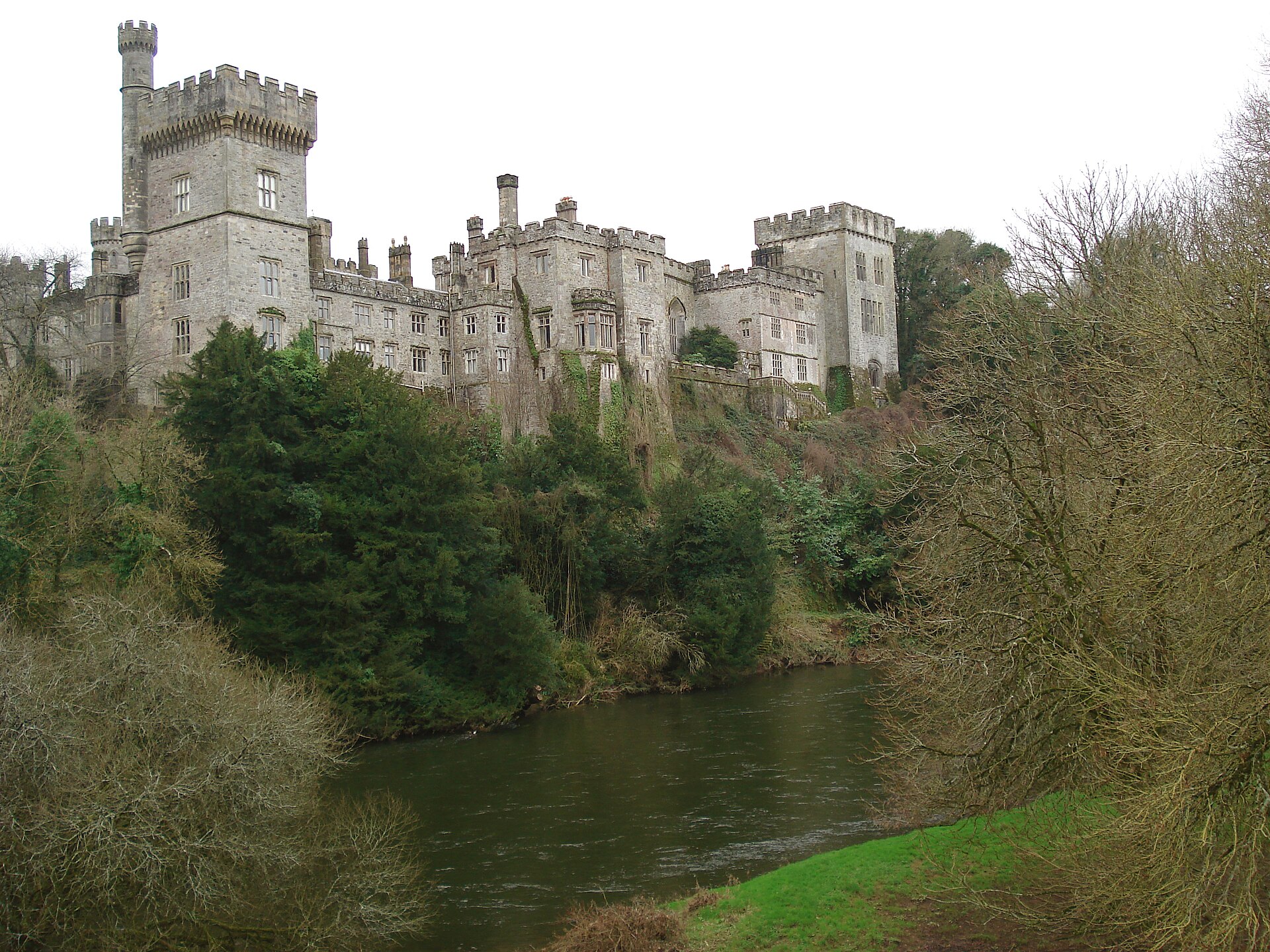
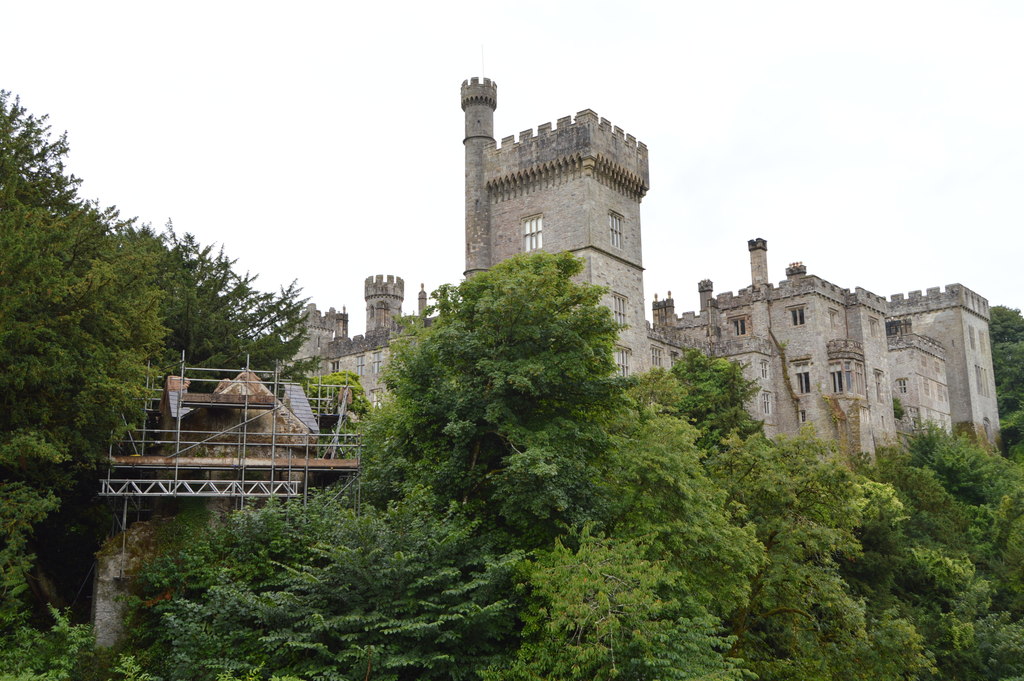
Lismore Castle, seen from across the Blackwater valley, County Waterford, Ireland.
Raul Corral · Photograph by Raúl Corral · CC BY-SA 3.0Lismore Castle
Gallery · Founded 1185
Open, admission and hours confirmed 28 September 2026 · 18 sources
On this page 14 sections
ContentsClose
Lismore Castle Arts holds no permanent collection of historic art and does not present itself as having one; the castle's own historic furniture and pictures, including significant Pugin pieces, belong to the private residence and are not on public display. Its strength instead is a continuous, twenty-year programme of contemporary exhibitions across three spaces, run as a not-for-profit alongside a small, growing body of permanent outdoor sculpture in the former stable yard. A reader coming to this page for a fixed set of historic holdings will not find one; a reader coming to it for what a changing contemporary programme has shown inside a working Anglo-Irish estate, and for the sculpture that has stayed behind after the shows moved on, will find a genuine record.
| Kind | Gallery |
|---|---|
| Founded | Castle first built by Prince John in 1185 on the site of the 7th-century Lismore Abbey; present Gothic-revival form largely the work of the 6th Duke of Devonshire, 1812-1858; the contemporary-art gallery, Lismore Castle Arts, founded 2005 |
| City and country |  Lismore, Ireland Lismore, Ireland |
| Address | Lismore Castle Arts, Lismore, Co. Waterford, P51 F859, Ireland |
| Website | lismorecastlearts.ie |
| Status | Open, confirmed |
| Record last verified |
Visiting
- Hours
- Monday-Sunday11:00 to 18:00Last entry 17:00. Applies only during the open season, 13 March to 25 October 2026.
- Closed
- Closed to visitors from 26 October 2026 until the 2027 season reopens in March; this is the ordinary winter closure of a seasonal garden and gallery, not an unplanned closure.
- Admission
- AdultEUR 11Covers the gardens and the Main Gallery
- Concession (senior/student)EUR 9
- Child (6-16)EUR 7Under 6 free
- Family (2 adults, 3 children)EUR 33
- St Carthage Hall / The MillFreeFree entry when either space is showing an exhibition, Friday to Sunday, 12:00-17:00
- Tickets
- lismorecastlearts.ie/plan-your-visit/tickets-... The museum's own ticket page.
- Do I need to book?
- Walk-up entry is accepted; an online booking option through Eventbrite is offered for visits from July through October and is recommended in the busier summer months
- Address
- Lismore Castle Arts, Lismore, Co. Waterford, P51 F859, Ireland MapCar park Free public parking at Lismore town car park, about 150 metres from the garden entrance, a five-minute walk uphill via signposted directions.
On foot The entrance sits on the edge of Lismore town, within walking distance of Lismore Cathedral, the Heritage Centre and Lady Louisa's Walk. - Website
- lismorecastlearts.ie
- Telephone
- +353 58 54061
- [email protected]
Before you go how long, access, photography, bags, eating, shop
- How long to allow
- Two to three hours to see the gardens, the Main Gallery and the cafe together
- Access
- Wheeled access runs through much of the garden, the Main Gallery (excluding the Upper Gallery, reached by four steps), the cafe, the reading room, the bathrooms, St Carthage Hall and The Mill. The Lower Garden is reached only by a stairway inside the Riding House and has no wheelchair route. The path from the car park has a slight incline and can be uneven and dusty. Accessible bathrooms are in the Gallery/Cafe building in the Upper Garden, about a five-minute walk from the entrance.
- Eating
- A cafe in the west wing of the castle, in the Upper Garden beside the gallery, serves tea, coffee, soft drinks and cakes made by the castle's own chef; a seasonal Garden Picnic Basket for two, using produce from the castle gardens, is available on selected days in June, July and August with 48 hours' notice.
- Shop
- A reading room beside the gallery, with art materials laid out for children; no separate retail shop is described on the venue's own visitor pages.
Prices and hours change. We take them from the institution's own pages and print the day we read them, and you can check the current position at the source we used. Confirm before you travel.
What is inside
Main Gallery (West Wing)
The primary exhibition space, created in 2005 by converting the derelict west range of the castle. It carries the changing programme of contemporary art that is the gallery's core activity, plus a separate Upper Gallery reached by four steps.
Upper Garden
A walled garden whose terraces and walls date to about 1605, when Richard Boyle, 1st Earl of Cork, first laid it out. It mixes ornamental borders with a working kitchen garden of vegetables, herbs and fruit; the plantings have changed over four centuries, the walls have not.
Lower Garden
A more naturalistic 19th-century landscape shaped for the 6th Duke of Devonshire with the input of Joseph Paxton, designer of the Crystal Palace: winding paths through shrubs and trees opening onto lawns, and a yew avenue that the garden's own history notes predates the garden itself. Reached from the Upper Garden by a staircase inside the Riding House.
St Carthage Hall
A former chapel in Lismore town, converted into a second exhibition space in 2011. It runs a varied contemporary programme separate from the Main Gallery's, with free entry on the days it is open.
The Mill
A restored historic building on the edge of Lismore town, brought into use as a third exhibition space in 2022. Its scale is used for work too large or physically demanding for the other two galleries, with free entry on the days it is open.
The Stable Yard
The former stable yard, being developed since 2021 into a dedicated Sculpture Yard holding permanent outdoor works, plus a printing press that anchors the gallery's learning programme. This is where a visitor sees work that stays after an exhibition closes, rather than the changing shows in the galleries.
What to see first
Learning to be I (1992)
Antony GormleyStood for many years in the Lower Garden before being restored and moved to its present site in the Stable Yard; the gallery's own account of the Sculpture Yard names it first among the works that remain on view year-round.17
Eye of Shark
Dorothy CrossTwelve reclaimed cast-iron baths laid out in the Upper Stable Yard, first shown at St Carthage Hall in 2014 and permanently sited here since 2022; a domestic object repeated past the point of function, in a working stable yard rather than a white cube.12
Stable Yard Commission (2023)
Niamh O'MalleyCommissioned in 2021 for a permanent site in the Stable Yard and drawn from the artist's own presentation at the 2022 Venice Biennale; O'Malley works in polished wood and graphite panels shaped like shelves and canopies, built to mediate the view of the garden around them rather than sit apart from it.13
Permanent garden sculpture
Eilis O'ConnellOne of the artists whose work the gallery names as part of the garden's contemporary sculpture, on view without charge to anyone walking the grounds since installations began there in 1999; O'Connell is a Royal Hibernian Academician known for large abstract forms in bronze and steel.16
Permanent garden sculpture
Franz WestThe Austrian sculptor, known for objects that invite handling and use rather than passive viewing, is named by the gallery among the artists with standing work in the gardens; no title or installation date is published on the gallery's own pages, so none is asserted here.2
A Life of Their Own (2008)
Roger Hiorns and othersA group exhibition at Lismore Castle Arts in which Hiorns, known for using industrial and organic materials to transform found objects, took part; the gallery separately names him among the artists with a permanent presence in the gardens.2
Palimpsest (31 March-13 October 2019)
Martine Syms, Charlotte Prodger, Lynette Yiadom-Boakye, Zoe Leonard, Andrea Zittel and othersA group show reviewed at length in Burlington Contemporary; the reviewer praised Hilary Lloyd's video installation and Zoe Leonard's photograph while raising a real institutional question, that an internationally curated exhibition staged in Ireland included no Irish artists.14
Kunstkammer (2025), the 20th-anniversary exhibition
Curated by Robert O'Byrne, with works by Sarah Lucas, Urs Fischer, Sasha Sykes and Dorothy Cross among othersMarked the gallery's twentieth year with a cabinet-of-curiosities exhibition mixing antique furniture, a circa-1900 taxidermy tableau and new commissions, including Sasha Sykes's resin travel chest filled with flora grown in the castle's own gardens.6
A river crossing, an abbey site, and a family that still lives there
Lismore Castle stands on a bluff above the Blackwater River in County Waterford, on ground that was already old when the castle arrived: a 7th-century abbey and seat of learning, Lismore Abbey, occupied the site before Prince John built a castle here in 1185 to hold the crossing. Robert Boyle, later celebrated as the father of modern chemistry, was born in the castle in 1626. Sir Walter Raleigh held the property from 1589 before selling it in 1602 to Richard Boyle, who became the 1st Earl of Cork. The Cavendish family acquired Lismore in 1753, when Lady Charlotte Boyle married the Marquess of Hartington, later the 4th Duke of Devonshire, and it has been the family's Irish seat ever since.
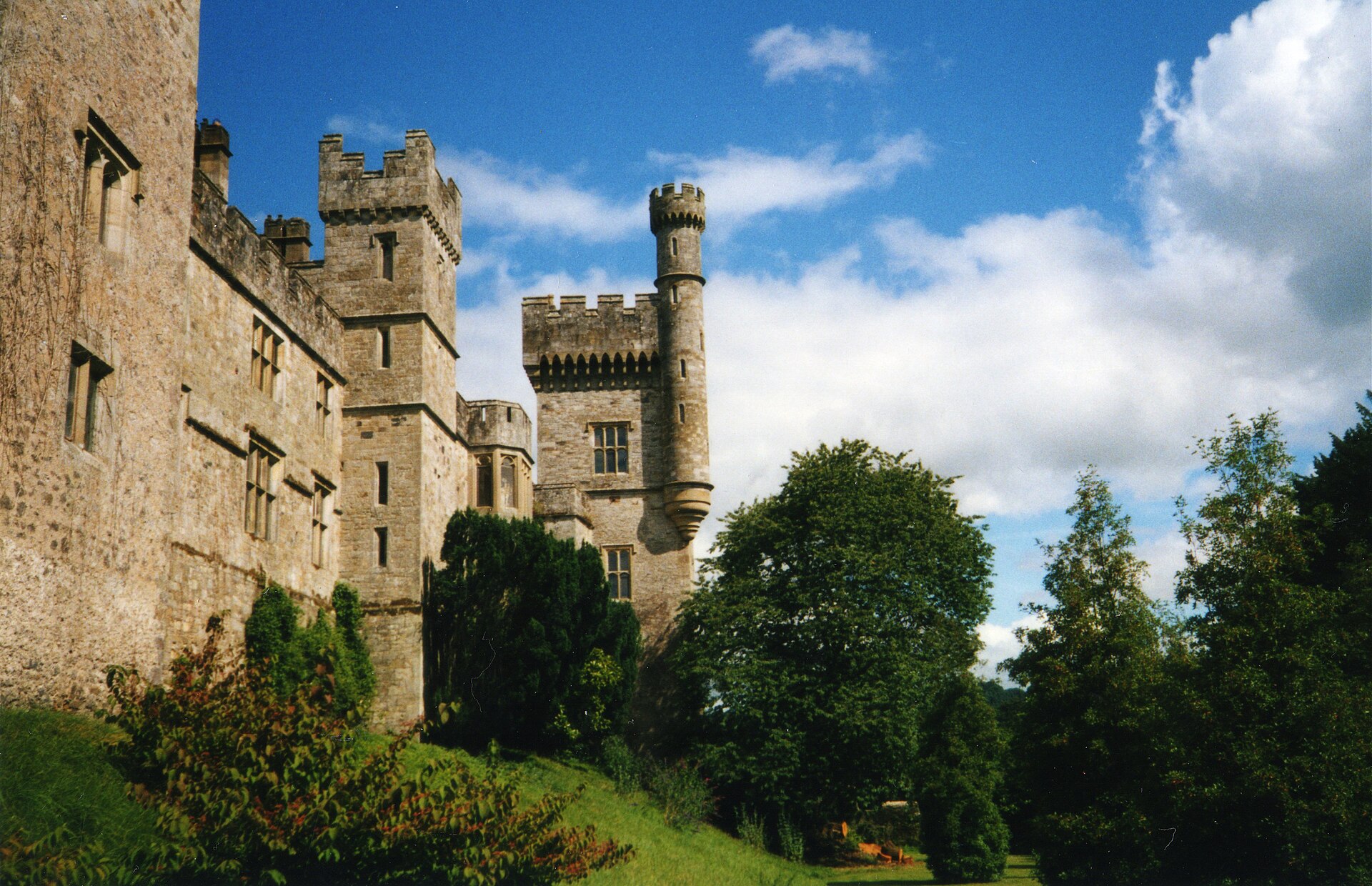
The castle's present Gothic-revival appearance is mostly the work of the 6th Duke of Devonshire, who from 1812 engaged the architect William Atkinson to rebuild it using stone shipped from Derbyshire, and later brought in Sir Joseph Paxton, designer of the Crystal Palace, for further work through the 1850s. Augustus Pugin and the furniture maker J.G. Crace converted the ruined chapel of the old Bishop's Palace into a Gothic banqueting hall with a large stained-glass window, and the castle still holds some of the best Pugin domestic furniture in private hands. Lord Charles Cavendish, son of the 9th Duke, married the dancer Adele Astaire, sister of Fred Astaire, and Adele went on living at Lismore until shortly before her death in 1981. The 12th Duke of Devonshire owns the castle today; his son, William Cavendish, Earl of Burlington, and his wife Laura, Countess of Burlington, manage the estate.
What a visitor can actually see: this is not a museum with a collection
Lismore Castle itself is a lived-in private residence. It is not open to the public for tours, and its interior, including the Pugin hall and the family's own art and furniture, is not on public display. Separately, the castle is also let commercially as an exclusive-use holiday residence, for up to 27 guests, through its own booking operation at lismorecastle.com, which is a different business from the visitor attraction described on this page; the two should not be confused, and a visitor looking for the gardens and gallery wants lismorecastlearts.ie, not the castle-rental site.
What is genuinely open to the public is Lismore Castle Arts: a not-for-profit contemporary art gallery, and the historic gardens it sits within. This is closer to a Kunsthalle than a museum. It holds no fixed collection of historic artworks for a visitor to study, and it should not be presented as one. Its strength is a changing programme of contemporary exhibitions, run since 2005, together with a small group of sculptures that have become permanent fixtures of the grounds, described below.
The gallery in the west wing, and twenty years of exhibitions
Lismore Castle Arts was founded in 2005, when William and Laura Cavendish converted the derelict west range of the castle into a gallery. Programmed to show work of international standing alongside smaller shows and a learning programme, it has presented artists including Anne Collier, Gerard Byrne, Dorothy Cross, Nancy Holt, Richard Long, Charlotte Prodger, Eva Rothschild and Ai Weiwei, under the direction of curator Paul McAree, with support from the Arts Council and Waterford City and County Council. Two further spaces have since opened in Lismore town itself: St Carthage Hall, a former chapel converted in 2011, and The Mill, a restored building brought into use in 2022 for work too large or physically demanding for the Main Gallery.
The gallery marked its 20th anniversary in 2025 with Kunstkammer, a cabinet-of-curiosities exhibition curated by the writer Robert O'Byrne, mixing antique Chinese teak chairs, a 17th-century Italian ebonised cabinet and a circa-1900 taxidermy tableau of boxing squirrels with new work by artists including Sarah Lucas, Urs Fischer, Sasha Sykes and Dorothy Cross. An earlier show, Palimpsest, ran from 31 March to 13 October 2019 with work by Martine Syms, Charlotte Prodger, Lynette Yiadom-Boakye, Zoe Leonard, Hilary Lloyd, Nicole Eisenman and Andrea Zittel, among others.
Gardens older than the castle's present walls
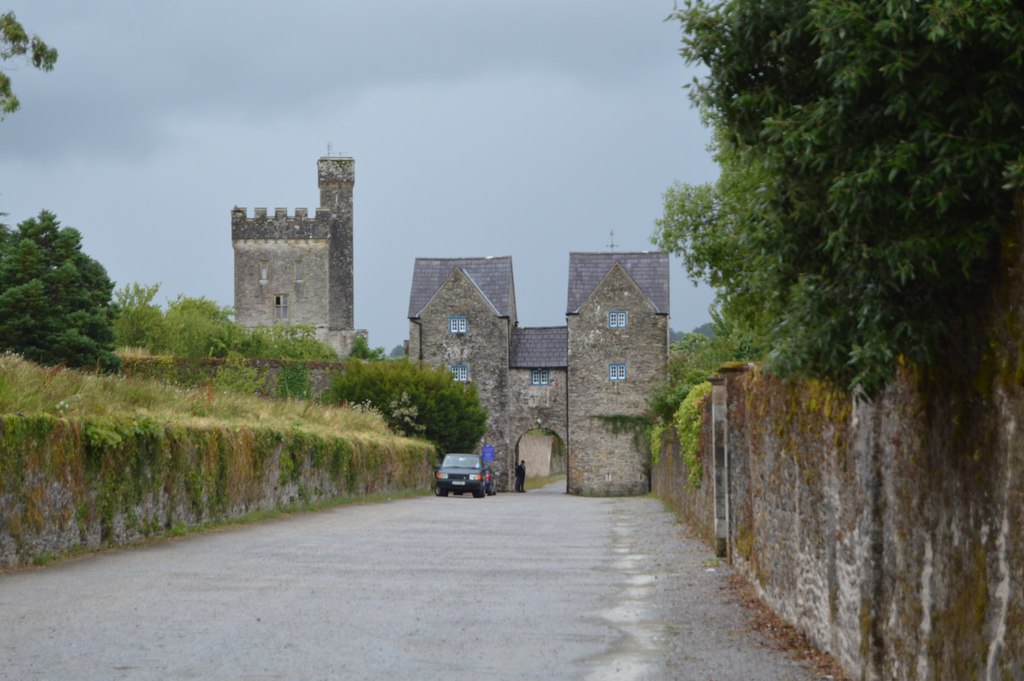
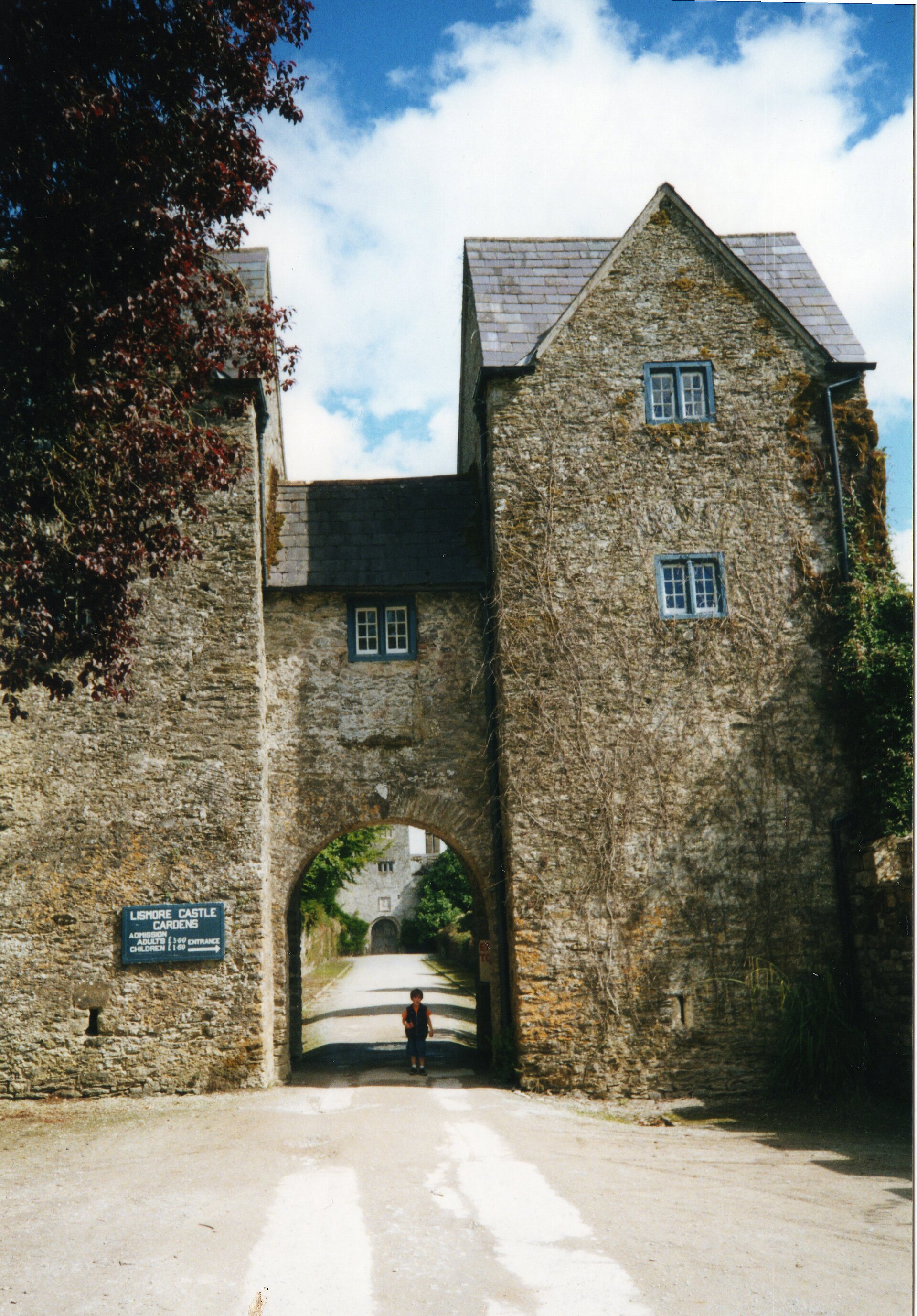
The gardens are said to be the oldest continually cultivated gardens in Ireland, laid out across seven acres inside the castle's 17th-century outer defensive walls. The Upper Garden's walls and terraces date to about 1605, when Richard Boyle, 1st Earl of Cork, first commissioned it as a mixed ornamental and kitchen garden; the plantings have changed through the centuries while the stone has not. The Lower Garden took its present, more naturalistic form in the 19th century, shaped for the 6th Duke of Devonshire with the involvement of Joseph Paxton, and is reached from the Upper Garden down a stairway inside the Riding House, the surviving gatehouse of the castle's old defences. A yew avenue at the heart of the Lower Garden is, by the garden's own account, older than the garden around it, and local tradition holds that Edmund Spenser composed part of The Faerie Queene beneath those yews around 1590, a story attached to the site rather than a documented fact. Sir Walter Raleigh's period of ownership, 1589 to 1602, is also the basis for a popular but disputed tradition that he introduced the potato to Ireland from Lismore; this page records it as tradition, not as an established fact.
The Stable Yard: what stays when the exhibitions change
Since 1999 the gardens have carried contemporary sculpture alongside the historic planting, and since 2021 the former stable yard has been developed into a dedicated Sculpture Yard for permanent, rather than temporary, work. Antony Gormley's Learning to be I (1992) stood for years in the Lower Garden before being restored and given a new site here. Dorothy Cross's Eye of Shark, twelve reclaimed cast-iron baths first shown at St Carthage Hall in 2014, has been permanently installed in the Upper Stable Yard since 2022. Niamh O'Malley was commissioned in 2021 for a permanent piece drawn from her own presentation at the 2022 Venice Biennale. The gallery's own published account also names Eilis O'Connell, Franz West, Roger Hiorns and David Nash among the artists with standing sculpture in the grounds, without giving individual titles or installation dates for each; this page does not invent them.
What visitors say, and what surprises them
On TripAdvisor, Lismore Castle Gardens holds a rating of 4.2 out of 5 from 334 reviews, read 28 September 2026. The gardens themselves draw the most consistent praise: reviewers describe the variety of planting across the different terraces, grounds kept lush rather than over-manicured, and a cafe whose homemade cake comes up again and again. The site is dog-friendly on lead, and the garden paths give close views of the castle that a visitor cannot get any other way, since the building itself is not open. That last point is also the most common source of disappointment: more than one reviewer has come away frustrated that no part of the castle interior can be seen on a paid ticket, and the steep, historic terrain, with a staircase-only route into the Lower Garden, limits the visit for anyone with mobility difficulties. The contemporary art on show in the gallery gets a genuinely mixed reception from garden visitors, some of whom simply do not warm to it. A 2019 review of the exhibition Palimpsest in Burlington Contemporary, by Frank Wasser, praised the gallery's curatorial rigour and singled out Hilary Lloyd's video installation, while raising a substantive institutional criticism: that an internationally curated show staged at an Irish castle included no Irish artists, in a house owned by an English dukedom, without the exhibition addressing that context.
What visitors say
Visitors consistently single out the gardens rather than the castle or the gallery as the reason to come: the variety of planting, the way the grounds are kept without feeling over-manicured, and the cafe's cake. The gallery's contemporary programme draws a more mixed response, and a recurring surprise is that the castle building itself, a private residence, cannot be entered or toured.
What is praised, what is criticised
- Praised: The range and condition of the planting across the Upper and Lower Gardens, described by repeat visitors as varying meaningfully through the seasons
- Praised: The cafe, particularly the homemade cakes made by the castle's own chef
- Praised: The grounds being dog-friendly on lead, and the close-up views of the castle the garden paths provide
- Criticised: That the castle itself is a private residence and not open to visitors, which some reviewers say is not made clear enough before paying admission, leaving them feeling short-changed
- Criticised: The Lower Garden's staircase access and generally steep, historic terrain, which visitors note limits the visit for anyone with mobility difficulties
- Criticised: The contemporary art in the gallery, which some visitors find is simply not to their taste next to the universally admired gardens
Ratings on other platforms
TripAdvisor: 4.2 from 334 ratings, read 28 September 2026
A platform average is a tertiary source: it moves, it is not audited, and we quote no visitor's words.
Questions about Lismore Castle
Where is Lismore Castle?
Lismore Castle Arts, Lismore, Co. Waterford, P51 F859, Ireland.
How much does it cost to visit?
Adult: EUR 11; Concession (senior/student): EUR 9; Child (6-16): EUR 7; Family (2 adults, 3 children): EUR 33; St Carthage Hall / The Mill: free. As confirmed 28 September 2026.
When is it open?
Monday-Sunday 11:00-18:00. Closed: Closed to visitors from 26 October 2026 until the 2027 season reopens in March; this is the ordinary winter closure of a seasonal garden and gallery, not an unplanned closure. As confirmed 28 September 2026.
How do you get there?
Car park: Free public parking at Lismore town car park, about 150 metres from the garden entrance, a five-minute walk uphill via signposted directions; On foot: The entrance sits on the edge of Lismore town, within walking distance of Lismore Cathedral, the Heritage Centre and Lady Louisa's Walk.
What should you see first?
Learning to be I (1992) (Antony Gormley); Eye of Shark (Dorothy Cross); Stable Yard Commission (2023) (Niamh O'Malley); Permanent garden sculpture (Eilis O'Connell); Permanent garden sculpture (Franz West); A Life of Their Own (2008) (Roger Hiorns and others).
What we could not confirm
- The gallery's own published pages name Eilis O'Connell, Franz West, Roger Hiorns and David Nash as artists with permanent sculpture in the gardens, but do not give individual titles, materials or installation dates for each work; a future desk with access to the gallery's own catalogue or a site visit could complete this.
- The claim that Edmund Spenser wrote part of The Faerie Queene under the Yew Walk, and the claim that Walter Raleigh introduced the potato to Ireland at Lismore, are both widely repeated but are traditions attached to the site rather than facts established in the sources checked for this page; neither should be upgraded to fact without a primary source.
Images
Sources
- 1Lismore Castle Arts, Tickets and Opening Hours lismorecastlearts.ie/plan-your-visit/tickets-opening-hours
- 2Lismore Castle Arts, About Lismore Castle Arts lismorecastlearts.ie/about/about-lismore-castle-arts
- 3Lismore Castle Arts, Contact us lismorecastlearts.ie/about/contact-us
- 4Wikipedia, Lismore Castle (, checked for identity and general history only) en.wikipedia.org/wiki/Lismore_Castle
- 5Lismore Castle Arts, Our Galleries lismorecastlearts.ie/plan-your-visit/our-galleries
- 6The Art Newspaper, Lismore Castle's art gallery celebrates 20th anniversary with an exhibition dedicated to the kunstkammer, 14 April 2025 theartnewspaper.com/2025/04/14/lismore-castles-art-gallery-celebrates-20th-anniversary-with-an-exhibition-dedicated-to-the-kunstkammer
- 7Wikidata, Q2368947, Lismore Castle (, checked for identity and coordinates only) wikidata.org/wiki/Q2368947
- 8Lismore Castle Gardens, History lismorecastlegardens.com/history/
- 9TripAdvisor, Lismore Castle Gardens ( aggregate rating and consensus, read 28 September 2026) tripadvisor.com/Attraction_Review-g778062-d295212-Reviews-Lismore_Castle_Gardens-Lismore_County_Waterford.html
- 10Lismore Castle Arts, Facilities and Access lismorecastlearts.ie/plan-your-visit/facilities-access
- 11Lismore Castle Arts, Cafe lismorecastlearts.ie/plan-your-visit/caf%C3%A9
- 12Lismore Castle Arts, Sculpture Yard lismorecastlearts.ie/whats-on/sculpture-yard
- 13Lismore Castle Arts, Niamh O'Malley installation lismorecastlearts.ie/whats-on/niamh-omalley
- 14Burlington Contemporary, Frank Wasser, Contemporary as palimpsest at Lismore Castle, 7 June 2019 contemporary.burlington.org.uk/reviews/reviews/contemporary-as-palimpsest-at-lismore-castle
- 15Lismore Castle Arts, The Gardens lismorecastlearts.ie/plan-your-visit/the-gardens
- 16Munster Vales, Lismore Castle Gardens and Gallery munstervales.com/en/plan-a-trip/lismore-castle-gardens-gallery
- 17Lismore Castle Arts, Stable Yard Sculpture Tour lismorecastlearts.ie/whats-on/stable-yard-sculpture-tour-3
- 18The Hall and Lismore Castle (the site that www.lismorecastle.com itself redirects to), confirming the castle-rental operation is a separate business from the visitor attraction described on this page thehallandlismorecastle.com/lismore-castle/