Limassol Castle
Museum · Kastro Lemesou · Founded 1987
Open, admission and hours confirmed 23 September 2026 · 23 sources
On this page 14 sections
ContentsClose
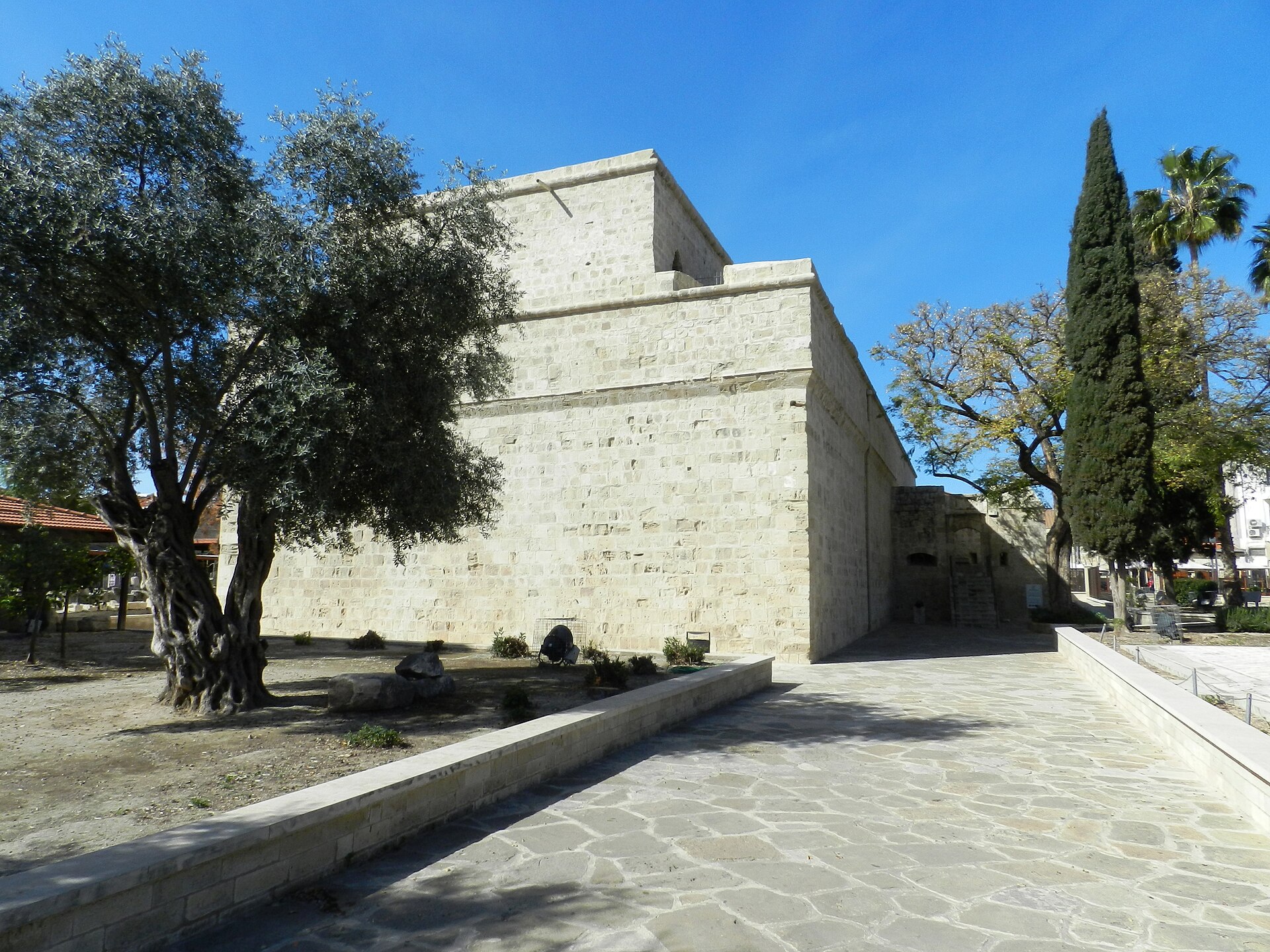
Limassol Castle's strength for this archive is less any single canonical masterpiece than a compact, well-rounded cross-section of medieval Cypriot material culture, shown inside a building that is itself part of the exhibit: Byzantine silver and liturgical objects, glazed medieval and Islamic pottery, carved funerary stonework, and daily-life objects such as weights and keys, set within the castle's own surviving Gothic hall and an excavated Frankish church apse.
| Local name | Kastro Lemesou |
|---|---|
| Kind | Museum |
| Founded | 1987 |
| City and country |  Limassol, Cyprus Limassol, Cyprus |
| Address | Richardou and Berengarias, near the Old Port, Limassol 3042, Cyprus |
| Website | museum.cy/en/museums/limassol_castle |
| Status | Open, confirmed 23 September 2026 |
| Record last verified | 23 September 2026 |
Visiting
- Hours
- Monday-Friday09:00 to 17:00
- Saturday10:00 to 17:00
- Sunday10:00 to 17:00The Department of Antiquities own museums portal (museum.cy) instead gives Sunday as 10:00-13:00; see notes_for_editor. This page follows the official Visit Cyprus listing, corroborated by All About Limassol
- Closed
- Public holidays, per the official Visit Cyprus listing.
- Admission
- AdultEUR 4.50Organised groups of more than 10 people receive a 20 percent reduction on this price, per the official Visit Cyprus listing
- Department of Antiquities 1-day multi-museum cardEUR 8.50Covers entry to all Department of Antiquities museums and ancient monuments for one day
- Department of Antiquities 3-day multi-museum cardEUR 17Covers entry to all Department of Antiquities museums and ancient monuments for three days
- Department of Antiquities 7-day multi-museum cardEUR 25Covers entry to all Department of Antiquities museums and ancient monuments for seven days
- Do I need to book?
- No advance booking is described for individual visitors; entry is during posted opening hours
- Address
- Richardou and Berengarias, near the Old Port, Limassol 3042, Cyprus MapOn foot In the historic old town of Limassol close to the Old Port and Limassol Marina, within the pedestrian core of the city centre
- Website
- museum.cy/en/museums/limassol_castle
- Telephone
- +357 25 305 419
Before you go how long, access, photography, bags, eating, shop
- How long to allow
- Well under an hour for most visitors, who describe the castle as compact; those who linger over the stonework, the Gothic Hall and the roof report closer to an hour
- Access
- Described by a local visitor guide as not wheelchair accessible. The building is a stone fortress reached internally by stairways and a spiral staircase to the upper floor and roof, consistent with visitor reports of climbing between the basement and the roof
Prices and hours change. We take them from the institution's own pages and print the day we read them, and you can check the current position at the source we used. Confirm before you travel.
What is inside
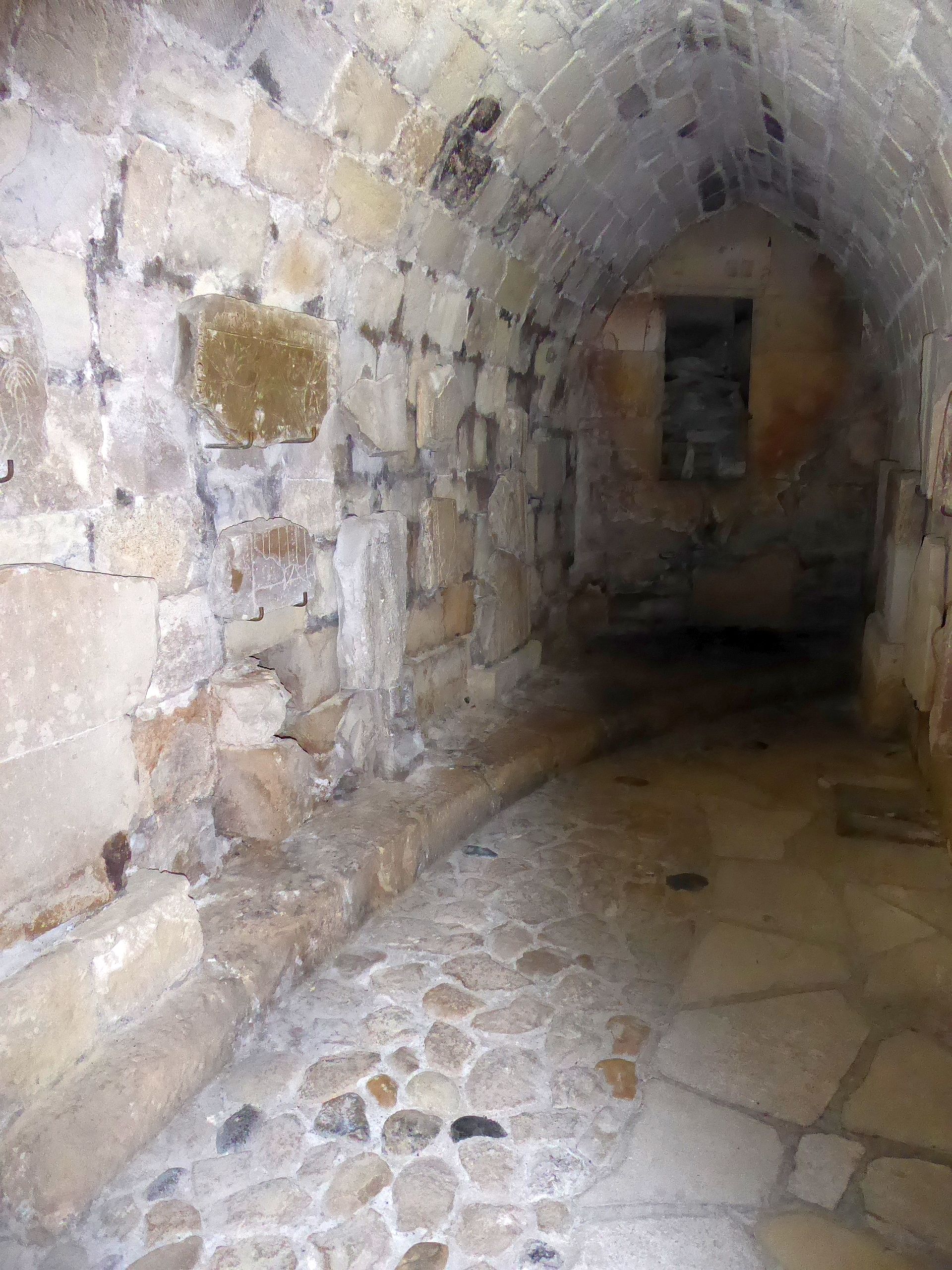
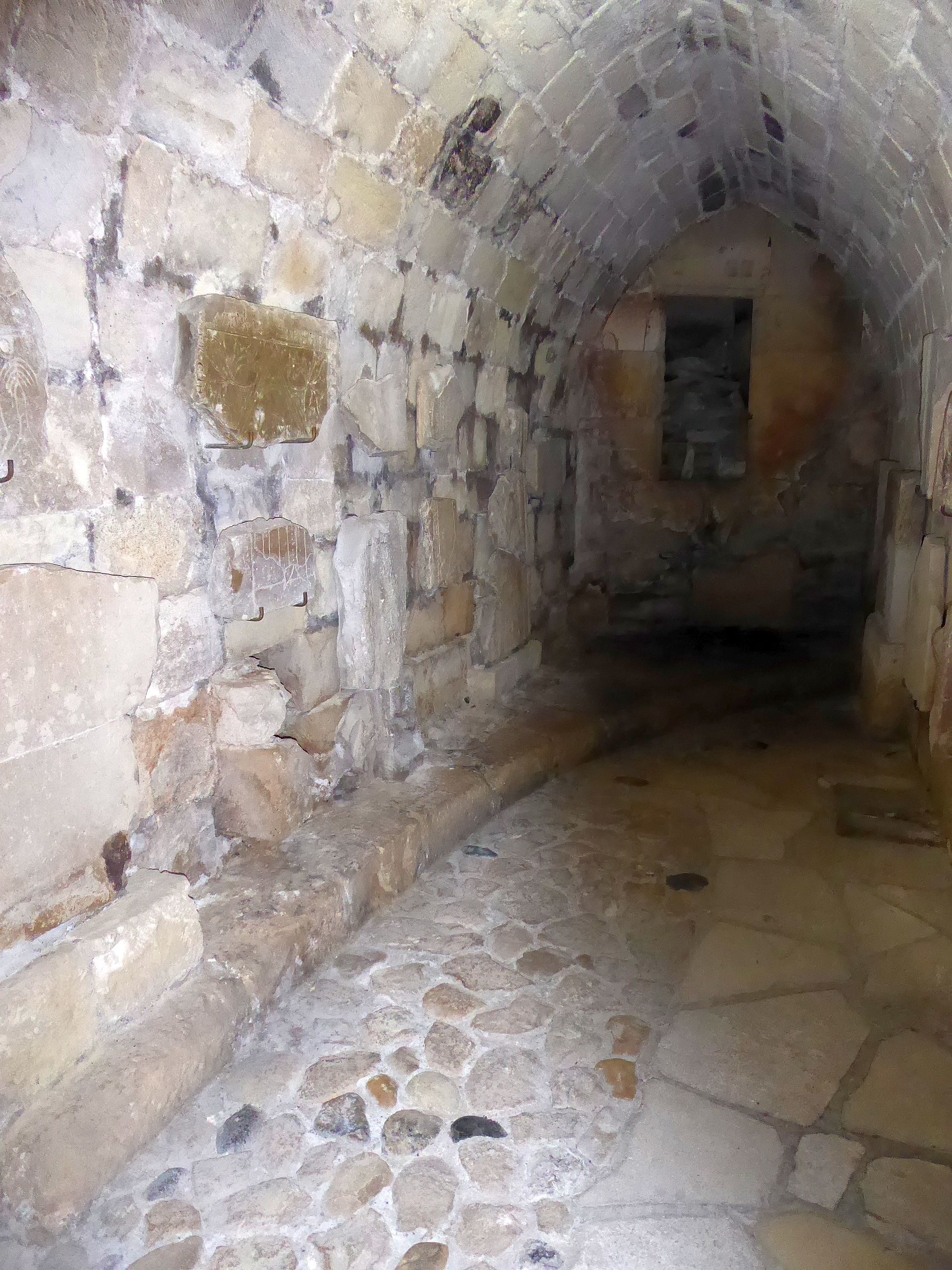
Photograph by Chris06 · CC BY-SA 4.0 Ground-floor galleries and the Frankish church apse
The castle's lower level incorporates the surviving apse of an earlier Frankish-period church, uncovered by archaeological investigation beneath the building, alongside display cases of the Medieval Collection's earlier material. Excavation here also revealed traces of an Early Christian basilica of the 4th to 7th century and a Middle Byzantine monument of the 10th to 11th century, predating the castle itself.
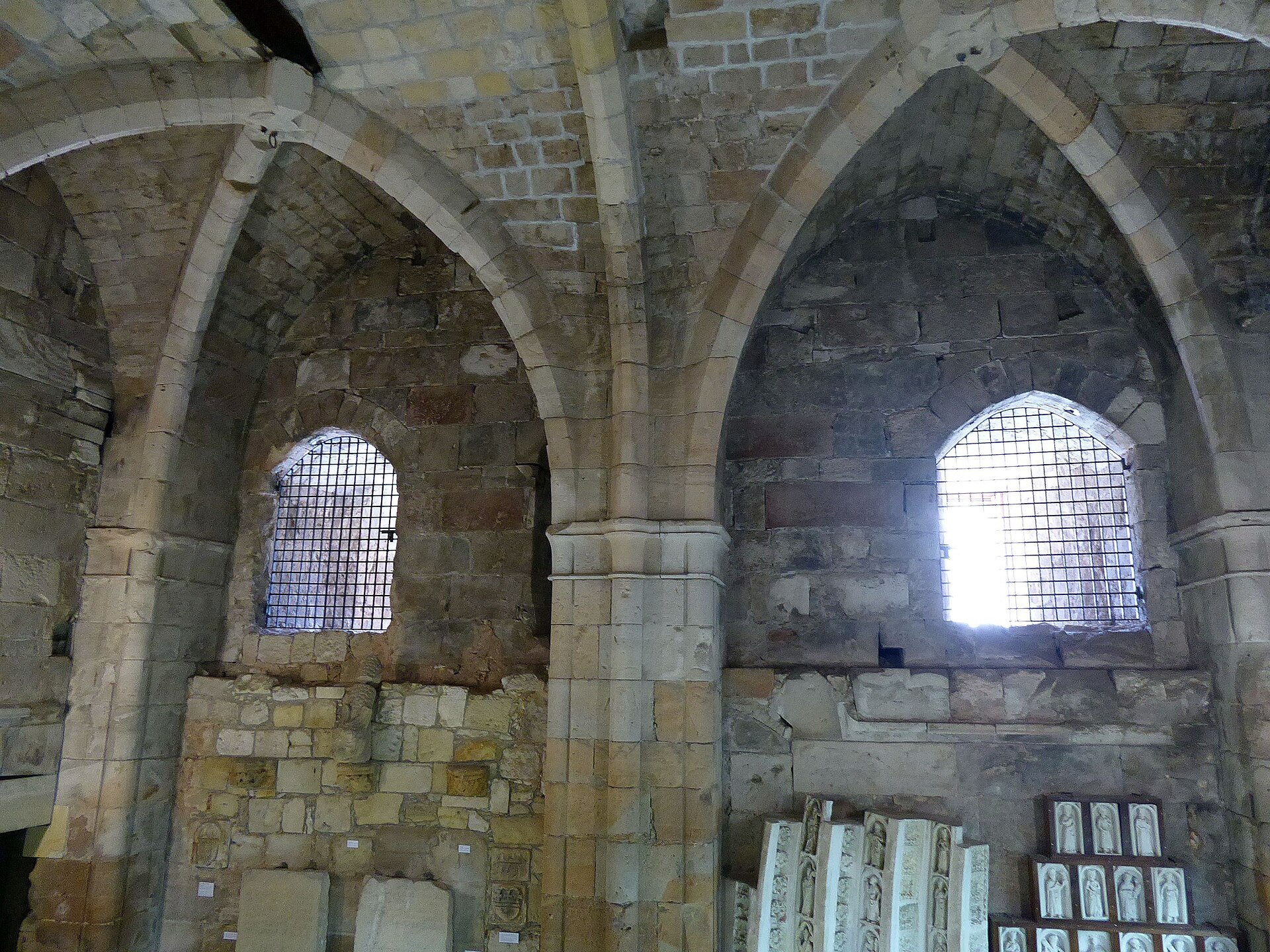
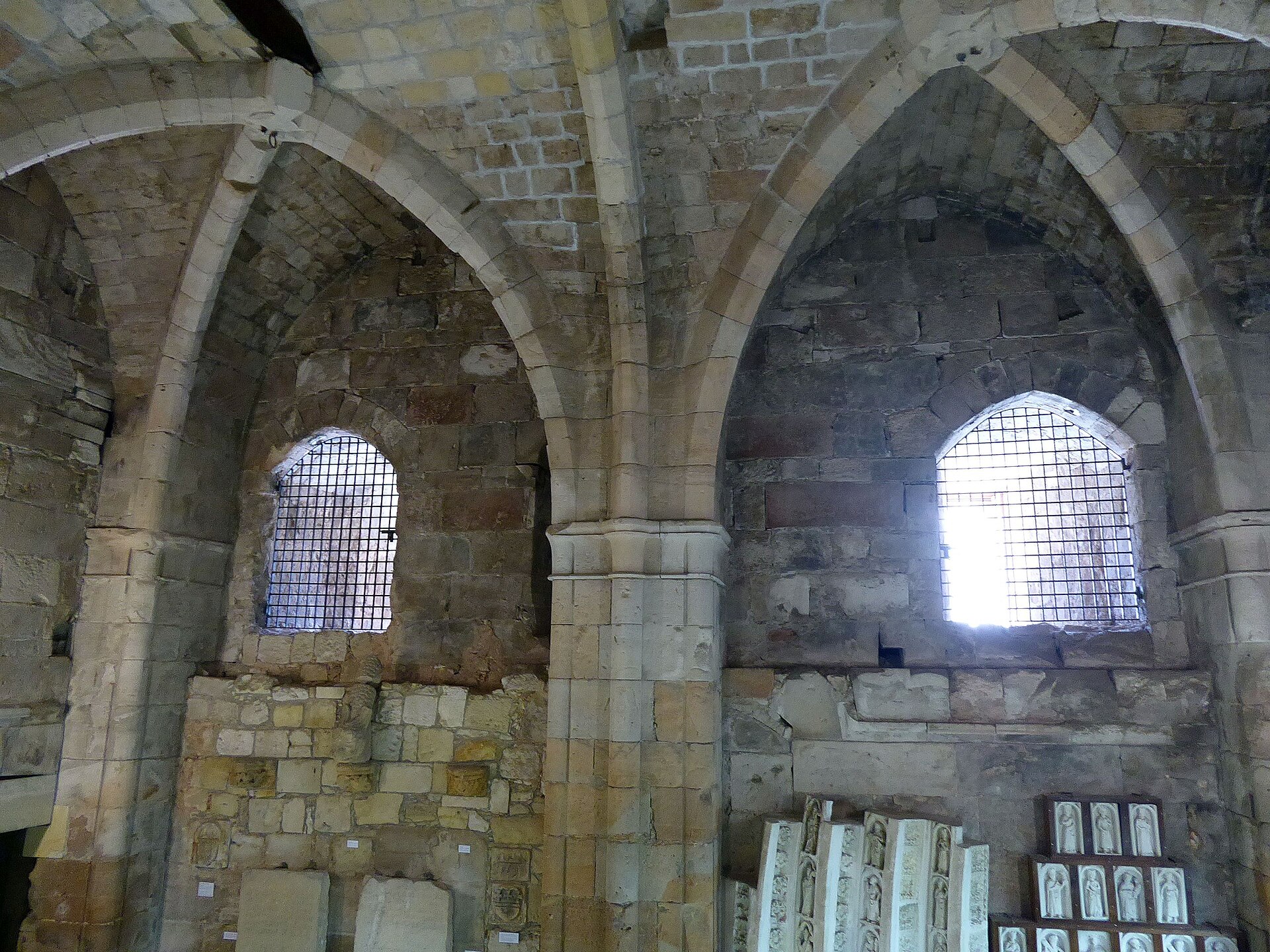
Photograph by Chris06 · CC BY-SA 4.0 The Gothic Hall
A vaulted medieval hall with cross-ribbed Gothic vaulting and pointed Gothic windows and doorways, one of the castle's most architecturally intact interior spaces and a focal point of the visitor route through the Medieval Collection.
The underground chamber and former prison cells
The castle's underground chamber and its first floor were converted into prison cells under later use of the building and remained in service as such until 1950, after which the whole structure passed to the Department of Antiquities. No free-licence interior photograph specifically of this space was located on Wikimedia Commons for this page; it is described here from the documented history rather than illustrated.
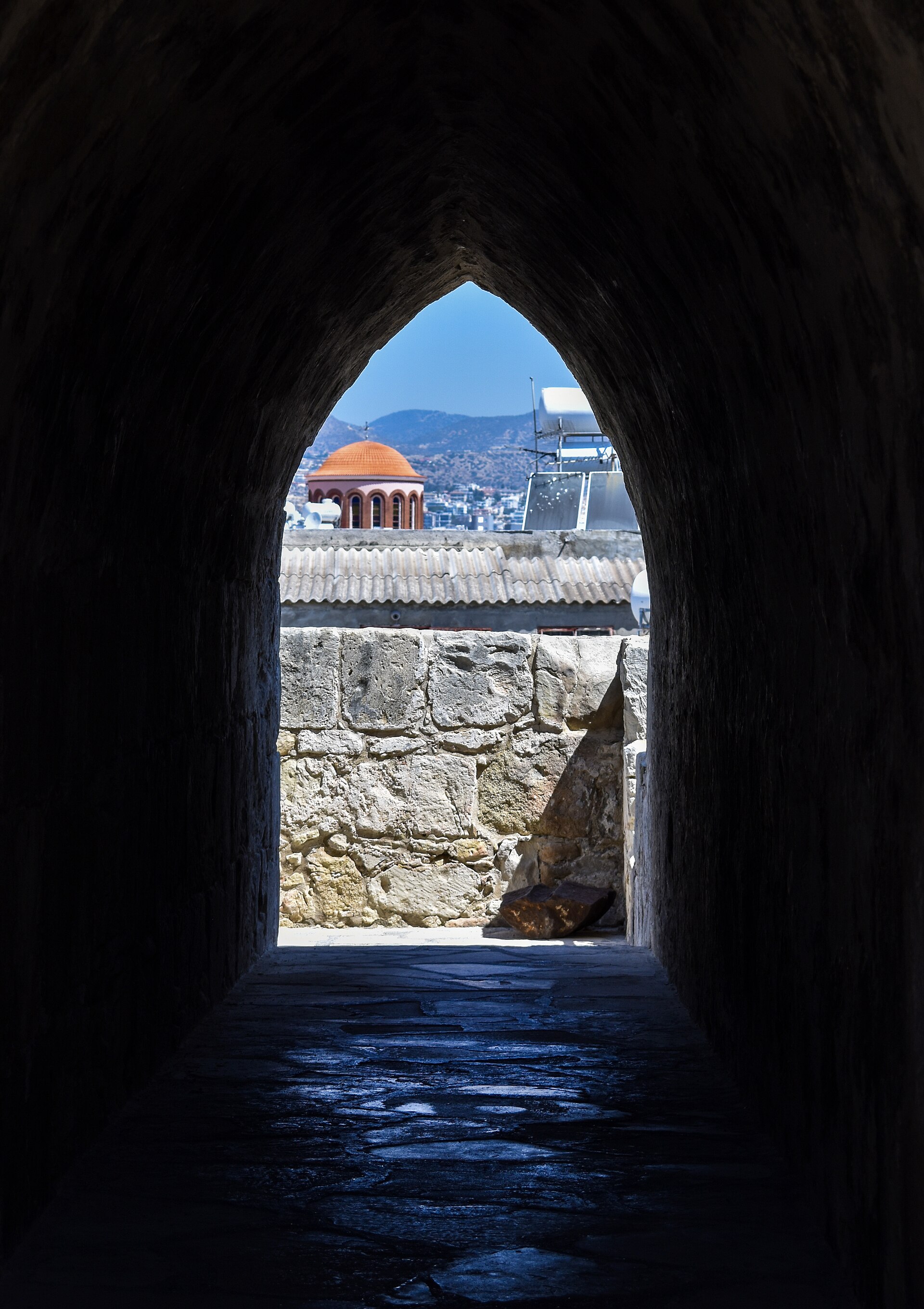
CC0 The roof and rampart walk
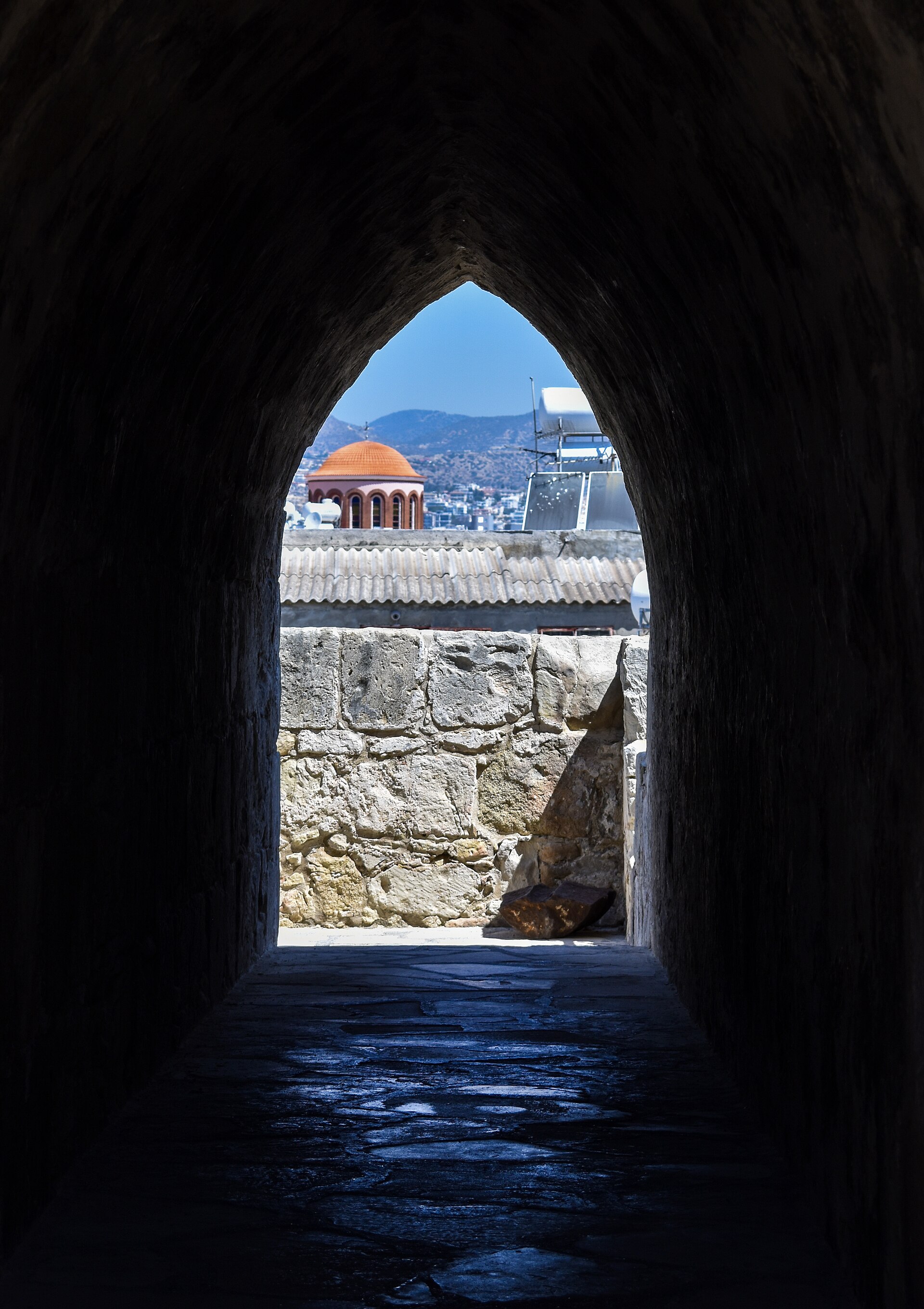
An accessible upper level and roof reached by internal stairs, from which visitors describe panoramic views across the old town of Limassol; several visitor reviews single out this view as the highlight of the visit.
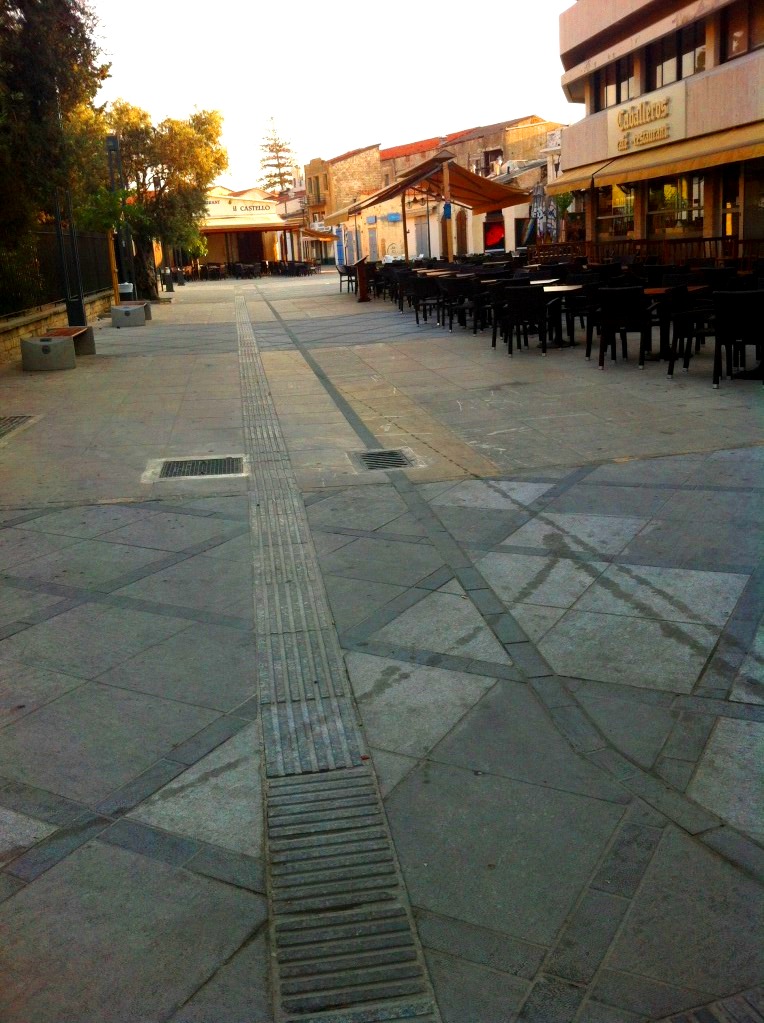
Photograph by Tech bro · CC BY-SA 3.0 The castle courtyard (Castle Square)
The open square and approach in front of the castle's east facade, part of the wider pedestrianised old-town setting near the Old Port; in June 2026 the Department of Antiquities used this space and the castle walls to host the bicommunal crochet installation 'A Thousand Hands, A Thousand Stories: Common Ground', on show through the end of 2026.
What to see first
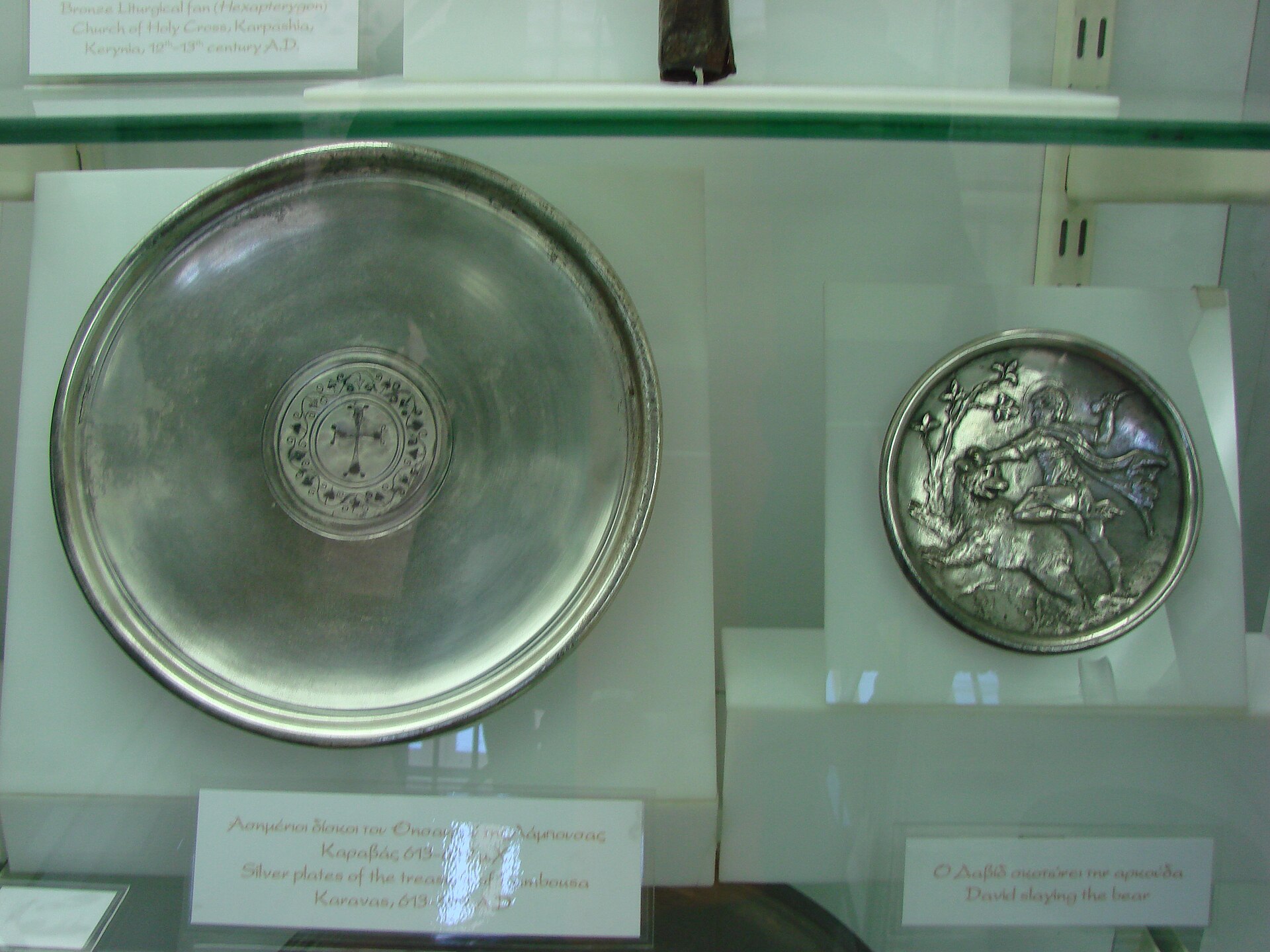
Byzantine silver plates
Byzantine workshop; a photographer's caption for one displayed set dates it to 613 ADNamed specifically by the official Visit Cyprus listing as among the museum's finer holdings ('superb silver Byzantine era plates'); it is not established on the sources consulted for this page whether these are connected to the celebrated 7th-century Cyprus silver-plate hoard divided between the Cyprus Museum in Nicosia and the Metropolitan Museum of Art, see open_questions.3
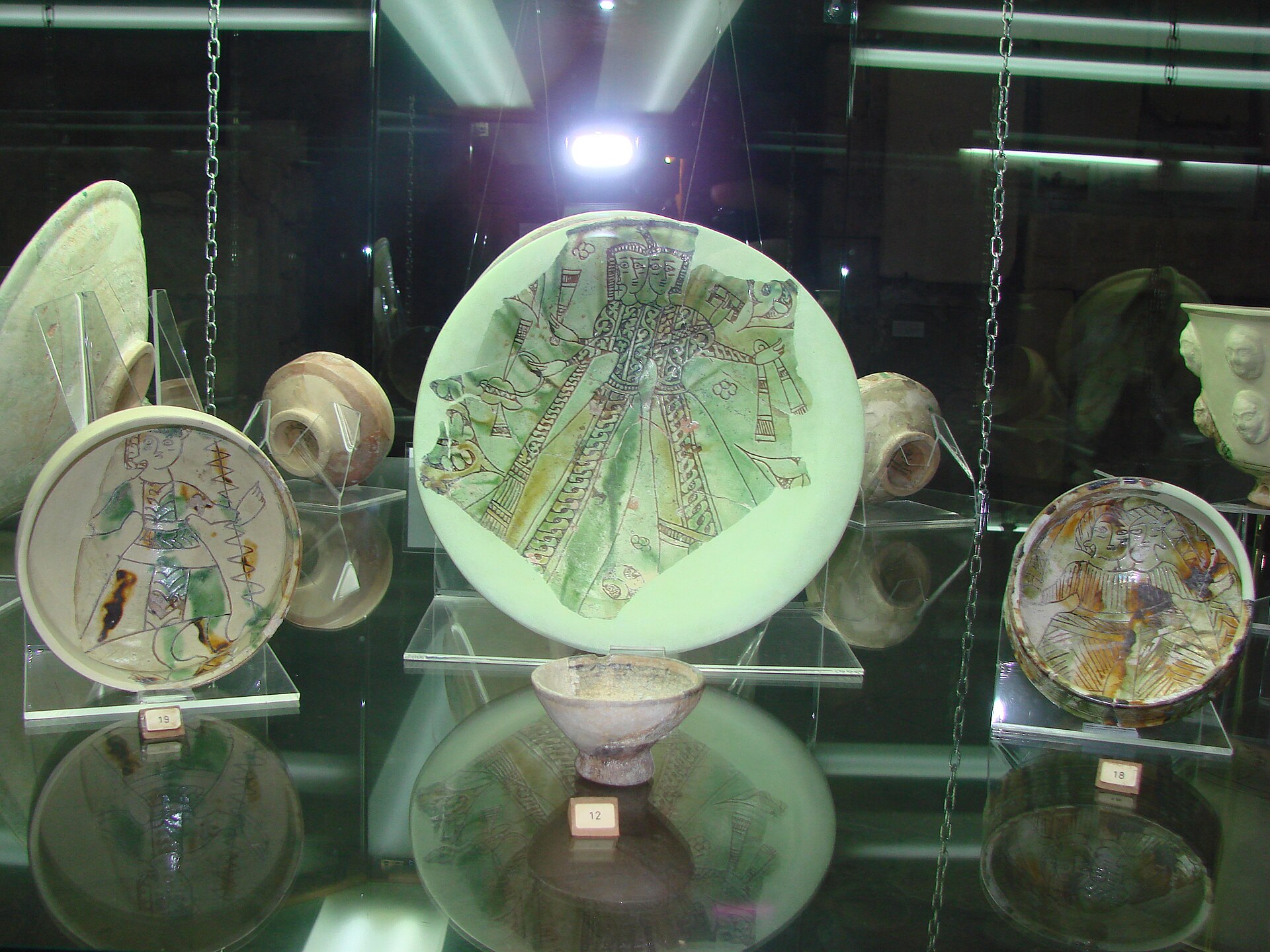
Glazed medieval and Islamic pottery
Byzantine, medieval Cypriot and Islamic workshopsDescribed in the museum's own collection summary as spanning Byzantine, medieval and Islamic glazed and utility ceramics, one of the largest single categories in the Medieval Collection.6
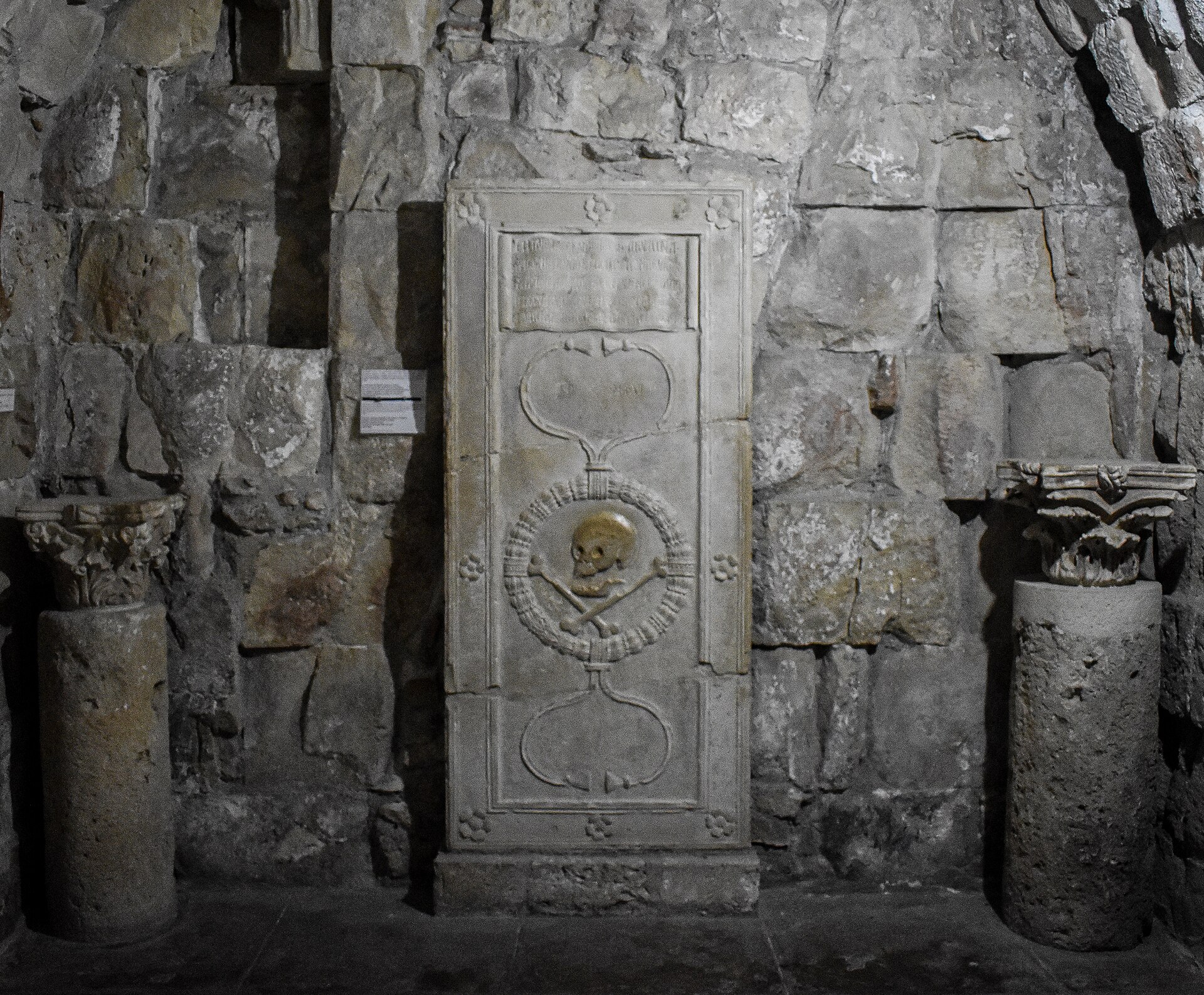
Carved funerary slabs and tombstone covers
Medieval Cyprus, various datesSpecifically praised in a visitor review as among the finest stonework in the collection ('some beautiful examples of stone work and tomb stone covers'), and among the objects that survive from the church remains beneath and around the castle.9
The Gothic Hall's cross-ribbed vaulting
Medieval builders, incorporated into the present Ottoman-period structureOne of the castle's most complete surviving Gothic interior spaces, with pointed windows and a ribbed vault, and a fixed point on the visitor route through the museum.15
The chapel of the 1191 royal wedding tradition
Attributed by tradition to the castle as it stood in 1191The specific, named setting for Cyprus's best-known royal legend: the marriage of Richard the Lionheart to Berengaria of Navarre and her coronation as Queen of England, as stated by the official Visit Cyprus listing rather than left as a vague site tradition.3
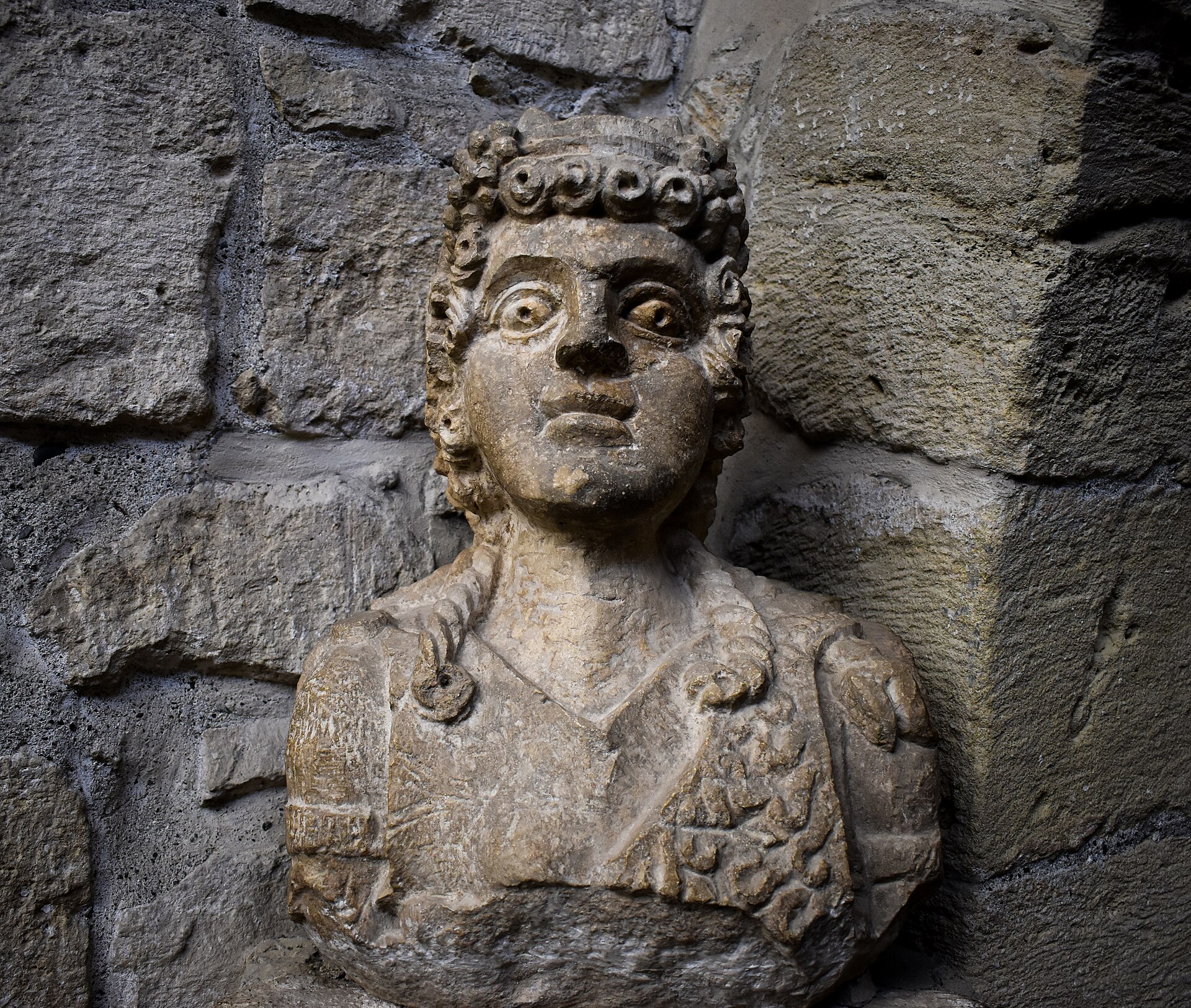
Bust of Dionysus in stone
UnattributedA classical-period carved bust on display in the museum, evidence that the site and its collection extend earlier than the medieval material that gives the museum its name.20
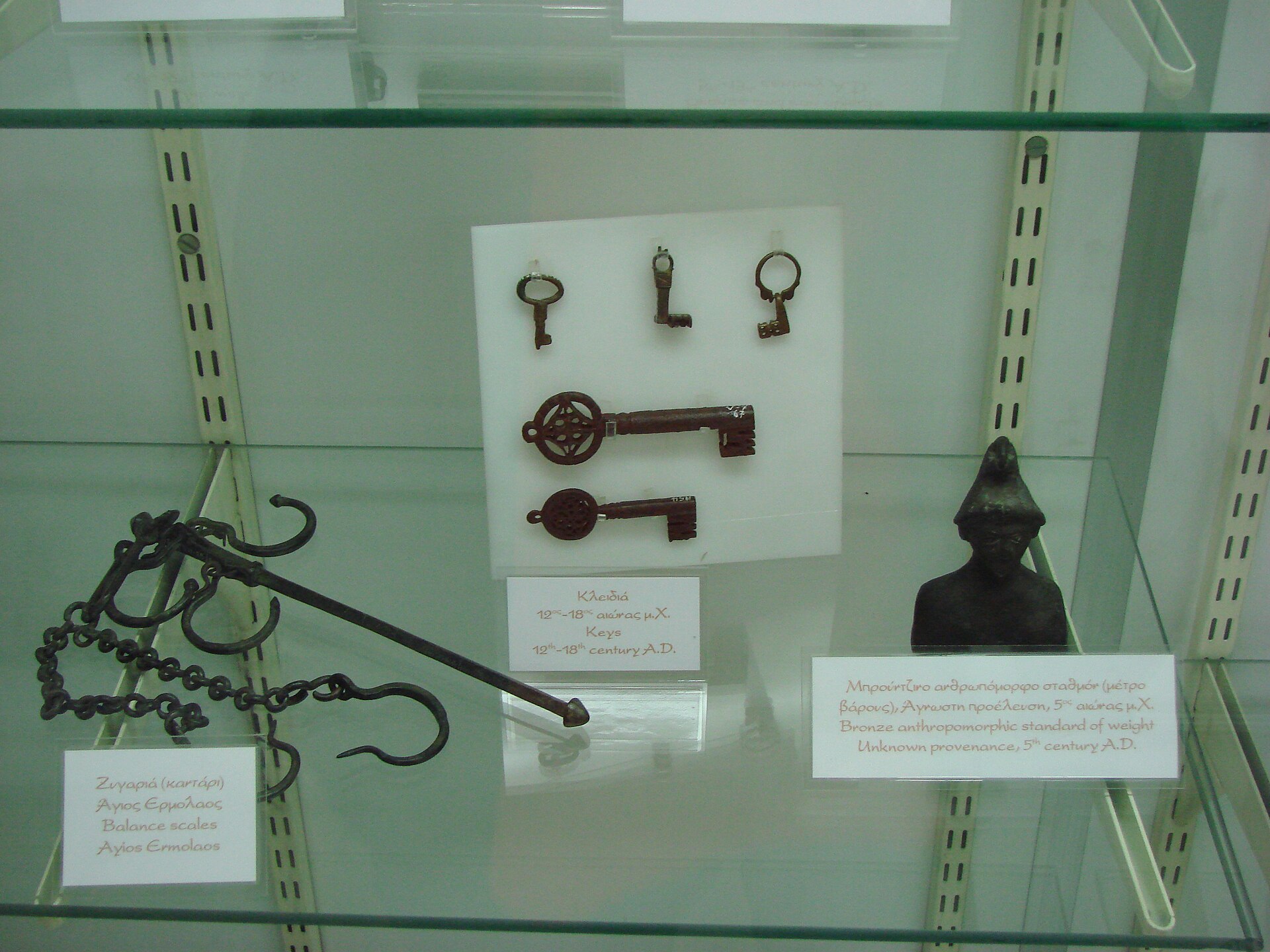
Bronze weights, keys and a merchant's balance scale
Medieval CyprusA grouped display of everyday trade and household objects, including an anthropomorphic bronze standard of weight, illustrating the 'daily life' strand of the collection's stated remit alongside its arms, armour and liturgical material.21
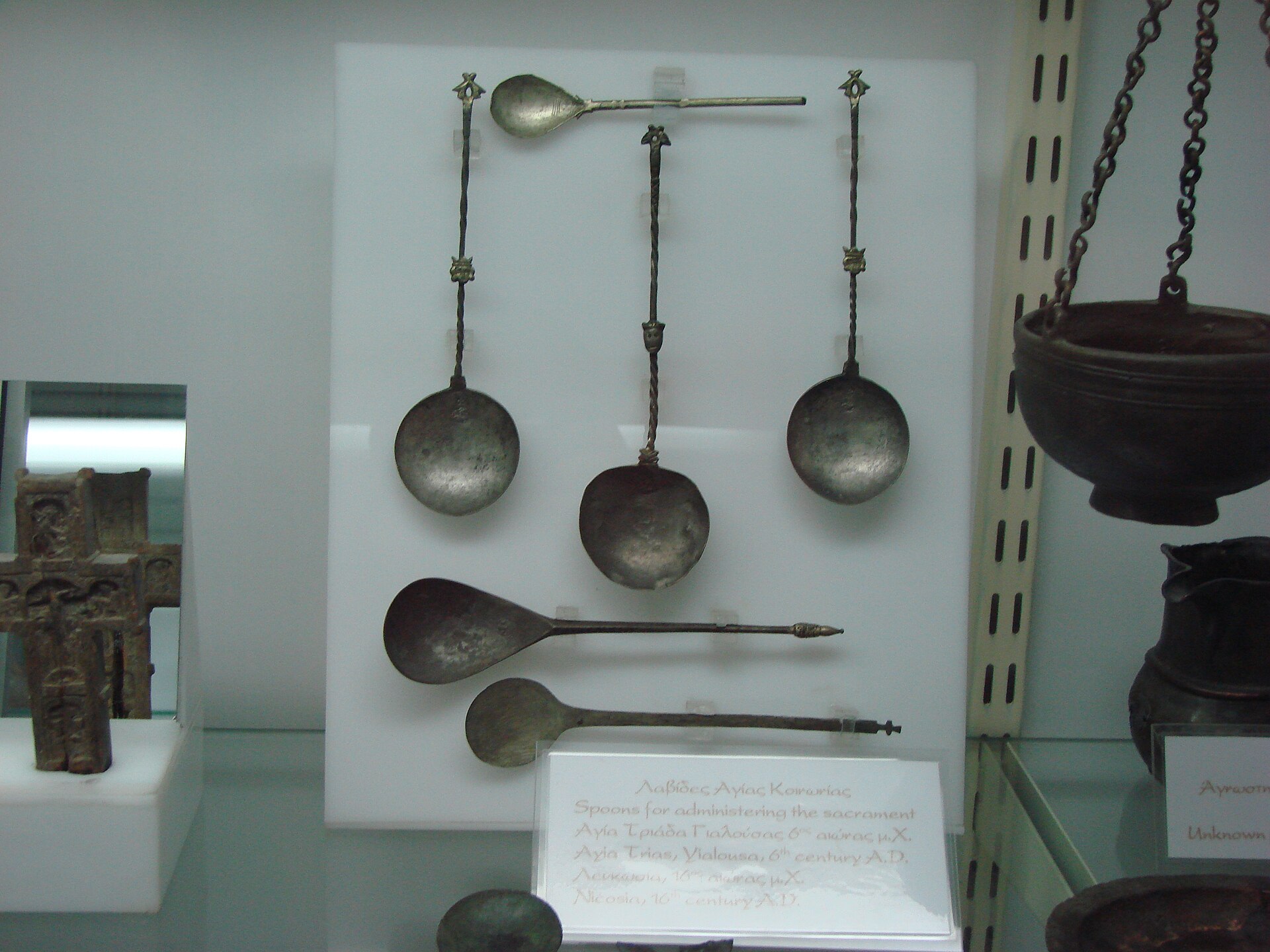
Medieval eucharist spoons
Medieval CyprusLiturgical silverware used in the administration of the eucharist, part of the collection's cult and religious-life objects drawn from across the island's medieval churches.22
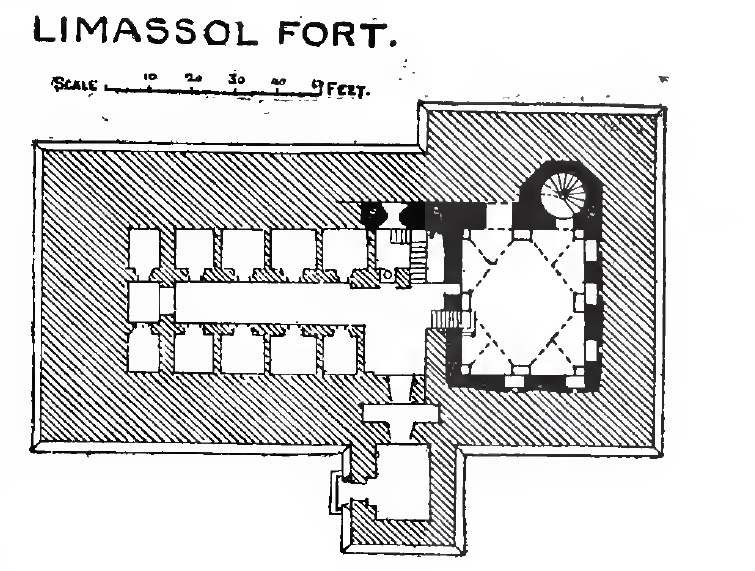
The 1918 measured ground plan of the castle
George JefferyAn early 20th-century architectural survey drawing of the castle, predating its current museum use and a documentary record of the building's fabric before 20th-century conservation work.23
A frontier fortress rebuilt across four centuries
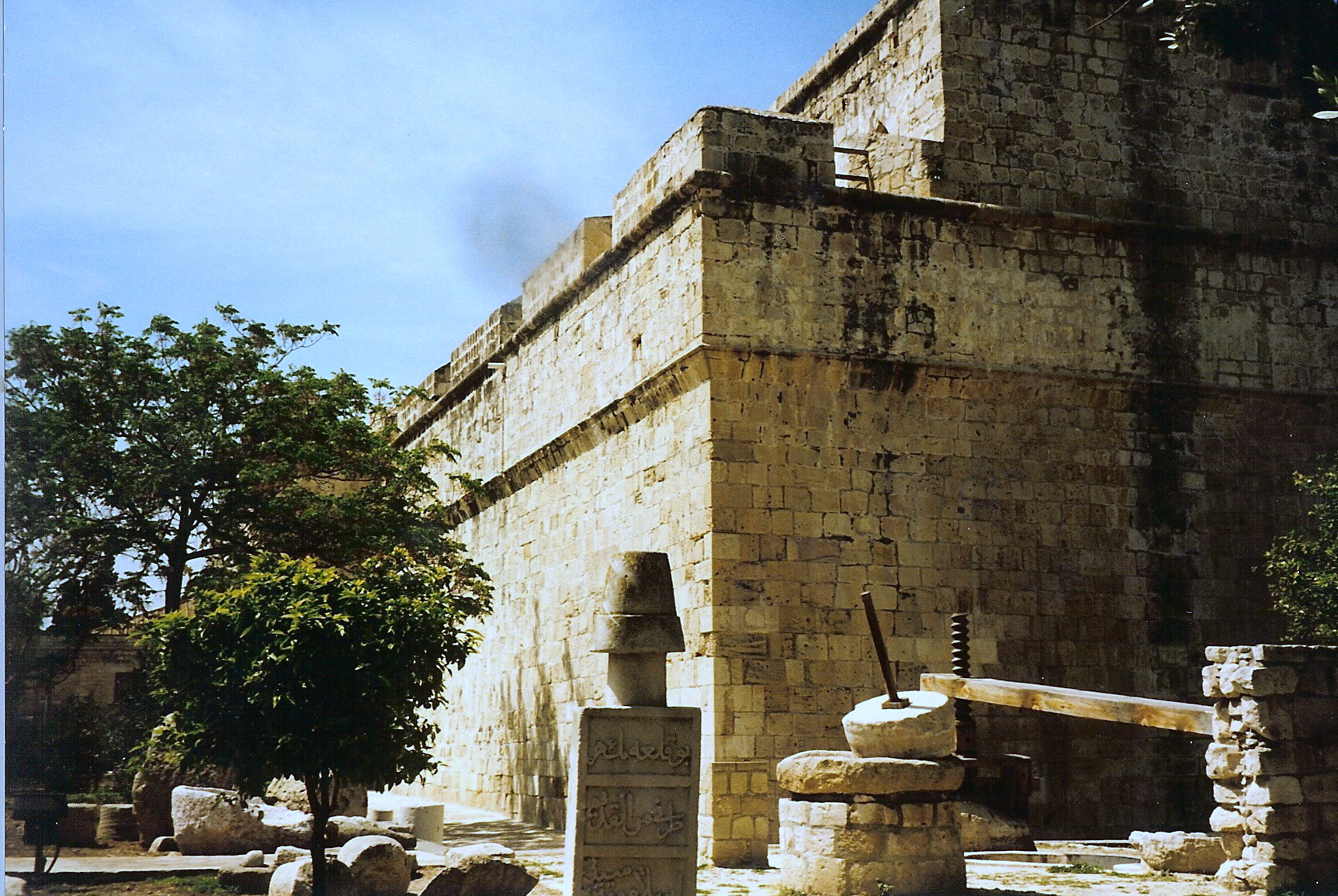
The castle that stands today at the edge of Limassol's old town is not, structurally, a single medieval building; it is the accumulated result of roughly four hundred years of destruction and reconstruction on one small, strategically placed site near the town's old harbour. Archaeological investigation beneath the present structure found that it was built over an Early Christian basilica of the 4th to 7th century and a Middle Byzantine monument of the 10th to 11th century, and other finds beneath the castle point to the existence of an important church on the site, possibly the city's first cathedral, long before any fortress stood there.
The written record of a castle begins later. According to the 16th-century Cypriot historian Etienne Lusignan, the original fortress was erected by Guy of Lusignan in 1193, shortly after he took control of Cyprus. The first official documentary reference to it dates to 1228, during the involvement of the Holy Roman Emperor Frederick II in Cypriot affairs. For roughly three centuries after that the castle absorbed the island's turbulent politics directly: continuous attacks on the town by Genoese and Mamluk forces, and repeated earthquake damage, were met each time with restoration and reconstruction rather than abandonment.
The building's medieval life ended deliberately rather than by slow decay. The Ottomans captured Limassol and its castle in 1538. When the Venetian governor of Cyprus later recaptured it, he chose to demolish the fortress outright rather than risk its seizure again, and that demolition was completed in 1567 to 1568. It was the Ottoman conquest of Cyprus, completed in 1576, that produced the building visitors see today: the remains of the earlier castle were incorporated into a new, considerably strengthened Ottoman fort, completed around 1590. That Ottoman-period structure, absorbing older Lusignan and Venetian fabric into its walls, is the Limassol Castle of the present day.
The wedding of a king, and how much of the legend can be proven
The single fact most visitors arrive already knowing is a wedding, not a siege. Tradition holds that Richard the Lionheart, King of England and a leader of the Third Crusade, landed near Amathous on his way to the Holy Land, and that he celebrated his marriage to Berengaria of Navarre in the castle's chapel in 1191, crowning her Queen of England in the same ceremony. The official Visit Cyprus listing for the museum repeats the story in exactly this form, naming the chapel specifically rather than describing the castle only in general terms, and Wikipedia's account of the building carries the same tradition.
What none of the sources consulted for this page do is separate the tradition from a contemporary documentary record of it happening inside this specific building. The castle referred to in 1191 predates the first official documentary reference to a fortress on the site by nearly four decades, and predates by centuries the Ottoman-period structure that actually stands today. That gap between a well-known story and a verifiable building fabric is worth being explicit about: the marriage of Richard I and Berengaria of Navarre in 1191 is itself a documented historical event, but the claim that it took place inside a chapel within this particular castle, on this particular site, is a tradition repeated by the modern tourism authority and the castle's own popular history rather than a claim this page can trace to a contemporary 12th-century record.
From city prison to national museum
For much of its modern history the castle was not a museum at all but a working part of the island's justice system. Its underground chamber and first floor were converted into prison cells, and they remained in continuous use as such until 1950. During the period of British rule over Cyprus the castle also functioned as a police station and, at times, a place of detainment, a use that sits oddly against the romantic 1191 wedding tradition but is just as well documented.
The shift from prison to museum followed the relocation of the island's central prisons to Nicosia. Once that move freed the castle of its custodial role, the building was ceded to the Department of Antiquities, the Cypriot government body responsible for the island's archaeological heritage, and it has housed the Medieval Collection of the Cyprus Museum on this site since 1987. That is a comparatively recent date for the museum as an institution in this building, even though the building and the archaeology beneath it span more than a millennium.
The castle and the Cyprus Medieval Museum: one building, two names
A reader planning a visit needs to hold two names in mind at once, because they refer to the same visit but are not strictly interchangeable. Limassol Castle is the building: the fortified structure, rebuilt principally under Ottoman rule around 1590 on the footprint of older Lusignan and Venetian work, standing near Limassol's old harbour. The Cyprus Medieval Museum is the collection: the Department of Antiquities' Medieval Collection of the Cyprus Museum, formally housed inside that building since 1987. A visitor buys one ticket and walks through one entrance, but the building would still be Limassol Castle if the collection inside it changed, and the collection is described in Department of Antiquities and Cyprus tourism material as a distinct institution that happens to be sited in the castle.
This is also the point at which two other, unrelated places are worth ruling out explicitly, since Cyprus has several buildings whose names overlap in casual conversation. Kolossi Castle is a separate Crusader-era castle a few kilometres outside Limassol, associated with the Knights Hospitaller and the island's medieval sugar and Commandaria wine production; it is not the building described on this page and carries its own history. The Cyprus Museum in Nicosia is a larger, older archaeological museum in the Cypriot capital, and the primary holder of much of the island's classical and prehistoric archaeology; the Medieval Collection housed in Limassol Castle is administratively linked to the Cyprus Museum's collections but is a physically separate museum in a different city, not a branch gallery inside the Nicosia building.
What the Medieval Collection holds
The Department of Antiquities' own description of the collection frames it around daily life rather than around a single dynasty or war: exhibits are said to reflect the island's economic, social and religious life, and many aspects of everyday life, across a long span running from the 3rd to the 18th century AD. In practice that translates into a wide, mixed inventory rather than a narrow one. Weapons and armour sit alongside tools; Byzantine, medieval and Islamic glazed and utility pottery are shown together rather than separated by origin; bronze and glasswork, oil lamps, jewellery and coins cover the material culture of trade and personal life; and cult objects and architectural members salvaged from Byzantine and Gothic buildings around the island point to churches and structures that no longer stand elsewhere.
Individual pieces that surface repeatedly in descriptions and in the museum's own photography include silver plates from the Byzantine period, carved funerary slabs and tombstone covers, and small liturgical silverware such as spoons used in the administration of the eucharist. The building itself contributes to the display as much as any single case: the ground floor preserves the apse of an earlier Frankish-period church uncovered beneath the castle, and the Gothic Hall, with its cross-ribbed vaulting and pointed windows, is one of the most architecturally complete interior spaces on the visitor route, effectively an exhibit in its own right rather than simply a room that holds exhibits.
Visiting Limassol Castle today
The museum keeps a full-week schedule, open Monday to Friday from 9am to 5pm and at the weekend, with standard adult admission at 4.50 euros and a 20 percent reduction for organised groups of more than ten people. Visitors who plan to see several state-run sites can instead buy a Department of Antiquities multi-museum card, priced at 8.50 euros for one day, 17 euros for three days or 25 euros for seven days, covering all of the department's museums and ancient monuments rather than Limassol Castle alone. The museum sits inside the pedestrian core of Limassol's old town, close to the Old Port and the Limassol Marina, and the Visit Cyprus listing itself carries a standing caveat that hours and fees are subject to change without notice and should be checked before travelling.
The castle remains a working public space as well as a museum: in June 2026 the Department of Antiquities used the castle walls and courtyard to host 'A Thousand Hands, A Thousand Stories: Common Ground', a bicommunal crochet installation of thousands of hand-made flowers created over six months by women from different communities across Cyprus as part of the Peace2Peace, or Connective Threads, initiative, unveiled during European Archaeology Days and on show through the end of 2026. Reviewers describe the visit itself as short but memorable, built around climbing from the lower galleries to a roof with panoramic views over the old town, and most recommend allowing well under an hour unless the Gothic Hall and the collection's stonework hold particular interest.
What visitors say
Visitors consistently describe Limassol Castle as a quick but worthwhile stop rather than a full-morning museum: a genuinely old fortress, cool and atmospheric inside on a hot day, with a compact but varied medieval collection and a roof that most reviewers single out as the reason to go. The most repeated complaint is size and pacing rather than content: many see the whole building in well under an hour and some feel the individual objects are not explained in enough depth for a visitor without prior context.
What is praised, what is criticised
- Praised: The panoramic views over Limassol's old town from the roof and upper level, named repeatedly as the highlight of the visit
- Praised: The atmosphere of visiting a real, centuries-old fortress rather than a purpose-built museum building, and its coolness as a refuge from summer heat
- Praised: The carved stonework and tombstone covers in the collection
- Praised: Value for the modest admission price given the setting
- Criticised: The castle and museum are small and can be seen in well under an hour, which some visitors weigh against the admission price and travel time
- Criticised: Several visitors want more explanatory labelling and context for individual objects and artefacts
- Criticised: The building is not wheelchair accessible, per a local visitor guide's own accessibility note
Ratings on other platforms
Tripadvisor: 4 from 1,232 ratings, read 23 September 2026
A platform average is a tertiary source: it moves, it is not audited, and we quote no visitor's words.
Questions about Limassol Castle
Where is Limassol Castle?
Richardou and Berengarias, near the Old Port, Limassol 3042, Cyprus.
How much does it cost to visit?
Adult: EUR 4.5; Department of Antiquities 1-day multi-museum card: EUR 8.5; Department of Antiquities 3-day multi-museum card: EUR 17; Department of Antiquities 7-day multi-museum card: EUR 25. As confirmed 23 September 2026.
When is it open?
Monday-Friday 09:00-17:00; Saturday 10:00-17:00; Sunday 10:00-17:00. Closed: Public holidays, per the official Visit Cyprus listing. As confirmed 23 September 2026.
How do you get there?
On foot: In the historic old town of Limassol close to the Old Port and Limassol Marina, within the pedestrian core of the city centre.
What should you see first?
Byzantine silver plates (Byzantine workshop; a photographer's caption for one displayed set dates it to 613 AD); Glazed medieval and Islamic pottery (Byzantine, medieval Cypriot and Islamic workshops); Carved funerary slabs and tombstone covers (Medieval Cyprus, various dates); The Gothic Hall's cross-ribbed vaulting (Medieval builders, incorporated into the present Ottoman-period structure); The chapel of the 1191 royal wedding tradition (Attributed by tradition to the castle as it stood in 1191); Bust of Dionysus in stone (Unattributed).
What we could not confirm
- Sources disagree on Sunday closing time: the official Visit Cyprus listing and All About Limassol both give 10:00-17:00, while the Department of Antiquities' own museums portal (museum.cy) gives 10:00-13:00. This page follows the two agreeing sources; a future recheck should confirm which is current.
- Whether the silver plates displayed in the Medieval Collection, dated by a Wikimedia Commons photographer's caption to 613 AD, are connected in any way to the celebrated 7th-century Cyprus silver-plate hoard (the so-called David Plates from Lambousa) divided between the Cyprus Museum in Nicosia and the Metropolitan Museum of Art, or are an unrelated set of Byzantine plates. No primary museum source consulted for this page confirms either way, and this page does not assert a connection.
- Whether a specific, identifiable chapel space associated with the 1191 Richard the Lionheart and Berengaria of Navarre wedding tradition survives on the current visitor route, or whether the tradition is retold today without a marked chapel; sources consulted describe the legend consistently but do not point to a specific labelled room.
Images
Sources
- 1Wikidata, item Q2247315 (Limassol Castle) wikidata.org/wiki/Q2247315
- 2Wikipedia, Limassol Castle en.wikipedia.org/wiki/Limassol_Castle
- 3Visit Cyprus (official portal of the Cyprus Deputy Ministry of Tourism), Cyprus Medieval Museum [Limassol (Lemesos) Castle] visitcyprus.com/discover-cyprus/culture/museums-galleries/cyprus-medieval-museum-limassol-lemesos-castle/
- 4museum.cy (Cyprus Department of Antiquities museums portal), Limassol Castle museum.cy/en/museums/limassol_castle
- 5Limassol Municipality / Limassol Tourism, Cyprus Medieval Museum (Lemesos Castle) limassol.org.cy/en/mesaioniko
- 6All About Limassol, Cyprus Medieval Museum - Limassol Castle allaboutlimassol.com/en/cyprus-medieval-museum-limassol-castle
- 7Tripadvisor, Limassol Castle attraction overview (aggregate rating) tripadvisor.com/Attraction_Review-g190382-d527729-Reviews-Limassol_Castle-Limassol_City_Limassol.html
- 8Tripadvisor visitor review by Noodlecat20, 'Stunning views from the top', 5 June 2014 tripadvisor.com/ShowUserReviews-g190382-d527729-r209052394-Limassol_Castle-Limassol_City_Limassol.html
- 9Tripadvisor visitor review by Stu Y, 'Medieval Museum of Cyprus', 7 April 2015 tripadvisor.com/ShowUserReviews-g190382-d527729-r264238716-Limassol_Castle-Limassol_City_Limassol.html
- 10Tripadvisor visitor review by NDRT, 20 November 2017 tripadvisor.com/ShowUserReviews-g190382-d527729-r318018995-Limassol_Castle-Limassol_City_Limassol.html
- 11Tripadvisor visitor review by moneyrosie, 12 October 2015 tripadvisor.com/ShowUserReviews-g190382-d527729-r542219255-Limassol_Castle-Limassol_City_Limassol.html
- 12Cyprus Mail, 'Bicommunal crochet installation opens in Limassol', 15 June 2026 cyprus-mail.com/2026/06/15/bicommunal-crochet-installation-opens-in-limassol
- 13Wikimedia Commons, Category:Limassol castle - Medieval Museum commons.wikimedia.org/wiki/Category:Limassol_castle_-_Medieval_Museum
- 14Wikimedia Commons, Category:Interior of Limassol castle - Medieval Museum commons.wikimedia.org/wiki/Category:Interior_of_Limassol_castle_-_Medieval_Museum
- 15Wikimedia Commons, Category:Gothic Hall of Limassol castle - Medieval Museum commons.wikimedia.org/wiki/Category:Gothic_Hall_of_Limassol_castle_-_Medieval_Museum
- 16Wikimedia Commons, File:The Medieval Castle of Limassol.jpg commons.wikimedia.org/wiki/File:The_Medieval_Castle_of_Limassol.jpg
- 17Wikimedia Commons, File:Silver Plates Limassol Medieval Museum.jpg commons.wikimedia.org/wiki/File:Silver_Plates_Limassol_Medieval_Museum.jpg
- 18Wikimedia Commons, File:Medieval Ceramics Limassol Medieval Museum1.jpg commons.wikimedia.org/wiki/File:Medieval_Ceramics_Limassol_Medieval_Museum1.jpg
- 19Wikimedia Commons, File:Funerary Slab in Limassol Castle, Cyprus.jpg commons.wikimedia.org/wiki/File:Funerary_Slab_in_Limassol_Castle,_Cyprus.jpg
- 20Wikimedia Commons, File:Bust of Dionysus in Stone, Limassol Castle, Cyprus.jpg commons.wikimedia.org/wiki/File:Bust_of_Dionysus_in_Stone,_Limassol_Castle,_Cyprus.jpg
- 21Wikimedia Commons, File:Keys Scales Balance of Weight Limassol Medieval Museum.jpg commons.wikimedia.org/wiki/File:Keys_Scales_Balance_of_Weight_Limassol_Medieval_Museum.jpg
- 22Wikimedia Commons, File:Medieval Eucharist Spoons.jpg commons.wikimedia.org/wiki/File:Medieval_Eucharist_Spoons.jpg
- 23Wikimedia Commons, File:Limassol Castle, ground plan 1918.jpg commons.wikimedia.org/wiki/File:Limassol_Castle,_ground_plan_1918.jpg


