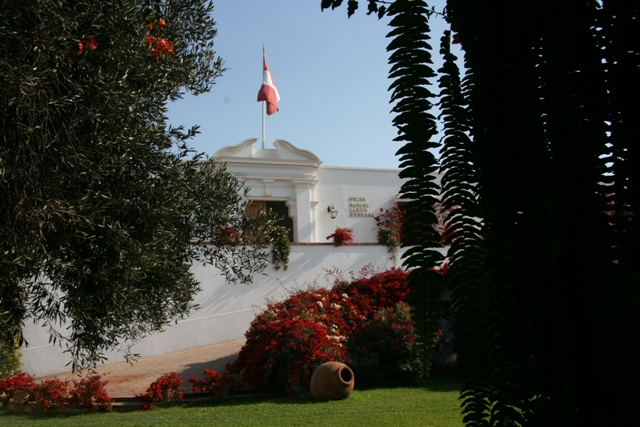
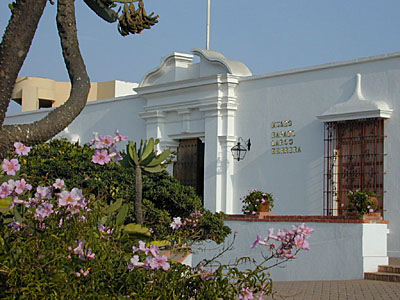
The 18th-century mansion housing Museo Larco, seen from its entrance courtyard, Pueblo Libre, Lima.
CC0Larco Museum
Museum · Museo Larco · Founded 1926
Open, admission and hours confirmed 21 August 2026 · 19 sources
On this page 14 sections
ContentsClose
Museo Larco's strength is depth within a defined geography and time span rather than breadth: north and central coast Peru from roughly 3000 BC to the Spanish conquest, told mainly through Moche, Chimu, Cupisnique, Vicus, Lambayeque and Wari material assembled by one family across four decades of direct buying and excavation. It holds the reference collection of Moche portrait-vessel ceramics against which other institutions' Moche holdings are usually compared, an unusually large and well-documented body of pre-Columbian erotic pottery unmatched in scale or public display anywhere else, and, through Visible Storage, one of the few places anywhere a general visitor can see the working scale of a study collection rather than a curated fraction of one.
| Local name | Museo Larco |
|---|---|
| Kind | Museum |
| Founded | 1926 |
| City and country |  Lima, Peru Lima, Peru |
| Address | Avenida Simon Bolivar 1515, Pueblo Libre, Lima 21, Peru (visitor entrance on Calle Navarra 169, opposite Parque Larco) |
| Website | museolarco.org |
| Status | Open, confirmed |
| Record last verified |
Visiting
- Hours
- Mon-Sun, including public holidays09:00 to 19:00
- Dec 24, 25, 31 and Jan 109:00 to 18:00reduced hours
- Admission
- General (on-site)PEN 50S/45 when bought online in advance
- Seniors 60+ (on-site)PEN 35S/30 online; valid ID required
- Students / ages 9-17 (on-site)PEN 25S/20 online; valid ID required for student rate
- Children 3-8PEN 1limited to 3 per family group
- Children 0-2Freefree
- Tickets
- museolarco.org/en/plan-your-visit The museum's own ticket page.
- Do I need to book?
- No for individuals; advance booking required for student groups and adult groups of 20+
- Address
- Avenida Simon Bolivar 1515, Pueblo Libre, Lima 21, Peru (visitor entrance on Calle Navarra 169, opposite Parque Larco) Map
- Website
- museolarco.org
- Telephone
- +51 1 461-1312
Before you go how long, access, photography, bags, eating, shop
- How long to allow
- 1.5 to 3 hours to cover the permanent exhibition, Visible Storage and the Checan gallery plus the gardens
- Access
- Ramps into exhibition rooms and gardens, free wheelchairs on request, accessible restrooms with baby-changing facilities, guide dogs permitted
- Photography
- Amateur photography permitted throughout; no flash in exhibition rooms; tripods and selfie sticks prohibited; professional shoots need 3 business days' prior authorisation
- Bags
- No suitcases, backpacks, bags or musical instruments in the exhibition rooms; free bag check at the entrance
- Eating
- Museo Larco Cafe-Restaurant, open to visitors and non-visitors, reservations suggested; set among the museum gardens
- Shop
- Museo Larco Store-Boutique selling books, reproductions, jewellery and textiles
Prices and hours change. We take them from the institution's own pages and print the day we read them, and you can check the current position at the source we used. Confirm before you travel.
What is inside
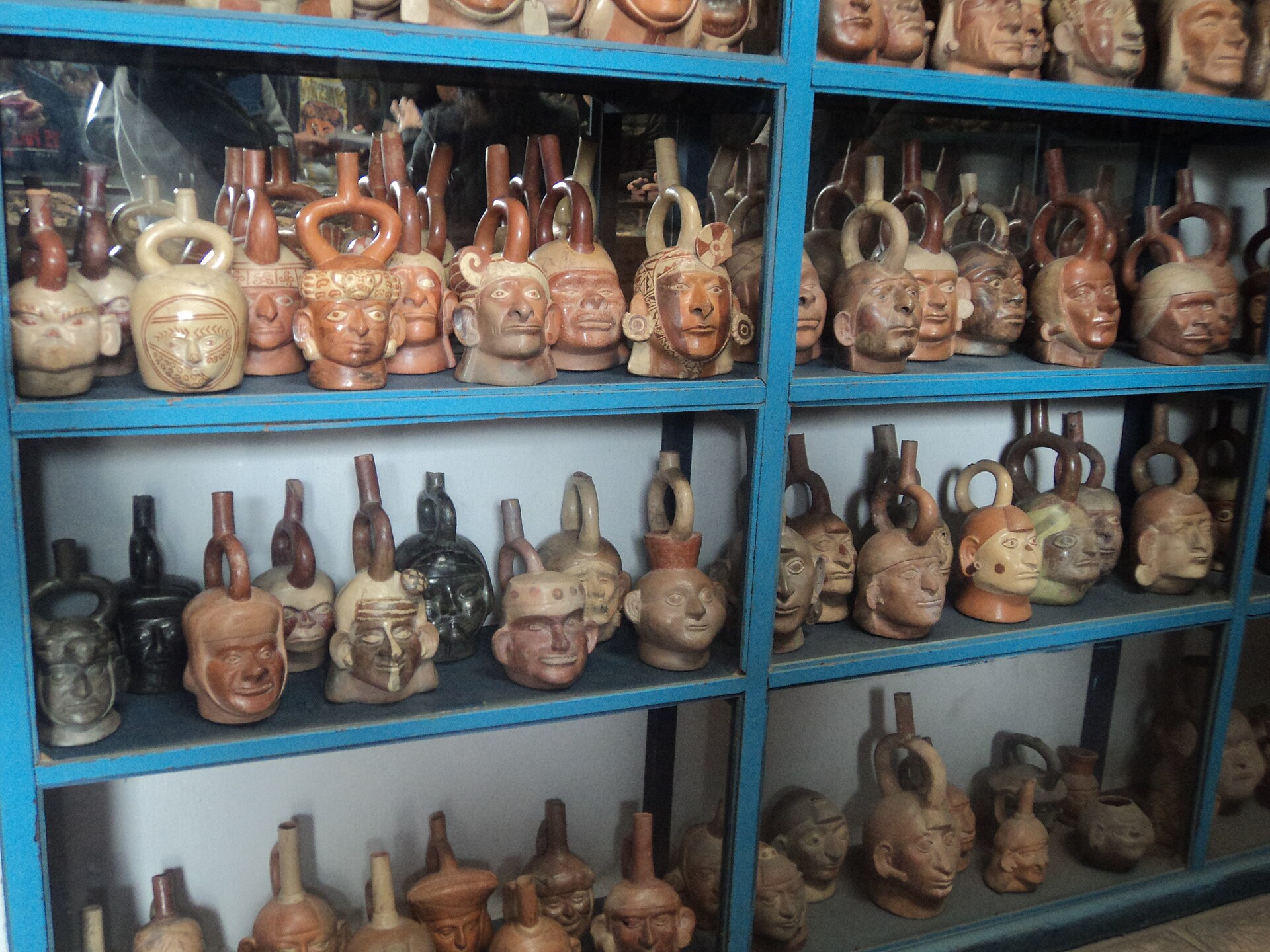
Photograph by YeseniaQuiz · CC BY-SA 4.0 Cultures of Ancient Peru (Rooms 2-4)
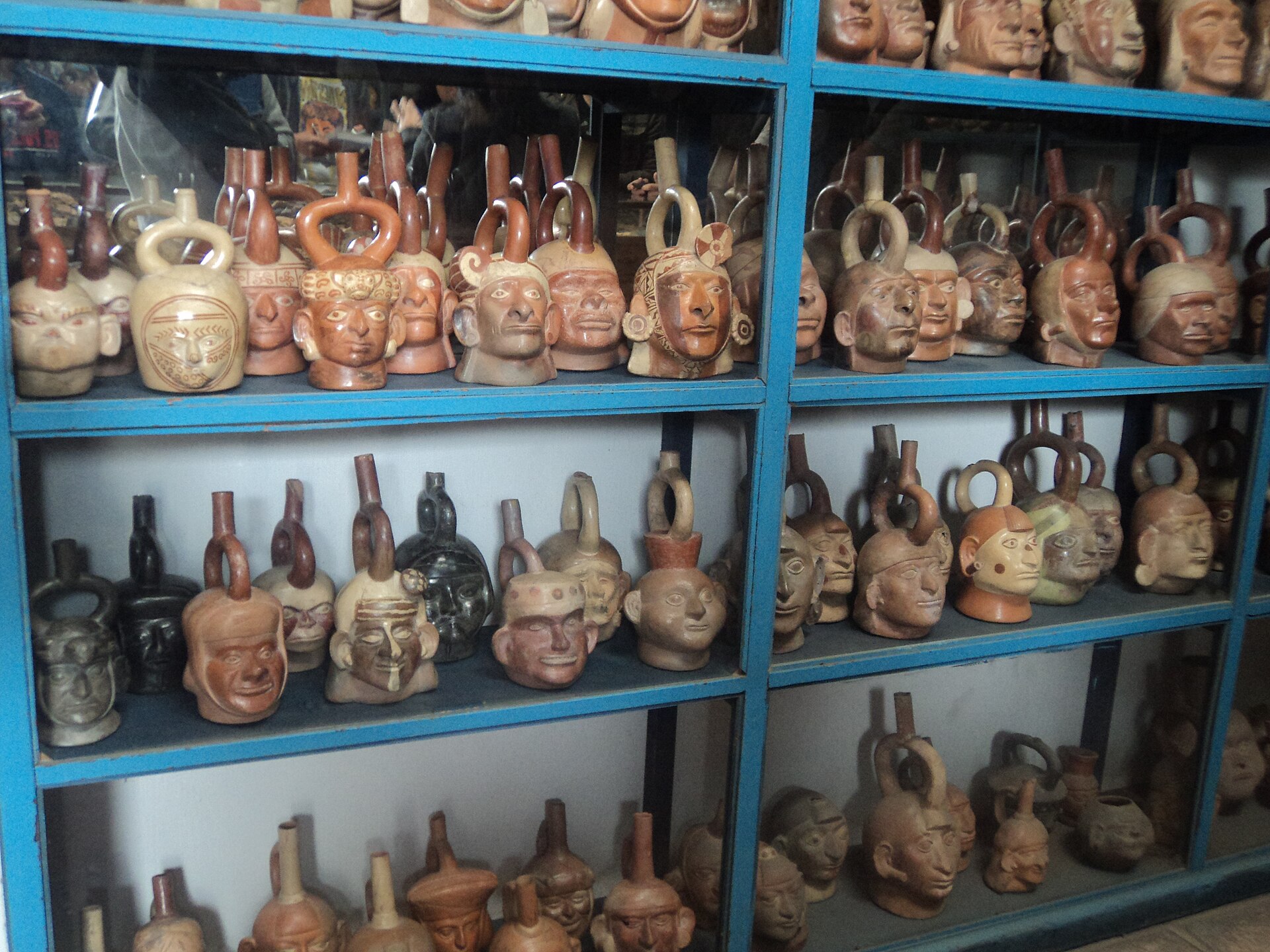
The chronological spine of the permanent exhibition: ceramics and objects from Cupisnique, Viru, Salinar, Moche, Nazca, Wari, Chimu, Lambayeque (Sican) and Inca contexts, arranged to walk a visitor through roughly 5,000 years of north and central coast cultures, including the Moche portrait vessels (huacos retratos) the museum is best known for.
Textiles from Ancient Peru (Room 5)
Cotton and camelid-wool weavings from Paracas, Nazca, Wari, Chimu, Lambayeque, Chincha and Inca contexts: brocade, embroidery, tapestry, tie-dye and feathered tunics, funerary wrappings and Inca quipus, shown with an explanation of why textiles carried religious and status meaning rather than serving only as clothing.
Gold and Jewelry Gallery (Rooms 11-13)
Metalwork in gold, silver, gilded silver and copper from Vicus, Moche, Chimu, Lambayeque and Nazca contexts: ear and nose ornaments, crowns, headdresses, breastplates, necklaces and funerary regalia, presented as insignia of rank and religious office rather than as bullion.
Checan (Erotic Gallery)
A separate, signposted room of pre-Columbian erotic pottery, mostly Moche, shown behind its own entrance with explanatory text. It grew out of Rafael Larco Hoyle's 1965 fieldwork and his 1966 book Checan, and the museum frames the objects as evidence for how ancient Andean societies depicted sex, fertility and the afterlife rather than as curiosities.
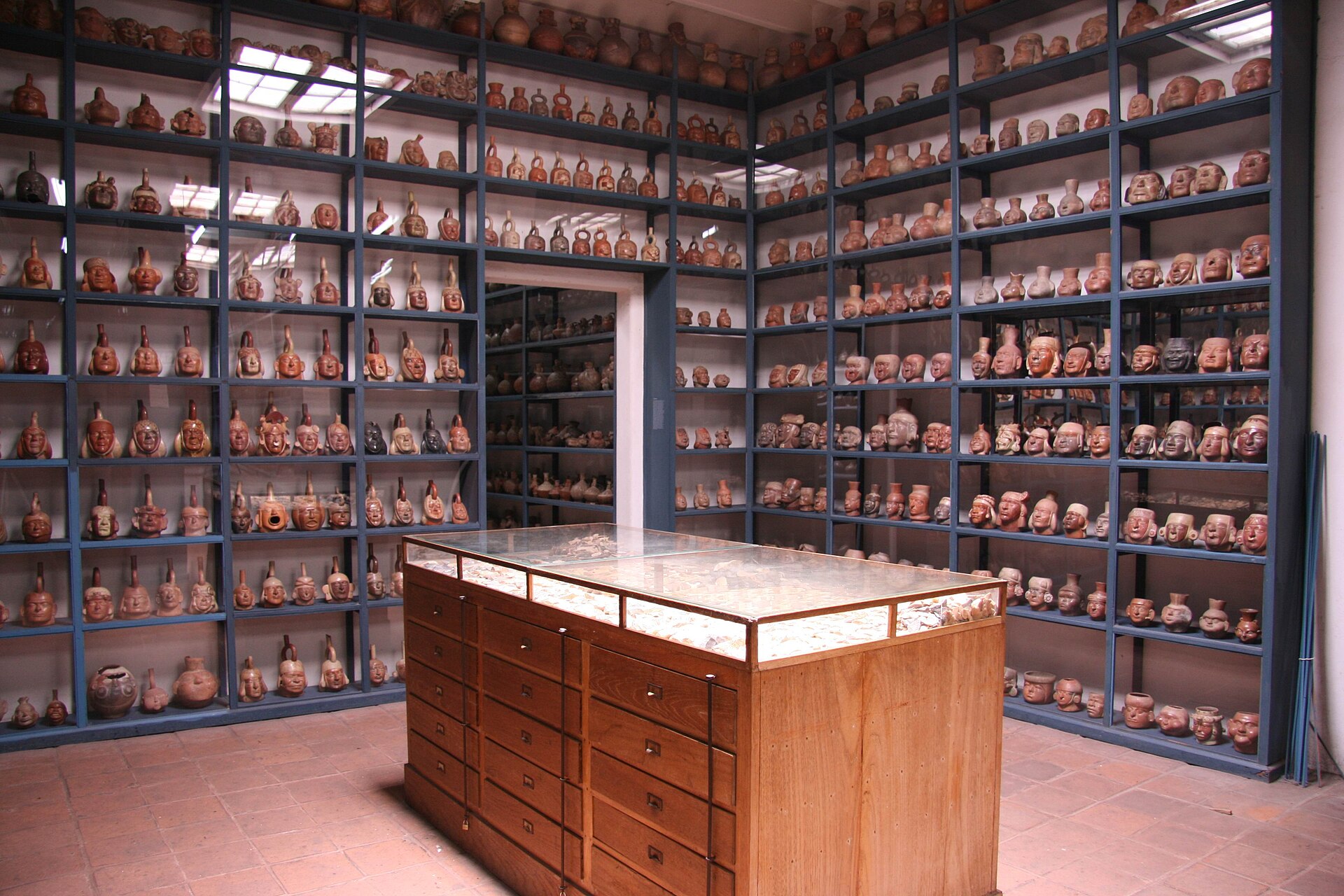
Public domain Visible Storage
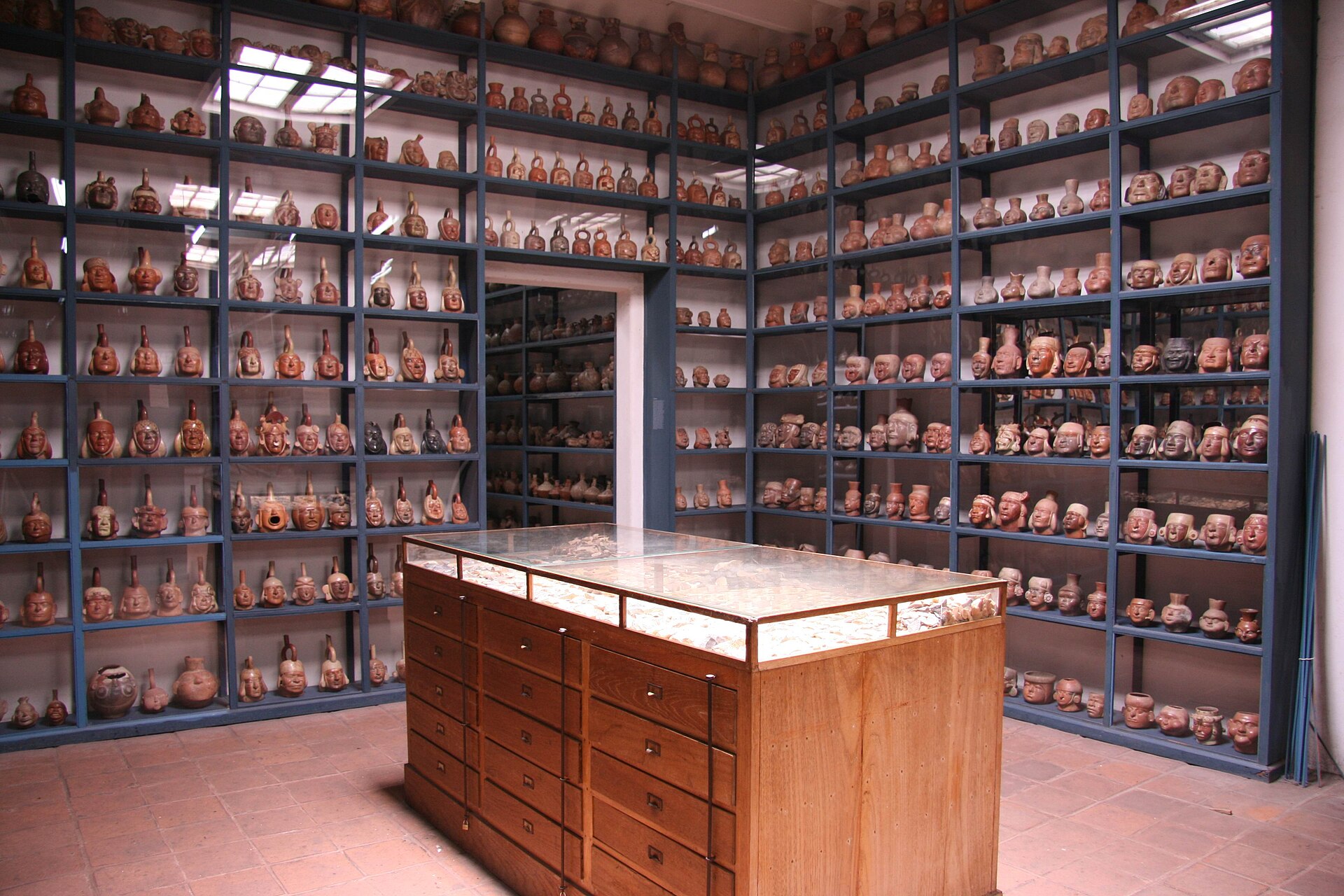
Around 30,000 catalogued ceramic pieces held on open, numbered steel shelving in a room visitors walk through rather than a closed study collection, following the idea that a research museum's reserve collection is itself worth showing.
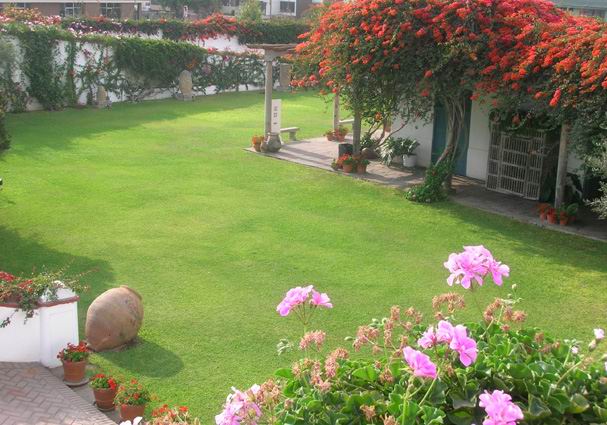
Photograph by Lyndsayruell · CC BY-SA 3.0 The Gardens
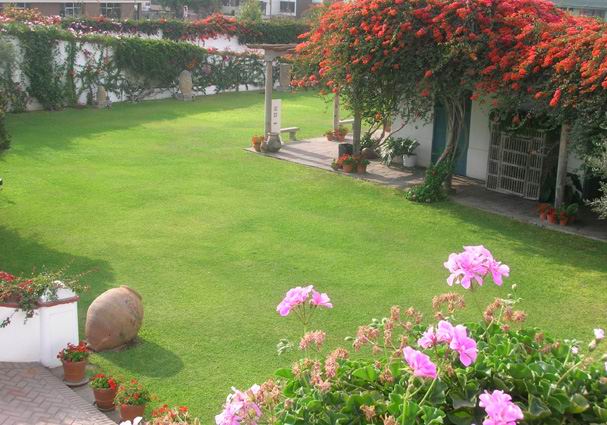
Landscaped grounds around the mansion, planted with bougainvillea and native species, linking the exhibition rooms to the on-site cafe-restaurant and functioning as the museum's main outdoor space for visitors.
What to see first
Moche portrait vessels (huacos retratos)
Moche culture, north coast PeruIndividualised, naturalistic ceramic portraits of specific people, among the few realistic human portraiture traditions identified anywhere in the pre-Columbian Americas; the museum's signature holding and the type-object of its collection.9
Checan: the pre-Columbian erotic pottery corpus
Moche culture, north coast PeruThe body of erotic ceramics Rafael Larco Hoyle studied and published as Checan in 1966, one of the few sustained attempts to read pre-Columbian sexual imagery as religious and social evidence rather than as ethnographic curiosity; still shown in its own gallery under that name.10
Mochica gold ear ornaments
Moche cultureSculptural gold ear spools worked with warrior and animal figures, part of the funerary regalia that marked Moche elite rank; central pieces of the Gold and Jewelry Gallery.11
Chimu silver crowns and adornments
Chimu culture, Chan Chan regionSilver headdresses and body ornament from the Chimu kingdom that preceded the Inca on the north coast, evidence of a metalworking tradition the Inca later absorbed along with Chimu craftsmen after conquering Chan Chan.11
Vicus funerary crowns and gilded copper plaques
Vicus culture, far north PeruMetalwork from one of the least-known cultures in the collection, gilded copper and gold pieces buried with the dead as markers of who the wearer had been and would become; a culture Rafael Larco Hoyle himself helped define through his excavation and seriation work.5
Wari tapestry weaving with 398 threads to the linear inch
Wari cultureA textile whose thread count is cited as a record for pre-industrial weaving anywhere, shown as evidence that the finest technical work in the collection is in cloth as often as in gold or clay.12
Visible Storage: 30,000 catalogued ceramic vessels
multiple north-coast culturesNot a single object but a curatorial decision: putting the bulk of the study collection on open, numbered shelving rather than in a closed store, so a visitor sees the scale of what the Larco family assembled rather than a curated fraction of it.4
A mansion built over an older building
Museo Larco occupies an 18th-century vice-regal mansion on Avenida Simon Bolivar in Pueblo Libre, a district a short taxi ride from central Lima. The building itself carries two histories stacked on top of one another: colonial-era travel and heritage sources describe the mansion as standing over a platform structure attributed to the Lima culture and dated by most accounts to around the 7th century AD, meaning the site was already an ancient monument before the Spanish-era house was built on it. The exact identity of that earlier structure is not settled in the sources available, and the museum's own visitor-facing pages do not dwell on it; what is consistently reported is that the mansion sits on ground that was occupied and built on many centuries before Rafael Larco Hoyle bought it.
Larco Hoyle moved his father's collection from the family's sugar estate at Chiclin, in the Chicama Valley of northern Peru, to this Lima address in the middle of the twentieth century, turning a private country archive into a public institution scholars, diplomats and ordinary visitors could reach without travelling to the north coast. Sources consulted for this page differ on the exact year of that move, so it is given here as the 1950s rather than a single date; what is not disputed is that the museum has occupied the Pueblo Libre mansion, expanded and restored since, for the rest of its history.
Rafael Larco Hoyle and a private collection made public
The museum's origin is a father-and-son story. In 1925 Rafael Larco Herrera, a sugar hacienda owner, politician and later Peru's first vice-president under Manuel Prado, acquired around 600 ceramic pieces from a relative. His son, Rafael Larco Hoyle, born in the Chicama Valley in 1901 and trained in agricultural engineering at Cornell University, returned to Peru in 1923 to work the family plantation and began finding ancient artefacts along the northern coast. He turned that initial 600-piece purchase into a systematic collection, buying two large existing collections outright (roughly 8,000 pieces from a collector named Roa and 6,000 from one named Carranza) alongside smaller acquisitions from the Chicama, Viru, Trujillo and Chimbote areas. The museum opened to the public at Chiclin on 28 July 1926, Peru's Independence Day, named for his father while his father was still alive, with about 30,000 pieces on show.
Larco Hoyle was not only a collector. Between 1933 and 1941 he ran his own excavations to answer questions the collection itself raised, and through the 1930s and 1940s he identified and named several of the cultural phases now standard in Peruvian archaeology, including Viru, Salinar, Cupisnique and Lambayeque periods. In 1946 he published the first chronological ordering of north-coast cultures, built years before radiocarbon dating existed to check it against, and it has remained in use since. He died in Lima in October 1966. The museum he built is generally treated as his primary legacy, ahead of his individual publications, because it kept the collection intact and accessible rather than dispersed.
What the collection holds
The collection runs to around 45,000 catalogued pieces spanning roughly 5,000 years of Peruvian prehistory, drawn overwhelmingly from the north and central coast cultures Larco Hoyle collected and studied directly: Cupisnique, Viru, Salinar, Moche, Nazca, Wari, Chimu, Lambayeque (Sican), Vicus and Inca material sits alongside smaller holdings from further south. The museum organises its permanent exhibition as a walk through this material by culture and theme rather than strictly by find-site, moving from an introductory room through galleries on the cultures of ancient Peru, textiles, colonial-era religious syncretism, sacrifice, ceremonial vessels, warfare and music, death and funerary practice, and finally three rooms of gold and silver work.
Ceramics dominate by sheer count, and the Moche portrait vessels, individualised ceramic heads modelled on real faces, are the objects most identified with the museum specifically; they are among the very few realistic portrait traditions found anywhere in the pre-Columbian Americas. Textiles from Paracas, Nazca, Wari and Chimu contexts are shown in their own room, including a Wari weaving whose thread count, cited at 398 threads to the linear inch, is presented as a record for hand weaving anywhere. Metalwork in gold, silver and gilded copper, largely funerary and ceremonial rather than decorative in the ordinary sense, fills the final three rooms of the permanent circuit.
Checan: showing what most museums keep in storage
The museum's most talked-about single room is Checan, a gallery of pre-Columbian erotic pottery kept apart from the main circuit behind its own signposted entrance. It grew directly out of Larco Hoyle's own research: he studied this material through the 1960s and published it as the book Checan in 1966, arguing that sexual imagery on Moche pottery recorded religious and social ideas about fertility, the afterlife and gender rather than functioning as pornography in the modern sense. The museum's own framing of the room follows that argument, presenting the objects as evidence rather than spectacle, and outside reviewers consistently note that the gallery is handled with more restraint and explanatory context than its reputation as a novelty stop on a Lima itinerary would suggest.
Whatever a visitor makes of that argument, the existence of the gallery at all is unusual among museums holding comparable material, most of which keep such pieces out of public view entirely. Its presence has done more than anything else to give Museo Larco a public profile well beyond specialist archaeology circles.
Visible Storage: the reserve collection as an exhibit
Past the main circuit, the museum keeps roughly 30,000 additional catalogued ceramic pieces on open, numbered steel shelving in a room it calls Visible Storage, and routes visitors through it rather than keeping it as a closed study collection accessible only to researchers. The effect, repeatedly picked out by reviewers as their favourite part of the visit, is to make the scale of the Larco family's collecting effort legible in a way a curated selection of masterpieces cannot: wall after wall of vessels, most of them never individually labelled, standing in for the tens of thousands of finds that never make it into a gallery case at any museum. It is also, functionally, an argument for the museum's research mission: the collection exists to be studied as a whole, not only to be displayed in highlights.
What the record does not resolve
Museo Larco does not claim to be an excavation museum, and it should not be read as one. The great majority of its holdings were purchased, not excavated under controlled conditions: Larco Hoyle's founding acquisitions in the 1920s were bulk buys of existing private collections (the Roa and Carranza purchases in particular), and Peru's north coast has a long, well-documented history of huaqueros, informal excavators working ahead of or instead of archaeologists, supplying exactly this kind of material to collectors. Buying a finished object after it has left the ground destroys the contextual information archaeologists rely on: which burial it came from, what it was found alongside, how it was positioned. A university anthropology-course review of the museum published in 2024 raised this directly after a staff guide disclosed, in response to a question, that pieces had been bought from private collections rather than dug by the museum itself; the reviewer read that as one of at least two forms of extraction bound up in the collection, alongside the labour of the plantation workers whose output funded the Larco family's purchasing power in the first place.
None of this is disclosed at length on the museum's own visitor-facing pages, which foreground the collection's scale and organisation rather than its acquisition history. It does not make the objects themselves less significant, and Larco Hoyle's own excavation work in the 1930s and 1940s did generate controlled archaeological data that the purchased material lacks; but a visitor should not assume every piece on the shelves carries a documented find-site, because for most of them it does not.
What visitors say
Visitors and critics consistently rank Museo Larco among the best-organised pre-Columbian collections anywhere, praising the setting as much as the objects: a restored colonial mansion and garden that make the visit feel unhurried rather than encyclopaedic. The Checan erotic gallery is repeatedly singled out as handled with more seriousness than its reputation suggests. The most recurring practical complaints are the museum's distance from central Lima's hotel districts, which pushes most visitors toward a taxi or organised tour, and, from at least one specialist reviewer, that busy opening hours can crowd the most popular cases.
What is praised, what is criticised
- Praised: the depth and condition of the ceramic, textile and metalwork collections, especially the Moche portrait vessels
- Praised: the 18th-century mansion and gardens as a setting, widely described as making the museum feel like a estate rather than an institution
- Praised: the Visible Storage gallery's open shelving, cited repeatedly as visitors' favourite single room
- Praised: the on-site cafe-restaurant and practical amenities (free bag check, accessible routes)
- Criticised: the museum's location outside Lima's main tourist corridor (Miraflores/Barranco), which most visitors solve with a taxi rather than public transport
- Criticised: that most of the collection was purchased from private and dealer sources rather than excavated in controlled digs, which strips the objects of the burial and site context archaeologists would otherwise read them against; a 2024 university-course review of the museum made this point explicitly after a guided tour disclosed that pieces came from private collections
Ratings on other platforms
Tripadvisor: 4.8 from 12,836 ratings, read 21 August 2026
A platform average is a tertiary source: it moves, it is not audited, and we quote no visitor's words.
Questions about Larco Museum
Where is Larco Museum?
Avenida Simon Bolivar 1515, Pueblo Libre, Lima 21, Peru (visitor entrance on Calle Navarra 169, opposite Parque Larco).
How much does it cost to visit?
General (on-site): PEN 50; Seniors 60+ (on-site): PEN 35; Students / ages 9-17 (on-site): PEN 25; Children 3-8: PEN 1; Children 0-2: free. As confirmed 21 August 2026.
When is it open?
Mon-Sun, including public holidays 09:00-19:00; Dec 24, 25, 31 and Jan 1 09:00-18:00. As confirmed 21 August 2026.
What should you see first?
Moche portrait vessels (huacos retratos) (Moche culture, north coast Peru); Checan: the pre-Columbian erotic pottery corpus (Moche culture, north coast Peru); Mochica gold ear ornaments (Moche culture); Chimu silver crowns and adornments (Chimu culture, Chan Chan region); Vicus funerary crowns and gilded copper plaques (Vicus culture, far north Peru); Wari tapestry weaving with 398 threads to the linear inch (Wari culture).
What we could not confirm
- The exact year the museum moved from Chiclin to its current Pueblo Libre mansion is not consistently stated across the sources checked for this page; the museum's own site does not give a date.
- The precise identity, extent and culture of the pre-Columbian platform structure beneath the mansion is described only in general terms (Lima culture, roughly 7th century) in the tourism and heritage sources available; no archaeological excavation report for the site itself was located.
- The museum does not publish, on its own visitor-facing pages, a breakdown of how much of its 45,000-piece collection was purchased versus excavated under Larco Hoyle's own controlled digs, so the proportion of the collection with documented find-context versus none is not independently verifiable from what the institution discloses.
Images
Sources
- 1Museo Larco, Plan Your Visit (hours, admission, contact, accessibility, photography and bag policy) museolarco.org/en/plan-your-visit/
- 2Museo Larco, The Collection museolarco.org/en/collection/
- 3Museo Larco, Exhibitions (Permanent Exhibition, Visible Storage, Checan, Gardens) museolarco.org/en/exhibitions/
- 4Museo Larco, Permanent Exhibition, Online Exhibition (room-by-room structure) museolarco.org/en/exhibition/permanent-exhibition/online-exhibition/
- 5Museo Larco, Rafael Larco Hoyle (founder biography, museum's own account) museolarco.org/en/museum/rafael-larco-hoyle/
- 6Museo Larco, About the Museum museolarco.org/en/about-the-museum/
- 7Wikipedia, Larco Museum en.wikipedia.org/wiki/Larco_Museum
- 8Wikipedia, Rafael Larco Hoyle en.wikipedia.org/wiki/Rafael_Larco_Hoyle
- 9Wikidata, Larco Museum (Q1954240) - identity, coordinates, founding date, official website, used to confirm this is the private Larco institution and not a state archaeology museum wikidata.org/wiki/Special:EntityData/Q1954240.json
- 10Museo Larco, Checan (Erotic Gallery) museolarco.org/en/exhibition/checan/
- 11Museo Larco, Gold and Jewelry (online exhibition) museolarco.org/en/exhibition/permanent-exhibition/online-exhibition/gold-and-jewelry/
- 12Museo Larco, Textiles from Ancient Peru (online exhibition) museolarco.org/en/exhibition/permanent-exhibition/online-exhibition/textiles-from-ancient-peru/
- 13Time, "Peru's Private Treasures at Museo Larco", David Kaufman, 7 April 2011 time.com/archive/6938588/perus-private-treasures-at-museo-larco/
- 14Salterton Arts Review, "Museo Larco, Lima", Erin Caswell, 3 June 2022 saltertonartsreview.com/2022/06/museo-larco-lima/
- 15UBC LAST315 course blog, "Experience Post #1: An Anthropologist's Review of Larco Museum", Grace Baker, 26 May 2024 (source for the purchased-collection/lost-context criticism) blogs.ubc.ca/gracebaker/2024/05/26/experience-post-1-an-anthropologists-review-of-larco-museum/
- 16Tripadvisor, Museo Larco attraction page (aggregate rating, ) tripadvisor.com/Attraction_Review-g294316-d311651-Reviews-Museo_Larco-Lima_Lima_Region.html
- 17Machu Picchu Sacred, Larco Museum of Lima (secondary source for the pre-Columbian platform/pyramid beneath the mansion) machupicchusacred.com/en/lima/museums/larco/
- 18Wikimedia Commons, File:Fachada Museo Larco en baja.JPG (CC0, Cherimoya.lima) - lead image licence verification commons.wikimedia.org/wiki/File:Fachada_Museo_Larco_en_baja.JPG
- 19Wikimedia Commons, File:Storage Gallery.jpg (public domain, Lyndsay Ruell) - interior image licence verification commons.wikimedia.org/wiki/File:Storage_Gallery.jpg

