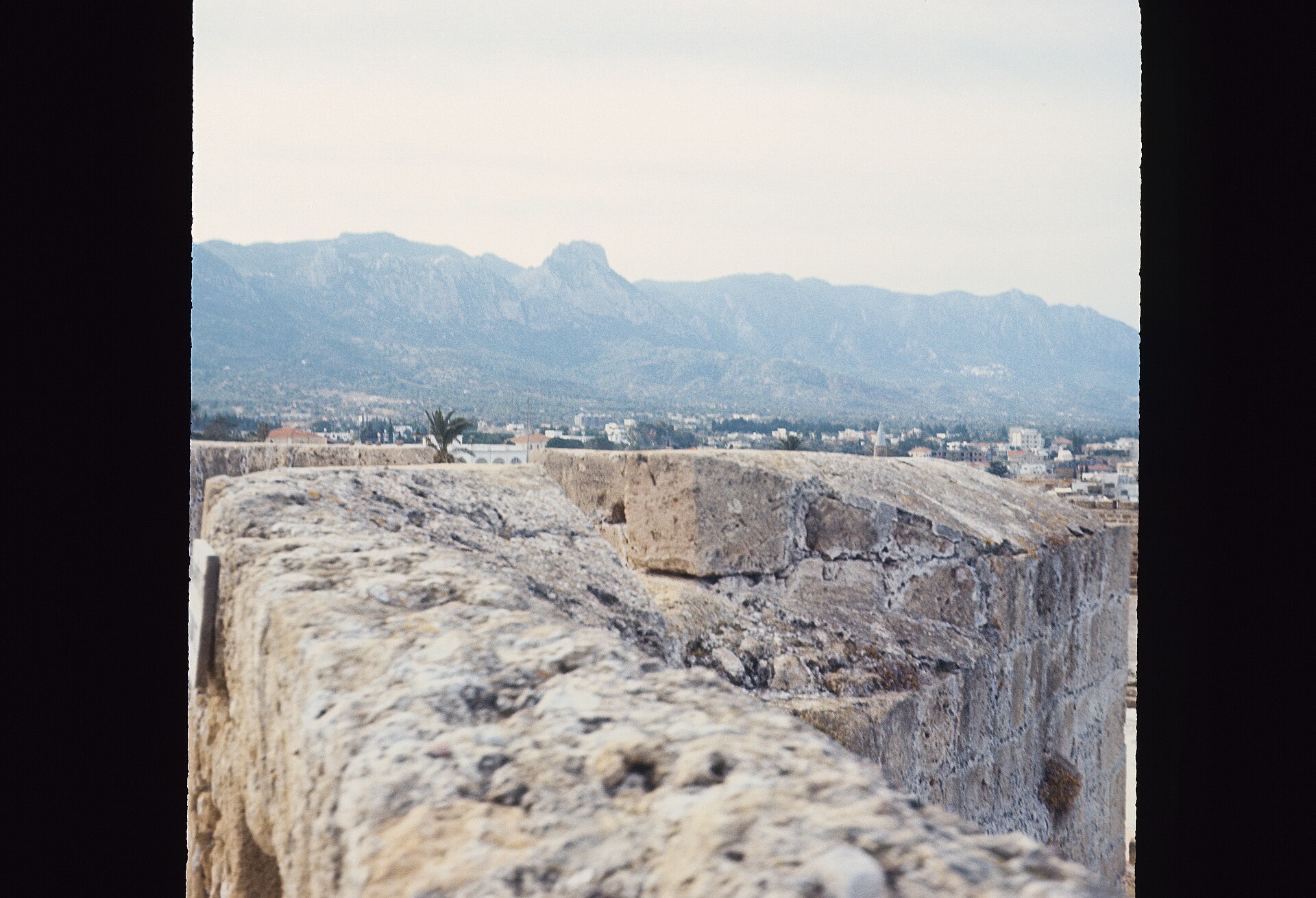
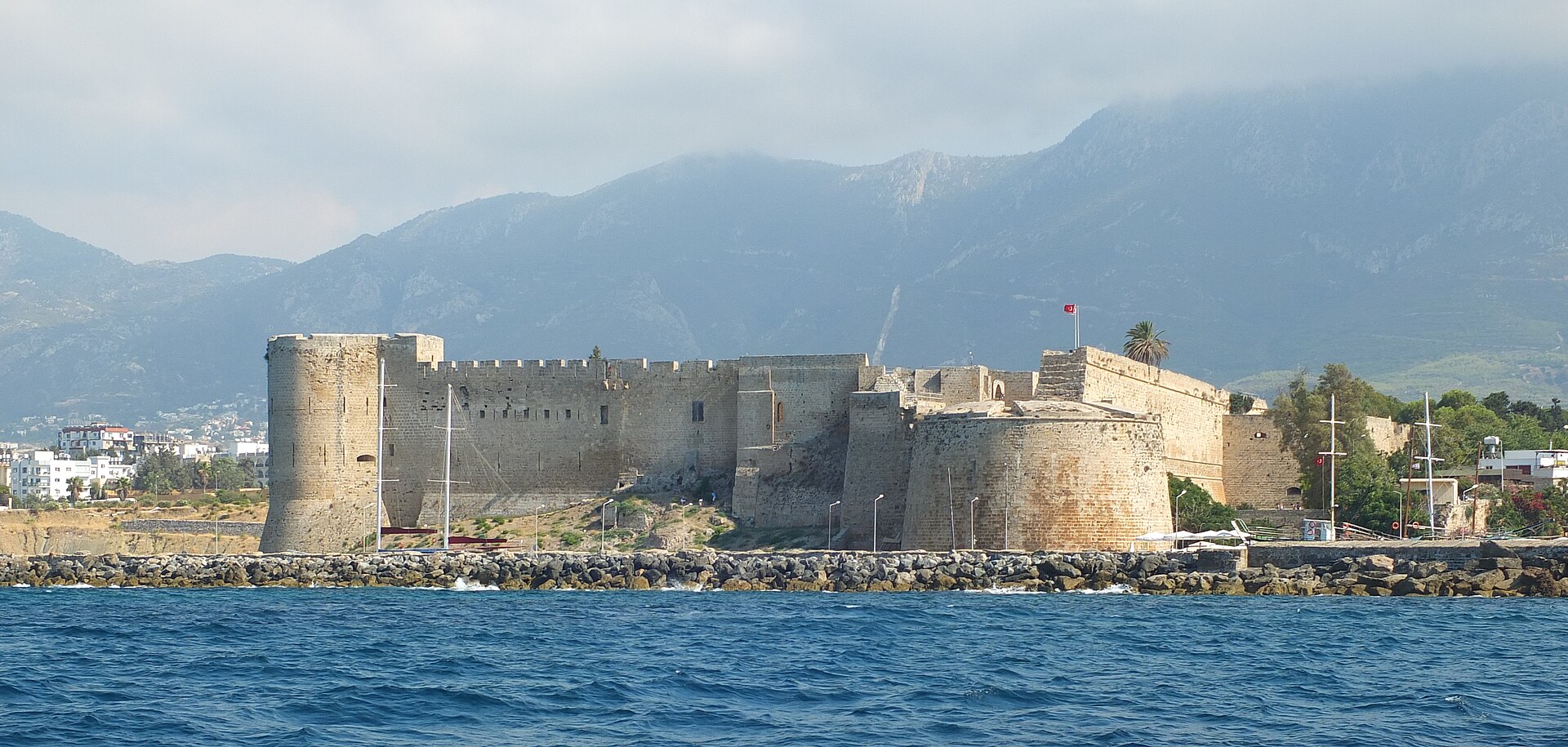
The north-east tower of Kyrenia Castle, with the Kyrenia mountain range and St. Hilarion Castle in the background
Institute for the Study of the Ancient World, New York · Photograph by Institute for the Study of the Ancient World from New York, United States of America · CC BY 2.0Kyrenia Castle
Museum · Girne Kalesi · Founded 1540
Open, admission and hours confirmed 3 September 2026 · 8 sources
On this page 13 sections
ContentsClose
The castle's single defining strength is a piece of maritime archaeology rather than a conventional art or antiquities collection: the near-complete hull and cargo of a working 4th-century BC Greek merchant ship, excavated and conserved as one of the founding projects of underwater archaeology as a scientific discipline. Everything else on site, the Byzantine chapel, the Lusignan and Venetian fortification, the Bronze Age and Neolithic reconstructions, and the lapidarium of salvaged stonework, is genuine building history and regional archaeology, but it is the ship, its cargo and the seaworthy replica it inspired that make this a site of research-level significance rather than a scenic ruin.
| Local name | Girne Kalesi |
|---|---|
| Kind | Museum |
| Founded | c. 7th century AD (present form 1540) |
| City and country | Kyrenia (Girne), Northern Cyprus |
| Address | Kyrenia Harbour, Kyrenia (Girne), Northern Cyprus. The castle and its museums are administered by the Turkish Republic of Northern Cyprus (TRNC), which controls the north of the island following the 1974 division of Cyprus; the Republic of Cyprus and the United Nations do not recognise TRNC administration. |
| Website | eemd.gov.ct.tr/M%C3%9CZE-VE-%C3%96REN-YERLER%C4%B0/Girne-B%C3%B6lgesi/Girne-Kalesi |
| Status | Open, confirmed |
| Record last verified |
Visiting
- Hours
- Daily08:00 to 19:00Summer schedule, 1 April to 31 October 2026; last admission 18:00
- Admission
- Adult (Tam bilet)TRY 150Covers the Shipwreck Museum and every section of the castle open to visitors
- Student (Ogrenci bileti)TRY 50
Free entry: Sundays, free for TRNC citizens only; visitors from elsewhere pay the standard tariff every day- Do I need to book?
- No online booking found; tickets are sold at the castle gate
- Address
- Kyrenia Harbour, Kyrenia (Girne), Northern Cyprus. The castle and its museums are administered by the Turkish Republic of Northern Cyprus (TRNC), which controls the north of the island following the 1974 division of Cyprus; the Republic of Cyprus and the United Nations do not recognise TRNC administration. Map
- Website
- eemd.gov.ct.tr/M%C3%9CZE-VE-%C3%96REN-YERLER%C4%B0/Girne-B%C3%B6lgesi/Girne-Kalesi
- Telephone
- +90 392 815 2142
- [email protected]
Before you go how long, access, photography, bags, eating, shop
- How long to allow
- About one hour to see the Shipwreck Museum, the dungeons, the chapel and the ramparts; visitors on guided tours report longer
- Access
- Not addressed on the department's own visit pages. The castle is a medieval fortress reached by stone ramps and stairs to the upper walls, the towers and the dungeons
- Eating
- A small cafe at the north end of the inner courtyard
- Shop
- A small souvenir shop beside the cafe, at the north end of the courtyard
Prices and hours change. We take them from the institution's own pages and print the day we read them, and you can check the current position at the source we used. Confirm before you travel.
What is inside
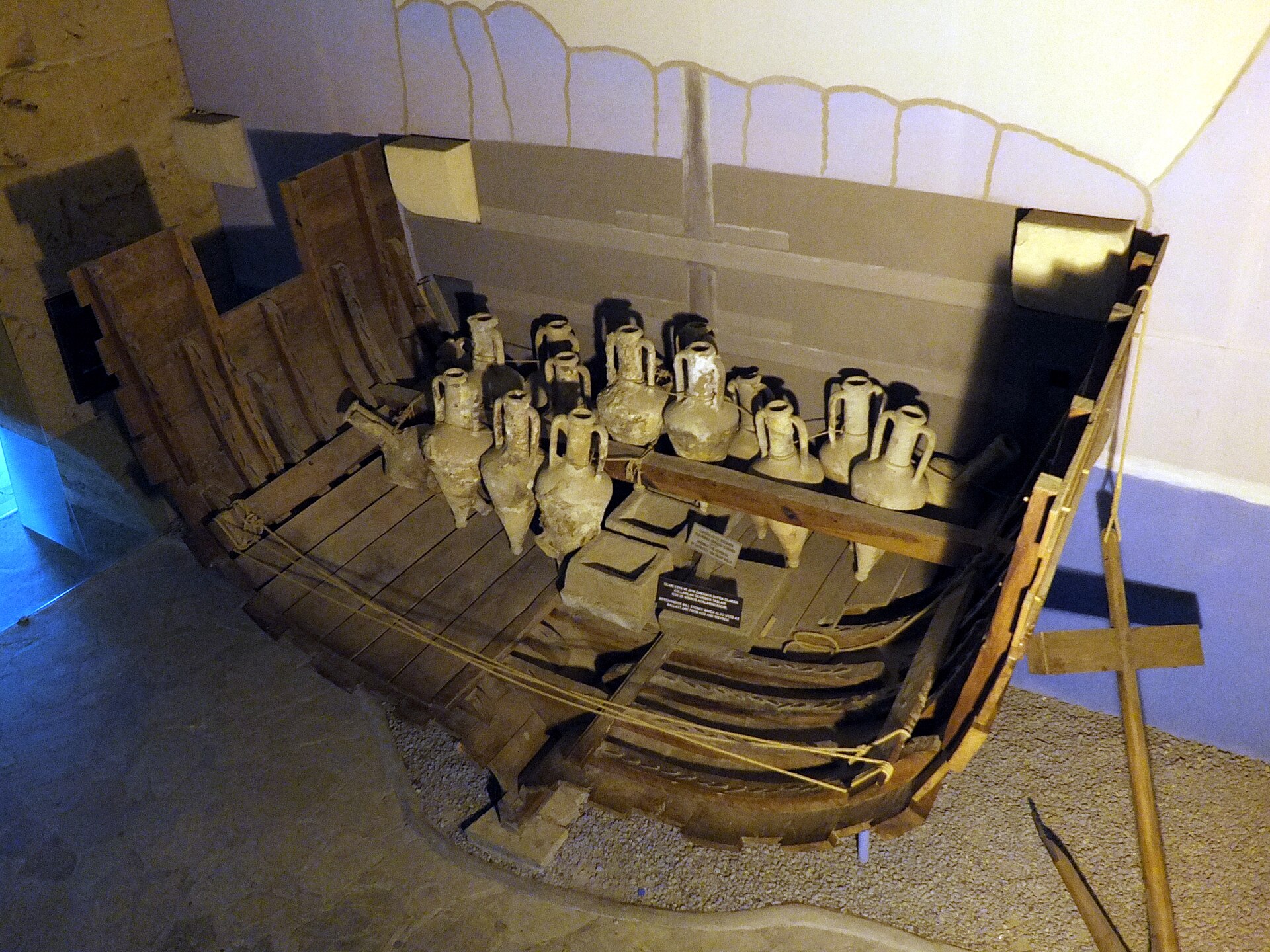
Photograph by Ad Meskens · CC BY-SA 4.0 Ancient Shipwreck Museum (Batik Gemi Muzesi)
The central exhibit of the whole site: the excavated hull of a 4th-century BC Greek merchant ship, one of the oldest ships ever recovered and displayed, shown together with its cargo of amphorae, millstones and almonds in a climate-controlled room
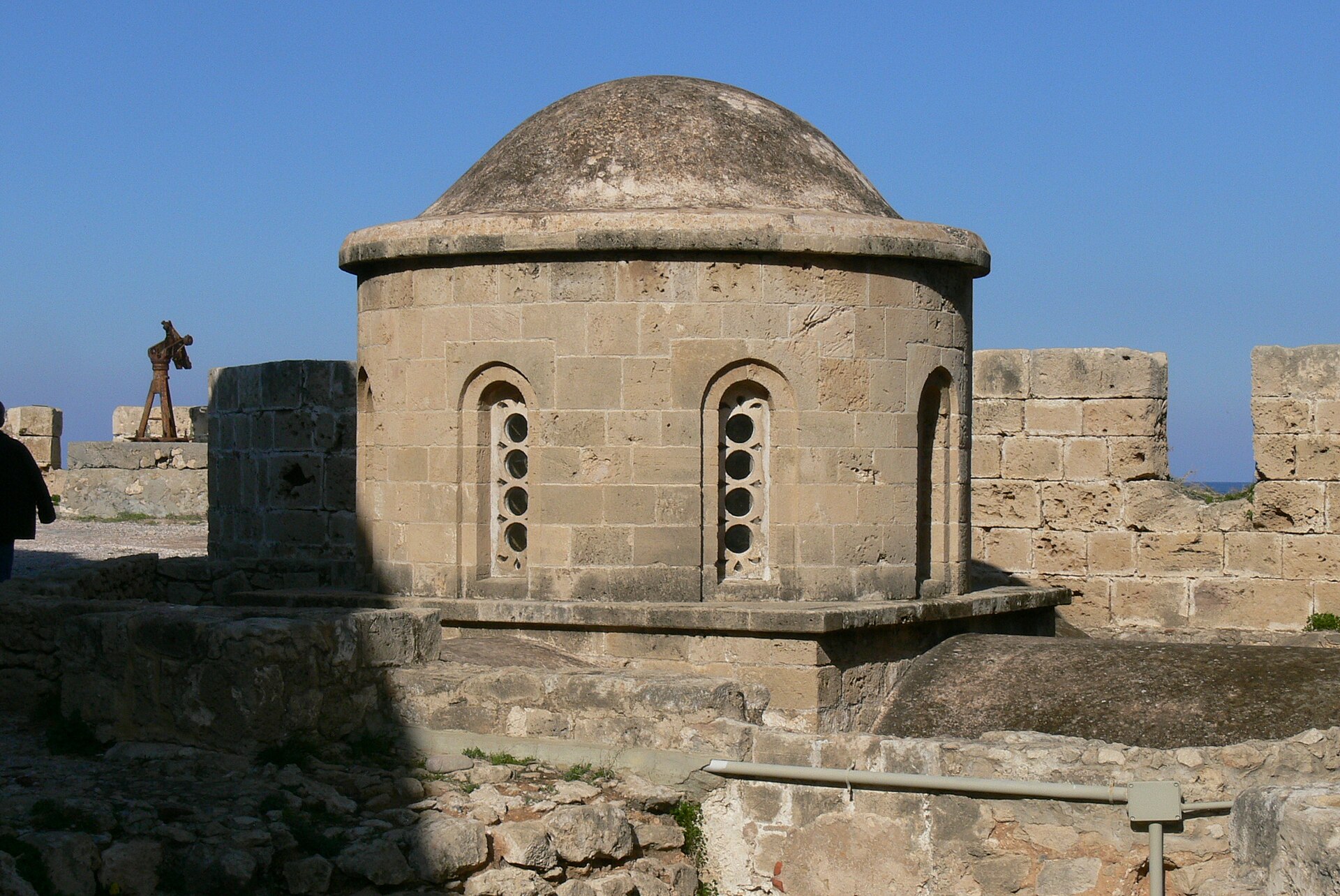
Photograph by Xenophon · CC BY-SA 3.0 Church of St. George
A cruciform 12th-century Byzantine chapel enclosed within the Venetian-era walls when the castle reached its present form; its dome rests on marble columns with Corinthian capitals reused from an older building
Dungeons (Zindanlar)
Lusignan-period prison cells, now fitted with tableaux reconstructing events of 1367-68 under King Peter I of Cyprus. No free-licence photograph of this room's interior was found on Wikimedia Commons, so it carries no plate here
Lusignan Tower and Royal Apartments
Built 1208-1211 by the regent Jean d'Ibelin over earlier Byzantine fortification, the tower and the royal quarters above the courtyard carry mannequin displays spanning the Byzantine, Lusignan, Venetian, Ottoman and British occupations of the castle. No verified interior photograph of this specific space was found on Commons
Venetian Tower
An early 16th-century artillery tower built when Venice re-fortified the castle for gunpowder warfare, now displaying reconstructions of Venetian gunners preparing cannon fire
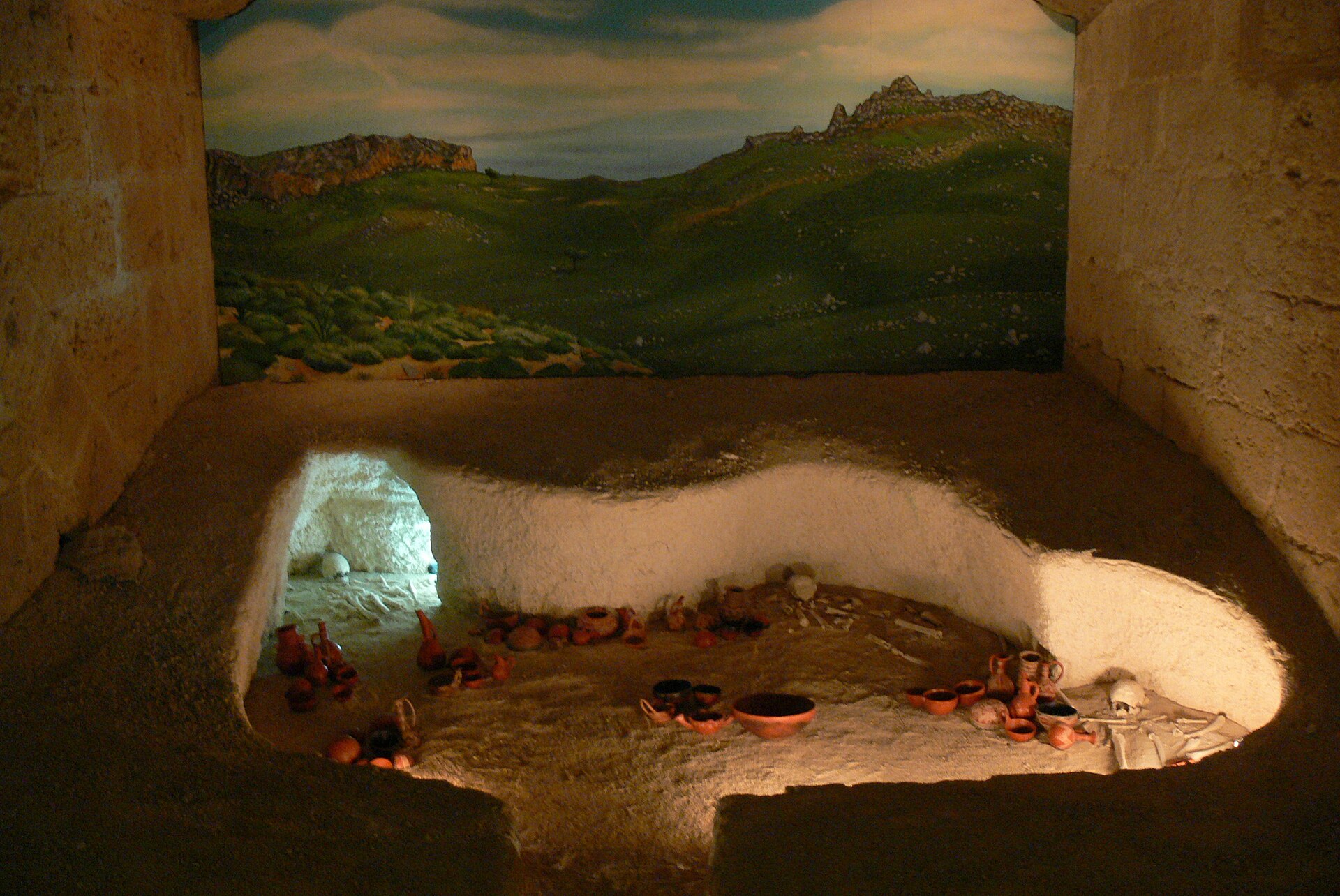
Photograph by Xenophon · CC BY-SA 3.0 Archaeological and tomb-finds gallery
A reconstruction of a Bronze Age grave from the Kirni cemetery near Kyrenia, a reconstruction of the Neolithic village of Vrysi with its grave goods and stone tools, and finds from the Hellenistic-to-early-Byzantine cemetery at Akdeniz
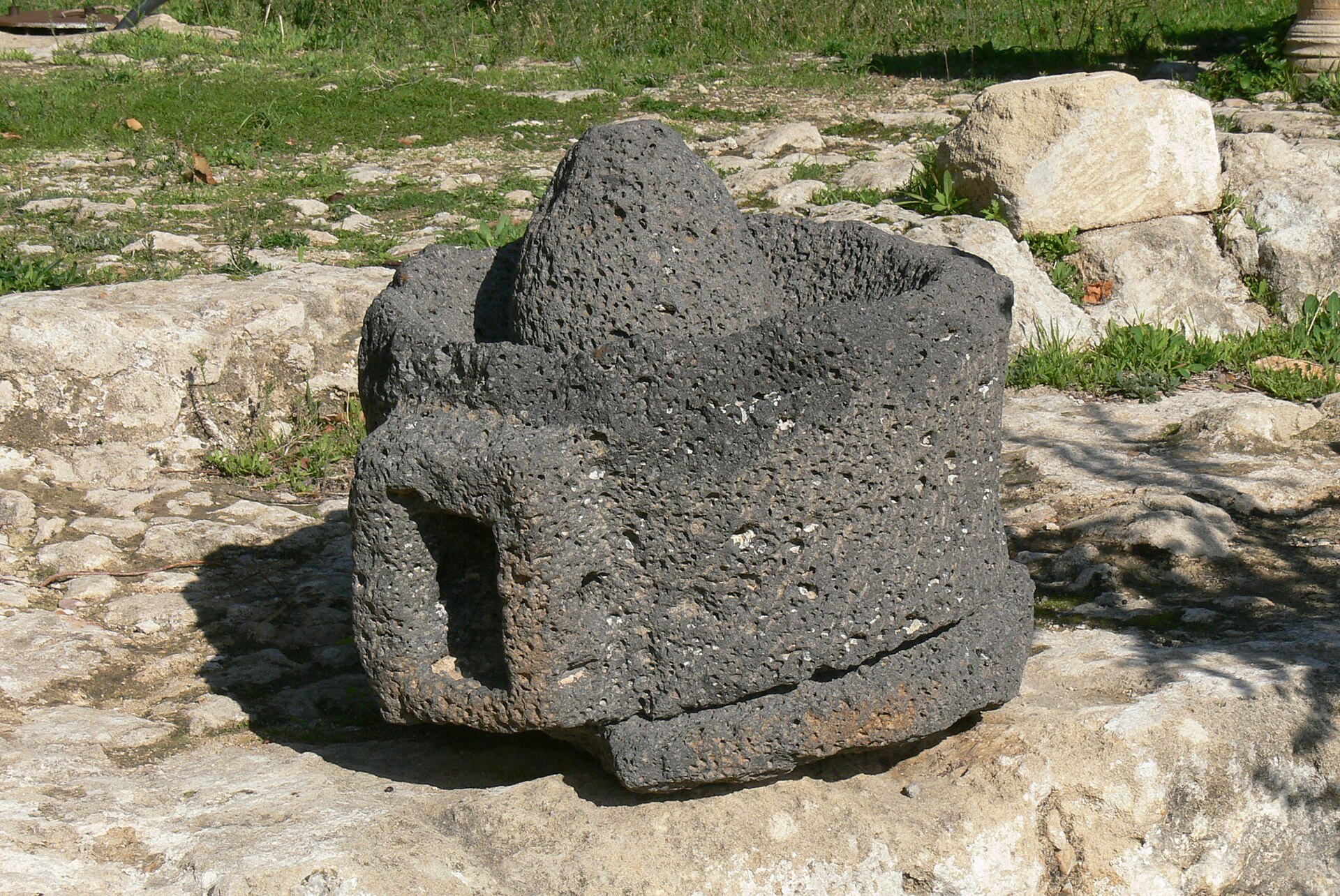
Photograph by Xenophon · CC BY-SA 3.0 Lapidarium
A collection of carved and inscribed stonework gathered from in and around Kyrenia: millstones, column fragments, Ottoman and Greek inscriptions, and Christian relief carvings
Ramparts and bastions
The Venetian-era curtain walls and corner towers, open to visitors along a walkway with views over Kyrenia harbour, the town and the Kyrenia mountain range including St. Hilarion Castle
What to see first
The Kyrenia Ship
Unknown Greek shipwrights, c. 4th century BCA merchant vessel that sank off Kyrenia harbour around 294 BC and was excavated between 1967 and 1974; its hull, of Aleppo pine built shell-first with mortise-and-tenon joinery, survives largely intact and is one of the oldest ships ever recovered from the sea5
The amphora cargo
Rhodian and other eastern Mediterranean workshops381 amphorae of wine and oil formed the bulk of the ship's cargo and, through their stamps, supplied the dating evidence for the wreck5
Over 9,000 almonds
A rare organic survival from the ship's hold, preserved by the anaerobic seabed conditions and displayed alongside the amphorae as part of the original cargo5
The 29 millstones
Carried both as saleable cargo and as ballast low in the hull, laid in three rows over the keel; their weight and position helped the excavators reconstruct how the ship sat in the water5
Kyrenia II, the full-scale replica
Built 1985 under Harry Tzalas, with Michael Katzev and J. Richard SteffyA seaworthy reconstruction of the Kyrenia Ship, built using the same ancient shell-first technique documented during the original excavation, and sailed as what its builders called a floating ambassador of Cypriot maritime history5
The Lusignan dungeons tableaux
Prison cells of the Lusignan period, dressed with reconstructions of real events from 1367-68 under King Peter I, giving the castle's darkest rooms a documented rather than generic story1
Church of St. George's reused Corinthian capitals
Byzantine, 12th century (capitals salvaged from an older, unidentified building)The chapel's marble columns and capitals were already spolia when the church was built, and the whole structure was later absorbed inside the Venetian perimeter rather than demolished4
Tomb of Admiral Sadik Pasha
The Ottoman admiral who received Kyrenia's surrender in 1570 is buried in the entrance corridor of the Lusignan castle, one of the few Ottoman-period additions the British did not remove during their later restoration work4
A Byzantine watch-tower becomes a Lusignan stronghold
Kyrenia has been a fortified harbour for far longer than the visible castle: Greek settlement on the site is documented from the 7th century BC, and the town later grew into a city under Roman rule. Research at the site suggests the Byzantines built the first castle here in the 7th century AD specifically to guard the harbour against Arab raiding fleets, though its exact original plan is no longer recoverable from the surviving fabric. The first written reference to the castle dates to 1191, during the Third Crusade, when Richard the Lionheart captured it after defeating Isaac Komnenos, a local Byzantine governor who had proclaimed himself emperor of Cyprus.
Richard did not keep the island. He sold it first to the Knights Templar, who could not hold it against a peasant revolt, and then to his cousin Guy of Lusignan, the deposed king of Jerusalem. That sale opened three centuries of Lusignan rule over the Kingdom of Cyprus. The castle Richard had captured was still small; it was Jean d'Ibelin, regent for the young Lusignan king, who enlarged it substantially between 1208 and 1211, adding a new entrance, square and horseshoe-shaped towers, archers' embrasures, guard rooms and dungeons, on top of some of the existing Byzantine fortification.
The castle earned its defences. A Genoese assault in 1373 came close to destroying it, and a 15th-century siege lasted nearly four years, reportedly reducing the garrison to eating vermin. The Lusignan castle that survived these attacks is still legible today in the arched guard rooms, stables and living quarters around the inner courtyard, and in the royal apartments and small chapel reached by climbing to the upper walls.
The Venetian rebuild, an Ottoman surrender, and a divided island's custody
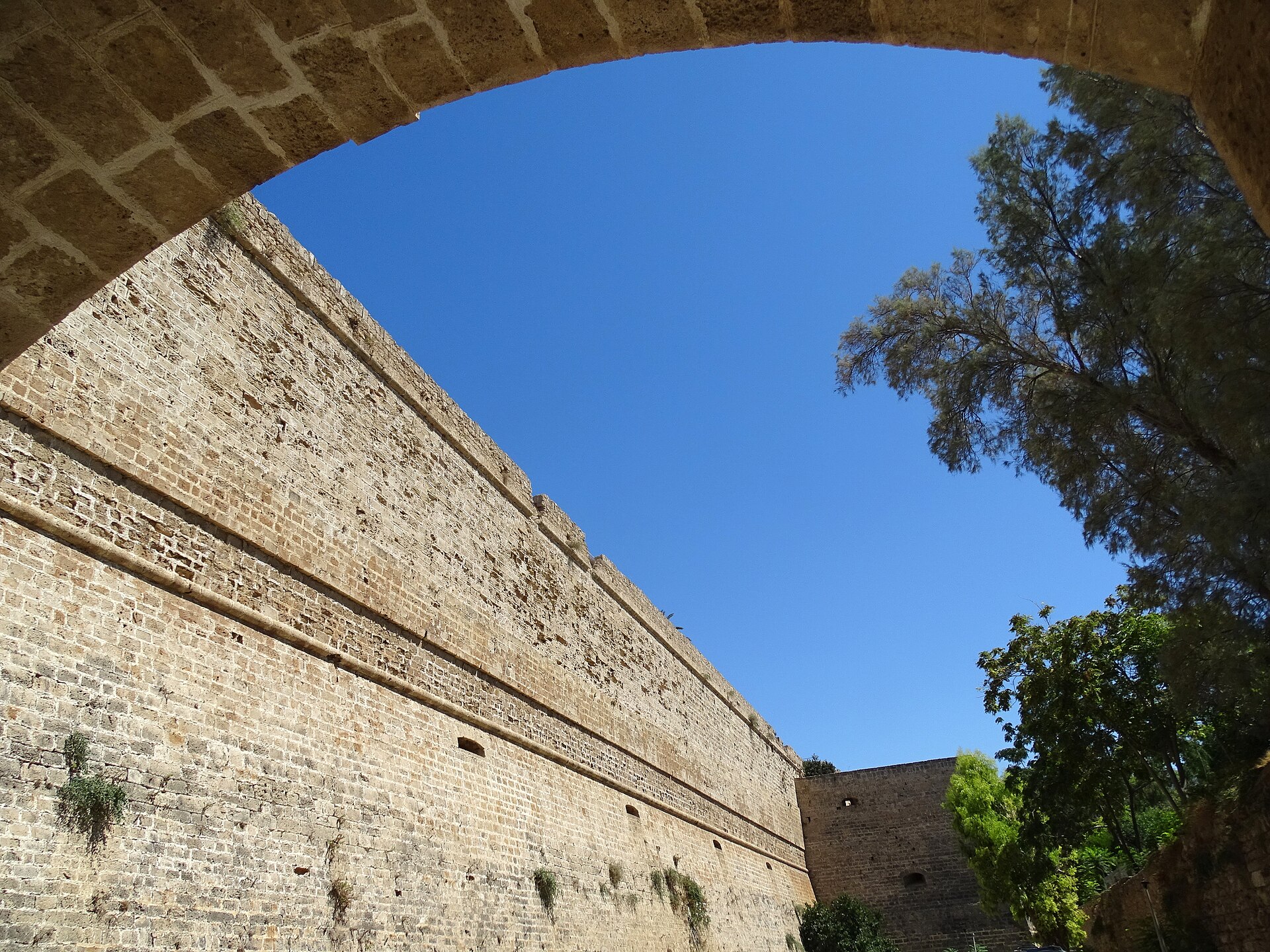
Venice took control of Cyprus in 1489, and by 1540 its engineers had rebuilt Kyrenia Castle for a different kind of war. Gunpowder artillery demanded thick, sloped walls rather than tall thin ones, so the Venetians thickened the perimeter, cut embrasures for cannon at three separate levels, and built long ramps inside the walls specifically so that artillery pieces could be dragged up onto the ramparts. This Venetian shell is what gives the castle its present rectangular, harbour-facing profile, and it swallowed the older Church of St. George whole rather than demolishing it, leaving the Byzantine chapel standing inside the new circuit of walls.
The Venetian defences were never seriously tested at Kyrenia: the town surrendered to the Ottoman army in 1570 without a fight, unlike Nicosia and Famagusta in the same campaign. The Ottoman admiral who accepted the surrender, Sadik Pasha, is buried in the entrance corridor of the Lusignan castle. Most other Ottoman-period changes to the building were later removed by the British, who took over the administration of Cyprus in 1878 and used the castle as a police barracks and training school, and, during the anti-colonial EOKA campaign of the 1950s, as a prison.
Cypriot custody of the castle has its own broken history. The island's own Department of Antiquities took over the building in 1950, lost it back to British control during the EOKA emergency, and regained it in 1959; the castle has been open to the public in some form since 1960. Between 1963 and 1967, in the intercommunal violence that followed independence, the Cypriot National Guard used it as a military headquarters rather than a museum. Since the Turkish military intervention and the de facto division of the island in 1974, the castle has been administered by the Department of Antiquities and Museums of the Turkish Republic of Northern Cyprus (TRNC), the unrecognised state that controls the north of the island; Turkey alone recognises the TRNC, while the Republic of Cyprus, the European Union and the United Nations continue to regard the north as occupied Republic of Cyprus territory. That division is not a footnote to the castle's history: the department's own account states that it holds religious icons removed from Greek Orthodox churches in the Kyrenia area after 1974 in locked rooms inside the castle, some of which are now displayed at the nearby Archangel Michael Church. This detail is recorded by Wikipedia, drawing on the Historical Dictionary of Cyprus, rather than by the department's own visit pages, which do not mention it.
A sponge diver's find and the oldest ship raised whole
The castle's single most important holding was found by accident, eleven kilometres out to sea. In November 1965 a Greek Cypriot diving instructor, Andreas Kariolou, came across a mound of amphorae and millstones on the seabed off Kyrenia while diving for sponges in a storm. He kept track of the site and, in 1967, showed it to archaeologists. What followed was one of the formative excavations of underwater archaeology as a discipline: a team led by Michael Katzev of the University of Pennsylvania Museum of Archaeology and Anthropology excavated the wreck between 1967 and 1969, and continued conservation work on what they raised until 1974, using more than fifty archaeologists, students and technicians over the life of the project.
Amphora stamps and coins found in the wreck allowed the team to date the ship closely: it was built around 315 BC and sank roughly two decades later, around 294 BC, meaning the vessel was already about 80 years old, by some estimates, when the sea finally took it. That makes the Kyrenia Ship one of the oldest ships ever recovered from the water in a condition complete enough to study as a single object, rather than as scattered timbers.
The hull, the cargo, and the ship that sails again
The hull that survives is about 14.7 metres long and 4.4 metres wide, built of Aleppo pine using the shell-first method standard in ancient Mediterranean shipbuilding, in which the outer planking was fitted and pegged together with mortise-and-tenon joints before any internal frame was added. By the time it sank, the ship had already been patched at least once: sections of ageing hull were reinforced with thin lead sheathing, only one and a half to two millimetres thick, in an ancient repair job that the excavators were able to identify and date separately from the original build.
The cargo tells its own story about Aegean trade in the early Hellenistic period. The ship was carrying 381 amphorae of wine and oil, the great majority of the load by weight, alongside more than 9,000 almonds that survived because the wreck's conditions on the seabed kept oxygen away from the organic material. Twenty-nine millstones, stowed in three rows directly over the keel, did double duty as saleable cargo and as ballast that kept the lightly loaded hull stable. Today the hull and its cargo are conserved and displayed together in a climate-controlled room built specifically for them inside the castle, the Ancient Shipwreck Museum.
The excavation's legacy did not stop at conservation. In 1985 a team led by Harry Tzalas, working with Katzev and the naval architect J. Richard Steffy, completed Kyrenia II, a full-scale, seaworthy reconstruction of the ship built using the same ancient construction methods the excavation had documented. Its builders described her as a floating ambassador for Cypriot maritime history; sources consulted for this page do not say where she is berthed or displayed today.
What the castle holds today
A visit today moves through all of these layers at once. The north-west entrance crosses a bridge over what was, before the 14th century, a water-filled moat doubling as a small harbour for the castle itself. A vaulted corridor leads past Sadik Pasha's tomb into the large inner courtyard, ringed by the Lusignan guard rooms, stables and living quarters, with the royal apartments and a small chapel reachable by the stairs and ramps the Venetians built for their artillery. Off the courtyard sit the Ancient Shipwreck Museum, the Church of St. George, the Lusignan dungeons with their 1367-68 tableaux, the Venetian tower, an archaeological gallery reconstructing the Bronze Age grave at Kirni and the Neolithic village at Vrysi, and a lapidarium of carved and inscribed stone gathered from around Kyrenia. A short walk up onto the ramparts gives views over the harbour, the town and the mountains behind it, including St. Hilarion Castle. A small cafe and souvenir shop sit at the north end of the courtyard for visitors who want to break up the walk.
The Department of Antiquities and Museums prices the castle and its Shipwreck Museum under a single ticket, set on the same 1 April to 31 October 2026 summer tariff that covers its other Kyrenia-region sites, with the castle open every day of the week rather than closing on weekends as several of the department's smaller regional museums do.
What visitors say
Visitors consistently rate Kyrenia Castle among the top attractions in the town, and reviewers name the Shipwreck Museum as the reason to come: seeing the actual hull of an ancient ship, rather than a model or a replica, is repeatedly singled out. The rampart walk, with its views over the harbour and toward St. Hilarion Castle in the mountains, is the second most-mentioned draw. A minority of visitors find the wider fortress under-explained outside the shipwreck room, or note that parts of the walls and courtyard feel less maintained than the museum galleries.
What is praised, what is criticised
- Praised: The Shipwreck Museum and the presence of the genuine 4th-century BC hull rather than a reproduction
- Praised: The walk along the ramparts and towers, with harbour and mountain views
- Praised: The dungeon and tomb-reconstruction displays, which visitors describe as making the history concrete rather than abstract
- Criticised: Some visitors find the castle's non-maritime rooms thin on explanation and the fabric of the walls and courtyard less well kept than the shipwreck galleries
- Criticised: A minor recurring visitor complaint is a separate charge for the on-site restrooms, on top of admission
- Criticised: Beyond visitor opinion, Wikipedia records that the Department of Antiquities and Museums holds religious icons removed from Greek Orthodox churches in the Kyrenia area after 1974 in locked rooms inside the castle, describing them as the property of the Church of Cyprus; the department's own visit pages do not address this holding or its eventual disposition
Ratings on other platforms
Tripadvisor: 4.4 from 1,651 ratings, read 3 September 2026
A platform average is a tertiary source: it moves, it is not audited, and we quote no visitor's words.
Questions about Kyrenia Castle
Where is Kyrenia Castle?
Kyrenia Harbour, Kyrenia (Girne), Northern Cyprus. The castle and its museums are administered by the Turkish Republic of Northern Cyprus (TRNC), which controls the north of the island following the 1974 division of Cyprus; the Republic of Cyprus and the United Nations do not recognise TRNC administration.
How much does it cost to visit?
Adult (Tam bilet): TRY 150; Student (Ogrenci bileti): TRY 50. As confirmed 3 September 2026.
When is it open?
Daily 08:00-19:00. As confirmed 3 September 2026.
What should you see first?
The Kyrenia Ship (Unknown Greek shipwrights, c. 4th century BC); The amphora cargo (Rhodian and other eastern Mediterranean workshops); Over 9,000 almonds; The 29 millstones; Kyrenia II, the full-scale replica (Built 1985 under Harry Tzalas, with Michael Katzev and J. Richard Steffy); The Lusignan dungeons tableaux.
What we could not confirm
- Sources consulted for this page do not say where the Kyrenia II replica is currently berthed or displayed, or whether she remains seaworthy.
- The Department of Antiquities and Museums' own visit pages do not address the storage, condition or eventual disposition of the pre-1974 church icons that Wikipedia records as being held in locked rooms inside the castle.
Images
Sources
- 1Department of Antiquities and Museums (TRNC), "Girne Kalesi ve Muzeleri" eemd.gov.ct.tr/M%C3%9CZE-VE-%C3%96REN-YERLER%C4%B0/Girne-B%C3%B6lgesi/Girne-Kalesi
- 2Department of Antiquities and Museums (TRNC), visiting hours and tariff, summer 2026 eemd.gov.ct.tr/Z%C4%B0YARET-SAATLER%C4%B0
- 3Department of Antiquities and Museums (TRNC), contact page eemd.gov.ct.tr/%C4%B0LET%C4%B0%C5%9E%C4%B0M
- 4Wikipedia, "Kyrenia Castle" en.wikipedia.org/wiki/Kyrenia_Castle
- 5Wikipedia, "Kyrenia ship" en.wikipedia.org/wiki/Kyrenia_ship
- 6Wikidata, Q1408931 "Kyrenia Castle" wikidata.org/wiki/Q1408931
- 7Tripadvisor, "Kyrenia Castle" reviews and rating tripadvisor.com/Attraction_Review-g190378-d3856506-Reviews-Kyrenia_Castle-Kyrenia_Kyrenia_District.html
- 8Wikimedia Commons, Category:Kyrenia castle commons.wikimedia.org/wiki/Category:Kyrenia_castle