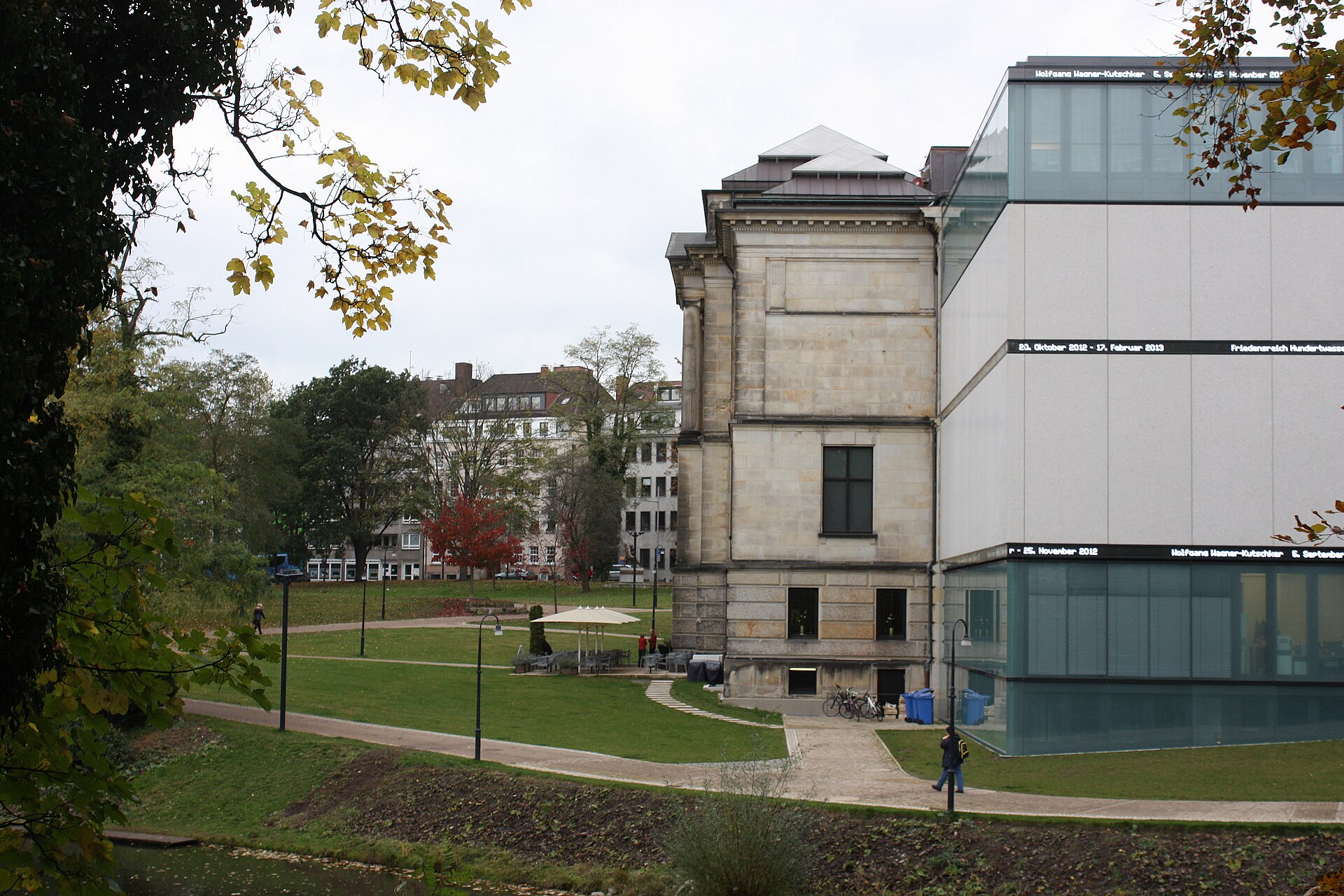
The 1902 sandstone facade of Kunsthalle Bremen seen alongside the glass-walled wing added in 2011, on Am Wall in central Bremen.
Photograph by Dguendel, released CC BY 4.0Kunsthalle Bremen
Museum · Founded 1849
Open, admission and hours confirmed 16 September 2026 · 12 sources
On this page 16 sections
ContentsClose
Kunsthalle Bremen's holding runs from the fourteenth century to living artists, but its center of gravity is nineteenth- and twentieth-century German and French painting, assembled by a private art society rather than a princely collection, which gives the walls a different logic than most European museums of comparable size. The Kunstverein bought forward rather than inherited backward: Delacroix and Courbet before French painting was fashionable in Germany, then Monet, Manet and Van Gogh while conservative critics were still calling Impressionism a fad, then Beckmann and the Worpswede painters while they were still living neighbors of the city rather than art-historical names. The print cabinet, at roughly 220,000 sheets, is one of the largest study collections of its kind in Europe and rarely finds a place in the popular account of the museum next to the paintings upstairs.
| Kind | Museum |
|---|---|
| Founded | 1849 |
| City and country |  Bremen, Germany Bremen, Germany |
| Address | Am Wall 207, 28195 Bremen, Germany |
| Website | kunsthalle-bremen.de |
| Status | Open, confirmed |
| Record last verified |
Visiting
- Hours
- MonClosed
- Tue10:00 to 21:00
- Wed-Sun10:00 to 17:00Closes at 18:00 instead of 17:00 during the winter schedule, 31 October 2026 to 28 March 2027. During the German Unity Day festival, 2-4 October 2026, hours are 10:00-18:00 (including Friday 2 October and Sunday 4 October).
- Closed
- Monday.
- Admission
- AdultEUR 12Rises to EUR 15 for the winter schedule, 31 October 2026 to 28 March 2027
- ReducedEUR 6Rises to EUR 7.50 for the winter schedule
- Reduced, disability, job-seeker or welfare statusEUR 5On presentation of proof
- Groups, 10 or moreEUR 10Per person; rises to EUR 12 for the winter schedule
- Under 18FreeAlso free for Kunstverein Bremen members, ICOM members and certain students
- Late ticket, 90 minutes before closingEUR 12Adult rate; reduced late-ticket rate is EUR 7.50 during the winter schedule
- Tickets
- shop.kunsthalle-bremen.de/de/tickets The museum's own ticket page.
- Do I need to book?
- Not required for the permanent collection; timed online tickets are sold through the museum's own ticket shop and recommended for temporary exhibitions
- Address
- Am Wall 207, 28195 Bremen, Germany MapTram Most Bremen tram routes stop at Domsheide, one of the city's three main public transport hubs, a short walk from the museum through the Wallanlagen park
Walking The museum sits inside the Wallanlagen, the ring of former fortifications and parkland that circles Bremen's old town - Website
- kunsthalle-bremen.de
- Telephone
- +49 (0)421 32908 220
- [email protected]
Before you go how long, access, photography, bags, eating, shop
- How long to allow
- Two to two and a half hours for the collection and one temporary exhibition, on visitors' own account
- Access
- Not detailed for the historic building generally in the sources consulted for this page; the museum's own visit page describes its Pixelwald Wisera light installation as barrier-free, though very dark, and advises visitors to allow time for their eyes to adjust
- Photography
- Not detailed in the sources consulted for this page
- Bags
- Backpacks, bags, bulky or sharp objects, umbrellas, coats and jackets are kept out of the exhibition rooms and must be left in the lockers provided
- Eating
- CANOVA cafe and restaurant, on site, named for the museum's Canova sculpture
- Shop
- Museum shop, on site and online
Prices and hours change. We take them from the institution's own pages and print the day we read them, and you can check the current position at the source we used. Confirm before you travel.
What is inside
Romanticism to Impressionism
Nineteenth-century German and French painting running from the Leibl circle and German Romantics such as Feuerbach and Boecklin into Impressionism, including Max Liebermann's Papageienallee of 1902, Lovis Corinth's Liegender weiblicher Akt of 1899, Claude Monet's Camille of 1866 and Edouard Manet's portrait of the critic Zacharie Astruc.
The Van Gogh room
A room built around Vincent van Gogh's 1889 Mohnfeld, the poppy-field painting whose 1910 purchase by director Gustav Pauli set off the Bremer Kuenstlerstreit, a nationwide pamphlet dispute over French painting entering German museums.
Modern art and Worpswede
German modernism centred on the Worpswede artists' colony outside Bremen, holding Paula Modersohn-Becker's Selbstbildnis vor gruenem Hintergrund mit blauer Iris and Max Beckmann's 1938 Apachentanz, drawn from a Beckmann collection the museum counts among the largest, in paintings and prints together, of any German institution.
Kupferstichkabinett - prints and drawings
A study collection of roughly 220,000 sheets from the fifteenth to the twentieth century, one of the largest of its kind in Europe, including drawings and prints by Duerer, Rembrandt, Degas, Goya, Titian, Rubens and Berthe Morisot, shown in changing print-room displays rather than kept permanently on the wall.
Sculpture
A small, concentrated sculpture holding built around Antonio Canova's marble Psyche of 1793 to 1794, the piece the on-site restaurant is named for, alongside Auguste Rodin's Das Eherne Zeitalter of 1875-76 and further Rodin bronzes.
New Media and contemporary installation
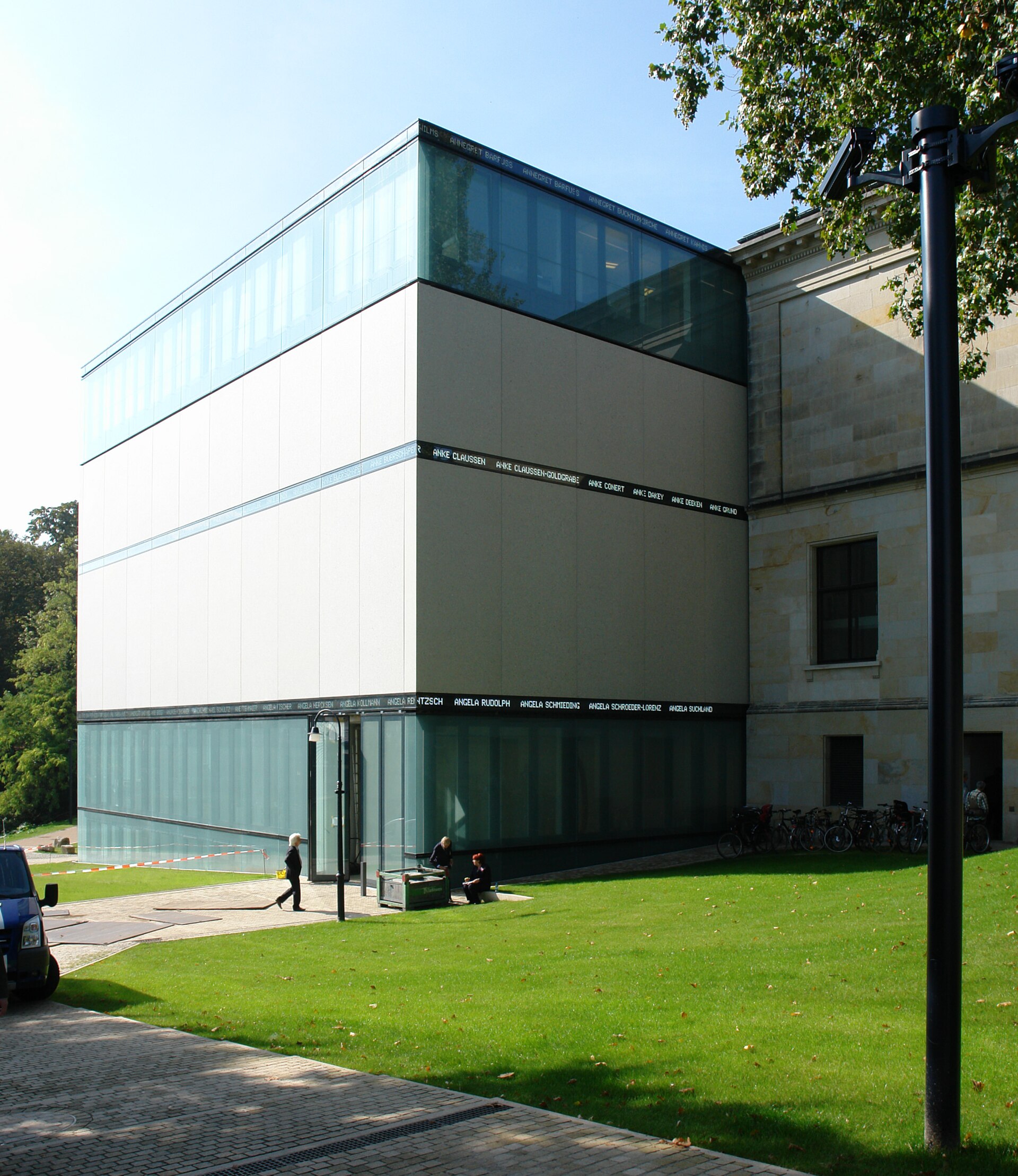
The glass-walled wings added in 2011 house video and light-based contemporary art, a program that has included Olafur Eliasson and Pipilotti Rist alongside earlier new-media artists such as Nam June Paik and Otto Piene, set apart from the historic painting galleries next door.
What to see first
Mohnfeld (The Poppy Field)
Vincent van GoghBought for 30,000 marks in 1910, the purchase set off the Bremer Kuenstlerstreit, an 80-page pamphlet protest signed by 123 German artists against French painting entering German museums, one of the defining art-political rows of the pre-war period.5
Psyche
Antonio CanovaA marble figure of 1793 to 1794 showing Psyche as a half-nude young girl holding a butterfly, symbol of the soul reunited with Amor, bequeathed to the museum in 1943 and now lending its name to the on-site restaurant.8
Camille
Claude MonetAn 1866 portrait of Monet's future wife Camille Doncieux, painted before the artist's circle had settled on the word Impressionism, and one of his earliest fully resolved figure paintings.6
Das Eherne Zeitalter (The Bronze Age)
Auguste RodinA cast of the male nude of 1875-76 that first brought Rodin public attention, and caused its own scandal on its 1877 debut when critics wrongly accused him of having cast it directly from a living body.6
Selbstbildnis vor gruenem Hintergrund mit blauer Iris
Paula Modersohn-BeckerA self-portrait from between 1900 and 1907 by the painter who spent her entire working life in the villages around Bremen and died in 1907, months after the birth of her only child, before most of Europe had noticed what she had painted.7
Apachentanz
Max BeckmannA 1938 painting from a holding of Beckmann paintings and near-complete print graphics that the museum counts among the largest anywhere in Germany, made the year after Beckmann fled Germany once his work was condemned as degenerate.7
Papageienallee (Parrot Walk)
Max LiebermannA sunlit 1902 garden scene by the Berlin Secession leader, hung in the same room of German Impressionism as Lovis Corinth's more forceful, painterly nude studies.6
Portrait of Zacharie Astruc
Edouard ManetA portrait of the French critic, poet and painter who was among Manet's earliest and most vocal defenders in the Paris press, a friendship the museum devoted a dedicated exhibition to in 2021.6
Exhibitions on now
- On now22 Jul to 8 Nov 2026Confirmed · check before you travel
Past exhibitions here
- Closed29 Oct to 26 Nov 1989Confirmed · check before you travel
A merchants' art society before it had a building
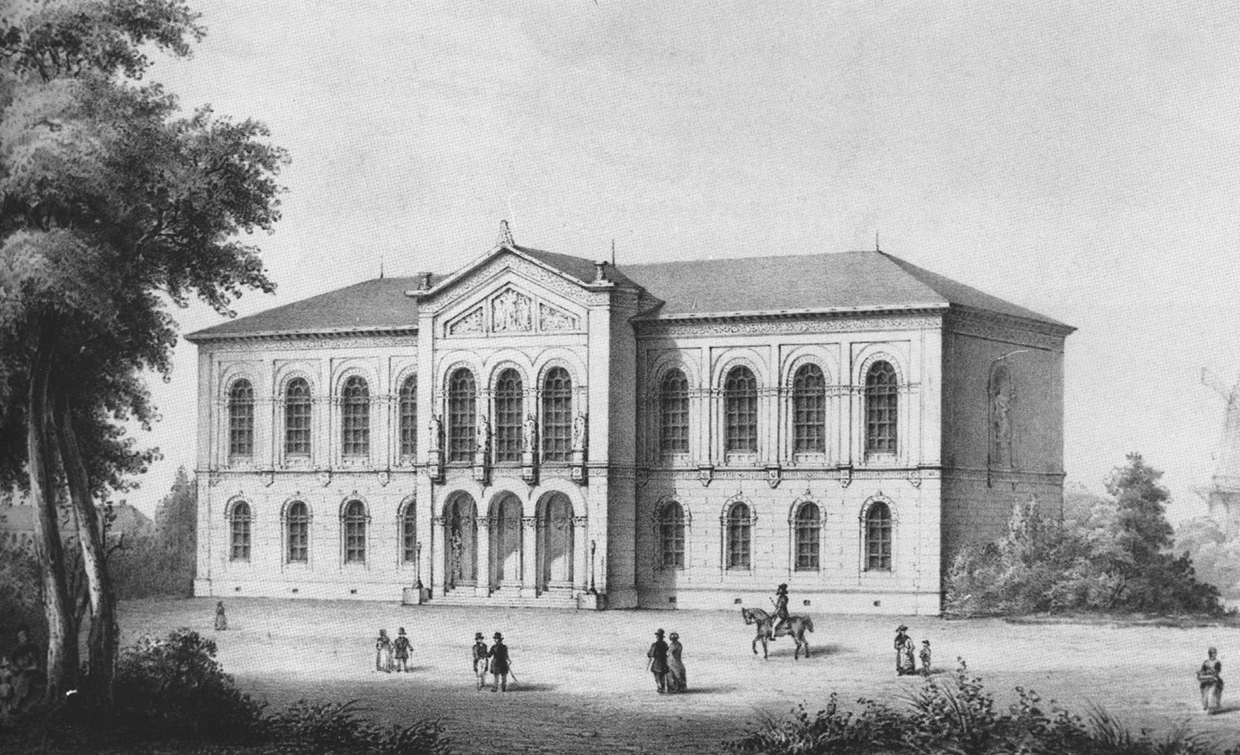
Kunsthalle Bremen did not begin as a museum. It began in 1823 as the Kunstverein Bremen, an art society founded by 34 local businessmen who wanted, in the society's own words, to spread a sense of beauty and form in a port city better known for trade than for painting. Membership grew quickly, from a founding handful to 575 people by 1846, and the collection grew with it: by 1833 the Kunstverein already owned 13 paintings, 585 drawings and nearly 4,000 prints, weighted toward Dutch and Flemish Old Masters such as Jan van Goyen. It took until 1849 for the society to put that collection behind its own front door. Lueder Rutenberg's building, a two-story structure with round-arched windows and four stone figures of Raphael, Michelangelo, Duerer and Rubens over the entrance, made the Bremen Kunstverein the first art society in Germany to own a purpose-built home for its collection rather than renting rooms or sharing a building with something else.
A sandstone facade, a fight over brick, and a glass extension
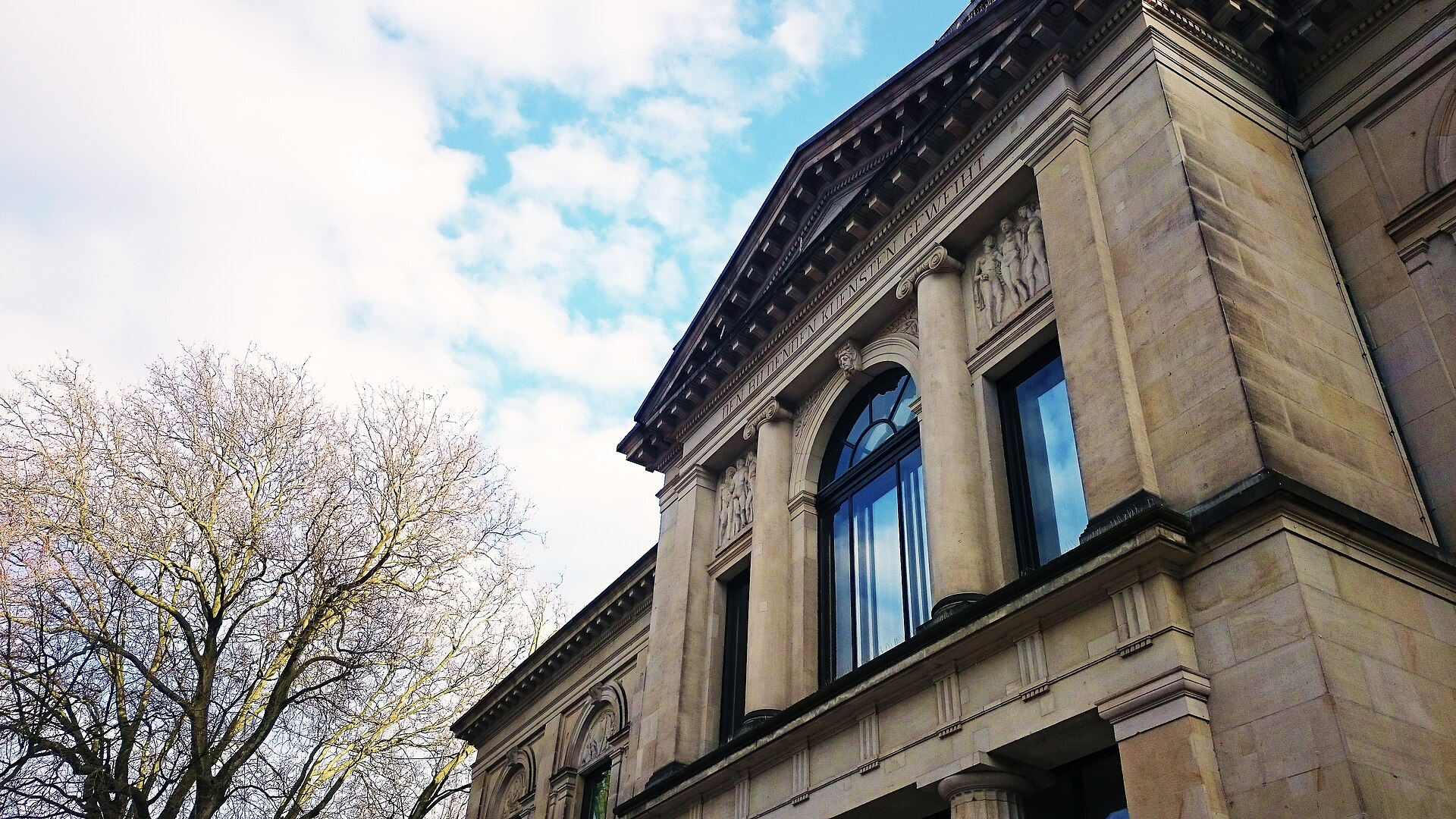
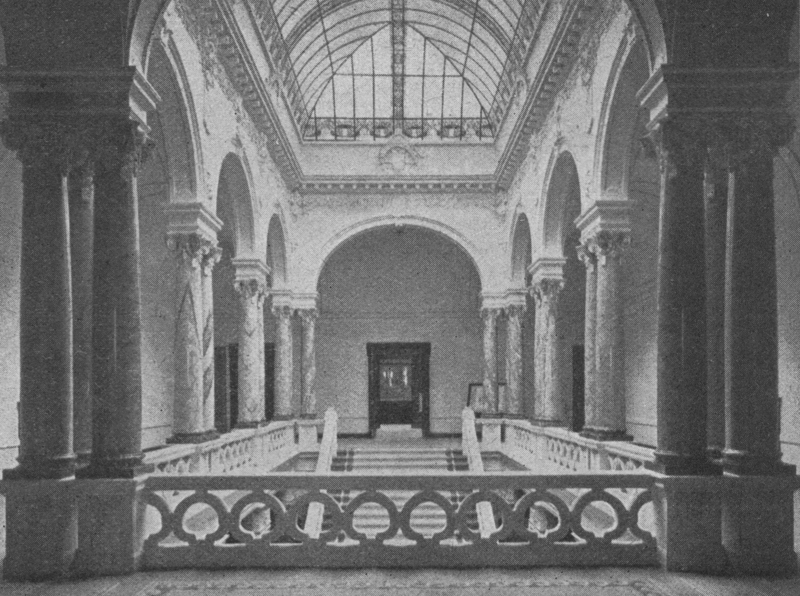
The building has been added to three times since 1849, and each addition tells its own story. Eduard Gildemeister's monumental sandstone facade of 1902, with sculpture by Georg Roemer and Georg Wrba, turned a modest society building into something closer to a civic monument, and it is still the face most visitors photograph from Am Wall. Eighty years later a Werner Duettmann extension caused a genuine scandal: the approved plans called for stone to match the existing building, and what went up instead was red brick, a decision that provoked public argument in Bremen at the time and still divides opinion on the building today. The most recent change, completed in 2011, is the opposite gesture: two glass-and-concrete cubic wings by the Berlin firm Hufnagel, Puetz and Rafaelian, adding 5,560 square meters against the 7,410 square meters of the fully renovated historic building, funded in equal thirds by the Luerssen family and the Karin and Uwe Hollweg Foundation, the state of Bremen, and the federal government, at a cost of about 30 million euros.
A night in September 1942, and a collection that never came home
On 5 September 1942 an air raid destroyed the museum's central staircase and six upper rooms, and burned Emanuel Leutze's monumental Washington Crossing the Delaware, too large to move to safety; a second version of the same composition survives today in the Metropolitan Museum of Art in New York. What had already been evacuated fared little better. Paintings, drawings and prints sent for safekeeping to four castles, including roughly 50 paintings, 1,715 drawings and about 3,000 prints at Karnzow Castle, were seized when Soviet forces reached Karnzow in May 1945. More than 1,500 works from the Bremen collection are still unaccounted for, among the largest wartime losses suffered by any German museum, alongside Dresden. A Soviet officer named Viktor Baldin personally rescued 362 drawings and two paintings from the ruins of Karnzow and carried them to Moscow, where they remain in a Russian state collection; Bremen has formally asked for their return since 1989, and in 2005 Russia's culture minister called the idea out of the question. The Baldin drawings are not a closed chapter. They are an open one this museum has been unable to close for eighty years.
A Van Gogh, a pamphlet, and a fight over what German art should be
In 1910 the Kunsthalle's first scientific director, Gustav Pauli, paid 30,000 marks for Vincent van Gogh's 1889 Mohnfeld, a poppy field painted the year before the artist's death. Conservative critics, led by the Worpswede painter Carl Vinnen, treated the purchase as a symptom of something larger: on 17 April 1911 Vinnen published an 80-page pamphlet, Ein Protest deutscher Kuenstler, denouncing what he called the great invasion of French art into German museums, and 123 artists signed it, including Kaethe Kollwitz. The response came within two months. Im Kampf um die Kunst, a counter-pamphlet defending Pauli and modern collecting, carried 47 artists' signatures and 28 more from gallerists, writers and dealers, among them Max Beckmann and Wassily Kandinsky. Bremen's own conservative politicians tried in 1913 to curb the museum's purchasing independence in response to the row; they did not succeed, and Pauli's successors kept buying the French and German modernists the protest had tried to keep out. The painting that started it hangs in the collection today.
What the collection actually holds, room by room
Walk the museum in order and the collection tells its own history. Old Master paintings and the Leibl-circle realists give way to French Impressionism and the German painters who answered it, Liebermann, Corinth, Slevogt, before a room built around the Van Gogh that caused the 1911 uproar. The Worpswede rooms hold Paula Modersohn-Becker in depth, an artist who spent her whole working life in the villages outside Bremen and died in 1907, months after the birth of her only child, before most of Europe had noticed what she had painted. Max Beckmann, whose paintings and near-complete print graphics the museum counts among the largest Beckmann holdings anywhere in Germany, occupies the modern rooms alongside Picasso, Franz Marc and Ernst Ludwig Kirchner. A small, concentrated sculpture collection is built around Antonio Canova's marble Psyche and Auguste Rodin's Das Eherne Zeitalter, the bronze that caused its own scandal in 1877 when critics wrongly accused Rodin of casting it from a living body. The 2011 glass wings, finally, hold video and light-based contemporary work, a program that has included Olafur Eliasson and Pipilotti Rist alongside earlier new-media pioneers such as Nam June Paik.
Restitution as an ongoing task, not a finished one
The museum's Nazi-era history did not end with the 1942 bombing raid. Between 2009 and 2016 Kunsthalle Bremen returned or settled several works looted or forced onto the market under Nazi persecution: Wilhelm Leibl's Peasant Girl went to the heirs of Alexander Lewin in 2009, an agreement with the heirs of Michael Berolzheimer covered a Giacomo Cavedone painting sold under duress in 1937 and led to the restitution of a Francesco Trevisani Madonna and Child in 2014, and a drawing from the Arthur Feldmann collection was returned to heirs in 2016. Not every claim has been settled on the claimant's terms: the museum rejected a claim over a George Grosz work, arguing the artist lost it to debt rather than persecution, a position the family disputes. Provenance researchers at the museum are still working through the wartime dealings of three Bremen art dealers, Arnold Blome, Heinrich Glosemeier and Hugo Oelze, whose full role in moving looted and forced-sale works through the Bremen market during and after the Nazi period is not yet completely mapped. A museum built on buying ahead of taste is still, a century later, accounting for what that buying cost other people.
What visitors say
Visitors consistently describe Kunsthalle Bremen as a compact, high-quality survey of nineteenth- and twentieth-century German and French painting that rewards two to three hours rather than a full day, and praise how the collection reads as a single walk through art history from Romantic landscape to contemporary light installation inside one building. Reviewers frequently single out specific works, a Van Gogh, a Rodin, Canova's Psyche, as reasons the museum punches above its size, while several note that it sits comfortably alongside, if smaller than, its better-known Hamburg namesake.
What is praised, what is criticised
- Praised: the coherence of the hang, walking chronologically from Old Masters through Impressionism to contemporary media art in one visit
- Praised: the strength of individual works relative to the museum's modest size, especially the Van Gogh, the Rodin bronzes and Canova's Psyche
- Praised: the contemporary light and media installations in the 2011 wing, called out by name as a highlight distinct from the historic painting galleries
- Praised: quiet, uncrowded galleries even on weekends, compared with better-known museums elsewhere in Germany
- Criticised: wayfinding inside the building, with more than one visitor describing the route between the historic rooms and the new wing as confusing without a map
- Criticised: the collection's scale next to the larger Hamburger Kunsthalle, which some visitors mention by name as a point of comparison Bremen does not fully match
Ratings on other platforms
Tripadvisor: 4.3 from 224 ratings, read 13 August 2026
A platform average is a tertiary source: it moves, it is not audited, and we quote no visitor's words.
Questions about Kunsthalle Bremen
Where is Kunsthalle Bremen?
Am Wall 207, 28195 Bremen, Germany.
How much does it cost to visit?
Adult: EUR 12; Reduced: EUR 6; Reduced, disability, job-seeker or welfare status: EUR 5; Groups, 10 or more: EUR 10; Under 18: free. As confirmed 16 September 2026.
When is it open?
Mon closed; Tue 10:00-21:00; Wed-Sun 10:00-17:00. Closed: Monday. As confirmed 16 September 2026.
How do you get there?
Tram: Most Bremen tram routes stop at Domsheide, one of the city's three main public transport hubs, a short walk from the museum through the Wallanlagen park; Walking: The museum sits inside the Wallanlagen, the ring of former fortifications and parkland that circles Bremen's old town.
What should you see first?
Mohnfeld (The Poppy Field) (Vincent van Gogh); Psyche (Antonio Canova); Camille (Claude Monet); Das Eherne Zeitalter (The Bronze Age) (Auguste Rodin); Selbstbildnis vor gruenem Hintergrund mit blauer Iris (Paula Modersohn-Becker); Apachentanz (Max Beckmann).
What we could not confirm
- Whether the 362 drawings and two paintings known as the Baldin Collection, held in Russia since 1945 and refused for return by Russia's culture ministry in 2005, will ever come back to Bremen
- Whether the museum's ongoing research into the wartime dealings of the Bremen art dealers Arnold Blome, Heinrich Glosemeier and Hugo Oelze will surface further Nazi-era claims beyond the cases already settled
Images
Sources
- 1Kunsthalle Bremen, visitor information (hours, admission, address, phone, bag policy, accessibility note) kunsthalle-bremen.de/en/plan-your-visit/your-visit
- 2Kunsthalle Bremen, Ihr Besuch (German visitor information, cross-check on hours, admission, cafe and shop) kunsthalle-bremen.de/de/besuch-planen/ihr-besuch
- 3Wikidata, Kunsthalle Bremen (Q693591), identity, coordinates and inception date wikidata.org/wiki/Q693591
- 4Wikipedia, Kunsthalle Bremen (building history, Second World War destruction, Baldin Collection, restitution cases) en.wikipedia.org/wiki/Kunsthalle_Bremen
- 5Wikipedia (German), Bremer Kuenstlerstreit (the 1910-11 Van Gogh purchase dispute) de.wikipedia.org/wiki/Bremer_K%C3%BCnstlerstreit
- 6Kunsthalle Bremen, collection pages: Romanticism to Impressionism (named works on view) kunsthalle-bremen.de/en/sb-page/collection/collection/romanticism-to-impressionism
- 7Kunsthalle Bremen, collection pages: Modern Art (Modersohn-Becker and Beckmann works named) kunsthalle-bremen.de/en/sb-page/collection/collection/modern-art
- 8museum-digital: Bremen, object record for Psyche by Antonio Canova bremen.museum-digital.de/object/46
- 9Tripadvisor, Kunsthalle Bremen attraction page (aggregate rating and visitor review snippets) tripadvisor.com/Attraction_Review-g187325-d534798-Reviews-Kunsthalle_Bremen-Bremen.html
- 10Perlentaucher, press-review digest for Kunsthalle Bremen exhibitions perlentaucher.de/stichwort/kunsthalle-bremen.html
- 11Kunsthalle Bremen, ticket shop shop.kunsthalle-bremen.de/de/tickets
- 12Wikipedia, Domsheide (Bremen public transport hub) en.wikipedia.org/wiki/Domsheide