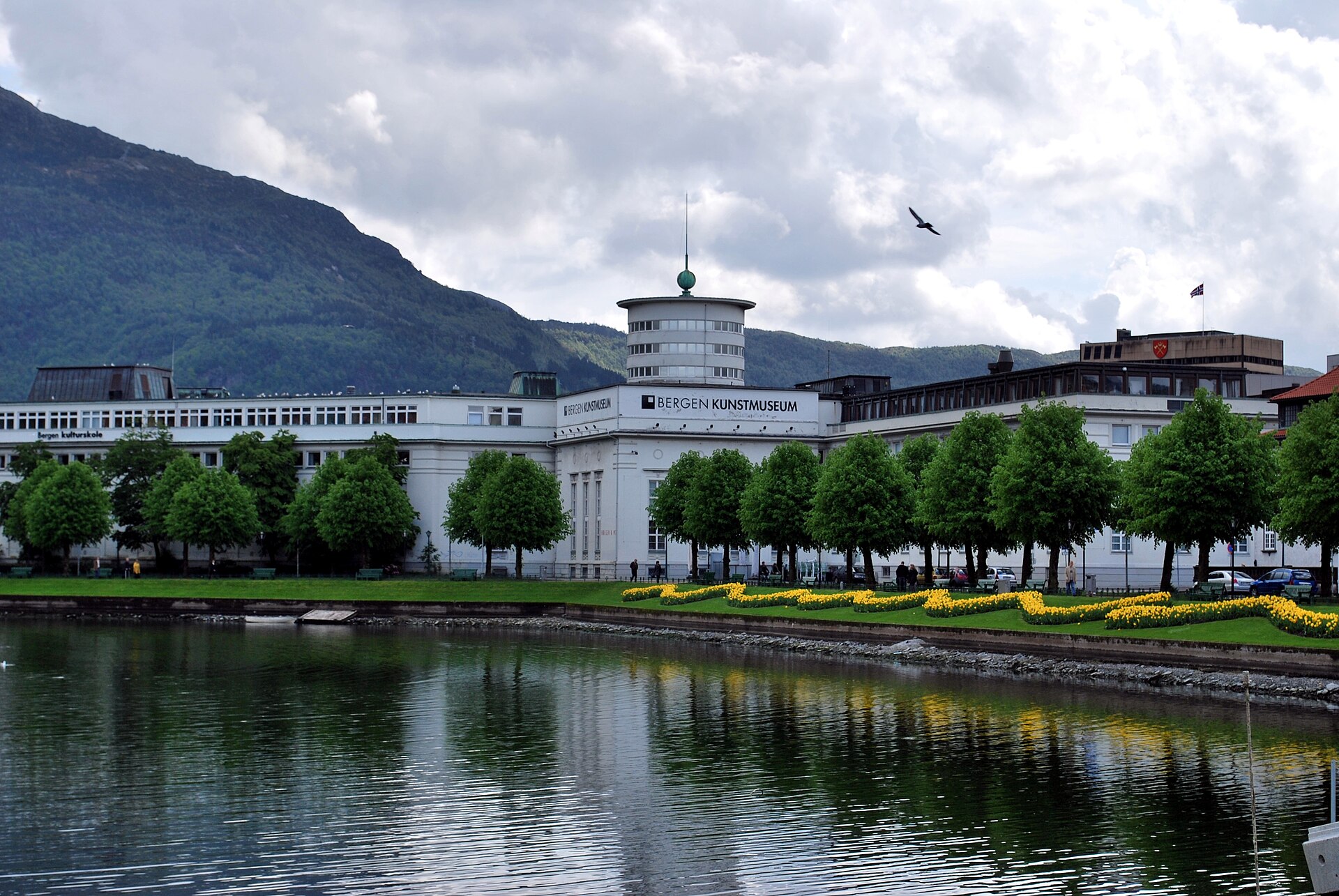
Lysverket, KODE 4, seen across the lake Lille Lungegardsvannet, with the BERGEN KUNSTMUSEUM signage on the facade and the building's round tower behind it
HMPinnsvinet · CC BY-SA 3.0KODE 4 (Lysverket)
Museum · KODE 4, Lysverket · Founded 1938
Open, admission and hours confirmed 13 August 2026 · 8 sources
On this page 15 sections
ContentsClose
Lysverket's own strength is architectural and historical rather than purely a matter of square footage: it is the KODE building that carries the Art Deco period of Bergen's civic architecture, and its Tarnsalen rotunda is one of the more unusual gallery rooms in any Norwegian museum. Its holdings, when the building runs its fuller historical programme rather than a single rotating show, sit within KODE's wider strength in Norwegian painting from the 19th and 20th centuries and in the Stenersen gift's international modernism, both drawn from a stewarded collection of close to 50,000 objects held across the whole KODE institution.
| Local name | KODE 4, Lysverket |
|---|---|
| Kind | Museum |
| Founded | 1938 |
| City and country |  Bergen, Norway Bergen, Norway |
| Address | Rasmus Meyers Alle 9, 5015 Bergen, Norway |
| Website | kodebergen.no/en/museums/lysverket |
| Status | Open, confirmed |
| Record last verified |
Visiting
- Hours
- Tue-Fri10:00 to 18:0019 May to 14 September
- Sat-Sun10:00 to 16:0019 May to 14 September
- Wed-Fri11:00 to 18:0015 September to 18 May
- Sat-Sun11:00 to 16:0015 September to 18 May
- MondayClosed year-round; also closed Tuesday between 15 September and 18 May
- Closed
- Monday all year. Tuesday from 15 September to 18 May. 1 January, 1 May, 17 May, 24-25 December, 31 December.
- Admission
- AdultNOK 200Same-day entry to all four KODE art museums (Permanenten, Lysverket, Rasmus Meyer and Stenersen); there is no separate single-building ticket for Lysverket alone. Price re-confirmed unchanged at 200 NOK, 2026-09-23.
- Under 18FreeFree
- KODE membersFreeFree with a KODE membership
- Students (KMD, KIB, BAS, UiB Art History)FreeFree with a valid student card from one of those Bergen institutions
Free entry: Bergen Card holders: free entry October-April, 25 percent discount May-September- Tickets
- kodebergen.no/en/visit The museum's own ticket page.
- Do I need to book?
- Not required, but KODE recommends buying a ticket online in advance to secure entry
- Address
- Rasmus Meyers Alle 9, 5015 Bergen, Norway MapLight Rail Bergen Light Rail (Bybanen) stops Byparken or Nonneseter, both a short walk away
Train and bus A short walk from Bergen railway station and the central bus station
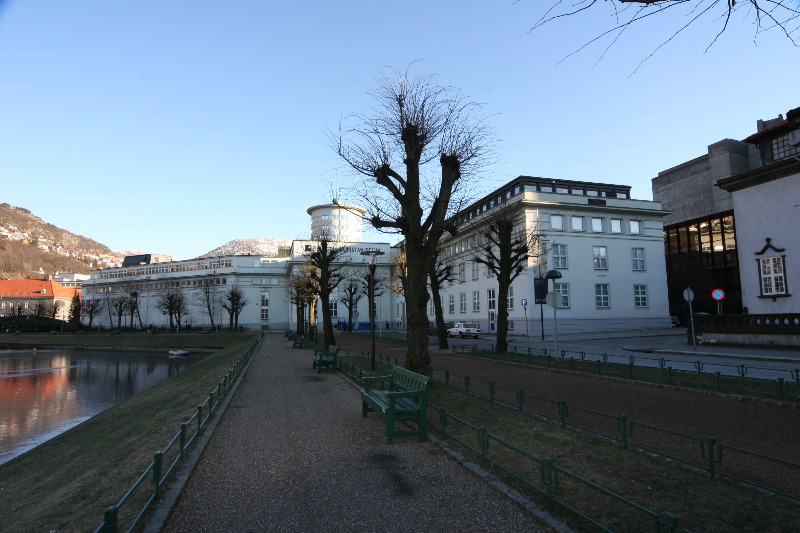
On foot Lysverket stands with Rasmus Meyer and Stenersen in a row along Rasmus Meyers Alle beside the lake Lille Lungegardsvannet; Permanenten is across the street Christies gate - Website
- kodebergen.no/en/museums/lysverket
- Telephone
- +47 53 00 97 00
- [email protected]
Before you go how long, access, photography, bags, eating, shop
- How long to allow
- The whole KODE complex runs 2-3 hours; Lysverket alone is usually a shorter stop, since it currently shows one rotating exhibition rather than a full permanent collection
- Access
- Ramp or wheelchair-lift access, lifts inside, and accessible toilets; reserved accessible parking is outside the Rasmus Meyer building nearby; companion cards are accepted
- Photography
- Handheld photography without flash is welcome in the galleries; commercial or media photography needs prior clearance from KODE's communications department
- Bags
- Large bags, backpacks, umbrellas and outerwear go in the cloakroom or the lockers provided in every KODE building
- Eating
- The ground floor is shared with Lysverket, a Michelin-starred restaurant; KODE's other three buildings each have their own separate cafe
Prices and hours change. We take them from the institution's own pages and print the day we read them, and you can check the current position at the source we used. Confirm before you travel.
What is inside
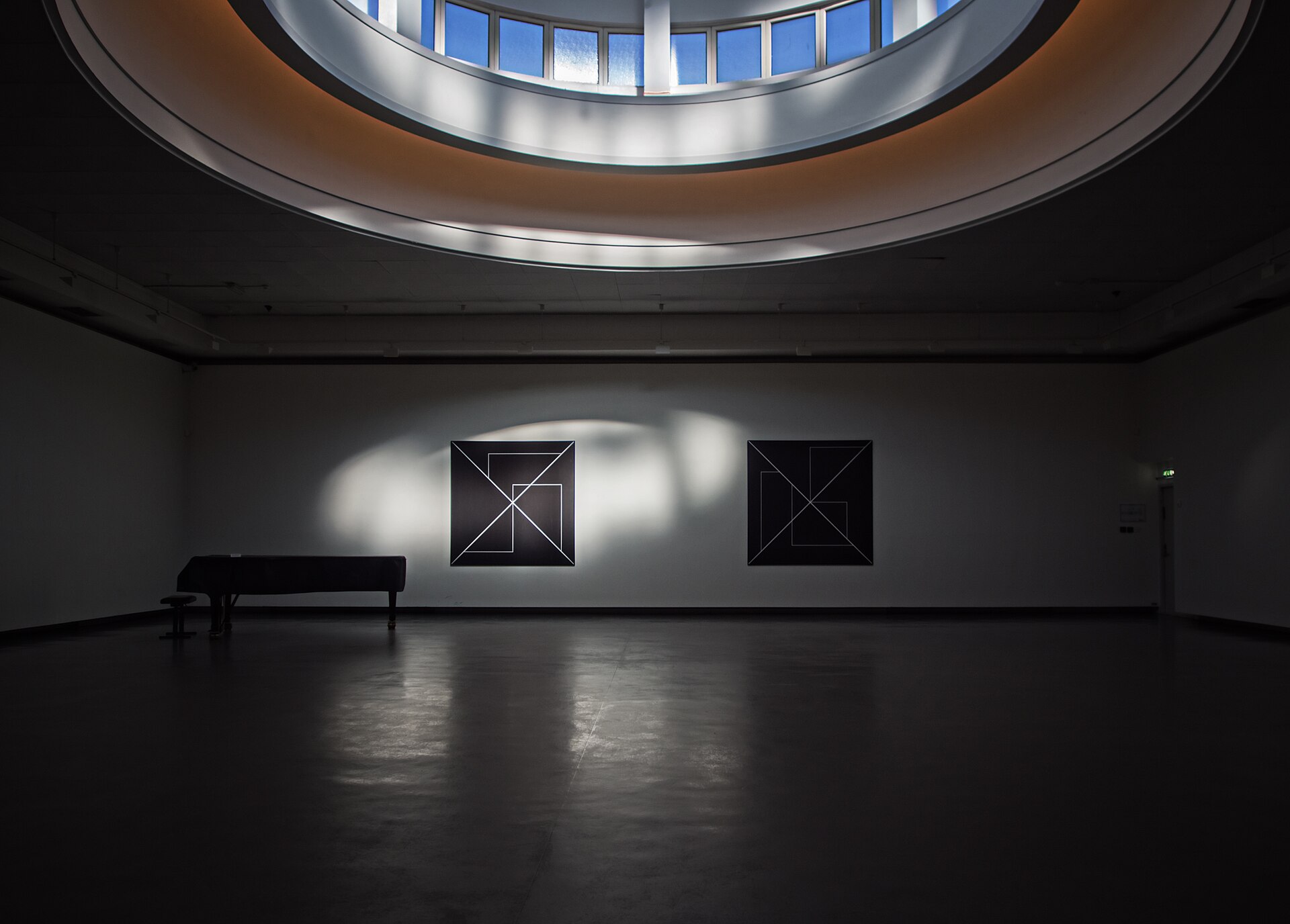
Photograph by Anne Worner · CC BY-SA 2.0 Tarnsalen, the rotunda hall
The circular former control room on the second floor, crowned by the building's landmark tower, is Lysverket's most recognisable interior and is used as a gallery space and for exhibition events, with round windows looking out over the lake and the surrounding hills.
Ground-floor foyer and exhibition galleries
The entrance hall, ticketing desk and cloakroom lead into the temporary exhibition galleries that currently carry the building's single rotating show while its full historical hang is paused ahead of a planned refurbishment; the space adjoins the Michelin-starred Lysverket restaurant.
Upper floors, formerly Norwegian and European painting
Before the current arrangement, these floors carried KODE's holdings of art from the 15th to the 20th century, moving from Dutch inn and street scenes through emotive religious subjects to two and a half centuries of Norwegian portraiture and landscape painting from the mountains and fjords.
International modernism galleries
For years these rooms held KODE's collection of international modernism, built around financier Rolf Stenersen's 1971 gift, with paintings and works on paper by Pablo Picasso, Paul Klee, Anna-Eva Bergman and Asger Jorn among the core holdings.
Former KunstLab children's art space
A ground-level space at Lysverket housed KunstLab, KODE's hands-on children's art museum, for many years before the workshop programme moved to the Permanenten building; KODE says new activities for children and young people are being developed across its museums.
What to see first
Tarnsalen
Fredrik Arnesen and Arthur Darre Kaarbo, architectsThe circular former control room crowning the building is Lysverket's architectural signature, easily picked out across the water and one of the more unusual gallery spaces in any Norwegian museum.1
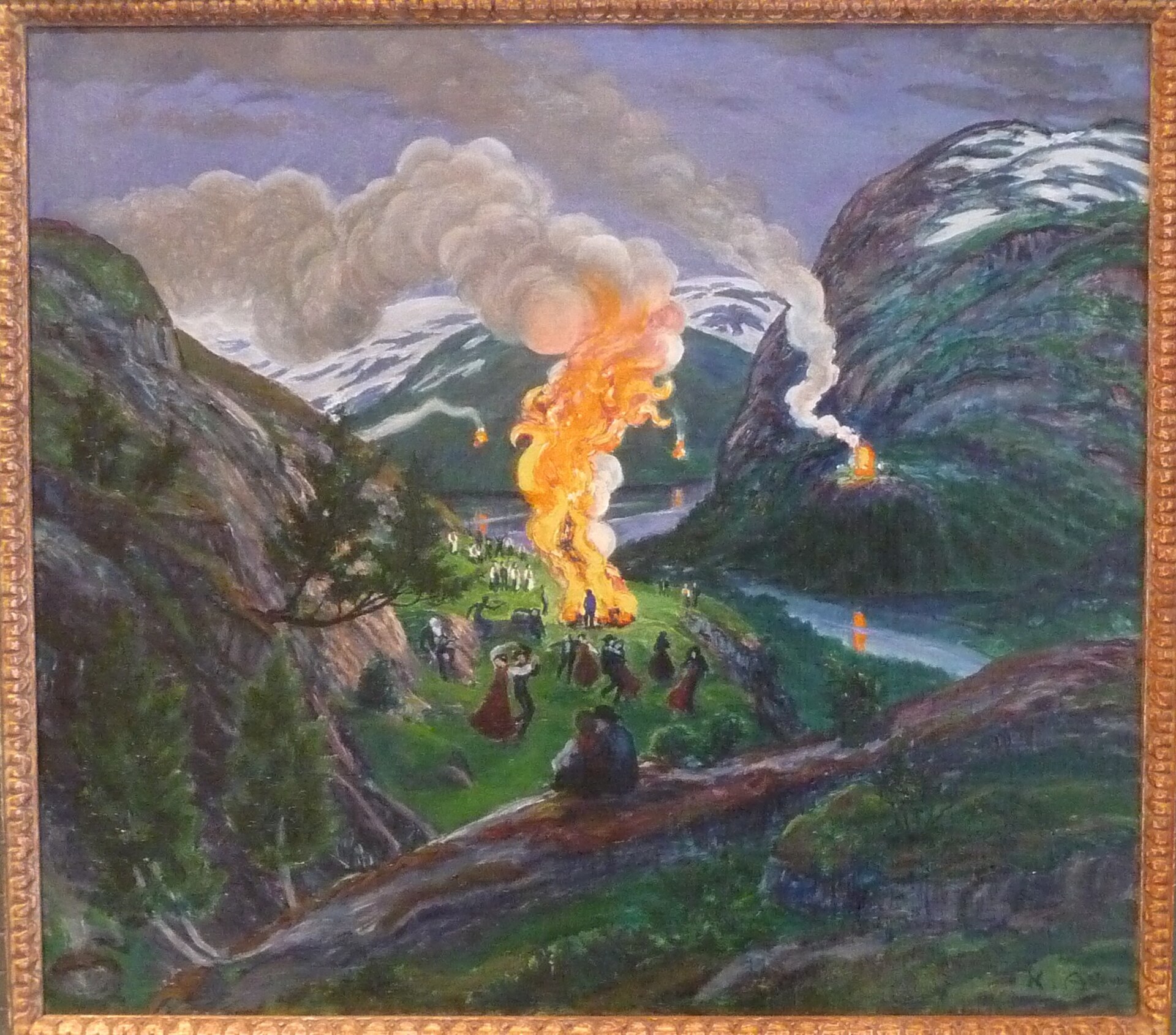
Midsummer Eve Bonfires cycle
Nikolai AstrupAstrup's permanent hang at Lysverket was for years one of KODE's best-attended displays before the paintings began touring museums across the United States and Europe.4
The Stenersen collection of international modernism
Pablo Picasso, Paul Klee, Anna-Eva Bergman, Asger Jorn and othersRolf Stenersen's 1971 gift gave KODE its footing in international modernism, and Lysverket was for a long period the building where that collection was actually shown.4
The Art Deco power-company headquarters itself
Fredrik Arnesen and Arthur Darre Kaarbo, 1938Lysverket is the only one of KODE's four museum buildings that was never designed to hold art, built instead as the administration building of the municipal utility Bergen Lysverker.1
Lysverket restaurant
Chef Christopher HaatuftThe Michelin-starred restaurant sharing the ground floor turns a museum visit into a longer stop, pairing the gallery upstairs with a tasting menu built on Norwegian seafood and produce.1
CRAFTED
KODE, group exhibitionThe exhibition on view through 16 August 2026 is exactly the kind of single rotating show Lysverket has relied on since the building went into its long wait for refurbishment.1
Two and a half centuries of Norwegian landscape and portrait painting
Various Norwegian and Dutch painters, 15th-20th centuryLysverket's galleries historically carried the run of KODE's older Norwegian holdings, from Dutch genre scenes and religious works through generations of portraiture and fjord landscape painting.1
Exhibitions on now
- Opening soon5 Jun to 31 Dec 2027Confirmed , 3 weeks ago
Past exhibitions here
Which KODE building this is
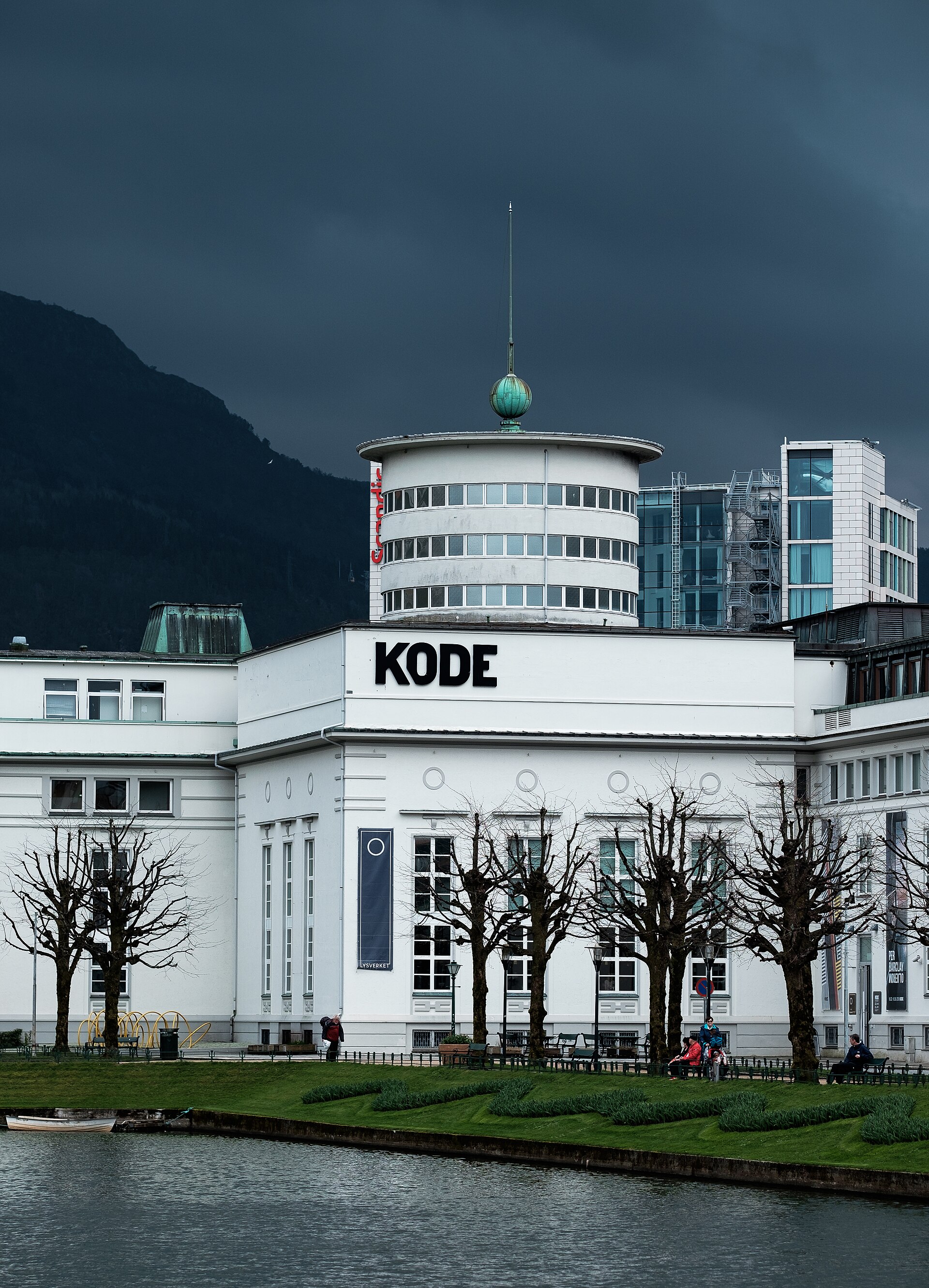
KODE is not one museum but four connected buildings strung along the small lake Lille Lungegardsvannet in central Bergen, plus three composers' homes elsewhere in the region. This page covers one building specifically: KODE 4, known as Lysverket, on Rasmus Meyers Alle at the eastern corner of the lake. It is a separate structure from Permanenten (KODE 1), Stenersen (KODE 2) and the Rasmus Meyer building (KODE 3), each with its own history and its own place in the collection, and a single KODE ticket covers entry to all four on the same day. Lysverket is identifiable by the white Art Deco block that runs along the lakeside promenade, topped by a distinctive round tower, and by the black KODE lettering and LYSVERKET signage on its facade facing the water.
An electricity company's head office, not a museum
Unlike the other three KODE buildings, Lysverket was never built to hold art. It was completed in 1938 as the administration building of Bergen Lysverker, the city's municipal power company, designed by architects Fredrik Arnesen and Arthur Darre Kaarbo in the Art Deco idiom that was fashionable for civic and utility buildings of the period. Its name, which simply means the light works or the power works in Norwegian, is a direct carryover from that original tenant, and the building is still routinely described by KODE itself as the only one of its four museum buildings not purpose-built for the role it now performs. The most distinctive surviving feature of the original design is the large circular hall, Tarnsalen, set inside the tower on the second floor, which was built as a working part of the utility's operations rather than as an exhibition space.
From control room to gallery floor
Bergen's art museum began using the Lysverket building as exhibition space at the end of the 1990s, and it was restored and reopened in its museum role in the early 2000s, well before the wider 2007 and 2013 mergers that eventually brought Bergen's separate art collections together under the KODE name. In the years that followed, Lysverket carried a genuinely broad hang: European and Norwegian painting from the 15th to the 20th century, Dutch inn and street scenes, religious subjects, generations of portraiture, and Norwegian landscape painting drawn from the mountains and fjords that formed so much of the country's 19th-century artistic identity. It also held KODE's collection of international modernism, anchored by financier Rolf Stenersen's 1971 gift of works by Pablo Picasso, Paul Klee, Anna-Eva Bergman and Asger Jorn, and for years it hosted a hugely popular permanent display of paintings by Nicolai Astrup before those works began touring internationally.
No exhibition on view, and a long wait for the next one
Lysverket's building is scheduled for a further round of refurbishment, and as of this most recent check (23 September 2026) KODE's own website carries no current exhibition for the building at all: the interim show that was running at the previous check, CRAFTED, closed 16 August 2026, and the next exhibition KODE has publicly booked into Lysverket, 'Crowning the North: Silver Treasures from Bergen' (itself a Bergen loan that had been touring the Minneapolis Institute of Art and the Museum of Fine Arts, Houston), is not scheduled to open until 5 June 2027. KODE's own copy continues to sell a same-day combined ticket covering Lysverket alongside its three sister buildings and does not describe Lysverket as closed to visitors, but its own marketing language - inviting visitors to the shared Michelin restaurant 'while waiting for the opening of the new Lysverket museum' - makes clear the exhibition floors themselves are not offering a programme in the interim. KODE gives no firm date for when a fuller programme, or the return of the Astrup paintings and the Stenersen modernist collection, will resume at Lysverket.
A shared roof with a Michelin star
Lysverket shares its ground floor with a restaurant of the same name, run by chef Christopher Haatuft, which holds a Michelin star and serves a tasting menu built around Norwegian seafood and other local ingredients. It is one of three eating options across the KODE complex, alongside Bien Centro at Permanenten and Cafe Smakverket at Stenersen, but it is by some distance the most decorated, and KODE itself frames a visit to Lysverket as something that can be paired naturally with a meal downstairs. For a reader planning a Bergen day around the lake, that makes Lysverket workable even during its reduced exhibition period: a shorter gallery visit combined with lunch or dinner in a genuinely well regarded restaurant, on the same site, without needing to book two separate outings. KODE's own directions note that Lysverket is the closest of the four buildings for anyone walking up from the railway station or the bus station, while Permanenten is closer for a visitor arriving from the Torgallmenningen shopping street on the other side of the city centre, which makes Lysverket a natural first stop rather than a last one on a walking route around the lake.
What visitors say
KODE's four Bergen buildings are reviewed together far more often than apart, and the aggregate view is a solid, unglamorous good: strong on Munch and Norwegian painters, well laid out where the hang is finished, and genuinely good value on the combined ticket if a visitor manages all the open buildings in a day. Lysverket specifically draws a narrower, more mixed reaction, because for as long as it has been awaiting refurbishment it has shown a single rotating exhibition rather than a full collection, and visitors who do not know that going in are sometimes caught off guard.
What is praised, what is criticised
- Praised: The Munch holdings and the run of Norwegian landscape and portrait painting across KODE's buildings, repeatedly singled out as the reason to come
- Praised: The single combined ticket covering all four art museums, which reviewers call good value when they manage to visit more than one building in a day
- Praised: The lakeside setting on Lille Lungegardsvannet, with the walk between buildings and the view back toward Mount Floyen called out as a pleasant part of the visit
- Criticised: Lysverket's reduced offering while the building awaits refurbishment: visitors who arrive expecting a full museum sometimes find a single installation in one or two rooms, and at least one visitor called the ticket price poor value for what that building alone currently shows
- Criticised: Signage and entrances across the KODE complex that some visitors find easy to miss or confusing, particularly when one or more of the four buildings is closed on the day they visit and that is not made clear in advance
Ratings on other platforms
TripAdvisor: 4.3 from 809 ratings, read 13 August 2026
A platform average is a tertiary source: it moves, it is not audited, and we quote no visitor's words.
Questions about KODE 4 (Lysverket)
Where is KODE 4 (Lysverket)?
Rasmus Meyers Alle 9, 5015 Bergen, Norway.
How much does it cost to visit?
Adult: NOK 200; Under 18: free; KODE members: free; Students (KMD, KIB, BAS, UiB Art History): free. As confirmed 23 September 2026.
When is it open?
Tue-Fri 10:00-18:00; Sat-Sun 10:00-16:00; Wed-Fri 11:00-18:00; Sat-Sun 11:00-16:00; Monday closed. Closed: Monday all year. Tuesday from 15 September to 18 May. As confirmed 13 August 2026.
How do you get there?
Light Rail: Bergen Light Rail (Bybanen) stops Byparken or Nonneseter, both a short walk away; Train and bus: A short walk from Bergen railway station and the central bus station; On foot: Lysverket stands with Rasmus Meyer and Stenersen in a row along Rasmus Meyers Alle beside the lake Lille Lungegardsvannet; Permanenten is across the street Christies gate.
What should you see first?
Tarnsalen (Fredrik Arnesen and Arthur Darre Kaarbo, architects); Midsummer Eve Bonfires cycle (Nikolai Astrup); The Stenersen collection of international modernism (Pablo Picasso, Paul Klee, Anna-Eva Bergman, Asger Jorn and others); The Art Deco power-company headquarters itself (Fredrik Arnesen and Arthur Darre Kaarbo, 1938); Lysverket restaurant (Chef Christopher Haatuft); CRAFTED (KODE, group exhibition).
What we could not confirm
- KODE has not published a firm start or end date for the Lysverket refurbishment itself, nor stated in its own words whether the building counts as closed to visitors during the current exhibition gap (re-checked 2026-09-23, unresolved)
- It is not confirmed when, or whether, the permanent Nicolai Astrup display will return to Lysverket once its international tour concludes
- Whether Lysverket keeps its normal daily opening hours with nothing on display, or reduces them, is not stated on KODE's own site as of the 2026-09-23 check
Images
Sources
- 1KODE, "Lysverket - world class art in the heart of Bergen", museum page, accessed 13 August 2026 kodebergen.no/en/museums/lysverket
- 2KODE, "Opening hours and info" (Visit), accessed 13 August 2026 kodebergen.no/en/visit
- 3KODE, "Useful information" (administration, contact and registration details), accessed 13 August 2026 kodebergen.no/en/about-us/useful-information
- 4KODE, "The institution's history", accessed 13 August 2026 kodebergen.no/en/about-us/the-institution-s-history
- 5Wikidata, "Lysverket" (Q40918292), accessed 13 August 2026 wikidata.org/wiki/Q40918292
- 6TripAdvisor, "Kode Art Museums Of Bergen", attraction reviews page, 4.3 of 5 from 809 reviews, read 13 August 2026 tripadvisor.com/Attraction_Review-g190502-d278792-Reviews-Kode_Art_Museums_Of_Bergen-Bergen_Hordaland_Western_Norway.html
- 7TripAdvisor, review "Rasmus Meyer, Lysverket" by Sarah B, dated 29 August 2024, read 13 August 2026 tripadvisor.com/ShowUserReviews-g190502-d278792-r967375206-Kode_Art_Museums_Of_Bergen-Bergen_Hordaland_Western_Norway.html
- 8Wikimedia Commons, Category:KODE 4, Bergen, accessed 13 August 2026 commons.wikimedia.org/wiki/Category:KODE_4,_Bergen