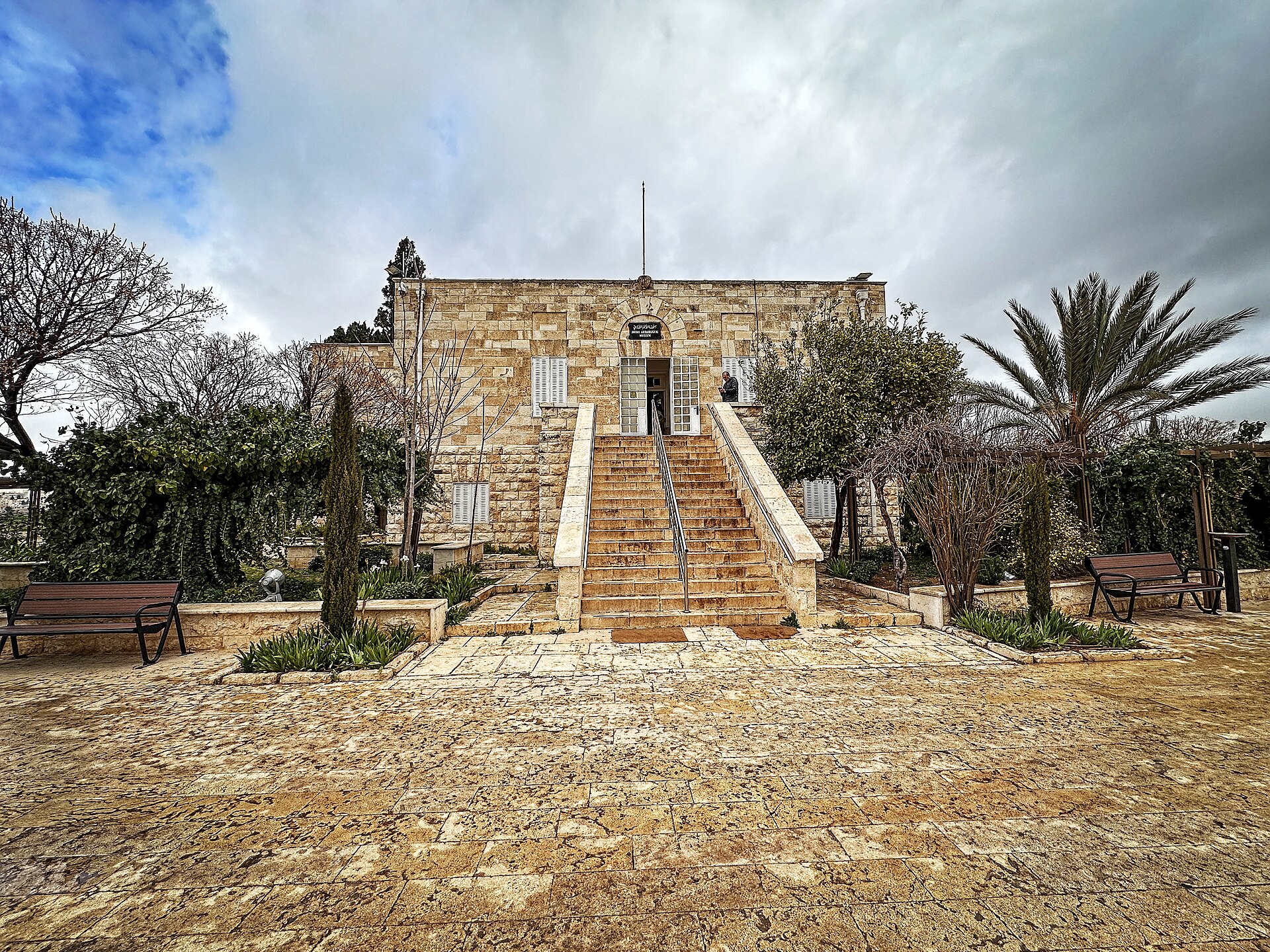
The Jordan Archaeological Museum building on the Amman Citadel, photographed 2024. GPS data on the file matches the museum's own coordinates on the Citadel.
Allan Gluck, CC BY-SA 4.0Jordan Archaeological Museum
Museum · Founded 1951
Open, admission and hours confirmed 26 August 2026 · 18 sources
On this page 14 sections
ContentsClose
The museum's real strength is depth in exactly one place: the Neolithic material from Ain Ghazal and comparable Jericho plastered skulls, among the oldest large-scale human imagery known anywhere, some of which remains on this site rather than at the newer national museum. Beyond that, the collection is a representative cross-section of finds from across Jordan spanning the Palaeolithic to the Ottoman period, strongest in small Iron Age Ammonite material and Roman-period sculpture recovered on or near the Citadel itself, but no longer holding the single largest or most complete run of any one period, since The Jordan Museum was built specifically to take on that role.
| Kind | Museum |
|---|---|
| Founded | 1951 |
| City and country |  Amman, Jordan Amman, Jordan |
| Address | Amman Citadel (Jabal al-Qal'a), Amman, Jordan |
| Website | museums.visitjordan.com/en/Museum/15 |
| Status | Open, confirmed |
| Record last verified |
Visiting
- Hours
- Daily, summer season08:00 to 19:00Per the Jordan Tourism Board's official museum listing; no closed weekday is stated on that listing
- Daily, winter season08:00 to 16:00
- Admission
- Foreign visitors, via the Amman Citadel ticketJOD 3The museum sells no separate ticket of its own; entry is included in the Citadel admission fee, per the Jordan Tourism Board's entrance fee listing
- Jordanian nationals, via the Amman Citadel ticketJOD 0.25
- Tickets
- international.visitjordan.com/page/17/entranc... The museum's own ticket page.
- Do I need to book?
- No advance booking found required; the museum is covered by the Jordan Pass and by the standard Amman Citadel ticket bought on site
- Address
- Amman Citadel (Jabal al-Qal'a), Amman, Jordan Map
- Website
- museums.visitjordan.com/en/Museum/15
- Telephone
- +962 6 463 8795
Before you go how long, access, photography, bags, eating, shop
- How long to allow
- A single small hall on the upper floor; visitors commonly report finishing in well under an hour, best combined with the Citadel ruins outside it
- Access
- The Jordan Tourism Board's own listing states the building is not accessible for visitors with mobility impairments; the entrance sits above a flight of steps at the Citadel
- Photography
- Not stated by the sources used for this record
- Bags
- Not stated by the sources used for this record
- Eating
- None on site; cafes exist elsewhere on the Amman Citadel grounds
- Shop
- Not stated by the sources used for this record
Prices and hours change. We take them from the institution's own pages and print the day we read them, and you can check the current position at the source we used. Confirm before you travel.
What is inside
Stone Age gallery (Palaeolithic to Chalcolithic)
The earliest material in the sequence: flint tools, and the museum's best-known holdings, the Neolithic plaster statues and plastered skulls excavated at Ain Ghazal on the eastern edge of Amman and, for the skulls, at Jericho across the Jordan valley. The Ain Ghazal figures, built on a reed core plastered over and painted, are dated to roughly 6500 BCE and are among the earliest large-scale human statuary known anywhere.
Bronze and Iron Age gallery
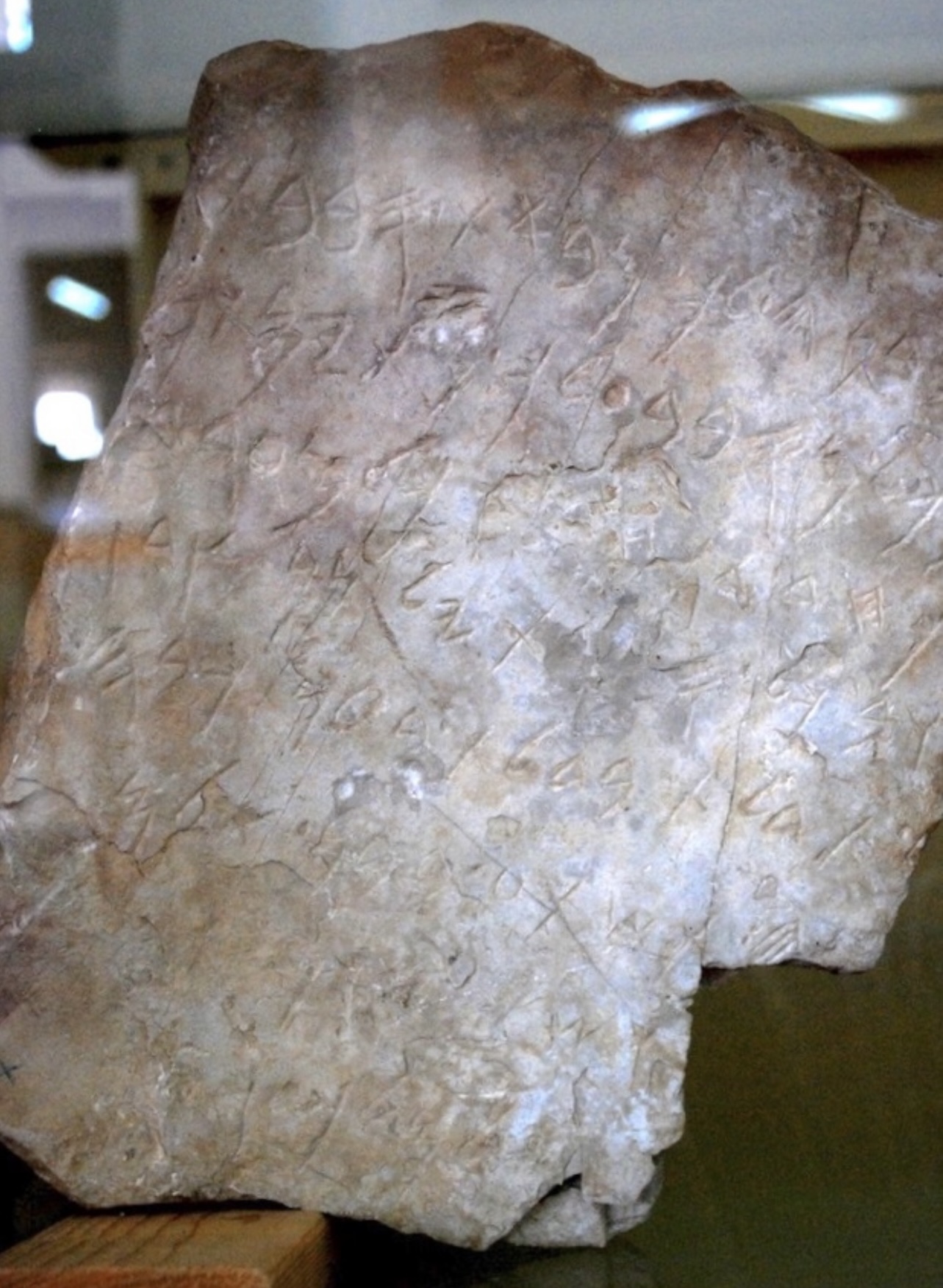
Material from the Ammonite kingdom that had its capital, Rabbath-Ammon, on this same Citadel hill: pottery (including a zoomorphic jug shaped as a monkey carrying a ram), Iron Age figurines, anthropomorphic sarcophagi, and the Amman Citadel Inscription, a basalt block bearing the oldest substantial text known in the Ammonite language, found on the Citadel itself in 1961.
Classical gallery (Hellenistic, Nabataean, Roman and Byzantine)
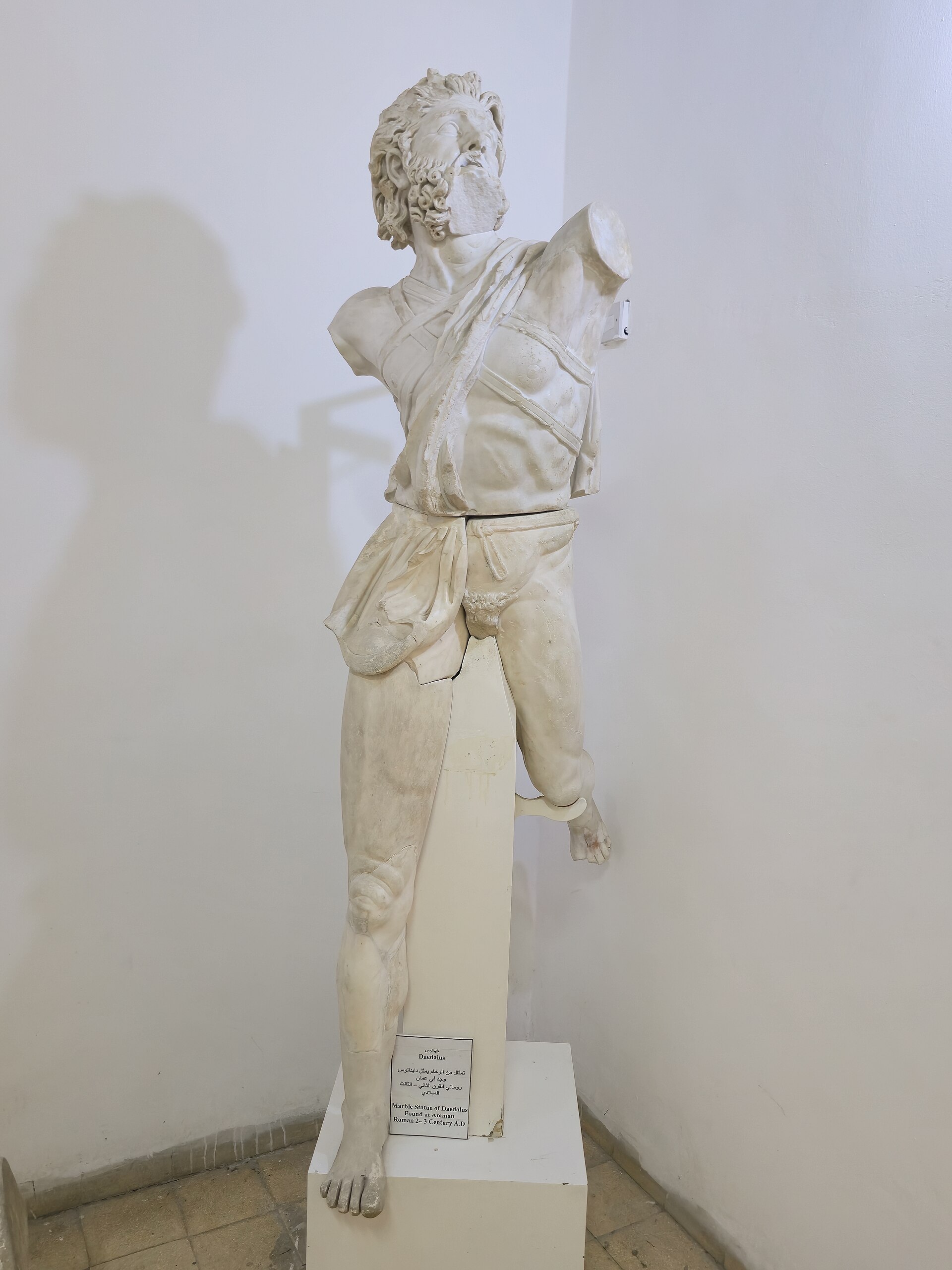
Sculpture and small finds from Roman Philadelphia, the city Amman was under Rome, including the marble Tyche of Amman, the personification of the city crowned with its own walls, and a Roman-period marble figure of Daedalus copied from a Hellenistic original. Byzantine material includes an inscribed casket and church-period objects.
Islamic gallery (Umayyad to Ottoman)
Objects from the long Islamic sequence that follows the Byzantine period on the same sites, including a bronze ram from the Umayyad settlement at el-Fedein (Mafraq) and inscribed stone and metal pieces carrying Arabic script.
What to see first
The Ain Ghazal statues
Neolithic community at Ain Ghazal, eastern AmmanFormed on a reed armature plastered over and given painted bitumen eyes, these are among the earliest known large-scale human figures anywhere, found in two caches in 1983 and 1985. Wikipedia's own entry for the statues states that some remain on display at the Amman Citadel's Jordan Archaeological Museum alongside the larger group now at The Jordan Museum, with individual pieces on loan to the Louvre, the Louvre Abu Dhabi and the British Museum; this record follows that current split rather than the museum's older, larger holding.12
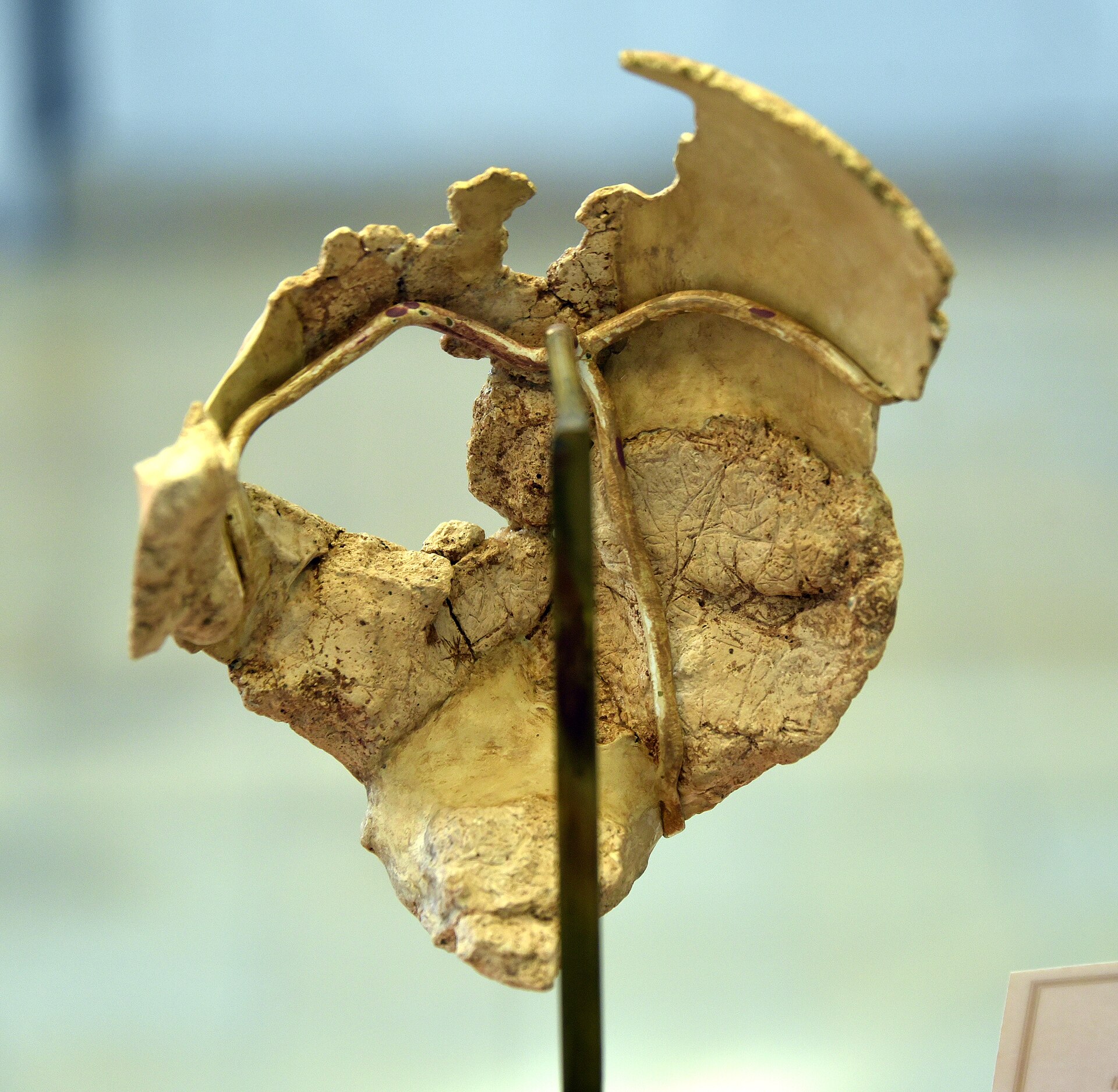
A plastered skull from Ain Ghazal
Neolithic community at Ain GhazalA human skull remodelled in plaster into a face, part of the same Pre-Pottery Neolithic B tradition (c. 6500 BCE) that produced the statues, and part of a wider practice also documented at Jericho; comparable skulls are held by the British Museum and the Ashmolean.6
The Amman Citadel Inscription
Ammonite kingdom, 9th century BCEA basalt fragment carrying the oldest substantial inscription in the Ammonite language, found on the Citadel itself in 1961 and central to reconstructing the political history of Ammon; it was recorded on display at this museum in 1969 and a Commons photograph taken by a Wikipedia editor in 2022 shows it still in the same museum's cases.13
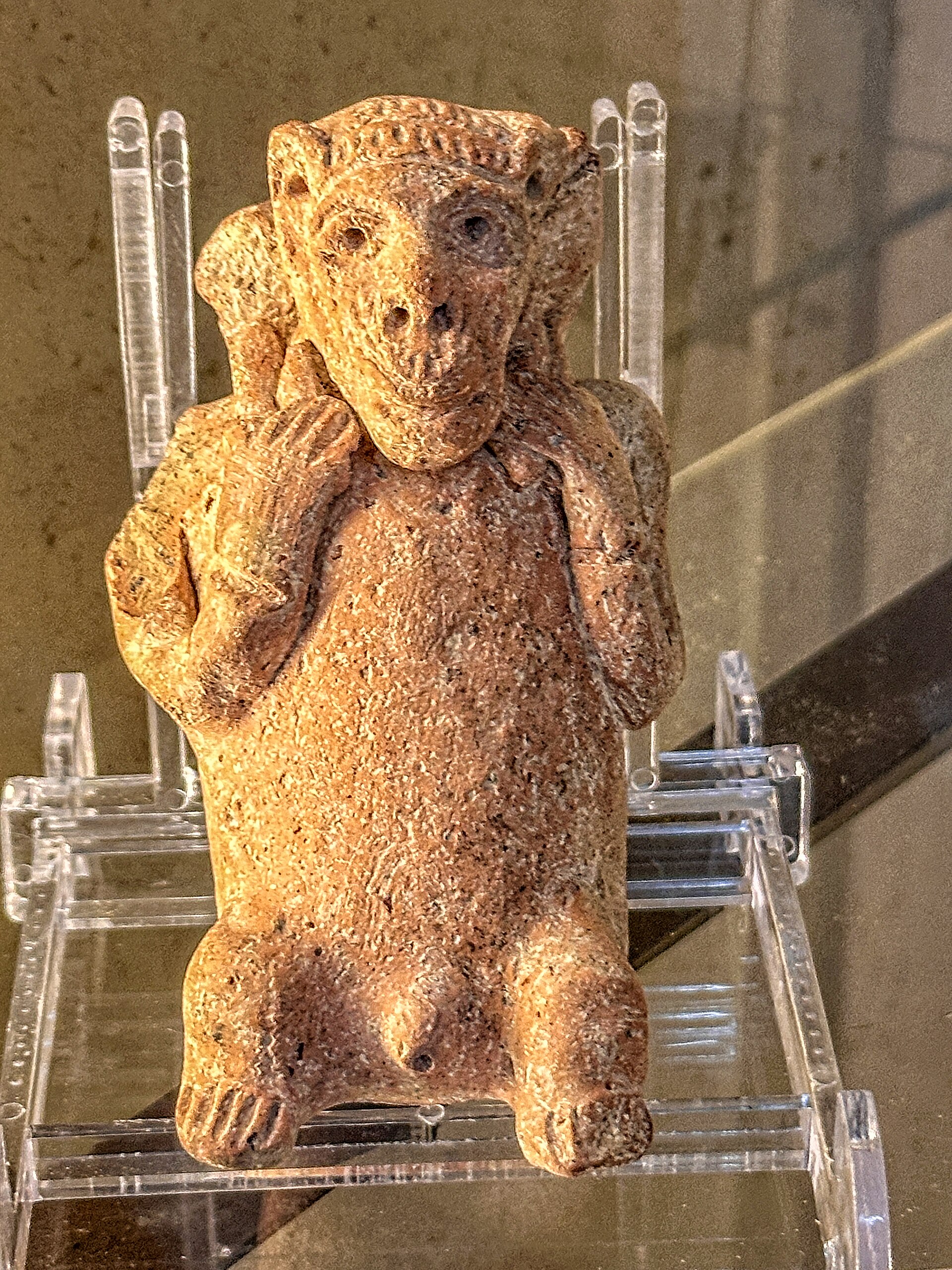
Ammonite pottery jug in the shape of a monkey carrying a ram
Ammonite workshop, early Iron AgeA zoomorphic vessel found in Amman, an example of the figural pottery tradition of the Ammonite kingdom whose capital occupied this same Citadel hill.8
The Tyche of Amman
Roman workshop, Severan period (c. 193-235 CE)A white marble bust of Tyche, the personification of civic fortune, crowned with the walls of the city she protects; found accidentally in 1957 during construction in the museum's own garden, immediately east of the building, and read as the portrait of Roman Philadelphia, Amman's Roman-period name.14
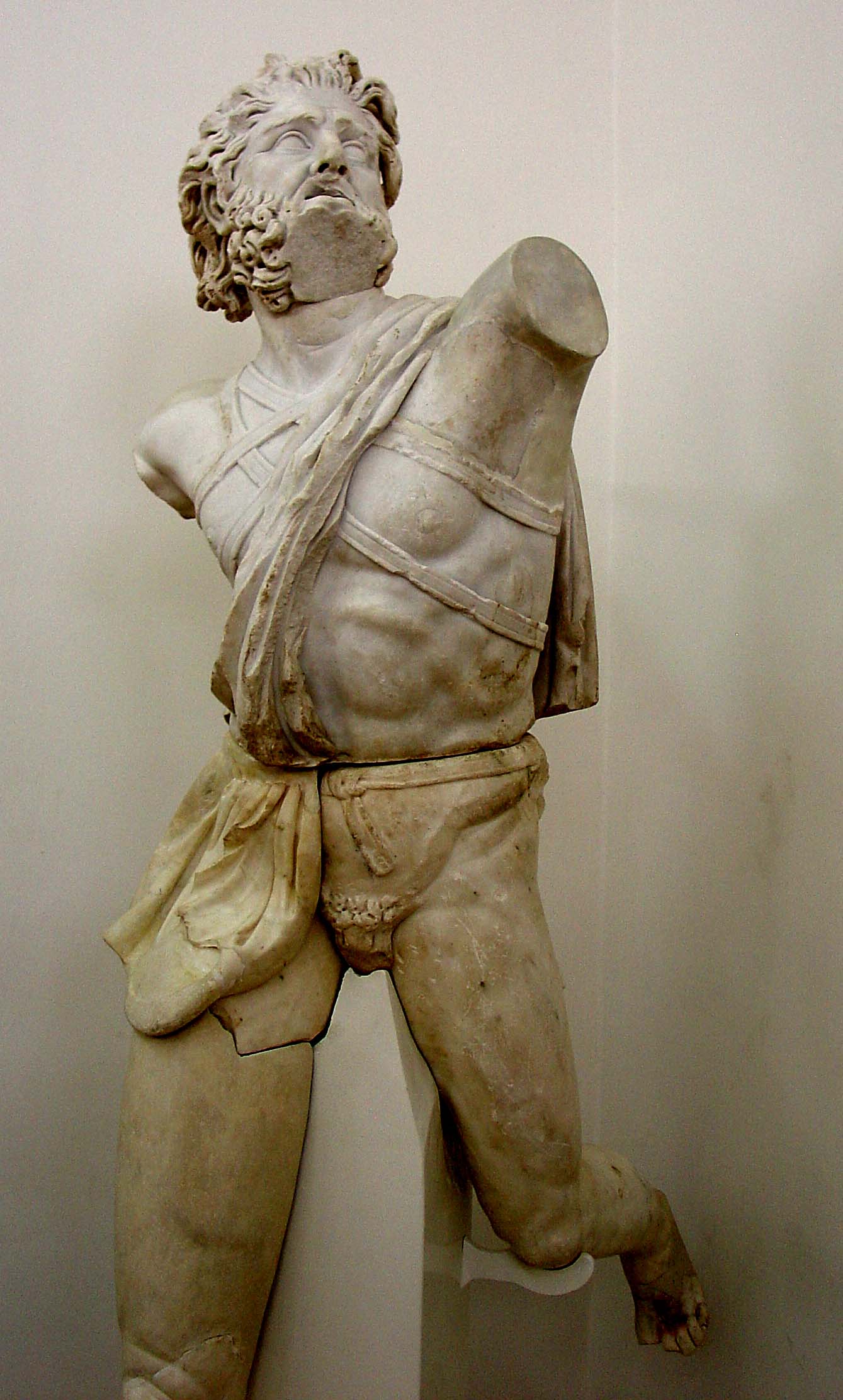
Roman marble figure of Daedalus
Roman workshop, 2nd century CE, after a Hellenistic originalA Roman-period marble copy of a Hellenistic figure of Daedalus, found in Amman; evidence of the classical sculptural repertoire circulating in the Roman province of Arabia.7
A museum built into the ruins it stands among
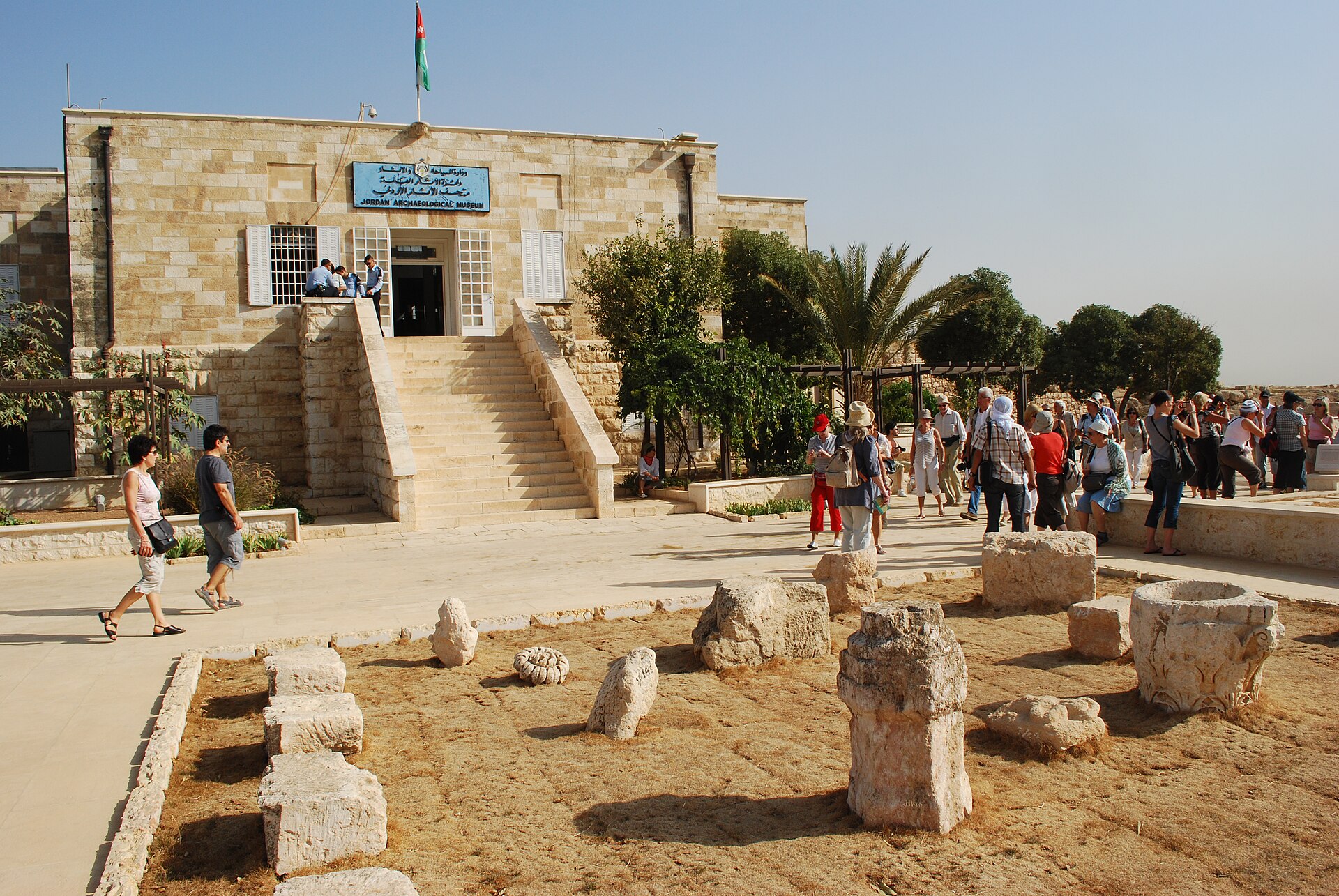
The Jordan Archaeological Museum opened in 1951 on top of Jabal al-Qal'a, the Citadel hill that has been the fortified high point of Amman since the Bronze Age. It was designed by the British architect Austen Harrison, who had earlier designed the Palestine Archaeological Museum in Jerusalem, the building now known as the Rockefeller Museum. The site was chosen so the museum would sit directly among the standing Roman, Byzantine and Umayyad remains on the Citadel rather than apart from them, and the small, single-storey building still reads as a period piece of mid-century Middle Eastern museum architecture: a modest hall raised over ground-floor storage, built for a national collection at a time when Jordan itself, as an independent state, was only five years old.
By area the building is small even by the standards of a single-object museum: roughly 550 square metres in total, of which the ground floor, used as storage rather than display space, takes up something like 300 square metres, leaving one compact upper-floor hall for everything the public sees. That scale, unchanged since 1951, is the single fact that explains most of what visitors say about the place seventy-five years later: a short visit, a dense case-by-case hang, and a collection that reads more like a study series than a modern exhibition.
One hall, one chronology
Inside, the display follows a single chronological thread from the Palaeolithic to the Ottoman period, run continuously along the walls and cases of the one exhibition hall rather than split into separate named wings. Visitors move, in order, through the Stone Ages (Palaeolithic, Epipalaeolithic, Neolithic and Chalcolithic), the Bronze and Iron Ages, the Hellenistic, Nabataean, Roman and Byzantine periods together as the classical sequence, and finally the long Islamic period from the Rashidun and Umayyad conquest through the Abbasid, Ayyubid, Mamluk and Ottoman centuries. Pottery, glass, flint and metal tools, inscriptions, statuary, jewellery and coins from excavations across the whole of Jordan are folded into that one sequence, which is also why the same building can, in a single short room, carry both a 6500 BCE plaster face and an Ottoman-period inscription.
That density is deliberate: the museum was built as Jordan's first national repository for finds from digs anywhere in the kingdom, at a time before regional site museums existed, and it never stopped being added to as new excavations across the country reported back to Amman. What has changed since 1951 is not the building or the arrangement but the competition: since 2014 a second, far larger national museum in downtown Amman has taken over the role of flagship for many of the same centuries, and the Citadel museum's one-hall format increasingly reads as a survivor of an earlier idea of what a national museum should be, rather than as the state of the art.
Ain Ghazal: the oldest large human figures known
The single reason art historians and archaeologists still make the climb up the Citadel for this museum specifically is Ain Ghazal, a Neolithic site on the eastern edge of modern Amman where, in 1983 and 1985, excavators uncovered two caches of plaster human statues and busts built on a core of reed bundles, plastered over, and given eyes picked out in bitumen brought from the Dead Sea. Dated to roughly 6500 BCE, in the Pre-Pottery Neolithic B period, they are among the earliest large-scale human figures made anywhere in the world, predating the invention of pottery in the region. The first group recovered went to the Royal Archaeological Institute in Britain for conservation; a second group went to the Smithsonian Institution in the United States; both sets were eventually returned to Jordan.
Those statues, along with plastered skulls from the same broad tradition, some excavated at Ain Ghazal and comparable material from Jericho across the Jordan valley, are exactly the class of object that this project's version-safety rule exists to police, because the group has since been split across institutions. The bulk of the recovered Ain Ghazal figures are now the centrepiece of The Jordan Museum downtown, opened in 2014 specifically to give the national collection more space and a modern setting; a smaller number remain on display here on the Citadel; individual pieces are on long-term loan abroad, including one statue at the Louvre in Paris, a two-headed figure at the Louvre Abu Dhabi, and fragments of two more at the British Museum in London. This record follows the current, published split rather than treating either museum as sole custodian.
The Ammonite kingdom on its own hill
Long before Rome, the Citadel hill was Rabbath-Ammon, capital of the Iron Age kingdom of Ammon, and the museum's Bronze and Iron Age material is drawn heavily from the kingdom that once ruled from this exact site. The single most important text in that group is the Amman Citadel Inscription, a fragment of basalt carved with a monumental Ammonite inscription, found on the Citadel in 1961 and first published in full in 1968. It is one of the small handful of substantial inscriptions in the Ammonite language known to survive, and it has been central to every subsequent attempt to reconstruct Ammonite religion, kingship and building activity in the ninth century BCE, alongside comparanda such as the Tell Siran bottle inscription found elsewhere in Amman. Alongside it, the Iron Age cases hold Ammonite figural pottery, including a zoomorphic jug modelled as a monkey carrying a ram, anthropomorphic sarcophagi, and figurines usually read as either deities or images of Ammonite rulers.
Rome, Byzantium and the long Islamic sequence
Amman's Roman-period name was Philadelphia, one of the cities of the Decapolis, and the classical cases carry the sculpture that survives from it. The best known single piece is the Tyche of Amman, a white marble bust of Tyche, the goddess who personified a city's fortune and was conventionally shown crowned with that city's own walls; it was found by accident in 1957 during construction work in the museum's own garden, just east of the building, and is dated on stylistic grounds to the Severan period at the end of the second or start of the third century CE. A Roman-period marble figure of Daedalus, copied from an earlier Hellenistic original, sits alongside it as evidence of the wider classical sculptural repertoire that circulated in Roman Arabia. Byzantine-period material, including an inscribed casket, marks the transition into the Christian centuries before the Islamic conquest, and the museum's final cases carry Umayyad, Abbasid and later Islamic-period finds, among them a bronze ram from the Umayyad settlement at el-Fedein, near Mafraq, and inscribed stone and metalwork in Arabic script running through to the Ottoman period.
A flagship museum living in a newer museum's shadow
The Jordan Archaeological Museum's institutional position has changed more than its building has. It was Jordan's national archaeological museum for over sixty years, and it is still administered, like every archaeological site and museum in the country, under the Department of Antiquities within the Ministry of Tourism and Antiquities. But since The Jordan Museum opened in downtown Amman in 2014, with far more floor space and modern display technology, a significant share of the Citadel museum's best-known holdings, including the largest group of the Ain Ghazal statues and fragments of the Dead Sea Scrolls that had at various points been shown at the Citadel, have been moved to the newer institution, which now also holds the site's most publicised single object, the Copper Scroll. What is left on the Citadel is smaller, older in its presentation, and, on the visitor evidence gathered for this record, visited mostly by people who are already at the Citadel for the Roman theatre, the Umayyad palace and the Temple of Hercules rather than by people who set out for the museum on its own. That does not make the collection unimportant: the objects that remain, from the Ain Ghazal material still shown here through to the Amman Citadel Inscription, are Jordan's own primary evidence for its ancient and Islamic past, standing on the exact hill much of it was found on, and the museum's continued operation, folded into the ordinary Citadel ticket, keeps that evidence in public view rather than in storage.
What visitors say
Visitors consistently describe the collection as genuine and historically important, especially the Neolithic material, but the presentation as dated: old-style glass cases with limited interpretation rather than the modern museography of the newer Jordan Museum across town. Most treat it as a short add-on to a Citadel visit rather than a destination in its own right.
What is praised, what is criticised
- Praised: The authenticity and age of the Ain Ghazal and Jericho material, unmatched anywhere else on the Citadel visit
- Praised: The chronological hang, which makes the sweep from the Stone Age to the Islamic period easy to follow in a single small hall
- Praised: The price: entry is folded into the standard Amman Citadel ticket, so there is no extra cost to see it
- Criticised: Old-fashioned glass-case display with little multimedia or object interpretation compared with the newer Jordan Museum
- Criticised: Very small size; many visitors report finishing in ten to twenty minutes
- Criticised: Step access at the entrance, which the Jordan Tourism Board's own listing confirms is not adapted for visitors with mobility impairments
- Criticised: A sense, among visitors who know the collection's history, that the museum's best-known objects have been thinned out by transfers to The Jordan Museum since 2014
Ratings on other platforms
Tripadvisor: 3.9 from 366 ratings, read 26 August 2026
A platform average is a tertiary source: it moves, it is not audited, and we quote no visitor's words.
Questions about Jordan Archaeological Museum
Where is Jordan Archaeological Museum?
Amman Citadel (Jabal al-Qal'a), Amman, Jordan.
How much does it cost to visit?
Foreign visitors, via the Amman Citadel ticket: JOD 3; Jordanian nationals, via the Amman Citadel ticket: JOD 0.25. As confirmed 26 August 2026.
When is it open?
Daily, summer season 08:00-19:00; Daily, winter season 08:00-16:00. As confirmed 26 August 2026.
What should you see first?
The Ain Ghazal statues (Neolithic community at Ain Ghazal, eastern Amman); A plastered skull from Ain Ghazal (Neolithic community at Ain Ghazal); The Amman Citadel Inscription (Ammonite kingdom, 9th century BCE); Ammonite pottery jug in the shape of a monkey carrying a ram (Ammonite workshop, early Iron Age); The Tyche of Amman (Roman workshop, Severan period (c. 193-235 CE)); Roman marble figure of Daedalus (Roman workshop, 2nd century CE, after a Hellenistic original).
What we could not confirm
- Neither museum publishes a public, itemised inventory of exactly which Ain Ghazal statues and fragments remain at the Citadel museum versus The Jordan Museum; this record follows Wikipedia's summary that both institutions currently hold examples, without being able to name pieces individually.
- The founding year is given as 1951 by Wikipedia, universes.art and Jordan Tour 360, but the Jordan Tourism Board's own museum listing states 1952; this record follows the majority figure and flags the one-year discrepancy rather than silently picking one.
- No source used for this record states current photography, bag-storage or shop/cafe policy specific to the museum building itself, as distinct from the wider Citadel site.
Images
Sources
- 1Wikimedia Commons, Category:Jordan Archaeological Museum commons.wikimedia.org/wiki/Category:Jordan_Archaeological_Museum
- 2Wikimedia Commons, File:Jordan Archaeological Museum Amman structure.jpg (Allan Gluck, CC BY-SA 4.0) commons.wikimedia.org/wiki/File:Jordan_Archaeological_Museum_Amman_structure.jpg
- 3Wikimedia Commons, File:20100923_amman21.JPG (Jean Housen, CC BY-SA 3.0) commons.wikimedia.org/wiki/File:20100923_amman21.JPG
- 4Wikimedia Commons, File:Jordan Archaeological Museum, Jabal al-Qal'a 298.jpg (Mohammad hajeer, CC BY-SA 4.0) commons.wikimedia.org/wiki/File:Jordan_Archaeological_Museum,_Jabal_al-Qal%27a_298.jpg
- 5Wikimedia Commons, File:Amman Citadel inscription in the Jordan Archaeological Museum.jpg (Onceinawhile, CC BY-SA 4.0) commons.wikimedia.org/wiki/File:Amman_Citadel_inscription_in_the_Jordan_Archaeological_Museum.jpg
- 6Wikimedia Commons, File:Back surface. Plastered face modeled on a human skull... Jordan Archaeological Museum, Amman.jpg (Osama Shukir Muhammed Amin FRCP(Glasg), CC BY-SA 4.0) commons.wikimedia.org/wiki/File:Back_surface._Plastered_face_modeled_on_a_human_skull._From_Ain_Ghazal,_Jordan._Pre-Pottery_Neolithic_B,_c._6500_BCE._Jordan_Archaeological_Museum,_Amman.jpg
- 7Wikimedia Commons, File:Daedalus Archaeological Museum Amman Citadel Jordan0828.jpg (Michael Gunther, CC BY-SA 4.0) commons.wikimedia.org/wiki/File:Daedalus_Archaeological_Museum_Amman_Citadel_Jordan0828.jpg
- 8Wikimedia Commons, File:Ammonite pottery jug in the shape of a monkey carrying a Ram... Jordan Archaeological Museum.jpg (Allan Gluck, CC BY-SA 4.0) commons.wikimedia.org/wiki/File:Ammonite_pottery_jug_in_the_shape_of_a_monkey_carrying_a_Ram,_early_Iron_Age,_found_in_Amman_at_the_Jordan_Archaeological_Museum.jpg
- 9Jordan Tourism Board (official), Jordan Archaeological Museum listing museums.visitjordan.com/en/Museum/15
- 10Jordan Tourism Board (official), Entrance Fees international.visitjordan.com/page/17/entrance-fees
- 11Wikipedia, Jordan Archaeological Museum en.wikipedia.org/wiki/Jordan_Archaeological_Museum
- 12Wikipedia, Ayn Ghazal statues en.wikipedia.org/wiki/Ayn_Ghazal_statues
- 13Wikipedia, Amman Citadel Inscription en.wikipedia.org/wiki/Amman_Citadel_Inscription
- 14universes.art, Jordan Archaeological Museum, Art Destination Jordan universes.art/en/art-destinations/jordan/amman/museums/jordan-archaeological-museum
- 15Tripadvisor, Jordan Archaeological Museum reviews tripadvisor.com/Attraction_Review-g293986-d319449-Reviews-Jordan_Archaeological_Museum-Amman_Amman_Governorate.html
- 16Jordan Tour 360, Archaeological Museum jordantour360.com/archaeological-museum
- 17PV Travels, Jordan Archaeological Museum pvt.jo/en/jordan-archaeological-museum/
- 18Ministry of Tourism and Antiquities (Jordan), Amman mota.gov.jo/EN/Pages/Amman


