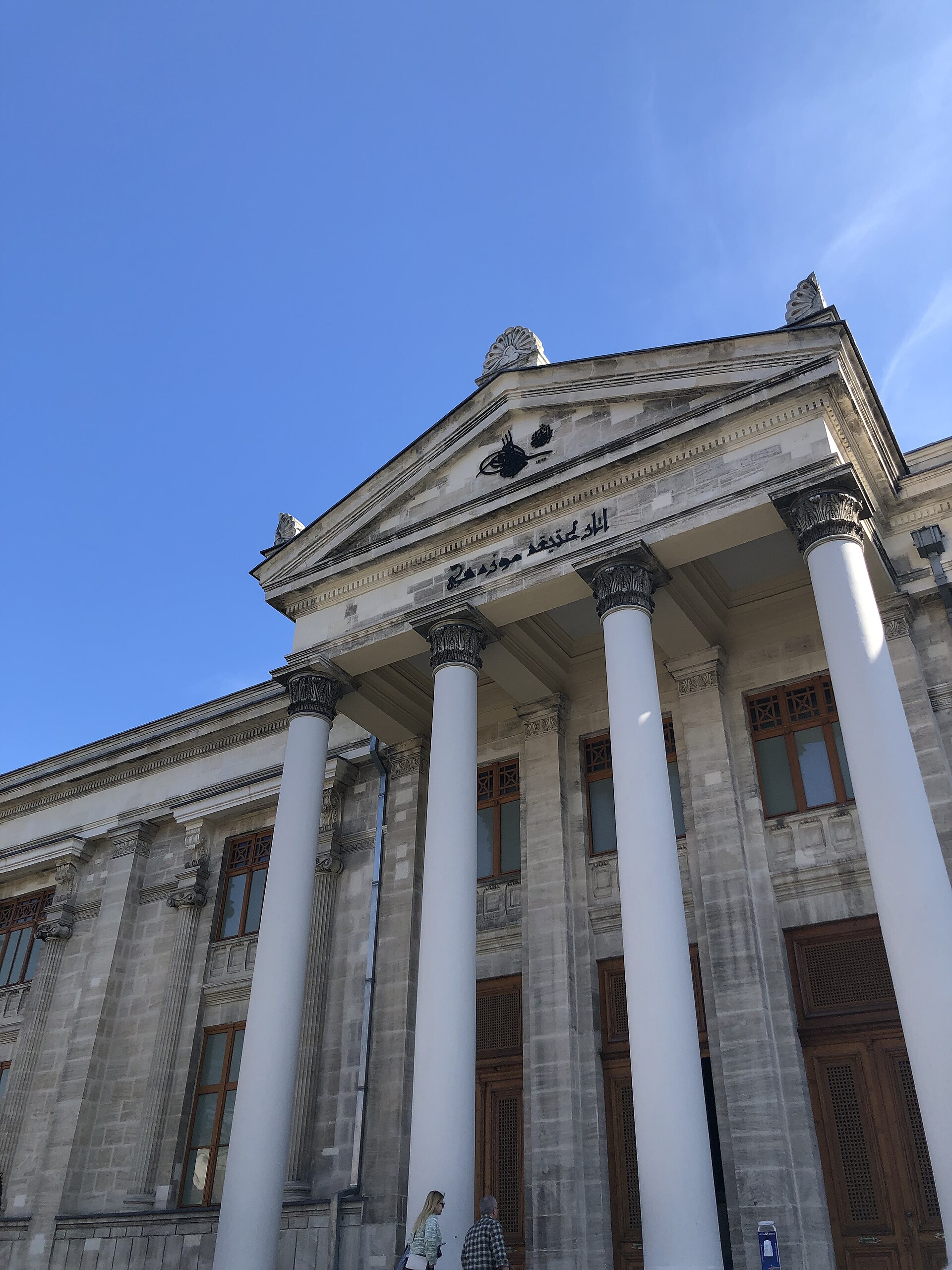
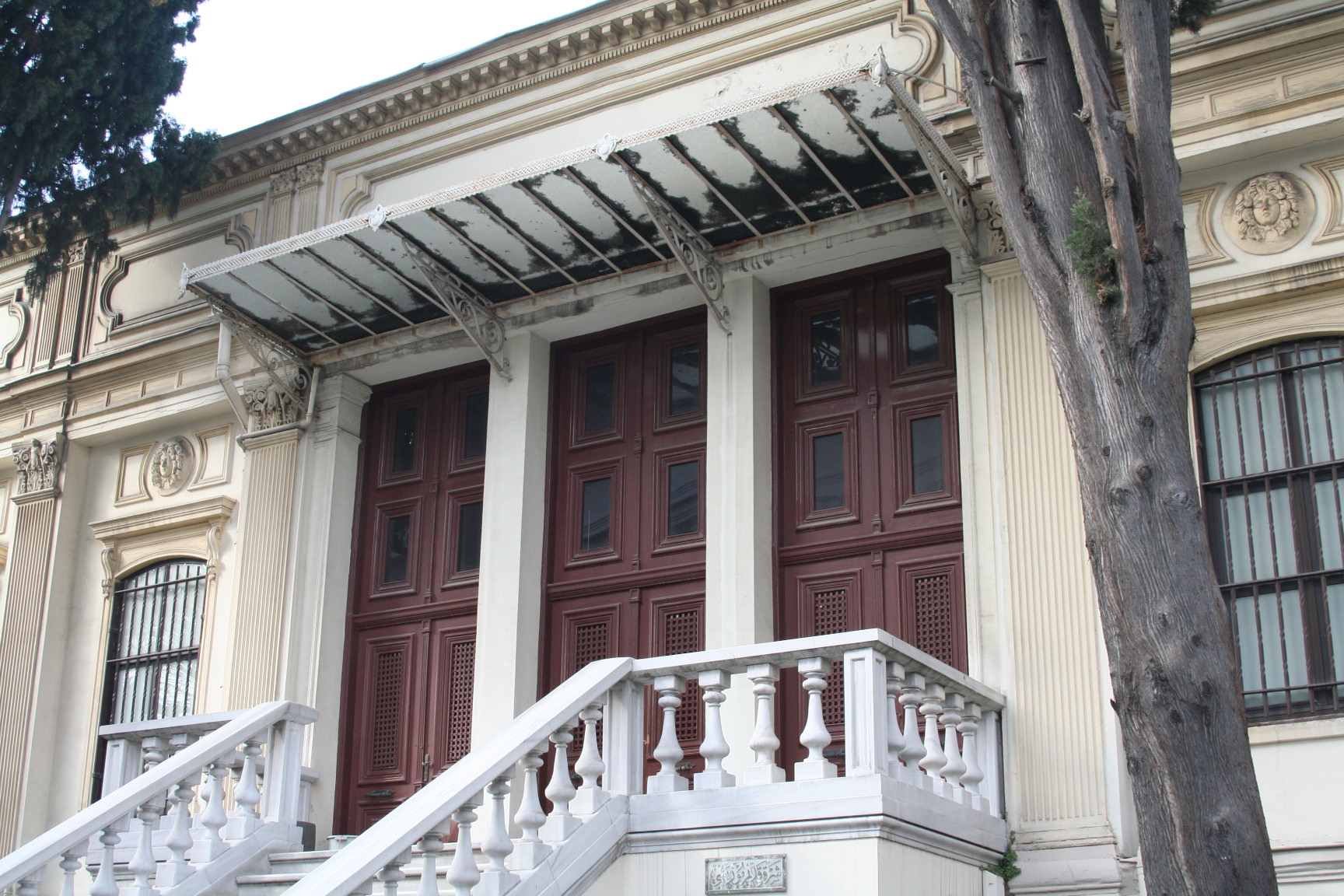
The Neo-Classical facade of the main Archaeological Museum building, opened in 1891, photographed in 2023. The Commons file categorises it explicitly as the exterior of the main building of the Istanbul Archaeological Museums.
CC0Istanbul Archaeology Museums
Museum · Istanbul Arkeoloji Muzeleri · Founded 1891
Open, admission and hours confirmed 2 September 2026 · 12 sources
On this page 14 sections
ContentsClose
The complex's strength is the combination rather than any one gallery: a purpose-built Neo-Classical museum holding the Sidon royal sarcophagi and a run of Greek and Roman marble sculpture, a second building carrying some of the most important surviving Hittite and Neo-Babylonian written and pictorial material anywhere - including one of only three known copies of the world's oldest documented peace treaty - and a third building, the oldest structure in the complex, that is itself an Ottoman monument as much as a display case for its Iznik tile collection. Few single museums hold Hellenistic sculpture, Near Eastern epigraphy and Ottoman decorative art of this depth under one administration.
| Local name | Istanbul Arkeoloji Muzeleri |
|---|---|
| Kind | Museum |
| Founded | 1891 |
| City and country |  Istanbul, Turkey Istanbul, Turkey |
| Address | Alemdar Caddesi, Osman Hamdi Bey Yokusu, Gulhane, Fatih, Istanbul, Turkey |
| Website | muze.gov.tr/muze-detay?SectionId=IAR01&DistId=IAR |
| Status | Open, confirmed |
| Record last verified |
Visiting
- Hours
- Every day09:00 to 18:45Ticket sales end at 18:45; the museum operates without a weekly closing day
- Every day (Night Museum)19:00 to 22:00Separate evening programme, ticket sales end at 21:00, currently restricted to Muzekart holders with a Turkish ID number
- Admission
- General admission (foreign visitors)EUR 15Single ticket covers all three buildings of the complex
- Children 12 and underFreeFree with identification, per the ministry ticketing page
- Night Museum ticket, Muzekart holdersTRY 200Extra evening-hours ticket for Turkish-citizen Muzekart holders only, 19:00-22:00
- Tickets
- muze.gov.tr/urun-detay?CatalogNo=WEB-IAR01-87... The museum's own ticket page.
- Do I need to book?
- No, but the ministry recommends buying the e-ticket in advance through muze.gov.tr or the Muze Istanbul app to avoid the gate queue
- Address
- Alemdar Caddesi, Osman Hamdi Bey Yokusu, Gulhane, Fatih, Istanbul, Turkey MapTram T1 line to Gulhane station, then a short walk through Gulhane Park to the museum gate
Walking Inside the outer grounds of Topkapi Palace, reached from the same Gulhane Park approach used for the palace and Hagia Sophia - Website
- muze.gov.tr/muze-detay?SectionId=IAR01&DistId=IAR
- Telephone
- +90 212 520 77 40
- [email protected]
Before you go how long, access, photography, bags, eating, shop
- How long to allow
- Two to three hours to see the sarcophagi hall, the Museum of the Ancient Orient and the Tiled Kiosk without rushing; TripAdvisor's own visitor summary suggests 1.5 to 3 hours
- Access
- The main Archaeological Museum building has step-free access via a ramp to the right of the main entrance and an elevator inside; visitors using the ramp need to signal a staff member to open the door. The Museum of the Ancient Orient and the Tiled Kiosk, both smaller older buildings, are reported by accessibility guides as not wheelchair accessible.
- Photography
- Personal photography without flash is generally permitted in the galleries; flash and tripods are restricted to protect the exhibits.
- Eating
- A museum shop and a cafe are reported on site near the ground floor of the main building.
- Shop
- Museum shop on site, selling publications and replicas.
Prices and hours change. We take them from the institution's own pages and print the day we read them, and you can check the current position at the source we used. Confirm before you travel.
What is inside
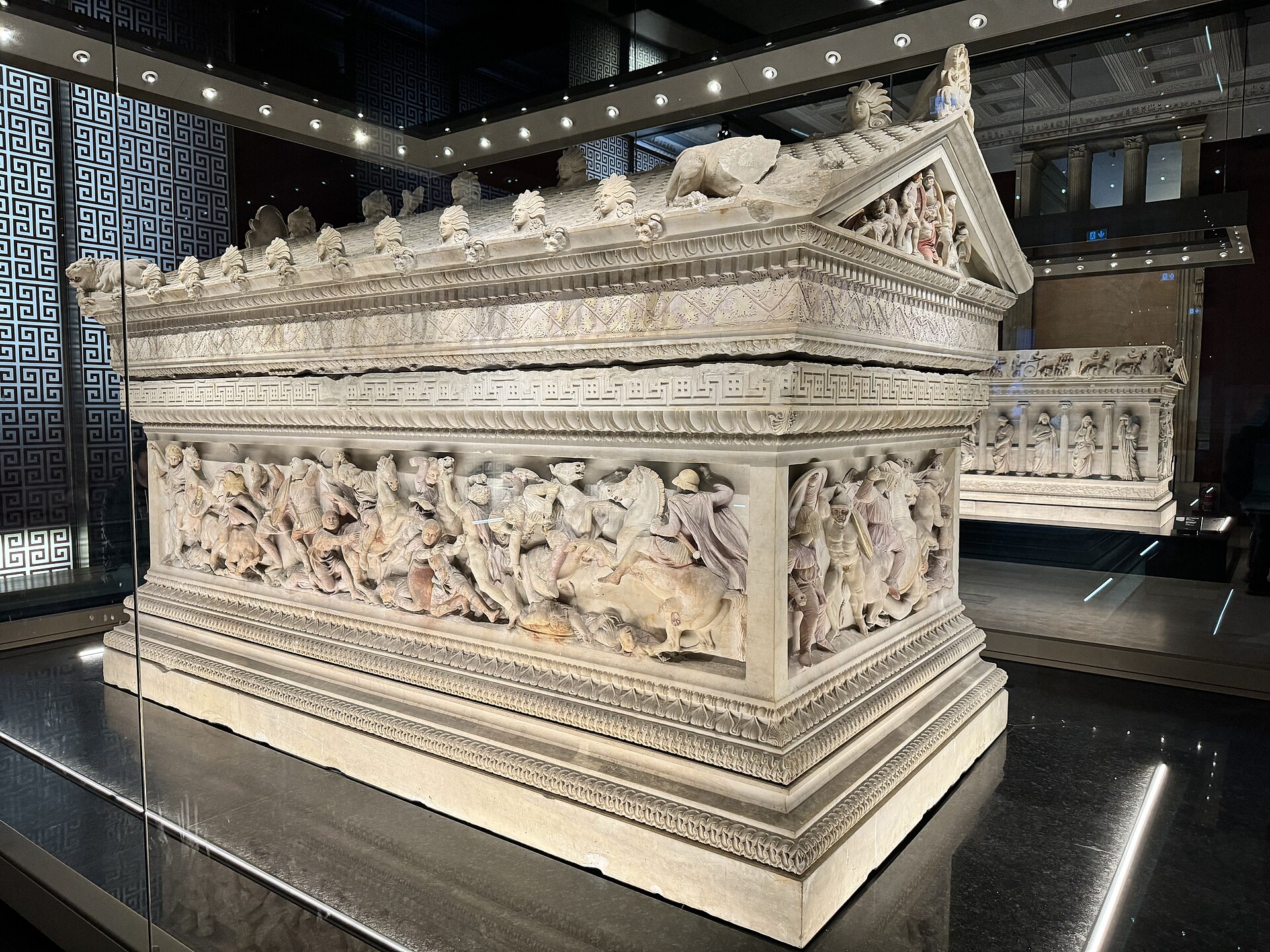
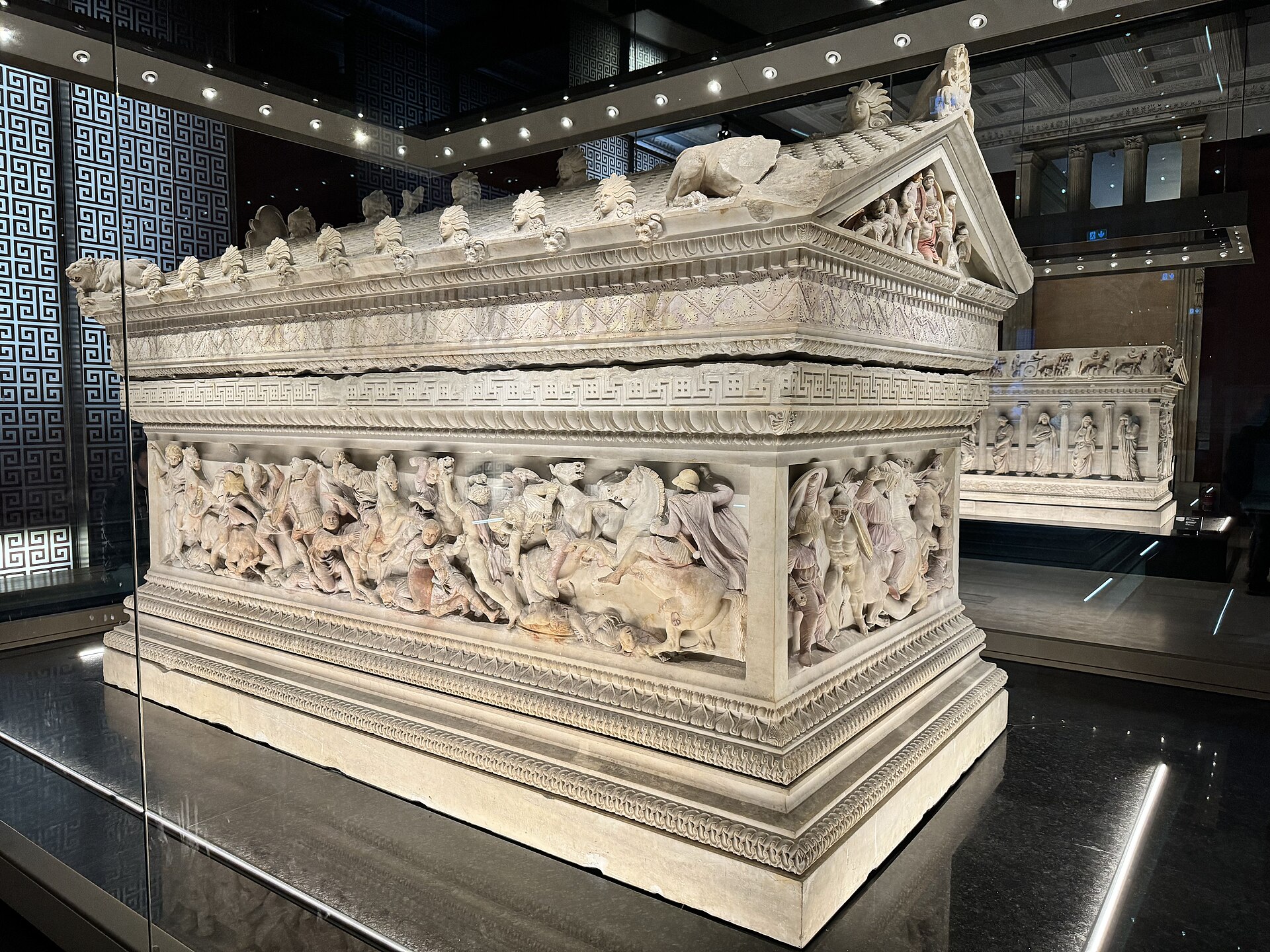
Photograph by Bjelica · CC BY-SA 4.0 Archaeological Museum - Sidon Royal Necropolis sarcophagi hall (main building, ground floor)
The sarcophagi Osman Hamdi Bey excavated at the Royal Necropolis of Ayaa, near Sidon, in 1887: the Alexander Sarcophagus, the Sarcophagus of the Mourning Women, the Lycian Sarcophagus of Sidon and the Tabnit Sarcophagus. These finds are why the classical building exists at all - the facade of Alexander Vallaury's 1891 building was designed to echo the sarcophagi it was built to hold.
Archaeological Museum - classical sculpture galleries (main building)
Greek, Hellenistic and Roman statuary, including kore and kouros figures from the Archaic period through the Roman Imperial era and sculpture from the Roman-period marble centres of Aphrodisias, Ephesus and Miletus.
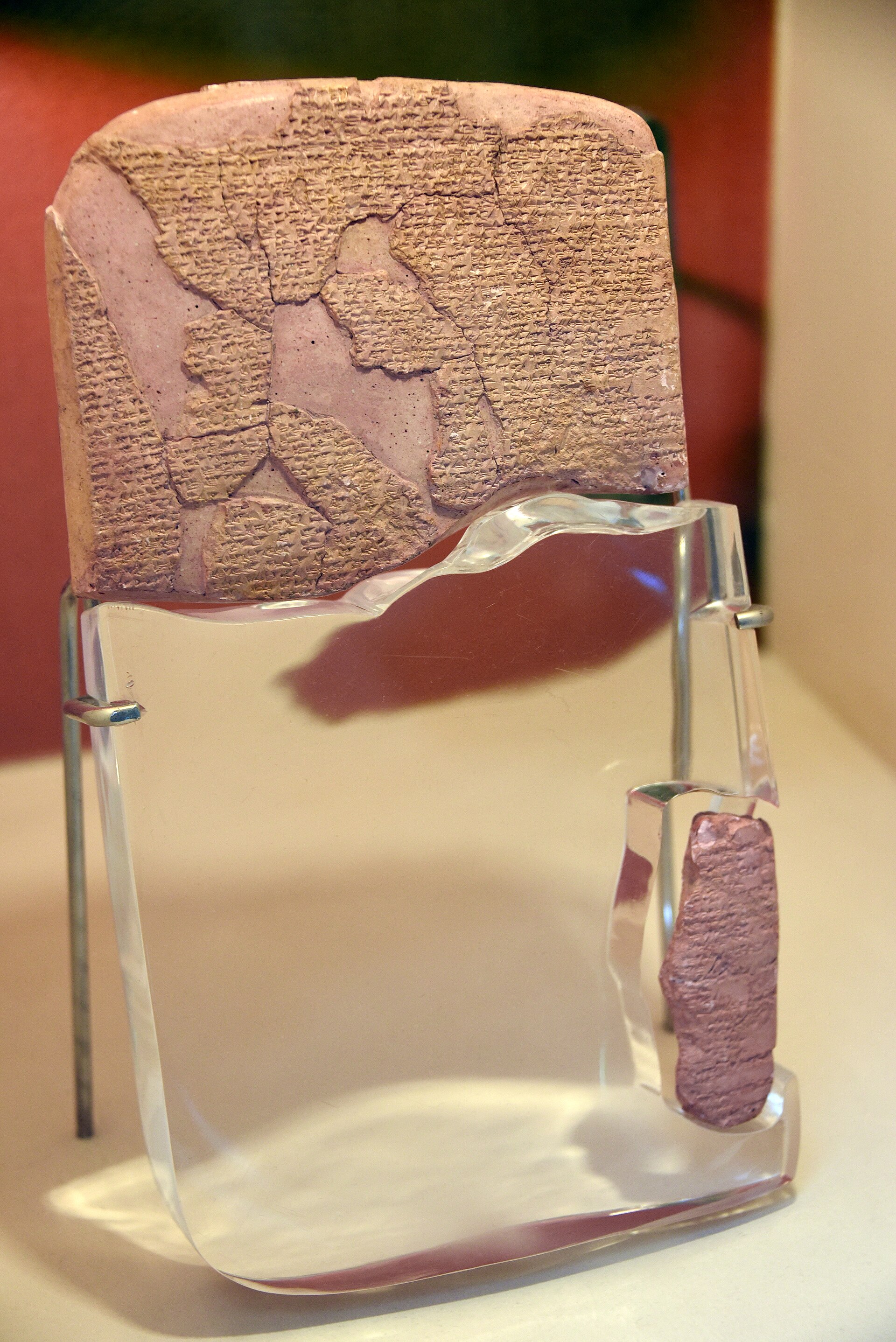
Photograph by Neuroforever · CC BY-SA 4.0 Museum of the Ancient Orient
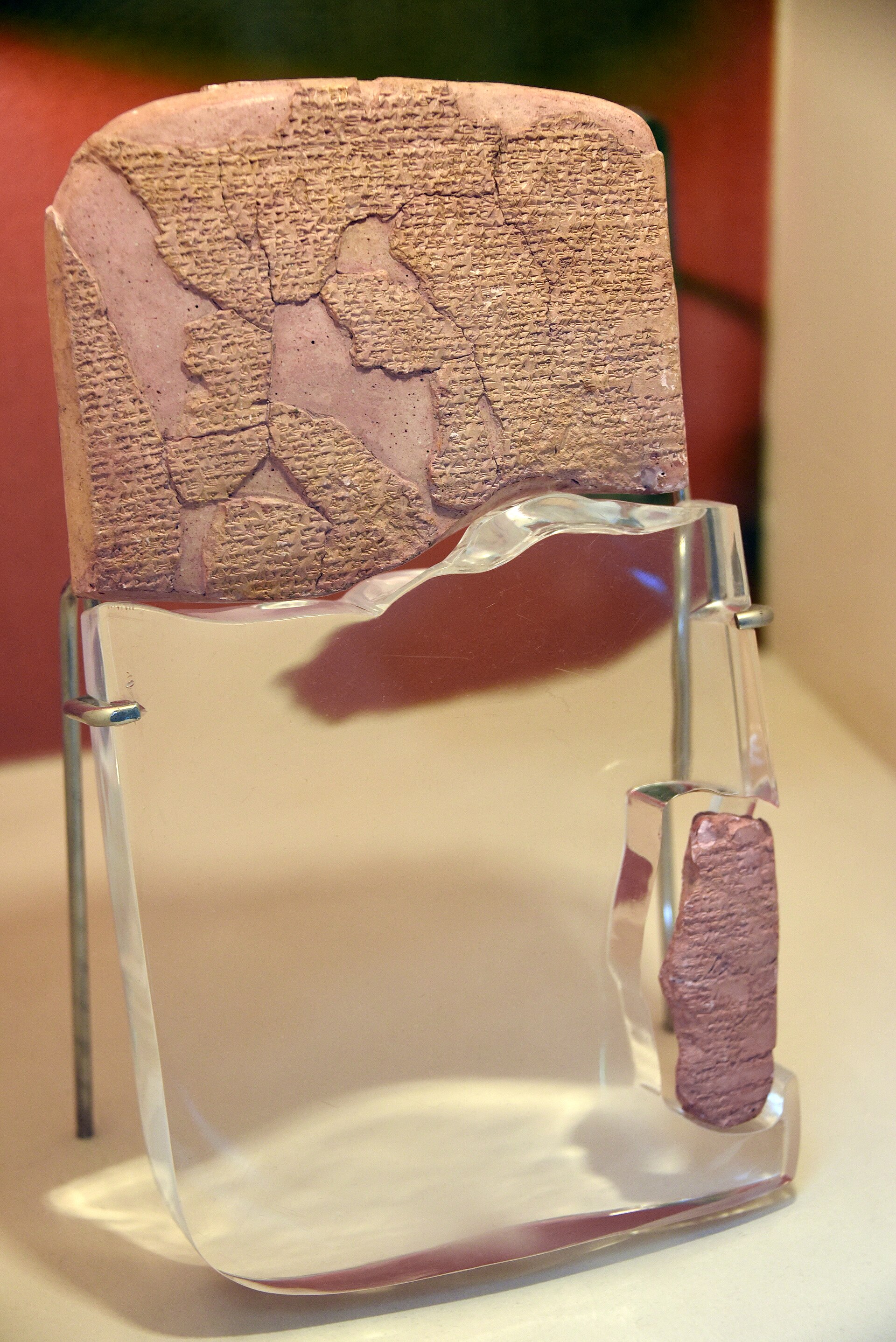
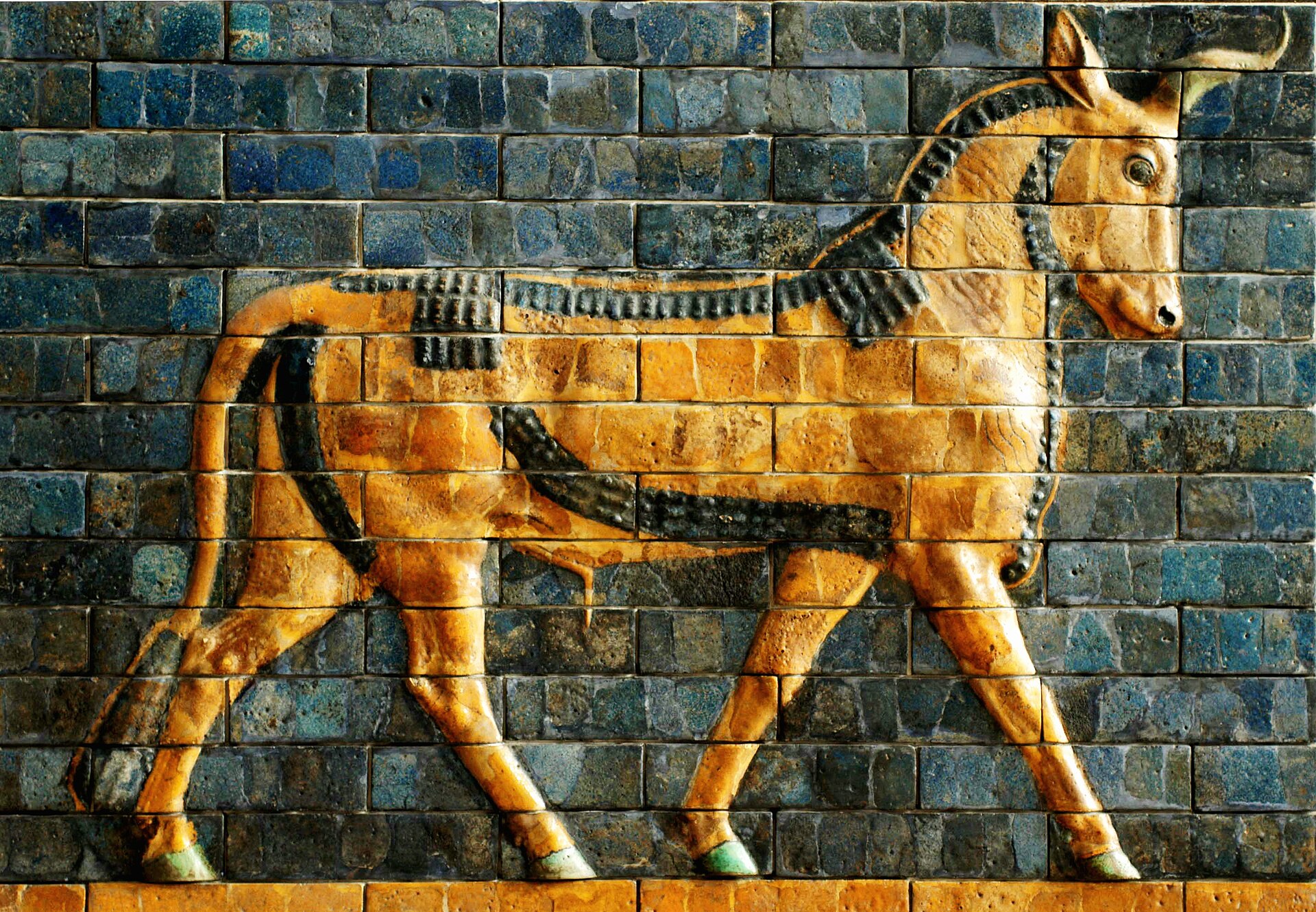
Mesopotamian, Anatolian and Egyptian antiquities in the 1883 building Alexander Vallaury originally designed as the Academy of Fine Arts. Holdings include two of the three surviving tablets of the Egyptian-Hittite peace treaty (the Treaty of Kadesh, 1259 BC) and glazed brick reliefs of bulls and mushhushshu dragons from the Ishtar Gate of Babylon.
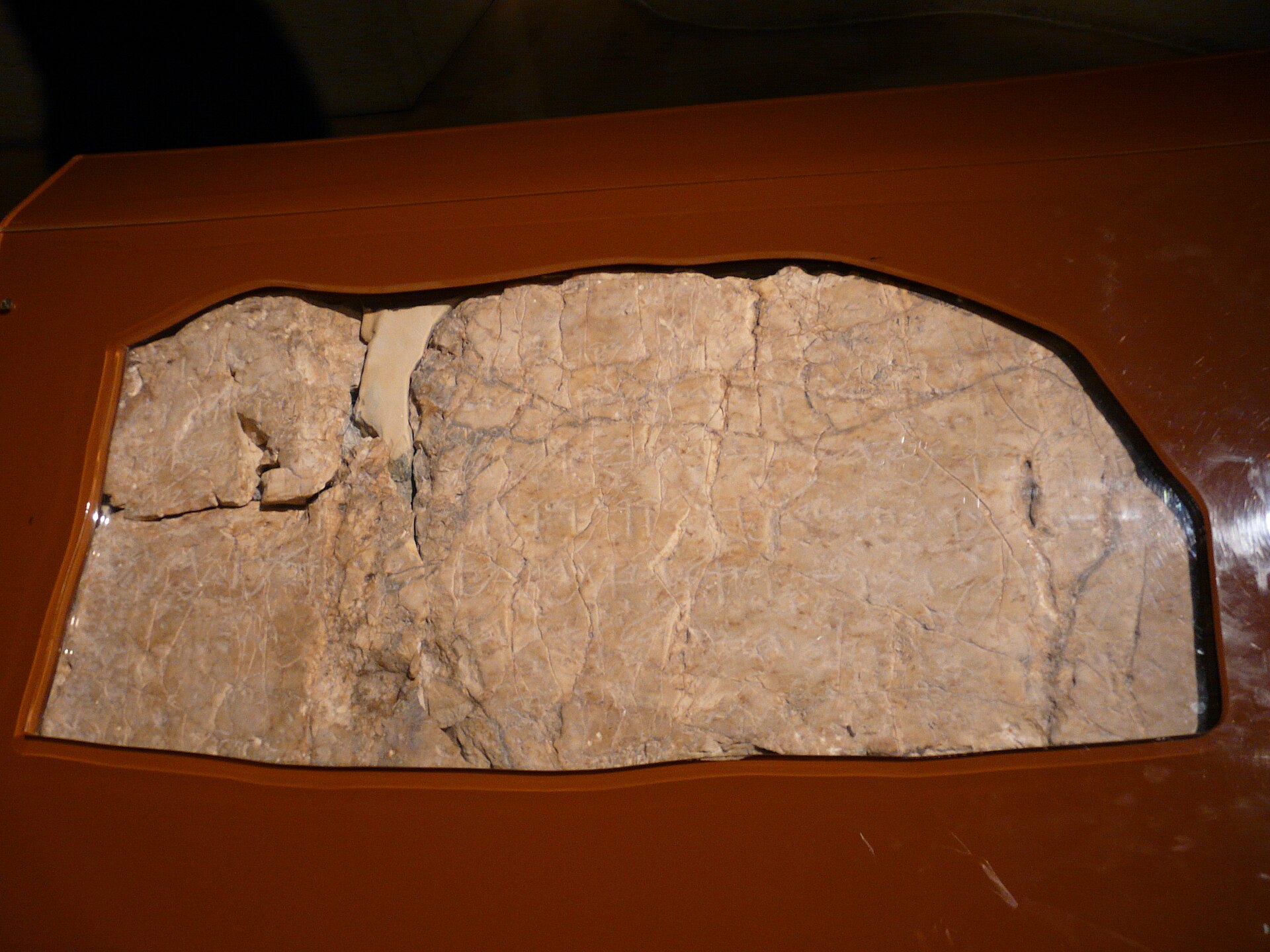
CC0 Museum of the Ancient Orient - Levantine and epigraphic material
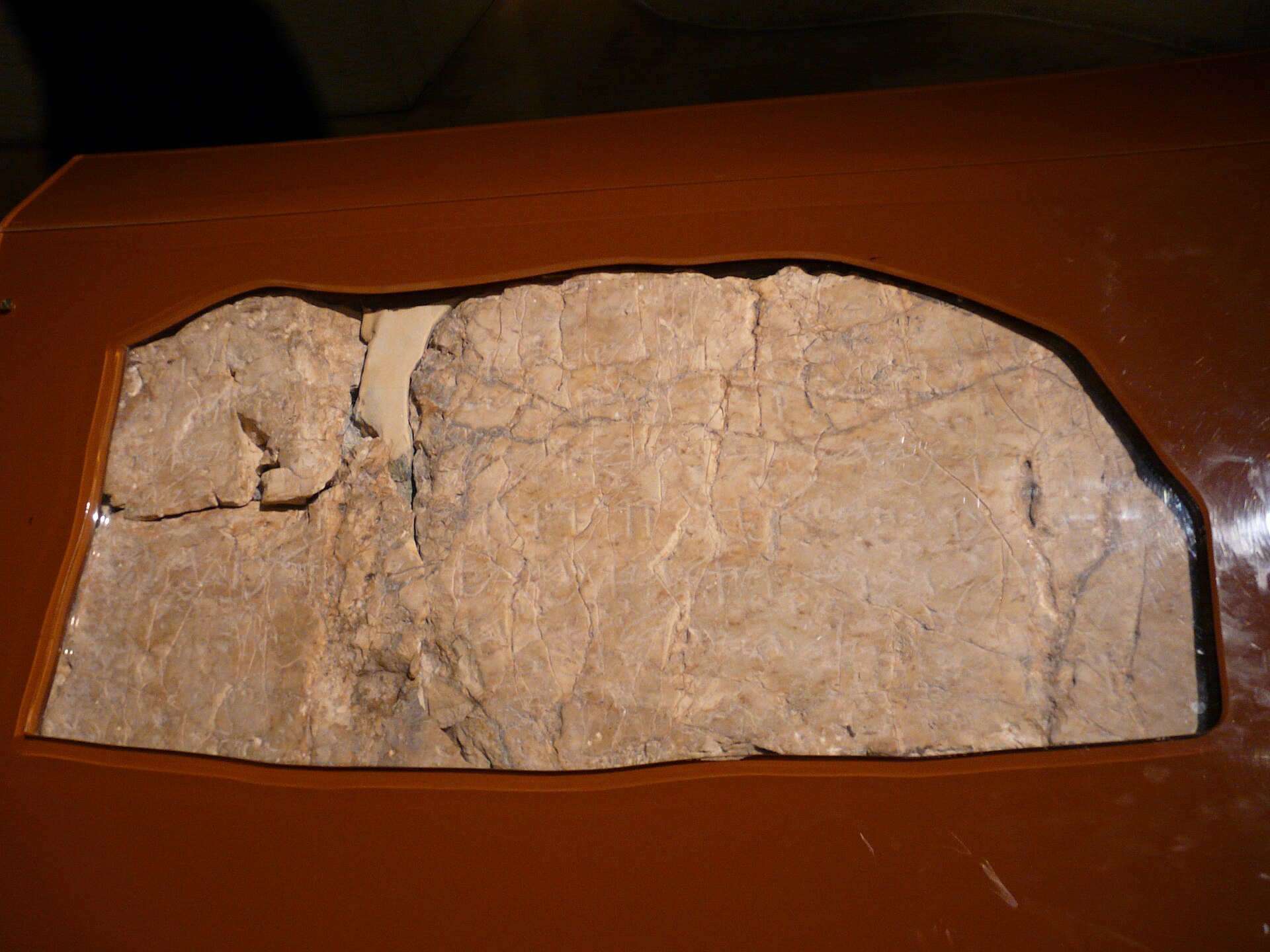
The Siloam Inscription, the Hebrew text commemorating the completion of King Hezekiah's water tunnel in Jerusalem, removed from the tunnel in 1880 under Ottoman antiquities law and never returned despite repeated Israeli requests.
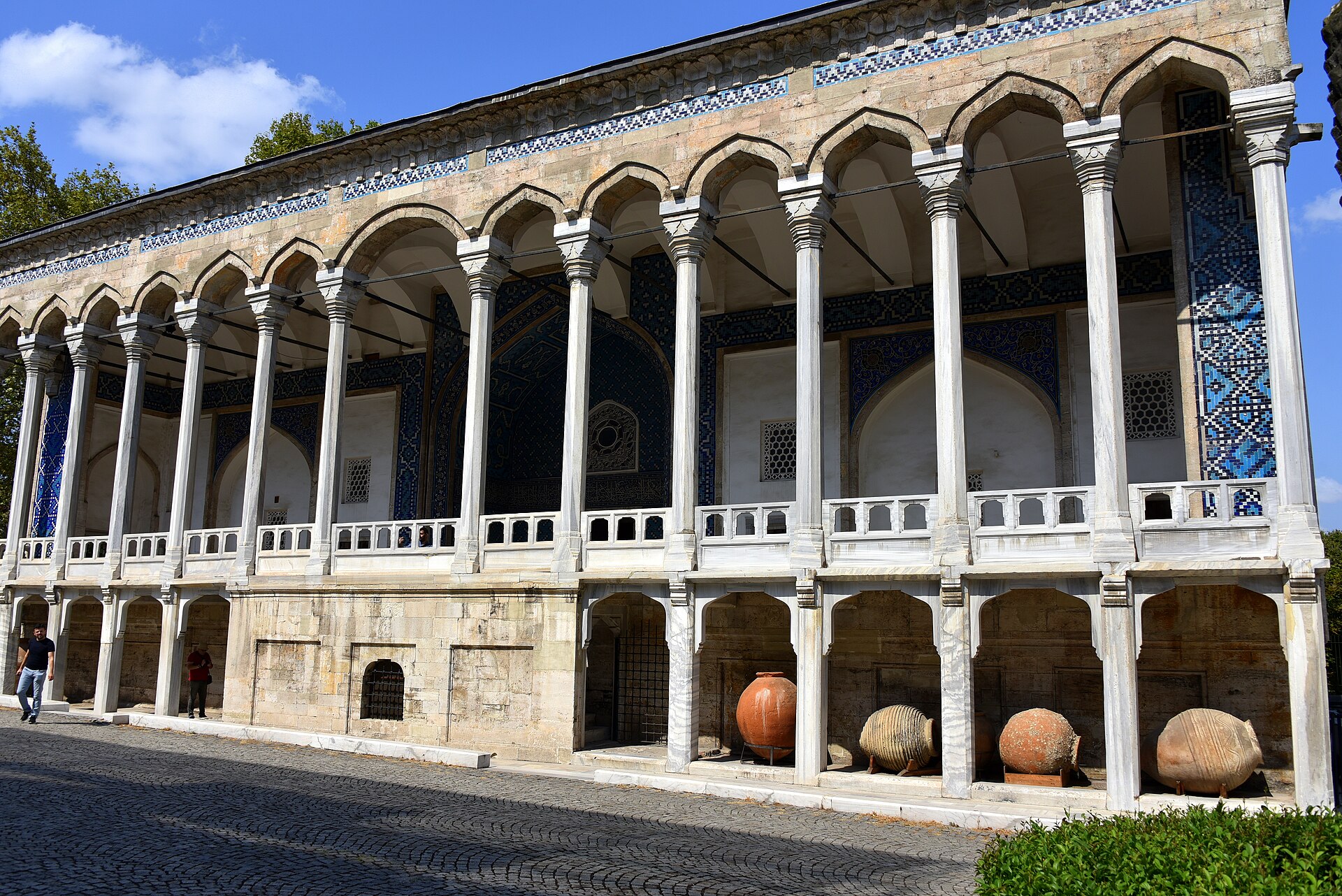
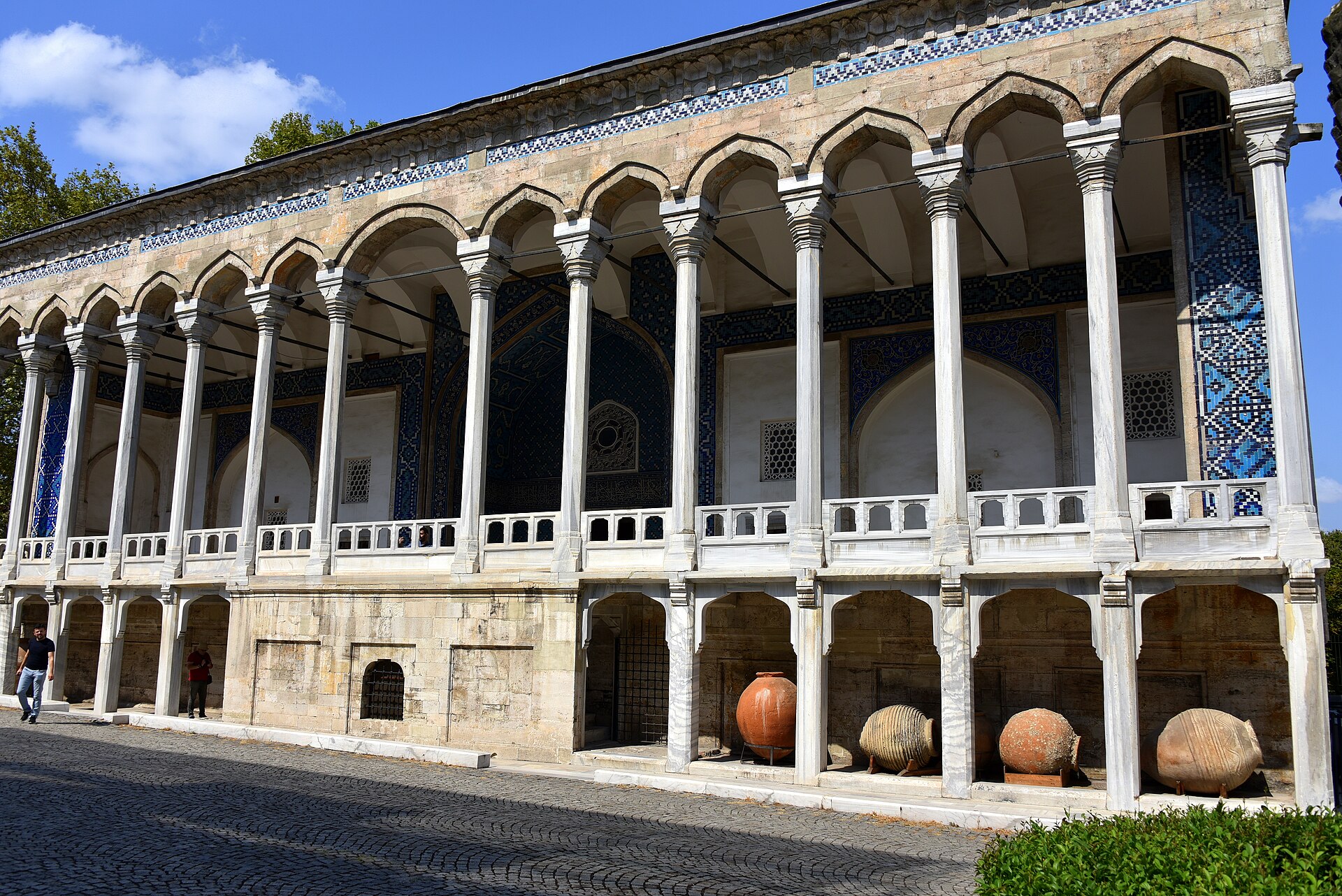
Photograph by Neuroforever · CC BY-SA 4.0 Tiled Kiosk Museum (Cinili Kosk)
The Turkish tile and ceramic collection, housed in the 1472 pleasure pavilion built for Mehmed the Conqueror - the oldest of the three buildings in the complex and, on the museum's own account, one of the oldest surviving secular Ottoman structures in Istanbul. Iznik and Seljuk-era tilework is displayed on and around its original walls.
Annex building galleries (currently closed)
The main building's annex historically held displays on Istanbul Through the Ages, Anatolia and Troy Through the Ages, Thrace and Bithynia, and the cultures of Cyprus, Syria and Palestine. As of the most recent check, the ministry's own museum directory listed these annex sections, together with the Ancient Funerary Culture and Columnar Sarcophagi of Anatolia displays, as temporarily closed to visitors. A reader planning a visit around any one of these should not count on seeing it.
What to see first
Alexander Sarcophagus
Unknown Ionian or Rhodian workshopA Pentelic marble sarcophagus of the late 4th century BC, carved with battle and hunt scenes and retaining traces of its original polychrome paint. Despite the name, scholarship holds it was not Alexander's own coffin but was most likely made for Abdalonymus, the king of Sidon whom Alexander installed; one dissenting view credits it to the Persian governor Mazaeus. It is the best known object to come out of the 1887 Sidon necropolis excavation.6
Sarcophagus of the Mourning Women
Unknown, Hellenistic periodA columned marble sarcophagus carved as an Ionic temple in miniature, with eighteen female figures shown mourning between the columns. Believed to have held Strato, king of Sidon, who died around 360 BC. Its architectural form is the acknowledged model for the facade of the museum's main building.7
Tabnit Sarcophagus
Reused Egyptian workshop piece, Phoenician royal burialA basalt sarcophagus originally made in Egypt for an Egyptian general and later reused for Tabnit, a Phoenician priest-king of Sidon (mid 6th century BC), whose mummified remains were found still inside when it was opened in 1887. It carries both Egyptian hieroglyphs and a Phoenician curse inscription warning against disturbing the occupant.5
Lycian Sarcophagus of Sidon
Unknown, 5th century BCOne of the four sarcophagi from the same royal necropolis at Sidon, carved in a form associated with Lycian tomb architecture; it is displayed alongside the Alexander and Mourning Women sarcophagi as part of the group that gave the museum's main building its purpose and its shape.4
Treaty of Kadesh tablets
Hittite chancery, Bogazkoy (Hattusa)Two of the three surviving cuneiform copies of the peace treaty agreed between Ramesses II of Egypt and Hattusili III of the Hittites after the Battle of Kadesh, generally described as the oldest surviving peace treaty in the historical record whose text survives in more than one copy. The third known copy is in Berlin.9
Glazed brick reliefs from the Ishtar Gate, Babylon
Neo-Babylonian royal workshops under Nebuchadnezzar IIMoulded and glazed brick panels of bulls (sacred to Adad) and mushhushshu dragons (sacred to Marduk) from the processional gate of Babylon, brought to Istanbul from the Ottoman-era excavations at the site and now the core of the Museum of the Ancient Orient's Mesopotamian display.10
Siloam Inscription
Judahite masons, reign of King HezekiahAn 8th-century BC Hebrew inscription cut into the wall of the Siloam Tunnel in Jerusalem, describing the two work gangs meeting as they dug it. Confiscated under the 1874 Ottoman antiquities law when it was found in 1880, it has been the subject of repeated, unsuccessful Israeli requests for return since at least 1998, most recently reported in 2022; Turkey maintains it is state property under national heritage law.11
Three museums behind one gate
The Istanbul Archaeology Museums are not one building but three, sharing a single ticket, a single gate inside the outer grounds of Topkapi Palace, and a single administration: the Archaeological Museum in its purpose-built Neo-Classical building, the Museum of the Ancient Orient next door, and the Tiled Kiosk, a 1472 Ottoman pavilion that predates both by four centuries. Turkey's Ministry of Culture and Tourism, which runs the complex, describes the whole as the country's first museum, tracing its institutional origin to 1869, when the Ottoman government formally established the Muze-i Humayun, the Imperial Museum, using antiquities already gathered in the Byzantine church of Hagia Irene.
The three buildings hold, on the ministry's own count, close to one million objects between them - Greek and Roman sculpture, Mesopotamian and Hittite tablets and reliefs, Ottoman tilework, and the sarcophagi that made the complex famous. A single admission ticket covers all three; a reader planning a visit should expect to move between them on foot across the shared courtyard, not find them under one roof.
Osman Hamdi Bey, Sidon, and the building that had to be built
The complex as it now stands is largely the work of one man. Osman Hamdi Bey, appointed director of the Imperial Museum in 1881, was a painter and archaeologist who also wrote and enforced the 1884 Ottoman law restricting the export of antiquities found within imperial territory - a law that kept what he excavated in Istanbul rather than in the museums of the European powers then digging across the same ground. In 1887 and 1888 he excavated the Royal Necropolis of Ayaa, near Sidon in what is now Lebanon, and returned with a group of carved sarcophagi that the existing museum building, housed in Hagia Irene, had no space or setting to show properly.
The result was a purpose-built museum: the Neo-Classical building designed by the Ottoman-French architect Alexander Vallaury, its pediment carrying an Ottoman inscription reading 'Asar-i Atika Museum' - Museum of Antiquities - under the tughra of Sultan Abdulhamid II, and its facade proportioned to echo the sarcophagi it was built to hold, particularly the Sarcophagus of the Mourning Women. It opened to the public in 1891. Vallaury had already designed the complex's second building, in 1883, as a school of fine arts; when the academy relocated in 1917 that building was handed to the museum directorate and became, from 1935, the Museum of the Ancient Orient.
The sarcophagi
Four sarcophagi from the Sidon necropolis anchor the ground floor of the main building, and the best known of them is a case study in how a nickname can outrun the evidence. The Alexander Sarcophagus, carved from Pentelic marble and still showing traces of its original paint, depicts Alexander the Great in battle against the Persians and later hunting alongside them - but the current scholarly view is that it was never Alexander's own coffin. It was almost certainly commissioned by Abdalonymus, the man Alexander installed as king of Sidon after the Persian defeat, using the great conqueror's image to advertise Abdalonymus's own legitimacy rather than to bury him; a minority argument instead credits the Macedonian governor Mazaeus. Either way, the sarcophagus commemorates Alexander's presence in the region rather than containing his body, which ancient sources place in Egypt.
Alongside it stand the Sarcophagus of the Mourning Women, carved as a miniature Ionic temple with eighteen grieving female figures between its columns and believed to hold Strato, king of Sidon, who died around 360 BC; the Lycian Sarcophagus of Sidon; and the Tabnit Sarcophagus, a basalt coffin originally carved in Egypt for an Egyptian general and later reused for Tabnit, a Phoenician priest-king of Sidon whose mummified body was still inside it when Osman Hamdi Bey's team opened it in 1887, preserved in embalming fluid that broke down rapidly once the tomb was opened to air.
The Museum of the Ancient Orient and a contested inscription
The second building holds the complex's Mesopotamian, Anatolian and Egyptian material, and its two most cited objects both carry weight beyond their display cases. Two of the three known cuneiform copies of the Treaty of Kadesh - the peace agreement Ramesses II of Egypt and the Hittite king Hattusili III concluded after the Battle of Kadesh in the 13th century BC, and the earliest surviving peace treaty whose text is preserved in more than one copy - sit here; the third copy is in Berlin. Glazed brick reliefs of bulls and mushhushshu dragons from the processional Ishtar Gate of Babylon, excavated during Ottoman-era digs at the site, form the core of the building's Neo-Babylonian display.
The most politically live object in the building is smaller and older: the Siloam Inscription, an eight-line Hebrew text cut into the wall of the tunnel King Hezekiah's engineers dug beneath Jerusalem in the 8th century BC, describing the moment the two digging crews met underground. It was found in 1880, while Jerusalem was Ottoman territory, and confiscated under the Ottoman antiquities law of 1874, which made excavated finds state property. Israel has asked for its return more than once - a first approach from Prime Minister Benjamin Netanyahu to his Turkish counterpart in 1998, offering Ottoman-era artefacts held in Israel in exchange; a 2007 request from President Shimon Peres to lend it for Israel's anniversary, agreed in principle by President Abdullah Gul but never carried out amid a downturn in relations over Gaza; and further requests reported as recently as 2022. Turkey has not returned it and has stated the object is Ottoman state property under national heritage law. The inscription remains on display in Istanbul, and the dispute over it remains open.
The Tiled Kiosk, the oldest building in the complex
The Tiled Kiosk, or Cinili Kosk, is older than the museum around it by more than four centuries. Built in 1472 as a pleasure pavilion for Mehmed the Conqueror, it is, on the ministry's own description, an outstanding example of Ottoman civil architecture and among the oldest surviving non-religious Ottoman buildings in the city. It was restored and opened to the public as a museum in 1880, a decade before the Neo-Classical building beside it existed, and it remains formally part of the same administration. Its collection is Turkish tilework and ceramics, principally Iznik ware, displayed in and around a building whose own surviving tile decoration is part of what a visitor comes to see.
What is closed, and what to expect on arrival
Not everything the complex has historically shown is currently on view. The ministry's own museum directory lists the main building's annex galleries - covering Istanbul Through the Ages, Anatolia and Troy Through the Ages, Thrace and Bithynia, the cultures of Cyprus, Syria and Palestine, Ancient Funerary Culture, and the Columnar Sarcophagi of Anatolia - as temporarily closed to visitors, without a stated date for reopening. The sarcophagi hall, the classical sculpture galleries, the Museum of the Ancient Orient and the Tiled Kiosk are unaffected and remain the core of what is open. The gate sells the audio guide separately from the entrance ticket, a point enough visitors flag as misleading that it is worth knowing before joining the queue rather than after.
What visitors say
Visitors consistently rate the collection itself very highly - the Sidon sarcophagi and the Museum of the Ancient Orient's tablets and reliefs are repeatedly singled out as world class and under-visited relative to the Topkapi and Hagia Sophia crowds next door. The complaints cluster around the visit experience rather than the objects: the audio guide is sold separately from the entrance ticket at the gate, which a number of visitors describe as a bait-and-switch; parts of the main building's annex galleries have been closed for an extended period without much on-site explanation; and front-of-house staff interactions are described as brusque more often than visitors expect for the price of the ticket.
What is praised, what is criticised
- Praised: The Sidon sarcophagi hall, especially the Alexander Sarcophagus, described as one of the best-preserved and most important sculptural survivals from antiquity anywhere
- Praised: The clarity and depth of the collection across three buildings - Hellenistic sculpture, Mesopotamian and Hittite epigraphy, and Ottoman-era tilework all in one ticket
- Praised: Being genuinely quiet relative to Topkapi Palace and Hagia Sophia a few minutes' walk away, despite the quality of what is on show
- Praised: Signage and object labelling in the main sarcophagi hall, called out specifically as clear and informative
- Criticised: Audio guide headsets sold separately from admission at the ticket window, which visitors repeatedly describe as deceptive rather than merely an upsell
- Criticised: Extended closure of the annex galleries (Istanbul Through the Ages, Anatolia and Troy, Thrace and Bithynia, Cyprus/Syria/Palestine) with little visible signage explaining the closure to arriving visitors
- Criticised: Reports of unhelpful or rude front-line staff, inconsistent with an otherwise well-regarded institution
Ratings on other platforms
Tripadvisor: 4.4 from 4,613 ratings, read 2 September 2026
A platform average is a tertiary source: it moves, it is not audited, and we quote no visitor's words.
Questions about Istanbul Archaeology Museums
Where is Istanbul Archaeology Museums?
Alemdar Caddesi, Osman Hamdi Bey Yokusu, Gulhane, Fatih, Istanbul, Turkey.
How much does it cost to visit?
General admission (foreign visitors): EUR 15; Children 12 and under: free; Night Museum ticket, Muzekart holders: TRY 200. As confirmed 2 September 2026.
When is it open?
Every day 09:00-18:45; Every day (Night Museum) 19:00-22:00. As confirmed 2 September 2026.
How do you get there?
Tram: T1 line to Gulhane station, then a short walk through Gulhane Park to the museum gate; Walking: Inside the outer grounds of Topkapi Palace, reached from the same Gulhane Park approach used for the palace and Hagia Sophia.
What should you see first?
Alexander Sarcophagus (Unknown Ionian or Rhodian workshop); Sarcophagus of the Mourning Women (Unknown, Hellenistic period); Tabnit Sarcophagus (Reused Egyptian workshop piece, Phoenician royal burial); Lycian Sarcophagus of Sidon (Unknown, 5th century BC); Treaty of Kadesh tablets (Hittite chancery, Bogazkoy (Hattusa)); Glazed brick reliefs from the Ishtar Gate, Babylon (Neo-Babylonian royal workshops under Nebuchadnezzar II).
What we could not confirm
- No reopening date has been published by the ministry for the closed annex galleries (Istanbul Through the Ages, Anatolia and Troy, Thrace and Bithynia, Cyprus/Syria/Palestine, Ancient Funerary Culture, Columnar Sarcophagi of Anatolia); this record will need rechecking.
- The Siloam Inscription's ownership remains an open diplomatic question between Turkey and Israel, unresolved as of the most recent reporting found for this record.
Images
Sources
- 1Istanbul Archaeological Museums, official listing, T.C. Kultur ve Turizm Bakanligi (Muze Istanbul) muze.gov.tr/muze-detay?SectionId=IAR01&DistId=IAR
- 2Wikidata, Istanbul Archaeology Museums (Q636978), entity data wikidata.org/wiki/Special:EntityData/Q636978.json
- 3Istanbul Archaeological Museums e-ticket product listing, T.C. Kultur ve Turizm Bakanligi (Muze Istanbul) muze.gov.tr/urun-detay?CatalogNo=WEB-IAR01-87-009
- 4Wikipedia, 'Istanbul Archaeology Museums' en.wikipedia.org/wiki/Istanbul_Archaeology_Museums
- 5Wikipedia, 'Tabnit sarcophagus' en.wikipedia.org/wiki/Tabnit_sarcophagus
- 6Wikipedia, 'Alexander Sarcophagus' en.wikipedia.org/wiki/Alexander_Sarcophagus
- 7Wikipedia, 'Sarcophagus of the mourning women' en.wikipedia.org/wiki/Sarcophagus_of_the_mourning_women
- 8'Istanbul Archaeological Museum - All You SHOULD Know Before Going 2026 (with Reviews)', Tripadvisor listing and visitor review summary tripadvisor.com/Attraction_Review-g293974-d294552-Reviews-Istanbul_Archaeological_Museum-Istanbul.html
- 9Wikipedia, 'Egyptian-Hittite peace treaty' en.wikipedia.org/wiki/Egyptian%E2%80%93Hittite_peace_treaty
- 10Wikimedia Commons file description, 'Glazed Brick Relief of a Bull from Ishtar Gate Babylon Istanbul Archaeology Museums.jpg' commons.wikimedia.org/wiki/File:Glazed_Brick_Relief_of_a_Bull_from_Ishtar_Gate_Babylon_Istanbul_Archaeology_Museums.jpg
- 11'Despite detente, ancient Hebrew text "proving" Jewish ties to Jerusalem set to stay in Istanbul', The Times of Israel timesofisrael.com/despite-detente-ancient-hebrew-text-proving-jewish-ties-to-jerusalem-set-to-stay-in-istanbul/
- 12Istanbul Archaeological Museums listing, Turkish Museums (turkishmuseums.com), including note on annex galleries temporarily closed to visitors turkishmuseums.com/museum/detail/2066-istanbul-archaeological-museums/2066/4
