Hugh Lane Gallery
Museum · Dublin City Gallery The Hugh Lane · Founded 1908
Closure confirmed 8 August 2026 · 22 sources
Closed to visitors - not permanently
Hugh Lane Gallery is currently closed, on the evidence sourced below.
Expected to reopen: at least 3 years from the 28 September 2025 closure · a target, not yet confirmed
Closure confirmed 2 September 2026 from the institution's own page. We re-check this page on a schedule and will update it, from the institution's own announcement, the moment it reopens.
On this page 14 sections
ContentsClose
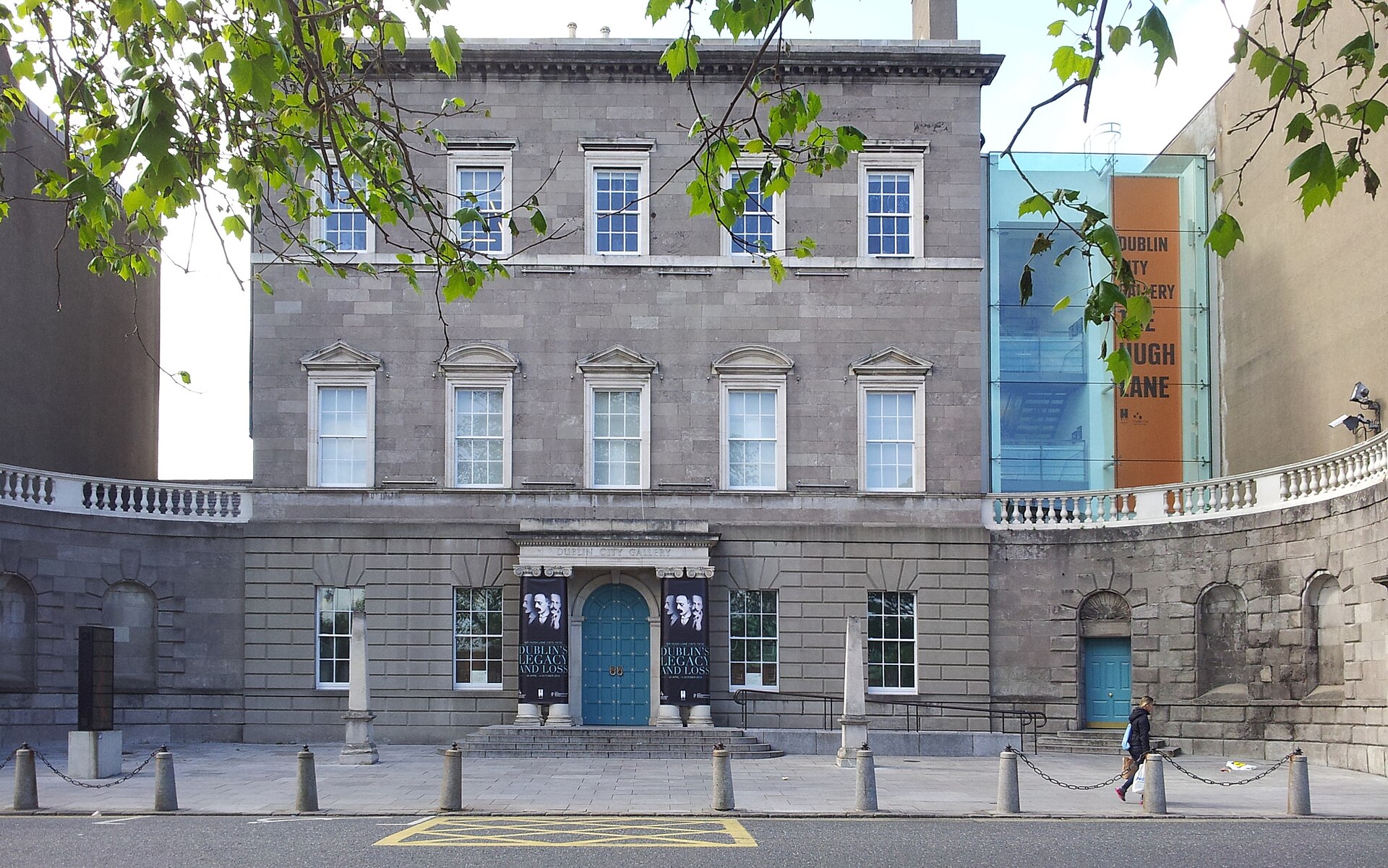
A collection built almost entirely on the taste of two men born fifty years apart: Sir Hugh Lane, whose Impressionist bequest still divides its most famous paintings between Dublin and London under a 2021 partnership agreement, and Francis Bacon, whose entire working studio was moved from London to Dublin wall by wall in 1998 and remains the most complete surviving record of any major twentieth-century painter's working environment. Around both sit later gifts that have nothing to do with either man: Sean Scully's own 2006 donation of paintings spanning his career, and a stained-glass collection built around Harry Clarke, Wilhelmina Geddes and Evie Hone, three of the central figures in Irish stained glass's early-twentieth-century revival.
| Local name | Dublin City Gallery The Hugh Lane |
|---|---|
| Kind | Museum |
| Founded | Founded by Sir Hugh Lane in 1908 as the Municipal Gallery of Modern Art, first housed at 17 Harcourt Street; moved into Charlemont House on Parnell Square, its present building, which opened as the gallery on 19 June 1933. |
| City and country |  Dublin, Ireland Dublin, Ireland |
| Address | Charlemont House, Parnell Square North, Dublin 1, D01 F2X9, Ireland |
| Website | hughlane.ie |
| Status | Closed temporarily, confirmed 2 September 2026 |
| Record last verified | 2 September 2026 |
Visiting
- Hours (pre-closure)
- MondayClosed, pre-closure schedule
- Tuesday-Wednesday09:45 to 18:00Pre-closure schedule
- Thursday09:45 to 20:30Pre-closure schedule, the gallery's late evening
- Friday09:45 to 17:00Pre-closure schedule
- Saturday10:00 to 17:00Pre-closure schedule
- Sunday11:00 to 17:00Pre-closure schedule
- Closed
- The whole building, every day, since 28 September 2025, for at least three years of refurbishment; the hours above are kept for reference and are not bookable today, see open_status.
- Admission (pre-closure)
- General admissionFreeFree entry to the permanent collection, no booking required, in the years before the 28 September 2025 closure. The gallery is not currently bookable at any price; see open_status.
Free entry: Free general admission every day the gallery was open, with no exceptions found on the gallery's own site- Do I need to book?
- No booking was required for the permanent collection before the closure. The gallery admits no visitors at present; see open_status.
- Address
- Charlemont House, Parnell Square North, Dublin 1, D01 F2X9, Ireland MapLuas Green Line to Parnell Street / O'Connell Street Upper, about a 6 minute walk; Red Line to Abbey Street, about a 12 minute walk
DART Connolly Station, about a 23 minute walk
Bus Many Dublin Bus routes stop on Parnell Square and O'Connell Street
Dublinbikes Closest docking station at Parnell Square North - Website
- hughlane.ie
- Telephone
- +353 (0)1 222 5564
- [email protected]
Before you go how long, access, photography, bags, eating, shop
- How long to allow
- Not published by the gallery as a single figure. Tripadvisor's own listing estimates 1 to 2 hours, consistent with a single building holding the permanent collection, Francis Bacon's Studio and temporary exhibition space.
- Access
- The gallery's own visitor guidance (a 'Social Story' aimed at neurodivergent and first-time visitors) describes a ramp and steps to the main entrance; accessible toilets at the entrance on the Ground Floor and on the Lower Ground Floor; a lift serving Lower Ground (cafe, lockers, accessible toilets), Ground (reception, galleries, Francis Bacon's Studio, bookshop), Floor 1 (further galleries, lecture room) and Floor 2 (Education Space, with its own accessible toilet); a designated quiet space for visitors who find the galleries too busy; and green storage boxes and lockers for coats and bags. All of this describes the building as it operated before the 2025 closure.
- Photography
- Not published on the pages checked for this record.
- Bags
- Green storage boxes for school groups' coats and bags at the entrance; yellow and red lockers on the Lower Ground Floor.
- Eating
- Failte le Gra Cafe, on site, open 10am to 4pm before the closure, serving light breakfast, lunch, coffee and baked goods, all cooked in-house; the Irish Times critic Gemma Tipton called it "a big, warm arty welcome for everyone."
- Shop
- An on-site Bookshop carrying art books and all gallery publications, open during gallery hours before the closure; trades independently online at hlgallerybooks.com.
The museum is closed (see above). These are the figures published before the closure, kept here for a visitor planning ahead rather than presented as bookable today, and you can check the current position at the source we used. We will re-confirm them once it reopens.
What is inside
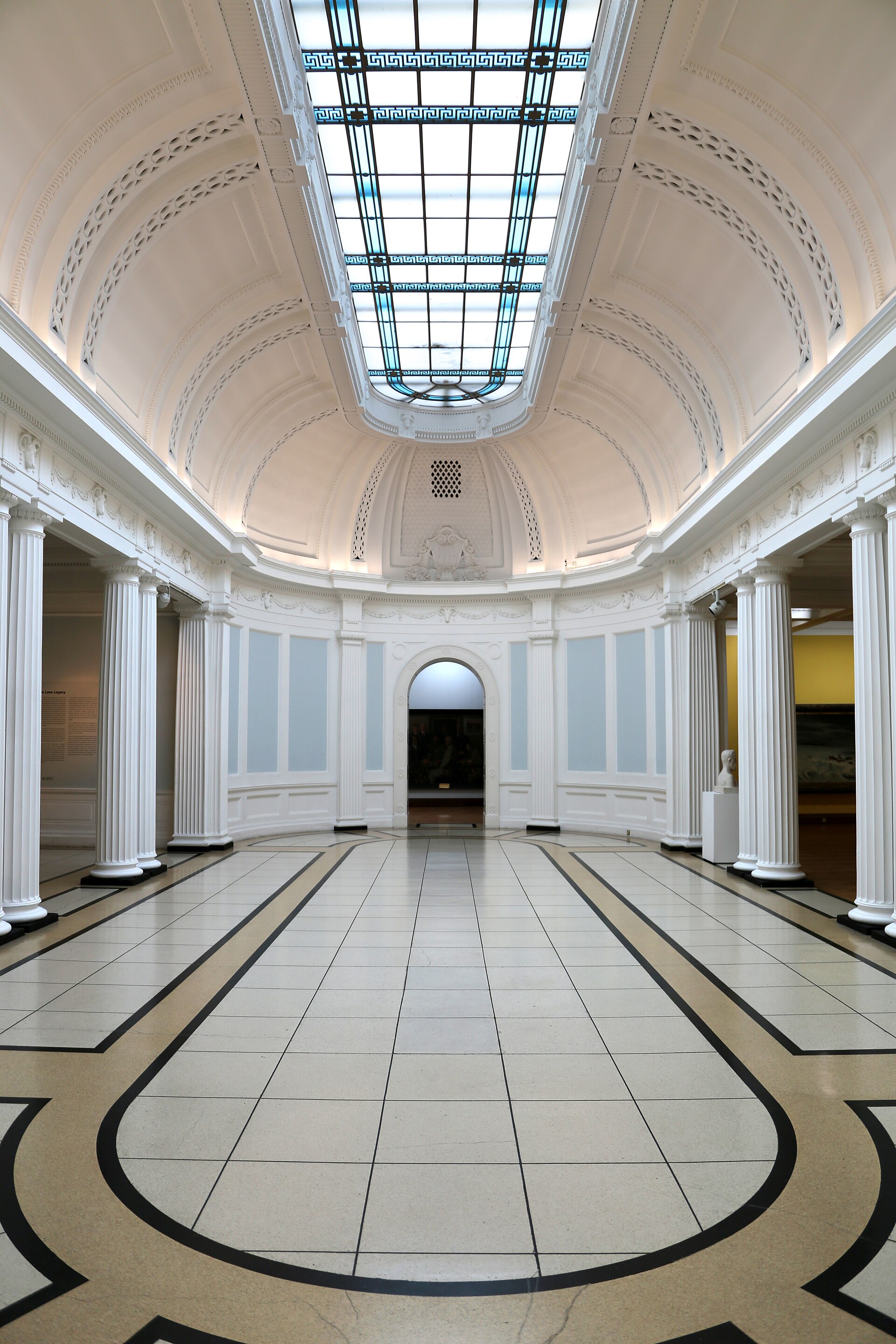
Photograph by Sailko · CC BY 3.0 The historic wing: Charlemont House's Georgian rooms
The surviving reception rooms of the 1763 townhouse designed by Sir William Chambers for James Caulfeild, 1st Earl of Charlemont, arranged around the original service stairs. The entrance hall holds two Chambers-designed chimneypieces, one inspired by ancient Rome; the principal staircase keeps its original wrought-iron balustrade with lion-mask ornament; and the first-floor reception rooms, now exhibition galleries, have coved ceilings by Chambers and a marble chimneypiece by the Dublin-based Italian craftsman Pietro Bossi. The oval, top-lit room shown in the photograph attached to this entry sits in this part of the building. The Chambers Room, once the site of Lord Charlemont's own cabinet of ancient coins and medals, is today hung with paintings by Francis Bacon.
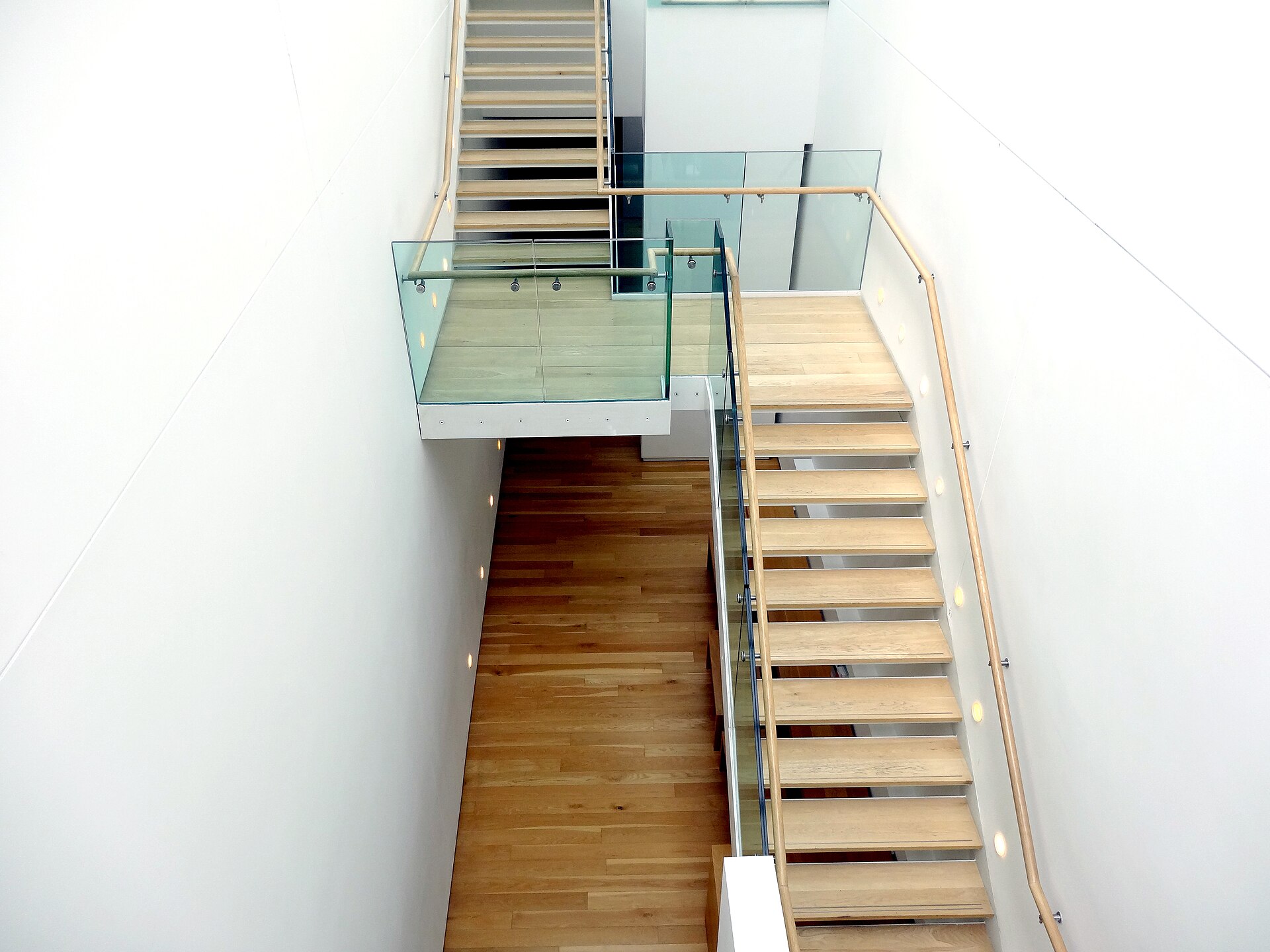
Photograph by Vesihiisi · CC BY-SA 3.0 The 2006 extension
A contemporary addition by the Dublin firm Gilroy McMahon, completed in a 2006 renovation, connecting to the Georgian house and holding further gallery space reached by a glass-and-timber staircase distinct in character from the eighteenth-century rooms it adjoins.
Francis Bacon's Studio
The entire contents, and the walls, door, floor and ceiling, of 7 Reece Mews, London, where Francis Bacon lived and worked from 1961 until his death in 1992, given to the gallery in 1998 by his heir John Edwards and Brian Clarke, executor of the Bacon estate, and reconstructed on the Ground Floor exactly as excavated. Over 7,000 items were recovered and catalogued, including around 570 books, 1,500 photographs, 100 slashed canvases, 1,300 leaves torn from books, 2,000 artist's materials and 70 drawings. An adjoining gallery holds six of Bacon's unfinished paintings, including the last work he was working on when he died, and a recorded 1985 interview with Melvyn Bragg. Closed to the public, along with the rest of the building, since September 2025.
The Sean Scully Room
A suite of paintings by the Dublin-born, internationally based abstract painter Sean Scully, spanning his work from 1987 to 2015, donated by the artist to the gallery in 2006. The large, richly coloured geometric compositions reveal their own making, with earlier and later layers of overpainting left visible in the finished surface.
The Stained Glass Collection
A collection of Irish stained glass, the best known of it by Harry Clarke, alongside windows by Wilhelmina Geddes and Evie Hone, three of the leading figures of the early-twentieth-century revival in Irish stained glass associated with the new Irish state.
What to see first
The Umbrellas
Pierre-Auguste Renoir, painted in two phases in the 1880sPart of the Sir Hugh Lane Bequest of 39 paintings, legally owned by the National Gallery, London, and shown in Dublin under a rotation agreement dating to 1959 and renewed in 2021; one of the best known Impressionist paintings to hang, part of the time, in Dublin rather than London.15
Portrait of Eva Gonzales
Edouard Manet, 1870Bought by Hugh Lane in 1904 for 100,000 francs, a purchase that caused a sensation at the time and helped establish the seriousness of his collecting ambitions for Dublin.16
Music in the Tuileries Gardens
Edouard Manet, 1862One of the Lane Bequest paintings, an early and influential depiction of modern Parisian public life that helped define what Impressionism would become.15
The Age of Bronze
Auguste Rodin, 1877A life-size male nude, modelled on the Belgian soldier Auguste Neyt and originally shown as 'Le Vaincu' (The Conquered Man); its startling naturalism led critics to accuse Rodin of having cast it directly from life. Entered the collection as part of the Lane Gift of 1912.17
Francis Bacon's Studio
Reconstructed 1998-2001 from 7 Reece Mews, LondonThe most complete surviving record of any major twentieth-century painter's working environment, kept down to the dust, and a resource that has fed almost every retrospective of Bacon's work since it opened in 2001.4
Sean Scully Room
Sean Scully, paintings 1987-2015A donation by a living, internationally significant painter directly to the gallery of his birth city in 2006, forming a dedicated room rather than a scattered handful of works.8
Harry Clarke stained glass
Harry Clarke, with Wilhelmina Geddes and Evie HoneIrish stained glass at its early-twentieth-century peak, by the artist most identified with the form's revival worldwide, shown alongside two of his most significant contemporaries in the same medium.9
Big Bird
Niki de Saint PhalleA large-scale sculpture by the French-American artist, cited by Dublin City Council's own account of the collection as a highlight of the gallery's contemporary holdings.6
Lord Charlemont's town house
Before it held a single painting, Charlemont House was already one of the grandest addresses in Dublin. James Caulfeild, 1st Earl of Charlemont, a collector of antiquities and a patriot who commanded the Irish Volunteers, commissioned the neoclassical architect Sir William Chambers to design his town house on the north side of what was then Rutland Square, now Parnell Square. Work began around 1763, but Lord Charlemont's periodic shortages of money meant the house was not finished until at least 1775. Chambers solved the problem of a deep, narrow site by setting the house back behind a shallow forecourt where carriages could draw up, an unusually grand device for a city dwelling, and gave the brick facade limestone rustication at ground level in the Palladian manner.
Inside, the reception rooms wrap around a core of service stairs, and several of Chambers's original features survive: a chimneypiece in the entrance hall inspired by ancient Rome, whose design he had settled as early as 1762, a year before construction began (his drawing for it is now held by the Metropolitan Museum of Art in New York); a second chimneypiece with waterleaf capitals and a vase-and-ram's-head motif; a principal staircase with its original wrought-iron balustrade of foliated scrolls and lion masks; and, on the first floor, coved ceilings by Chambers and a marble chimneypiece by the Italian craftsman Pietro Bossi, its dancing figures drawn from the 'Etruscan style' then fashionable after the Pompeii and Herculaneum excavations. At the rear of the house, rooms since demolished once held Lord Charlemont's own collection of ancient coins and medals in a cabinet Chambers designed specifically for it (the cabinet itself now stands in Somerset House, London); the outline of where it stood is still marked in the stuccowork of the ceiling in what is today the Chambers Room, hung with paintings by Francis Bacon. Contemporaries called Charlemont House the best town house in Dublin, ranking it with Powerscourt House, Belvedere House and Leinster House, now the seat of the Irish parliament.
Sir Hugh Lane and a gallery with nowhere permanent to live
The gallery takes its name, and its founding collection, from Sir Hugh Lane, an Irish-born art dealer and collector who in 1908 established the Municipal Gallery of Modern Art at 17 Harcourt Street, Dublin, the first known public gallery of modern art anywhere in the world. Lane was ambitious for it: in 1904 he had already bought Manet's Portrait of Eva Gonzales for 100,000 francs, a purchase that made his seriousness as a collector unmistakable, and he pressed Dublin Corporation to build a permanent home for the gallery designed by Sir Edwin Lutyens, spanning the River Liffey near the Ha'penny Bridge. The scheme was fought over in public through 1913, opposed on cost grounds by the businessman William Martin Murphy and defended by labour organisations who accused its opponents of trying to deny working Dubliners access to art; it was never built.
Lane died on 7 May 1915, a passenger on the Lusitania when a German U-boat sank it off the Cork coast. His will left his personal collection of 39 modern paintings to the National Gallery, London, but a codicil found afterwards in his desk at the National Gallery of Ireland, where he had been director, asked that the pictures go to Dublin instead if a permanent gallery existed for them within five years. The codicil was signed but not witnessed, and so was not legally valid: the National Gallery, London became the paintings' owner. The Municipal Gallery itself found its permanent home only in 1929, when Charlemont House was chosen to hold it; the house's rear gardens became the site of new gallery rooms designed by the Dublin City Architect, Horace T. O'Rourke, and on 19 June 1933 Charlemont House formally reopened as the Municipal Gallery of Modern Art, known today as the Hugh Lane Gallery. A 2006 renovation added a further extension by the Dublin firm Gilroy McMahon.
A bequest divided for a century
The invalid codicil left Lane's 39 paintings, among them major Impressionist works by Renoir, Manet, Monet, Morisot, Pissarro and Degas, in London while the gallery he had founded them for stood in Dublin without them. It took more than four decades for the two institutions to find any accommodation. In the late 1950s Sir Denis Mahon, a National Gallery trustee of Irish descent, brokered a compromise: a 1959 agreement, implemented in the early 1960s, split the paintings into two groups that alternated between London and Dublin until 1979, after which 27 of the 39 settled on long-term loan in Dublin. From 1993 a further eight paintings rotated between the two cities in groups of four on a six-year cycle, with the remaining four staying in London throughout.
In February 2021 the two galleries agreed a new ten-year partnership, explicitly framed by both directors as moving on from the arrangements of the previous fifty years. Under it, ten paintings now rotate in two groups of five, each shown for five years in one city before moving to the other; two works remain permanently in London. Every painting in the group is now labelled to record both institutions together. Dr Barbara Dawson, the Hugh Lane Gallery's director, called the new agreement an acknowledgement of the gallery's own role in the paintings' history; the National Gallery's director, Dr Gabriele Finaldi, called it a strengthening of a partnership Lane himself had wanted, to let audiences in both Dublin and London enjoy the collection he built. It remains, after more than a century, a divided bequest: not a dispute any longer, but a settlement that still keeps part of what Lane meant for Dublin permanently in London.
Francis Bacon's studio, moved wall by wall
Francis Bacon, born in Dublin in 1909 and raised in County Kildare, left Ireland at sixteen and made his career in London, where from 1961 until his death in 1992 he lived and worked at 7 Reece Mews, a converted coach house near South Kensington. In 1998 the gallery's director, Barbara Dawson, secured the studio's donation from Bacon's heir John Edwards and from Brian Clarke, executor of the artist's estate. Her plan was not to select highlights from the room but to remove it whole: every object without exception, the dust included, and the walls, door, floor and ceiling themselves.
A team of archaeologists, conservators and curators spent that August mapping the tiny room, tagging and packing more than 7,000 items before dismantling the fabric of the space around them. Cataloguing and digitisation took a further three years. What survived includes roughly 570 books and catalogues, 1,500 photographs, 100 slashed canvases, 1,300 pages torn from books, 2,000 artist's materials, 70 drawings, and correspondence, magazines and vinyl records besides. The reconstructed studio opened to the public on the gallery's Ground Floor in May 2001, in a purpose-built compound that also holds an audiovisual room and a gallery of Bacon's own unfinished paintings, among them the canvas he was working on when he died. The reconstruction has since fed nearly every retrospective of Bacon's work with primary material found nowhere else, and it remains, along with the rest of the collection, fully protected on site through the current closure, though not open to visitors.
Impressionism, Irish stained glass and living artists
Beyond the Lane Bequest itself, the gallery's Impressionist holdings run to further paintings the Lane Bequest terms never touched, and to a strand of nineteenth and twentieth-century Irish and international art that the gallery's own collection page groups under Impressionism, expressionism and the contemporary. Auguste Rodin's The Age of Bronze, a life-size male nude cast in 1877 and so nakedly naturalistic on first exhibition that critics accused Rodin of casting it directly from a living model, entered the collection in the Lane Gift of 1912. In the twentieth century the gallery built two further strands that have nothing to do with Lane at all: a room of stained glass built around windows by Harry Clarke, the artist most identified worldwide with the early-twentieth-century revival of Irish stained glass, shown with work by his contemporaries Wilhelmina Geddes and Evie Hone; and, from 2006, a dedicated room of paintings the Dublin-born painter Sean Scully gave directly to the gallery of his birth city, spanning nearly three decades of his own work. Dublin City Council's own account of the collection also names Niki de Saint Phalle's large-scale sculpture Big Bird among its contemporary holdings.
Closed since September 2025
On 28 September 2025 the Hugh Lane Gallery closed its doors to facilitate a refurbishment of the original 1930s wing to twenty-first-century museum standards of security and environmental control, work Dublin City Council and the gallery both say is expected to keep the building shut for at least three years. The project runs alongside construction of a new Dublin City library on the same square, with a direct link planned between the two, and is part of a wider plan to remake Parnell Square North as a cultural quarter. Of the roughly 40 permanent staff, the gallery says all keep their posts, either continuing to manage the collection's care, conservation and 24-hour security offsite, or redeployed temporarily elsewhere in Dublin City Council.
The collection itself has been dispersed rather than boxed and left. A number of important works are now on loan to the National Gallery of Ireland, which has hung a selection under the title Highlights from Hugh Lane Gallery in its Rooms 47 and 48; other pieces have gone to the Office of Public Works at Dublin Castle, to Farmleigh House and to Kilmainham Gaol Museum, and further loans continue to museums in Ireland and abroad, recently including exhibitions on William Blake and on Giovanni Segantini. The rest of the collection sits in museum-standard offsite storage. Francis Bacon's Studio, by contrast, has not moved: the gallery says it remains fully protected in place on the Ground Floor throughout the closure, simply inaccessible to visitors until the building reopens.
What visitors say
Before its 2025 closure, the gallery was consistently described, by visitors and critics alike, as a quiet, uncrowded counterpart to Dublin's larger museums: free, centrally located, and anchored by two things nothing else in Ireland has, an outstanding share of the Lane Impressionist bequest and Francis Bacon's actual studio. The closure itself has been received as a genuine loss to the city's cultural life, even by writers who welcome the building work it is meant to enable.
What is praised, what is criticised
- Praised: free admission to the permanent collection with no booking, in a city where several major attractions charge
- Praised: Francis Bacon's Studio specifically, repeatedly singled out by visitors and critics as worth the trip on its own
- Praised: the quiet, uncrowded atmosphere of the galleries relative to Dublin's larger institutions
- Praised: the on-site cafe and bookshop as destinations in their own right
- Criticised: the Sir Hugh Lane Bequest remained legally divided between London and Dublin for over a century after Lane's death in 1915, the direct result of an unwitnessed codicil to his will; even the 2021 partnership that renewed the sharing arrangement keeps two of the 39 paintings permanently in London
- Criticised: the three-year-plus closure that began in September 2025 removes free public access to the permanent collection and to Francis Bacon's Studio for the whole of that period, described by one reviewer, writing just before the doors shut, as 'undeniably a loss to Dublin's cultural scene'
Ratings on other platforms
Tripadvisor: 4.5 from 708 ratings, read 8 August 2026
A platform average is a tertiary source: it moves, it is not audited, and we quote no visitor's words.
Questions about Hugh Lane Gallery
Where is Hugh Lane Gallery?
Charlemont House, Parnell Square North, Dublin 1, D01 F2X9, Ireland.
How much does it cost to visit?
General admission: free. As confirmed 2 September 2026.
When is it open?
Monday closed; Tuesday-Wednesday 09:45-18:00; Thursday 09:45-20:30; Friday 09:45-17:00; Saturday 10:00-17:00; Sunday 11:00-17:00. Closed: The whole building, every day, since 28 September 2025, for at least three years of refurbishment; the hours above are kept for reference and are not bookable today, see open_status. As confirmed 2 September 2026.
How do you get there?
Luas: Green Line to Parnell Street / O'Connell Street Upper, about a 6 minute walk; Red Line to Abbey Street, about a 12 minute walk; DART: Connolly Station, about a 23 minute walk; Bus: Many Dublin Bus routes stop on Parnell Square and O'Connell Street; Dublinbikes: Closest docking station at Parnell Square North.
What should you see first?
The Umbrellas (Pierre-Auguste Renoir, painted in two phases in the 1880s); Portrait of Eva Gonzales (Edouard Manet, 1870); Music in the Tuileries Gardens (Edouard Manet, 1862); The Age of Bronze (Auguste Rodin, 1877); Francis Bacon's Studio (Reconstructed 1998-2001 from 7 Reece Mews, London); Sean Scully Room (Sean Scully, paintings 1987-2015).
What we could not confirm
- Whether general admission will remain free once the gallery reopens after the current refurbishment; no source found for this record addresses admission policy after reopening, only the free-admission practice that held before the September 2025 closure.
- A firm reopening date. Every source found, including the gallery's own FAQ and Dublin City Council's own page, gives only 'at least three years' from the 28 September 2025 closure; none names a target month or year, and the tender for the refurbishment work had not yet been issued as of the gallery's own August 2025 FAQ.
- Whether Francis Bacon's Studio will reopen to visitors on the same day as the rest of the collection, or on a different schedule; the gallery's own FAQ confirms only that the Studio is protected and remains on site through the closure.
- The exact current custody of the two Lane Bequest paintings that, under the 2021 partnership, now remain permanently in London rather than rotating; the National Gallery, London's own press release names the rotating groups but we have not independently confirmed which two are the permanent-London pair as of 2026.
Images
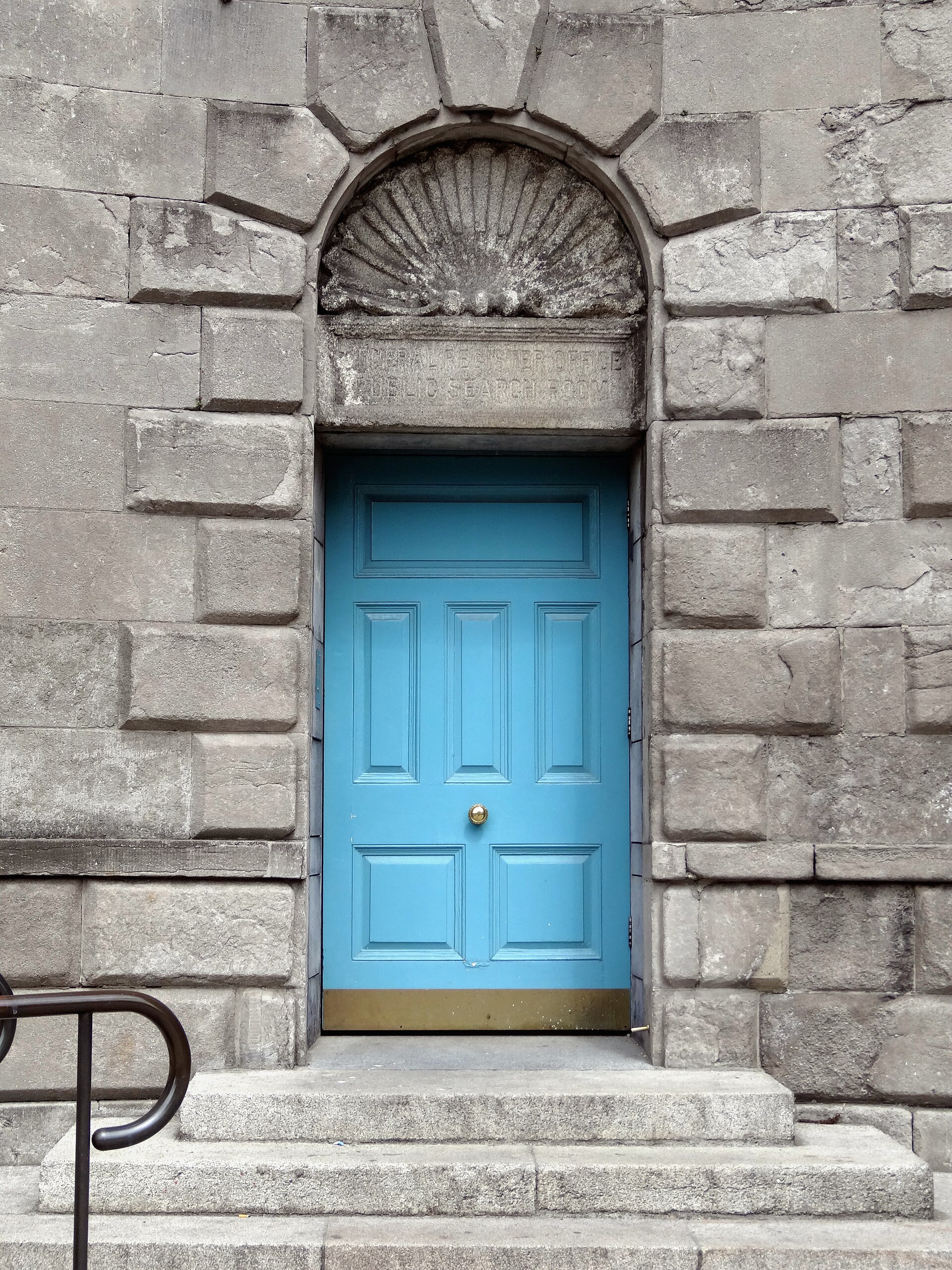
Sources
- 1Hugh Lane Gallery, Visit us: address, phone, opening-hours widget, transport, cafe and bookshop details, and the gallery's Social Story accessibility guide. hughlane.ie/visit-us/
- 2Internet Archive Wayback Machine, capture of Hugh Lane Gallery's Visit us page from 20 June 2025, the pre-closure opening-hours table (Tue-Wed, Thurs, Fri, Sat, Sun) used in this record. web.archive.org/web/20250625013211/https://hughlane.ie/visit-us/
- 3Hugh Lane Gallery, 'Hugh Lane Gallery to close for refurbishment on 28 September 2025': the closure date, expected minimum three-year duration, the Dublin City library link, and Francis Bacon's Studio remaining protected on site. hughlane.ie/2025/08/01/hugh-lane-gallery-to-close-for-refurbishment-on-28-september-2025/
- 4Hugh Lane Gallery, 'FAQs - Hugh Lane Gallery Refurbishment': staff numbers and redeployment, loans to the National Gallery of Ireland and other Irish institutions, the 2021 UK/Ireland Lane Bequest partnership, and Francis Bacon's Studio during closure. hughlane.ie/2025/08/01/faqs-hugh-lane-gallery-refurbishment/
- 5Hugh Lane Gallery, 'Free Admission' tag page, confirming free admission on the gallery's own site. hughlane.ie/tag/free-admission/
- 6Dublin City Council, Hugh Lane Gallery: the council's own account of the closure, refurbishment scope, collection overview naming Degas, Monet, Manet, Morisot, Harry Clarke, Sean Scully and Niki de Saint Phalle's Big Bird. dublincity.ie/culture-art-and-film/arts-culture-public-spaces/hugh-lane-gallery
- 7Hugh Lane Gallery, About Us: founding by Sir Hugh Lane in 1908, and the history and architecture of Charlemont House under Sir William Chambers and Lord Charlemont. hughlane.ie/about/
- 8Hugh Lane Gallery, Sean Scully: the 2006 donation and the character of the paintings on display. hughlane.ie/arts_artists/sean-scully-gallery-2/
- 9Hugh Lane Gallery, Stained Glass Collection: Harry Clarke, Wilhelmina Geddes and Evie Hone. hughlane.ie/collection-highlights/
- 10Hugh Lane Gallery, Impressionism at Hugh Lane Gallery: Monet, Renoir, Degas and the gallery's wider Impressionist holdings. hughlane.ie/arts_artists/impressionism-at-hugh-lane-gallery/
- 11Hugh Lane Gallery, Francis Bacon's Studio: the 1998 donation, the archaeological removal and cataloguing of over 7,000 items, the 2001 opening, and closure to the public from September 2025. hughlane.ie/arts_artists/francis-bacons-studio/
- 12Hugh Lane Gallery, Works on Loan to Partner Galleries: ongoing loans during the closure, including to William Blake: The Age of Romantic Fantasy and a Giovanni Segantini exhibition. hughlane.ie/whats_on/loans/
- 13National Gallery of Ireland, Highlights from Hugh Lane Gallery: the loan exhibition in Rooms 47-48 of works from the closed Hugh Lane Gallery. nationalgallery.ie/art-and-artists/exhibitions/highlights-from-hugh-lane-gallery
- 14The National Gallery, London, press release, 'New partnership agreed between the National Gallery and Hugh Lane Gallery', February 2021: the full history of the Lane Bequest dispute from Lane's 1915 death, the unwitnessed codicil, the 1959 and 1993 agreements, and the terms of the 2021 ten-year partnership. nationalgallery.org.uk/about-us/press-and-media/press-releases/new-partnership-agreed-between-the-national-gallery-and-hugh-lane-gallery
- 15The National Gallery, London, press release as above, naming the individual Lane Bequest paintings including Renoir's The Umbrellas and Manet's Music in the Tuileries Gardens. nationalgallery.org.uk/about-us/press-and-media/press-releases/new-partnership-agreed-between-the-national-gallery-and-hugh-lane-gallery
- 16English Wikipedia, 'Hugh Lane Gallery': cross-checked tertiary account of Lane's 1904 purchase of Manet's Portrait of Eva Gonzales, the gallery's founding and building history; used only for facts corroborated by primary sources above. en.wikipedia.org/wiki/Hugh_Lane_Gallery
- 17Hugh Lane Gallery online collection, The Age of Bronze by Auguste Rodin: the 1912 Lane Gift provenance and the sculpture's original title and reception. onlinecollection.hughlane.ie/objects/1738/the-age-of-bronze
- 18Wikimedia Commons, Category:Hugh Lane Gallery, Dublin, and Category:Charlemont House: the plates used on this page, with the licence of each verified per file from its own wikitext at fetch time. commons.wikimedia.org/wiki/Category:Hugh_Lane_Gallery,_Dublin
- 19Wikidata, Hugh Lane Gallery (Q496040): identity, coordinates and authority-file cross-check against the museum's own pages; labelled tertiary throughout. wikidata.org/wiki/Q496040
- 20The University Times, Sadhbh Dempsey, 'The Doors of the Hugh Lane Gallery Are Closing-What Will We Be Missing Out On?', 2 September 2025: a review written days before the closure, characterising the collection and the closure's impact. universitytimes.ie/2025/09/the-doors-of-the-hugh-lane-gallery-are-closing-what-will-we-be-missing-out-on-jack-b-yeats-celtic-revival-movement-parnell-square-the-dream-pool-intervals/
- 21Tripadvisor, Hugh Lane Gallery attraction page: aggregate rating and review count, and the listing's own 'Admission is Free, Closed Mondays' summary, read directly in the browser on 8 August 2026 after the site returned a 'Temporarily closed' banner alongside the listing. tripadvisor.com/Attraction_Review-g186605-d187624-Reviews-Dublin_City_Gallery_The_Hugh_Lane-Dublin_County_Dublin.html
- 22RTE Century Ireland, 'Controversy rages as Hugh Lane Collection moved to Mansion House in Dublin': the 1913 public dispute over Sir Edwin Lutyens's proposed bridge gallery, cited for the earlier Dublin controversy over housing Lane's collection. rte.ie/centuryireland/articles/controversy-rages-as-hugh-lane-collection-moved-to-mansion-house-in-dublin