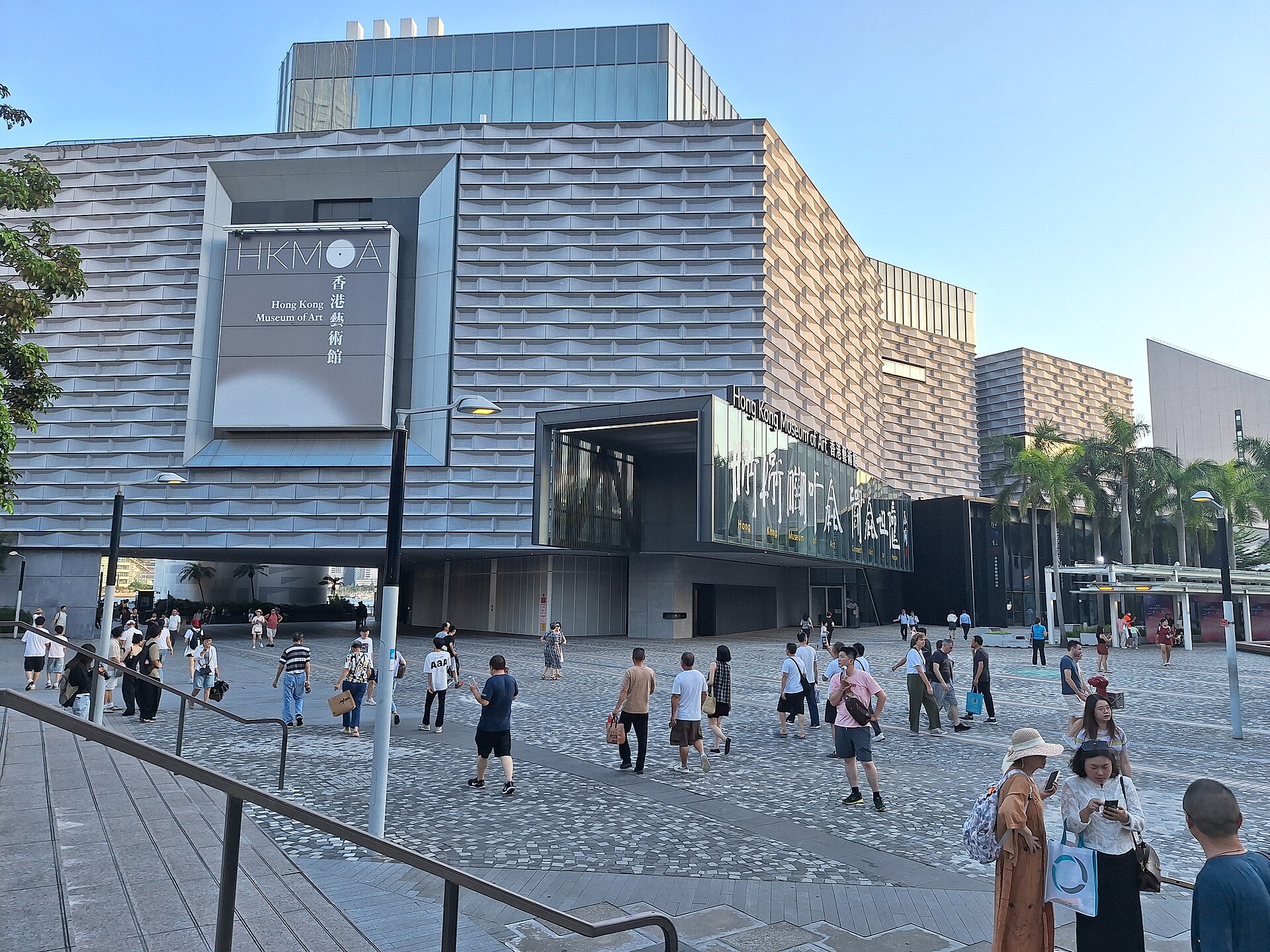
The Hong Kong Museum of Art's post-renovation exterior on Salisbury Road, Tsim Sha Tsui, photographed 16 July 2025, showing the HKMoA signage and folded facade added in the 2015-2019 rebuild.
Ghostingb / Wikimedia Commons, CC BY-SA 4.0Hong Kong Museum of Art
Museum · Founded 1962
Open, admission and hours confirmed 2 September 2026 · 23 sources
On this page 15 sections
ContentsClose
The museum's genuine strength is depth in three areas most collections elsewhere cannot match at the same level: China Trade Art, because it is Hong Kong's and Canton's own trading-post pictorial record rather than a general Chinese-art holding acquired abroad; Guangdong and Lingnan School Chinese painting and calligraphy, assembled through a run of major private Hong Kong collector donations (Xubaizhai, Chih Lo Lou, Muwen Tang) rather than institutional purchase; and small-object connoisseurship, principally the Fuyun Xuan snuff bottles and the K.S. Lo tea ware and seals, both built from single collectors' lifetime holdings rather than piecemeal acquisition.
| Kind | Museum |
|---|---|
| Founded | 1962 |
| City and country |  Hong Kong, Hong Kong Hong Kong, Hong Kong |
| Address | 10 Salisbury Road, Tsim Sha Tsui, Kowloon, Hong Kong |
| Website | hk.art.museum/en_US/web/ma/home.html |
| Status | Open, confirmed |
| Record last verified |
Visiting
- Hours
- Mon-Wed, Fri10:00 to 18:00
- Sat, Sun and public holidays10:00 to 21:00
- Christmas Eve and Lunar New Year's Eve10:00 to 17:00
- Closed
- Thursday, except public holidays. First two days of the Lunar New Year.
- Admission
- General admission, permanent galleriesFreeFree
- Do I need to book?
- No booking needed for the permanent galleries, which are free
- Address
- 10 Salisbury Road, Tsim Sha Tsui, Kowloon, Hong Kong MapMTR East Tsim Sha Tsui station and Tsim Sha Tsui station are both a few minutes' walk from the museum along the Victoria Harbour waterfront
Star Ferry Tsim Sha Tsui pier is a short walk east along the harbourfront promenade - Website
- hk.art.museum/en_US/web/ma/home.html
- Telephone
- +852 2721 0116
- [email protected]
Before you go how long, access, photography, bags, eating, shop
- How long to allow
- Two to three hours to see the four permanent departments plus one rotating exhibition
- Access
- Not stated in detail on the museum's own visitor pages checked for this record; not asserted here
- Photography
- Not confirmed on the museum's own site during this research pass
- Bags
- Ground-floor bag storage is available; one visitor account describes staff allowing a walking-stick-style suitcase into the galleries after a request
- Eating
- MoA Dining, 1/F, daily 11:30am-11pm (cafe service 10:30am-6pm); INK Cafe & Bar, G/F, daily 10:00am-midnight
- Shop
- Museum Gift Shop and the Traveling Muzeum Shop, Mon-Wed and Fri 10:00am-6:00pm, Sat/Sun/public holidays 10:00am-7:00pm, closed Thursdays except public holidays
Prices and hours change. We take them from the institution's own pages and print the day we read them, and you can check the current position at the source we used. Confirm before you travel.
What is inside
Chinese Antiquities Gallery
Over 4,700 items and sets spanning the Neolithic period to the twentieth century, the widest-ranging and oldest material in the museum: ceramics from kilns across China made for both domestic use and export, bronzes, jade and lacquer carving, enamelware, glass, bamboo, wood and ivory carving, rhinoceros-horn vessels, textiles and furniture. Southern-China material is a deliberate strength, including Shiwan pottery and bamboo carving acquired from the estate of Dr Ip Yee in 1985.
Chinese Painting and Calligraphy Gallery
Over 5,400 works from the Ming dynasty to the present, organised around Guangdong painting and calligraphy, the Lingnan School, and twentieth-century Chinese modernism. Holdings include Lingnan School founders Gao Jianfu, Gao Qifeng and Chen Shuren, and modernists Huang Binhong, Zhang Daqian, Lin Fengmian and Wu Guanzhong.
China Trade Art Gallery
Over 1,300 pictorial works made for the foreign trading community in Canton, Macao and Hong Kong between the late eighteenth and early twentieth centuries, the collection that founded the museum. Western artists who travelled to China (George Chinnery, William Havell) sit alongside Chinese export painters (Youqua, Tingqua, Lamqua) who supplied Western traders with watercolours, oils, gouaches, reverse-glass paintings and lithographs of ports, ships and street life.
Modern and Hong Kong Art Gallery
Ink painting, oil painting, calligraphy, sculpture, ceramics, mixed-media installation and photography documenting Hong Kong's own art history from the 1920s to the 2000s, including Lui Shou-kwan's New Ink Painting Movement of the 1950s-60s, Luis Chan, Wucius Wong and Liu Guosong, and later cross-media work by Xu Bing, Gu Wenda and Almond Chu.
Xubaizhai Gallery of Chinese Painting and Calligraphy
A dedicated permanent home, opened 26 September 1992, for the collection banker and connoisseur Low Chuck-tiew (1911-1993) donated in 1989: paintings, calligraphy and Buddhist sutras from the Ming dynasty to the twentieth century, representing the Wu School, Songjiang School, the Four Monks, the Orthodox School and the Eight Eccentrics of Yangzhou, with works by Shen Zhou, Wen Zhengming, Dong Qichang and Zhu Da (Bada Shanren).
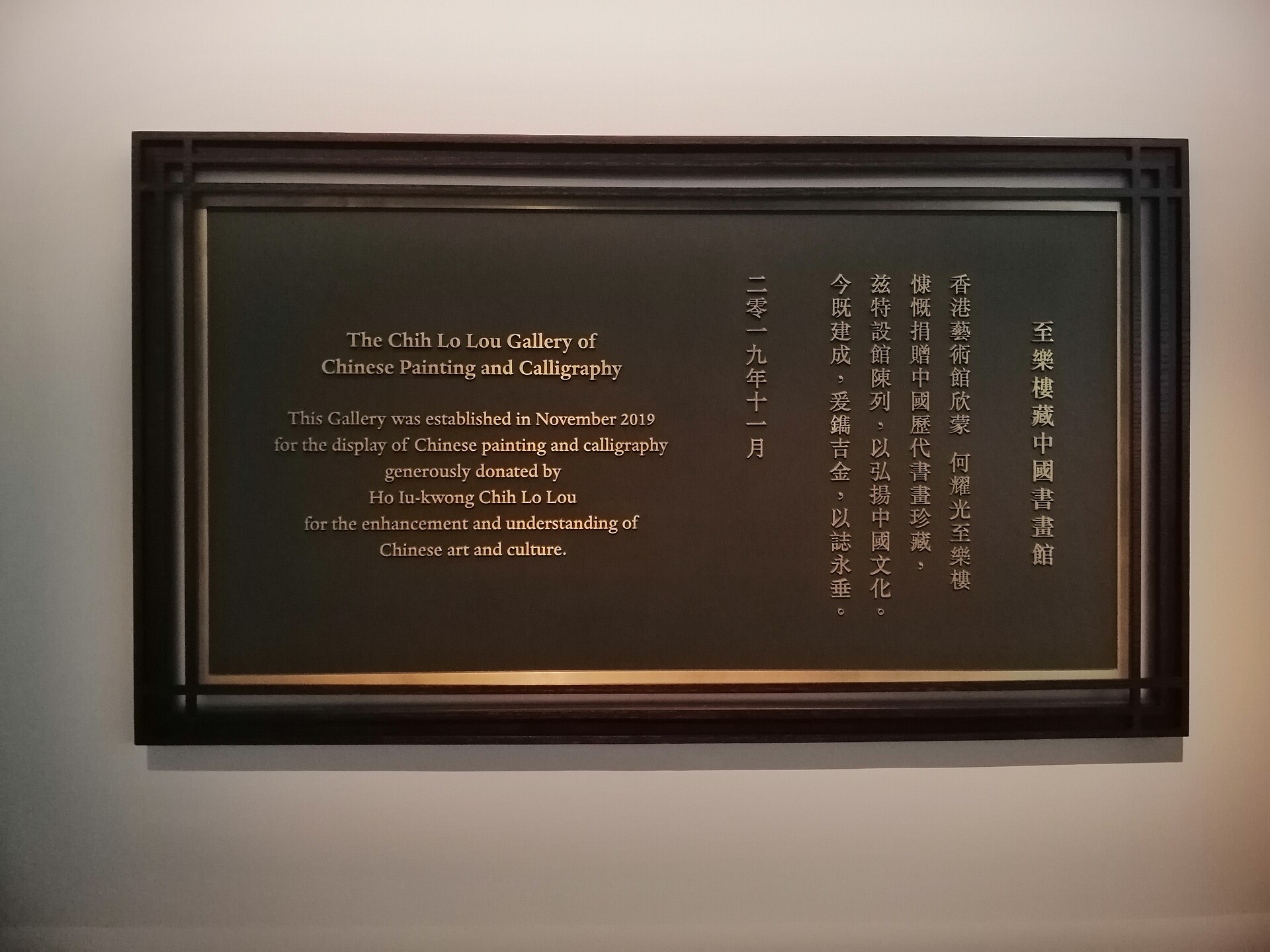
Photograph by M H Fong David · CC BY-SA 4.0 Chih Lo Lou Gallery of Chinese Painting and Calligraphy
Established November 2019 for the collection of Ho Iu-kwong (1907-2006), who from the 1950s prioritised the character of an artist over the market value of the work and collected accordingly: Ming-Qing 'loyalist' painters who refused to serve the conquering Manchu court, including the Four Monks (Bada Shanren, Shitao, Cheng Sui, Dai Benxiao), the Four Wangs of the early Qing, the Eight Eccentrics of Yangzhou, and twentieth-century figures such as Zhang Daqian.
Muwen Tang Gallery of Cantonese and Export Art, 3/F
The museum's newest permanent space, created for a landmark 2026 donation of over 2,000 Cantonese and export artworks from Muwen Tang: export paintings, silverware, painted enamels, fans, ivory and lacquer carving, textiles and timepieces from the eighteenth and nineteenth centuries, the golden age of Guangdong's export trade.
What to see first
Waterfall at Aberdeen, Hong Kong
Unidentified China Trade artist, circa 1816The earliest known depiction of a Hong Kong landscape in the museum's collection, predating the 1841 British occupation of the island by a generation and painted purely for the export trade in views.9
Victoria City
Unidentified China Trade artist, 1854A detailed oil view of the young colonial harbour and waterfront buildings, part of the China Trade Art collection that documents Hong Kong before photography.9
The Chinese junk Keying
Unidentified China Trade artist, 1848Depicts the junk Keying, the first Chinese vessel recorded rounding the Cape of Good Hope, one of the collection's records of nineteenth-century maritime contact between China and the West.9
Works by the Four Monks and the Wu School
Shen Zhou, Wen Zhengming, Dong Qichang, Zhu Da (Bada Shanren), and othersCore paintings and calligraphy of the Xubaizhai Collection, Low Chuck-tiew's 1989 donation, spanning the major Ming and Qing schools in a single rotating gallery.11
Ming-Qing loyalist painting, Chih Lo Lou Collection
The Four Monks (Bada Shanren, Shitao, Cheng Sui, Dai Benxiao) and othersHo Iu-kwong's donation was built specifically around artists who refused to serve the Qing court after the Ming collapse; the collecting principle is as notable as the objects.12
Ru ware brush washer
Northern Song / early twelfth centuryA rare Song imperial ceramic in the K.S. Lo Collection of Tea Ware and Seals, shown alongside Yixing teapots by Chen Mingyuan, Yang Pengnian and twentieth-century master Gu Jingzhou.13
Fuyun Xuan Collection of Chinese snuff bottles
Various makers, 17th-20th century, assembled by Christopher Sin490 sets in jade, porcelain, glass, lacquer, calabash and enamel, including inside-painted bottles by Ma Shaoxuan and Ye Zhongsan and pieces bearing Qianlong-period imperial marks; Mrs Josephine Sin donated her late husband's collection, one of the most complete of its kind.14
Muwen Tang gift of Cantonese and export art
Various Guangdong workshops, 18th-19th centuryOver 2,000 objects donated in 2026, including a woven ivory fan with phoenix and peony design and a gilt silver filigree tea service of the early Qianlong period, prompting the museum to open an entirely new gallery.16
Exhibitions on now
A government museum rebuilt twice
The Hong Kong Museum of Art traces itself to 2 March 1962, when it opened inside Hong Kong's City Hall in Central as the City Hall Museum and Art Gallery, the first public art museum in the territory. It split administratively from what is now the Hong Kong Museum of History in July 1975, a separation that still matters for anyone researching the two institutions, since they now hold entirely different collections and occupy entirely different buildings. The museum moved to its present site on Salisbury Road in Tsim Sha Tsui in 1991 and was formally inaugurated there on 11 September 1992 by the then Governor of Hong Kong, Chris Patten.
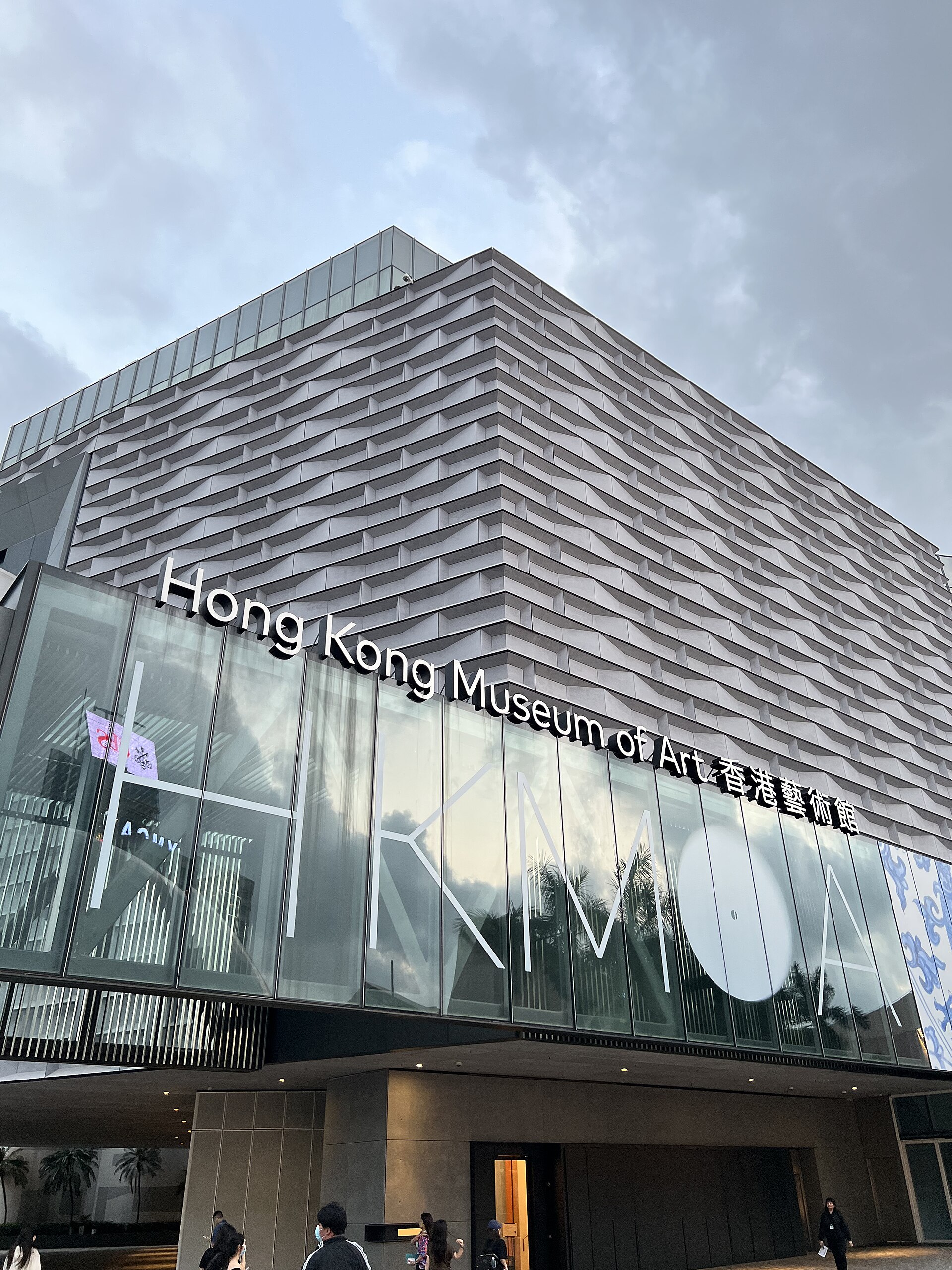
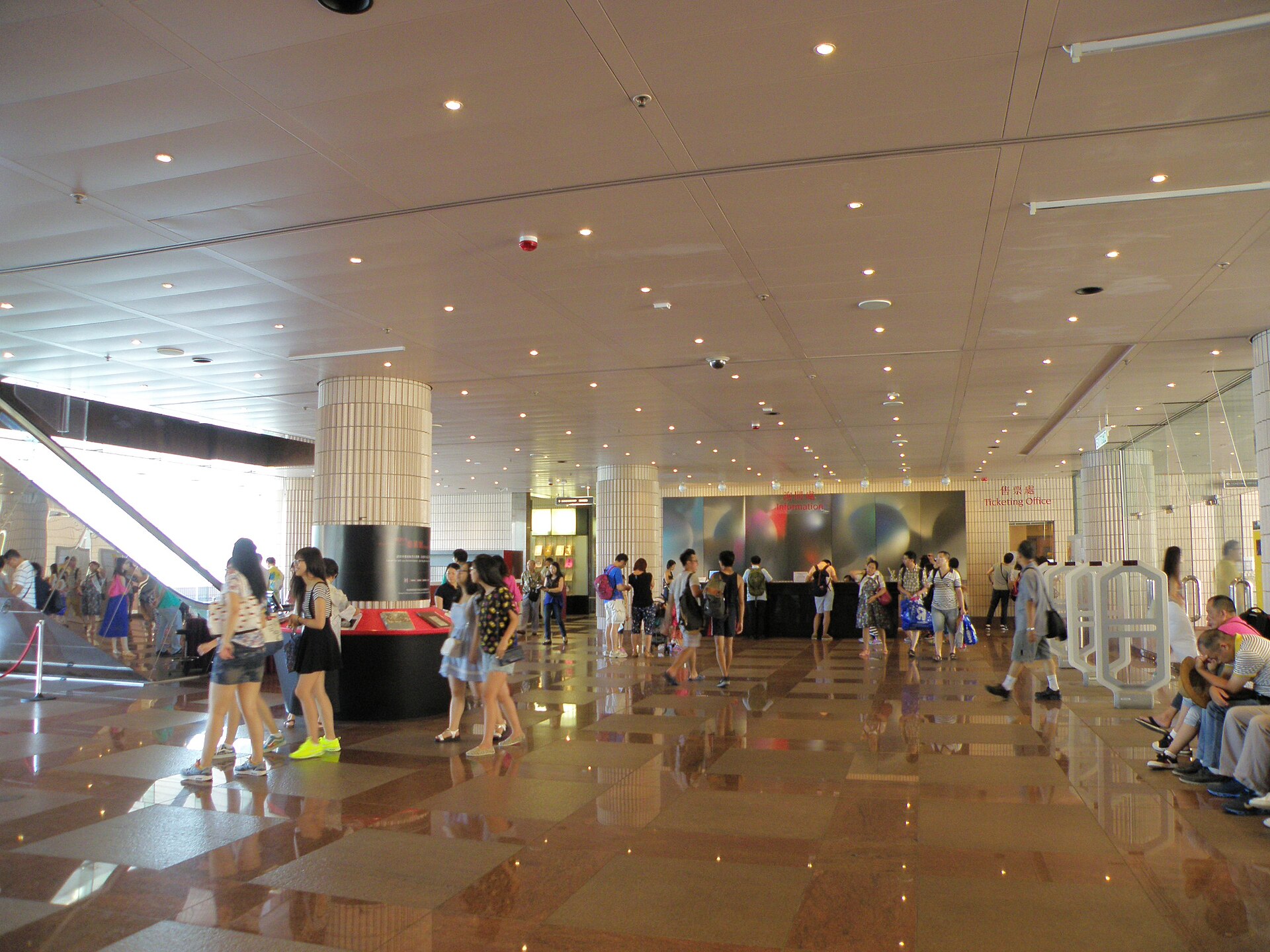
The building closed a second time on 3 August 2015 for a major rebuild carried out by Hong Kong's Architectural Services Department, and reopened on 30 November 2019. The project raised total exhibition space by roughly 40 percent, from about 7,000 to about 10,000 square metres, and increased the number of galleries from seven to twelve, including a new nine-metre-high annex gallery built to hold large-scale contemporary installations that the old building could not accommodate. The renovation relocated the reception lobby from the first floor down to the ground floor and gave the museum four separate entrances, converted the old first-floor lobby into a multi-function hall, moved the restaurant and cafe operations to the harbour-facing side of the building, and added an extended outdoor Art Square and Art Corridor along the waterfront. The new envelope is built around floor-to-ceiling glazing facing Victoria Harbour, a facade of fibre-cement panels folded to suggest waves, and laminated glass and metal mesh designed to flood the main circulation spaces with daylight. The result is a building whose exterior most visitors photograph today, and it is worth noting for research purposes that photographs of the museum taken before August 2015 show a materially different structure: the old ground-floor entrance hall and ticketing office no longer exist in that form, having been rebuilt on the ground floor as part of the 2015-2019 project.
Four pillars: what the permanent collection actually holds
The museum organises its own collection, now more than 19,700 sets of items, around four core departments. Chinese Antiquities is the largest and oldest in date range: more than 4,700 items and sets running from the Neolithic period to the twentieth century, weighted toward ceramics (over half the department by count) but also covering bronzes, jade and lacquer carving, enamelware, glass, bamboo, wood and ivory carving, rhinoceros-horn vessels, textiles and furniture, with a deliberate emphasis on material from southern China given Hong Kong's own location, including Shiwan pottery and a bamboo-carving collection acquired from the estate of Dr Ip Yee in 1985.
Chinese Painting and Calligraphy holds over 5,400 works from the Ming dynasty to the present, built around Guangdong's own artistic lineage: Guangdong calligraphers such as Chen Xianzhang, Song Xiang, He Shaoji and Luo Shuzhong; the Lingnan School's founding 'Three Masters', Gao Jianfu, Gao Qifeng and Chen Shuren, who pushed a 'New Chinese Painting' movement blending Western technique with Chinese subject matter; and twentieth-century figures including Huang Binhong, Zhang Daqian, Lin Fengmian and Wu Guanzhong.
China Trade Art is the department that effectively founded the museum: over 1,300 pictorial works, mostly watercolours, oils, gouaches, lithographs and reverse-glass paintings, made for the Western trading community in Canton, Macao and the young colony of Hong Kong across the late eighteenth to early twentieth centuries. Founding donations came from the businessmen Sir Paul Chater and Sir Robert Ho Tung, with further purchases from collectors Wyndham Law and Geoffrey Sayer.
Modern and Hong Kong Art is the department most concerned with the city's own art history rather than China's: ink and oil painting, calligraphy, sculpture in bronze, wood and stoneware, ceramics, installation and photography, running from the 1920s through the 2000s and covering Lui Shou-kwan's New Ink Painting Movement of the 1950s-60s, painters Luis Chan, Wucius Wong and Liu Guosong, and later cross-media artists Xu Bing, Gu Wenda and Almond Chu.
The private collections that filled the new galleries
A large share of what makes the museum distinctive was never bought by the museum at all; it was given. The Xubaizhai Collection is the oldest and best known of these gifts: banker and connoisseur Low Chuck-tiew (1911-1993) donated his holdings in 1989, and the museum built the Xubaizhai Gallery of Chinese Painting and Calligraphy to house them permanently, opening it on 26 September 1992. The collection runs from the Ming dynasty into the twentieth century and covers the Wu School, Songjiang School, the Four Monks, the Orthodox School and the Eight Eccentrics of Yangzhou, with individual works by Shen Zhou, Wen Zhengming, Dong Qichang and Zhu Da, known as Bada Shanren.
The Chih Lo Lou Collection arrived much later. Ho Iu-kwong (1907-2006) began collecting in the 1950s on an explicit principle: an artist's moral character mattered to him more than the market value of the work, which led him toward Ming-Qing 'loyalist' painters who had refused to serve the conquering Qing court, among them the Four Monks, the Four Wangs of the early Qing, and the Eight Eccentrics of Yangzhou. His family gave the collection to the museum in 2018, and the dedicated Chih Lo Lou Gallery, whose wall plaque records the November 2019 opening date, now anchors one of the twelve post-renovation galleries.
The K.S. Lo Collection of Tea Ware and Seals covers Chinese tea culture in objects rather than paintings: Yixing teapots by named potters including Chen Mingyuan and Yang Pengnian in the eighteenth and nineteenth centuries and Gu Jingzhou in the twentieth, alongside a Ru ware brush washer from the early twelfth century, a Southern Song Jian ware 'hare's-fur' tea bowl, carved seals by master seal-carvers Cheng Sui, Jin Nong, Qi Huang and Feng Kanghou, and imperial porcelain from the Kangxi, Yongzheng and Qianlong reigns. The same donor family's holdings extend to a second, separately administered site, the Flagstaff House Museum of Tea Ware in Hong Kong Park.
The Fuyun Xuan Collection of Chinese Snuff Bottles came from Mrs Josephine Sin, who gave 490 sets assembled by her late husband, Christopher Sin, a recognised authority on the form from 1989 until his death. The bottles span the seventeenth to twentieth centuries in jade, porcelain, glass, lacquer, calabash and enamel, including inside-painted examples by Ma Shaoxuan and Ye Zhongsan and pieces carrying Qianlong-period imperial workshop marks. The Jingguanlou Collection of fans and the paintings and personal archive of the painter Wu Guanzhong round out the special-donation galleries, both drawn on for rotating thematic shows rather than a single fixed display.
The newest of these gifts, announced in 2026, is the Muwen Tang donation of more than 2,000 Cantonese and export artworks, large enough that the museum created an entirely new permanent space for it, the Muwen Tang Gallery of Cantonese and Export Art on the third floor, opening with over 120 pieces including export paintings, silverware, painted enamels, fans, ivory and lacquer carving, textiles and timepieces from the eighteenth and nineteenth centuries.
China Trade Art: Hong Kong looking at itself before photography
The China Trade Art department deserves separate attention because it is the collection that is genuinely hard to find outside Hong Kong and Canton-trade specialist collections elsewhere, and because it is the closest thing the museum holds to a visual record of the city's own founding. Western artists who travelled to China to work for the trading houses, notably George Chinnery and William Havell, sit in the same galleries as Chinese painters working in the export trade, principally Youqua, Tingqua and Lamqua, who ran workshops producing watercolours, oils, gouaches and reverse-glass paintings of ports, ships, street trades and portraits for Western clients who wanted souvenirs of the China coast. The earliest Hong Kong landscape the museum holds, Waterfall at Aberdeen, Hong Kong, dates to around 1816, a full generation before the British occupation of the island in 1841, made purely because the waterfall was already a known stop for ships watering before the crossing to Canton. Victoria City, an 1854 oil, is a detailed record of the young colonial waterfront and harbour buildings only thirteen years after the colony's founding. The Chinese junk Keying, from 1848, depicts the first Chinese junk recorded rounding the Cape of Good Hope, evidence of how far the pictorial record in this one department reaches beyond the museum walls and into maritime and trade history more broadly.
Visiting today
General admission to all four permanent departments and their special-donation galleries is free, a fact the museum states plainly on its own visitor pages; special or loan exhibitions are ticketed separately when the museum hosts one, though every exhibition running as of this research pass, including the newly opened Muwen Tang gallery and the Art Personalised survey of the museum's own masterpieces, was itself listed as free. The museum keeps extended hours on weekends and public holidays, 10:00am to 9:00pm against a 10:00am to 6:00pm weekday schedule, and closes on Thursdays except when a Thursday falls on a public holiday. Two dining operators serve the ground and first floors, MoA Dining and INK Cafe & Bar, alongside a museum gift shop and a separate Traveling Muzeum retail concession. The museum sits on the Tsim Sha Tsui waterfront a short walk from both East Tsim Sha Tsui and Tsim Sha Tsui MTR stations and from the Star Ferry pier, in the same harbourfront cluster as the Hong Kong Cultural Centre. An annual Museum Pass, administered by Hong Kong's Leisure and Cultural Services Department across all its museums including this one, is available at HK$100 for a family pass, HK$50 individual and HK$25 concessionary, and covers unlimited admission to special exhibitions at any LCSD museum for twelve months, which is the more relevant purchase for a visitor planning to see a ticketed loan show rather than the free permanent galleries.
Reception: free, popular, and tested politically
Aggregate visitor sentiment is positive and consistent: TripAdvisor records a 4.0-of-5 rating from 363 reviews as read for this record, with 152 rated Excellent and 117 Good against 55 Average, 23 Poor and 16 Terrible. The consensus across recent visitor accounts is straightforward: free admission, harbour views from the upper floors, a clean and spacious post-2019 building, and the rotating loan shows from the private donor collections, especially the snuff bottles, are what visitors return for. The most repeated reservation is that the historic Chinese painting and calligraphy displays can feel static next to the museum's newer interactive and multimedia installations, and that the on-site shop is small and, in more than one account, expensive for what it offers.
The museum has also been read in more pointed terms by working critics. Writing in the South China Morning Post as the rebuilt museum reopened in January 2020, culture writer Vivienne Chow praised the new harbour-facing galleries but set the museum's historically-oriented collection against the protest movement then filling Hong Kong's streets, arguing that street-level protest art felt, to her, more immediately relevant than a government museum's holdings, and questioning openly whether a Leisure and Cultural Services Department institution would be able to show contemporary Hong Kong art that was actually critical of the status quo, rather than staying inside safer historical narratives. That tension, between a well-funded, well-attended civic museum and the political constraints of being run by the Hong Kong government, remains an open question for the institution rather than a settled one, and belongs on this record rather than only in the praise the building itself has earned.
What visitors say
Visitors consistently single out that the permanent collection is free, that the upper floors deliver wide Victoria Harbour views, and that the building itself, rebuilt 2015-2019, reads as clean, spacious and well maintained. The private donor collections, especially the Fuyun Xuan snuff bottles and the rotating loan shows drawn from local collectors' societies, are the most frequently named favourites. The most common reservation is that some of the historic painting and calligraphy displays feel static next to the museum's newer interactive and multimedia installations, and that the small museum shop is not cheap for what it sells.
What is praised, what is criticised
- Praised: Free admission to the permanent collection, repeatedly called out as unusual value for a major city museum
- Praised: The Victoria Harbour views from the upper-floor galleries and the harbourfront Art Square outside
- Praised: The range and quality of the private donor collections on rotation, particularly the Fuyun Xuan snuff bottles and Wu Guanzhong shows
- Praised: A clean, well-maintained, modern post-renovation building that several visitors contrast favourably with the museum's pre-2015 state
- Criticised: Some visitors find the traditional Chinese painting and calligraphy galleries static and under-interpreted next to the museum's more interactive contemporary displays
- Criticised: The on-site museum shop is small and, by more than one account, expensive for what it stocks
- Criticised: A 2020 opinion piece in the South China Morning Post questioned whether a government-run museum rooted in historical collections could stay culturally relevant at a moment when Hong Kong's own street protest movement was, in the author's view, producing more urgent art than the museum's galleries
Ratings on other platforms
TripAdvisor: 4 from 363 ratings, read 2 September 2026
A platform average is a tertiary source: it moves, it is not audited, and we quote no visitor's words.
Questions about Hong Kong Museum of Art
Where is Hong Kong Museum of Art?
10 Salisbury Road, Tsim Sha Tsui, Kowloon, Hong Kong.
How much does it cost to visit?
General admission, permanent galleries: free. As confirmed 2 September 2026.
When is it open?
Mon-Wed, Fri 10:00-18:00; Sat, Sun and public holidays 10:00-21:00; Christmas Eve and Lunar New Year's Eve 10:00-17:00. Closed: Thursday, except public holidays. First two days of the Lunar New Year. As confirmed 2 September 2026.
How do you get there?
MTR: East Tsim Sha Tsui station and Tsim Sha Tsui station are both a few minutes' walk from the museum along the Victoria Harbour waterfront; Star Ferry: Tsim Sha Tsui pier is a short walk east along the harbourfront promenade.
What should you see first?
Waterfall at Aberdeen, Hong Kong (Unidentified China Trade artist, circa 1816); Victoria City (Unidentified China Trade artist, 1854); The Chinese junk Keying (Unidentified China Trade artist, 1848); Works by the Four Monks and the Wu School (Shen Zhou, Wen Zhengming, Dong Qichang, Zhu Da (Bada Shanren), and others); Ming-Qing loyalist painting, Chih Lo Lou Collection (The Four Monks (Bada Shanren, Shitao, Cheng Sui, Dai Benxiao) and others); Ru ware brush washer (Northern Song / early twelfth century).
What we could not confirm
- Whether the museum's historically-anchored permanent departments will make sustained room for contemporary Hong Kong art that is critical of current political conditions, the question Vivienne Chow raised in the South China Morning Post at the museum's 2019-2020 reopening and which this record could not resolve from the museum's own public-facing pages.
- No verified free-licence interior photograph of the four core permanent galleries (Chinese Antiquities, Chinese Painting and Calligraphy, China Trade Art, Modern and Hong Kong Art) as rebuilt in 2019 was located on Wikimedia Commons during this research pass; only the Chih Lo Lou Gallery's dedication plaque is confirmed to that specific post-renovation space. Do not substitute a pre-2015 interior photograph for any of these wings; the building was materially rebuilt.
- The museum's own site did not state a current, dated special-exhibition ticket price during this research pass, since every exhibition running as of 2026-09-02 was itself listed as free; a HK$50/35/25 standard/group/concession scale is repeated by third-party travel aggregators but was not confirmed on hk.art.museum directly and was deliberately left out of admission[] rather than sourced to an aggregator.
Images
Sources
- 1Wikidata, entry Q908216 for Hong Kong Museum of Art (, identity and coordinates only) wikidata.org/wiki/Special:EntityData/Q908216.json
- 2Wikimedia Commons file page, Hong Kong Museum of Art 20250716.jpg (lead image licence verification) commons.wikimedia.org/wiki/File:Hong_Kong_Museum_of_Art_20250716.jpg
- 3Hong Kong Museum of Art, Opening Hours & Admission hk.art.museum/en_US/web/ma/visit.html
- 4Hong Kong Museum of Art, Contact Us hk.art.museum/en/web/ma/contact-us.html
- 5Hong Kong Museum of Art, About Us hk.art.museum/en/web/ma/about-us.html
- 6Hong Kong Museum of Art, Collections overview hk.art.museum/en/web/ma/collections.html
- 7Hong Kong Museum of Art, Chinese Antiquities collection page hk.art.museum/en/web/ma/collections/chinese-antiquities.html
- 8Hong Kong Museum of Art, Chinese Painting and Calligraphy collection page hk.art.museum/en/web/ma/collections/chinese-painting-and-calligraphy.html
- 9Hong Kong Museum of Art, China Trade Art collection page hk.art.museum/en/web/ma/collections/china-trade-art.html
- 10Hong Kong Museum of Art, Modern and Hong Kong Art collection page hk.art.museum/en/web/ma/collections/modern-and-hong-kong-art.html
- 11Hong Kong Museum of Art, Xubaizhai Collection of Chinese Painting and Calligraphy page hk.art.museum/en/web/ma/collections/xubaizhai-collection-of-chinese-painting-and-calligraphy.html
- 12Hong Kong Museum of Art, Chih Lo Lou Collection of Chinese Painting and Calligraphy page hk.art.museum/en/web/ma/collections/chih-lo-lou-collection-of-chinese-painting-and-calligraphy.html
- 13Hong Kong Museum of Art, K.S. Lo Collection of Tea Ware and Seals page hk.art.museum/en/web/ma/collections/ks-lo-collection-of-tea-ware-and-seals.html
- 14Hong Kong Museum of Art, Fuyun Xuan Collection of Chinese Snuff Bottles page hk.art.museum/en/web/ma/collections/fuyun-xuan-collection.html
- 15Hong Kong Museum of Art, Shop & Dine hk.art.museum/en/web/ma/visit/shop-and-dine.html
- 16Hong Kong Museum of Art, exhibition page for Proudly from Canton: The Muwen Tang Collection of Cantonese and Export Art hk.art.museum/en/web/ma/exhibitions-and-events/proudly-from-canton.html
- 17Hong Kong Museum of Art, home page (current exhibitions listing, read 2026-09-02) hk.art.museum/en/web/ma/home.html
- 18Government of Hong Kong (Leisure and Cultural Services Department press release), Hong Kong Museum of Art to reopen in November after facelift, 29 March 2019 info.gov.hk/gia/general/201903/29/P2019032800630.htm
- 19Leisure and Cultural Services Department, Museum Pass (official LCSD Museums portal) museums.gov.hk/en/web/portal/museum-pass.html
- 20Hong Kong Tourism Board, Hong Kong Museum of Art visitor page (secondary, official tourism body) discoverhongkong.com/us/explore/arts/hong-kong-museum-of-art.html
- 21Wikipedia, Hong Kong Museum of Art (, used only for the exact 30 November 2019 reopening date and 1975 split from the Hong Kong Museum of History) en.wikipedia.org/wiki/Hong_Kong_Museum_of_Art
- 22South China Morning Post, Vivienne Chow, 'How the Hong Kong Museum of Art can stay relevant, during a time of political turmoil and beyond', 1 January 2020 scmp.com/comment/opinion/article/3044054/how-hong-kong-museum-art-can-stay-relevant-during-time-political
- 23TripAdvisor, Hong Kong Museum of Art listing and reviews ( aggregate rating, read 2026-09-02) tripadvisor.com/Attraction_Review-g294217-d311603-Reviews-Hong_Kong_Museum_of_Art-Hong_Kong.html
