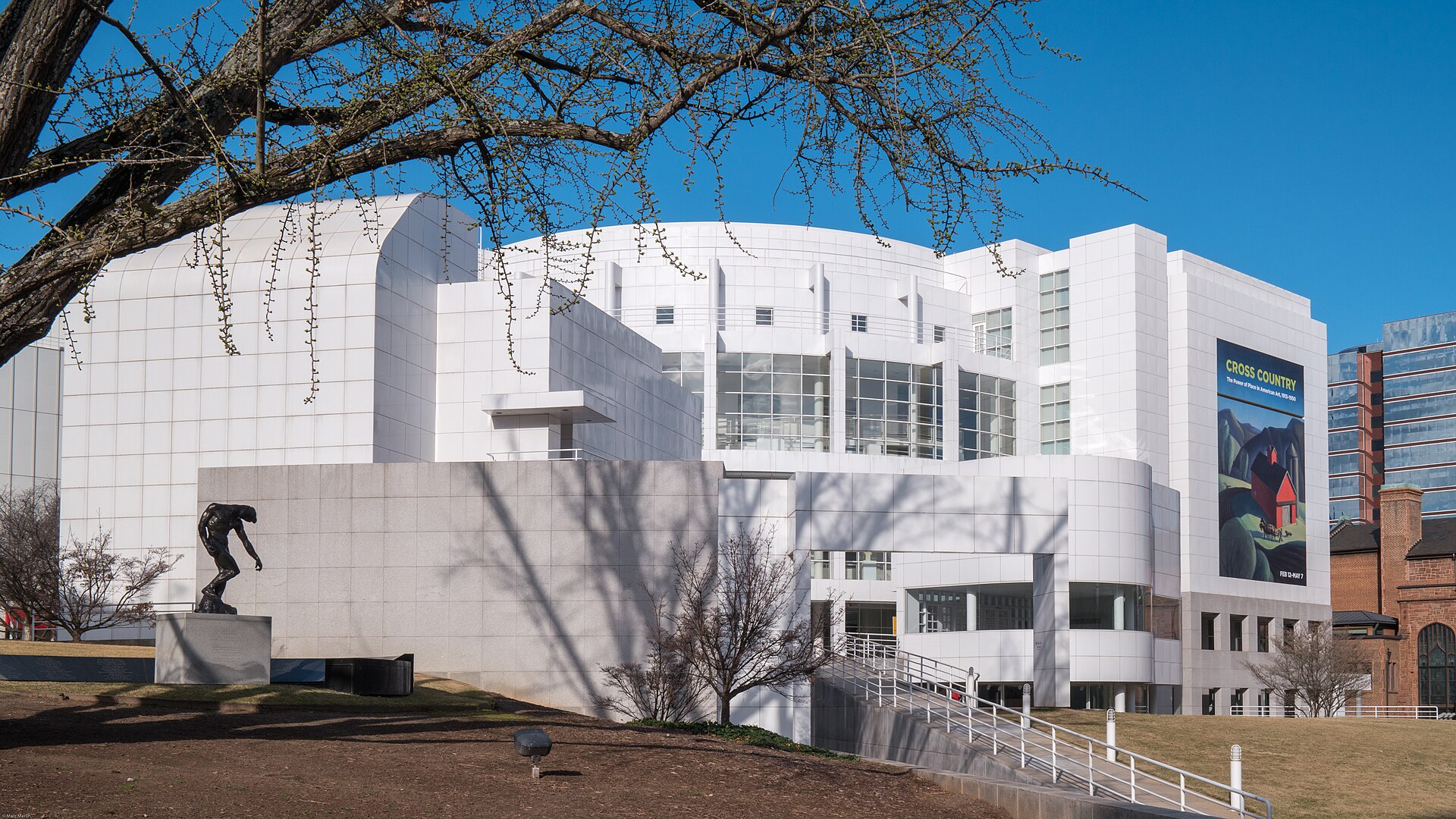
The 1983 Richard Meier-designed building, the original expansion that gave the museum its current Peachtree Street presence.
Marc Merlin, CC BY-SA 4.0High Museum of Art
Museum · Founded 1926
Open, admission and hours confirmed 19 August 2026 · 25 sources
On this page 16 sections
ContentsClose
The High's most distinctive holdings, relative to peer American museums of similar size, are its folk and self-taught art department (the largest public collections of both Nellie Mae Rowe and Bill Traylor, and the first dedicated department of its kind at a general-interest museum), its 19th-century American decorative arts through the Virginia Carroll Crawford Collection, and a photography department, its largest by object count, with particular depth in the American South and civil-rights-era documentary work.
| Kind | Museum |
|---|---|
| Founded | 1926 |
| City and country |  Atlanta, United States Atlanta, United States |
| Address | 1280 Peachtree Street NE, Atlanta, GA 30309 |
| Website | high.org |
| Status | Open, confirmed |
| Record last verified |
Visiting
- Hours
- Tue-Sat10:00 to 17:00last ticket issued one hour before close
- Sun12:00 to 17:00last ticket issued one hour before close
- Closed
- Monday.
- Admission
- Adult (not-yet-member)USD 23.50online purchase adds a 2.09 USD fee; walk-up desk price not separately confirmed
- Child, 5 and underFreefree
- MemberFreefree with any membership level
- Museum Pass (annual)USD 48unlimited daytime general admission for one year; separate from full membership
- Special exhibition (e.g. Amy Sherald: American Sublime)USD 28.50not-yet-member price; ticket also covers the rest of the museum that day
Free entry: Second Sunday of every month, 1-4pm, all visitors, funded by UPS- Tickets
- high.org/tickets The museum's own ticket page.
- Do I need to book?
- No; timed tickets are not required for general admission as of this check
- Address
- 1280 Peachtree Street NE, Atlanta, GA 30309 MapMARTA rail Arts Center Station, Red and Gold Lines, on the same city block as the Woodruff Arts Center
- Website
- high.org
- Telephone
- +1 404-733-4400
Before you go how long, access, photography, bags, eating, shop
- How long to allow
- The museum's own visit guidance does not state a duration. The permanent collection alone runs to over 20,000 objects across seven departments in three connected buildings totalling 312,000 square feet, which is a half-day for a visitor who wants to see all seven areas rather than one wing.
- Access
- ADA drop-off on Peachtree Street and on 16th Street; the museum describes itself as committed to removing barriers to access and publishes a visual guide PDF for visitors preparing a trip.
- Photography
- Not detailed on the pages fetched for this entry; see the museum's own visiting-tips page.
- Bags
- Not detailed on the pages fetched for this entry.
- Eating
- CJ's Cafe, on site, coffee and pastries to light meals; members get a 10 percent discount.
- Shop
- Museum store on site, with an online store as well.
Prices and hours change. We take them from the institution's own pages and print the day we read them, and you can check the current position at the source we used. Confirm before you travel.
What is inside
African Art
West and Central African material culture from antiquity to the present: masks, carved wood, textiles, beadwork, Congolese metalwork and stone figures, and Mali-empire-era ceramics, alongside 20th-century movements. The museum acquired its first African object in 1953. Contemporary holdings include the Ghanaian sculptor El Anatsui.
American Art
Over 1,200 paintings, sculptures, drawings and prints made in the United States between 1780 and 1980: 19th-century portraiture and landscape, one of the larger public holdings of American neoclassical marble sculpture, and 20th-century figurative and abstract work by artists including John Singer Sargent, Georgia O'Keeffe, Mary Cassatt, Norman Lewis and Romare Bearden.
Decorative Arts and Design
More than 2,500 objects, 1640 to the present. Its core is the Virginia Carroll Crawford Collection, described by the museum as the most comprehensive survey of 19th-century American decorative arts in the southeastern United States (1810-1915), with pieces from Tiffany and Co., Herter Brothers, Rookwood Pottery and Gustav Stickley's Craftsman Workshops. Also English ceramics 1640-1840 from the Frances and Emory Cocke Collection, and 20th-century design including a Gerrit Rietveld Red/Blue Chair.
European Art
Over 1,000 paintings, sculptures and works on paper, 1300s to 1900s, founded on the 1958 Samuel H. Kress Foundation gift of Renaissance and Baroque paintings. Includes Claude Monet's Autumn on the Seine, Argenteuil (1873), Impressionist and Post-Impressionist works from the Doris and Shouky Shaheen and the Iris and Howard Stein collections, and close to 50 works by Toulouse-Lautrec including his complete Elles portfolio.
Folk and Self-Taught Art
More than 1,200 objects, mostly late 20th and early 21st century. The High was the first general-interest museum in the United States to open a dedicated department for this field, in 1994. It holds what the museum describes as the largest public collections of work by both Nellie Mae Rowe and Bill Traylor, plus work by William Edmondson, Howard Finster, Thornton Dial and the Gee's Bend quiltmakers.
Modern and Contemporary Art
More than 3,000 works from 1945 to the present: roughly 400 paintings, 700 drawings, 1,600 prints, 250 sculptures and 20 video and new-media pieces. Postwar abstraction (Rothko, Kelly, Stella), 1980s-90s work including Gerhard Richter, and 21st-century pieces by Kehinde Wiley, Julie Mehretu, Kara Walker and Jean-Michel Basquiat.
Photography
More than 9,000 prints, the museum's largest single collection and one it has built since the early 1970s. Strong in American modernist and documentary work, with about a third of the collection tied to the American South, including one of the larger institutional holdings of civil-rights-era photography. Monographic depth in Walker Evans, Harry Callahan, William Christenberry and Eugene Atget.
What to see first
Autumn on the Seine, Argenteuil
Claude Monet, 1873Anchors the European Impressionist holdings and is the collection's best-known single painting.8
Untitled (Cadmium)
Jean-Michel Basquiat, 1984A key work in a modern and contemporary department the museum has built deliberately around African American painters since the 1980s.7
Taago
El Anatsui, 2004, aluminum and copper wireThe signature work of the African Art department's contemporary holdings and one of the most photographed objects in the building.11
Works by Nellie Mae Rowe
Nellie Mae Rowe (1900-1982)The High holds the largest public collection of Rowe's work, the basis of its own 2021 traveling retrospective, and the reason the folk and self-taught department is considered a national reference point for her.12
Works by Bill Traylor
Bill TraylorAlongside the Rowe holdings, the museum describes its Traylor collection as the largest public one of his work, a pillar of the self-taught art department.10
The Virginia Carroll Crawford Collection
American manufacturers 1810-1915, incl. Tiffany and Co., Herter Brothers, Rookwood Pottery, Gustav StickleyDescribed by the museum as the most comprehensive survey of 19th-century American decorative arts held anywhere in the southeastern United States.9
Portrait of Ralph Curtis on the Beach at Scheveningen
John Singer SargentA frequently cited highlight of the American Art department's 19th-century portraiture holdings.5
Eugene Atget photographic holdings
Eugene AtgetA major monographic archive within a photography department the museum considers its single largest collection area; Wikimedia Commons alone catalogues 387 Atget prints from this collection.6
Exhibitions on now
Past exhibitions here
The building and what it was built to hold
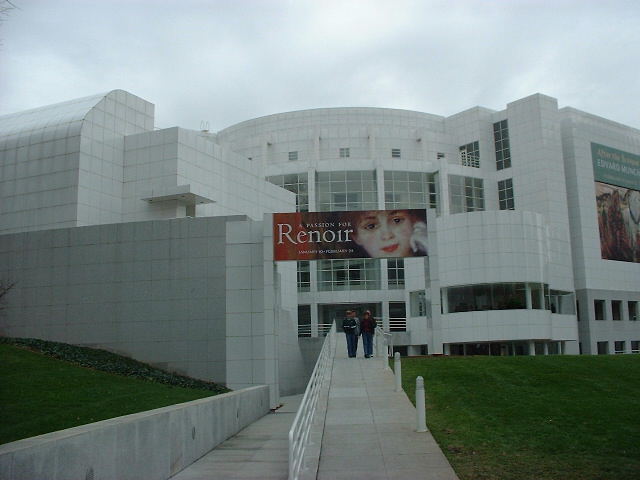
The High Museum of Art traces its charter to 1905 and formally opened as a museum in 1926, when Harriet 'Hattie' High gave her family's Peachtree Street residence to the Atlanta Art Association for use as a gallery and school. The museum outgrew that house long before it left it. In 1983 the architect Richard Meier completed a 135,000-square-foot building on the same Midtown Atlanta site, a white-enamel-panelled structure that tripled the museum's space and won a 1991 American Institute of Architects citation as one of the finest buildings of the preceding decade. That Meier building, still the public face of the museum on Peachtree Street, is the core the rest of the campus has grown around.
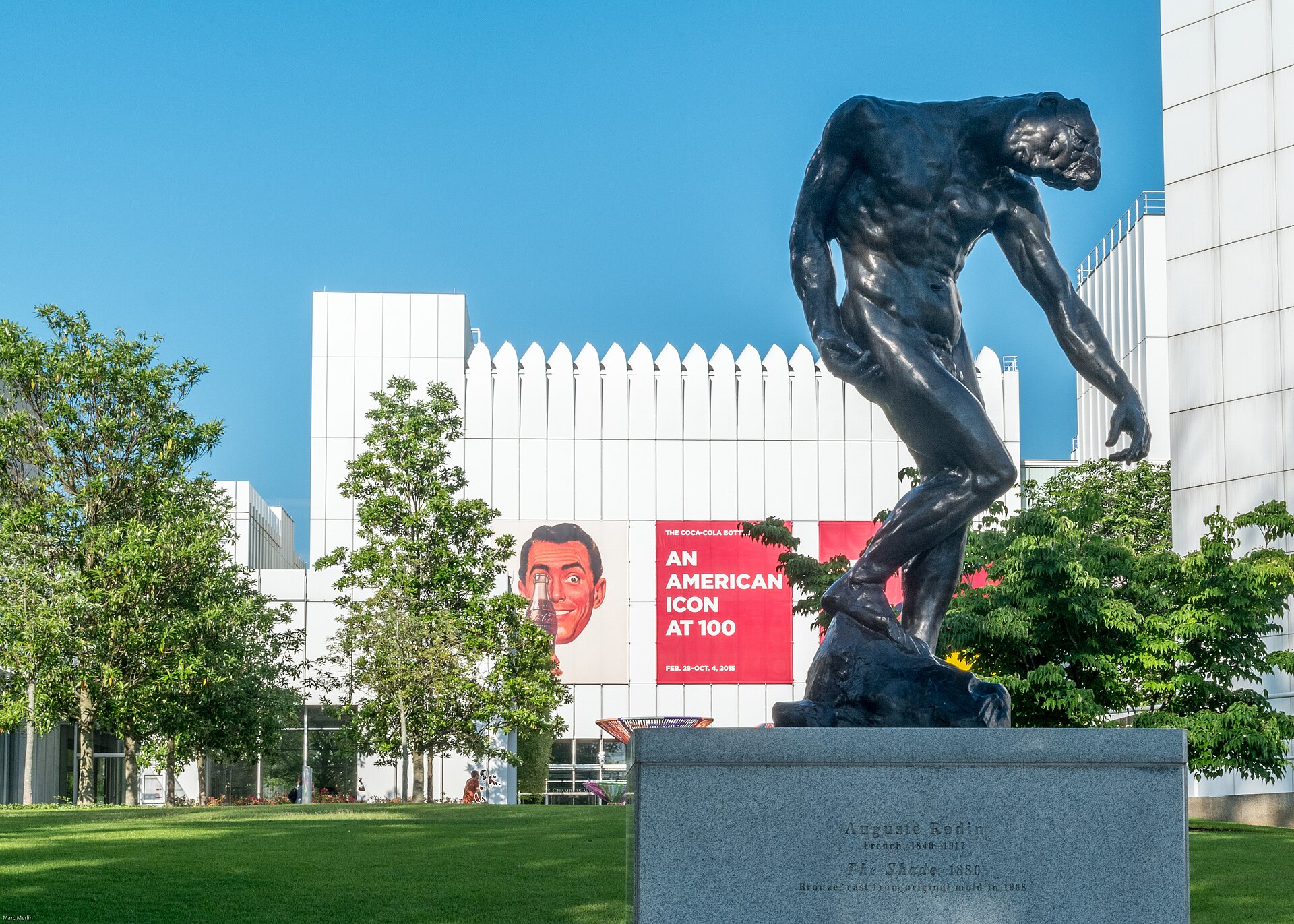
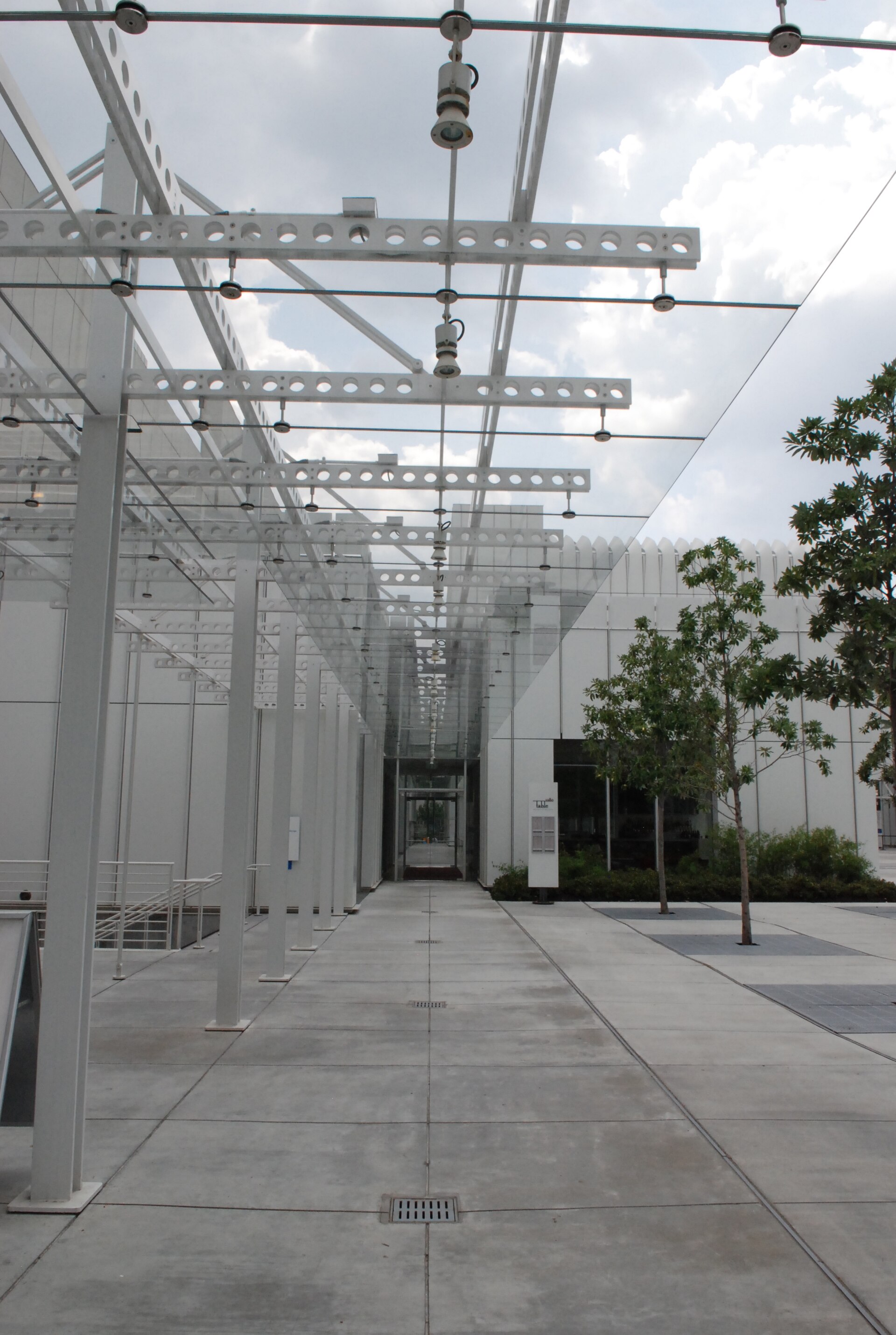
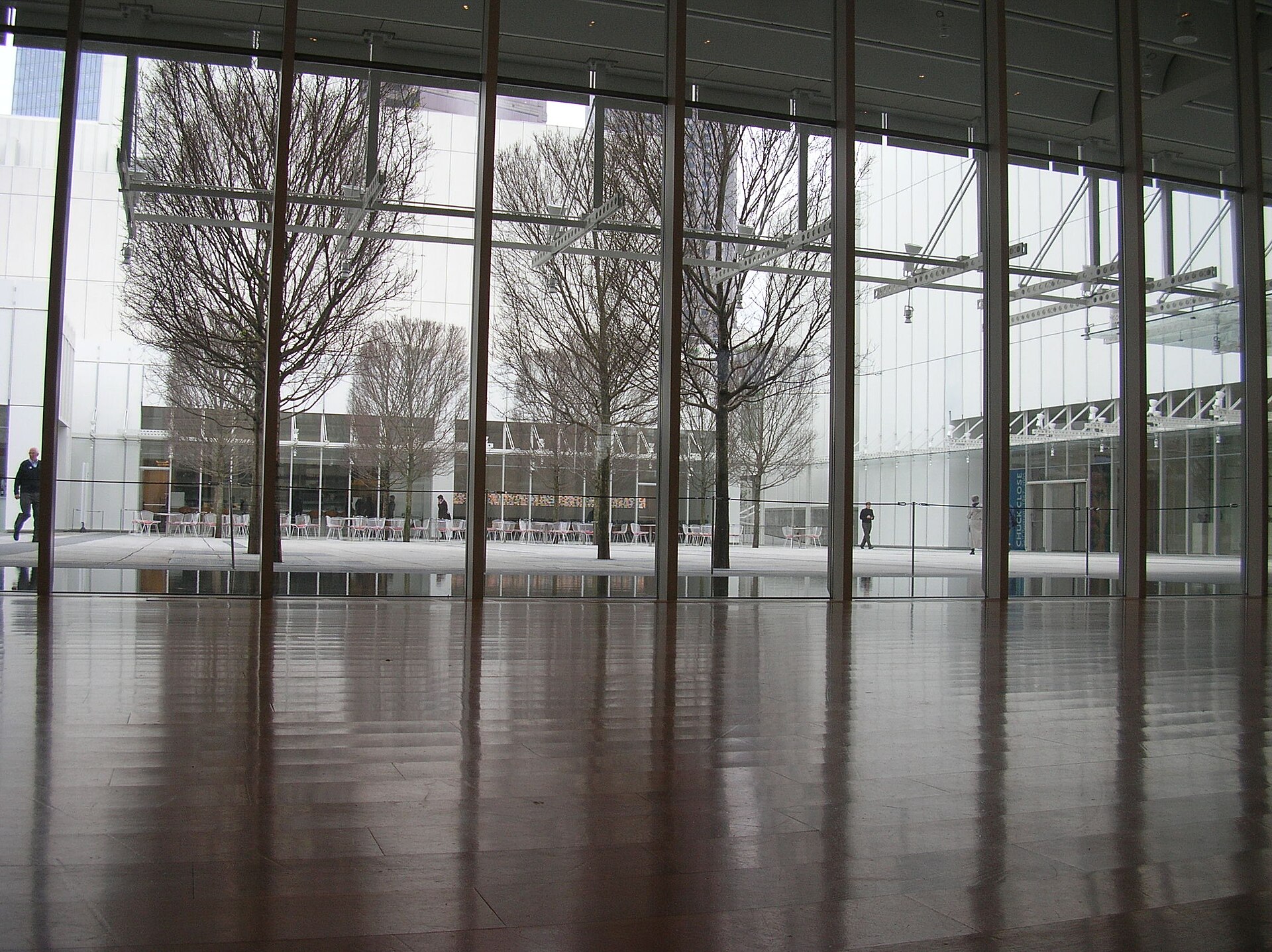
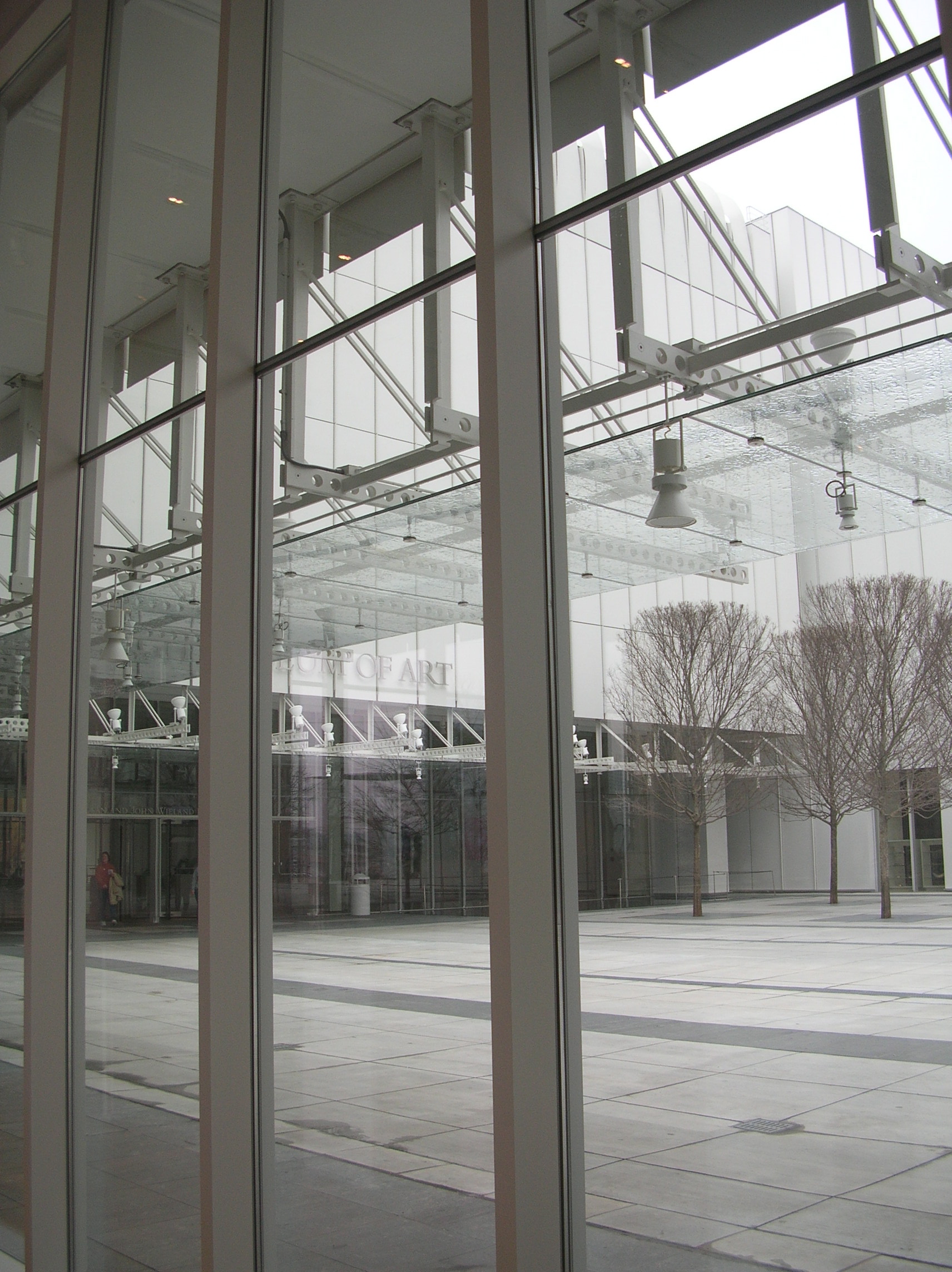
In November 2005 the Italian architect Renzo Piano added three further buildings, more than doubling the museum's total footprint to 312,000 square feet at a reported cost of 124 million USD. Piano's contribution includes a roof system of roughly a thousand individual light scoops over what the museum calls its Skyway Galleries, designed to admit filtered northern daylight into the upper-level galleries rather than artificial light alone, and the three new buildings were designed to keep Meier's white facade as the unifying material across the whole campus. The High sits as one part of the wider Woodruff Arts Center, sharing the block with the Atlanta Symphony Orchestra and the Alliance Theatre; those are separate institutions with separate programming, not other wings of the art museum, and a reader should not conflate the three when looking at what is showing on a given day.
Seven departments under one roof
The museum organizes its permanent holdings, more than 20,000 objects in total, into seven collecting departments: African Art, American Art, Decorative Arts and Design, European Art, Folk and Self-Taught Art, Modern and Contemporary Art, and Photography. Few single-site American museums outside the largest cities cover this particular combination, and the High's own account of its history is explicit that the range grew from a series of specific gifts rather than a single acquisitions plan: the Samuel H. Kress Foundation's 1958 donation of Renaissance and Baroque paintings founded the European department; the J. J. Haverty Collection, given in 1949, is a foundation of the American holdings; and the museum's African collecting, which began with a single object bought in 1953, has grown into a department with its own endowed curatorship. The result reads less like a single planned survey of art history and more like several strong, separately built collections that happen to share a building.
That unevenness by design is also the museum's clearest identity. Rather than positioning itself as a comprehensive encyclopedic museum on the model of a much larger institution, the High has let a handful of departments become genuinely distinguishing: American decorative arts, self-taught and folk art from the American South, and photography with a strong regional focus are all areas where the museum's own curators and outside press describe its holdings as among the most significant in the country, not merely respectable for a regional museum.
Self-taught and folk art from the American South
The High opened a dedicated department for folk and self-taught art in 1994, and its own account states it was the first general-interest art museum in the United States to do so. The department now holds more than 1,200 objects, most from the late 20th and early 21st centuries, made by artists who the museum describes as having developed their practice through family, community, work and spiritual experience rather than formal art training, often working in unconventional materials: quarried stone, salvaged doors, scrapyard metal, and in one well-documented case, chewing gum.
Two individual holdings stand out. The museum states it holds the largest public collection of work by Nellie Mae Rowe (1900-1982), a Vinings, Georgia artist who transformed her own house and yard, which she called Nellie's Playhouse, into an installation of found-object sculpture, handmade dolls and drawings; the museum's holdings were the basis for its own 2021 traveling retrospective, Really Free: The Radical Art of Nellie Mae Rowe. It also states it holds the largest public collection of work by Bill Traylor. Other artists represented include William Edmondson, Howard Finster (whose Paradise Garden environment in Summerville, Georgia is itself a fixture of the same regional folk-art landscape), Thornton Dial, and the quiltmakers of Gee's Bend, Alabama, whose textile tradition the department collects as part of its Black quilting holdings.
Photography, decorative arts, and the rest of the building
Photography is the High's single largest collecting department by object count, more than 9,000 prints, built since the museum began collecting the medium seriously in the early 1970s, early enough to count among the pioneering American museums in the field. Roughly a third of the collection is tied specifically to the American South, which the museum's own materials describe as making it one of the more significant repositories anywhere for studying the region's photographic history, including a substantial holding of civil-rights-era documentary photography. The department also holds deep monographic archives of individual photographers, including Walker Evans, Harry Callahan and Eugene Atget; the Atget holdings alone run to several hundred prints.
Decorative Arts and Design, more than 2,500 objects from 1640 to the present, is built around the Virginia Carroll Crawford Collection, which the museum describes as the most comprehensive survey of 19th-century American decorative arts held anywhere in the southeastern United States, spanning 1810 to 1915 and including work from Tiffany and Co., the Herter Brothers, Rookwood Pottery and Gustav Stickley's Craftsman Workshops. European Art, more than 1,000 paintings, sculptures and works on paper across six centuries, includes Monet's Autumn on the Seine, Argenteuil (1873) and close to 50 works by Toulouse-Lautrec, including his complete Elles portfolio. Modern and Contemporary Art, more than 3,000 works from 1945 to the present, includes postwar abstraction, Gerhard Richter and Jean-Michel Basquiat, and 21st-century acquisitions from Kehinde Wiley, Julie Mehretu and Kara Walker. African Art, built from a single 1953 purchase into a department with its own endowed curatorship, centers on West and Central African material culture and includes the Ghanaian sculptor El Anatsui's Taago (2004).
Visiting: fees, hours and getting there
The museum is open Tuesday through Saturday, 10 a.m. to 5 p.m., and Sunday, noon to 5 p.m.; it is closed Mondays, and the last ticket each day is sold one hour before closing. Standard adult admission for a non-member is 23.50 USD at the door price the museum publishes, with an additional 2.09 USD fee applied to online purchases; children five and under are admitted free, and any level of membership includes free general admission. An annual Museum Pass, 48 USD, gives unlimited daytime general admission for a year without the other benefits of full membership. On the second Sunday of every month the museum is free to all visitors from 1 to 4 p.m., a program funded by UPS and paired with family programming. Special ticketed exhibitions, such as Amy Sherald: American Sublime, carry their own charge for non-members but that single ticket also covers the rest of the museum that day.
The museum sits at 1280 Peachtree Street NE in Midtown Atlanta, immediately beside the Arts Center MARTA rail station on the Red and Gold Lines, which puts it within a short walk of transit for visitors who do not want to drive. Visitors who do drive can use the Woodruff Arts Center parking garage, which is free for the first 30 minutes on weekdays and rises to 20 USD for stays over five hours, with a flat 25 USD weekend and evening rate; members get free daytime parking. On site there is a cafe, CJ's Cafe, and a museum store, and the museum publishes ADA drop-off points on Peachtree Street and 16th Street along with a printable visual guide for visitors preparing a trip.
Reception, and a governance problem the museum has not put behind it
Tripadvisor and Yelp both carry a strongly positive average for the museum, and both platforms publish their own aggregation of what their reviewers mention most rather than the review text itself. Reached directly for this page on 19 August 2026, Tripadvisor's tally groups mentions around the permanent collection, free admission, Monet, the galleries and the atrium, and Yelp's around rotating exhibits, the sculpture and permanent collections and modern art installations. A sample of individual Tripadvisor reviews read for this page repeats the same handful of things: the Meier and Piano buildings and the atrium and its ramp as architecture in their own right, and the range of a single collection that runs from Impressionist and American painting through African, decorative and self-taught art; one visitor's review also described a children's play area. Criticism in that same sample is narrower: one visitor named the cafeteria and museum shop as needing improvement, and the standard adult ticket price is an occasional note given that some peer American art museums admit visitors free.
Separately from ordinary visitor reviews, the museum spent much of 2026 dealing with a federal criminal case involving its own former leadership. Brady Lum, the High's chief operating officer from January 2019 until his resignation in December 2025 amid an internal investigation, pleaded guilty in federal court on 13 July 2026 to a charge of theft concerning programs receiving federal funds. Prosecutors said Lum used his authority over the museum's finances to approve more than 700 fraudulent reimbursement claims, most individually under 1,000 USD, for personal purchases including guitars, other music equipment, music lessons and woodworking equipment, with the largest single doctored claim, in 2024, for 9,147.87 USD in guitar accessories; the total loss exceeds 600,000 USD. Lum's plea agreement includes full restitution, and sentencing is scheduled for 2 November 2026. The Woodruff Arts Center, the High's governing parent organization, declined to comment to reporters on how the loss affected the museum's operations. The case does not touch the collection or its provenance, but it is a real governance failure at a senior level of an institution that was, during the same years, also receiving federal arts funding, and a reader assessing the museum as an institution rather than only as a building of art should know it happened.
What visitors say
Tripadvisor and Yelp both publish their own aggregation of what their reviewers mention most, and both pages were reached directly for this entry on 19 August 2026 after the plain fetch tool was blocked. Tripadvisor's 'Popular mentions' tally for its reviews lists the permanent collection, free admission, Monet, the galleries and the atrium; Yelp's 'Most mentioned offerings' groups its reviews under rotating exhibits, the sculpture and permanent collections, modern art installations, the museum cafe and the gift shop. A sample of individual Tripadvisor reviews read for this page repeats the same handful of things: the Meier and Piano buildings, the four-story atrium and its ramp, and the range of the collection across Impressionist, American, African, decorative and modern/contemporary galleries; one visitor named the cafeteria and museum shop as needing improvement, and the standard adult ticket price is an occasional note in the same sample. That is a sample of Tripadvisor plus each platform's own mention-aggregation, not a full read of every review on either site, and it is described here as such rather than as what visitors 'consistently' say.
What is praised, what is criticised
- Praised: The Meier and Piano buildings themselves, including the four-story atrium and ramp and the natural light in the Piano wing's galleries: the single most repeated theme both in Tripadvisor's and Yelp's own mention-aggregation and in the individual reviews read for this page
- Praised: Breadth of the permanent collection across African, American, decorative, European, folk/self-taught, modern/contemporary and photography departments
- Praised: Family-friendly features noted in individual reviews read for this page, including a dedicated children's area
- Praised: Rotating special exhibitions drawing loans from major national and international collections, the largest single mention-category in both platforms' own review aggregation
- Criticised: The cafeteria and museum shop were named as needing improvement by a visitor in the reviews read for this page
- Criticised: Standard adult admission (23.50 USD plus online fees) is noted as steep by some visitors relative to peer museums, an occasional theme in the same sample; popular special exhibitions and weekends can otherwise feel crowded given the size of the galleries
- Criticised: 2026 governance controversy: the museum's former chief operating officer, Brady Lum, pleaded guilty in federal court on 13 July 2026 to embezzling more than 600,000 USD from the institution over roughly six years, using altered invoices and more than 700 falsified reimbursement claims, mostly for personal purchases including guitars and woodworking equipment; sentencing is set for 2 November 2026. The Woodruff Arts Center, the High's parent organization, declined to comment on how the loss affected the museum when asked by reporters.
Ratings on other platforms
Tripadvisor: 4.5 from 2,000 ratings, read 19 August 2026
Yelp: 4.2 from 551 ratings, read 19 August 2026
A platform average is a tertiary source: it moves, it is not audited, and we quote no visitor's words.
Questions about High Museum of Art
Where is High Museum of Art?
1280 Peachtree Street NE, Atlanta, GA 30309.
How much does it cost to visit?
Adult (not-yet-member): USD 23.5; Child, 5 and under: free; Member: free; Museum Pass (annual): USD 48; Special exhibition (e.g. Amy Sherald: American Sublime): USD 28.5. As confirmed 19 August 2026.
When is it open?
Tue-Sat 10:00-17:00; Sun 12:00-17:00. Closed: Monday. As confirmed 19 August 2026.
How do you get there?
MARTA rail: Arts Center Station, Red and Gold Lines, on the same city block as the Woodruff Arts Center.
What should you see first?
Autumn on the Seine, Argenteuil (Claude Monet, 1873); Untitled (Cadmium) (Jean-Michel Basquiat, 1984); Taago (El Anatsui, 2004, aluminum and copper wire); Works by Nellie Mae Rowe (Nellie Mae Rowe (1900-1982)); Works by Bill Traylor (Bill Traylor); The Virginia Carroll Crawford Collection (American manufacturers 1810-1915, incl. Tiffany and Co., Herter Brothers, Rookwood Pottery, Gustav Stickley).
What we could not confirm
- Whether the 600,000+ USD embezzlement by former COO Brady Lum prompts any published change to the Woodruff Arts Center's financial controls or board oversight once sentencing (2 November 2026) is complete; as of this check the parent organization has not commented publicly on institutional impact.
- The exact walk-up (non-online) adult ticket price was not separately confirmed against the online price plus fee; the museum's tickets page presents pricing primarily through its online checkout flow.
Images
Sources
- 1High Museum of Art, official site, home page, confirming open status and hours read 19 August 2026 high.org/
- 2High Museum of Art, Tickets page, admission pricing and free second-Sunday program high.org/tickets/
- 3High Museum of Art, Directions and Parking page, address, phone, hours, parking, accessibility high.org/directions-and-parking/
- 4High Museum of Art, History of the High Museum page high.org/history-of-the-high-museum
- 5High Museum of Art, American Art collection area page high.org/collection-area/american-art/
- 6High Museum of Art, Photography collection area page high.org/collection-area/photography/
- 7High Museum of Art, Modern and Contemporary Art collection area page high.org/collection-area/modern-and-contemporary-art/
- 8High Museum of Art, European Art collection area page high.org/collection-area/european-art/
- 9High Museum of Art, Decorative Arts and Design collection area page high.org/collection-area/decorative-arts-and-design/
- 10High Museum of Art, Folk and Self-Taught Art collection area page high.org/collection-area/folk-and-self-taught-art/
- 11High Museum of Art, African Art collection area page high.org/collection-area/african-art/
- 12High Museum of Art, Nellie Mae Rowe highlight page high.org/highlight/nellie-mae-rowe/?id=1320
- 13Hyperallergic, "Former High Museum Executive Pleads Guilty to Embezzlement", fetched directly for the embezzlement facts hyperallergic.com/former-high-museum-executive-pleads-guilty-to-embezzlement/
- 14Wikipedia, High Museum of Art, source for coordinates and machine facts only en.wikipedia.org/wiki/High_Museum_of_Art
- 15Downtown Atlanta Inc, Arts Center MARTA Station page, transit lines serving the museum block downtownatlantainc.com/go/arts-center
- 16Bing search results snippet for Tripadvisor and Yelp aggregate ratings, read via search engine after direct fetch of both platforms returned 403 Forbidden; bing.com/search?q=High+Museum+of+Art+Atlanta+google+rating+reviews
- 17Wikimedia Commons, File:High Museum of Art, Meier Building.jpg, license and credit for lead image commons.wikimedia.org/wiki/File:High_Museum_of_Art,_Meier_Building.jpg
- 18Wikimedia Commons, File:Atlhighmuseum.jpg, license and credit commons.wikimedia.org/wiki/File:Atlhighmuseum.jpg
- 19Wikimedia Commons, File:Rodin's The Shade at the High Museum of Art with the High's Renzo Piano wing in the background.jpg, license and credit commons.wikimedia.org/wiki/File:Rodin%27s_%22The_Shade%22_at_the_High_Museum_of_Art_with_the_High%27s_Renzo_Piano_wing_in_the_background.jpg
- 20Wikimedia Commons, File:Looking Out of the Lobby - Flickr - hyku.jpg, license and credit commons.wikimedia.org/wiki/File:Looking_Out_of_the_Lobby_-_Flickr_-_hyku.jpg
- 21Wikimedia Commons, File:High Museum of Art - Atlanta, GA - Flickr - hyku (2).jpg, license and credit commons.wikimedia.org/wiki/File:High_Museum_of_Art_-_Atlanta,_GA_-_Flickr_-_hyku_(2).jpg
- 22Wikimedia Commons, File:Glass Houses - Flickr - hyku.jpg, license and credit commons.wikimedia.org/wiki/File:Glass_Houses_-_Flickr_-_hyku.jpg
- 23Wikimedia Commons, Category:High Museum of Art, initial photo survey confirming free-licence exterior coverage commons.wikimedia.org/wiki/Category:High_Museum_of_Art
- 24Tripadvisor, High Museum Of Art review page, fetched directly via browser after the plain returned 403 Forbidden; showed the platform aggregate, its own 'Popular mentions' tally, and individual visitor review text, read 19 August 2026 tripadvisor.com/Attraction_Review-g60898-d144319-Reviews-High_Museum_Of_Art-Atlanta_Georgia.html
- 25Yelp, High Museum of Art business page, fetched directly via browser after the plain returned 403 Forbidden; page loaded with the site's own 'Most mentioned offerings' tally, but individual review text is client-rendered and did not appear in this fetch, so only the offering-aggregation is used from this source, read 19 August 2026 yelp.com/biz/high-museum-of-art-atlanta-2


.jpg)
