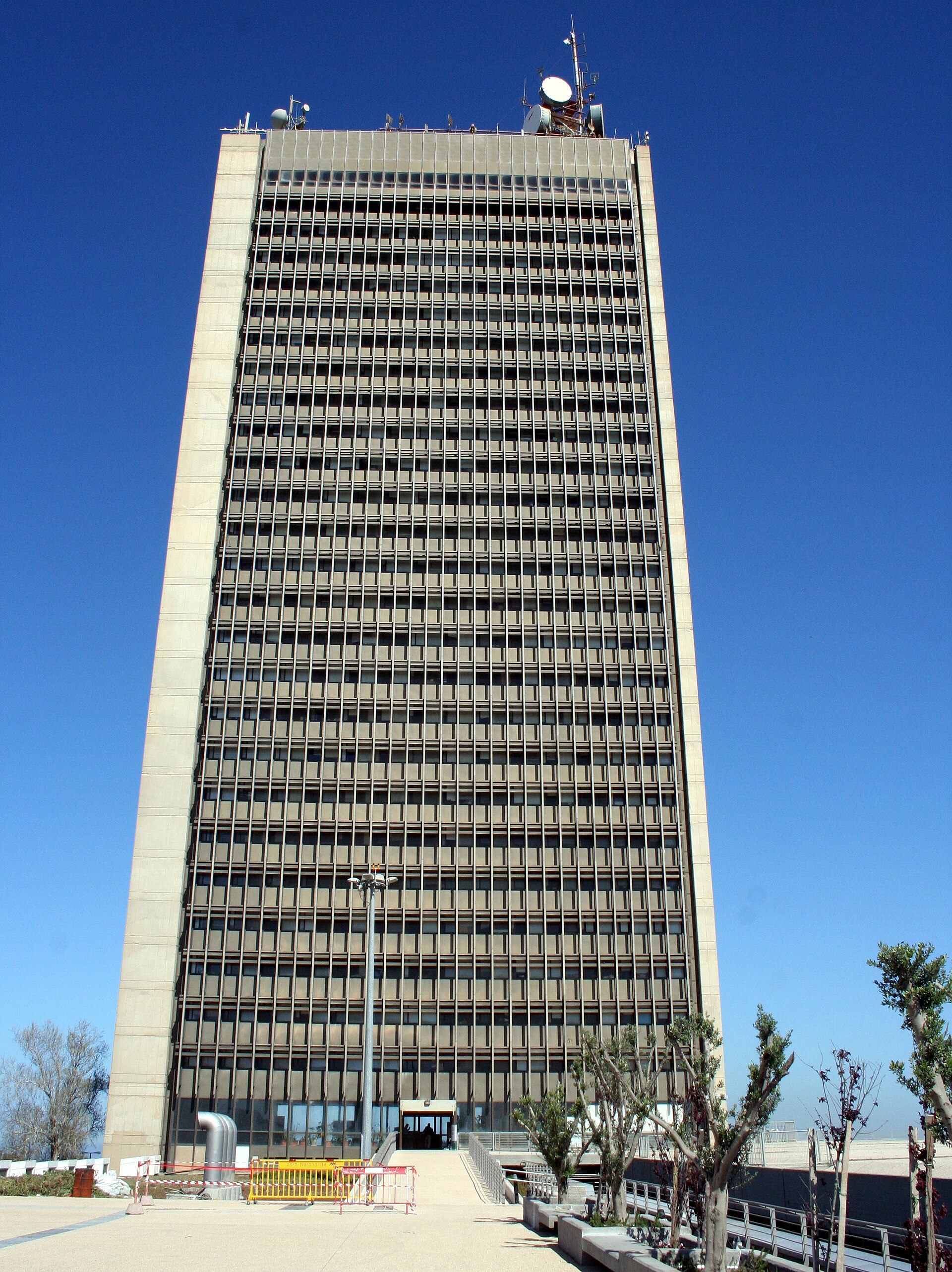
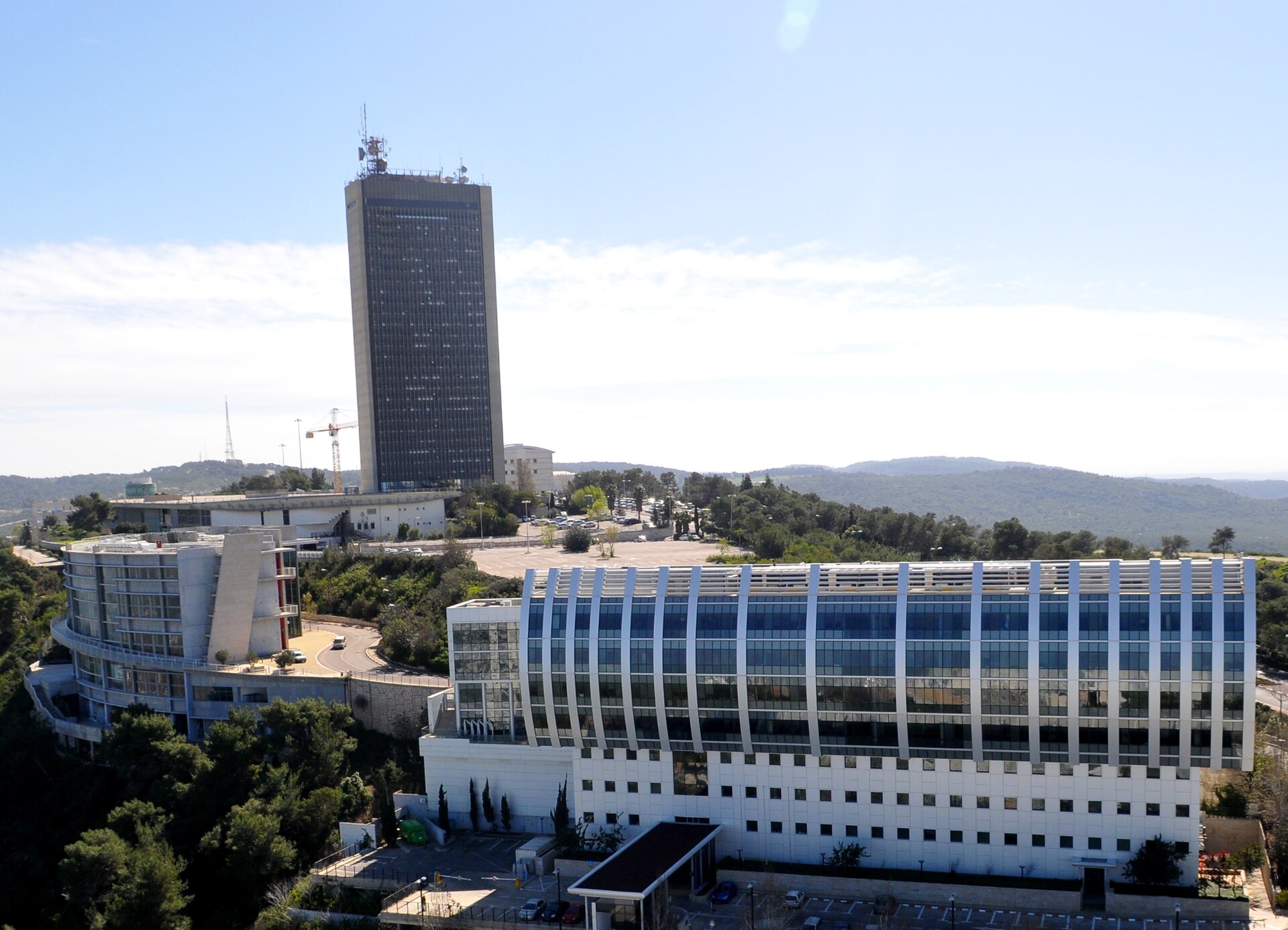
Eshkol Tower on the University of Haifa campus, seen from its plaza entrance. The Hecht Museum has no separate building of its own; it occupies the ground floor beneath this tower, reached by signs from the lobby visible at its base.
Oyoyoy · CC BY-SA 3.0Hecht Museum
Museum · מוזיאון הכט · Founded 1984
Open, admission and hours confirmed 17 September 2026 · 16 sources
On this page 14 sections
ContentsClose
The Hecht Museum's real strength is a founder's collection that was never narrowed to one period or one medium: sixty years of Reuben Hecht's own archaeological collecting gave it a genuine chronological run from the Chalcolithic to the Byzantine period, anchored by a shipwreck, the Ma'agan Michael Ship, that few university museums anywhere could match, while the same founder's separate art collecting gave it real Impressionist and Post-Impressionist paintings that have nothing to do with the archaeology next door. The German-Speaking Jewry Heritage Wing adds a third, unrelated strength - social history of a specific immigrant community rather than antiquities or fine art - and the Derech Hadorot open-air park is unusual in physically relocating whole excavated structures rather than only portable finds. The result is a museum whose parts do not obviously belong together, which is also its most distinctive feature: nowhere else does a single free archaeology hall sit one floor below a Modigliani.
| Local name | מוזיאון הכט |
|---|---|
| Kind | Museum |
| Founded | 1984 |
| City and country |  Haifa, Israel Haifa, Israel |
| Address | University of Haifa, 199 Abba Khoushy Ave, Haifa 3498838, Israel |
| Website | mushecht.haifa.ac.il |
| Status | Open, confirmed |
| Record last verified |
Visiting
- Hours
- Sunday10:00 to 16:00
- Monday10:00 to 16:00
- Tuesday10:00 to 19:00
- Wednesday10:00 to 16:00
- Thursday10:00 to 16:00
- Friday10:00 to 13:00Same hours on the eve of a Jewish holiday
- Saturday10:00 to 14:00Same hours on Jewish holidays
- Admission
- General admission (per the museum's own current site: archaeology halls, Ma'agan Michael Ship, Ancient Industries and Crafts, Phoenicians exhibition, Sculpture Garden and the art wing)FreeFree of charge. The museum's own site, re-read 2026-09-17, now states only one named paid exception to a free museum: entry to the German-Speaking Jewry Heritage Wing. It does not name the art wing as a separate paid exception, though a January 2026 visitor review reports being charged 30 shekels there; this record does not fold that single visitor report into the price table against the museum's own current wording, and flags the gap in open_questions. School groups are billed separately as paid; other groups require advance arrangement via [email protected].
- German-Speaking Jewry Heritage Wing, single-entry ticket (regular)ILS 30The museum's own ticket store (linked from the museum's own site) prices a single entry to this wing from 15 to 30 shekels depending on visitor category: regular, retirees, students, soldiers, University of Haifa employees, members of an organisation of European immigrants, and children and youth aged 4 to 17. The store groups all categories under one product and does not itemise which figure applies to which category, so 30 shekels, the top of the published range, is recorded here as the regular price. This resolves the open question left at the last check, when no shekel figure had been published for this wing at all.
- Tickets
- museumstore.haifa.ac.il/product/jeckes-ticket The museum's own ticket page.
- Do I need to book?
- Not required for general admission. Groups need to arrange a visit in advance via [email protected], and school groups are admitted on a paid basis, per the museum's own site.
- Address
- University of Haifa, 199 Abba Khoushy Ave, Haifa 3498838, Israel MapCable car The Rakavlit gondola line runs from HaMifratz Central Bus Station at the foot of Mount Carmel via the Technion to the University of Haifa terminal, about 19 minutes end to end
Bus City bus lines serving the University of Haifa terminus, including lines 24, 37 and 146, and the Metronit bus rapid transit network
On campus The museum is on the ground floor beneath Eshkol Tower, the tall building at the centre of the University of Haifa campus; signs from the tower lobby lead down to the museum entrance - Website
- mushecht.haifa.ac.il
- Telephone
- +972-4-8240308
- [email protected]
Before you go how long, access, photography, bags, eating, shop
- How long to allow
- One to two hours for the archaeology halls and the Ma'agan Michael Ship wing; visitors who also take in the art wing and the German-Speaking Jewry Heritage Wing report needing longer, and one visitor described the museum as unusually large for a university museum
- Access
- Not published by the museum in the material available for this record at the time of research.
- Photography
- Not published by the museum in the material available for this record at the time of research.
- Bags
- Not published by the museum in the material available for this record at the time of research.
- Eating
- The museum's own site does not describe an on-site cafe; the wider University of Haifa campus around Eshkol Tower, including the adjoining Younes and Soraya Nazarian Library building, has cafeterias open to visitors.
- Shop
- Not published by the museum in the material available for this record at the time of research.
Prices and hours change. We take them from the institution's own pages and print the day we read them, and you can check the current position at the source we used. Confirm before you travel.
What is inside
Photograph by israel zeller · CC BY 2.5 Archaeology of the Land of Israel
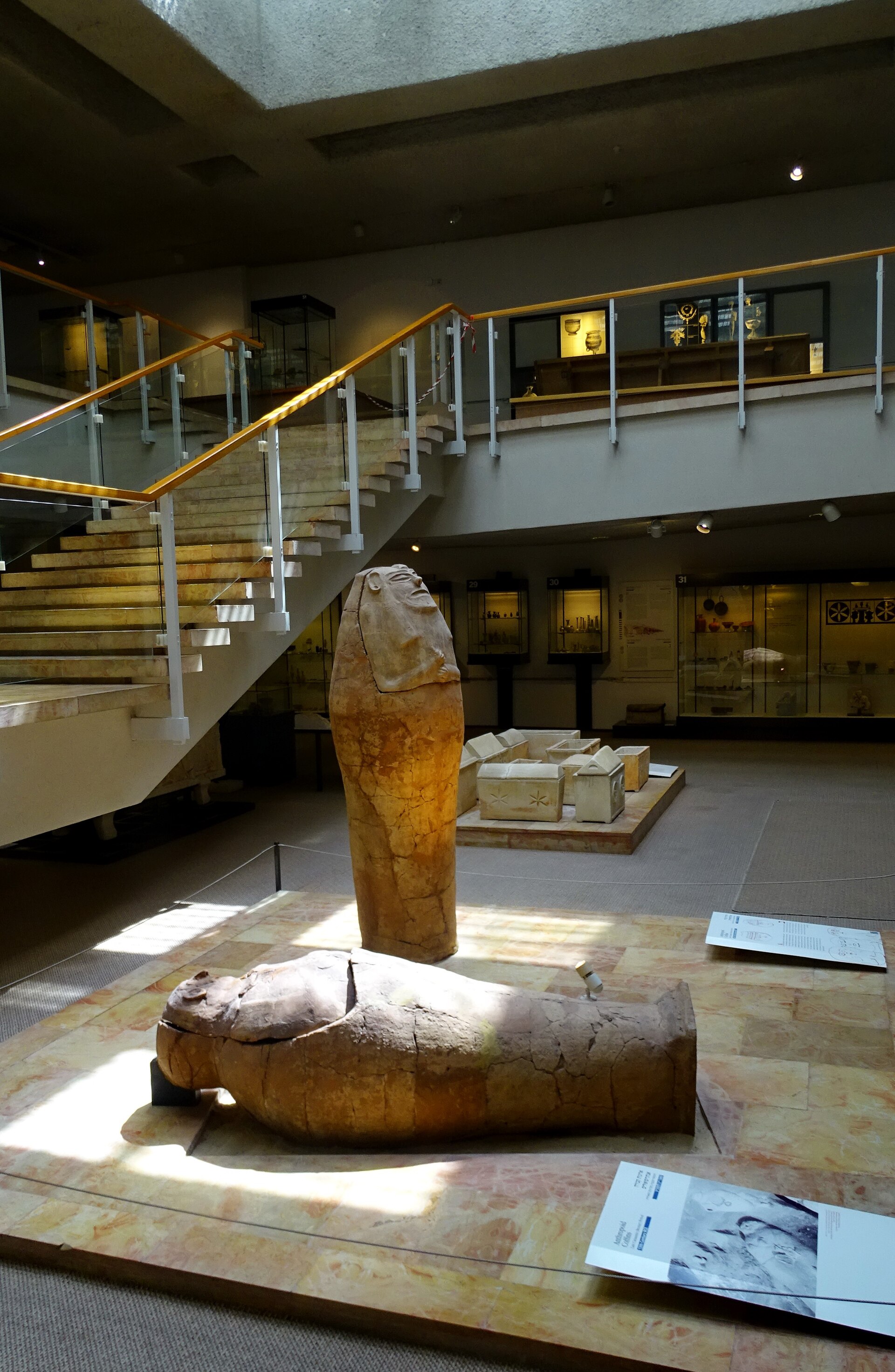
The museum's core chronological display, running from the Chalcolithic period to the end of the Byzantine period, drawn from Reuben Hecht's own sixty-year collection: coins, weights, Semitic seals, jewellery and finds from the Temple Mount excavations, arranged across a two-level hall reached by a central staircase.
Photograph by Hanay · CC BY 3.0 Ma'agan Michael Ship
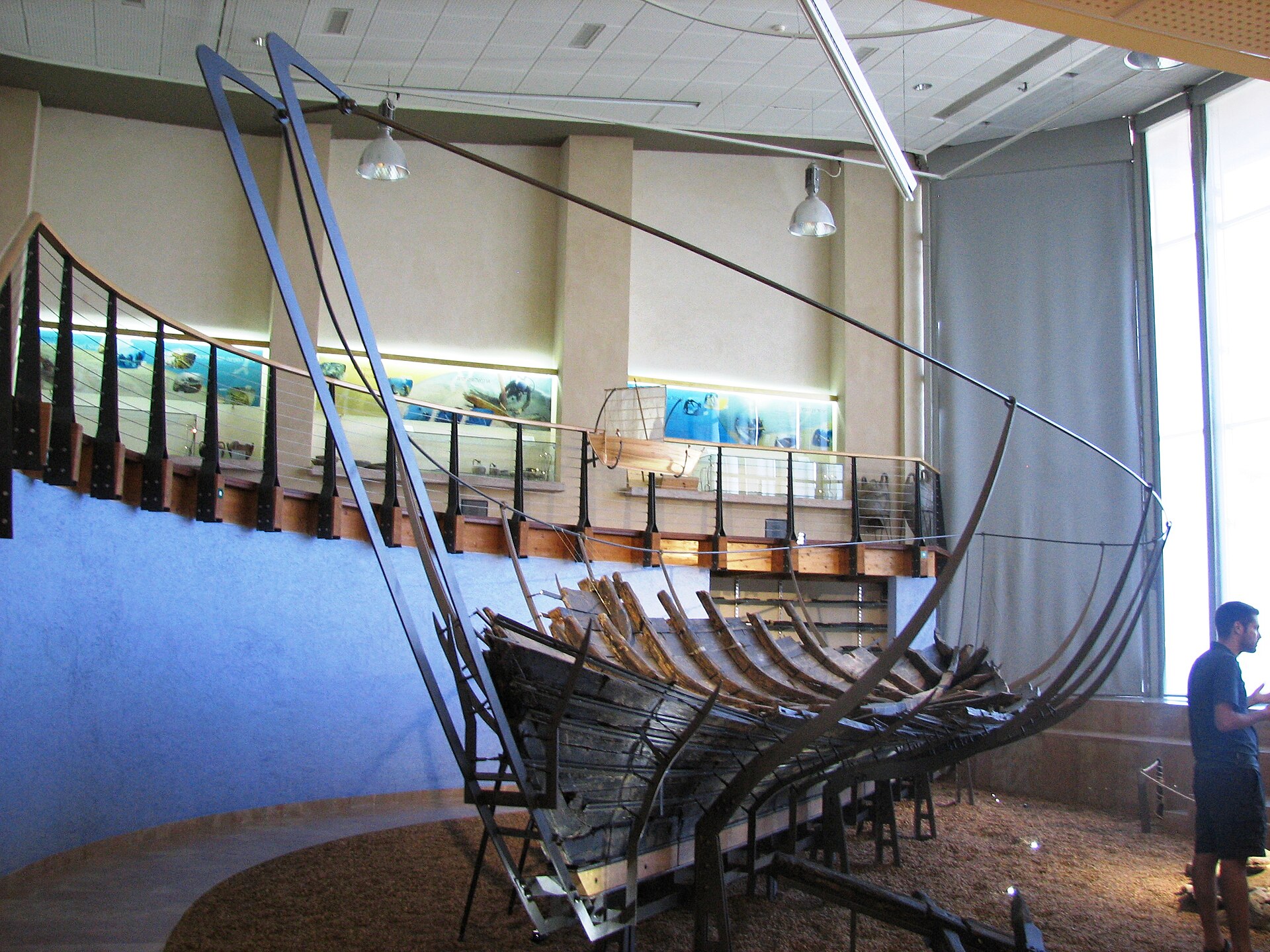
A dedicated wing built around the reassembled hull of a 5th-century BCE merchant ship, found in 1985 off Kibbutz Ma'agan Michael and conserved at the University of Haifa over a seven-year impregnation process before its 1999 installation; the ship's wooden anchor, carpenter's toolbox and cargo are displayed alongside it. Confirmed on the museum's own site, 2026-09-17, as one of the sections open to the public during the current renovation.
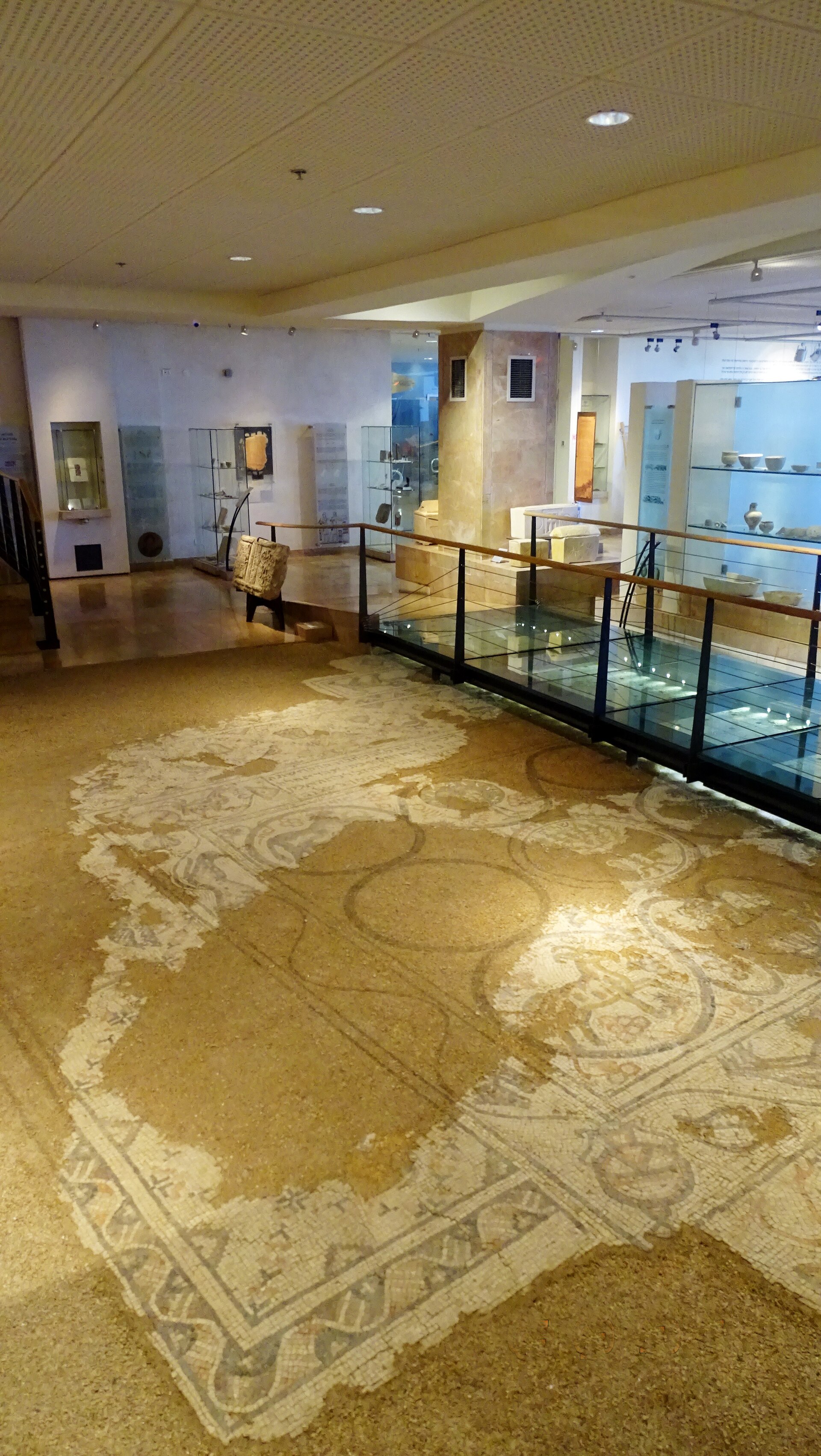
Photograph by israel zeller · CC BY 2.5 Ancient Industries and Crafts
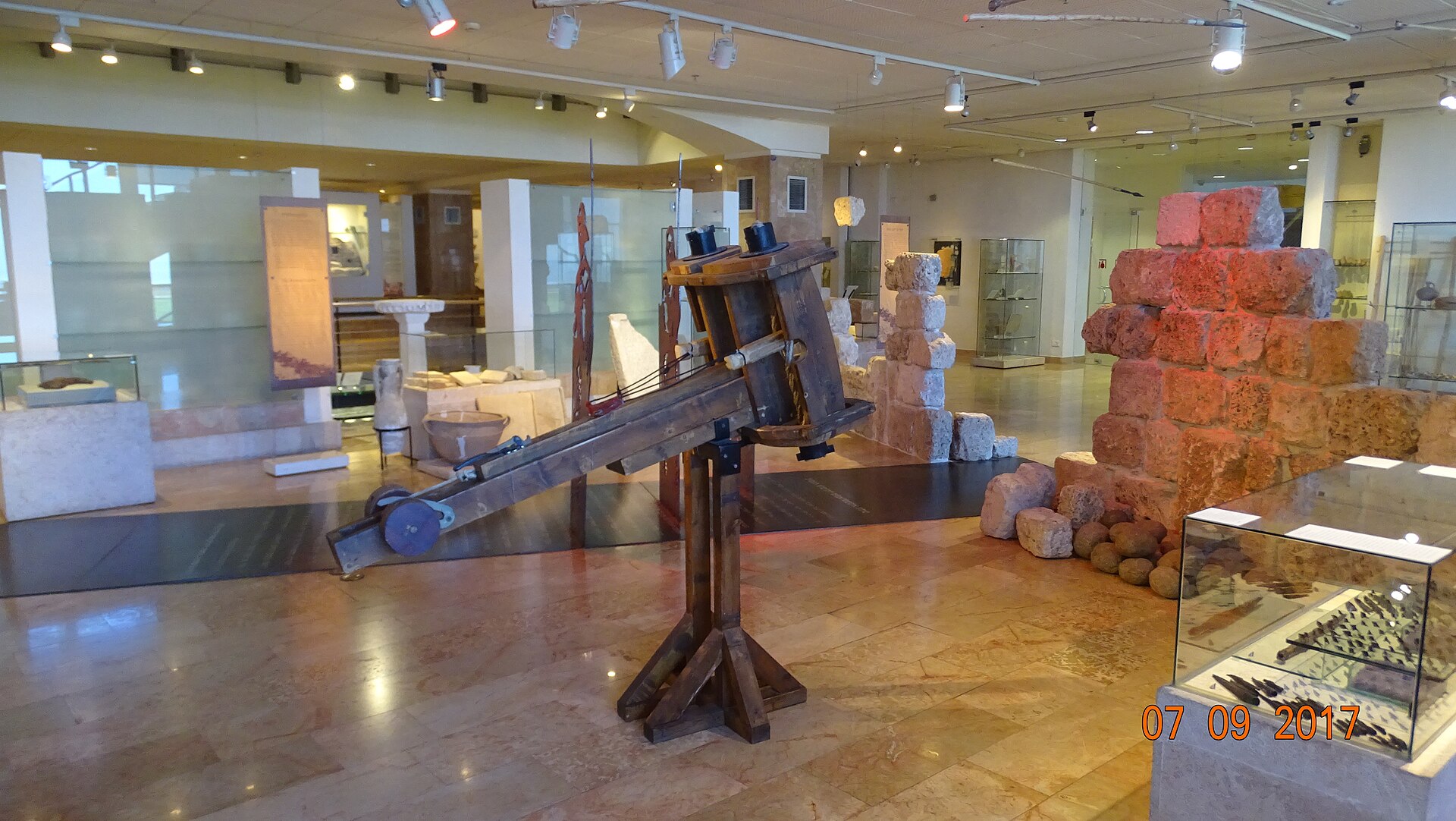
An exhibition on manufacturing techniques in seven ancient crafts - woodworking, stonework, metalwork, glassmaking, mosaic-laying, writing and the medical profession - paired with a reconstructed section of fortification wall and a working replica of a torsion siege engine that demonstrate ancient wood, metal and stone-working methods directly.
Phoenicians on the Northern Coast of Israel
An exhibition on the material culture of the Phoenician coastal cities of the eastern Mediterranean and their westward expansion in the first millennium BCE, focused on their contribution to marine architecture, long-distance trade and the development of the alphabet. Confirmed on the museum's own site, 2026-09-17, as one of the sections open to the public during the current renovation.
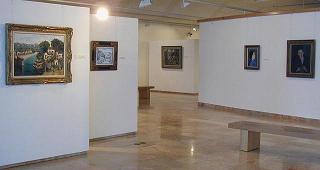
Photograph by מזויאון הכט · CC BY-SA 3.0 Art Wing
Opened in October 1998 to a design by architects Israel Stern and Aryeh Sonino, five years after Reuben Hecht's death, this wing holds his collection of French painting from the Barbizon School, Impressionism, Post-Impressionism and the School of Paris, plus Jewish art from the mid-nineteenth to early twentieth century, with works by Corot, Manet, Monet, Pissarro, Van Gogh, Modigliani, Soutine and Liebermann; it also hosts changing temporary exhibitions.
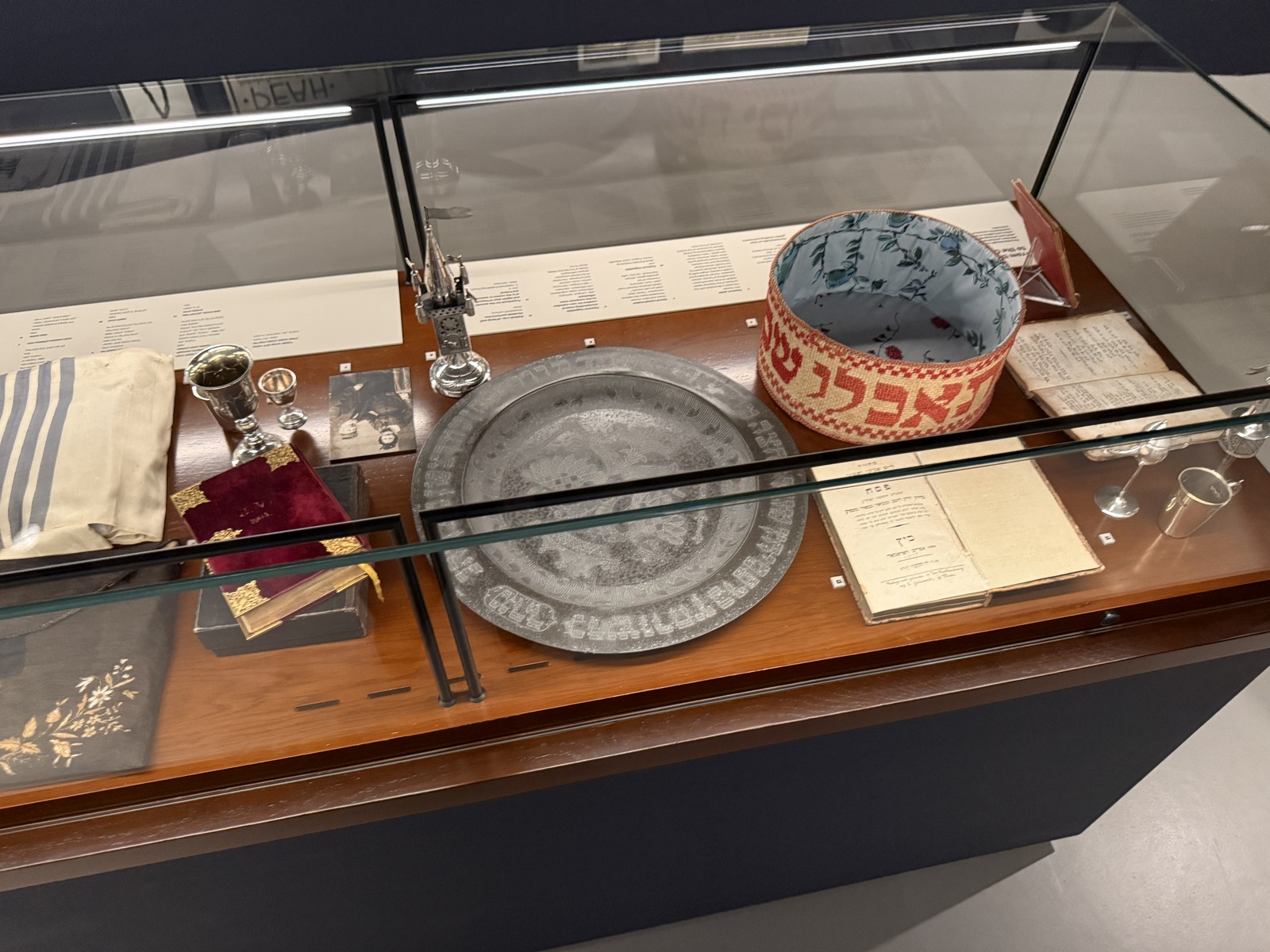
Photograph by שלמה רודד · CC BY 2.5 German-Speaking Jewry Heritage Wing
A wing devoted to the material culture that German-speaking Jewish immigrants (the 'Yekkes') brought with them to Palestine, concentrated in the Fifth Aliyah of 1931 to 1939: Judaica, household furniture, advertising posters, cigarette packaging and settlement maps documenting how this immigrant community rebuilt daily and religious life; entry to this wing is billed separately from the free archaeology halls, now at a published 15 to 30 shekels by visitor category.
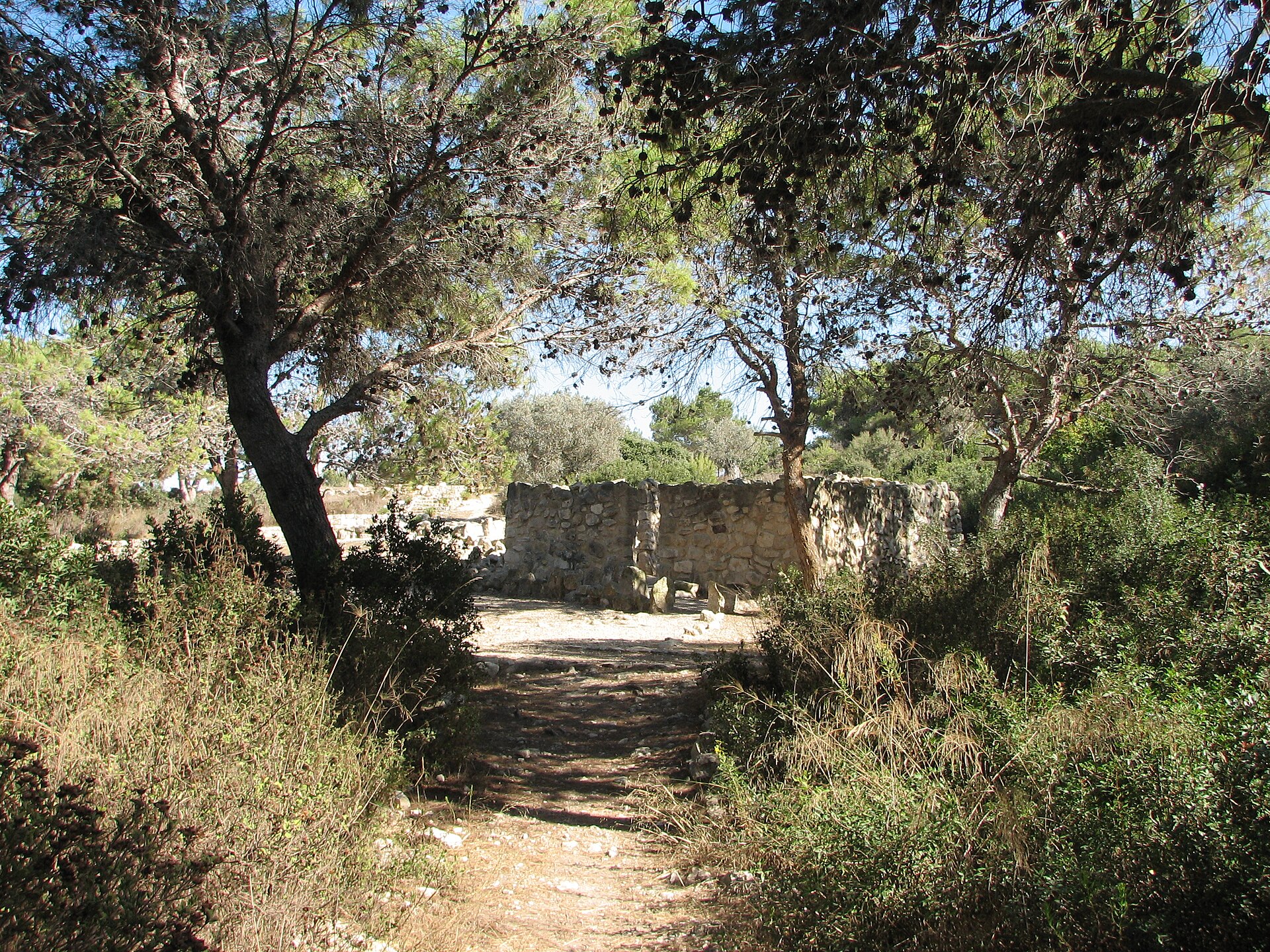
Photograph by Hanay · CC BY-SA 3.0 Derech Hadorot (The Road of the Generations)
An open-air archaeological park on the university grounds beside the museum, where reconstructed ancient structures rescued from sites slated for destruction elsewhere in Israel - including agricultural buildings and Iron Age grain silos from the Negev highlands - are re-erected among pine trees for visitors to walk through.
Sculpture Garden
An outdoor sculpture garden on the museum grounds, inaugurated June 2024. Found during this 2026-09-17 re-check on the museum's own permanent-exhibitions page, where it is listed alongside the archaeology halls and the art wing as one of the museum's standing sections, and named on the museum's home page as one of the sections open to the public during the current renovation; it was not recorded in this page's earlier research and no free-licence photograph of it has yet been verified for this record, so it carries no image.
What to see first
Ma'agan Michael Ship
Unknown Levantine or Cypriot shipwrights, c. 400 BCEOne of the best-preserved ancient merchant ships ever excavated, raised intact enough to reveal complete details of its wood construction and to yield the first fully intact one-armed wooden anchor known from antiquity.5
Portrait of Maude Abrantes
Amedeo Modigliani, 1907An early Modigliani portrait from Reuben Hecht's own painting collection, among the works that anchor the art wing's Impressionist and School of Paris holdings.3
Anthropoid coffin from Deir al-Balah
Late Bronze Age Egyptian-tradition workshop, Gaza StripA rare, well-preserved clay anthropoid coffin from the Late Bronze Age cemetery at Deir al-Balah, illustrating direct Egyptian cultural presence on the southern coast of Canaan.3
Phoenician alphabet and marine architecture displays
Phoenician coastal workshops, 1st millennium BCEMaterial evidence for the Phoenician contribution to the development of the alphabet and to Mediterranean shipbuilding and trade, presented through finds from Israel's own northern coast.6
Full-size sailing replica of the Ma'agan Michael Ship
Built 2014-2016 at the Israeli Naval Officers' School, Acre, with volunteer shipwrightsA seaworthy reconstruction of the museum's own shipwreck, launched at Ma'agan Michael in March 2017, that lets the static hull on display in the museum be understood as a working vessel rather than only an archaeological object.7
Ancient Industries and Crafts reconstructions
Museum workshop reconstructions after excavated originalsA hands-on demonstration, including a working torsion siege engine replica and a rebuilt fortification wall section, of manufacturing and building techniques that other archaeology museums usually explain only in text.6
German-Speaking Jewry Heritage Wing collection
Everyday and ceremonial objects brought by Fifth Aliyah immigrants, 1931-1939A social-history collection, unusual for an archaeology-led museum, documenting the material culture a specific immigrant community carried into Mandate Palestine rather than what earlier civilisations left behind.9
Derech Hadorot open-air archaeological park
Structures relocated from sites elsewhere in Israel slated for destructionA rare case of a museum physically rescuing entire excavated structures rather than only portable finds, re-erected on the university grounds for visitors to walk through rather than view behind glass.8
A silo owner's private collection becomes a university museum
The Hecht Museum was established in 1984 by Reuben Hecht, an industrialist born in Antwerp in 1909 who built his career on an exclusive concession to construct grain storage silos at Haifa and Ashdod through his company Dagon. Hecht had been active in the Revisionist Zionist movement from the 1930s, working alongside Ze'ev Jabotinsky in Paris, and later served as a close aide to Prime Minister Menachem Begin, including at the Camp David peace talks. Alongside that public life he spent roughly sixty years assembling a private collection of archaeological artefacts documenting the material culture of the Land of Israel from the Chalcolithic period to the end of the Byzantine period, driven by his belief that archaeology demonstrated the historical link between the Jewish people and the land. As a founding member of the University of Haifa's Board of Governors, he chose to house that collection there rather than keep it private, opening the museum in 1984 and endowing it as one of several cultural institutions bearing his name in the city, alongside the Hecht Foundation, Hecht House and Hecht Park on the Haifa seafront.
Housed beneath a tower the museum did not build
The Hecht Museum occupies the ground floor of Eshkol Tower, the tall concrete-and-glass building at the centre of the University of Haifa campus, and it has no separate building of its own. The tower's design began at the end of the 1960s when the Brazilian architect Oscar Niemeyer, visiting Israel briefly, proposed a concept for the campus centred on a skyscraper rising from a large horizontal base; Niemeyer did not stay to complete the detailed design, and the project passed to the architect Prof. Shlomo Gilad, who built it between 1974 and 1978, substituting a steel curtain-wall structure for Niemeyer's original all-concrete scheme. It was the first building in Israel to use a curtain wall, and it was the tallest structure in Haifa from its completion in 1978 until 2002. A reader looking for a free-standing Hecht Museum building will not find one; the museum's own entrance is reached by following signs down from the tower's ground-floor lobby, and its identity as a museum sits inside, not alongside, the university's best-known landmark.
A shipwreck raised, conserved and rebuilt as a sailing replica
The single object most identified with the museum is the Ma'agan Michael Ship, a wooden merchant vessel of about 13 metres discovered in 1985 in shallow water off Kibbutz Ma'agan Michael and excavated by a University of Haifa team led by Elisha Linder across three difficult seasons that added up to only 32 actual days of underwater work. The waterlogged timber was moved into permanent preservation tanks at the university and impregnated with heated polyethylene glycol over a seven-year conservation process completed in 1996; the reassembled hull, dated to around the fifth century BCE, was installed in a purpose-built wing of the museum and opened to the public in March 1999. It is displayed with its cargo, its carpenter's toolbox and its wooden anchor, the first complete one-armed wooden anchor ever recovered from antiquity. In a separate project unconnected to the display itself, a team of shipwrights and volunteers built a full-size, seaworthy sailing replica of the ship at the Israeli Naval Officers' School in Acre between 2014 and 2016, launching it at Ma'agan Michael in March 2017 - a working reconstruction that exists alongside, not inside, the static hull in the museum.
Two later wings built after the founder's death
Reuben Hecht died in 1993, and the museum he founded grew twice more under the Hecht Foundation and the university rather than under his own direction. In October 1998 an art wing designed by architects Israel Stern and Aryeh Sonino opened to house the painting collection Hecht had assembled alongside his archaeological finds: French painting from the Barbizon School, Impressionism, Post-Impressionism and the School of Paris, with works by Corot, Manet, Monet, Pissarro, Van Gogh, Modigliani and Max Liebermann, plus Jewish art from the mid-nineteenth to early twentieth century. A second addition, the German-Speaking Jewry Heritage Wing, takes the museum in a different direction again: rather than ancient finds or fine art, it holds the everyday and ceremonial objects that German-speaking Jewish immigrants, known in Hebrew as the Yekkes, brought with them during the Fifth Aliyah of 1931 to 1939 - furniture, Judaica, advertising posters and settlement maps that document how a specific immigrant community rebuilt its life in Mandate Palestine. The German-Speaking Jewry Heritage Wing is billed as paid entry, separately from the free archaeology halls that remain Reuben Hecht's own founding gift; the museum's own site does not name the art wing as a separate paid exception in the same way, though a January 2026 visitor report describes being charged there too.
A museum that argues for touching distance, and pays a price for it
The museum has long presented its willingness to display finds without protective glass as a deliberate philosophy rather than an oversight, and in August 2024 that policy was tested directly when a four-year-old visitor, curious about what was inside, pulled at a 3,500-year-old Canaanite storage jar displayed near the entrance without a barrier and broke it. In a statement to CNN the museum defended the decision, saying there is a 'special charm' in experiencing an archaeological find without obstruction and that it would continue the practice; museum director Inbal Rivlin told Israeli media the institution is 'not a mausoleum but a living place' and invited the family back for a private tour rather than treating the incident as a reason to add barriers everywhere. The jar was restored using photographs of its original form and returned to display within two weeks, and the museum printed new signage clarifying which objects visitors may and may not touch. The episode sits alongside a newer and smaller friction in visitor reports: a January 2026 review describes a ticketed barrier partway up the archaeology hall's own staircase and a separate charge to see the paintings, read by that visitor as commercialisation creeping into a museum still marketed as free - a tension between the founder's original free-admission intent and the wings built after his death that a prospective visitor should go in aware of.
Visiting today
The museum keeps the same hours every day of the week, longer on Tuesdays until 19:00 and shorter on Fridays, Saturdays and holiday eves, with no closed day, unchanged on a re-check made 2026-09-17. General admission is free; the museum's own site names only the German-Speaking Jewry Heritage Wing as a paid exception, now at a published 15 to 30 shekels depending on visitor category, resolving a gap left at the last check when no figure had been published at all. One to two hours covers the free halls comfortably; visitors who also want the art wing and the heritage wing should allow longer. Because the museum sits inside Eshkol Tower rather than in a building of its own, reaching it means following the university's own signage down from the tower lobby. On this re-check the museum's site still describes an ongoing renewal and renovation, but is now specific about what remains open to the public during it: the Phoenicians exhibition, the Great Revolt display, the Ma'agan Michael Ship wing and the Sculpture Garden. It does not name which sections are closed, so a visitor planning around one specific gallery, especially the main Archaeology of the Land of Israel hall, the Ancient Industries and Crafts wing or the art wing, should check directly with the museum first.
What visitors say
Visitors consistently rate the Hecht Museum well above what its modest, half-hidden setting beneath a university tower would suggest, repeatedly calling it an underrated highlight of Haifa: a genuinely strong archaeology collection, anchored by the Ma'agan Michael Ship, that costs nothing to see, paired with a smaller but real collection of Impressionist and Post-Impressionist painting that visitors do not expect to find on a university campus. The more recent friction in the record is that the free-admission identity Reuben Hecht built the museum around now has one clearly named exception, the paid German-Speaking Jewry Heritage Wing, and at least one recent visitor also reports paying separately for the art wing; a minority of recent visitors read this as commercialisation creeping into a museum that still markets itself as free.
What is praised, what is criticised
- Praised: the quality and density of the archaeological collection for a small, free university museum, especially the Ma'agan Michael Ship and other underwater and coastal finds
- Praised: finding real Impressionist and Post-Impressionist paintings by artists such as Van Gogh, Monet and Modigliani inside a museum most visitors did not expect to have an art collection at all
- Praised: being an uncrowded, easy one-to-two-hour visit that several visitors called an underrated must-see in Haifa, in contrast to busier city-centre attractions
- Criticised: a January 2026 visitor report describing a fenced-off staircase marked for ticket holders only inside the archaeology hall, and a 30-shekel charge to see the paintings, which the visitor read as commercialisation at odds with the museum's own stated free-admission ethos
- Criticised: a 2019 visitor report that the museum was closed during its own posted opening hours despite the visitor checking the official site in advance, an inconsistency between the published schedule and what was staffed that day
- Criticised: renewed debate, following the August 2024 incident in which a young child broke a 3,500-year-old Canaanite jar displayed without a barrier, over whether the museum's declared preference for displaying fragile, one-of-a-kind finds without protective glass is the right trade-off between accessibility and preservation
- Criticised: the museum's low-profile location, tucked into the ground floor of a 30-storey university tower with no dedicated street-level building of its own, which some visitors find hard to locate on a first visit
Ratings on other platforms
Tripadvisor: 4.6 from 116 ratings, read 17 September 2026
A platform average is a tertiary source: it moves, it is not audited, and we quote no visitor's words.
Questions about Hecht Museum
Where is Hecht Museum?
University of Haifa, 199 Abba Khoushy Ave, Haifa 3498838, Israel.
How much does it cost to visit?
General admission (per the museum's own current site: archaeology halls, Ma'agan Michael Ship, Ancient Industries and Crafts, Phoenicians exhibition, Sculpture Garden and the art wing): free; German-Speaking Jewry Heritage Wing, single-entry ticket (regular): ILS 30. As confirmed 17 September 2026.
When is it open?
Sunday 10:00-16:00; Monday 10:00-16:00; Tuesday 10:00-19:00; Wednesday 10:00-16:00; Thursday 10:00-16:00; Friday 10:00-13:00; Saturday 10:00-14:00. As confirmed 17 September 2026.
How do you get there?
Cable car: The Rakavlit gondola line runs from HaMifratz Central Bus Station at the foot of Mount Carmel via the Technion to the University of Haifa terminal, about 19 minutes end to end; Bus: City bus lines serving the University of Haifa terminus, including lines 24, 37 and 146, and the Metronit bus rapid transit network; On campus: The museum is on the ground floor beneath Eshkol Tower, the tall building at the centre of the University of Haifa campus; signs from the tower lobby lead down to the museum entrance.
What should you see first?
Ma'agan Michael Ship (Unknown Levantine or Cypriot shipwrights, c. 400 BCE); Portrait of Maude Abrantes (Amedeo Modigliani, 1907); Anthropoid coffin from Deir al-Balah (Late Bronze Age Egyptian-tradition workshop, Gaza Strip); Phoenician alphabet and marine architecture displays (Phoenician coastal workshops, 1st millennium BCE); Full-size sailing replica of the Ma'agan Michael Ship (Built 2014-2016 at the Israeli Naval Officers' School, Acre, with volunteer shipwrights); Ancient Industries and Crafts reconstructions (Museum workshop reconstructions after excavated originals).
What we could not confirm
- The museum's own current site names only the German-Speaking Jewry Heritage Wing as a paid exception to free general admission; a January 2026 Tripadvisor review describes being charged 30 shekels separately for the paintings in what it calls another hall. This record could not reconcile the two on a single visitor report against the museum's own current wording and does not add a separate art-wing price to the admission table; the next recheck should ask the museum directly whether the art wing currently carries its own paid entry.
- Detailed accessibility, photography and bag-policy information was not found published by the museum in English at the time of research; a visitor with specific access needs should contact the museum directly before travelling.
- As of 2026-09-17 the museum's own site states it is in a renewal and renovation process and names four sections that remain open to the public (the Phoenicians exhibition, the Great Revolt display, the Ma'agan Michael Ship wing and the Sculpture Garden) without naming which sections are closed. This record could not confirm by name whether the main Archaeology of the Land of Israel hall, the Ancient Industries and Crafts wing or the art wing are open, reduced or closed; a visitor planning around one specific gallery should check directly with the museum first.
- The Sculpture Garden, inaugurated June 2024, appears on the museum's own permanent-exhibitions page and is named among the sections open during the current renovation, but this record has not yet verified a free-licence photograph of it or researched it to the same depth as the museum's other wings; the next desk to touch this record should look for one before treating the entry as complete.
Images
Sources
- 1Hecht Museum, University of Haifa, official site, home page (English), fetched 2026-08-13. Opening hours, phone, email, address, admission policy for the archaeology halls versus the German-Speaking Jewry Heritage Wing, and a footer notice that some wings were temporarily under renovation. mushecht.haifa.ac.il/?lang=en
- 2Wikidata, Hecht Museum (Q769765), read 2026-08-13. wikidata.org/wiki/Q769765
- 3Wikipedia, 'Hecht Museum', read 2026-08-13. en.wikipedia.org/wiki/Hecht_Museum
- 4Wikipedia, 'Reuben Hecht', read 2026-08-13. en.wikipedia.org/wiki/Reuben_Hecht
- 5Wikipedia, "Ma'agan Michael Ship", read 2026-08-13. en.wikipedia.org/wiki/Ma%27agan_Michael_Ship
- 6Israel Antiquities Authority, 'Archaeological Exhibitions in the Hecht Museum, University of Haifa', fetched 2026-08-13. Permanent collection wings: Ancient Industries and Crafts, Phoenicians on the Northern Coast of Israel, and the Ma'agan Michael Ship wing. iaa.org.il/en/page_exhibition/page/exhibition-hecht-haifa
- 7Dr. David Bar On, 'The Hecht Museum: Archeology and Art at the University of Haifa', Haipo (Haifa local news), 27 September 2024, fetched 2026-08-13. Eshkol Tower architects Oscar Niemeyer and Shlomo Gilad; art wing architects Israel Stern and Aryeh Sonino, opened October 1998; founder biography; the 2014-2017 full-size sailing replica of the Ma'agan Michael Ship built at Acre. haipo.co.il/en/item/537554
- 8Wikimedia Commons, Category:Derech Hadorot and associated file description pages (photographer Hanay), read 2026-08-13. Identifies the Derech Hadorot open-air archaeological park as part of the Hecht Museum and describes its relocated structures. commons.wikimedia.org/wiki/Category:Derech_Hadorot
- 9Wikimedia Commons, Category:German-Speaking Jewry Heritage Wing, Hecht Museum and associated file description pages (photographer Shlomo Roded / PikiWiki Israel), read 2026-08-13. Identifies and describes the wing's Judaica, furniture, posters and settlement-map holdings from the 1931-1939 Fifth Aliyah. commons.wikimedia.org/wiki/Category:German-Speaking_Jewry_Heritage_Wing,_Hecht_Museum
- 10University of Haifa, Division of External Relations, 'The new cable car linking the University of Haifa to Haifa Bay has officially opened', March 2022, fetched 2026-08-13. Rakavlit cable car route and journey time to the University of Haifa terminus. pr.haifa.ac.il/2022/03/the-new-cable-car-linking-the-university-of-haifa-to-haifa-bay-has-officially-opened/
- 11Tripadvisor, 'Hecht Museum, University of Haifa' attraction and reviews page, read 2026-08-13. tripadvisor.com/Attraction_Review-g293982-d2524431-Reviews-Hecht_Museum_University_of_Haifa-Haifa_Haifa_District.html
- 12CNN, 'Boy accidentally smashes 3,500-year-old jar at museum in Haifa, Israel', 28 August 2024, fetched 2026-08-13. The museum's official statement on displaying artefacts without barriers, and director Inbal Rivlin's response to the incident. edition.cnn.com/2024/08/28/style/israel-haifa-museum-boy-breaks-artifact-hnk-intl/index.html
- 13Hecht Museum, University of Haifa, official site, home page, re-fetched 2026-09-17 for this recheck. Hours unchanged; admission wording now names only the German-Speaking Jewry Heritage Wing as a paid exception; renovation notice now names the Phoenicians exhibition, the Great Revolt display, the Ma'agan Michael Ship and the Sculpture Garden as open to the public; group-visit coordination email [email protected]; ticket-store link for the German-Speaking Jewry Heritage Wing. mushecht.haifa.ac.il/?lang=en
- 14Hecht Museum, University of Haifa, official site, permanent exhibitions page (Ta'arukhot Keva), fetched 2026-09-17. Current list of standing sections: the Ma'agan Michael Ship, the Phoenicians exhibition, Ancient Industries and Crafts, the art collection (Artists in the Hecht Collection), the Sculpture Garden, and the German-Speaking Jewry Heritage Wing (paid). mushecht.haifa.ac.il/%D7%AA%D7%A2%D7%A8%D7%95%D7%9B%D7%95%D7%AA-%D7%A7%D7%91%D7%A2/
- 15University of Haifa Museum Store, product page for the German-Speaking Jewry Heritage Wing single-entry ticket ('jeckes-ticket'), fetched 2026-09-17, linked directly from the museum's own official site. Publishes a price range of 15 to 30 shekels for this wing by visitor category (regular, retirees, students, soldiers, university employees, members of an organisation of European immigrants, children and youth aged 4 to 17), where the museum's site previously gave no shekel figure. museumstore.haifa.ac.il/product/jeckes-ticket/
- 16Tripadvisor, 'Hecht Museum, University of Haifa' attraction and reviews page, re-read 2026-09-17. Aggregate rating unchanged at 4.6, count risen to 116 (from 115 at the last check); most recent review (August 2026) describes a digital game and workshops for families and reports no closure or renovation issue; no review found beyond the already-cited January 2026 report describing a separate charge for the art wing. tripadvisor.com/Attraction_Review-g293982-d2524431-Reviews-Hecht_Museum_University_of_Haifa-Haifa_Haifa_District.html