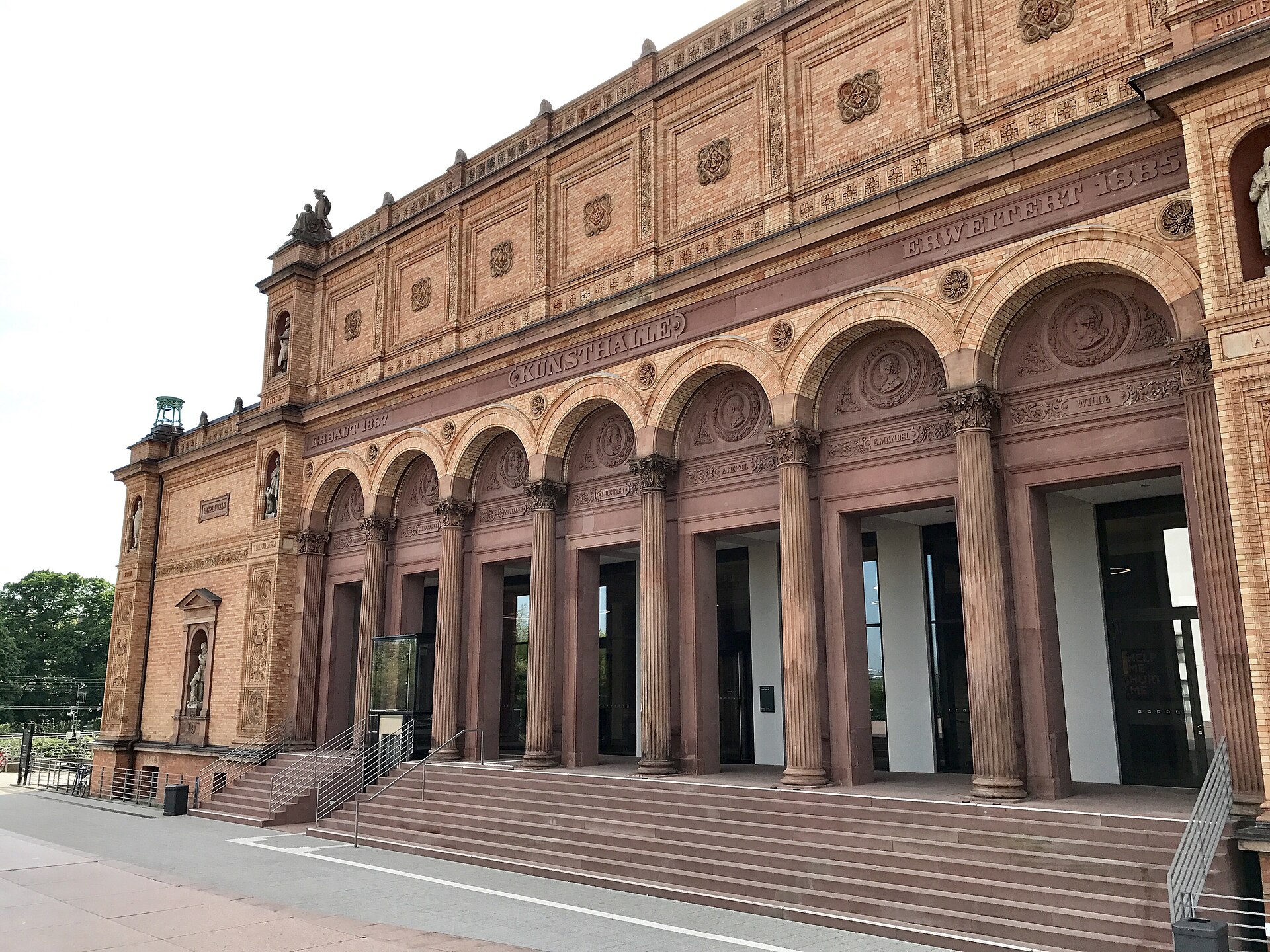
The word KUNSTHALLE carved above the arcade of the original 1869 building, with the founding date 1869 and an extension date 1885 also cut into the stone. Vetted by eye before use.
Photograph by Freunde der Kunsthalle · CC BY-SA 4.0Hamburger Kunsthalle
Museum · Founded 1869
Open, admission and hours confirmed 21 August 2026 · 8 sources
On this page 16 sections
ContentsClose
About 145,000 works dating from the fourteenth century onward, with roughly 1,000 on permanent display, spread across three buildings that read as three different centuries of museum architecture: an 1869 civic building funded by private Hamburg subscribers, a domed 1912-to-1921 extension built under the museum's first director Alfred Lichtwark, and a freestanding 1997 cube by Oswald Mathias Ungers for everything after 1960. The named strengths on the museum's own account are Old Masters including Meister Bertram's fourteenth-century Grabow Altarpiece, German Romanticism through Caspar David Friedrich and Philipp Otto Runge, and a run into international modernism represented by Edvard Munch. A print and drawing department of more than 140,000 sheets sits alongside the paintings, rotated rather than permanently hung.
| Kind | Museum |
|---|---|
| Founded | 1869 |
| City and country |  Hamburg, Germany Hamburg, Germany |
| Address | Glockengiesserwall 5, 20095 Hamburg, Germany |
| Website | hamburger-kunsthalle.de |
| Status | Open, confirmed |
| Record last verified |
Visiting
- Hours
- MondayClosed
- Tuesday, Wednesday, Friday to Sunday10:00 to 18:00
- Thursday10:00 to 21:00late opening; free entry 18:00 to 21:00 on the first Thursday of the month
- Closed
- Monday. 24 December.
- Admission
- AdultEUR 18
- ConcessionEUR 9
- Under 18Freefree
- Family, 1 adult and child(ren)EUR 16
- Family, 2 adults and child(ren)EUR 32
- Evening ticket, kurz reingeschaut (17:00 to 18:00, Thursday 20:00 to 21:00)EUR 96 EUR concession
- Flexticket, valid one yearEUR 25
- 12-Kunstmeilen-Ticket (12 Hamburg art venues)EUR 4227 EUR concession, 33.50 EUR with Hamburg Card
- 3-Day Kunstmeilen-TicketEUR 3525 EUR concession, 28 EUR with Hamburg Card
- Group (8+ people), per personEUR 14German-language prices page states EUR 14; the English-language page states EUR 16 for self-organised groups. Unresolved as of this check - phone/email the visitor office before quoting a single figure.
Free entry: First Thursday of every month, 18:00 to 21:00, free for everyone. Under-18s free at all times- Tickets
- tickets.hamburger-kunsthalle.de/webshop/webti... The museum's own ticket page.
- Do I need to book?
- Not stated as required on the fetched visitor pages; an online ticket shop exists for advance purchase.
- Address
- Glockengiesserwall 5, 20095 Hamburg, Germany MapTrain Hamburg Hauptbahnhof, adjacent to the museum
On foot Glockengiesserwall 5, opposite the main railway station's north side - Website
- hamburger-kunsthalle.de
- Telephone
- +49 40 428131 200
- [email protected]
Before you go how long, access, photography, bags, eating, shop
- How long to allow
- Three connected buildings and about 1,000 works on permanent display out of a holding of roughly 145,000; a half-day covers the Old Masters, nineteenth-century and contemporary wings without rushing.
- Access
- The museum publishes a dedicated barrier-free visit page, plus content in Leichte Sprache (easy language) and Gebaerdensprache (sign language).
- Photography
- Not stated on the fetched pages; the museum publishes separate photography guidance ('Hinweise zum Fotografieren') that was not read for this page.
- Bags
- Not stated on the fetched pages; not published here.
- Eating
- Cafe and restaurant on site (Cafe & Restaurant, per the museum's own visitor page)
- Shop
- Museum shop, operated via the Freunde der Kunsthalle (Friends of the Kunsthalle) society
Prices and hours change. We take them from the institution's own pages and print the day we read them, and you can check the current position at the source we used. Confirm before you travel.
What is inside
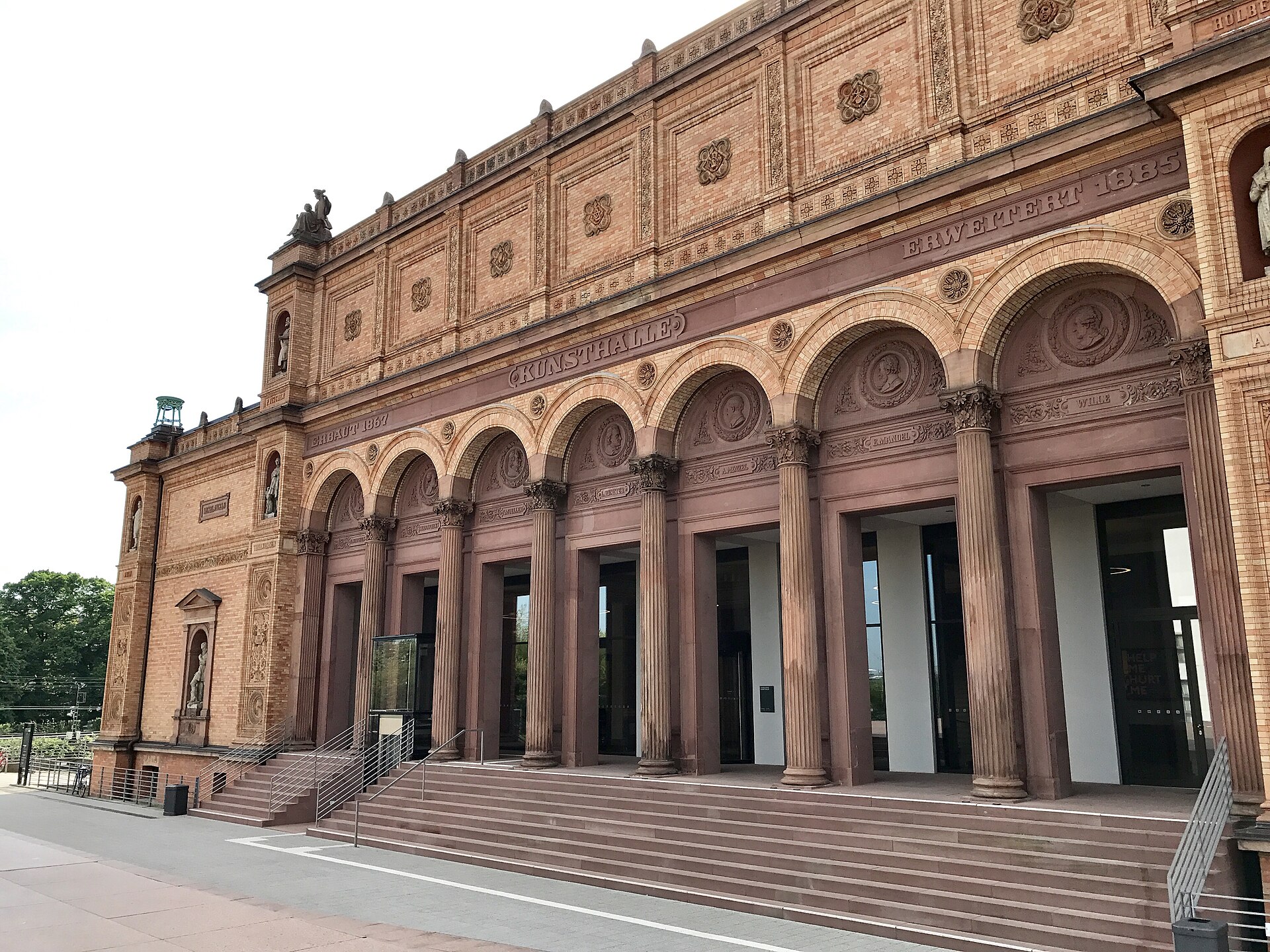
Photograph by Freunde der Kunsthalle · CC BY-SA 4.0 The Altbau (Gruendungsbau), 1869
The original building on the Alsterhoehe, designed by Georg Theodor Schirrmacher and Hermann von der Hude and funded largely by private donation rather than by a royal purse, unusual for a German museum of its date. It holds the Old Masters collection, including the museum's oldest major work, Meister Bertram's Grabow Altarpiece.
The Kuppelsaal and Lichtwark wing, 1912 to 1921
A domed-hall extension built under Alfred Lichtwark, the museum's first director, and designed by Fritz Schumacher; the museum's own account dates the wing's construction to between 1912 and 1919, with Wikipedia giving 1914 to 1921 for the Kuppelsaal specifically. It holds the nineteenth-century collection, including Caspar David Friedrich's paintings and Philipp Otto Runge's portraits, among them The Huelsenbeck Children of 1805 to 1806, donated by Runge's widow Pauline in 1872.
The Galerie der Gegenwart, opened February 1997
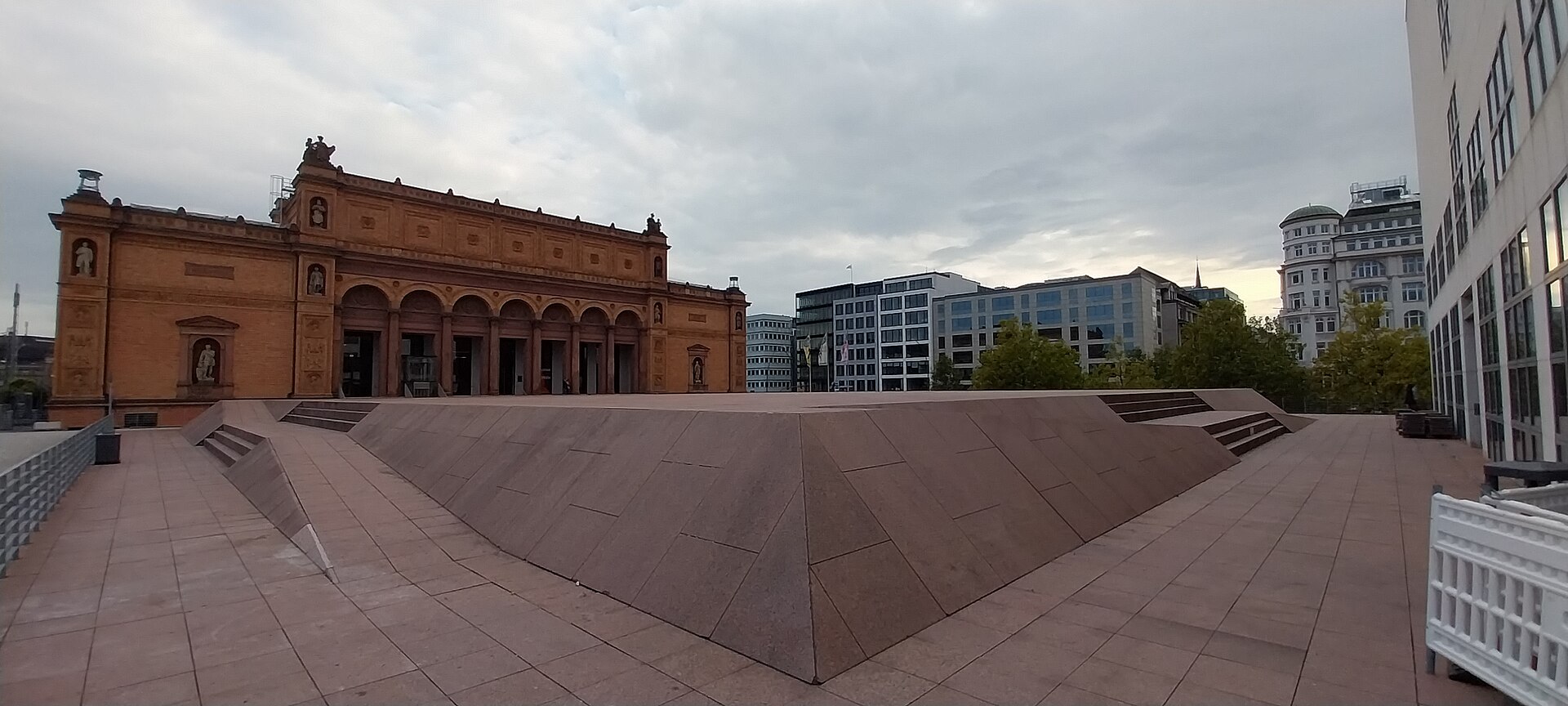
A separate cube-shaped building of 5,600 square metres designed by the Cologne architect Oswald Mathias Ungers, standing apart from the historic buildings and connected to them by an underground passage; among the largest purpose-built contemporary art spaces in Germany, holding the museum's post-1960s collection.
The Kupferstichkabinett (prints and drawings)
More than 140,000 works on paper, shown in changing rotation rather than on permanent display because of light sensitivity, a department the museum states is part of a total holding of about 145,000 works of art dating from the fourteenth century onward.
What to see first
Wanderer above the Sea of Fog
Caspar David Friedrich, about 1817The single picture most visitors come for, and its own provenance carries a documented gap: unclear ownership through most of the 19th century, in the Berlin gallery of Wilhelm August Luz by 1939, sold on to the lawyer Ernst Henke, returned to the Luz gallery, and passed through further private hands before the Kunsthalle bought it in 1970, where it has hung ever since.7
The Grabow Altarpiece
Meister Bertram, 1379 to 1383The oldest major work in the collection and one of the largest surviving German winged altarpieces of its date, painted for the Petrikirche in Hamburg; it anchors the museum's claim to cover eight centuries of art history rather than only the nineteenth and twentieth.4
The Huelsenbeck Children
Philipp Otto Runge, 1805 to 1806A family portrait the museum received from the artist's own widow, Pauline Runge, in 1872, and one of the works that makes the Kunsthalle's Runge holding the largest anywhere; the museum's own material names Runge as one of the collection's defining nineteenth-century figures alongside Friedrich.8
Madonna
Edvard Munch, 1895One of the named highlights in the museum's own account of its modern holdings, part of the collection's run from German Romanticism into international modernism inside a single building.6
Girl's Head
Paula Modersohn-BeckerThe subject of a live, unresolved restitution dispute: the family of Robert Graetz, a Holocaust victim, claimed the painting had been in his collection before passing through the Nazi-era art dealer Konrad Doebbeke and reaching the museum as a gift from Doebbeke's widow; museum director Alexander Klar rejected the claim, saying it was not established that this was the same painting that had hung in the Graetz collection. Listed on the German Lost Art Foundation's database for more than twenty years.6
Before the Masked Ball
Max Beckmann, 1923Named by the museum's own provenance research department as a documented case study, one of the works whose ownership history between 1933 and 1945 the department has published research on rather than left unexamined.5
Exhibitions on now
- On now4 Sep 2026 to 30 May 2027Confirmed , 6 weeks ago
- Opening soon20 Nov 2026 to 2 May 2027Confirmed , 6 weeks ago
- Opening soon24 Sep 2027 to 30 Jan 2028Confirmed , 6 weeks ago
Past exhibitions here
- Closed27 Mar to 30 Aug 2026Confirmed · check before you travel
Built by subscription, not by a prince
Where Munich's royal galleries were assembled by kings buying with their own money, the Hamburger Kunsthalle traces itself to a civic association. The Hamburg Kunstverein was founded in 1817, and the museum's own collection dates its real foundation to 1863, when two Hamburg donors, Georg Ernst Harzen and Johann Matthias Commeter, gave the collections that became its core. The building that opened in August 1869 on the former Vincent bastion, on the Alsterhoehe beside what is now the main railway station, was designed by Georg Theodor Schirrmacher and Hermann von der Hude and paid for largely through private donation. A museum built this way answers to its subscribers rather than to a single collector's taste, and it shows: the Kunsthalle's stated ambition from the start was breadth, eight centuries of art history under one institutional roof, rather than the depth-in-one-period model of a princely cabinet.
Lichtwark and the first modern director
Alfred Lichtwark became the museum's first director and is credited with turning a civic gallery into something closer to a modern museum, expanding the collection and its public programme in ways that shaped how the institution still presents itself. The Kuppelsaal, a domed-hall extension, was built during and after his tenure; the museum's own account dates its construction to between 1912 and 1919, while other published accounts of the building attribute the domed hall specifically to the architect Fritz Schumacher and date its completion to 1921. Both figures describe the same building phase, and the discrepancy is left here rather than resolved by guessing which is more precise.
Eight centuries, several very different pictures
The museum's oldest major holding, Meister Bertram's Grabow Altarpiece of 1379 to 1383, was painted for Hamburg's own Petrikirche and is among the largest surviving German winged altarpieces of its date; it is also, practically, the reason a visitor can walk from fourteenth-century panel painting to nineteenth-century Romanticism to postwar contemporary art without leaving the same institution. The Romantic core is Caspar David Friedrich, whose Wanderer above the Sea of Fog of about 1817 is the picture most associated with the museum internationally, alongside Philipp Otto Runge's family portraits, among them The Huelsenbeck Children of 1805 to 1806, given to the museum by the artist's widow Pauline Runge in 1872. Edvard Munch's Madonna of 1895 carries the collection into international modernism, and the museum names all of these among its own defining holdings rather than treating them as incidental.
The Friedrich picture's own ownership history has a documented gap worth recording rather than smoothing over: unclear through most of the nineteenth century, it was in the Berlin gallery of Wilhelm August Luz by 1939, was sold to the lawyer Ernst Henke, returned to the Luz gallery, and passed through further private hands before the Kunsthalle bought it in 1970. A museum's single most famous picture having an unresolved nineteenth-century chain of ownership is not unusual, but it is exactly the kind of gap this archive exists to record rather than pass over.
Three buildings, three centuries of museum-making
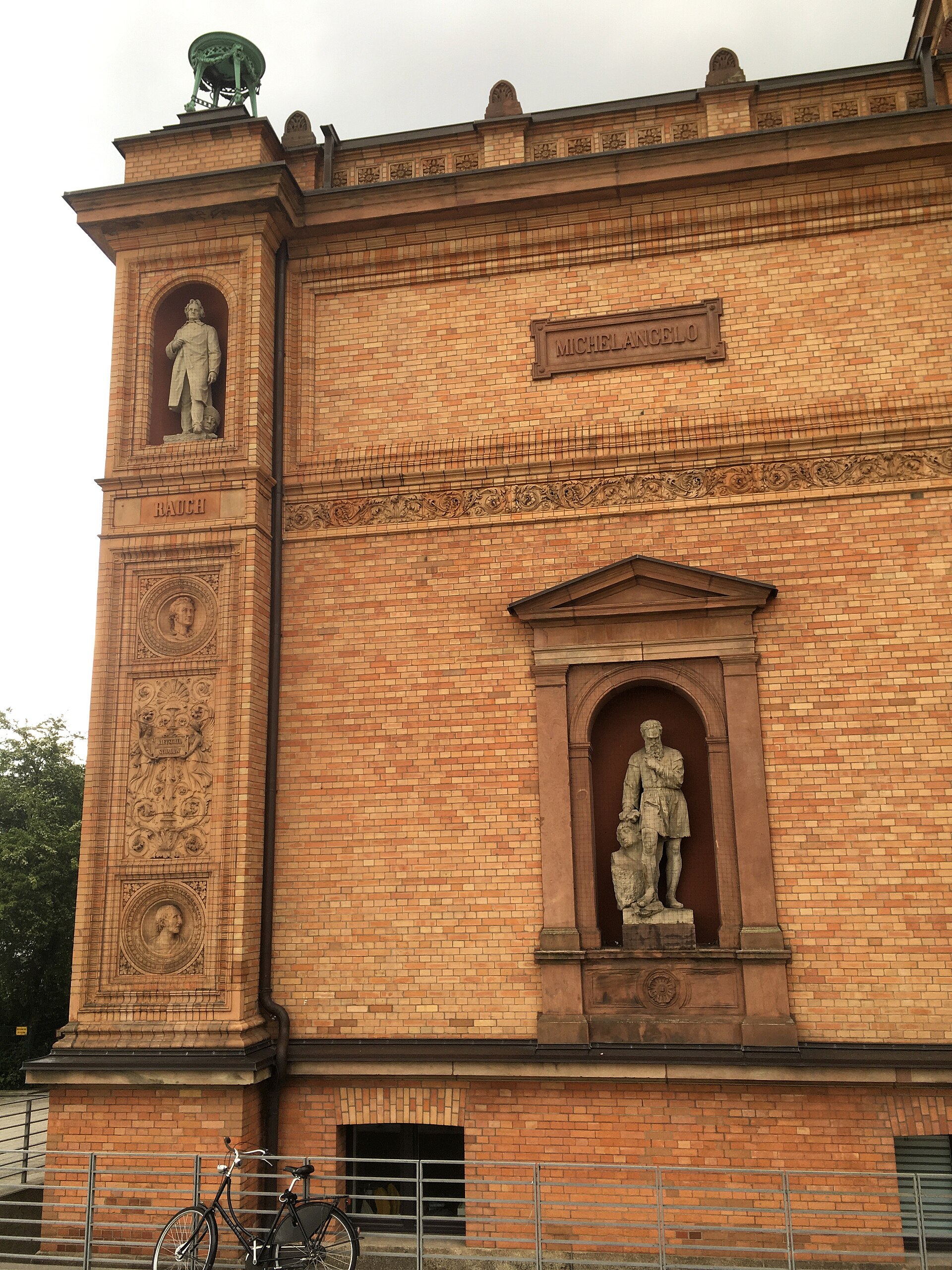
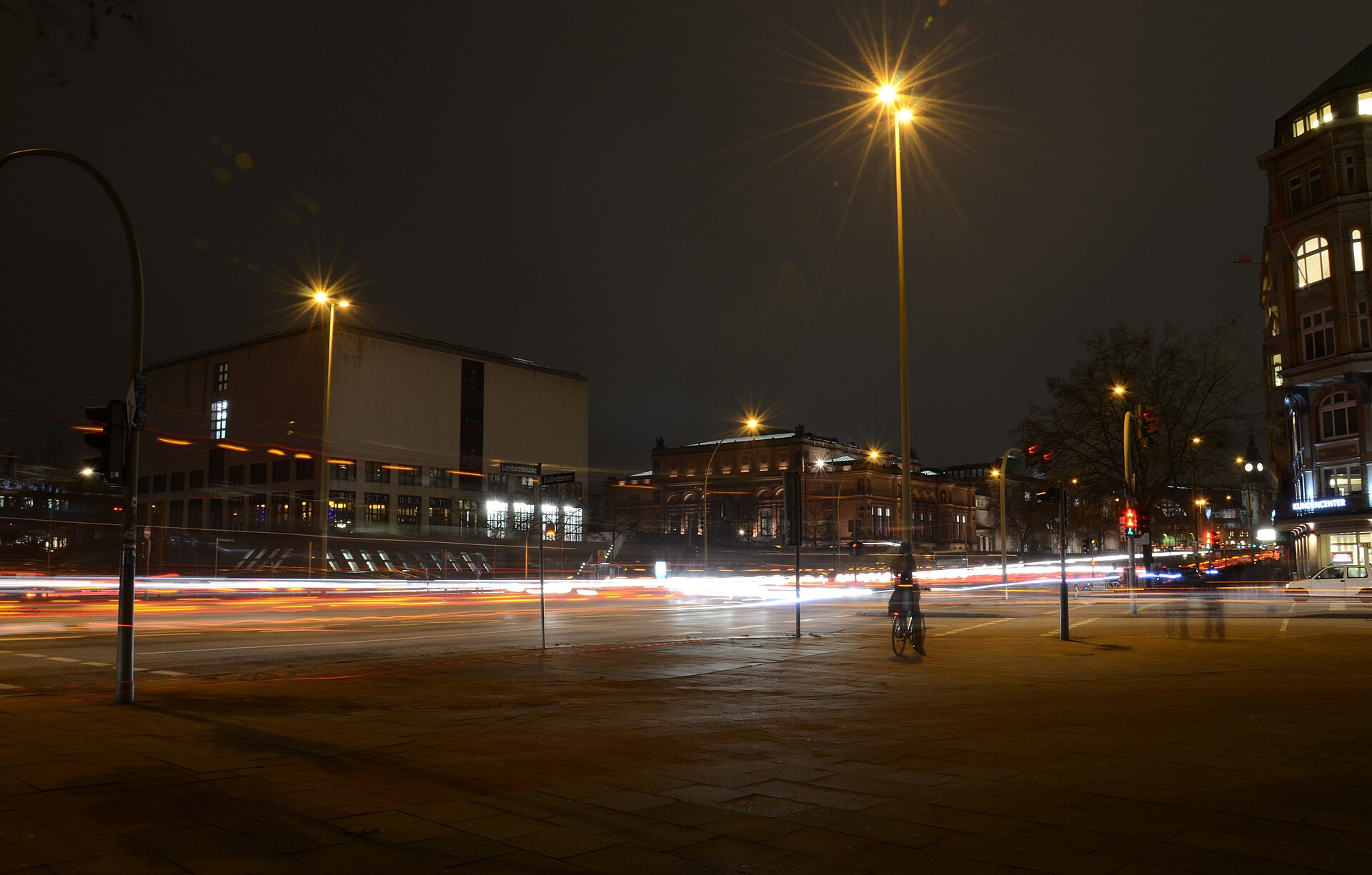
The Kunsthalle occupies three connected structures that were never designed as a single composition. The 1869 Altbau is civic neoclassicism, red brick with statue niches naming artists on its facade. The Kuppelsaal wing added a domed top-lit hall in the 1910s. The most recent addition, the Galerie der Gegenwart, opened in February 1997: a freestanding 5,600-square-metre cube designed by the Cologne architect Oswald Mathias Ungers, connected to the older buildings by an underground passage and given over entirely to art made after 1960. The museum's own description calls it among the largest purpose-built spaces for contemporary art in Germany. The effect on a visit is architectural as much as curatorial: three distinct buildings, three distinct ideas of what a museum should look like, and no attempt to make them match.
The first provenance research post in Germany, and a claim it has rejected
In 2000 the Hamburger Kunsthalle created a position dedicated to provenance research, which the museum states was the first of its kind in Germany; it became permanent in 2005. The department's stated scope covers every object created before 1945 that entered the collection from 1933 onward, and the museum publishes named case studies rather than a general policy statement, among them Max Beckmann's Before the Masked Ball of 1923 and research into works by Emil Nolde.
That transparency has produced at least one live dispute rather than only settled cases. The family of Robert Graetz, a Holocaust victim, has claimed Paula Modersohn-Becker's Girl's Head as his, arguing it passed through the Nazi-era art dealer Konrad Doebbeke before reaching the museum as a gift from Doebbeke's widow. The painting sat on Germany's Lost Art Foundation database for more than twenty years. Museum director Alexander Klar has publicly rejected the claim, on reporting this desk could source only at second hand, saying it is not established that the picture is the one that hung in the Graetz collection. Whichever side is right, a museum's own restitution page naming a claim it has turned down, rather than only the claims it has settled, is a more useful record than a page that only ever reports success.
How to actually use it
Eighteen euros covers the whole museum, all three buildings, with concessions at nine and under-18s free at any time; the first Thursday of every month drops the price to nothing at all between 18:00 and 21:00. A 12-Kunstmeilen-Ticket extends the same admission across twelve art venues along Hamburg's so-called art mile for 42 EUR, useful only if more than one stop is actually planned. The museum is open Tuesday to Sunday, 10:00 to 18:00, with a late Thursday closing at 21:00, and closed Monday. Given the building split, a first-time visitor is better served picking one wing properly, the Altbau's Old Masters and Runge and Friedrich in the Kuppelsaal, or the Ungers cube for postwar and contemporary work, than trying to cover 145,000 years of holdings in a single afternoon.
What visitors say
The museum publishes no visitor prose and cites no platform rating on its own pages, so this rests on the institution's own material and on the one documented press dispute this desk could source. Hamburg's Kunsthalle presents itself, credibly on the evidence of its own collection pages, as an unusually complete single-building survey: about 145,000 works from the fourteenth century to the present, roughly 1,000 on permanent view across three architecturally distinct buildings, assembled by civic subscription from 1817 rather than by a single princely collector. The museum was also first in Germany to create a dedicated provenance research post, in 2000, which cuts both ways: it is evidence of real transparency, and it is also the reason a live, unresolved restitution claim is now part of the museum's own public record rather than a matter nobody had to answer.
What is praised, what is criticised
- Praised: the breadth in one building: Old Masters, nineteenth-century Romanticism and contemporary art each get their own architecturally distinct wing rather than being compressed into a shared circuit
- Praised: free entry every first Thursday of the month from 18:00 to 21:00, alongside a standing under-18 free policy
- Praised: the Kuppelsaal and the older Altbau galleries, which hold the Runge and Friedrich material the museum treats as its nineteenth-century core
- Praised: the museum's own transparency in publishing its provenance research programme and specific case studies, including works whose 1933 to 1945 ownership history remains under active study
- Criticised: an unresolved restitution dispute over Paula Modersohn-Becker's Girl's Head: the family of Robert Graetz, a Holocaust victim, says the painting was his; the museum's director has publicly rejected the claim on the grounds that the identification is not established, and the work remained listed on Germany's Lost Art Foundation database for more than twenty years without resolution
- Criticised: the museum's own fetched pages do not itemise photography rules, bag policy or booking requirements in the visitor-facing text this desk could read, leaving practical detail split across separate pages not fetched for this research pass
Questions about Hamburger Kunsthalle
Where is Hamburger Kunsthalle?
Glockengiesserwall 5, 20095 Hamburg, Germany.
How much does it cost to visit?
Adult: EUR 18; Concession: EUR 9; Under 18: free; Family, 1 adult and child(ren): EUR 16; Family, 2 adults and child(ren): EUR 32. As confirmed 21 August 2026.
When is it open?
Monday closed; Tuesday, Wednesday, Friday to Sunday 10:00-18:00; Thursday 10:00-21:00. Closed: Monday. 24 December. As confirmed 21 August 2026.
How do you get there?
Train: Hamburg Hauptbahnhof, adjacent to the museum; On foot: Glockengiesserwall 5, opposite the main railway station's north side.
What should you see first?
Wanderer above the Sea of Fog (Caspar David Friedrich, about 1817); The Grabow Altarpiece (Meister Bertram, 1379 to 1383); The Huelsenbeck Children (Philipp Otto Runge, 1805 to 1806); Madonna (Edvard Munch, 1895); Girl's Head (Paula Modersohn-Becker); Before the Masked Ball (Max Beckmann, 1923).
What we could not confirm
- The exact construction dates of the Kuppelsaal / Lichtwark wing: the museum's own about page gives 1912 to 1919, while a secondary account attributes the domed hall to the architect Fritz Schumacher and dates it 1914 to 1921. Both are reported here rather than silently resolved.
- The current status of the Robert Graetz family's claim to Girl's Head by Paula Modersohn-Becker. This desk could source director Alexander Klar's rejection only through a tertiary citation (Wikipedia, citing Das Erste/ARD reporting of 17 December 2023) and could not fetch the underlying broadcast or lootedart.com article directly; a primary source and any update since December 2023 should replace this citation.
- Whether a free-licence photograph exists of the Galerie der Gegenwart's interior, the Kuppelsaal, or any gallery inside the Altbau. Commons was heavily rate-limited during this research pass (fleet-wide contention on both direct requests and a proxy route) and a further search did not turn up an interior plate this desk could confirm and vet by eye in the time available.
- Whether the museum's Beckmann and Nolde provenance case studies name specific claimants or outcomes beyond what the provenance-research overview page states; the dedicated case-study pages were not located by URL during this research pass.
Images
Sources
- 1Hamburger Kunsthalle, Besuch (visit) page: address (Glockengiesserwall 5, 20095 Hamburg), phone (+49 40 428131 200), email, phone hours, links to hours, prices, accessibility, cafe/restaurant, museum shop and photography guidance. Read from the raw HTML on 7 August 2026. hamburger-kunsthalle.de/besuch
- 2Hamburger Kunsthalle, Oeffnungszeiten (opening hours): Tuesday to Sunday 10:00 to 18:00, Thursday extended to 21:00, closed Monday, and 2026 holiday-specific hours. Read from the raw HTML on 7 August 2026. hamburger-kunsthalle.de/de/oeffnungszeiten
- 3Hamburger Kunsthalle, Preise, Tickets & Gutscheine (prices, tickets and vouchers): 18 EUR adult / 9 EUR concession admission, under-18 free, family tickets, the 'kurz reingeschaut' evening ticket, the free first-Thursday-of-the-month evening (18:00 to 21:00), the Flexticket, and the 12-Kunstmeilen-Ticket and 3-Day Kunstmeilen-Ticket combined passes. Read from the raw HTML on 7 August 2026. hamburger-kunsthalle.de/de/preise-tickets-gutscheine
- 4Hamburger Kunsthalle, About the Kunsthalle (English): the 1817 Kunstverein founding, the 1863 Harzen and Commeter donations, the August 1869 opening on the former Vincent bastion, the 1912-to-1919 Lichtwark Gallery extension, the February 1997 opening of the Galerie der Gegenwart designed by Oswald Mathias Ungers (5,600 square metres), the collection totalling about 145,000 works from the 14th century with about 1,000 on permanent display, the Kupferstichkabinett's 140,000-plus works on paper, and the sculpture collection founded in 1891. Read from the raw HTML on 7 August 2026. hamburger-kunsthalle.de/en/about-kunsthalle
- 5Hamburger Kunsthalle, Provenance Research (English): the department created in 2000 as the first dedicated provenance-research post in Germany, made permanent in 2005, its scope (works from before 1945 that entered the collection from 1933 onward), the case studies of Max Beckmann's Before the Masked Ball and works by Emil Nolde, and department head Dr Ute Haug's role in founding the national Provenance Research Working Group in 2000 and chairing the Arbeitskreis Provenienzforschung e.V. 2014 to 2017. Read from the raw HTML on 7 August 2026. hamburger-kunsthalle.de/en/provenance-research
- 6Wikipedia, 'Kunsthalle Hamburg': architects Georg Theodor Schirrmacher and Hermann von der Hude for the 1863-to-1869 main building, Alfred Lichtwark as first director, the Kuppelsaal (1914 to 1921) attributed to Fritz Schumacher, the 1997 Galerie der Gegenwart by Ungers, named highlights (Meister Bertram's Grabow Altarpiece of 1383, Caspar David Friedrich, Philipp Otto Runge, Munch's Madonna of 1895), and the December 2023 reporting (via Das Erste/ARD, cited to lootedart.com) on the Robert Graetz family's claim to Paula Modersohn-Becker's Girl's Head and director Alexander Klar's rejection of it. en.wikipedia.org/wiki/Kunsthalle_Hamburg
- 7Wikipedia, 'Wanderer above the Sea of Fog': the painting's unclear 19th-century provenance, its presence in Wilhelm August Luz's Berlin gallery by 1939, its sale to Ernst Henke, its return to the Luz gallery, and the Hamburger Kunsthalle's 1970 purchase. en.wikipedia.org/wiki/Wanderer_above_the_Sea_of_Fog
- 8Wikipedia, 'Philipp Otto Runge': the paintings by Runge held at the Hamburger Kunsthalle, including The Huelsenbeck Children of 1805 to 1806, and the 1872 donation of much of his surviving work to the museum by his widow Pauline Runge nee Bassenge. en.wikipedia.org/wiki/Philipp_Otto_Runge