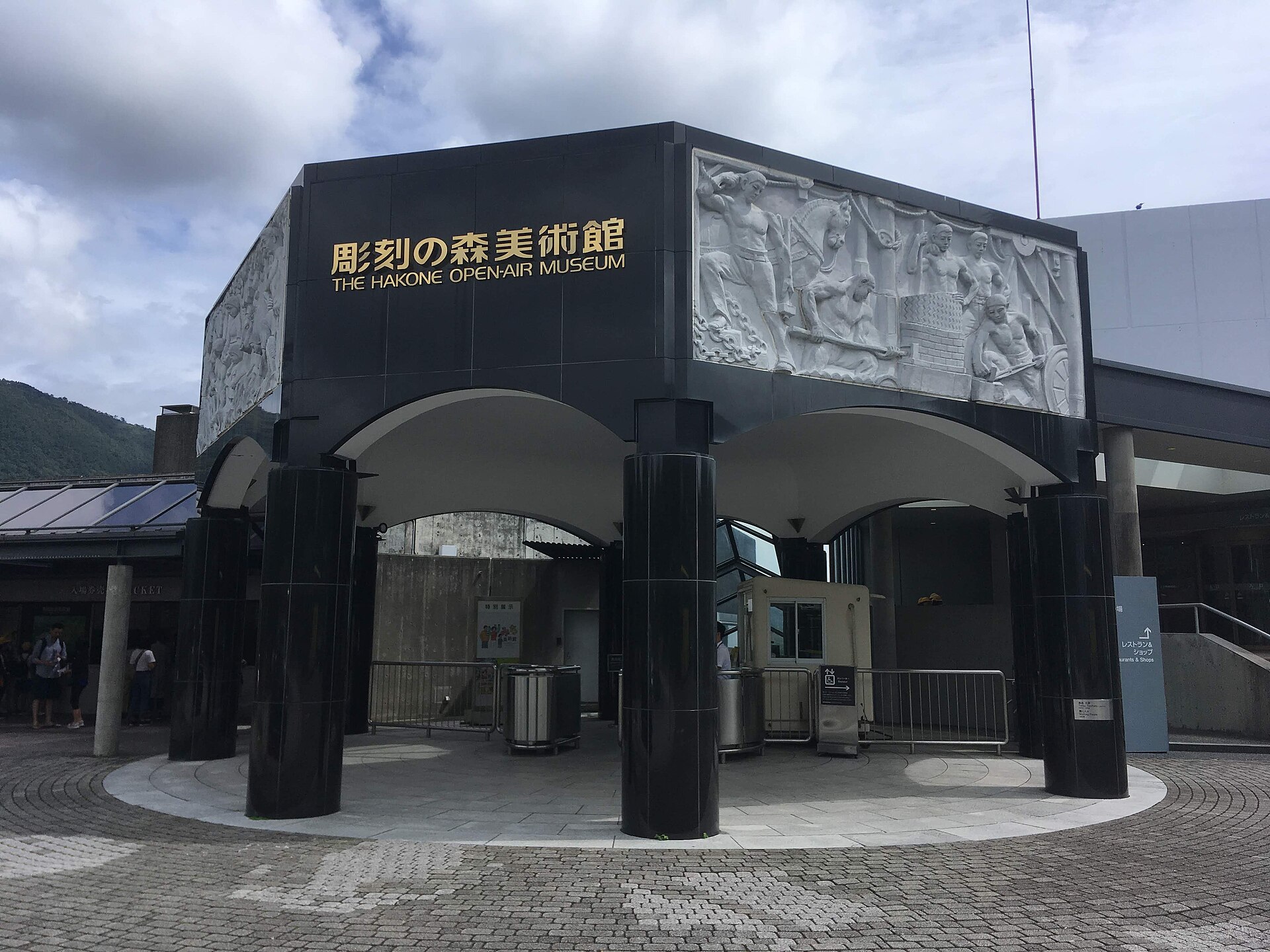
The entrance building of the Hakone Open-Air Museum, with the museum name in Japanese and English on its facade.
Christophe95, CC BY-SA 4.0, Wikimedia CommonsThe Hakone Open-Air Museum
Museum · Chokoku no Mori Bijutsukan · Founded 1969
Open, admission and hours confirmed 24 November 2026 · 17 sources
On this page 15 sections
ContentsClose
The strengths are Henry Moore, which the museum counts as 26 bronzes shown around the grounds, and Picasso, with 188 ceramics at the core of more than 300 works. The outdoor garden adds named European moderns and Japanese sculptors such as Rokuzan Ogiwara, Taro Okamoto and Kotaro Takamura, listed by Wikipedia and Tokyo Cheapo.
| Local name | Chokoku no Mori Bijutsukan |
|---|---|
| Kind | Museum |
| Founded | 1969 (opened 1 August 1969) |
| City and country |  Hakone, Japan |
| Address | Ninotaira 1121, Hakone-machi, Ashigarashimo-gun, Kanagawa 250-0493, Japan |
| Website | hakone-oam.or.jp/en |
| Status | Open, confirmed |
| Record last verified |
Visiting
- Hours
- Every day, 365 days a year09:00 to 17:00last entry 30 minutes before closing
- Closed
- The visit page lists no closed days. Individual attractions can close separately; the home page carried a closure notice for Woods of Net, 30 November to 4 December.
- Admission
- Adult, same dayJPY 2,000online ticket 1,800 JPY
- University or high school student, same dayJPY 1,600online ticket 1,400 JPY
- Middle or elementary school student, same dayJPY 800online ticket 600 JPY
- Group of 15 or more, adultJPY 1,800students 1,400 JPY; middle and elementary 600 JPY; reservation required
- Adult with disability certificateJPY 1,000one caregiver per visitor also 1,000 JPY
- Preschool childFreefree
Free entry: Preschool children, every day. Students (university, high school, middle, elementary) holding a disability certificate- Tickets
- hakone-oam.or.jp/en/webticket The museum's own ticket page.
- Do I need to book?
- No for individuals; online tickets are cheaper and skip the ticket counter; groups of 15 or more must reserve
- Address
- Ninotaira 1121, Hakone-machi, Ashigarashimo-gun, Kanagawa 250-0493, Japan MapRail Odakyu Line from Odawara to Hakone Yumoto, then the Hakone Tozan Railway to Chokoku-no-Mori Station; the museum is a 2-minute walk
Bus Bus H, J or Z from Odawara Station East Exit or Hakone Yumoto to Ninotaira-iriguchi stop, about a 6-minute walk
Car Tomei Expressway to Atsugi IC, Odawara-Atsugi Road and Seisho By-Pass to Hakoneguchi IC, then National Route 1 and Prefectural Road 723; the museum is about 500 metres on - Website
- hakone-oam.or.jp/en
- Telephone
- +81 460 82 1161
Before you go how long, access, photography, bags, eating, shop
- How long to allow
- About 120 minutes or more, per Tokyo Cheapo (secondary)
- Access
- Wheelchairs and strollers can be rented free from the information desks, availability varies; a nursing room is in the New Building information area
- Photography
- Indoors: no copying of artworks, flash, video, tripods or selfie sticks; commercial filming and live streaming banned; no outdoor rules stated on the page
- Bags
- Not stated on the pages fetched
- Eating
- The museum has a Food, Cafes and Shops section; the cafe at Log Plaza was completed in 2020 per the history page
- Shop
- Shops on site per the museum's about page
Prices and hours change. We take them from the institution's own pages and print the day we read them, and you can check the current position at the source we used. Confirm before you travel.
What is inside
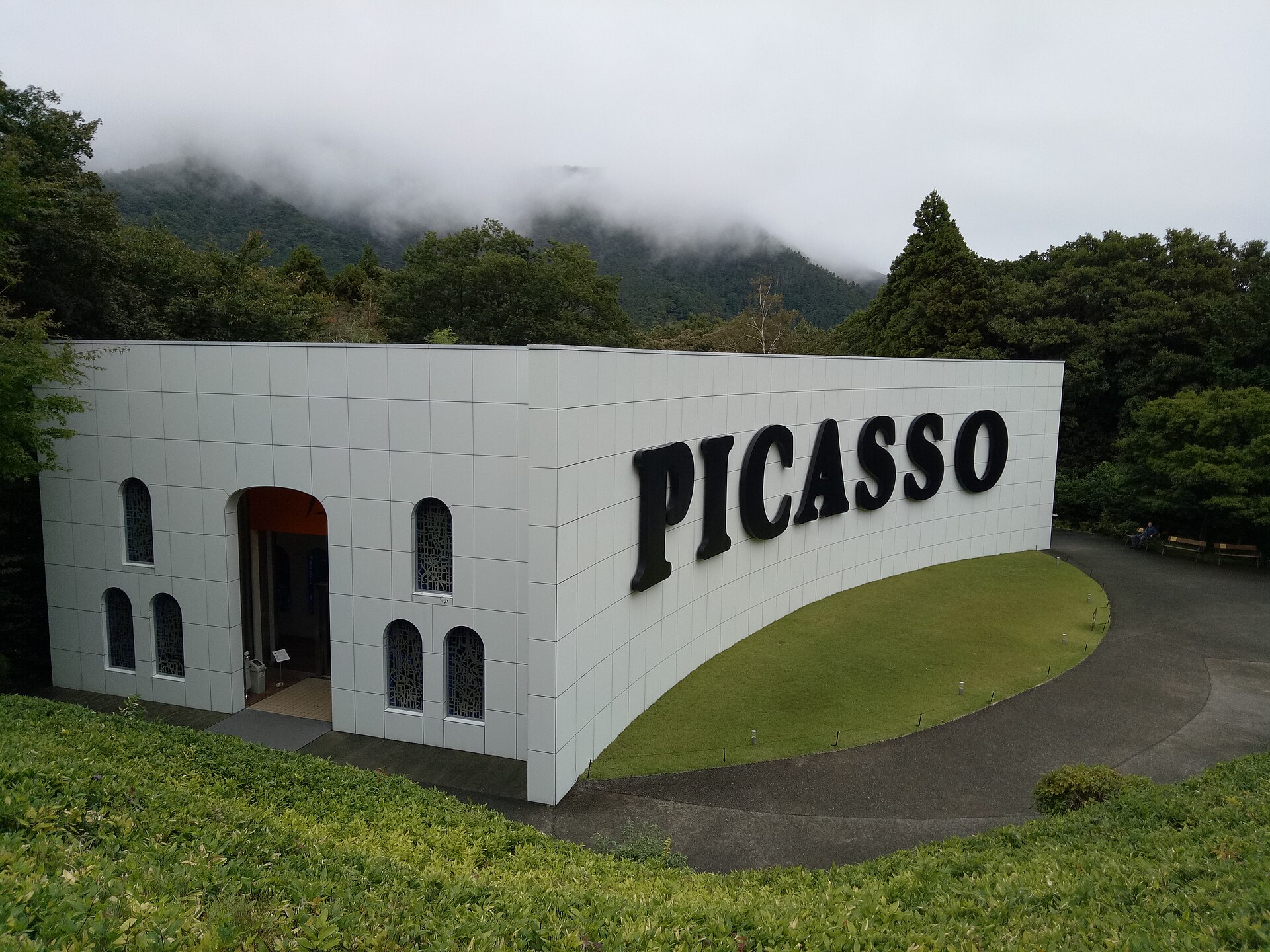
Photograph by Lasthib · CC BY-SA 4.0 Picasso Pavilion
Opened in 1984 and renewed in 2019. Centred on 188 ceramics bought from Maya Picasso, with sculpture, paintings, tapestries, gemmail, prints and photographs by David Douglas Duncan. The museum says over 319 works have been shown on rotation.
Outdoor sculpture garden
About 100 works by modern and contemporary artists across 70,000 square metres, named by the museum as including Rodin, Bourdelle, Miro and Moore.
Henry Moore collection
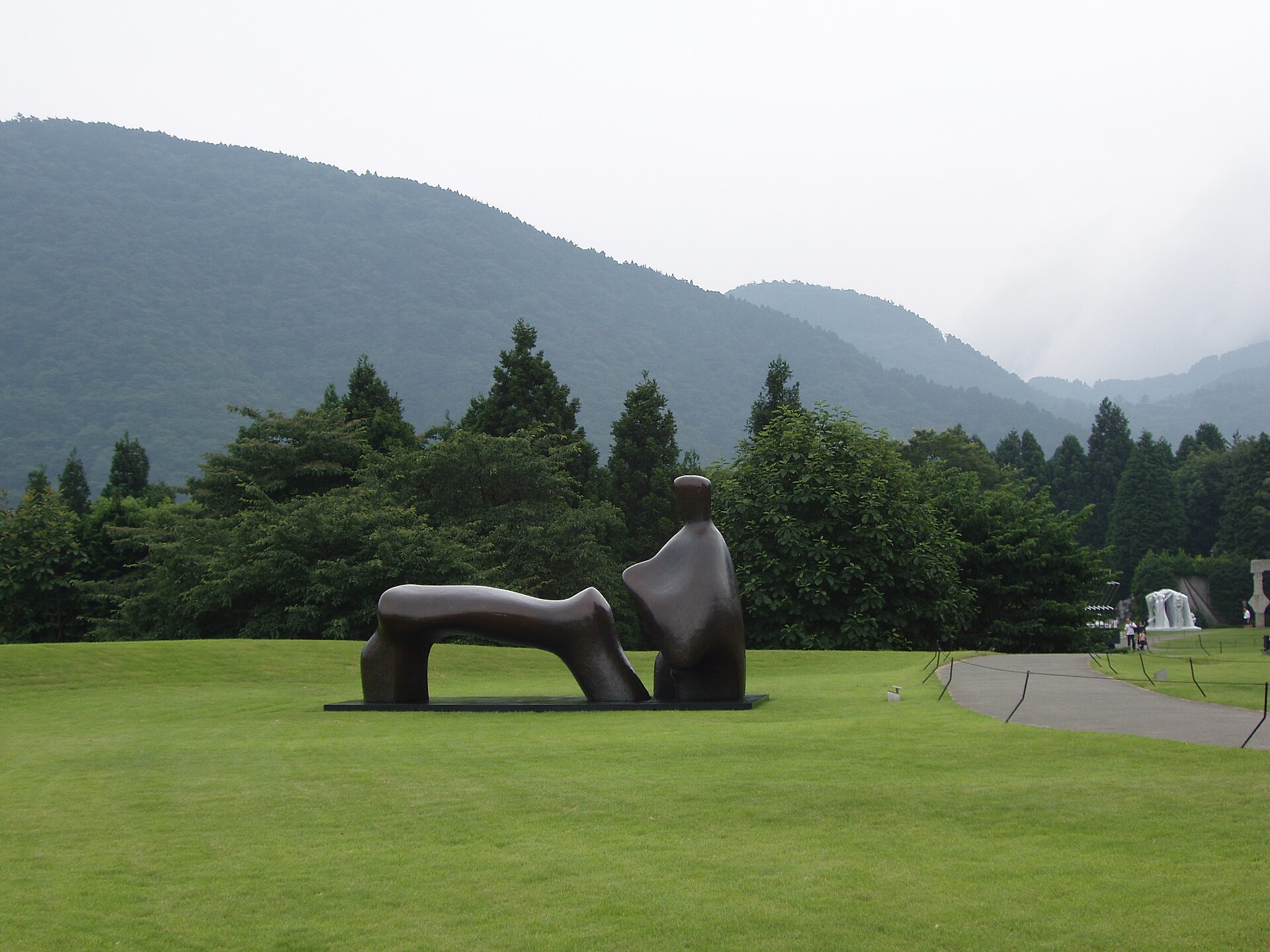
26 bronzes of 1948 to 1984 shown on rotation around the grounds, including Family Group, Large Spindle Piece and Two Piece Reclining Figure: Cut; inaugurated 16 May 1987.
Art Hall, Main Gallery and Multi Hall
Indoor exhibition rooms. The museum lists a Masterpiece Collection show in the Art Hall (from 6 December 2024), a Unique Collection show in the Main Gallery (from 31 January 2026) and a Multihall permanent display of three works from the collection; the permanent-collection page also says the indoor rooms hold works by Brancusi and Giacometti.
Symphonic Sculpture, Woods of Net and the footbath
Gabriel Loire's stained-glass tower (1975), the children's net structure Woods of Net (2009) and a hot-spring footbath (2004), all in the grounds.
What to see first
Picasso ceramics
Pablo Picasso188 ceramics acquired from Maya Picasso form the core of the pavilion, among them Eye and Sun (1957) and Horned Owl (1961).4
Family Group
Henry MooreDated 1948 to 1949 and described by the museum as Moore's first life-size bronze cast; acquired from Nelson Rockefeller.5
Large Spindle Piece
Henry MooreA bronze 333 cm high, enlarged from a 16 cm plaster maquette via an 86 cm working model which the museum also holds.5
Symphonic Sculpture
Gabriel LoireStained-glass tower with a spiral stair and an observation deck, completed 1975.3
Woods of Net
Toshiko Horiuchi (per Atlas Obscura)A wooden structure with a climbable coloured net for children, completed 2009; the museum home page notes it is shut in poor weather.10
Action Enchained
Aristide MaillolA work of 1905 to 1906 in the grounds, and Maillol was among the artists shown at the 1969 opening.14
The Jester
Pablo PicassoA bronze of 1905 in the Picasso Pavilion, which the museum says was made the night Picasso visited the circus with Max Jacob.4
A sculpture park that opened in 1969
The Hakone Open-Air Museum, in Japanese Chokoku no Mori Bijutsukan, opened on 1 August 1969 on a hillside at Ninotaira in the Hakone hot-spring country of Kanagawa Prefecture. The museum's own history page records that plans were announced on 4 January 1968, that ground was broken that year, and that the Main Gallery opened with the park. The museum's about page names Nobutaka Shikanai as founder and first director, ties the founding to the Fujisankei Communications Group, and gives his stated aim as bringing sculpture to more people in Japan. The park sits inside the Fuji-Hakone-Izu National Park. Wikipedia and Japan Wonder Travel call it Japan's first open-air museum, and that is a claim we have from secondary sources rather than from the museum's own pages.
The opening programme tells you what the founders were buying into. The history page lists modern sculpture shows and works by Bourdelle, Maillol, Takamichi Ito and Marta Pan in 1969, a Barbara Hepworth exhibition in 1970, and in 1971 the second International Exhibition of Modern Sculpture with Rodin, Henry Moore and Kenneth Armitage. In 1972 the nearby station on the Hakone Tozan Railway was renamed Chokoku-no-mori, which the history page records as a fact of that year. A Grand Prize exhibition series followed from 1973, and the museum later folded its Moore and Rodin prize shows into the Fujisankei Biennale in 1993.
What the grounds hold and how large they are
The museum's own permanent-collection page describes the outdoor garden as about 100 works by modern and contemporary masters across 70,000 square metres, naming Rodin, Bourdelle, Miro and Moore. Other sources count differently: Wikipedia and the Kanagawa prefectural tourism page speak of about 120 sculptural works on permanent display, and Wikipedia and the Japan Wonder Travel guide say the museum holds more than 1,000 pieces in all. The museum's about page says the foundation's art collection runs to over 2,000 works, many of them paintings from the 1970s onward. These figures are not the same measure, so this page gives each with its source rather than choosing one.
The 70,000 square metre figure appears on the museum's own permanent-collection page and in Atlas Obscura. The ground slopes, and the sculptures are placed against the Hakone mountains, so one of the pleasures the museum itself points to is seeing bronzes against a changing season: cherry blossom in spring and autumn colour are named by the Japan Wonder Travel guide.
The Picasso Pavilion
The Picasso Pavilion opened on 7 July 1984, according to the museum's history page, alongside the New Gallery, and was renewed for the museum's 50th anniversary and reopened on 27 July 2019 after renovation. It is the part of the museum the museum itself describes most fully. The pavilion centres on 188 ceramic works bought from Maya Picasso, the artist's daughter, born in 1935. Around them the display carries sculptures, paintings, tapestries and gemmail, a glass technique, and photographs by David Douglas Duncan from about 1957.
The museum names works it shows or has shown: the bronze The Jester of 1905, a 1982 tapestry by Yvette Cauquil-Prince after Minotauromachy, the oil Still Life with Cat of 1962, the etchings and aquatints of The Dream and Lie of Franco of 1937, the 26 aquatints of La Tauromaquia of 1957, and ceramics such as Eye and Sun, Face of Faun and Horned Owl. The museum says the pavilion has shown more than 319 works on rotation since it opened, and describes the whole Picasso holding as over 300 works. A visitor should know that the centre of mass is ceramics, prints and tapestries, a point the museum's own account makes plain by building its description around the 188 ceramics.
The Henry Moore collection
The Moore collection was inaugurated on 16 May 1987. The museum's Moore page says it holds 26 sculptures made between 1948 and 1984, shown on rotation around the grounds, and calls it one of the largest collections of his work. Its centrepieces are Upright Connected Forms of 1979, donated by Moore himself, and Family Group of 1948 to 1949, acquired from Nelson Rockefeller; 16 further works were acquired in 1986.
The page gives dimensions and notes on eight bronzes. Large Spindle Piece, of 1968 to 1974, is 333 centimetres high and was enlarged through an 86 centimetre working model from a 16 centimetre plaster maquette; the working model is in the collection too. Two Piece Reclining Figure: Cut, of 1979 to 1981, splits the torso into two forms the museum says resemble rocks or mountains, so that the bronze merges with the landscape. Reclining Figure: Arch Leg, of 1969 to 1970, is described as standing in an open space overlooking Sagami Bay. The page also records Moore's three recurring themes, Mother and Child, the Reclining Figure and Interior-Exterior Forms, and notes that each cast is numbered and patinated chemically, sometimes in a colour chosen to suit the site.
Towers, nets and a footbath
Gabriel Loire's Symphonic Sculpture was completed in 1975 according to the museum's history page. Japan Wonder Travel describes it as a spiral staircase with stained-glass panels leading to an observation deck with mountain views, and the Japan National Tourism Organization page gives its height as 18 metres. The museum's own site did not give a description of it in the pages we fetched, so the height rests on one secondary source.
Woods of Net was completed in 2009, per the history page. Atlas Obscura describes it as a 528 square metre structure of 589 wooden pieces with no metal parts, holding a large coloured net for children to climb and rest on, and credits it to Toshiko Horiuchi; Atlas Obscura is the only source we have for those numbers and that attribution. The museum's own home page carried a closure notice for it for 30 November to 4 December, and says it is not open for play in poor weather. A hot-spring footbath opened in 2004, per the history page; one visitor-review page says it was free and that a vending machine sold small towels for 200 yen, which is a visitor remark and not a museum statement.
Visiting: hours, prices and getting there
The museum's visit page gives hours of 9:00 to 17:00, 365 days a year, with last entry 30 minutes before closing. Same-day tickets cost 2,000 yen for adults, 1,600 for university and high school students and 800 for middle and elementary school students; tickets bought online cost 1,800, 1,400 and 600 yen. Groups of 15 or more pay 1,800, 1,400 and 600 yen and must reserve. Preschool children are free. Holders of a disability certificate who are students are free, and adult holders pay 1,000 yen, with one caregiver also at 1,000 yen. Parking for ordinary cars costs 500 yen for up to three hours and 500 yen for each further hour. Prices are in yen and are not converted here.
By train, the museum's access page says to ride the Odakyu Line from Odawara to Hakone Yumoto and then the Hakone Tozan Railway to Chokoku-no-Mori Station, from which the museum is a two-minute walk. Buses H, J and Z from Odawara Station East Exit or Hakone Yumoto go to the Ninotaira-iriguchi stop, about six minutes on foot. Indoors, copying artworks, flash, video, tripods and selfie sticks are prohibited, commercial filming and live streaming are banned, and pets are not allowed except assistance dogs. Wheelchairs and strollers can be borrowed free from the information desks, subject to availability.
Not to be confused with
There are other art museums in the Hakone area, and one of them is run by the same group. The museum's history page records that the Utsukushi-ga-hara Open-Air Museum opened on 6 June 1981, which is a separate institution in a different place, and the Hakone Museum of Art and the Hakone Glass Forest are also separate institutions. This page is only about the museum at Ninotaira, whose address on the museum's own visit page is Ninotaira 1121, Hakone-machi, Ashigarashimo-gun, Kanagawa 250-0493.
What visitors say
Visitors in the aggregate sources praise the setting first: landscaped grounds, large outdoor sculptures against mountains, the Picasso rooms, the stained-glass tower, and play areas that make it easy with children. The complaints are few and small: the entry fee felt high before the visit, and some visitors ignoring the no-photography rules in the Picasso area.
What is praised, what is criticised
- Praised: The landscaped grounds and the way large sculptures sit against the mountains
- Praised: The Picasso Pavilion and Symphonic Sculpture are most often singled out
- Praised: Family-friendly: climbable works, a maze and play spaces, and the footbath
- Criticised: The entry fee of 2,000 yen read as high to some visitors before they went in
- Criticised: Some visitors ignore the no-photography rules in the Picasso area
- Criticised: The Picasso holding is centred on ceramics, prints and tapestries, which a visitor expecting major canvases should know; this is our reading of the museum's own account
Ratings on other platforms
Google (as reported by the Wanderlog aggregate): 4.5 from 16,303 ratings, read 24 November 2026
Tripadvisor (as reported by the Wanderlog aggregate): 4.6 from 2,844 ratings, read 24 November 2026
A platform average is a tertiary source: it moves, it is not audited, and we quote no visitor's words.
Questions about The Hakone Open-Air Museum
Where is The Hakone Open-Air Museum?
Ninotaira 1121, Hakone-machi, Ashigarashimo-gun, Kanagawa 250-0493, Japan.
How much does it cost to visit?
Adult, same day: JPY 2000; University or high school student, same day: JPY 1600; Middle or elementary school student, same day: JPY 800; Group of 15 or more, adult: JPY 1800; Adult with disability certificate: JPY 1000. As confirmed 24 November 2026.
When is it open?
Every day, 365 days a year 09:00-17:00. Closed: The visit page lists no closed days. Individual attractions can close separately; the home page carried a closure notice for Woods of Net, 30 November to 4 December. As confirmed 24 November 2026.
How do you get there?
Rail: Odakyu Line from Odawara to Hakone Yumoto, then the Hakone Tozan Railway to Chokoku-no-Mori Station; the museum is a 2-minute walk; Bus: Bus H, J or Z from Odawara Station East Exit or Hakone Yumoto to Ninotaira-iriguchi stop, about a 6-minute walk; Car: Tomei Expressway to Atsugi IC, Odawara-Atsugi Road and Seisho By-Pass to Hakoneguchi IC, then National Route 1 and Prefectural Road 723; the museum is about 500 metres on.
What should you see first?
Picasso ceramics (Pablo Picasso); Family Group (Henry Moore); Large Spindle Piece (Henry Moore); Symphonic Sculpture (Gabriel Loire); Woods of Net (Toshiko Horiuchi (per Atlas Obscura)); Action Enchained (Aristide Maillol).
What we could not confirm
- The museum's own pages and secondary sources disagree on how many sculptures stand in the park (about 100, about 120) and how many Picasso works it holds (over 300, over 319 shown).
- The height of Symphonic Sculpture (18 metres) and the dimensions and attribution of Woods of Net come from secondary sources only.
- No named published criticism of the museum was fetched; the reception rests on aggregate ratings and a summary of visitor remarks.
Images
Sources
- 1Hakone Open-Air Museum, Visit Us (address, phone, hours, admission, parking, photography), read 2026-11-24 hakone-oam.or.jp/en/info/
- 2Hakone Open-Air Museum, English home page (open year round 9:00 to 17:00, notices), read 2026-11-24 hakone-oam.or.jp/en/
- 3Hakone Open-Air Museum, History (chronology 1968 to 2025), read 2026-11-24 hakone-oam.or.jp/en/about/history
- 4Hakone Open-Air Museum, Pablo Picasso Collection, read 2026-11-24 hakone-oam.or.jp/en/permanentexhibits/pablopicassocollection
- 5Hakone Open-Air Museum, Henry Moore Collection, read 2026-11-24 hakone-oam.or.jp/en/permanentexhibits/henrymoorecollection
- 6Hakone Open-Air Museum, Indoor Exhibitions, read 2026-11-24 hakone-oam.or.jp/en/permanentexhibits/indoorexhibits
- 7Hakone Open-Air Museum, Permanent Exhibits, read 2026-11-24 hakone-oam.or.jp/en/permanent/
- 8Hakone Open-Air Museum, Getting Here, read 2026-11-24 hakone-oam.or.jp/en/aboutus/access
- 9Hakone Open-Air Museum, About Us (opening 1969, founder, 2,000 works), read 2026-11-24 hakone-oam.or.jp/en/aboutus/
- 10Atlas Obscura, Hakone Open-Air Museum (), read 2026-11-24 atlasobscura.com/places/hakone-open-air-museum
- 11Wanderlog, place page carrying Google and Tripadvisor aggregates (), read 2026-11-24 wanderlog.com/place/details/31856/the-hakone-open-air-museum
- 12Japan Wonder Travel, Hakone Open-Air Museum (), read 2026-11-24 jw-webmagazine.com/tips/hakone-open-air-museum/
- 13Tokyo Cheapo, Hakone Open Air Museum (), read 2026-11-24 tokyocheapo.com/place/hakone-open-air-museum/
- 14Wikipedia, Hakone Open-Air Museum (, machine facts only), read 2026-11-24 en.wikipedia.org/wiki/Hakone_Open-Air_Museum
- 15Visit Kanagawa, Hakone Open-Air Museum (), read 2026-11-24 visitkanagawa.jp/destination/hakone-open-air-museum/726
- 16Wikimedia Commons, Category:Hakone Open-air Museum, licences read via API 2026-11-24 commons.wikimedia.org/wiki/Category:Hakone_Open-air_Museum
- 17Japan National Tourism Organization, Art and Natural Splendor Await at the Hakone Open-Air Museum (), read 2026-11-24 japan.travel/en/experiences-in-japan/977/