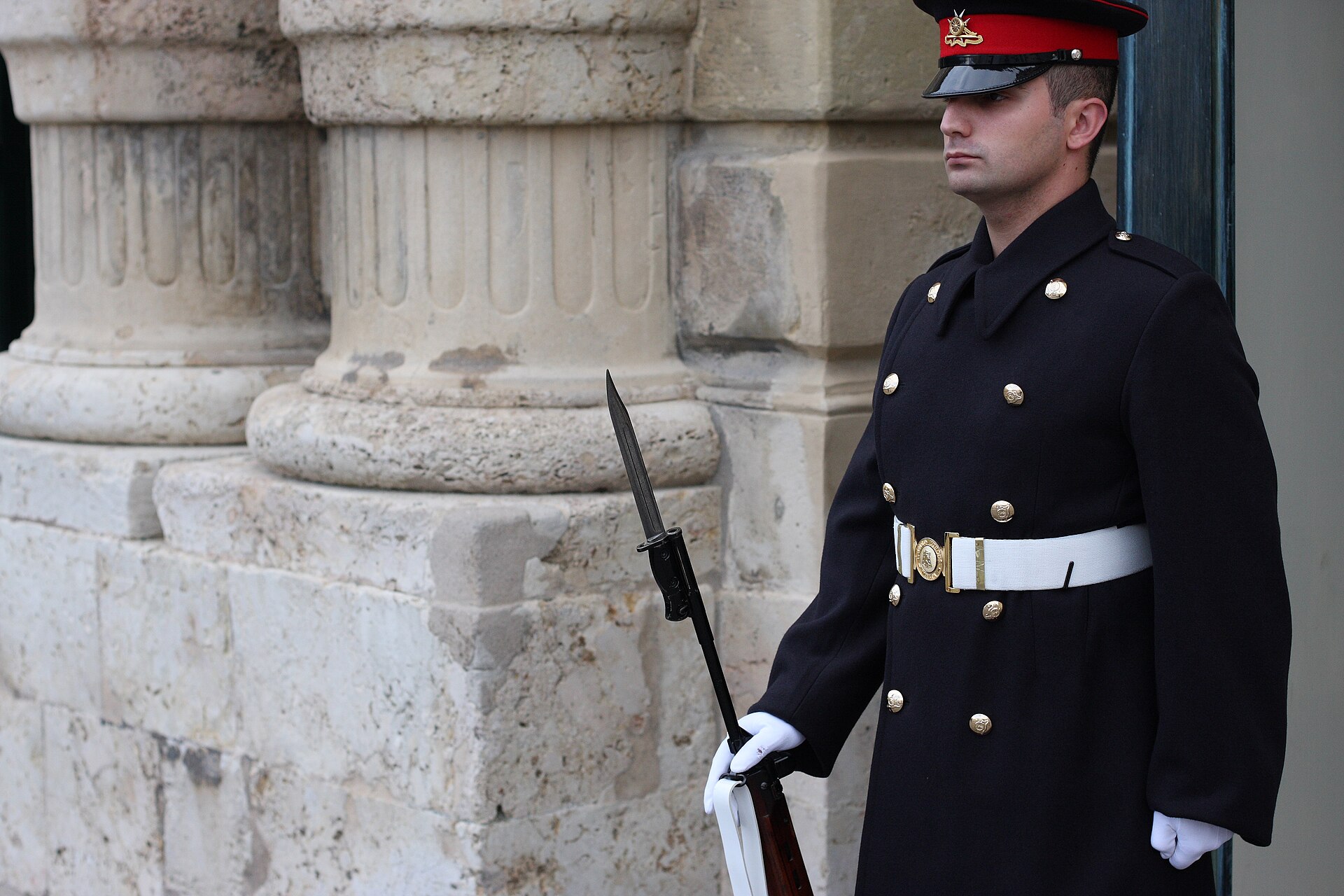
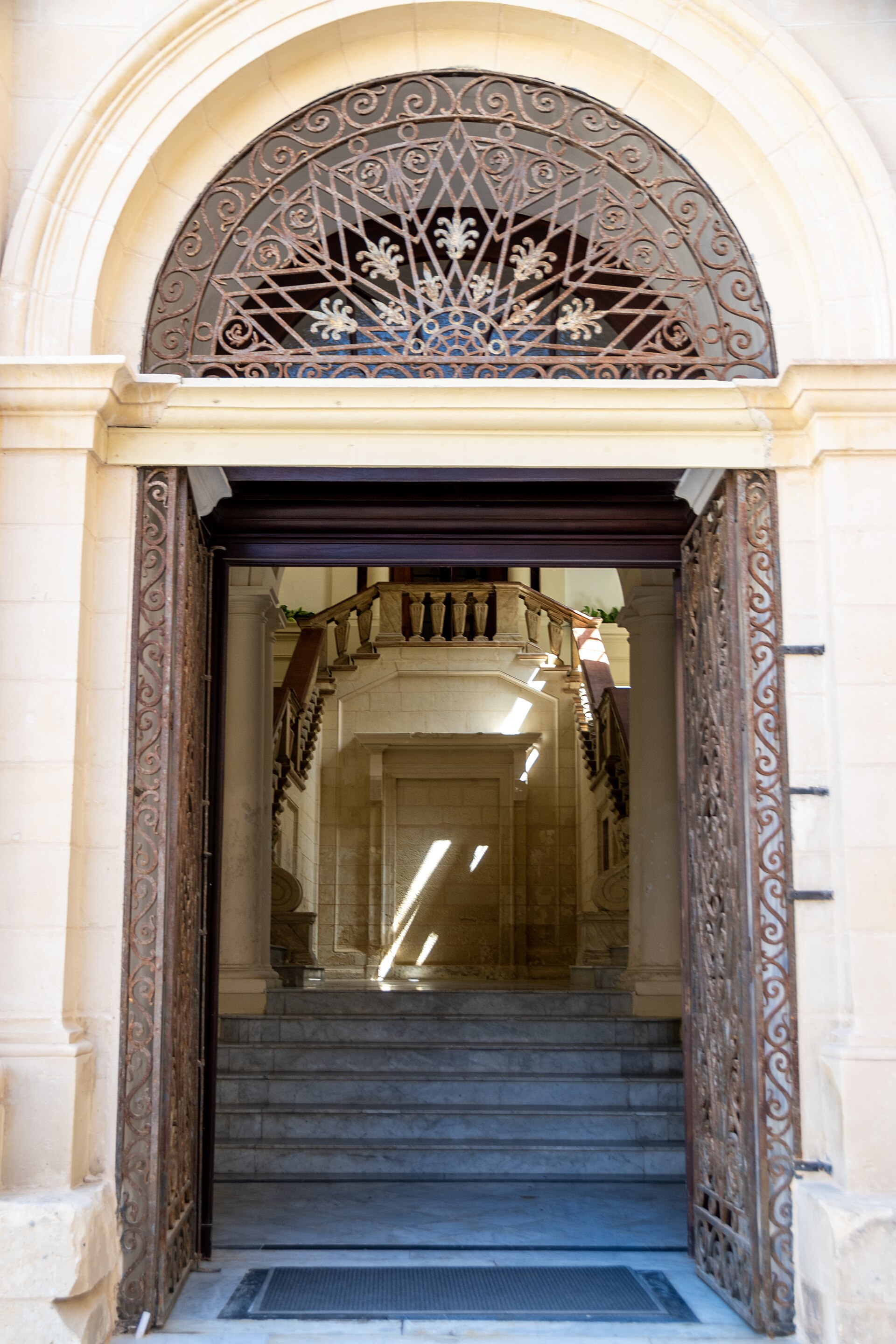
The facade of the Grandmaster's Palace on St George's Square, Valletta. GPS data recorded with the original photograph places it within about 90 metres of the Palace's own coordinates.
yeowatzup (Kok Leng Yeo) · CC BY 2.0Grandmaster's Palace
Museum · Palazz tal-Gran Mastru · Founded 1574
Open, admission and hours confirmed 31 August 2026 · 12 sources
On this page 13 sections
ContentsClose
The Palace's strength is not a single collection so much as the building's own unbroken use: a residence, arsenal and seat of government whose furnishings, armour and decoration were assembled by the people who actually worked and lived in it, from the Knights Hospitaller through British governors to the modern Maltese presidency. Its deepest and most complete holding is the Palace Armoury, one of the largest bodies of Knights-period arms and armour surviving anywhere in the building constructed to hold it; its most recently recovered strength is the run of State Rooms and the Grand Master's former summer apartment, reopened in stages in 2024 and 2025 after the largest restoration project in Heritage Malta's history.
| Local name | Palazz tal-Gran Mastru |
|---|---|
| Kind | Museum |
| Founded | 1574 |
| City and country |  Valletta, Malta Valletta, Malta |
| Address | Grand Master's Palace, St George's Square, Valletta, Malta |
| Website | heritagemalta.mt/explore/grand-masters-palace |
| Status | Open, confirmed |
| Record last verified |
Visiting
- Hours
- Daily09:00 to 17:00last admission 30 minutes before closing
- Closed
- 1 January. Good Friday. 24, 25 and 31 December. On rare occasions the Palace closes for state functions, announced on Heritage Malta's social media.
- Admission
- Adult (18+)EUR 12
- Youth (12-17)EUR 10
- Senior Citizen (60+)EUR 10
- Child (6-11)EUR 8
- Infant (1-5)Freefree
- Heritage Malta Member / Passport holderFreefree with membership or passport scheme
- Tickets
- heritagemalta.mt/store/s87 The museum's own ticket page.
- Do I need to book?
- No advance booking required; tickets are sold at the entrance kiosk or online, and the sales desk at the Palace itself takes card payment only, no cash
- Address
- Grand Master's Palace, St George's Square, Valletta, Malta MapWalk A few minutes on foot from City Gate and the main bus terminus at the entrance to Valletta; the main entrance is the second door on the right in the middle of Republic Street, opening onto St George's Square
Bus Malta Public Transport serves Valletta from every town and village; closest stop about 5 minutes' walk from the Palace
Park and Ride Transport Malta runs a Park and Ride shuttle into Valletta from Floriana, over 750 spaces, for visitors arriving by car - Website
- heritagemalta.mt/explore/grand-masters-palace
- Telephone
- +356 2124 9349
- [email protected]
Before you go how long, access, photography, bags, eating, shop
- How long to allow
- Around 1.5 to 2 hours to cover the Palace Armoury and the open State Rooms at an unhurried pace; the Visitors' Centre alone runs five halls of introductory audio-visual material before the historic rooms begin
- Access
- Two elevators run from the Prince Alfred Courtyard, one to the Piano Nobile where the State Rooms are, one direct to the Palace Armoury; staff and security assist visitors using them. Fully accessible restrooms with nappy-changing facilities are in the courtyard, and benches are placed along the Armoury and the Piano Nobile corridors for anyone who needs to rest. Service dogs are welcome
- Photography
- Not stated in the sourced materials for this page
- Bags
- Bags are not allowed inside the State Rooms or Armoury; free lockers are provided near the entrance. The only exception made is for medical and maternity bags, and all belongings pass through an X-ray scanner at the security checkpoint by the main door
- Eating
- A Food and Drinks facility and an indoor/outdoor seating area are listed among the on-site amenities
- Shop
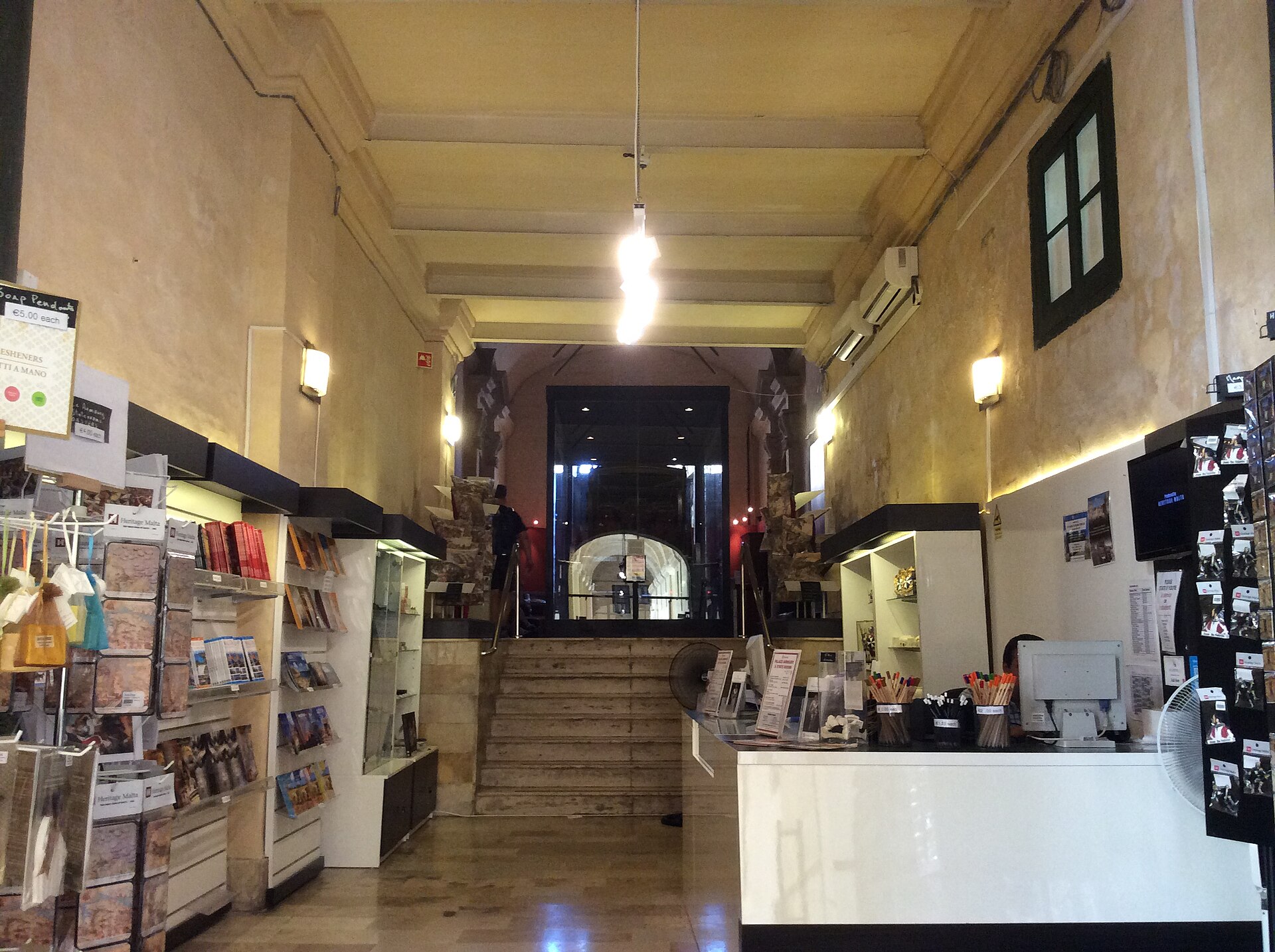
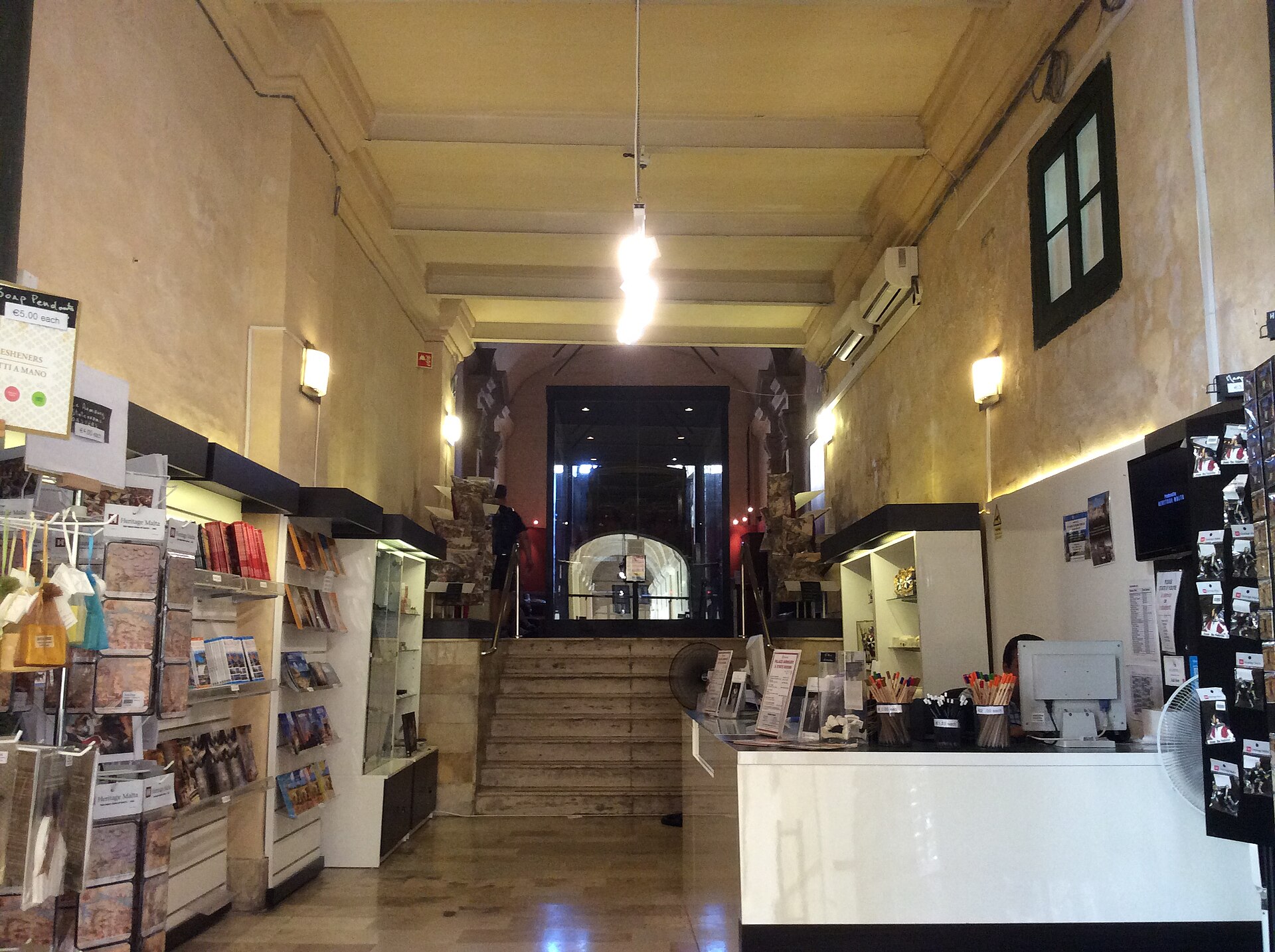
- A souvenir shop sits beside the ticket kiosk in the main reception area, selling Palace-specific items alongside general Heritage Malta merchandise (postcards, books, stationery, puzzles); a same-day admission ticket gets 15 percent off the official guidebook there
Prices and hours change. We take them from the institution's own pages and print the day we read them, and you can check the current position at the source we used. Confirm before you travel.
What is inside
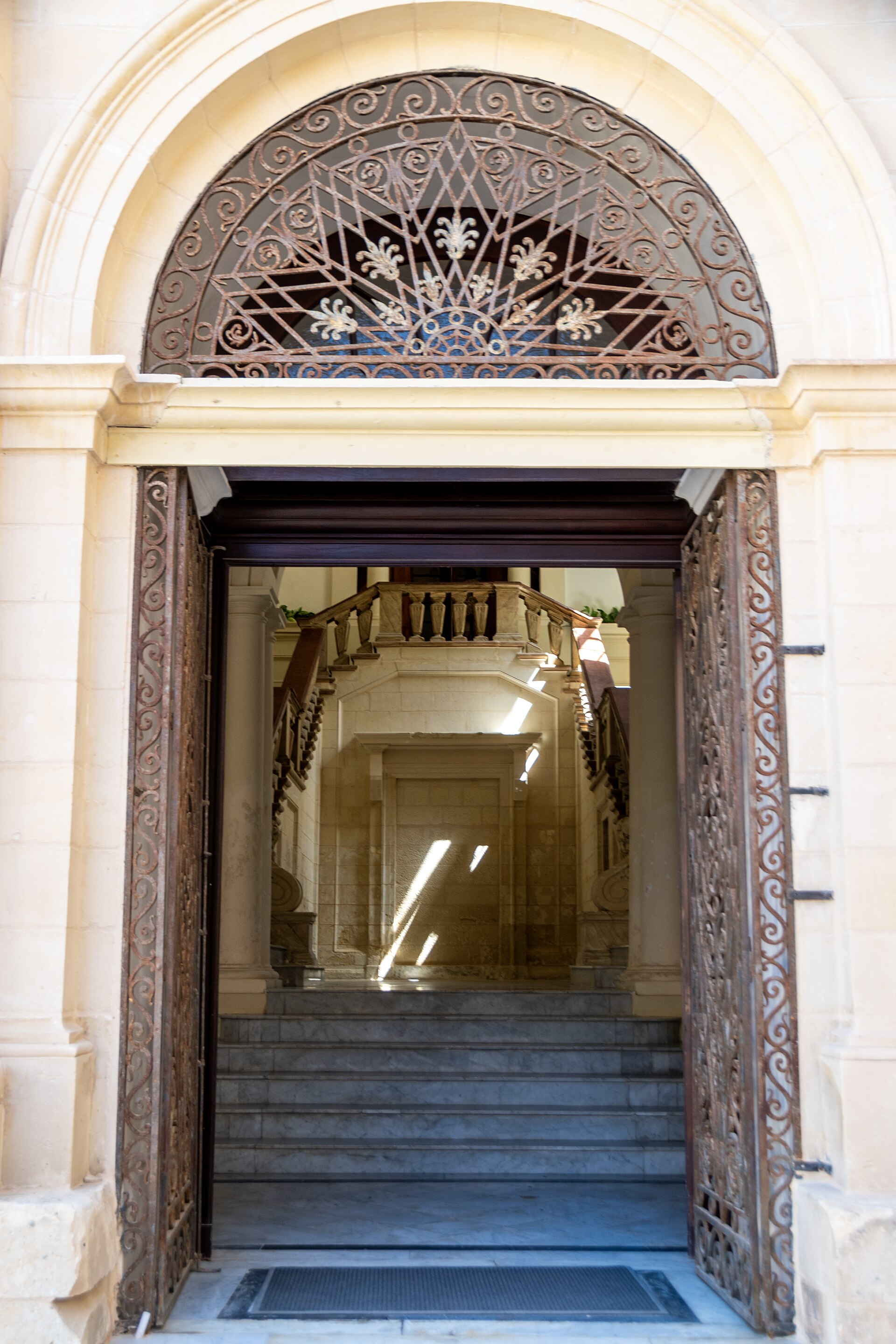
CC0 Palace Armoury
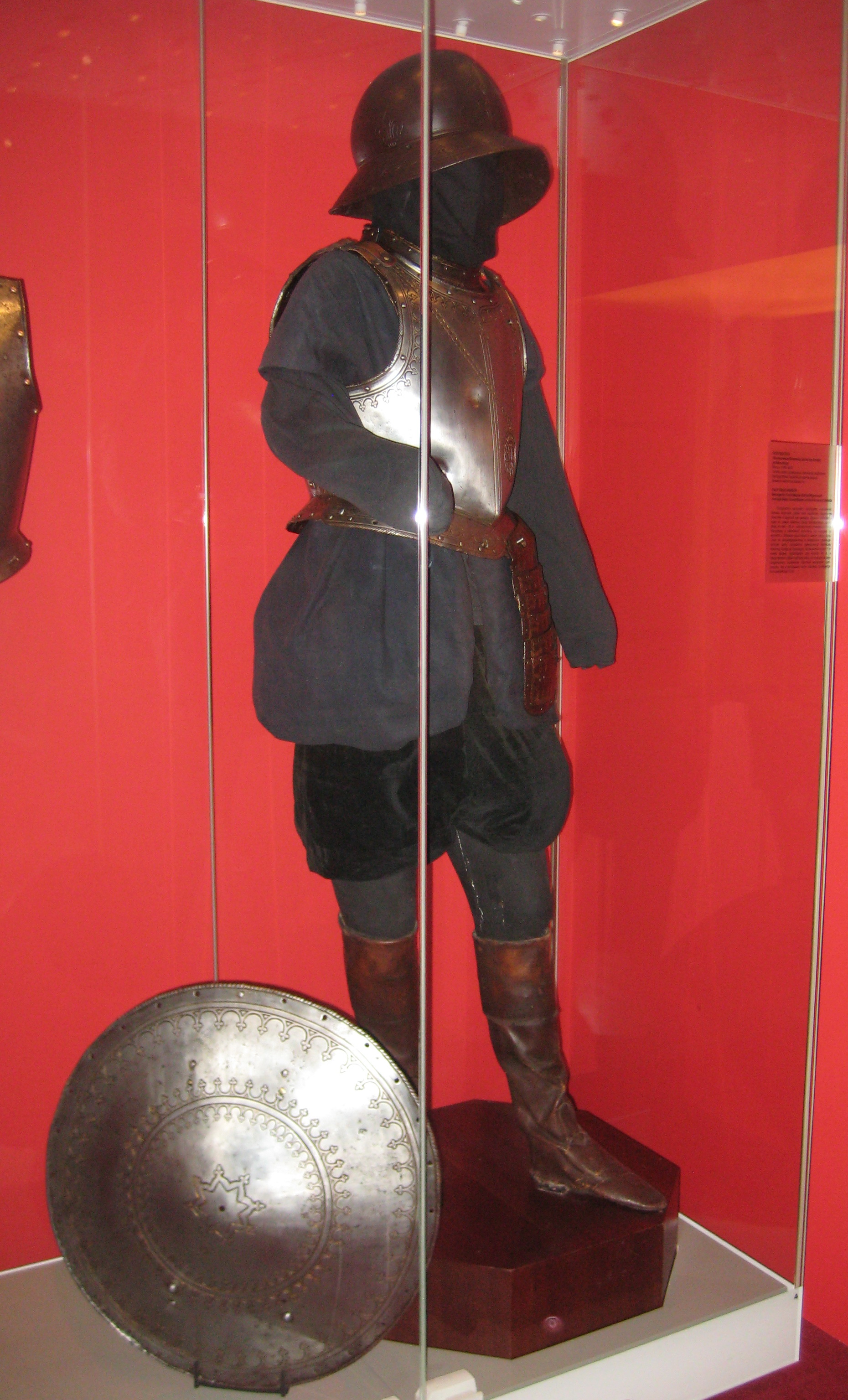
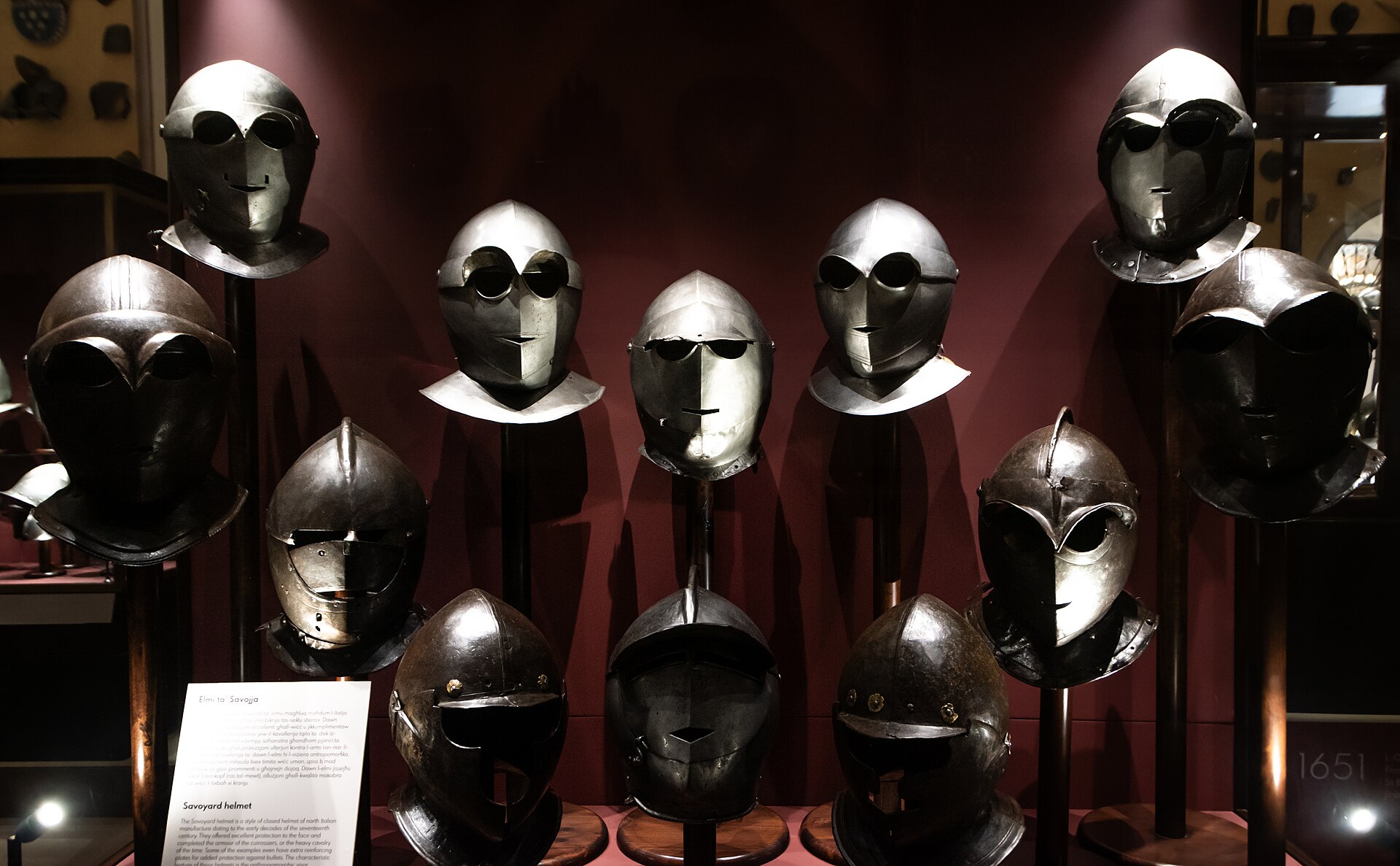
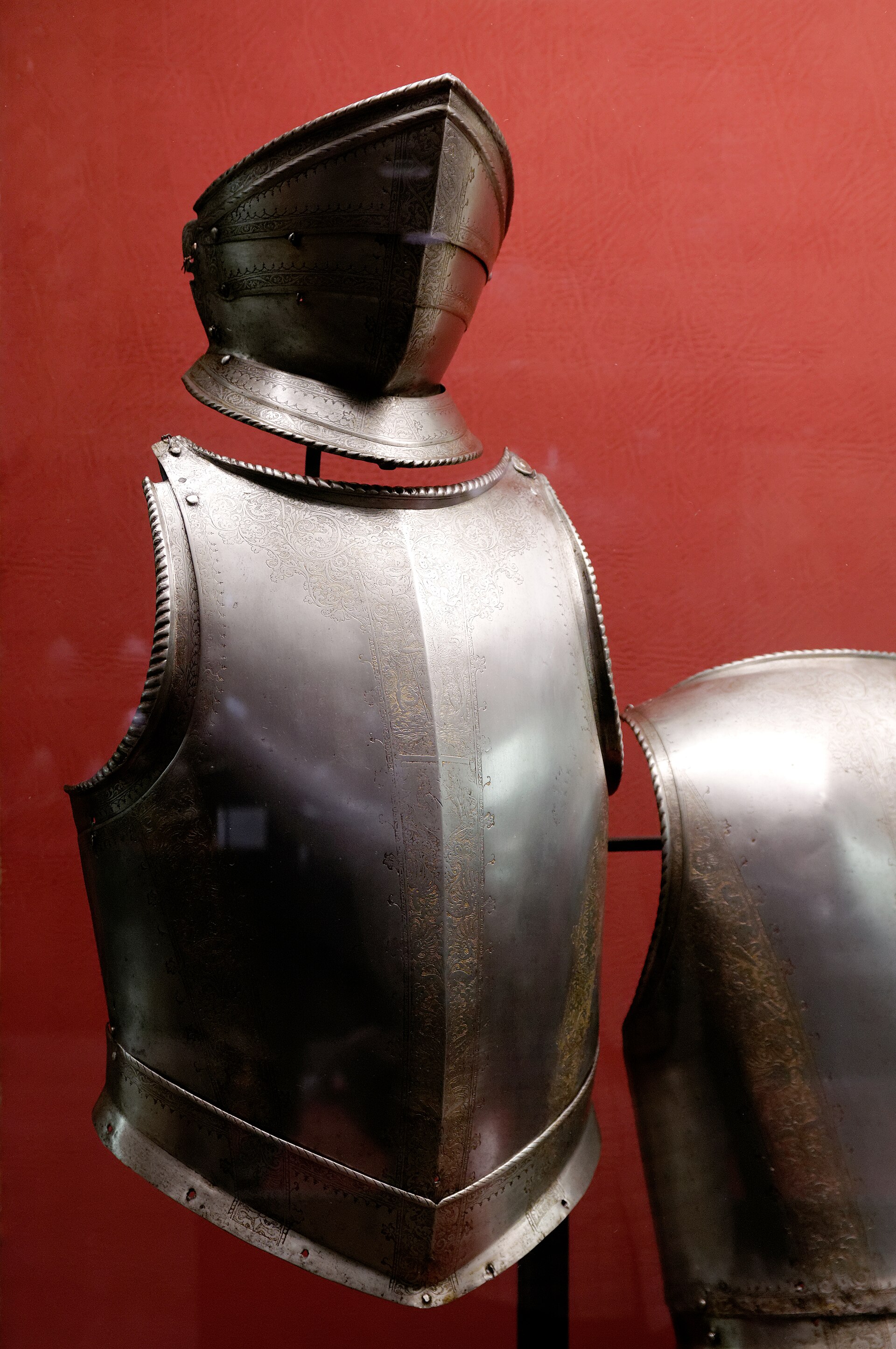
The Order of St John's arsenal, moved into this hall in 1604 by Grand Master Alof de Wignacourt and still displayed in its original space, making it one of the largest collections of arms and armour anywhere still housed in the building built to hold it. It carries personal armour worn by Grand Masters including Jean Parisot de La Valette and Wignacourt himself, Ottoman weapons taken during the 1565 Great Siege, and cannon spanning the 15th to 18th centuries. The hall itself later sat empty of arms for decades: it served as the chamber of the Maltese Parliament from the 1970s until 2015, before the collection was reinstated in its original room as part of the Palace restoration
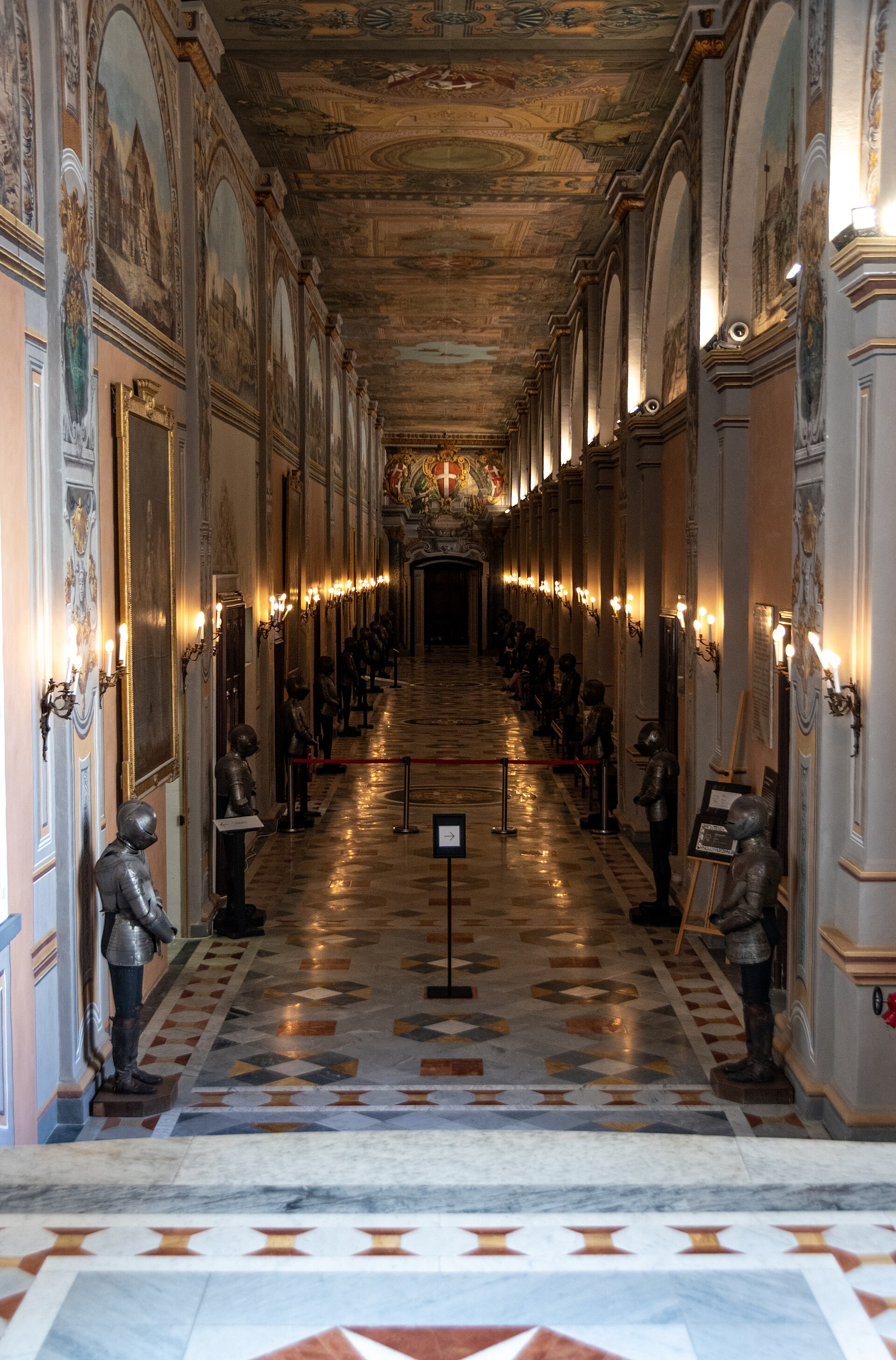
CC0 Piano Nobile and the State Rooms
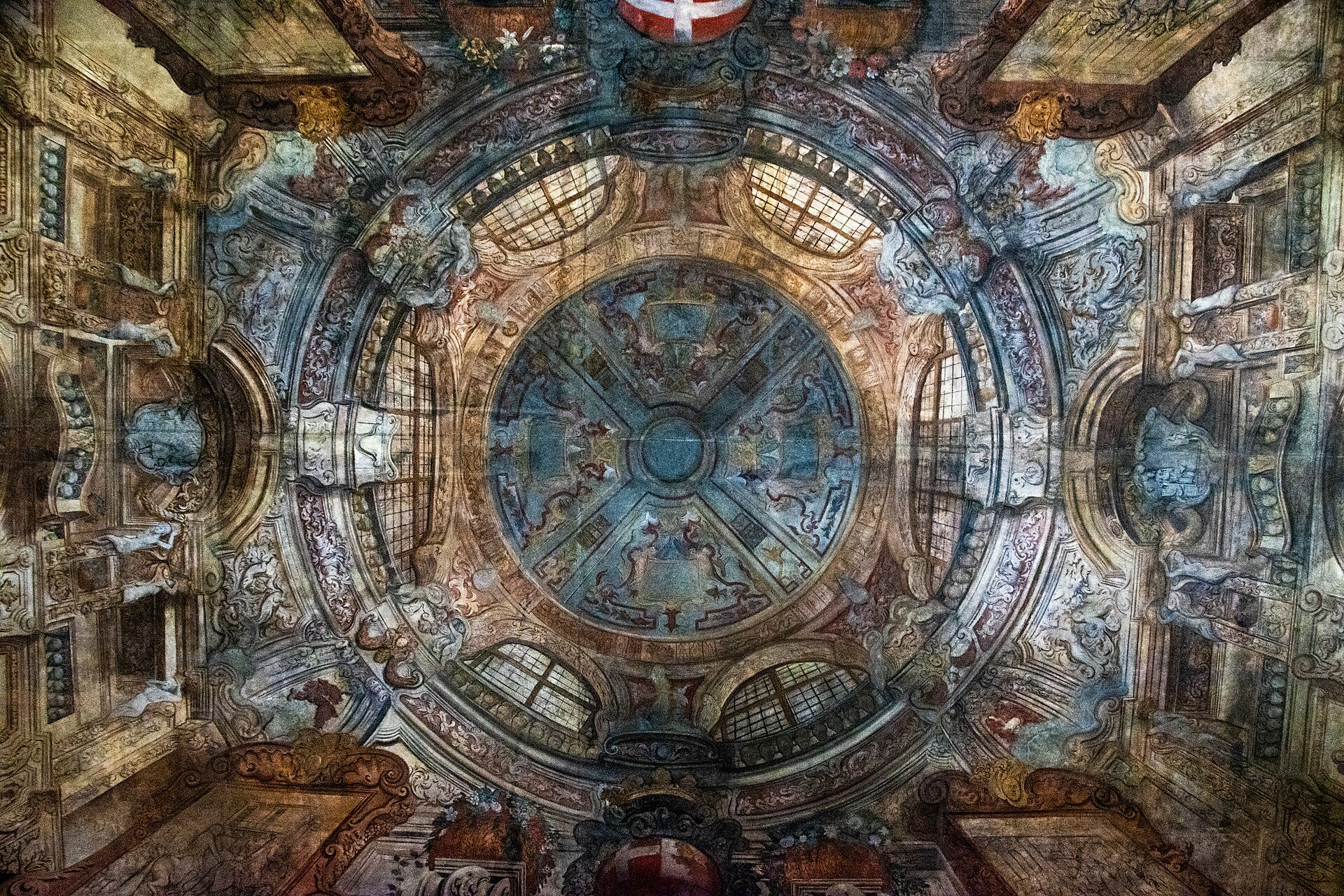
The third-floor state apartments, reached by a dedicated elevator from the Prince Alfred Courtyard, corridors ceiled with Baroque illusionistic frescoes painted in 1724 by Nicolau Nasoni. The rooms open to visitors include the Grand Master's Study and Sitting Room, the Pages' Room and the Ambassadors' Room, all still used today by the Office of the President of Malta to receive distinguished guests. The Throne Room, formerly the Grand Council Hall and site of Matteo Perez d'Aleccio's late-16th-century fresco cycle of the Great Siege of 1565, is currently closed to the public until further notice
The nine halls of the Grand Master's summer apartment
Opened to the public for the first time in June 2025 after restoration of their decorated wooden ceilings, frescoes, damask and painted wall coverings, and marble and flagstone floors. The rooms include the Drawing Room, the Study, the Bedroom and the Chapel, the Cabinetto di Curiosita (a cabinet-of-curiosities room holding antiquities and natural specimens), the Conventual Chaplain's Room and the Treasury Office, plus three further halls given over to thematic displays on the French occupation, the Order of St Michael and St George, and the Maltese Parliament that once sat in this building. Many of the 16th- to 18th-century furnishings on display were donated to Heritage Malta earlier in 2025 by the Maltese collector Paul Zammit, in memory of his parents, described by Heritage Malta as one of the largest and finest gifts the national collection has received since 1903
Visitors' Centre
Five halls of interpretation panels, projections and audio-visual displays that visitors pass through directly after the entrance security check, tracing the Palace's evolution across the centuries and its shifting roles: knights' residence, seat of a colonial governor, national parliament, and now the office of the Maltese presidency
Photograph by Continentaleurope · CC BY-SA 4.0 Prince Alfred's Courtyard, Neptune's Courtyard and the Uccelliera
The two internal courtyards that structure the visitor route between the entrance, the elevators and the Armoury staircase. Prince Alfred's Courtyard carries the Moors Clock, an automaton clock face installed in 1745; Neptune's Courtyard takes its name from its fountain. The restoration also uncovered and reopened the Uccelliera, the Palace's historic aviary, closed to visitors for decades before the current works
What to see first
Armour of Jean Parisot de La Valette
Milanese armourer, mid-16th centuryThe personal armour of the Grand Master who led the Order of St John through the 1565 Great Siege of Malta and gave Valletta its name. It remains on display in the Armoury he and his successors built up into one of Europe's largest surviving collections of its kind1
Half-armour of Alof de Wignacourt
Milanese or Brescian armourer, c. 1600-1610Wignacourt founded the Palace Armoury itself in 1604 by moving the Order's arsenal into this hall; his own suit of armour, made in his lifetime, is among the collection's most directly personal pieces1
Ottoman arms taken at the 1565 Great Siege
Ottoman armourers, 16th centuryWeapons captured from the besieging Ottoman force during the four-month siege of 1565, kept in the Armoury as war trophies of the event that made Valletta's foundation possible in the first place1
The Tenture des Indes tapestries
Manufacture des Gobelins, Paris, commissioned 1708, delivered from 1710A set of tapestries showing exotic flora and fauna of the Americas, Africa and Asia, commissioned as his gift to the Order by Grand Master Ramon Perellos y Roccaful on his election and hung in the Palace since 1710. It is the only complete surviving set woven from the original cartoons, the other full set having been the property of the French crown at Versailles. The designs derive from sketches made in Dutch Brazil in the 1630s by Albert Eckhout and Frans Post, working for the colonial governor Johan Maurits of Nassau-Siegen; this archive holds a separate record for a Frans Post view of Olinda from that same Brazilian period9
Ceiling frescoes of the Piano Nobile corridors
Nicolau Nasoni, 1724Baroque illusionistic trompe-l'oeil painting commissioned for the main corridors linking the State Rooms, part of the decorative campaign that gave the Palace much of its present appearance under the 18th-century Grand Masters7
The Great Siege fresco cycle
Matteo Perez d'Aleccio, 1576-1581A cycle covering the walls of the former Grand Council Hall, now the Throne Room, depicting the Great Siege of 1565 in more narrative detail than any other contemporary visual source. The room is currently closed to visitors, so the cycle cannot be seen on today's admission ticket2
The Cabinetto di Curiosita and the Zammit donation
Various, 16th to 18th centuryA newly reopened room built around 16th- to 18th-century furniture, antiquities and natural-history specimens gifted to Heritage Malta in 2025 by the collector Paul Zammit in memory of his parents, described by the institution as one of the most significant single donations to the national collection since 19036
The theatre where a nation was born
The Grand Master's Palace has stood on St George's Square since the earliest years of Valletta itself. Girolamo Cassar began building it in 1574, four years into the construction of the new fortress city the Knights Hospitaller raised after their victory in the Great Siege of 1565, absorbing into the new structure an existing knight's house of 1569 and an auberge of around 1571. It was the first substantial building completed inside the new walls, and Grand Master Pierre de Monte enlarged it again in the same decade. What followed across two centuries was less a single building campaign than a slow accretion of Grand Masters each leaving their own mark: Baroque embellishments through the 17th century, and then, most decisively, an overhaul under Manuel Pinto da Fonseca in the 1740s that gave the facade, the clock tower and much of the interior the configuration still recognisable today.
Heritage Malta's own description of the Palace calls it a state within an edifice, and the phrase is not decorative. The building has never stopped being a seat of government since the day it was finished. Under the Order it was the Grand Master's residence and the meeting place of the Order's governing councils. After the French occupation of 1798 it briefly became the Palais National under revolutionary administration. Through 164 years of British rule it served as the Governor's Palace, gaining an Anglican chapel converted from the old kitchens and, in the 1840s, a semaphore station on its roof. From 1921 it held the sitting of Malta's first constitutional parliament, and Malta's Parliament continued to meet within its walls, latterly in the former Armoury hall, until it moved to a purpose-built chamber outside the city in 2015. Since 1974 the Palace has been the official seat of the Office of the President of Malta, a function it still performs alongside its role as Heritage Malta's most visited museum, drawing around 300,000 visitors a year even before the current wave of restoration widened what they can see.
The Armoury: an arsenal that became a museum
The Palace Armoury began as a practical necessity rather than a display. Grand Master Alof de Wignacourt moved the Order's central arsenal into the hall in 1604, and at its height it held enough arms and armour to equip several thousand soldiers, reflecting a military order that never stopped preparing for another siege after 1565. Manuel Pinto da Fonseca reorganised the collection in the 18th century, but the largest single loss came with the French occupation of 1798 to 1800, when a substantial part of the arsenal was shipped out of Malta as war booty, part of a wider stripping of the Order's treasures that Maltese sources still describe in terms of organised plunder. The British added display fittings, including Egyptian-style mounts removed again in 1855, and German bombing on 7 April 1942 damaged the hall badly enough that the collection had to be moved to safety for the remainder of the war.
What survives is still, by Heritage Malta's own account and by the judgment of visitors who compare it with other arms collections in Europe, one of the largest bodies of arms and armour anywhere still standing in the building constructed to hold it. The armour of Grand Masters Jean Parisot de La Valette and Alof de Wignacourt is displayed alongside Ottoman weapons taken during the Great Siege and cannon spanning three centuries of the Order's rule. For much of the late 20th and early 21st century the collection sat in former stables on the ground floor while its original hall did service as Malta's Parliament chamber; only with the Parliament's move out of the building in 2015, and the Palace-wide restoration that followed, has the Armoury returned to the room Wignacourt built for it in 1604.
A EUR 40 million restoration and what it reopened
The Grand Master's Palace closed to the public for a multi-year restoration before reopening its doors on 15 January 2024, an investment the Maltese government puts at more than EUR 40 million, EUR 18 million of it co-financed by the European Union through the European Regional Development Fund. The reopened Palace grants access to more than 85 percent of the building's footprint, including the rediscovered Uccelliera aviary and the restored State Rooms of the Piano Nobile, and Heritage Malta's own announcement at the time fixed daily opening hours of 09:00 to 17:00.
The restoration did not stop at the January 2024 reopening. In June 2025 a further nine halls opened to the public for the first time in the Palace's history as a museum: rooms that had formed the Grand Master's own summer apartment, including a Drawing Room, a Study, a Bedroom and a Chapel, alongside a Cabinetto di Curiosita, the Conventual Chaplain's Room, the Treasury Office, and three halls newly given over to the French period, the Order of St Michael and St George, and the Maltese Parliament's own history in the building. Many of the 16th- to 18th-century furnishings now on display in those rooms came from a single donation earlier the same year by the Maltese collector Paul Zammit, made in memory of his parents and described by Heritage Malta's leadership as one of the largest and finest gifts the national collection has received since the Museums Administration Committee was established in 1903. President Myriam Spiteri Debono used the occasion to appeal publicly for other Maltese collectors to follow Zammit's example.
The Indies tapestries and a Brazilian connection
Among the Palace's furnishings, the Tenture des Indes tapestries occupy an unusual place: they are not a record of Malta at all, but of the wider world as 17th-century Europe was newly encountering it. Grand Master Ramon Perellos y Roccaful commissioned the set from the Gobelins manufactory in Paris in 1708 as his gioia, the customary gift an incoming Grand Master made to the Order on election, and the tapestries have hung in the Palace since 1710. Their designs trace back to sketches made in Dutch Brazil in the 1630s by the painters Albert Eckhout and Frans Post, who travelled there in the service of the colonial governor Johan Maurits of Nassau-Siegen; the finished tapestries show elephants, a rhinoceros under attack from a leopard, a cassowary, a zebra and other animals and scenery that would have been exotic even to the Gobelins workshop's usual patrons. Malta's set is the only complete surviving example woven from the original cartoons; a second full set once belonged to the French crown and hung at Versailles. The tapestries left Malta for conservation in Belgium for nearly two years before returning to their historic room in the Palace. This archive holds a separate, independently researched record for a Frans Post view of Olinda from the same Brazilian period the tapestry designs draw on, a reminder that a single set of images from a Dutch colonial expedition could end up woven into a Grand Master's palace on the other side of the Mediterranean.
What is closed, and what is not settled
Not every part of the Palace's history is currently on view. The Throne Room, formerly the Grand Council Hall and the site of Matteo Perez d'Aleccio's 1576-1581 fresco cycle narrating the Great Siege in more pictorial detail than any other surviving contemporary source, has been closed to the public since before this page was researched, with Heritage Malta's own notices giving no date for its reopening. On four specific dates through the second half of 2026, the wider State Rooms close until early afternoon for state business, leaving only the Armoury open to ticket holders during those hours; Heritage Malta's standing notice warns more generally that the Palace can close on short notice for state functions at any time, since it remains a working seat of the Presidency and not only a museum.
The restoration itself has not settled every question either. Visitor reaction to the newly opened State Rooms is more divided than reaction to the Armoury, and the institution's own account of the building's losses, particularly what the French occupation of 1798 to 1800 actually removed from the Armoury, is described in general terms of plunder rather than an itemised reckoning. What is not in dispute is the scale of what remains: a Palace that has functioned continuously as a seat of government for four and a half centuries, and that now shows more of itself to the public than at any point since Malta's Parliament left the building in 2015.
What visitors say
Visitors consistently rate the Armoury as the stronger half of the visit: a room-sized collection of arms and armour that reviewers repeatedly call one of the best of its kind anywhere, still standing in the hall built to hold it. The State Rooms draw more mixed reactions since the 2024 restoration and the 2025 reopening of nine further halls; some visitors find the Baroque interiors, frescoes and furnishings just as compelling, while others feel their impact is muted after the Armoury and wish the multimedia introduction did more to place individual rooms in Malta's wider history
What is praised, what is criticised
- Praised: The scale and completeness of the Palace Armoury, with visitors describing it as a treasure trove of hand-crafted arms and armour still in its original hall
- Praised: The restored architecture, frescoes, damask wall coverings and flooring of the State Rooms and the 2025-opened halls, and the peace of the internal courtyards
- Praised: The central Valletta location on St George's Square, a few minutes' walk from City Gate, making the Palace easy to combine with the rest of a Valletta visit
- Criticised: Some visitors find the State Rooms less remarkable than expected once measured against the Armoury, and would like more historical context on how the rooms were actually used day to day
- Criticised: The introductory multimedia film in the Visitors' Centre has been criticised for not doing enough to place the Palace within the wider history of Malta before visitors reach the historic rooms
- Criticised: The Throne Room, home to the Palace's most significant fresco cycle, has been closed to the public since before this page was written, with no reopening date announced
Ratings on other platforms
Google: 4.5 from 3,029 ratings, read 31 August 2026
Tripadvisor: 4 from 1,988 ratings, read 31 August 2026
A platform average is a tertiary source: it moves, it is not audited, and we quote no visitor's words.
Questions about Grandmaster's Palace
Where is Grandmaster's Palace?
Grand Master's Palace, St George's Square, Valletta, Malta.
How much does it cost to visit?
Adult (18+): EUR 12; Youth (12-17): EUR 10; Senior Citizen (60+): EUR 10; Child (6-11): EUR 8; Infant (1-5): free. As confirmed 31 August 2026.
When is it open?
Daily 09:00-17:00. Closed: 1 January. Good Friday. As confirmed 31 August 2026.
How do you get there?
Walk: A few minutes on foot from City Gate and the main bus terminus at the entrance to Valletta; the main entrance is the second door on the right in the middle of Republic Street, opening onto St George's Square; Bus: Malta Public Transport serves Valletta from every town and village; closest stop about 5 minutes' walk from the Palace; Park and Ride: Transport Malta runs a Park and Ride shuttle into Valletta from Floriana, over 750 spaces, for visitors arriving by car.
What should you see first?
Armour of Jean Parisot de La Valette (Milanese armourer, mid-16th century); Half-armour of Alof de Wignacourt (Milanese or Brescian armourer, c. 1600-1610); Ottoman arms taken at the 1565 Great Siege (Ottoman armourers, 16th century); The Tenture des Indes tapestries (Manufacture des Gobelins, Paris, commissioned 1708, delivered from 1710); Ceiling frescoes of the Piano Nobile corridors (Nicolau Nasoni, 1724); The Great Siege fresco cycle (Matteo Perez d'Aleccio, 1576-1581).
What we could not confirm
- No reopening date has been announced for the Throne Room and its Perez d'Aleccio Great Siege fresco cycle
- Heritage Malta's own materials describe the French occupation's removals from the Armoury in general terms as organised plunder rather than an itemised account of what was taken
- Visitor opinion is genuinely split on whether the restored State Rooms match the Armoury for impact, a question this page has not tried to resolve on the reader's behalf
Images
Sources
- 1Heritage Malta, Grand Master's Palace visit page (visited/prices/what is inside) heritagemalta.mt/explore/grand-masters-palace/
- 2Heritage Malta, Opening Hours and Special Notices page (Grand Master's Palace section: Throne Room and State Room closures) heritagemalta.mt/opening-hours/
- 3Heritage Malta, Grand Master's Palace ticket/store page heritagemalta.mt/store/s87/
- 4Heritage Malta, Grand Master's Palace Access Statement (Disability Access Bureau), April 2025 heritagemalta.mt/app/uploads/2025/04/DAB-Access-Statement.pdf
- 5Heritage Malta press release, 'The Grand Master's Palace Reopens its Doors to Visitors after an Extensive Restoration with an Investment of more than EUR 40 Million', 15 January 2024 heritagemalta.mt/news/the-grand-masters-palace-reopens-its-doors-to-visitors-after-an-extensive-restoration-with-an-investment-of-more-than-e40-million/
- 6Heritage Malta press release, 'Nine new halls open at the Grand Master's Palace', 11 June 2025 heritagemalta.mt/news/nine-new-halls-open-at-the-grand-masters-palace/
- 7Wikipedia, 'Grandmaster's Palace, Valletta' (, used only for construction history and architect) en.wikipedia.org/wiki/Grandmaster%27s_Palace,_Valletta
- 8Wikipedia, 'Palace Armoury' (, used only for Armoury history and losses) en.wikipedia.org/wiki/Palace_Armoury
- 9WebSearch summary of press coverage on the Tenture des Indes tapestries' commission, subject matter and 2023-2025 conservation in Belgium, drawing on Heritage Malta and Newsbook.com.mt reporting newsbook.com.mt/en/grand-masters-palace-tapestries-return-after-restoration-in-belgium/
- 10Salterton Arts Review, Erin Caswell, review of the Grandmaster's Palace, 27-28 December 2025 saltertonartsreview.com/2025/12/the-grandmasters-palace-il-palazz-tal-granmastru-valletta/
- 11Wanderlog, aggregated Google and Tripadvisor rating summary for Grand Master's Palace, Valletta (, ratings figures only) wanderlog.com/place/details/377594/grand-masters-palace
- 12Wikimedia Commons, Category:Grandmaster's Palace and Category:Palace Armoury (Valletta), per-file used to verify every image licence and photographer commons.wikimedia.org/wiki/Category:Grandmaster%27s_Palace