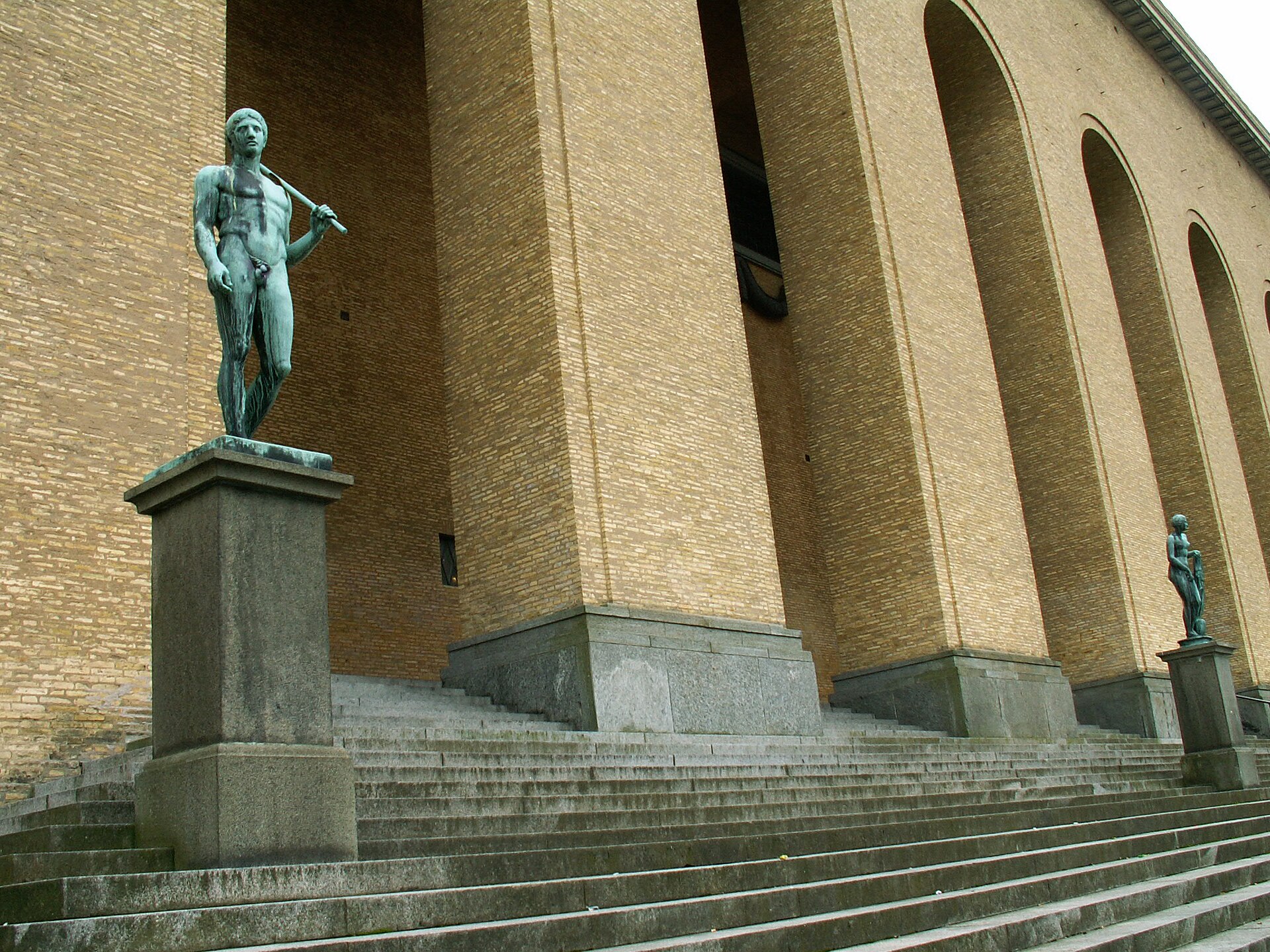
The 1925 building at Gotaplatsen, seen from the square in front of it.
JRodSilva, CC BY-SA 4.0Gothenburg Museum of Art
Museum · Goteborgs Konstmuseum · Founded 1861
Open, admission and hours confirmed 5 September 2026 · 13 sources
On this page 14 sections
ContentsClose
The museum's own claim to be Sweden's third-largest art museum by collection size rests less on volume - about 70,000 objects, most of them works on paper - than on the concentration of the Furstenberg Gallery, a single donated collection of Nordic painting from the 1880s and 1890s installed with its original fittings, which several outside sources single out as giving the museum the strongest Nordic holdings of its exact period outside the national collections in Stockholm and Oslo.
| Local name | Goteborgs Konstmuseum |
|---|---|
| Kind | Museum |
| Founded | 1861 (as the art department of the Museum of Gothenburg); present building opened 1925 |
| City and country |  Gothenburg, Sweden Gothenburg, Sweden |
| Address | Gotaplatsen 6, 412 56 Goteborg, Sweden |
| Website | goteborgskonstmuseum.se |
| Status | Open, confirmed |
| Record last verified |
Visiting
- Hours
- Tue11:00 to 18:00
- Wed11:00 to 20:00
- Thu11:00 to 18:00
- Fri-Sun11:00 to 17:00and Swedish public holidays
- Closed
- Monday. Good Friday. Easter Monday. 1 May. 6 June. Midsummer's Eve. Midsummer's Day. Christmas Eve. Christmas Day. New Year's Eve. New Year's Day.
- Admission
- Day ticket, adultSEK 75single visit
- Museum CardSEK 150annual card
- Museum Card, senior (63+)SEK 130annual card
- Under 20Freefree entry to all exhibitions
- StudentsFreefree with valid student ID, except exhibitions carrying an increased entry fee
- Tickets
- shop.goteborgskonstmuseum.se/sv The museum's own ticket page.
- Do I need to book?
- No advance booking required for general admission
- Address
- Gotaplatsen 6, 412 56 Goteborg, Sweden MapParking Lorensberg Parking House or nearby street parking; the museum does not run its own car park
- Website
- goteborgskonstmuseum.se
- Telephone
- +46 31 368 35 00
- [email protected]
Before you go how long, access, photography, bags, eating, shop
- How long to allow
- Two to three hours to cover the Furstenberg Gallery, the Old Masters rooms and the sculpture hall
- Access
- The museum publishes a dedicated accessibility page covering step-free routes, lifts, bag storage and guided tours in sign language
- Photography
- Not stated on the pages fetched; not asserted here
- Bags
- Bag storage available, per the accessibility page
- Eating
- Mr P restaurant on site, serving in the evenings and coffee during museum hours; visitor reviews describe it as understaffed and limited at busy times
- Shop
- Museum store on site and an online shop selling art, design objects, posters and Hasselblad Center prints
Prices and hours change. We take them from the institution's own pages and print the day we read them, and you can check the current position at the source we used. Confirm before you travel.
What is inside
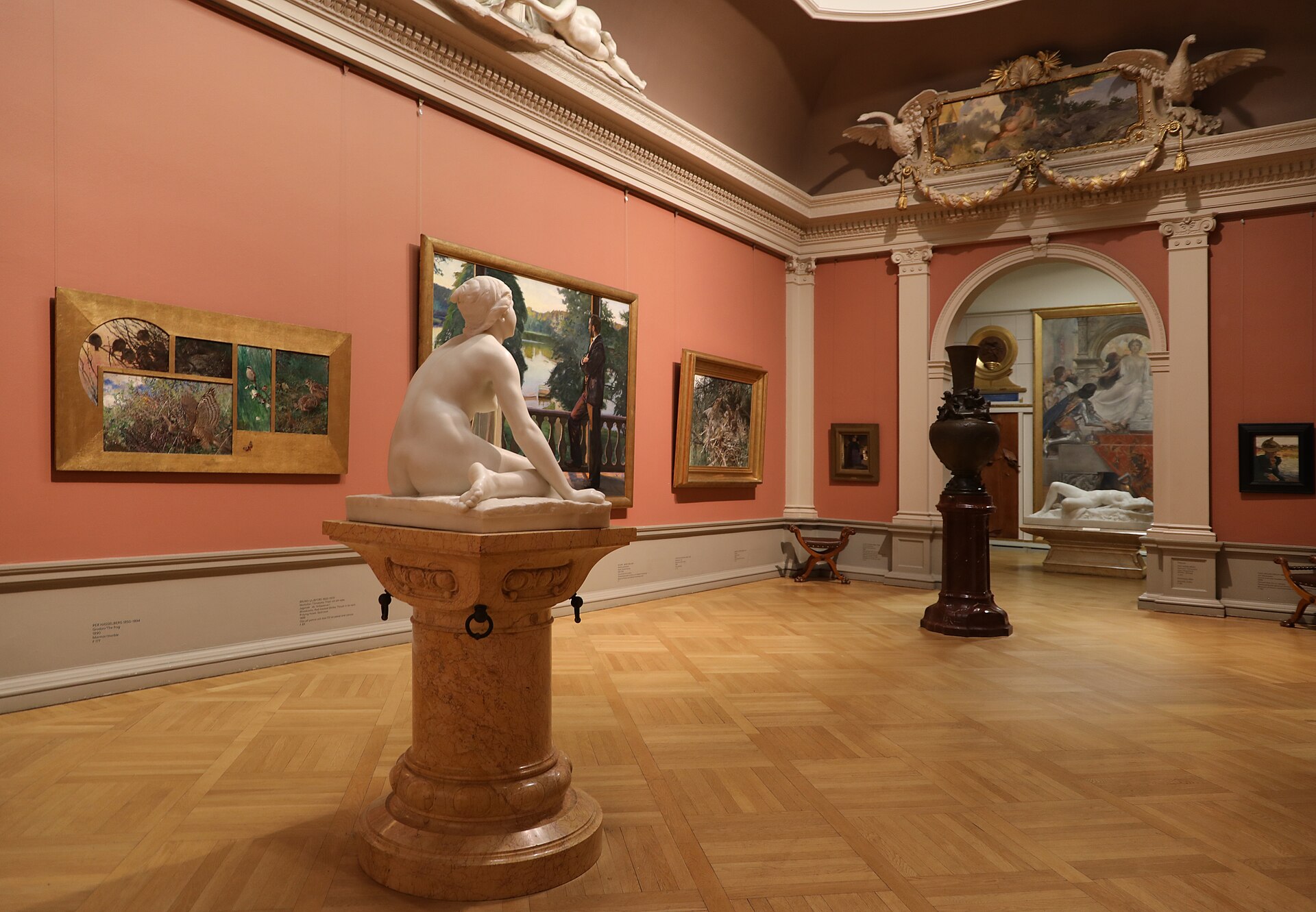
Photograph by Sailko · CC BY-SA 4.0 Furstenberg Gallery (Furstenbergska galleriet)
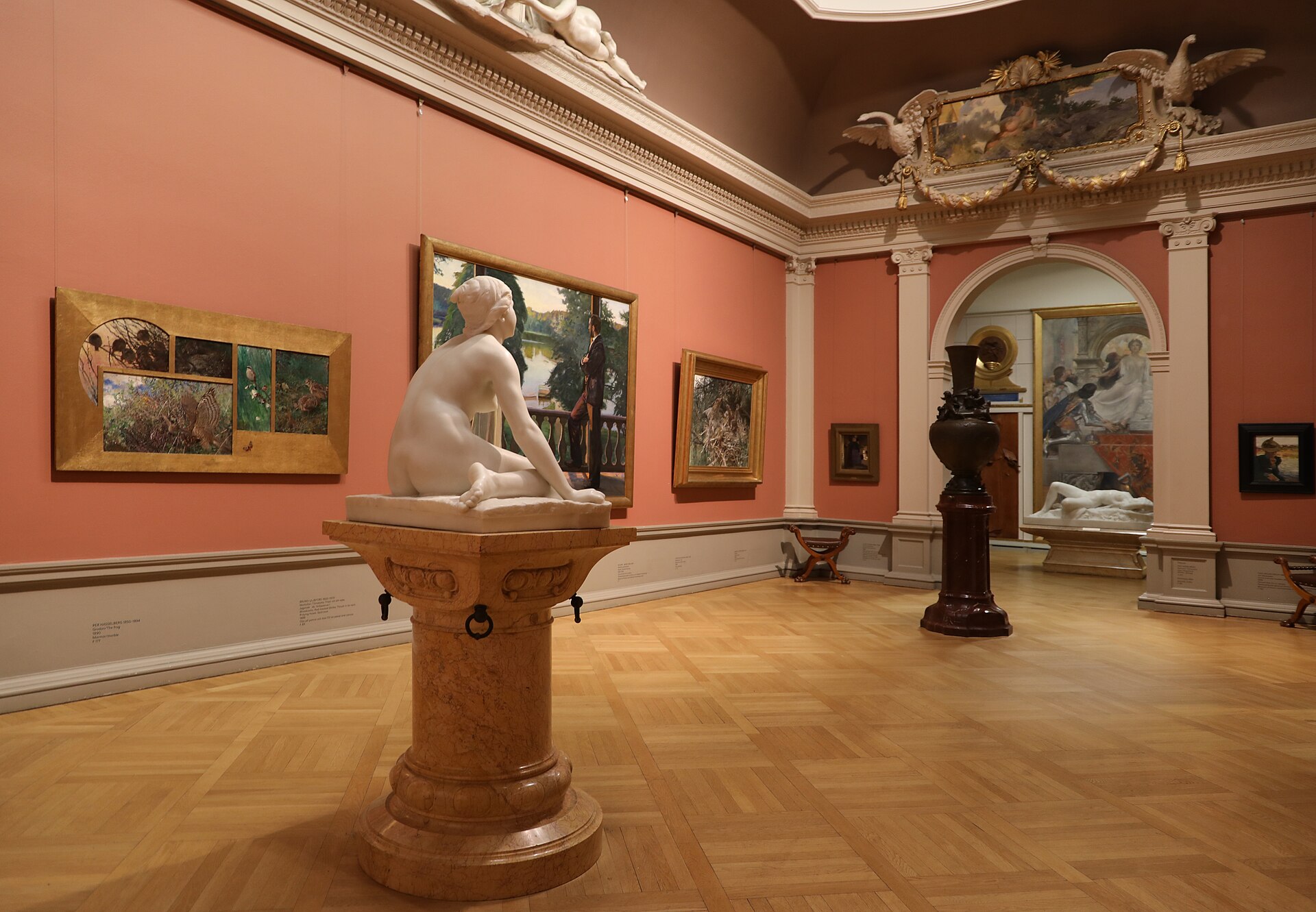
The collection formed by Pontus and Gothilda Furstenberg, patrons who bought the young Swedish painters known as the Opponents as they broke from the Royal Academy in Stockholm under the influence of French plein-air painting and Impressionism. Richard Bergh, Carl Larsson, Anders Zorn, Bruno Liljefors, Hugo Birger and Peder Severin Kroyer are represented by works the couple selected themselves. The gallery keeps the red walls and the sculptural ceiling groups by Per Hasselberg from the Furstenbergs' own private gallery, the first in Sweden open to the public, before the collection and its fittings moved into the museum.
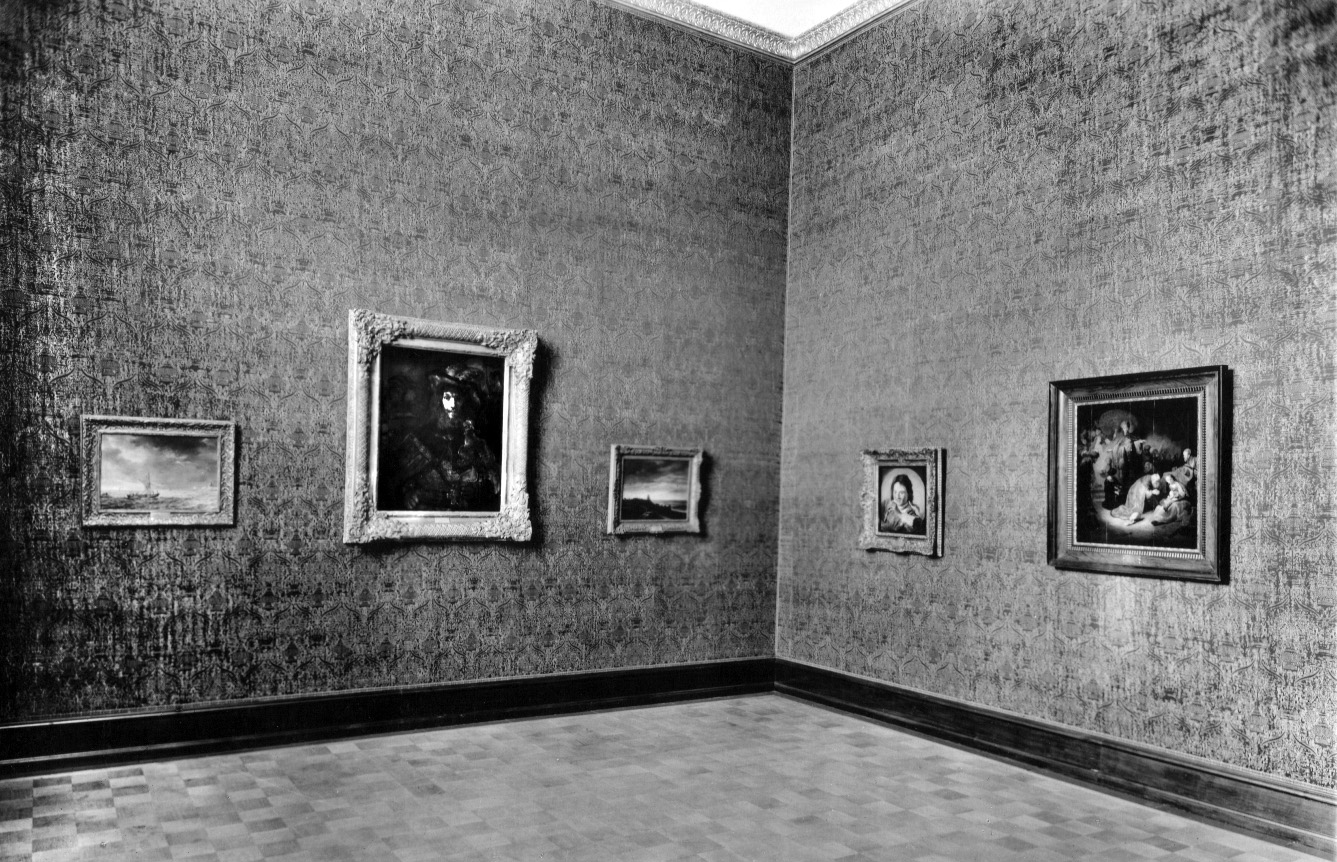
Public domain Old Masters, 1450-1750
German and Italian painting from the late Middle Ages and the Renaissance, and Dutch and Flemish Baroque painting, including Rembrandt's The Knight with the Falcon (c. 1661), given to the museum in 1921 by the textile merchant Gustaf Werner and other patrons, and works by Peter Paul Rubens.
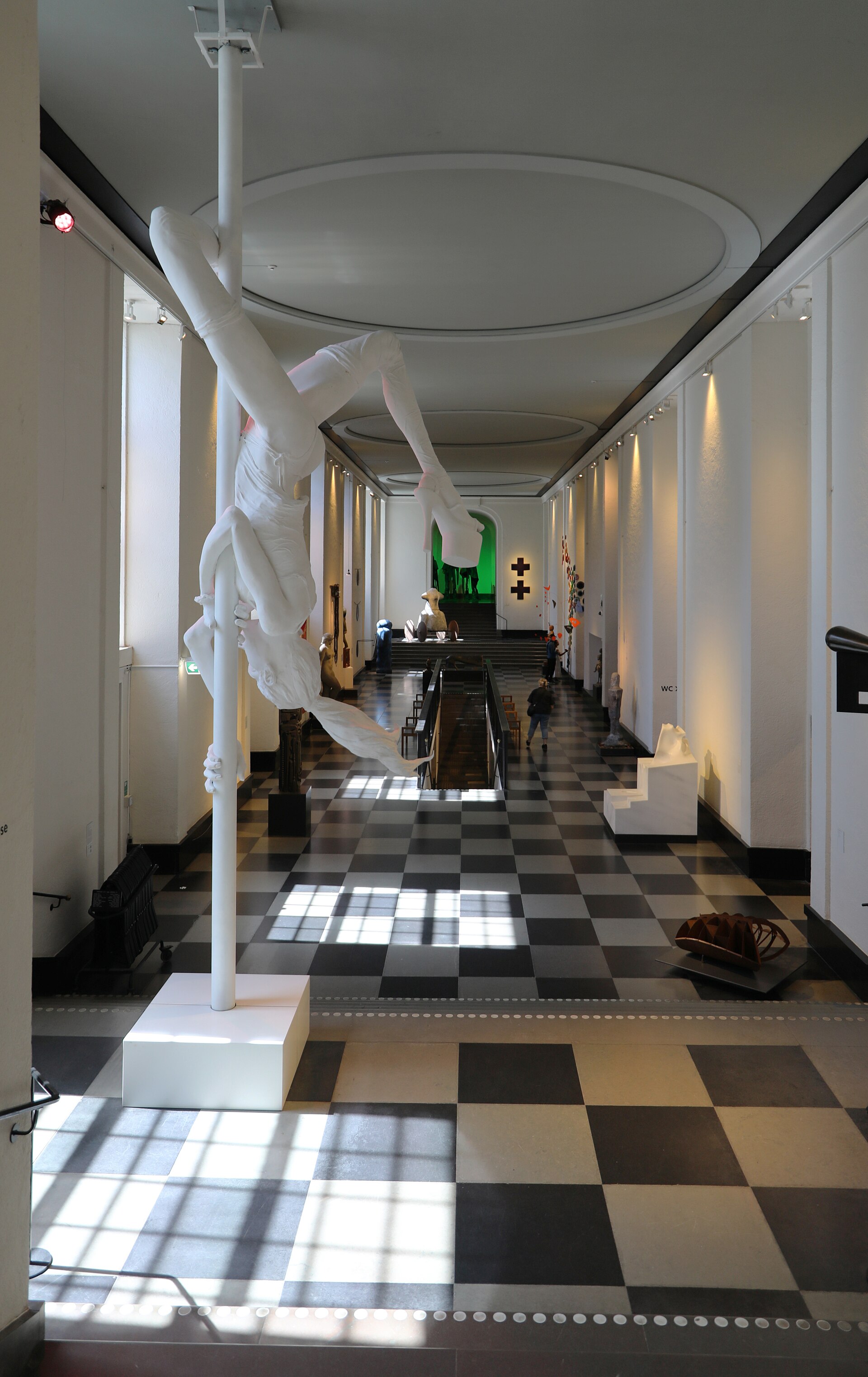
Photograph by Sailko · CC BY-SA 4.0 Sculpture Hall (Skulpturhallen)
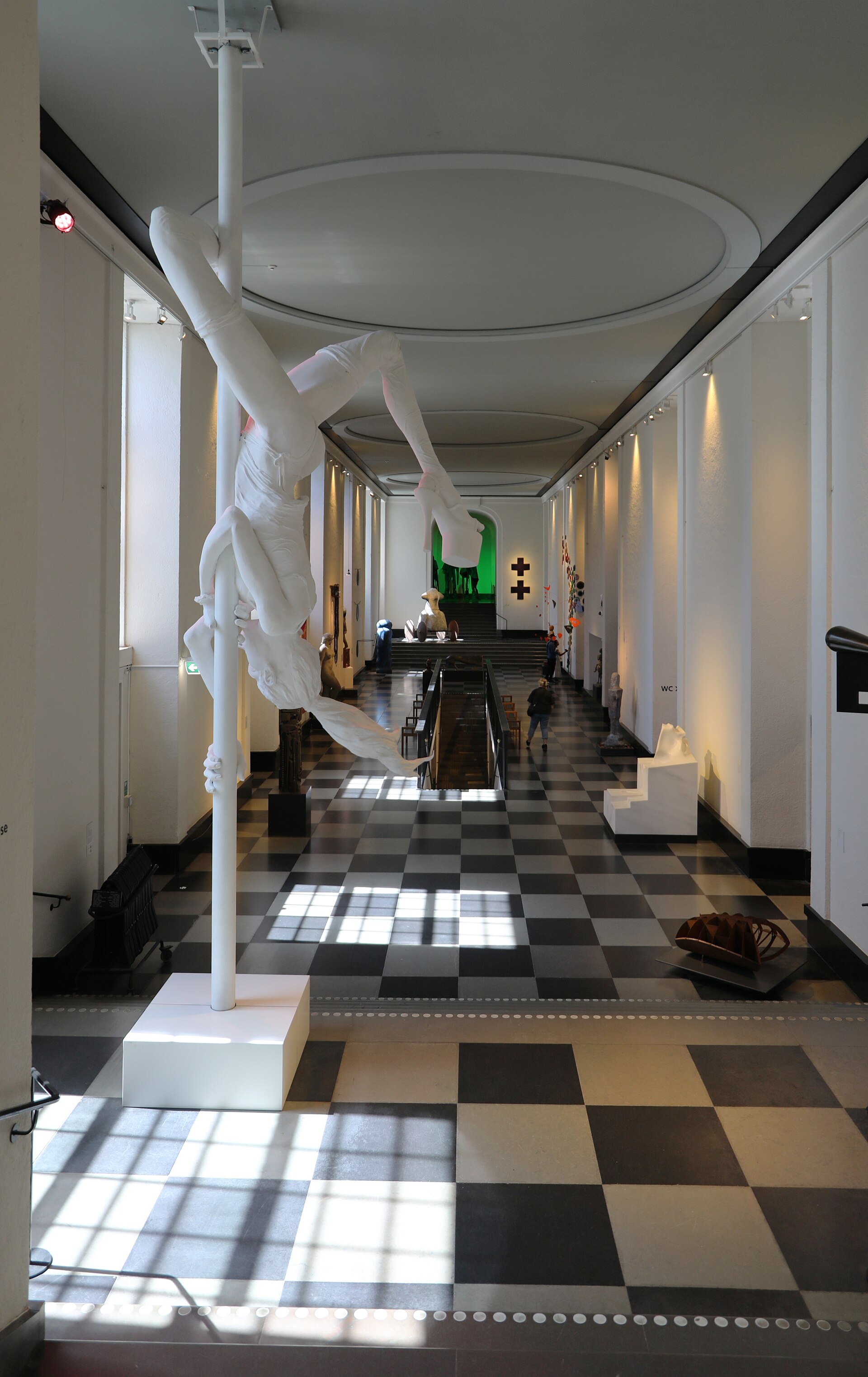
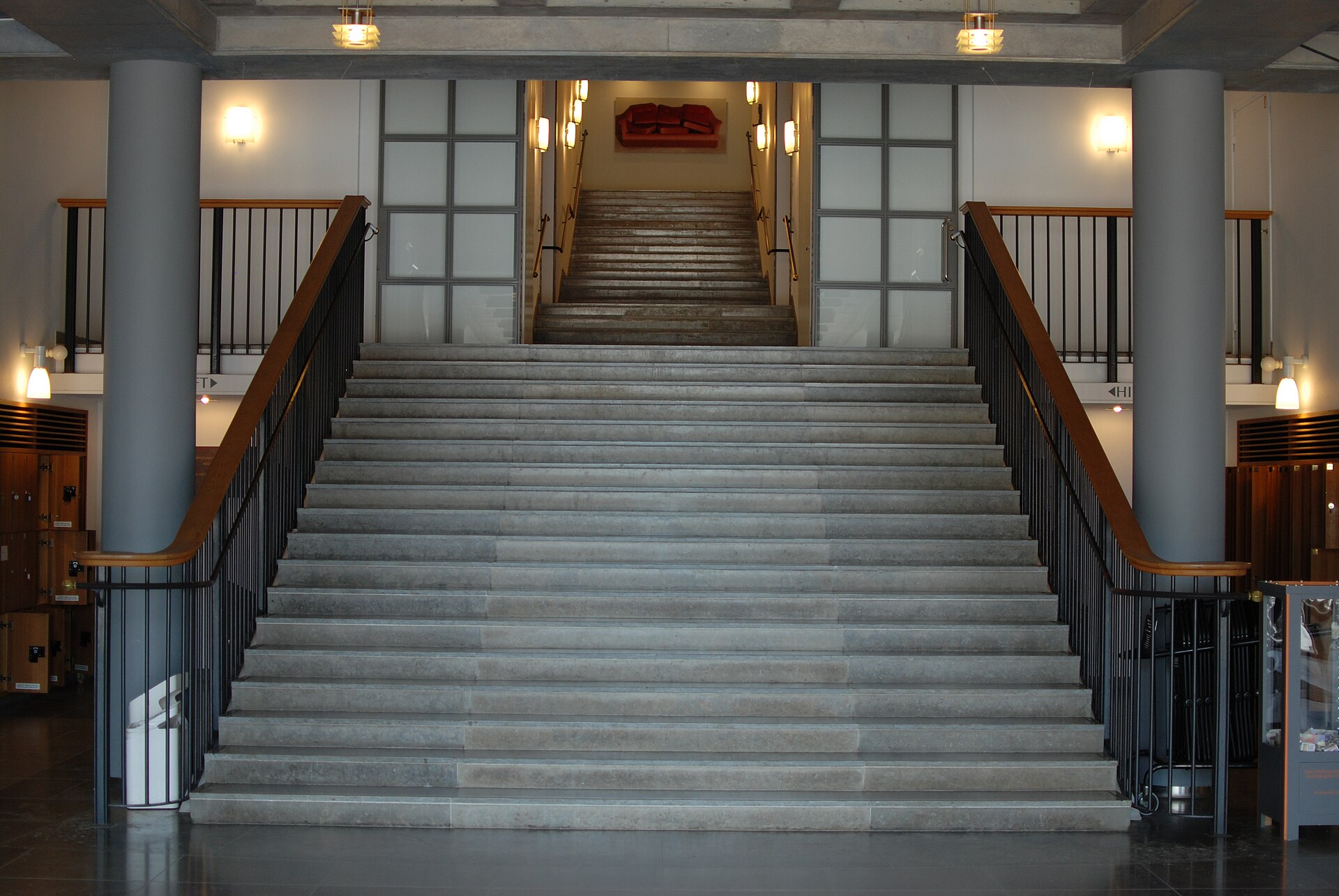
The museum's central sculpture gallery, built as part of the 1925 building and still used to display classical-influenced and later figurative sculpture at full scale.
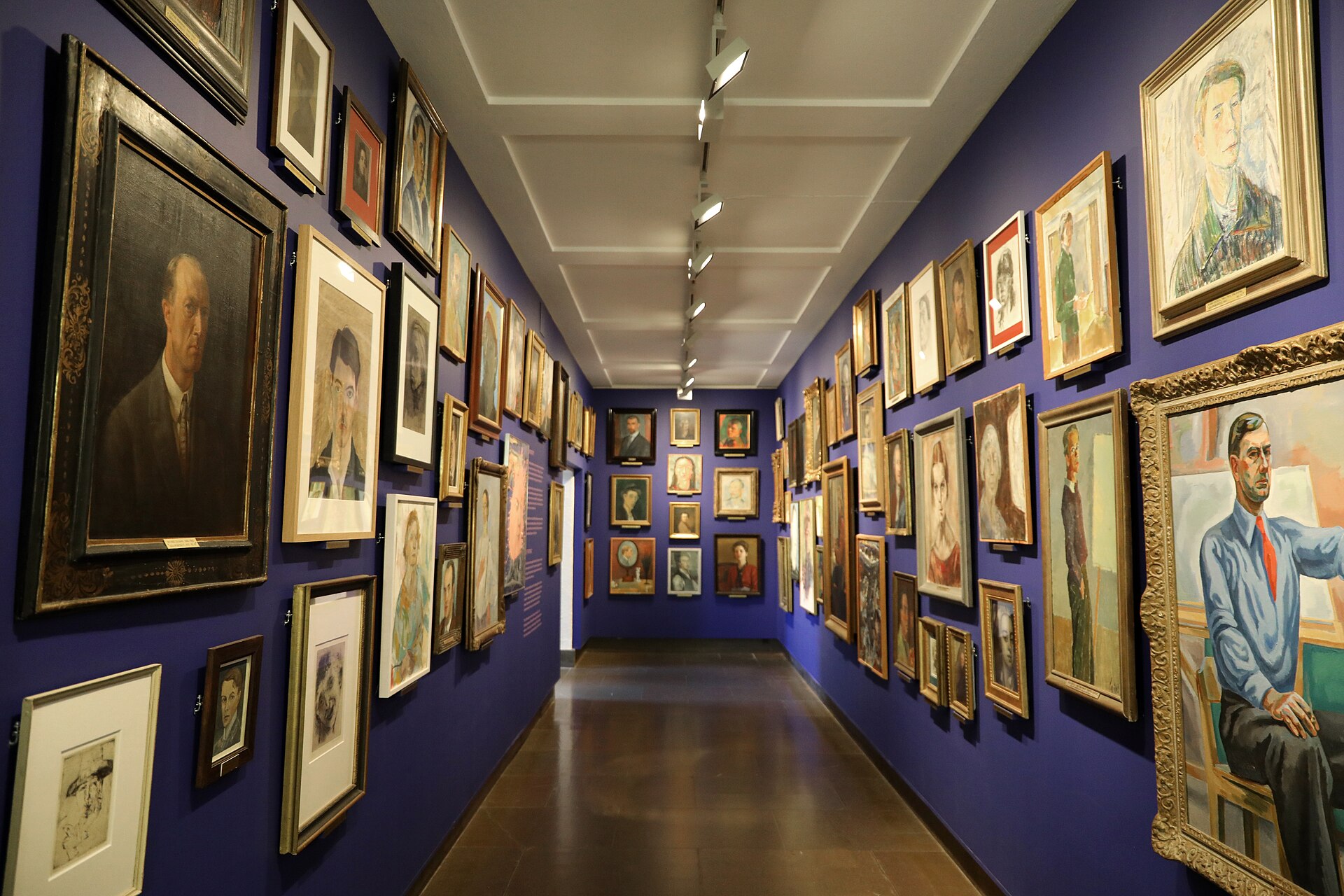
Photograph by Sailko · CC BY-SA 4.0 Self-Portrait Corridor (Hjalmar Gabrielson collection)
A corridor hung with artists' self-portraits assembled by the collector Hjalmar Gabrielson, run as a continuous sequence rather than a single-room display.
French Collection
French painting from Impressionism into early modernism, including works by Monet, Gauguin, van Gogh and Chagall, among them Monet's Water Lilies (1907) and van Gogh's Olive Grove, Saint-Remy (1889).
Picasso Room
A dedicated room of works by Picasso spanning the early 1900s to the 1940s.
Nordic Turn of the Century and Swedish Modernism
Nordic painting around 1900 (Anders Zorn, Hanna Pauli, Edvard Munch, including Munch's The Vampire, 1893) moving into Swedish modernism, with Isaac Grunewald and Sigrid Hjerten, students of Matisse, and the colourist group known as the Gothenburg Colourists (Ake Goransson, Ivan Ivarson, Ragnar Sandberg, Inge Schioler).
What to see first
The Knight with the Falcon
Rembrandt van Rijn, c. 1661A psychological portrait of a nobleman, given to the museum in 1921 by textile merchant Gustaf Werner and other patrons; the anchor work of the Old Masters rooms.8
The Vampire
Edvard Munch, 1893One of the best-known works in the Nordic turn-of-the-century holdings, cited by Wikipedia and repeated across the museum's own collection pages as a signature piece.6
Hip, Hip, Hurrah! Artists' Party at Skagen
Peder Severin Kroyer, 1888A large group portrait of the Skagen painters, one of the works the Furstenbergs bought directly from the artists they patronised.6
Water Lilies
Claude Monet, 1907Part of the French collection built up alongside the Nordic holdings, giving the museum an Impressionist anchor beside its Scandinavian core.6
Olive Grove, Saint-Remy
Vincent van Gogh, 1889One of the museum's van Gogh paintings from the Saint-Remy period, part of the French collection.6
The Furstenberg Gallery fittings
Original interior for Pontus and Gothilda Furstenberg, ceiling sculpture by Per HasselbergNot a single object but a preserved installation: the red walls and Hasselberg's sculptural ceiling groups were moved and rebuilt inside the museum, so the room itself is part of the collection.4
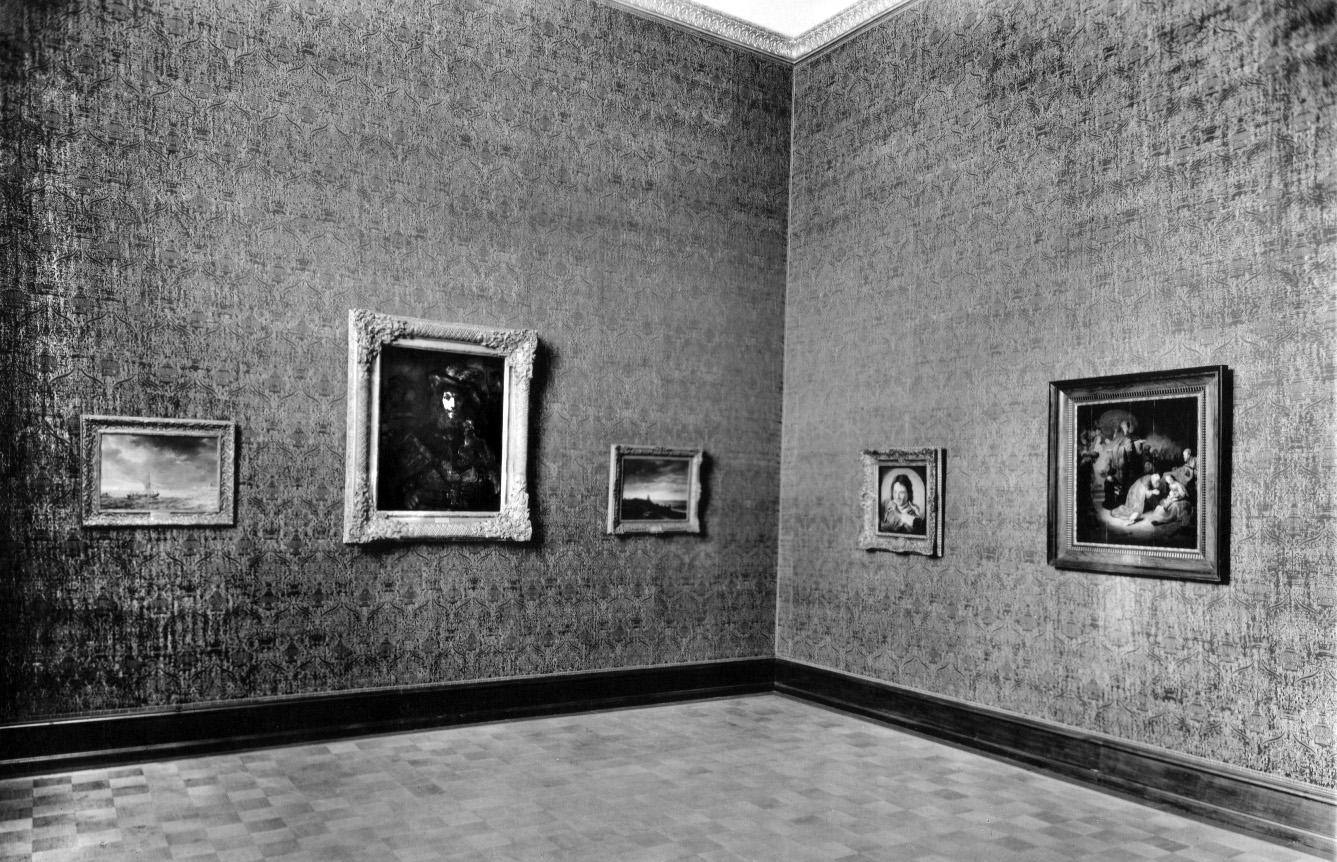
Interior gallery view, Carl Fredrik Hill temporary-exhibition room, 1934
Photographed 1934A period photograph documenting how the museum displayed its temporary exhibitions within a decade of opening; held on Wikimedia Commons under the Museum of Gothenburg category.9
Exhibitions on now
- Opening soon5 Dec 2026 to 28 Feb 2027Confirmed , 8 weeks ago
A jubilee building at the end of Gothenburg's main avenue
Gothenburg Museum of Art traces its origin to 1861, when an art department was created inside the general Museum of Gothenburg. A large donation from the Gothilda Art Society in 1865, mostly paintings of the Dusseldorf school, gave that department its first real collection. The museum did not get a building of its own until 1925, when a new structure by architects Arvid Bjerke and Sigfrid Ericson opened at Gotaplatsen, at the head of Kungsportsavenyn, Gothenburg's principal avenue. It had been built for the city's tercentenary jubilee exposition of 1923, in a monumental neo-classical style using the yellow brick associated with 1920s Gothenburg civic architecture, with seven tall arched vaults across its facade. The building was declared a Swedish cultural heritage monument (byggnadsminne) in 2017.
Two later additions changed the museum without changing its address. An eastern wing, designed by Rune Falk, was added between 1966 and 1968 to house modern collection galleries. A second renovation in 1996 rebuilt the entrance level to hold a shop, a restaurant, and the Hasselblad Center, a dedicated photography institution that mounts roughly three exhibitions a year, one of them built around the annual Hasselblad Award. The result is a single building that now carries three different institutional identities under one roof: the art museum, the Hasselblad Center, and the municipal collection that predates both.
The Furstenberg Gallery: a private collection rebuilt inside a public museum
The single most distinctive space in the museum is not part of the 1925 building's original design at all. Pontus and Gothilda Furstenberg were private collectors who, from the 1880s, bought directly from a group of young Swedish painters who called themselves the Opponents: artists trained at the Royal Academy in Stockholm who had broken with its teaching after exposure to French plein-air painting and Impressionism. Richard Bergh, Carl Larsson, Anders Zorn, Bruno Liljefors, Hugo Birger and Peder Severin Kroyer were all bought while their reputations were still being made, and the Furstenbergs displayed the results in what the museum's own history calls the first private art gallery in Sweden open to the public, at Brunnsparken in central Gothenburg.
When the collection passed to the museum, the display itself came with it. The Furstenberg rooms inside the museum keep the red wall colour and the sculptural ceiling groups made for the private gallery by the sculptor Per Hasselberg, so a visitor sees not just the paintings the couple bought but something close to the room they were bought to hang in. The museum describes the resulting rooms as giving a unique view into the Nordic art world of the 1880s and 1890s, and it is this gallery, more than any single painting, that curators and outside guides point to as the reason the museum's Nordic holdings are considered exceptional even among Scandinavian institutions.
Old Masters, French moderns and Picasso under a municipal roof
Outside the Furstenberg rooms the collection runs in two further directions. The Old Masters galleries hold German and Italian painting from the late Middle Ages and the Renaissance alongside Dutch and Flemish Baroque work, anchored by Rembrandt's The Knight with the Falcon of around 1661, given to the museum in 1921 by the Gothenburg textile merchant Gustaf Werner together with other patrons, and by paintings from the workshop and circle of Peter Paul Rubens. A separate run of galleries holds French painting from Impressionism into early modernism - Monet's Water Lilies of 1907 and van Gogh's Olive Grove, Saint-Remy of 1889 among them - moving on to Gauguin and Chagall, and a dedicated Picasso room spans work from the early 1900s to the 1940s.
The twentieth century is carried forward by Swedish modernism proper: Isaac Grunewald and Sigrid Hjerten, both of whom studied under Matisse in Paris, and a loosely grouped set of painters known as the Gothenburg Colourists - Ake Goransson, Ivan Ivarson, Ragnar Sandberg and Inge Schioler - who worked in and around the city in the interwar years. A corridor of artists' self-portraits, assembled by the collector Hjalmar Gabrielson, and a room built around the bohemian circle of the painter Ivar Arosenius round out the Nordic holdings. The sculpture hall built into the original 1925 plan remains the museum's central top-lit gallery for freestanding sculpture. Across all of it the museum states its holdings at roughly 70,000 objects: about 4,300 paintings, sculptures and installations, some 61,000 works on paper (drawings and prints), 900 photographs, and around 2,600 children's book illustrations, a genre the museum collects in its own right rather than as an appendix to the fine-art holdings.
A working museum, not a static one
The museum's own description of its mission is unusually direct about wanting to unsettle rather than simply display its collection, saying it aims to change how visitors see and experience art by presenting works and artists from unexpected angles, and describing an active programme of questioning representation, collecting practice, art education and museum architecture rather than treating the 1925 building and its historic donations as a fixed inheritance. In practice this shows up as a temporary-exhibition programme that runs alongside the permanent Furstenberg, Old Masters and French rooms, and as the presence of the Hasselblad Center, which keeps a working photography programme inside what is otherwise a museum built around nineteenth- and early-twentieth-century painting.
That combination - a jubilee-era building, a preserved private collection, and an active contemporary programme - was recognised in 2018, when Sveriges Museer, the Swedish museums' association, together with the Swedish branch of ICOM, named Gothenburg Museum of Art Museum of the Year. The jury's citation, issued jointly by the two bodies, praised the museum for working creatively in an inclusive, accessible way, connecting its large historic collection and its research programme to contemporary concerns rather than presenting the two separately.
What research on the collection has and has not addressed
The museum publishes a page on conservation of its holdings describing preventive conservation, environmental control, and technical and chemical analysis carried out by staff who follow the professional ethical rules of ICOM and belong to the Nordic Conservators' Union and international paper-conservation bodies. That page, and the museum's published collection material more broadly, address technical care of the objects in detail. None of the museum's own pages fetched for this record, nor the secondary sources checked, describe a public provenance-research programme addressing acquisitions from the Nazi era, a restitution claim against the museum, or any comparable dispute over how an individual work in the collection was acquired. That silence is recorded here rather than filled in: a museum whose core holdings were assembled through nineteenth-century private patronage and municipal purchase, and which does not publish a provenance statement of the kind now standard at larger national museums, is an open question for this record rather than a settled clean bill.
What visitors say
Visitors consistently rate the collection itself very highly for its size and quality relative to a municipal museum, single out the Nordic and Furstenberg holdings as the strongest reason to visit, and value the low admission price. The most repeated complaint is about the on-site restaurant, described as understaffed or limited, and a smaller number of visitors have reported feeling closely watched by security staff when visiting with children.
What is praised, what is criticised
- Praised: The depth and quality of the Nordic and Furstenberg collection, called out by name in reviews and by the museum's own Museum of the Year citation
- Praised: Low admission price relative to the size and quality of the collection
- Praised: Quiet, uncrowded galleries that allow extended viewing of individual paintings
- Praised: The building itself and its 1925 neo-classical architecture
- Criticised: The on-site restaurant is repeatedly described in visitor reviews as understaffed, limited in food options or poorly maintained
- Criticised: At least one visitor review describes feeling unwelcome, closely followed by security staff while visiting with young children
Ratings on other platforms
Tripadvisor: 4.4 from 642 ratings, read 5 September 2026
A platform average is a tertiary source: it moves, it is not audited, and we quote no visitor's words.
Questions about Gothenburg Museum of Art
Where is Gothenburg Museum of Art?
Gotaplatsen 6, 412 56 Goteborg, Sweden.
How much does it cost to visit?
Day ticket, adult: SEK 75; Museum Card: SEK 150; Museum Card, senior (63+): SEK 130; Under 20: free; Students: free. As confirmed 5 September 2026.
When is it open?
Tue 11:00-18:00; Wed 11:00-20:00; Thu 11:00-18:00; Fri-Sun 11:00-17:00. Closed: Monday. Good Friday. As confirmed 5 September 2026.
How do you get there?
Parking: Lorensberg Parking House or nearby street parking; the museum does not run its own car park.
What should you see first?
The Knight with the Falcon (Rembrandt van Rijn, c. 1661); The Vampire (Edvard Munch, 1893); Hip, Hip, Hurrah! Artists' Party at Skagen (Peder Severin Kroyer, 1888); Water Lilies (Claude Monet, 1907); Olive Grove, Saint-Remy (Vincent van Gogh, 1889); The Furstenberg Gallery fittings (Original interior for Pontus and Gothilda Furstenberg, ceiling sculpture by Per Hasselberg).
What we could not confirm
- No provenance-research or restitution statement was found on the museum's own site or in secondary sources checked for this record, despite core holdings assembled through nineteenth-century private collecting and municipal purchase; this record does not assert either that such research exists or that it does not.
- The museum's own pages describe a Rembrandt exhibition concerning The Conspiracy of Claudius Civilis, a painting whose surviving fragment is generally held to belong to Nationalmuseum in Stockholm; this record does not include that work as a Gothenburg holding because its ownership was not confirmed in sources fetched.
Images
Sources
- 1Goteborgs konstmuseum, Besok museet (hours, admission, contact) goteborgskonstmuseum.se/besok-museet/
- 2Goteborgs konstmuseum, Om museet (history and building) goteborgskonstmuseum.se/om-museet/
- 3Goteborgs konstmuseum, Samlingen (collection departments) goteborgskonstmuseum.se/samlingen/
- 4Goteborgs konstmuseum, The Furstenberg Gallery goteborgskonstmuseum.se/en/the-collection/the-furstenberg-gallery/
- 5Goteborgs konstmuseum, Visit the Museum (English visitor page) goteborgskonstmuseum.se/en/visit-the-museum/
- 6Wikipedia, Gothenburg Museum of Art en.wikipedia.org/wiki/Gothenburg_Museum_of_Art
- 7Goteborgs konstmuseum, About the Museum (English) goteborgskonstmuseum.se/en/about-the-museum/
- 8Wikipedia, The Knight with the Falcon en.wikipedia.org/wiki/The_Knight_with_the_Falcon
- 9Wikimedia Commons, Category:Interior of Goteborgs konstmuseum commons.wikimedia.org/wiki/Category:Interior_of_G%C3%B6teborgs_konstmuseum
- 10Wikimedia Commons, Category:Goteborgs konstmuseum commons.wikimedia.org/wiki/Category:G%C3%B6teborgs_konstmuseum
- 11Sveriges Museer, press release: Goteborgs konstmuseum ar Arets museum 2018 sverigesmuseer.se/pressmeddelanden/goteborgs-konstmuseum-ar-arets-museum-2018/
- 12Tripadvisor, Museum of Fine Art (Goteborgs Konstmuseum) reviews tripadvisor.com/Attraction_Review-g189894-d232080-Reviews-Museum_of_Fine_Art_Goteborgs_Konstmuseum-Gothenburg_Vastra_Gotaland_County_West_Co.html
- 13Goteborgs konstmuseum, Conservation of the Collection (English) goteborgskonstmuseum.se/en/the-collection/conservation-of-the-collection/