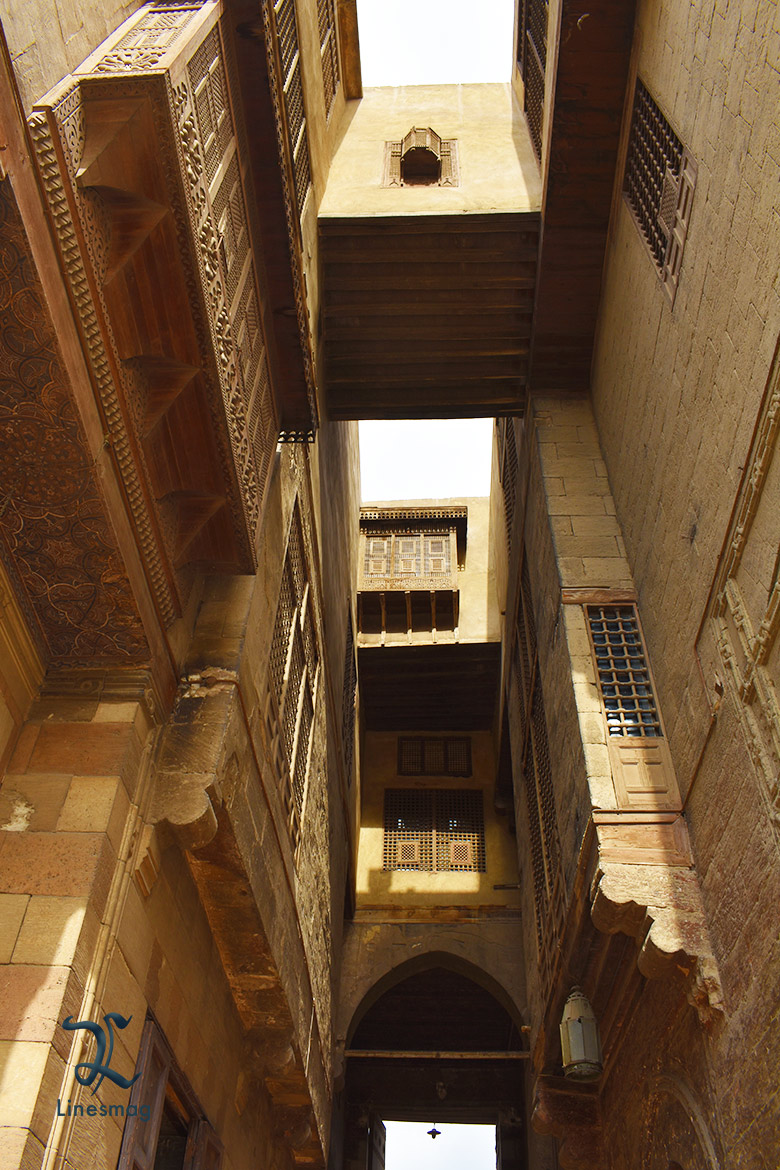
Looking up through the covered passage and connecting bridge between the museum's two houses, with mashrabiyya screens and carved stonework on both sides.
Doha Moustafa / Linesmag · CC BY-SA 4.0Gayer-Anderson Museum
Museum · Bayt al-Kritliyya · Founded 1545
Open, admission and hours confirmed 17 August 2026 · 8 sources
On this page 13 sections
ContentsClose
Not an object collection so much as a collection of rooms: two Ottoman-period Cairo houses, joined by a bridge and furnished by their last private occupant with Islamic, Pharaonic and Asian pieces he gathered across Egypt and the region between 1935 and 1942. The building itself, restored to a private collector's taste rather than a museum's, is the primary exhibit; the single most famous object associated with the house, the bronze Bastet cat, left for the British Museum in 1939 and only a copy remains on site.
| Local name | Bayt al-Kritliyya |
|---|---|
| Kind | Museum |
| Founded | Houses built 1545 and 1631-1632; opened as a museum in 1942 |
| City and country |  Cairo, Egypt Cairo, Egypt |
| Address | Ahmad Bin Tulun Street, Al-Sayyida Zeinab, Cairo 11617, Egypt |
| Website | egymonuments.gov.eg/en/museums/gayer-anderson-museum |
| Status | Open, confirmed |
| Record last verified |
Visiting
- Hours
- Daily09:00 to 17:00ticket window closes at 16:00
- Daily, during Ramadan09:00 to 15:00ticket window closes at 14:00
- Admission
- Foreign adultEGP 100
- Foreign studentEGP 50
- Egyptian adultEGP 10
- Egyptian studentEGP 5
Free entry: Egyptians aged 60 and over. Egyptians with special needs. Orphaned children. Government and Al-Azhar school trips booked in advance through the Rehla platform. Children under 6- Tickets
- egymonuments.gov.eg/en/museums/gayer-anderson... The museum's own ticket page.
- Do I need to book?
- No, tickets are sold at the gate
- Address
- Ahmad Bin Tulun Street, Al-Sayyida Zeinab, Cairo 11617, Egypt MapMetro Al-Sayyeda Zeinab station, about a five-minute walk
On foot Immediately beside the Mosque of Ahmad ibn Tulun in the Sayyida Zeinab district - Website
- egymonuments.gov.eg/en/museums/gayer-anderson-museum
- Telephone
- 0-19654
- [email protected]
Before you go how long, access, photography, bags, eating, shop
- How long to allow
- Reviewers who have gone through both houses, roof terrace and garden describe it as an hour or so, longer if a guide is used to explain the rooms
- Access
- Not published on the museum's own pages; the building is a 16th- and 17th-century private house with narrow stairs between floors and a rooftop terrace, which visitor reviews note as a physically complex route
- Photography
- Private photography permitted inside the museum after paying the ticket fee; video for personal use requires an additional ticket, and commercial filming needs separate permission and a daily rate
- Bags
- Large bags, backpacks and luggage over 40x40cm are not permitted into the galleries but can be left in the cloakroom
- Eating
- Not published on the museum's own pages
- Shop
- Gift shop on site
Prices and hours change. We take them from the institution's own pages and print the day we read them, and you can check the current position at the source we used. Confirm before you travel.
What is inside
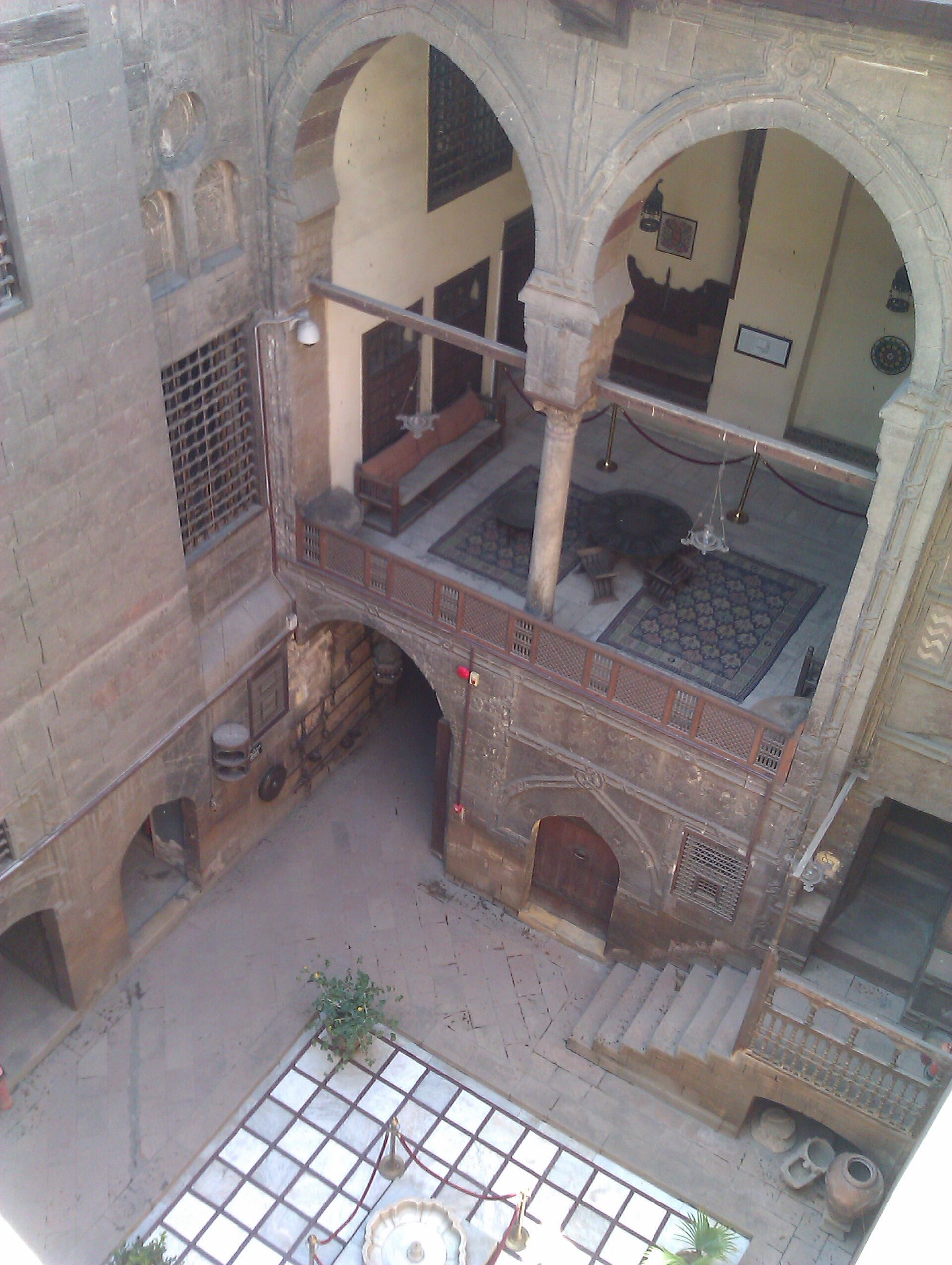
Photograph by Wing045 · CC BY 3.0 Bayt al-Kritliyya, the eastern house
The larger of the two houses, built in 1631-1632 for Hajj Muhammad ibn Salem ibn Jilmam al-Jazar and later named after a Cretan noblewoman who owned it, holds the ceremonial reception hall with its Damascus Room, and the courtyard around which the house is organised.
Bayt Amna bint Salim, the western house
The smaller and older house, built in 1545 by the scholar Abd al-Qadir al-Hadad and later named for a later owner, Amna bint Salim, holds the Persian Room, the Muhammad Ali Room and Gayer-Anderson's own study, furnished as he left it when he departed Egypt in 1942.
The bridge between the two houses
An enclosed wooden bridge at third-floor level physically joins the two originally separate houses, built at an unrecorded date; it is the passage a visitor crosses between the eastern and western halves of the museum and is itself one of the building's most photographed features.
The roof terrace
A rooftop sitting area with views across the Ibn Tulun district, furnished with the low seating and screens typical of the house's other reception spaces. It is one of the two spaces in the museum used for the 1977 James Bond film The Spy Who Loved Me, the other being the ceremonial reception hall below.
What to see first
Reception hall of Bayt al-Kritliyya
17th-century CairoThe ceremonial heart of the eastern house and, per Wikipedia's account of the building's later history, one of the two rooms used to film The Spy Who Loved Me in 1977.6
The Damascus Room
Ottoman Syria, installed in the houseA painted and gilded reception room in the Syrian style, one of several period rooms Gayer-Anderson furnished with material bought or gifted from across the region rather than left as he found it.5
Mashrabiyya screens throughout both houses
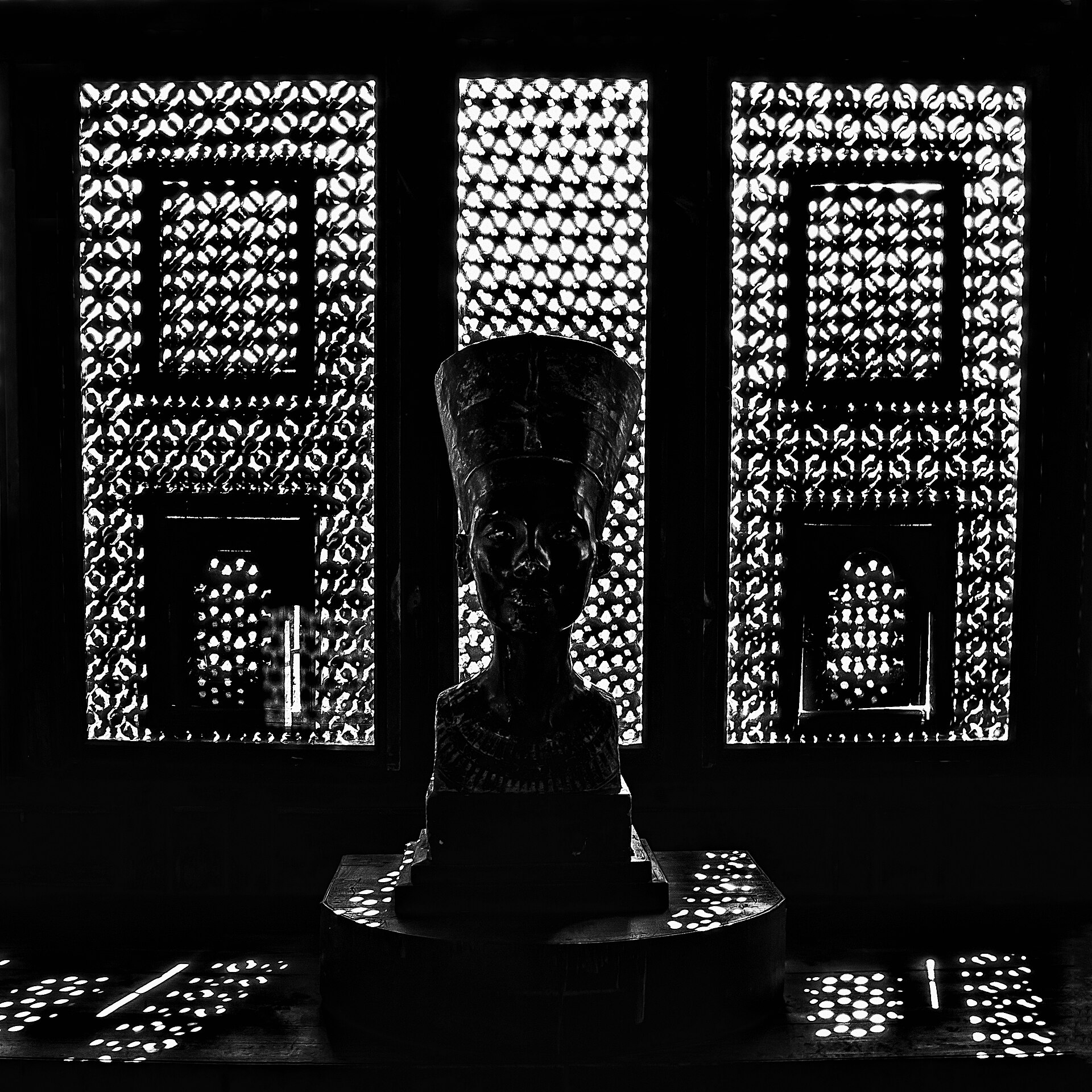
Ottoman-period Cairo joineryThe carved wooden lattice screens are the feature visitors and Tripadvisor's own summary single out first; they let air through and let the house's women look onto the street and the men's reception rooms unseen.3
Bronze cat, in the Ancient Egyptian Room
Ancient Egyptian, Late Period styleA copy of the piece Gayer-Anderson kept for his own house; he gave the original bronze figure of the goddess Bastet to the British Museum in 1939, where it is now known as the Gayer-Anderson cat and is one of that museum's most-illustrated Egyptian objects. What is on display in Cairo is the copy he kept, not the original.7
Gayer-Anderson's own study
Furnished 1935-1942Left largely as the collector arranged it, one of the few rooms in the museum that documents the collector himself rather than the Ottoman-period house he restored.2
The bridge between the two houses
Date unrecordedThe physical evidence that these are two separate 16th- and 17th-century houses joined into one museum, rather than a single building; visitors cross it to move between the eastern and western halves.6
The roof terrace
17th century, as restoredThe second of the two Bond-film locations, and the room most reviewers photograph for the view over the Ibn Tulun district.3
Two houses, a century apart, under one name
The museum is not one building but two, built roughly a century apart and only joined later. The smaller, western house was built in 1545 (947 AH) by the scholar Abd al-Qadir al-Hadad and passed through several owners before taking the name Bayt Amna bint Salim, after a later occupant. The larger, eastern house was built in 1631 (1041 AH) by Hajj Muhammad ibn Salem ibn Jilmam al-Jazar for his own family, and it took its name, Bayt al-Kritliyya - the House of the Cretan Woman - from a later owner, a wealthy Muslim woman from Crete. At an unrecorded date the two houses were connected by an enclosed wooden bridge at third-floor level, so that a single household could move between them without going out into the street. That bridge, more than any single room, is the physical proof that this museum is a merger rather than a design: two private houses, built for two different families, in two different decades of Ottoman Cairo.
Gayer-Anderson: a collector who moved in
Robert Grenville Gayer-Anderson joined the Royal Army Medical Corps in 1904 and transferred to the Egyptian Army in 1907, reaching the rank of Major by 1914. After retiring from military service in 1919 he stayed in Egypt in civilian roles, including Senior Inspector at the Ministry of the Interior and Oriental Secretary to the British Residency, and spent those decades collecting Islamic, Pharaonic and Asian antiquities, small sculpture, jewellery and pottery. In 1935 he petitioned the Assembly for the Preservation of Arab Antiquities for permission to live in the two adjoining, by-then-decayed houses and to restore and furnish them in Islamic-Arabic style; the request was granted, and he moved in the same year, installing electricity and plumbing and refitting the rooms with his own collection and with furniture, carpets and fittings brought in from elsewhere in the region. He is recorded as having had a sailing boat built, named La Maree, specifically to collect antiques along the Nile. Ill health forced him to leave Egypt in 1942; under the terms of his original agreement, the houses and their contents passed to the Egyptian state, and King Farouk made him a Pasha in recognition. Gayer-Anderson died in England in 1945, three years after leaving the house he had spent seven years restoring.
The cat that left for London
The single object most associated with Gayer-Anderson's name is not in this museum. Among his collection of small Egyptian bronzes was a Late Period figure of a cat, one form of the goddess Bastet, dated to around 600 BC. In 1939, three years before he left Cairo, Gayer-Anderson donated the original bronze to the British Museum, where it is now displayed in Room 4 of the Egyptian sculpture gallery as the Gayer-Anderson cat, described by the museum's own curator as among the finest surviving bronze cats from ancient Egypt. He kept a copy for his own house in Cairo, and it is that copy, not the original, that stands in the Ancient Egyptian Room here today. A visitor who has seen photographs of the famous cat and expects to find it in Cairo is looking at the wrong building; the original left for London the year before Gayer-Anderson himself left Egypt.
A house that has appeared on screen
The ceremonial reception hall of Bayt al-Kritliyya and the roof terrace above it were used as filming locations for the 1977 James Bond film The Spy Who Loved Me, standing in for the Cairo mansion of the character Fekkesh. It is a detail visitors raise unprompted in reviews, and the rooftop in particular is recognisable against production stills from the film, largely unchanged since. The museum makes no particular feature of this itself; it survives mainly as a fact repeated by visitors and by later writing on the house rather than something the institution promotes on its own visit pages.
What reviewers actually find there now
At 4.6 out of 5 across 225 Tripadvisor reviews, this is one of the more highly rated small museums in Cairo, and the reviews are specific rather than generic: visitors name the Damascus Room, the Persian Room, the bridge and the roof terrace rather than writing only about 'the collection'. The recurring reservation is the building's condition and navigability - more than one reviewer asks for renovation work, and more than one describes the route between the two houses and their several floors as confusing without a guide, which is an understandable consequence of touring two separate 16th- and 17th-century houses joined after the fact rather than a single building designed to be walked through.
What visitors say
We publish no visitor review prose and cite no single platform score as fact; this is our own reading of the pattern in what reviewers say. Visitors consistently describe the two joined houses as the most atmospheric small museum in Cairo, naming specific rooms - the Damascus Room, the Persian Room, the roof terrace, the bridge - rather than writing in generalities, and several connect the house to the 1977 Bond film shot there. A recurring complaint is that the building shows its age: more than one reviewer asks for renovation, and the route between rooms and floors is described as confusing without a guide.
What is praised, what is criticised
- Praised: the mashrabiyya screens and period rooms, named individually by reviewers rather than described in general terms
- Praised: the atmosphere of a lived-in 17th-century house rather than an institutional museum, still furnished as Gayer-Anderson left it
- Praised: the roof terrace and the connecting bridge between the two houses, which several reviewers photograph specifically
- Criticised: visible need for renovation in parts of the building, noted by more than one reviewer
- Criticised: a route between the two houses and their floors that reviewers describe as complex or confusing without a guide
Ratings on other platforms
Tripadvisor: 4.6 from 225 ratings, read 7 August 2026
A platform average is a tertiary source: it moves, it is not audited, and we quote no visitor's words.
Questions about Gayer-Anderson Museum
Where is Gayer-Anderson Museum?
Ahmad Bin Tulun Street, Al-Sayyida Zeinab, Cairo 11617, Egypt.
How much does it cost to visit?
Foreign adult: EGP 100; Foreign student: EGP 50; Egyptian adult: EGP 10; Egyptian student: EGP 5. As confirmed 17 August 2026.
When is it open?
Daily 09:00-17:00; Daily, during Ramadan 09:00-15:00. As confirmed 17 August 2026.
How do you get there?
Metro: Al-Sayyeda Zeinab station, about a five-minute walk; On foot: Immediately beside the Mosque of Ahmad ibn Tulun in the Sayyida Zeinab district.
What should you see first?
Reception hall of Bayt al-Kritliyya (17th-century Cairo); The Damascus Room (Ottoman Syria, installed in the house); Mashrabiyya screens throughout both houses (Ottoman-period Cairo joinery); Bronze cat, in the Ancient Egyptian Room (Ancient Egyptian, Late Period style); Gayer-Anderson's own study (Furnished 1935-1942); The bridge between the two houses (Date unrecorded).
What we could not confirm
- No named published criticism or restitution question was found for this museum during research; if one exists, it was not surfaced by the sources consulted here.
- The exact date the bridge between the two houses was built is not given by any source consulted; the Ministry and Wikipedia both describe it only as being of unknown date.
- Accessibility information for visitors with mobility restrictions is not published by the museum; the building's narrow stairs and rooftop terrace make this a live question the museum does not address online.
Images
Sources
- 1Ministry of Tourism and Antiquities, Discover Egypt's Monuments: Gayer Anderson Museum - history of the two houses and Gayer-Anderson's tenancy, hours, ticket prices, free-entry policy, photography and bag rules, room list. egymonuments.gov.eg/en/museums/gayer-anderson-museum
- 2Ministry of Tourism and Antiquities page, same URL as above: the 'Stories' and 'Gallery' sections naming the rooms (Bayt Amna bint Salim rooftop, the corridor between the two houses, Bayt al-Kritliyya courtyard, the summer dais, Gayer-Anderson's office) and the sundial and Ta's al-Khida legends. egymonuments.gov.eg/en/museums/gayer-anderson-museum
- 3Tripadvisor, Gayer-Anderson Museum (Bayt al-Kiritliya) - All You Should Know Before Going: current rating and review count, the museum's own summary description, and individual review text on the rooms named, the Bond connection and the renovation and navigation complaints. Read directly in the in-app browser, including review text, on 7 August 2026. tripadvisor.com/Attraction_Review-g294201-d308828-Reviews-Gayer_Anderson_Museum_Bayt_al_Kiritliya-Cairo_Cairo_Governorate.html
- 4Tripadvisor listing page, same source as above: street address and nearest metro station. tripadvisor.com/Attraction_Review-g294201-d308828-Reviews-Gayer_Anderson_Museum_Bayt_al_Kiritliya-Cairo_Cairo_Governorate.html
- 5Ministry of Tourism and Antiquities page (source 1), description of the Damascus Room and other named period rooms. egymonuments.gov.eg/en/museums/gayer-anderson-museum
- 6Wikipedia, Gayer-Anderson Museum: dates and builders of the two houses, the bridge joining them, Gayer-Anderson's military and civil career, his 1935 request to occupy the house, the 1942 transfer to the Egyptian state, and the 1977 James Bond filming in the reception hall and on the roof terrace. en.wikipedia.org/wiki/Gayer-Anderson_Museum
- 7British Museum, The Gayer-Anderson cat: confirms the bronze Bastet figure was donated to the British Museum in 1939, that Gayer-Anderson kept a copy for his Cairo house, and gives the object's dating and material analysis. Read directly, including the curator's quotation, in the in-app browser on 7 August 2026. britishmuseum.org/collection/animals/gayer-anderson-cat
- 8Wikidata, Gayer-Anderson Museum (Q2190649): label, description and coordinates, cross-checked against the museum's own address before use. wikidata.org/wiki/Q2190649