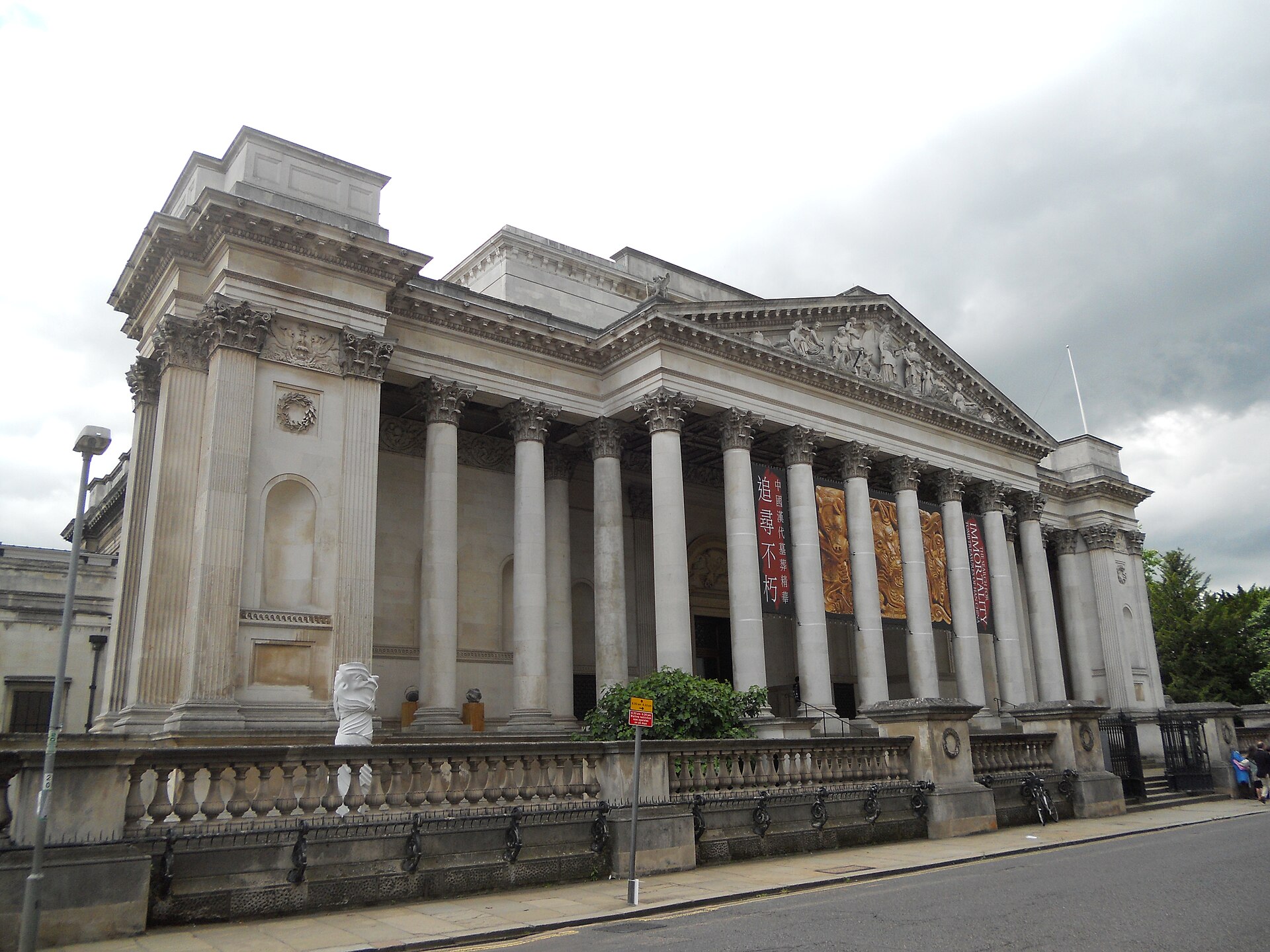
The Museum's Corinthian portico on Trumpington Street, designed by George Basevi and completed by C.R. Cockerell, photographed from the street in 2012.
Photograph by Supercarwaar · CC BY-SA 3.0Fitzwilliam Museum
Museum · Founded 1816
Open, admission and hours confirmed 24 September 2026 · 17 sources
On this page 13 sections
ContentsClose
The Fitzwilliam's real strength is breadth at genuine depth: an encyclopaedic collection, spanning ancient Egyptian and classical antiquities, Old Master and Impressionist painting, one of Britain's most important collections of illuminated manuscripts and early music (the Fitzwilliam Virginal Book and the Handel autographs foremost among them), and applied arts running from English ceramics to Korean celadon, all held inside a Grade I listed Neoclassical building that is itself one of the collection's exhibits. Few university museums anywhere hold comparable depth in more than one of those fields simultaneously.
| Kind | Museum |
|---|---|
| Founded | 1816 |
| City and country |  Cambridge, United Kingdom Cambridge, United Kingdom |
| Address | Trumpington Street, Cambridge CB2 1RB, United Kingdom |
| Website | fitzmuseum.cam.ac.uk |
| Status | Open, confirmed |
| Record last verified |
Visiting
- Hours
- Tuesday-Saturday10:00 to 17:00Last entry 16:40
- Sunday12:00 to 17:00Last entry 16:40
- Bank Holiday Mondays12:00 to 17:00
- Closed
- Monday, except Bank Holidays.
- Admission
- Permanent collectionFreeFree entry to all permanent galleries and displays, every open day
- Ticketed special exhibition, adultGBP 14.50From GBP 14.50 depending on the show; figure taken from the Made in Ancient Egypt exhibition, on sale in 2026
- Ticketed special exhibition, under 18 or Friends memberFreeFree
- Group visit, 10 or more, non-UK-educationGBP 5Per person; UK schools, colleges and universities visit free; groups must book at least two weeks ahead and the Museum states it cannot admit an unbooked group
- Tickets
- fitzmuseum.cam.ac.uk/plan-your-visit/exhibitions The museum's own ticket page.
- Do I need to book?
- No booking for the free permanent galleries. Timed tickets are sold in advance for paid special exhibitions and are recommended when a show is busy
- Address
- Trumpington Street, Cambridge CB2 1RB, United Kingdom MapOn foot About a 20 minute walk from Cambridge railway station
Bus The Cambridge Universal (U) bus service stops outside the Museum on Trumpington Street
Parking Limited Pay and Display parking on Trumpington Street opposite the Museum; the museum's own site warns of a deep culvert between the roadway and kerb - Website
- fitzmuseum.cam.ac.uk
- Telephone
- +44 (0)1223 332900
- [email protected]
Before you go how long, access, photography, bags, eating, shop
- How long to allow
- The museum's own listing and Tripadvisor both put a considered visit at two to three hours; several visitor accounts describe returning across two half-day trips to cover the ground and upper floors separately
- Access
- Step-free entry is at the Courtyard entrance; the main Trumpington Street portico has 18 stone steps. A lift at the Courtyard entrance reaches the first floor. From the main Entrance Hall there are 24 stairs up to the first-floor galleries and 16 down to the lower ground floor. A limited number of wheelchairs are available at the Courtyard entrance, and accessible toilets and baby-changing facilities are on the lower ground floor
- Photography
- Personal, non-commercial photography without flash is permitted with small cameras
- Bags
- Backpacks or bags larger than 40 x 26 x 15cm must go in a locker (GBP 1 refundable, or a free token) or be carried by hand; suitcases are not admitted
- Eating
- The Courtyard Kitchen Cafe, open 10am-4.30pm Tuesday-Saturday and 12-4.30pm on Sundays and Bank Holidays, with hot food until 3pm; a kiosk in the Courtyard runs on summer weekends, weather permitting
- Shop
- The Courtyard Shop keeps gallery hours; Friends of the Fitzwilliam members get a 10 percent discount
Prices and hours change. We take them from the institution's own pages and print the day we read them, and you can check the current position at the source we used. Confirm before you travel.
What is inside
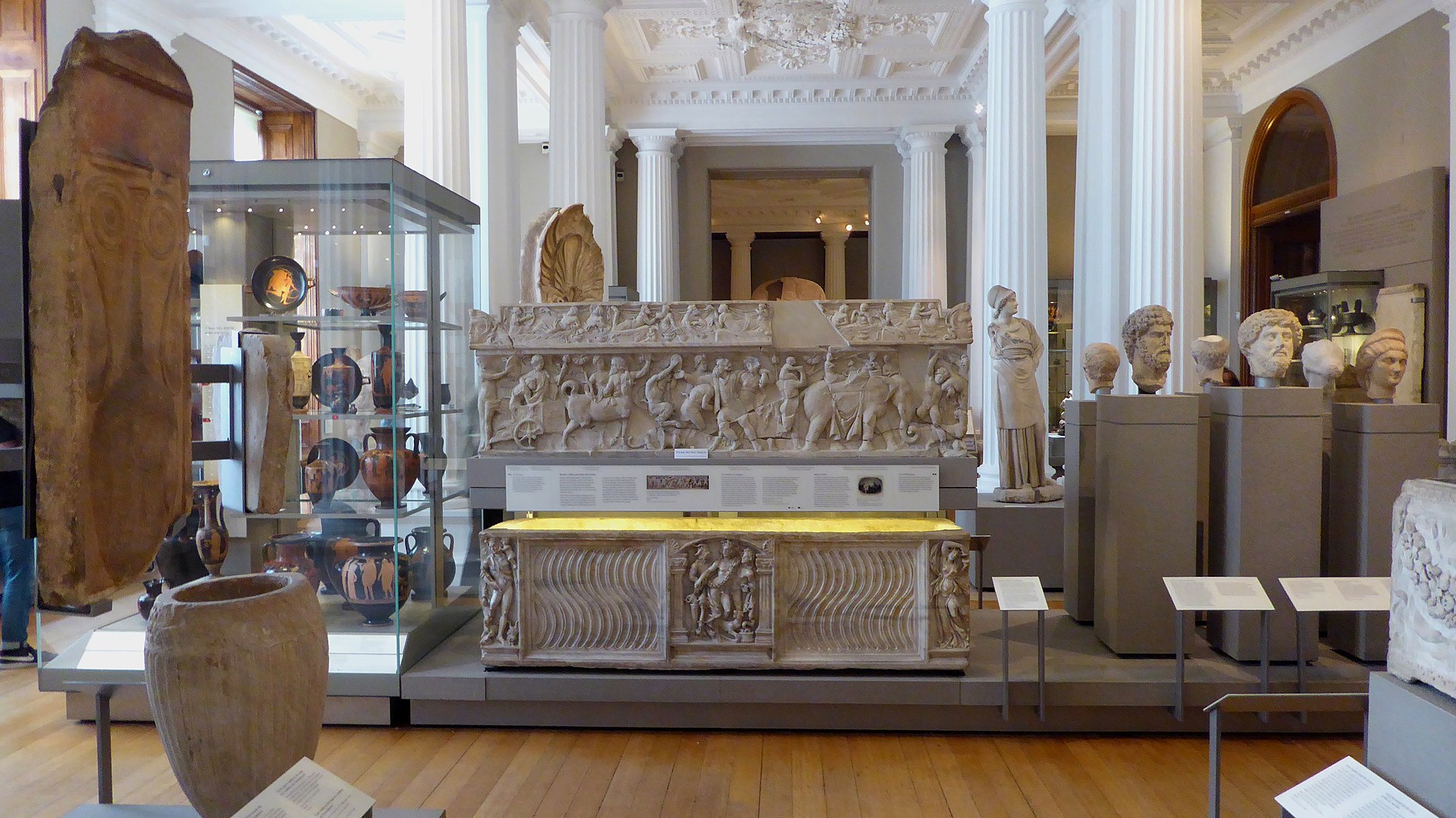
Photograph by Ethan Doyle White · CC BY-SA 4.0 Antiquities: Egypt, Greece, Rome, Cyprus and the Ancient Near East
The ground-floor antiquities suite runs from Egyptian coffins, mummies and Book of the Dead papyri through Cypriot and Near Eastern material to the Museum's Greek and Roman galleries, where a monumental carved Roman marble sarcophagus stands under the coffered ceiling among Greek painted pottery and a run of Roman portrait busts.
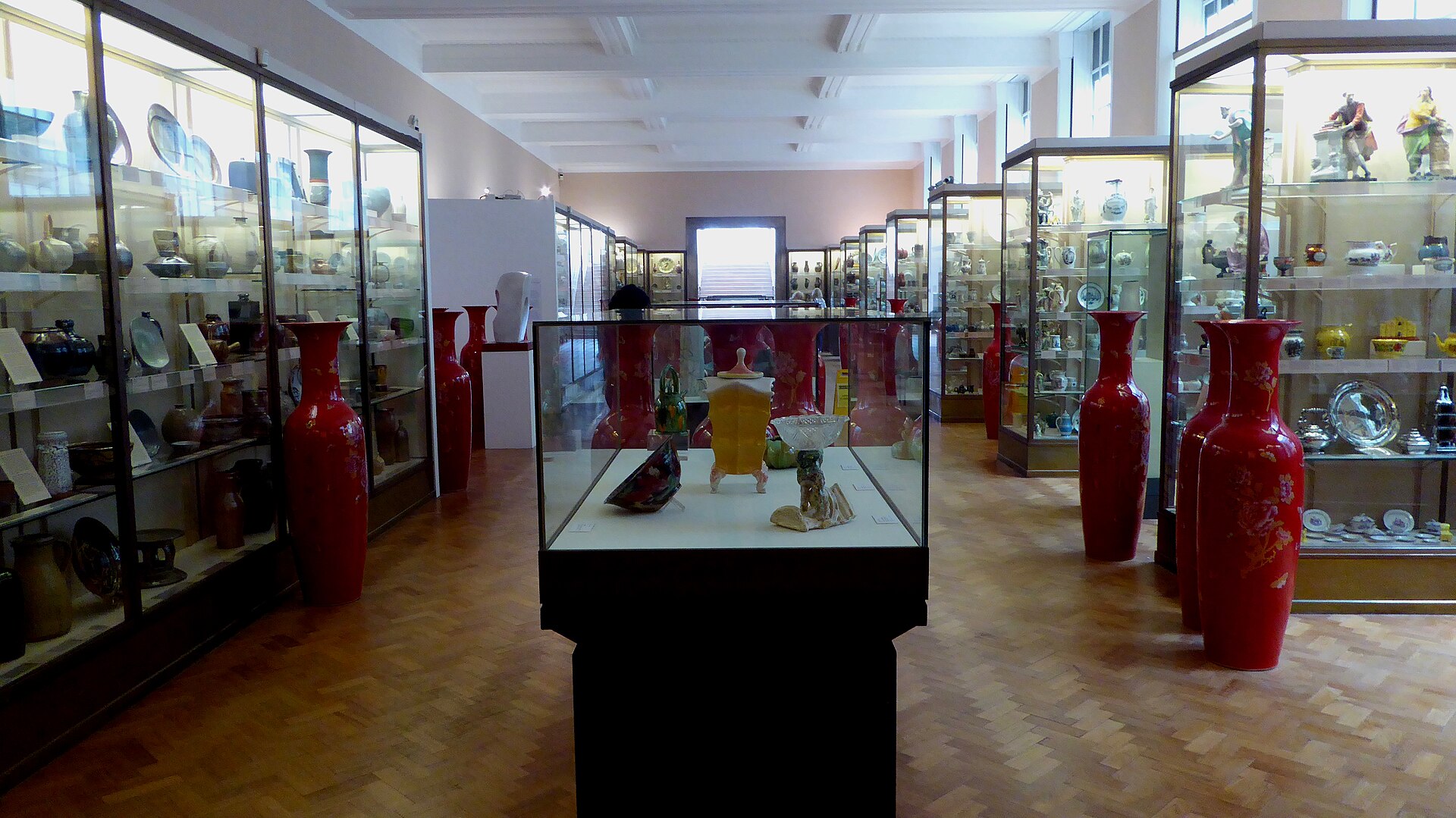
Photograph by Ethan Doyle White · CC BY-SA 4.0 Applied Arts: ceramics, glass, furniture and East Asian art
European and Asian ceramics and glass fill a long run of wall cases, from delftware and English porcelain to Chinese and Korean wares; a pair of large red Chinese vases anchors the room, and the same department holds the Museum's furniture, clocks, silver and jewellery, and its Islamic and South and East Asian collections.
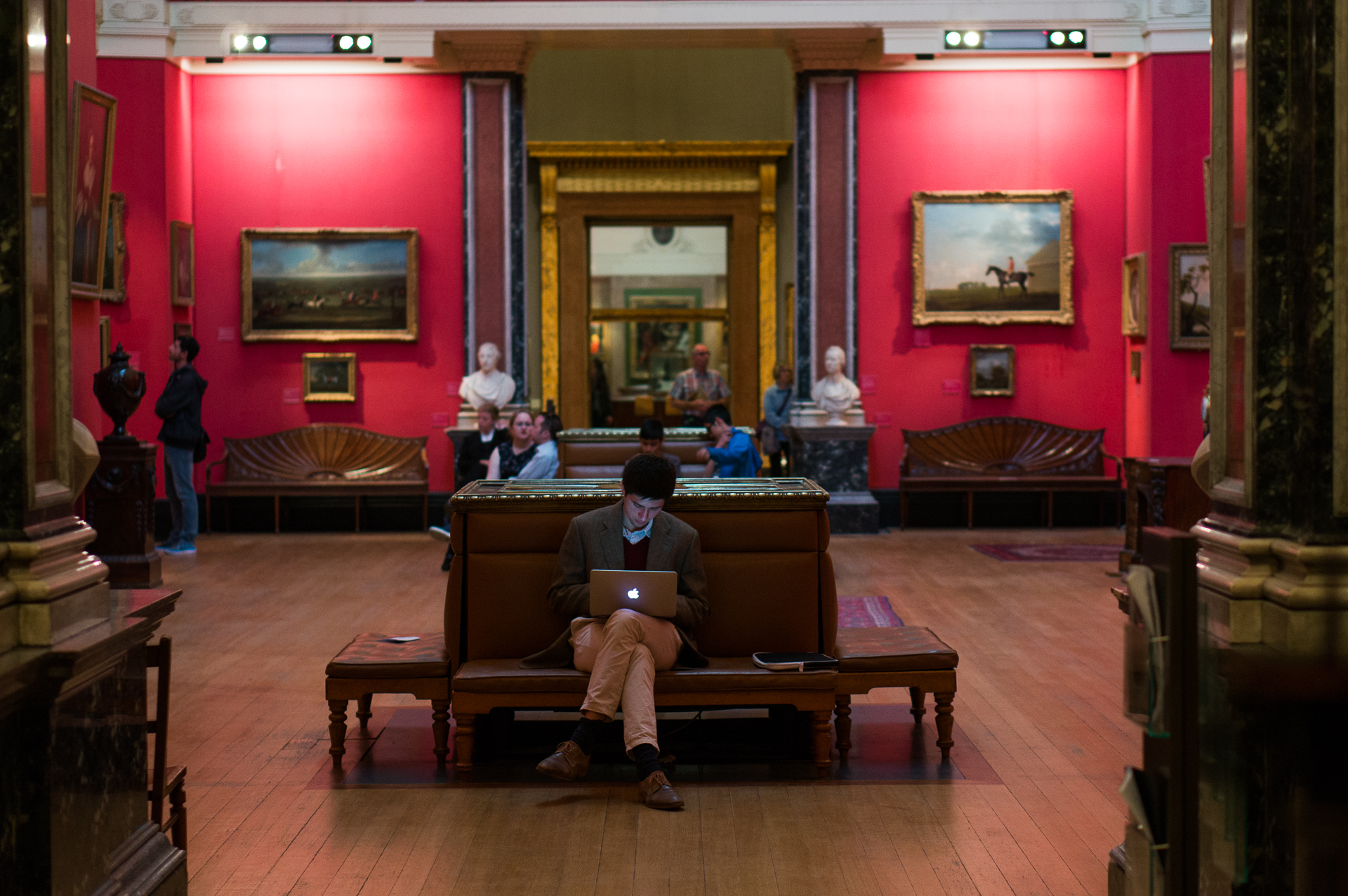
Photograph by Paul Hudson from United Kingdom · CC BY 2.0 Paintings, Drawings and Prints
The first-floor picture galleries hang Old Masters, British portraiture and sporting pictures, and nineteenth and twentieth century French and British painting salon-style on coloured walls, including Titian, Rubens, Rembrandt, Stubbs, Constable, and one of the country's strongest outside-London groups of French Impressionist and Post-Impressionist canvases by Monet, Renoir, Degas and Picasso's early work.
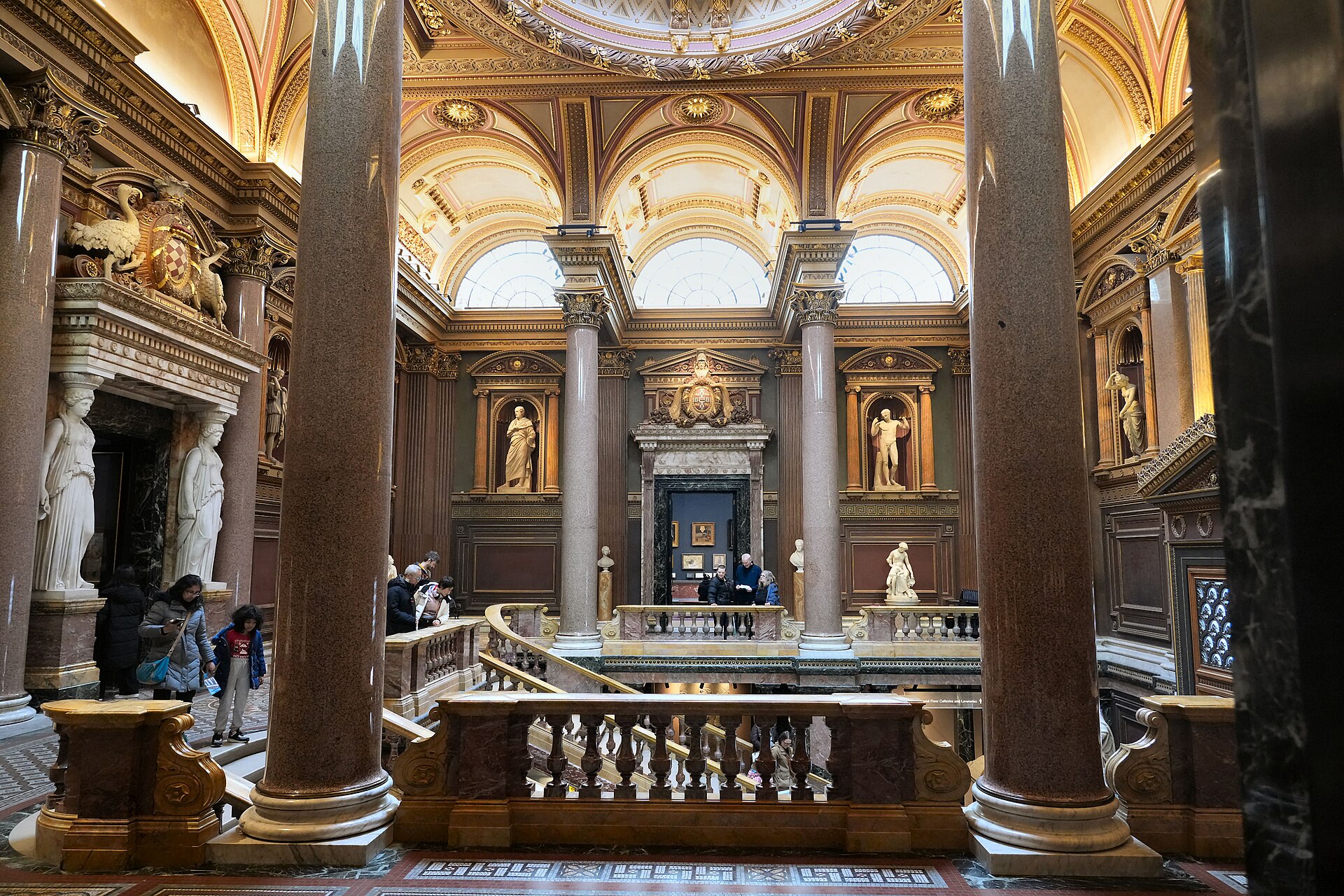
Photograph by Malcolm Neal · CC BY-SA 2.0 The Founder's Entrance Hall and staircase
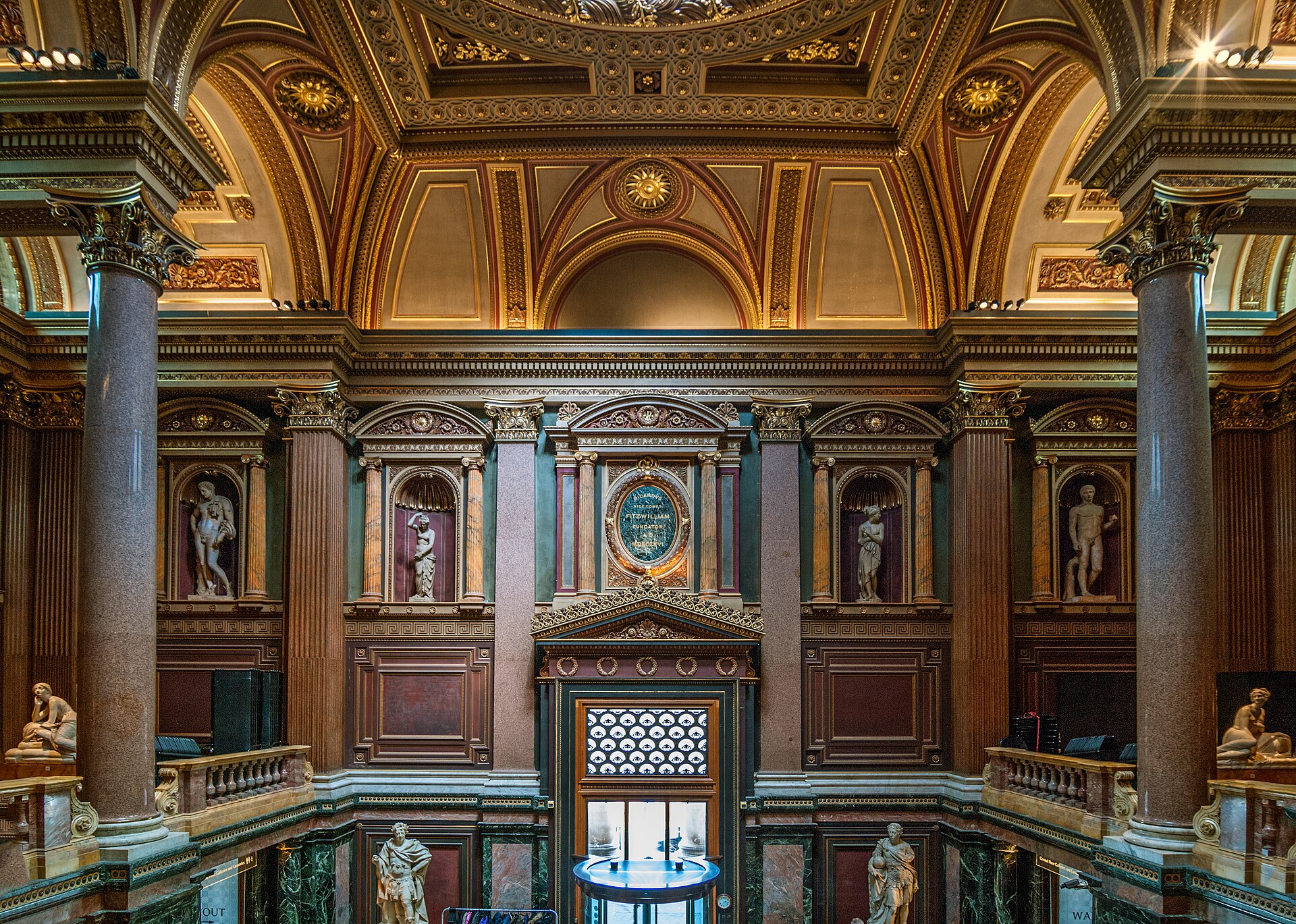
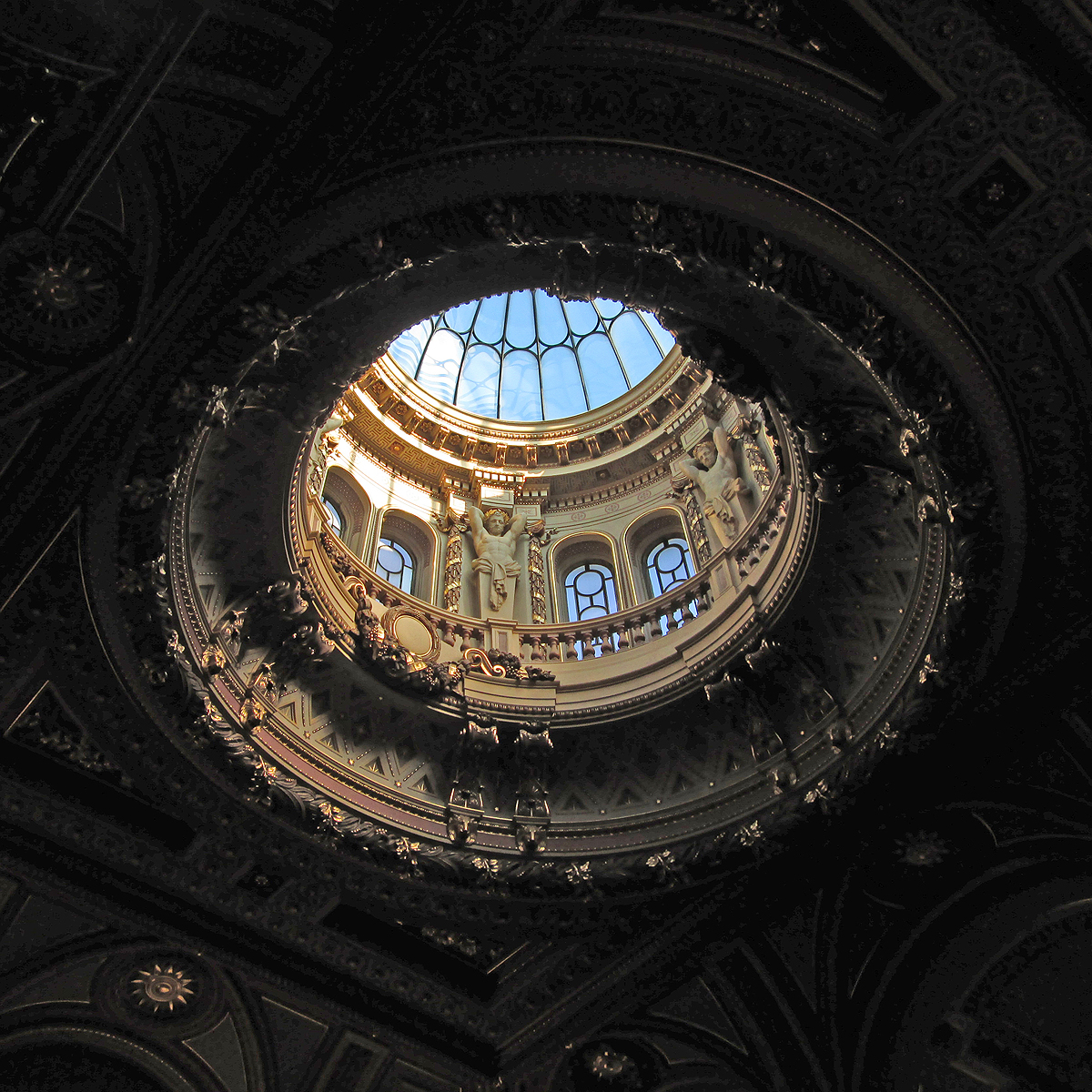
George Basevi and C.R. Cockerell's Entrance Hall, and the marble staircase Edward Middleton Barry added in the 1870s, are as much a part of the visit as any gallery: a coffered dome lights a hall of scagliola columns, niches holding classical statuary, and a grand double staircase, and several visitor accounts single the room out as the most memorable thing in the building.
Arms and Armour
A dedicated Arms and Armour gallery holds European and some Asian arms and armour from the medieval period onward; Tripadvisor reviewers repeatedly name it as the gallery children in particular gravitate to.
Manuscripts, Rare Books, Coins and Music
The Museum's Founder's Library holds illuminated manuscripts and incunabula from the 1816 bequest; the Music department, drawn from the same bequest, holds the Fitzwilliam Virginal Book and one of the country's most important collections of Handel autograph manuscripts outside the British Library, in a cabinet still known as Handel's bookcase; and the Coins and Medals department holds Greek, Roman, Islamic and British coinage. No free-licence photograph of these study spaces or reading rooms was located on Wikimedia Commons; the manuscripts and coins that ARE illustrated on the Museum's own site are individual object photographs, not photographs of the rooms, so none is used here.
What to see first
Tarquin and Lucretia
Titian (Tiziano Vecellio)Painted around 1571, when Titian was in his eighties, for Philip II of Spain; the Museum's own account of the work notes X-ray evidence of the artist reworking Tarquin's arm as he planned the composition, and it remained in the Spanish royal collection until 1813 before reaching Cambridge as a gift from Charles Fairfax Murray in 1918. It is the single painting most often named as the Fitzwilliam's greatest Old Master.9
The Fitzwilliam Virginal Book
Compiled circa 1562-1612, composers including William Byrd, John Bull and Orlando GibbonsThe largest and most important surviving manuscript of English keyboard music from the period, with close to three hundred pieces by about thirty composers; it came to Cambridge in the founder's own 1816 bequest and gives the Music department its name.10
Handel's autograph manuscripts (Handel's bookcase)
George Frideric Handel and later additionsRichard Fitzwilliam collected Handel material in his own lifetime and helped organise the 1784 Westminster Abbey Handel commemoration; a further 67 volumes of Handel material were given by Francis Barrett Lennard in 1902. The Museum's own account of its Music department describes the resulting Handel holding as second in importance only to the Royal Collection now in the British Library.10
The three Kangxi-period porcelain vases
Chinese, Qing dynasty, Kangxi reign (1662-1722)On display since 1948 until a visitor fell on the staircase above them in January 2006 and broke them into more than 400 pieces; uninsured at the time, they were rebuilt by the conservator Penny Bendall and returned to display in a new case in November 2007. The story is now as much a part of the object's history as the porcelain itself.14
The Gompertz collection of Korean ceramics
Korean, mainly Koryo and Choson dynasty waresGiven to the Museum in 1984 by the collector and scholar Geoffrey St George Montague Gompertz, whose own writing did more than any other single figure's to introduce Korean art to a Western audience; a 2020 review of the resulting catalogue calls Korean art 'overshadowed by the art of its neighbours, China and Japan' and credits Gompertz with changing that.11
Egyptian coffins, mummies and Book of the Dead papyri
Ancient Egyptian, multiple periodsThe Egypt galleries, among the Museum's own published highlights, include the coffin of Nakhtefmut, the relief of Akhenaten and painted Book of the Dead papyri; Tripadvisor's own tally of what visitors mention most often is led by the Egyptian section.6
The Rembrandt print collection
Rembrandt van RijnBuilt up across two centuries, it is counted among the world's foremost holdings of Rembrandt's etchings and gives the paintings and prints department real depth beyond its Old Master paintings.12
A private library given to a university with none
The Fitzwilliam Museum exists because Richard Fitzwilliam, 7th Viscount Fitzwilliam, died on 4 February 1816 without an heir and with a settled conviction that the University of Cambridge, which then had no museum of its own, should have one. Fitzwilliam had been a student at Trinity Hall, sat as Member of Parliament for Wilton from 1790 until his death, and spent much of his adult life as what the Museum's own account of its founding calls a passionate and educated collector, with a particular interest in literary and musical manuscripts. His will left the University his collection of 144 paintings, including works by Titian, Paolo Veronese and Palma Vecchio, his library of around 130 medieval manuscripts, his music collection built up over decades and including autograph material by Handel and Purcell, and the enormous sum of 100,000 pounds to build, in his own phrase as the Museum records it, a good substantial museum repository to hold all of it.
The money behind that bequest has its own history, and the Museum now tells it openly rather than leaving it in a footnote. Fitzwilliam inherited much of his wealth through his mother, whose father was Sir Matthew Decker, a Dutch-born London merchant who helped establish the South Sea Company in 1711, the company that held Britain's monopoly on trafficking enslaved Africans to the Spanish American colonies. The Museum's own founding history states plainly that Fitzwilliam's wealth derived substantially from that trade, and that many of the Dutch paintings Decker had bought passed down to Fitzwilliam and then into the founding bequest alongside the Italian masterpieces. That the institution most associated with connoisseurship and quiet scholarship in Cambridge was capitalised in part by the slave trade is not a modern discovery grafted onto an older story; it is now part of how the Museum introduces itself.
Basevi's competition, Basevi's death, and forty years of building
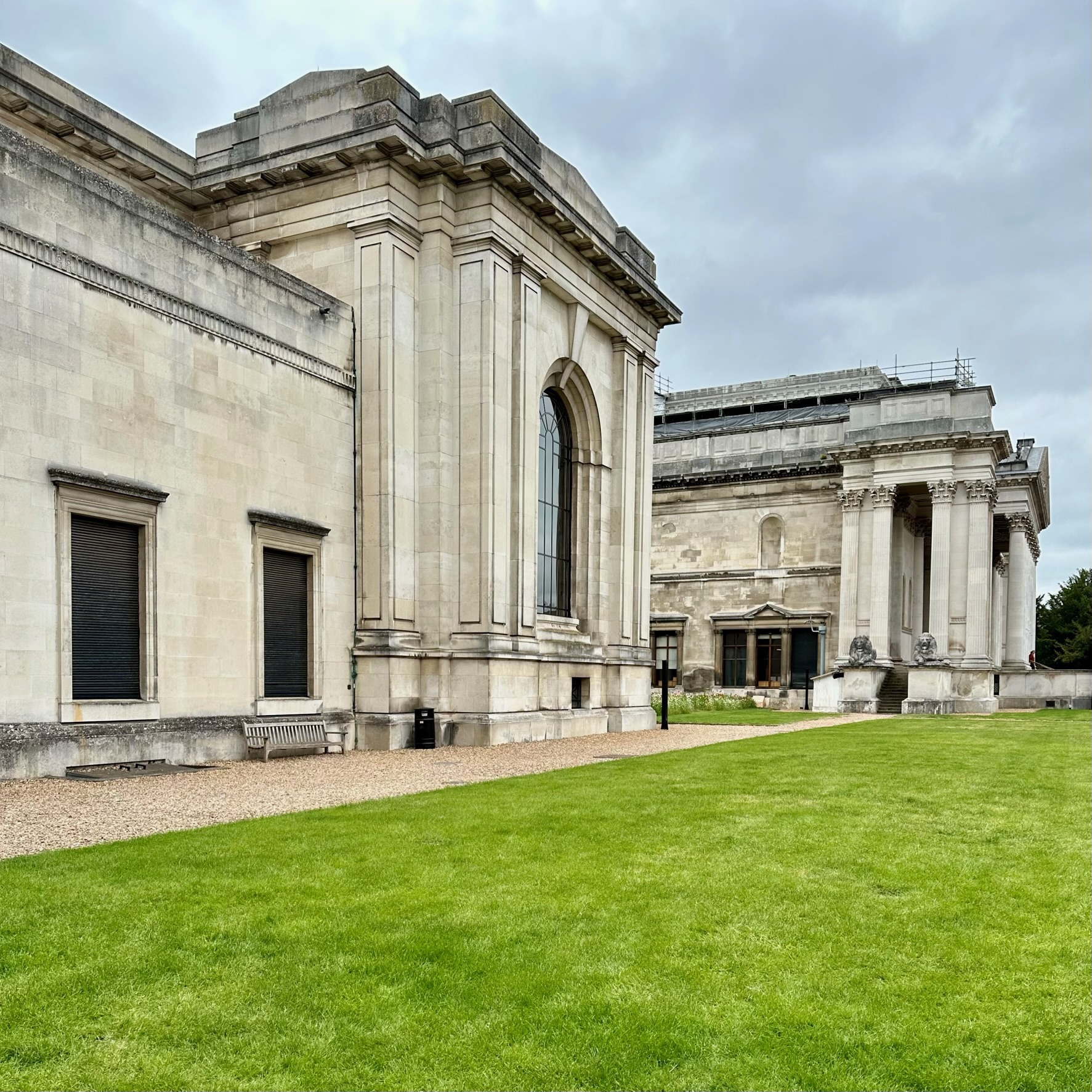
Cambridge did not get its museum quickly. The University bought a permanent site on Trumpington Street from Peterhouse in 1821 for 8,500 pounds, and it took until 1834 for an architectural competition to be settled, won by George Basevi with a Neoclassical design in the Greek and Roman idiom fashionable at the time. Basevi did not live to see it finished. On 16 October 1845 he fell to his death while inspecting repair works at Ely Cathedral, and the building passed to Charles Robert Cockerell to complete. It opened to members of the University and the public in 1848, thirty-two years after Fitzwilliam's original bequest and with the founder himself long dead: he had died, by his own biography's account, after a fall from a ladder in his own library, an oddly matching accident to the one that later killed his architect.
The building kept growing. Edward Middleton Barry added the Palladian Entrance Hall, with its coffered dome and grand staircase, in the 1870s, replacing what had been a comparatively plain entrance with the space that now greets every visitor first. A further extension followed the First World War, funded in part by the huge and diverse collection left to the Museum by the Anglo-Irish collector Charles Brinsley Marlay, and completed by 1931 with additional support from the Courtauld family. The most recent phase, the Courtyard Development, was completed in 2004: the architects John Miller and Partners roofed over an internal courtyard that had been wasted space since the nineteenth-century extensions, and built a new four-storey block of cafe, shop, conservation studios and gallery space into it, on a 12 million pound project that reopened the Museum's Grade I listed courtyard to the public for the first time.
Five departments, twenty-five galleries
The Museum organises what is now well over half a million objects into five curatorial departments, Antiquities, Applied Arts, Coins and Medals, Manuscripts and Printed Books, and Paintings, Drawings and Prints, spread in practice across some twenty-five named galleries and subject areas from Ancient Near Eastern and Egyptian antiquities through Greek and Roman sculpture, Cypriot archaeology, Islamic art, the Arts of Asia, Ceramics, Glass and Enamels, Furniture and Clocks, Silver and Jewellery, Textiles and Fans, Arms and Armour, Illuminated and Literary Manuscripts, Music, Coins and Medals, and Paintings, Prints and Watercolours and Drawings. Few university museums anywhere hold a comparable spread at comparable depth in any one of those areas, let alone all of them at once.
The paintings galleries carry the Museum's best-known single objects, Titian's Tarquin and Lucretia foremost among them, alongside Rubens, Rembrandt, Stubbs, Constable and one of the strongest groups of French Impressionist and Post-Impressionist painting outside London. The Music department, drawn straight from the founder's own 1816 bequest, holds the Fitzwilliam Virginal Book and a Handel manuscript collection the Museum itself ranks second in importance only to the Royal Collection now held by the British Library. The Applied Arts department runs from English delftware to the Gompertz collection of Korean ceramics, given in 1984 by the scholar who did more than anyone to bring Korean art to Western attention. None of this depth is an accident of donation alone: Sydney Cockerell, director from 1908 to 1937, actively built the music holdings further by acquiring autograph scores from Purcell to Britten, and successive directors have kept adding to departments the founder could not have anticipated, including the Egyptian and Near Eastern antiquities that now lead most visitors' account of what they came to see.
A shoelace, a staircase, and three vases with no insurance
On 25 January 2006 a 42 year old visitor named Nick Flynn, tripping on an undone shoelace, fell down a staircase at the Museum and into three Chinese porcelain vases from the Kangxi reign of the Qing dynasty that had stood on display since 1948. The vases, one a lidded baluster jar 80cm tall and weighing 45kg, together worth more than 100,000 pounds, broke into more than 400 pieces. Flynn was arrested on suspicion of criminal damage and released without charge some months later. The vases themselves were uninsured, so the Museum recovered nothing for the damage, and it fell to the conservator Penny Bendall to rebuild them, piece by piece, over the better part of two years.
They went back on display in November 2007, deliberately repositioned away from the sunlit window where they had originally stood, since UV light degrades the adhesives used in ceramic conservation, and set instead in a case designed to let visitors walk around them. The Museum's then director, Duncan Robinson, said at the time that the Museum was very pleased with the result of the restoration. The episode is now told on the object label as readily as the porcelain's own origin: an accident that could have destroyed three eighteenth-century vases permanently instead became a documented case study in how a museum recovers an object, and the vases carry that history along with everything Kangxi-era potters and painters put into them originally.
Free, growing, and reckoning with its own founding
The Fitzwilliam has kept the principle of free admission to its permanent collection unbroken since 1848, a decision that costs the University and the Museum's supporting Friends and trusts real money every year and that visitors, almost without exception, single out as remarkable given what is on show. Under Luke Syson, director since 2019 and previously a curator at the National Gallery in London, where he led the campaign to acquire Raphael's Madonna of the Pinks for the nation, and then at the Metropolitan Museum of Art in New York, the Museum has pursued what it calls collection remixes and new exhibitions designed to put old holdings in front of new questions. That work saw the Fitzwilliam shortlisted, one of five finalists, for the Art Fund's Museum of the Year 2026, the world's largest single museum prize, cited for what the Art Fund called transformative collection remixes, bold exhibitions and exciting collaborations. Visitor numbers have followed: 506,428 people came in 2024, a record for the Museum, and 493,612 in 2025, its second-highest year on record.
Part of that recent work has been turning the same historical scrutiny the Museum now applies to its founder onto its wider collection. The 2023 exhibition Black Atlantic: Power, People, Resistance examined the connections between transatlantic slavery and the University of Cambridge's museum collections, opening, deliberately, with the Fitzwilliam's own founding wealth rather than treating that history as background. Reviewing it for The Observer, the critic Kadish Morris judged the exhibition a welcome but partial reckoning, praising its first room and its contemporary commissions while arguing that the show tried to hold too many distinct histories, slavery's funding of the museum, racist historical portraiture, fashion, technology, natural history, in single cases rather than giving any one of them the depth the subject demands. That kind of criticism, aimed at an institution willing to invite it, is itself a sign of how far the Museum has moved from the connoisseur's cabinet Richard Fitzwilliam left behind in 1816, even as the building he paid for, and the objects he gave, remain the thing every visitor still comes to see.
What visitors say
Visitors describe the Fitzwilliam as a genuine surprise: a collection and a building that would carry an entrance charge almost anywhere else, free every day it is open. The Egyptian and classical antiquities and the armour gallery are the objects named most often; the building itself, and the domed Entrance Hall in particular, is called out almost as frequently as anything inside a case. Complaints are specific rather than structural: an occasional lukewarm response to the ceramics and applied arts rooms next to the antiquities everyone came for, slow cafe service at peak times, and a building that runs hot in summer in the older wings, which have no air conditioning.
What is praised, what is criticised
- Praised: Free admission to a collection and a building of a scale and quality visitors compare favourably to London's national museums
- Praised: The Egyptian and classical antiquities, named most often in visitor reviews as the reason to come
- Praised: The Entrance Hall and staircase, repeatedly called stunning or imposing in their own right, independent of the collection
- Praised: Family-friendliness, particularly the Arms and Armour gallery for children, alongside genuinely serious material for adult specialists
- Praised: Helpful, friendly gallery staff, named specifically in multiple reviews
- Criticised: A minority of visitors find the ceramics and applied arts rooms less engaging than the antiquities and paintings either side of them
- Criticised: One 2026 review of a temporary display used the word 'tokenism' for what it read as a curatorial nod to diversity rather than depth; the museum's own 2023 Black Atlantic exhibition drew a similar, more considered criticism from a named critic (below) for spreading across too many histories at once
- Criticised: Cafe service was described as slow when the museum is busy
- Criticised: Some galleries run uncomfortably warm in summer, with visitors noting a lack of air conditioning in the older wings
Ratings on other platforms
Tripadvisor: 4.6 from 3,781 ratings, read 24 September 2026
A platform average is a tertiary source: it moves, it is not audited, and we quote no visitor's words.
Questions about Fitzwilliam Museum
Where is Fitzwilliam Museum?
Trumpington Street, Cambridge CB2 1RB, United Kingdom.
How much does it cost to visit?
Permanent collection: free; Ticketed special exhibition, adult: GBP 14.5; Ticketed special exhibition, under 18 or Friends member: free; Group visit, 10 or more, non-UK-education: GBP 5. As confirmed 24 September 2026.
When is it open?
Tuesday-Saturday 10:00-17:00; Sunday 12:00-17:00; Bank Holiday Mondays 12:00-17:00. Closed: Monday, except Bank Holidays. As confirmed 24 September 2026.
How do you get there?
On foot: About a 20 minute walk from Cambridge railway station; Bus: The Cambridge Universal (U) bus service stops outside the Museum on Trumpington Street; Parking: Limited Pay and Display parking on Trumpington Street opposite the Museum; the museum's own site warns of a deep culvert between the roadway and kerb.
What should you see first?
Tarquin and Lucretia (Titian (Tiziano Vecellio)); The Fitzwilliam Virginal Book (Compiled circa 1562-1612, composers including William Byrd, John Bull and Orlando Gibbons); Handel's autograph manuscripts (Handel's bookcase) (George Frideric Handel and later additions); The three Kangxi-period porcelain vases (Chinese, Qing dynasty, Kangxi reign (1662-1722)); The Gompertz collection of Korean ceramics (Korean, mainly Koryo and Choson dynasty wares); Egyptian coffins, mummies and Book of the Dead papyri (Ancient Egyptian, multiple periods).
What we could not confirm
- How the Fitzwilliam should continue to present the link between its founding bequest and the South Sea Company's slave trade profits behind part of that wealth; the Museum's 2023 Black Atlantic exhibition opened this question in its own galleries rather than closing it, and a named critic judged the resulting show only a partial reckoning.
- Whether the porcelain and ceramics galleries now carry insurance cover reflecting the lesson of the 2006 breakage; the Museum has not published its current insurance arrangements for the collection.
- The exact current total size of the Music department's manuscript holdings, including the full extent of the Handel material, has not been published by the Museum as a single figure in the sources consulted for this record.
Images
Sources
- 1The Fitzwilliam Museum, 'Visit us', fetched 2026-09-24 fitzmuseum.cam.ac.uk/visit
- 2The Fitzwilliam Museum, homepage, fetched 2026-09-24 fitzmuseum.cam.ac.uk/
- 3The Fitzwilliam Museum, 'Founding the Fitzwilliam', fetched 2026-09-24 fitzmuseum.cam.ac.uk/about-us/founding-the-fitzwilliam
- 4The Fitzwilliam Museum, 'Our history', fetched 2026-09-24 fitzmuseum.cam.ac.uk/about-us/our-history
- 5The Fitzwilliam Museum, 'Collections', fetched 2026-09-24 fitzmuseum.cam.ac.uk/collections
- 6The Fitzwilliam Museum, 'Explore our collection: Highlights', fetched 2026-09-24 fitzmuseum.cam.ac.uk/explore-our-collection/highlights
- 7The Fitzwilliam Museum, 'Made in Ancient Egypt' exhibition page, fetched 2026-09-24 fitzmuseum.cam.ac.uk/plan-your-visit/exhibitions/made-in-ancient-egypt
- 8The Fitzwilliam Museum, 'Art Fund's Museum of the Year', fetched 2026-09-24 fitzmuseum.cam.ac.uk/art-fund-s-museum-of-the-year
- 9The Fitzwilliam Museum, object page for Tarquin and Lucretia by Titian, fetched 2026-09-24 fitzmuseum.cam.ac.uk/explore-our-collection/highlights/914
- 10The Fitzwilliam Museum, 'Music' collection page, fetched 2026-09-24 fitzmuseum.cam.ac.uk/about-us/collections/music
- 11Emerald Publishing, review of 'Korean Art from the Gompertz and Other Collections in the Fitzwilliam Museum', fetched 2026-09-24 emerald.com/rr/article/21/8/45/370273/Korean-Art-from-the-Gompertz-and-Other-Collections
- 12Wikipedia, 'Fitzwilliam Museum', , fetched 2026-09-24 en.wikipedia.org/wiki/Fitzwilliam_Museum
- 13Wikipedia, 'Richard FitzWilliam, 7th Viscount FitzWilliam', , fetched 2026-09-24 en.wikipedia.org/wiki/Richard_FitzWilliam,_7th_Viscount_FitzWilliam
- 14Varsity, 'Calamity vases back on display at the Fitz', fetched 2026-09-24 varsity.co.uk/news/773
- 15Kadish Morris, 'Black Atlantic, The Fitzwilliam Museum', review for The Observer, fetched 2026-09-24 kadishmorris.com/criticism/black-atlantic-the-fitzwilliam-museum/
- 16Tripadvisor, Fitzwilliam Museum reviews, , fetched 2026-09-24 tripadvisor.com/Attraction_Review-g186225-d189097-Reviews-Fitzwilliam_Museum-Cambridge_Cambridgeshire_England.html
- 17Wikimedia Commons, Category:Fitzwilliam Museum, fetched 2026-09-24 commons.wikimedia.org/wiki/Category:Fitzwilliam_Museum