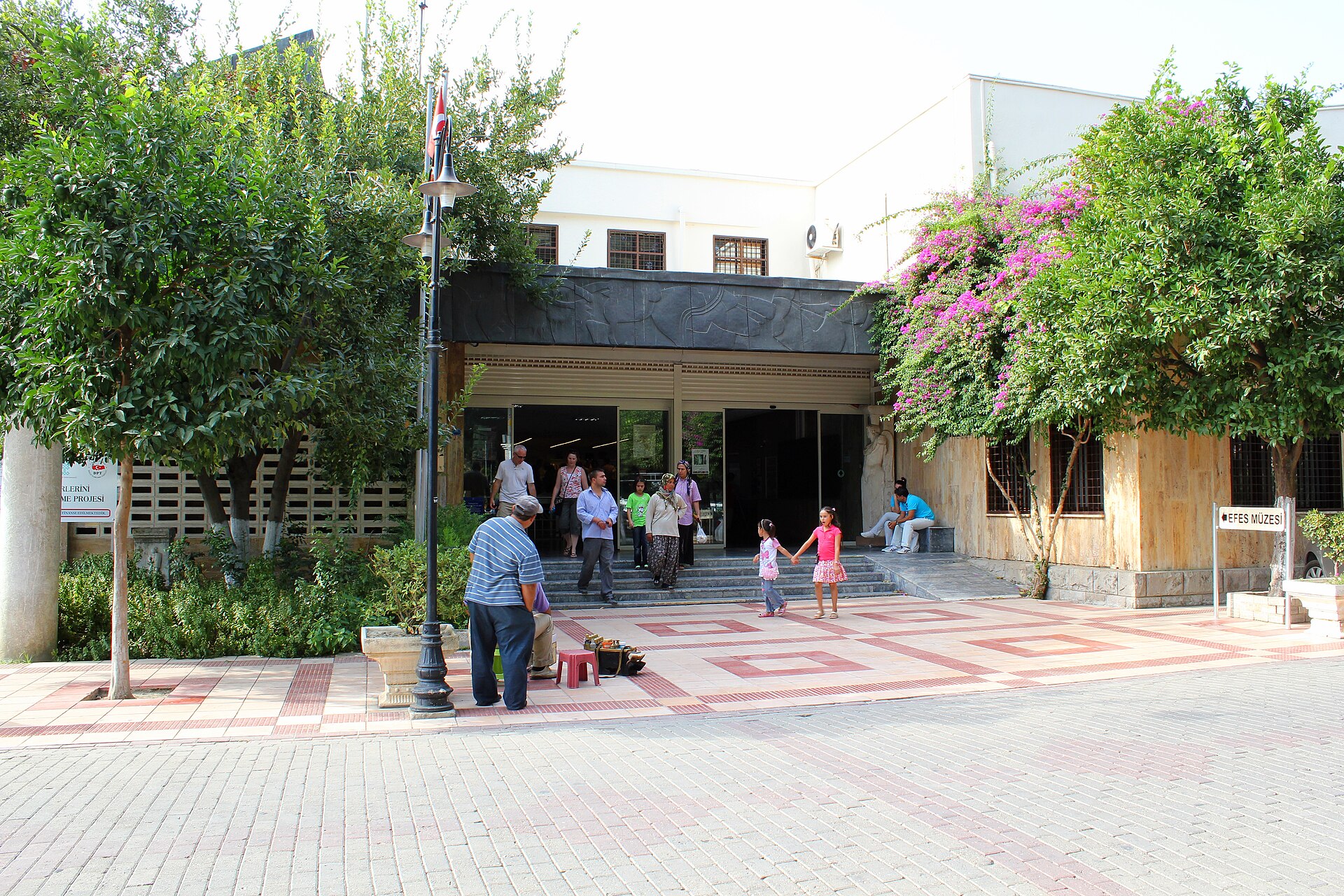
The entrance front of the Ephesus Archaeological Museum in Selcuk, with the museum's sign at right.
Klaus-Peter Simon, CC BY-SA 3.0 · Photograph by KpisimonEphesus Archaeological Museum
Museum · Efes Muzesi · Founded 1964
Open, admission and hours confirmed 19 November 2026 · 9 sources
On this page 14 sections
ContentsClose
Finds from Ephesus and nearby ancient cities from the Mycenaean period to the Ottoman era, arranged by theme, with the Artemis statues as the centrepiece. Size is reported as about 4,000 artefacts by two newspapers and about 64 thousand by Wikipedia; the figures conflict and are unreconciled.
| Local name | Efes Muzesi |
|---|---|
| Kind | Museum |
| Founded | 1964 (opened; depot from 1929, expanded 1976, reopened November 2014 after renovation) |
| City and country |  Selcuk, Turkey |
| Address | Ataturk Mahallesi, Ugur Mumcu Sevgi Yolu, No: 26, Selcuk, Izmir, Turkey |
| Website | muze.gov.tr/muze-detay?SectionId=EFM01&DistId=EFM |
| Status | Open, confirmed |
| Record last verified |
Visiting
- Hours
- Daily08:30 to 17:30Box office closes 17:00. Some visitor guides give different summer hours; the ministry page is followed here.
- Closed
- Open every day, per the ministry page.
- Admission
- Ticket as listed by the ministryEUR 10The ministry page shows EUR 10 without saying who it covers; one visitor guide says it is the foreign-visitor price and that it is separate from the ancient city ticket. Check the ministry page or e-ticket before travel.
- Do I need to book?
- Not stated on the ministry page
- Address
- Ataturk Mahallesi, Ugur Mumcu Sevgi Yolu, No: 26, Selcuk, Izmir, Turkey MapOn foot or taxi In Selcuk town opposite the bus station; one tour operator gives about a 20-minute walk or a 3-minute taxi from the lower gate of the ancient city
Train Regional rail runs from Izmir to Selcuk, then a short taxi ride or walk
Air Izmir Adnan Menderes Airport is the main gateway - Website
- muze.gov.tr/muze-detay?SectionId=EFM01&DistId=EFM
- Telephone
- +90 232 892 60 10
- [email protected]
Before you go how long, access, photography, bags, eating, shop
- How long to allow
- About 45 minutes to an hour (tour operator guide); 60 to 90 minutes for a focused visit (visitor guide)
- Access
- A tour operator guide says the museum has ramps and elevators; another guide notes some steps and tight corners. Confirm with staff.
- Photography
- A tour operator guide says photography is allowed for personal use, without flash or tripods
- Eating
- A tour operator guide mentions a courtyard cafe; another guide says there is no full cafe on site
- Shop
- A tour operator guide mentions a gift shop
Prices and hours change. We take them from the institution's own pages and print the day we read them, and you can check the current position at the source we used. Confirm before you travel.
What is inside
Information Hall and Terrace Houses finds
The ministry lists an Information Hall at the entrance and a Hall of Terrace Houses Findings; a tour operator describes jewellery, household objects and a Priapus (Bes) statue from the houses, and a Commons photograph shows a glass tray from the Terrace Houses.
Hall of Fountain Findings
Statues from the Pollio, Trajan and Laecanius Bassus fountains, including the Resting Warrior from the Pollio Fountain, according to the ministry page and a tour operator.
Ancient Coins and recent finds
The ministry lists an Ancient Coins hall; a tour operator describes Byzantine crosses and icons, Ephesian coins, a blue glass tray, oil lamps and theatre masks in a recent-finds hall.
Courtyard and funerary finds
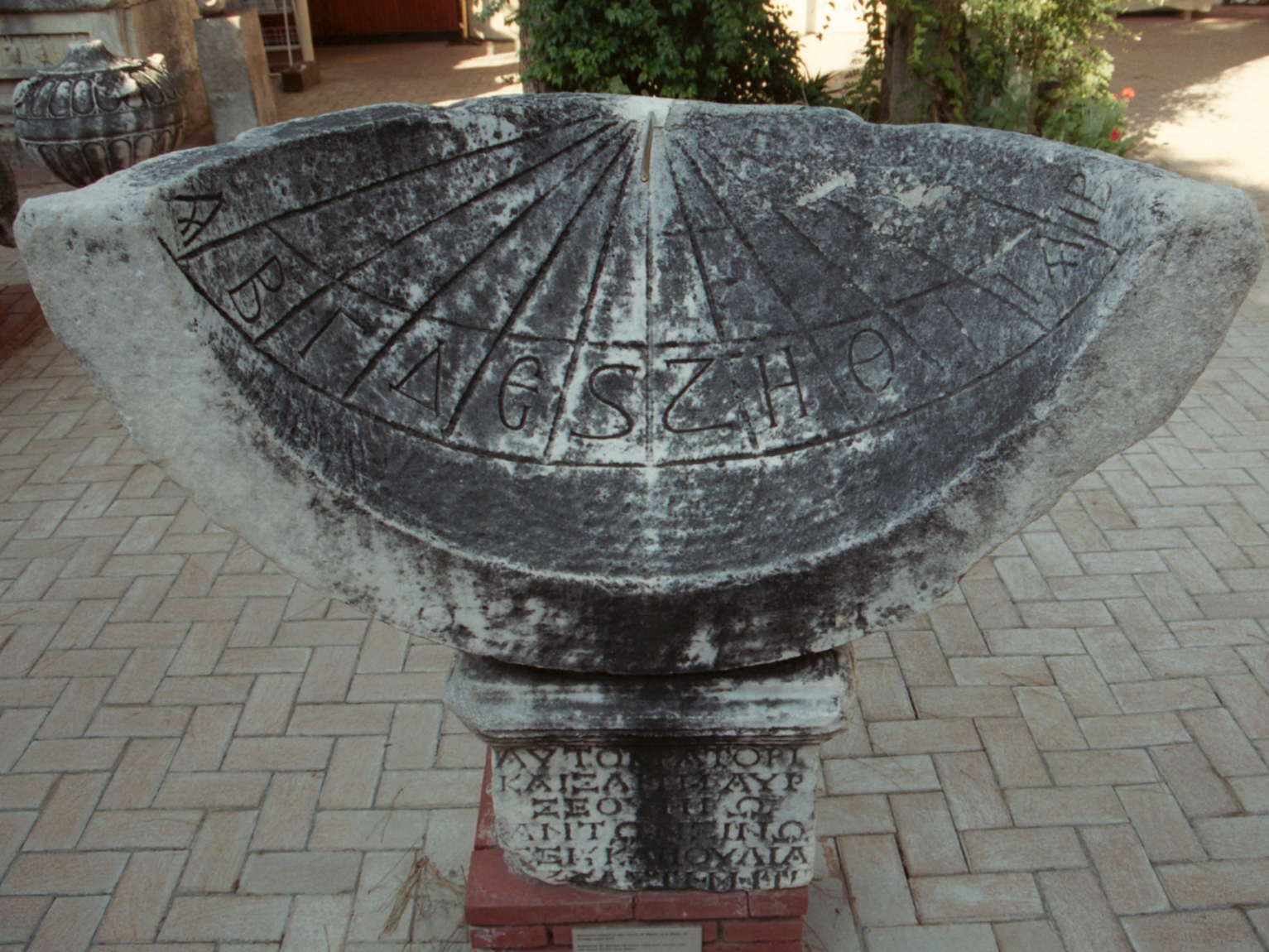
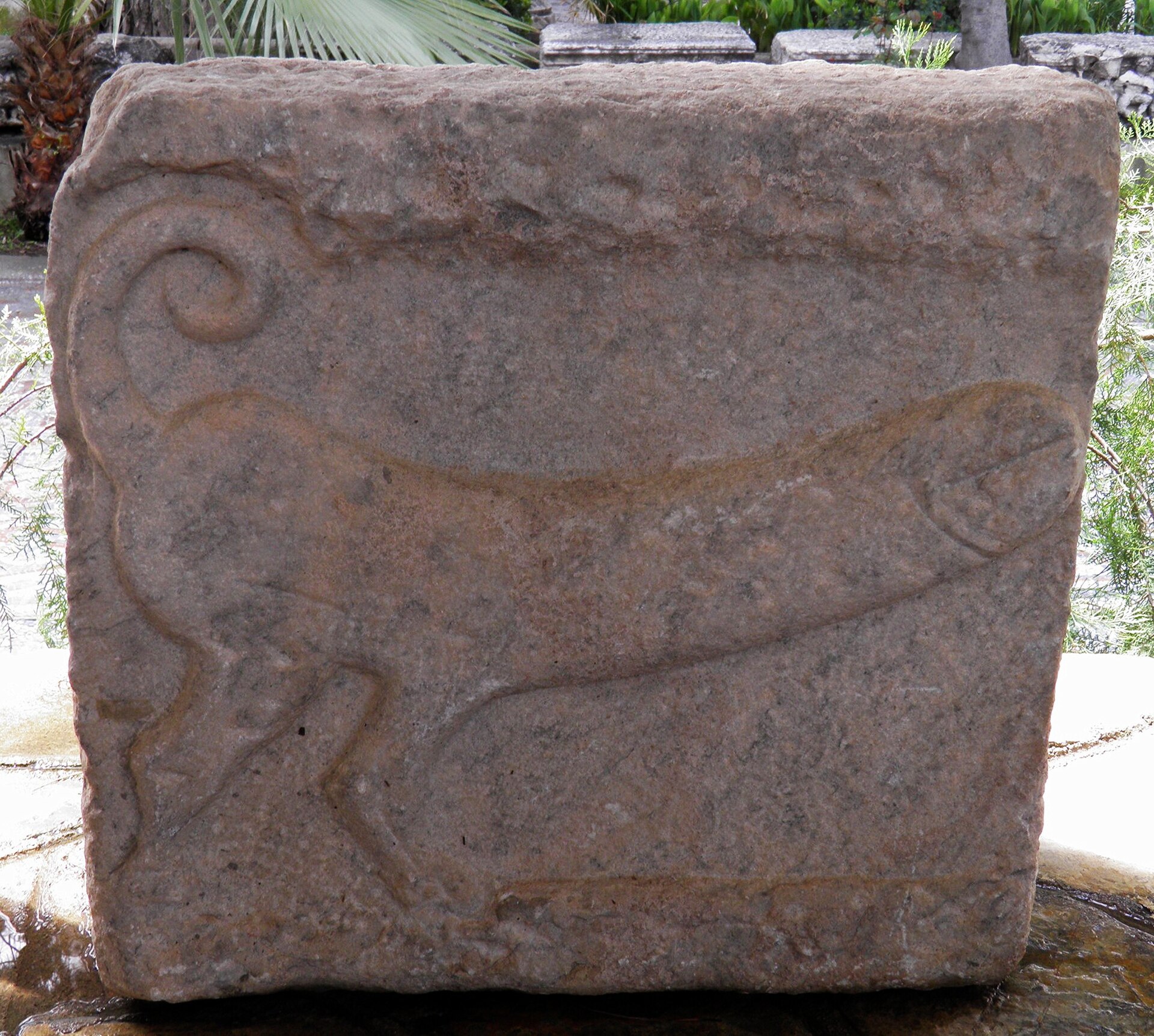
Larger stone pieces including sarcophagi, a sundial and column capitals, and grave goods such as Mycenaean vessels and a Klazomenai-type sarcophagus, per a tour operator guide.
Hall of Artemis
The Great Artemis and the Beautiful Artemis, found in 1954 at the Prytaneion, with finds from the Temple of Artemis.
Imperial Cult Hall
Imperial cult artefacts: a tour operator lists fragments of a Domitian statue, Augustus and Livia statues, a Hadrian temple frieze and portraits; a visitor also notes the Augustus and Livia statues.
What to see first
Great Artemis of Ephesus
Roman period statueFound in 1954 at the Prytaneion; polos crown, fertility forms and bee motifs show the goddess merged with Kybele, the Anatolian mother goddess.3
Beautiful Artemis
Roman period statueThe companion statue, with a zodiac belt at the neck and deer figures linking the goddess to nature.3
Resting Warrior
Roman period statueA young warrior in a half-lying pose from the Pollio Fountain, named by the ministry as a highlight.1
Marcus Aurelius
Roman period bustWhite marble; the Daily Sabah says it was found at the Yamacevler excavations; the ministry dates it to the 2nd century AD.1
Head of Eros
Roman copy of a Lysippos typeThe ministry calls it a replica of Lysippos' Eros stretching the bow; the Daily Sabah says it was found on Curetes Street.1
Ivory frieze of Trajan
RomanAn ivory relief the Daily Sabah names among the notable works; a visitor describes it as thought to come from a door or furniture.3
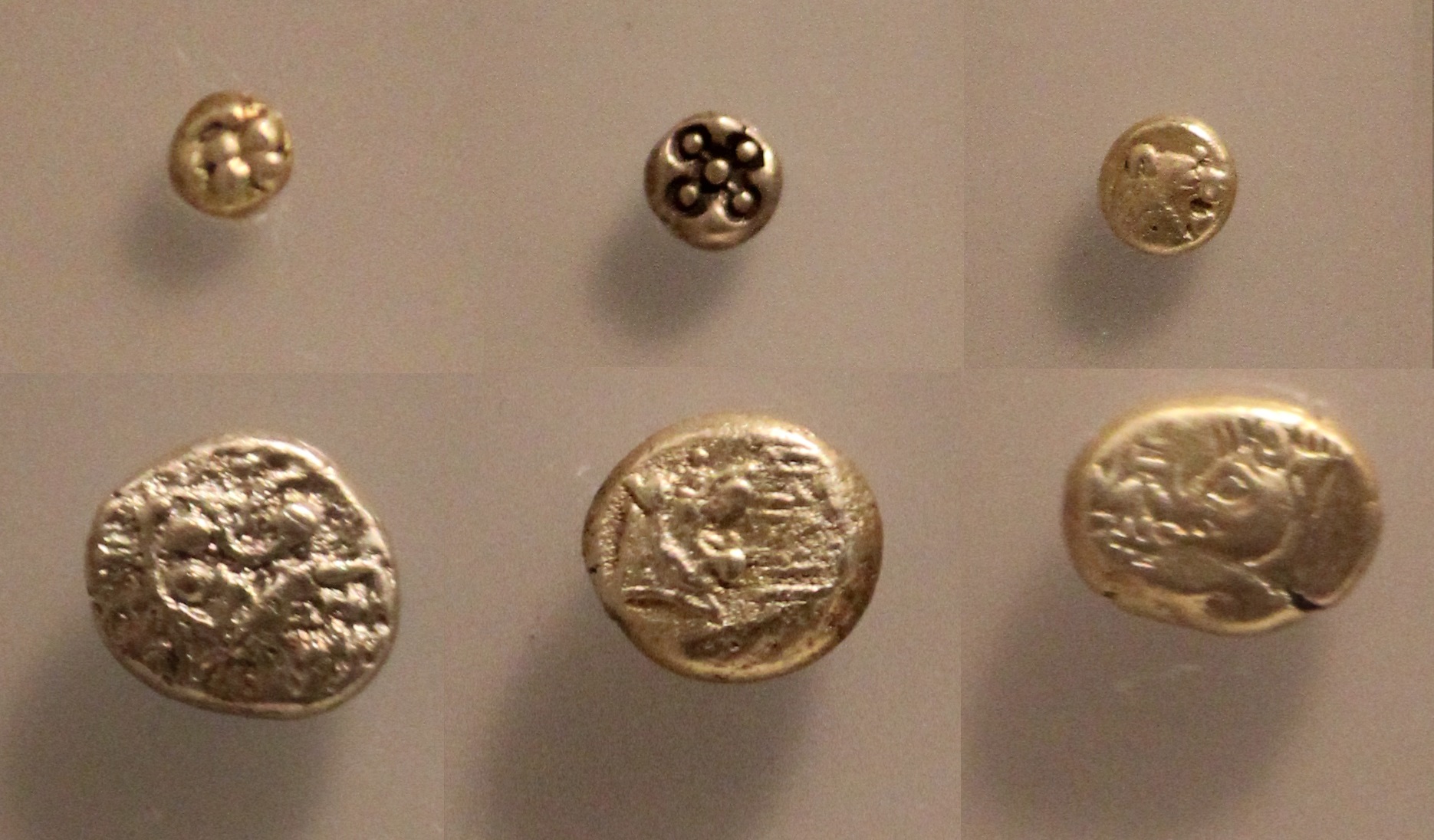
Electrum coins from the Artemis Temple foundations
Lydian-Ionian, late 7th century BCA Commons photograph records electrum coins from the foundations of the Temple of Artemis, held at the Selcuk museum.9
Where the finds from Ephesus ended up
The Ephesus Archaeological Museum, Efes Muzesi in Turkish, stands in the town of Selcuk in Izmir Province, a short distance from the ruins of the ancient city whose excavated material it shows. Its history is partly a history of where Ephesus finds did not stay. According to Wikipedia's account, what was dug up at Ephesus between 1867 and 1905 went to the British Museum, and what was excavated from 1905 to 1923 went to the Ephesos Museum in Vienna. Turkish law was then changed to forbid taking finds out of the country, and a depot was built in Selcuk in 1929 to hold what was found from that point on.
As the number of objects grew, a larger space was needed. The same source says the museum opened in 1964 and was expanded in 1976, and that it closed at the end of 2012 and reopened in November 2014 after extensive renovation. Those dates come from an encyclopaedia, a tertiary source, and are flagged as such for replacement with a primary one. For a reader this history explains the museum's character: it is the local home of Ephesus material, built up after the great early removals, and the story of the early removals is one it shares with the museums in London and Vienna that hold the earlier finds. One travel writer notes the same point plainly, that some major Ephesus finds are held in Vienna, London, Istanbul and Izmir.
The building and how the displays are arranged
The photograph on this page shows the entrance front, a low, modern building with a flat canopy over a flight of steps, set behind trees and a paved forecourt. It is a museum of the mid twentieth century in character rather than a historic palace, and the visit is organised by subject and find group rather than as one continuous chronology. The ministry's own description lists a sequence that begins with an Information Hall at the entrance and continues through the Hall of Fountain Findings, the Hall of Terrace Houses Findings, Ancient Coins, Ephesus Through the Ages, an Inner Garden, the Cybele cult, the Hall of Artemis Temple Findings, and Ephesus Artemis and Imperial Cult artefacts. It also lists material from Cukurici Mound, the Temple of Artemis, the church of St John, the fortress on Ayasuluk Hill and the Belevi Mausoleum.
Visitor guides do not agree on the exact numbering of the rooms. A tour operator's guide describes seven halls in visiting order, while an independent visitor describes nine numbered galleries plus an outdoor courtyard. The reader should treat the room count as variable and rely on the subject list. The tour operator's own page admits that its roadmap and its body text disagree on where some pieces sit, which is a reminder that these guides are secondary.
The Artemis halls and the other things worth the time
The museum's best known pieces are the two statues of Artemis of Ephesus. The Daily Sabah, reporting with Anadolu Agency in May 2025, says they were found in the 1954 excavations at the Prytaneion, the civic building of Ephesus, and have been in the collection since. It describes the Great Artemis with a polos crown, nodule-like forms on the body and bee motifs on the skirt, and the Beautiful Artemis with a zodiac belt at the neck and deer figures linking the goddess to nature. The ministry page adds that the goddess shows features merged with Kybele, the mother goddess of Anatolia, with a three-storey temple-shaped polos, four rows of globules associated with fertility, and a belt with bees, the symbol of Ephesus. The museum's director is quoted in the same report saying the Ephesian Artemis is distinct from the hunting goddess of Greek myth and reflects Kybele. One tour operator gives the heights as about 2.92 m and 1.74 m.
Beyond the Artemis halls, the ministry page singles out the Resting Warrior from the Pollio Fountain, a white marble statue of Marcus Aurelius, and a Head of Eros that it calls a replica of a Lysippos type. The Daily Sabah adds an ivory frieze of the emperor Trajan, and that the Marcus Aurelius bust came from the Yamacevler excavations and the Eros head from Curetes Street. The courtyard holds larger stone pieces; one visitor mentions a sarcophagus, a sundial and a game board, and a tour operator lists a sarcophagus with Muses, a sundial and an inscription on customs law. Wikimedia Commons also holds photographs of electrum coins from the foundations of the Artemis Temple, a glass tray and medical instruments from the collection, which show the range of the smaller material.
Scale, and a disagreement over numbers
Sources disagree on how big the collection is, and the page does not pick a winner. The Daily Sabah and the Hurriyet Daily News both give about 4,000 artefacts from Ephesus and nearby ancient cities, spanning the Mycenaean period (1600 to 1100 BC) to the Ottoman era, with displays arranged by theme. Wikipedia gives approximately 64 thousand pieces exhibited, citing a tour guide site. The two figures differ by an order of magnitude and probably count different things, displayed objects against catalogued ones, but no source fetched says so. A reader should take 4,000 as the figure reported by a national newspaper quoting the museum's director context, and treat 64,000 as unconfirmed.
Both newspapers give attendance. The museum's director told the press that nearly 250,000 people visited in 2024, and that the first three months of 2025 brought 21,000 visitors, 15 percent more than the same period in 2024. The Hurriyet Daily News also reported a temporary exhibition titled From Stone Axe to UAV, due to open on 18 May 2025 for the republic's anniversary. That exhibition is dated and long past by now, so it is recorded here only as evidence that the museum runs temporary shows in addition to its permanent halls.
What visitors say, and what is fair to criticise
An aggregator reports a Google rating of about 4.7 from roughly 19,800 reviews, read on the day this page was prepared. It is a tertiary figure relayed by a third party, and the original platform was not opened. The same guide summarises the recurring complaints as that the museum feels small for the price and that it gets crowded later in the day, with tour groups and school visits at midday, and says reviewers praise clear labels, good lighting and air conditioning. A separate search summary suggested some labels may be missing and recommended an audio guide; that was not found in a page that was fetched, so it is not asserted here. The ministry page itself says an audio guidance service is available.
The two visitor guides read are positive. One, by an independent traveller, offers no criticism at all. The other is a tour operator's blog and is promotional by its own nature. So the criticism on this page is limited to what the aggregator reports and to the structural point that a museum founded after the great early removals shows only part of the Ephesus story, with major finds held elsewhere.
Planning a visit
The ministry page lists the museum as open every day, from 08:30 to 17:30, with the box office closing at 17:00, and a ticket price of EUR 10 shown on the page without saying who it covers. A visitor guide says that ticket is separate from the one for the ancient city, and a tour operator says a Museum Pass is accepted. A tour operator estimates 45 minutes to an hour, another guide 60 to 90 minutes for a focused visit. The ministry address is Ataturk Mahallesi, Ugur Mumcu Sevgi Yolu, No 26, in Selcuk. The same tour operator places the museum in town opposite the bus station, a 20-minute walk or about three minutes by taxi from the lower gate of the ancient city, and a visitor guide notes that regional rail runs from Izmir to Selcuk. Visitors who want context are advised by one guide to see the museum before the ruins so the smaller finds make sense once outdoors.
Do not confuse this museum with the Ephesus Experience Museum, which is a separate attraction near the ruins that the ministry lists as a neighbouring site, with the archaeological site itself, with the Ephesos Museum in Vienna, or with the Izmir Archaeological Museum.
What visitors say
Visitors describe a compact, well-lit museum that explains the finds seen outdoors at Ephesus. The recurring complaint is that it feels small for the ticket price and gets crowded later in the day.
What is praised, what is criticised
- Praised: Context for the ruins: it works as a stop before or after the ancient city
- Praised: Clear labels, good lighting and air conditioning, according to reviewers summarised by one guide
- Praised: The two Artemis statues, singled out by the ministry, the press and an independent visitor
- Criticised: Feels small for the price
- Criticised: Crowded from midday with tour groups and school visits
- Criticised: Major Ephesus finds are held elsewhere (Vienna, London, Istanbul, Izmir), so the Selcuk collection shows only part of the story
Ratings on other platforms
Google (as relayed by a third-party guide): 4.7 from 19,800 ratings, read 19 November 2026
A platform average is a tertiary source: it moves, it is not audited, and we quote no visitor's words.
Questions about Ephesus Archaeological Museum
Where is Ephesus Archaeological Museum?
Ataturk Mahallesi, Ugur Mumcu Sevgi Yolu, No: 26, Selcuk, Izmir, Turkey.
How much does it cost to visit?
Ticket as listed by the ministry: EUR 10. As confirmed 19 November 2026.
When is it open?
Daily 08:30-17:30. Closed: Open every day, per the ministry page. As confirmed 19 November 2026.
How do you get there?
On foot or taxi: In Selcuk town opposite the bus station; one tour operator gives about a 20-minute walk or a 3-minute taxi from the lower gate of the ancient city; Train: Regional rail runs from Izmir to Selcuk, then a short taxi ride or walk; Air: Izmir Adnan Menderes Airport is the main gateway.
What should you see first?
Great Artemis of Ephesus (Roman period statue); Beautiful Artemis (Roman period statue); Resting Warrior (Roman period statue); Marcus Aurelius (Roman period bust); Head of Eros (Roman copy of a Lysippos type); Ivory frieze of Trajan (Roman).
What we could not confirm
- Collection size: about 4,000 (Daily Sabah, Hurriyet Daily News) against about 64 thousand (Wikipedia citing a tour guide site)
- Who the EUR 10 ticket price covers; the ministry page does not say
- Summer opening hours: some guides give later closing than the ministry page
- Opening and closing dates and the 2012 to 2014 closure are from Wikipedia and should be replaced with a primary source
Images
Sources
- 1Ministry of Culture and Tourism, Ephesus Museum page (hours, price, phone, address, description), read 2026-11-19 muze.gov.tr/muze-detay?SectionId=EFM01&DistId=EFM
- 2Wikipedia, Ephesus Archaeological Museum (history and dates; ) en.wikipedia.org/wiki/Ephesus_Archaeological_Museum
- 3Daily Sabah with Anadolu Agency, 2 May 2025, Ephesus Museum reveals Turkiye's journey from Mycenae to Ottomans dailysabah.com/arts/ephesus-museum-reveals-turkiyes-journey-from-mycenae-to-ottomans/news
- 4Hurriyet Daily News, Ephesus Museum marks increase in visitors (2024 and early 2025 attendance) hurriyetdailynews.com/amp/ephesus-museum-marks-increase-in-visitors-208752
- 5Best Ephesus Tours blog, Ephesus Archaeological Museum Guide (tour operator, promotional; halls and practical notes) bestephesustours.com/blog/?p=927
- 6Nomads Travel Guide, Ephesus Archaeological Museum, Selcuk (rating relayed, transport; ) nomads-travel-guide.com/places/ephesus-archaeological-museum/
- 7Nomadic Niko, Ephesus Museum, 1 November 2023 (independent visitor account) nomadicniko.com/2023/11/01/ephesus-museum
- 8Wikidata Q1346784 (identity, website, Commons category; ) wikidata.org/wiki/Special:EntityData/Q1346784.json
- 9Wikimedia Commons, Category:Efes Muzesi (file licences and descriptions read via API) commons.wikimedia.org/wiki/Category:Efes_M%C3%BCzesi