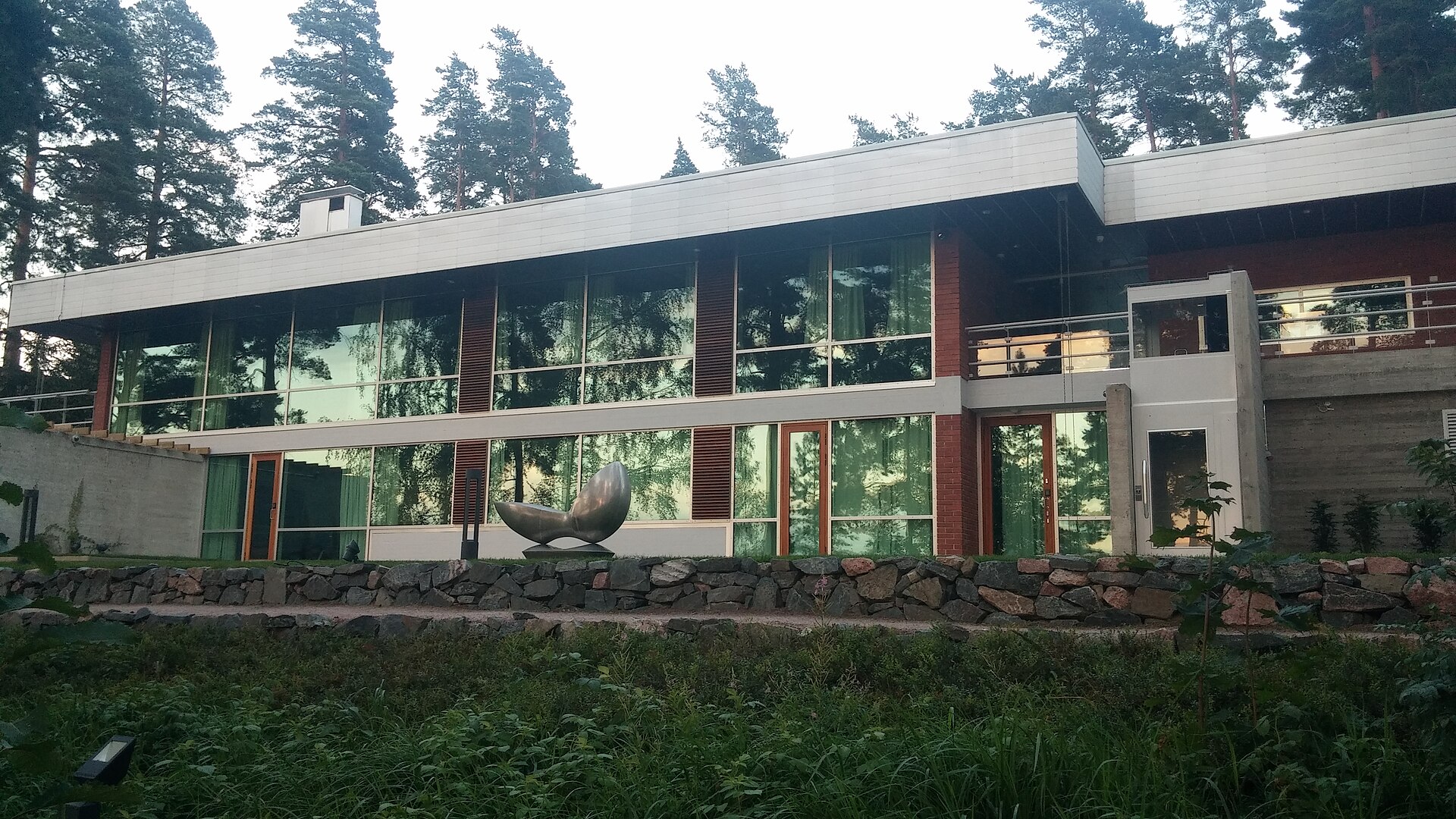
The museum building on Kuusisaari, Helsinki. Photograph by Ppntori, CC BY-SA 4.0.
Ppntori, CC BY-SA 4.0Didrichsen Art Museum
Museum · Didrichsenin taidemuseo · Founded 1965
Open, admission and hours confirmed 23 November 2026 · 29 sources
On this page 15 sections
ContentsClose
Finnish art of 1880 to 1910 and Finnish modernism (Halonen, Schjerfbeck, Sallinen, Sarestoniemi), international twentieth-century modernism from Kandinsky and Moore to Rothko and Giacometti, and the only public Pre-Columbian collection in Finland. About one thousand works in all, shown in rotation.
| Local name | Didrichsenin taidemuseo |
|---|---|
| Kind | Museum |
| Founded | 1965 |
| City and country |  Helsinki, Finland |
| Address | Kuusilahdenkuja 1, 00340 Helsinki, Finland |
| Website | didrichsenmuseum.fi |
| Status | Open, confirmed |
| Record last verified |
Visiting
- Hours
- Tue-Sun10:00 to 18:00Listed for 12 Sep 2026 to 31 Jan 2027
- Closed
- Monday. 24, 25 Dec 2026.
- Admission
- AdultEUR 17Normal ticket
- ReducedEUR 14Pensioners, teachers, artists, Helsinki Card
- Students and unemployedEUR 10
- Under 18FreeFree
Free entry: Free with the Museum Card- Tickets
- didrichsenmuseum.fi/en/liput The museum's own ticket page.
- Do I need to book?
- No. The museum states no pre-booking is needed and advance tickets are not sold
- Address
- Kuusilahdenkuja 1, 00340 Helsinki, Finland MapTram and bus Tram 4 to Munkkiniemen puistotie, then bus 510 or 52 from Munkkiniemen aukio to the Kuusisaarenkuja stop
Metro and bus Metro from Kamppi to Aalto University station (exit A), then bus 510 or 52 from platform 14 to Kuusisaarenkuja; HSL AB ticket
Car Free car park outside the museum; two hours of free on-street parking with a disc nearby - Website
- didrichsenmuseum.fi
- Telephone
- +358 10 2193 970
- [email protected]
Before you go how long, access, photography, bags, eating, shop
- How long to allow
- Not stated by the museum
- Access
- Main entrance and main floor accessible by wheelchair; lift to the lower halls; wheelchair on loan from reception; personal assistants enter free; accessible toilet in the Villa part
- Photography
- Not stated on the pages read
- Bags
- No backpacks or bags larger than A4 in the exhibition spaces; coat racks and lockers at the entrance; no dogs
- Eating
- A small cafe, per MyHelsinki (tertiary)
- Shop
- Museum shop, per MyHelsinki (tertiary)
Prices and hours change. We take them from the institution's own pages and print the day we read them, and you can check the current position at the source we used. Confirm before you travel.
What is inside
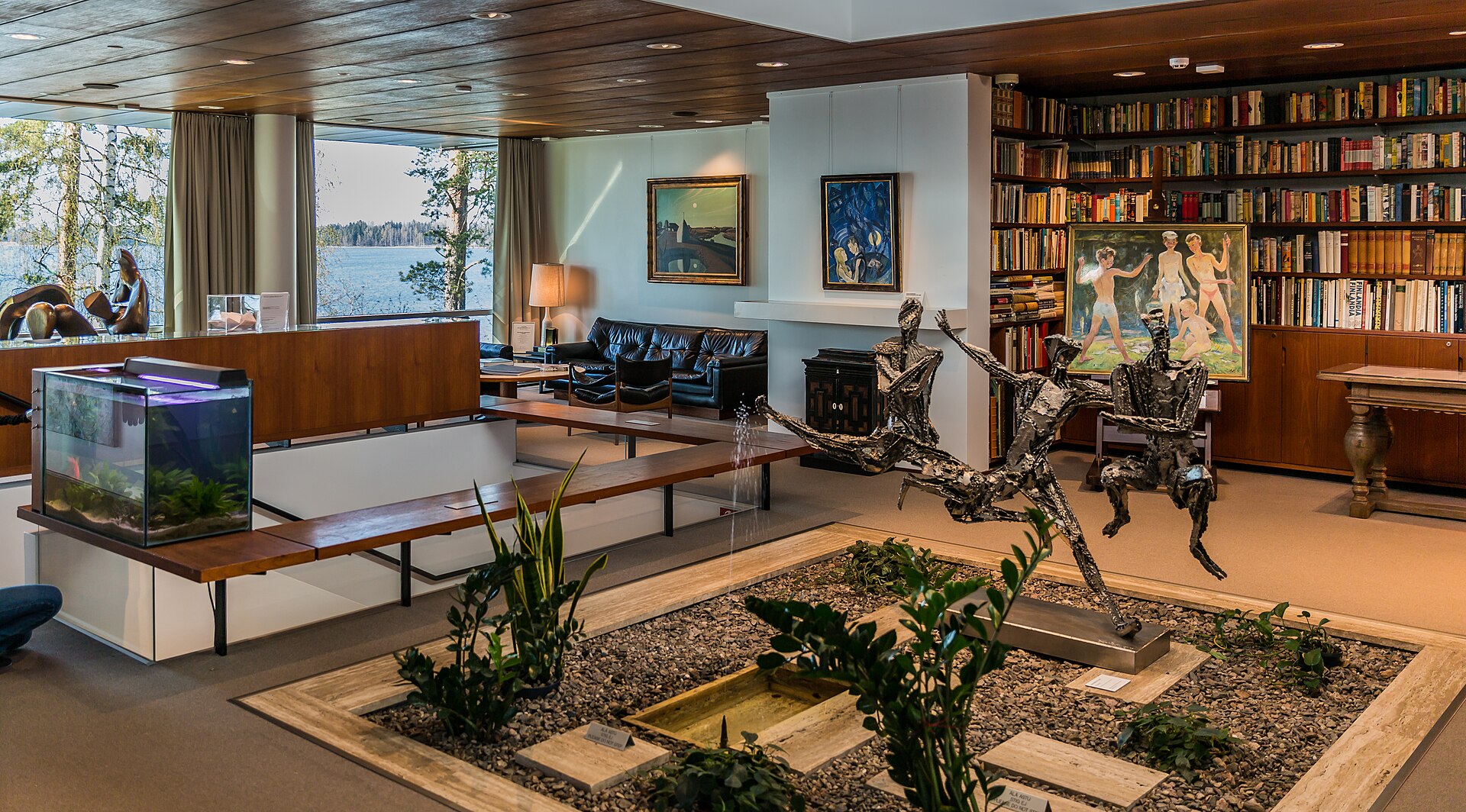
Photograph by Ninara from Helsinki, Finland · CC BY 2.0 Villa Didrichsen (the family home)
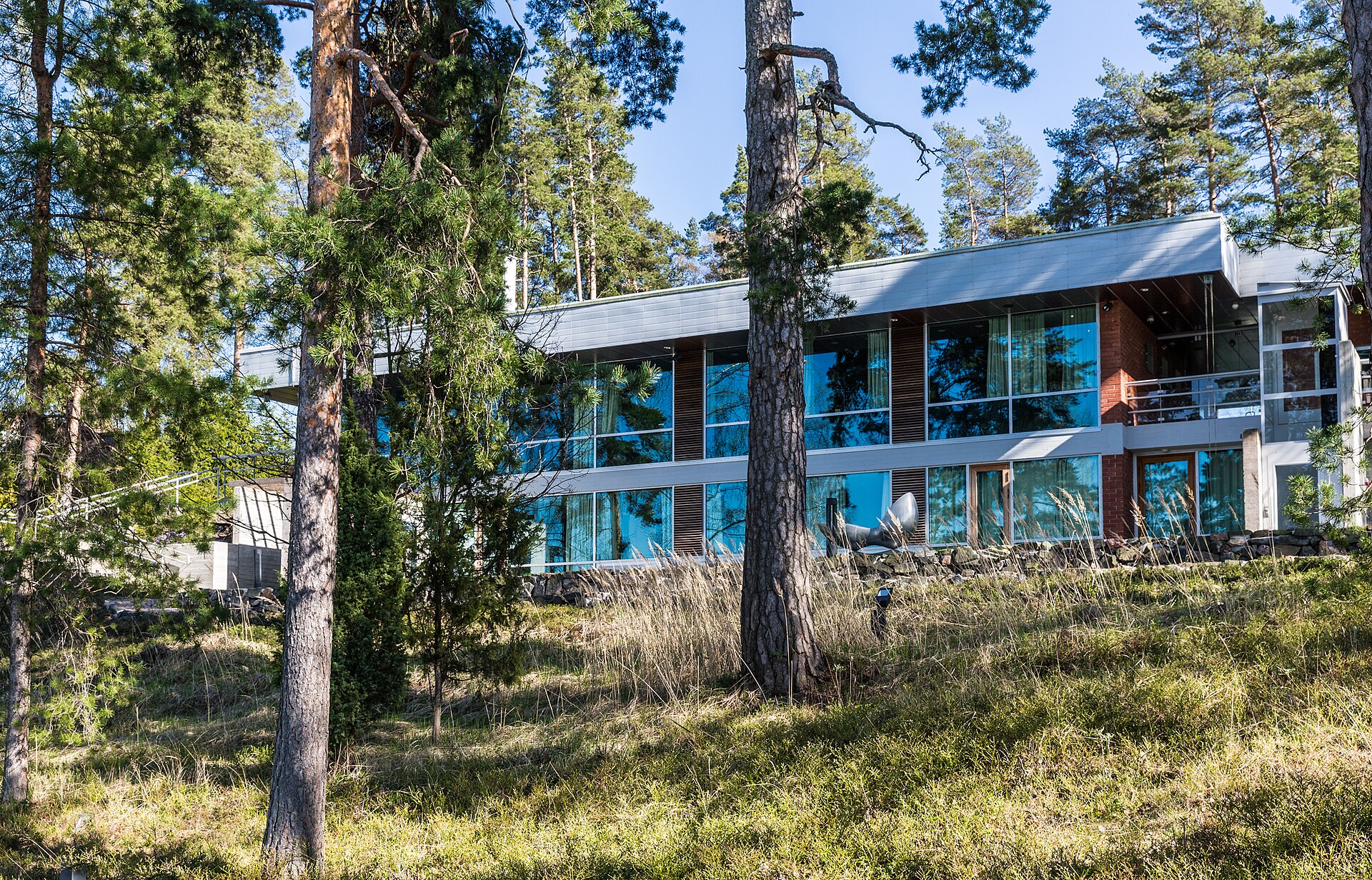
The 1957 house by Viljo Revell, left largely as the family's home: teak ceilings and cabinets, a library, a built-in aquarium, dining room furniture designed by Revell's team and large windows to the garden. The villa was opened to visitors after the founders had died, and exhibitions sometimes use its rooms.
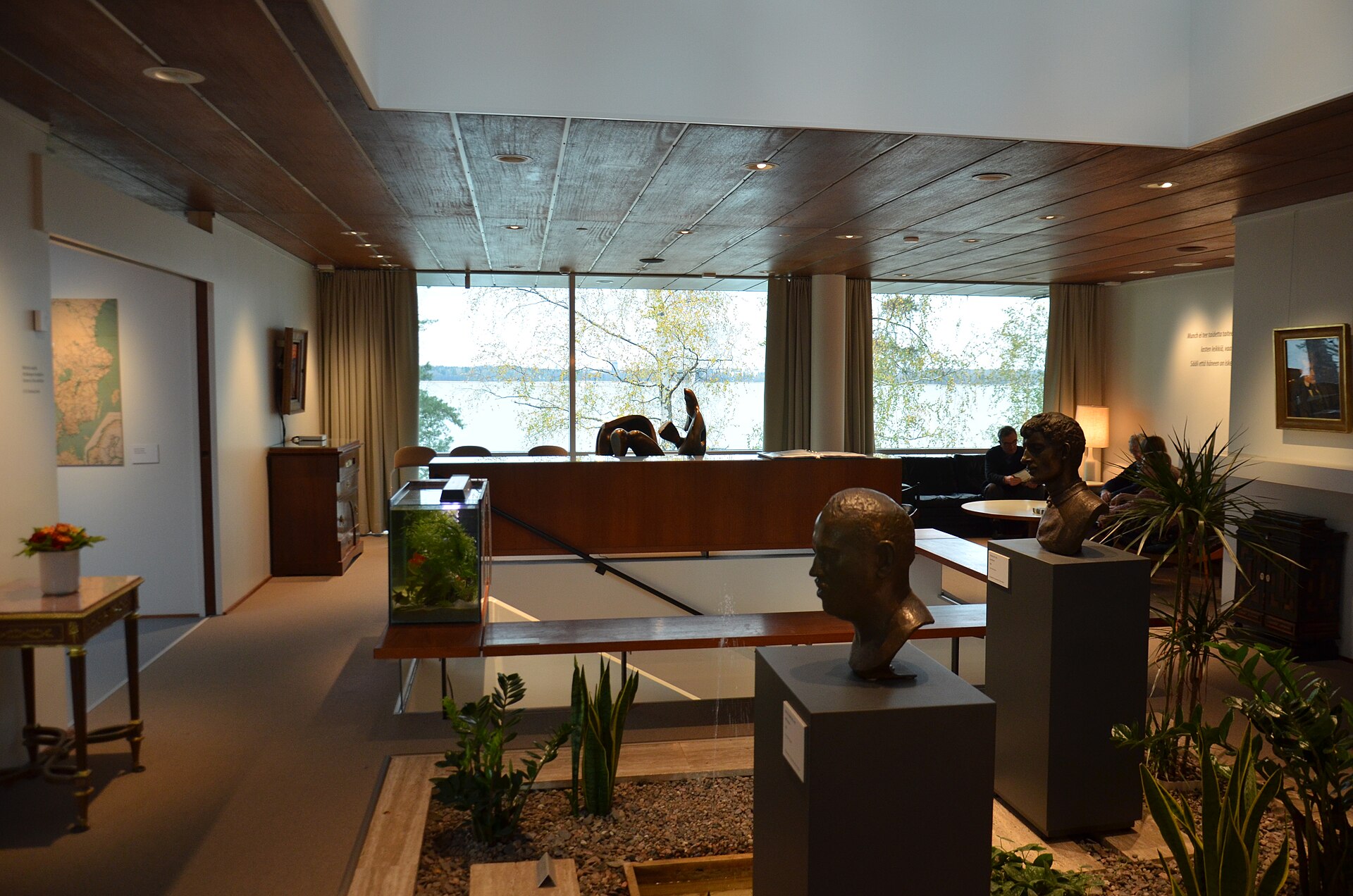
Photograph by Boberger · CC BY-SA 4.0 The museum wing (1964)
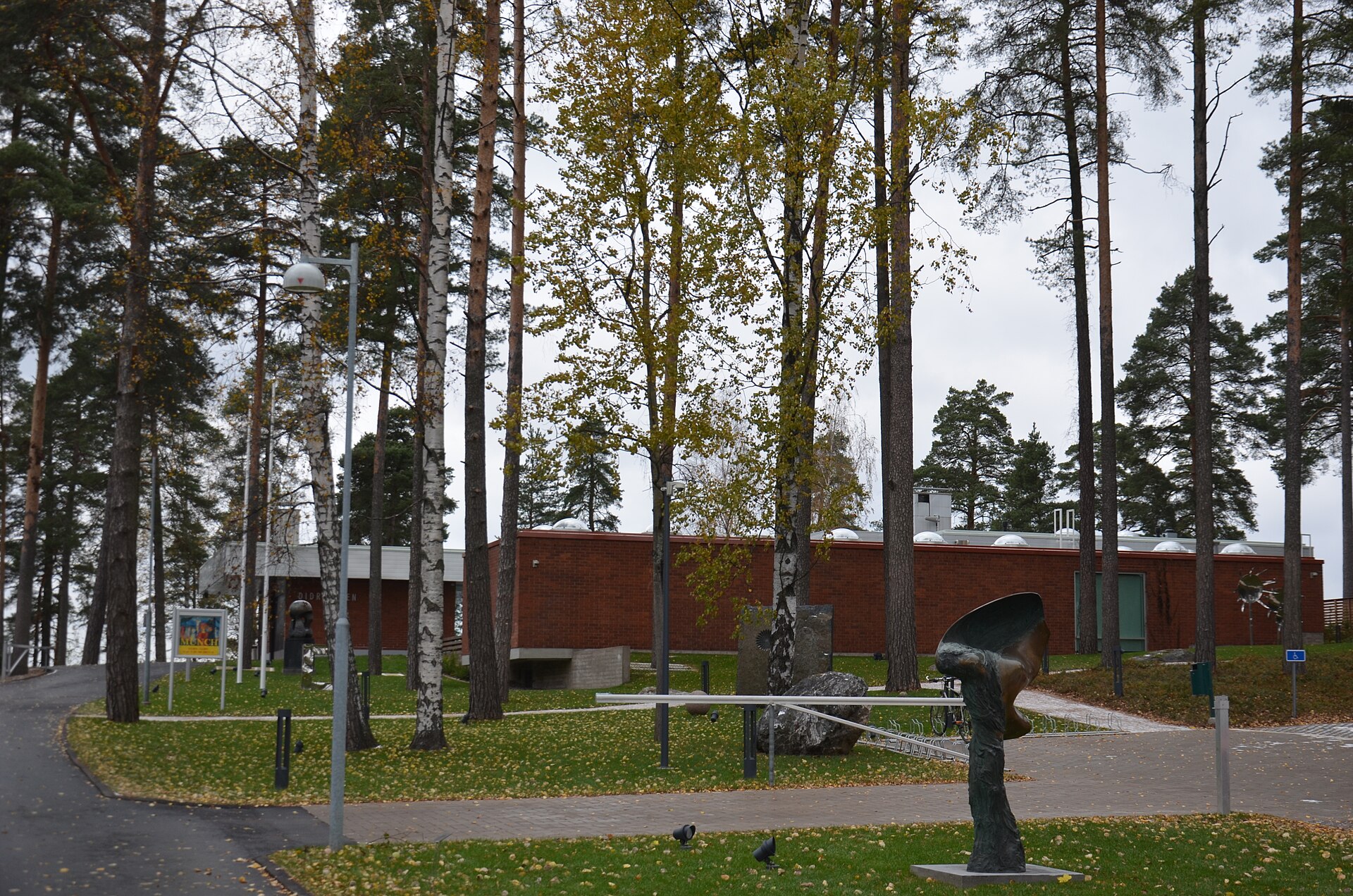
Revell's horizontal concrete extension, where the changing exhibitions are held. The main floor is fully accessible and the lower exhibition halls are reached by a lift beside the shop. Selected collection works are shown beside the current exhibition.
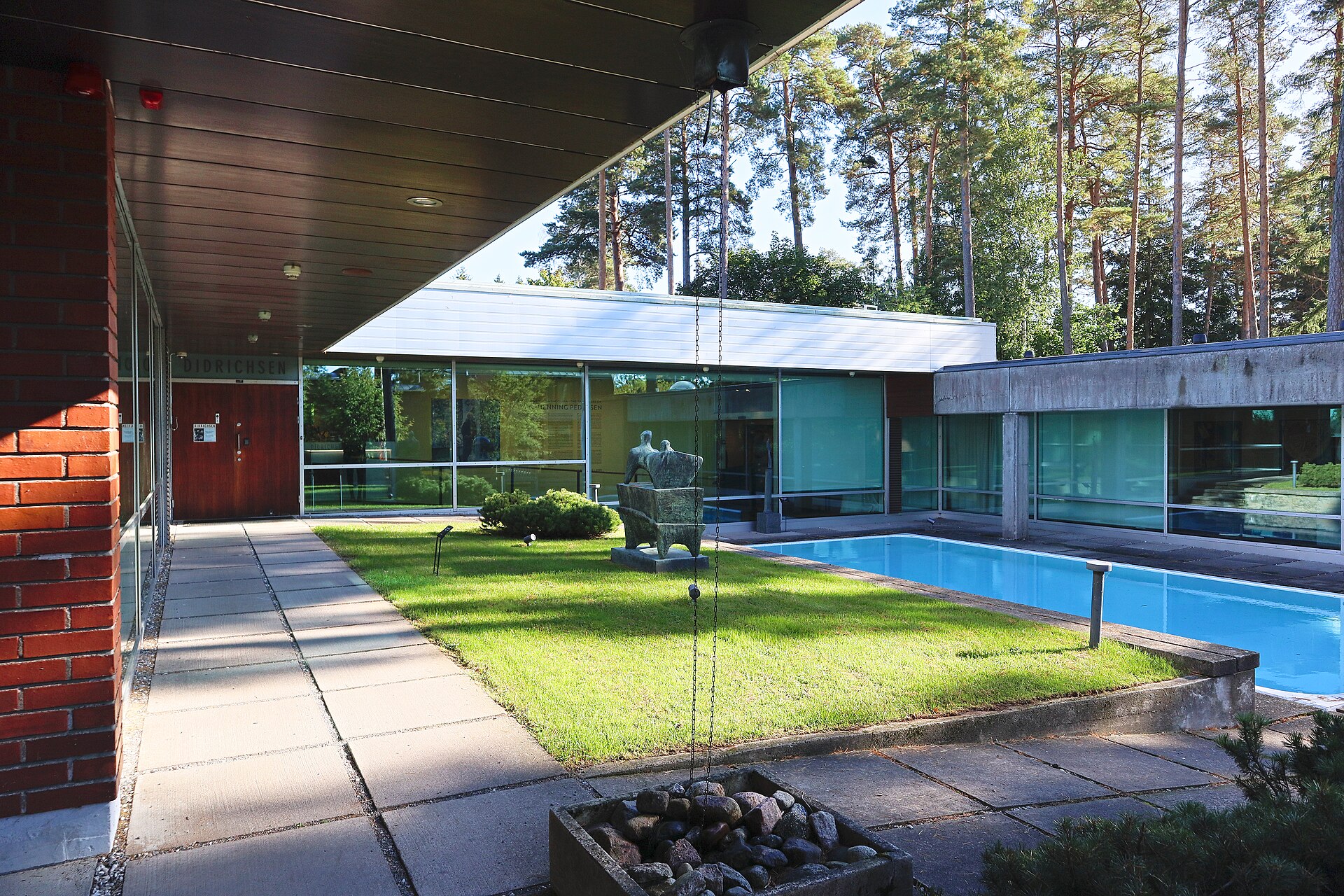
Photograph by Drefer · CC BY-SA 4.0 The courtyard and swimming pool
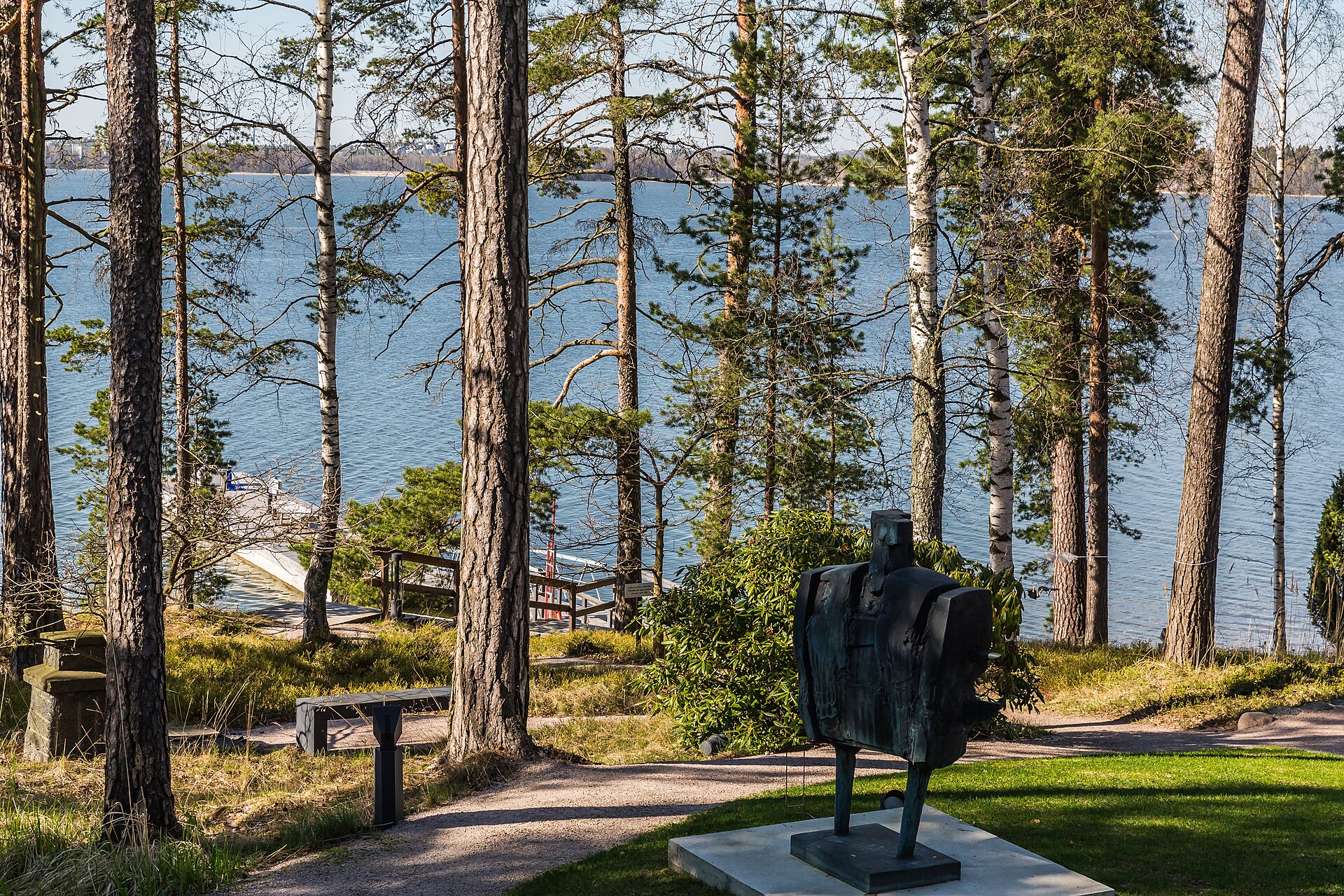
The U-shaped courtyard formed by villa and wing, with a pool added when the museum wing was built and Henry Moore's Reclining Figure on Pedestal bought in 1961 to stand here. The courtyard and pier are open during museum hours.
Photograph by Ninara from Helsinki, Finland · CC BY 2.0 The sculpture park
About fifteen sculptures on permanent display outdoors, including works by Henry Moore, Bernard Meadows, Mario Negri, Lionel Smit, Eila Hiltunen, Laila Pullinen and Eero Hiironen, plus Lorenzo Quinn's Enlightenment from 2025. Renewed in 2013 and 2014; entry to the park is free.
Finnish art: Halonen, Schjerfbeck, Sallinen and Sarestoniemi
The founders' original focus: Finnish art of 1880 to 1910 and later modernists. 19 works by Helene Schjerfbeck, nine by Tyko Sallinen, Pekka Halonen's Meal of 1899 and a large Reidar Sarestoniemi group. Shown selectively, not permanently.
International modernism
Wassily Kandinsky, Joan Miro, Fernand Leger, Alberto Giacometti, Mark Rothko, Jean Arp and Henry Moore, with Picasso and Dali among the names that inspired the couple. Shown in changing combinations.
Ancient and non-European collections
The only public Pre-Columbian collection in Finland (Mexico, Central America and the Andes, about 2000 BC to AD 1500), plus Chinese and Persian objects and smaller sets from Thailand, Egypt, Oceania and India. Not permanently displayed.
What to see first
Meal (1899)
Pekka HalonenThe couple's first joint purchase, in 1942, and the starting point of the whole collection.12
Reclining Figure on Pedestal (bought 1961)
Henry MooreThe first Moore sculpture in Finland, bought on Revell's advice for the courtyard and the start of the couple's turn to international modernism.5
Eglise a Murnau (1908)
Wassily KandinskyA small oil of 31 by 42 cm that the museum uses to represent the international side of the collection.7
The Schjerfbeck group
Helene Schjerfbeck19 works bought from 1962 onward, including major late portraits that aim at impression of light, form and colour rather than likeness.12
The Sallinen paintings
Tyko SallinenNine paintings, several from the mid-1910s, anchoring the early Finnish expressionism in the collection.12
The Pre-Columbian collection
Mexico, Central America and the AndesThe only public collection of its kind in Finland.15
Enlightenment (2025)
Lorenzo QuinnUnveiled in the sculpture park on Helsinki Day, 12 June 2025.10
Villa Benvenuti (about 1915)
Elin Danielson-GambogiAcquired in October 2026 from an Italian private collection and shown in the current exhibition, depicting the artist's last home.22
Empty Grave
Arvo SiikamakiThe sculpture marking the resting place of the founders on the museum's grounds.6
A family home that grew into a museum
The Didrichsen Art Museum stands on the island of Kuusisaari in western Helsinki, beside the sea, and it began as a private house. Marie-Louise (1913 to 1988) and Gunnar Didrichsen (1903 to 1992) commissioned the architect Viljo Revell to design a home for their family, and the museum's own account is that the first section, Villa Didrichsen, was completed in 1957, with the family moving out from the centre of Helsinki the following year. The museum wing followed seven years after the villa, in 1964, and the museum opened to the public in September 1965. Its own history page gives 1 September 1965 as the opening day and 16 September as the official inauguration, attended by President Urho Kekkonen.
That origin explains most of what a visitor feels on arrival. The place is not a civic gallery with a grand hall. It is a villa with teak ceilings, a library, a built-in aquarium and a courtyard with a swimming pool, joined to a concrete exhibition wing, with the sea on one side and pine forest on the other. The museum's page on the founders says that the couple's ashes are buried on the property and that Arvo Siikamaki's sculpture Empty Grave marks the place.
One point of dating needs care. The museum gives 1957 for the villa and 1964 for the wing. A 2018 lifestyle article on Oikotie says the villa was completed in 1958 and the wing six years later, which matches the year the family moved in, and Wikipedia and the aggregator WhichMuseum give 1958 with the later phase running to 1965 or 1967. The museum is the primary source and this page follows it, while noting that the family's move and the building's completion are easily confused.
Viljo Revell and the two buildings
Both the villa and the exhibition wing were designed by Viljo Revell (1910 to 1964), a Finnish architect the museum describes as influenced by Alvar Aalto and Le Corbusier, among others, and as an architect whose planning respected human needs. His style, in the museum's words, mixed modernism, rationalism and concrete brutalism, and the brutalist side shows most in the long horizontal volume of the extension. Revell's best known building is Toronto City Hall, which the museum says was built at the same time as its own museum wing. His earlier breakthrough was the Glass Palace in Helsinki, designed in 1935 with his fellow students Niilo Kokko and Heimo Riihimaki, which the museum calls the first clearly functionalist building in Helsinki.
The architect and his team also designed the interior of the family home. The museum lists the library, the dining room furniture, the built-in cabinets, the aquarium, a built-in toy train in the children's playroom and bedrooms in which bed and bedside table form one unit. Teak is the most used material, seen in ceilings, cabinets and doors. The four children slept upstairs in order of age, while the parents had their rooms, bathrooms, sauna and a living room on the ground floor. Floor-to-ceiling windows tie the rooms to the garden.
Villa and wing together form a U-shaped courtyard. A swimming pool was added when the museum wing was built, and the museum records that Revell wanted its surface to reflect both the architecture and the surrounding nature. The villa part of the building was opened to visitors only after the founders had died.
Two collectors with one rule
Gunnar Didrichsen was born in Copenhagen in 1903, the son of a shipping entrepreneur, and came to Finland on a business trip in 1927. Within three months he had founded his own importing company, Transmeri Ltd, and decided to stay. Marie-Louise Granfelt, born in Helsinki in 1913, studied at the Swedish School of Economics and worked as an office manager. The museum records that they first met on Independence Day 1938 at an operetta and married in April 1939. They had four children.
They began collecting in the 1940s with a focus on Finnish art made between 1880 and 1910, and their first joint purchase, in 1942, was Pekka Halonen's painting Meal, dated 1899. Museot.fi, the Museum Card service, adds a detail worth knowing: every piece was bought by the couple together, and it mattered to them that they both liked it. Their taste moved toward modernism in the 1960s. On Revell's advice they bought Henry Moore's Reclining Figure on Pedestal in 1961, the first Moore sculpture in Finland according to the museum, and that purchase is described as the start of their growing interest in international modernism.
In 1963 the couple set up the Didrichsen Art Foundation, on 11 November, to keep the collection and the building together for later generations. The foundation's by-laws, published on the museum's site, require that at least two board members be direct descendants of the founders where two such people are available, while forbidding a board made up entirely of family. Part of the collection, the estate and the building were donated to the foundation, and the museum wing opened the following year to let the couple share what they had gathered with a wider public.
What the collection holds, and what it does not show
The museum says its collection numbers around one thousand artworks, the result of decades of active collecting, and that most were acquired by the founders for their own enjoyment. After the founders died, the museum's account is that new acquisitions have mostly been made out of the exhibitions it organises itself. The strengths fall into three groups: Finnish art, international modernism, and ancient and non-European cultures.
The Finnish part ranges from the turn of the twentieth century to later modernists. The museum names Pekka Halonen, Helene Schjerfbeck, Reidar Sarestoniemi and Laila Pullinen. It holds 19 works by Schjerfbeck, with several major pieces from her late period, and nine paintings by Tyko Sallinen, many from his transitional years in the middle of the 1910s. Its page on Finnish art also names Jalmari Ruokokoski, Alvar Cawen and Marcus Collin as part of the early Finnish expressionist strand. The Sarestoniemi connection came through Lapland: the Didrichsens each had a cabin there, visited the artist's studio at the end of the 1960s and kept up a friendship until his death in 1981, and the museum staged four exhibitions of his work in the 1970s.
The international part opens with Moore and widens to Wassily Kandinsky, whose Eglise a Murnau of 1908 is illustrated on the museum's own history page, and to Joan Miro, Fernand Leger, Alberto Giacometti, Mark Rothko and Jean Arp, among others, with Picasso and Dali named as inspirations. The ancient and non-European material includes what the museum calls the only public collection of Pre-Columbian cultures in Finland, with items from Mexico, Central America and the Andes dating from about 2000 BC to AD 1500, and Chinese and Persian objects as the largest groups in the oriental holdings, with smaller sets from Thailand, Egypt, Oceania and India.
The limit on all this is stated by the museum plainly. The collections are not on permanent display inside the building. The programme is built around changing exhibitions, with works from the collection shown beside them, and only about fifteen sculptures stay outdoors permanently. A visitor hoping to see a particular Schjerfbeck or the Pre-Columbian objects on any given day cannot count on it, and should check the current exhibition first.
The sculpture park and the courtyard
The building sits in a public sculpture park that the museum describes as a unique cultural attraction in Helsinki. Works from the Didrichsen collection stand there, among them pieces by Henry Moore, Bernard Meadows, Mario Negri, Lionel Smit, Eila Hiltunen, Laila Pullinen and Eero Hiironen, and changing works by contemporary artists are shown as well. The park was completely renewed during the 2013 to 2014 renovation. Entry to the park is free, but the museum states that the courtyard and the pier are open during the museum's operating hours, so the full circuit is not available on a Monday.
A newer arrival is Enlightenment by the Italian sculptor Lorenzo Quinn, unveiled in the park on Helsinki Day, 12 June 2025. The museum's own pages are inconsistent on how freely the park can be entered, since one page says it is always open and another ties the courtyard and pier to museum hours; the safer reading is that the outer park can be walked at any time and the courtyard and pier only when the museum is open.
The programme, the visitors and a recent renovation
The museum holds three exhibitions a year, usually linked in theme to the collection or to the museum's own history. Its history page reports that in recent years it has had 50,000 to 70,000 visitors annually, and that the most popular show was Edvard Munch, The Dance of Life, in 2014 and 2015, which drew 70,000. The premises were extensively renovated in 2013 and 2014, with emphasis on security, functionality and accessibility. Before 1997 the museum was open only twice a week, and over the following years the hours were extended to six days.
The programme as of 23 November 2026 is Elin Danielson-Gambogi, Gazes and Encounters, running from 12 September 2026 to 31 January 2027. Danielson-Gambogi (1861 to 1919) is presented as one of the bold innovators of Finnish art, and the show reads her work through portraiture, presence and human relationships. A press release dated 19 October 2026 says the museum has acquired her painting Villa Benvenuti, made about 1915 and showing her last home in Antignano, Italy, from an Italian private collection, and describes the show as very popular since it opened. That is the museum speaking about itself, not an outside verdict.
Next in line are Nouveau Realisme and Pop Art, from 20 February to 30 May 2027, built on loans from the Musee d'Art Moderne et d'Art Contemporain in Nice with works from the Didrichsen collection; Ikko Tanaka and Erik Bruun, graphic designers from Japan and Finland, from 12 June to 29 August 2027; and a September 2027 to January 2028 show drawn from the Fortum Art Foundation collection of more than 300 works. Earlier 2026 shows were William Morris and Arvo Siikamaki, and the museum marked its 60th anniversary in 2025 with a show called Modern! on key modernist works.
Getting there and what to expect on arrival
The museum asks visitors to use public transport. From central Helsinki the route is tram 4 to Munkkiniemen puistotie and then bus 510 or 52 from Munkkiniemen aukio, or the metro from Kamppi to Aalto University station and a bus from platform 14. Either way the stop is Kuusisaarenkuja, and the museum says an HSL AB ticket covers the trip. There is a free car park outside and two hours of free on-street parking with a disc on nearby streets. A city bike station is about 50 metres away in the summer season.
Inside, the main entrance is wheelchair accessible, a wheelchair can be borrowed from reception, and the lower exhibition halls are reached by a lift at the corner of the shop. The museum forbids backpacks and bags larger than A4 in the galleries and provides coat racks and lockers, and dogs are not allowed in. There is a small cafe and a shop according to MyHelsinki, which is a tertiary listing.
Tickets cannot be bought ahead. The museum states that no pre-booking is needed and that advance tickets are not sold. Payment is by most cards, cash, and Smartum, Edenred Virike and Epassi vouchers. Admission is free with the Museum Card. English public tours of the exhibition run at noon on the first Saturday of each month.
What visitors say
The record of independent visitor opinion for this museum is thin. The one aggregator rating on file rests on a single rating, so it says almost nothing, and no named newspaper review of the museum as a whole was found. What the sources do agree on is the character of the place: a small, quiet museum in a family villa, valued for the architecture, the sea setting and the sculpture park, with the temporary exhibitions as the main draw. The museum's own press release calls the current show very popular, which is a statement by the museum, not by an outside reviewer.
What is praised, what is criticised
- Praised: The villa and Viljo Revell's architecture, which a 2018 Oikotie article called handsome to look at in its own right
- Praised: The warm atmosphere and the changing exhibition programme, three shows a year, noted by the same article
- Praised: The sea setting and sculpture park, which MyHelsinki and Museot.fi both single out
- Criticised: The collection is not on permanent view, so a visitor cannot count on seeing a given work; this is the museum's own statement
- Criticised: The island location takes a bus connection from the city centre, and the museum itself recommends public transport and warns of limited street parking time
- Criticised: Tertiary listings disagree on practical details (Lonely Planet gives ferry and bus 194 or 195 routes that the museum's own page does not list, and WhichMuseum shows hours of 11:00 to 18:00 against the museum's 10:00 to 18:00), so only the museum's own pages should be trusted
Ratings on other platforms
WhichMuseum (aggregated): 4.4 from 1 ratings, read 23 November 2026
A platform average is a tertiary source: it moves, it is not audited, and we quote no visitor's words.
Questions about Didrichsen Art Museum
Where is Didrichsen Art Museum?
Kuusilahdenkuja 1, 00340 Helsinki, Finland.
How much does it cost to visit?
Adult: EUR 17; Reduced: EUR 14; Students and unemployed: EUR 10; Under 18: free. As confirmed 23 November 2026.
When is it open?
Tue-Sun 10:00-18:00. Closed: Monday. 24, 25 Dec 2026. As confirmed 23 November 2026.
How do you get there?
Tram and bus: Tram 4 to Munkkiniemen puistotie, then bus 510 or 52 from Munkkiniemen aukio to the Kuusisaarenkuja stop; Metro and bus: Metro from Kamppi to Aalto University station (exit A), then bus 510 or 52 from platform 14 to Kuusisaarenkuja; HSL AB ticket; Car: Free car park outside the museum; two hours of free on-street parking with a disc nearby.
What should you see first?
Meal (1899) (Pekka Halonen); Reclining Figure on Pedestal (bought 1961) (Henry Moore); Eglise a Murnau (1908) (Wassily Kandinsky); The Schjerfbeck group (Helene Schjerfbeck); The Sallinen paintings (Tyko Sallinen); The Pre-Columbian collection (Mexico, Central America and the Andes).
What we could not confirm
- The museum gives 1957 and 1964 for the two building phases while other sources give 1958 and 1965 or 1967; the museum's dates are followed here.
- The museum does not publish an itemised catalogue of the roughly one thousand works, so which pieces are on view at any time is known only from the current exhibition.
- No independent critical review of the museum as an institution was found in the sources reached; Finnish press archives (Helsingin Sanomat, Hufvudstadsbladet) were not reachable by search and were not read.
- Photography rules are not stated on the pages read.
Images
Sources
- 1Didrichsen Art Museum, Opening hours and tickets (museum site, read 23 Nov 2026) didrichsenmuseum.fi/en/liput
- 2Didrichsen Art Museum, Exceptional opening hours 2026-27 didrichsenmuseum.fi/en/poikkeusaukioloajat
- 3Didrichsen Art Museum, home page didrichsenmuseum.fi/en/
- 4Didrichsen Art Museum, Current and upcoming exhibitions didrichsenmuseum.fi/en/n%C3%A4yttelyt
- 5Didrichsen Art Museum, Architecture didrichsenmuseum.fi/en/arkkitehtuuri
- 6Didrichsen Art Museum, Marie-Louise and Gunnar Didrichsen didrichsenmuseum.fi/en/didrichsenit
- 7Didrichsen Art Museum, the museum and its history didrichsenmuseum.fi/en/didrichsenmuseo
- 8Didrichsen Art Museum, How to get to the museum didrichsenmuseum.fi/en/saapuminen
- 9Didrichsen Art Museum, Accessibility didrichsenmuseum.fi/en/saavutettavuus
- 10Didrichsen Art Museum, Sculpture park didrichsenmuseum.fi/en/veistospuisto
- 11Didrichsen Art Museum, The collection didrichsenmuseum.fi/en/kokoelma
- 12Didrichsen Art Museum, Finnish visual arts didrichsenmuseum.fi/en/suomalainen-kuvataide
- 13Didrichsen Art Museum, International visual arts didrichsenmuseum.fi/en/kansainvalinenkuvataide
- 14Didrichsen Art Museum, Ancient collections didrichsenmuseum.fi/en/muinaiskokoelmat
- 15Didrichsen Art Museum, Pre-Columbian collection didrichsenmuseum.fi/en/esikolumbiaaniset
- 16Didrichsen Art Museum, The Didrichsen Art Foundation didrichsenmuseum.fi/en/saatio
- 17Didrichsen Art Museum, Contact didrichsenmuseum.fi/en/yhteys
- 18Didrichsen Art Museum, Visit the museum didrichsenmuseum.fi/en/museovierailu
- 19Didrichsen Art Museum, Past exhibitions didrichsenmuseum.fi/en/menneetnayttelyt
- 20Didrichsen Art Museum, 60th anniversary year didrichsenmuseum.fi/en/juhlavuosi
- 21Didrichsens konstmuseum sr press release, exhibitions 2027, 5 Oct 2026 sttinfo.fi/tiedote/72373126/didrichsenin-nayttelyvuosi-2027-uusrealismia-pop-taidetta-graafista-suunnittelua-japanista-ja-suomesta-seka-fortumin-taidesaation-kokoelmia?lang=fi
- 22Didrichsens konstmuseum sr press release, Villa Benvenuti acquisition, 19 Oct 2026 sttinfo.fi/tiedote/72411427/didrichsenin-taidemuseon-kokoelma-karttui-merkittavalla-elin-danielson-gambogin-maalauksella?lang=fi
- 23MyHelsinki, Didrichsen Art Museum ( listing) myhelsinki.fi/places/didrichsen-art-museum/
- 24WhichMuseum, Didrichsen Art Museum ( aggregator, rating read 23 Nov 2026) whichmuseum.com/museum/didrichsen-art-museum-helsinki-7589
- 25Oikotie Asunnot, Nayttelykatsaus: Svenskt Tenn Didrichsenin taidemuseossa, 28 Aug 2018 asunnot.oikotie.fi/artikkelit/yleinen/nayttelykatsaus-svenskt-tenn-didrichsen/
- 26Lonely Planet, Didrichsen Taidemuseo ( listing) lonelyplanet.com/points-of-interest/didrichsen-taidemuseo/1493153
- 27Museot.fi, Didrichsen Art Museum (Museum Card listing) museot.fi/en/museums/didrichsenin-taidemuseo
- 28Wikipedia, Didrichsen Art Museum (, identity facts only) en.wikipedia.org/wiki/Didrichsen_Art_Museum
- 29Wikimedia Commons, Category:Didrichsen Art Museum commons.wikimedia.org/wiki/Category:Didrichsen_Art_Museum