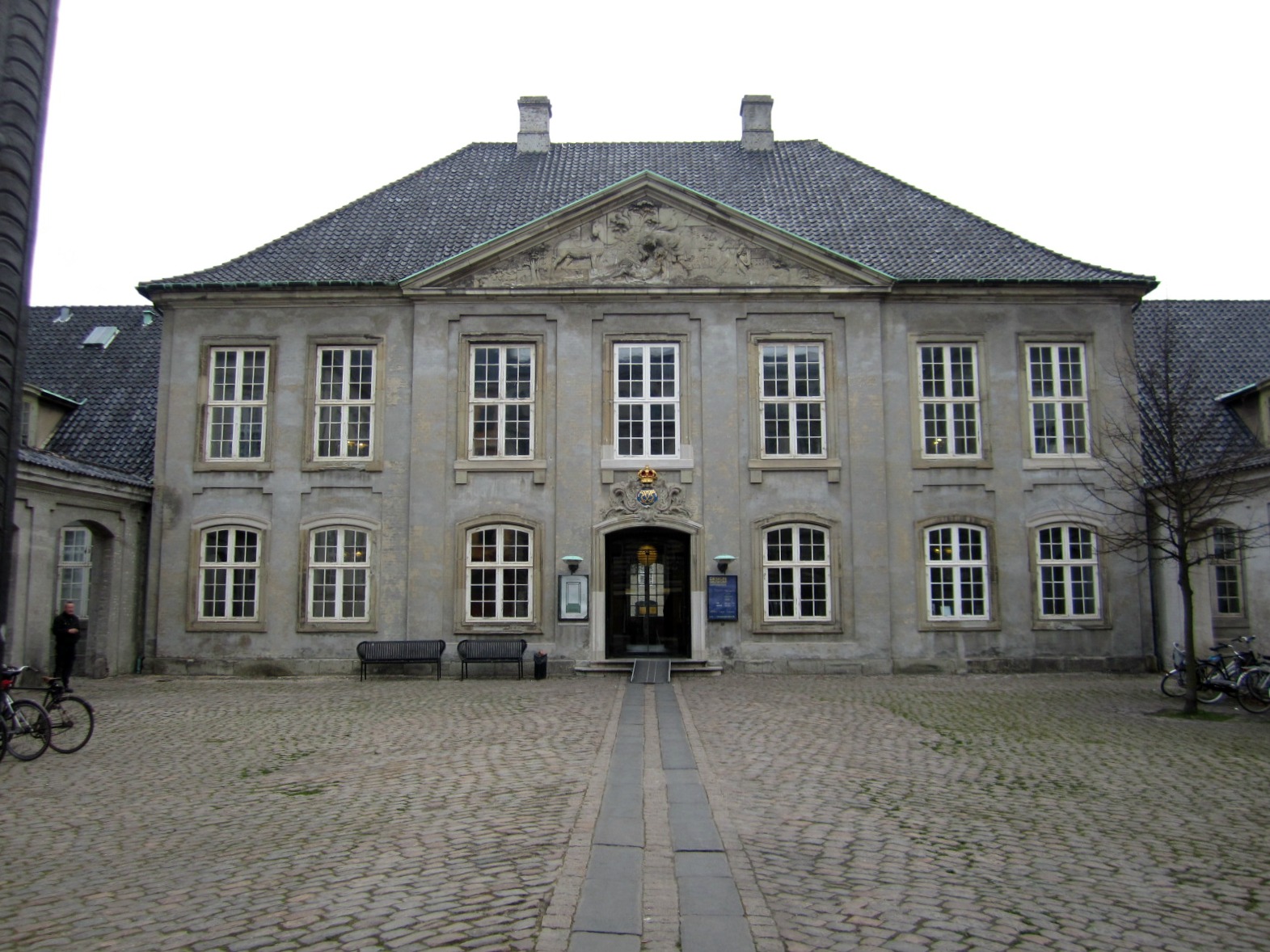
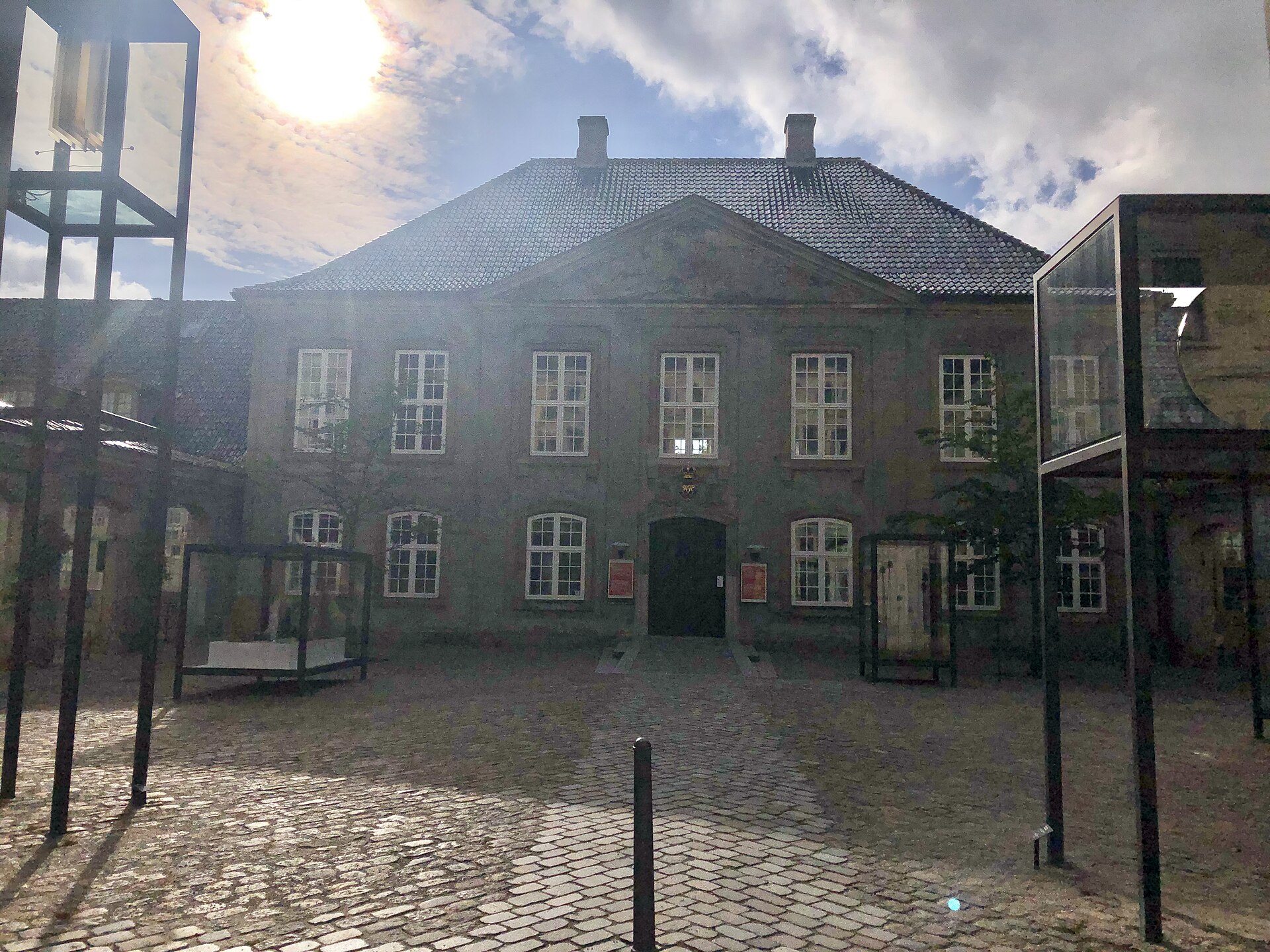
Designmuseum Danmark, the former Frederik's Hospital, seen across the cobbled forecourt from Bredgade. Photograph taken in 2011, before the 2018 forecourt works and the 2020-2022 renovation.
Heidi De Vries, CC BY 2.0 · Photograph by Heidi De Vries from Berkeley, CADesignmuseum Danmark
Museum · Founded 1890
Open, admission and hours confirmed 18 November 2026 · 25 sources
On this page 14 sections
ContentsClose
The strongest case the museum makes is for Danish furniture and the objects of the Danish Modern period, with a chair collection large enough to build a 125-chair tunnel from, and a Japanese sword-fitting collection that the museum itself calls among the world's finest. Beyond those, it holds silver, ceramics, glass, textiles and fashion and industrial design, mostly Western, from the late Middle Ages to now.
| Kind | Museum |
|---|---|
| Founded | 1890 |
| City and country |  Copenhagen, Denmark |
| Address | Bredgade 68, DK-1260 Copenhagen K, Denmark |
| Website | designmuseum.dk |
| Status | Open, confirmed |
| Record last verified |
Visiting
- Hours
- Tue-Sun10:00 to 18:00ticket sales close one hour before closing; exhibition entry closes 30 minutes before closing
- Thu10:00 to 20:00ticket sales close 19:00
- Closed
- Monday (no hours listed on the museum's page). Holiday closures listed by the museum: 24, 25, 26 and 31 December and 1 January 2027; special opening Monday 28 December 10:00-18:00.
- Admission
- AdultDKK 140
- Under 18Freefree
- Under 27 and studentsDKK 90valid ID and student card required
- Group (10+ people)DKK 110per the museum, notify at least one day in advance
- Copenhagen Card or K7 PlusFreefree entry; the museum's page also lists an annual pass at DKK 290 individual, DKK 390 for 1+1 and DKK 130 for under 27s and students
- Tickets
- designmuseum.dk/en/besog-os/opening-hours-adm... The museum's own ticket page.
- Do I need to book?
- No booking is required for individuals; groups of 10 or more should notify the museum at least one day ahead.
- Address
- Bredgade 68, DK-1260 Copenhagen K, Denmark MapMetro Marmorkirken, 300 metres from the museum
Train Osterport Station, about a 5-minute walk
Air From Copenhagen Airport about 20 minutes by metro to Kongens Nytorv, then about 10 minutes on foot - Website
- designmuseum.dk
- Telephone
- +45 33 18 56 56
- [email protected]
Before you go how long, access, photography, bags, eating, shop
- How long to allow
- One traveller (The Hidden North blog) got through it in under an hour near closing and recommended longer; Tripexpert's summary of expert reviews describes it as manageable in a little more than an hour. Both are tertiary and not the museum's own advice.
- Access
- The main floor is wheelchair accessible including exhibits, cafe, shop and library. There is no lift to the first floor. A light wheelchair can be borrowed, assistants to wheelchair users enter free, and an autism guide is published.
- Photography
- Allowed; tripods, flash and extra lighting need special permission.
- Bags
- Backpacks, larger bags and umbrellas are not allowed in the exhibition area; lockers at the entrance.
- Eating
- Cafe Format and Lille Format, open to the public without a ticket.
- Shop
- Museum shop, open without a ticket.
Prices and hours change. We take them from the institution's own pages and print the day we read them, and you can check the current position at the source we used. Confirm before you travel.
What is inside
Danish Modern (permanent exhibition)
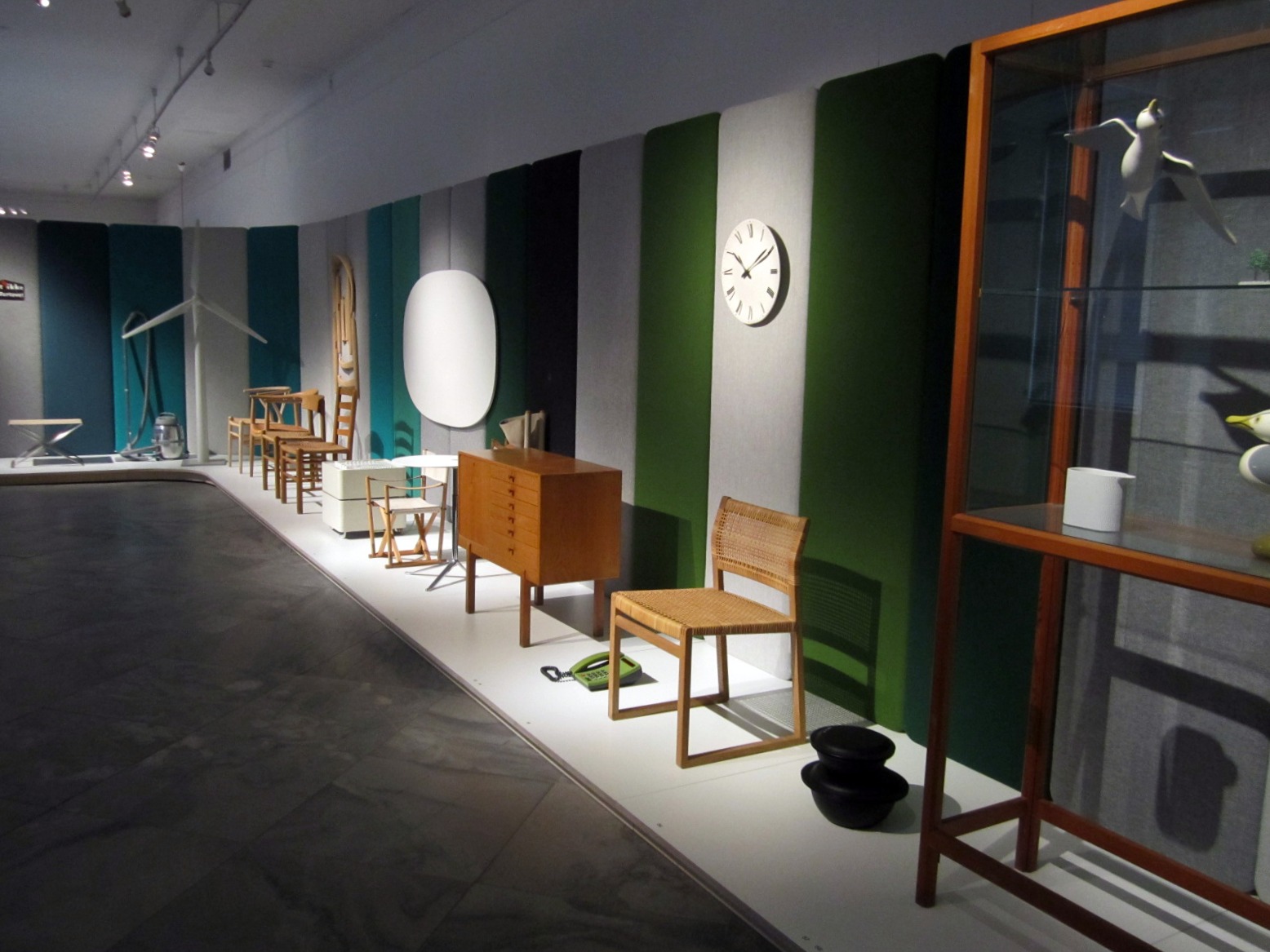
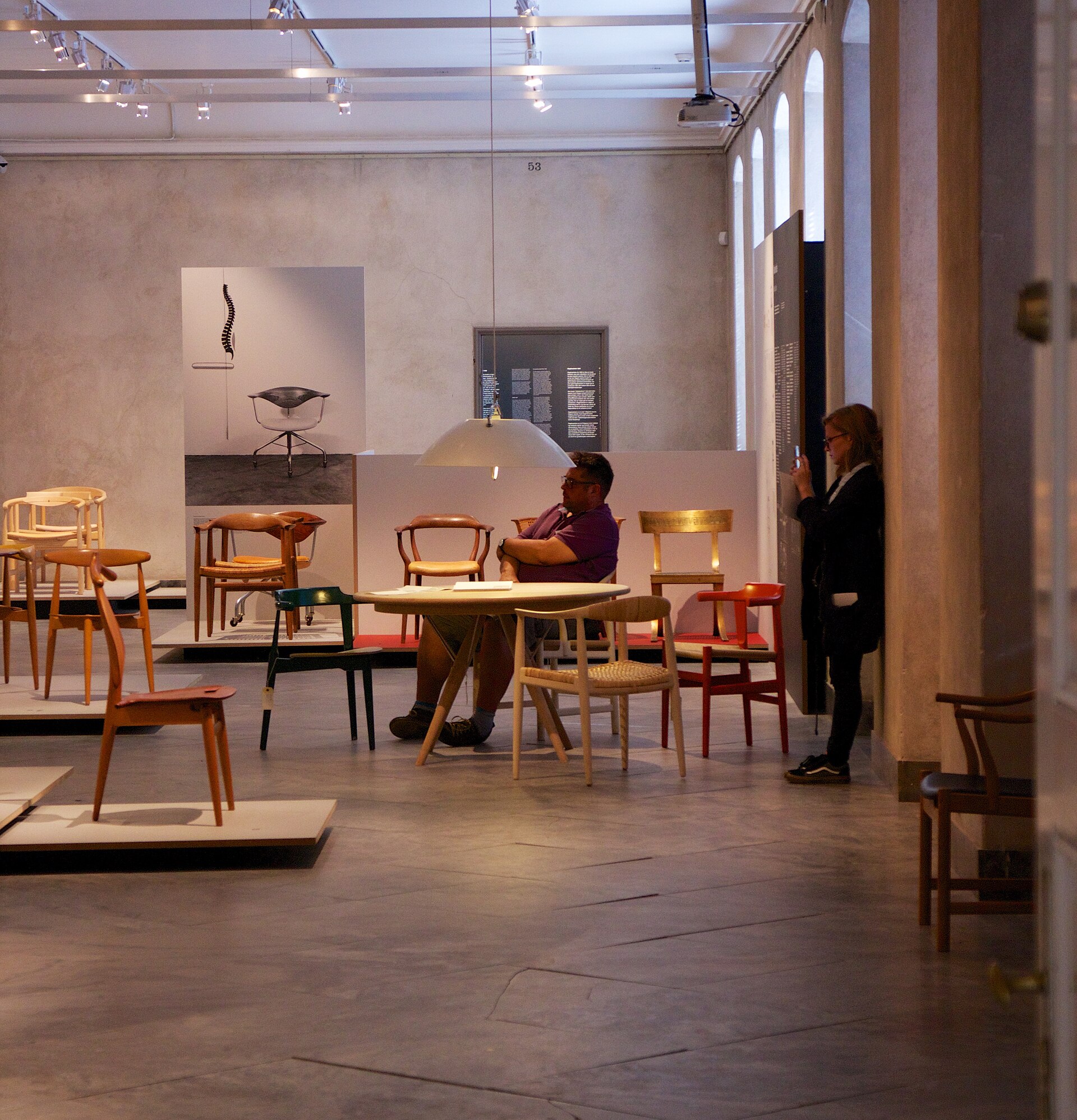
The museum's permanent story of Danish design in the 20th century: Kaare Klint's Room for a Woman, the German Frankfurt kitchen as a comparison with wider European modernism, Finn Juhl, Verner Panton and Nanna Ditzel, personal belongings and drawings of the designers in a theatre-like scenography, a section on high tech and postmodernism, and the 125-chair chair tunnel. Opened 7 June 2024.
Special exhibitions
Changing shows in the renovated galleries. The museum lists Henrik Vibskov: The exhibition, 18 September 2026 to 21 February 2027, with 44 display cases and walk-through installations. Earlier shows including Wonder, Little Table Cover Thyself and Danish Silver ran until 31 December 2025 and are not current.
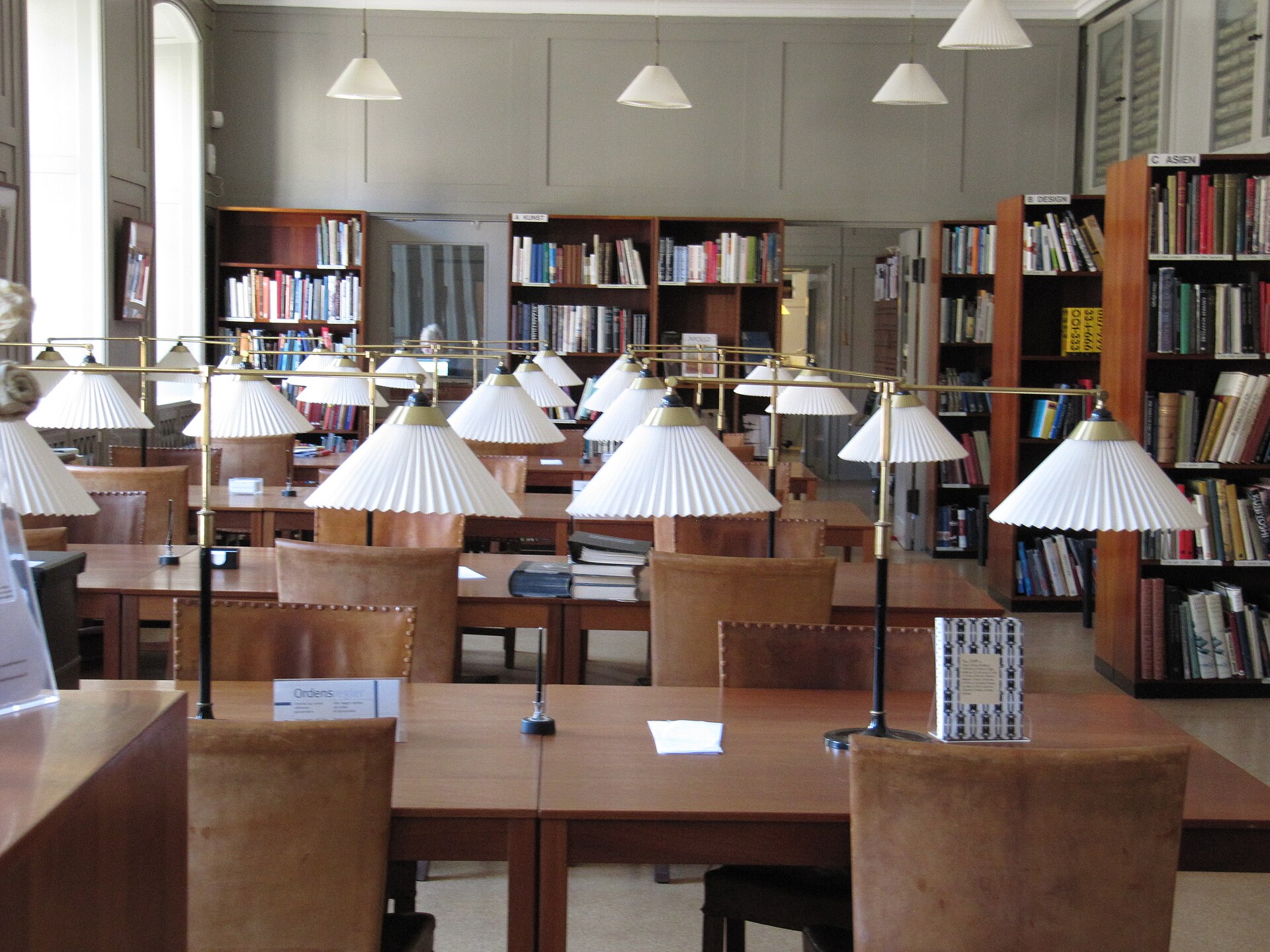
Photograph by lglazier618 · CC BY 2.0 Library
The museum describes it as the largest library in the Nordic countries in design and crafts, free and public, with 24 reading spaces and wifi. Opening hours are separate from the museum's: Tuesday 12-17, Wednesday 10-14, Thursday 10-17, closed in July and between Christmas and New Year.
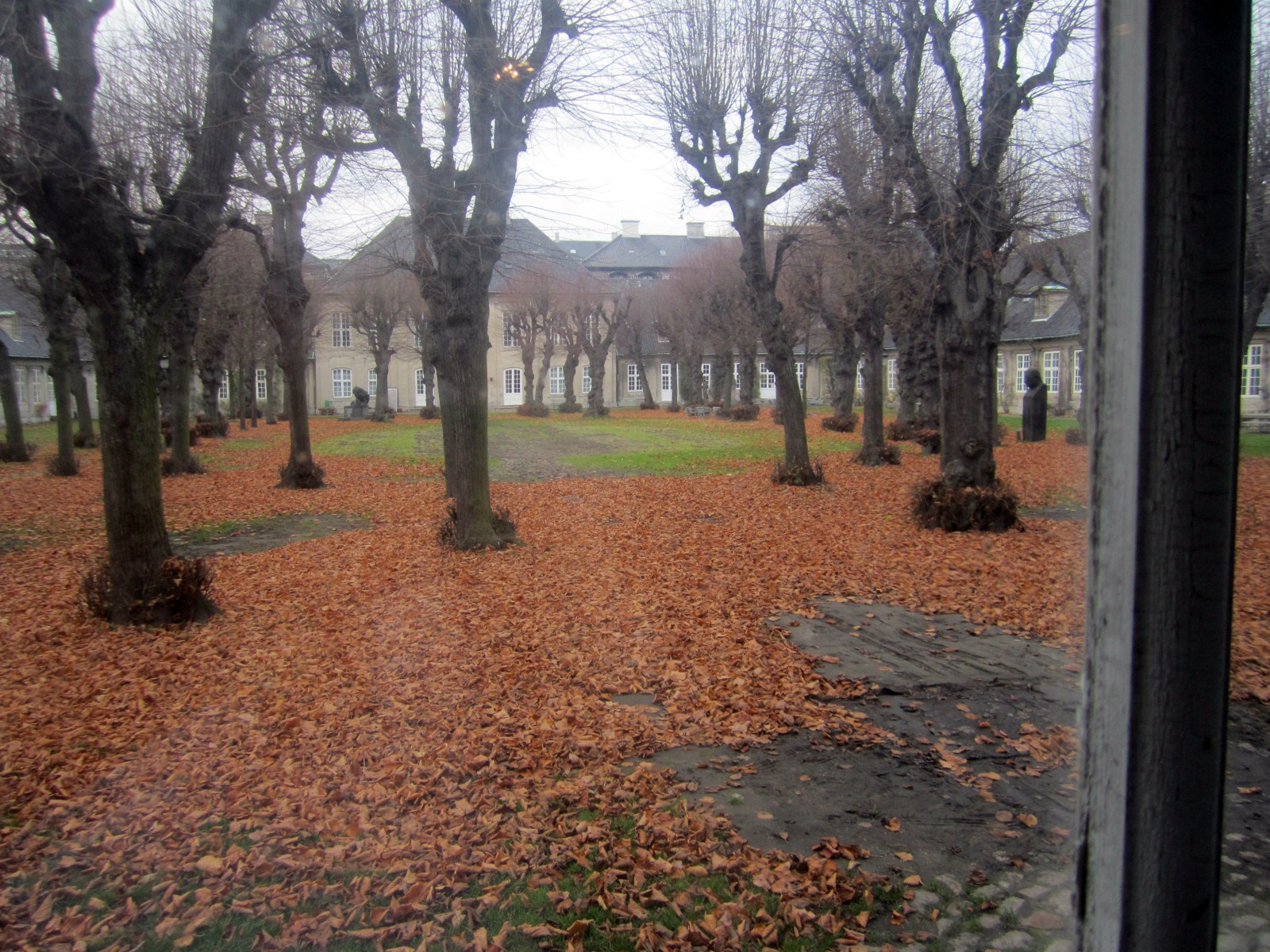
Photograph by Heidi De Vries from Berkeley, CA · CC BY 2.0 Museum Garden (Gronnegarden)
The central quadrangle of the old hospital, planted with linden avenues about 250 years old, laid out in its present form by G. N. Brandt in the 1920s, with sculptures from the 18th to the 21st century. Free to enter in opening hours and used for exhibitions and events.
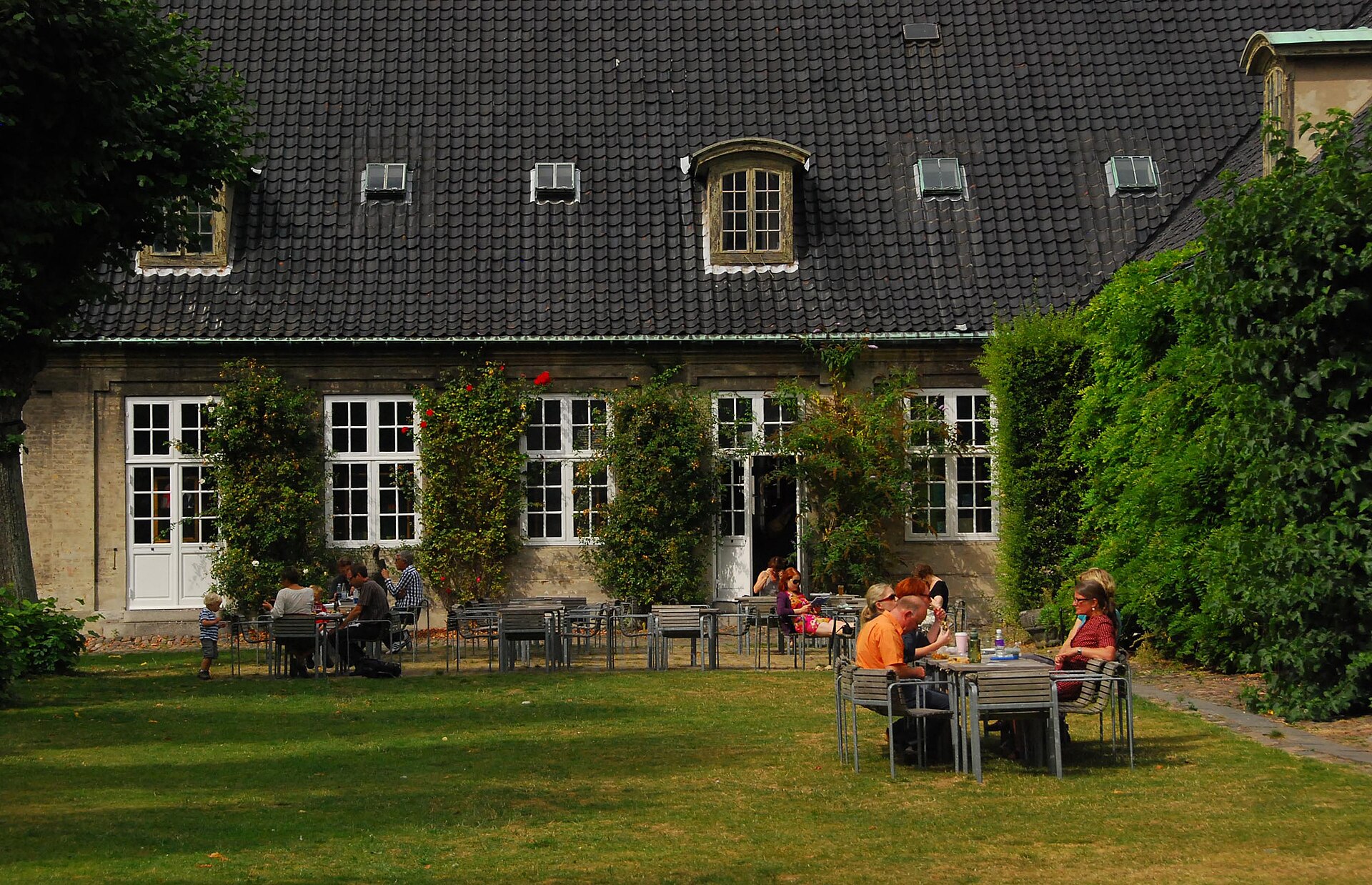
Photograph by Rob Deutscher from Melbourne, Australia · CC BY 2.0 Cafe Format and Lille Format
A museum cafe opening onto the garden with seasonal organic Danish produce, open to the public without a ticket, and a small coffee bar called Lille Format at the entrance forecourt. Annual pass holders get 10 percent off food and drink.
Collections on view and in storage
Furniture, silver, ceramics, glass, fashion, textiles, industrial and product design and a Japanese and Chinese collection, of which the museum says only a small percentage is on display. The porcelain collection on the first floor is described as temporarily closed.
What to see first
Chair tunnel
Danish Modern exhibition designThe museum's larger new version of the chair tunnel packs 125 chairs from floor to ceiling and presents Danish furniture as a family tree of borrowings from historical types elsewhere, with Danish and international designers side by side.8
Room for a Woman
Kaare KlintKlint's room opens the Danish Modern route, which ties the exhibition to the man who furnished the museum building itself in the 1920s.8
Frankfurt kitchen
Margarete Schutte-Lihotzky (designer named by the museum only as the German Frankfurter kitchen)The newly acquired kitchen is shown to compare Danish and wider European modernism; the museum's exhibition page uses it to illustrate both differences and similarities.7
Pantonova and the Peacock Chair
Verner PantonShown in the entrance hall as part of the museum's trail for Panton's 100th anniversary in 2026, with loans from manufacturers; Pantonova is dated 1971 on the museum's page.17
Japanese sword mountings (tsuba) collections
Pietro Krohn collection and Hugo Halberstadt donation of 1940The Halberstadt collection of more than 1,700 tsubas is described by the museum as one of the finest in the world, if not the finest, shown with Krohn's collection side by side in Wonder.15
Henning Koppel pitchers
Henning KoppelThe museum's silver press page calls the trinity of Koppel pitchers iconic and a thread through decades of Danish silver and design; it was shown in Danish Silver until 31 December 2025.25
PK12 chair
Poul KjaerholmListed by the museum as the representative furniture object in its object collections, dated 1962.6
Beogram 4000 turntable
Bang and OlufsenThe museum's representative industrial design object, dated 1972, in a collection it says it is digitising.6
Museum garden sculptures
Various, including Anne Brandhoj (Playmates, 2020)A sculpture collection placed among 250-year-old lindens, the newest addition being three wooden figures made for the garden by Brandhoj.5
Library reading room
Kaare Klint (furnishings)The museum describes the library as the largest in the Nordic countries in design and crafts; the reading room is free to use.13
The building and what it was built to hold
Designmuseum Danmark stands at Bredgade 68 in the Frederiksstaden quarter of Copenhagen, and the first thing to know about it is that it was not built as a museum. The museum's own history page says the complex was the Royal Frederik's Hospital, constructed during the reign of King Frederik V between 1752 and 1757 to designs by the architects Nicolai Eigtved and Lauritz de Thurah, and opened on the king's birthday, 31 March. It was Denmark's first public hospital, sited in this district with the aim of giving penniless patients free care. The sickrooms were laid out as long galleries sized to the dimensions of a sickbed, with windows for daylight and a garden at the centre for air and sun. Two large gateways opened the hospital towards Amaliegade and Bredgade. The history page names two patients: the philosopher Soren Kierkegaard, treated in 1855, and a hospital that appears in the fairy tales of Hans Christian Andersen. The hospital closed in 1910 when Rigshospitalet opened.
The building became a museum in 1926. The institution itself is older: the museum's account is that it was founded in 1890 by the Confederation of Danish Industries and the Ny Carlsberg Museumslegat, opened to the public in 1895 in a purpose-built house on what is now H.C. Andersens Boulevard, and then moved to the former hospital in 1926. Its founding aim, in the museum's words, was to communicate the idea of quality in design by showing exemplary objects, so as to raise the standard of Danish industrial products and make consumers more critical. Wikipedia adds that the move was a gift of the building from the banker Emil Gluckstadt; that detail comes from a tertiary source and the museum's own page does not repeat it.
Kaare Klint and the rooms he made
The conversion was carried out in the 1920s by the architects Ivar Bentsen and Kaare Klint. The museum says Klint furnished the whole museum and designed its entire inventory in the late 1920s, that he lived and worked in the building, and that he taught at the furniture school of the Royal Academy of Fine Arts, where he trained several of the best-known Danish architects and designers of the century. The museum calls the buildings the finest example of Klint's work with function and tradition. This matters for a visitor because the container is part of the collection: the library furniture, the cabinets and the proportions of the galleries belong to the history of Danish design that the exhibitions go on to tell. A photograph on Wikimedia Commons of the library records it as designed by Klint, and the museum's library page describes it as the largest in the Nordic countries in design and crafts, free to enter, with 24 reading spaces.
The architecture has also been added to. In 2012 a design lab for workshops was built beside the museum, donated by the Villum Foundation. In 2018 the museum opened a restored forecourt facing Bredgade, designed by COBE, with an outdoor exhibition platform, a ticket area and a coffee bar, funded by the Annie and Otto Johs. Detlefs Foundations. Then came the larger intervention: the museum closed in 2020 for a renovation of the historic interiors, sandstone decoration, Amaliegade square and all exhibition and guest areas, and reopened on 19 June 2022. The reopening press release records a newly restored facade and 2,500 square metres of newly laid marble floor, and quotes the director, Anne-Louise Sommer, calling it the most thorough renovation since Klint's original interior design. At the start of 2026 the museum broke ground on a Knowledge Centre that will bring the library, reading room and design workshop under one roof, expected to open in spring 2027. Nothing on the museum's pages says the main building is closed because of this work.
What the museum collects
The collections page describes holdings from furniture to silver, ceramics, fashion, textiles and digital design: crafts, art and industrial design from the Western world covering the late Middle Ages to today, plus a collection from East Asia, mainly Japan and China, running from prehistoric times to the present. It lists categories with a representative object for each, among them a ceramic cylinder by Bodil Manz, a dress and coat by Jean Voigt, the PK12 chair by Poul Kjaerholm of 1962, a Lalique vase called The Archers, a Bang and Olufsen Beogram 4000 turntable of 1972, a Japanese sword guard by Sano Naoyoshi, a Royal Copenhagen lidded tureen and a Poul Henningsen table lamp of 1927. The same page says plainly that only a small percentage of the collections is on display and that the museum is working on making them digitally accessible over the next few years. For the next decade it says it will concentrate on collecting and documenting design and crafts from roughly 1900 to today.
The museum also runs a design research infrastructure beyond the galleries. Its library, according to the museum, is the largest in the Nordic countries in this field and serves as a museum library, a research library and a main subject library within the Danish library system. The museum's pages list a Furniture Index, a poster collection, a prints and drawings collection and an archive of Danish design among its research resources. Wikipedia describes the Furniture Index as an online database of more than 12,000 records of 20th and 21st century Danish furniture; that figure is tertiary and the museum's own page was not read for it.
The permanent display: Danish Modern and the chair tunnel
The anchor of a visit is Danish Modern, which opened on 7 June 2024 and which the museum calls a permanent exhibition about Danish design in the twentieth century. Its two pages differ slightly on scope: the press room says it covers the 1920s to the 1970s, while the exhibition page extends the story to the year 2000 through high tech and postmodern sections, and both are the museum's own words. The route starts with Klint's Room for a Woman, passes through the German Frankfurt kitchen as a comparison between Danish and wider European modernism, and moves through Finn Juhl's organic furniture to the pop designs of Verner Panton and Nanna Ditzel. The exhibition page lists designers including Rigmor Andersen, Mogens Koch, Ole Wanscher, Borge Mogensen, Poul Kjaerholm, Hans J. Wegner, Arne Jacobsen, Henning Koppel and Poul Henningsen, and says personal belongings, drawings and archive material from these designers are displayed in a scenography of walls shaped like a theatre set.
The best-known device is the chair tunnel, brought back in a larger version with 125 chairs from floor to ceiling. The museum describes it as a family tree of chair relationships that shows how Danish furniture borrowed from historical types in other countries, and it includes chairs by Wegner, Jacobsen, Ditzel, Cecilie Manz, Charles Eames, Marcel Breuer and Jasper Morrison. The idea descends from The Danish Chair, a permanent exhibition that opened on 9 December 2016, whose press release called it a wunderkammer of about 100 Danish chairs and listed ten to know, from Klint's Faaborg chair of 1914 to Jacobsen's Ant of 1952. The Danish Modern story of origin is also the museum's own: in 1949 a Copenhagen Carpenters' Guild exhibition at what was then the Museum of Decorative Art was written up by American journalists, and North American touring shows in the 1950s and 1960s followed.
Other galleries, the garden and the cafe
Around the permanent display sit changing exhibitions. At the date this page was confirmed the museum's site lists Henrik Vibskov: The exhibition, running from 18 September 2026 to 21 February 2027, an immersive show covering more than 25 years of the Danish designer's work in fashion, music, art and installation, with 44 display cases and large installations visitors walk through. The museum's 2022 reopening programme was built around eight exhibitions, among them The Future Is Present, Powerful Patterns, Wonder, The Magic of Form and a table-setting show. Several of these carried dated runs: the press pages for Wonder, Little Table Cover Thyself and Danish Silver give 19 June to 31 December 2025, and the museum's archive now lists Powerful Patterns among past 2026 shows, so a visitor should not plan around those titles and should check the current exhibitions page. Wonder is the one worth knowing about as an idea: its press page says it showed two collections of Japanese sword mountings, called tsubas, the one gathered by the museum's first director Pietro Krohn until his death in 1905 and the more than 1,700 donated by the doctor Hugo Halberstadt in 1940, and calls the second one of the finest in the world, if not the finest.
The museum garden lies at the centre of the quadrangle and is free to enter during opening hours. The museum says the linden avenues were planted soon after the hospital was completed and are about 250 years old, that the present layout is by the landscape architect G. N. Brandt from the 1920s, and that sculptures from the eighteenth to the twenty-first century stand among the trees, including Anne Brandhoj's Playmates of 2020. Cafe Format opens onto the garden and needs no ticket; its kitchen is run by Astrid Dalgaard Molgaard and Jeppe Graa and the menu uses organic Danish produce according to the museum. A small outward-facing sister, Lille Format, sits at the entrance forecourt. The shop, library, garden and cafe can all be visited without an admission ticket, which makes the building usable as a place to sit even for people who skip the galleries.
Visitor numbers, running the museum and the way it presents itself
The museum says 2024 was its record year: 348,093 paying visitors, against a previous record of 310,192 in 2019, and 488,079 visits in total once the free areas of garden, cafe and shop are counted. It credits the Irma exhibition for drawing Danish visitors early in the year, Danish Modern for drawing international guests in summer and a ceramics show late in the year, and notes new formats such as free Friday bars and design talks. These are the museum's own figures and the director's own explanation. The museum also reports an award from the European Museum Academy for its strategy of widening its audience, though the date of the prize is not given on the page that was read.
Admission is deliberately layered. Adults pay DKK 140, children under 18 enter free, under 27s and students pay DKK 90 with ID, groups of ten or more pay DKK 110 and the Copenhagen Card and K7 Plus give free entry. The museum is also part of the national Culture Pass for 15 to 24 year olds who are neither working nor studying, which can be used for tickets and annual passes. It publishes an autism guide, lends light wheelchairs and folding strollers, and says plainly that there is no lift to the first floor, where the conference rooms and a temporarily closed porcelain collection are. Backpacks, larger bags and umbrellas must go in the cloakroom lockers at the entrance, photography is allowed without flash or tripods, and eating is not allowed in the galleries.
What visitors say
Published expert and traveller commentary on the building and its design collections is warm, with the setting in the former hospital and the Danish Modern chair display most often singled out, and the criticism in the material read is about scale and access rather than quality: one blogger found the sequence overwhelming, and the museum itself says only a small share of its collections is on show, the first floor has no lift and weekends and midday are the busiest hours. No survey of visitors was read, so this is a summary of the named sources listed, not a statement of what visitors in general think.
What is praised, what is criticised
- Praised: The setting: the Tripexpert summary of expert reviews and Daniella Ohad's 2022 account both treat the Rococo hospital building and its Klint conversion as part of the draw.
- Praised: The Danish Modern permanent display and its chair tunnel as a way of understanding Danish design history; The Hidden North's author rated the museum's overall design above any single exhibit.
- Praised: The reopened museum of 2022: Daniella Ohad called the new 20th-century design presentation among the most beautiful design displays she had seen recently.
- Criticised: Scale and flow: The Hidden North's author found the museum a little overwhelming with so much to look at and skipped some exhibitions, and says it is arranged so that you walk through one section to reach the next.
- Criticised: Access and limits, from the museum's own pages: no lift to the first floor, the porcelain collection there is temporarily closed, only a small percentage of the collections is on display, and weekends and midday are described as the busiest times.
- Criticised: Expert reviews collected by Tripexpert describe the museum as compact, about an hour; a reader wanting a deep collection visit should rely on the library and online collection tools instead.
Ratings on other platforms
Google (as shown on Tripexpert): 4.3 from 5,475 ratings, read 18 November 2026
A platform average is a tertiary source: it moves, it is not audited, and we quote no visitor's words.
Questions about Designmuseum Danmark
Where is Designmuseum Danmark?
Bredgade 68, DK-1260 Copenhagen K, Denmark.
How much does it cost to visit?
Adult: DKK 140; Under 18: free; Under 27 and students: DKK 90; Group (10+ people): DKK 110; Copenhagen Card or K7 Plus: free. As confirmed 18 November 2026.
When is it open?
Tue-Sun 10:00-18:00; Thu 10:00-20:00. Closed: Monday (no hours listed on the museum's page). Holiday closures listed by the museum: 24, 25, 26 and 31 December and 1 January 2027; special opening Monday 28 December 10:00-18:00. As confirmed 18 November 2026.
How do you get there?
Metro: Marmorkirken, 300 metres from the museum; Train: Osterport Station, about a 5-minute walk; Air: From Copenhagen Airport about 20 minutes by metro to Kongens Nytorv, then about 10 minutes on foot.
What should you see first?
Chair tunnel (Danish Modern exhibition design); Room for a Woman (Kaare Klint); Frankfurt kitchen (Margarete Schutte-Lihotzky (designer named by the museum only as the German Frankfurter kitchen)); Pantonova and the Peacock Chair (Verner Panton); Japanese sword mountings (tsuba) collections (Pietro Krohn collection and Hugo Halberstadt donation of 1940); Henning Koppel pitchers (Henning Koppel).
What we could not confirm
- Which of the 2025 collection exhibitions (Wonder, Little Table Cover Thyself, Danish Silver) have been replaced by permanent rehangs is not stated on the pages read.
- The date of the European Museum Academy award the museum reports is not given on its page.
- The reopening date of the first-floor porcelain collection is not given.
Images
Sources
- 1Designmuseum Danmark, Opening hours & admission (museum's own page), read 2026-11-18 designmuseum.dk/en/besog-os/opening-hours-admission-2/
- 2Designmuseum Danmark, Practical information, read 2026-11-18 designmuseum.dk/en/besog-os/practical-information/
- 3Designmuseum Danmark, Getting here, read 2026-11-18 designmuseum.dk/en/besog-os/getting-here/
- 4Designmuseum Danmark, History & architecture, read 2026-11-18 designmuseum.dk/en/om-museet-2/history-architecture/
- 5Designmuseum Danmark, Museum garden, read 2026-11-18 designmuseum.dk/en/besog-os/museumgarden/
- 6Designmuseum Danmark, Objects & collections, read 2026-11-18 designmuseum.dk/en/samlinger/genstandssamlinger/
- 7Designmuseum Danmark, Danish Modern (permanent exhibition page), read 2026-11-18 designmuseum.dk/en/exhibition/danish-modern/
- 8Designmuseum Danmark, Press room: Danish Modern, read 2026-11-18 designmuseum.dk/en/pressroom_danish-modern/
- 9Designmuseum Danmark, Press release: The Danish Chair, 10 November 2016, read 2026-11-18 designmuseum.dk/en/the-danish-chair/
- 10Designmuseum Danmark, Press release: set to reopen after two-year renovation, 6 April 2022, read 2026-11-18 designmuseum.dk/en/reopening/
- 11Designmuseum Danmark, Record-breaking visitor numbers (2024 figures), read 2026-11-18 designmuseum.dk/en/designmuseum-achieves-record-breaking-visitor-numbers/
- 12Designmuseum Danmark, Henrik Vibskov: The exhibition, read 2026-11-18 designmuseum.dk/en/exhibition/henrik-vibskov/
- 13Designmuseum Danmark, Library, read 2026-11-18 designmuseum.dk/en/bibliotek/library/
- 14Designmuseum Danmark, Format cafe, read 2026-11-18 designmuseum.dk/en/besog-os/format-designmuseum-danmarks-cafe/
- 15Designmuseum Danmark, Press room: Wonder, read 2026-11-18 designmuseum.dk/en/press-room-wonder/
- 16Designmuseum Danmark, Press room: Little Table, Cover Thyself!, read 2026-11-18 designmuseum.dk/en/press-room-little-table-cover-thyself/
- 17Designmuseum Danmark, Verner Panton 100 years guide, read 2026-11-18 designmuseum.dk/en/verner-panton-100-years/
- 18Designmuseum Danmark, Culture Pass news item, read 2026-11-18 designmuseum.dk/en/young-people-aged-15-24-can-now-visit-designmuseum-denmark-for-free-with-a-culture-pass/
- 19Tripexpert, Designmuseum Danmark (aggregator of expert reviews and platform scores), read 2026-11-18 () tripexpert.com/copenhagen/attractions/designmuseum-danmark
- 20The Hidden North, The Design Museum Denmark (travel blog), read 2026-11-18 thehiddennorth.com/the-design-museum-denmark/
- 21Daniella Ohad, Designmuseum Danmark - The Reopening, 1 July 2022 blog.daniellaondesign.com/p/designmuseum-danmark-the-reopening
- 22Wikipedia, Designmuseum Denmark, read 2026-11-18 () en.wikipedia.org/wiki/Designmuseum_Denmark
- 23Inexhibit, Designmuseum Danmark, Copenhagen, read 2026-11-18 () inexhibit.com/?p=37082
- 24Wikimedia Commons, Category:Designmuseum Danmark and file pages, read 2026-11-18 commons.wikimedia.org/wiki/Category:Designmuseum_Danmark
- 25Designmuseum Danmark, Press room: Danish Silver, read 2026-11-18 designmuseum.dk/en/press-room-danish-silver/