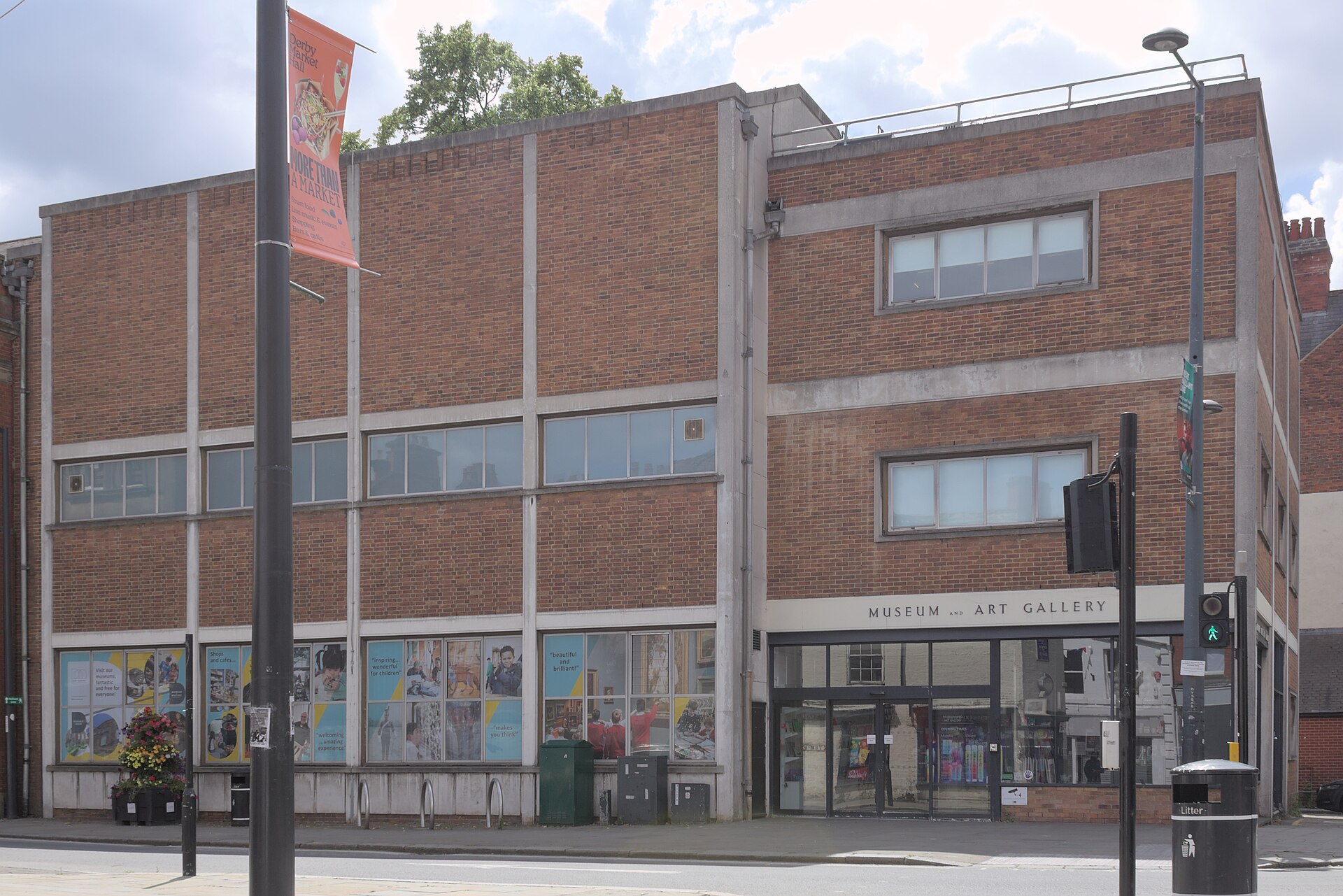
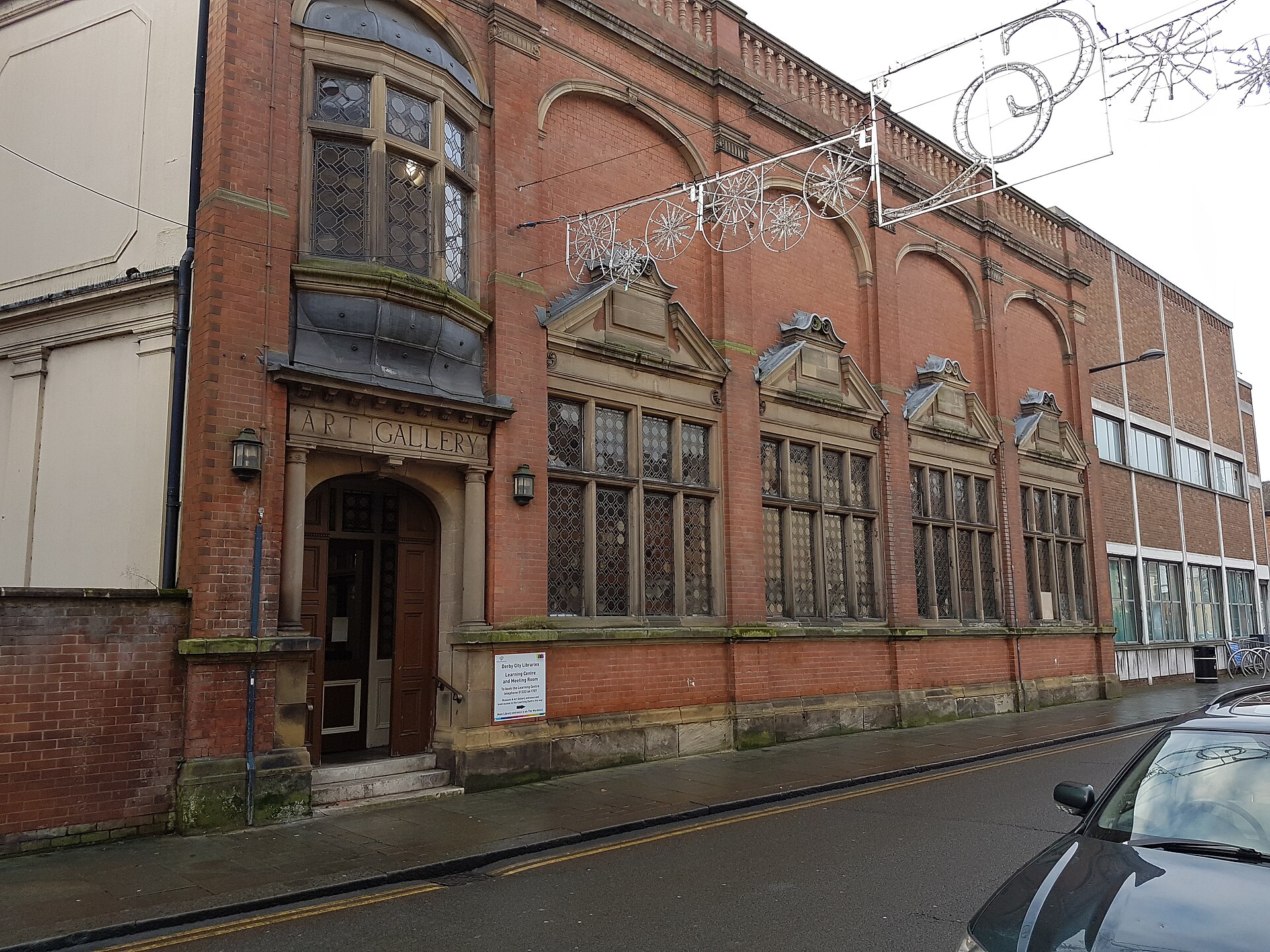
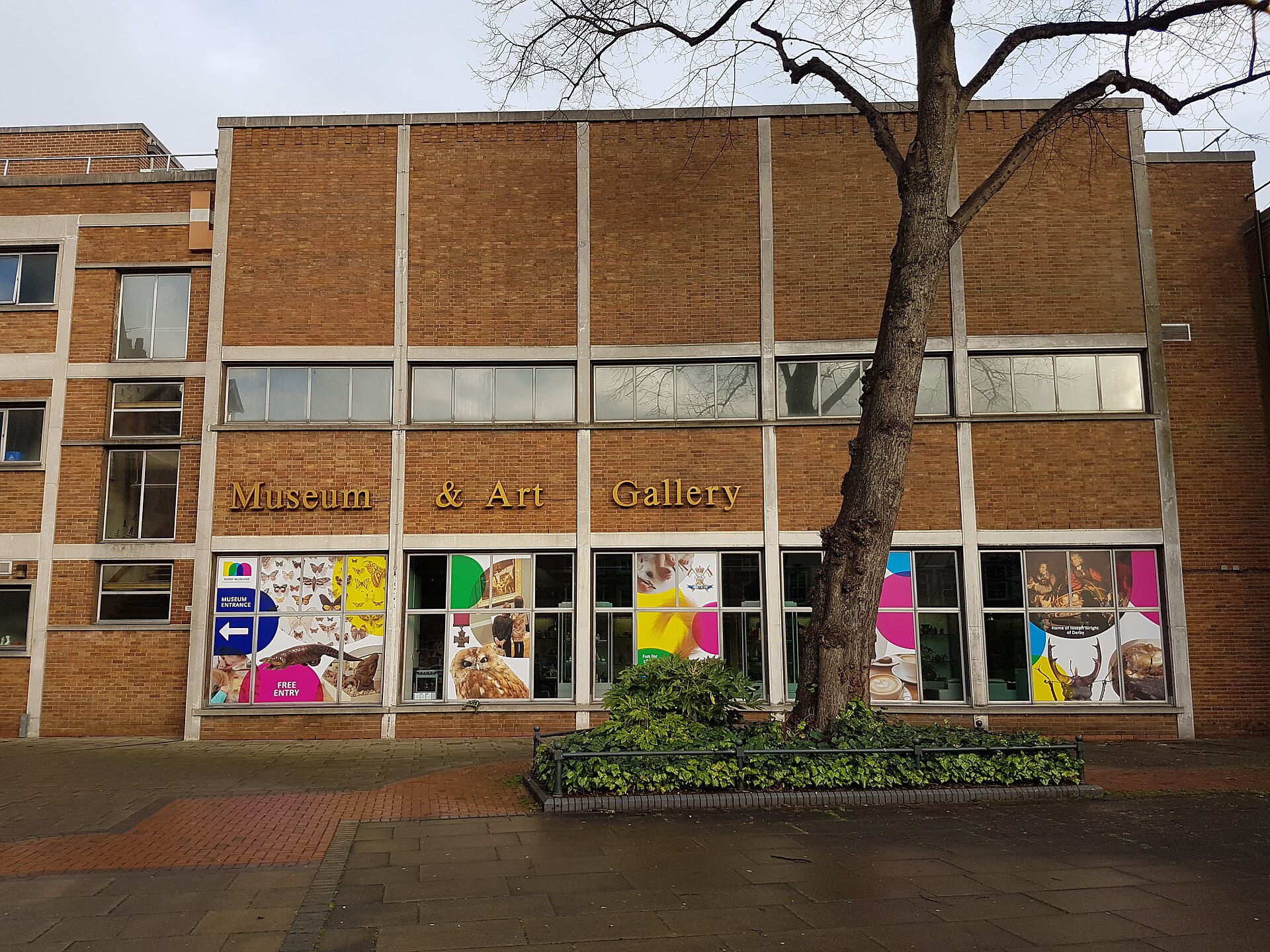
Derby Museum and Art Gallery, photographed from The Strand, Derby, in July 2025.
Photograph by Aethonatic, released CC0, via Wikimedia CommonsDerby Museum and Art Gallery
Museum · Founded 1879
Open, admission and hours confirmed 10 September 2026 · 8 sources
On this page 16 sections
ContentsClose
The museum's defining strength is depth in a single artist rather than breadth across periods: the world's largest holding of Joseph Wright of Derby's paintings, sketches and papers, recognised with Designated status in 2011. Around that core sit genuinely varied secondary strengths that a visitor researching only Wright would not expect - an Anglo-Saxon carved stone tied to the killing of a named Mercian king, two ancient Egyptian mummies with an active conservation history, a regional military history collection spanning three regiments, and a ceramics holding that documents Derby's own history as a porcelain and pottery manufacturing centre.
| Kind | Museum |
|---|---|
| Founded | 1879 |
| City and country |  Derby, United Kingdom Derby, United Kingdom |
| Address | The Strand, Derby, DE1 1BS, England |
| Website | derbymuseums.org/museum-and-art-gallery |
| Status | Open, confirmed |
| Record last verified |
Visiting
- Hours
- Tue-Sat10:00 to 17:00
- Sun12:00 to 16:00
- Closed
- Monday.
- Admission
- All visitorsFreeFree entry; the museum invites a donation and notes that donations help keep the collection accessible
Free entry: Every day - permanent collection is always free to enter- Do I need to book?
- No timed ticket needed for general entry; groups of adults or school parties are asked to contact the museum in advance by phone or email
- Address
- The Strand, Derby, DE1 1BS, England MapTrain Derby railway station has direct services from London in under two hours; the museum is a walk of about 15-20 minutes from the station through the city centre
Bus Frequent Trent Barton and Arriva services into central Derby; the bus station is about a 10-minute walk from the museum
Car Nearest off-site parking is the 24-hour Bold Lane car park, about 50 metres from the entrance, with Chapel Street car park also nearby
Bicycle Cycle racks are provided outside the entrance on The Strand - Website
- derbymuseums.org/museum-and-art-gallery
- Telephone
- +44 1332 641901
- [email protected]
Before you go how long, access, photography, bags, eating, shop
- How long to allow
- Visitors on Tripadvisor commonly describe spending around two hours across the galleries and the Joseph Wright collection
- Access
- Derby Museums states it has taken measures to be as open and accessible as possible and publishes a fuller access statement on its own site
- Photography
- Not stated in the sources checked for this page
- Bags
- Not stated in the sources checked for this page
- Eating
- The Coffee House, inside the Ceramics Gallery, serves drinks and food from local suppliers
- Shop
- A shop sells work by local makers, including ceramics, jewellery and prints
Prices and hours change. We take them from the institution's own pages and print the day we read them, and you can check the current position at the source we used. Confirm before you travel.
What is inside
Photograph by Victuallers · CC BY-SA 3.0 Joseph Wright Gallery
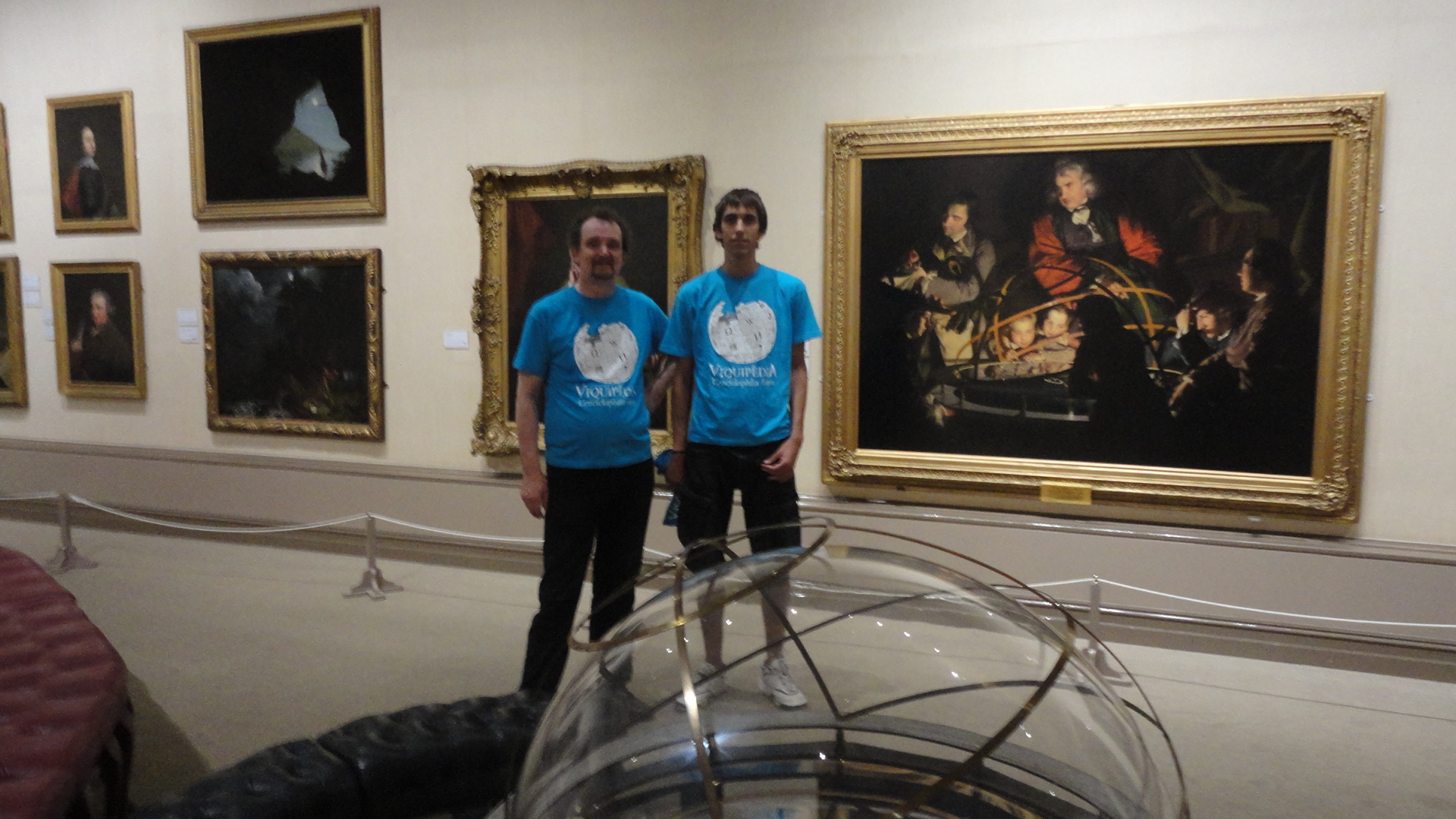
The museum holds what is described as the world's largest collection of work by the Derby-born painter Joseph Wright of Derby (1734-1797): 34 oil paintings and more than 300 sketches and related documents. Key paintings on regular display include A Philosopher Lecturing on the Orrery (1766) and The Alchemist in Search of the Philosopher's Stone (1771), and a working grand orrery is shown near the paintings that depict one. The museum's Wright holdings received Designated status from the (then) Museums, Libraries and Archives Council in February 2011 in recognition of their national significance, and in 2011 Derby City Council adopted Wright's imagery in branding the city. Some paintings travel periodically on loan to other institutions, most recently to the National Gallery in London, and the gallery has also run temporary Wright exhibitions alongside the permanent hang.
Photograph by Nick Moyes · CC BY-SA 3.0 Natural History and Geology
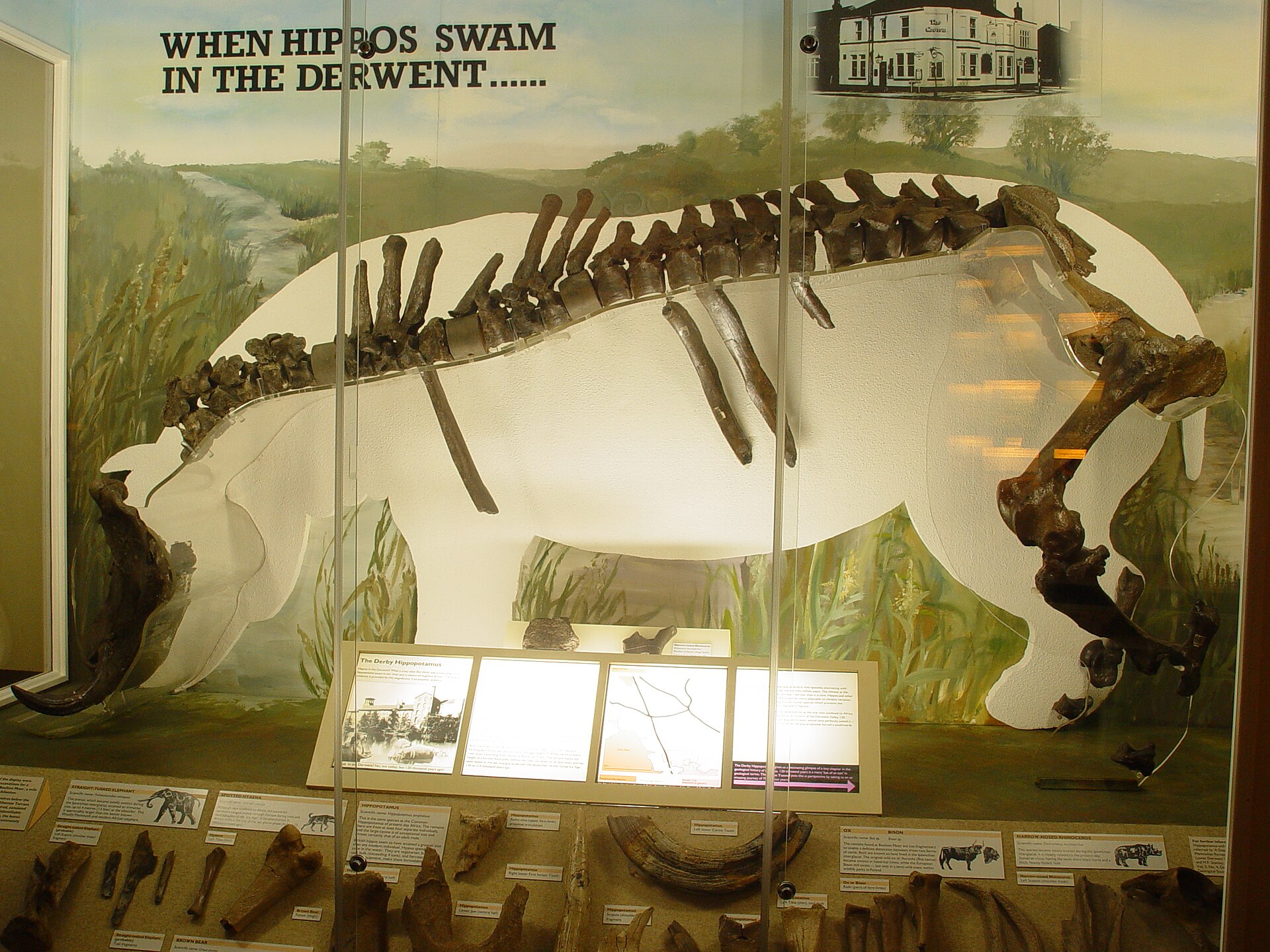
Natural history and geology displays include mineral specimens, among them material originally donated by Col. George Gawler, and the museum's best-known single specimen: a hippopotamus skeleton known locally as the Allenton Hippo.
Photograph by Malcolm Neal · CC BY-SA 2.0 Ceramics Gallery
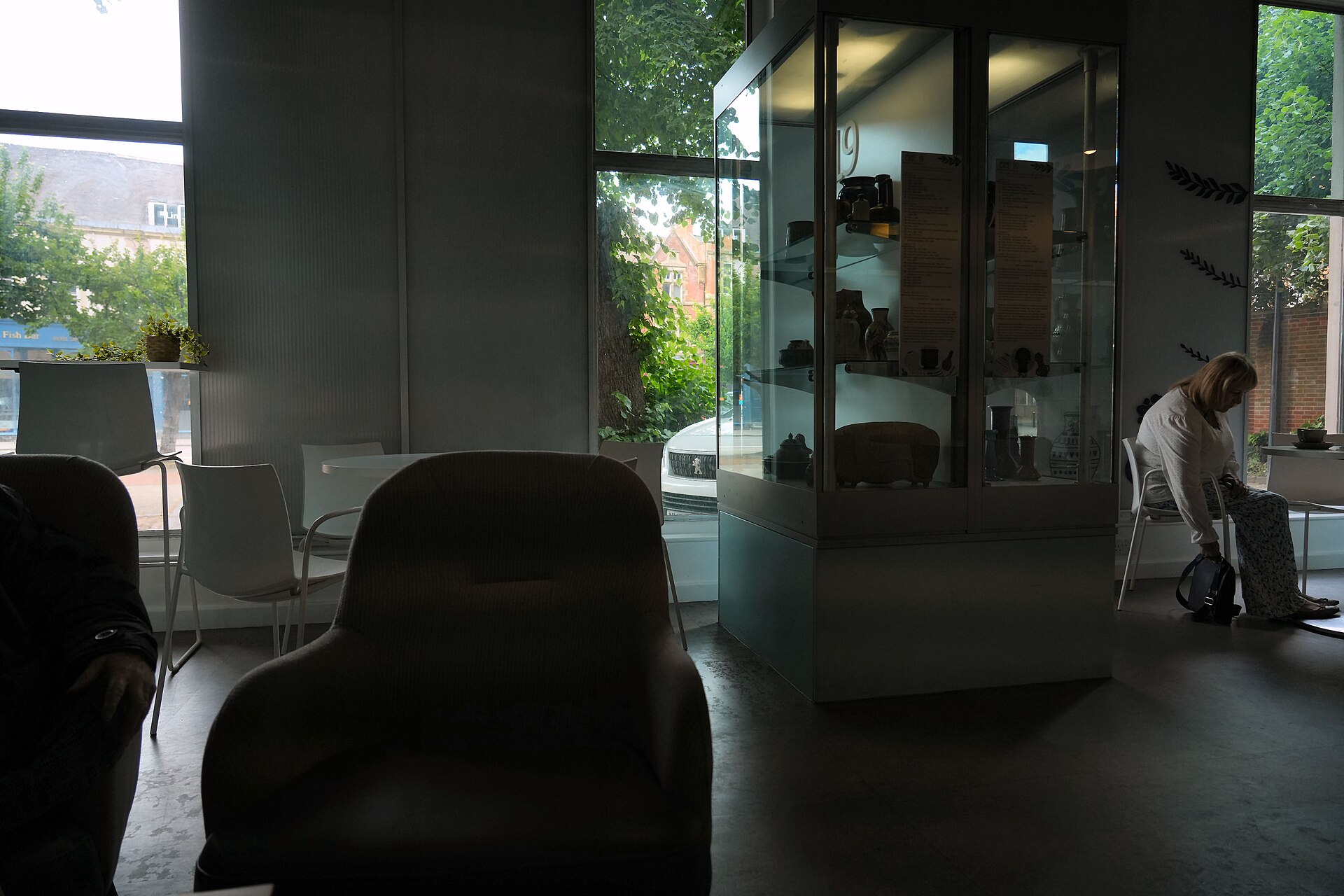
Ceramics and decorative arts on show include an extensive display of Royal Crown Derby porcelain and the museum's Bretby Art Pottery collection, both tied to Derby's history as a centre of English ceramic manufacture. The Coffee House cafe sits inside this gallery.
Bonnie Prince Charlie Room
A recreated room reproducing the one in which Charles Edward Stuart is said to have held a council of war in Derby in 1745, during the Jacobite rising, built using panelling salvaged from the demolished Exeter House (demolished 1854) and displaying related artefacts, including a letter described as coming from Queen Victoria's own collection. No free-licence photograph of this specific room was found on Wikimedia Commons, so it carries no plate on this page.
Soldier's Story (military history)
A gallery covering the region's military history through the 9th/12th Royal Lancers, the Sherwood Foresters and the Derbyshire Yeomanry. No free-licence interior photograph of this gallery was found on Wikimedia Commons, so it carries no plate on this page.
Archaeology and Egyptology
Archaeological holdings include the Repton Stone, a carved cross-shaft fragment showing a mounted, armed figure identified with King Aethelbald of Mercia, who was killed in 757 - described as possibly the earliest large-scale pictorial representation of an English king. The Egyptology collection includes the mummified remains of two ancient Egyptians known as Pypyu and Pa-sheri; in 2025 Pa-sheri underwent conservation and X-ray examination carried out with the University of Lincoln, which found evidence of damage from an earlier, historical unwrapping. No free-licence interior photograph of this gallery was found on Wikimedia Commons, so it carries no plate on this page.
What to see first
A Philosopher Lecturing on the Orrery
Joseph Wright of Derby, 1766One of the two paintings most consistently named as the reason to visit, and the centrepiece of the world's largest Joseph Wright of Derby collection; a working orrery is displayed near it6
The Alchemist in Search of the Philosopher's Stone
Joseph Wright of Derby, 1771The other headline Wright canvas normally on display, part of the same Designated collection recognised in February 20116
The Repton Stone
Anglo-Saxon, 9th centuryA carved cross-shaft fragment identified with the killing of King Aethelbald of Mercia in 757, described as possibly the earliest large-scale pictorial representation of an English king6
The Allenton Hippo
Hippopotamus skeletonThe museum's best-known natural history specimen and a fixture of the Natural History and Geology gallery6
Pypyu and Pa-sheri
Ancient Egyptian mummified remainsThe museum's Egyptology holdings, with Pa-sheri conserved and X-rayed with the University of Lincoln in 2025, revealing damage from an earlier historical unwrapping6
Bonnie Prince Charlie Room
Recreated period room, panelling from Exeter HouseA room reconstructed around panelling salvaged from the demolished house where Charles Edward Stuart is said to have held a council of war during the 1745 Jacobite rising in Derby6
Royal Crown Derby and Bretby Art Pottery collections
Various Derby manufacturersAn extensive ceramics holding tied directly to Derby's own history as a centre of porcelain and art pottery manufacture6
Soldier's Story regimental collections
9th/12th Royal Lancers, Sherwood Foresters, Derbyshire YeomanryThe museum's military history holdings covering three regiments with strong local recruiting ties6
Exhibitions on now
A gift to the town, and the society that came before it
Derby Museum and Art Gallery traces its origins to the Derby Town and County Museum and Natural History Society, founded on 10 February 1836 as a private subscription society. Its early collections moved several times before finding a permanent home: first to the Full Street Public Baths, then to the Athenaeum on Victoria Street in 1840, then to the Wardwick in 1858 when the society merged with the Derby Philosophical Society, the scientific and literary club Erasmus Darwin had founded in Derby in 1783. After a further period in storage, the collections finally went on public display on 28 June 1879, in a purpose-built museum on The Strand.
That building, shared with the new Derby Central Library alongside it, was designed by the architect Richard Knill Freeman and given to the town by the brewer and philanthropist Michael Thomas Bass. The Art Gallery wing followed three years later, opening in 1882, and the building was fitted with electric lighting in 1883. The building is a Grade II listed structure.
The 1964 extension and the world's largest Joseph Wright of Derby collection
A substantial extension, completed in 1964 following a bequest from the art collector Alfred E. Goodey, gave the museum the space to house its main collections properly, including the paintings, sketches and documents of Joseph Wright of Derby (1734-1797), the Derby-born painter of Enlightenment science and industry. The museum now holds what is described as the world's largest collection of his work: 34 oil paintings and more than 300 sketches and related papers.
Two paintings recur across nearly every visitor account of the museum: A Philosopher Lecturing on the Orrery (1766) and The Alchemist in Search of the Philosopher's Stone (1771), both shown in the Joseph Wright Gallery alongside a working orrery. Wright's dramatic, candlelit treatments of scientific demonstration sit inside the same intellectual world as the Lunar Society - Erasmus Darwin, Matthew Boulton and Joseph Priestley among them - and Darwin's own Derby Philosophical Society, which the museum's founding collections eventually absorbed. The Wright holdings were awarded Designated status by the Museums, Libraries and Archives Council in February 2011, recognising them as a collection of national significance, and in the same year Derby City Council began using Wright's imagery to brand the city itself. Individual paintings travel periodically on loan - to the National Gallery in London among other venues - and the gallery has also mounted temporary Wright exhibitions running alongside the permanent hang.
Natural history, geology and the Allenton Hippo
Beyond the art collection, the museum's natural history and geology holdings include mineral specimens, part of the material originating in donations such as those of Col. George Gawler. The single most talked-about object in this part of the museum is a hippopotamus skeleton known locally as the Allenton Hippo, a fixture of visitor accounts of the natural history displays and a name distinctive enough that it has its own following among repeat visitors.
The Repton Stone, and two ancient Egyptians named Pypyu and Pa-sheri
The museum's archaeology holdings include the Repton Stone, a carved Anglo-Saxon cross-shaft fragment showing a mounted, armed figure. It has been identified with the killing of King Aethelbald of Mercia in 757, and has been described as possibly the earliest large-scale pictorial representation of an English king to survive.
The Egyptology collection includes the mummified remains of two ancient Egyptians known as Pypyu and Pa-sheri. In 2025 Pa-sheri underwent conservation work and X-ray examination carried out with the University of Lincoln, which found evidence of damage caused by an earlier, historical unwrapping of the remains - a reminder that the condition of long-held human remains in museum collections is itself a record of how museums have handled them over time, not only of how they were made or buried.
Ceramics, regiments and a room built around a Jacobite council of war
The Ceramics Gallery, which also houses the museum's Coffee House cafe, displays an extensive collection of Royal Crown Derby porcelain together with the museum's Bretby Art Pottery holdings, both directly tied to Derby's history as a centre of ceramic manufacture. A separate Soldier's Story gallery covers the region's military history through the collections of the 9th/12th Royal Lancers, the Sherwood Foresters and the Derbyshire Yeomanry.
Elsewhere in the museum, a recreated Bonnie Prince Charlie Room reproduces the room in which Charles Edward Stuart is said to have held a council of war in Derby in 1745, during the Jacobite rising that reached as far south as the town before turning back. The room was built using panelling salvaged from Exeter House, the building in which the events are said to have taken place, demolished in 1854, and it displays related artefacts including a letter described as coming from Queen Victoria's own collection.
A 2012 theft, and what the sources checked for this page do not settle
Between 2 May and 19 June 2012, more than 1,000 items were stolen from the museum's stores. The theft went undiscovered until staff carried out an inventory check, and the missing items included coins, medals and watches. A man was charged with handling stolen goods in January 2013, and some of the items were recovered - but the sources consulted for this page do not state what proportion of the stolen haul was never recovered, and that figure is not reflected here because it was not found in a source that states it directly.
Visiting today
Entry to the permanent collection is free, with donations invited. The museum is open Tuesday to Saturday, 10am to 5pm, and Sunday, 12pm to 4pm; it is closed on Mondays. Groups of adults and school parties are asked to contact the museum in advance by phone or email. The nearest off-site car park is Bold Lane, about 50 metres from the entrance and open 24 hours, with Chapel Street car park also close by; Derby's bus station is roughly a 10-minute walk away and Derby railway station, served by direct trains from London in under two hours, is a walk of some 15 to 20 minutes through the city centre. Cycle racks stand outside the entrance on The Strand.
What visitors say
Visitors consistently treat the Joseph Wright of Derby paintings as the reason to make the trip, and just as consistently describe the museum around them - free entry, staff repeatedly called knowledgeable and welcoming, and a well-liked cafe - as a solid but smaller-scale visit than the headline gallery promises.
What is praised, what is criticised
- Praised: The Joseph Wright of Derby paintings and gallery, repeatedly singled out on Tripadvisor as worth the visit on their own
- Praised: Staff described across many reviews as knowledgeable, friendly and generous with background on individual works
- Praised: Free admission, with at least one reviewer urging others to leave a donation to help keep the museum open and accessible
- Praised: The Coffee House cafe inside the Ceramics Gallery, and the Royal Crown Derby collection visible from it
- Criticised: One visitor found the museum outside the Wright gallery piecemeal, without a clear thread connecting one room to the next
- Criticised: Reflective glare from spotlights trained on paintings in the main gallery, which one reviewer called a particular shame given Wright's own reputation as a painter of light
- Criticised: Sunday opening restricted to 12pm-4pm, criticised by one visitor as an awkward window given how many tourists have most of their free time on that day
- Criticised: Wayfinding from Derby railway station into the city centre and to the museum, described by one visitor as poorly signposted
Ratings on other platforms
Tripadvisor: 4.5 from 732 ratings, read 10 September 2026
A platform average is a tertiary source: it moves, it is not audited, and we quote no visitor's words.
Questions about Derby Museum and Art Gallery
Where is Derby Museum and Art Gallery?
The Strand, Derby, DE1 1BS, England.
How much does it cost to visit?
All visitors: free. As confirmed 10 September 2026.
When is it open?
Tue-Sat 10:00-17:00; Sun 12:00-16:00. Closed: Monday. As confirmed 10 September 2026.
How do you get there?
Train: Derby railway station has direct services from London in under two hours; the museum is a walk of about 15-20 minutes from the station through the city centre; Bus: Frequent Trent Barton and Arriva services into central Derby; the bus station is about a 10-minute walk from the museum; Car: Nearest off-site parking is the 24-hour Bold Lane car park, about 50 metres from the entrance, with Chapel Street car park also nearby; Bicycle: Cycle racks are provided outside the entrance on The Strand.
What should you see first?
A Philosopher Lecturing on the Orrery (Joseph Wright of Derby, 1766); The Alchemist in Search of the Philosopher's Stone (Joseph Wright of Derby, 1771); The Repton Stone (Anglo-Saxon, 9th century); The Allenton Hippo (Hippopotamus skeleton); Pypyu and Pa-sheri (Ancient Egyptian mummified remains); Bonnie Prince Charlie Room (Recreated period room, panelling from Exeter House).
What we could not confirm
- What proportion of the more than 1,000 items stolen from the museum's stores between 2 May and 19 June 2012 was ultimately recovered is not stated in the sources checked for this page.
- The extent of the collection currently off-site on loan at any given time (for example, Wright paintings lent to the National Gallery in London) is not tracked on the museum's own visit page, so a visitor cannot confirm before travelling which specific Wright canvases will be on the wall.
Images
Sources
- 1Wikidata, item Q8012 (Derby Museum and Art Gallery) wikidata.org/wiki/Q8012
- 2Wikimedia Commons, Category:Derby Museum and Art Gallery commons.wikimedia.org/wiki/Category:Derby_Museum_and_Art_Gallery
- 3Wikimedia Commons, File:Derby Museum and Art Gallery - 7 July 2025.jpg (file description and licence metadata) commons.wikimedia.org/wiki/File:Derby_Museum_and_Art_Gallery_-_7_July_2025.jpg
- 4Derby Museums, Museum and Art Gallery venue page derbymuseums.org/museum-and-art-gallery/
- 5Derby Museums, Museum and Art Gallery - Visit page (hours, admission, address, contact, transport) derbymuseums.org/museum-and-art-gallery/visit/
- 6Wikipedia, Derby Museum and Art Gallery en.wikipedia.org/wiki/Derby_Museum_and_Art_Gallery
- 7Tripadvisor, Derby Museum and Art Gallery reviews and rating tripadvisor.com/Attraction_Review-g187048-d1138663-Reviews-Derby_Museum_and_Art_Gallery-Derby_Derbyshire_England.html
- 8WhichMuseum, Derby Museum and Art Gallery listing whichmuseum.co.uk/museum/derby-museum-and-art-gallery-4128
