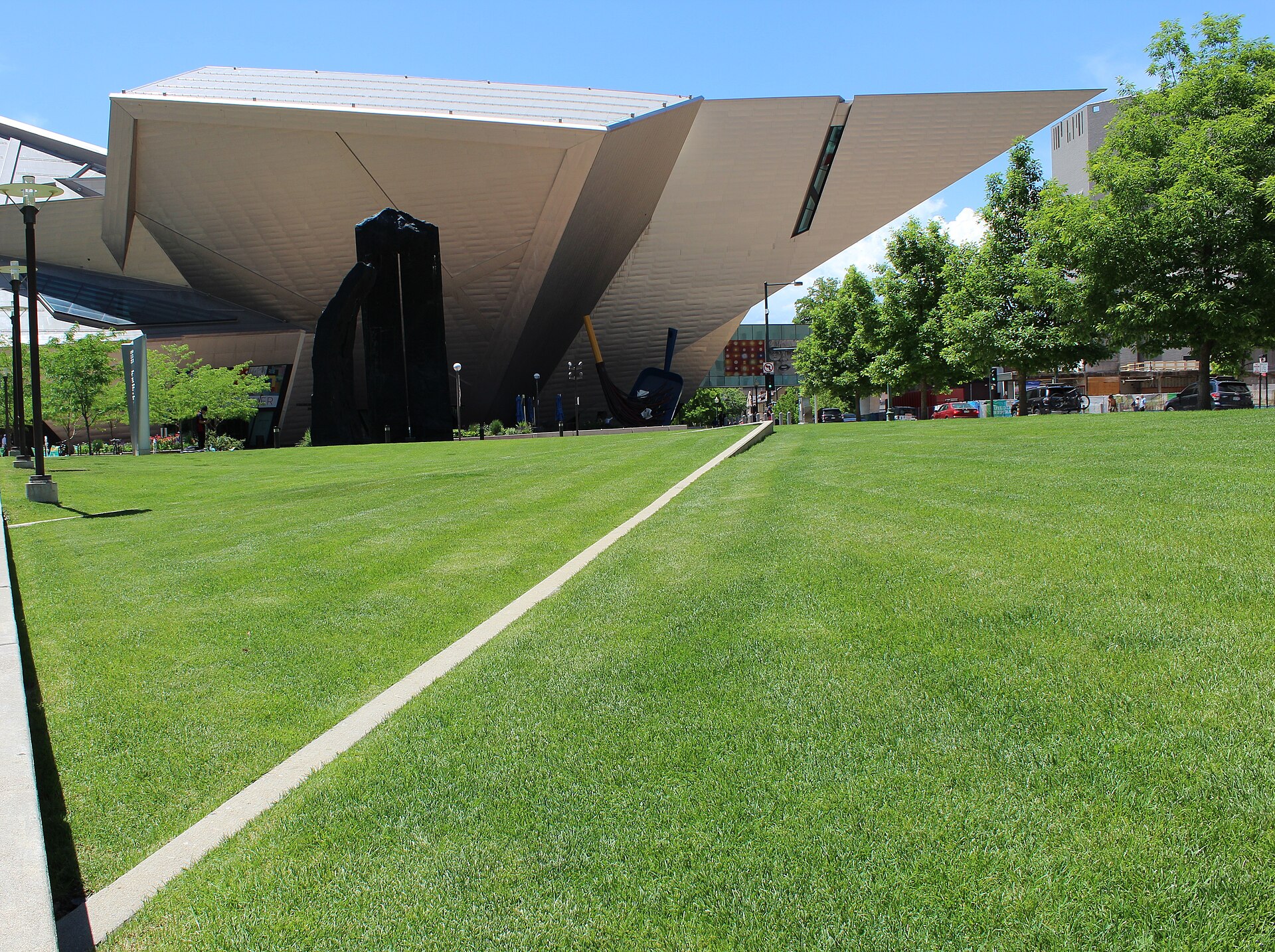
Daniel Libeskind's titanium-clad Hamilton Building, opened 2006, seen across the museum's south lawn
Sarbjit Bahga, CC BY-SA 4.0Denver Art Museum
Museum · Founded 1893
Open, admission and hours confirmed 28 September 2026 · 16 sources
On this page 15 sections
ContentsClose
The museum's own description of its holdings, more than 80,000 objects across thirteen departments, undersells how lopsided the real strength is: Indigenous Arts of North America and the combined Ancient Americas and Latin American material in the Mayer Center are both collections the institution itself, and outside reporting, treat as world class rather than merely large. The nineteenth and twentieth century European and American painting galleries, and the modern and contemporary holdings, are respectable regional strength rather than a rival to the coastal encyclopedic museums, and the museum does not claim otherwise.
| Kind | Museum |
|---|---|
| Founded | 1893, as the Denver Artists Club; incorporated as the Denver Art Museum in 1923 |
| City and country |  Denver, United States Denver, United States |
| Address | 100 W 14th Ave. Pkwy., Denver, CO 80204, United States |
| Website | denverartmuseum.org |
| Status | Open, confirmed |
| Record last verified |
Visiting
- Hours
- Sunday-Monday10:00 to 17:00
- Tuesday10:00 to 20:00Late opening
- WednesdayClosed
- Thursday-Saturday10:00 to 17:00
- Closed
- Every Wednesday, plus Thanksgiving Day and Christmas Day.
- Admission
- Adult, Colorado residentUSD 22Weekday (Mon-Thu) price. Rises to 25 dollars on peak days: Friday, Saturday, Sunday and holidays
- Adult, non-Colorado residentUSD 27Weekday price. Rises to 30 dollars on peak days
- Senior 65+, student, teacher or military, Colorado residentUSD 19Weekday price. Rises to 22 dollars on peak days
- Senior 65+, student, teacher or military, non-residentUSD 24Weekday price. Rises to 27 dollars on peak days
- Youth, 18 and underFreeFree every day, general admission, funded by Bellco Credit Union
- MembersFreeFree
- Colorado SNAP cardholderUSD 1Via the Explorer Pass, presented at the visitor services desk on arrival; the museum states Explorer Pass admission runs 1 to 5 dollars rather than a single flat price
Free entry: 13 January 2026. 10 February 2026. 10 March 2026. 26 April 2026. 12 May 2026. 9 June 2026. 14 July 2026. 1 August 2026. 12 September 2026. 13 October 2026. 7 November 2026. 8 December 2026- Tickets
- ticketing.denverartmuseum.org/events/946edc45... The museum's own ticket page.
- Do I need to book?
- No for general admission, though advance online purchase is strongly recommended and guarantees entry; same-day tickets are sold at the desk when available
- Address
- 100 W 14th Ave. Pkwy., Denver, CO 80204, United States MapLight rail and bus The nearest RTD light rail stop is Theatre District-Convention Center, about an 18-minute walk. The free downtown MallRide bus connects to Cleveland Place, a short walk south through Civic Center Park to the museum
Car and parking The Cultural Center Complex Garage at 12th Avenue and Broadway is the museum's own garage, open 5 am to 11 pm daily, with accessible spaces on level 2 and EV charging on level 3. Street and metered parking nearby is limited
Accessible drop-off A dedicated elder and accessible drop-off and pick-up point sits on 13th Avenue between Broadway and Bannock streets
Bike Bike racks are provided on the museum plaza. Skateboards can be checked in at the front desk with an admission ticket - Website
- denverartmuseum.org
- Telephone
- +1 720 865 5000
- [email protected]
Before you go how long, access, photography, bags, eating, shop
- How long to allow
- Two to three hours to see the Hamilton and Martin buildings without rushing; a half day for visitors who also want The Kirkland
- Access
- Free manual wheelchairs and portable gallery stools, power-assist doors at the main entrances, wheelchair-accessible restrooms on every level, American Sign Language interpretation with five business days notice, CART captioning, open captions on exhibition video in English and Spanish, a Bloomberg Connects app verbal-description audio tour, and free checkout sensory kits (visors, colored glasses, noise-reducing headphones, weighted items) for neurodivergent visitors. Sensory Friendly Mornings run with dimmed lights before regular opening
- Photography
- Non-flash photography and personal video are allowed throughout the permanent collection and most special exhibitions. Flash is prohibited, and any object or gallery that restricts images is marked with signage at the door or on the label
- Bags
- School-sized backpacks up to about 17 by 13 by 6-8 inches are allowed in the galleries. Larger bags must go into the free lockers on the lower level of each building, except for medical needs
- Eating
- The Ponti is a full-service restaurant open for lunch daily and dinner Tuesday and Friday. Cafe Gio is a quick-service option open through museum hours
- Shop
- The museum store operates in the Hamilton Building, with a second shop at The Kirkland
Prices and hours change. We take them from the institution's own pages and print the day we read them, and you can check the current position at the source we used. Confirm before you travel.
What is inside
Frederic C. Hamilton Building
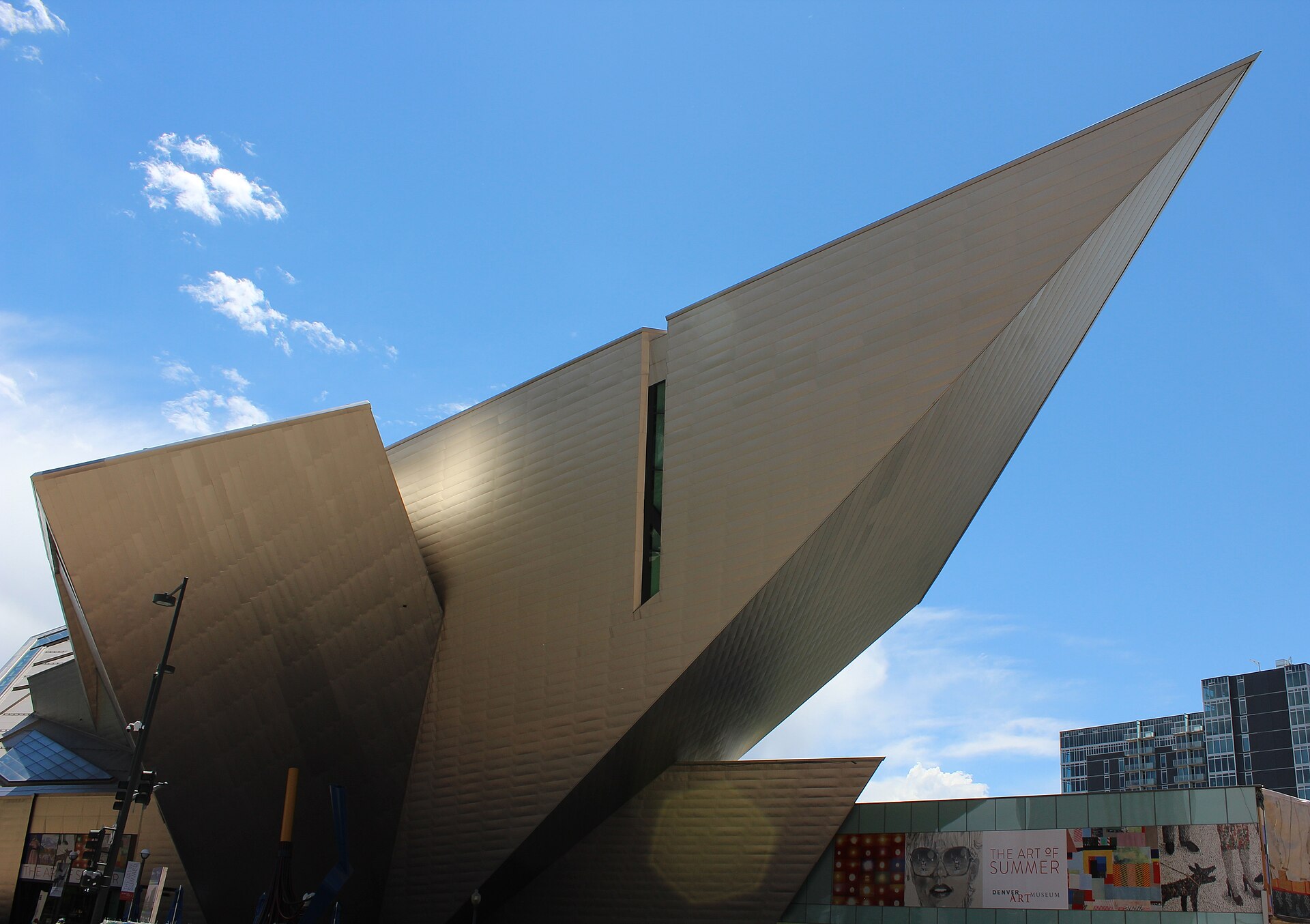
The Libeskind-designed wing holds modern and contemporary art, European and American painting and sculpture from before 1900, a program of rotating special exhibitions, and the family-oriented Discovery Hall, all connected across sloped, non-orthogonal floors that follow the building's titanium-clad exterior angles
Lanny and Sharon Martin Building
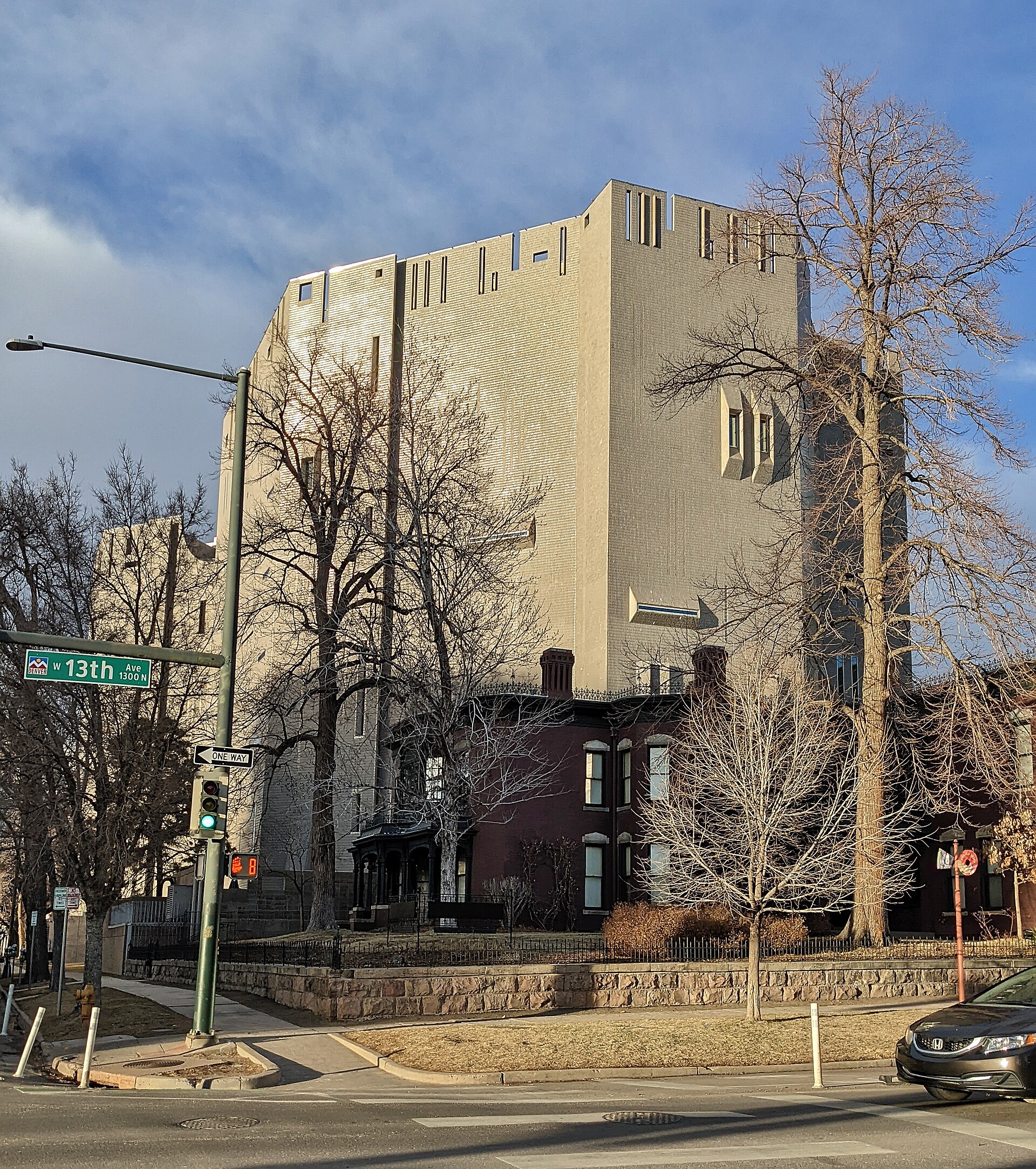
The renovated 1971 Gio Ponti tower is the museum's original home and now anchors the permanent collection, with the Anna and John J. Sie Welcome Center added in the 2021 renovation as the shared entrance connecting all three buildings on the block
Indigenous Arts of North America
Spread across several floors of the Martin Building, this department holds more than 18,000 objects made by artists from over 250 Indigenous nations, spanning more than two thousand years, from historic pottery and textiles to contemporary work by artists including Jeffrey Gibson and Roxanne Swentzell
Arts of Asia
More than 7,000 works spanning 6,000 years, with particular depth in Japanese, Korean, Chinese, Indian and Islamic art, including Edo-period folding screens, a Tang-dynasty mural and South and Southeast Asian bronze and stone sculpture
Mayer Center, Ancient Americas and Latin American Art
Combines the Arts of the Ancient Americas, spanning nearly four thousand years of Mesoamerican, Central American, South American and Caribbean material, with the Latin American Art department's more than 3,000 objects, described by the museum as the largest and most comprehensive collection of colonial-era Latin American art in the country
Western American Art, the Petrie Institute
Two centuries of painting, sculpture and works on paper tied to the American West, including Charles Deas's Long Jakes and works by Frederic Remington, hung inside the Martin Building alongside the Indigenous and Latin American galleries rather than set apart as a separate annex
The Kirkland
A yellow-clad Olson Kundig building that merged into the museum's campus in October 2024, showing more than 4,000 decorative-arts and design objects across 18 galleries built around the collection and studio of Colorado painter Vance Kirkland
What to see first
The Frederic C. Hamilton Building itself
Daniel Libeskind, 2006The titanium-clad, deconstructivist wing is as much a destination as anything inside it, its sloped floors and sharply angled walls built to evoke the light and geology of the Rocky Mountains2
Long Jakes, "The Rocky Mountain Man"
Charles Deas, 1844One of the museum's signature Western American paintings, showing a mounted fur trapper elevated over the landscape in a pose the artist borrowed from portraiture usually reserved for generals and kings16
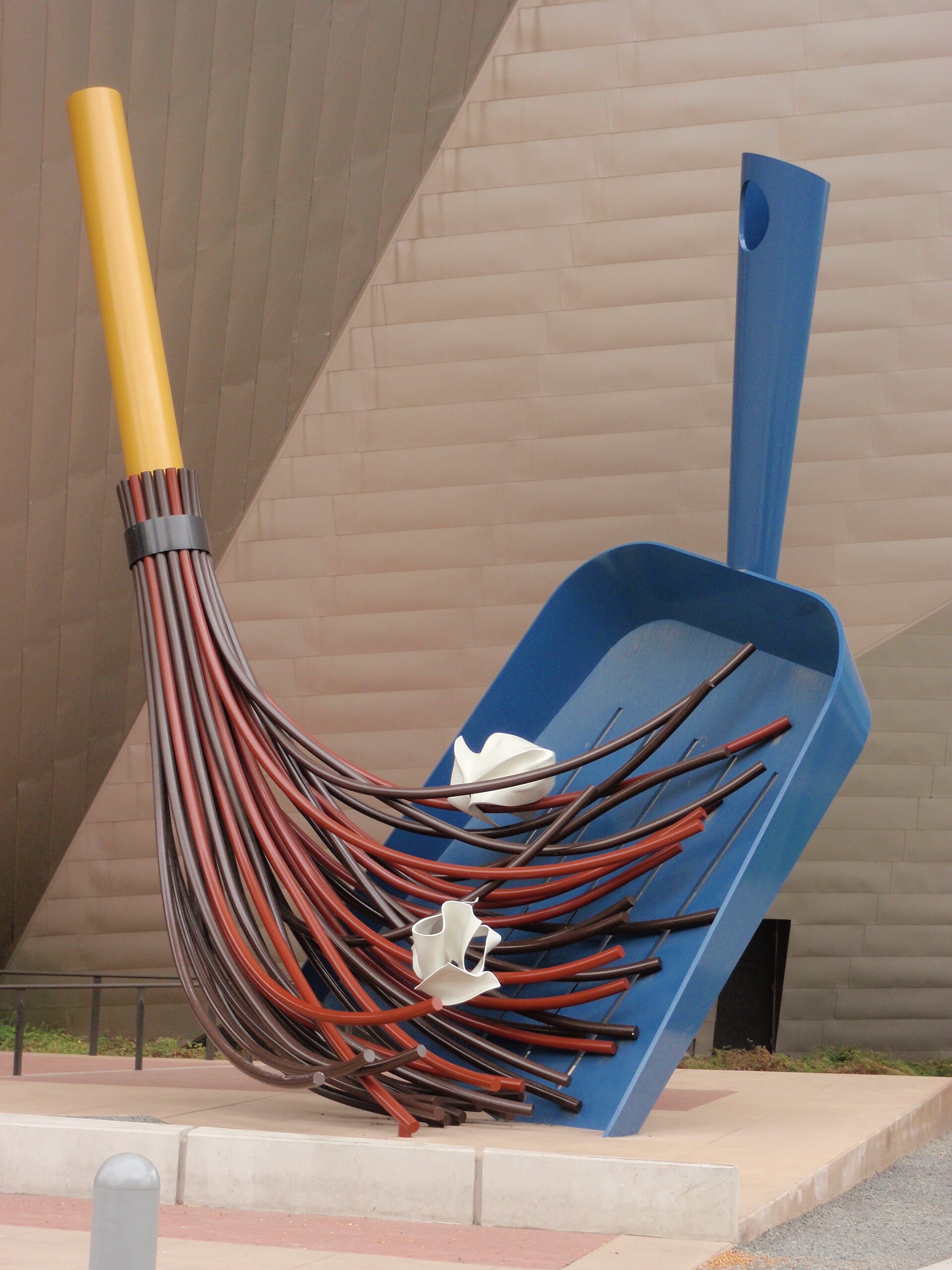
Big Sweep
Claes Oldenburg and Coosje van Bruggen, 2006A monumental broom and dustpan installed on the museum's plaza the same year the Hamilton Building opened, and one of the most photographed objects on the whole campus precisely because it refuses to explain itself2
Indian Power
Fritz Scholder, 1972A key work in the museum's own account of its modern and contemporary holdings, and part of a decades-long institutional commitment to Native modernist and contemporary art that predates most peer museums' equivalent efforts4
The Lanny and Sharon Martin Building tower
Gio Ponti and James Sudler Associates, 1971Ponti's only completed building in North America and one of the first high-rise art museums anywhere, its castellated concrete-and-glass-tile facade a deliberate rejection of the classical temple-front museum2
Indigenous Arts of North America collection
artists from more than 250 Indigenous nationsAt more than 18,000 objects, this is one of the largest and most comprehensive collections of its kind anywhere, and the department the museum itself treats as its deepest strength4
The Kirkland's Vance Kirkland galleries
Olson Kundig, building; Vance Kirkland, namesake collection; merged into the museum in 2024A distinct, separately built museum absorbed whole into the campus in 2024, its yellow facade and projecting window bays by Jim Olson standing apart from both the Libeskind and Ponti buildings it now sits beside2
Exhibitions on now
- On now6 Sep 2026 to 24 Jan 2027Confirmed , 2 months ago
Two buildings, two centuries apart, on one block
The Denver Art Museum occupies two very different pieces of architecture facing each other across a shared plaza in Denver's Golden Triangle neighborhood. The older is the Lanny and Sharon Martin Building, an eight-story castellated tower designed by the Italian modernist Gio Ponti with the Denver firm James Sudler Associates and opened in 1971. It was Ponti's only completed building in North America and one of the first high-rise museums anywhere, its facade set with more than a million reflective tiles across 28 vertical planes. The newer wing is the Frederic C. Hamilton Building, opened in 2006 to a design by Daniel Libeskind: a deconstructivist mass of titanium-clad triangular volumes that the architect said was meant to evoke Rocky Mountain peaks and the sunlight of the Front Range. The two buildings were joined in a 150 million dollar renovation completed in October 2021, which added the Anna and John J. Sie Welcome Center as a shared entrance and gave the Martin Building LEED Silver certification.
What is actually inside
The museum organizes its holdings, more than 80,000 objects, into thirteen collecting departments spread across the Hamilton and Martin buildings and, since October 2024, a third campus building known as The Kirkland. The Hamilton Building carries modern and contemporary art and European and American painting before 1900, alongside a rotating program of ticketed special exhibitions. The Martin Building carries the departments most visitors come specifically to see: Indigenous Arts of North America, Arts of Asia, Arts of Africa, Arts of Oceania, the Mayer Center's combined Ancient Americas and Latin American collections, Western American Art, and Textile Arts and Fashion. The Kirkland, a separately built Olson Kundig structure absorbed into the campus in 2024, holds decorative arts, design and the collection and studio material of Colorado painter Vance Kirkland across eighteen of its own galleries. Nothing about the campus reads as one building extended over time; it reads, correctly, as three institutions that agreed to share a block.
The Indigenous Arts collection, and the claims still unresolved
The museum's Indigenous Arts of North America department is its own account of its greatest strength: more than 18,000 objects by artists from over 250 Indigenous nations, spanning historic pottery, textiles, and masks through contemporary work by artists such as Jeffrey Gibson and Roxanne Swentzell. It is also the department where the museum's practice has drawn the most sustained outside scrutiny. Reporting by the Denver Post, followed up by Alaska Public Media and KTOO in April 2024, found that the Central Council of the Tlingit and Haida Indian Tribes of Alaska had filed formal NAGPRA claims for a beaver-clan hat, a bear shirt and a 170-year-old clan-house partition carrying the Naanya.aayi clan crest, dating back as far as 2002. The museum accepted part of the case for the hat but found the evidence for full right of possession inconclusive, and rejected the bear-shirt claim outright for insufficient documentation of collective ownership; a tribal cultural resources officer told reporters the museum had been among the hardest institutions the tribes had dealt with. The museum's own NAGPRA page, current as of this writing, describes an active consultation process open to any tribe or descendant community, but does not itself narrate this specific history.
The Bunker donations and a provenance reckoning
A second and separate provenance question runs through the Asian art holdings. Emma Bunker, a longtime museum trustee, volunteer and donor of more than 200 objects across six decades, was named in a three-part Denver Post investigation published in 2022 as a participant in the antiquities-trafficking network run by the dealer Douglas Latchford, who had been indicted by United States authorities in 2019 for trafficking looted Cambodian and Thai material. In a public statement dated 13 December 2022, the museum said it had seen documents alleging Bunker was a willing participant in Latchford's scheme to mislead the museum about the origins of objects, and that it had opened provenance research on roughly 50 antiquities connected to the Bunker family's gifts, prioritizing those tied to Bunker herself. The museum's director, Christoph Heinrich, said at the time that the history needed to be thoroughly researched and publicly explained rather than quietly erased, and the museum had already returned several Latchford-linked pieces to Cambodia following the 2019 indictment. That review, on the evidence available, remains open rather than closed.
Getting in, getting around, and what it costs
Admission is genuinely complicated rather than a single figure. Colorado residents pay less than non-residents, and both groups pay more on peak days, Friday through Sunday and holidays, than on weekdays. Everyone 18 and under is admitted free every day of the year, a policy the museum credits to a partnership with Bellco Credit Union, and members enter free at any time. Twelve fixed free days run through 2026, roughly one a month, and Colorado SNAP cardholders pay a flat one dollar. The museum keeps regular hours Sunday through Saturday except Wednesday, when it is closed, with a late Tuesday evening opening to 8 pm. Parking is available in the museum's own Cultural Center Complex Garage two blocks away, and the nearest RTD light rail stop is an eighteen-minute walk, with a free downtown shuttle bus as the more practical transit option for most visitors staying in the city center.
Visiting well: what regulars and first-timers both say
The single fact every account of a Denver Art Museum visit agrees on is the building itself: the Hamilton Building's sloped floors and acute wall angles are the thing people photograph, remember and describe to friends, and the thing that also produces the most common complaint, that the non-orthogonal layout makes the galleries hard to navigate on a first pass. Reviewers and casual visitors alike single out the Indigenous Arts of North America galleries as unusually deep and well presented relative to peer institutions, and the free-for-under-18 policy draws consistent, specific praise from families rather than the generic goodwill museums usually get for family programming. Where the record is less settled is provenance: the museum runs an open, well-documented NAGPRA consultation process on its own site, and it has been candid in public statements about the Bunker antiquities review, but neither the Tlingit and Haida claims nor the full Bunker-collection review has reached a stated conclusion, and a reader planning a visit around the Indigenous and Asian galleries is looking at collections still under active, unresolved scrutiny rather than a settled institutional history.
What visitors say
Visitors consistently name the Hamilton Building's tilted titanium architecture as the single most memorable part of a visit, often photographing the exterior more than anything inside it, and praise the depth of the Indigenous, Asian and Latin American collections. The most repeated complaint is that Libeskind's sloped, non-orthogonal floors make the galleries genuinely difficult to navigate, and a smaller group feels the historic and contemporary Western holdings move faster than the architecture's ambition promises
What is praised, what is criticised
- Praised: The Hamilton Building's faceted titanium exterior and interior geometry, which visitors describe as worth the trip on its own
- Praised: The scope of the Indigenous Arts of North America galleries, repeatedly singled out as deeper and more thoughtfully presented than at comparable museums
- Praised: Free general admission for everyone 18 and under, plus twelve free days spread through the year
- Criticised: The Hamilton Building's sloped, angular floor plan is a recurring visitor complaint, described as disorienting enough that first-time visitors report losing track of which gallery leads where
- Criticised: Reporting drawing on Denver Post research found the museum rejected two of three formal NAGPRA claims from the Central Council of Tlingit and Haida Indian Tribes, covering a clan hat, a bear shirt and a 170-year-old clan-house partition, citing insufficient documentation of collective ownership, a decision tribal representatives called among the worst cooperation they had experienced from any museum
- Criticised: The museum's own 2022 statement acknowledged evidence that longtime trustee and donor Emma Bunker was a willing participant in Douglas Latchford's antiquities-trafficking scheme, and it has since been reviewing roughly 50 Bunker-connected objects for provenance problems, a process still open rather than closed
Ratings on other platforms
Tripadvisor: 4.5 from 3,540 ratings, read 13 August 2026
A platform average is a tertiary source: it moves, it is not audited, and we quote no visitor's words.
Questions about Denver Art Museum
Where is Denver Art Museum?
100 W 14th Ave. Pkwy., Denver, CO 80204, United States.
How much does it cost to visit?
Adult, Colorado resident: USD 22; Adult, non-Colorado resident: USD 27; Senior 65+, student, teacher or military, Colorado resident: USD 19; Senior 65+, student, teacher or military, non-resident: USD 24; Youth, 18 and under: free. As confirmed 28 September 2026.
When is it open?
Sunday-Monday 10:00-17:00; Tuesday 10:00-20:00; Wednesday closed; Thursday-Saturday 10:00-17:00. Closed: Every Wednesday, plus Thanksgiving Day and Christmas Day. As confirmed 28 September 2026.
How do you get there?
Light rail and bus: The nearest RTD light rail stop is Theatre District-Convention Center, about an 18-minute walk. The free downtown MallRide bus connects to Cleveland Place, a short walk south through Civic Center Park to the museum; Car and parking: The Cultural Center Complex Garage at 12th Avenue and Broadway is the museum's own garage, open 5 am to 11 pm daily, with accessible spaces on level 2 and EV charging on level 3. Street and metered parking nearby is limited; Accessible drop-off: A dedicated elder and accessible drop-off and pick-up point sits on 13th Avenue between Broadway and Bannock streets; Bike: Bike racks are provided on the museum plaza. Skateboards can be checked in at the front desk with an admission ticket.
What should you see first?
The Frederic C. Hamilton Building itself (Daniel Libeskind, 2006); Long Jakes, "The Rocky Mountain Man" (Charles Deas, 1844); Big Sweep (Claes Oldenburg and Coosje van Bruggen, 2006); Indian Power (Fritz Scholder, 1972); The Lanny and Sharon Martin Building tower (Gio Ponti and James Sudler Associates, 1971); Indigenous Arts of North America collection (artists from more than 250 Indigenous nations).
What we could not confirm
- Whether the Tlingit and Haida claims for the clan hat, bear shirt and clan-house partition will be resolved differently under the 2024 update to the federal NAGPRA regulations, which tightened the standard museums must meet to deny a claim
- What the final disposition will be for the roughly 50 Bunker-connected antiquities the museum said in December 2022 it was reviewing for provenance problems
Images
Sources
- 1Denver Art Museum, "Plan Your Visit" (hours, admission, contact, accessed 2026-08-13) denverartmuseum.org/en/plan-your-visit
- 2Denver Art Museum, "The Buildings" (architecture and construction history, accessed 2026-08-13) denverartmuseum.org/en/buildings
- 3Denver Art Museum, "About" (founding history, mission, collection size, accessed 2026-08-13) denverartmuseum.org/en/about
- 4Denver Art Museum, "Collections" (department-by-department overview, accessed 2026-08-13) denverartmuseum.org/en/collections
- 5Denver Art Museum, "Directions and Parking" (accessed 2026-08-13) denverartmuseum.org/en/directions-and-parking
- 6Denver Art Museum, "Accessibility" (accessed 2026-08-13) denverartmuseum.org/en/accessibility
- 7Denver Art Museum, "FAQ" (bags, photography, food and drink policies, accessed 2026-08-13) denverartmuseum.org/en/faq
- 8Denver Art Museum, "NAGPRA" (repatriation policy and process, accessed 2026-08-13) denverartmuseum.org/en/nagpra
- 9Denver Art Museum, "Denver Art Museum Statement Regarding Emma Bunker", press release, 13 December 2022 denverartmuseum.org/en/press/release/denver-art-museum-statement-regarding-emma-bunker
- 10Yvonne Krumrey, "'Not in the business of just giving away our entire collections': Denver museum denies Lingit repatriations", Alaska Public Media / KTOO, 22 April 2024 alaskapublic.org/2024/04/22/not-in-the-business-of-just-giving-away-our-entire-collections-denver-museum-denies-lingit-repatriations/
- 11ProPublica, "The Repatriation Project", Denver Art Museum institution page (NAGPRA compliance data, accessed 2026-08-13) projects.propublica.org/repatriation-nagpra-database/institution/denver-art-museum/
- 12Joanne Ostrow, "Denver Art Museum shakes off the stuffiness as it unveils a $150 million, forward-looking overhaul", The Colorado Sun, 15 October 2021 coloradosun.com/2021/10/15/denver-art-museum-martin-building-reopening/
- 13Tripadvisor, Denver Art Museum listing, aggregate rating read 2026-08-13 tripadvisor.com/Attraction_Review-g33388-d128694-Reviews-Denver_Art_Museum-Denver_Colorado.html
- 14Wikidata, Q1189960, Denver Art Museum (identity and coordinates, ) wikidata.org/wiki/Q1189960
- 15Wikipedia, "Denver Art Museum" (founding history and visitor-number context, ) en.wikipedia.org/wiki/Denver_Art_Museum
- 16Denver Art Museum, collection object page for "Long Jakes, 'The Rocky Mountain Man'" (accession 1998.241) denverartmuseum.org/object/1998.241