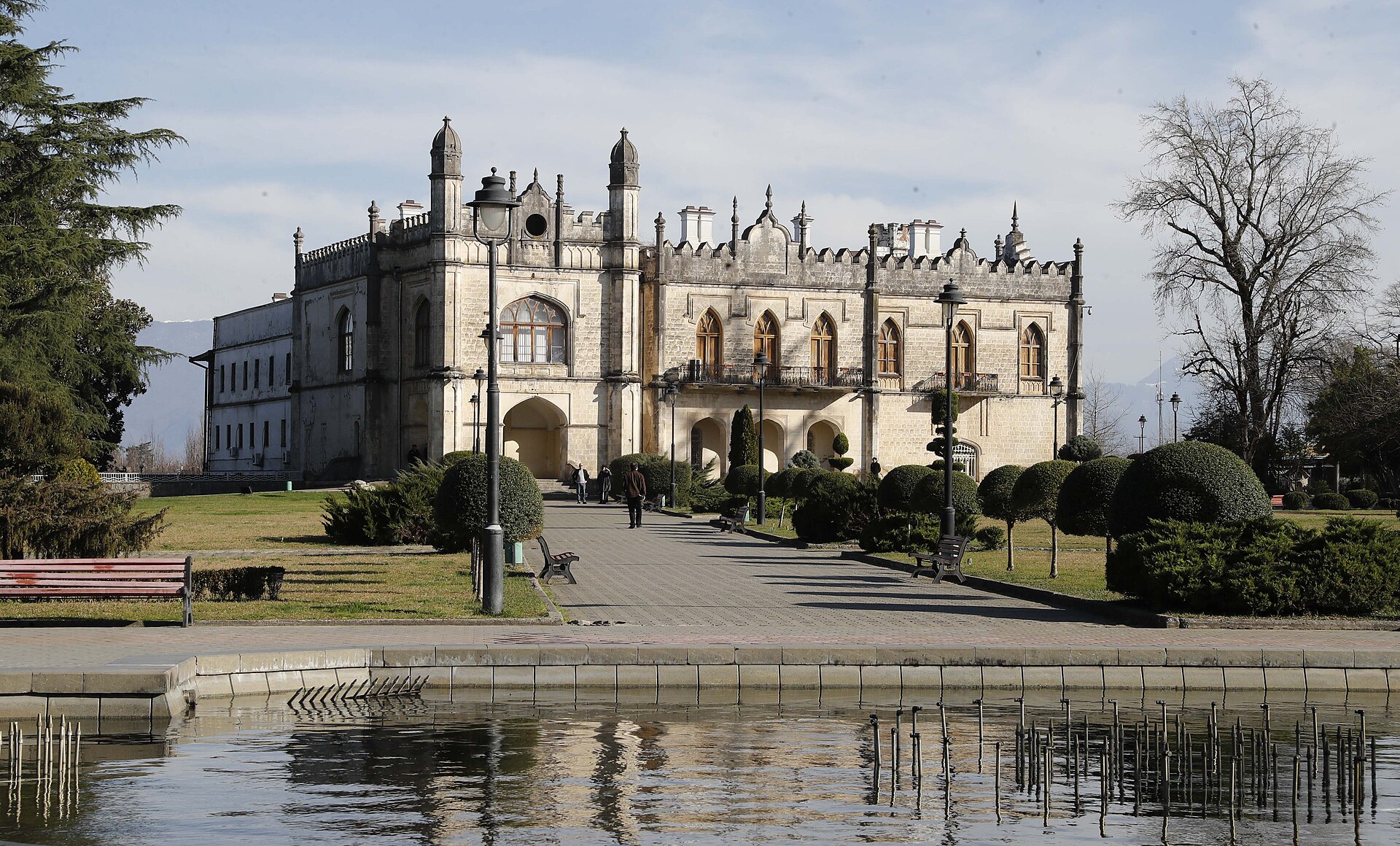
The Queen's Palace facade of the Dadiani Palaces Museum, seen from the garden pool, March 2020.
Photograph by Giorgi Abdaladze, Communications Department of the Administration of the President of Georgia, CC BY-SA 4.0 · Photograph by Giorgi Abdaladze, Photographer of the Orbeliani PalaceDadiani Palaces Museum
Museum · Founded 1873
Open, admission and hours confirmed 10 September 2026 · 15 sources
On this page 13 sections
ContentsClose
The Dadiani holdings are strongest exactly where a princely family's own archive tends to be strongest: personal correspondence and portrait photography tying a minor Caucasian court to the court of Second Empire France, alongside a genuinely old ecclesiastical treasury (Tagiloni gold, Khobi silver-gilt work, saints' relics) that predates the Dadianis' own tenure by centuries. The archaeological and numismatic material from the Colchian cemeteries and the Nokalakevi excavations gives the collection a second, older backbone independent of the family's own history. What the sources gathered here do not show is depth outside these areas - the eight foundations read as the 19th-century family collection plus what earlier princes had already excavated or been given, rather than an actively growing acquisitions programme.
| Kind | Museum |
|---|---|
| Founded | Queen's Palace built 1873-1880s and Prince's Palace built in the 1890s on a site with 17th-century origins; established as a public museum 1 May 1921 by Akaki Chanturia |
| City and country |  Zugdidi, Georgia Zugdidi, Georgia |
| Address | Zviad Gamsakhurdia Avenue 1, Zugdidi, Georgia, 2100 |
| Website | dadianipalaces.ge |
| Status | Open, confirmed |
| Record last verified |
Visiting
- Hours
- Tuesday-Sunday10:00 to 17:30The museum's own wording is 'every day, except Monday'
- Closed
- Monday.
- Admission
- AdultGEL 17Single museum-complex ticket covering the Queen's Palace, the Prince's Palace and the Zviad Gamsakhurdia Presidential Center exhibition space; sold at the Presidential Center; groups of up to 15
- Pupil / studentGEL 2Groups of up to 15
- Guide service, GeorgianGEL 35Optional guided tour
- Guide service, English or RussianGEL 45Optional guided tour in a foreign language
- Free admission categoriesFreeOn presentation of the relevant document: employees of state museums of Georgia and other countries; persons under the Ministry of Defence of Georgia; persons with disabilities, socially vulnerable persons and internally displaced persons; members of the Museum Alliance; members of ICOM; members of the Museum Friends Club; pre-school-age children
- Do I need to book?
- No advance booking published; tickets are sold on site at the Zviad Gamsakhurdia Presidential Center
- Address
- Zviad Gamsakhurdia Avenue 1, Zugdidi, Georgia, 2100 Map
- Website
- dadianipalaces.ge
- Telephone
- +995 595 28 76 76
- [email protected]
Before you go how long, access, photography, bags, eating, shop
- How long to allow
- Visitor accounts describe roughly 20-30 minutes for a self-guided pass through the main halls and up to an hour with a guide through the separately ticketed treasury
- Access
- Not addressed on the museum's own visit pages
- Photography
- Amateur cameras are permitted inside the exhibition spaces; professional equipment requires prior coordination with the museum administration by email or phone
- Bags
- Not addressed on the museum's own visit pages
- Eating
- A restaurant on the grounds is noted in visitor accounts; it is not listed on the museum's own site
Prices and hours change. We take them from the institution's own pages and print the day we read them, and you can check the current position at the source we used. Confirm before you travel.
What is inside
Queen's Palace (Dedoplis Palace)
The main facade of the complex, built 1873-1880s for Queen Ekaterine Chavchavadze-Dadiani over an earlier stone-arched wine cellar and house. Its halls, named on the museum's own gallery, include the Hall of Emperors, Napoleon's Hall, the Hall of Arms, Ekaterine's Hall, the Dining Hall and the Laz Balcony, arranged off a central limestone staircase around a walled inner courtyard with a carved limestone pool.
Prince's Palace (Niko's Palace)
A two-storey, hotel-type brick building added in the 1890s to a design attributed to the architect Salzmann for Prince Niko Dadiani-Mingrelski, the last reigning prince of Samegrelo. Its ballroom was, according to the museum's own account, unmatched in size anywhere else in Transcaucasia when built; semi-timbered balconies at the front look over open ground and at the rear onto the botanical garden.
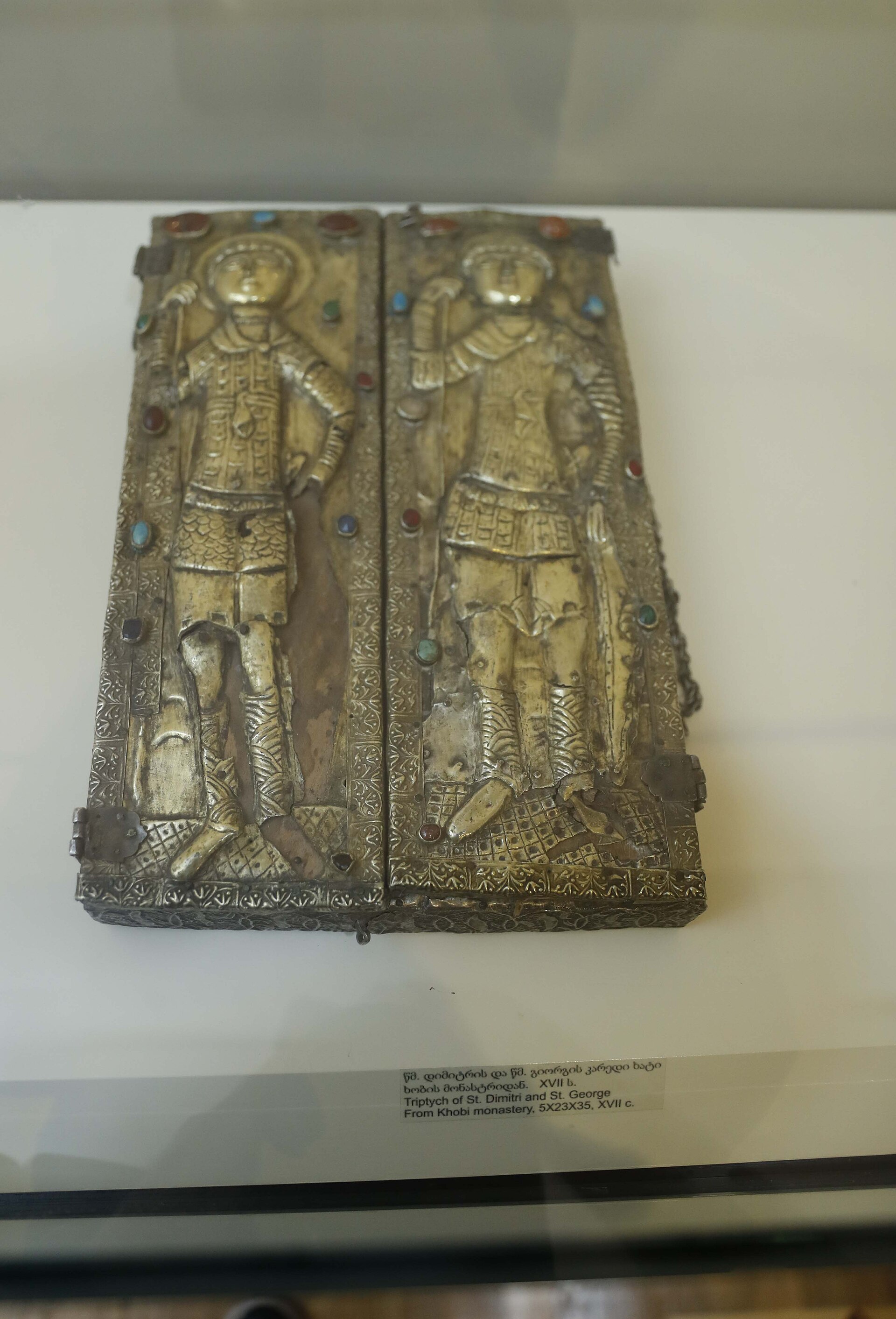
Photograph by Giorgi Abdaladze, Photographer of the Orbeliani Palace · CC BY-SA 4.0 Christian Arts Foundation (treasury display)
The museum's ecclesiastical treasury: the Tagiloni Treasure (gold and silver material of the 1st-2nd centuries AD), the Robe of the Virgin and an attendant set of relics, a 10th-century silver thurible from Obuji church, and a 12th-century multi-panel Khobi icon in silver-gilt repousse. A separate, later object from the same monastery, a 17th-century silver-gilt triptych of Saint Demetrios and Saint George, is displayed in the same collection and photographed here.
Archaeology Foundation
Up to 10,000 items spanning archaeology, numismatics, sphragistics and paper money, dominated by Colchian Bronze and Iron Age material of the 15th-7th centuries BC recovered from the Tsaishi and Ergeta cemeteries and hoards found at Tagiloni, together with a collection of Colchian tetri, the ancient Georgian coinage of the 6th-3rd centuries BC.
Manuscript Foundation
About 23,000 items including a 16th-century Tetraevangelion with a translation of John Chrysostom's Gospel commentary, an 18th-century Tetraevangelion and Psalter, a 17th-century Synaxarion, the second part of the 17th-century Jami-Gulani, the nearly 2,000-page 18th-century Tsaishi Gulani, manuscript verse and the epic 'Battle of Rukhi' by Grigol Dadiani, caricatures by Mihaly Zichy for 'The Knight in the Panther's Skin', and correspondence of Ekaterine Chavchavadze, the Murats, the Suttners, and Napoleon III and Empress Eugenie.
New and Recent History Foundation
Dadiani family photographs and decorated albums by 19th-century photographers including Felix Nadar, Dagron, Disderi, Roinishvili, Ermakov and Westley; portraits of the French imperial family and the Murats; albums of European views and museum interiors; and 20th-century photographs of the region, including the arrival of the railway and Georgian-Abkhazian relations.
Zugdidi Botanical Garden
The garden Ekaterine Chavchavadze planted around both palaces in the mid-19th century, forming the grounds that visitor accounts consistently single out as well kept.
What to see first
Death mask of Napoleon Bonaparte
Cast by Kannel and RichardA bronze cast of 1833 that the museum states is one of only three such masks in existence worldwide, reached the family through the marriage of Salome Dadiani to Prince Achille Murat; it is the single object most visitors travel for.6
The Tagiloni Treasure
Unknown, Roman-period Colchian workshopsA hoard of gold and silver material, including a golden stag's head, gold jewellery components, silver cups and phialai, discovered in 1930 on the right bank of the Enguri and dated to the 1st-2nd centuries AD.6
The Robe of the Virgin and its relics
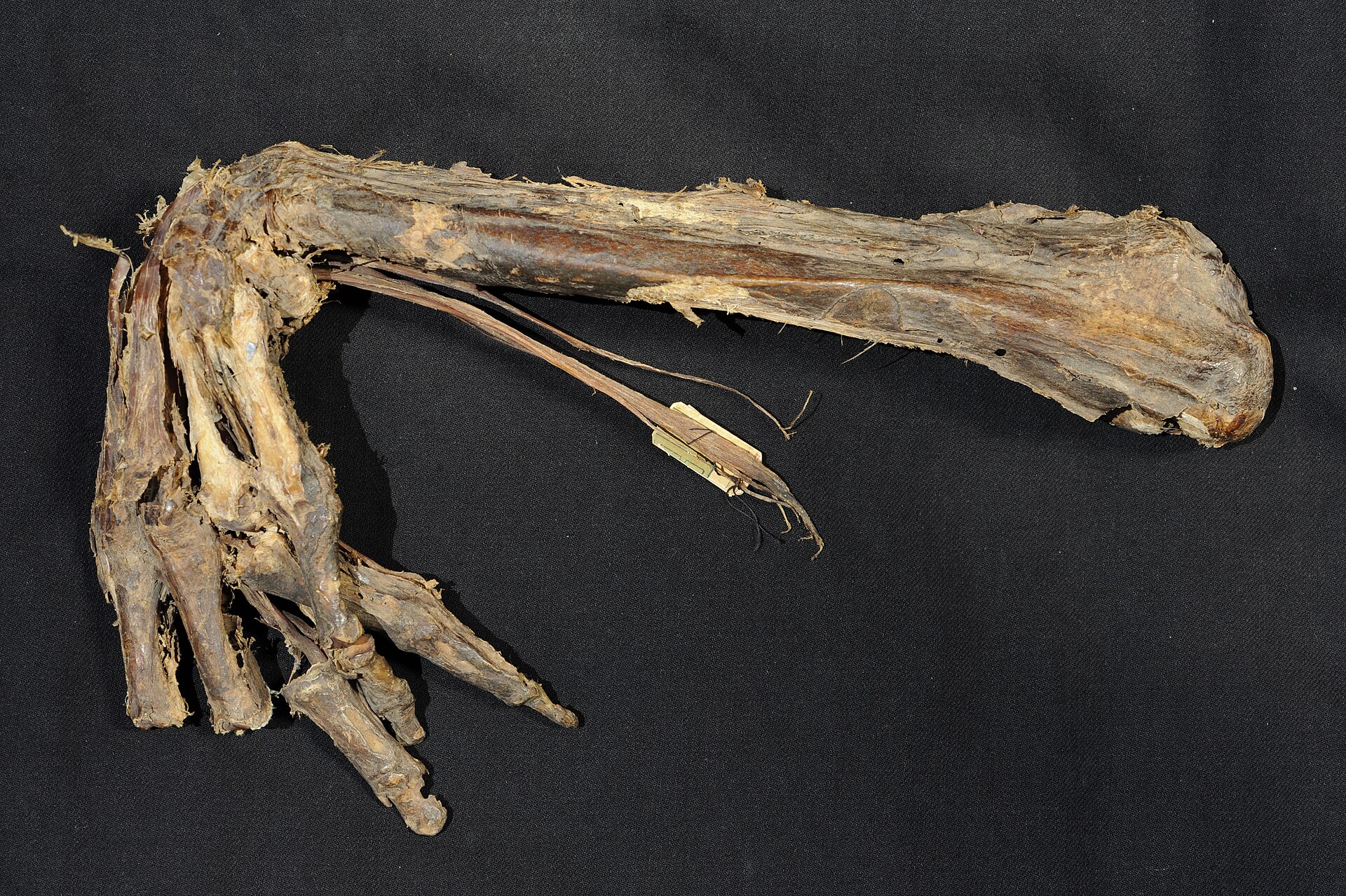
VariousA reliquary group kept together: the Robe of the Virgin alongside the arm of Saint Marina, the hand of Saint Kvirike, and bone fragments attributed to Saint George and Saint John the Baptist.6
Silver thurible from Obuji church
Unknown, Kingdom of Egrisi-Abkhazia workshopA 10th-century censer in foliate and floral silverwork, suspended on four silver chains, among the oldest liturgical metalwork the museum holds.6
Multi-panel icon of Khobi
UnknownA 12th-century icon combining painting with repousse silver gilt, divided into fifty-two compartments built to hold relics.6
Triptych of Saint Demetrios and Saint George
Unknown, Khobi Monastery workshopA 17th-century silver-gilt triptych from the same monastery as the older Khobi icon, photographed in its display case with the museum's own label naming it; illustrated on this page.12
Colchian tetri coinage
Colchian mintsA collection of the ancient Georgian silver coinage struck in the 6th-3rd centuries BC, part of a wider Colchian Bronze and Iron Age holding drawn from the Tsaishi and Ergeta cemeteries.7
Correspondence of Ekaterine Chavchavadze and the French imperial circle
Various handsLetters from the Murats, from Emperor Napoleon III and Empress Eugenie, and from Ekaterine Chavchavadze herself, the documentary backbone of the Dadianis' claimed French connection.8
The Tsaishi Gulani
Unknown Georgian scribeAn 18th-century compilation running to nearly 2,000 pages, among the largest single manuscripts in the Manuscript Foundation's holdings.8
Dadiani family photograph albums
Felix Nadar, Dagron, Disderi, Roinishvili, Ermakov, Westley and othersPortrait photography by leading 19th-century photographers documenting the Dadiani family alongside the French imperial family and the Murats, the visual record behind the museum's Bonaparte narrative.9
The Dadiani dynasty and their palace above the Enguri
The palace complex that today houses the Dadiani Palaces Museum stands in Zugdidi, the historic seat of Mingrelia (Samegrelo) in western Georgia. The site's earliest structure was a stone-and-brick house built over stone arches that, in the time of Prince David Dadiani, covered a wine cellar; the house above it was known as Pupi's House, after the prince's sister who lived there, and later served as a workshop producing parquet floors for a new palace. After David Dadiani's death the house stood empty for years until Queen Ekaterine Chavchavadze-Dadiani, his widow and regent of Samegrelo, rebuilt it into the palace that gives the museum its main facade today. Documentary material held in the museum's own manuscript collection records that construction of 'the newly constructed house of Princess Ekaterine, daughter of Alexander' began on 29 October 1873 and continued into the 1880s.
A second palace was added in the 1890s for Ekaterine's son, Prince Niko Dadiani-Mingrelski, the last reigning prince of Samegrelo before the principality was absorbed into the Russian Empire. Built to a design attributed to the architect Salzmann, it was a two-storey, hotel-type building whose ballroom was, by the museum's own account, unmatched in size anywhere else in Transcaucasia at the time.
The museum dates its own public life to 1 May 1921, when the Georgian ethnographer and geologist Akaki Chanturia converted the palace into a formal museum. Exhibition already had a history here before that: in 1840 the palace hosted a display of archaeological material that Prince David Dadiani had excavated at Nokalakevi, the site of ancient Archaeopolis, and in early 1848 David Dadiani was showing guests his own archaeological and numismatic collection from the same excavations.
Two palaces, one neo-Gothic idiom
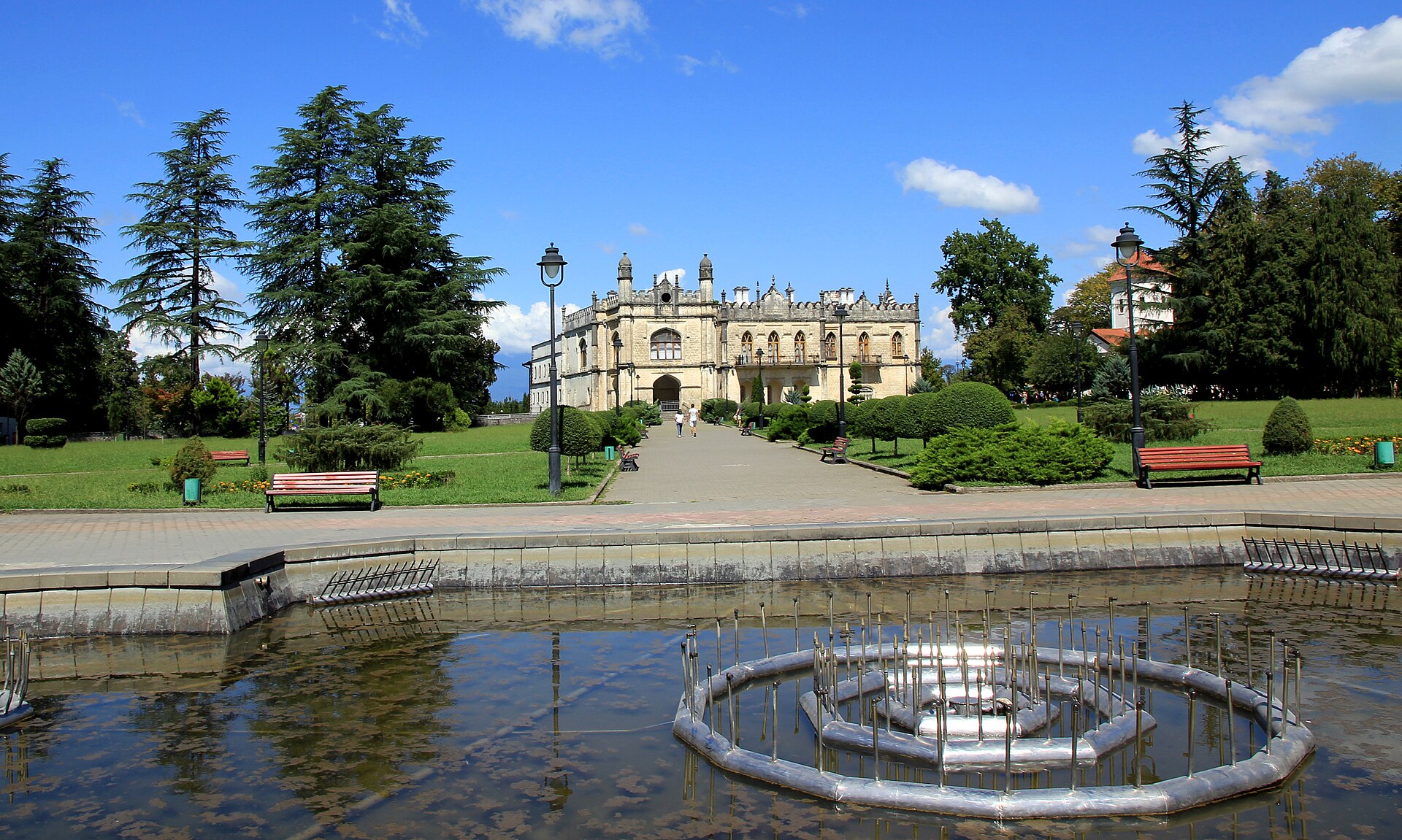
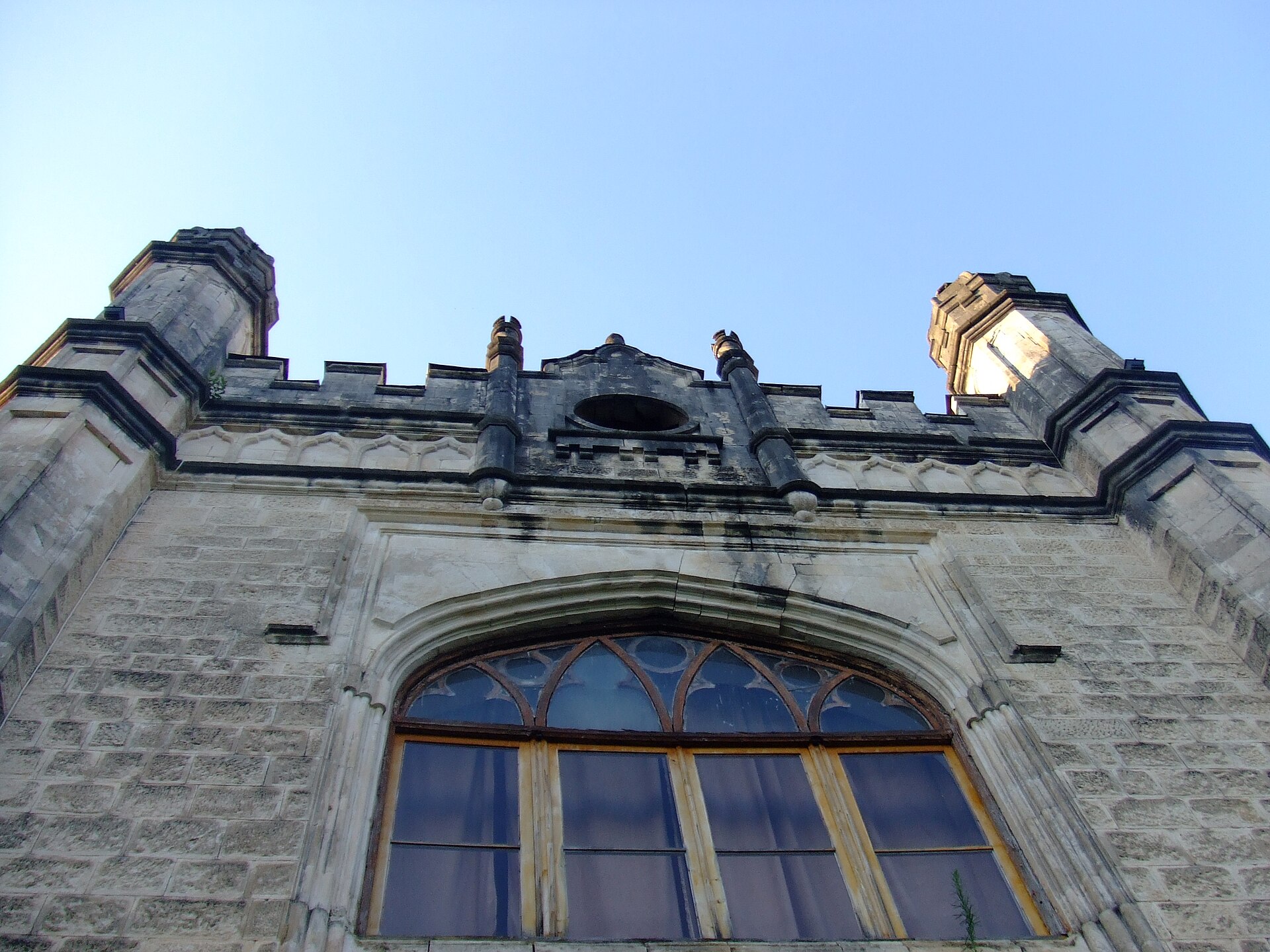
Both palaces read as a single architectural statement even though they were built roughly twenty years apart. The Queen's Palace has a two-storey main front with a rear section showing several later additions - one three storeys, one a long two-storey wing with rooms cut into its sloping rear ground and cellars dug into the hillside. The main facade is faced in finely carved limestone over a brick shell; the entrance is a covered veranda on arched buttresses, pierced by wide pointed windows that mix Islamic and Gothic vocabulary in the same run of masonry, while the rear elevation carries carved wooden balconies, Laz-style ceilings and ornamented doors. A limestone staircase rises to the second floor at the centre of the building, with a service staircase in stone and wood behind it; the ground-floor arcade still holds damaged clay wine jars left from the original Dadiani cellar. The walled inner courtyard has its own small limestone pool, carved and probably built to carry a fountain, behind wrought-iron gates.
The Prince's Palace is plainer in massing - a brick, hotel-type block with a central corridor on each floor and rooms opening off it on both sides - but its ballroom was the showpiece. Semi-timbered balconies wrap the front, rear and sides at second-floor level; the front balconies and veranda look out over open ground, and the rear balconies face directly onto the botanical garden that Ekaterine Chavchavadze planted around both buildings. Both palaces were built with their own piped water and drainage, unusual for a provincial residence of the period. The complex as a whole is usually described as neo-Gothic with Georgian, Russian, Islamic and Tudor detailing folded into the same elevations, which is what gives its silhouette of crenellated parapets, pointed windows and onion-shaped finials a slightly hybrid, collected-abroad character.
The Bonaparte connection
The Dadianis' most publicised holding owes itself to a marriage rather than a campaign. Salome Dadiani, daughter of David Dadiani, married Prince Achille Murat (1847-1895), a descendant of Napoleon's brother-in-law Joachim Murat, and the alliance brought a stream of Bonapartist material into the family's private rooms. Correspondence now catalogued in the Manuscript Foundation includes letters from the Murats, from Emperor Napoleon III and Empress Eugenie, alongside the correspondence of Ekaterine Chavchavadze herself; the family's photograph albums hold portraits of the French imperial family and the Murats, taken in some cases by leading 19th-century photographers including Felix Nadar, Dagron and Disderi.
The single object most visitors travel for is a bronze death mask of Napoleon Bonaparte, cast in 1833 by Kannel and Richard, which the museum's own page states is one of only three such masks in existence worldwide. Visitor accounts describe further Napoleonic material displayed alongside it, including trinkets, paintings, and books reflecting Napoleon's own interest in chess.
What the eight foundations hold
The museum's collection, put at approximately 41,000 objects by a tertiary account, sits well beyond its French sideline. The Christian Arts Foundation holds the Tagiloni Treasure, a hoard of gold and silver material - a golden stag's head, gold jewellery components, silver cups and phialai - discovered in 1930 on the right bank of the Enguri and dated to the 1st-2nd centuries AD; the Robe of the Virgin, kept with a set of relics that includes the arm of Saint Marina, the hand of Saint Kvirike and bone fragments attributed to Saint George and Saint John the Baptist; a 10th-century silver thurible from Obuji church, decorated with foliate and floral ornament on four silver chains and dated to the Kingdom of Egrisi-Abkhazia; and a 12th-century multi-panel icon from Khobi Monastery combining painting with repousse silver gilt across fifty-two compartments built to hold relics. A separate, later object from the same monastery, a 17th-century silver-gilt triptych of Saint Demetrios and Saint George, is displayed in the same collection.
The Archaeology Foundation carries up to 10,000 items spanning archaeology, numismatics, sphragistics and paper money, much of it Colchian Bronze and Iron Age material of the 15th-7th centuries BC recovered from the Tsaishi and Ergeta cemeteries and hoards found at Tagiloni, together with a collection of Colchian tetri, the ancient Georgian coinage struck in the 6th-3rd centuries BC.
The Manuscript Foundation holds about 23,000 items: a 16th-century Tetraevangelion paired with a translation of John Chrysostom's Gospel commentary, an 18th-century Tetraevangelion and Psalter, a 17th-century Synaxarion, the second part of the 17th-century Jami-Gulani, the Tsaishi Gulani - an 18th-century compilation running to nearly 2,000 pages - manuscript verse and the epic 'Battle of Rukhi' by Grigol Dadiani, caricatures by Mihaly Zichy for 'The Knight in the Panther's Skin', and the chancery archive of the Zugdidi district in Georgian, Russian and French. A separate, tertiary account of the palace's history additionally records 13th- and 14th-century manuscripts and miniatures among the wider holdings.
Visiting today
The museum's own tariff page groups the visit as a single ticket covering the Queen's Palace, the Prince's Palace and the adjoining Zviad Gamsakhurdia Presidential Center exhibition space, with tickets sold at the Presidential Center itself; adult admission is 17 GEL and pupils and students pay 2 GEL, in groups of up to fifteen, with a Georgian-language guide at 35 GEL and an English- or Russian-language guide at 45 GEL. A published list of visitors admitted free of charge covers museum staff of Georgian and foreign state museums, personnel under the Ministry of Defence of Georgia, people with disabilities, socially vulnerable and internally displaced people, members of the Museum Alliance and of ICOM, members of the museum's own Friends Club, and pre-school children. Amateur photography is allowed inside; professional equipment needs prior clearance from the museum administration by email or phone. The museum is open every day except Monday, 10:00 to 17:30.
Visitor accounts describe a second, separately ticketed treasury section holding the icons and relics, which at least one visitor found was not volunteered at the ticket window and had to be asked about directly; guides are frequently praised precisely because on-site labelling is minimal. The grounds include the Zugdidi Botanical Garden that Ekaterine Chavchavadze laid out around both palaces, and a restaurant on site is noted by visitors, though it is not listed on the museum's own pages.
What visitors say
Visitors consistently rate the palace and its grounds highly for their architecture and setting, and name the Napoleon material as the reason to come. The same visitors are just as consistent in describing the museum experience itself - staffing, labelling and how tickets are sold - as underdeveloped for a collection of this importance.
What is praised, what is criticised
- Praised: The neo-Gothic architecture of both palaces and the well-kept grounds around them, including the botanical garden
- Praised: The Napoleon Bonaparte material and the wider French-Dadiani family connection, treated as the highlight of the visit
- Praised: Guided tours, repeatedly credited with making sense of a museum several visitors describe as otherwise under-labelled
- Criticised: The building and display rooms described as underfunded and poorly kept for a collection of this regional importance, with staff characterised by more than one visitor as tired or inattentive
- Criticised: A two-part ticketing structure - the main museum and a separately paid treasury holding the icons and relics - that at least one visitor reported was not disclosed until after the first ticket had already been bought
Ratings on other platforms
Tripadvisor: 4 from 93 ratings, read 10 September 2026
A platform average is a tertiary source: it moves, it is not audited, and we quote no visitor's words.
Questions about Dadiani Palaces Museum
Where is Dadiani Palaces Museum?
Zviad Gamsakhurdia Avenue 1, Zugdidi, Georgia, 2100.
How much does it cost to visit?
Adult: GEL 17; Pupil / student: GEL 2; Guide service, Georgian: GEL 35; Guide service, English or Russian: GEL 45; Free admission categories: free. As confirmed 10 September 2026.
When is it open?
Tuesday-Sunday 10:00-17:30. Closed: Monday. As confirmed 10 September 2026.
What should you see first?
Death mask of Napoleon Bonaparte (Cast by Kannel and Richard); The Tagiloni Treasure (Unknown, Roman-period Colchian workshops); The Robe of the Virgin and its relics (Various); Silver thurible from Obuji church (Unknown, Kingdom of Egrisi-Abkhazia workshop); Multi-panel icon of Khobi (Unknown); Triptych of Saint Demetrios and Saint George (Unknown, Khobi Monastery workshop).
What we could not confirm
- The museum's own page states the Napoleon death mask is one of only three worldwide; a visitor account gathered here instead describes four surviving casts, commonly placed in Paris, London and Havana. The discrepancy is unresolved on the sources fetched for this page.
- The museum's own foundation pages do not describe the Nokalakevi excavation material or David Dadiani's numismatic collecting in the same detail as the tertiary Wikipedia account used here; whether that material is now folded into the Archaeology Foundation's Colchian holdings, held separately, or dispersed elsewhere is not stated by the museum.
- No accessibility information for visitors with mobility needs is published on the museum's own site, despite the multiple period staircases described in the palace's own architectural account.
Images
Sources
- 1Wikidata, Q3610430, Dadiani Palaces Historical and Architectural Museum (entity data) wikidata.org/wiki/Special:EntityData/Q3610430.json
- 2Wikipedia, 'Dadiani Palace' en.wikipedia.org/wiki/Dadiani_Palace
- 3Dadiani Palaces Museum, official site, Visit / Tariffs page dadianipalaces.ge/en/%E1%83%A2%E1%83%90%E1%83%A0%E1%83%98%E1%83%A4%E1%83%94%E1%83%91%E1%83%98/
- 4Dadiani Palaces Museum, official site, Queen's Palace page dadianipalaces.ge/en/dedopliseuli/
- 5Dadiani Palaces Museum, official site, Nikos' Palace page dadianipalaces.ge/en/nikoseuli/
- 6Dadiani Palaces Museum, official site, Christian Arts Foundation page dadianipalaces.ge/en/%E1%83%A5%E1%83%A0%E1%83%98%E1%83%A1%E1%83%A2%E1%83%98%E1%83%90%E1%83%9C%E1%83%A3%E1%83%9A%E1%83%98-%E1%83%AE%E1%83%94%E1%83%9A%E1%83%9D%E1%83%95%E1%83%9C%E1%83%94%E1%83%91%E1%83%98%E1%83%A1-%E1%83%A4/
- 7Dadiani Palaces Museum, official site, Archaeology Fund page dadianipalaces.ge/en/%E1%83%90%E1%83%A0%E1%83%A5%E1%83%94%E1%83%9D%E1%83%9A%E1%83%9D%E1%83%92%E1%83%98%E1%83%98%E1%83%A1-%E1%83%A4%E1%83%9D%E1%83%9C%E1%83%93%E1%83%98/
- 8Dadiani Palaces Museum, official site, Manuscript Foundation page dadianipalaces.ge/en/%E1%83%AE%E1%83%94%E1%83%9A%E1%83%9C%E1%83%90%E1%83%AC%E1%83%94%E1%83%A0%E1%83%97%E1%83%90-%E1%83%A4%E1%83%9D%E1%83%9C%E1%83%93%E1%83%98/
- 9Dadiani Palaces Museum, official site, New and Recent History Foundation page dadianipalaces.ge/en/%E1%83%90%E1%83%AE%E1%83%90%E1%83%9A%E1%83%98-%E1%83%93%E1%83%90-%E1%83%A3%E1%83%90%E1%83%AE%E1%83%9A%E1%83%94%E1%83%A1%E1%83%98-%E1%83%98%E1%83%A1%E1%83%A2%E1%83%9D%E1%83%A0%E1%83%98%E1%83%98/
- 10Wikimedia Commons, File:Dadiani Palace - March 2020.jpg (file description page) commons.wikimedia.org/wiki/File:Dadiani_Palace_-_March_2020.jpg
- 11Wikimedia Commons, File:Dadiani Palace Gruzia 2019 2.jpg (file description page) commons.wikimedia.org/wiki/File:Dadiani_Palace_Gruzia_2019_2.jpg
- 12Wikimedia Commons, File:Triptych of St. Dimitri and St. George.jpg (file description page) commons.wikimedia.org/wiki/File:Triptych_of_St._Dimitri_and_St._George.jpg
- 13Wikimedia Commons, File:Wminda marines mklavi.JPG (file description page) commons.wikimedia.org/wiki/File:Wminda_marines_mklavi.JPG
- 14Wikimedia Commons, File:Dadianebis muzeumi (fragmenti).jpg (file description page) commons.wikimedia.org/wiki/File:Dadianebis_muzeumi_(fragmenti).jpg
- 15Tripadvisor, 'Dadiani Palaces Historical and Architectural Museum' attraction and reviews page tripadvisor.com/Attraction_Review-g2156155-d6945126-Reviews-Dadiani_Palaces_Historical_and_Architectural_Museum-Zugdidi_Samegrelo_Zemo_Svane.html


.jpg)