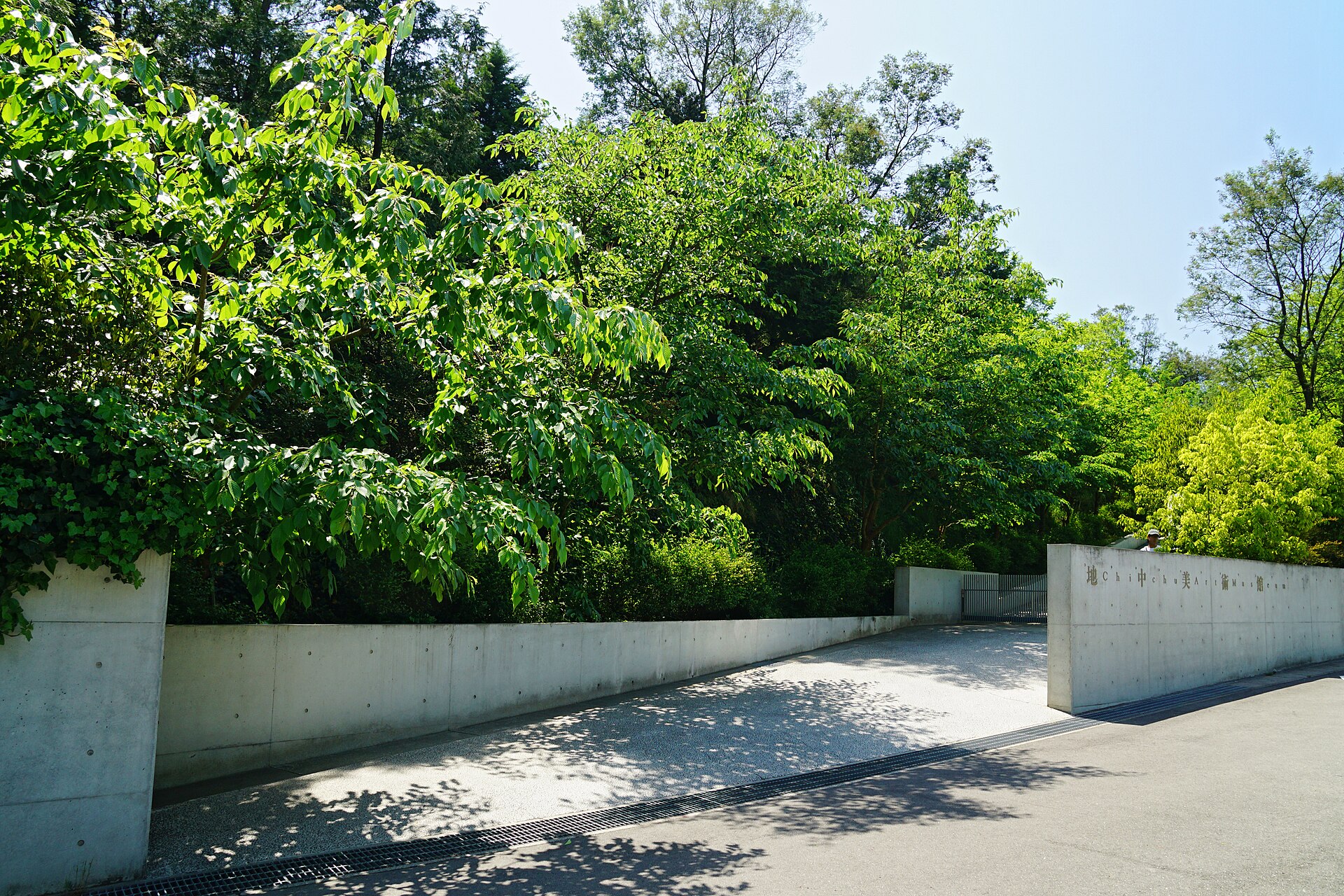
The entrance approach and concrete wall bearing the museum's name, Naoshima.
663highland, CC BY 2.5Chichu Art Museum
Museum · Founded 2004
Open, admission and hours confirmed 9 November 2026 · 9 sources
On this page 15 sections
ContentsClose
The collection is small by design: late Water Lilies by Monet, three light works by James Turrell and one environment by Walter De Maria, each housed in a room made for it. Its strength is the match between work and space, not breadth.
| Kind | Museum |
|---|---|
| Founded | 2004 |
| City and country |  Naoshima, Japan |
| Address | 3449-1 Naoshima, Kagawa 761-3110, Japan |
| Website | benesse-artsite.jp/en/art/chichu.html |
| Status | Open, confirmed |
| Record last verified |
Visiting
- Hours
- Tue-Sun10:00 to 17:00Last admission 16:00
- Closed
- Monday. When a Monday is a national holiday the museum opens that day and closes the following day..
- Admission
- Adult, weekday, onlineJPY 2,500Date and time reservation required
- Adult, weekday, on-siteJPY 2,800No on-site sales on a day when online tickets have sold out
- Adult, Saturday, Sunday and national holiday, onlineJPY 2,700Date and time reservation required
- Adult, Saturday, Sunday and national holiday, on-siteJPY 3,000
- Children 15 and underFreeFree
- Night Program (Open Sky at sunset), adultJPY 3,700Fridays and Saturdays, 45 minutes seated, booked in advance, limited to 30 people, includes admission
- Night Program, child aged 6 to 15JPY 1,000Children under 6 and groups of more than nine cannot join
Free entry: Children aged 15 and under at all times. The museum states that groups and disability certificate holders receive no discount or free entry.- Tickets
- benesse-artsite.jp/en/art/chichu.html The museum's own ticket page.
- Do I need to book?
- Yes. Tickets carry a date and time and the museum states that once online tickets sell out there are no on-site sales that day.
- Address
- 3449-1 Naoshima, Kagawa 761-3110, Japan MapFerry from Takamatsu Takamatsu to Miyanoura, about 60 minutes, operated by Shikoku Kisen; adult fare 680 JPY by ferry or 1,590 JPY by high-speed boat
Ferry from Uno (Okayama) Uno to Miyanoura, about 20 minutes, adult fare 370 JPY; Uno to Honmura, about 20 minutes, high-speed boats only, 370 JPY - Website
- benesse-artsite.jp/en/art/chichu.html
- Telephone
- +81-87-892-3755
- [email protected]
Before you go how long, access, photography, bags, eating, shop
- How long to allow
- The museum does not publish a visit length. The Night Program is a 45-minute seated viewing.
- Access
- Some areas are not accessible to visitors with disabilities; staff help where possible and the museum asks visitors to make contact in advance. Two wheelchairs are available first come, first served and there are three accessible restrooms. Guide dogs, hearing assistance dogs and service dogs are welcome.
- Photography
- Photographs, videos and sketching are not allowed inside, fountain pens and ink are discouraged and mobile phone use is prohibited on the premises.
- Bags
- Suitcases, umbrellas and tripods are not allowed inside; coin lockers and the Ticket Center hold them. Some galleries require removing shoes.
- Eating
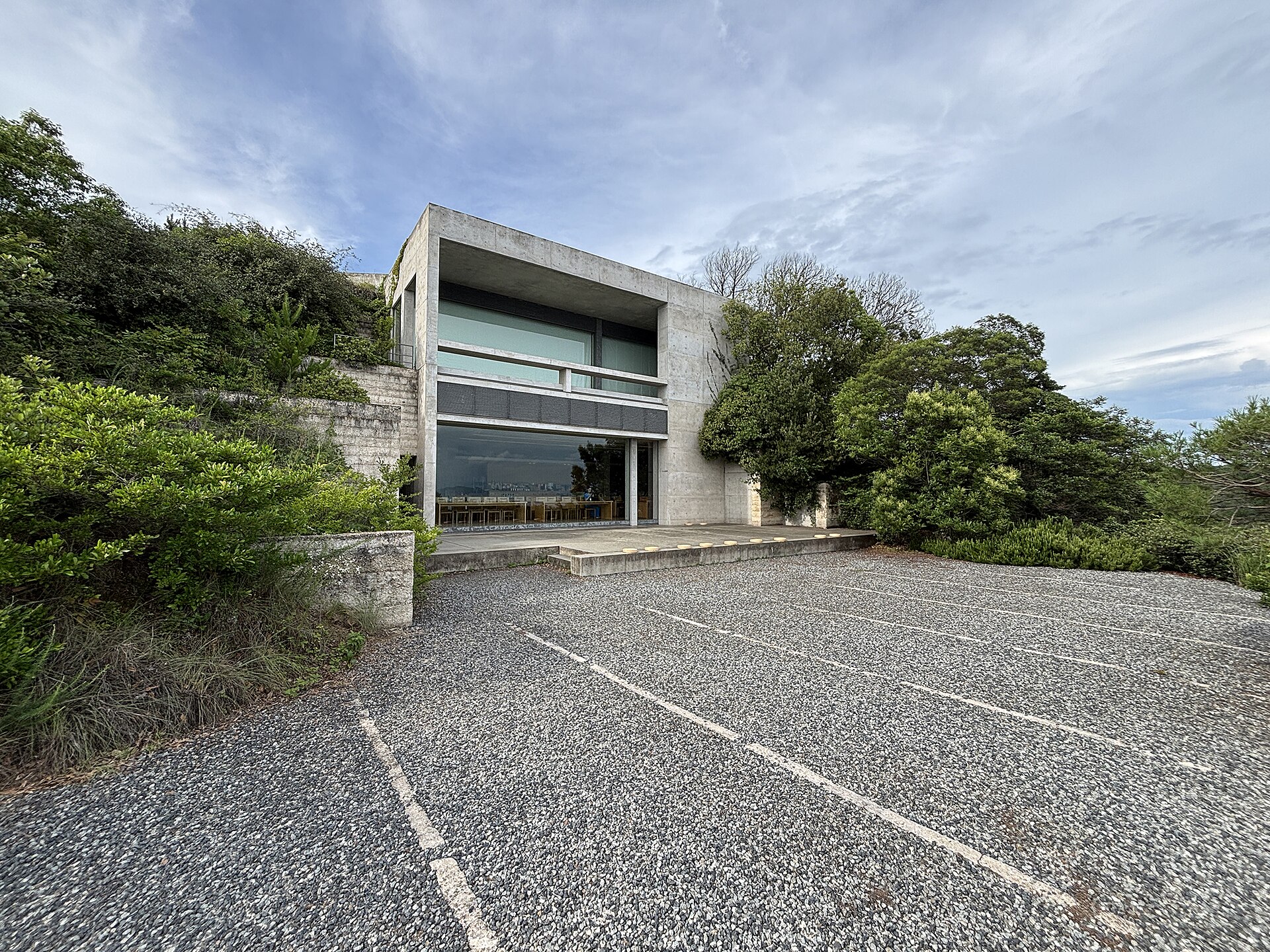
- Chichu Cafe overlooks the Inland Sea with an open patio and seats 36, 10:30 to 16:45 with last orders at 16:30; entry needs a museum ticket.
- Shop
- Chichu Store, 10:00 to 17:00, sells museum books, photography collections and original goods and needs an entrance ticket; the Ticket Center shop sells drinks and some merchandise until 16:30.
Prices and hours change. We take them from the institution's own pages and print the day we read them, and you can check the current position at the source we used. Confirm before you travel.
What is inside
The Monet Room
Five late Water Lilies paintings by Claude Monet shown in natural light. The walls and frames are white, the corners are rounded and the floor is made of about 700,000 hand-laid, 2 cm square pieces of Bianco Carrara marble. The room's design grew out of Monet's own ideas for his large decorations.
Walter De Maria: Time/Timeless/No Time
A gallery conceived as one work of 2004, holding a granite sphere 2.2 metres in diameter and 27 gilded wooden geometric forms, lit by daylight from the ceiling that changes through the day.
James Turrell
Three works from different stages of his career: Afrum (Pale Blue) of 1968, Open Field of 2000 and Open Sky of 2004. Open Sky can be seen during regular hours and is also the subject of the sunset Night Program.
Chichu Garden
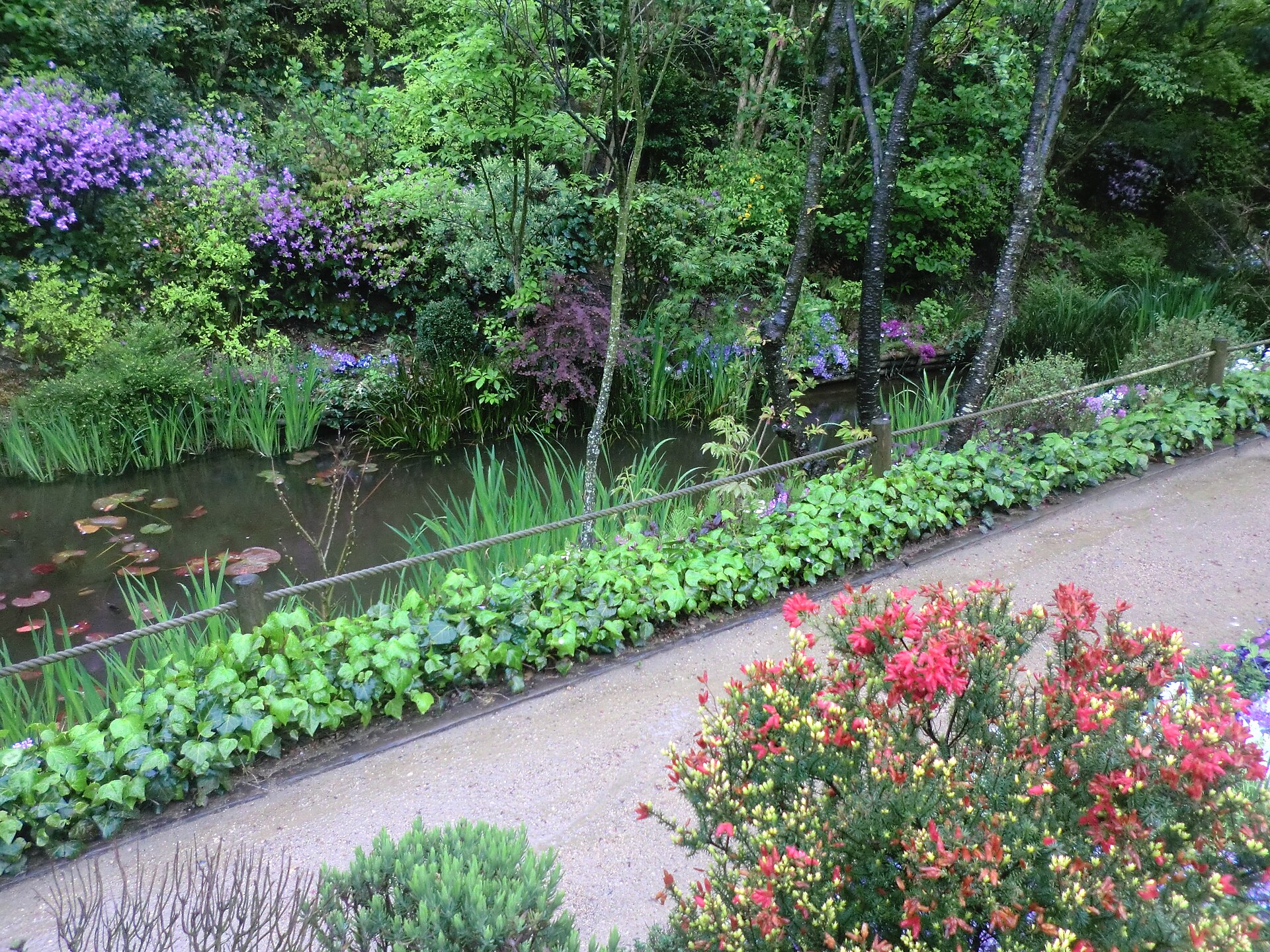
A planted garden between the Ticket Center and the museum, with nearly 200 kinds of flowers and trees of the sort Monet grew at Giverny, including water lilies, willows and irises.
Chichu Cafe and Store
A 36-seat cafe with an open patio facing the Inland Sea, and a store selling the museum's own books and goods. Both require an entrance ticket.
What to see first
Water Lilies (1914-1917)
Claude MonetPart of the five-painting Monet room, the centre of the museum and the reason the building was shaped around daylight, white plaster and a marble floor.2
Water-Lily Pond (c. 1915-1926), diptych
Claude MonetEach panel measures 200 by 300 cm, the largest of the Monet works listed for the museum.2
Time/Timeless/No Time (2004)
Walter De MariaAn entire gallery made as one work, with a 2.2 metre sphere and 27 gilded forms whose appearance shifts with the daylight.1
Open Sky (2004)
James TurrellA sky aperture visible in regular hours and the basis of the Friday and Saturday sunset Night Program, the only evening way into the museum's art.1
Open Field (2000)
James TurrellA light work in which, as one guide describes it, the wall and sky seem to merge and the space seems to extend without perspective.8
Afrum (Pale Blue) (1968)
James TurrellThe earliest of the three Turrell works, a projection piece that shows the beginning of his work with light.2
Chichu Garden
Fukutake FoundationPlanted so that a visitor meets the flowers, willows and water lilies of Monet's Giverny before seeing the paintings.2
A museum dug into a hillside
Chichu Art Museum opened on 18 July 2004 on the south side of Naoshima, an island in the Seto Inland Sea in Kagawa Prefecture, Japan. Tadao Ando designed it, and the decision that defines it is that most of the building sits underground. The museum's own account gives the reason: the building was placed below ground so that it would not disturb the scenery of the Inland Sea. Ando works mainly in concrete, with steel, glass and wood, and the museum describes the result as very spare.
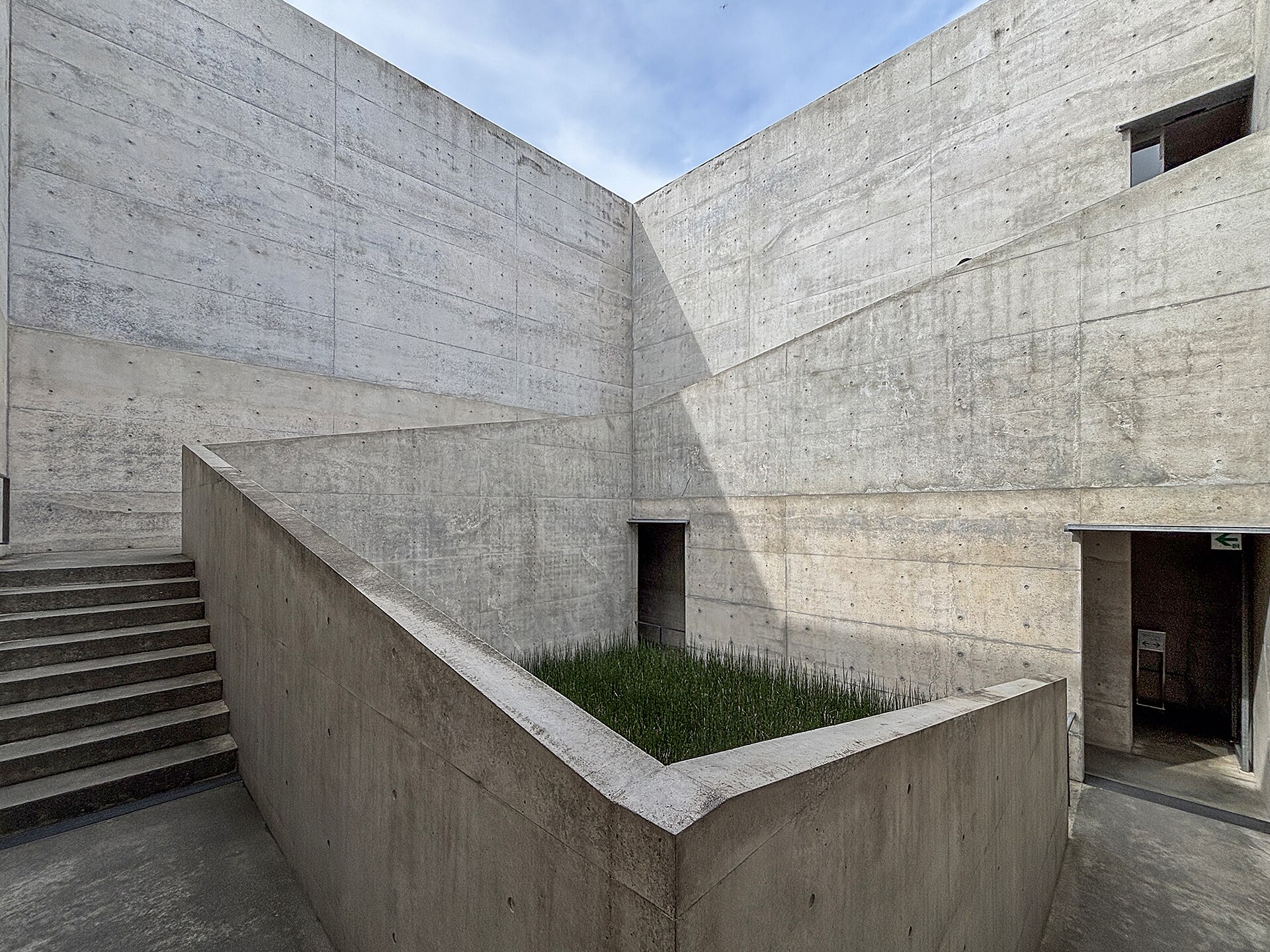
The name helps. Chichu means underground, and the building is almost wholly subterranean yet still reads as architecture rather than a monument. What a visitor sees from outside is little: a concrete wall at the entrance carrying the museum's name, a forecourt of exposed pebble aggregate and, further on, a lower concrete block with a glazed front facing the sea. The rest is reached by descending.
It belongs to the Fukutake Foundation, a project of the Benesse Corporation, and Soichiro Fukutake, then Benesse's president, is its director. The stated aim of the whole Benesse project on the island is to rethink the relationship between nature and people.
Ando and the island
Ando was born in the Osaka area, where he still lives and works. He has no architectural degree and no formal training under a master, and he credits wide reading and study trips to Europe and the United States for his development. In 1995 he was named the eighteenth Pritzker Architecture Prize laureate, at the age of 53. The Pritzker's list of his works includes two earlier buildings on Naoshima, the Naoshima Contemporary Art Museum of 1992 and its annex of 1995, so Chichu was not his first work on the island.
The museum describes the entire building as a large site-specific artwork, shaped by an exchange of ideas between the artists and the architect. That claim matters for how the place is judged. The three artists were not hung in a finished shell; the rooms were made with them.
The Monet room
The origin of the museum's Monet collection is given by the museum's own archive. Soichiro Fukutake acquired a Water-Lily Pond painting measuring 2 by 6 metres, from the same series as the Grandes Decorations at the Musee de l'Orangerie in Paris, and the team set out to make a place where people could reflect on richness and on what it means to live well. Five late Water Lilies paintings are now shown. The works listed for the museum are Water Lilies of 1914 to 1917, Water Lilies, Reflections of Weeping Willows of 1916 to 1919, a Water-Lily Pond of 1917 to 1919, and a diptych Water-Lily Pond of about 1915 to 1926 whose two parts each measure 200 by 300 cm.
The room borrows its approach from Monet's own plans for the Grandes Decorations. The paintings are seen in natural light, the walls and frames are white and the corners are rounded so that nothing interrupts the view. The designers built several models, moving from a simple space to two combined spaces and then to an asymmetric merge of two. Design went on after construction had begun: ceiling height and the size of the dropped ceiling decide how much daylight enters, and staff tested this with models on the building site and took light readings at several points.
The materials were chosen to protect the paintings' texture and oil. Coarse plaster covers every wall. The floor is about 700,000 pieces of Bianco Carrara marble from Italy, each 2 cm square with no sharp corners, laid by hand. The museum's archive also states that the room's design sometimes conflicted with Ando's intentions and standards for the museum, and that the team used the results anyway. It does not say which choices or who argued for them, and this page does not guess.
Turrell and De Maria
James Turrell is shown with three works from different stages of his career: Afrum (Pale Blue) of 1968, Open Field of 2000 and Open Sky of 2004. For Turrell, in the museum's words, light itself is the artwork. Open Sky can be seen during regular hours. A guide describes Open Field and Open Sky as works in which the sky and the wall seem to merge and the space seems to run on with no sense of perspective.
Walter De Maria's room is one work, Time/Timeless/No Time, completed in 2004 in granite, mahogany, gold leaf and concrete. The museum describes the gallery as conceived entirely as his work, with a sphere 2.2 metres in diameter and 27 gilded wooden geometric forms, lit by daylight from the ceiling so that its appearance changes through the day. One guide describes the sphere as black and the setting as sombre.
On Fridays and Saturdays the museum also runs a Night Program: a 45-minute seated viewing of Open Sky at sunset, limited to 30 people and booked in advance. Visitors are exposed to the outdoor conditions through the opening in the ceiling.
The garden and the approach
Between the Ticket Center and the museum lies the Chichu Garden. The museum puts it at nearly 200 kinds of flowers and trees of the sort found at Monet's Giverny, including water lilies, willows and irises, and one guide describes a path of about 70 metres through plants Monet favoured. The stated purpose is that bodily experience of the garden should deepen the understanding of Monet's paintings. Wikipedia gives its area as roughly 400 square metres and counts about 150 plant types, figures this page treats as tertiary.
The sequence matters. A visitor arrives through a planted landscape, crosses concrete courtyards open to the sky, goes underground and meets the paintings after having seen the flowers they were made from.
Seeing it: rules, tickets and what to expect
Tickets carry a date and time, and the museum states that once online tickets sell out it does not sell on site that day. Online weekday tickets cost 2,500 JPY, rising to 2,700 JPY on weekends and holidays; on-site prices are 2,800 JPY and 3,000 JPY. Children aged 15 and under enter free.
Photographs, videos and sketches are not allowed inside, fountain pens and ink are discouraged and mobile phones may not be used on the premises. This is why Wikimedia Commons holds photographs of the exterior, courtyards and garden but nothing of the galleries, and why this page carries no gallery plate. Some galleries require removing shoes, so the museum recommends footwear that comes off easily. Food and drink are allowed only in the cafe. Suitcases, umbrellas and tripods go in lockers or to the Ticket Center, and baby carriages are not permitted inside.
Reaching Naoshima is by water. From Takamatsu the ferry to Miyanoura takes about 60 minutes and costs 680 JPY for an adult; from Uno the crossing takes about 20 minutes and costs 370 JPY. The Benesse access page notes that schedules can change, so each operator should be checked before travel.
How it has been received
Writing about the museum is largely admiring. Sara Cirillo, in Juliet Art Magazine in January 2020, praised the island and its commitment to contemporary art, called the Monet room spectacular and almost cinematic and praised the immersive disorientation of Turrell's light. She also set down reservations: reaching the museum is hard, an ideal museum of only three artists is hard to manage, and she questioned whether the De Maria garden works as art or only through its appeal to the viewer.
The Michelin Guide entry calls it a highly unusual, almost troubling site, with few works each in a theatrical setting. That is the nearest thing in the sources to a sceptical framing, and it is a characterisation rather than an attack. No criticism of the institution's governance or collecting was found in the sources read for this page.
What visitors say
Visitors and critics agree on the same things: the building is spare and beautiful, the daylight that reaches the Monet room and the Turrell and De Maria spaces is the real subject, and the experience is calm and close to devotional. The recurring caveats are practical ones: tickets are timed and can sell out, nothing may be photographed and the island is not quick to reach. No rating aggregate could be read for this page, so none is printed.
What is praised, what is criticised
- Praised: The use of natural daylight, which changes the works and the atmosphere through the day and the seasons
- Praised: The Monet room, called spectacular and almost cinematic by one reviewer, and likened to a shrine by visitors
- Praised: The immersive light work of James Turrell
- Praised: The garden approach modelled on Monet's Giverny
- Criticised: Reaching the museum is described as difficult by one reviewer
- Criticised: A museum of only three artists is described by one reviewer as hard to manage as an ideal museum
- Criticised: The Michelin Guide entry calls the site highly unusual and almost troubling
- Criticised: Timed tickets and the ban on photography, which visitors often mention as constraints
Questions about Chichu Art Museum
Where is Chichu Art Museum?
3449-1 Naoshima, Kagawa 761-3110, Japan.
How much does it cost to visit?
Adult, weekday, online: JPY 2500; Adult, weekday, on-site: JPY 2800; Adult, Saturday, Sunday and national holiday, online: JPY 2700; Adult, Saturday, Sunday and national holiday, on-site: JPY 3000; Children 15 and under: free. As confirmed 9 November 2026.
When is it open?
Tue-Sun 10:00-17:00. Closed: Monday. When a Monday is a national holiday the museum opens that day and closes the following day. As confirmed 9 November 2026.
How do you get there?
Ferry from Takamatsu: Takamatsu to Miyanoura, about 60 minutes, operated by Shikoku Kisen; adult fare 680 JPY by ferry or 1,590 JPY by high-speed boat; Ferry from Uno (Okayama): Uno to Miyanoura, about 20 minutes, adult fare 370 JPY; Uno to Honmura, about 20 minutes, high-speed boats only, 370 JPY.
What should you see first?
Water Lilies (1914-1917) (Claude Monet); Water-Lily Pond (c. 1915-1926), diptych (Claude Monet); Time/Timeless/No Time (2004) (Walter De Maria); Open Sky (2004) (James Turrell); Open Field (2000) (James Turrell); Afrum (Pale Blue) (1968) (James Turrell).
What we could not confirm
- The route and bus from the ferry ports to the museum was not available in the sources read and is not stated here.
- The Benesse page does not publish a typical visit length.
- No rating aggregate was read; TripAdvisor returned a bot block (HTTP 403) and no other aggregate was fetched.
- The museum's Monet room page says the design sometimes conflicted with Ando's standards but does not say how.
Images
Sources
- 1Benesse Art Site Naoshima, Chichu Art Museum (official page: hours, admission, rules, works, cafe, contact), read 2026-11-09 benesse-artsite.jp/en/art/chichu.html
- 2Wikipedia, Chichu Art Museum (; opening date, works, garden), read 2026-11-09 en.wikipedia.org/wiki/Chichu_Art_Museum
- 3Benesse Art Site Naoshima, Access (ferry routes and fares), read 2026-11-09 benesse-artsite.jp/en/access/
- 4Benesse Art Site, Archive series: the Claude Monet room in the Chichu Art Museum benesse-artsite.jp/en/story/20210611-1671.html
- 5The Pritzker Architecture Prize, Tadao Ando, laureate 1995 pritzkerprize.com/laureates/1995
- 6Sara Cirillo, Chichu Art Museum in Naoshima: an ideal museum, Juliet Art Magazine, 22 January 2020 juliet-artmagazine.com/en/chicu-art-museum-in-naoshima-an-ideal-museum
- 7Michelin Guide entry via ViaMichelin, Chichu Art Museum viamichelin.co.uk/maps/tourist-attractions/poi/naoshima-761_3110-c9e4c2567090
- 8Nihonmono, Chichu Art Museum article (undated author, first posted 2010, updated 2025) nihonmono.jp/en/article/53103/
- 9Wikimedia Commons, Category:Chichu Art Museum and per-file licence data, read 2026-11-09 commons.wikimedia.org/wiki/Category:Chichu_Art_Museum