Chad National Museum
Museum · Musee National du Tchad · Founded 1962
Open, admission and hours confirmed 23 September 2026 · 15 sources
On this page 14 sections
ContentsClose
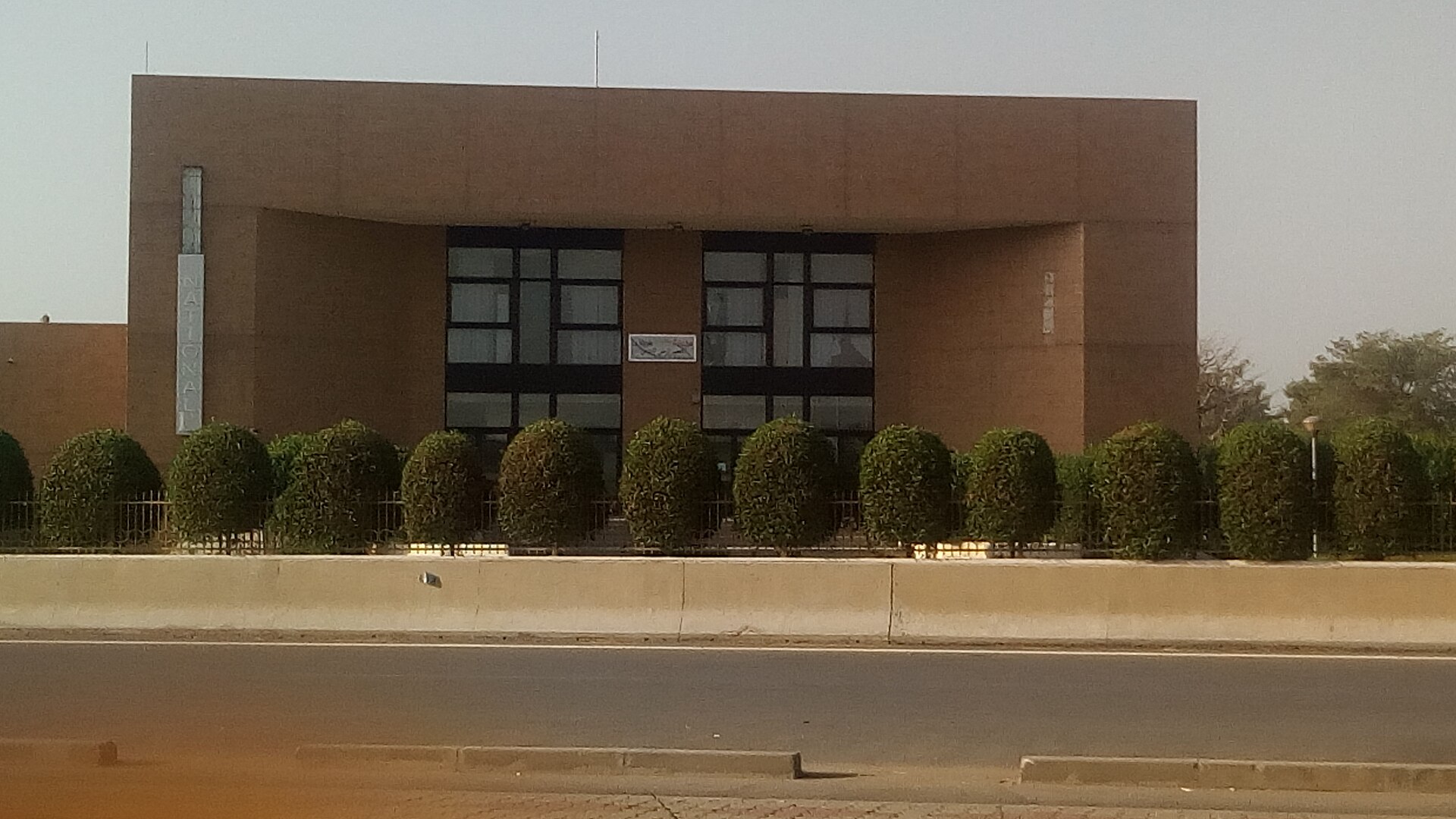
The Chad National Museum's real strength is a pairing that few national museums anywhere can offer under one roof: an internationally significant paleoanthropology record, built on Toumai and Abel and the wider Djurab Desert fossil sequence, sitting directly above a social and political history of Chad told through Sao, Islamic-sultanate and colonial-conquest material. It is a small museum by international standards, spread across two floors of a single purpose-built building, and it does not claim comprehensive coverage of any one period; its case is depth on a narrow set of subjects most museums outside Chad cannot touch at all, plus the accident of geography that put some of palaeoanthropology's most consequential twenty-first-century fossil finds inside its own country's borders.
| Local name | Musee National du Tchad |
|---|---|
| Kind | Museum |
| Founded | 1962 |
| City and country | N'Djamena, Chad |
| Address | Avenue Djamena-Moundou, Quartier Amriguebe, 5th arrondissement, N'Djamena, Chad, opposite the Palais du 15 janvier and next to the National Library of Chad |
| Website | petitfute.co.uk/v45655-n-djamena/c1173-visites-points-d-interet/c958-musee/416560-musee-national-du-tchad.html |
| Status | Open, confirmed 23 September 2026 |
| Record last verified | 23 September 2026 |
Visiting
- Hours
- Mon-Fri07:30 to 16:30
- Sat07:30 to 13:30
- SunClosed
- Closed
- Sunday.
- Admission
- Chadian nationalsXAF 500
- Foreign visitorsXAF 3,000Paid at the reception desk; a guided visit can be requested there at no separately published extra charge
- Do I need to book?
- No, but the museum's own guide recommends asking at the reception desk for a specialised guide on a first visit, subject to availability
- Address
- Avenue Djamena-Moundou, Quartier Amriguebe, 5th arrondissement, N'Djamena, Chad, opposite the Palais du 15 janvier and next to the National Library of Chad MapLandmark Faces the Palais du 15 janvier (National Assembly) across the avenue and stands beside the National Library of Chad, in the Amriguebe district of N'Djamena's 5th arrondissement
- Website
- petitfute.co.uk/v45655-n-djamena/c1173-visites-points-d-interet/c958-musee/416560-musee-national-du-tchad.html
- Telephone
- +235 22 52 33 75
Before you go how long, access, photography, bags, eating, shop
- How long to allow
- Two to three hours across the two floors; visitor guides warn the collection is large enough that a solo, unguided visit risks missing whole rooms
- Access
- Not documented by any source consulted; not stated as step-free.
- Photography
- Not documented by any source consulted.
- Bags
- Not documented by any source consulted.
- Eating
- None documented.
- Shop
- None documented.
Prices and hours change. We take them from the institution's own pages and print the day we read them, and you can check the current position at the source we used. Confirm before you travel.
What is inside
Paleontology pavilion (second floor)
The building's second floor, lit from an openwork dome, is dedicated entirely to paleontology. Explanatory panels cover the fossilisation process, the Chadian excavation sites of Toros-Menalla and Koro Toro, the dating of the terrain, and the ancient mega-lake that once covered much of the country. A side room holds the single most visited object in the museum: the cast of the Toumai skull.
History pavilion (first floor)
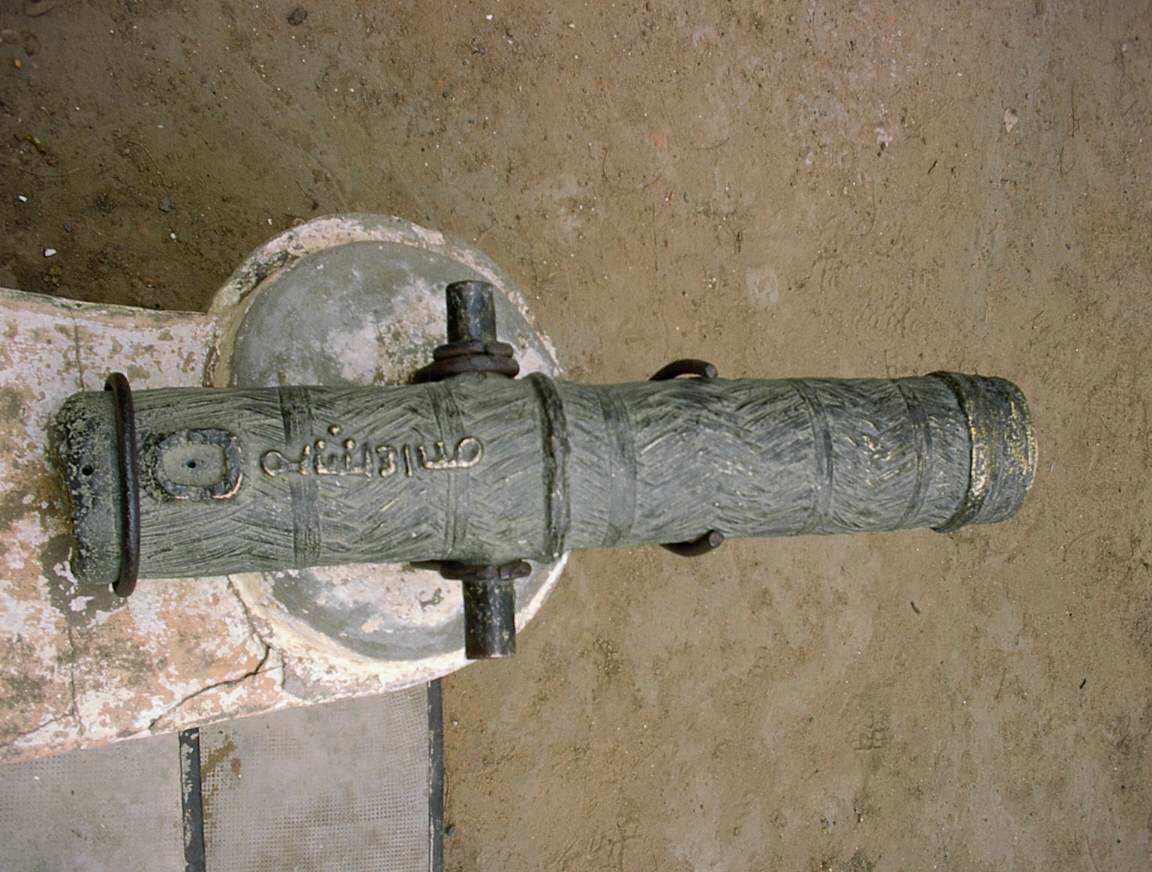
A chronological walk through Chadian history: the introduction of Islam, the formation of the Kanem-Bornou, Ouaddai and Baguirmi sultanates, and notable historical figures including Rabah az-Zubayr. Objects on display include Rabah's own bronze cannon, taken at the Battle of Kousseri in 1900.
Islamic heritage pavilion
Devotional and everyday objects tied to Chad's Islamic communities: a loh, the carved wooden slate used to learn Koranic verses, and a mouslai, a tanned sheepskin used as a prayer mat.
Sao archaeology pavilion
Material from the Sao civilisation that lived around Lake Chad before the arrival of Kanem-Bornou, including a funerary urn; Radisson's visitor account separately describes bronze objects, baked bricks and bone tools recovered from the Boulala and Babalia peoples at the Bouta-Kabira sanctuary.
Prehistory pavilion
Stone-tool material from Chad's pebble-culture sites, among the oldest archaeological cultures known, including heavy pebble tools shaped at the edge for hunting, plus axes and arrowheads of obsidian and quartz recovered from the Amgamma cliff area.
Popular arts and traditions pavilion
Musical instruments, including a balafon, and everyday and ceremonial craft objects; ouagats, the protective amulets nomadic herders tie around the necks of their dromedaries, are shown here. Much of this collection was rebuilt after the original instrument collection was looted during the Chadian-Libyan War of 1978-1987.
Economics pavilion
One of the museum's seven declared pavilions, covering Chad's traditional and colonial-era economic life; no source consulted describes its specific objects in useful detail, and this record does not invent any.
What to see first
Cast of the Toumai skull (Sahelanthropus tchadensis)
Discovered by the Mission Paleoanthropologique Franco-TchadienneExcavated at Toros-Menalla in the Djurab Desert and dated to roughly seven million years, it is widely regarded in Chad as the world's oldest known human ancestor, and is shown alone in its own side room on the paleontology floor.7
Mandible of Abel (Australopithecus bahrelghazali)
Discovered by the Mission Paleoanthropologique Franco-TchadienneExhumed at Koro Toro, this fossil extended the known range of early hominins far west of the East African Rift Valley, reframing where the human story is told from.7
Rabah's bronze cannon
Unattributed, 19th centuryTaken from the forces of Rabah az-Zubayr at the Battle of Kousseri in 1900, the cannon that ended his rule over the region sits in the history pavilion as the hinge between Chad's precolonial sultanates and French colonial conquest.3
Sao funerary urn
Sao civilisation, precolonialOne of the clearest surviving objects from the Sao, whose settlements around Lake Chad predate the Kanem-Bornou sultanate and whose material culture is otherwise mostly known from scattered archaeological digs rather than museum display.7
Balafon
UnattributedA xylophone-type instrument from the popular arts and traditions pavilion, and one of the few surviving pieces of a musical-instrument collection largely looted during the Chadian-Libyan War of 1978-1987.7
Loh, a Koranic learning slate
UnattributedA carved wooden board used to teach children to write and memorise the Koran, representative of the Islamic-heritage pavilion's devotional and educational material.7
Ouagats, dromedary amulets
Unattributed, nomadic craftSmall protective amulets that Chadian nomads tie around the necks of their dromedaries against misfortune, a rare museum example of pastoral material culture rather than settled or royal objects.7
Fossil skull of a giant Nile crocodile
Discovered by the Mission Paleoanthropologique Franco-TchadienneA roughly seven-million-year-old crocodile skull displayed alongside the hominin fossils, used by the museum to explain the mega-lake ecosystem the early hominins actually lived in.7
A museum that moved twice and was rebuilt once
The Chad National Museum was created by government decree on 6 October 1962, in temporary quarters under the name Chadian National Museum, Fort-Lamy, using the colonial name that N'Djamena carried until 1973. It opened with four rooms, covering paleontology, prehistory, protohistory, and a fifth strand of archives, folk arts, crafts and traditions combined. In 1964 it moved into the city's former town hall, near the Place de l'Independance, where it stayed for over four decades.
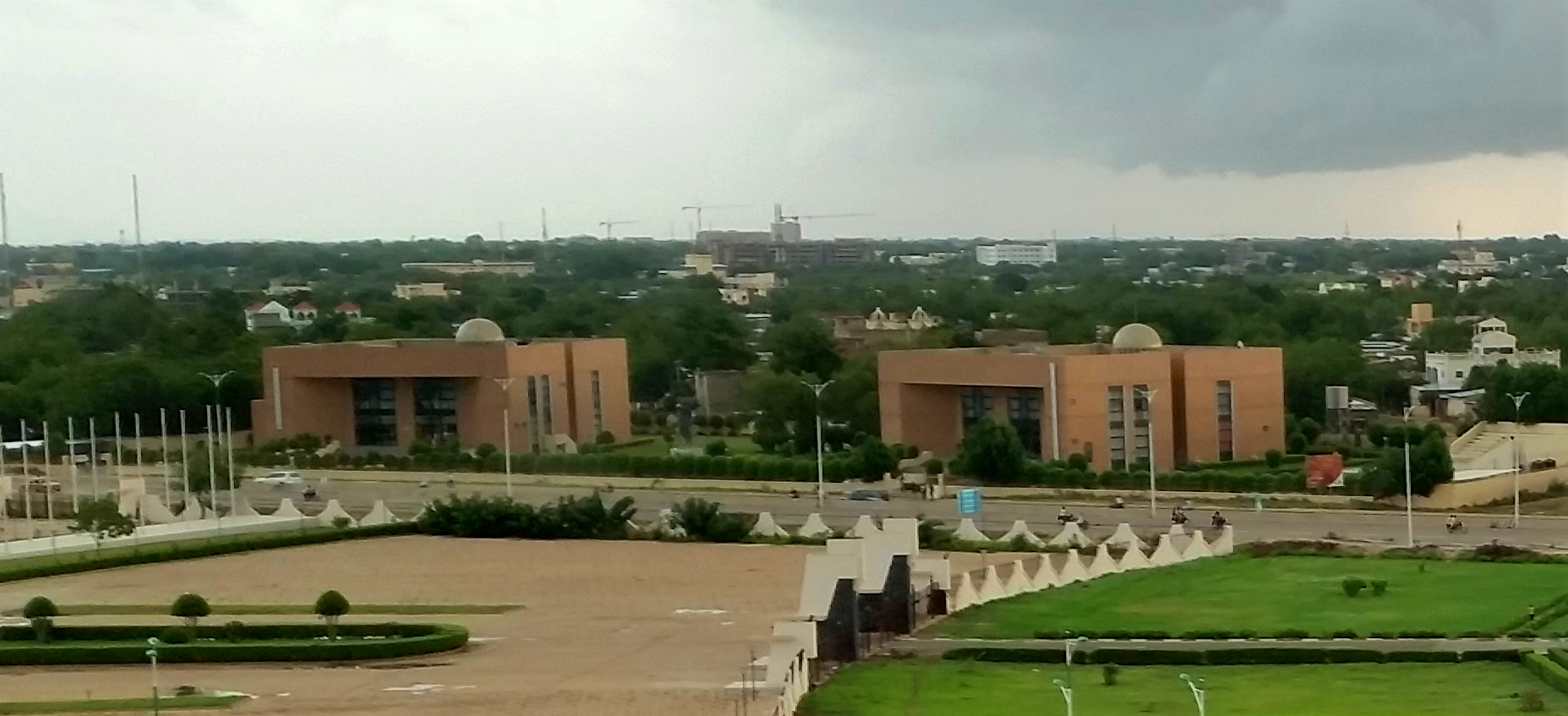
A paleontology room was added in 1999, prompted directly by fossil discoveries then being made in the Djurab Desert, work that would culminate a year later in the find that changed how the museum is known internationally. The institution left the old town hall for good in November 2010, when a purpose-built, two-storey museum opened in the Amriguebe district, facing the Palais du 15 janvier, the seat of Chad's National Assembly, and standing beside an equivalent new building for the National Library of Chad. The collections themselves, according to the museum's own account of the move, travelled largely unchanged from the old site; what changed was the museology built around them, organised into seven named pavilions across the two floors.
Seven pavilions under one roof
The current building groups its holdings into seven declared pavilions: Islamic heritage, prehistory, Sao archaeology, history, economics, popular arts and traditions, and paleontology. The ground and first floors carry the human history of Chad forward from the region's early stone-tool cultures through the Sao civilisation that settled around Lake Chad, into the Islamic sultanates of Kanem-Bornou, Ouaddai and Baguirmi, and on to the conquest era associated with Rabah az-Zubayr. The second floor, lit through an openwork dome, is given over entirely to paleontology and to the fossil record of the Djurab Desert.
Visitor accounts describe a collection large enough to reward, and sometimes require, a guide: the museum's own recommendation is to ask at the reception desk on a first visit rather than attempt the seven pavilions unassisted. Objects range from the monumental, such as Rabah's own bronze cannon, to the intimate, such as ouagats, the small protective amulets Chadian nomads tie around a dromedary's neck, and a loh, the carved wooden slate used to teach children the Koran.
What the Djurab Desert gave up
The museum's international reputation rests almost entirely on work carried out far from N'Djamena, in the Djurab Desert of northern Chad, by the Mission Paleoanthropologique Franco-Tchadienne under the palaeontologist Michel Brunet, in partnership with the PalevoPrim laboratory at the University of Poitiers. Excavations at Toros-Menalla recovered the skull now known as Toumai, formally Sahelanthropus tchadensis, dated to roughly seven million years old and treated by the mission and by Chadian commentators as the earliest known member of the human lineage. A separate site at Koro Toro yielded the mandible of Abel, Australopithecus bahrelghazali, a find whose location alone pushed the known geography of early hominins hundreds of kilometres west of the Rift Valley sites that had previously dominated the story of human origins.
Neither original fossil is normally on permanent public display in this form; the museum shows a cast of the Toumai skull in a room built specifically for it, alongside a fossil skull of a Nile crocodile of comparable age and material explaining the ancient mega-lake ecosystem the early hominins inhabited. The relationship between the museum and the French research partners that made these discoveries has continued well past the original digs: in July 2023 the museum worked with the French cultural centre Espace Mendes France to open a temporary exhibition on the evolution of the human family from Toumai to Homo sapiens, opened in the presence of Chad's diplomatic corps and covering four hundred square metres of new display space built around the same discoveries.
What the war took
The museum's history is not only one of discovery. During the Chadian-Libyan War, fought between 1978 and 1987, the institution lost artefacts to looting, and its collection of musical instruments was singled out among the material stolen during that unrest. The instruments now shown in the popular arts and traditions pavilion, including a balafon, represent what has been rebuilt or retained since rather than an unbroken holding, and the museum's own displays do not appear to narrate that loss on the object labels themselves. It is a gap in the museum's own storytelling that this record notes rather than fills.
A visit today
The museum charges 500 CFA francs for Chadian nationals and 3,000 CFA francs for foreign visitors, payable at the reception desk, where a specialised guide can also be requested. It is open Monday to Friday from 7.30 a.m. to 4.30 p.m. and on Saturday from 7.30 a.m. to 1.30 p.m., and closed on Sunday. Every account consulted for this record, from independent travel guides to visitor reviews, describes captions and explanatory panels as almost entirely in French, with little provision for visitors who do not read the language, though objects are generally identifiable without translation.
Reviewers who have made the trip are consistent on two fronts that pull against each other: the paleontology hall and the Toumai skull cast are treated as reason enough on their own to visit N'Djamena's one major museum, while the building's upkeep, lighting and the completeness of the wider collection have drawn repeated and worsening complaints across the reviews read for this record.
Night of the Museums, 2026
On 18 May 2026 the museum hosted the first Chadian edition of the Night of the Museums, an evening programme of exhibitions, traditional dance, storytelling and documentary screenings organised under Chad's Ministry of Tourism Development, Culture and Crafts. Mbaibaidoh John Innocent, director of the National Ballet of Chad, took part and spoke about the value of putting the country's intangible heritage, its dances in particular, alongside the museum's held objects for a new generation. The French ambassador to Chad and his delegation attended. The event is the most recent confirmed, dated evidence that the museum is open and functioning as a working institution, run by and with Chad's own cultural ministry rather than existing only as a listed address.
What visitors say
Visitors consistently treat the Chad National Museum as N'Djamena's one indispensable cultural stop, built almost entirely around seeing the Toumai skull cast in person, and describe the collection as genuinely rich for a small, under-resourced institution. The same visitors are just as consistent that the museum has not been maintained to match what it holds: dim or absent lighting in several rooms, a display sequence that does not always explain itself, and wear on cases and labels that has visibly worsened over successive visits.
What is praised, what is criticised
- Praised: The Toumai skull and the wider paleontology hall, treated as the reason to come at all
- Praised: The breadth of the Sao and precolonial material for a museum of this size, giving genuine historical context rather than a curiosity cabinet
- Praised: Staff willingness to arrange a guide on request, which visitors say makes the difference between a confusing visit and a rewarding one
- Criticised: Poor lighting and a disjointed display flow in several rooms
- Criticised: Labels and captions almost entirely in French, with little accommodation for non-French speakers
- Criticised: Visible decline in maintenance and completeness of the collection over time, with some visitors noting objects present on an earlier visit no longer on display
- Criticised: Foreign-visitor pricing set well above the local rate, without a clearly posted policy on the difference
Ratings on other platforms
Tripadvisor: 3.8 from 33 ratings, read 23 September 2026
A platform average is a tertiary source: it moves, it is not audited, and we quote no visitor's words.
Questions about Chad National Museum
Where is Chad National Museum?
Avenue Djamena-Moundou, Quartier Amriguebe, 5th arrondissement, N'Djamena, Chad, opposite the Palais du 15 janvier and next to the National Library of Chad.
How much does it cost to visit?
Chadian nationals: XAF 500; Foreign visitors: XAF 3000. As confirmed 23 September 2026.
When is it open?
Mon-Fri 07:30-16:30; Sat 07:30-13:30; Sun closed. Closed: Sunday. As confirmed 23 September 2026.
How do you get there?
Landmark: Faces the Palais du 15 janvier (National Assembly) across the avenue and stands beside the National Library of Chad, in the Amriguebe district of N'Djamena's 5th arrondissement.
What should you see first?
Cast of the Toumai skull (Sahelanthropus tchadensis) (Discovered by the Mission Paleoanthropologique Franco-Tchadienne); Mandible of Abel (Australopithecus bahrelghazali) (Discovered by the Mission Paleoanthropologique Franco-Tchadienne); Rabah's bronze cannon (Unattributed, 19th century); Sao funerary urn (Sao civilisation, precolonial); Balafon (Unattributed); Loh, a Koranic learning slate (Unattributed).
What we could not confirm
- The domain named as the museum's website in reference sources, museenationaltchad.org, does not currently resolve (confirmed NXDOMAIN against public DNS, and unreachable by direct fetch, as of 2026-09-23), so this record has no dedicated official museum website to link. Chad's Ministry of Tourism, Culture and Historic Heritage's own domain, tourisme.gouv.td, is equally unreachable (confirmed NXDOMAIN as of 2026-09-23). contact.website therefore points at the Petit Fute visitor-guide page, a maintained editorial listing rather than the institution's own domain; if a working official domain ever appears, it should replace this.
- Two different phone numbers appear across the sources consulted: +235 22 52 33 75 (Petit Fute and momaa.org, corroborated independently by both and used in this record) and +235 66 28 51 56 (Radisson Hotels, given alongside an address in Fort Archambault, the former colonial name of Sarh, a different Chadian city, which reads as a database error and made the whole Radisson contact entry untrustworthy). A caller relying on this record should be told the number is the better-corroborated of the two, not a confirmed primary-source figure.
- The museum's own retelling of its collection, as read across the sources used here, does not narrate the 1978-1987 wartime looting of its musical-instrument collection on the object labels themselves; this record states the loss because outside sources document it, not because the museum presents it that way to visitors.
- No annual visitor-figures report or comparable institutional document was located, so attendance and year-on-year change cannot be stated.
Images
Sources
- 1Wikidata, Q2684769, Chad National Museum wikidata.org/wiki/Q2684769
- 2Wikimedia Commons, Category:National Museum of Chad commons.wikimedia.org/wiki/Category:National_Museum_of_Chad
- 3Wikimedia Commons, File:Canon Rabah 1b.jpg commons.wikimedia.org/wiki/File:Canon_Rabah_1b.jpg
- 4Wikimedia Commons, File:Musee national 2.jpg commons.wikimedia.org/wiki/File:Mus%C3%A9e_national_2.jpg
- 5Wikimedia Commons, File:National Museum and National Library of Chad in N'Djamena - 2014-10-01 a.jpg commons.wikimedia.org/wiki/File:National_Museum_and_National_Library_of_Chad_in_N%27Djamena_-_2014-10-01_a.jpg
- 6Tchadinfos, 'Premiere edition de la nuit des musees au Tchad: le Musee national s'anime pour valoriser le patrimoine culturel', 19 May 2026 tchadinfos.com/2026/05/19/premiere-edition-de-la-nuit-des-musees-au-tchad-le-musee-national-sanime-pour-valoriser-le-patrimoine-culturel/
- 7Petit Fute, 'National Museum of Chad', N'Djamena visitor guide entry petitfute.co.uk/v45655-n-djamena/c1173-visites-points-d-interet/c958-musee/416560-musee-national-du-tchad.html
- 8Wikipedia (English), 'Chad National Museum' en.wikipedia.org/wiki/Chad_National_Museum
- 9Wikipedia (French), 'Musee national du Tchad' fr.wikipedia.org/wiki/Mus%C3%A9e_national_du_Tchad
- 10Radisson Hotels, 'Chad National Museum, N'djamena' destination guide radissonhotels.com/en-us/destination/chad/ndjamena/chad-national-museum
- 11Museums of Africa (momaa.org), 'Musee National N'Djamena' directory listing momaa.org/directory/musee-national-ndjamena/
- 12Tripadvisor, 'Musee National N'Djamena (National Museum)' reviews tripadvisor.com/Attraction_Review-g293779-d481167-Reviews-Musee_National_N_Djamena_National_Museum-N_Djamena.html
- 13Espace Mendes France, 'Le musee National du Tchad ouvre sa nouvelle exposition' emf.fr/45418/le-musee-national-du-tchad-ouvre-sa-nouvelle-exposition/
- 14Ambassade de France au Tchad, 'Protection et valorisation du patrimoine: bilan de la cooperation entre le Tchad et la France' td.ambafrance.org/Protection-et-valorisation-du-patrimoine-bilan-de-la-cooperation-entre-le-Tchad
- 15Take Your Backpack, 'N'Djamena City Guide (Chad, 2026)', updated 23 September 2026 takeyourbackpack.com/backpacking-in-chad/visit-ndjamena/


