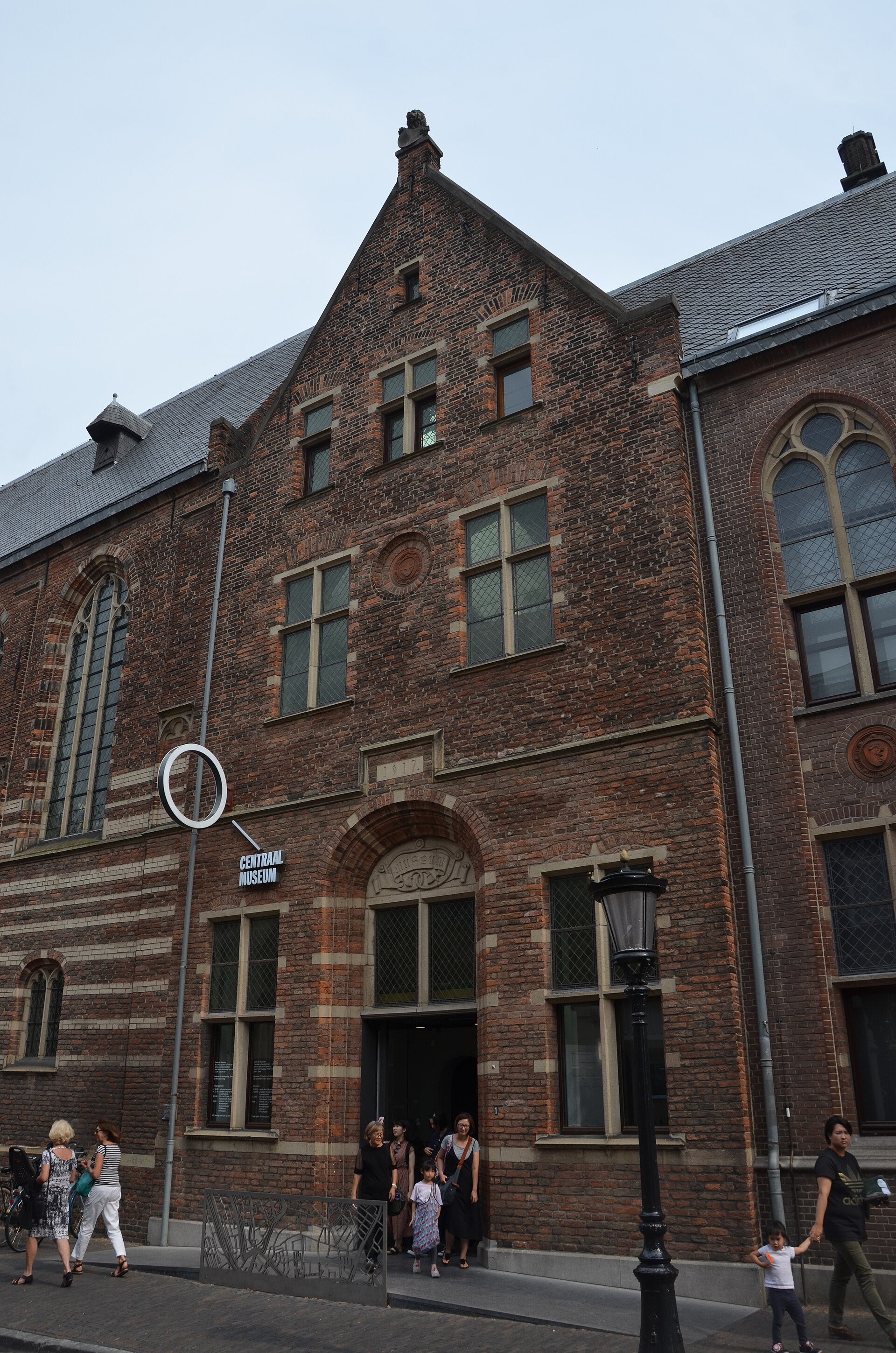
The brick gabled entrance front of the former Sint-Agnietenklooster, with the CENTRAAL MUSEUM sign above the door and the adjoining chapel's traceried windows to the right.
Steven Lek · Photograph by Tukka · CC BY-SA 4.0Centraal Museum
Museum · Centraal Museum Utrecht · Founded 1838
Open, admission and hours confirmed 23 September 2026 · 12 sources
On this page 16 sections
ContentsClose
The Centraal Museum's genuine strength is breadth under one director rather than depth in one field: the most complete survey of Utrecht-school Old Master painting anywhere, including the world's largest Joachim Wtewael holding and a real claim on the Utrecht Caravaggisti; one of the largest public costume collections in the Netherlands; the Rietveld Schroder Archive and the Red and Blue Chair; a nearly intact eleventh-century ship in its own cellar; and a working illustrator's studio recreated for Dick Bruna. Few institutions this size hold all of that at once, and the trade-off, by the museum's own admission and its visitors' own account, is a building that makes all of it slightly harder to find than a single-collection museum would.
| Local name | Centraal Museum Utrecht |
|---|---|
| Kind | Museum |
| Founded | 1838 |
| City and country |  Utrecht, Netherlands Utrecht, Netherlands |
| Address | Agnietenstraat 1, 3512 XA Utrecht, Netherlands |
| Website | centraalmuseum.nl/en |
| Status | Open, confirmed |
| Record last verified |
Visiting
- Hours
- Tuesday-Sunday11:00 to 17:00
- MondayClosed
- Closed
- King's Day (27 April). Christmas Day (25 December). New Year's Day (1 January).
- Admission
- AdultEUR 18No exhibition surcharge currently in effect; re-confirmed 2026-09-23. The Gerard van Honthorst exhibition that had carried a EUR 6 surcharge ran 25 April-13 September 2026 and has now closed.
- Ages 13-17EUR 10The Honthorst-exhibition surcharge mentioned in this tier's original research ran 25 April-13 September 2026 and has now closed; re-confirmed 2026-09-23, no surcharge currently in effect.
- CJP / student card holdersEUR 10.50The Honthorst-exhibition surcharge mentioned in this tier's original research ran 25 April-13 September 2026 and has now closed; re-confirmed 2026-09-23, no surcharge currently in effect.
- Children 0-12Freefree at all times
- Museumkaart holdersFreefree entry; the museum's own page does not say whether the exhibition surcharge is waived for card holders
Free entry: Children 0-12, every day. Museumkaart, Vriendenloterij VIP Kaart, Vriendenpas, ICOM, Rembrandtkaart and U-Pas holders- Tickets
- tickets.centraalmuseum.nl/en/tickets The museum's own ticket page.
- Do I need to book?
- Not stated as mandatory; tickets are sold online and at the desk
- Address
- Agnietenstraat 1, 3512 XA Utrecht, Netherlands MapTrain Utrecht Vaartsche Rijn station, about ten minutes on foot
Bus Bus 2 from Utrecht Centraal station to the Museum Quarter
Bike Cycle racks beside the entrance, with an electric-bike charging point by the cafe entrance
Car Vaartsche Rijn and Springweg car parks, each about ten minutes' walk away; cheaper to use one of the city's Park and Ride sites and finish the trip by public transport - Website
- centraalmuseum.nl/en
- Telephone
- +31 30 236 2310
- [email protected]
Before you go how long, access, photography, bags, eating, shop
- How long to allow
- Two to three hours to cover the Old Masters, fashion, design and city-history wings and the Utrecht ship
- Access
- The museum occupies a linked run of a former convent, chapel and later extensions; the museum's own site did not publish step-free routing detail we could confirm, so a visitor with mobility needs should call ahead
- Photography
- Not published on the museum's own site at the time of research
- Bags
- Free lockers are available near the entrance, reported consistently by visitors
- Eating
- Museum Cafe Centraal, open Tuesday to Sunday from 10:30 to 17:00 and accessible without a museum ticket
- Shop
- Opens an hour before the museum, from 10:00 to 17:00, also accessible without a ticket
Prices and hours change. We take them from the institution's own pages and print the day we read them, and you can check the current position at the source we used. Confirm before you travel.
What is inside
Old Masters and the Utrecht School
The museum holds what curators describe as the most important collection of Utrecht-school painting anywhere, built around Jan van Scorel, Abraham Bloemaert and Paulus Moreelse, and around the Utrecht Caravaggisti: Hendrick ter Brugghen, Gerard van Honthorst and Dirck van Baburen, who carried Caravaggio's candlelit realism home from Rome in the early seventeenth century. The museum also holds the world's largest collection of Joachim Wtewael, Utrecht's leading Mannerist painter.
Photograph by TijsB · CC BY-SA 2.0 City history and the Utrecht ship
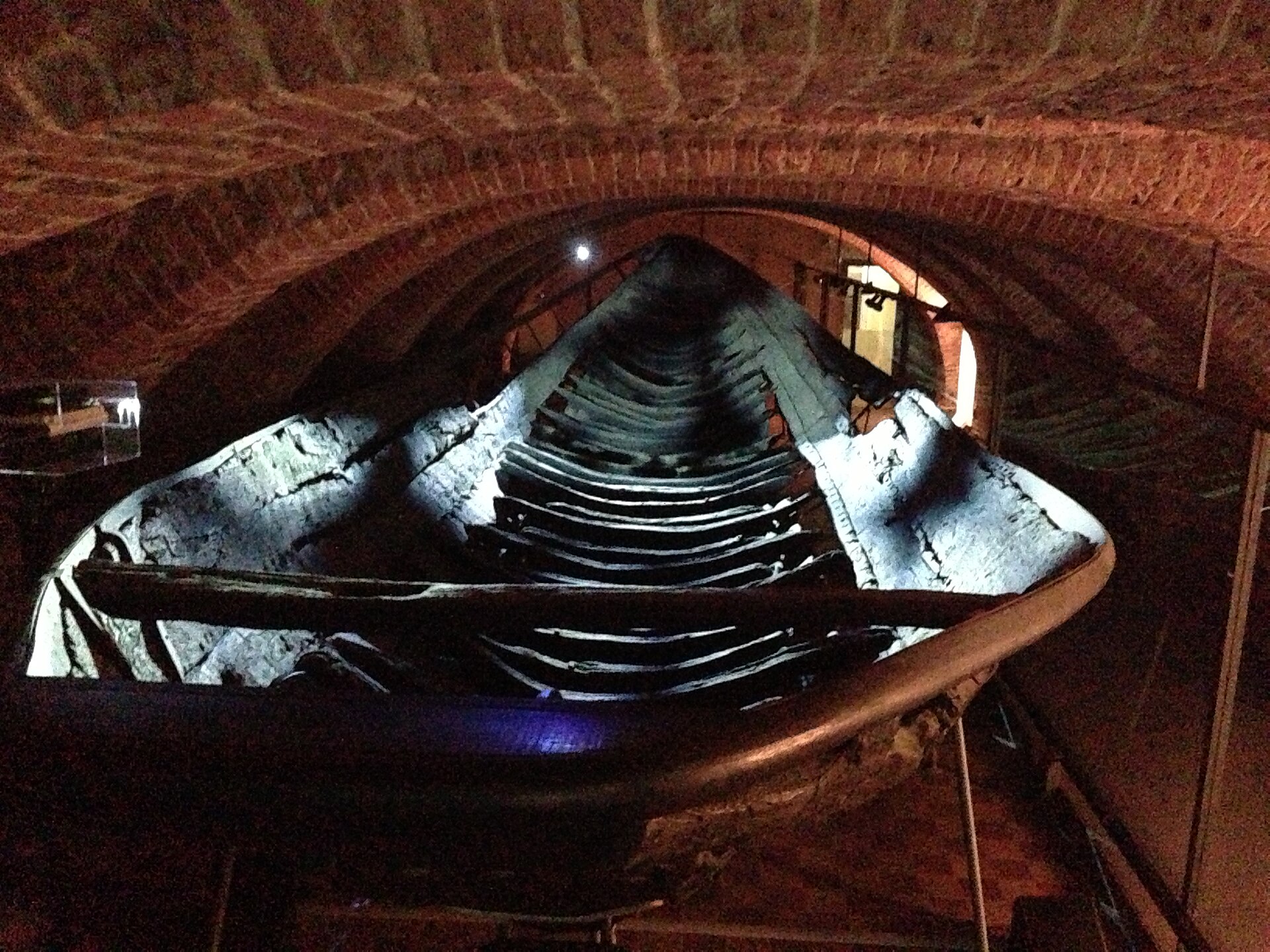
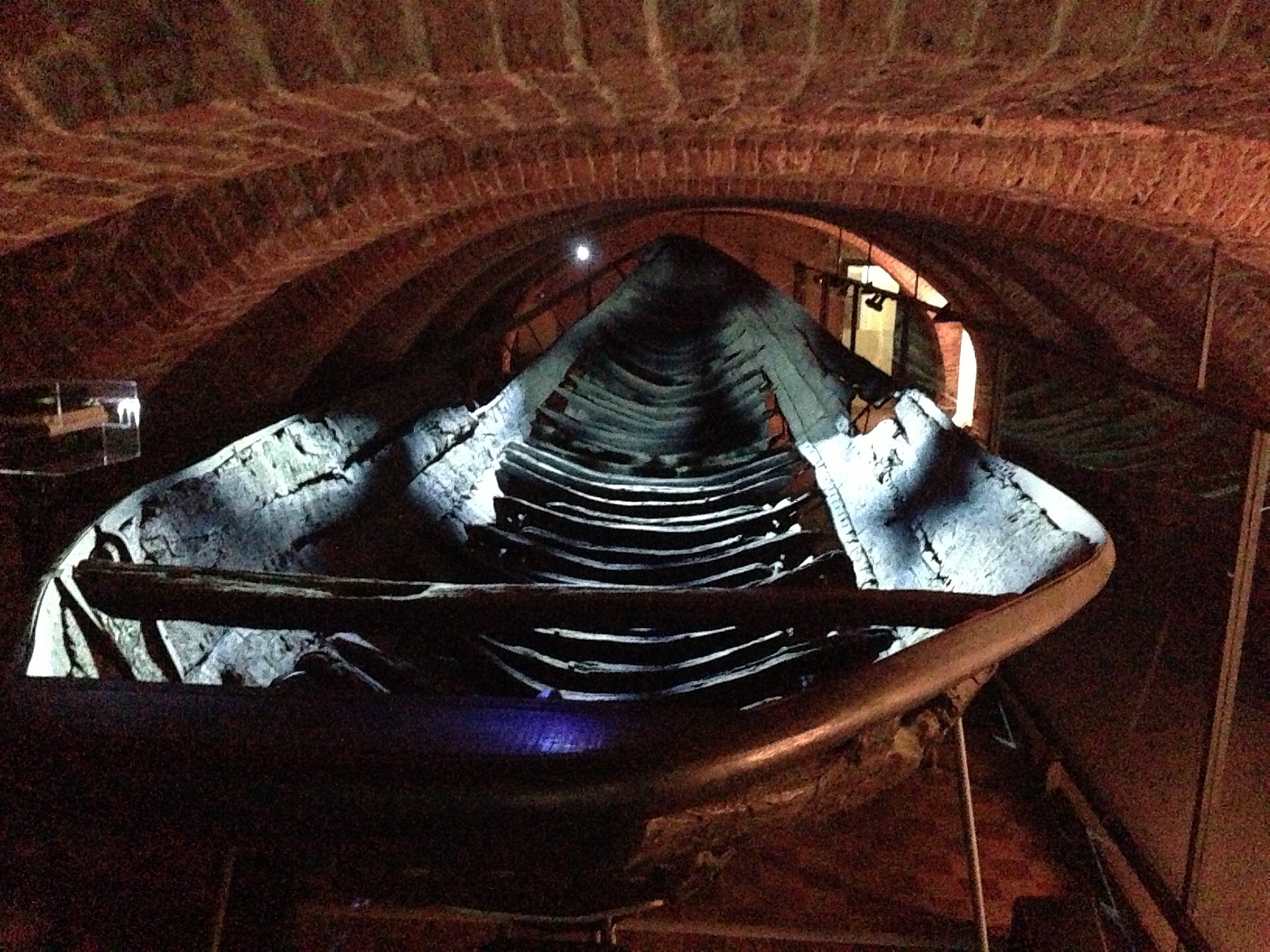
A single-hulled vessel about eighteen metres long, built around the year 1000 and excavated in 1930, is displayed intact in the museum's brick-vaulted medieval cellar. The same wing holds the Pug collection of roughly fifteen thousand Roman-era archaeological finds from local excavations, alongside architectural fragments and models of vanished Utrecht buildings including the old town hall and city gates.
Photograph by sailko · CC BY-SA 3.0 Design, applied arts and De Stijl
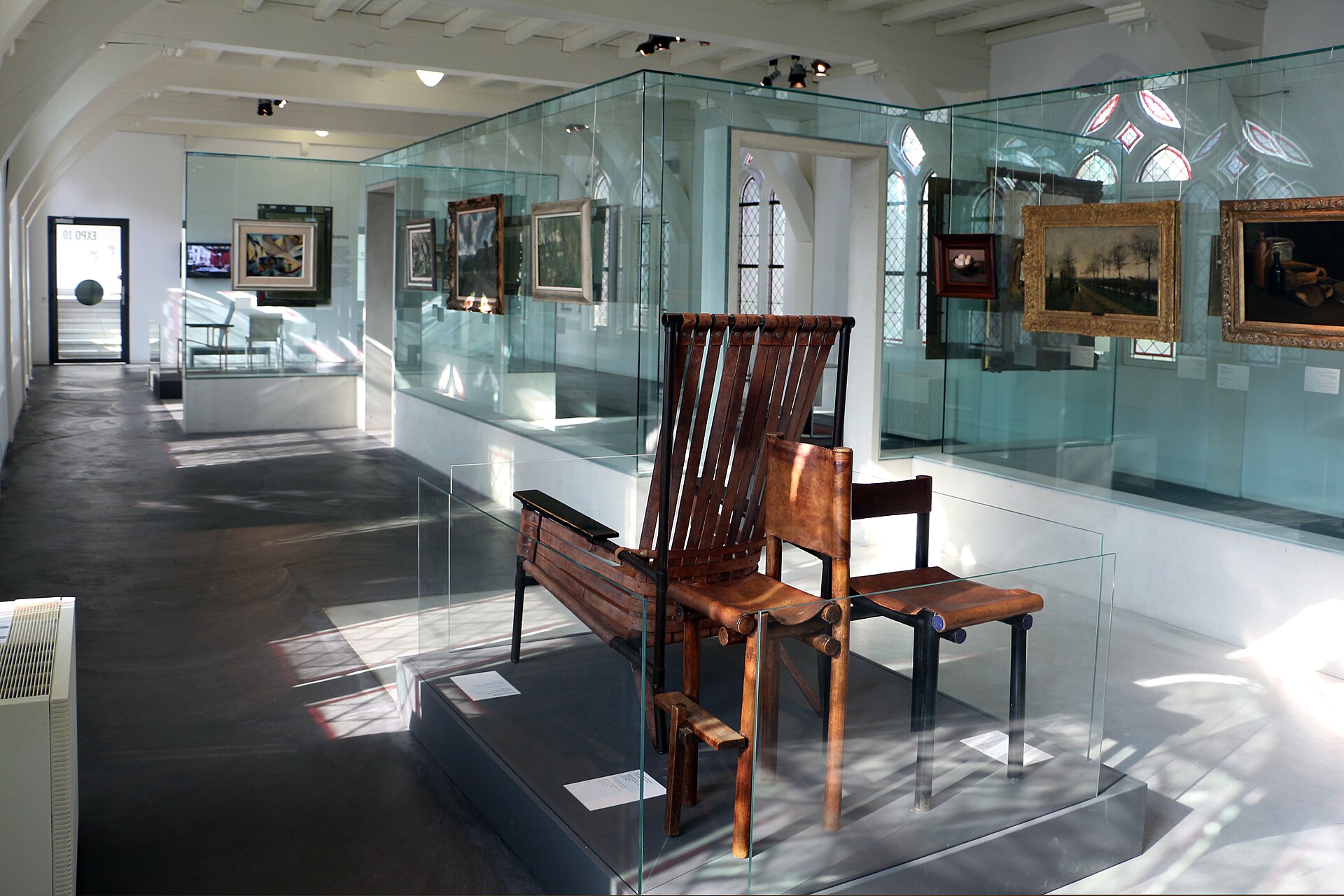
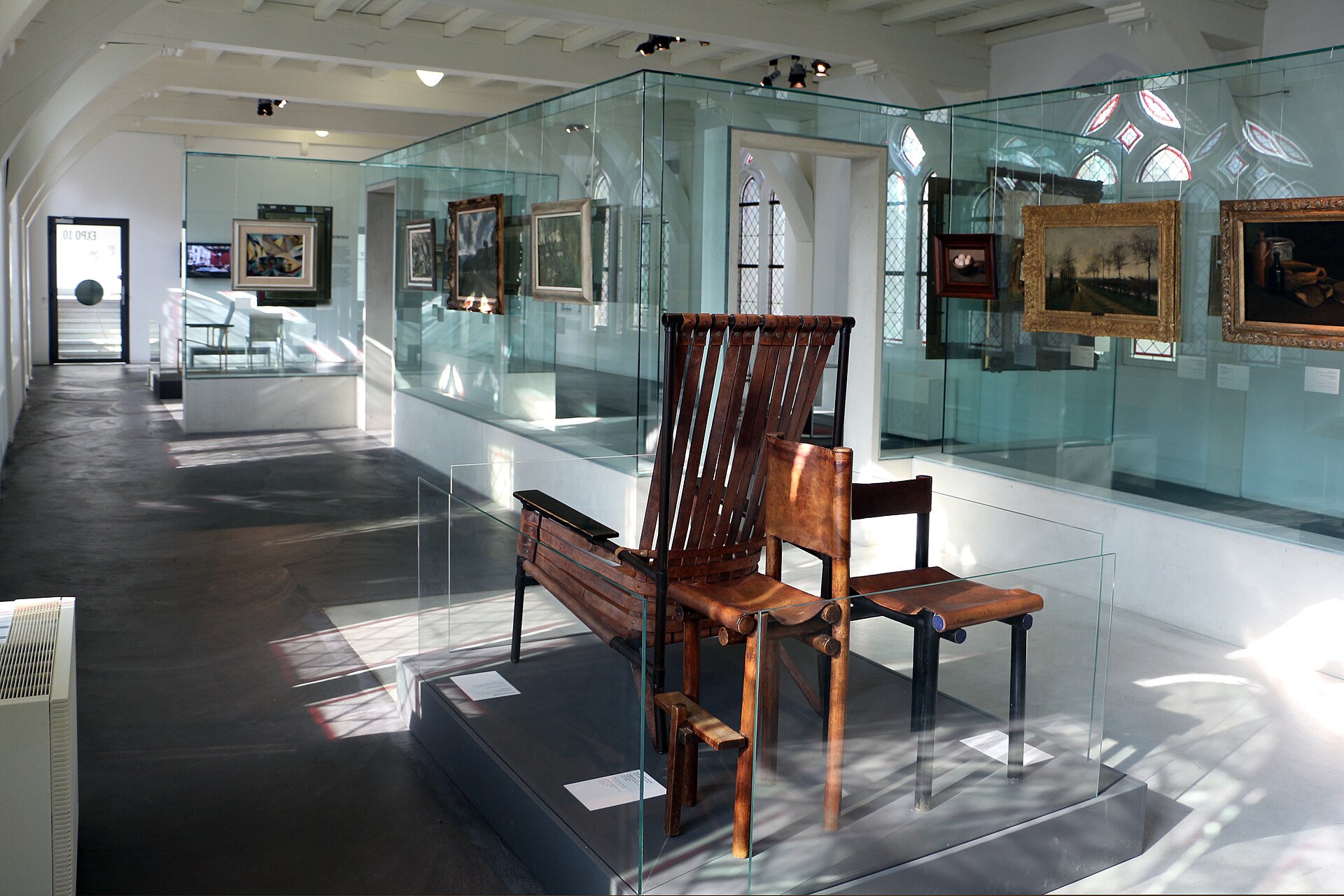
Gerrit Rietveld's Red and Blue Chair is held here, described by the museum as a design that broke with every prior convention of the domestic chair, alongside the Rietveld Schroder Archive of drawings, photographs and correspondence and sketches from De Stijl co-founder Theo van Doesburg. The wing also carries decorative silver by the Van Vianen brothers and Petronella de la Court's furnished dolls' house of about 1670-1690.
Fashion and costume
More than ten thousand garments make this one of the largest public costume collections in the Netherlands, with serious collecting dating to 1917 under Carla de Jonge, the first woman appointed to a Dutch curatorship of its kind. The holdings run from eighteenth-century silk gowns to conceptual couture by Iris van Herpen, Viktor and Rolf, Maison Martin Margiela and Vivienne Westwood.
Photograph by sailko · CC BY-SA 3.0 Modern and contemporary art
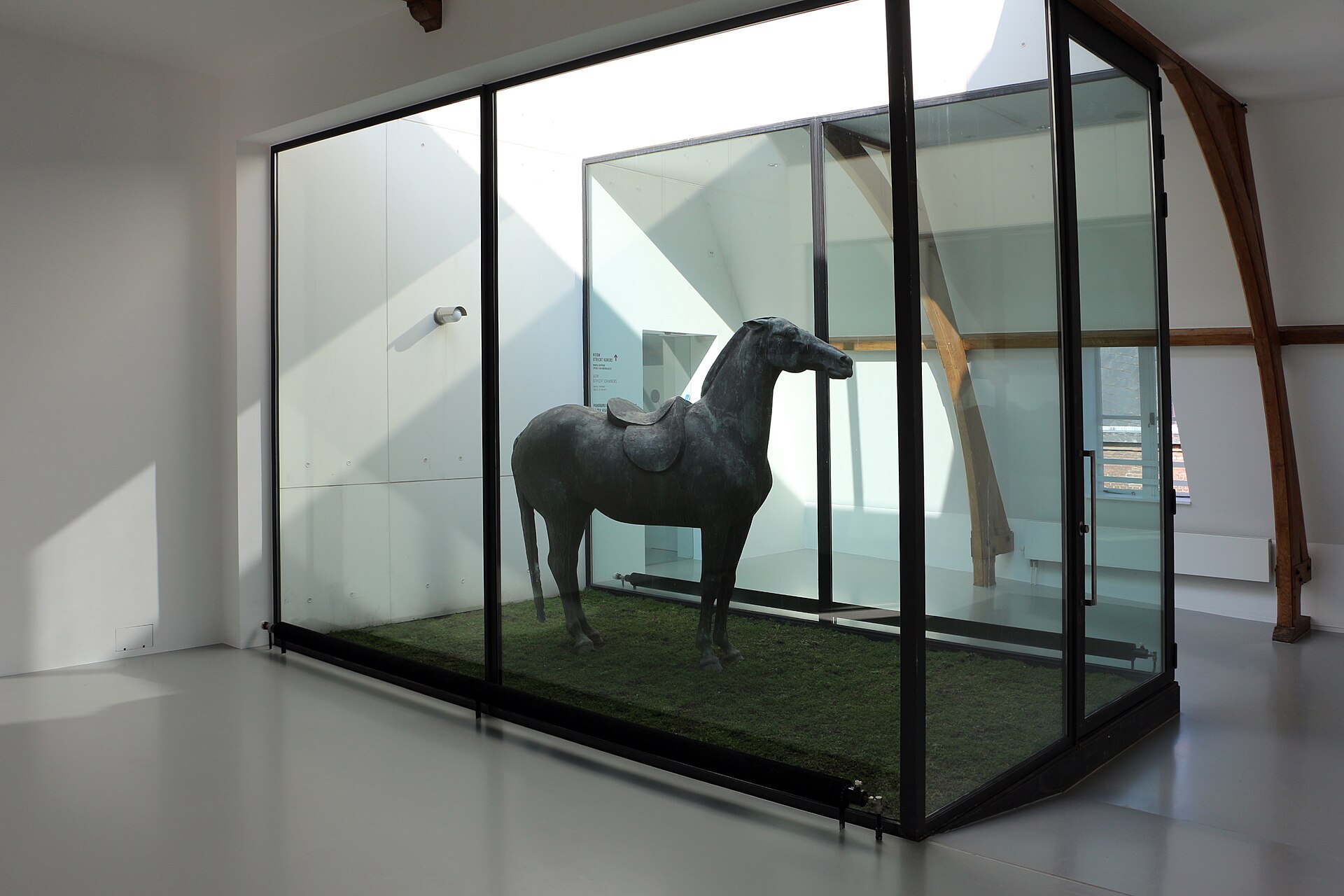
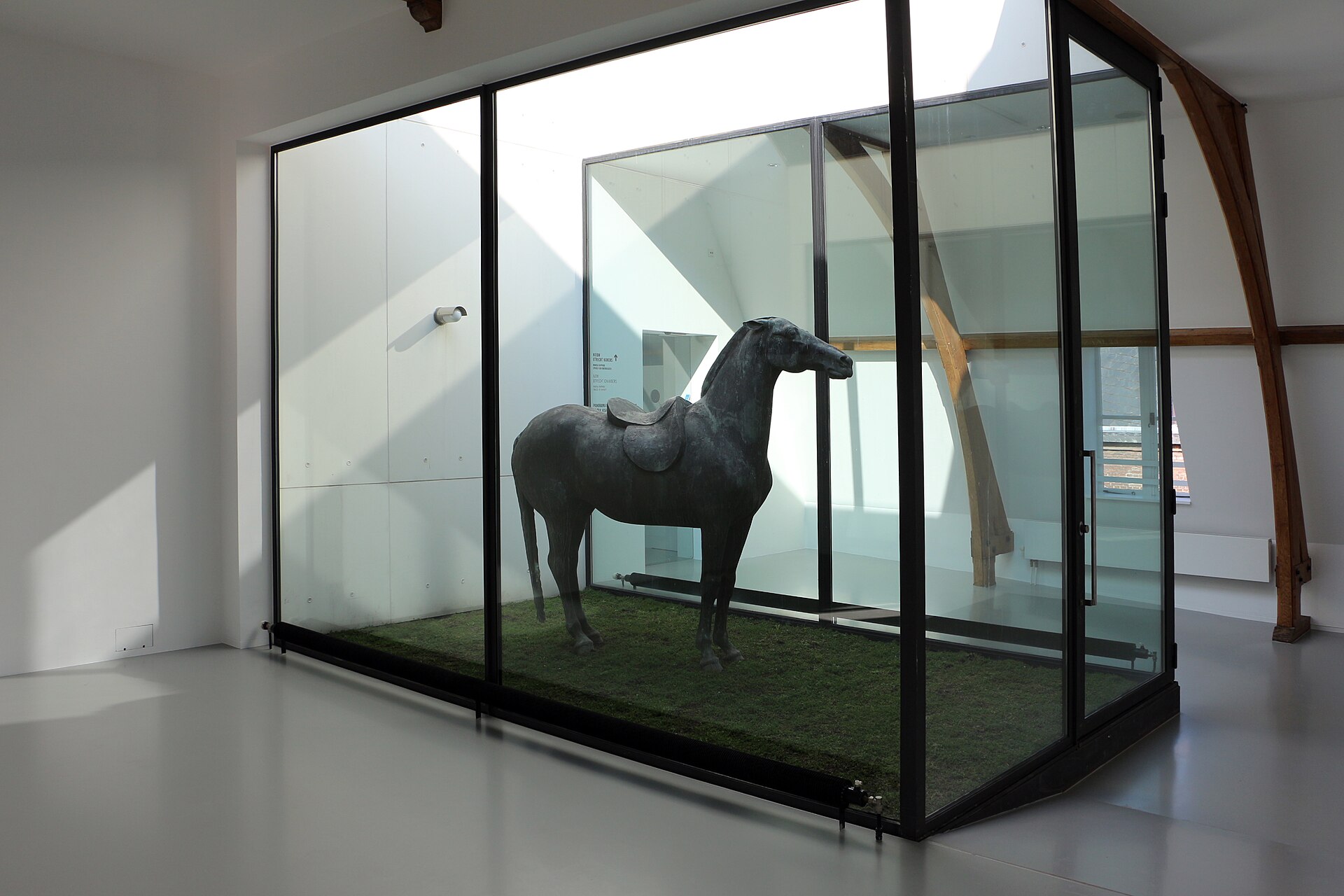
The Van Baaren Collection brings work by Vincent van Gogh, Piet Mondrian and Jean Metzinger into the museum's nineteenth- and twentieth-century holdings, shown alongside rotating contemporary installations and sculpture in the museum's converted attic galleries, where the medieval roof structure remains exposed above the display cases.
Dick Bruna studio and the Bruna collection
A recreation of the actual studio of Dick Bruna, the Utrecht illustrator who created Miffy, sits inside the Centraal Museum itself, distinct from the standalone Miffy Museum across the street at Agnietenstraat 2. The Bruna collection holds his book-cover designs and character artwork dating back to 1952.
What to see first
The Utrecht ship
Unknown, Utrecht regionA nearly complete single-hulled vessel about eighteen metres long, built around the year 1000, excavated in 1930 and displayed intact in the museum's own medieval cellar rather than a purpose-built hall7
Madonna and Child with Wild Roses
Jan van ScorelA Utrecht Renaissance panel whose 2013 restitution claim by the heirs of Richard Semmel, a Jewish industrialist persecuted under the Nazis, was rejected by the Dutch Restitutions Committee, leaving the picture on view and the underlying dispute unresolved8
Red and Blue Chair
Gerrit RietveldThe primary-coloured De Stijl armchair that the museum credits with breaking every prior convention of domestic furniture, shown with the Rietveld Schroder Archive of the architect's drawings and correspondence5
The world's largest Joachim Wtewael holding
Joachim WtewaelUtrecht's leading Mannerist painter is represented here more fully than anywhere else, anchoring the museum's claim to the foremost collection of Utrecht-school painting in existence6
The Utrecht Caravaggisti
Hendrick ter Brugghen, Gerard van Honthorst and Dirck van BaburenThree Utrecht painters who studied Caravaggio's work in Rome and brought his candlelit realism home to found a distinct local school, the subject of the museum's own 2018 exhibition that later travelled to the Alte Pinakothek in Munich6
Qualia Kimono, Meta Morphism collection
Iris van HerpenA 2020-2023 couture piece representative of a fashion department the museum says covers nearly every silhouette in Western dress since 17505
Petronella de la Court's dolls' house
Unknown craftsmen, commissioned by Petronella de la CourtA merchant's-wife's cabinet house of about 1670-1690, furnished down to miniature silver and paintings, among the earliest surviving Dutch examples of the form6
Dick Bruna's studio and original artwork
Dick BrunaA recreation of the actual workspace of Utrecht's best-known illustrator, shown with book-cover designs and character drawings dating back to 1952, kept inside the main museum rather than only in the separate Miffy Museum10
Exhibitions on now
Past exhibitions here
- Closed25 Apr to 13 Sep 2026Confirmed · check before you travel
A convent that became the town's own museum
The Centraal Museum traces its public existence to 1838, when a small civic collection went on show in the attic of Utrecht's town hall. It did not settle into its present building until 1921, when a scatter of private and municipal collections was brought together inside the Sint-Agnietenklooster, a convent building begun around 1420 on the Nicolaaskerkhof in the old city centre. The museum has grown outward from that core ever since, absorbing the neighbouring chapel and later extensions until the complex reads less as a single structure than as a run of connected historic buildings threaded through by corridors and glass-walled galleries. That history is exactly what visitors mean when they call the layout confusing: the building was never designed as a museum floor plan, it became one, one annexation at a time.
The result is unusual among municipal museums in the Netherlands. Most Dutch cities keep their fine-art collection and their city-history collection in separate institutions. Utrecht kept both under one director and one roof, and added a costume department, a design and applied-arts department, and eventually a recreation of a working illustrator's studio, so that a single ticket now covers Mannerist religious painting, an eleventh-century boat, a Rietveld chair and a Miffy sketch. Apollo Magazine's 2018 profile of the institution called this eclecticism both the museum's strongest asset and its hardest sell: a museum that refuses to specialise is harder to market abroad than a museum built around one famous name.
The Utrecht School and the city's Caravaggio moment
Utrecht was one of the leading painting centres of the Low Countries twice over, and the Centraal Museum's Old Masters wing exists to make that case. In the sixteenth century the city produced Jan van Scorel, who had travelled to Rome and Jerusalem and returned with an Italianate sense of composition that shaped a generation of Utrecht painters. The museum's holdings from this period, alongside those of Abraham Bloemaert and Paulus Moreelse, are strong enough that curators describe the collection as the most complete survey of Utrecht-school painting anywhere, a claim that includes holding the largest gathering in existence of work by Joachim Wtewael, whose crowded, jewel-toned mythological scenes are among the more startling things in Dutch Mannerism.
The second moment came in the early seventeenth century, when Hendrick ter Brugghen, Gerard van Honthorst and Dirck van Baburen each travelled to Rome, studied Caravaggio's paintings directly, and brought his candlelit realism and dramatic tonal contrast back to Utrecht. Art history now calls the group the Utrecht Caravaggisti, and their pictures had an influence well beyond the city: Rembrandt's own early chiaroscuro owes something to work these three painters were making in Utrecht a decade earlier. The museum staged a major exhibition on the group in 2018, which later travelled to the Alte Pinakothek in Munich, and it continues to build on that reputation with the current Gerard van Honthorst exhibition running from April to September 2026.
A ship in the cellar
Beneath the galleries, in a brick barrel-vaulted cellar that predates the museum by centuries, lies the most physically startling object the Centraal Museum owns: a single-hulled wooden vessel about eighteen metres long, built around the year 1000 and excavated from the bed of an old Rhine channel near Utrecht in 1930. It is generally counted among the oldest and best-preserved ships of its kind found in this part of Europe, built from a single hollowed oak trunk extended with hewn planks, evidence of a construction method that predates the true clinker-built cog by generations. The museum displays it where it can be seen from above and along its full length, lit within the hull, in the vaulted space rather than in a purpose-built maritime hall, so that the setting is as old as the object itself.
The same city-history wing carries the Pug collection, roughly fifteen thousand archaeological finds, most of them Roman, recovered from excavations across Utrecht and the surrounding province, along with architectural fragments and scale models of buildings the city has since lost: an old town gate, sections of the medieval cathedral precinct, and a workers' house reconstructed as a set of maquettes rather than a full-size room. It is the part of the museum most visitors describe as unexpectedly moving, precisely because so little of it is famous.
Rietveld, De Stijl, and a chair that broke the rules
Utrecht was also the working city of Gerrit Rietveld, and the Centraal Museum is where his most famous object lives day to day: the Red and Blue Chair, a construction of flat painted boards and primary-coloured slats that the museum describes as breaking with every prior convention of what a chair should look like. It was less a piece of furniture than an argument, built to demonstrate that a chair could be reduced to its structural lines and still function, and it became one of the defining objects of the De Stijl movement that Theo van Doesburg co-founded in the city in 1917. The museum holds the Rietveld Schroder Archive alongside the chair, a body of drawings, photographs and correspondence documenting Rietveld's work from 1924 onward, and it manages ticketing and access to the Rietveld Schroder House itself, the architect's UNESCO World Heritage-listed house nearby, built for Truus Schroder-Schrader the same year.
The design wing does not stop at De Stijl. Silver by the seventeenth-century Van Vianen brothers and Petronella de la Court's furnished dolls' house of about 1670 to 1690, complete down to miniature paintings and silverware, sit in the same rooms, making the point that Utrecht's applied arts tradition runs continuously from Golden Age craftsmanship through to twentieth-century industrial design, rather than treating design as a modern addition bolted onto an older painting collection.
One of the largest costume collections in the country
Fashion has been part of the collection since the museum's earliest years, but it became a serious curatorial department in 1917, when Carla de Jonge was appointed the first woman in the Netherlands to hold a curatorship of its kind. Under her and her successors the museum built more than ten thousand garments into one of the largest public costume collections in the country, covering, by the museum's own account, nearly every silhouette worn in the Netherlands from about 1750 to the present: eighteenth-century floral silk gowns, nineteenth-century mourning dress, and twentieth-century ready-to-wear sit alongside conceptual couture by Iris van Herpen, Viktor and Rolf, Maison Martin Margiela and Vivienne Westwood.
The department has also used its collection to widen who gets credited with shaping fashion history, including an exhibition co-curated with the fashion activist Janice Deul on the role of Black designers across history and continents. That curatorial ambition, applied to a collection built from Utrecht's own dress-making and department-store history as much as from couture houses, is part of why reviewers who came only for Old Masters paintings routinely say the fashion rooms were the surprise of the visit.
What the museum has not resolved
Not every object in the Centraal Museum has a settled history, and the museum's own record is honest about the one case that has drawn sustained outside criticism. Jan van Scorel's panel Madonna and Child with Wild Roses has been in the collection since 1958, after passing through the hands of the Dienststelle Muhlmann, the German looting organisation active in the occupied Netherlands. In 2013 the heirs of Richard Semmel, a Jewish industrialist persecuted under Nazi rule whose art collection was seized, brought a restitution claim for the panel to the Dutch Restitutions Committee. The committee ruled against the heirs, weighing the museum's stated interest in keeping the painting against the family's interest in its return and finding the museum's case the stronger one. A Dutch court later annulled the committee's recommendation on procedural grounds, but the family's lawyer has said publicly that he sees no path back to the committee unless its rules change first, since only the committee can recommend restitution in the first place.
The case has since been cited by critics of Dutch restitution policy as an example of what is wrong with weighing an institution's interest against a claimant's interest at all, rather than resolving disputed ownership on the facts of seizure and provenance. The Centraal Museum has not, on the evidence available to this research, made any further public statement narrowing that dispute since the committee's ruling, and the painting remains on display.
What visitors say
Visitors consistently praise the range of what is under one roof and the setting inside a genuine medieval convent, and just as consistently describe the building itself as confusing: the museum spans several linked historic structures on two floors, and reviewers who read every wall label still describe losing their bearings before they find the cafe. The Utrecht ship and the fashion and design holdings draw the most unprompted praise; the Old Masters galleries divide opinion between visitors who came for exactly that and visitors who found the older material dim and hard to place without more English-language context.
What is praised, what is criticised
- Praised: the range in one museum: Old Masters, contemporary art, fashion, design and city archaeology, rather than a single specialism
- Praised: the Utrecht ship displayed in its own vaulted cellar, which visitors single out more often than any painting
- Praised: the building itself, a former convent and chapel with gothic windows and exposed roof trusses, treated as part of the exhibit rather than a shell
- Praised: helpful, friendly staff and free lockers near the entrance
- Criticised: the layout across several interlinked historic buildings, which multiple visitors describe as genuinely disorienting even with a printed map in hand
- Criticised: limited English-language wall text in parts of the Old Masters galleries, which some visitors say makes the older paintings harder to place than the fashion and design rooms
- Criticised: the 2013 Restitutions Committee decision keeping the Jan van Scorel panel despite the Semmel heirs' claim, cited by critics of Dutch restitution policy as an example of a process that weighs institutional interest against a claimant's, rather than resolving the underlying provenance question
Ratings on other platforms
Google: 4.2 from 3,009 ratings, read 13 August 2026
Tripadvisor: 3.8 from 434 ratings, read 13 August 2026
A platform average is a tertiary source: it moves, it is not audited, and we quote no visitor's words.
Questions about Centraal Museum
Where is Centraal Museum?
Agnietenstraat 1, 3512 XA Utrecht, Netherlands.
How much does it cost to visit?
Adult: EUR 18; Ages 13-17: EUR 10; CJP / student card holders: EUR 10.5; Children 0-12: free; Museumkaart holders: free. As confirmed 23 September 2026.
When is it open?
Tuesday-Sunday 11:00-17:00; Monday closed. Closed: King's Day (27 April). Christmas Day (25 December). As confirmed 23 September 2026.
How do you get there?
Train: Utrecht Vaartsche Rijn station, about ten minutes on foot; Bus: Bus 2 from Utrecht Centraal station to the Museum Quarter; Bike: Cycle racks beside the entrance, with an electric-bike charging point by the cafe entrance; Car: Vaartsche Rijn and Springweg car parks, each about ten minutes' walk away; cheaper to use one of the city's Park and Ride sites and finish the trip by public transport.
What should you see first?
The Utrecht ship (Unknown, Utrecht region); Madonna and Child with Wild Roses (Jan van Scorel); Red and Blue Chair (Gerrit Rietveld); The world's largest Joachim Wtewael holding (Joachim Wtewael); The Utrecht Caravaggisti (Hendrick ter Brugghen, Gerard van Honthorst and Dirck van Baburen); Qualia Kimono, Meta Morphism collection (Iris van Herpen).
What we could not confirm
- Whether the Centraal Museum has made any further statement on the van Scorel restitution dispute since the 2013 committee ruling and the subsequent court annulment on procedural grounds
- Whether the museum's photography policy for visitors is published anywhere; it was not found on the museum's own site at the time of research
- Whether the exhibition surcharge on the current Gerard van Honthorst show is waived for Museumkaart holders; the museum's own pricing page does not say
Images
Sources
- 1Wikidata, Centraal Museum (Q260913), identity and coordinates, wikidata.org/wiki/Q260913
- 2Wikipedia, Centraal Museum, history and building, en.wikipedia.org/wiki/Centraal_Museum
- 3Centraal Museum, opening hours and ticket prices, read 13 August 2026 centraalmuseum.nl/en/visit/opening-hours-and-ticket-prices
- 4Centraal Museum, address and route, read 13 August 2026 centraalmuseum.nl/en/visit/adress-and-route
- 5Centraal Museum, Our Collection, read 13 August 2026 centraalmuseum.nl/en/our-collection
- 6CODART, Centraal Museum guide entry, read 13 August 2026 codart.nl/guide/museums/centraal-museum/
- 7Centraal Museum contact page, read 13 August 2026 centraalmuseum.nl/en/about/contact
- 8The Art Newspaper, 'Dutch policy on Nazi-loot restitutions under fire', on the Jan van Scorel / Richard Semmel heirs case theartnewspaper.com/news/dutch-policy-on-nazi-loot-restitutions-under-fire
- 9Apollo Magazine, Michael Prodger, 'The local museum with a world-class collection of Old Masters', 30 June 2018 apollo-magazine.com/the-local-museum-with-a-world-class-collection-of-old-masters/
- 10Miffy Museum (nijntjemuseum.nl), About the Museum, on the Dick Bruna studio inside Centraal Museum, read 13 August 2026 nijntjemuseum.nl/en/about-the-museum/
- 11European Fashion Heritage Association, 'Meeting Fashion Heritage: The Fashion and Costume Collection of the Centraal Museum in Utrecht' fashionheritage.eu/meeting-fashion-heritage-centraal-museum/
- 12Wanderlog, Centraal Museum listing, aggregating Google and Tripadvisor ratings, read 13 August 2026, wanderlog.com/place/details/232249/centraal-museum