Museo de Bellas Artes de Caracas
Museum · Museo de Bellas Artes · Founded 1917
Open, admission and hours confirmed 18 September 2026 · 16 sources
On this page 15 sections
ContentsClose
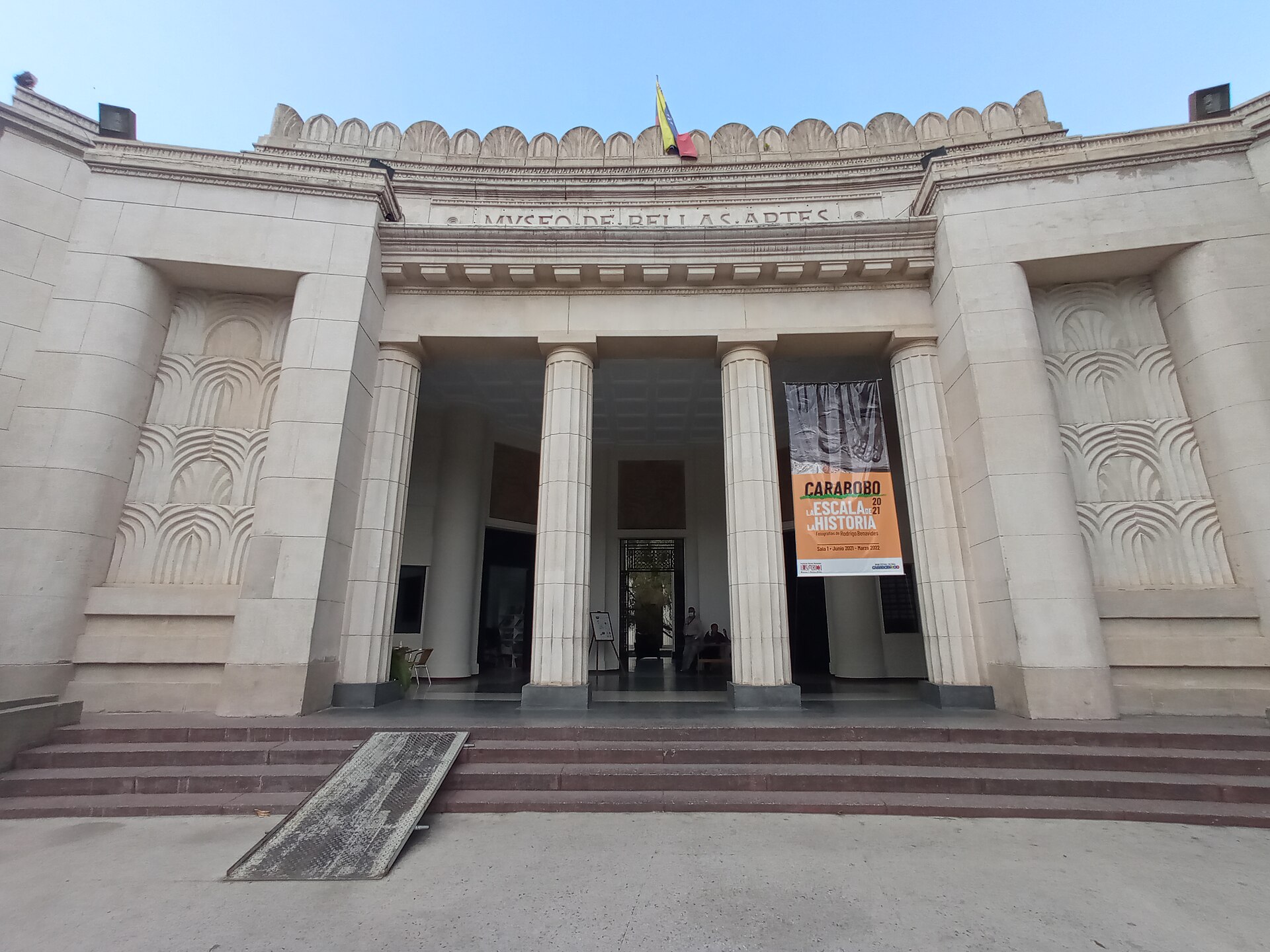
The Museo de Bellas Artes de Caracas is Venezuela's oldest fine-arts museum and the broadest in scope of the three major art institutions clustered in the Plaza de los Museos area: unlike the Galeria de Arte Nacional, which holds Venezuelan art specifically, and the Museo de Arte Contemporaneo de Caracas Sofia Imber, which is limited to modern and contemporary work, the Museo de Bellas Artes spans ancient Egypt, Chinese and European ceramics, European Old Masters, cubism and twentieth-century Hispanic-American and Venezuelan art in one collection. Its clearest strength is exactly that range under one roof, built substantially through mid-twentieth-century gift and purchase rather than through any single founding donation, together with a Venezuelan kinetic-art holding, Soto, Gego and Otero, that ties the international collection to the country's own postwar artistic movement.
| Local name | Museo de Bellas Artes |
|---|---|
| Kind | Museum |
| Founded | 1917 |
| City and country | Caracas, Venezuela |
| Address | Plaza de los Museos, Parque Los Caobos, Bellas Artes, Caracas, Venezuela |
| Website | x.com/bellasartesccs |
| Status | Open, confirmed 18 September 2026 |
| Record last verified | 18 September 2026 |
Visiting
- Hours
- Tue-Fri09:00 to 17:00As stated on the museum's own contact page (archived; the live site is currently unreachable, see notes_for_editor)
- Sat-Sun and public holidays10:00 to 17:00As stated on the museum's own contact page (archived)
- Closed
- Monday.
- Admission
- General admissionFreeThe museum is a national museum under the Fundacion Museos Nacionales and charges no entry fee; press coverage through 2025 and 2026 consistently describes events there as acceso libre (free admission)
- Do I need to book?
- No. Admission is free and sources describe walk-in access with no advance booking
- Address
- Plaza de los Museos, Parque Los Caobos, Bellas Artes, Caracas, Venezuela MapMetro Bellas Artes station on Line 1 of the Caracas Metro sits at the edge of Parque Los Caobos, a short walk from the museum entrance; the museum is also reachable on foot from Plaza Venezuela through the park
- Website
- x.com/bellasartesccs
- Telephone
- +58 212 576-2908
- [email protected]
Before you go how long, access, photography, bags, eating, shop
- How long to allow
- One to two hours across the neoclassical and modern buildings' exhibition rooms, plus the courtyard and sculpture gardens
- Access
- Not documented in the sources reviewed for this page
- Photography
- Not documented in the sources reviewed for this page
- Bags
- Not documented in the sources reviewed for this page
- Eating
- Visitor guides describe an on-site cafe with views over Los Caobos Park
- Shop
- An on-site shop and exhibition room, Caoma - Tienda de Arte, hosts small shows alongside its retail function
Prices and hours change. We take them from the institution's own pages and print the day we read them, and you can check the current position at the source we used. Confirm before you travel.
What is inside
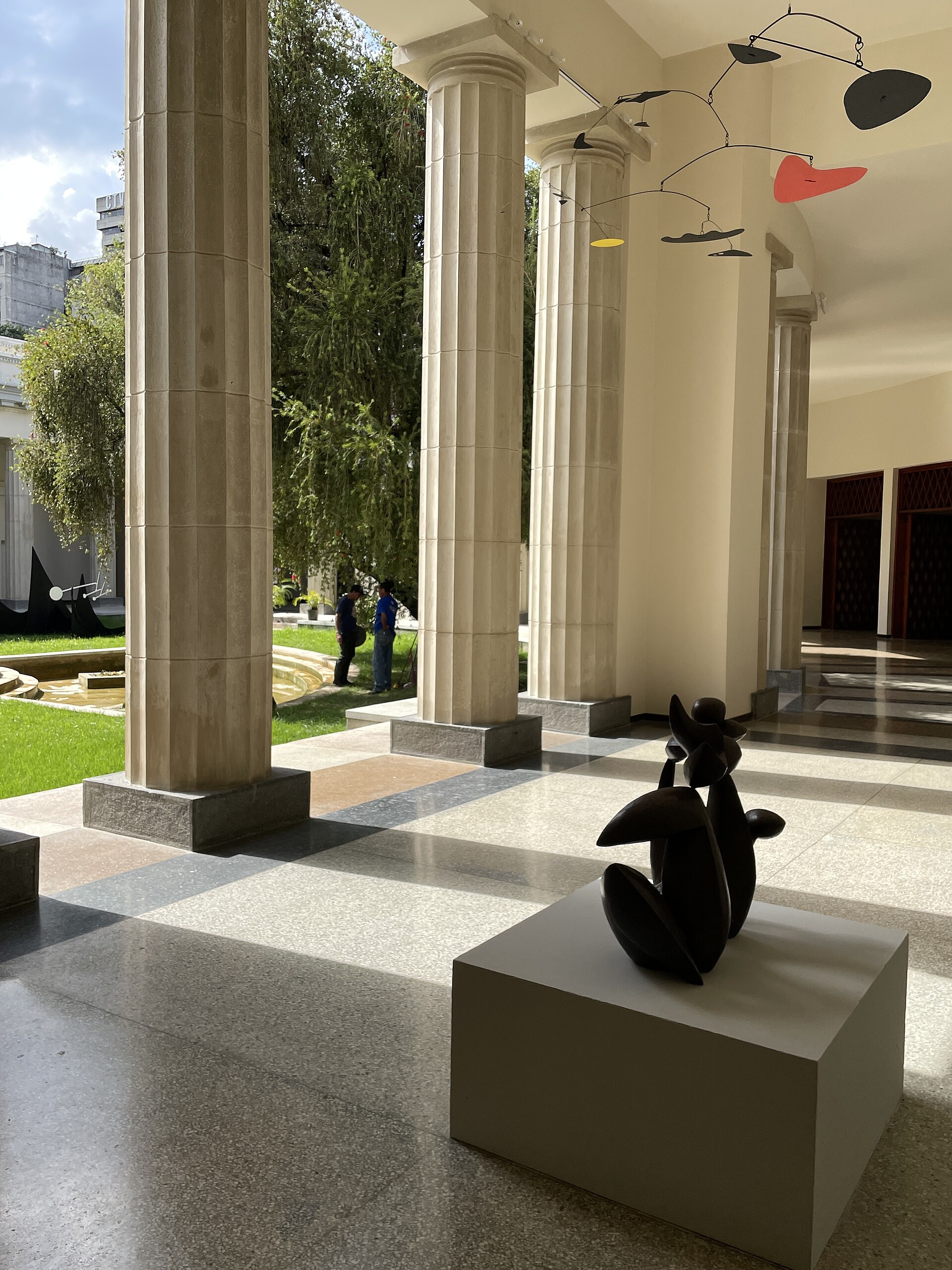
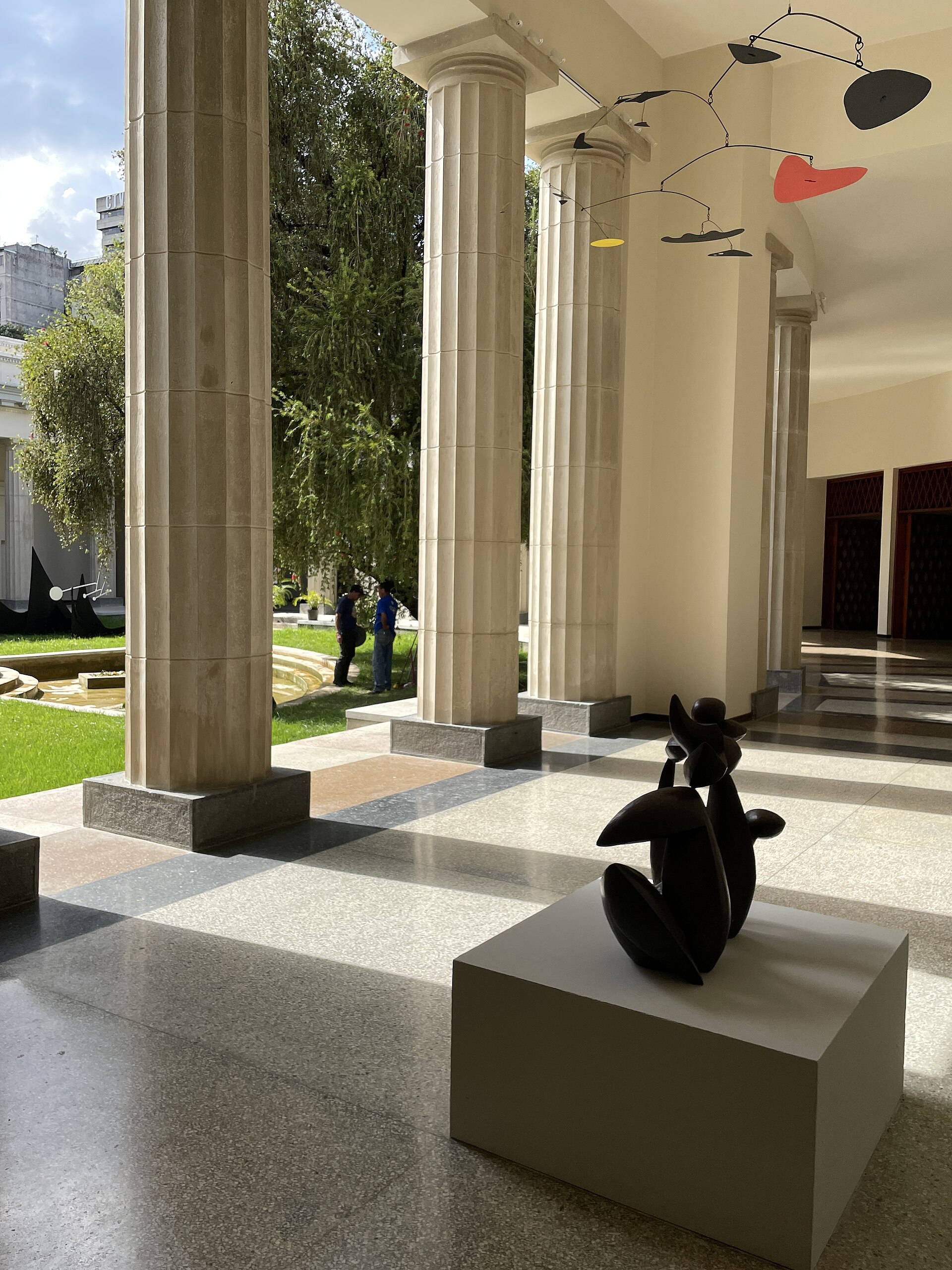
Photograph by Luchofraga · CC BY-SA 4.0 Neoclassical complex, 1938
Carlos Raul Villanueva's founding building, organized around a central patio with exhibition rooms of varying scale arranged along corridors; galleries here hold the European medieval and modern collection, the cubist collection and rotating temporary shows
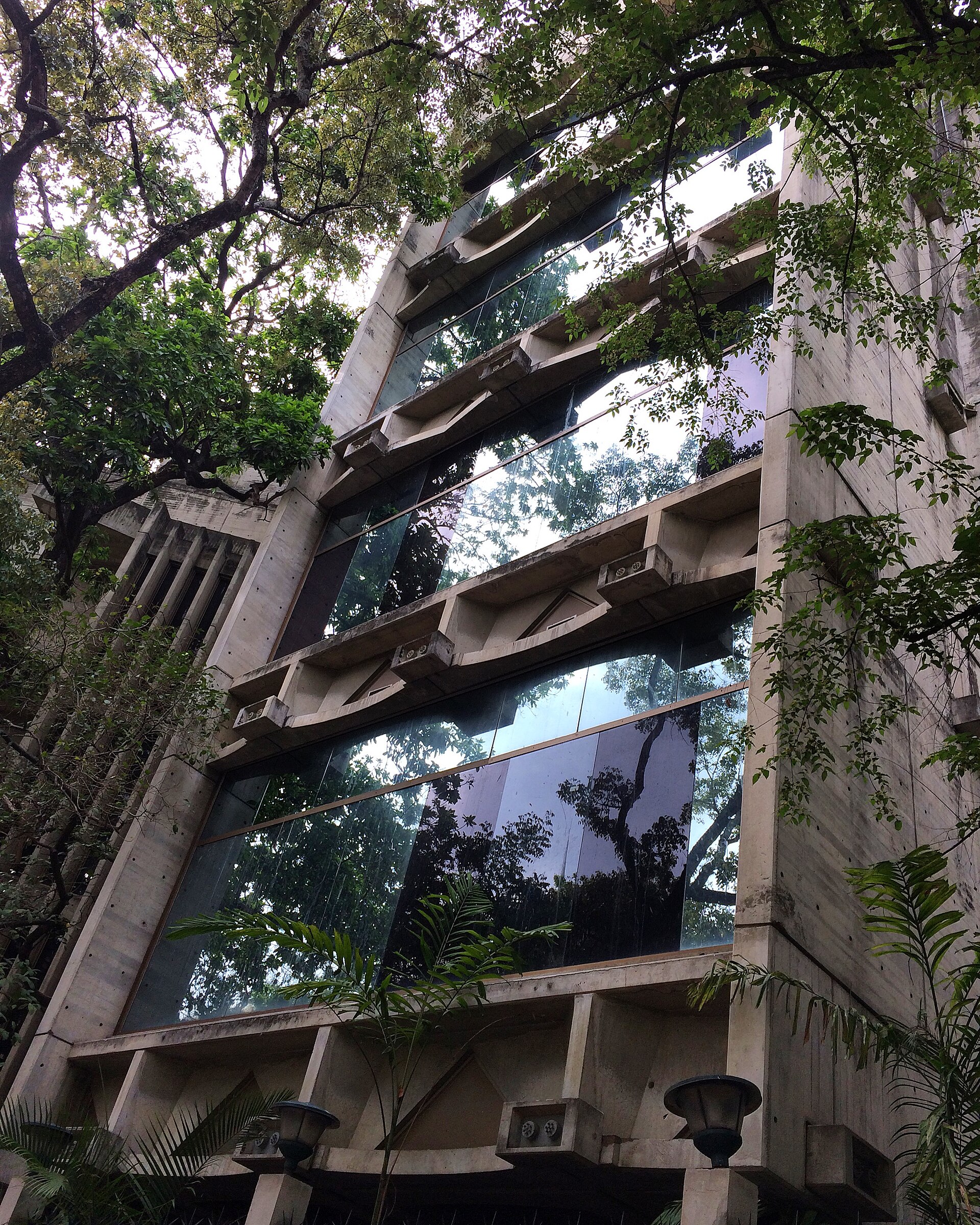
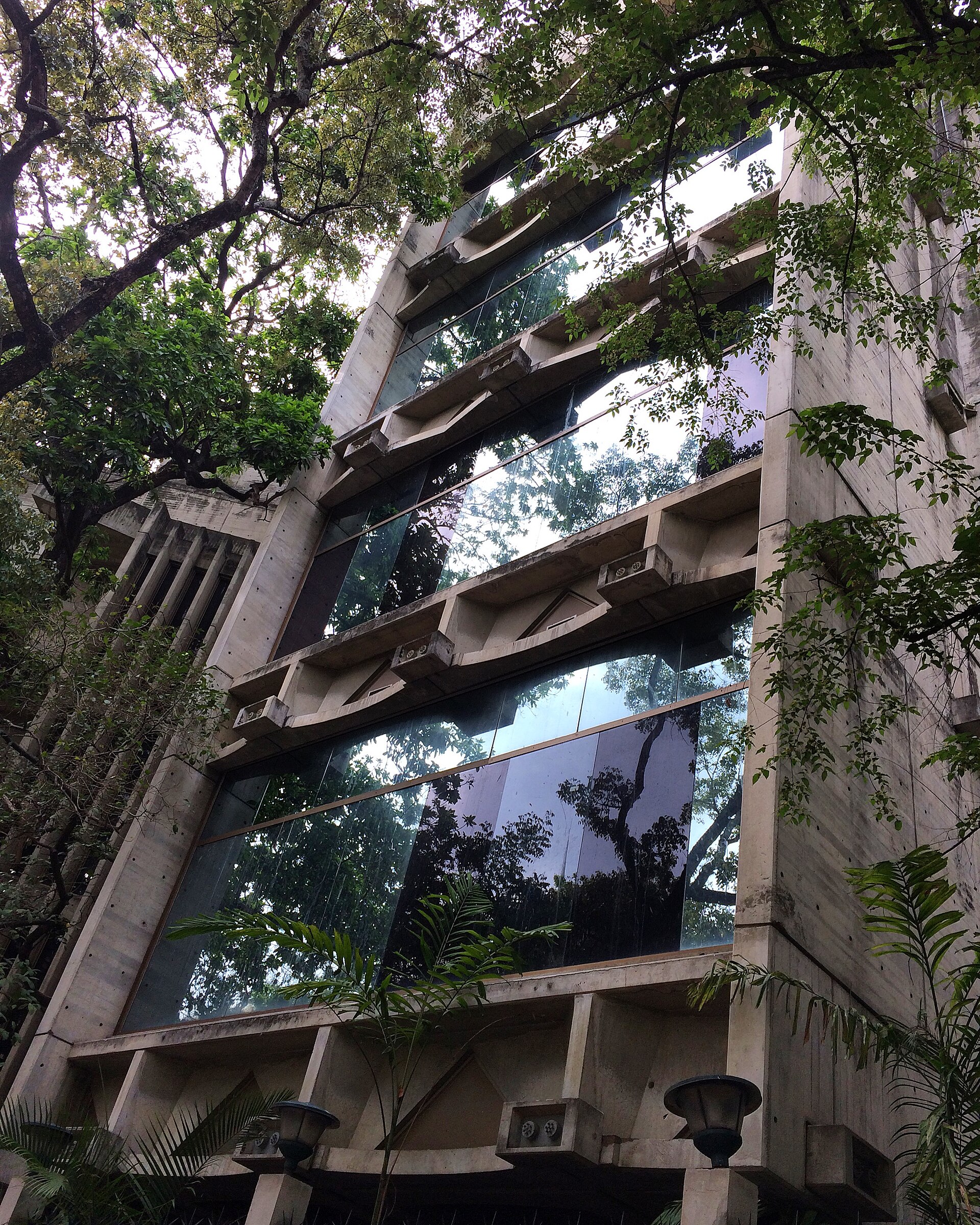
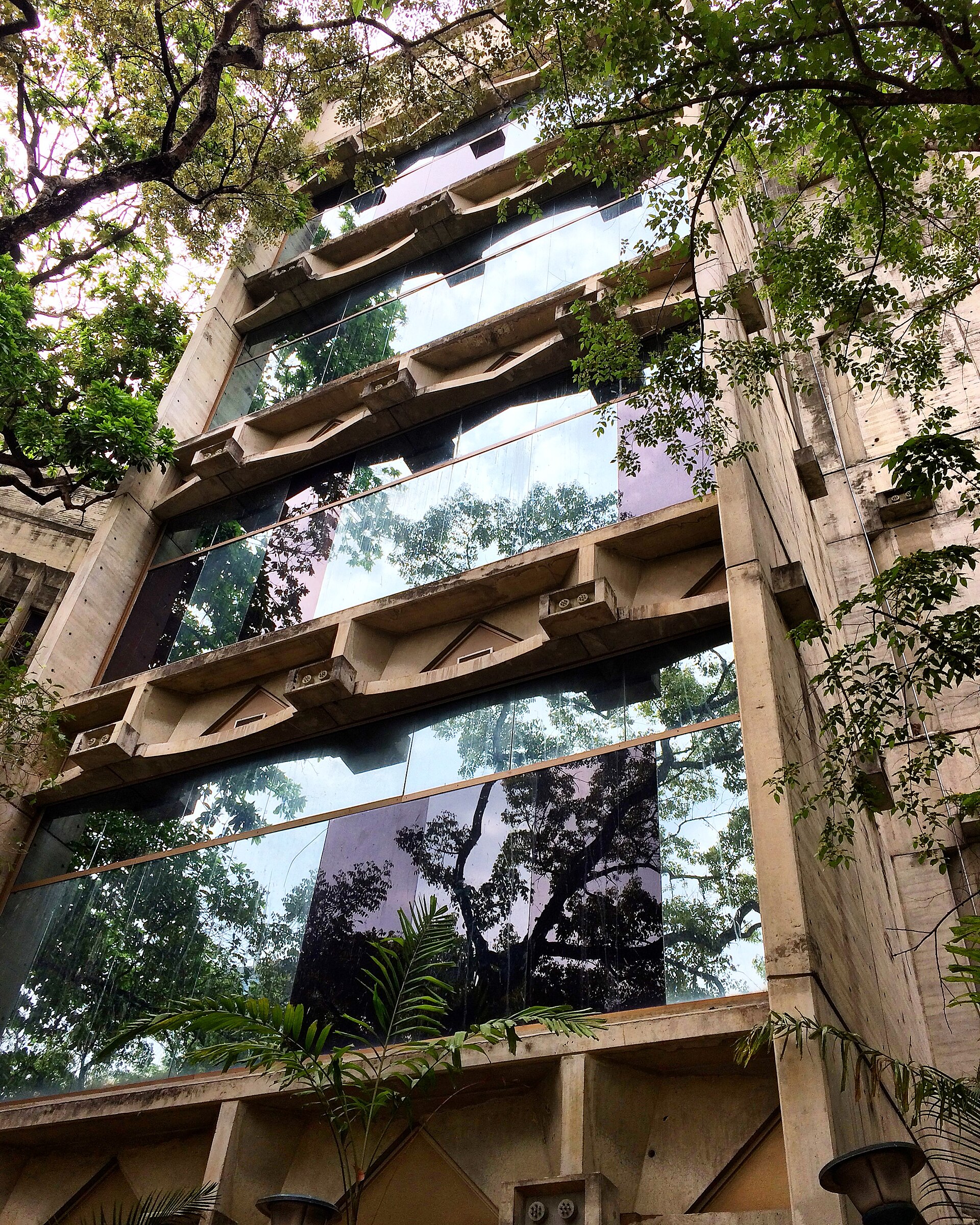
Photograph by QuinteroP · CC BY-SA 4.0 Modern complex, 1972-1973
A brutalist annex, also designed by Villanueva, built after the museum vacated its original building to house the newly created Galeria de Arte Nacional in 1976; the museum reoccupied the neoclassical building only after the Gallery moved to its own new premises in 2009. The modern complex is organized one exhibition room per floor, connected by ramps, with ground-floor gardens for sculpture
Egyptian art collection
Forty-five pieces spanning the Old Kingdom to the Ptolemaic period, bought from the Metropolitan Museum of Art in New York in 1958 and intended for display on the building's ramps across four descending levels; as of the most recent published account none of the forty-five pieces are on public view, pending a display project that has stalled for lack of funding
Chinese and European ceramics collection
Latin America's only public collection of its kind, built from a 1950 purchase of two Buddhist lion figures and later gifts: the Henrique Otero Vizcarrondo donation of Chinese porcelain in 1952, the Jose Ramon Urbaneja heirs' donation in 1954 of 295 pieces of seventeenth-century armorial export porcelain made to European noble commission, and Mercedes Moser's 1953-1958 gifts of bronze figures of the Eight Immortals and a Buddhist silk tapestry
Cubist collection
A room tracing the movement from its late-nineteenth-century roots through its influence on later avant-gardes, including Picasso, Marie Laurencin, Sonia and Robert Delaunay, Diego Rivera, Georges Braque, Juan Gris and a Marcel Duchamp box multiple containing eighty-one reproduced works and objects
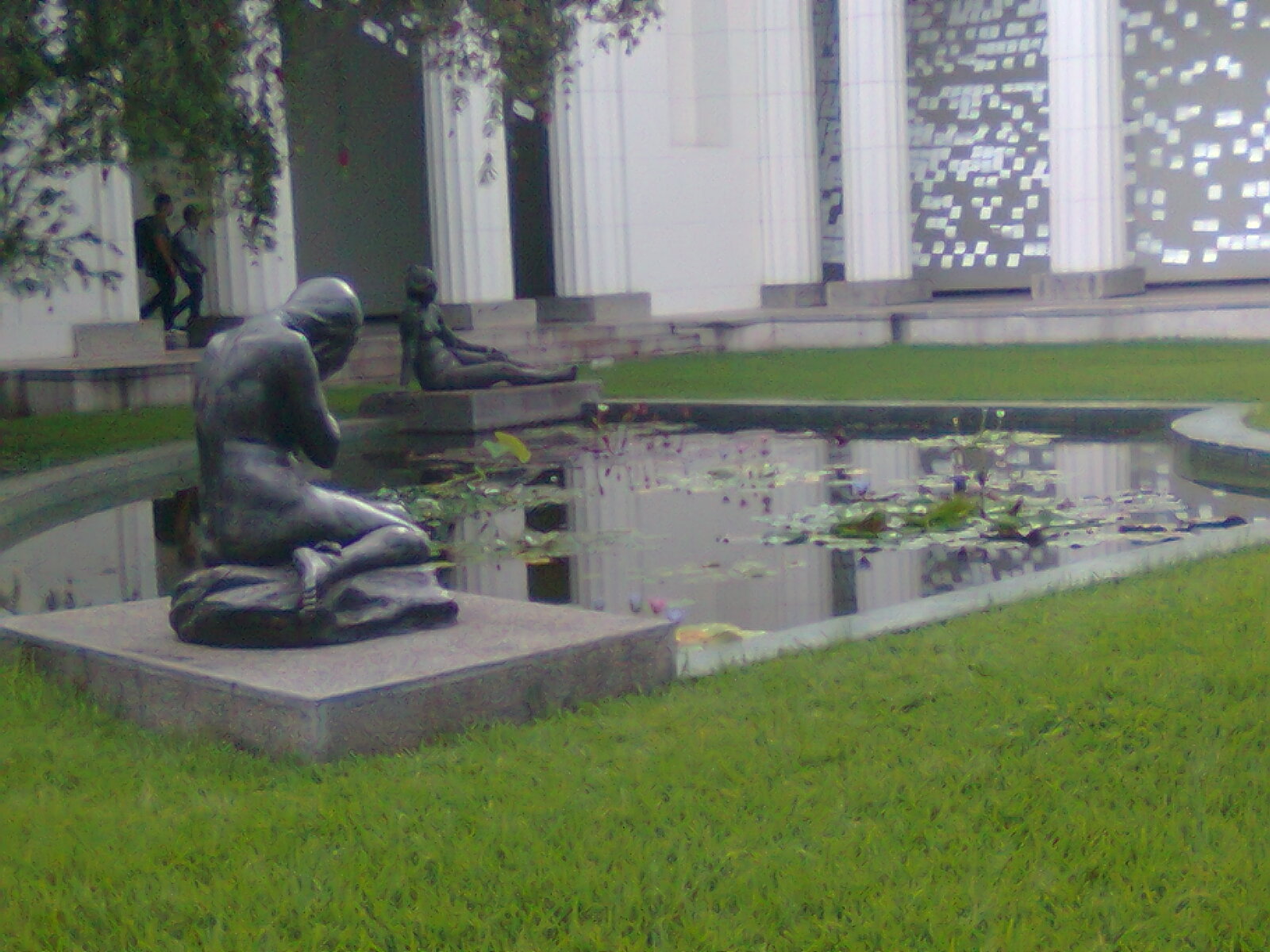
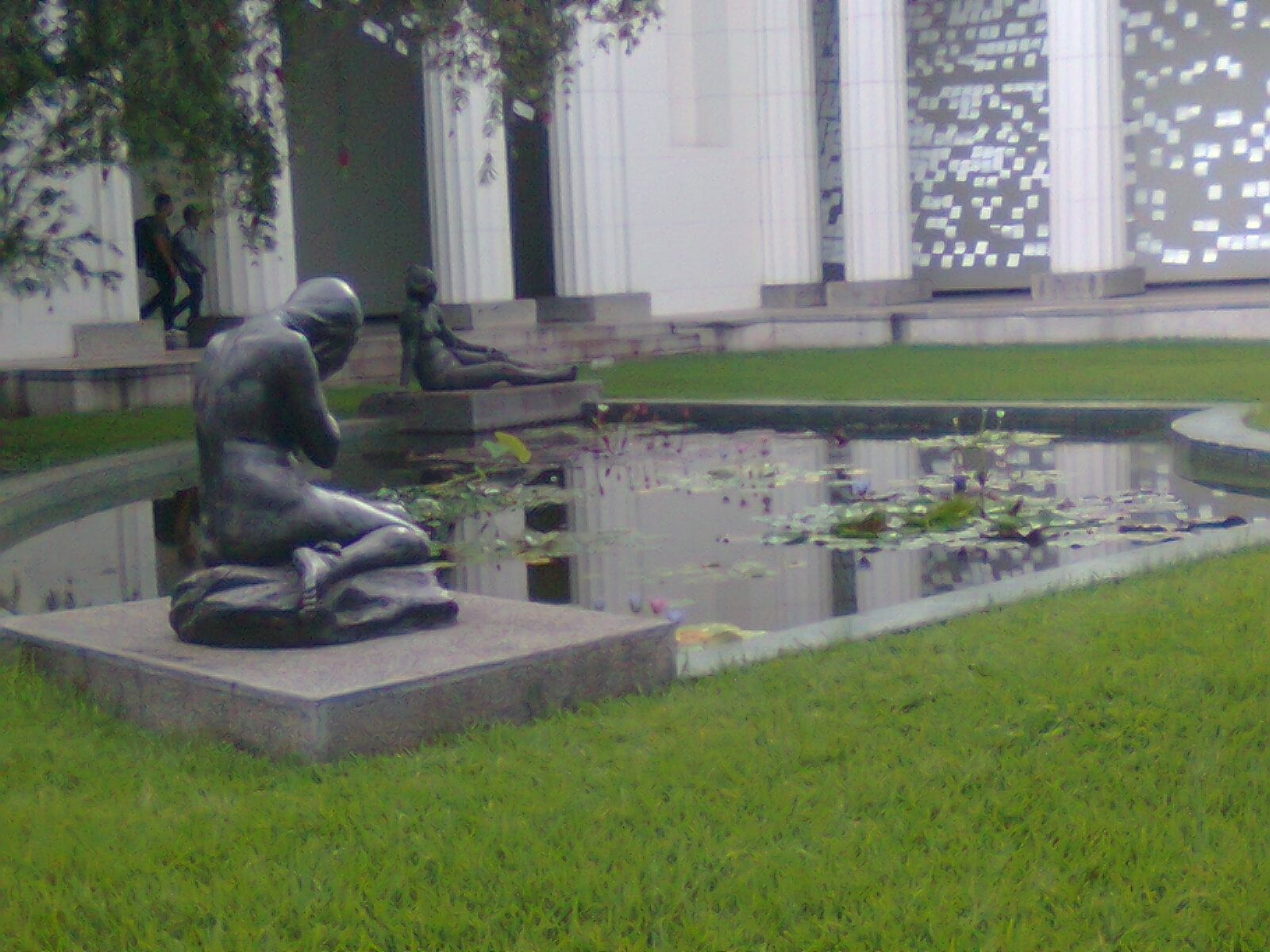
Photograph by rjoel18 · CC BY-SA 3.0 Sculpture gardens
Courtyard and ground-floor gardens holding outdoor sculpture, including a reflecting pool with bronze figures; visitor guides credit interior garden sculpture to Ernesto Maragall and the external, park-facing gardens to Alejandro Otero and Harry Abend
What to see first
Los Caprichos, Los desastres de la guerra and Los disparates (print series)
Francisco de GoyaThe museum's holding of Goya's three major graphic series anchors its European medieval and modern galleries and has been the subject of a dedicated exhibition, Goya: la mirada inconforme1
Estudio para mujer sentada en un sillon (1913)
Pablo PicassoOpens the museum's cubist room, dated to the movement's classic phase and shown alongside Braque, Gris and the Delaunays from the same collection1
La ciudad (1960)
Alexander CalderA large hanging mobile and one of the museum's most reproduced works, representative of the international modern sculpture the museum acquired through the mid-twentieth century1
Mural de Bruselas (1958)
Jesus Rafael SotoA kinetic mural by the Venezuelan artist most identified internationally with the Op Art and kinetic movement, tying the collection to Venezuela's own postwar avant-garde1
Reticularea (1969)
Gego (Gertrud Goldschmidt)A signature work by one of the defining Venezuelan sculptors of the twentieth century, representative of the museum's holding of Venezuelan kinetic and optical art alongside Soto and Otero1
The Egyptian collection (45 pieces, Old Kingdom to Ptolemaic period)
various, ancient Egyptian workshopsBought as a group from the Metropolitan Museum of Art in 1958 and judged historically significant enough that the British Museum's own Egyptian antiquities curator singled it out on a 1991 visit; none of the forty-five pieces is currently on public display, which the museum's own published account attributes to a stalled installation project rather than any dispute over the collection1
The Chinese armorial porcelain collection (295 pieces, 17th century)
Chinese export workshops, various European noble commissionsDescribed by the museum's own account as Latin America's only public collection of Chinese heraldic export porcelain, assembled almost entirely through mid-twentieth-century donation rather than purchase1
Bagnantes / Banistas desnudos
Paul CezanneOne of the museum's European nineteenth-century holdings, exhibited in the medieval and modern European galleries1
El puente de Dona Romualda (1854)
Camille PissarroAn early Pissarro landscape in the museum's European nineteenth-century holding1
Miranda en la carraca
Arturo MichelenaA history painting by one of Venezuela's most significant nineteenth-century academic painters, part of the museum's Venezuelan holdings alongside Muerte de Sucre en Berruecos14
A museum decreed before it had a home
The Museo de Bellas Artes de Caracas was created by decree on 24 July 1917, signed by Victorino Marquez Bustillos, then serving as acting president of Venezuela. It had no building of its own at first: its earliest home was a space inside the seat of the Academia Nacional de Bellas Artes, the building now occupied by the Escuela de Musica Jose Angel Lamas. The museum operated out of borrowed rooms for two decades while its own building was designed and built.
That building opened on 20 February 1938, when President Eleazar Lopez Contreras inaugurated a neoclassical structure in Parque Los Caobos designed by the architect Carlos Raul Villanueva, who would go on to shape more of Caracas's twentieth-century civic architecture than any other single figure. The building was extended once, in 1953, growing toward the rear of the plot. The museum is therefore older than its own walls: 2026 marks the 107th year since the founding decree, but only the 88th since the building most visitors know as the Museo de Bellas Artes first opened its doors.
Two buildings by one architect, on either side of a forty-year gap
Villanueva's neoclassical building was designed to be read as a single organic sequence: exhibition rooms of different sizes and ceiling heights are threaded around a central patio and connected by corridors, so a visitor moves through a continuous, flexible circuit rather than a fixed enfilade. Villanueva used natural light deliberately, drawing daylight in from the central patio and from skylights overhead, exploiting the tropical light of Caracas so that on a clear day the galleries need little artificial lighting at all; the same skylights and corridors also ventilate the building.
In 1976 the museum vacated this building entirely. The government had created a new institution, the Galeria de Arte Nacional, and gave it the Museo de Bellas Artes's own neoclassical home. Villanueva designed a second building for the displaced museum, a brutalist structure completed in the same complex between 1972 and 1973 and opened to the public on 25 July 1974, in a style deliberately unlike his first: flat facades, exposed precast concrete, and large glazed openings onto the surrounding park, with one exhibition room per floor connected by ramps rather than stairs. The two buildings, one historicist and one brutalist, sit on the same plot as a record of one architect's changing idiom over four decades. The museum did not get its original building back until 2009, when the National Art Gallery moved into a new building of its own and the Museo de Bellas Artes reoccupied the 1938 structure it had been built for.
Nine collections, built as much by gift as by purchase
The museum's holdings, some 5,638 works by its own count, are organized into nine named collections: ancient Egyptian art; Chinese and European ceramics; a cubist collection; European medieval and modern art; twentieth-century Hispanic-American painting; contemporary European and North American art; and separate print, drawing and photography collections covering Venezuelan, European and American work. Unusually for a collection this broad, much of its depth in decorative arts came from private donation rather than institutional purchase. The Chinese ceramics collection began with a 1950 purchase of two Buddhist guardian lion figures, then grew through a 1952 gift from Henrique Otero Vizcarrondo, a 1954 gift from the heirs of Jose Ramon Urbaneja of 295 pieces of seventeenth-century armorial porcelain made in China to the commission of European noble families, and further gifts of bronze and textile work from Mercedes Moser between 1953 and 1958.
The Egyptian collection has a more unusual origin still: forty-five pieces bought as a single lot from the Metropolitan Museum of Art in New York in 1958, spanning the Old Kingdom through the Ptolemaic period. The museum's own published account records that in 1991, Stephen Quirke, then curator of Egyptian antiquities at the British Museum, visited and singled out the collection's rarity, noting how comprehensively it covers Egyptian history across such a small number of objects.
What is actually on the walls
The nineteenth- and twentieth-century European holding includes Bernardo Strozzi, Camille Pissarro's El puente de Dona Romualda of 1854, Paul Cezanne's Banistas desnudos, and graphic work by Francisco de Goya spanning Los Caprichos, Los desastres de la guerra and Los disparates. The cubist room runs from Picasso's 1913 Estudio para mujer sentada en un sillon through Marie Laurencin, Auguste Herbin, Sonia and Robert Delaunay, Maria Blanchard, Diego Rivera, Guillaume Apollinaire, Georges Braque, Henri Laurens, Emilio Pettoruti, Kurt Schwitters and Juan Gris, with a Marcel Duchamp box-multiple, one of an edition containing eighty-one reproduced works and objects behind glass, as a coda to the room.
The Hispanic-American twentieth-century collection, 428 works, includes Fernando Botero, Wifredo Lam, Roberto Matta, Rufino Tamayo and Diego Rivera's Mujer con alcatraces, alongside the Venezuelan holding that gives the museum its strongest local identity: Arturo Michelena's history paintings, and the kinetic and optical sculpture of Jesus Rafael Soto, whose 1958 Mural de Bruselas was made for the Venezuelan pavilion at that year's Brussels World's Fair, Gego's 1969 Reticularea, and Alexander Calder's 1960 hanging mobile La ciudad, one of the museum's most photographed works.
The Egyptian collection nobody can see
None of the forty-five Egyptian pieces bought from the Metropolitan Museum in 1958 is currently on public display. The museum's own published account is specific about why: the collection was meant to be installed along the building's interior ramps, arranged across four descending levels running from the oldest pieces at the top to the most recent at the bottom, evoking the descending passages of an Egyptian temple or pyramid. That installation project has been stalled for years for lack of funding. Staff dust the pieces in storage through the narrow gaps in their display cases only when necessary, to avoid damaging them, and a further fifteen pieces from the same 1958 purchase have reportedly never been exhibited at all. This is not a restitution dispute or a provenance question; the purchase from the Met is documented and undisputed. It is, instead, a case of a significant, identifiable collection that exists, is owned outright, and simply cannot be seen by the public the museum otherwise serves, for reasons of infrastructure rather than title.
A restoration that outlasted its own schedule
By late 2023 the museum was undergoing what its director, Zacarias Garcia, called one of the most significant rehabilitation efforts in its infrastructure's history. Venezuela's Minister of Culture inspected the work on 30 November 2023, by which point contractors had already stripped roughly eleven layers of paint from the original corridors to reach Villanueva's intended finishes, alongside waterproofing, air-conditioning rehabilitation and garden tree-pruning. The museum stayed partially open through this phase, admitting the public to an experimental room on weekends to see the V Bienal del Sur exhibition, which had opened on 29 November 2023, while the corridor work continued around it. A first phase, covering the corridors, was due to finish by mid-December 2023, with a second phase covering the interior galleries beginning in January 2024.
The museum announced its reinauguration on 3 July 2024, timed deliberately to fall in the same month as its founding decree, with three new exhibitions alongside the returning permanent displays. That did not end the cycle: a Ministry of Culture announcement dated 16 September 2026, two days before this page was researched, confirmed the museum remains open and actively programming, including a photography workshop beginning 24 September 2026, while noting in the same announcement that its exhibition areas remain closed for what it described as minor rehabilitation work. The pattern across nearly a decade of coverage is not a single closure but a recurring one: the museum keeps operating, keeps opening new shows, and keeps taking sections of its own building out of public use to fix them.
Visiting today
Admission is free, consistent with the museum's status as a national museum under the Fundacion Museos Nacionales; Ministry of Culture announcements through 2025 and into 2026 describe events at the museum repeatedly as acceso libre. The museum's own contact page, last available before its site became unreachable, listed hours as Tuesday to Friday from 9:00 to 17:00 and Saturday, Sunday and public holidays from 10:00 to 17:00, closed Monday; more recent secondary sources give a simpler Tuesday-to-Sunday schedule, and the discrepancy has not been resolved against a current primary source, since the museum's own website could not be reached during this research. Visitor guides describe an on-site cafe overlooking Los Caobos Park, and the museum operates a shop and small exhibition space named Caoma - Tienda de Arte.
On Tripadvisor the museum holds a 4.2 out of 5 rating from 220 reviews, a solidly positive score that matches the pattern in the reviews themselves: consistent praise for the free entry, the collection's range, and the calm of the colonnaded courtyard, set against recurring notes that some halls were closed for repair on the day of the visit, that the grounds show wear in places, and that the surrounding park and central Caracas area call for ordinary caution after dark. None of that contradicts the museum's own record; the institution's published statements describe the same cycle of partial closures for restoration that visitors report finding on arrival.
What visitors say
Visitors consistently single out the museum's free admission, the calm of its colonnaded central patio and reflecting-pool gardens, and the range of a collection that runs from ancient Egypt and seventeenth-century Chinese porcelain through European Old Masters to Picasso, Cezanne and Venezuela's own kinetic artists. Set against that, the same visitors and the museum's own published statements describe a building in a long cycle of partial closures for repair: exhibition halls shut for restoration work recur as a theme across reviews spanning several years, and as recently as September 2026 the museum's own announcements note that exhibition areas remain closed for minor rehabilitation even while public programs continue. Reviewers separately flag the wider Parque Los Caobos area as a safety concern, distinct from the museum grounds themselves.
What is praised, what is criticised
- Praised: Free general admission with no ticket required
- Praised: The neoclassical building's colonnaded central patio and courtyard gardens, described as a quiet retreat from central Caracas
- Praised: The breadth of the collection, spanning ancient Egyptian, Chinese, European and Latin American holdings in one institution
- Praised: Convenient access from the Bellas Artes Metro station
- Criticised: Recurring partial closures of exhibition halls for repair and restoration work, reducing the galleries actually open to visitors on a given visit
- Criticised: Visible wear to the grounds, including damaged lawn areas, noted in visitor reviews
- Criticised: Safety concerns in the surrounding Parque Los Caobos and central Caracas area, separate from the museum's own premises
Ratings on other platforms
Tripadvisor: 4.2 from 220 ratings, read 18 September 2026
A platform average is a tertiary source: it moves, it is not audited, and we quote no visitor's words.
Questions about Museo de Bellas Artes de Caracas
Where is Museo de Bellas Artes de Caracas?
Plaza de los Museos, Parque Los Caobos, Bellas Artes, Caracas, Venezuela.
How much does it cost to visit?
General admission: free. As confirmed 18 September 2026.
When is it open?
Tue-Fri 09:00-17:00; Sat-Sun and public holidays 10:00-17:00. Closed: Monday. As confirmed 18 September 2026.
How do you get there?
Metro: Bellas Artes station on Line 1 of the Caracas Metro sits at the edge of Parque Los Caobos, a short walk from the museum entrance; the museum is also reachable on foot from Plaza Venezuela through the park.
What should you see first?
Los Caprichos, Los desastres de la guerra and Los disparates (print series) (Francisco de Goya); Estudio para mujer sentada en un sillon (1913) (Pablo Picasso); La ciudad (1960) (Alexander Calder); Mural de Bruselas (1958) (Jesus Rafael Soto); Reticularea (1969) (Gego (Gertrud Goldschmidt)); The Egyptian collection (45 pieces, Old Kingdom to Ptolemaic period) (various, ancient Egyptian workshops).
What we could not confirm
- Whether the September 2026 minor rehabilitation work affecting the museum's exhibition areas has a published end date or scope beyond the museum's brief own announcement
- Whether the Egyptian collection's stalled ramp-installation project, last reported years ago, has since resumed or received funding, and how many of the forty-five pieces remain entirely unexhibited
- The exact current opening hours: the museum's own contact page, last confirmed via an archived 2017 snapshot, lists a Tuesday-to-Friday and a separate weekend schedule, while more recent secondary sources describe a single uniform Tuesday-to-Sunday schedule; this could not be resolved against the museum's own site, which was unreachable throughout this research
Images
Sources
- 1Museo de Bellas Artes de Caracas, Wikipedia in Spanish (tertiary; institutional history, architecture, collection inventory, directors, named works) es.wikipedia.org/wiki/Museo_de_Bellas_Artes_de_Caracas
- 2Museo de Bellas Artes (Caracas), Wikipedia in English (tertiary; the 1976-2009 exchange of buildings with the Galeria de Arte Nacional) en.wikipedia.org/wiki/Museo_de_Bellas_Artes_(Caracas)
- 3Wikidata, Q2630111 (tertiary; identity, coordinates, founding date, official website, confirms no dissolution date recorded) wikidata.org/wiki/Q2630111
- 4Museo de Bellas Artes, official contact page, archived by the Wayback Machine 2017-10-05 (the live site could not be reached during this research; address, phone, email and hours) web.archive.org/web/20171005141040/http://mba.fmn.gob.ve:80/contacto-11
- 5Ministerio del Poder Popular para la Cultura, 'El MBA albergara el taller Teoria antigua y uso de la camara del telefono celular' (2026-09-16; confirms the museum operating, notes exhibition areas closed for minor rehabilitation) mincultura.gob.ve/noticias/el-mba-albergara-el-taller-teoria-antigua-y-uso-de-la-camara-del-telefono-celular/
- 6Ministerio del Poder Popular para la Cultura, 'Museo de Bellas Artes de Caracas reabrio sus puertas' (2024-07-03; reinauguration after restoration) mincultura.gob.ve/noticias/museo-de-bellas-artes-de-caracas-reabrio-sus-puertas/
- 7Ministerio del Poder Popular para la Cultura, 'Ministro Villegas superviso trabajos de restauracion integral en el Museo de Bellas Artes' (2023-11-30; scope of the 2023-2024 restoration) mincultura.gob.ve/noticias/ministro-villegas-superviso-trabajos-de-restauracion-integral-en-el-museo-de-bellas-artes/
- 8Ministerio del Poder Popular para la Cultura, 'Marco Cardenas se presenta en el MBA con El oficio de la imagen' (2026-03-21; confirms normal operation into 2026) mincultura.gob.ve/noticias/marco-cardenas-se-presenta-en-el-mba-con-el-oficio-de-la-imagen-2/
- 9Ministerio del Poder Popular para la Cultura, 'El Museo de Bellas Artes albergara la muestra expositiva Arte y Reparacion. Una cita con el Congo' (2022-10-12) mincultura.gob.ve/noticias/el-museo-de-bellas-artes-albergara-la-muestra-expositiva-arte-y-reparacion-una-cita-con-el-congo/
- 10Ministerio del Poder Popular para la Cultura, 'El Museo de Bellas Artes a casa llena con la inauguracion de la exposicion Ciudad en Vinetas' mincultura.gob.ve/noticias/el-museo-de-bellas-artes-a-casa-llena-con-la-inauguracion-de-la-exposicion-ciudad-en-vinetas/
- 11Ministerio del Poder Popular para la Cultura, 'El Museo de Bellas Artes de Caracas inauguro la muestra Ciudad Urlante' (2022-10-31) mincultura.gob.ve/noticias/el-museo-de-bellas-artes-de-caracas-inauguro-la-muestra-ciudad-urlante-que-hace-una-sintesis-plastica-de-la-carrera-del-maestro-hugo-marino/
- 12Ministerio del Poder Popular para la Cultura, 'Los museos nacionales vienen con una gran agenda este sabado' (2025-09-26; confirms free admission) mincultura.gob.ve/noticias/los-museos-nacionales-vienen-con-una-gran-agenda-este-sabado/
- 13Tripadvisor, Museo de Bellas Artes reviews (tertiary; aggregate rating and visitor sentiment) tripadvisor.com/Attraction_Review-g316066-d315223-Reviews-Museo_de_Bellas_Artes-Caracas_Capital_Region.html
- 14VenezuelaTuya.com, 'Museo de Bellas Artes' (visit practicals: access, cafe, gardens, architecture) venezuelatuya.com/caracas/museo_bellas_artes.htm
- 152001online.com, 'Cinco museos con entrada gratuita para visitar en Caracas: conozca las ubicaciones y horarios' (2026-01-12; admission and hours) 2001online.com/comunidad/cinco-museos-con-entrada-gratuita-para-visitar-en-caracas-conozca-las-ubicaciones-y-horarios-20261121500
- 16Wikimedia Commons, Category:Museo de Bellas Artes de Caracas commons.wikimedia.org/wiki/Category:Museo_de_Bellas_Artes_de_Caracas