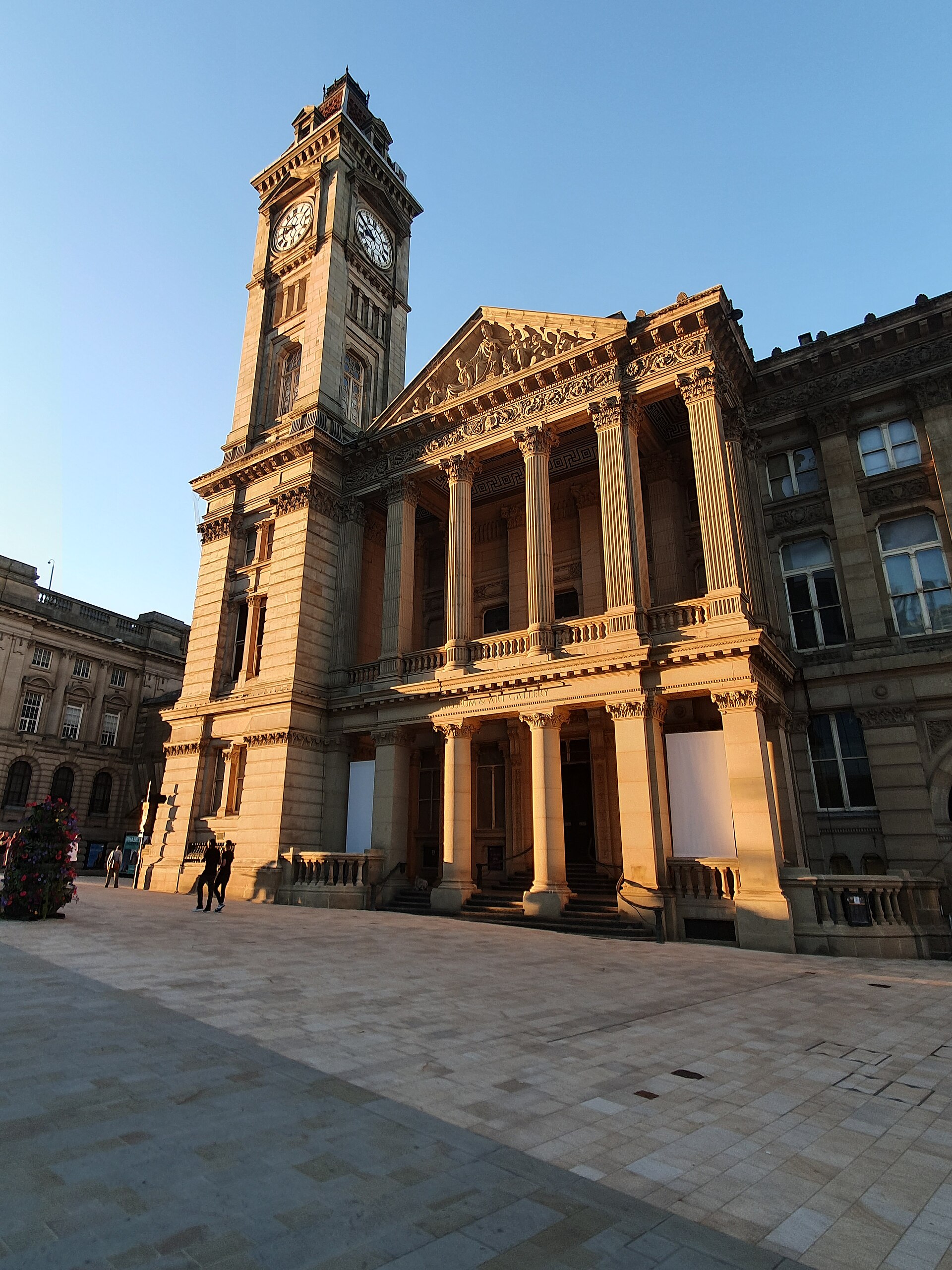
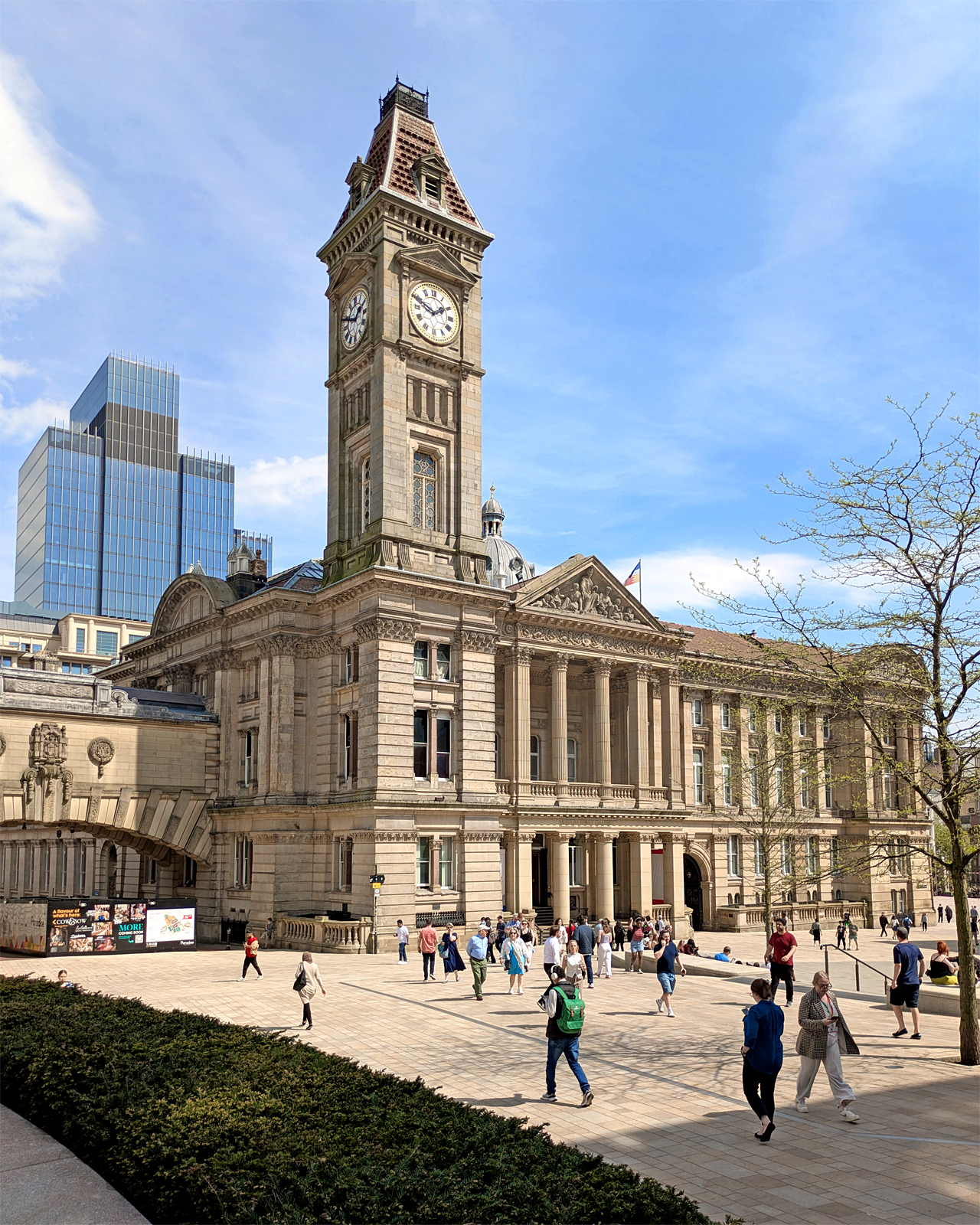
The clock tower and Corinthian portico of Birmingham Museum and Art Gallery, seen from Chamberlain Square at evening light, with MUSEUM AND ART GALLERY carved into the frieze.
Photograph by Mutney, released CC BY-SA 4.0Birmingham Museum and Art Gallery
Museum · Founded 1885
Open, admission and hours confirmed 11 September 2026 · 18 sources
On this page 15 sections
ContentsClose
Birmingham Museum and Art Gallery's claim on a visitor's time rests on two collections that would each justify a trip alone: the largest public holding of Pre-Raphaelite and Arts and Crafts art anywhere, and the largest hoard of Anglo-Saxon gold and silver ever found, shown together with Egyptian, Assyrian and Mesopotamian material deep enough to rival institutions many times its size. All of it is free to see. Around that core sits a building worth the visit in its own right, a Victorian civic monument still mid-way through putting itself back together after a four-year closure, which means the collection a visitor meets today is real but partial, and the museum itself is candid about that rather than pretending the 2024 reopening was the whole story.
| Kind | Museum |
|---|---|
| Founded | 1885 (opened by the Prince of Wales on 28 November 1885; the founding collections, including the Sultanganj Buddha, were first shown publicly in 1867) |
| City and country |  Birmingham, United Kingdom Birmingham, United Kingdom |
| Address | Chamberlain Square, Birmingham, B3 3DH, United Kingdom |
| Website | birminghammuseums.org.uk/bmag |
| Status | Open, confirmed |
| Record last verified |
Visiting
- Hours
- Tuesday-Sunday (term time)10:00 to 17:00Last entry 16:45
- Monday (term time)Closed, except bank holiday Mondays
- Daily, including Mondays (24 Oct-1 Nov 2026 half-term)10:00 to 17:00Last entry 16:45
- Closed
- Monday, except bank holiday Mondays and the school holiday period above.
- Admission
- General admission (all ages)FreeFree. Donations welcome
Free entry: Every day - the permanent collection has no admission charge- Do I need to book?
- No booking needed for general admission; a ticketed exhibition in the Gas Hall, when one is running, may need its own ticket
- Address
- Chamberlain Square, Birmingham, B3 3DH, United Kingdom MapTrain Birmingham New Street, about 10 minutes on foot
Train Birmingham Snow Hill, about 10 minutes on foot
Tram Town Hall stop, West Midlands Metro Line 1, a few minutes' walk
Bus Stops on Colmore Row serve routes including the 9, X10, 82, 87 and 101 - Website
- birminghammuseums.org.uk/bmag
- Telephone
- +44 121 348 8000
- [email protected]
Before you go how long, access, photography, bags, eating, shop
- How long to allow
- Two to three hours for the reopened permanent galleries, longer with a Gas Hall exhibition on
- Access
- Step-free access using the museum's lifts; a disabled toilet and baby-changing facilities on site; Blue Badge parking nearby on Margaret Street and Edmund Street
- Photography
- Personal, non-commercial photography is allowed in most galleries unless a sign says otherwise; no tripods, selfie sticks or flash
- Bags
- Birmingham Museums reserves the right to search bags and personal property and to refuse entry
- Eating
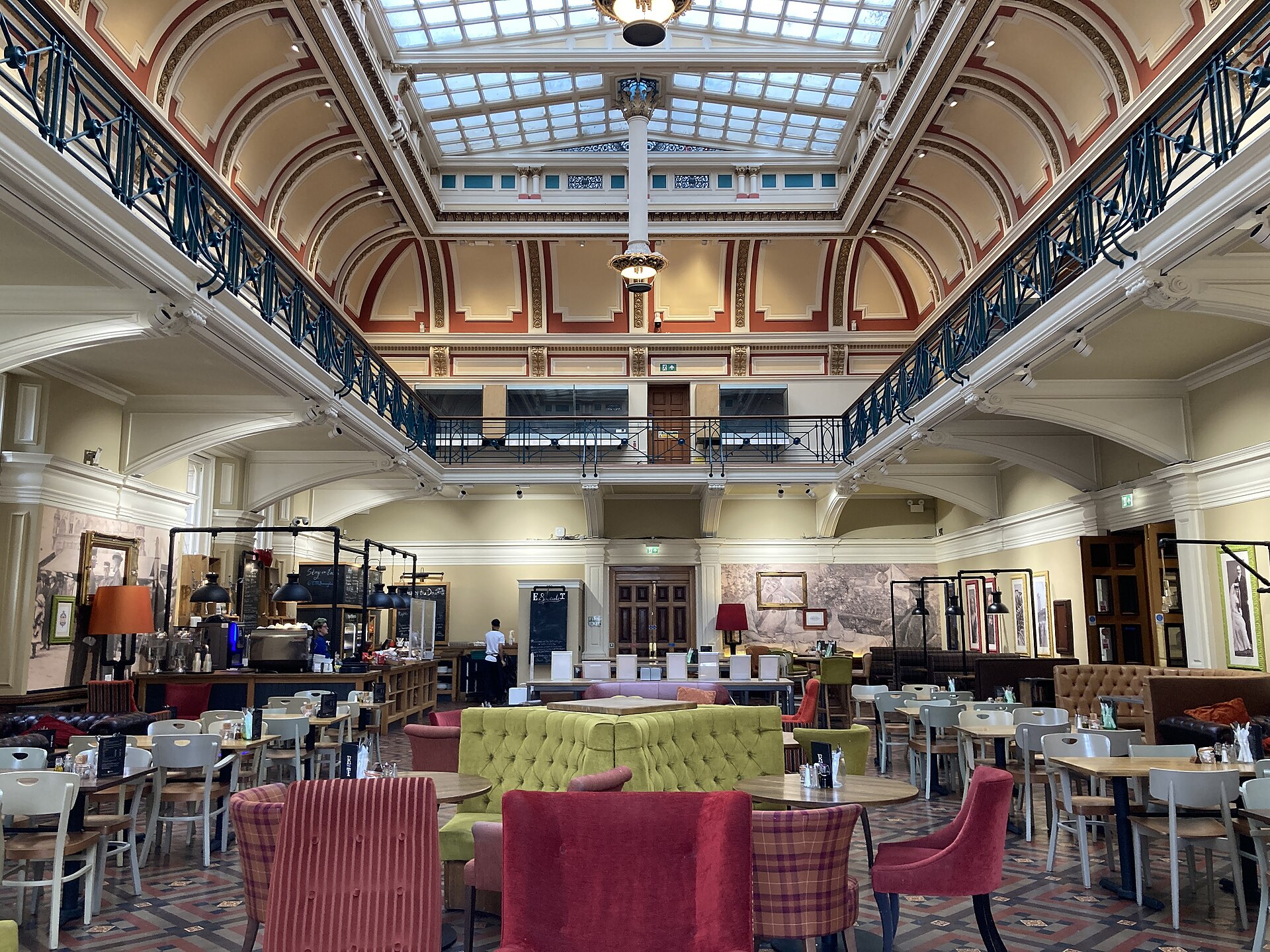
- Edwardian Tea Rooms, open through museum hours
- Shop
- Museum shop on site
Prices and hours change. We take them from the institution's own pages and print the day we read them, and you can check the current position at the source we used. Confirm before you travel.
What is inside
Staffordshire Hoard Gallery
Hundreds of pieces from the largest hoard of Anglo-Saxon gold and silver ever found, dug from a Staffordshire field in 2009, shown with a reconstructed helmet and a recreated Anglo-Saxon mead hall, with unrestricted viewing during opening hours since the 2024 reopening.
Pre-Raphaelite Galleries
Four refurbished rooms holding more than sixty paintings, sculptures and stained glass panels by Ford Madox Brown, Edward Burne-Jones, Dante Gabriel Rossetti, John Everett Millais and Simeon Solomon, drawn from the largest public collection of Pre-Raphaelite and Arts and Crafts material anywhere.
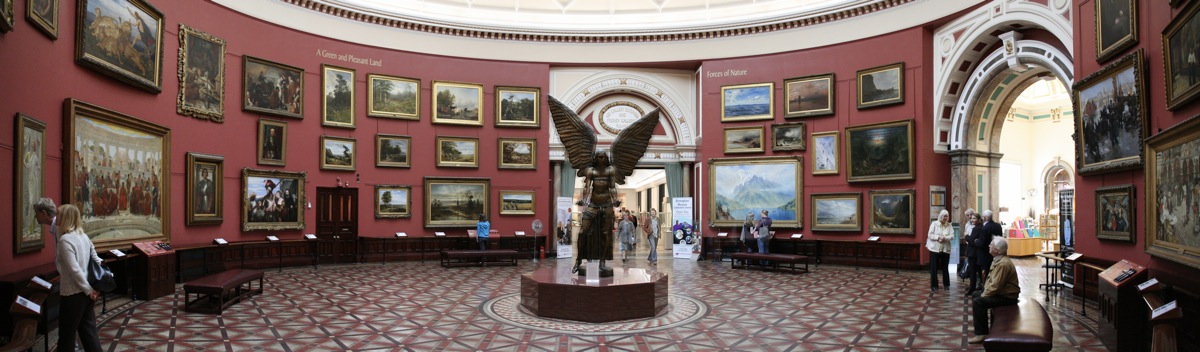
Photograph by JimmyGuano · CC BY 2.0 Round Room
A circular, top-lit gallery hung with paintings around Jacob Epstein's bronze Lucifer, restaged since October 2024 as One Fresh Take, a display that mixes Victorian landscape painters such as David Cox with contemporary and Black British artists including Lubaina Himid.
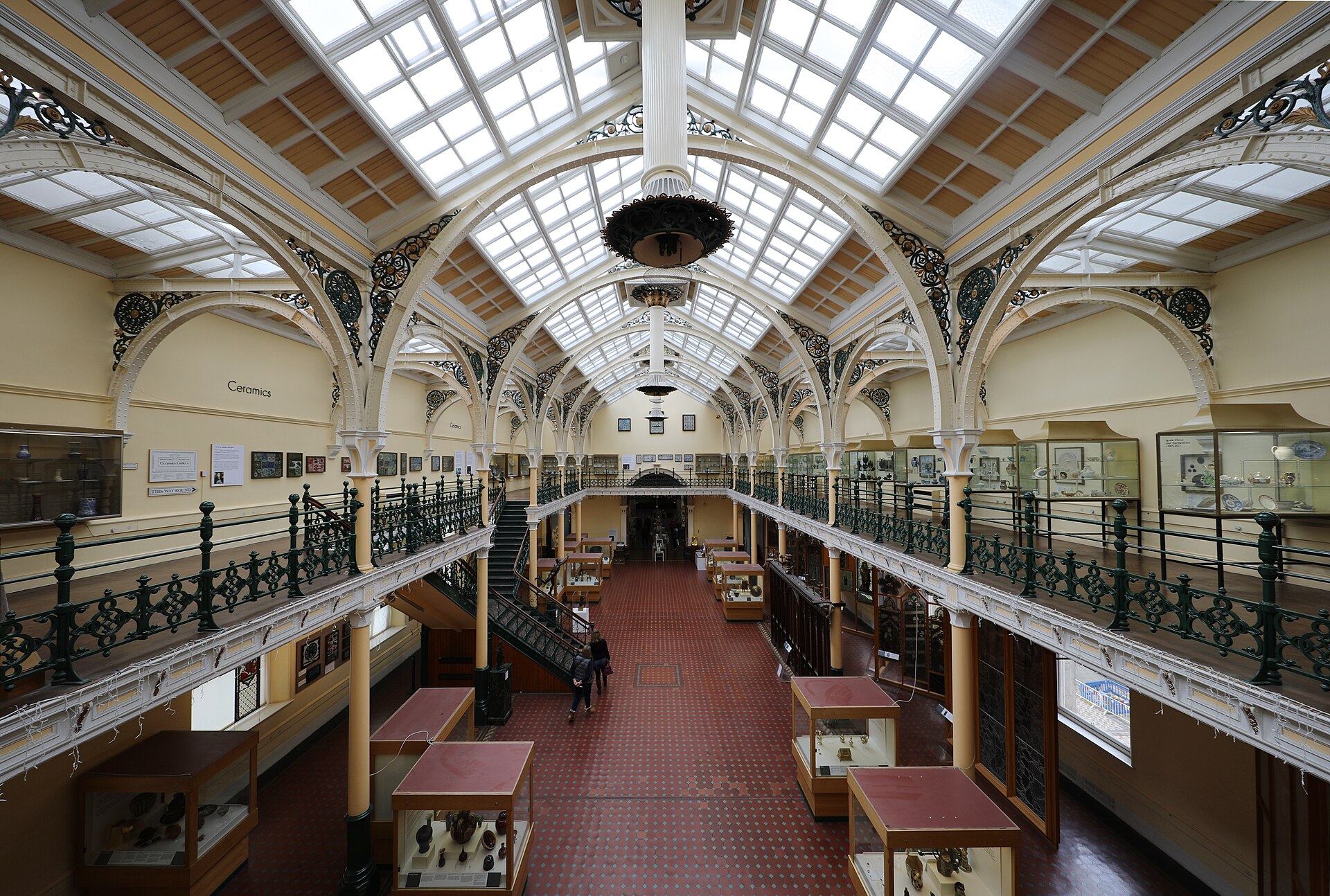
Photograph by Geni · CC BY-SA 4.0 Industrial Gallery
A glass-roofed Victorian arcade under ornamental cast-iron arches, now home to the Made in Birmingham display: jewellery, metalwork and manufactured objects built around the salvaged neon sign from the demolished HP Sauce factory, telling the story of the city of a thousand trades.
Birmingham: Its People, Its History
Traces the city from a small medieval settlement to a globally significant industrial and multicultural metropolis, told through local objects and voices rather than a single official narrative, alongside the Balcony Galleries' rotating displays on Birmingham heritage.
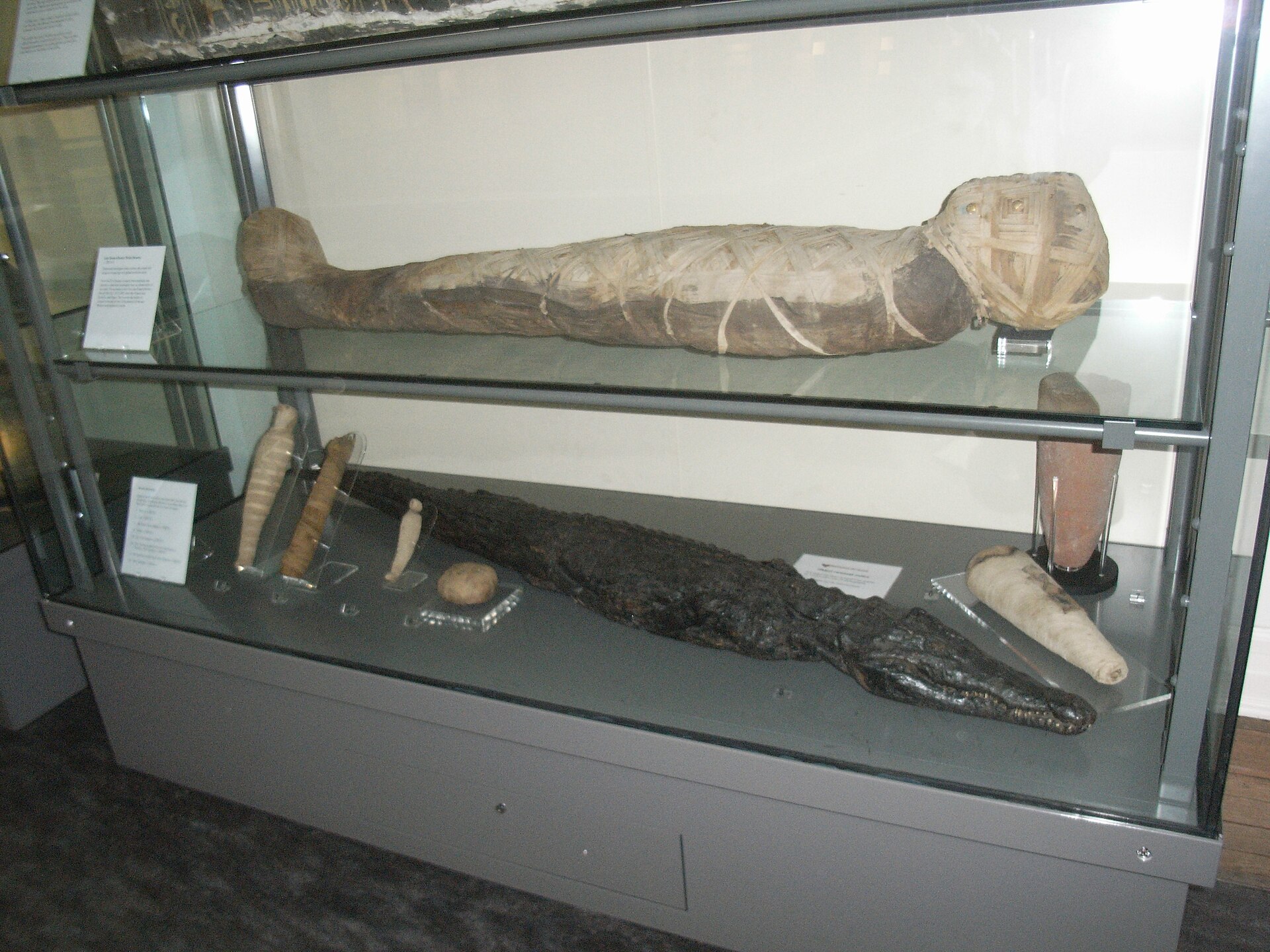
Photograph by Notafly · CC BY-SA 3.0 Ancient Egypt and the Ancient Mediterranean
Egyptian mummies, amulets, coffin fragments and funerary goods shown alongside Assyrian palace reliefs, Mesopotamian cuneiform tablets and Greek and Roman material, one of the deepest ancient collections held by any museum outside London. As of the museum's own visit page, confirmed 11 September 2026, the Ancient History Galleries on level 3 remain among the spaces still closed in the phased reopening, alongside the Art Galleries on level 2; the collection itself is not dispersed, it is off view pending further phases.
Wild City
Two family galleries opened in the October 2024 reopening, exploring the wildlife and nature found within Birmingham itself through hands-on and sensory displays aimed at children.
The Elephant in the Room: The Roots and Routes of the City's Collections
A gallery opened 10 May 2025 bringing together objects from across the museum's collections, including the Sultanganj Buddha, a 22-foot Inuit kayak and mummified animals, built specifically to explain how these objects came to Birmingham and to put empire, colonialism, repatriation and the display of human remains in front of visitors rather than leaving that history unstated.
What to see first
The Staffordshire Hoard
Anglo-Saxon metalworkers, buried circa AD 650-675The largest collection of Anglo-Saxon gold and silver metalwork ever found anywhere in the world, unearthed by a metal detectorist in a Staffordshire field in 2009 and now on permanent, unrestricted display.8
Lucifer
Jacob Epstein, 1944-45Epstein's bronze fallen angel stands at the centre of the Round Room and has anchored the space through the museum's rehangs, kept on show as one of the collection's declared firm favourites.6
The Pre-Raphaelite collection
Ford Madox Brown, Edward Burne-Jones, Dante Gabriel Rossetti and othersMore than sixty works make this the largest public holding of Pre-Raphaelite and Arts and Crafts art anywhere, reflecting a movement with deep roots in Birmingham's own art school.6
Made in Birmingham
Industrial Gallery display, curated for the 2024 reopeningBuilt around the giant salvaged neon sign from the demolished HP Sauce factory, the display stands for the city's identity as a place of a thousand manufacturing trades.9
Sultanganj Buddha
Gupta-Pala transitional period, India, circa AD 500-700The largest substantially complete cast copper Buddha figure known to survive from ancient India, brought to Birmingham in the 1860s and the subject of repeated calls from Indian institutions and a Birmingham councillor for its return. Moved out of the closed Ancient History Galleries and into the new Elephant in the Room gallery when that opened on 10 May 2025, a display built explicitly to explain how objects like it entered the collection.14
One Fresh Take
Round Room rehang, including works by Lubaina Himid, David Cox and Bridget RileyA deliberate mixing of celebrated names such as David Cox and Bridget Riley with lesser-known regional artists, reviewed as one of the more successful ideas in the 2024 relaunch.11
Edwardian Tea Rooms
Restored 2024A domed Edwardian hall with a two-tier iron balcony and glazed roof, brought back into use as the museum's cafe as part of the essential building repairs completed in 2024.9
Wild City
New family galleries, opened October 2024Two hands-on galleries about Birmingham's own urban wildlife, added in the reopening specifically to bring families and younger visitors back into a museum that had been shut for four years.9
Exhibitions on now
Past exhibitions here
- Closed25 Jun 2025 to 27 Sep 2026Confirmed · check before you travel
A civic gallery built on top of a gas department
Birmingham Museum and Art Gallery opened on 28 November 1885, when the Prince of Wales cut the ribbon on a new gallery built into an extended part of the Council House, above the offices of the city's own Gas Department. That arrangement was not an accident: the profits of the municipal gas supply, in effect, subsidised the gallery, which let Birmingham get around the Public Libraries Act 1850's limits on spending public money on the arts. The building was designed by the Birmingham architect Yeoville Thomason, who also designed the adjoining Council House, and its ironwork was made by the Birmingham firm Hart, Son, Peard and Co.
The collections predate the building by two decades. In 1864 the Birmingham Society of Artists and other donors, including the former mayor Samuel Thornton, gave the city 64 pictures and the Sultanganj Buddha, first shown to the public in 1867 in the Free Library building before overcrowding forced a move to Aston Hall. A 10,000 pound gift from Richard and George Tangye restarted the campaign for a dedicated gallery in the 1880s, and further donations, including 50,000 pounds from the newspaper proprietor John Feeney, paid for later extensions. Seven galleries had to be rebuilt after German bombing in 1940.
Four years dark, then a partial reopening
The museum closed to the public in 2020, first for the pandemic and then for what turned into essential, years-overdue structural work: new heating, electrics, lifts and roofing across the whole Council House complex it shares with the city council. Birmingham's local authority put in 15 million pounds, with a further 5 million pounds from Arts Council England's MEND fund, on top of earlier repair spending, bringing the total closer to 20 million pounds by the time work finished.
The Gas Hall reopened first, in February 2024, for the Victorian Radicals exhibition of Pre-Raphaelite art. The bulk of the permanent galleries reopened in phases through 2024, with a major reopening on Thursday 24 October 2024: the Round Room, the Industrial Gallery, the Bridge Gallery and the Edwardian Tea Rooms all came back at once, timed for the October half-term. By the museum's own account, only around 30 percent of its public gallery space had reopened at that point, with more promised in a phased programme that has continued since.
The Staffordshire Hoard and the ancient collections
The single object most identified with the museum today is not Victorian at all. On 5 July 2009 the metal detectorist Terry Herbert, searching a ploughed field near Hammerwich in Staffordshire, found the first pieces of what became the largest hoard of Anglo-Saxon gold and silver metalwork ever recorded anywhere: just under 4,000 objects and fragments, most of it war-gear, buried in the mid-7th century. The find, valued at 3.3 million pounds and split under the Treasure Act between Herbert and the landowner Fred Johnson, is jointly owned by Birmingham and Stoke-on-Trent, and Birmingham Museum and Art Gallery holds and displays the greater share, with a reconstructed helmet and a recreated mead hall alongside the pieces themselves.
That sits within a much older set of collections: Egyptian mummies and grave goods, Assyrian palace reliefs, Mesopotamian tablets, and material from the ancient Mediterranean, assembled mostly in the 19th and early 20th centuries and still among the deepest holdings of their kind outside a national museum in London.
The Pre-Raphaelites, at home in the city that shaped them
Birmingham holds the largest public collection of Pre-Raphaelite and associated Arts and Crafts work anywhere, more than sixty paintings, sculptures and stained glass panels by Ford Madox Brown, Edward Burne-Jones, Dante Gabriel Rossetti, John Everett Millais and Simeon Solomon among others. The connection is not incidental: Birmingham's art school trained or influenced several artists working in the movement's wake into the early 20th century, and the city's manufacturers and patrons collected the group's work while it was still controversial in London.
Jacob Epstein's bronze Lucifer, made in 1944-45 and bought soon after, has become the museum's own equivalent of a mascot: it stood at the heart of the Round Room before the 2020 closure and was placed back at the centre of the rehung space, called One Fresh Take, when the room reopened in October 2024, deliberately mixing that older Pre-Raphaelite-adjacent inheritance with contemporary and Black British artists such as Lubaina Himid.
A collection with its own colonial-era acquisitions to account for
The museum does not present its history as a simple story of civic generosity, and it should not: the Sultanganj Buddha, its best-known non-European object, illustrates why. The largest substantially complete cast copper Buddha figure surviving from ancient India was uncovered by railway construction workers near Sultanganj, Bihar, in 1861, and paid for and shipped to England by Samuel Thornton, a Birmingham ironmonger and former mayor, who gave it to the city in 1864. Scholars, including the 19th-century antiquarian Rajendralal Mitra, debated the statue's removal from India almost from the moment it arrived. In the 20th and 21st centuries, a Birmingham city councillor and the Archaeological Survey of India have both, at different points, called for the statue to be returned to India; the museum has kept it on display, latterly in a gallery that also serves as a devotional site for Birmingham's Buddhist community.
The museum's current displays acknowledge this history more directly than earlier hangs did, using labels that name how particular objects entered the collection rather than presenting them without context, part of a wider shift across the reopened galleries toward foregrounding whose story is being told.
A museum still filling back in
The clearest sign of how much the 2024 reopening left undone is the museum's own digitisation programme, Dynamic Collections, which the museum says will not finish cataloguing and photographing the works still off display until 2032. Reviewers who visited in the months after the reopening, writing for Museums Journal and for the Birmingham-based outlet The Dispatch, praised specific new ideas, the Made in Birmingham display under the Industrial Gallery's restored glass roof and the participatory, visitor-led tone of the new galleries, while pointing to unfinished corners: an assortment of French bronzes left standing without explanation in a stairwell, a Round Room still awkward for showing paintings under its lighting, and significant named holdings by artists such as Simone Martini and Edouard Vuillard still absent from the walls entirely.
The trust's own figures give some measure of what the partial reopening still achieved: 672,391 visitors in 2025, a rise of more than 300 percent on the closed-building years before, enough to place the museum 62nd among all UK attractions tracked by the Association of Leading Visitor Attractions and second in the West Midlands. Free admission, a world-class hoard and a Pre-Raphaelite collection without rival outside London remain the draw regardless of how much of the rest of the building is still to come back. Checked directly against the museum's own visit page on 11 September 2026, the still-closed remainder is named specifically as the Art Galleries on level 2 and the Ancient History Galleries on level 3, which is where the Egyptian, Assyrian and Mesopotamian material sits; the Sultanganj Buddha itself has since moved out of that closed run into a new gallery, The Elephant in the Room: The Roots and Routes of the City's Collections, opened 10 May 2025 specifically to set the Buddha and other objects such as an Inuit kayak inside the history of how they reached Birmingham. Through September 2026 a free temporary exhibition on the Birmingham-born musician Ozzy Osbourne has been running in parallel in the Gas Hall, drawing visitor reviews that also mention the Elephant in the Room display by name.
What visitors say
Visitors and critics agree on the reasons to come: the free Staffordshire Hoard and Pre-Raphaelite displays, and the Victorian building itself, especially the Round Room and the glass-roofed Industrial Gallery. They are just as consistent on the caveat, which follows directly from the museum's history: the October 2024 reopening, after nearly four years shut for essential repairs, restored only part of the museum, and reviewers who came back looking for a transformed institution found real curatorial ambition in the new thematic galleries alongside empty corners and a wider collection still waiting off display. Confirmed against the museum's own visit page on 11 September 2026, that still-closed remainder is named specifically as the Art Galleries on level 2 and the Ancient History Galleries on level 3.
What is praised, what is criticised
- Praised: the free, permanent Staffordshire Hoard and Pre-Raphaelite displays, both described as world class
- Praised: the Victorian building itself, particularly the Round Room and the ironwork and glass roof of the Industrial Gallery
- Praised: new family-facing spaces such as Wild City and the interactive Made in Birmingham display
- Praised: the free 2026 Ozzy Osbourne exhibition and the Elephant in the Room display, both singled out in recent visitor reviews
- Criticised: how much of the wider collection stayed off display or in storage after the 2024 reopening, with large parts of it accessible only through a digital cataloguing project not due to finish until 2032, and the Art Galleries on level 2 and Ancient History Galleries on level 3 specifically still shut as of September 2026
- Criticised: curatorial and display choices in the reopened galleries that struck at least one reviewer as tentative for the scale of the investment, including French bronzes left standing without explanation in a stairwell vestibule and the Round Room's continuing difficulty showing two-dimensional art under its lighting
Ratings on other platforms
Tripadvisor: 4.4 from 4,176 ratings, read 11 September 2026
A platform average is a tertiary source: it moves, it is not audited, and we quote no visitor's words.
Questions about Birmingham Museum and Art Gallery
Where is Birmingham Museum and Art Gallery?
Chamberlain Square, Birmingham, B3 3DH, United Kingdom.
How much does it cost to visit?
General admission (all ages): free. As confirmed 11 September 2026.
When is it open?
Tuesday-Sunday (term time) 10:00-17:00; Monday (term time) closed; Daily, including Mondays (24 Oct-1 Nov 2026 half-term) 10:00-17:00. Closed: Monday, except bank holiday Mondays and the school holiday period above. As confirmed 11 September 2026.
How do you get there?
Train: Birmingham New Street, about 10 minutes on foot; Train: Birmingham Snow Hill, about 10 minutes on foot; Tram: Town Hall stop, West Midlands Metro Line 1, a few minutes' walk; Bus: Stops on Colmore Row serve routes including the 9, X10, 82, 87 and 101.
What should you see first?
The Staffordshire Hoard (Anglo-Saxon metalworkers, buried circa AD 650-675); Lucifer (Jacob Epstein, 1944-45); The Pre-Raphaelite collection (Ford Madox Brown, Edward Burne-Jones, Dante Gabriel Rossetti and others); Made in Birmingham (Industrial Gallery display, curated for the 2024 reopening); Sultanganj Buddha (Gupta-Pala transitional period, India, circa AD 500-700); One Fresh Take (Round Room rehang, including works by Lubaina Himid, David Cox and Bridget Riley).
Images
Sources
- 1Wikidata, item Q1799857, Birmingham Museum and Art Gallery. wikidata.org/wiki/Q1799857
- 2Birmingham Museums Trust, Birmingham Museum & Art Gallery landing page. birminghammuseums.org.uk/bmag
- 3Birmingham Museums Trust, Visit page for Birmingham Museum & Art Gallery: hours, admission, accessibility, photography and bag policy. birminghammuseums.org.uk/birmingham-museum-and-art-gallery/visit
- 4Birmingham Museums Trust, Contact page. birminghammuseums.org.uk/contact
- 5Birmingham Museums Trust, How to get here page for Birmingham Museum & Art Gallery. birminghammuseums.org.uk/birmingham-museum-and-art-gallery/visit/how-to-get-here
- 6Birmingham Museums Trust, Highlights page for Birmingham Museum & Art Gallery. birminghammuseums.org.uk/birmingham-museum-and-art-gallery/highlights
- 7Birmingham Museums Trust, Staffordshire Hoard highlight page. birminghammuseums.org.uk/birmingham-museum-and-art-gallery/highlights/staffordshire-hoard
- 8Birmingham Museums Trust, Discovering the Staffordshire Hoard. birminghammuseums.org.uk/resources/discovering-the-staffordshire-hoard
- 9Birmingham Museums Trust, story: Birmingham Museum & Art Gallery announces next phase of reopening, 2024. birminghammuseums.org.uk/stories/bmag-announces-reopening-2024
- 10Birmingham Museums Trust, story: Birmingham Museum & Art Gallery visitor numbers increased by over 300 percent in 2025 according to latest ALVA figures, 20 March 2026. birminghammuseums.org.uk/stories/birmingham-museum-art-gallery-visitor-numbers-increased-by-over-300-in-2025-according-to-latest-alva-figures
- 11Angela Summerfield, 'The shape of a city: Birmingham Museum and Art Gallery', Museums Journal, Museums Association, 27 March 2025. museumsassociation.org/museums-journal/reviews/2025/03/the-shape-of-a-city-birmingham-museum-and-art-gallery/
- 12The Dispatch, 'After a 4-year hiatus, Birmingham Museum and Art Gallery still falls short', 17 January 2025. birminghamdispatch.co.uk/after-a-4-year-hiatus-birmingham/
- 13Birmingham Museums Trust staff blog, 'The Sultanganj Buddha 1864-2014', 7 October 2014. bmagblog.wordpress.com/2014/10/07/the-sultanganj-buddha-1864-2014/
- 14Preksha Kothari, 'Sultanganj Buddha', Impart, first published 21 April 2022. imp-art.org/articles/sultanganj-buddha/
- 15Wikipedia, 'Birmingham Museum and Art Gallery' (architect, founding donations, wartime bombing), consulted for machine facts only. en.wikipedia.org/wiki/Birmingham_Museum_and_Art_Gallery
- 16Wikipedia, 'Sultanganj Buddha' (dimensions and dating), consulted for machine facts only. en.wikipedia.org/wiki/Sultanganj_Buddha
- 17Birmingham Museums Trust, story: 'New gallery exploring the roots and routes of the city's collections opening at Birmingham Museum & Art Gallery', 9 May 2025. birminghammuseums.org.uk/stories/new-gallery-exploring-the-roots-and-routes-of-the-citys-collections-opening-at-birmingham-museum-art-gallery
- 18Tripadvisor, 'Birmingham Museum & Art Gallery' listing, read 11 September 2026 for the aggregate rating only (). tripadvisor.com/Attraction_Review-g186402-d188935-Reviews-Birmingham_Museum_Art_Gallery-Birmingham_West_Midlands_England.html