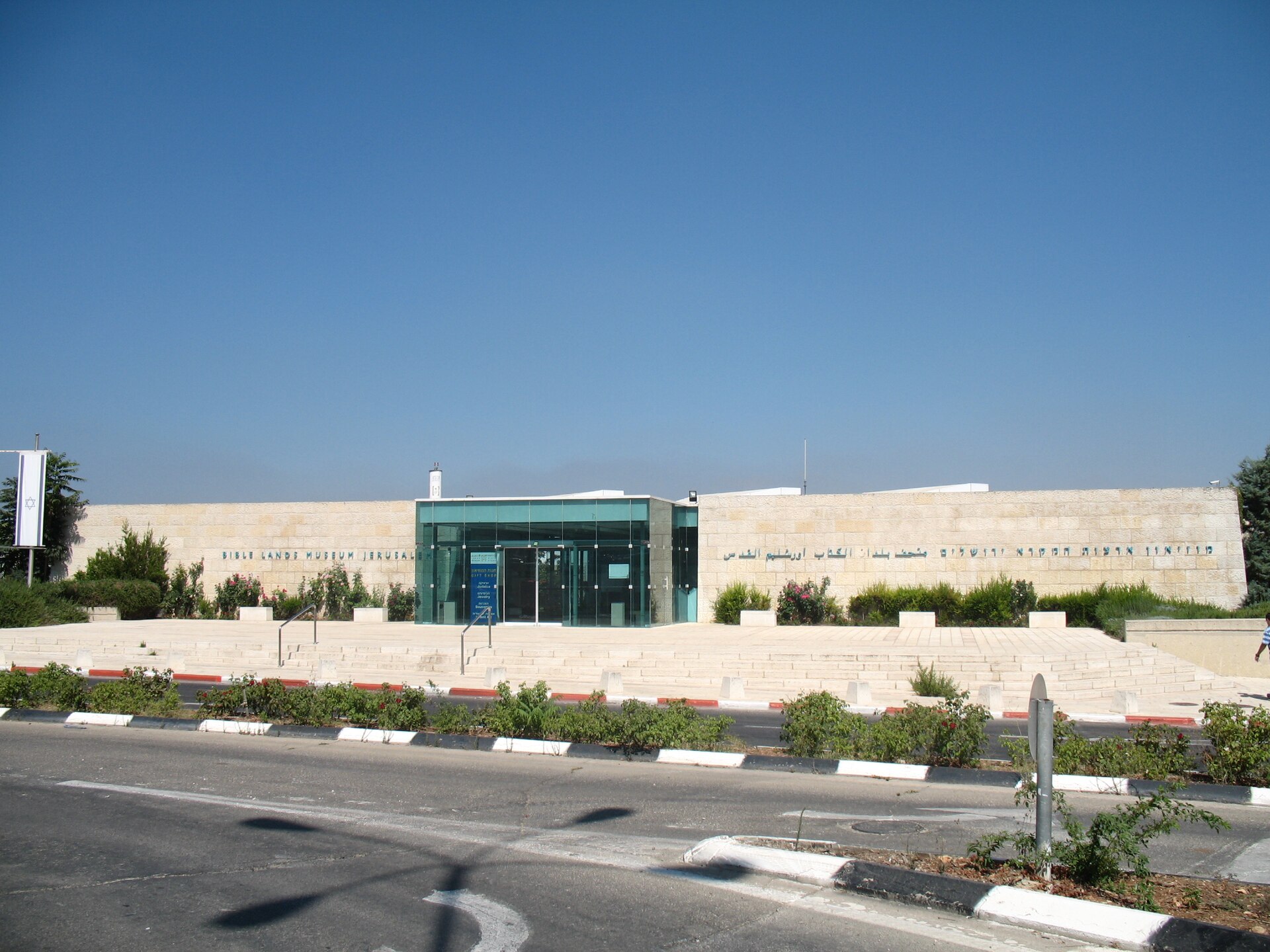
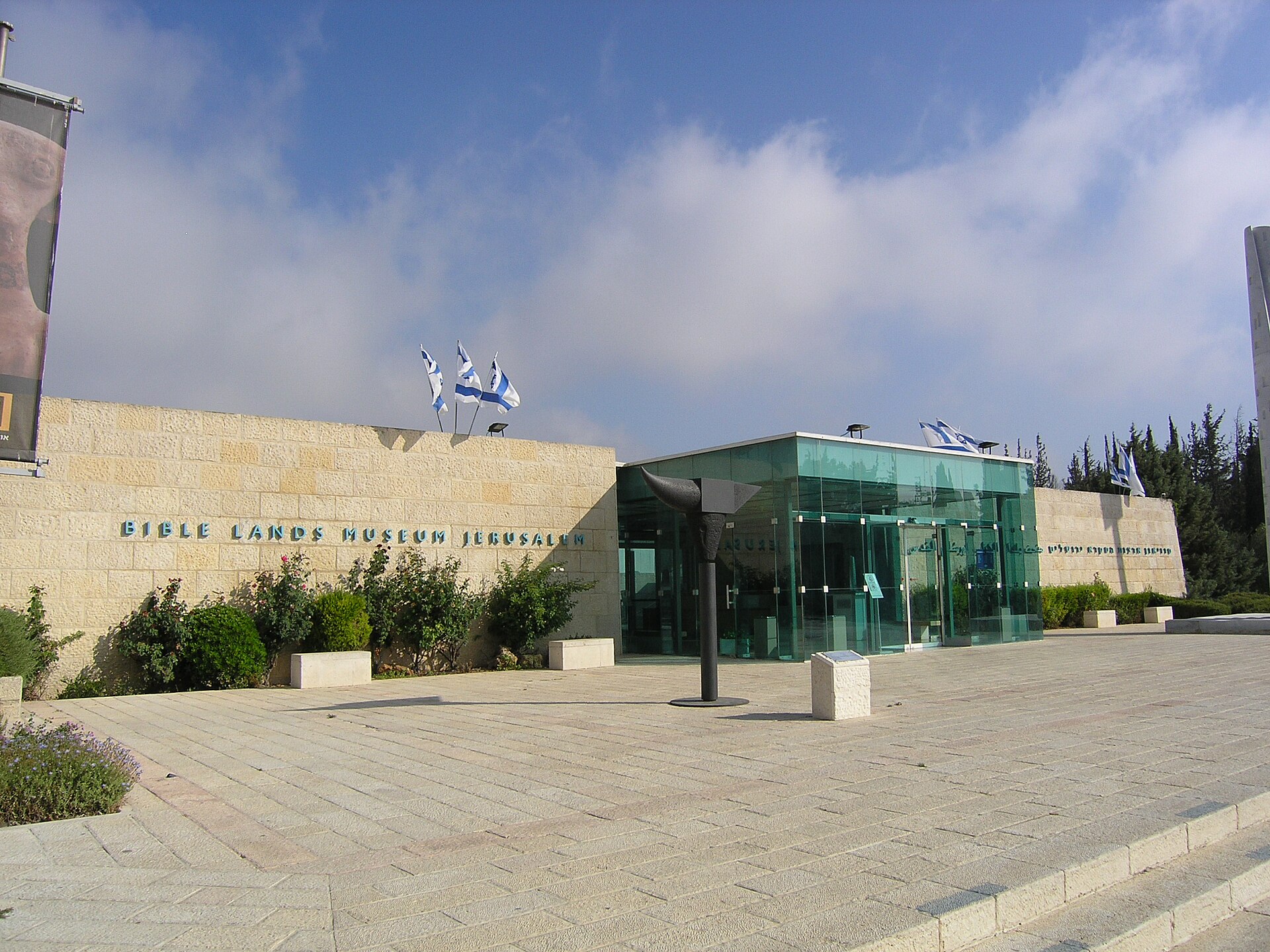
The exterior of the Bible Lands Museum Jerusalem, on Museum Row in Givat Ram.
Public domainBible Lands Museum Jerusalem
Museum · Muzeon Artzot HaMikra · Founded 1992
Open, admission and hours confirmed 3 September 2026 · 12 sources
On this page 15 sections
ContentsClose
The museum's strength is depth across a single continuous chronological narrative of the ancient Near East, from prehistory through the Sasanian period, built to be read as one sequence linking artifact to Biblical text rather than as period rooms assembled after the fact. Its weakness, documented in named journalism rather than asserted here, is that parts of that same sequence, most visibly the Al-Yahudu cuneiform archive and a group of incantation bowls, reached the collection without excavation records or export documentation and are reported to have most likely left Iraq and Syria illegally.
| Local name | Muzeon Artzot HaMikra |
|---|---|
| Kind | Museum |
| Founded | 1992 |
| City and country |  Jerusalem, Israel Jerusalem, Israel |
| Address | 21 Shmuel Stefan Wise Street, Museum Row, Givat Ram, Jerusalem, Israel |
| Website | blmj.org/en |
| Status | Open, confirmed |
| Record last verified |
Visiting
- Hours
- Sun-Tue, Thu10:00 to 17:00
- Wed10:00 to 21:00
- Fri10:00 to 14:00
- Closed
- Saturday. Closed for Jewish holidays, including Rosh Hashanah and Yom Kippur.
- Admission
- AdultILS 44
- Jerusalem resident (Jerusalem Citizen card)ILS 33
- Senior citizen (Israeli ID)ILS 22
- Senior citizen (international ID)ILS 35
- Child (5-18), student, disabled visitor, new immigrant (Oleh Chadash)ILS 22
- Soldier, national-service volunteer, licensed tour guide, museum memberFreefree
Free entry: Children admitted free on Saturdays, for family visits- Do I need to book?
- No booking needed for individual admission. Group tours must be arranged in advance by phone, WhatsApp or email with the museum's education department
- Address
- 21 Shmuel Stefan Wise Street, Museum Row, Givat Ram, Jerusalem, Israel MapCar Free on-site parking at the museum
Walking On Museum Row in Givat Ram, next to the Israel Museum, the National Campus for the Archaeology of Israel and the Bloomfield Science Museum - Website
- blmj.org/en
- Telephone
- +972-2-5611066
- [email protected]
Before you go how long, access, photography, bags, eating, shop
- How long to allow
- The museum's own daily guided tour of the permanent galleries runs about one hour; a self-guided visit through all twenty chronological sections and any special exhibition takes longer, and the museum does not publish a recommended duration for it
- Access
- Wheelchair access throughout, free wheelchairs on loan, marked disabled parking, elevators and ramps, accessible restrooms, and free audio guides
- Photography
- Not addressed on the museum's own site; no photography policy is published there
- Bags
- Not addressed on the museum's own site
- Eating
- Not mentioned on the museum's own site
- Shop
- Museum gift shop, open Sunday-Thursday 10:00-17:00
Prices and hours change. We take them from the institution's own pages and print the day we read them, and you can check the current position at the source we used. Confirm before you travel.
What is inside
From Hunter to Urban Dweller / The Coming of Civilizations / Symbolic Communication / Literate Voices, the Story of Writing
The opening run of galleries, tracing the shift from hunting-and-gathering to settled village life in the ancient Near East, the rise of the first cities, and the emergence of symbol systems and writing, including early cuneiform tablets.
The Pre-Patriarchal World / The Sumerian Temple / Old Kingdom of Egypt
Sumerian temple furnishings and votive objects, and Old Kingdom Egyptian material, set out to give the world Abraham is described as having been born into before any Biblical narrative begins.
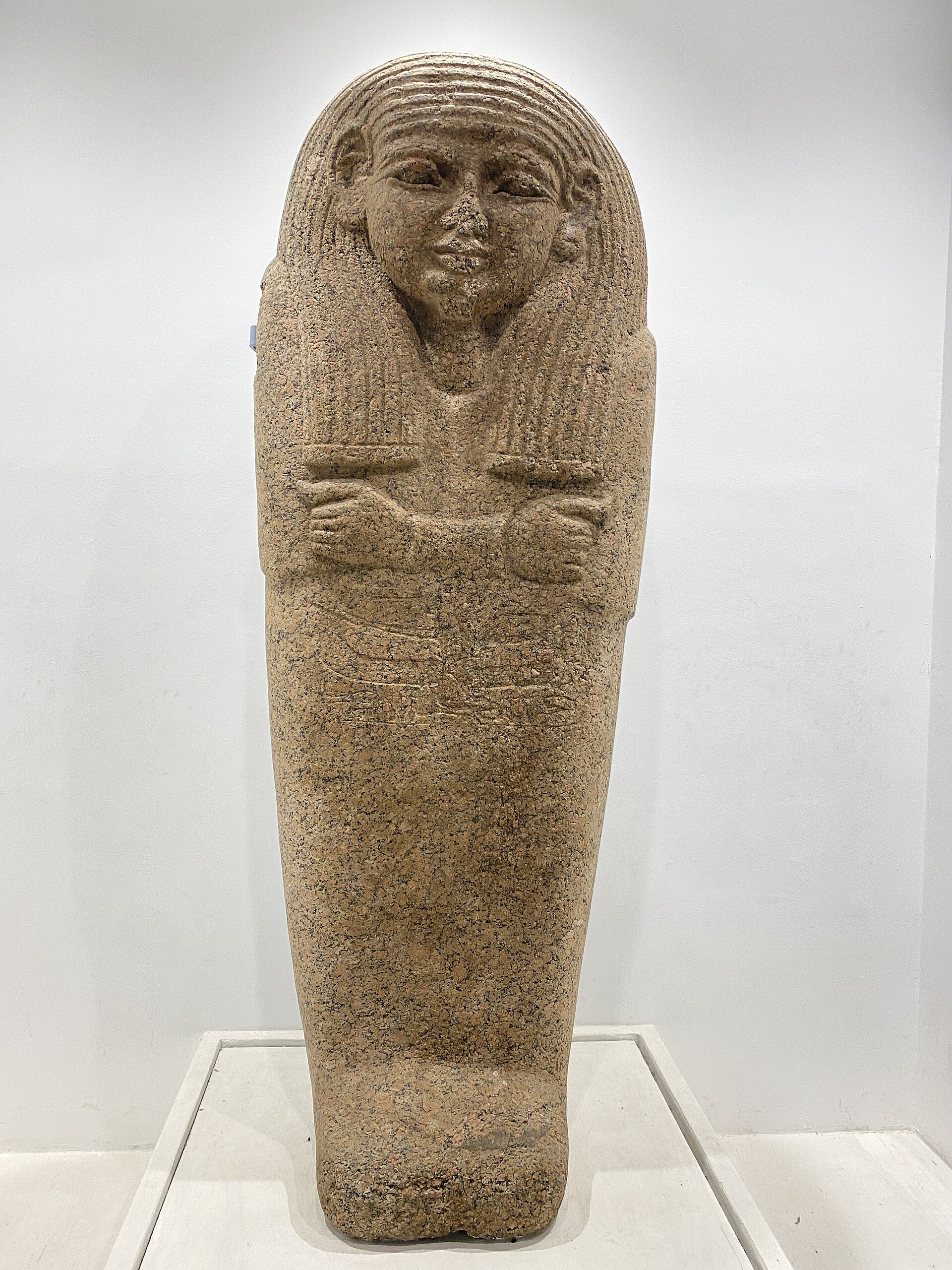
Photograph by שלמה רודד · CC BY 2.5 Genesis 14, the Age of Warfare / The Age of the Patriarchs / When Israel Sojourned in Egypt
Objects tied to the Patriarchal narratives and to the Israelite sojourn in Egypt, including New Kingdom Egyptian funerary material such as painted coffin lids.
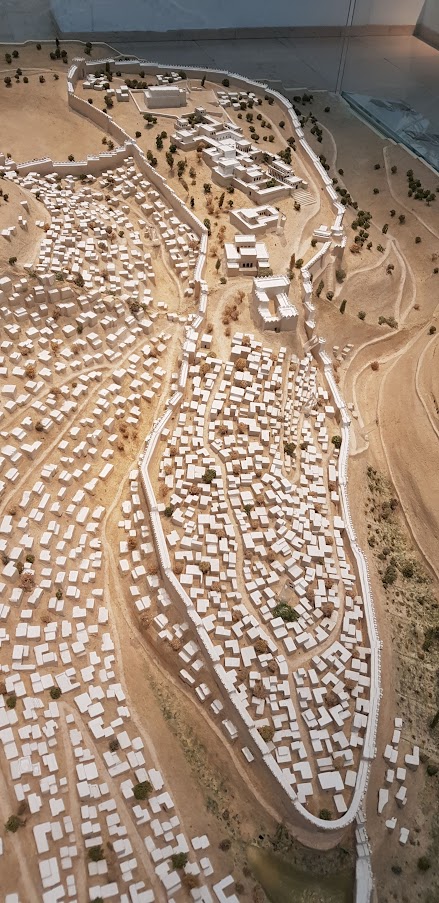
Photograph by Tombah · CC BY-SA 4.0 The Sea Peoples / The Arrival of the Iranian Horsemen / Stones of Aram / Israel Among the Nations / Assyria, the Rod of My Anger
The Iron Age Levant: the Philistines and other Sea Peoples, Aramean material, the Kingdom of Israel and Judah among its neighbors, and Assyrian imperial expansion into the region. A scale model of Jerusalem in the First Temple period is shown among the museum's historical models illustrating this era.
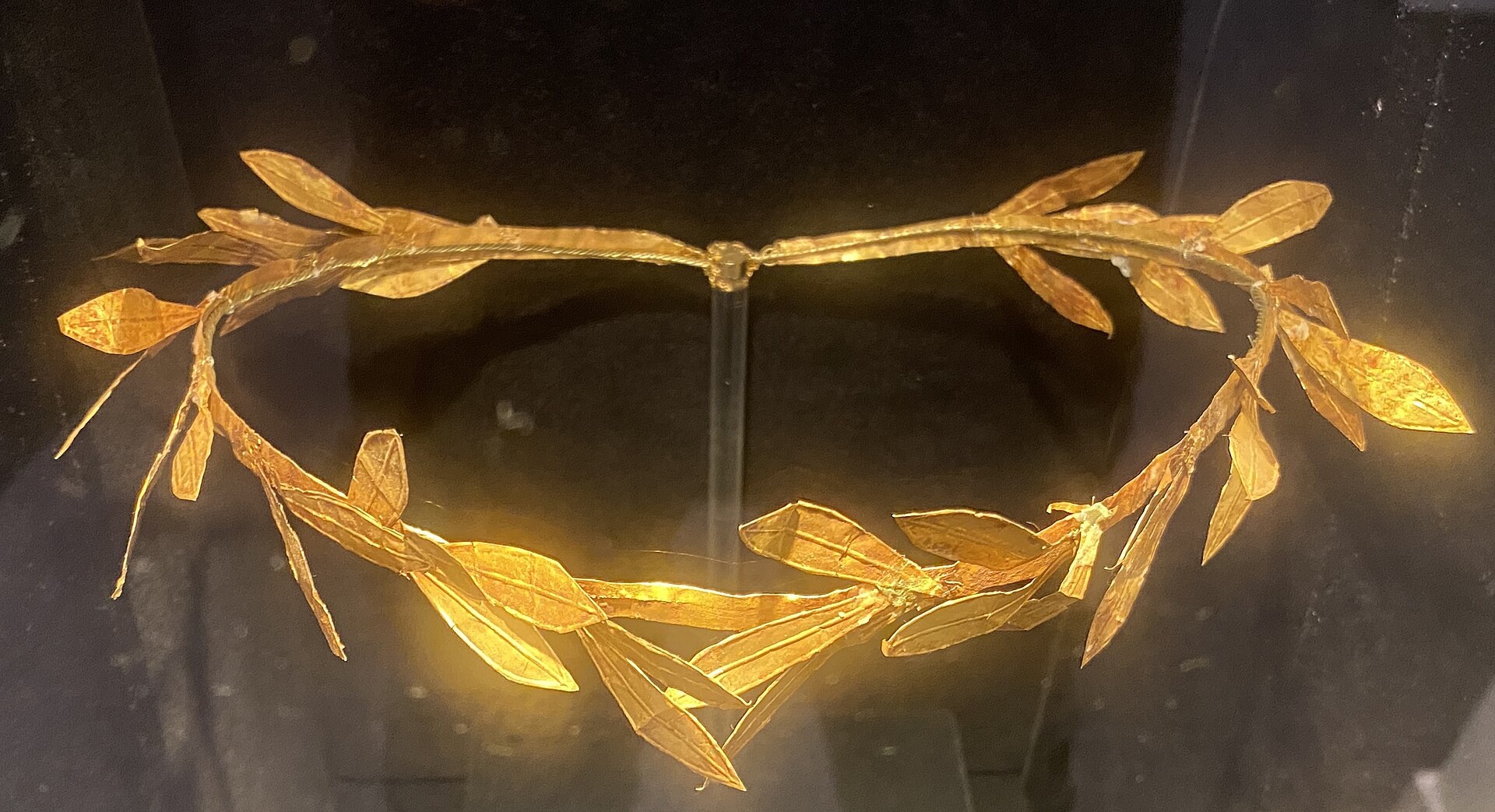
Photograph by שלמה רודד · CC BY 2.5 The Splendor of Persia / Hellenistic Dominions
Achaemenid Persian royal and religious material followed by objects from the successor Hellenistic kingdoms, including fine metalwork and jewelry such as gold wreaths in the Greek style.
Rome and Judaea / Roman and Coptic Egypt / Sassanian Mesopotamia, Home of the Babylonian Talmud
The closing galleries, covering Roman rule in Judaea, Roman and Coptic Egypt, and Sasanian-era Mesopotamia, where the Babylonian Talmud was compiled.
What to see first
The Yahweh Sebaot inscription
Unknown; Judah or the southern LevantA limestone block of about 800-750 BCE carrying a Paleo-Hebrew curse formula invoking the divine name Yahweh Sebaot (Yahweh of Hosts), a title used more than 200 times in the Hebrew Bible; the museum's own sources present it among the earliest non-Biblical attestations of that name.10
The Larsa temple-offerings tablet
Unknown scribe, Larsa, southern MesopotamiaAn Akkadian cuneiform tablet of more than 630 lines, dated to the reign of King Rim-Sin of Larsa (year 2, about 1821 BCE), recording daily temple offerings across the city's shrines; it is presented as evidence for religious practice in the region from which Abraham is said to have set out.10
The quadrilingual jar of Darius I
Achaemenid Persian royal workshopA calcite jar inscribed in Old Persian, Elamite, Akkadian and Egyptian hieroglyphs in the name of Darius I, in his 36th regnal year (486 BCE); Darius is named in six books of the Bible, and the object carries one more language than the Rosetta Stone.10
The ivory cherub from Arslan Tash
Phoenician workshop, Arslan Tash (northern Syria)A carved ivory inlay of about 850-800 BCE, from a decorated throne or piece of furniture, offered as a comparison piece for the cherub imagery described on Temple furnishings in Exodus and Kings.10
The Jonah sarcophagus
Unknown, Roman-period workshopA 4th-century CE stone sarcophagus carved with three scenes from the Book of Jonah for a Christian named Glycon, read as an early visual pairing of Jonah's return from the fish with the Resurrection.10
The Rab-Shaqeh stela
Commissioned by an Assyrian rab-shaqeh (chief officer)A 9th-century BCE Assyrian stele, from the reign of Shalmaneser III, naming the office whose holder is described in 2 Kings 18 negotiating with Judah's officials outside the walls of Jerusalem.10
The Nile funerary boat model
Unknown, Middle Kingdom EgyptA wood, plaster and linen model boat of about 2000-1900 BCE, crewed by a steersman, pilot and eighteen rowers and equipped for travel in both directions on the Nile, made for a tomb rather than for use.10
The Al-Yahudu tablets
Unknown scribes, BabyloniaA group of roughly 100 cuneiform tablets, the oldest dated to 572 BCE, recording the lives and business dealings of Judean exiles in Babylonia after 586 BCE and naming a settlement called Al-Yahudu ("the town of Judah"); shown at the museum on loan from a private collector, they are also the object of a documented provenance dispute described below.9
Exhibitions on now
A private collection becomes a national museum
The Bible Lands Museum Jerusalem opened in May 1992 to house the personal collection of Elie Borowski, a Polish-born dealer and scholar of ancient Near Eastern art who had spent decades assembling artifacts relating to the civilizations named in or connected to the Hebrew Bible. Borowski had built his collection largely in Basel, Switzerland, where he worked as an antiquities dealer after the Second World War. According to the museum's own account and to Wikipedia's summary of the founding, a 1981 visit to Jerusalem brought him into contact with Batya Weiss, who encouraged him to move the collection to Israel; the two later married, and the city of Jerusalem donated the land on Museum Row in Givat Ram on which the museum was built, at a construction cost reported at around twelve million dollars. The museum sits alongside the much larger Israel Museum, the National Campus for the Archaeology of Israel and the Bloomfield Science Museum, all part of the same museum precinct.
Elie Borowski died in Jerusalem on 14 January 2003. Batya Borowski, his widow and co-founder, went on to serve as the museum's director. The institution describes its purpose, in Elie Borowski's own words displayed on its site, as resting on the conviction that a society's future depends on understanding its past, and it presents itself as a place where the history of the ancient Near East can be studied by people of different faiths rather than as a confessional or denominational institution.
Twenty galleries in chronological order
The permanent collection is arranged as a continuous run of twenty numbered sections that move forward in time rather than by findspot or object type. The sequence begins with the transition from hunting-and-gathering to settled village life (From Hunter to Urban Dweller), moves through the rise of cities and of writing itself (The Coming of Civilizations, Symbolic Communication, Literate Voices), and reaches the world usually described as pre-Patriarchal before turning to the Sumerian temple and Old Kingdom Egypt. From there the galleries track the Biblical narrative's own chronology: the age of warfare described in Genesis 14, the age of the Patriarchs, the sojourn in Egypt, the arrival of the Sea Peoples and of Iron-Age Aramean and Israelite kingdoms, and Assyria's expansion into the region under the heading Assyria, the Rod of My Anger, a phrase drawn from the Book of Isaiah. The later galleries follow the successive empires that ruled the region after the Israelite kingdoms fell: the Splendor of Persia, the Hellenistic Dominions, Rome and Judaea, Roman and Coptic Egypt, and finally Sassanian Mesopotamia, described by the museum as the home of the Babylonian Talmud.
Set against this chronological spine are scale models built to give a physical sense of specific places and structures described in ancient sources, among them a reconstruction of Jerusalem in the First Temple period, a model of the Ziggurat at Ur, and a model of the pyramids at Giza. The museum periodically supplements the permanent run with special exhibitions on a single theme or archive, several of which are described below because they have themselves become part of the record on how the museum's collection was formed.
Objects a specialist would recognize
Because the collection was built as a teaching sequence linking artifact to text, several of its individual pieces are cited repeatedly in Biblical-archaeology literature. A limestone block of about 800 to 750 BCE, inscribed in Paleo-Hebrew with a curse invoking Yahweh Sebaot, is presented as among the earliest non-Biblical appearances of that divine title, which recurs more than two hundred times in the Hebrew Bible, chiefly in the prophetic books. A cuneiform tablet from Larsa in southern Mesopotamia, more than 630 lines long and dated to the reign of King Rim-Sin around 1821 BCE, records the daily offerings made at the city's temples during the period usually associated with Abraham's origins in the region. A calcite jar inscribed for the Persian king Darius I in four scripts and languages, from his thirty-sixth regnal year in 486 BCE, is regularly compared to the Rosetta Stone, since it carries one more language than that better-known trilingual inscription; Darius himself is named in six books of the Bible.
Other pieces are shown as physical evidence for descriptions in the Biblical text rather than as objects the text mentions directly: an ivory cherub from Arslan Tash in northern Syria, once part of a decorated throne or item of furniture, is offered as a comparison for the cherubim described decorating Temple furnishings in Exodus and Kings, and a basalt relief from the same site, showing two men carrying a rectangular box on poles, is presented in the same way as evidence for how the Ark of the Covenant might have been carried. A fourth-century sarcophagus carved with three scenes from the Book of Jonah, made for a Christian named Glycon, is read as an early visual pairing of Jonah's escape from the fish with the Resurrection. A Middle Kingdom Egyptian funerary model, a wood, plaster and linen boat crewed by eighteen rowers and equipped for travel in either direction on the Nile, illustrates the river's place in Egyptian belief and, by extension, in the Exodus narrative that runs against it.
The Al-Yahudu tablets and the question the museum does not fully answer
Since 2015 the museum has displayed a group of roughly one hundred cuneiform tablets known as the Al-Yahudu archive, the oldest dated to 572 BCE, which record the lives, business dealings and family names of Judean exiles settled in Babylonia after the destruction of Jerusalem in 586 BCE. The archive takes its name from a settlement it names, Al-Yahudu, meaning the town of Judah, and it is one of the earliest bodies of text documenting the Judean diaspora as a community of free people living and working across a number of Babylonian towns rather than as an enslaved population. The museum's 2015 exhibition of the material, titled By the Rivers of Babylon, was built around a private collector's loan and used multimedia reconstructions, including an animated model of a Babylonian village, to bring the tablets' content to a general audience; the exhibition's curator described the aim as putting a face on the people the texts describe.
The tablets themselves came onto the market with no excavation record and no documented export history, and in January 2019 the art-and-culture publication Hyperallergic reported, in an article surveying the museum's holdings more broadly, that the Al-Yahudu archive and a separate group of about thirty Mesopotamian incantation bowls on display had, in the reporter's assessment, almost certainly been removed from Iraq and smuggled out after the 2003 invasion, in a period when large quantities of unexcavated cuneiform material entered the international market; the same report noted that a handful of Syrian clay figurines in the collection had reportedly been seized at Israeli border crossings. The following month, Hyperallergic reported that Israeli human-rights activists, including Tsilli Goldenberg and Itai Mack, had protested outside the museum's concurrent special exhibition of antiquities confiscated from looters, Finds Gone Astray, arguing that the roughly forty thousand items on show, drawn largely from confiscations linked to the West Bank, Syria and Iraq, belonged to those territories rather than to an Israeli museum and that displaying them supported a broader claim to the West Bank; the museum responded that the exhibition served to highlight the importance of preserving the region's history and that it complied with Israeli law and with UNESCO conventions on cultural property, and noted the loaned confiscated items were due to be returned to storage that May. Neither report describes the museum as having published a fuller account of how the Al-Yahudu tablets specifically were acquired, and the collector who lent them, David Sofer, has not been reported disputing that the tablets themselves lack excavation records.
Visiting: hours, tours and access
The museum keeps standard hours of 10:00 to 17:00 Sunday to Tuesday and on Thursday, stays open later, until 21:00, on Wednesday, closes earlier, at 14:00, on Friday ahead of the Jewish Sabbath, and is closed all day Saturday; it also closes for Jewish holidays, including Rosh Hashanah and Yom Kippur. Standard admission is 44 shekels for an adult, with reduced rates for Jerusalem residents, Israeli and international senior citizens, children aged five to eighteen, students, disabled visitors and new immigrants, and free admission for soldiers, national-service volunteers, licensed tour guides and museum members; children are admitted free on Saturdays for family visits, when the museum itself is otherwise closed to the general public, an arrangement the museum's own visit page states without further explanation. Daily guided tours of the permanent galleries are included in admission and run in Hebrew and English at scheduled times; the museum's own materials give the length of a standard guided tour as about one hour, with themed group tours running from thirty minutes to ninety minutes depending on the subject. Group visits of any kind must be booked in advance through the museum's education department by phone, WhatsApp or email.
The building is wheelchair accessible throughout, with free wheelchairs available on loan, marked disabled parking, elevators, ramps and accessible restrooms, and it lends audio guides free of charge; visitors with additional accessibility needs are directed to a named staff contact rather than a general office. The museum operates a gift shop, open Sunday to Thursday from 10:00 to 17:00, and offers free on-site parking; its own site does not publish a photography policy or mention a cafe.
What visitors and critics say
Across more than two thousand TripAdvisor reviews the museum holds an average rating of 4.4 out of 5, and visitor comment converges on the same two points: the collection itself is strong and well organized by period and culture, and the museum's own guided tours are what make it work, by tying specific objects directly to Biblical verses and to the daily life of the surrounding civilizations rather than leaving visitors to read wall labels alone. Visitors also repeatedly note that the museum is far less crowded, and far more manageable in a single visit, than the much larger Israel Museum next door, which some treat as a reason to see it first or on its own. Set against that is a recurring, more specific complaint that some of the permanent displays and their labeling feel dated next to more recently renovated Israeli museums, offered as a caveat rather than a reason to skip a visit.
The more serious criticism sits outside the visitor-review platforms, in specialist journalism rather than tourist commentary: Hyperallergic's two 2019 reports, described above, argue that significant parts of the collection, including its best-known special-exhibition archive, most likely reached the museum through the illegal antiquities trade out of Iraq and Syria, and that a 2019 exhibition of confiscated looted material drew an organized protest on exactly those grounds. That dispute has not been resolved in print by either side, and it remains attached to the collection rather than to any single object within it.
What visitors say
Visitors consistently describe the Bible Lands Museum as a well-organized, chronologically arranged collection best experienced with one of the museum's own guided tours, which link individual objects directly to Biblical passages and to the neighboring civilizations of the ancient Near East. It is generally rated well below the scale of the adjoining Israel Museum but is repeatedly singled out as a strong, focused stop for visitors with an interest in Biblical archaeology or ancient history, and as less crowded than its larger neighbor.
What is praised, what is criticised
- Praised: The guided tours, which visitors describe as tying specific objects to Biblical verses and to daily life in surrounding cultures rather than presenting artifacts on their own
- Praised: The chronological, civilization-by-civilization arrangement of the permanent galleries, which lets a single collection be read as one continuous historical sequence rather than a set of disconnected rooms
- Praised: The manageable size of the museum compared with the much larger Israel Museum next door, making it feasible to see in a single, unhurried visit
- Criticised: The museum's own foundation is contested in print: two Hyperallergic articles in 2019 reported that core parts of the collection, including cuneiform tablets and incantation bowls acquired without excavation records, most likely left Iraq and Syria illegally, and that a 2019 special exhibition of confiscated antiquities, Finds Gone Astray, drew a protest from Israeli human-rights activists who argued the objects should be returned to their countries of origin rather than displayed
- Criticised: Some visitors describe the permanent-gallery displays and labeling as dated in style compared with more recently renovated Israeli museums, though they still recommend a visit for the collection itself
Ratings on other platforms
TripAdvisor: 4.4 from 2,253 ratings, read 3 September 2026
A platform average is a tertiary source: it moves, it is not audited, and we quote no visitor's words.
Questions about Bible Lands Museum Jerusalem
Where is Bible Lands Museum Jerusalem?
21 Shmuel Stefan Wise Street, Museum Row, Givat Ram, Jerusalem, Israel.
How much does it cost to visit?
Adult: ILS 44; Jerusalem resident (Jerusalem Citizen card): ILS 33; Senior citizen (Israeli ID): ILS 22; Senior citizen (international ID): ILS 35; Child (5-18), student, disabled visitor, new immigrant (Oleh Chadash): ILS 22. As confirmed 3 September 2026.
When is it open?
Sun-Tue, Thu 10:00-17:00; Wed 10:00-21:00; Fri 10:00-14:00. Closed: Saturday. Closed for Jewish holidays, including Rosh Hashanah and Yom Kippur. As confirmed 3 September 2026.
How do you get there?
Car: Free on-site parking at the museum; Walking: On Museum Row in Givat Ram, next to the Israel Museum, the National Campus for the Archaeology of Israel and the Bloomfield Science Museum.
What should you see first?
The Yahweh Sebaot inscription (Unknown; Judah or the southern Levant); The Larsa temple-offerings tablet (Unknown scribe, Larsa, southern Mesopotamia); The quadrilingual jar of Darius I (Achaemenid Persian royal workshop); The ivory cherub from Arslan Tash (Phoenician workshop, Arslan Tash (northern Syria)); The Jonah sarcophagus (Unknown, Roman-period workshop); The Rab-Shaqeh stela (Commissioned by an Assyrian rab-shaqeh (chief officer)).
What we could not confirm
- Neither the museum nor its lender has published a documented acquisition history for the Al-Yahudu tablets establishing when and how they left Iraq.
- The building's architect is not named in any source checked for this page.
Images
Sources
- 1Bible Lands Museum Jerusalem, home page, accessed 3 September 2026 blmj.org/en/
- 2Bible Lands Museum Jerusalem, Visit page (hours, admission, contact, accessibility, shop), accessed 3 September 2026 blmj.org/en/visit/
- 3Bible Lands Museum Jerusalem, About page, accessed 3 September 2026 blmj.org/en/about/
- 4Bible Lands Museum Jerusalem, Group Tours page, accessed 3 September 2026 blmj.org/en/groups/
- 5Wikidata, Q126130 (Bible Lands Museum), accessed 3 September 2026 wikidata.org/wiki/Q126130
- 6Wikipedia, "Bible Lands Museum", accessed 3 September 2026 en.wikipedia.org/wiki/Bible_Lands_Museum
- 7Michael Press, "In Jerusalem, a Museum's Ethics Go Astray", Hyperallergic, 14 January 2019 hyperallergic.com/jerusalem-bible-lands-museum-finds-gone-astray/
- 8Hakim Bishara, "Protesters Object to Display of Looted Objects at Israel's Bible Lands Museum", Hyperallergic, 5 February 2019 hyperallergic.com/protesters-object-to-display-of-looted-objects-at-israels-bible-lands-museum/
- 9The Times of Israel, "By the rivers of Babylon exhibit breathes life into Judean exile", accessed 3 September 2026 timesofisrael.com/by-the-rivers-of-babylon-exhibit-breathes-life-into-judean-exile/
- 10Biblical Archaeology Society, "10 Great Biblical Artifacts at the Bible Lands Museum Jerusalem", Bible History Daily, accessed 3 September 2026 biblicalarchaeology.org/daily/biblical-artifacts/artifacts-and-the-bible/10-great-biblical-artifacts-at-the-bible-lands-museum-jerusalem/
- 11TripAdvisor, "Bible Lands Museum Jerusalem", aggregate rating and review listing, read 3 September 2026 tripadvisor.com/Attraction_Review-g293983-d318902-Reviews-Bible_Lands_Museum_Jerusalem-Jerusalem_Jerusalem_District.html
- 12Wikimedia Commons, file pages and API metadata for images used on this page, accessed 3 September 2026 commons.wikimedia.org/wiki/Category:Bible_Lands_Museum_Jerusalem