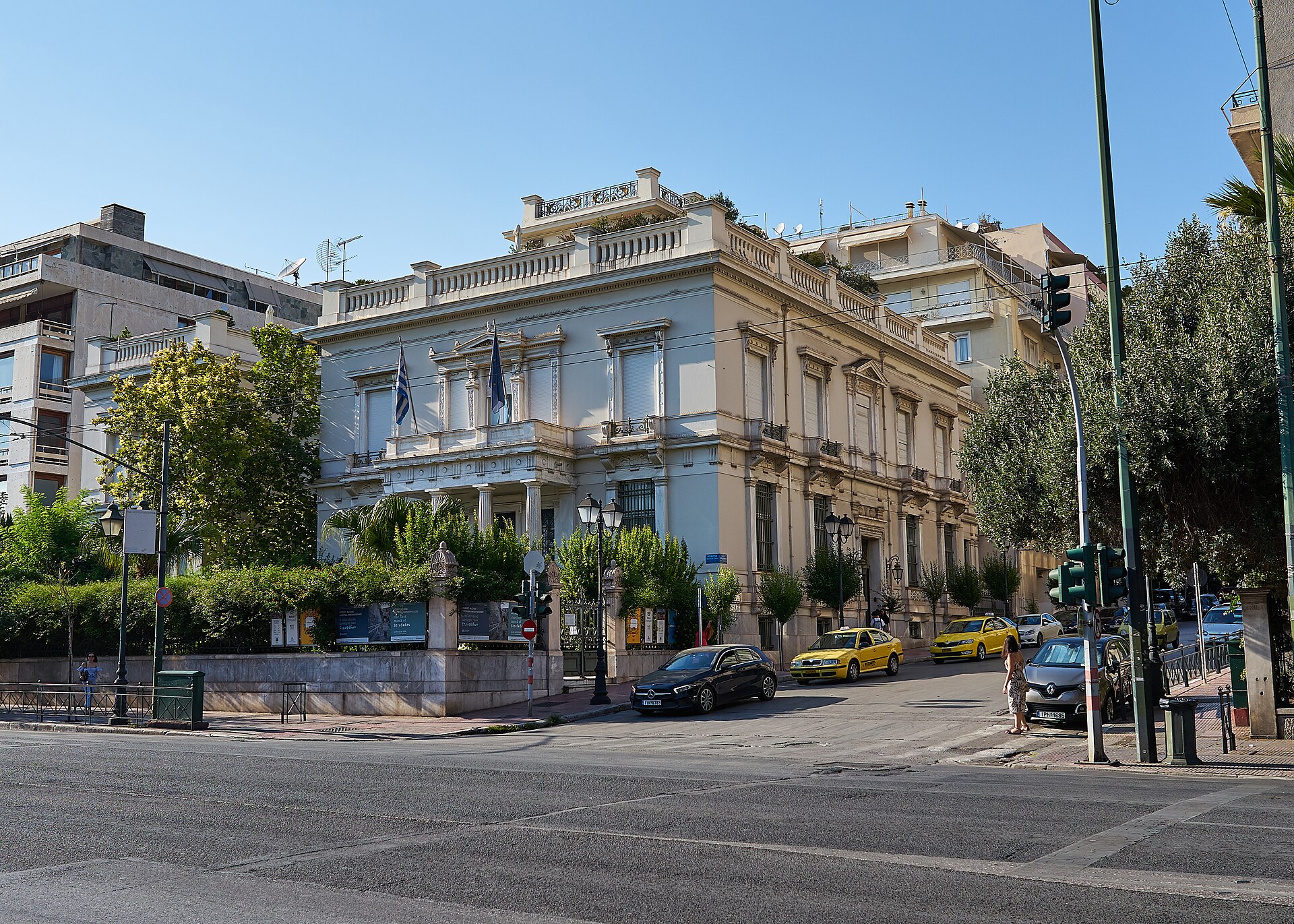
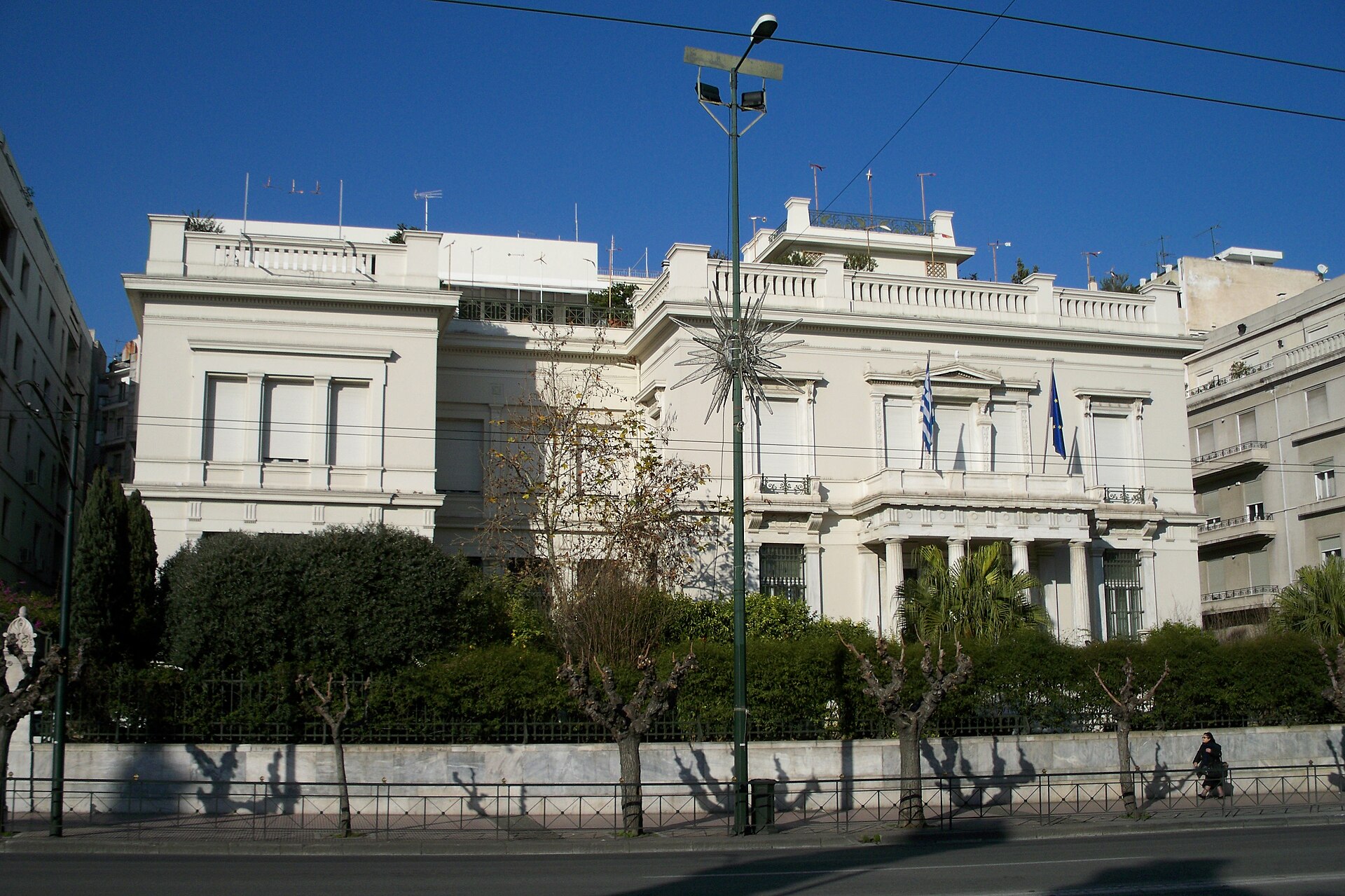
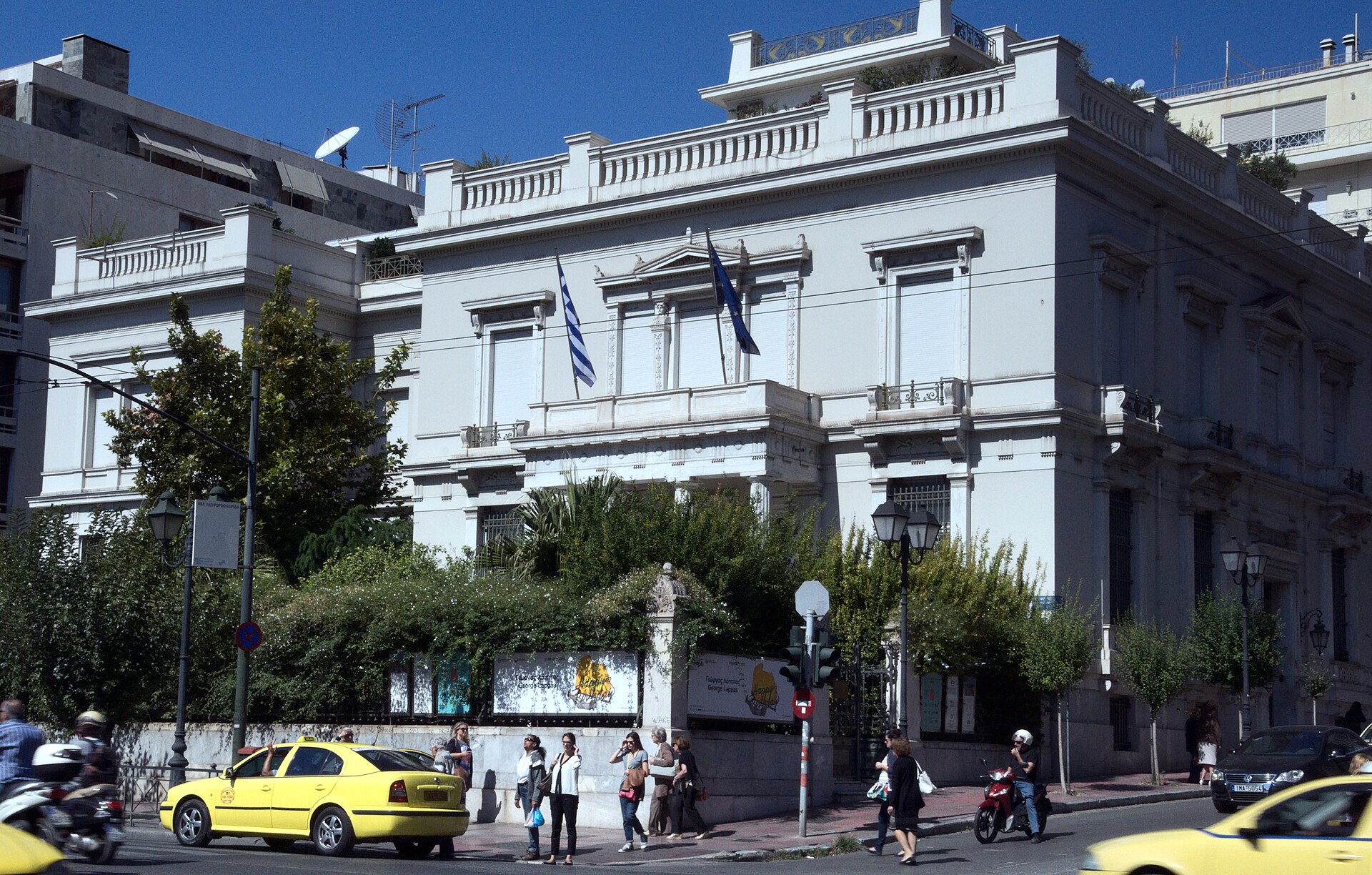
The neoclassical mansion at the corner of Koumbari Street and Vasilissis Sofias Avenue, the Benaki Museum's main building, photographed in August 2020. Photograph by George E. Koronaios, CC BY-SA 4.0.
George E. Koronaios, CC BY-SA 4.0, via Wikimedia CommonsBenaki Museum of Greek Culture
Museum · Μουσείο Μπενάκη · Founded 1930
Open, admission and hours confirmed 17 September 2026 · 18 sources
On this page 14 sections
ContentsClose
The Benaki's core strength is chronological range under one roof: a continuous material record of the Greek world from the Neolithic to the Second World War, built from a small number of large family donations rather than assembled object by object on the market. Its Byzantine and post-Byzantine holdings, the eighteenth-century Macedonian reception rooms, and its two early El Greco paintings are each strong enough to be a destination in their own right; gathered together inside a single collector's former home, they let a visitor cover in an afternoon what would otherwise take three or four separate museums across the city to see.
| Local name | Μουσείο Μπενάκη |
|---|---|
| Kind | Museum |
| Founded | 1930 |
| City and country |  Athens, Greece Athens, Greece |
| Address | 1 Koumbari Street & Vasilissis Sofias Avenue, 106 74 Athens, Greece |
| Website | benaki.org/index.php?lang=en |
| Status | Open, confirmed |
| Record last verified |
Visiting
- Hours
- Monday, Wednesday, Friday, Saturday10:00 to 18:00
- TuesdayClosed
- Thursday10:00 to 00:00Extended hours; permanent collection free of charge from 18:00.
- Sunday10:00 to 16:00
- Closed
- Tuesday, year-round. New Year's Day, Epiphany, Clean Monday, 25 March, Easter Day, Easter Monday, 1 May, Holy Spirit Day, 15 August, 28 October, Christmas Day and Boxing Day.
- Admission
- Full admission, permanent collectionEUR 12Museum of Greek Culture (this, the main building) only; the Benaki's other branches ticket separately.
- Reduced admission, permanent collectionEUR 9Students, persons over 65, teachers in Greece, members of the Hellenic Chamber of Fine Arts, European Youth Card holders.
- Temporary exhibition, standardEUR 8Charged as a supplement on top of a permanent-collection ticket, not included in it. The museum's own price list gives a range of EUR 8 to EUR 10 depending on the exhibition, and EUR 6 to EUR 8 reduced. A 20 percent discount applies to the combined total of a permanent-collection and a temporary-exhibition ticket bought together. Turbopass is not accepted at the Benaki Museum.
- JournalistsEUR 1
Free entry: Every Thursday, permanent collection only, 18:00 to 24:00, excluding organised tours and guided group visits. International Museum Day, 18 May, permanent and temporary exhibitions, if the building is open. Free year round to members of the Benaki Museum, Hellenic Ministry of Culture card holders, unemployment card holders in Greece, children and young people under 22, disabled visitors, guides, ICOM members and Friends of the Benaki Museum- Tickets
- tickets.benaki.org/index.php?lang=en The museum's own ticket page.
- Do I need to book?
- Not required for the permanent collection; e-tickets can be bought in advance at tickets.benaki.org and are recommended for temporary exhibitions. Last entry is one hour before closing.
- Address
- 1 Koumbari Street & Vasilissis Sofias Avenue, 106 74 Athens, Greece MapMetro Syntagma (lines 2 and 3) or Evangelismos (line 3), each roughly a 6 to 10 minute walk
Bus Routes 022, 060, 203, 204, 204B, 211, 214, 220, 221, 224, 235, 608, 622, 815, A5, E14, X14 and X95 run along Vasilissis Sofias Avenue
Trolleybus Route 3 - Website
- benaki.org/index.php?lang=en
- Telephone
- +30 210 367 1000
- [email protected]
Before you go how long, access, photography, bags, eating, shop
- How long to allow
- One to two hours for the permanent collection alone; visitors who add a temporary exhibition typically allow closer to three. A free audio guide by QR code is available in Greek, English, French, Spanish, Russian, Chinese and Ukrainian.
- Access
- Wheelchair users enter the main exhibition building from the Vasilissis Sofias Avenue side; guide and assistance dogs are permitted throughout the museum
- Eating
- Cafe-restaurant on the museum's top floor, run under the name Dipnosofistirion; Monday and Sunday 10:00 to 18:00, closed Tuesday, Wednesday to Saturday 10:00 to 01:00; reservations by phone or email
- Shop
- Museum shop, Monday, Wednesday, Thursday, Friday, Saturday and Sunday 10:00 to 18:00, closed Tuesday
Prices and hours change. We take them from the institution's own pages and print the day we read them, and you can check the current position at the source we used. Confirm before you travel.
What is inside
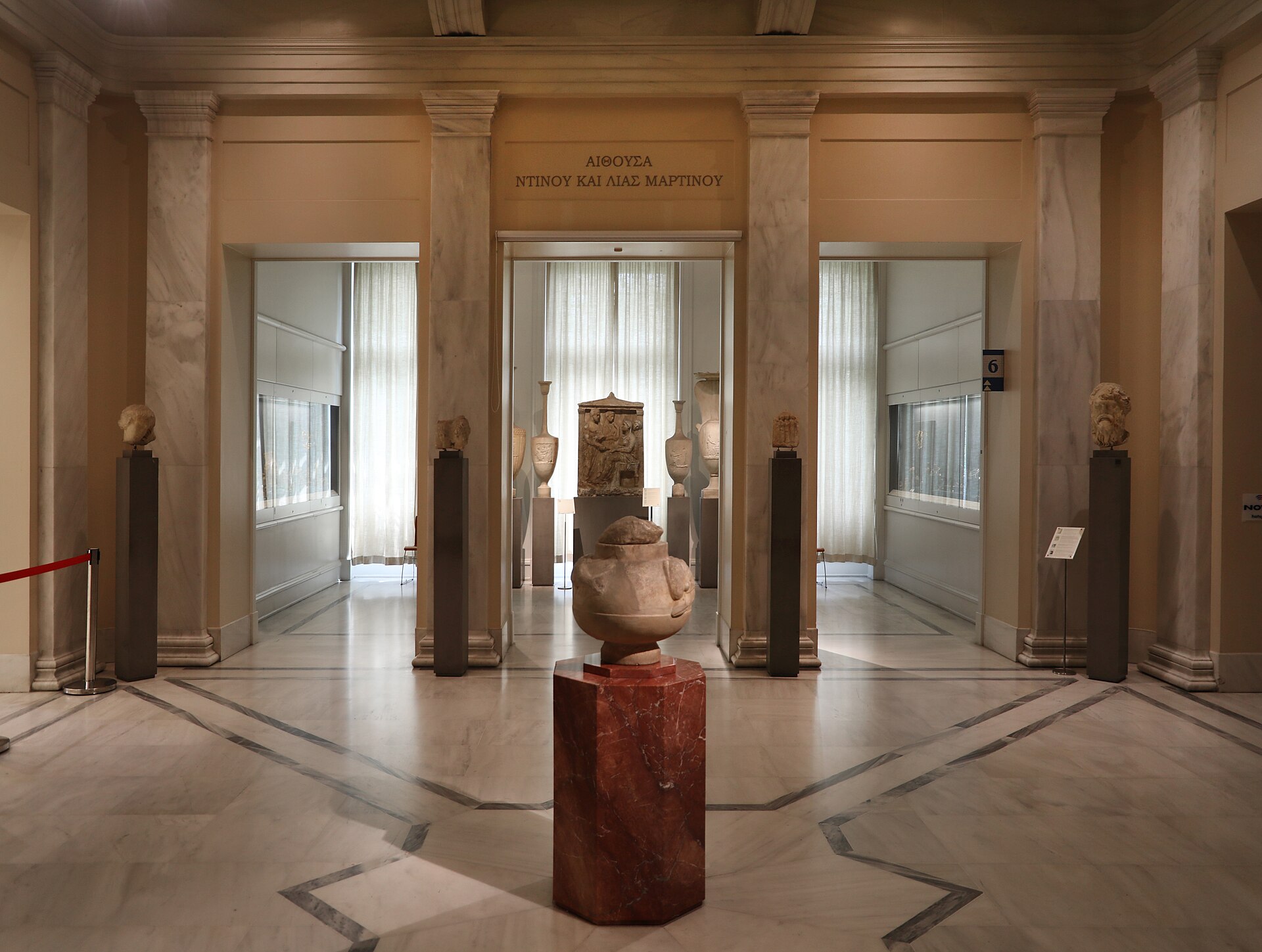
Photograph by Sailko · CC BY-SA 4.0 Prehistoric, Ancient Greek and Roman Art (ground floor)
The walk through the permanent exhibition opens here: Neolithic tools and Cycladic figurines, Archaic and Classical painted vases, Hellenistic and Roman sculpture and jewellery. The collection includes Mycenaean gold from a plundered fifteenth-century BC royal tomb at Thebes and nine pieces of a forty-four piece Hellenistic gold hoard, the rest of which is held at the National Archaeological Museum.
Byzantine Art (ground floor)
Icons, crosses, coins and liturgical silver spanning roughly a thousand years of the Byzantine Empire, deliberately uneven in coverage rather than representing every school and period evenly. The collection includes work attributed to the Cretan painter Michael Damaskinos, a contemporary of El Greco trained in the same Cretan workshop tradition.
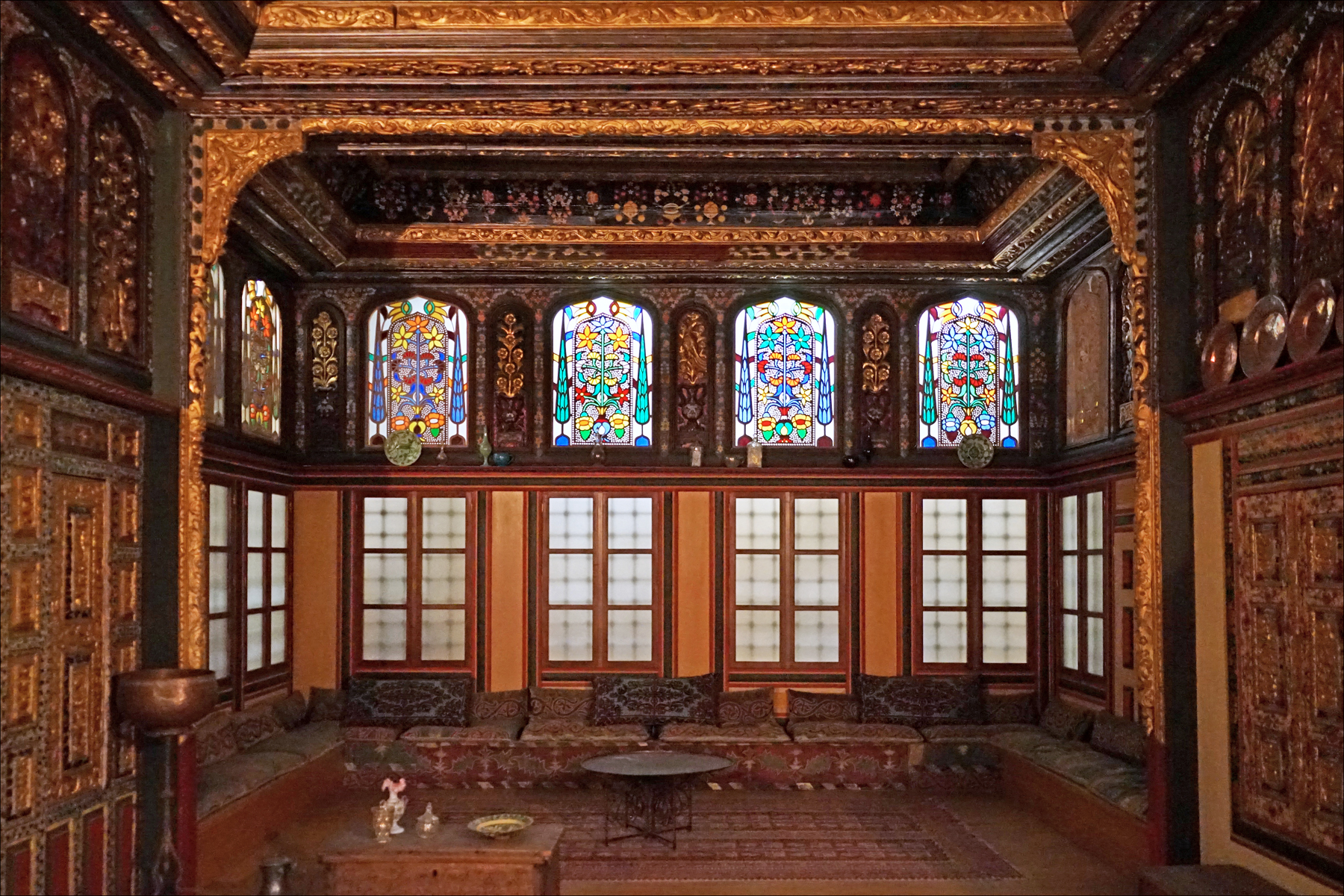
Photograph by Jean-Pierre Dalbéra from Paris, France · CC BY 2.0 Post-Byzantine and Neo-Hellenic Art (first and second floors)
Ecclesiastical and secular art of the Greek world under Frankish and Ottoman rule, from the fifteenth to the nineteenth century: regional costume, jewellery, embroidery and silverware, and two complete eighteenth-century wood-carved, gilded and painted reception rooms rescued whole from mansions in Kozani, Macedonia, and rebuilt inside the museum.
Collection of Paintings, Drawings and Prints (first and second floors)
Almost six thousand paintings and drawings, the nucleus from Antonis Benakis' own collection and the bulk from a 1953 donation by Damianos Kyriazis, chiefly European artists of the seventeenth to nineteenth century alongside Greek painters of the nineteenth and twentieth. Two of the small number of paintings El Greco produced before leaving Crete are here.
Historic Heirlooms (third floor, 'Modern Greece')
Galleries recreating the history of modern Greece from the years before the 1821 War of Independence to the Second World War, mostly family heirlooms donated by descendants of the people connected to that history: flags and weapons of the revolution, royal court portraits from the reigns of Otto and George I, and relics of the philhellenes who fought alongside the Greeks, Lord Byron's own pistols among them.
The Library
Founded in 1931, the year the museum opened, and now Greece's largest museum library at more than 100,000 titles: Greek history and art, folklore, and intellectual and religious life under Ottoman rule, with further holdings on Islamic art and the art of the Far East. Open to the public by appointment.
What to see first
The Kozani reception rooms
Macedonian workshops, mid-18th centuryTwo complete carved, gilded and painted parlours rescued whole from mansions in Kozani and rebuilt inside the museum rather than represented by a single salvaged panel.12
Adoration of the Magi
Domenicos Theotokopoulos (El Greco), about 1565-1567, tempera on woodOne of a small number of surviving paintings from El Greco's Cretan period, painted before he ever reached Venice or Spain.11
Lord Byron's pistols
Early 19th centuryDisplayed on the third floor among relics of the 1821 War of Independence, physical evidence of the philhellene volunteers the war drew from abroad.16
The Thebes gold kylix and grave jewellery
Mycenaean workshop, 15th century BCA gold cup and jewelled grave goods from a plundered royal tomb at Thebes, among the few substantial Mycenaean gold assemblages on display outside the National Archaeological Museum.17
The Thessaly (Karpenisi) hoard
Hellenistic workshops, late 3rd to early 2nd century BCNine pieces of a forty-four piece hoard of Hellenistic gold, minutely worked necklaces, diadems and torques thought to have belonged to Macedonian court women.15
Icons attributed to Michael Damaskinos
Michael Damaskinos, Cretan school, 16th centuryWork by one of the leading painters of the Cretan school that also trained El Greco, bridging Byzantine icon painting and the Italian Renaissance.7
The building itself
Originally a private mansion, enlarged by Anastasios Metaxas in 1911The Benakis family's own home, given wholesale to the Greek state along with the collection it held, rather than a museum built to order.13
Past exhibitions here
- Closed3 Jun to 27 Sep 2026Confirmed · check before you travel
- Closed27 May to 13 Sep 2026Confirmed · check before you travel
A private house given to a nation
Antonis Benakis was born in 1873 in Alexandria, Egypt, the son of Emmanuel Benakis, a Greek cotton merchant who built a fortune there before returning to Athens in 1910 and going on to serve as the city's mayor and a close ally of the statesman Eleftherios Venizelos. Antonis began collecting art and antiquities while still in Egypt, drawn to Islamic and Byzantine material as much as to the classical world, and kept collecting after he moved permanently to Athens in 1926. In 1930 he did something unusual for a collector of his means: rather than leave the collection to his heirs or sell it piece by piece, he donated the whole of it, together with his father's Athens house, to the Greek state during his own lifetime. The museum opened to the public in April 1931, with Benakis staying on as its director and continuing to add to it until his death in 1954. His sisters Alexandra, Penelope and Argine were named alongside him as donors of the house itself; Penelope, writing as Penelope Delta, was already one of the most widely read authors of children's fiction in Greek. The founding gesture set the pattern the institution has followed since: almost everything on the main building's floors arrived as a donation, largely from a handful of families connected by marriage or friendship to the Benakis circle, rather than through purchase on the open market.
The building: from a merchant's villa to a museum
The house at the corner of Koumbari Street and Vasilissis Sofias Avenue did not start out as a museum. It began as a private mansion built for an Athens family in the second half of the nineteenth century, passed through the hands of the businessman Panagis Charokopos, and was bought in 1910 by Emmanuel Benakis, Antonis's father. Benakis commissioned Anastasios Metaxas, the royal architect who had earlier restored the Panathenaic Stadium for the 1896 Olympics, to enlarge and remodel the house in 1911, giving it the Doric marble porch and balustraded roofline that still front Vasilissis Sofias today. When Antonis Benakis converted the family home into a museum in 1930, further extensions followed in 1965, 1968 and 1973 as the collection kept outgrowing the original rooms. Most of what a visitor sees now dates from a comprehensive refurbishment carried out between 1989 and 2000, which reorganised the galleries into the chronological walk through Greek culture the museum still uses and added the rooftop cafe-restaurant. Two of the collection's most striking single displays are architecture in their own right rather than objects inside a room: complete eighteenth-century reception rooms, carved, gilded, silvered and painted, rescued whole from mansions in Kozani, in Greek Macedonia, and rebuilt inside the museum rather than represented by a single salvaged panel.
What the four floors hold
The permanent exhibition is arranged to be walked in order, oldest to newest. The ground floor opens with Neolithic and Cycladic material and runs through Archaic, Classical, Hellenistic and Roman antiquity: painted vases, marble sculpture, and jewellery that includes Mycenaean gold from a plundered royal tomb at Thebes and part of a Hellenistic hoard of gold earrings, necklaces and diadems, of uncertain findspot but traditionally linked to Karpenisi, split between the Benaki and the National Archaeological Museum. The same level carries the Byzantine collection, icons, crosses and liturgical silver spanning roughly a thousand years, including work attributed to the Cretan painter Michael Damaskinos, a contemporary of El Greco working in the same school. The first and second floors hold the post-Byzantine and Neo-Hellenic material, regional costume, jewellery, silverware and the two reconstructed Kozani reception rooms, alongside the collection of paintings, drawings and prints, almost six thousand works, among them two of the small number of paintings El Greco produced before he ever left Crete for Italy and Spain. The third floor is given over to modern Greece, from the years before the 1821 War of Independence to the Second World War: revolutionary flags and weapons, portraits of the war's leaders, and relics of the philhellenes who fought alongside them, Lord Byron's own pistols among them. The museum's library, founded the same year the museum opened, has grown to more than 100,000 volumes and is open to readers by appointment.
One collector's eye against a documented eclecticism
What distinguishes the Benaki from Athens's other major museums is less any single object than the range itself, sitting inside one building under one collector's eye. The Acropolis Museum and the National Archaeological Museum are organised around a period and a place; the Benaki's main building instead follows one family's accumulating taste across nearly the whole of Greek material culture, from a Neolithic tool to a twentieth-century military decoration, without a curatorial mandate to specialise in any one of them. Visitors and reviewers consistently name this as the reason to come: several who have also done the bigger archaeological museums describe the Benaki as the more legible version of the same story, compact enough to finish in an afternoon rather than a full day. The cost of that breadth is depth in any one period; a visitor who wants the fullest possible Mycenaean or Byzantine holdings in Athens will still end up at the National Archaeological Museum or the Byzantine and Christian Museum as well. The Benaki was also, by design, never meant to be encountered as a single site. Since the 2000 refurbishment split the original holdings across branches, the main building keeps the core chronological display of Greek culture while Islamic art, Chinese and Korean ceramics, and contemporary work moved to separate buildings elsewhere in Athens, each with its own hours and, at times, its own closures.
A wider museum mid-reorganisation, and what a visit costs
That last point is not academic for anyone planning a trip now. The Benaki Museum of Islamic Art, the branch that once held the Islamic and much of the Chinese material Antonis Benakis first collected in Alexandria, has been closed to the public since 14 October 2024 while the museum reorganises that collection, with no reopening date published on the museum's own site at the time of writing; the main building on Vasilissis Sofias, the Museum of Greek Culture proper, is unaffected and keeps its usual schedule. General admission there is 12 euros, 9 reduced, with entry to any temporary exhibition charged as a further 8 to 10 euros on top rather than folded into the ticket price, a detail more than one visitor has been caught out by at the desk. Admission to the permanent collection is free every Thursday from six in the evening until midnight, a standing arrangement the museum has kept since January 2020. Reviewers who mark the museum down tend to cite that stacked pricing, or a facade on a grand avenue that gives away less from the street than the collection inside deserves. The larger number who leave a rating come away closer to the view that this is the single most efficient afternoon of Greek history and material culture the city has to offer, before a visitor ever crosses the threshold of an archaeological site.
What visitors say
Reviewers reading the main building on its own terms, rather than against the Acropolis Museum or the National Archaeological Museum next door, consistently single out the same thing: a compact, chronological walk through the whole of Greek material culture that several say they found more legible, in less time, than the larger archaeological museums in the city. The reconstructed Kozani rooms and the traditional-costume galleries come up unprompted more often than any single antiquity. The most common friction point is money rather than the collection: temporary exhibitions are charged as a supplement on top of general admission rather than folded into it, and more than one visitor has been surprised at the ticket desk by an add-on charge for a show they assumed was included. A smaller minority, weighing the entrance fee against the museum's more modest physical scale next to Athens's biggest institutions, come away feeling it was overpriced for what they saw.
What is praised, what is criticised
- Praised: the breadth of a single visit, covering the whole of Greek history and material culture in one building rather than requiring stops at several museums to get the full story
- Praised: the reconstructed period rooms, above all the carved and gilded Kozani reception rooms, and the traditional costume and jewellery displays on the upper floors, named repeatedly as the most memorable single exhibits
- Praised: the building itself, a neoclassical mansion with a rooftop cafe-restaurant terrace, and staff visitors across many reviews describe as unusually helpful and welcoming
- Criticised: temporary exhibitions are ticketed as a supplement on top of general admission rather than included in it, which has caught visitors off guard at the ticket desk
- Criticised: the museum's street presence is understated for a collection of this size, a plain facade on a major avenue that more than one visitor has walked past without noticing, and the on-site shop has been described as pricier than the range of goods it stocks would suggest
Ratings on other platforms
Tripadvisor: 4.6 from 1,622 ratings, read 13 August 2026
A platform average is a tertiary source: it moves, it is not audited, and we quote no visitor's words.
Questions about Benaki Museum of Greek Culture
Where is Benaki Museum of Greek Culture?
1 Koumbari Street & Vasilissis Sofias Avenue, 106 74 Athens, Greece.
How much does it cost to visit?
Full admission, permanent collection: EUR 12; Reduced admission, permanent collection: EUR 9; Temporary exhibition, standard: EUR 8; Journalists: EUR 1. As confirmed 17 September 2026.
When is it open?
Monday, Wednesday, Friday, Saturday 10:00-18:00; Tuesday closed; Thursday 10:00-00:00; Sunday 10:00-16:00. Closed: Tuesday, year-round. New Year's Day, Epiphany, Clean Monday, 25 March, Easter Day, Easter Monday, 1 May, Holy Spirit Day, 15 August, 28 October, Christmas Day and Boxing Day. As confirmed 17 September 2026.
How do you get there?
Metro: Syntagma (lines 2 and 3) or Evangelismos (line 3), each roughly a 6 to 10 minute walk; Bus: Routes 022, 060, 203, 204, 204B, 211, 214, 220, 221, 224, 235, 608, 622, 815, A5, E14, X14 and X95 run along Vasilissis Sofias Avenue; Trolleybus: Route 3.
What should you see first?
The Kozani reception rooms (Macedonian workshops, mid-18th century); Adoration of the Magi (Domenicos Theotokopoulos (El Greco), about 1565-1567, tempera on wood); Lord Byron's pistols (Early 19th century); The Thebes gold kylix and grave jewellery (Mycenaean workshop, 15th century BC); The Thessaly (Karpenisi) hoard (Hellenistic workshops, late 3rd to early 2nd century BC); Icons attributed to Michael Damaskinos (Michael Damaskinos, Cretan school, 16th century).
What we could not confirm
- No reopening date for the Benaki Museum of Islamic Art branch, closed since 14 October 2024, has been published on the museum's own site as of this research; the collection Antonis Benakis first assembled in Alexandria remains off view pending the reorganisation.
- The museum states that its fuller Book of Donations, recording every gift the collection has received, is available for consultation on request rather than published outright, so the extent of undocumented material entering the collection through smaller gifts is not independently verifiable from the public record.
Images
Sources
- 1Wikidata, Q816669 (Benaki Museum): label, coordinates, official website wikidata.org/wiki/Q816669
- 2Wikimedia Commons, Category:Benaki Museum commons.wikimedia.org/wiki/Category:Benaki_Museum
- 3Benaki Museum, official site, 'Museum of Greek Culture' building page: hours, admission, contact, transport, visit information benaki.org/index.php?option=com_buildings&view=building&id=11&lang=en
- 4Benaki Museum, official site, 'Changes of ticket prices and free admission hours at Benaki Museum of Greek Culture', 18 December 2019 benaki.org/index.php?option=com_content&view=article&id=3291&catid=29&lang=en&Itemid=780
- 5Benaki Museum, official site, 'The Founder' benaki.org/index.php?Itemid=101&catid=19&id=3106&lang=en&option=com_content&view=article
- 6Benaki Museum, official site, 'History and Donors' / mission statement and museum-at-a-glance figures benaki.org/index.php?option=com_buildings&view=landing&Itemid=936&lang=en
- 7Benaki Museum, official site, 'Byzantine Art' collection page, also listing all permanent collections and their creators (including Michael Damaskinos) benaki.org/index.php?id=63&lang=en&option=com_collections&view=collection
- 8Benaki Museum, official site, 'Historic Heirlooms' collection page benaki.org/index.php?Itemid=540&id=65&lang=en&option=com_collections&view=collection
- 9Wikipedia, 'Benaki Museum' en.wikipedia.org/wiki/Benaki_Museum
- 10Wikipedia, 'Anastasios Metaxas' en.wikipedia.org/wiki/Anastasios_Metaxas
- 11Wikipedia, 'Adoration of the Magi (El Greco, Athens)' en.wikipedia.org/wiki/Adoration_of_the_Magi_(El_Greco,_Athens)
- 12A View On Cities, 'Benaki Museum, Athens' aviewoncities.com/athens/benaki-museum
- 13Athens Museums Guide, 'Benaki Museum (central building)' athens-museums.com/guide/history-archaeology/5-benaki-museum-central-building
- 14Tripadvisor, 'Benaki Museum' listing (Athens, main building, d198714), rating and visitor reviews read live tripadvisor.com/Attraction_Review-g189400-d198714-Reviews-Benaki_Museum-Athens_Attica.html
- 15Greek News Agenda, 'The Golden Age of Hellenistic Jewellery: Art, Craft, and Symbolism at the Benaki Museum' greeknewsagenda.gr/the-golden-age-of-hellenistic-jewellery-art-craft-and-symbolism-at-the-benaki-museum/
- 16Athens Insider, 'Greek Independence Day at the Benaki Museum' athensinsider.com/greek-independence-day-at-the-benaki-museum/
- 17Mitsis Hotels, Unique Destination, 'The Highlights of Benaki Museum' uniquedestination.mitsishotels.com/articles/the-highlights-of-benaki-museum/
- 18Benaki Museum, official site, 'Museum of Islamic Art' building page: closure notice, no reopening date published, read 2026-09-17 benaki.org/index.php?option=com_buildings&view=building&id=15&Itemid=525&lang=en