Archaeological Museum of Zagreb
Museum · Arheoloski muzej u Zagrebu · Founded 1846
Open, admission and hours confirmed 18 September 2026 · 13 sources
On this page 15 sections
ContentsClose
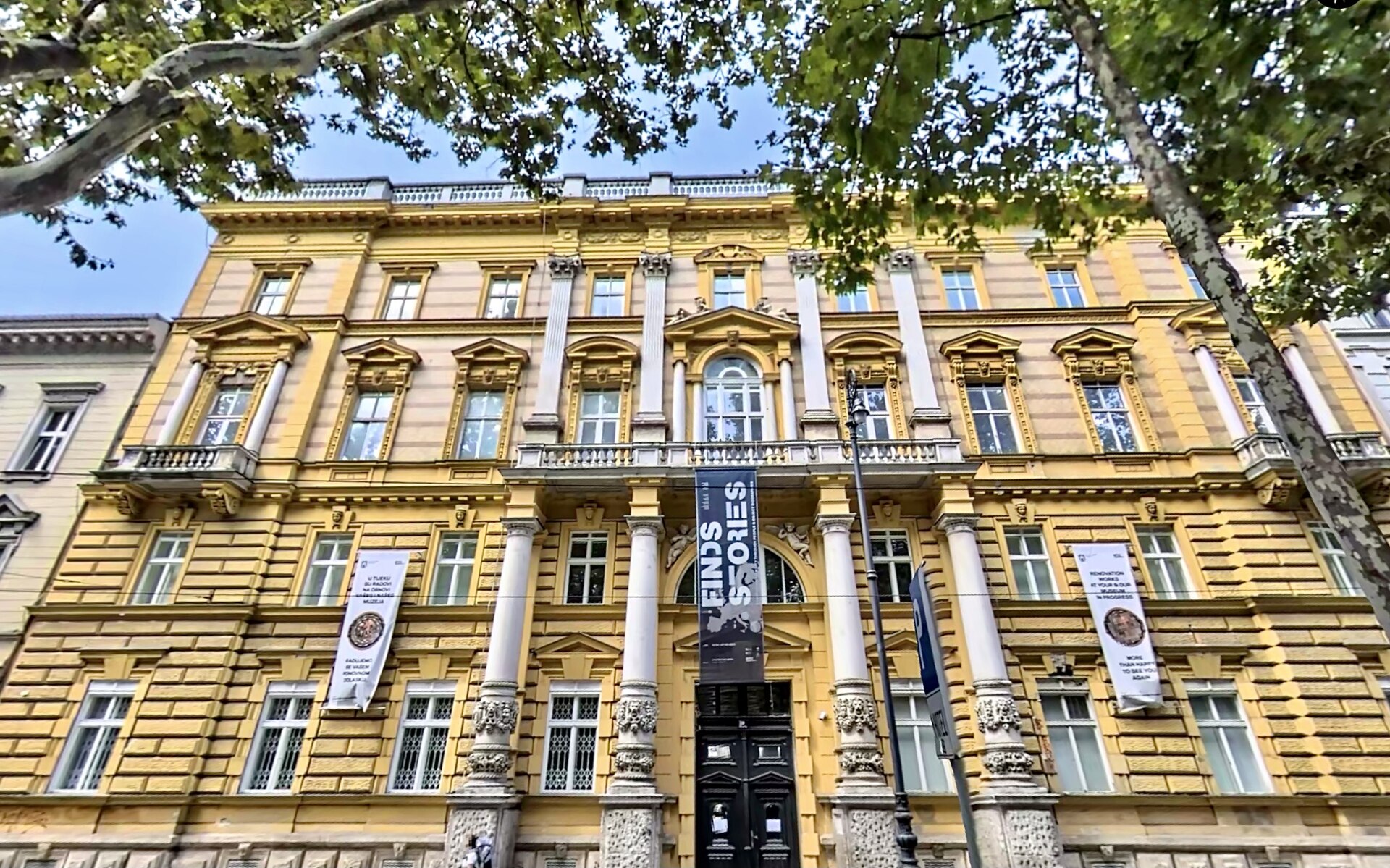
The museum's distinguishing strength against comparable regional archaeological museums is breadth rather than a single narrow specialism: it is simultaneously the national repository for Croatian prehistoric, Roman-provincial and early medieval material, and the holder of an Egyptian collection and a numismatic collection that stand on their own regardless of Croatian findspots. Few museums of similar size combine an internationally cited Etruscan-language text, a type-object of European prehistory in the Vucedol Dove, and a coin collection ranked among Europe's largest, under one roof and one ticket.
| Local name | Arheoloski muzej u Zagrebu |
|---|---|
| Kind | Museum |
| Founded | 1846 |
| City and country |  Zagreb, Croatia Zagreb, Croatia |
| Address | Trg Nikole Subica Zrinskog 19, P.O. Box 28, 10000 Zagreb, Croatia |
| Website | amz.hr |
| Status | Open, confirmed 18 September 2026 |
| Record last verified | 18 September 2026 |
Visiting
- Hours
- Tue-Fri10:00 to 18:00
- Sat10:00 to 20:00
- Sun10:00 to 13:00last entry 20 minutes before closing
- Closed
- Monday. Public holidays.
- Admission
- AdultEUR 8full ticket to the permanent collection
- Students, pupils and pensionersEUR 4
- Family ticketEUR 143 to 5 family members, at least one child aged 7-15, valid for the permanent collection
Free entry: First Sunday of every month, all visitors. Every Tuesday, pensioners. Children under 7; pre-school groups; archaeology, history, art history and museology students; ICOM members; tour guides; Croatian war veterans and families of the fallen; the unemployed with proof from the Croatian Employment Service; refugees from Ukraine; disabled visitors and one companion- Tickets
- amz.hr/hr/usluge/cjenik-usluga The museum's own ticket page.
- Do I need to book?
- No for individual visitors. Group and guided visits need at least 10 days' notice to [email protected], groups capped at 25
- Address
- Trg Nikole Subica Zrinskog 19, P.O. Box 28, 10000 Zagreb, Croatia MapTram Zrinjevac stop, lines 6 and 13, a short walk through Zrinjevac park to the museum entrance
Tram Ban Jelacic Square, the main city-centre interchange, lines 6, 11, 12, 13, 14 and 17, roughly ten minutes on foot - Website
- amz.hr
- Telephone
- +385 1 4873 000
- [email protected]
Before you go how long, access, photography, bags, eating, shop
- How long to allow
- About two hours for the full permanent collection, the length of the museum's own English-language guided tour of the whole display
- Access
- Not detailed on the museum's own visitor pages; the 2020-2024 rebuild raised the whole building to the country's third anti-seismic category
- Photography
- Not stated on the museum's own visitor pages
- Bags
- Not stated on the museum's own visitor pages
- Eating
- No on-site cafe is listed on the museum's own visitor pages
- Shop
- AMZ Museum Shop, on site at the Zrinjevac building and online at amz-shop.hr
Prices and hours change. We take them from the institution's own pages and print the day we read them, and you can check the current position at the source we used. Confirm before you travel.
What is inside
Prehistoric collection
The museum's oldest chronological run, from the Old and Middle Stone Age through the Neolithic, the Copper Age, the Bronze Age, the Iron Age and the Iron Age Japodic culture of the western Balkans. About 78,000 objects sit in this department, and it is where the Vucedol Dove is shown, alongside pottery, metalwork and grave goods from sites across continental Croatia.
Egyptian collection
The only systematic collection of Egyptian antiquities in Croatia and one of the more varied in central Europe, built from Field Marshal Franz Koller's mid-19th-century Prague collection and expanded since by gift and purchase. Sarcophagi, funerary and votive stelae, coffins, shabti figurines, canopic vessels, bronze statuettes of Egyptian deities and funerary papyri, spanning the Third Intermediate Period through the Ptolemaic dynasty. A dedicated room holds the Zagreb Mummy and the linen wrappings known as the Liber Linteus Zagrabiensis.
Antique (Greek and Roman) collection
Greek painted vases of south Italian and Greek manufacture and stone monuments of Italian origin sit alongside material from Greek colonisation of the eastern Adriatic, the Roman army and the urbanisation of Roman Pannonia. Portrait busts, everyday objects, cult and funerary material from Roman necropoleis, and finds carrying the transition into late antiquity and early Christianity.
Medieval collection
Grave finds and monuments tracing early medieval Croatia, including material from the early Croatian Bijelo Brdo culture excavated in the 1920s, and the Branimir inscription of 888 AD, the earliest dated inscription naming a Slavic ruler.
Numismatic collection
Around 260,000 coins, medals and medallions, one of the largest such holdings in Europe, running from Greek and Roman issues through the Byzantine Empire to medieval, early modern and modern Croatian coinage and commemorative medals.
What to see first
The Dove of Vucedol
Vucedol culture, Eneolithic (Copper Age)A ritual clay vessel around 19.5 cm tall, made between roughly 2800 and 2500 BC and excavated at the type-site of Vucedol near Vukovar in 1938. Incised with double-axe motifs and a necklace, it is the single object most associated with the museum and has appeared on Croatian currency.6
The Zagreb Mummy and the Liber Linteus Zagrabiensis
Egyptian mummy, wrapped in an Etruscan-inscribed linen bookThe wrappings carry the longest surviving text in the Etruscan language, roughly 1,130 words across a 340 cm strip of linen, and are the only preserved example of an ancient linen book. Brought to Croatia by Mihael Baric, who acquired the mummy and its wrappings in Egypt in 1847-48; the Etruscan writing was first identified in Vienna in 1892.8
The Psephisma of Lumbarda
Greek colonists of KorculaAn inscribed decree recording the terms on which Greek settlers from Issa founded a colony at Lumbarda on the island of Korcula, one of the museum's holdings the museum's own history page singles out as reaching beyond regional significance.5
The Branimir inscription
Early medieval Croatian workshop, 888 ADThe earliest surviving dated inscription naming a Slavic ruler, Duke Branimir, and a cornerstone document for dating the early Croatian medieval state.5
Portrait of a Young Girl from Salona
Roman, Salona (near Split)A Roman portrait bust the museum identifies as possibly depicting the princess Plautilla, drawn from its rich holdings of Roman-period portraiture from the Dalmatian coast.5
Sarcophagus and mummy of Kaipamau
Ancient Egyptian, priestess of AmonA well-preserved anthropomorphic sarcophagus given to Croatia by the government of Egypt in 1970, in gratitude for Yugoslav participation in the UNESCO campaign to save the Nubian monuments threatened by the Aswan dam. It is displayed in the permanent Egyptian collection.7
The numismatic collection
Greek, Roman, Byzantine and Croatian mintsAbout 260,000 coins, medals and medallions, described by Lonely Planet's guide as one of the most important such collections in Europe, shown on the ground floor.11
Bijelo Brdo culture grave finds
Early medieval Pannonian cultureA wealth of early medieval grave goods excavated in the 1920s, illustrating the culture that spread across the Carpathian basin after the Hungarian conquest and giving the museum's medieval displays a named-culture anchor.11
A museum older than the modern Croatian state
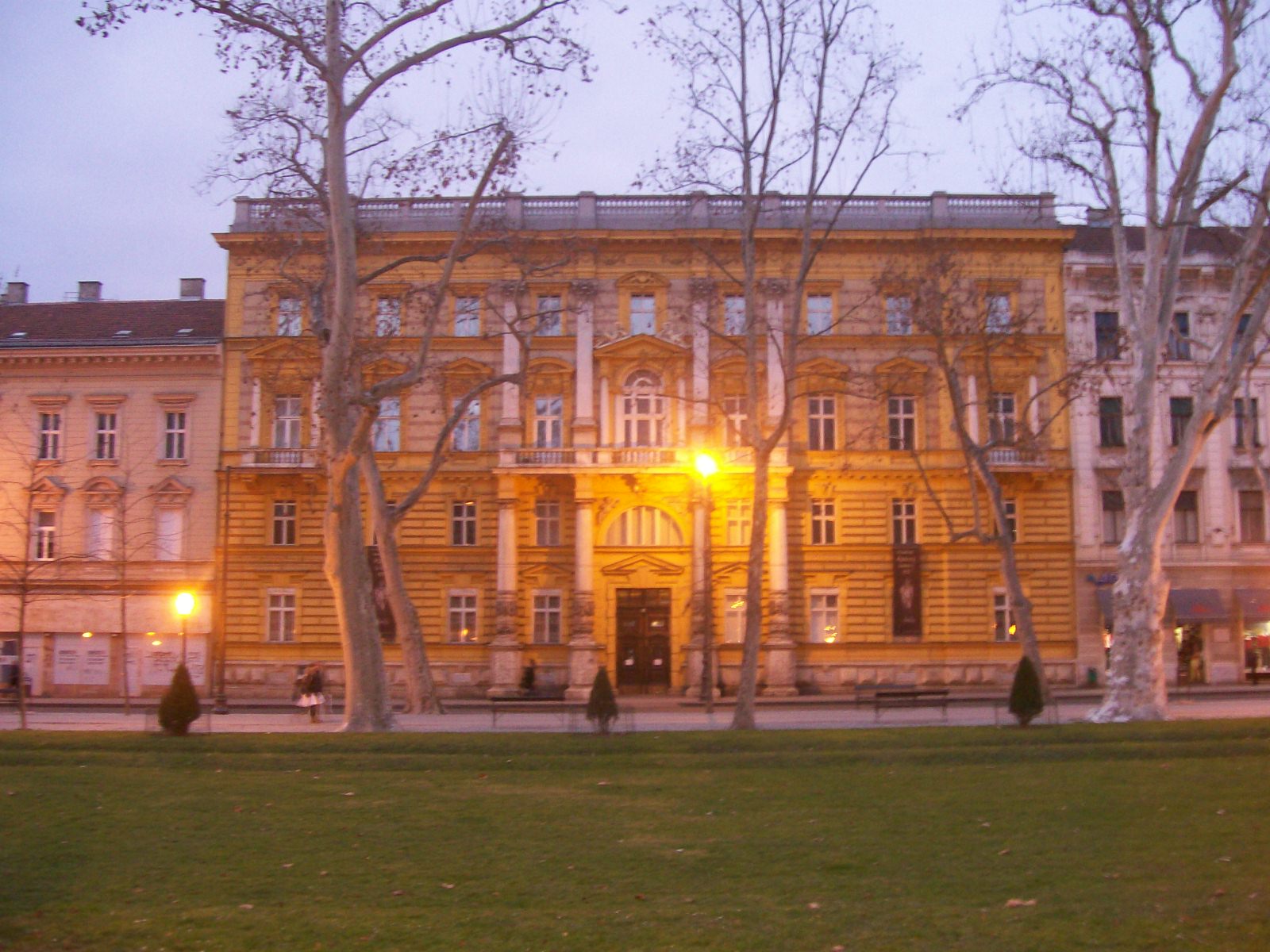
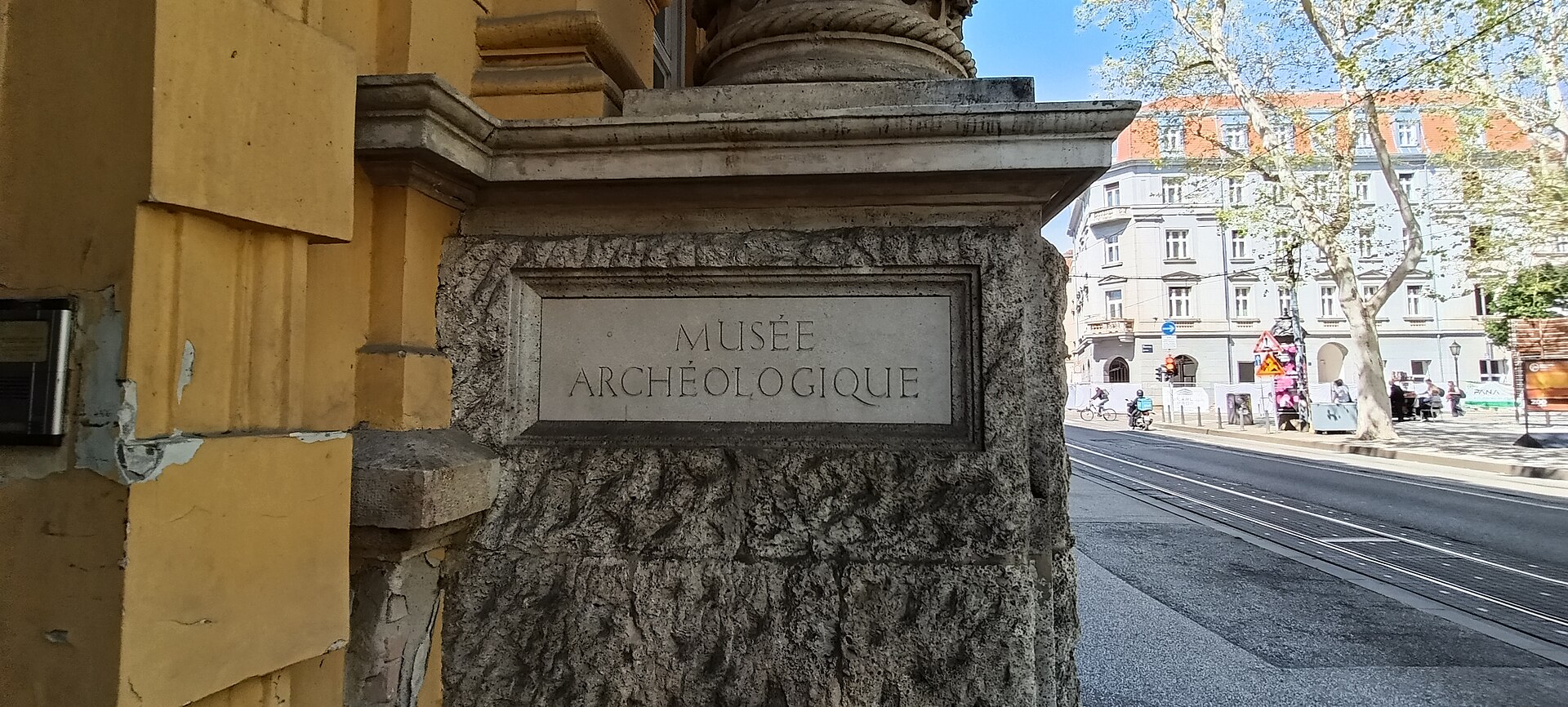
The Archaeological Museum in Zagreb traces itself to the National Museum, which began public, if not yet formally institutional, work in 1846 during the Croatian National Revival. In 1866 the National Museum came under the protection of the Croatian parliament and was split into a Department of Natural History and a Department of Archaeology and History. The archaeology department became increasingly independent through the following decades, and when the umbrella National Museum was formally dissolved in 1940 the Archaeological Museum continued alone. From the 1880s the archaeological holdings had been kept in the Academy building on Zrinski Square in central Zagreb; in 1945 the museum moved into its present home, the 19th-century Vranyczany-Hafner Palace at the same square, where it remains today.
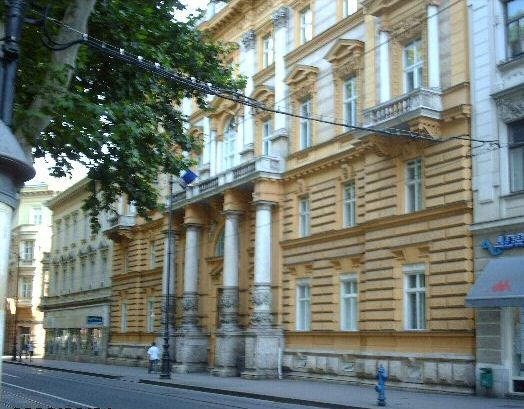
The building itself is part of the collection's setting. Zrinjevac, the park square on which it sits, is one of the planned 19th-century squares of Zagreb's Lower Town, laid out as the city grew beyond its medieval core, and the palace the museum occupies was built as a private mansion before it took on a public role. The museum today holds more than 450,000 individual artefacts and monuments, drawn overwhelmingly, though not exclusively, from the territory of modern Croatia.
Five collections, one building
The permanent exhibition is organised into five collections that between them cover everything from the Old Stone Age to the coinage of the 20th century. The Prehistoric, Antique and Medieval collections follow the ordinary chronological sequence: Stone Age through Copper, Bronze and Iron Age material in the first, Greek and Roman monuments in the second, and the early medieval through to the later medieval Croatian lands in the third. Sitting alongside them are two collections whose material comes largely from outside Croatia altogether: an Egyptian collection unmatched anywhere else in the country, and a numismatic collection, built from both Croatian and foreign coin series, that ranks among the largest of its type in Europe by object count.
That combination is unusual for a national or regional archaeological museum. Most of Croatia's other archaeological collections are built almost entirely from material found on Croatian soil; Zagreb's, by contrast, carries substantial holdings that were bought, collected or donated from abroad over more than a century and a half, which is why an institution whose name promises Croatian antiquity also holds one of the more interesting Egyptian collections in central Europe.
The Vucedol Dove and the prehistoric galleries
The single object most identified with the museum is a small ritual vessel found far from Zagreb, at the Vucedol site on a bluff above the Danube near Vukovar in eastern Croatia. Excavated in 1938, the Dove of Vucedol is a baked-clay vessel about 19.5 cm high, incised with a necklace motif and a pair of double-axe symbols and topped with an unusual crest, dated to roughly 2800-2500 BC and attributed to the Eneolithic Vucedol culture that gave the site its name. Scholars have read the bird variously as a dove or as a male partridge tied to fertility symbolism, and it has been reproduced widely enough, including on Croatian banknote and coin designs, to have become close to a national emblem in miniature. It anchors a prehistoric collection of roughly 78,000 objects running from the Palaeolithic through the Iron Age Japodic culture of the western Balkans, one of the largest single departments in the museum by object count.
Egypt on the Zrinjevac
The Egyptian collection's origin is a specific and traceable purchase. In 1868, with the involvement of the bishop and patron Josip Juraj Strossmayer, the museum's predecessor institution bought the greater part of the Egyptian collection assembled in Prague by Franz Koller, a Czech-born Austrian field marshal, then resident in Naples. That purchase supplied roughly two-thirds of what is now a collection of about 2,200 objects. The museum's first curator of Egyptian material, Sime Ljubic, catalogued the acquisition in the early years of Egyptology as a discipline, working without the linguistic tools later scholars would have; some of his identifications, such as reading shabti figurines as statuettes of Osiris, were later corrected as the field matured. The collection also carries the ordinary hazard of any 19th-century Egyptian acquisition bought outside controlled excavation: at least one wooden sarcophagus in the museum, containing a mummy that does not show typical ancient Egyptian construction, is now recognised as a later, non-authentic production, a reminder that the antiquities trade of the period supplied imitations alongside genuine material.
The collection grew after the Koller purchase through further gifts and purchases, most significantly a 1970 donation from the Arab Republic of Egypt of the sarcophagus and mummy of Kaipamau, a priestess of Amon, given in recognition of Yugoslav participation in the UNESCO campaign that relocated the Nubian monuments threatened by the Aswan High Dam. Unlike the great national collections in London, Cairo or Paris, the Zagreb collection is not evenly spread across pharaonic history; it concentrates on the Third Intermediate Period, the Late Period and the Ptolemaic era, with less material from the Middle and New Kingdoms, and it is built overwhelmingly from funerary and votive material: sarcophagi, stelae, canopic vessels and shabti figures, with everyday objects such as sandals, jewellery and cosmetic implements appearing only secondarily.
The collection's single most famous holding sits in a dedicated room of its own. The Zagreb Mummy, the remains of a woman who died between about 30 and 40 years of age, was wrapped in strips of linen inscribed in the Etruscan language, and both mummy and wrappings were acquired in Egypt in 1847-48 by the Croatian traveller Mihael Baric, whose estate passed them to the National Museum on his death in 1859. They reached Zagreb in 1862. It was not until 1892 that the Viennese Egyptologist Jakob Krall identified the script on the wrappings as Etruscan rather than a form of Egyptian writing, and unwound and reconstructed, the linen carries roughly 1,130 words across twelve columns, the longest connected text in the Etruscan language known to survive and the only surviving example of an ancient linen book. Radiocarbon dating places the linen at around 390 BC; scholars read its content as a liturgical or ritual calendar naming Etruscan deities and feast days, brought to Egypt long after it was written and reused, centuries later, as mummy wrapping.
Rome, the Adriatic and the coins of Europe
The Antique collection covers Greek and Roman material together, reflecting how thoroughly Greek colonisation of the eastern Adriatic and the later Roman conquest and administration overlapped on the same stretch of coast. It holds Greek painted vases of south Italian and mainland Greek manufacture, stone monuments of Italian origin, and material documenting Greek settlement on islands such as Korcula, where the museum's Psephisma of Lumbarda records the terms under which colonists from the island of Vis founded a new settlement. Roman-period material follows the province of Pannonia through conquest, army life, urbanisation and the everyday and religious life of its towns, down to the necropoleis that supply most of the department's funerary portraiture, including a portrait bust from Salona, near modern Split, that the museum associates with the Severan-era princess Plautilla.
The Medieval collection picks up where the Roman material leaves off, carrying Croatian material through the early medieval period into the Middle Ages proper. Its single most significant holding is the Branimir inscription of 888 AD, which names the Croatian duke Branimir and is the earliest surviving dated inscription naming any Slavic ruler, a foundational document for the chronology of the early Croatian state. Early medieval grave finds from the Bijelo Brdo culture, excavated in the 1920s and associated with the wider Carpathian basin after the Hungarian conquest, add a second, less singular but no less substantial body of material to the same department.
Running alongside all four is the Numismatic collection, roughly 260,000 coins, medals and medallions spanning Greek and Roman issues, the Byzantine Empire, and medieval through modern Croatian and European coinage, a scale that puts it among the largest such holdings in Europe.
Earthquake, four years of repair, and reopening
On 22 March 2020 a magnitude-5.5 earthquake struck Zagreb, damaging buildings across the city's historic core, the Archaeological Museum's Vranyczany-Hafner Palace among them. The museum itself put a public notice of the damage online within a day of the quake. The building's structural repair and a full renovation of the permanent exhibition took four years: the museum reopened its renovated permanent display to the public on 16 July 2024, an event marked by a visit from Zagreb's mayor and the deputy minister of culture. The renovation, funded through the museum's insurance policy, Croatia's state Solidarity Fund, the City of Zagreb and donations, cost roughly 2 million euros and raised the whole 5,100 square metre building to the country's third and highest anti-seismic construction category. The earthquake had damaged 178 objects in the collection, valued at around 200,000 euros in restoration costs; most have since been conserved. At the reopening the mayor separately committed a further roughly 3 million euros from the city budget to renovate the building's exterior facade, a project distinct from the completed interior work and not a condition of the museum being open to visitors.
Visiting today
More than two years after that reopening, the museum runs a full public schedule: five permanent collections, a temporary exhibition programme in its own galleries and at the separate AMZ Gallery on Pavla Hatza street nearby, and a satellite site, the Andautonia Archaeological Park at Scitarjevo outside the city, open seasonally from May to October. A single adult ticket to the main building costs 8 euros, with reduced and family rates and a long list of free-admission categories, including every first Sunday of the month for all visitors and every Tuesday for pensioners. The museum sits on Zrinjevac, two minutes' walk from Zagreb's central tram interchange at Ban Jelacic Square, making it one of the more straightforward stops on a first visit to the city, and reviewers consistently treat the ticket price as good value against what is, on any count, an unusually wide-ranging collection for a museum of its size.
What visitors say
Visitors consistently single out the Egyptian collection and the Zagreb Mummy as the reason to come, rate the ticket price as good value for the scale of the collection, and often call it the best or one of the best museums in Zagreb. The same visitors just as consistently describe an old-fashioned way of showing the material: dense glass cases with thin labelling, a layout that is not always easy to follow floor to floor, and a building that runs hot with limited places to sit down.
What is praised, what is criticised
- Praised: The Egyptian collection and the Zagreb Mummy display
- Praised: The Vucedol Dove and the prehistoric material
- Praised: The range of five different collections under one roof for a single ticket price
- Praised: English-language labelling throughout
- Criticised: Older-style display cases that give little context on where objects came from
- Criticised: A layout visitors describe as not clearly organised between floors and departments
- Criticised: Poor climate control; visitors report the galleries running hot
- Criticised: Very limited seating beyond the entrance lobby
Ratings on other platforms
Tripadvisor: 4.4 from 232 ratings, read 18 September 2026
A platform average is a tertiary source: it moves, it is not audited, and we quote no visitor's words.
Questions about Archaeological Museum of Zagreb
Where is Archaeological Museum of Zagreb?
Trg Nikole Subica Zrinskog 19, P.O. Box 28, 10000 Zagreb, Croatia.
How much does it cost to visit?
Adult: EUR 8; Students, pupils and pensioners: EUR 4; Family ticket: EUR 14. As confirmed 18 September 2026.
When is it open?
Tue-Fri 10:00-18:00; Sat 10:00-20:00; Sun 10:00-13:00. Closed: Monday. Public holidays. As confirmed 18 September 2026.
How do you get there?
Tram: Zrinjevac stop, lines 6 and 13, a short walk through Zrinjevac park to the museum entrance; Tram: Ban Jelacic Square, the main city-centre interchange, lines 6, 11, 12, 13, 14 and 17, roughly ten minutes on foot.
What should you see first?
The Dove of Vucedol (Vucedol culture, Eneolithic (Copper Age)); The Zagreb Mummy and the Liber Linteus Zagrabiensis (Egyptian mummy, wrapped in an Etruscan-inscribed linen book); The Psephisma of Lumbarda (Greek colonists of Korcula); The Branimir inscription (Early medieval Croatian workshop, 888 AD); Portrait of a Young Girl from Salona (Roman, Salona (near Split)); Sarcophagus and mummy of Kaipamau (Ancient Egyptian, priestess of Amon).
What we could not confirm
- The museum's own catalogue notes that its early Egyptian holdings include at least one demonstrably non-authentic sarcophagus and mummy, acquired unknowingly on the 19th-century antiquities market; the museum has not published a full list of which other objects in the Koller acquisition carry the same doubt.
- The city-funded facade renovation announced alongside the July 2024 reopening was not, as of the last source checked for this page, reported as complete; a reader visiting soon after publication should expect the possibility of exterior scaffolding even though the museum itself is open.
Images
Sources
- 1Archaeological Museum in Zagreb, official site, home page (current exhibition and opening hours) amz.hr/en/
- 2Archaeological Museum in Zagreb, official site, Visit page (address, hours, Gallery AMZ, Andautonia park, guided tours, booking) amz.hr/en/visit/
- 3Archaeological Museum in Zagreb, official site, 2026 price list (Cjenik ulaznica, usluga i naknada za 2026. godinu) amz.hr/hr/usluge/cjenik-usluga/
- 4Archaeological Museum in Zagreb, official site, free-admission categories (Besplatan ulaz u Muzej) amz.hr/hr/posjet/arheoloski-muzej-u-zagrebu/besplatan-ulaz-u-muzej/
- 5Archaeological Museum in Zagreb, official site, About the Museum (history and highlighted holdings) amz.hr/en/museum/about-the-museum/
- 6Archaeological Museum in Zagreb, official site, permanent exhibition overview (Stalni postav) amz.hr/hr/virtualni-muzej/vodici-kroz-stalni-postav/stalni-postav/
- 7Archaeological Museum in Zagreb, official site, Egyptian collection guide (Egipatska zbirka) amz.hr/hr/virtualni-muzej/vodici-kroz-stalni-postav/vodic-kroz-stalni-postav-egipatske-zbirke-arheoloskog-muzeja-u-zagrebu/egipatska-zbirka/
- 8Archaeological Museum in Zagreb, official site, Etruscan room guide: the Zagreb Mummy and the Liber Linteus Zagrabiensis amz.hr/hr/virtualni-muzej/vodici-kroz-stalni-postav/vodic-kroz-stalni-postav-egipatske-zbirke-arheoloskog-muzeja-u-zagrebu/etruscanska-soba/
- 9Archaeological Museum in Zagreb, official site, Antique collection guide (Anticka zbirka) amz.hr/hr/virtualni-muzej/vodici-kroz-stalni-postav/vodic-kroz-stalni-postav-anticke-zbirke-arheoloskog-muzeja-u-zagrebu/
- 10City of Zagreb official news: 'Arheoloski muzej u Zagrebu zavrsio obnovu i otvorio javnosti obnovljeni stalni postav', 16 July 2024 zagreb.hr/arheoloski-muzej-u-zagrebu-zavrsio-obnovu-i-otvori/200030
- 11Lonely Planet, Archaeological Museum, Zagreb attraction page lonelyplanet.com/croatia/zagreb/attractions/archaeological-museum/a/poi-sig/425089/358800
- 12Tripadvisor, Archaeological Museum Zagreb, aggregate rating and visitor reviews tripadvisor.com/Attraction_Review-g294454-d317697-Reviews-Archaeological_Museum_Zagreb-Zagreb_Central_Croatia.html
- 13Wikidata, Archaeological Museum in Zagreb (Q2986831) - identifiers and coordinates, tertiary, cross-checked against the museum's own site for coordinates only wikidata.org/wiki/Q2986831