Archaeological Museum of Krakow
Museum · Muzeum Archeologiczne w Krakowie · Founded 1850
Open, admission and hours confirmed 18 September 2026 · 25 sources
On this page 14 sections
ContentsClose
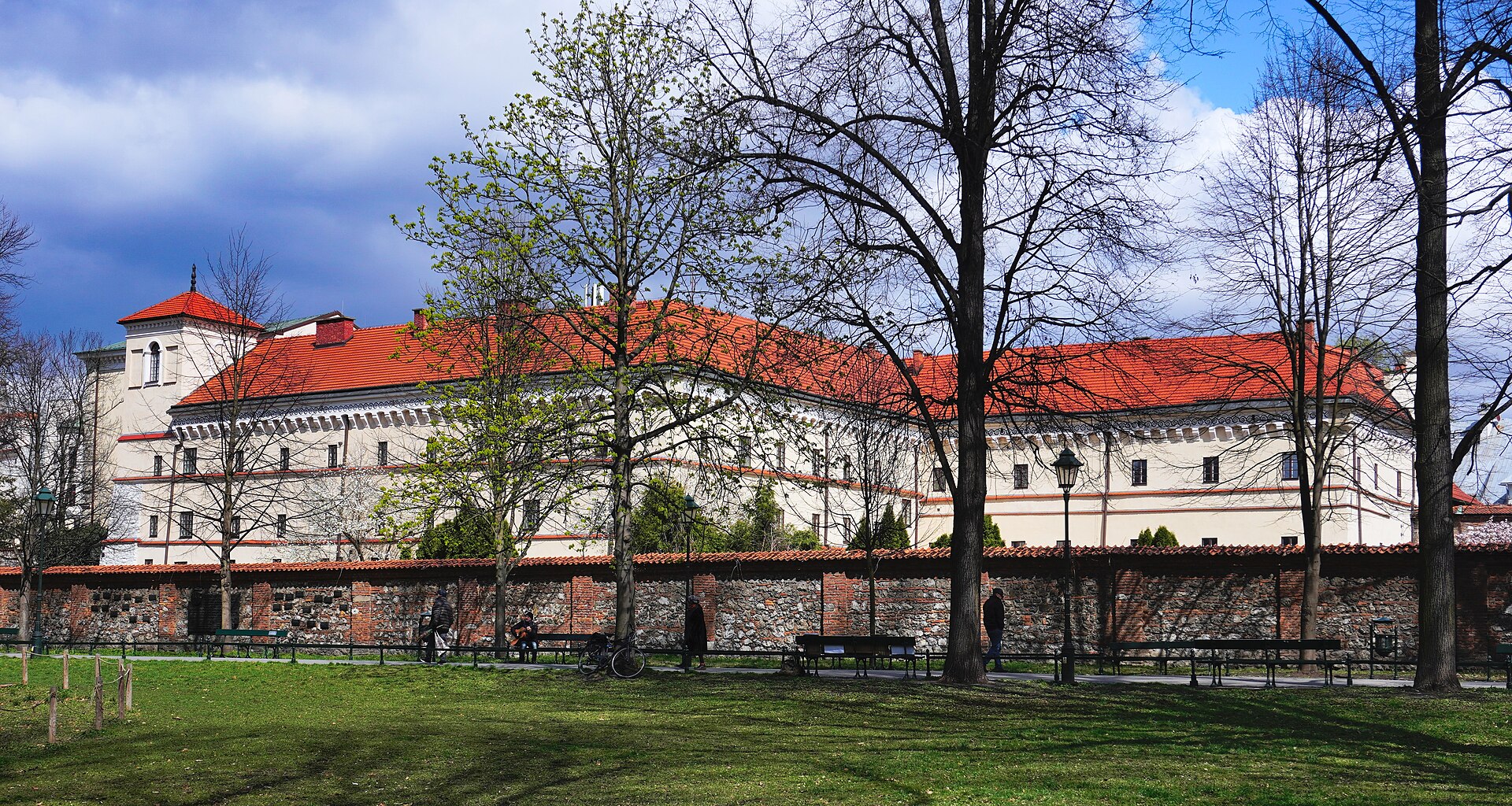
The museum's core strength is its own regional record: a near-complete run of Malopolska's prehistory and early medieval archaeology, from Neanderthal-era finds through the Bronze Age and Iron Age to the early Polish state, anchored by the Zbruch Idol, one of the only surviving monuments of pre-Christian Slavic religious sculpture anywhere. Its secondary strength is unusual for a mid-sized Central European museum: an Egyptology department built from early twentieth-century Polish excavations and a wartime soldiers' collecting effort, and a nineteenth-century Peruvian collection from the Ancon necropolis, giving it holdings well outside its home region that most comparable regional archaeological museums do not have.
| Local name | Muzeum Archeologiczne w Krakowie |
|---|---|
| Kind | Museum |
| Founded | 1850 |
| City and country |  Krakow, Poland Krakow, Poland |
| Address | ul. Senacka 3, 31-002 Krakow, Poland |
| Website | ma.krakow.pl |
| Status | Open, confirmed 18 September 2026 |
| Record last verified | 18 September 2026 |
Visiting
- Hours
- Tuesday-Saturday09:00 to 17:00main building, last entry 30 minutes before closing
- Sunday11:00 to 16:00main building
- Monday-Friday10:00 to 14:00Nowa Huta-Branice branch, November-April
- Monday-Friday10:00 to 14:00Nowa Huta-Branice branch, May-October
- Saturday-Sunday14:00 to 18:00Nowa Huta-Branice branch, May-October only
- Monday-Saturday10:00 to 17:00St Wojciech Church crypt, seasonal, May-October only
- Closed
- Monday, main building. Saturday-Sunday, Nowa Huta-Branice branch, November-April. Sunday, St Wojciech Church crypt. Major Polish public and religious holidays, all sites.
- Admission
- Regular (main building, Prehistory and Medieval Malopolska exhibition)PLN 15prices effective from 1 June 2026
- Discounted (main building)PLN 10
- Family ticket, main building (up to 4 people, at least 1 child)PLN 45
- Large Family Card holder, main buildingPLN 10
- Regular, Nowa Huta-Branice branchPLN 7
- Discounted, Nowa Huta-Branice branchPLN 5
- Regular, St Wojciech Church crypt (seasonal, May-October)PLN 10
- Discounted / Large Family Card, St Wojciech Church cryptPLN 6
- Guided tour, Polish languagePLN 85advance reservation required
- Guided tour, foreign languagePLN 120advance reservation required
Free entry: Tuesday, main building and St Wojciech Church crypt. Monday, Nowa Huta-Branice branch- Tickets
- bilety.ma.krakow.pl The museum's own ticket page.
- Do I need to book?
- No for individual visitors to the open exhibition; guided tours need advance reservation
- Address
- ul. Senacka 3, 31-002 Krakow, Poland MapWalking On Senacka street in central Krakow's historic Old Town district, within walking distance of the Main Market Square
- Website
- ma.krakow.pl
- Telephone
- +48 12 422 71 00
- [email protected]
Before you go how long, access, photography, bags, eating, shop
- How long to allow
- About 90 minutes for the currently open exhibition alone, longer once the renovated main building reopens with 12 permanent displays
- Access
- The main building, a former monastery and prison, is not wheelchair accessible; nor is the St Wojciech Church crypt or the Nowa Huta-Branice manor house. An accessible toilet is on the second floor of the main building, guide dogs are permitted, and the Prehistory and Early Middle Ages exhibition has tactile plans, Braille captions and audio description under the COME-IN! project. Staff can help visitors reach the museum on request, with 24 hours' notice.
- Photography
- Not stated on the museum's published visitor pages fetched for this research; confirm at the ticket desk
- Bags
- Cloakroom on the ground floor near the restrooms
- Eating
- None mentioned on the museum's own visit pages; a cafe courtyard is planned in the renovated inner courtyard once building work finishes
- Shop
- Museum shop on the ground floor, near the cloakroom
Prices and hours change. We take them from the institution's own pages and print the day we read them, and you can check the current position at the source we used. Confirm before you travel.
What is inside
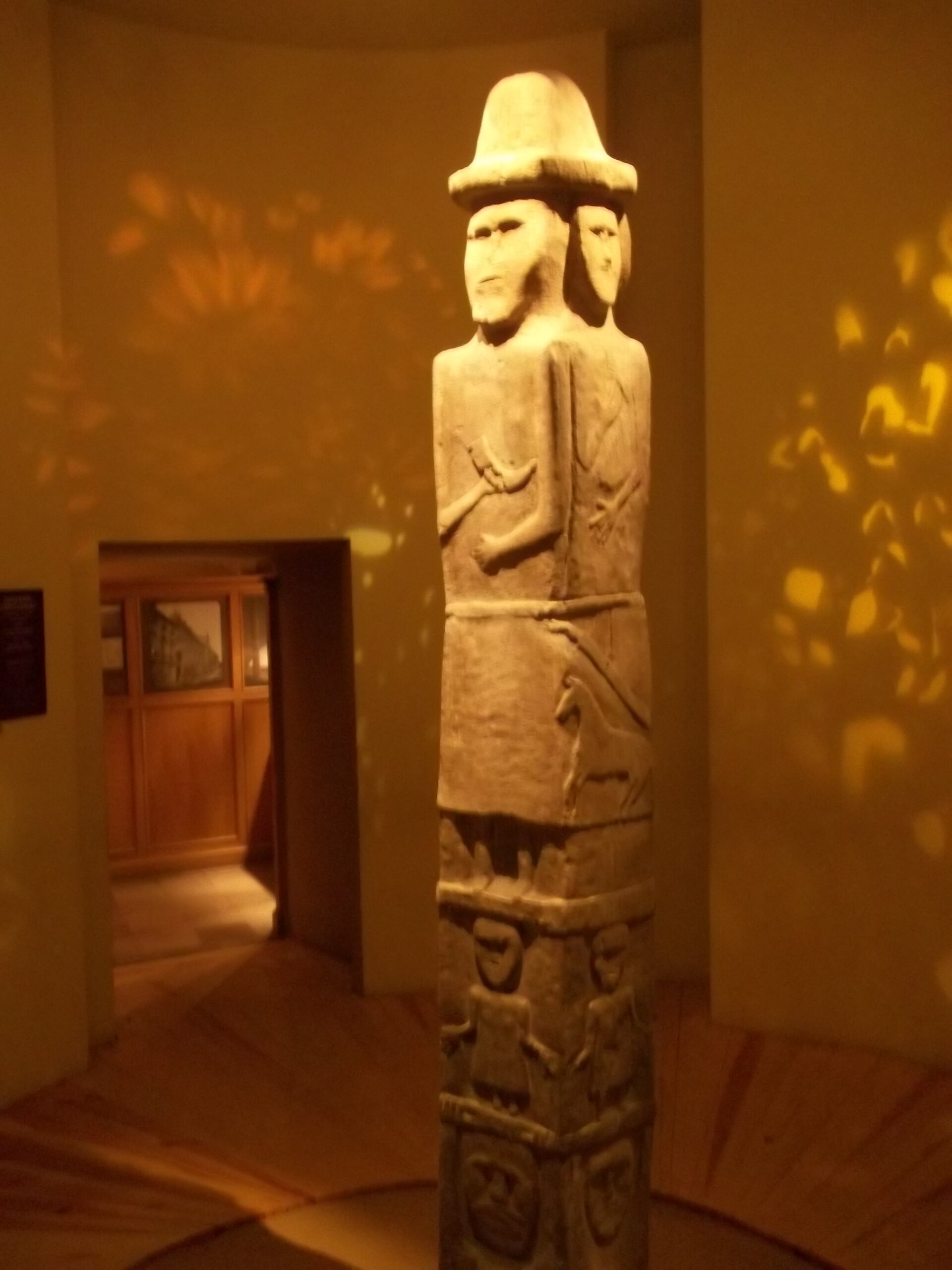
Photograph by Simon Burchell · CC BY-SA 3.0 Main building: Prehistory and Early Middle Ages of Malopolska
The only permanent exhibition open in the main building while renovation continues. Seventy thousand years of the region's original inhabitants, from Neanderthal hunters to medieval Krakow townspeople, laid out across twelve chronological sections: environment and food, housing and dress, trade, and belief and funerary art. Reconstructed cremation and inhumation burials sit alongside their grave goods, twenty-four forensic facial reconstructions built from excavated skulls, screens showing how Stone Age and Bronze Age tools and pottery were made, and a room on the museum's own 175-year history. The exhibition closes with the Zbruch Idol itself, lit to suggest the sacred grove it may once have stood in.
Main building: Egyptology collection
Closed to visitors while the main building is renovated. The collection runs from a Fifth Dynasty limestone statuette of a seated man (about 2500-2320 BC) to Coptic material of the third to eighth centuries AD, and includes sarcophagi, everyday objects and rare grain mummies. Its earliest Krakow pieces came from excavations by the pioneering Polish Egyptologist Tadeusz Smolenski at el-Gamhud, acquired in 1907, with further material from joint Krakow-Vienna expeditions to Lower Nubia and Tura between 1910 and 1914. Its largest single component is the wartime 'backpack museum' assembled by Jaroslaw Sagan with the Polish Army in the Middle East, which passed to the Polish Academy of Arts and Sciences after 1945 and reached the museum in 1948.
Main building: Peruvian collection of Wladyslaw Kluger
Closed to visitors while the main building is renovated. Wladyslaw Kluger (1849-1884), a Polish engineer who worked on railway and canal projects in Peru, donated more than a thousand archaeological and ethnographic objects to the Krakow Academy of Learning in 1876. Textiles and mummies came from excavations he carried out at the Ancon necropolis; other pieces were bought. Only 233 objects have survived to the present, mostly Moche, Chimu and Chancay ceramics and woven cotton, llama and alpaca textiles, ordinarily shown in the main building's basement galleries.
Nowa Huta-Branice branch
A separate site in a manor-and-park complex at ul. Sasanek 2A, open throughout the renovation of the main building. Its permanent exhibition, Archaeologists for Nowa Huta, covers the earliest history of the ground on which Poland's communist-era steel town was built, drawing on fieldwork that began in 1949 when archaeologists followed the construction crews building Nowa Huta and its steelworks; the branch became a formal division of the museum in 1955.
St Wojciech (St Adalbert) Church crypt, Main Market Square
A seasonal exhibition, open May to October only, in the crypt of one of Krakow's oldest churches on the Main Market Square. Titled 'Just Nearby Beat the City's Heart', it uses excavated remains beneath the church to tell the story of the square and the settlement that preceded it.
What to see first
The Zbruch Idol (Swiatowid ze Zbrucza)
Unknown, pre-Christian Slavic cultureA four-sided limestone pillar, 2.67 metres tall, carved on each face with three tiers of figures; usually dated to the ninth or tenth century AD, it is one of the very few surviving monuments of pre-Christian Slavic religion and has been the museum's emblem since its first public showing in 1857.13
The Bronocice Pot
Funnelbeaker culture potter, Bronocice settlementA Neolithic ceramic vessel, incised around 3635-3370 BC with what is among the oldest well-dated images of a four-wheeled wagon anywhere in the world, excavated in 1974-1976 by a joint Polish Academy of Sciences and State University of New York dig about 50 km northeast of Krakow.14
Twenty-four forensic facial reconstructions
Museum research team, from excavated skullsBuilt using forensic reconstruction methods on skulls recovered from graves across the region's prehistory and early medieval period, presented in the Prehistory and Early Middle Ages exhibition as portraits of named types of people who actually lived in the area.7
Sarcophagus of a priestess of Amun, Twenty-First Dynasty
Ancient Egyptian workshop, Thebes regionOne of the earliest Egyptological objects to enter the Krakow collection, belonging to the wife of a priest of Amun at Karnak; part of an Egyptology collection currently closed for the main building's renovation.8
Rare grain mummies
Ancient Egyptian, Ptolemaic to Roman period funerary practiceUncommon funerary objects made of Nile mud and grain shaped and wrapped like a mummified body, associated with the cult of Osiris; part of the closed Egyptology collection.8
Peruvian textiles and mummies from the Ancon necropolis
Moche, Chimu and Chancay cultures, coastal PeruExcavated in the nineteenth century by the Polish engineer Wladyslaw Kluger at the Ancon cemetery north of Lima and donated to Krakow in 1876; a rare Andean holding for a Central European museum, ordinarily shown in the basement galleries and currently closed for renovation.9
The 'backpack museum' Egyptian collection
Assembled by Jaroslaw Sagan with the Polish Army in the Middle East, World War IIA wartime Egyptological collecting effort that became, after 1945, the largest single component of the museum's Egyptian holdings; an unusual Polish-exile-army origin story for a museum collection, currently closed for renovation along with the rest of the Egyptology gallery.8
A prison before it was a museum
The Archaeological Museum's main building on ul. Senacka has been a fortified settlement, a monastery, a courthouse and a prison, in that order, before it became a museum at all. In the ninth to thirteenth centuries the ground lay in a fortified district outside Krakow's walls, with houses, workshops and a marketplace. In 1612 the site passed to the Discalced Carmelite order, who built a monastery and the church of St Michael and St Joseph. After the Third Partition of Poland put Krakow under Austrian rule, the monastery was dissolved under a decree of Emperor Joseph II and the monastic buildings were turned into a courthouse and a prison. The church itself was demolished after 1874 and replaced with a new courthouse building with its own chapel. The prison use continued into the mid-twentieth century.
The city transferred the building to cultural use in 1956, and from 1964 the museum moved its workshops, library, storerooms and exhibition halls in gradually, as renovation of the old prison structure allowed. Wooden and earthen fortifications from the ninth to thirteenth centuries, and later stretches of the city's defensive wall, survive underground and are visible in the basement and the garden. Fresh excavation during the 2024-2026 rebuilding turned up more of the same past: Austrian-era drainage channels, seventeenth-century pillars from a monastic structure, a length of Krakow's medieval defensive wall running diagonally under the inner courtyard, and Carmelite burial crypts, discovered after archaeologists cut down about seven metres of fill in the former execution courtyard. The museum's director has said the medieval wall will be documented and shown virtually, with a new entrance eventually routed through the crypts themselves.
The oldest archaeological museum in Poland
The museum traces its founding to 18 February 1850, when the Krakow Scientific Society, itself active since 1816, established a Museum of Antiquities. The founding committee included Jozef Muczkowski, director of the Jagiellonian Library, the architect Teofil Zebrawski, the geography professor Wincenty Pol and Karol Kremer. Under Austrian partition rule, Polish patriotic associations were banned, so the new museum doubled as one of the few permitted centres of Polish cultural life in the city.
Its first public exhibition opened in 1857 at the Lubomirski Palace on ul. sw. Jana, built from donations by Polish noble families. Among the founding donations was a stone idol pulled from the bed of the Zbruch river during a drought in 1848, on land then part of the Austrian province of Galicia and now in Ukraine; the landowner Konstanty Zaborowski passed it to Count Mieczyslaw Potocki, who reported the find to the Krakow Scientific Society in 1850. That statue, the Zbruch Idol, has been the museum's public symbol ever since. The institution gained independence under the Polish Academy of Arts and Sciences in 1891, then passed through a series of reorganisations: to the Ministry of Culture in 1955, the Krakow National Council in 1958, the Krakow Voivode from 1990 to 1998, and since 1999 to the Marshal's Office of the Malopolska Region, which still runs it as a self-governing regional institution.
What is inside
By the museum's own account its holdings run past half a million objects, drawn chiefly from the historic Malopolska region but extending across the former Polish-Lithuanian Commonwealth into present-day Ukraine, Belarus, Lithuania, Latvia and Estonia. In normal times the collection is presented across five permanent exhibitions: the prehistory and early Middle Ages of Malopolska, Egyptian antiquities including the Egyptology department's sarcophagi and mummies, the Peruvian collection assembled by Wladyslaw Kluger, a ceramics-focused garden display, and the Bronocice material that includes the museum's Neolithic wagon-decorated pot. A sixth site, the seasonal crypt exhibition under St Wojciech Church on the Main Square, tells the story of the square itself, and a further branch in Nowa Huta-Branice covers the archaeology of the ground beneath Krakow's twentieth-century steel-making district.
Not all of that is visible on a visit today. As explained below, the main building is mid-renovation, and only the prehistory and early medieval exhibition is currently open there. The Nowa Huta-Branice branch and the St Wojciech crypt, being separate buildings, are unaffected and keep their normal hours.
A museum mid-renovation
The main building has been under renovation since March 2024, funded by the Marshal's Office of the Malopolska region, the Social Committee for the Renovation of Krakow Monuments, and a 40 million PLN grant from the European Union's FEnIKS programme. The museum's own visitor pages, read for this research on 18 September 2026, state plainly that every permanent exhibition in the main building except the Prehistory and Early Middle Ages of Malopolska display is closed for the rebuild, giving an expected reopening of approximately December 2026. Reporting in Gazeta Krakowska in June 2026, however, quoting museum director Jacek Gorski, described a fuller reopening planned for the end of 2027, at which point the collection would be spread across twelve permanent exhibitions rather than the previous five, with some objects leaving storage for public display for the first time. This publication has not been able to resolve which date is now correct, and readers planning a visit around the Egyptian or Peruvian collections should check the museum's current visitor page before travelling rather than rely on either figure here.
What is confirmed and open throughout is the renovated attic, adapted as part of the works to add about 700 square metres of usable space, which now houses the Prehistory and Early Middle Ages of Malopolska exhibition, the museum's most important single display since it ends with the Zbruch Idol, and a new education and conference room.
Beyond the main building
The Nowa Huta-Branice branch occupies a manor-and-park complex at ul. Sasanek 2A, some distance from the historic centre in the district built from 1949 around Poland's largest postwar steelworks. Archaeologists first worked the construction sites there in 1949, a dedicated excavation base followed in 1950, and the branch became a formal division of the museum in 1955. Its permanent exhibition, Archaeologists for Nowa Huta, presents the oldest history of that ground, uncovered ahead of and during the building of the steel town itself.
On the Main Market Square, the crypt of St Wojciech Church holds a seasonal exhibition, open May to October only, built around remains excavated beneath one of Krakow's oldest churches. It is a separate ticket and a separate building from the Senacka Street site, and it keeps its own hours regardless of what is happening at the main building.
Visiting today
A visit to the currently open exhibition runs to about ninety minutes; once the main building reopens in full, visitors should expect considerably longer given twelve planned permanent displays across the rebuilt site. Guided tours in Polish or in foreign languages need advance booking. The main building, being a former monastery and prison, is not wheelchair accessible, nor are the St Wojciech crypt or the Nowa Huta-Branice manor house; the museum offers an accessible toilet, guide dogs are welcome, and the open exhibition includes tactile plans, Braille captions and audio description through the COME-IN! accessibility project, with staff assistance available on 24 hours' notice.
Visitors who have made the trip consistently rate the Egyptian and Slavic material as worth the visit and the ticket price as good value, while flagging incomplete English translation, dim lighting in the Egyptian rooms and, since 2026, the gap between the full collection described in guidebooks and what is actually on view while the building works continue. Free admission on Tuesdays at the main building and the crypt, and on Mondays at the Nowa Huta branch, is one way to see the collection at no cost while it is in this reduced state.
What visitors say
Visitors consistently single out the Egyptian material and the Zbruch Idol as the reasons to come, rate the ticket price as good value, and describe the museum as calm and uncrowded compared with Krakow's larger sights. The recurring complaints are practical: object labels that do not fully translate into English, very dim lighting in parts of the Egyptian rooms that makes text hard to read, and, as of 2026, disappointment that most of the permanent collection is inaccessible while the main building is rebuilt. The museum's own reporting confirms the closure is real and extensive: it is mid-renovation, funded by the Malopolska regional government, the Social Committee for the Renovation of Krakow Monuments, and a 40 million PLN EU grant under the FEnIKS programme, and only one of its permanent exhibitions in the main building is currently open.
What is praised, what is criticised
- Praised: the Egyptian sarcophagi and mummies, called out repeatedly as the highlight even by visitors who found other rooms thin
- Praised: good value for the ticket price, with several visitors saying they got more than expected
- Praised: a quiet, uncrowded museum experience compared with Krakow's more heavily visited sights
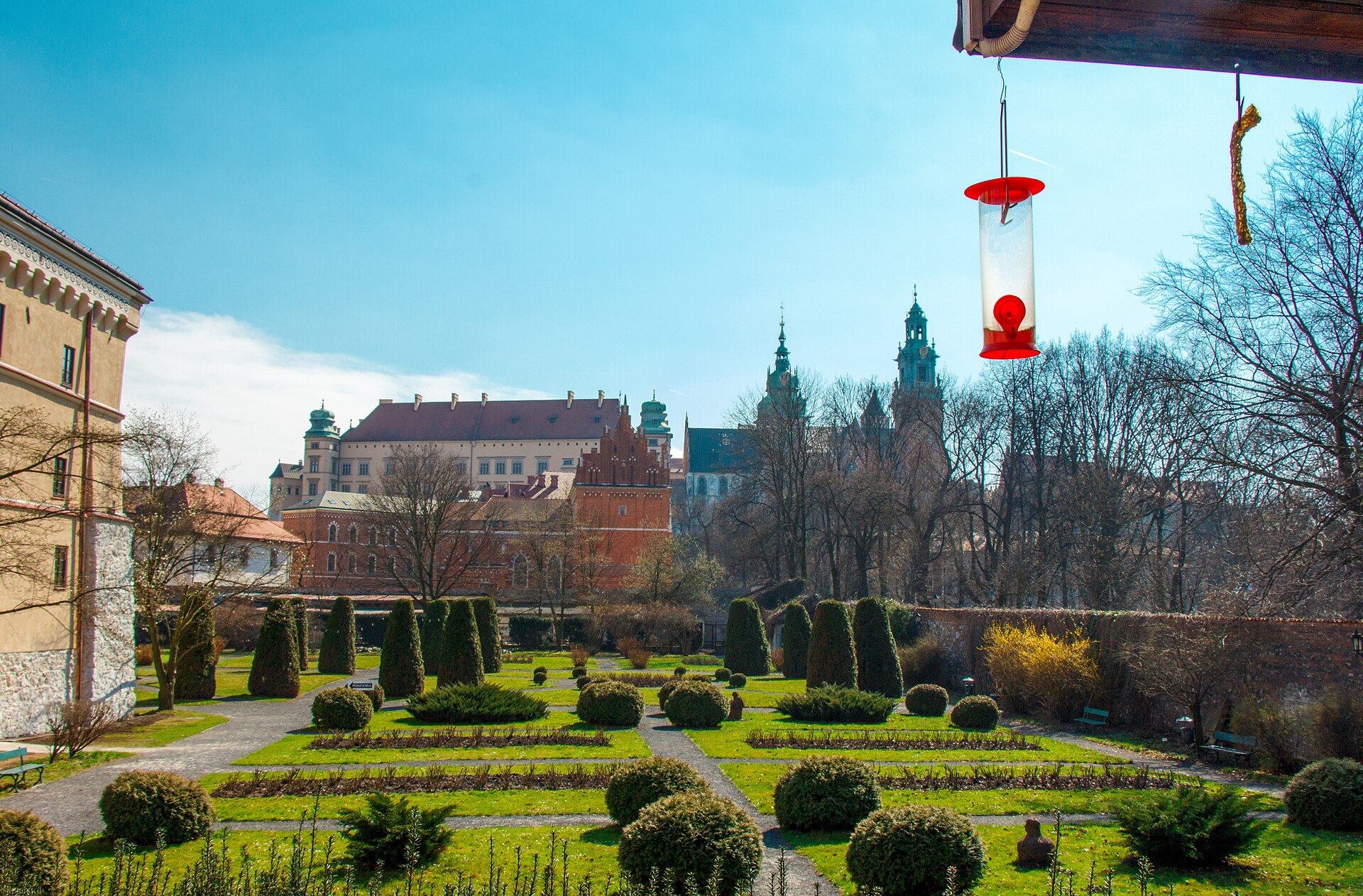
- Praised: the museum garden, praised as a peaceful spot and the site of an annual spring Archaeological Picnic
- Criticised: incomplete English translation on object labels in several exhibit sections
- Criticised: very dim lighting in the Egyptian rooms, kept low for preservation but making text hard to read
- Criticised: poor or unclear signage for navigating the building's layout
- Criticised: as of 2026, most of the permanent collection, including the Egyptian and Peruvian galleries, is closed for renovation, which some visitors do not expect before arriving
Ratings on other platforms
Tripadvisor: 4.2 from 73 ratings, read 18 September 2026
Google: 4.5 from 2,693 ratings, read 18 September 2026
A platform average is a tertiary source: it moves, it is not audited, and we quote no visitor's words.
Questions about Archaeological Museum of Krakow
Where is Archaeological Museum of Krakow?
ul. Senacka 3, 31-002 Krakow, Poland.
How much does it cost to visit?
Regular (main building, Prehistory and Medieval Malopolska exhibition): PLN 15; Discounted (main building): PLN 10; Family ticket, main building (up to 4 people, at least 1 child): PLN 45; Large Family Card holder, main building: PLN 10; Regular, Nowa Huta-Branice branch: PLN 7. As confirmed 18 September 2026.
When is it open?
Tuesday-Saturday 09:00-17:00; Sunday 11:00-16:00; Monday-Friday 10:00-14:00; Monday-Friday 10:00-14:00; Saturday-Sunday 14:00-18:00; Monday-Saturday 10:00-17:00. Closed: Monday, main building. Saturday-Sunday, Nowa Huta-Branice branch, November-April. As confirmed 18 September 2026.
How do you get there?
Walking: On Senacka street in central Krakow's historic Old Town district, within walking distance of the Main Market Square.
What should you see first?
The Zbruch Idol (Swiatowid ze Zbrucza) (Unknown, pre-Christian Slavic culture); The Bronocice Pot (Funnelbeaker culture potter, Bronocice settlement); Twenty-four forensic facial reconstructions (Museum research team, from excavated skulls); Sarcophagus of a priestess of Amun, Twenty-First Dynasty (Ancient Egyptian workshop, Thebes region); Rare grain mummies (Ancient Egyptian, Ptolemaic to Roman period funerary practice); Peruvian textiles and mummies from the Ancon necropolis (Moche, Chimu and Chancay cultures, coastal Peru).
What we could not confirm
- Whether the main building's Egyptian and Peruvian galleries reopen around December 2026, as the museum's own visitor page currently states, or at the end of 2027, as museum director Jacek Gorski was quoted saying in June 2026 reporting; the two stated timelines do not agree.
- How much of the newly excavated medieval defensive wall and Carmelite burial crypts under the former execution courtyard will be open to the public, given the director's stated plan to route a new entrance through the crypts.
- Whether the museum's photography policy, not stated on its published English visitor pages as fetched for this research, allows personal photography in the open exhibition.
Images
Sources
- 1Muzeum Archeologiczne w Krakowie, official homepage ma.krakow.pl/
- 2Muzeum Archeologiczne w Krakowie, opening hours ma.krakow.pl/zwiedzanie/godziny-otwarcia
- 3Muzeum Archeologiczne w Krakowie, ticket prices ma.krakow.pl/zwiedzanie/ceny-biletow
- 4Muzeum Archeologiczne w Krakowie, History of the Museum (English) ma.krakow.pl/en/history-of-the-museum/
- 5Muzeum Archeologiczne w Krakowie, Accessibility (English) ma.krakow.pl/en/accessibility/
- 6Muzeum Archeologiczne w Krakowie, Wystawy stale (permanent exhibitions, with renovation status) ma.krakow.pl/wystawy/wystawy-stale/
- 7Muzeum Archeologiczne w Krakowie, The Prehistory and Early Middle Ages of Little Poland (English tour page) ma.krakow.pl/en/tour/the-prehistory-and-early-middle-ages-of-little-poland/
- 8Muzeum Archeologiczne w Krakowie, Egyptology collection of the Archaeological Museum in Krakow (English tour page) ma.krakow.pl/en/tour/egyptology-collection-of-the-archaeological-museum-in-krakow/
- 9Muzeum Archeologiczne w Krakowie, Peruvian collections of Wladyslaw Kluger (English tour page) ma.krakow.pl/en/tour/peruvian-collections-of-wladyslaw-kluger/
- 10Muzeum Archeologiczne w Krakowie, Lokalizacja (branch locations) ma.krakow.pl/en/lokalizacja/
- 11Wikipedia (English), Archaeological Museum of Krakow en.wikipedia.org/wiki/Archaeological_Museum_of_Krak%C3%B3w
- 12Wikipedia (Polish), Muzeum Archeologiczne w Krakowie pl.wikipedia.org/wiki/Muzeum_Archeologiczne_w_Krakowie
- 13Wikipedia (English), Zbruch Idol en.wikipedia.org/wiki/Zbruch_Idol
- 14Wikipedia (English), Bronocice pot en.wikipedia.org/wiki/Bronocice_pot
- 15Wikidata, Q3329434, Archaeological Museum of Krakow wikidata.org/wiki/Q3329434
- 16Tripadvisor, Archaeological Museum, Krakow (rating and visitor comment aggregate) tripadvisor.com/Attraction_Review-g274772-d7737513-Reviews-Archaeological_Museum-Krakow_Lesser_Poland_Province_Southern_Poland.html
- 17In Your Pocket, Archaeology Museum, Krakow inyourpocket.com/krakow/archaeology-museum_21408v
- 18Wanderlog, Muzeum Archeologiczne w Krakowie (Google rating aggregate) wanderlog.com/place/details/379517/muzeum-archeologiczne-w-krakowie
- 19krakow.travel, Muzeum Archeologiczne krakow.travel/29-krakow-muzeum-archeologiczne
- 20Gazeta Krakowska, Anna Piatkowska, 'W Muzeum Archeologicznym w Krakowie trwa wielki remont. Badacze odkryli tu kolejne slady przeszlosci', 22 June 2026 gazetakrakowska.pl/w-muzeum-archeologicznym-w-krakowie-trwa-wielki-remont-badacze-odkryli-tu-kolejne-slady-przeszlosci/ar/c13p2-29113713
- 21Dziennik Polski, 'Pradzieje - nowoczesnie', 28 January 2005 dziennikpolski24.pl/pradzieje-nowoczesnie/ar/1447030
- 22Wikimedia Commons, File:MuzeumArcheologiczne-WidokOdStronyPlant-POL, Krakow.jpg (license and author) commons.wikimedia.org/wiki/File:MuzeumArcheologiczne-WidokOdStronyPlant-POL,_Krak%C3%B3w.jpg
- 23Wikimedia Commons, File:Muzeum Archeologiczne Krakow.jpg (license and author) commons.wikimedia.org/wiki/File:Muzeum_Archeologiczne_Krakow.jpg
- 24Wikimedia Commons, File:Garden at the Archeological Museum of Krakow.jpg (license and author) commons.wikimedia.org/wiki/File:Garden_at_the_Archeological_Museum_of_Krakow.jpg
- 25Wikimedia Commons, File:Krakow Archaeological Museum 45.JPG (license and author) commons.wikimedia.org/wiki/File:Krakow_Archaeological_Museum_45.JPG


