National Archaeological Museum Aruba
Museum · Museo Arkeologiko Nacional Aruba · Founded 1981
Open, admission and hours confirmed 18 September 2026 · 20 sources
On this page 14 sections
ContentsClose
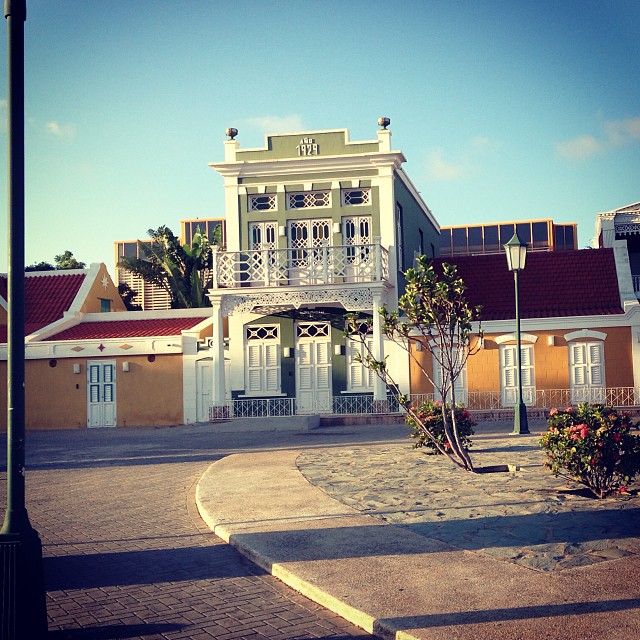
NAMA's strength lies in depth on a narrow window: more than 10,000 pieces of Aruban Amerindian material culture, drawn from over a century of fieldwork starting with A. J. van Koolwijk in the 1880s and continuing through Boerstra's 1970s excavations at Tanki Flip to the museum's own scientific department today. It is not a broad-collecting museum and does not attempt to be; what it holds is almost entirely Aruba-specific, spanning the Archaic, Caquetio (Ceramic) and Historic periods of the island's pre-Columbian and early colonial past, shown inside the restored home of the family that later gave Aruba one of its own resistance heroes.
| Local name | Museo Arkeologiko Nacional Aruba |
|---|---|
| Kind | Museum |
| Founded | 1981 |
| City and country | Oranjestad, Aruba |
| Address | Schelpstraat 42, Oranjestad, Aruba |
| Website | manaruba.org |
| Status | Open, confirmed 18 September 2026 |
| Record last verified | 18 September 2026 |
Visiting
- Hours
- Monday-Friday09:00 to 17:00
- Dia di Betico (25 January) and National Flag and Anthem Day (18 March)Adapted hours; the museum directs visitors to its Facebook page for that day's schedule.
- Closed
- Saturday. Sunday. Christmas Day. New Year's Day. Easter. Ascension Day. Labor Day (1 May). King's Day (27 April).
- Admission
- General admission (individual)FreeEntrance is donation-based; the museum states there is no fixed ticket price and nothing needs to be purchased in advance.
- Group visit with professional guide (up to 25 people)FreeFee is set according to the programme booked; reserve by emailing [email protected]. Larger groups can be arranged by request.
- Do I need to book?
- No; entrance is walk-in and donation-based. Group tours with a guide need an email reservation at [email protected].
- Address
- Schelpstraat 42, Oranjestad, Aruba MapTram Aruba Cruise Line trolley tram stops directly in front of the museum at the 'Plaza Museo' stop
Bus Adjacent to the Arubus terminal, opposite the cruise terminal
Walking Short walk from the cruise terminal, the main shopping street and the Renaissance Mall in downtown Oranjestad - Website
- manaruba.org
- Telephone
- +297 582 8979
- [email protected]
Before you go how long, access, photography, bags, eating, shop
- How long to allow
- Under two hours; visitors and the museum itself describe it as a small museum rather than a half-day destination.
- Access
- Ramps connect the entrance and the join between the historic and modern buildings; a lift reaches the second story of the permanent exhibition; further ramps lead to the cafeteria area and a garden bathroom.
- Photography
- Permitted in the exhibit areas and gardens; no flash or additional lighting.
- Bags
- Not addressed in the museum's published FAQ.
- Eating
- A cafeteria is listed on the museum's own FAQ and history page as still in development as of 2026.
- Shop
- A museum shop is listed alongside the cafeteria as still in development as of 2026.
Prices and hours change. We take them from the institution's own pages and print the day we read them, and you can check the current position at the source we used. Confirm before you travel.
What is inside
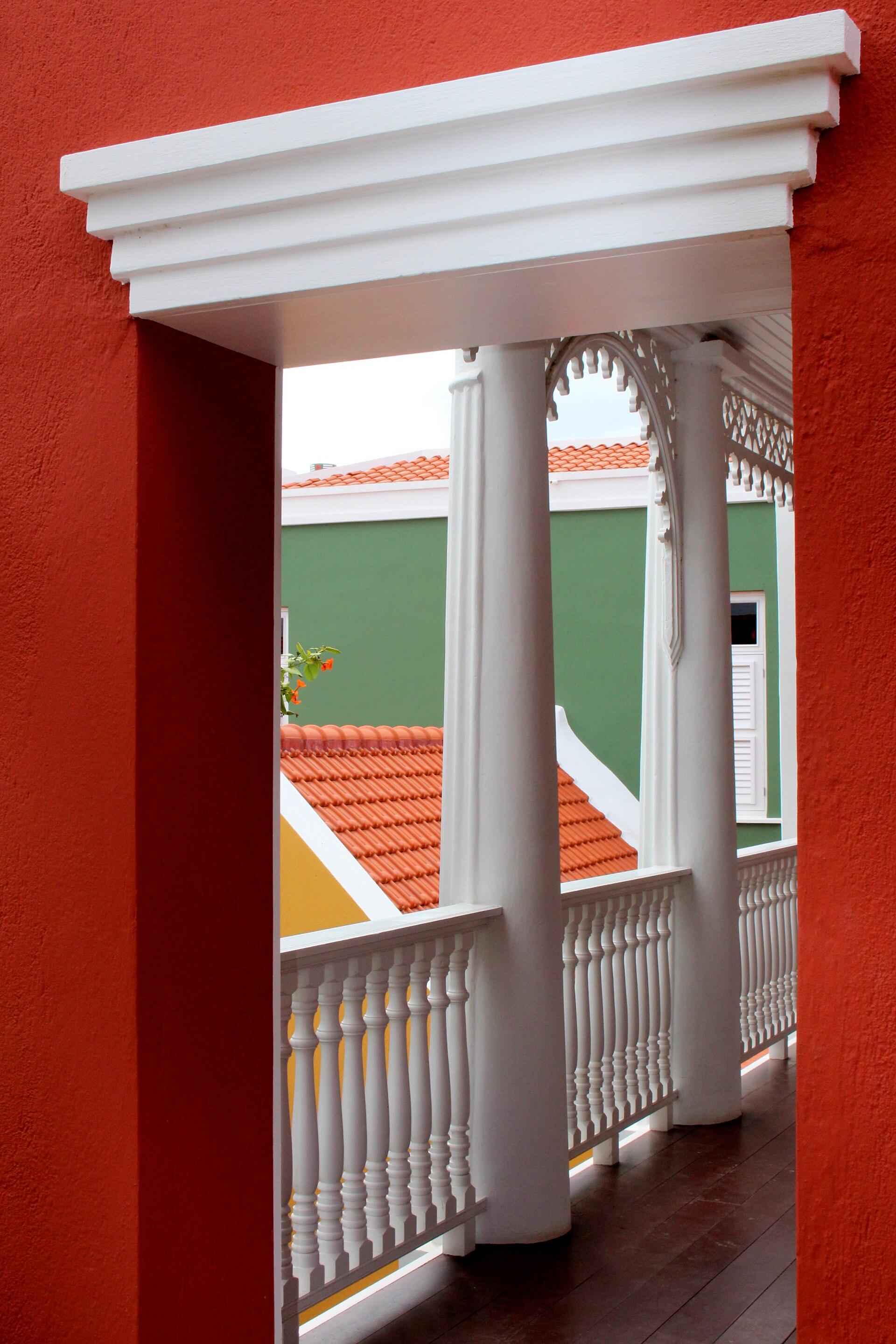
Photograph by Natalie Liao Jen · CC BY-SA 3.0 The Ecury House (1870)
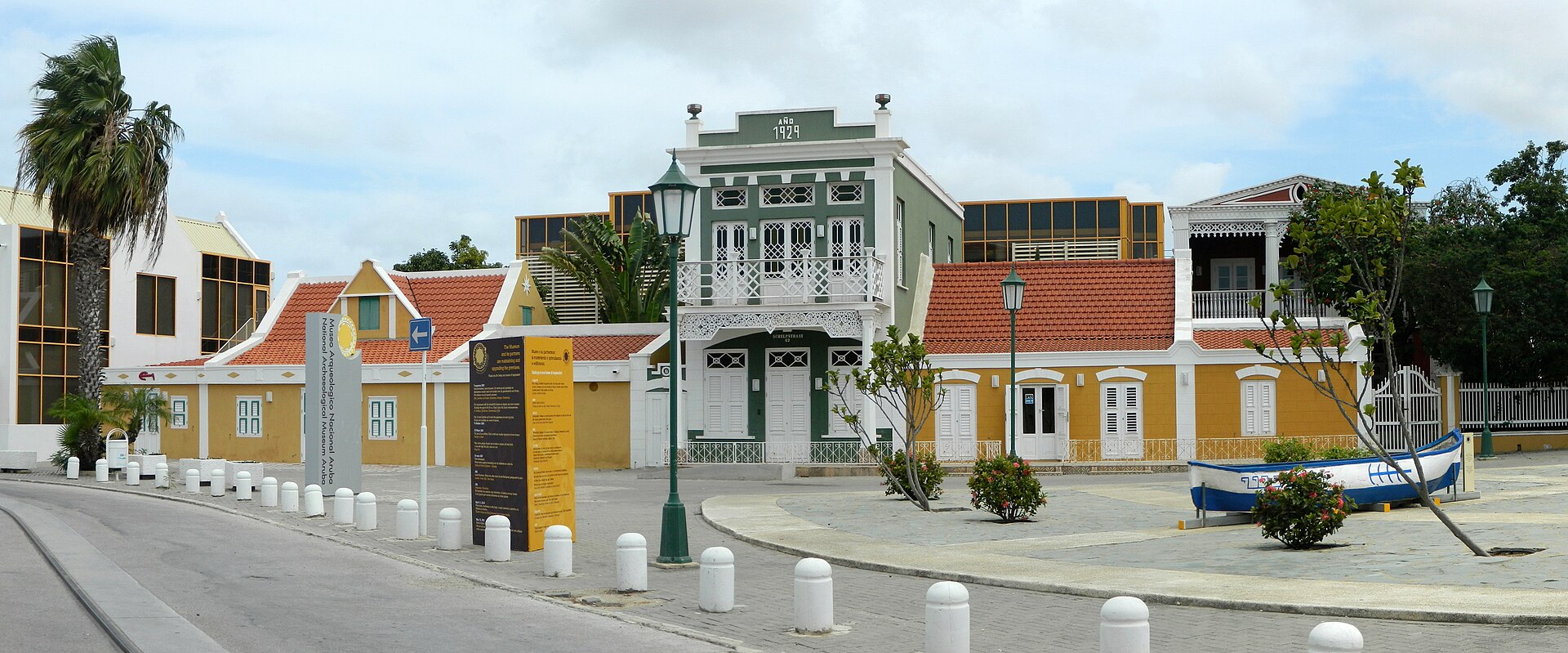
The museum's oldest structure, a cunucu house built in 1870 by the grandparents of WWII resistance fighter Boy Ecury, who lived here as a boy from 1922 to 1937. It now holds the entrance and the 2023 exhibition 'Keeping Our Cultural Heritage Alive,' built around objects from the Ecury family's years in the house and the development of Oranjestad.
The 1929 mansion
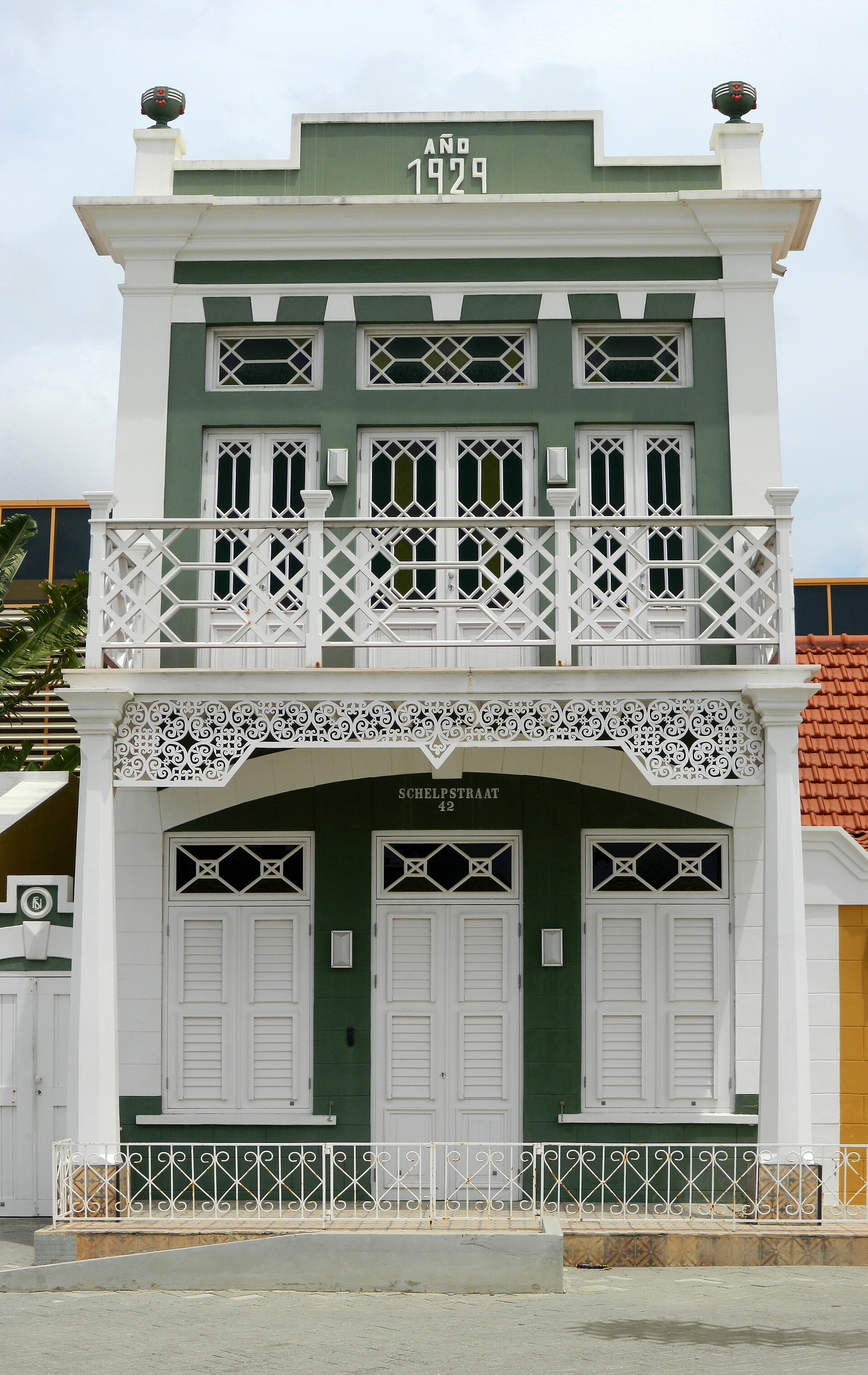
The larger house the Ecury family added to the property in 1929 as their trading business grew. It now carries the bulk of the permanent exhibition and the immersive, audio-visual spaces added in 2023.
Permanent exhibition: Archaic, Caquetio and Historic periods
More than 10,000 Amerindian artifacts in pottery, shell, stone, bone and glass, arranged by cultural period and by theme (home life, artistic expression, origins, and exchange with Europe, Mexico and South America), including touchscreen displays and a reconstructed Caquetio burial.
Temporary exhibition gallery
A rotating programme of shows on top of the permanent display. Running as of September 2026: 'Exhibit Design Academy' (June-September 2026), 'Birds of Aruba' (May-June 2026) and 'Site-Side-Sight Walks' (February 2026-January 2027).
Museum gardens
Grounds around the two historic buildings, used for quiet time and as part of the accessible route between the entrance, the exhibition and the garden bathroom; the museum's planned cafeteria will open onto this space.
What to see first
The Van Koolwijk Collection loan
Caquetio artisans, collected by A. J. van Koolwijk in the 1880sFive pieces, including a decorated calabash, a ceramic face jug and a ceramic figurine, on loan since 2009 from Leiden's Rijks Ethnographisch Museum, are drawn from the material that founded Aruban archaeology.15
The Tanki Flip pot and the museum's own logo
Caquetio potter, Tanki Flip siteExcavated as broken shards by archaeologist E. Boerstra in 1975-1977 and restored in the Netherlands, this geometric painted vessel's top view was adopted as NAMA's own logo.5
Reconstructed Caquetio burial
Caquetio community, Ceramic PeriodOne of the exhibition's reconstructed environments, showing how the Caquetio, Aruba's original inhabitants, honored their dead, rather than presenting funerary custom through artifacts alone.20
The Ecury House itself
Built 1870 for the Ecury familyThe museum's oldest structure and the boyhood home, 1922-1937, of Boy Ecury, the Aruban resistance fighter executed by German forces in The Hague in 1944.16
'Keeping Our Cultural Heritage Alive' collection
Ecury family household objects, curated by R. HeronimoTraces the Ecury family's domestic life on the site and the parallel development of Oranjestad, added to the permanent display in 2023.4
Pottery, shell, stone, bone and glass core collection
Aruban Amerindian makers, Archaic through Historic periodsOver 10,000 pieces spanning roughly 5,000 years form the museum's core holding and the basis of its permanent exhibition themes.6
Arikok petroglyph documentation
Pre-Columbian Aruban rock artistsNAMA's own scientific staff document and help preserve the cave paintings and petroglyphs of Arikok National Park, extending the museum's collecting mission beyond its galleries.18
The Ecury complex and what it was built to hold
The building the museum occupies today was not built as a museum. Its oldest section is a wooden cunucu house at Schelpstraat 40, raised in 1870 by the grandparents of Segundo Jorge "Boy" Ecury, who lived there as a boy between 1922 and 1937 before leaving for the Netherlands. Boy Ecury joined the Dutch resistance during the German occupation and was executed in The Hague on 6 November 1944, aged 22; he is remembered on Aruba as a national hero. As the Ecury family's trading business prospered through the early twentieth century, a larger mansion was added at the same address in 1929, and the two structures, one a modest island house and the other a merchant's residence, grew into a single complex spanning Schelpstraat 40 to 44.
The complex sat outside public use for decades before the government of Aruba restored it as the country's national archaeological museum. The National Archaeological Museum Aruba (Museo Arkeologiko Nacional Aruba, known locally as MANA or NAMA) opened in this restored building on 26 July 2009, inaugurated by Princess Margriet of the Netherlands and her husband Pieter van Vollenhoven. Wikidata records the exhibition floor at 520 square meters; the Dutch cultural-heritage register DutchCulture puts the permanent exhibition at 580 square meters. Either figure describes a small museum by international standards, built inside a private house rather than a purpose-built hall, which shapes how the collection can be shown.
From a priest's field notes to a national collection
The museum's collection did not start with the building. Its earliest material traces to Antonius Johannes van Koolwijk, a Dutch Catholic clergyman posted to Aruba, Bonaire and Curacao in the late nineteenth century who had no formal training in archaeology but excavated and recorded prehistoric settlements across all three islands regardless, including the first known sketches of the rock paintings in the Onima caves on Bonaire. Between 1883 and 1887 he sent his finds, pottery shards, stone tools, human remains and burial urns among them, to the Rijks Ethnographisch Museum in Leiden, where they became known as the Van Koolwijk Collection. Since NAMA's 2009 opening, five pieces from that collection, including a decorated calabash, a ceramic face jug and a ceramic figurine, have been on loan back to Aruba from Leiden.
The museum itself traces to 1981, when the original Archaeological Museum of Aruba opened to house material gathered since the mid-nineteenth century by professional and amateur archaeologists. E. Boerstra, the first professional archaeologist permanently stationed on the island, excavated a Caquetio village at the Tanki Flip site between 1975 and 1977 and recovered pottery shards painted with detailed geometric forms; restorers in the Netherlands rebuilt one complete vessel from the shards, and its top view, photographed from directly above, became the museum's own logo. First staff member E. Fingal pushed for a museum that could rival the archaeological collections of the Netherlands, and A. Franken-Ruiz carried the project through to completion, moving the collection into the restored Ecury complex in 2007 and opening it to the public in 2009 as the National Archaeological Museum Aruba. Aruban archaeologists Raymundo Dijkhoff and H. Kelly researched and documented the material that shaped the exhibition that opened that year.
Inside: five thousand years across two houses
The permanent exhibition arranges more than 10,000 Amerindian artifacts across the Archaic, Caquetio (Ceramic) and Historic cultural periods, in pottery, shell, stone, bone and glass. The displays cover home life, artistic expression, the island's Amerindian origins and its later exchanges with Europe, Mexico and South America, using reconstructed environments, audio-visual media and hands-on activities rather than cases of unexplained objects. One reconstructed setting shows a Caquetio burial, presenting funerary custom directly rather than through a wall label alone.
In 2023, under interim director Pancho Geerman, the museum added exhibitions built specifically around the building's own history: "Keeping Our Cultural Heritage Alive," developed with R. Heronimo, uses objects from the years the Ecury family lived on the site to trace the development of Oranjestad itself, alongside new immersive spaces and an audio-visual room. The museum keeps a running programme of temporary exhibitions on top of the permanent displays: as of September 2026 these include "Exhibit Design Academy" (June to September 2026), "Birds of Aruba" (May to June 2026) and an ongoing "Site-Side-Sight Walks" exhibition running from February 2026 to January 2027.
Beyond the galleries, NAMA runs an active education department building school tours, workshops and teacher training, and its scientific staff conduct fieldwork off site as well, including the documentation and preservation of petroglyphs and cave paintings in Arikok National Park. A cafeteria and museum shop are listed on the museum's own FAQ as still in development as of 2026.
Visiting today
NAMA is at Schelpstraat 42 in downtown Oranjestad, within walking distance of the cruise terminal, the main shopping street and the Renaissance Mall. The Aruba Cruise Line trolley tram stops directly in front of the building at the "Plaza Museo" stop, and the museum sits close to the Arubus bus terminal opposite the cruise dock. Free parking is available, subject to availability, on the unpaved lot next to the building complex or near the Arubus station and the Aruba Trading Company; paid Aruparking spaces are also nearby.
The museum opens Monday to Friday, 9:00 am to 5:00 pm, and is closed Saturday and Sunday. It keeps adapted hours on two Aruban national days of celebration, Dia di Betico (25 January) and National Flag and Anthem Day (18 March), and closes entirely on other national holidays, including Christmas, New Year, Easter, Ascension Day, Labor Day and King's Day. Entrance is donation-based rather than ticketed; there is no fixed admission price, and the museum's own FAQ states plainly that visitors do not need to buy a ticket. Group visits of up to 25 people with a professional guide can be booked by emailing the museum directly, with the guide fee set according to the programme; larger groups can also be arranged.
The building is described by the museum as wheelchair accessible for the most part: ramps connect the entrance and the join between the historic and modern sections, a lift reaches the second story of the permanent exhibition, and further ramps lead to the cafeteria area and a garden bathroom. Photography is permitted in the exhibit areas and gardens without flash; food and drink are not allowed inside the exhibit areas. Wifi is limited and available only near the auditorium on the lower level of the permanent exhibition.
What visitors say
On Tripadvisor, where the museum carries an aggregate rating of 4.3 out of 5 from 231 reviews (read 18 September 2026), visitors consistently single out the same two things: how much the collection teaches them about Aruba's Amerindian roots in a short visit, and how warmly the front-of-house staff receive them. Reviewers describe the exhibits as well laid out and explained in several languages, note that admission is free with donations welcomed, and single out small interactive touches, one reviewer called a lighting effect in a tunnel section a "waterfall illusion," as memorable.
The complaints that recur are practical rather than curatorial. Several visitors report that the museum is easy to miss: Oranjestad marks it with a single sign, and following it drops visitors into a residential one-way street with heavy traffic and no further signage. Others note, and some say they raised their donation because of it, that NAMA reads as less well-funded than Aruba's larger attractions, and that the museum is small enough that a visit needs well under an afternoon rather than a half day.
A neighbor, not a duplicate
NAMA is a distinct institution from the Historic Museum housed in Fort Zoutman a few streets away, a point the museum's own FAQ makes explicit by listing Fort Zoutman as a separate nearby attraction rather than a branch of its own. The Historic Museum covers Aruba's colonial and modern history inside the island's oldest surviving building; NAMA covers the roughly 5,000 years before that, through the archaeological record of the island's Amerindian population. The two are commonly confused by visitors researching Oranjestad's museums, and by extension with the archaeological museums of the other former Netherlands Antilles islands, Curacao and Bonaire, which are separate institutions again under separate governments.
What visitors say
Visitors consistently leave impressed by how much a small, donation-funded museum teaches about Aruba's Amerindian history in under two hours, and by the warmth of the front-of-house staff; the recurring complaint is that the building is genuinely hard to find and that the museum reads as under-resourced next to Aruba's larger attractions.
What is praised, what is criticised
- Praised: The depth of context on Aruba's pre-Columbian and Caquetio history, delivered in exhibits explained in several languages
- Praised: Free, donation-based entry and a warm welcome from front-of-house staff
- Praised: Small interactive and audio-visual touches inside the permanent exhibition, including a tunnel lighting effect one reviewer called a 'waterfall illusion'
- Criticised: Poor street signage in Oranjestad, which leaves visitors dropped into a busy one-way residential street with no further sign to the entrance
- Criticised: A sense among visitors that the museum is less well-resourced than Aruba's larger museums and attractions, which several reviewers cite as a reason to donate generously
Ratings on other platforms
Tripadvisor: 4.3 from 231 ratings, read 18 September 2026
A platform average is a tertiary source: it moves, it is not audited, and we quote no visitor's words.
Questions about National Archaeological Museum Aruba
Where is National Archaeological Museum Aruba?
Schelpstraat 42, Oranjestad, Aruba.
How much does it cost to visit?
General admission (individual): free; Group visit with professional guide (up to 25 people): free. As confirmed 18 September 2026.
When is it open?
Monday-Friday 09:00-17:00; Dia di Betico (25 January) and National Flag and Anthem Day (18 March) closed. Closed: Saturday. Sunday. As confirmed 18 September 2026.
How do you get there?
Tram: Aruba Cruise Line trolley tram stops directly in front of the museum at the 'Plaza Museo' stop; Bus: Adjacent to the Arubus terminal, opposite the cruise terminal; Walking: Short walk from the cruise terminal, the main shopping street and the Renaissance Mall in downtown Oranjestad.
What should you see first?
The Van Koolwijk Collection loan (Caquetio artisans, collected by A. J. van Koolwijk in the 1880s); The Tanki Flip pot and the museum's own logo (Caquetio potter, Tanki Flip site); Reconstructed Caquetio burial (Caquetio community, Ceramic Period); The Ecury House itself (Built 1870 for the Ecury family); 'Keeping Our Cultural Heritage Alive' collection (Ecury family household objects, curated by R. Heronimo); Pottery, shell, stone, bone and glass core collection (Aruban Amerindian makers, Archaic through Historic periods).
What we could not confirm
- The museum's own sources give two different figures for the permanent exhibition's floor area, 520 square meters (Wikidata) against 580 square meters (DutchCulture); neither explains the discrepancy.
- The cafeteria and museum shop have been listed as 'in development' on both the museum's FAQ and its 2026 history page; no completion date has been published.
- It is unclear from public sources whether Pancho Geerman, named 'interim director' in coverage from 2019 and again in the museum's 2023 history update, now holds the role on a permanent basis.
Images
Sources
- 1National Archaeological Museum Aruba, Visit page (hours, directions, address) manaruba.org/visit
- 2National Archaeological Museum Aruba, Location page (address, wheelchair access, parking, tram) manaruba.org/location
- 3National Archaeological Museum Aruba, FAQ (admission, hours, holidays, photography, accessibility, wifi, nearby museums) manaruba.org/faq
- 4National Archaeological Museum Aruba, History page manaruba.org/history
- 5National Archaeological Museum Aruba, About Us page (mission, vision, history, logo) manaruba.org/about-us
- 6National Archaeological Museum Aruba, Collection page manaruba.org/collection
- 7National Archaeological Museum Aruba, Exhibitions and Events page (open-today status, current and past exhibitions) manaruba.org/exhibitions-events
- 8National Archaeological Museum Aruba, News and Publications page manaruba.org/news-publications
- 9Wikimedia Commons, Category:Archaeological Museum of Aruba (Wikidata structured facts: address, founder, inception, opening date, area, coordinates) commons.wikimedia.org/wiki/Category:Archaeological_Museum_of_Aruba
- 10Wikimedia Commons file page, licence CC BY-SA 3.0, photographer Edward M. Erasmus commons.wikimedia.org/wiki/File:Archaeological_Museum_of_Aruba_front_view_-_Schelpstraat.jpg
- 11Wikimedia Commons file page, licence CC BY-SA 3.0, photographer Natalie Liao Jen commons.wikimedia.org/wiki/File:Archaeological_Museum_Panorama_(1),_Oranjestad,_ARUBA.JPG
- 12Wikimedia Commons file page, licence CC BY-SA 3.0, photographer Natalie Liao Jen commons.wikimedia.org/wiki/File:Archaeological_Museum_Schelpstr40_TopStaircase,_Oranjestad,_ARUBA.jpg
- 13Wikimedia Commons file page, licence CC BY-SA 3.0, photographer Natalie Liao Jen commons.wikimedia.org/wiki/File:Archaeological_Museum_Schelpstr42_Panorama_(1),_Oranjestad,_ARUBA.JPG
- 14Wikipedia, National Archaeological Museum Aruba (tertiary) en.wikipedia.org/wiki/National_Archaeological_Museum_Aruba
- 15Wikipedia, A. J. van Koolwijk (tertiary) en.wikipedia.org/wiki/A._J._van_Koolwijk
- 16Wikipedia, Rancho, Aruba (tertiary; Boy Ecury and the Ecury complex) en.wikipedia.org/wiki/Rancho,_Aruba
- 17Tripadvisor, National Archaeological Museum Aruba reviews and rating (tertiary) tripadvisor.com/Attraction_Review-g147248-d152545-Reviews-National_Archaeological_Museum_Aruba-Oranjestad_Aruba.html
- 18DutchCulture, National Archaeological Museum Aruba location page (tertiary; opening ceremony, exhibition area, mission, Arikok fieldwork) dutchculture.nl/en/location/national-archaeological-museum-aruba
- 19Government of Aruba, press release on the Coleccion Aruba digitization partnership gobierno.aw/en/more-than-100000-objects-of-our-cultural-heritage-are-digitally-accessible-via-wwwcoleccion-aw
- 20Casiola, Aruba museums guide (tertiary; reconstructed Caquetio burial site) casiola.com/blog/unveiling-the-secrets-of-arubas-historical-museums/

,_Oranjestad,_ARUBA.JPG)

,_Oranjestad,_ARUBA.JPG)